2025 Silicon Valley AI Mid-Year Review: Serial Acquisitions, Big Tech Talent Wars, and Who Will Break Out | A Conversation with Fusion Fund Founding Partner Lu Zhang

Money is cheap; time is what actually matters.
For big companies, money isn't the scarce resource — time is.
👦🏻 Podcast interview: Ronghui
🥷 Edited by: Bella
🧑🎨 Layout: NCon

Half of 2025 is gone. What were the big stories in Silicon Valley?
From DeepSeek's release and its industry-shaking — even society-shaking — impact, to the relentless one-upmanship among large language models, to AI Agents becoming industry consensus, to Silicon Valley's major players accelerating their AI competition through premium hiring and mega-acquisitions to compress iteration cycles. What do these "crazy" moves reveal about what tech giants are thinking? Who's best positioned right now, and who's facing the toughest headwinds?
In this episode, we invited Lu Zhang, founding partner of Fusion Fund — a Silicon Valley venture firm focused on early-stage AI enterprise applications, healthcare, and industrial automation — to recap the major tech events of the first half and, starting from the Windsurf acquisition, analyze what it reveals about shifts in Silicon Valley's startup ecosystem. We'll also break down the strategic choices behind key moves from Meta to Google, Apple, Amazon, and Microsoft, and what they signal. We hope this provides valuable context for understanding how the AI landscape shaped up in Silicon Valley during the first half of the year.
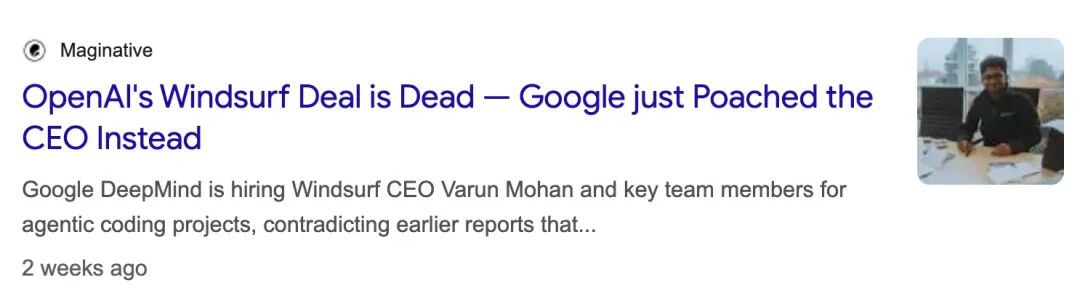
PS: Some background on the Windsurf acquisition, which has drawn considerable attention lately. It went from a potential $3 billion acquisition by OpenAI, to Google poaching the founder and select employees for $2.4 billion, to the remaining staff and business being acquired by Cognition Lab.
This podcast was recorded after Windsurf's acquisition by Cognition was announced, on July 16 Beijing time. OpenAI had not yet released its AI Agent at that point, so it wasn't discussed.
Listen on WeChat:
Listen on Xiaoyuzhou:

👧🏻 Ronghui
We're halfway through 2025. What were the major events in Silicon Valley, and what will they mean for the venture and startup landscape going forward? Today we're delighted to have Lu Zhang, founding partner of Fusion Fund, join us to talk about what's been trending in Silicon Valley lately and what stood out in the first half across venture capital and big tech. Lu, please say hello to Crossing's listeners and introduce yourself.
👩🏻 Lu Zhang
Hi everyone, I'm Lu Zhang, founding partner of Fusion Fund. Since founding the firm ten years ago, I've been focused on investing in North American AI-driven startups — over 100 companies to date — with a primary focus on enterprise AI, industrial automation, and healthcare. We like to joke that we started investing in this space back when AI was still called machine learning. It's been gratifying to watch the industry's rapid rise in recent years, from models to applications to real-world deployment across industries. We're truly in a transformative era, and I'm glad to have the opportunity today for an in-depth discussion of the innovation landscape in the first half of this year.
Mid-Year Review | Major Silicon Valley Tech Events of 2025
👧🏻 Ronghui
Thanks for joining us, Lu. I saw in the news that Fusion Fund had several notable developments in the first half as well — not only announcing the $190 million raise for Fund IV early in the year, but also several successful exits. Could you give us a quick mid-year summary? What events in Silicon Valley left the deepest impression on you? From the startup ecosystem and investment perspective, what new trends or industry consensus are emerging?
DeepSeek Put Open Source on the Map
👩🏻 Lu Zhang
Sure. My overall feeling about the first half is that something new came out every single week. The entire AI innovation ecosystem has been incredibly active, with lots of change happening very fast. A few events really stood out for me:
The release of DeepSeek R1 early in the year drew global attention. The day after DeepSeek R1 came out, I happened to be visiting NVIDIA — we work very closely with them, and that day I was there to see their latest product R&D. Remember, NVIDIA's stock dipped briefly that Monday. We were discussing whether open source would be a net positive or negative for NVIDIA. We all believed it was positive, because it would drive broader adoption and deployment of AI applications. But if you looked purely at short-term market reaction, especially from capital markets, it seemed to suggest the opposite. So DeepSeek was a very important and genuinely exciting development.
I've always believed in the critical importance and impact of the open-source ecosystem in AI innovation. From this perspective, DeepSeek represented, first, a huge victory for open source. Before this, people weren't entirely sure whether open-source models could match or even outperform closed-source models. Second, DeepSeek also showed the industry that model architectures can be simple — you don't necessarily need the most advanced GPUs to train cutting-edge models. We had previously published an AI infrastructure report that mentioned how some new architectures actually run more efficiently on CPUs than GPUs. DeepSeek made the entire industry see that while generative AI is undeniably a major trend and source of excitement, there's still substantial room for innovation in model architecture and infrastructure design. Both of these points are particularly exciting for us as early-stage investors.
After DeepSeek, I think the industry reached a new consensus: the importance of open source deserves serious attention. Of the four exits we had this year, three were significant contributors to the open-source ecosystem. Open source has become a key force in technological innovation. This also reflects another trend: innovation used to be primarily enterprise-driven, but now, with open source being community-driven, the shift from enterprise-driven to community-driven innovation is remarkably pronounced in the AI era.
GTC Conference: Compute Gains, Ecosystem Building, and the Competitive-Collaborative Dynamic Between Big and Small Companies
👩🏻 Lu Zhang
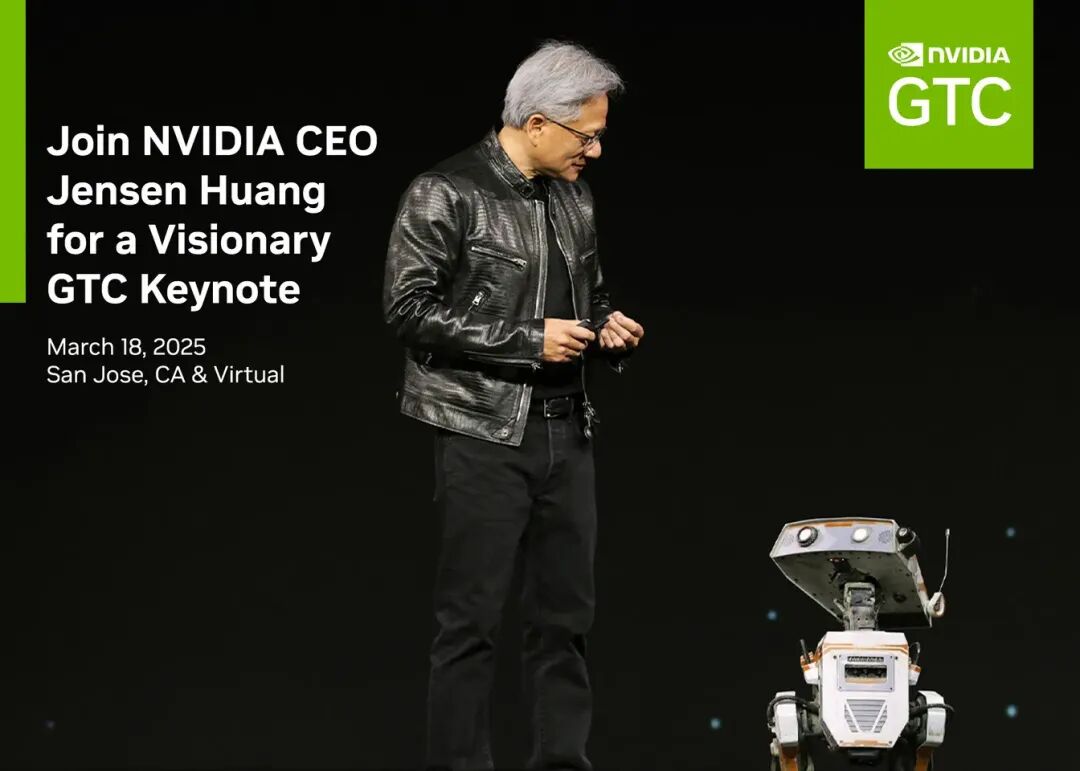
NVIDIA's GTC conference in March was a major milestone. It was already crowded last year; this year there were even more people, and the ecosystem buzz was noticeably stronger. Fusion Fund has had deep ties with NVIDIA since 2017, so this year I was invited to give a keynote for their Inception Program, sharing with hundreds of entrepreneurs in their ecosystem about how to better collaborate with VCs and the broader startup ecosystem in the current environment. I also joined a panel on AI ecosystem opportunities alongside funds like Insight Partners and a16z.
After the conference, NVIDIA announced the DGX Cloud program. The core idea is to further accelerate the building of its innovation ecosystem. The program partners with five funds to support startup projects, and we're the only early-stage fund in that group. NVIDIA's offer is that if a portfolio company of ours gets selected, NVIDIA provides a certain amount of free compute and dedicated engineering support — a meaningful resource advantage for startups.
We're seeing similar approaches from Amazon, Google, and Microsoft. While these tech giants compete with startups on one front, they're simultaneously using free compute to nurture ecosystems and encourage developers to build applications on their platforms.
NVIDIA's Inception Program has already attracted thousands of companies. From this perspective, Silicon Valley's entire AI innovation ecosystem involves both competition and collaboration between large and small companies. NVIDIA also announced some compute advancements at the conference, which was significant news in itself.
Gemini Gains Momentum
👩🏻 Lu Zhang
By April and May, Google's Gemini entered a dense release cycle. Google had taken a lot of criticism before this. On the surface, it looked like OpenAI had seized the initiative in this AI wave. But many people seemed to forget that Google was the publisher of the original Transformer paper — it has the deepest AI bench of any major tech company, in my view, with both vertical depth and horizontal breadth. The DeepMind team's AlphaFold, AlphaGo, and the recently released AlphaGenome all demonstrate formidable capabilities.
This year, Gemini has delivered a string of strong releases, including edge-capable small models. When Gemini 2.5 launched, the reception was very positive, especially for its long-context performance. More recently, it also open-sourced Gemini CLI, a terminal tool that gives developers more opportunities to build their own code models and expand the ecosystem. Around the same time, DeepMind released AlphaGenome for sequencing data, which was equally impressive.
The news has only accelerated: Meta acquiring Scale AI, Windsurf pivoting from OpenAI to Google, Google poaching the founding team and select individuals before Cognition absorbed the rest; Grok's release; the broader AI Agent market taking off; and continuous new projects in Agentic AI and Physical AI. The industry has moved beyond monthly cycles — noteworthy launches and developments now happen almost weekly.
This is my quick synthesis, perhaps not exhaustive, but you can feel it: the first half of this year has seen rapid innovation and iteration. Six months isn't long, but the information density is extraordinarily high.

The Rise of Agents and Incumbents' Self-Revolution
👧🏻 Ronghui
In a previous interview, you described AI Agent as the next general-purpose platform after PC and internet, ushering in a true era of human-machine collaboration. That's now industry consensus. I've also noticed so-called "last-generation" companies like Salesforce and Oracle performing strongly in this AI wave, even experiencing something of a rebirth.
👩🏻 Zhang Lu
That's right. Companies that have been able to iterate quickly and seize transformation opportunities in this AI wave share one common trait: the CEO is still the founder. These leaders tend to have more conviction and willingness to commit. When facing major technological disruption, incumbents must decide whether to revolutionize themselves. A founder typically has more confidence, makes decisions more decisively. Professional managers, by contrast, tend to hesitate — and in a cycle of rapid competition and iteration, that hesitation can mean losing first-mover advantage.
People often mention Claude, ChatGPT, Gemini when talking about large models, but Salesforce's self-developed Einstein model is also very capable, just used internally. With its own model and infrastructure, it builds system-level AI Agent applications, creating a complete closed loop in terms of expertise, flexibility, and cost control.
AI Agents are now expanding rapidly across multiple industry scenarios, but one critical challenge remains "hallucination." How to reduce or eliminate model hallucinations in applications is a core problem that must be solved for future deployment.
👧🏻 Ronghui
AI Agents have actually been very hot in China these past six months too. Does Silicon Valley pay attention to these domestic Agent projects?
👩🏻 Zhang Lu
Yes, Manus is one example people have heard quite a bit about — a domestic Agent product that's done well. It has also received investment from Silicon Valley VCs and is now positioning for the global market. Whether large companies or startups, Chinese players are becoming more active in the open-source ecosystem. And open source itself is borderless, which enhances the global influence of China's AI ecosystem.
Speaking of Agents, I want to clarify a few things. First, AI Agent isn't a new concept — it was being discussed over a decade ago. It's just now entering a phase of broader application. Also, there's no unified definition of "Agent" — understandings differ between academia and industry.
But I believe a true AI Agent must have two core capabilities: handling complex tasks and making autonomous decisions, without relying on human intervention. While the tool library is still provided by humans, the Agent must itself decide which tools to use and how to execute tasks. By this standard, many products that are merely automation or digital workflows don't qualify as AI Agents.
The Windsurf Acquisition and Big Tech's Strategic Chess
👧🏻 Ronghui
Manus being invested in by Benchmark — I heard Silicon Valley investors paid close attention to that. Just the day before we recorded, Cognition acquired the remaining team at startup Windsurf, effectively closing the book on this "acquisition drama." I think this acquisition connects to many things, so let's use it as an entry point to discuss some representative events from the first half of the year. First, I think this acquisition really reflects big tech anxiety. What's your take?
👩🏻 Zhang Lu
Indeed, big tech anxiety right now comes from two main sources: technology is updating too fast, and competition is too fierce. I've heard Google's Gemini team is working seven days a week. xAI is even more extreme — employees are pitching tents inside the company. This isn't performative; they really are working that hard. I know one of their founding members who told me Elon Musk sometimes comes in at 1 a.m. to work with them until 6 a.m. So when he schedules a meeting with me, it might be at 7 or 8 a.m. — after finishing work, we meet, then he goes back to sleep for a few hours before continuing. You can see how intense the competition is.
There's an interesting angle to the Windsurf acquisition. Windsurf and Cursor are both hot code models in Silicon Valley, representing AI code Agents. Each had its own strengths. But fundamentally, they were calling general-purpose models like ChatGPT and Claude.
A while back, Anthropic launched Claude Code, essentially a specialized code model built on top of Claude itself. The performance and fit were excellent, and it gained popularity immediately. Many teams switched to Claude Code. Though it just happened and hasn't yet shaken Cursor and Windsurf's market share, it marks a beginning. For startup code AI Agent companies, they need to consider: once the general-purpose models they call build their own code models, what remains their advantage? I think this explains why a company like Windsurf, with decent financials and growth, would consider the M&A angle. OpenAI's attempt to acquire Windsurf also showed it's facing challenges across technology, business model, funding, and talent.
Another participant, Google, has gained strong advantages on the release front with Gemini. But it can't immediately transform its existing advertising business model, so it's exploring other product forms. For Google, Gemini itself is already doing well; adding a code application through acquiring Windsurf would be a natural strategic move.
That's precisely why this acquisition played out like a TV series episode by episode: first OpenAI wanted to buy, then Google made its move, and finally Cognition acquired the remaining team.
OpenAI's Dilemma: Trying to Break Out of Its Cocoon But Can't Shake Microsoft
👧🏻 Ronghui
Why have code platforms become such a contested battleground? Cursor also has a high valuation. Earlier this year, OpenAI planned to acquire Windsurf for $3 billion, but it fell through — reportedly due to agreements between OpenAI and Microsoft. Zhang Lu, do you know the real reasons behind this?
👩🏻 Zhang Lu
The Microsoft agreement was indeed one factor, but not the only one — there were other reasons the deal didn't close. OpenAI and Microsoft are currently in a relatively sensitive and tense phase. On one hand, Microsoft leverages OpenAI's models to develop its entire Copilot product line. Early results were mediocre, but the products have been improving with refinement.
On the other hand, Microsoft has natural advantages in B2B business models: a complete ecosystem, robust service and sales systems, and cloud resource support that attracts large enterprise customers. When OpenAI wants to expand into B2B, it must directly compete with its own major shareholder Microsoft — that's a big problem.
Additionally, OpenAI now faces training data bottlenecks. General models have more or less exhausted publicly available consumer data. To improve further, they need high-quality industry data, but such data isn't in the public domain — it must be obtained through enterprise partnerships. OpenAI's weakness in B2B makes this path difficult. OpenAI has indeed entered an extremely challenging phase this year.
👧🏻 Ronghui
Right, Sam Altman also stated a couple days ago that OpenAI's open-source models would be delayed, citing potential security risks.
(Note: Two weeks after this recording, OpenAI open-sourced two models.)
👩🏻 Zhang Lu
This is interesting — OpenAI has rarely emphasized "safety" in the past, but is now using it as a reason to delay releases. Anthropic was originally founded because its founders felt OpenAI didn't take AI safety and ethics seriously enough.
Meta's recent acquisition of Scale AI also reflects its anxiety in the catch-up race. It has done well on the open-source front, but Llama 4's performance was mediocre, and DeepSeek's rise has added pressure. It lacks models and ecosystem, so it's rushing to make quick acquisitions. The acquisition intensity is significant, targeting both talent and companies. Including Scale AI — Meta's core intention was to fill gaps in data and infrastructure. It didn't take many people from the company, only a few joined Meta, so the core was supplementing data and tooling. Currently it looks like a relatively traditional approach: throwing resources at the problem. Past results showed it was strategically behind; now the approach is massive resource stacking — cash, compute, talent — to catch up.
Another point worth noting is xAI's Grok 4. Though not without controversy — for instance, its heavy use of Twitter data and criticism over biases, including "Hitler-esque" conversations — its overall performance is still stunning.
While Grok's code model hasn't been released publicly, from what I understand, roughly 70-80% of xAI's internal code is already written by AI tools, with very smooth internal usage. Once released, it could very well merit a side-by-side comparison with mainstream models like Claude Code.
Meta: Counterattacking with Raw Resources
👧🏻 Ronghui
You just mentioned Meta's "buy buy buy" news and strategy. My take is, whether it's being mocked for turning astronomically priced employee poaching into "trading cards," or the Semi Analyst report on their massive compute spending — I think at least one of Zuckerberg's goals is to make sure both internally and across the industry, people see his determination to do AI. What do you think of this kind of "violent aesthetics" approach to building AI?
👩🏻 Zhang Lu
Indeed, Zuckerberg's commitment to AI investment is intense. This connects to what we mentioned earlier: when a company's CEO is also its founder, there's typically greater investment intensity and resolve around new strategic directions, particularly.
On another note, Meta has actually been investing in AI all along. Like Google, it had ambitious visions from early on. I saw a video the other day — an interview with Larry Page from 25 years ago. When asked about Google's ultimate form, his answer was artificial intelligence. He wanted search to answer any question you asked, an AI-powered search engine — essentially what we're doing with ChatGPT now. He had this vision 25 years ago, and Google has invested heavily in AI over the years since.
Meta is the same. Its talent structure, hiring, previous open-source model releases, building models for the real physical world — all well executed. But unfortunately, no ecosystem. After releasing these models, without an ecosystem they couldn't convert into practical applications or let the ecosystem experience the model's capabilities first.
Second, Meta still has advertising as its "cash cow." How to tilt resource allocation toward AI is an internal management challenge.
So I think these founders, whether Zuckerberg or Larry Page, have always had long-term visions for AI — not something born today, but something they've always held. It's just that we've reached a kind of inflection point, and after this inflection point, the acceleration is so dramatic that they can no longer afford the gradual, step-by-step investments of the past. They need to establish advantages in the AI ecosystem faster. So Meta's frenzied hiring, investing, cash burning, and resource dumping — the core purpose is to compress iteration time, to buy time through recruiting and acquisitions, to rapidly rebuild an AI ecosystem from a position of relative strategic and technical lag.
However, Meta does have one advantage. Across major tech companies, including OpenAI, there's talk of a new need in the AI era: AI interaction interfaces. These interfaces aren't just phones or computers, but also hardware. Meta is currently one of the few companies with a relatively clear hardware-form AI product, but it lacks strong model and systems capabilities. This is why it feels it actually has advantages on the hardware ecosystem front — if it can aggressively boost model and systems capabilities, it might outrun others. Of course in hardware there's also the important player Apple, and expectations for Apple are high too. But in this wave of AI, some of Apple's decisions, including its investments, have left it outside the front rank of AI companies. Looking back at Zuckerberg's acquisitions, he's very clear about what he's missing: not execution capability, but the core brain to build with. He needs to recruit the best AI talent to help him architect models and build ecosystems. So look at the people he's hired — like Scale AI founder Alexandr Wang, who's a phenomenal ecosystem builder. It's a two-pronged approach: filling in the model brain on one side, building the ecosystem on the other.
👧🏻 Ronghui
I've heard Meta is pretty "juan" internally, very intense work. What do you think were the main problems with their previous AI efforts?
👩🏻 Zhang Lu
They are pretty intense. Some of this is hearsay and may not be fully accurate, but the core problem was probably in team iteration — the people building the next generation couldn't access all information from the previous generation, so it was an internal management issue. Plus their Chief AI Scientist never really bought into the large model direction, so there was significant internal disagreement about where to invest. This time Zuckerberg has made up his mind to go all in, bringing in external talent to create a "catfish effect" and activate internal teams. The goal is to leverage their existing hardware advantages, build up the AI brain and ecosystem, and strengthen their existing AI hardware edge.
👧🏻 Ronghui
How do you see the prospects after this wave of acquisitions?
👩🏻 Zhang Lu
Honestly it's hard to say. I'm not particularly optimistic in the short term. They've certainly recruited excellent talent, but building an ecosystem won't happen as fast as imagined. And after talent comes in, integrating new and old teams takes time — there's a "pain period." It can't guarantee that everyone recruited will be fully focused on product development; there will likely need to be organizational restructuring, and how long that takes is uncertain. So in the short term, say by year-end, it may be difficult for Meta to catch up. But long-term, if the ecosystem and architecture can be successfully built, there's still potential.
Google's Nirvana Dilemma: Technically Unbeatable, Commercially Hesitant
👧🏻 Ronghui
You mentioned buying time earlier, and I completely agree. Coming back to the Windsurf acquisition — I saw people saying Google overpaid at $2.4 billion for Windsurf, but I think if you do the math carefully, Google played this quite shrewdly. If they had to build a team from scratch and start over, it would take at least 2-3 years to build something similar. Now they're directly acquiring talent, skirting antitrust scrutiny, getting technology licenses and know-how. Spending this much at this critical moment — it's buying time.
👩🏻 Zhang Lu
You're right. For big companies now, money isn't valuable — time is. As we discussed, the AI competition cycle has shifted to where there are new releases every week, so every week, every day has value.
On one hand, buying time to boost AI competitive strength. On the other, these acquisitions also help public companies signal to investors. If it advances AI strategy, stock price gains may far exceed acquisition costs. So for big companies, acquisitions aren't necessarily decided just by target profitability. This applies to some of our portfolio companies that were acquired too — some were bought at high prices because of high revenue, but others had decent revenue yet commanded high prices because the acquirer saw strategic value: the product, placed in my distribution channels and sold to existing customers, might immediately generate say $500 million or $1 billion in revenue. On that basis, paying $500 million or $1 billion to acquire is worth it, because it's not just the current product but also fueling R&D for the next stage.
For the strategic acquirers, they're now important contributors to this ecosystem, because not all startups need to exit through IPO. Fast M&A brings capital and talent back into circulation, which is very positive for innovation overall.
👧🏻 Ronghui
I've heard Google is making continuous internal adjustments — for instance, the Notebook LM lead now also oversees the Gemini App. Does this reflect some anxiety at Google? How do you see its current state?
👩🏻 Zhang Lu
Indeed. Notebook LM was a joint product between DeepMind and Google Labs, a very good tool, and it shows Google is consolidating previously scattered AI R&D efforts into real product strength.
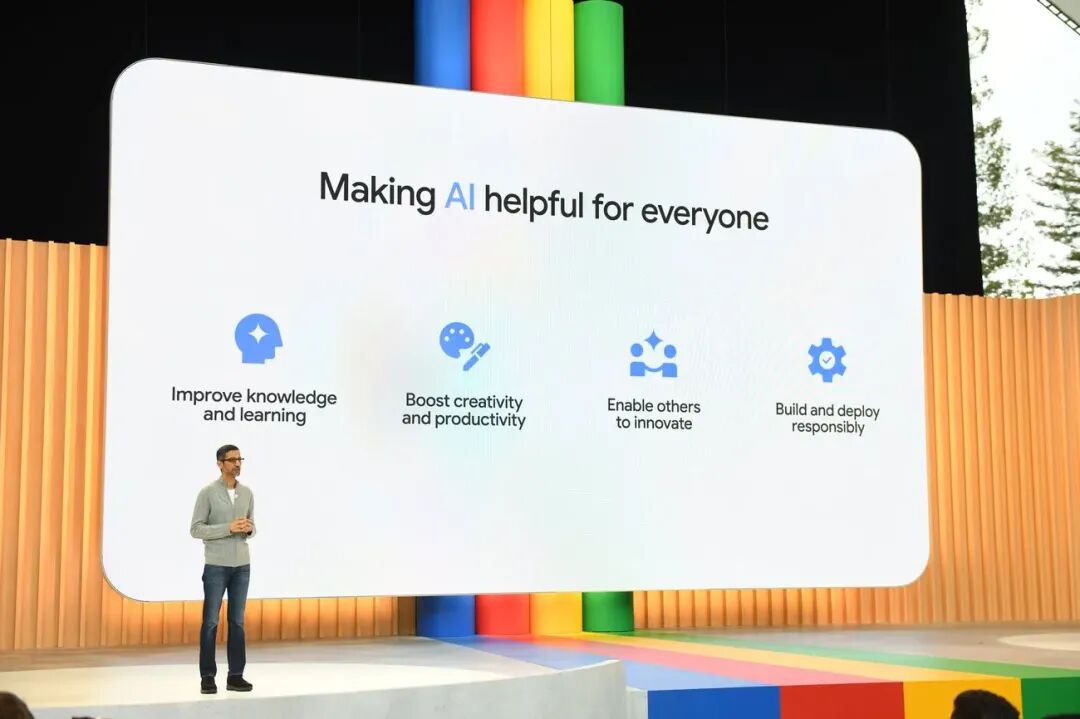
So far, I think Gemini's releases over this period have been excellent. In terms of AI capability, I rank Google first among all tech companies, but its potential is underestimated by the market. It hasn't been aggressively promoting and pushing these AI product launches. On the other hand, I think one challenge for Google is determining at what point and in what form to transform and optimize itself, because its current business model is ad-driven. If it really wants to push a Gemini-powered search engine, it could absolutely build AI search stronger than Perplexity. But the moment a Gemini-driven engine goes live, it directly cannibalizes its ad model. Unless it finds new monetization, it doesn't dare easily kill the "cash cow." But if the transformation succeeds, Google has a chance at phoenix nirvana, to do even better, because its AI strength is formidable.
AI competition now isn't just a model competition — it's also a cost competition. Google's advantage is that it has chips, models, cloud services, infrastructure, and AI applications. As a full-stack product with the entire ecosystem, optimizing costs becomes much easier. This is the advantage it's accumulated over years, one that other tech companies can hardly match.
But if the timing and form aren't chosen well, it could very well cut off its own leg — dismantling its existing model before the new product quickly gains commercial traction. So for Google, it needs to find this timing internally, while externally there are many competitors. Including in research we do now — we see that our generation grew up very familiar with the mobile internet environment, using smartphones. Younger kids are growing up using AI tools. If fewer young people use Google and more use generative AI-driven search, this rapid shift in user habits among new generations won't leave Google much time or space to adjust.
👧🏻 Ronghui
Do you think Google has reached the critical moment where it must transform? Search is the foundation of its business model, and AI search is a direct threat to that foundation.
👩🏻 Zhang Lu
I think it has reached that critical moment. But honestly, it still depends on what internal data shows. I think Google still needs to make some internal adjustments this year, striving to complete its "phoenix nirvana" transformation and truly become a leading enterprise in the AI era.
I also recommend keeping a close eye on the Gemini family of products: from enterprise AI, to edge models like Gemma 3n, to AlphaFold and AlphaGenome — all of them are genuinely impressive. Behind them lies Google's cost optimization and ecosystem advantage built on its self-developed TPUs.
Apple, Amazon, Microsoft
👧🏻 Ronghui
What about Apple? Right now it seems to have device advantages, but no models and no AI products of its own. At WWDC25 it announced deep ChatGPT integration into iOS, which sounds like using AI to enhance the iPhone experience.
Some people think AI won't affect Apple's revenue in the short term — after all, everyone still needs a phone. But long-term, it could weaken user dependence on phones. So what's the core of Apple's AI strategy? And where are its problems?
👩🏻 Zhang Lu
Apple probably didn't anticipate AI would develop this fast. Actually, these Silicon Valley tech companies didn't all suddenly plunge into AI when ChatGPT came out. They've basically been laying groundwork and investing in artificial intelligence for over a decade. It's just that the timeline wasn't so tight before — now the competitive cycle and iteration speed have suddenly compressed dramatically.
I used to be very bullish on Apple's AI chips. Their AI chips are excellent. I remember one launch where they claimed it was the world's most powerful AI chip — the computing capability itself, plus Apple's hardware ecosystem integration, is very well done. But the problem is the lack of an AI product. Hardware is Apple's core, chips are the core of hardware, but without an AI product, this ChatGPT partnership looks more like a stopgap measure. Cooperate first, then gradually build out.
In the short term, Apple still has hardware entry advantages. People still need phones and computers to use AI tools, so it retains platform-level strengths. But Meta is doing hardware, OpenAI wants to do hardware, Google is exploring hardware — they're already challenging Apple's moat. So at this level, Apple still has a time window, but not a long one. It needs to move quickly on AI hardware, embedding AI into its hardware experience to make it more seamless — I think these are directions Apple is likely considering.
Tim Cook is an impressive leader, but when a major trend arrives, if a company's CEO is the founder, they're more willing to make big bets. That kind of boldness is hard to demand from a non-founder CEO — it's different, after all. If the bet fails, the investment could be massive but unsuccessful. Look at Zuckerberg's years of investment in the metaverse — it's still a huge, invisible hole. But because he's the founder, even having made mistakes, he can probably keep his position. Professional managers typically need to be more cautious in risk assessment. So the companies moving fast on AI now — NVIDIA, Salesforce, Meta, Google — all still have founder CEOs.
👧🏻 Ronghui
We haven't mentioned Amazon yet. AI should help make e-commerce recommendation algorithms more accurate, selling more goods, while AWS is also selling well. How do you see its first-half positioning and future prospects?
👩🏻 Zhang Lu
AWS is essentially playing the "selling shovels in a gold rush" role. For these model companies or Agent companies with massive AI training and inference needs, they're all AWS customers. So the more AI Agent companies, the more model companies — all good news for AWS, and its commercial revenue and growth will be further propelled. That's why people might feel like Amazon hasn't made massive investments to build AGI or directly create an AI product, and that's fine — selling shovels is working out pretty well. And through infrastructure-level advantages, it can quietly win in the AI competitive ecosystem.
On another front, Amazon has been a strong supporter and investor in Anthropic. The close cooperation between them also reflects how much collaboration happens between startups and large companies. Amazon, Google, Microsoft — they all want startups to use their cloud services and will offer favorable terms. This strategic synergy and integration is also quite well executed.
👧🏻 Ronghui
Speaking of strategic synergy, Microsoft will definitely keep pushing Copilot hard. So would you infer that it will decouple from OpenAI next? This has been an industry speculation for quite a while.
👩🏻 Zhang Lu
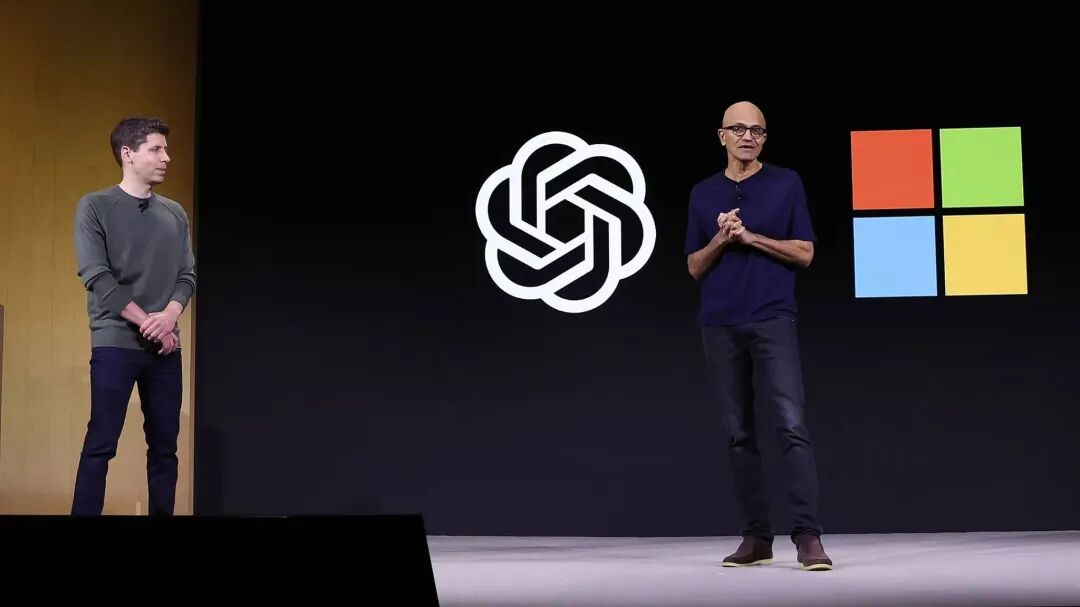
I think Microsoft and OpenAI are already showing signs of "growing apart." For example, when Sam Altman wanted to adjust OpenAI's equity structure earlier, it ended in a compromise. Plus with this Windsurf acquisition case, Microsoft and OpenAI have direct business conflicts. Add to that external pressure — US and European regulators are watching whether Microsoft's de facto control of OpenAI constitutes a monopoly, which led Microsoft to give up its board observer seat.
Meanwhile, OpenAI is transforming itself. As mentioned earlier, one challenge it faces is exploring ToB-level commercialization to build a more sustainable business model. On the other hand, it wants higher-quality industry data to optimize models. If OpenAI does ToB business, that puts it in conflict with Microsoft's position.
From Microsoft's perspective, it wants OpenAI to be an underlying model provider, with Microsoft as the product provider and integrator. But now OpenAI, whether through enterprise versions or including doing Agents, doesn't just want to be a model provider — it wants to be a full-stack AI product company. So the two companies have route-level conflicts.
So you can see that Microsoft now doesn't just support OpenAI; it also supports Mistral, Cohere, and several other models — supporting integration, cooperation, and partnership. Including its own research arm Microsoft Research, which has now accelerated its own model R&D. This sends a clear signal. So to summarize: I think a complete split is unlikely in the short term, after all the previous agreements were signed quite tightly, and there's clear binding on Azure cloud services.
But on the application and model levels, Microsoft is already actively de-OpenAI-ing — not just taking OpenAI as the core, but ensuring its own diversity, laying out more model suppliers, pushing self-developed capabilities, reducing dependence on OpenAI. Including especially the Copilot ecosystem, which may not completely rely on GPT in the future, but dynamically call multiple models — a more flexible, more diverse choice for Microsoft. And its enterprise customers themselves have relatively high requirements for compliance and security. On this point, OpenAI's reputation on compliance and security isn't very good either. So for Microsoft, exploring diversity is also better for its enterprise customers. To summarize: they have deep interest binding, but Microsoft has already started preparing to de-OpenAI.
From OpenAI's perspective, it's also exploring its future on multiple fronts — funding, compute support, and the company's equity structure and board structure are also going through iterations. That's why I mentioned at the beginning that I think the company facing the biggest challenge this year is actually OpenAI. By year-end, there could be many variables — we can wait and see.
The "AI Brain" Scramble
👧🏻 Ronghui
Alright, back to the Windsurf acquisition — big companies are grabbing people, and you can see their anxiety. I'm curious: what's the essence of what they're fighting over in these talent grabs? And how will this new deal structure change Silicon Valley's startup and venture capital environment?
Let me add one data point. Yesterday I saw Zuckerberg say something interesting in a The Information livestream. He said money is one thing, but what people focus on is the deal amount, overlooking "more leverage as a researcher." He mentioned that when he used to recruit, people would ask "what's my scope of authority?" Now when recruiting, he finds candidates ask most about "how do you get as few people as possible reporting to me, while giving me as many GPUs as possible?" That's also his current recruiting strategy.
Back to the earlier question — from recent acquisitions like Windsurf, what exactly is the talent scramble about? And what impact will this deal structure have on Silicon Valley's startup and VC environment?
👩🏻 Zhang Lu
Actually every company already has fairly clear execution capabilities and has built its own foundational architecture. So the people Meta and OpenAI are recruiting now aren't executors — they're "AI brains." The AI ecosystem is evolving extremely fast, and they want these hires to conceptualize and architect, to guide them on what to do. Talent that can operate at this level is still quite rare. An engineer might not have this architectural thinking.
The industry is currently exploring new architectures like RL layered on top of LLMs. Some teams are even researching whether models can run faster on CPU than GPU — showing that underlying technical paths are not yet set, still being probed. So there's still some unknown, and Meta wants people who can help them find a path through this unknown direction. The bar for these people is extremely high. I think globally there are probably no more than a few thousand of them — these few thousand being fought over, tech companies genuinely don't have enough to go around. That's the premise.
For VCs, on one hand these acquisitions are good for the industry. A major challenge for the VC industry in recent years has been relatively few IPOs, relatively few exits, leading to slower capital recycling. Through rapid M&A, forming more dynamic and faster capital recycling is good for the overall innovation ecosystem.
But on the other hand, some larger acquisitions — if they're normal M&A transactions, like the ones we've seen this year, as an investor the return multiples are quite good. But this type of large-talent acquisition, the acquirer will prioritize giving funds to the team rather than to investors. In this kind of acquisition, investor returns are relatively limited. The Windsurf acquisition was like this — investor returns were relatively limited.
At this level, it will also make VCs consider more what form to use for this type of exit, what exit approach can be win-win for everyone, rather than having VC returns compromised by big tech's demand for talent.
So I think in the second half, we'll also see possible changes in the ecosystem's VCs, entrepreneurs, big tech companies, regulation, and so on.
👧🏻 Ronghui
Specifically which ones?
👩🏻 Zhang Lu
I think regulation will be a variable — it could loosen up. But as it does, whether that relaxation happens at the data layer or the AI technology layer remains uncertain.
Second, for companies like OpenAI, this is a very critical and sensitive juncture. Google also has a limited window of time to make its own judgments and decisions. Meta has made such a massive push — will we see something new from them in the second half?
Another "disruptor" is Elon Musk. His xAI launched the Grok model, and in just over a dozen months since its release, it's already approaching the top tier of the industry. That speed is staggering. It shows they're not just throwing resources at the problem — they've also nailed execution and底层架构.
Now everyone has engineers, compute, and resources. The question is how to build a brain trust that can iterate fast and ship quickly. xAI has that capability — they've built a strong brain trust and execute with real force. So on this front, despite how polarized public opinion on Musk has become lately for other reasons, from an innovation and business standpoint, he deserves a lot of credit. In terms of execution, it's hard to find another entrepreneur or company that can match him — this speed, and this ability to integrate resources and build.
👧🏻 Ronghui
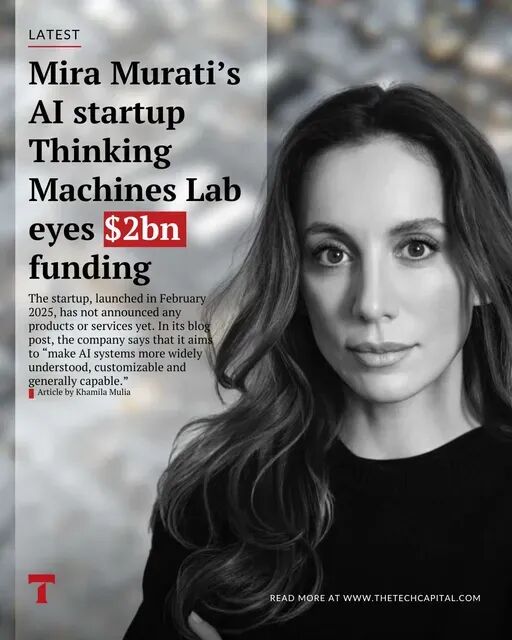
In the first half, we also saw several so-called super-talent-led companies that raised huge sums right out of the gate — like OpenAI co-founder Ilya Sutskever and former OpenAI CTO Mira.
👩🏻 Zhang Lu
Right, Ilya raised $1 billion. Mira raised $2 billion in her first round, and reportedly there were tech companies trying to acquire her company even during that fundraising, with offers rumored to be around $10 billion. So the capital market is still pretty wild.
👧🏻 Ronghui
What do capital markets see in these companies to justify such high valuations and acquisition offers?
👩🏻 Zhang Lu
I may not necessarily agree with their view.
Some people now expect these new companies to grow into trillion-dollar giants, building a general-purpose model that solves all kinds of problems and supports every application. I don't deny that possibility, but compared to a few years ago, the odds are much tougher at this point. Companies like Google are doing well with their own general models and continuously evolving. And there's also the open question of whether the future belongs to one general model for everything, or various specialized smaller models for different industries.
The people who can truly design new model architectures are extremely rare — this talent is incredibly scarce. When Meta offers someone $100 million, a team of a dozen or so people like Mira's is already worth over a billion. Add product capability and market premium, and such valuations become understandable.
But I'm concerned about giving extremely high valuations at such an early stage. That's also why we didn't invest in these projects. While the companies have potential, looking at the business fundamentals, you still have to respect the rules. We won't necessarily see several trillion-dollar companies emerge, and the growth cycle for trillion-dollar companies may not be that fast. Starting with such a high valuation, from an investor's perspective, the simple consideration is: what will the final return multiple actually be? If the starting point is too high, the investor's return multiple will inevitably be limited.
👧🏻 Ronghui
Speaking of VC returns, I'd also like to ask you, Zhang Lu — looking at the first half as a timeline, or stretching further out, what major changes do you see happening in Silicon Valley VC? There was news recently that Lightspeed registered an RIA license, and firms like a16z, Sequoia, and General Catalyst have also registered this license, effectively transforming from VCs into financial institutions. What structural changes do you think are underway in Silicon Valley VC?
👩🏻 Zhang Lu
Lightspeed registering as an RIA was actually relatively late among the big funds in making this identity shift. Firms like a16z, Sequoia, and General Catalyst did it much earlier.
A core backdrop is that these funds have grown so large that they're no longer just doing early-stage VC — they're also running fund-of-funds, asset management, and other businesses, gradually becoming broader financial institutions. I think on one hand, they simply have too much capital that early-stage projects alone can't absorb, so they need to make adjustments. On the other hand, the AI innovation ecosystem is also making people think about where VC capital actually adds value. Because we're seeing a shift: ten years ago, a company might need 3-5 years to go from zero revenue to $2-3 million in revenue. Now, they can basically do it in a year, or even hit tens of millions or more. This raises a question — before, a company might need to raise $10 million to reach $5 million in revenue. Now maybe $5 million in funding gets you to tens of millions or higher in revenue, so subsequent financing needs keep shrinking.
From the VC perspective, do you then need to make longer-horizon bets just to deploy the capital? So I think the innovation ecosystem is bringing all kinds of changes to company fundraising rhythms and amounts, and the VC industry itself is facing the problem of having too much money. So how to become a multi-product, multi-ecosystem financial institution — that's the transformation and the rationale.
👧🏻 Ronghui
You mentioned earlier that the past couple years were a low point for company exits. After CoreWeave's IPO this year, is the US IPO market showing signs of warming up?
👩🏻 Zhang Lu
At the beginning of the year everyone was actually quite optimistic — there were over twenty companies in Silicon Valley preparing to go public, including several of ours, but basically all of them paused. It's still because of so much market uncertainty. Donald Trump's tariffs in Q1, plus financial volatility, made companies more cautious about timing their IPOs. But I think we should also view this choice dialectically.
If a company planned to go public but paused because it felt market conditions weren't good enough, to some extent that also suggests its cash flow may still be decent. Because if cash flow were insufficient, they'd have to go public even if it meant bleeding. An IPO is fundamentally about raising capital. So if you still have some cash runway and can wait, it shows the underlying business is pretty solid.
Two companies everyone has been waiting for are Stripe and Databricks — both have strong cash flow and operations, so this year they'll also be judging what timing works best for going public. So in the first half, the open IPO market everyone was expecting didn't materialize. Now people are watching whether the second half will open up.
While CoreWeave and Circle have performed well, the overall number is still too small to really indicate the IPO market has opened. I think we're still in a not-yet-open state. Looking ahead to the second half, as financial markets adjust to the rhythm of political changes — you'll notice Wall Street's reactions to Trump's surprises and shocks have become less exaggerated than before — once this short-term or medium-term uncertainty becomes normalized, people may gain more confidence to go public in the second half.
We also hope the IPO channel opens up as soon as possible — it's helpful for exits, capital recycling, and can fuel the next wave of AI innovation ecosystem development.
Healthcare Is a Sleeping Data Goldmine, AI Is the Pickaxe
👧🏻 Ronghui
You've invested in quite a few enterprise AI, healthcare, and industrial automation projects — these kinds of innovation projects tend to get less attention amid the general focus on GenAI. What AI innovations in these areas do you think deserve more attention?
👩🏻 Zhang Lu
These areas are actually quite hot and developing fast. Though I understand why people mostly see consumer-facing applications in the media — image and video generation, for example. But what's actually moving fastest commercially tends to be B2B AI Agents and vertical AI applications.
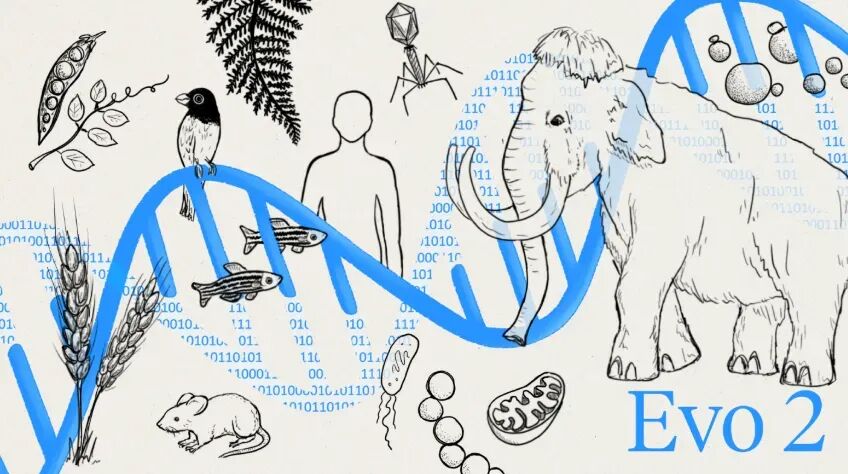
Our enterprise AI investments fall mainly into two categories: infrastructure, like Yangqing Jia's Lepton, plus Voyage AI, You.com, and Vectara (focused on RAG), where we got in relatively early; and vertical applications like Otter AI and Constructor AI. As for AI applications in healthcare — healthcare is actually a massive market and opportunity for AI Agents. This is a big year for AI and healthcare coming together. We did an AI in Healthcare 2.0 report at the JP Morgan Healthcare Conference earlier this year. The 1.0 report I did back in 2017 — think about that span, eight years. This year we've invested in several projects: one is a cell therapy small-model team we co-invested in with Khosla Ventures; we also invested in Arc Institute, which released a model called Evo 2 that uses AI to train on and process gene sequencing data. The former has strong applications for immunotherapy and even cancer-related diseases; gene sequencing applications are even broader.
We invested in Subtle Medical early on — they use generative AI for medical imaging enhancement and are now a leader in that space. You know my background, I actually started out in healthcare innovation before moving into investing, so I've always had passion for this sector. And in the US, healthcare is a massive market — 20% of GDP is healthcare-related.
When we discuss AI, a core point we often come back to is data. What many people may not realize is that over 30% of human society's data is healthcare-related. But of this 30% healthcare data, less than 5% is currently being utilized. So it's like a massive goldmine that we haven't yet tapped. AI is an incredibly powerful and efficient tool that can help us extract all the energy from this goldmine.
I also want to emphasize one point: AI is not here to replace doctors. One of its most important functions in healthcare is empowerment. It empowers not only healthcare practitioners but also core technologies themselves. Take regenerative medicine, for example — its underlying technology is advancing rapidly, and combined with AI, it can achieve low-cost personalization. There are already companies that can use stem cells to cultivate beating artificial hearts. In the future, making such technology both low-cost and personalized — growing organs from our own cells — is something that may actually be possible, and it could dramatically reduce costs at scale.
In personalized diagnosis and treatment, beyond my focus on cancer, I'm also deeply interested in brain diseases like Parkinson's and Alzheimer's. In both of these areas, AI assistance has led to many new explorations and discoveries. Previously, with these brain diseases, we typically saw the results and tried to halt the progression of Alzheimer's through those results, but we never found the root cause — treating the symptoms, not the source. Now AI can identify potential triggers from vast amounts of individualized data, offering new possibilities for "curing the root." So it comes back to what I said: healthcare data is a massive goldmine, but we're barely using it. With a powerful automated tool like AI, we can extract that goldmine and achieve strong returns while helping society at large. And at its core, AI is about reducing costs and increasing efficiency — this becomes even more evident in healthcare, allowing more people to access high-quality services at lower cost.

Our portfolio company Subtle Medical is a perfect example. It uses generative AI to optimize CT and MRI images — just a few minutes of low-precision scanning can produce high-definition imaging, saving both time and money while reducing radiation exposure. It has already received multiple FDA approvals, proving its medical-grade accuracy.
The key to healthcare innovation isn't just technological advancement — it's "how to bring costs down." Healthcare technology has continued to develop at a steady pace in recent years, but the core issue remains cost reduction, so it can benefit the masses. If only billionaires can access life-extension technologies, there's a ceiling on their application because the data sample isn't rich enough to iterate on. The real value of AI is making healthcare more accessible, not serving only a select few.

From Industry to Space: AI Is Reconstructing the Physical World
👩🏻 Zhang Lu
Industrial automation is also one of our key focus areas. We released a Physical AI industry report this year, analyzing automation trends in manufacturing, logistics, and other sectors. Affected by US-China supply chain decoupling, North America is accelerating its local manufacturing automation process — industrial robots, robotic arms, and other applications.
Another rapidly developing direction is the space industry. It's seeing fast growth across the board, from hardware-level robotics applications to software-level AI applications. Because the space ecosystem is relatively new and developing quickly, it has the advantage of being built on 3D printing, automated robotics, and AI from the start. SpaceX's factories are already highly automated, and satellites in orbit are essentially operational intelligent edge devices — carriers for AI. In space, many AI applications can be built, including robotics.
We also invested in a team from SpaceX building an automated robotic system — essentially a space gas station on the moon. Think of it this way: when we drive on highways, we need to refuel after a certain time. If space travel becomes routine, wouldn't spacecraft need refueling too? Their automated robotic system can harvest and process resources on the moon to supply interplanetary flights. They've also built a Moon Rover for lunar surface exploration, now on its 11th iteration. These projects are developing rapidly, marking how AI is deeply介入下一代太空基础设施。
Over the next 10 to 20 years, AI and the space ecosystem may explode simultaneously — something to look forward to.

👧🏻 Ronghui
Hearing Zhang Lu speak reminds me of something Peter Thiel said: "Silicon Valley promised us flying cars, but we got 140 characters instead."
Listening to you talk about these frontier scenarios in healthcare and space really makes me feel the power of technology to change reality again. Especially in healthcare — although some of the innovations you mentioned are currently happening in the United States, technological progress more or less affects all of us. My family member had major surgery, so I particularly resonate with this. I used to look forward to seeing technology shine in healthcare at every tech event I attended.
👩🏻 Zhang Lu
Yes, I especially understand that feeling. I studied materials science and engineering. In the innovation cycle of the past decade or so, business model innovation was exciting, but it wasn't fundamental technology innovation. You'd notice that while life seemed more convenient — we had social networks, platforms for self-expression — in the physical world, including healthcare, technological development was relatively slow over the past decade. We didn't see many new things entering practical application.
What excites me particularly is that we're entering an "Age of Exploration" — small goldmines everywhere, and AI is the shovel that can extract them. Once extracted, it can drive structural transformation at the industrial foundation.
At its core, this is a leap in productivity. With higher productivity, we have the opportunity to explore frontier directions like space technology. AI is a crucial tool — we should seize this golden shovel to innovate more and discover more.
Peter Thiel mentioned something in an interview recently: people worry that rapid AI iteration will bring many hidden dangers and challenges. I very much agree — in fact, I've participated in many discussions about AI regulation in recent years. But at this point we need to assess a risk: rapid AI development brings many benefits while also bringing many challenges. There's another possibility — AI doesn't develop, it stagnates. The potential risks of stagnation, and the harm it could cause us, may be even greater. So I think we'd rather take risks and drive new technology forward than fail to advance because of fear of the unknown and risk.

Human society is sometimes like a river — not advancing means retreating, and stagnation is a form of regression.
We've accumulated massive amounts of new data and new platforms — this is a rare opportunity. So I think it's very much worth getting excited about, especially for the younger generation. Our lives will change dramatically in the coming 10, 20 years. For us, it's both exciting and challenging — the challenge being, are you prepared?
Students graduating now are finding it difficult to find jobs, and they have many困惑. How can education help young people meet the demands of the new AI era? I often say, just think back to when computers first emerged. At first, many people thought knowing how to use a computer was a skill. Eventually, you realized every industry was using computers. At that point, people who could use computers replaced those who couldn't — and it wasn't a skill anymore, it was a basic requirement.
Now AI is the same. Being able to use AI tools will be a basic requirement. Not everyone needs to know how to program or build products with AI, but using these tools — like knowing how to use a computer — is a fundamental skill everyone will need to learn in the future, especially the younger generation.
👧🏻 Ronghui
Thank you Zhang Lu for sharing today! Whether it's observations on Silicon Valley's major companies and startup ecosystem, or investment stories in healthcare and industrial automation — all of it was fascinating. I hope everyone will pay more attention to those underlying technology innovations beyond generative AI's images and text.