2025: The Year AI Gaming Goes Mainstream? | A 4,500-Word Efficient Roundup of Major Players' Latest Moves: Tencent, NetEase, miHoYo…
One of the shortest paths to AI commercialization: gaming.
Not games moving into AI, but AI that must move into games
 👦🏻 Author: Yimu
🥷 Editor: Koji
🧑🎨 Layout: NCon
 🚦
🚦
Gaming, finance, and advertising are the three easiest domains for AI commercialization. Countless new-generation AI entrepreneurs are fired up about this, throwing themselves into all kinds of experiments.
Today, Crossing has compiled the various attempts in the AI gaming space to date — from gaming giants and startup studios to OpenAI and NVIDIA — hoping to offer some inspiration for friends committed to diving into AI game entrepreneurship.
"The NPCs are alive!" — This has been the biggest shock the gaming world has delivered to players over the past two years.
If you remember the NPCs in The Elder Scrolls mechanically repeating "I used to be an adventurer like you, then I took an arrow in the knee," or the pedestrians in GTA who only walked fixed routes, then in this AI era, these virtual characters are striving to acquire "souls."
Previously, updating a side quest required artists, designers, and writers to grind through iteration after iteration. Now, with AI integration, feed it a good prompt and it auto-generates side plots, quest flows, even character dialogue. Leading companies like NetEase, Tencent, and miHoYo have already made AI a new weapon for cutting costs and boosting efficiency. Others are testing AI-native games, going straight for volume through creativity. For instance, Suck Up! hit tens of millions of views across the web within just two weeks of launch; Whispers from the Star trended across social media during its closed beta.
Players, meanwhile, are experiencing unprecedented immersion and depth of interaction. No more dialoguing with preset scripts — you're talking to "living" characters, satisfying the emotional connection players have long craved, truly elevating games from mere entertainment tools to media for social bonding and emotional sustenance.
In 2023, AI in games simply meant simple preset behavior patterns. Today, with the rise of large models like ChatGPT and Claude, game AI has undergone a qualitative leap.
Especially with the emergence of "World Models," the fusion of games and AI is reaching entirely new levels. This is no longer just game technology — it's one of the important paths toward AGI.
So, how far has AI gaming actually developed?
As an entrepreneur or investor, is this track a trend or a trap?
A Technavio report states that from 2025 to 2029, the global AI gaming market will surge by $200 billion. When AI gaming has already shown it can become a viable commercialization scenario, its potential begins to transcend the virtual world, becoming a new testing ground for "unicorns."
🚥
After mapping out the positioning of major companies, smaller studios, and firms like OpenAI in the AI gaming track, we discovered something — this isn't simply a "new technology trend," but a reconstruction from tools to worldviews.
Big Players Enter: Some Cut Costs, Others Dream
Tencent, NetEase, and miHoYo
When talking AI gaming, you have to start with the giants' moves. After all, they have capital, technology, and users — they often set the trends.
Tencent, NetEase, and miHoYo — these three Chinese gaming giants are arguably charging at the front.
Tencent began laying out AI as early as 2016, and in 2023 launched the "Game AIR" development platform, supporting the full pipeline from character creation to scene generation.
By 2024, Tencent partnered with NVIDIA to bring ACE generative AI into game engines, enabling NPCs to engage in natural dialogue, lip-sync, and auto-generate movements.
Just recently, in February 2025, Game for Peace announced it would integrate DeepSeek, injecting AI capabilities into digital spokesperson "Jilly." This is Tencent's first — and one of the industry's rare — deep embeddings of a large model into core gameplay.

NetEase, through its Fuxi Lab, built China's first intelligent NPC system for games. In the mobile version of Justice, it launched "Shen Qiusuo," an AI-driven NPC.
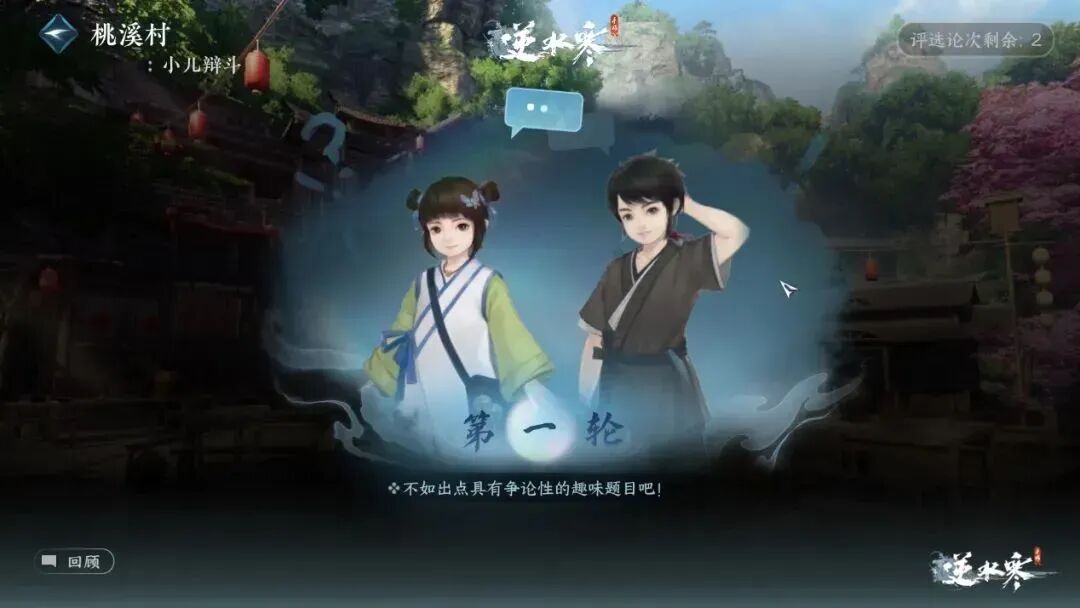
As the developer of Genshin Impact, miHoYo — compared to engineering-oriented directions like cost reduction and efficiency gains — clearly wants to use AI to dream bigger: truly attempting AI-native games, not just slapping AI patches onto traditional games.
They've done two things, one internal and one external:
- Internally, miHoYo quietly established an AI division called "Inverse Entropy" as early as 2018. The name fits miHoYo's style — focused on AI voice synthesis, motion capture, and art generation. One output was virtual idol "Lumi," with 1.7 million+ Bilibili followers. They also self-developed a large model called "Glossa" — from the Greek word for "tongue" or "language" — used to boost efficiency in generating character lines and quest narratives, and to enhance NPC interaction capabilities.

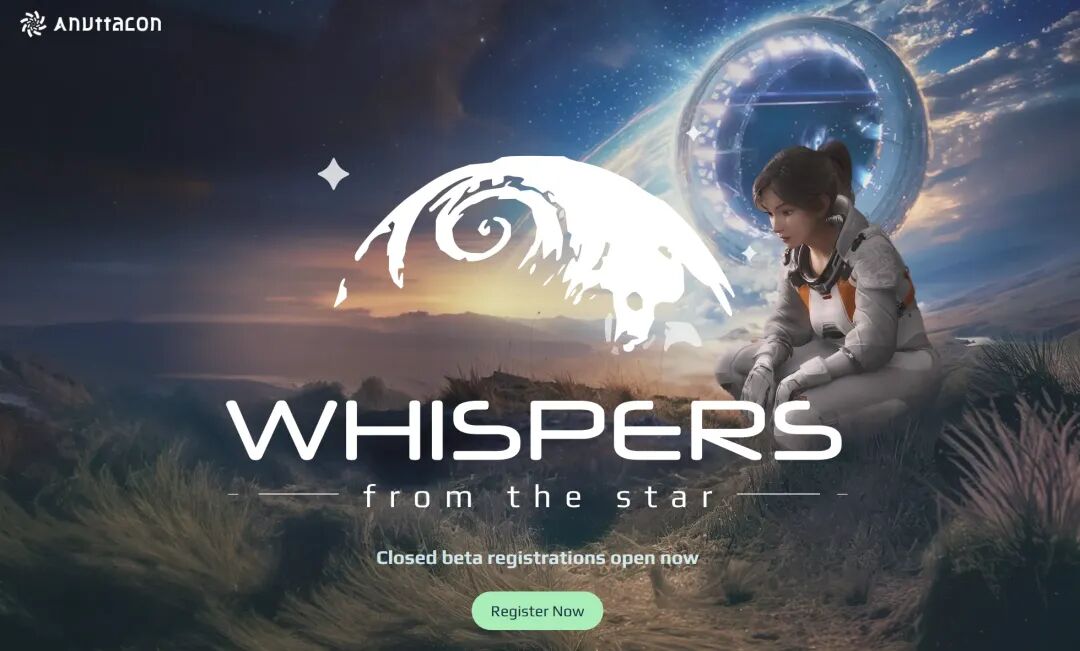
- Externally, in 2022, founder Haoyu Cai stepped outside miHoYo to open a new "instance" — Anuttacon, personally leading development of an AI game, Whispers from the Star. This is a game built entirely around AI. The core gameplay is full voice interaction: players talk to the protagonist Stella, helping her survive on an alien planet. Every sentence affects how the story unfolds, truly achieving "dialogue is destiny."
Across the ocean, American companies like Microsoft, Epic Games, and Ubisoft are equally active.
Microsoft partnered with Inworld AI to provide Xbox developers with an AI toolkit; Epic integrated AI tools into Unreal Engine; Ubisoft developed the Ghostwriter tool for generating NPC dialogue, reportedly reducing repetitive text workloads by roughly 20%.
Even traditionally conservative Nintendo and Sony are beginning to pay attention to AI.
Sony's AI division developed Gran Turismo Sophy, a racing AI that after defeating top pro players in 2022, went live in Gran Turismo 7 through an upgrade patch in February 2023 — the AI algorithm even made the cover of a Nature sub-journal.

From recent developments, AI is quietly reshaping the underlying logic of the gaming industry, and the big players' strategies basically split along two main lines:
One is efficiency gains, commonly called "cost reduction and efficiency improvement" — using AI to generate art, assist with coding, run testing pipelines. The goal is clear: save time, cut headcount, boost output. This is hard demand, ROI is transparent, and virtually every company is pursuing it.
The other is innovation — truly embedding AI into gameplay, like AI NPCs, dynamic plot generation, making direct cuts to player experience. These attempts are more cutting-edge and riskier, belonging to the "imagination track": you don't know if it'll blow up, but once it works, it's a new paradigm.
For now, the industry's main battlefield remains in efficiency gains.
So is AI gaming only playable for resource-rich giants? Not entirely.
Small Teams: How AI Lets Indie Developers "Punch Above Their Weight"
Compared to the strategic projects at major companies with hundreds of people and multi-year timelines, small teams and entrepreneurs in AI gaming are noticeably lighter, faster, and more imaginative. They're not stacking budgets — they're competing on creativity, using AI as a new tool to build unexpected gameplay and business models.
AI technology has dramatically lowered the barrier to game development.
Previously, a decent game needed at least art, programming, design, and sound — only after filling these roles could a team function properly. Now, with AI-generated images, auto-coding, and intelligent voice acting, a few people, even one person, can put together a playable game demo.
And it's fast — from idea to launch might take just days.
"One sentence, AI outputs thousands of lines of code"
"One person is a mini studio now — AI writes my code, draws my assets, does my voice acting. I just handle creative direction and quality control."
"One person used AI to make a small game in three hours, earned 120,000 in nine days."
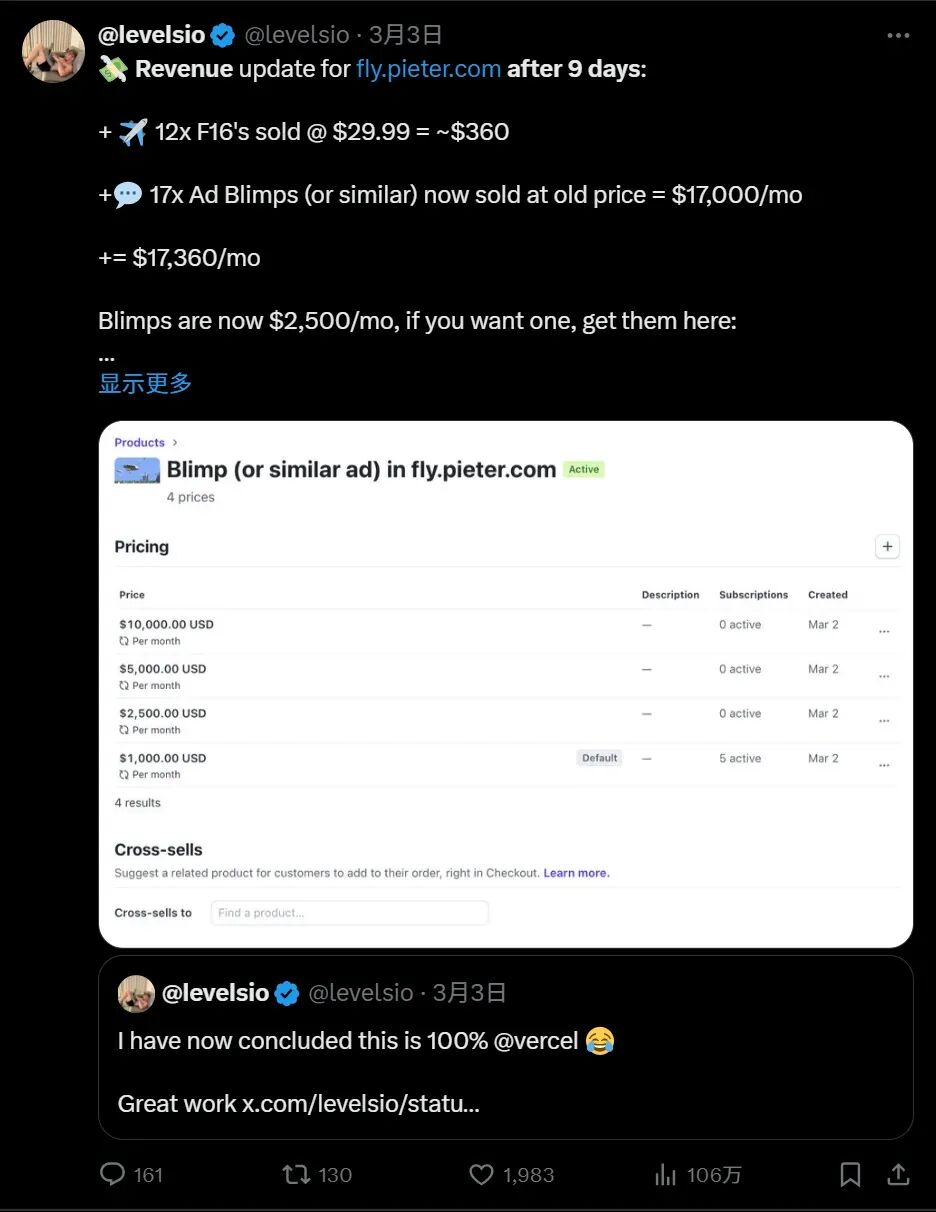 Source: X user @levelsio, earned 120K with an AI game in 9 days
Cases like these are everywhere on social platforms.
From Stable Diffusion generating art assets, to GitHub Copilot assisting programming, to ElevenLabs synthesizing character voices, AI now covers every aspect of game development.
But entrepreneurial opportunity isn't just in efficiency gains — the greater value lies in creating new types of gaming experiences.
The 2023 hit AI2U: With You Till the End ~ My Yandere Catgirl AI Girlfriend used a seemingly familiar "escape room" shell to open a new paradigm for AI game interaction.
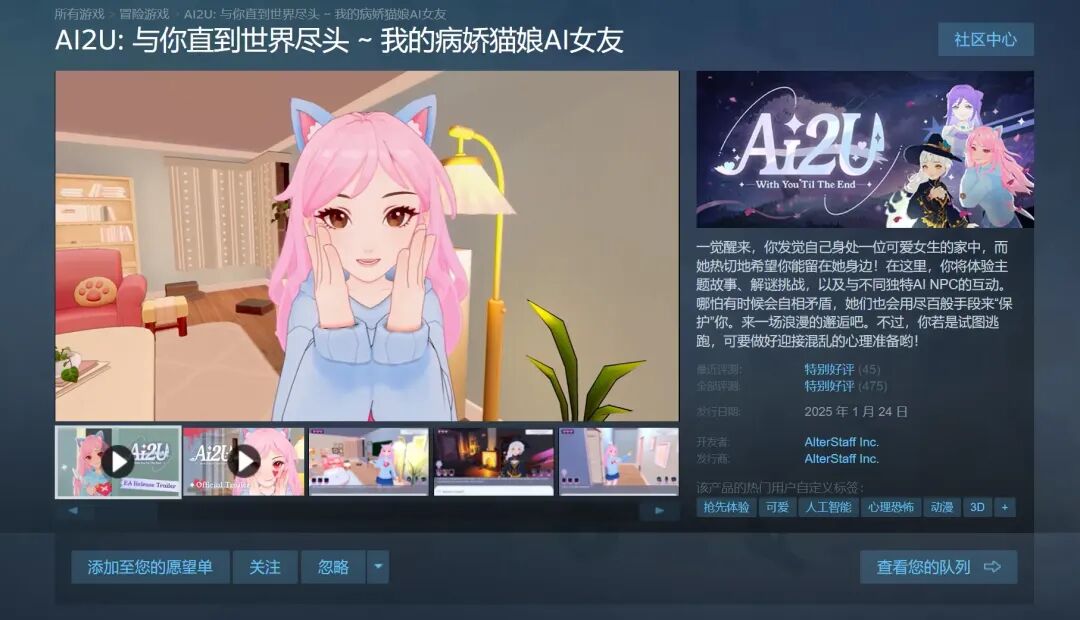
Unlike traditional script-driven linear narratives, this indie game connected ChatGPT to its NPC — the character was no longer just "preset dialogue + option tree," but could engage in real-time natural language conversation with players.
You could comfort her, deceive her, threaten her, even try to brainwash her with "join the Genshin Impact organization" to get her to let you go.
Every conversation could push the plot toward an entirely new ending. This isn't simply having more options — you say something, the game responds, and AI becomes a true collaborator in storytelling.
Commercially, these types of AI games are already showing profit potential.
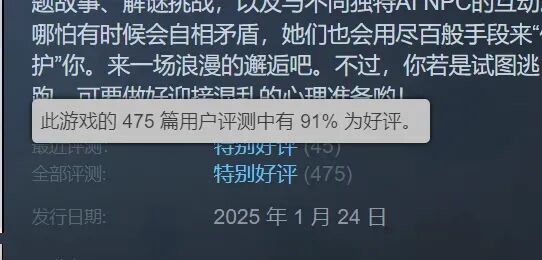
AI2U is priced at 22 yuan on Steam and has maintained a 91% positive rating since release. The demo version hit millions of downloads shortly after launch, showing that this kind of AI-interactive gameplay, even in exploratory stages, already has considerable user acceptance and conversion rates.
But succeeding with this kind of project isn't just about stacking technology.
The key question is: in this game, what player problem does AI actually solve? Can it deliver an experience that's "impossible without AI"?
So the people who can truly make great AI games aren't usually pure technologists — they're developers particularly sensitive to game design and player psychology.
AI Model & Chip Makers: From Tool Providers to Game Creators
OpenAI, Anthropic, NVIDIA
While model giants like OpenAI and Anthropic haven't personally jumped into making games, their APIs have become the underlying technical support for many AI games.
OpenAI opened new features like Function Calling in 2023, making it easier for developers to integrate GPT models with game logic. Many developers say ChatGPT itself has evolved into a kind of "gaming platform," with large numbers of users engaging in roleplay and interactive fiction through conversation.
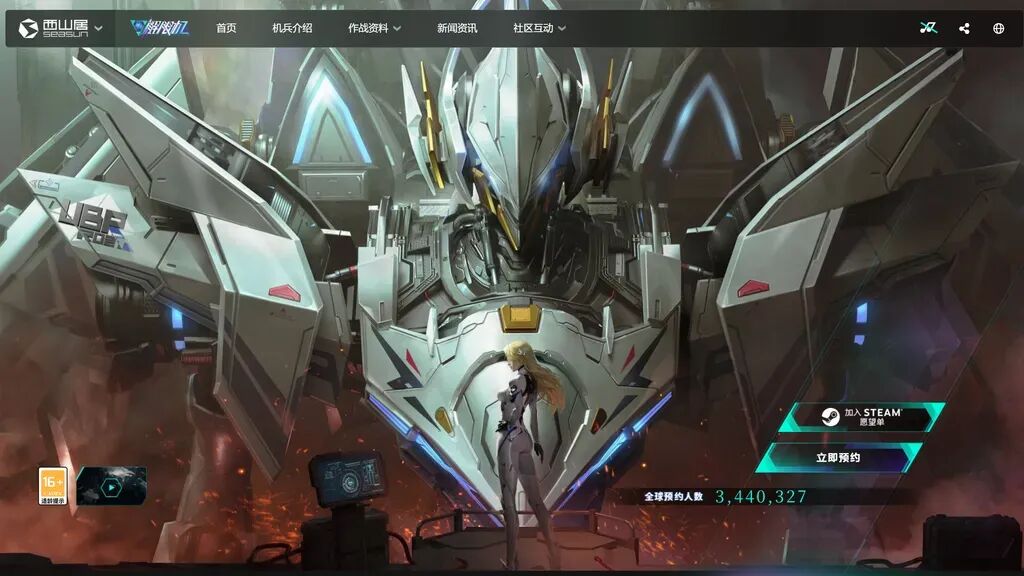
NVIDIA has taken bigger steps — not just selling technology, but personally getting into content. In 2023 they launched the ACE for Games framework, bundling voice, vision, and dialogue models with the goal of creating "living" NPCs. In 2024, NVIDIA partnered with Chinese developer Seasun to develop Mecha BREAK, billed as the world's first officially launched ACE intelligent NPC game.
Looking at startups, Inworld AI focuses on AI character platforms, helping writers set NPC backgrounds and personalities, then having AI drive real-time dialogue and behavior. This system has already been adopted by major companies like Microsoft, used not just in games but in metaverse scenarios. They raised over $100 million in funding between 2022 and 2023, momentum strong.
Character.ai isn't fundamentally a game company, but their platform lets users "sculpt" AI characters and interact with them — the gameplay is actually quite game-like. Some use it for virtual romance, others get lost in fantasy adventures. In 2023, they raised $150 million at a valuation exceeding $1 billion.
It's fair to say AI companies entering the gaming market bring entirely new perspectives.
Traditional game companies think: "How do we use AI to improve games?"
AI companies think:
"How do we make AI itself into a game?"
Users Are the Final Jury
No matter how dazzling the AI technology, whether it can go the distance ultimately depends on whether players buy in. At the end of the day, users are the final jury, and the player community's attitude largely determines how wide a path AI gaming can carve.
So, how do players feel about AI games?
From current reactions, it's a mixed bag.
Cases like Justice, where NPCs can freely converse and remember player behavior, create unprecedented emotional connections — players feel the game world is more real.
But AI botching content isn't without precedent. Square Enix's trial AI preview of The Portopia Serial Murder Case crashed and burned — because the AI frequently misunderstood instructions, resulting in a flood of player complaints and a Steam positive rating of just 12%, landing it straight on the "lowest of all time" leaderboard.
Having explored what numerous companies and teams have done in the gaming space, let's boldly envision what AI-driven games of the future might look like.
Today's AI gaming may point toward a larger experiment. For instance, games could become training grounds, testing platforms, even prototype spaces for "simulated societies."
Like the generative smart town Stanford built, where agents make autonomous decisions based on environment and memory.
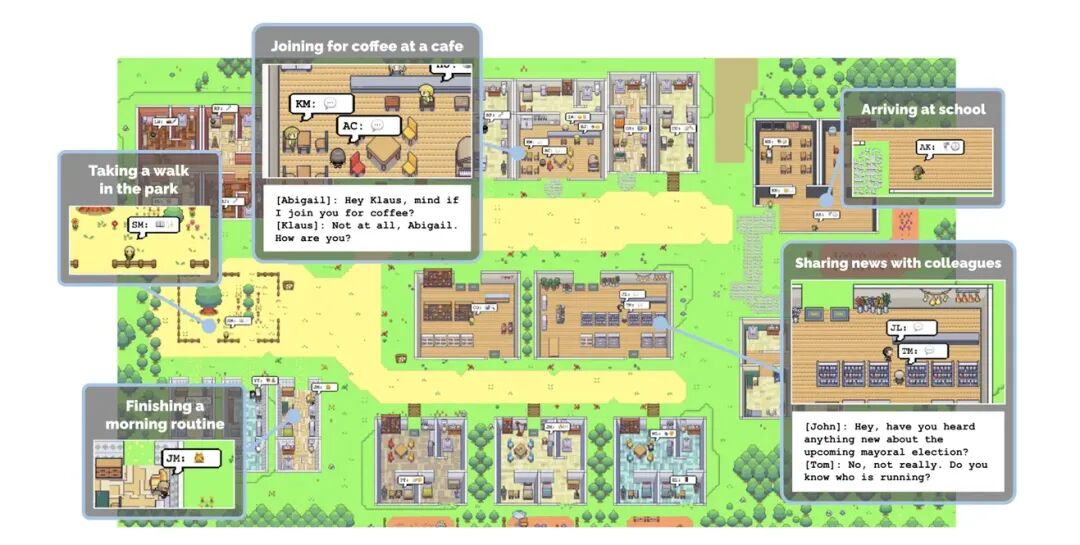
Source: Paper Generative Agents: Interactive Simulacra of Human Behavior
AI can also learn from video and user interaction data to internally construct an interactive virtual world, dynamically generating visuals, physics, even character behavior — using games to let AI not just understand a world, but build one: the "World Model."
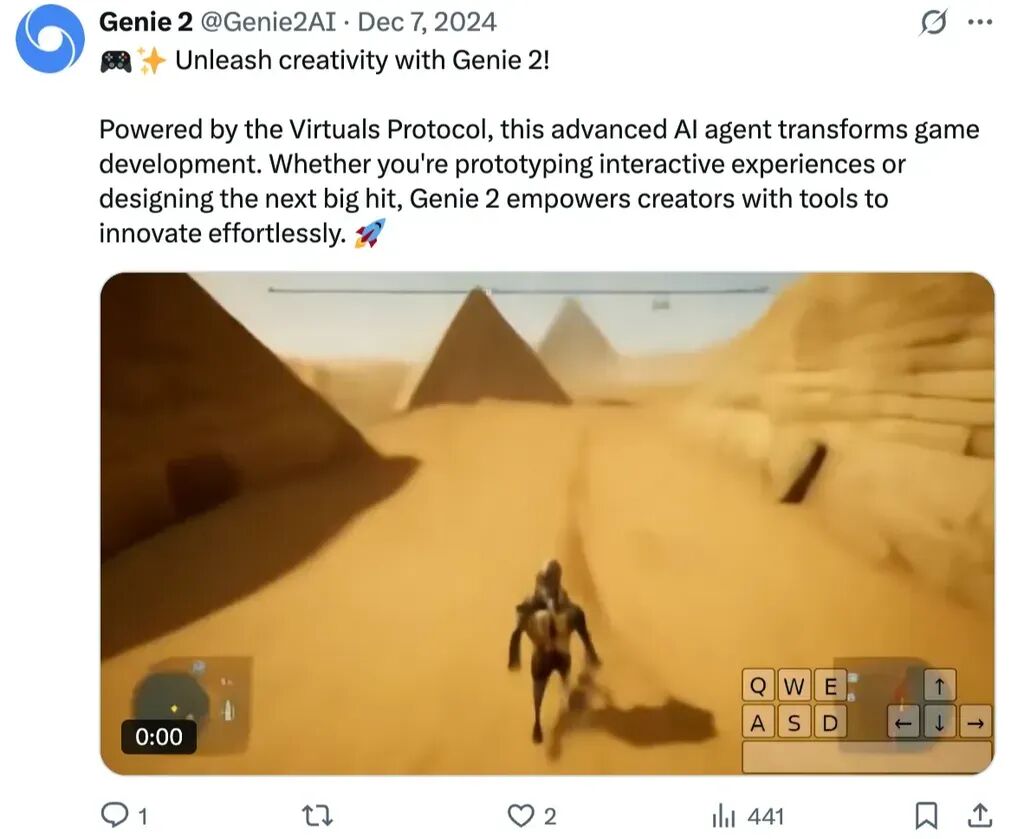
In late 2024, Google DeepMind released Genie 2, the industry's first large-scale generative model dubbed a "foundation world model."
AI is infinitely expanding gaming's boundaries, and the venture capital world is responding actively. Beyond multiple traditional dollar-denominated funds that have been investing aggressively, a16z even established a dedicated Game Fund ONE for the AI era, convinced that "now is the best time to build a fund supporting the next generation of game builders." They're deploying a $600 million fund toward a gaming industry that will far exceed $300 billion.
Many gaming veterans are also entering in their own ways.
We met former NetEase SVP Shaoyun as a guest at Shanghai AI Hacker House. He mentioned establishing an AI-native game incubator, going full throttle to support new-generation AI game startups.
Tencent NExT Studios founder Shen Li established a new game incubator called Re³ Lab (Rhenium-3 Lab), focused on early-stage incubation of original games under AI-era impact. He believes:
Although AI has fundamentally reconstructed game development from a technical standpoint, there remains much in human storytelling that cannot be replaced — and this itself represents a new kind of business opportunity.
2025: The Year Zero!
While the gaming industry has been throwing itself into AI-empowered games for many years, 2025 is when — from startups to cosmic-scale giants — everyone is truly going full throttle.
Especially after DeepSeek's release, open source represents "the democratization of intelligence." Now, anyone can develop their own game based on the world's best AI large models.
Meanwhile, three future AI development trends are all closely tied to gaming:
- Faster: Real-time generation (faster)
- More personalized: Truly achieving personalized generation for billions of faces
- Model breakthroughs叠加device innovation, enabling 10-100x input increase and 10x output increase
These three directions together point toward AI gaming's future trajectory: faster response speeds, deeper personalized experiences, richer input methods and more immersive output experiences — all of which will dramatically change game design and player experience.
I think this is what truly marks the year zero of AI gaming!
Crossing will continue tracking all players' new developments in the AI gaming track, looking forward to seeing them create more outstanding, top-tier games.
Games have always been an important part of people's lives.
They are a source of spiritual strength, an oasis modern people can escape into for breath amid busyness, and a "small portable shelter" we carry with us amid anxiety.
With AI's empowerment, games will become richer, more real, more entertaining, more able to provide companionship, comfort, and joy.
And companionship, comfort, joy — these are the scarcest commodities of our era!

🚥