22-Year-Old Embodied AI CEO, 5 Funding Rounds, Over $100 Million: "Don't Know How High the Sky Is," "Ate Ten Years of Bitterness in One Year" | Interview with RoboParty's Huang Yi
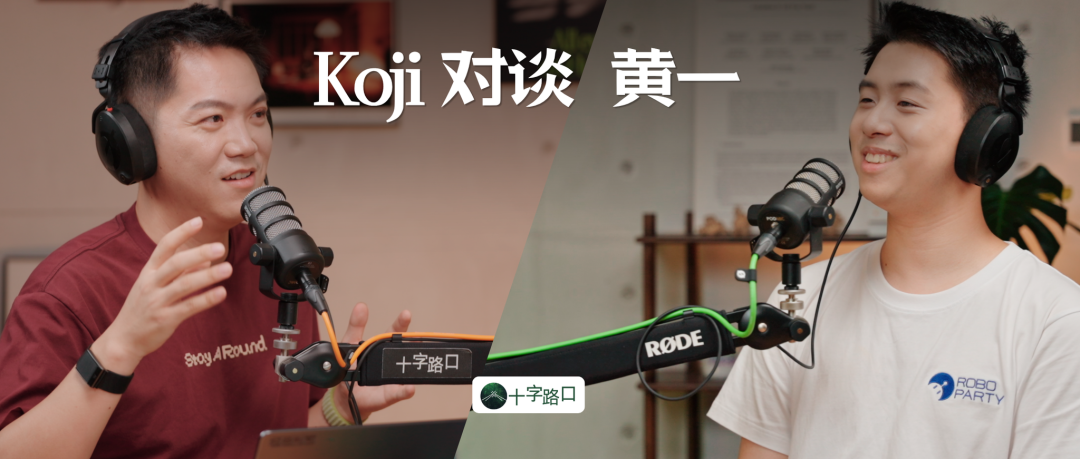
👦🏻 Podcast interview: Koji
🥷 Edited by: Crossing
🧑🎨 Layout: Zeoooo

🚗 This week's guest on Crossing is Yi Huang, founder and CEO of RoboParty. Born in 2004, he's 22 years old this year and has rapidly closed five funding rounds in just one year, totaling over $100 million — with investors ranging from prominent VCs to strategic players like Xiaomi and CATL.
He describes this year as "living a compressed life": cramming a decade's worth of hardship into a single year. He also candidly says that the advantage of starting a company right after college is that "you don't know how high the sky is" — it's not confidence that matters, but arrogance; the "peak of stupidity," when you still lack clear understanding of the industry, is paradoxically the best moment to start a company.
Few founders are as willing as Yi Huang to share their know-how in such granular detail: how to raise your first check, how to choose an FA, how to evaluate term sheets, how to assess strategic investors' money, where to incorporate your company...
In this episode, we also talk about his starting point — building robots in his dorm room at Harbin Institute of Technology with classmates; his two-to-three-day "courtship" of a Zhejiang University engineer to recruit him; his understanding of "the highest form of painting a vision is believing it yourself first"; and his read on the embodied intelligence industry: if we compare embodied AI to a 42-kilometer marathon, the robot hardware itself has run about a quarter of the distance, the "cerebellum" roughly half, but the "brain" may have only covered one or two kilometers.
If you want to understand how this generation of young founders makes decisions, manages equally young teams, and coexists with bubbles, this episode is a rare specimen.
Listen on WeChat:
Listen on Xiaoyuzhou:
🎬 The video podcast is also available on @Koji's WeChat Channels, Xiaohongshu, Bilibili, YouTube, and other platforms
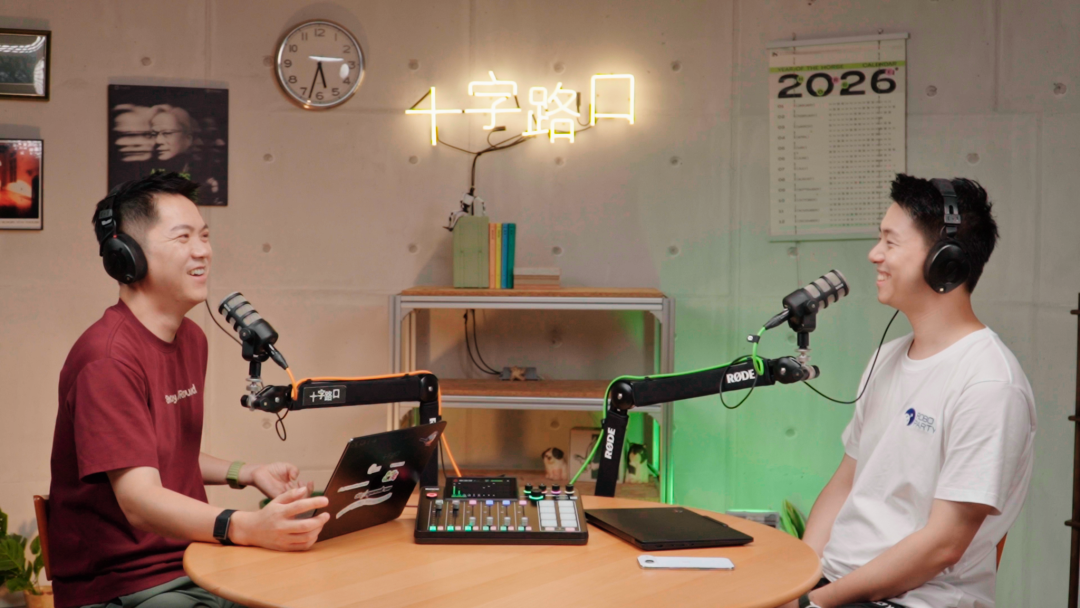
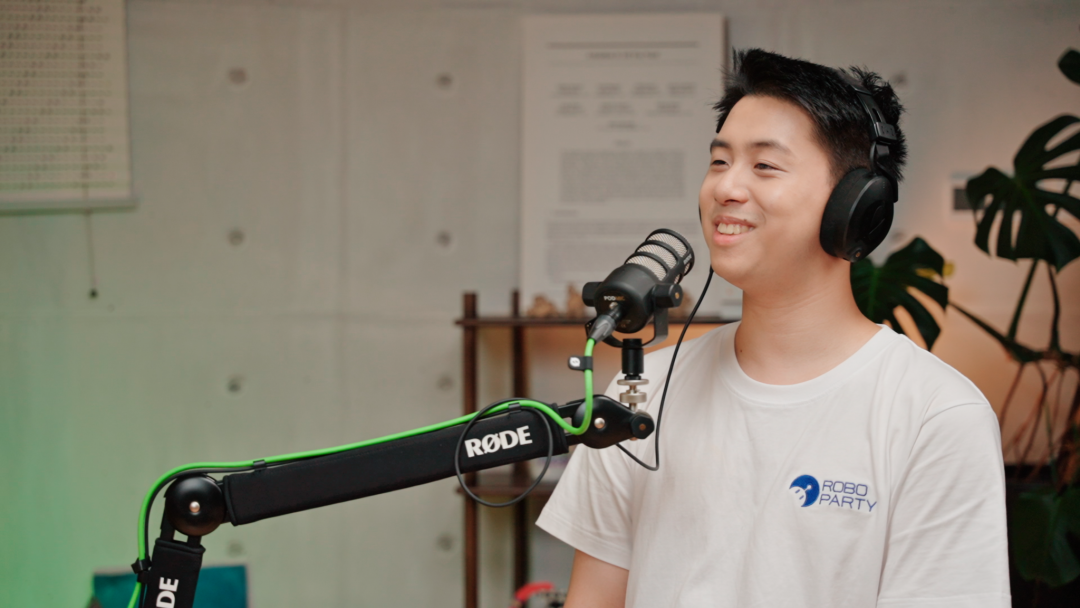
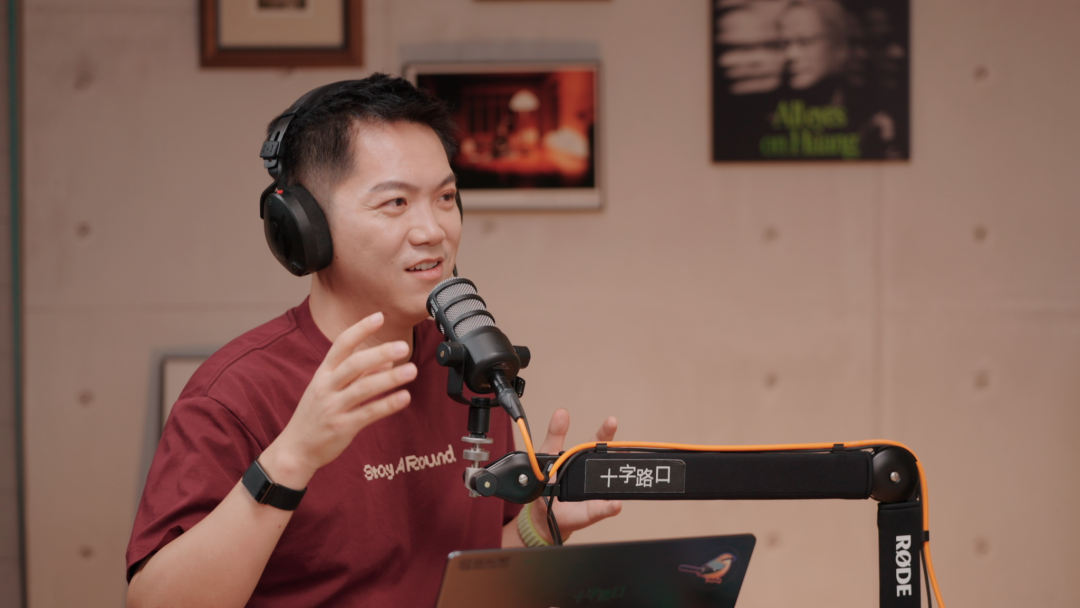
Lightning Round
👦🏻 Koji
How old are you?
👨🏻💻 Yi Huang
👦🏻 Koji
Your educational background?
👨🏻💻 Yi Huang
High school at Hua Er (No. 2 High School of East China Normal University), university at Harbin Institute of Technology.
👦🏻 Koji
MBTI and zodiac sign?
👨🏻💻 Yi Huang
INTP, Aries.
👦🏻 Koji
Describe RoboParty in one sentence.
👨🏻💻 Yi Huang
We hope to reduce redundant reinvention of the wheel worldwide through open source, thereby advancing embodied intelligence.
👦🏻 Koji
So "open source" is your core tag?
👨🏻💻 Yi Huang
Yes, it's a very core label for the company.
👦🏻 Koji
Your actual funding situation?
👨🏻💻 Yi Huang
Five rounds completed, actual total exceeding $100 million.
👦🏻 Koji
Current team size?
👨🏻💻 Yi Huang
Around 140 people.
👦🏻 Koji
Including interns?
👨🏻💻 Yi Huang
Including. Nearly half our company are interns.
👦🏻 Koji
Can you share current revenue and profit?
👨🏻💻 Yi Huang
In 2026, our main product RPO maintains shipments of around 100 units per month.
Next year we'll launch the new product RP1, with projected annual sales of around 2,000 units.
👦🏻 Koji
What were you doing before starting up?
👨🏻💻 Yi Huang
Worked on drones and robots. In 2023, I bought into Elon Musk's vision and started building humanoid robots.
Still in school at the time, paying out of pocket for materials, stacking hardware in my dorm room.
👦🏻 Koji
Today's interview has two parts: one on embodied intelligence and RoboParty, and another on your entrepreneurial experience and takeaways over this past year-plus.
👨🏻💻 Yi Huang
My startup experience is only about a year, but it feels like I've lived a "compressed life."
I've eaten all the bitterness that might have taken 10 years, in just one year. Not just fundraising and investment, but also massive management conflicts and strategic choices. In my view, strategy matters far more than team.
As Jie Tang and others have said: cognition trumps vision, which trumps technology, which trumps management.
Raising $100 Million at 22: What Are VCs Betting On?
👦🏻 Koji
My first question: why do you think you were able to raise so much money? What exactly are VCs investing in when they back you?
👨🏻💻 Yi Huang
In the embodied intelligence industry, this amount isn't actually that large, but it's indeed a massive sum for a young founder.
VCs didn't bet on us because we're young. When we got our first investment, the robot prototype was already built. I initially invested several million RMB myself to assemble the product before institutions were willing to follow.
During the seed round, the most important thing is to gather as many cards as possible — to get enough investment interest. Because the first-round investment agreement basically stays with you for a long time, even all the way to pre-IPO. Subsequent institutions typically adopt the first round's framework seamlessly.
So whether the first round has a quality lead investor, and whether the terms can be negotiated to be sufficiently founder-friendly, is critical. For example, our company still has no QIPO redemption, no ratchet provisions, or other restrictions — we got very friendly dollar terms. This reduces some of the subsequent startup pressure. Though only some.
👦🏻 Koji
What do you value most in investment terms?
👨🏻💻 Yi Huang
Many people think having investors on your board adds another layer of oversight, but that's not necessarily true. If the shareholder can genuinely provide significant industry help — like Xiaomi and CATL — giving them a board seat actually makes business collaboration smoother.
The specific term details can't be fully disclosed, but we've summarized a general framework for avoiding pitfalls. For instance, personal joint liability basically shouldn't exist anymore — even many state-owned funds don't insist on it.
Another example: QIPO redemption is like a Sword of Damocles hanging overhead. While execution faces many obstacles, it's still a hidden risk. We need to look at whether redemption uses simple or compound interest, and what the percentage is.
Finding an experienced, professional lawyer is extremely important — they can help you avoid 90% of hidden risks.
👦🏻 Koji
How much did FAs help you?
👨🏻💻 Yi Huang
They helped. An FA's greatest value is getting you across the 0-to-1 threshold, into elite circles of VCs and PEs, letting you see institutions' decision-making processes and the rules of the fundraising game.
But the FA market is flooded with mediocrity now. Some have even started playing "allocation" games with projects — quite absurd.
👦🏻 Koji
Facing so many FAs, how should founders filter them?
👨🏻💻 Yi Huang
Not by passive filtering, but by actively testing them through questions.
You can directly ask: Can the FA clearly reconstruct the actual fundraising situation of all competitors in the industry? In this track, who calls the shots, who is the real decision-maker?
Many FAs just blindly pitch for you. You might meet 100 investors, but only 10 actually invest in embodied intelligence, and even then they might connect you to the wrong decision-maker. Fundraising is a two-way selection — not just investors betting on people, but startups also need to find people who understand the industry and are the right fit.
👦🏻 Koji
When you decided to fundraise, who was the first investor you met? How did you connect?
👨🏻💻 Yi Huang
The first was Bill from 5Y Capital. He found me proactively.
👦🏻 Koji
How did he find you?
👨🏻💻 Yi Huang
At the time I had started a robot technical exchange group. He added me in the group and asked to chat.
Early on we had two business lines: we wanted to use traditional cash-flow businesses to subsidize the "money shredder" of humanoid robot R&D. But I quickly realized this thinking was wrong.
Embodied intelligence requires high-frequency, large-capital iteration. By the time you get your own cash flow running smoothly, your technical position in robots would have been left far behind by competitors. You must leverage the capital markets.
The essence of VC is to take the cash flow you could earn over the next 20 years, burn it today in advance, and charge to the industry forefront during the most competitive window. The more money you take, the more of a bubble it appears to outsiders. The bubble essentially arises from the scissors gap between hot industry money and current commercialization speed.
👦🏻 Koji
So, is there a bubble in embodied intelligence now?
👨🏻💻 Yi Huang
Of course.
How to Coexist with the Bubble?
👦🏻 Koji
Since there's a bubble, as a founder inside it, how do you coexist with it?
👨🏻💻 Yi Huang
We have a shareholder called Shunwei Capital — the core idea is "going with the flow." When the industry gets wind, this "momentum" indeed contains bubbles, but you must ride this momentum to get your company running. No company can go against the era.
Bubble and momentum are two sides of the same coin, manifesting in all aspects. Because you're in the hottest track, suppliers and partners will give you a second look. If you were in photovoltaics or real estate today, nobody would pay attention to you.
Talent is the same. Right now, massive numbers of cross-industry talent are flooding in. On the surface it looks like they're chasing hot money, but the underlying common sense is: this track's future promising potential is genuinely the highest.
👦🏻 Koji
You said to get as many term sheets as possible in the first round. When you're holding a handful of cards, how do you choose?
👨🏻💻 Huang Yi
It's not really about choosing.
First principle is extreme respect. When an institution is willing to bet on you, they're putting down real money and trust.
Second is rational game theory. Some institutions you can pass on now and still get later.
👦🏻 Koji
You need to figure out who your real Deep Pocket is for the future. At the angel round, resist the impulse to let a big fund eat too large a slice.
Some funds have extraordinarily deep pockets — they're the only players later on who can follow on with 500 million or 1 billion RMB. If you stuff them with 10% of your company in the first round, by the later stages their existing position is already large enough that their willingness to keep adding drops significantly. You're essentially losing your most important financial guarantee for the later stages.
👨🏻💻 Huang Yi
As a "second wave" embodied AI entrepreneur founded after 2025, we'll look at the paths of those who came before and ask around about institutions' post-investment reputations.
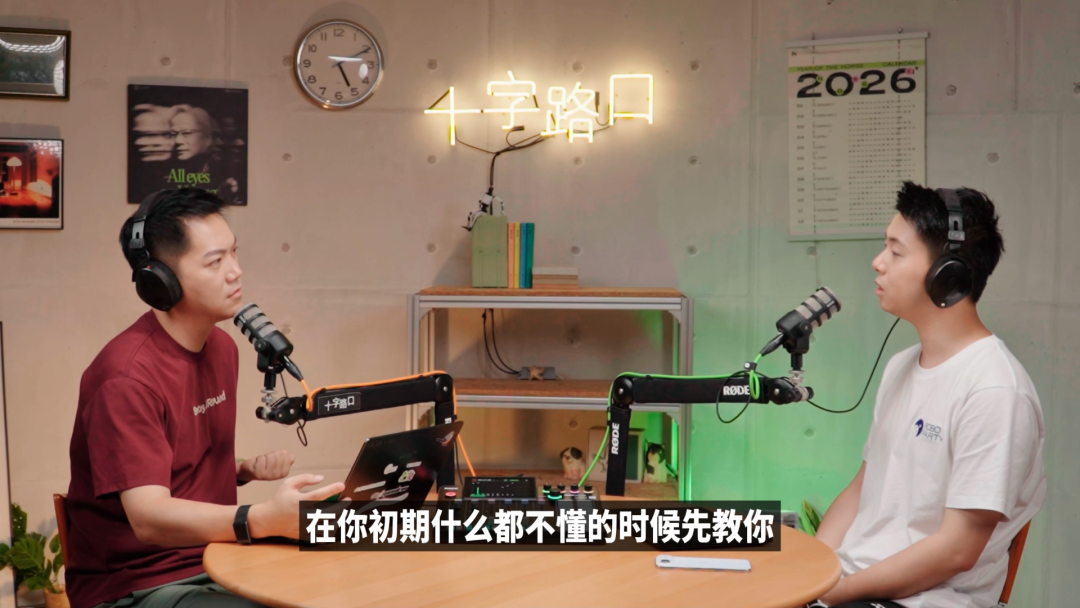
For example, professional angel institutions like ZhenFund and Matrix Partners China will throw a ton of resources at you — they'll teach you first when you don't know anything in the early days. This exchange of know-how is worth far more than the quality of the money itself.
👦🏻 Koji
Among your shareholders you have both financial VCs and industrial giants like Xiaomi and CATL. What's the fundamental difference between industrial money and purely financial money?
👨🏻💻 Huang Yi
VCs bring networks and an information field of fellow founders.
Industrial money needs to be taken very carefully, but once you get it right, the empowerment is exponential. Take Xiaomi — we've had extensive exchanges with Teacher Xiang on the robotics side, including which directions to pull toward in the future.
They have their own robotics department internally, with massive accumulated experience, a lot of knowhow they can share with us.
As a founder, if your strategic decisions are accurate, you can avoid a huge number of detours. They have enormous amounts of knowhow, enormous amounts of documentation to share, helping you make strategic decisions.
👦🏻 Koji
USD or RMB — at this juncture, how should founders choose?
👨🏻💻 Huang Yi
The evaluation criteria are completely different. USD institutions will readily pay up because you have world-leading technical knowhow or a unique paradigm.
But RMB institutions are different. They care more about business model and commercialization.
And the further along you go, the lower the professional caliber of some investors you encounter. Because having the guts to bet early, to choose to invest in you when nobody else is vouching for you, requires extremely professional judgment — and of course, that's also the part that generates excess returns.
👦🏻 Koji
So you're still constantly meeting with institutions?
👨🏻💻 Huang Yi
We'll keep looking in parallel.
👦🏻 Koji
Pretty much raising nonstop at a pace of one round every month or two?
👨🏻💻 Huang Yi
Pretty much. We're currently maintaining a rhythm of roughly one round every month or two.
👦🏻 Koji
What's the underlying thinking behind this high-frequency fundraising?
👨🏻💻 Huang Yi
This is mainly based on judgment of industry cycles and time windows. My view is: take as much as you can, while you can.
While embodied AI is in the 15th Five-Year Plan, and while everyone including the secondary market has money, they'll put their excess capital as LPs into GPs, and the GPs will start investing in companies. There are a lot of add-on rounds happening this year — essentially discovering that while a company hasn't reached that stage yet, you squeeze in a round between two stages.
For our company, our milestone is the release of RP1, then pushing to mass production — that might be our Series A standard.
👨🏻💻 Huang Yi
The Series B criterion is scaled commercial closed loop. Before that, virtually all embodied AI companies will remain at the Series A stage.
But anyway we'll look in parallel, see if there are other commercialization points that can hit this milestone, and after hitting it maybe open a larger round.
👦🏻 Koji
Then after fundraising, where should the company register?
👨🏻💻 Huang Yi
Register where the talent is. For example, if you're doing models, everyone basically clusters in Beijing, or clusters in TusPark. Our company's Beijing base is on the 20th floor of TusPark C, and the 19th floor is Tsinghua's Institute for Interdisciplinary Information Sciences.
Our company is actually based in Shanghai. I feel the talent in Shanghai's Pudong area is okay, so we'll register in Shanghai.
👦🏻 Koji
Then let's wind the clock back a bit to your university days. When you were at Harbin Institute of Technology, how did the seed of entrepreneurship sprout?
👨🏻💻 Huang Yi
Actually I hadn't thought it through too clearly. When you first start a company, you feel like you can do everything, feel like none of the products you see on the market are any good. First you have to believe you can pull this off — that's very important.
Why Does Entrepreneurship Require Arrogance?
👦🏻 Koji
So confidence is important — believing you can accomplish something?
👨🏻💻 Huang Yi
Not confidence — arrogance is important. Before you have a clear understanding of the industry, there will be a period of extreme arrogance, and I think that's the right time to start a company. It's what they call the "peak of Mount Stupid."
👦🏻 Koji
So for you, when was that?
👨🏻💻 Huang Yi
Basically when we made robots better than all the various labs in school. There are tons of impressive labs in school, but actually the robots they made weren't all that. At that point you stand on a massive peak of Mount Stupid.
👦🏻 Koji
Who was around you then? Who worked with you?
👨🏻💻 Huang Yi
My roommate and some lab classmates.
👦🏻 Koji
You mentioned graduating from Harbin Institute of Technology in three years and starting a company right after — how did you pull that off?
👨🏻💻 Huang Yi
Schools have some policies, quite humane actually. Finish your credits, finish your graduation project, and you're free.
👦🏻 Koji
Then what was your graduation project?
👨🏻💻 Huang Yi
The graduation project was a humanoid robot — it's actually still up on Zhihu, take a look if you're interested. It looks incredibly naive now, looking at it feels like looking at your own child.
👦🏻 Koji
I feel like you really enjoy putting your whole process out there on Zhihu?
👨🏻💻 Huang Yi
I personally quite like doing serialized output. How many people you can influence in life — Steve Jobs directly influenced an entire generation of Silicon Valley spirit. I think these are each entrepreneur's own pursuits.
👦🏻 Koji
So from starting the company until now, you've been CEO for about a year and a half. How does it feel?
👨🏻💻 Huang Yi
There are stages. First is starting from a very jerry-rigged situation, knowing nothing, gradually getting your hands dirty — that's the first step.
Second is initial contact with capital markets, understanding that capital markets are about bringing future money to use today — that was around 6 months into the venture.
Third is the stage where headcount starts slowly expanding. After a company passes 100 people, how do you manage 100 people. This is also the hurdle we're currently going through. Though I personally interview everyone, talking for very long.
👦🏻 Koji
What's the longest you've interviewed someone?
👨🏻💻 Huang Yi
Can't really call it an interview — it was poaching. For someone I actively went after, I might spend two or three days with them, going wherever they want to go. For example, for a colleague from Zhejiang University, I just went straight to Zhejiang University to find him. He's joined us now.
👦🏻 Koji
What was that experience like? Spending two or three days with one person, that much to talk about?
👨🏻💻 Huang Yi
Can only say it was very important.
He hadn't decided to join a startup at first, hadn't figured out his future development. The company didn't have many people then either, and we would paint a vision, tell him: for this joint of ours, I'll eventually build out a very powerful module department for you. He could completely disbelieve me, but to this day, the integration level of our joint module could absolutely be spun out as a standalone module company.
👦🏻 Koji
He had plenty of reasons not to believe you then — how did you get him to believe you?
👨🏻💻 Huang Yi
I think it was sincerity. The highest realm of painting visions is when the vision you paint doesn't feel like a vision to others — or rather, it's also what I myself believe in. More about clearly describing a future they can't see clearly, rather than painting visions about salary increases — those are meaningless.
👦🏻 Koji
Painting visions is actually a neutral term — let's rephrase it as describing a vision.
👨🏻💻 Huang Yi
Describing a blueprint. Elon Musk is the biggest vision-painter of all, he's painted Mars for you all the way to 2040.
👦🏻 Koji
I remember you also told me that in the earliest days at Harbin Institute of Technology, you had roommates and classmates starting the company with you, but the monthly salary you could offer everyone might have been two or three thousand RMB.
Back then, how did you convince them to work with you for such low pay?
👨🏻💻 Huang Yi
Harbin has one advantage — there really aren't any decent tech companies. And here we happened to have a humanoid robot startup, these classmates had more or less worked with me before, competed with me. They knew my technical stack.
They believed our technology could piece together such a robot. For example, my tech plus motion control could combine better, add structure, add hardware, and you could build a better robot.
👦🏻 Koji
When mentioning RoboParty, one very important keyword is "open source." How did you first think of open sourcing?
👨🏻💻 Huang Yi
After I finished my first-generation robot, I felt it wasn't very useful, so I just open sourced it, posted it on Zhihu. A lot of people contacted me to discuss it, and we slowly discovered this path.
DeepSeek open sourced because its models became extremely powerful — its open sourcing changed the world's perception of MoE, MLA, and other algorithms. Only when you've made a good product does open sourcing it become useful, not open sourcing a completely useless product.
👦🏻 Koji
It was probably that there was a lot of positive feedback from open sourcing at the start, which made you decide to position yourself as an open source company. What was this positive feedback?
👨🏻💻 Huang Yi
The positive feedback was that there were really three to five people who followed your blueprints and actually built the robot. That spark was incredibly touching — I still maintain very good relationships with those three to five people to this day.
How Does Full-Stack Open Source Make Money?
👦🏻 Koji
In the embodied intelligence field, for a company that's open sourcing its full stack, how will you make money in the future?
👨🏻💻 Huang Yi
Profit comes from moats. Industry barriers are about how much fixed capital, headcount, and technical stack you need to enter the field. But where you actually make money is in moats. Right now, new energy vehicles aren't very profitable, but batteries represent the biggest moat — they account for a huge share of costs, so battery makers turned profitable first.
For robots, it's the same: our company's moat — what we actually make money on — is extremely low friction in collaboration.
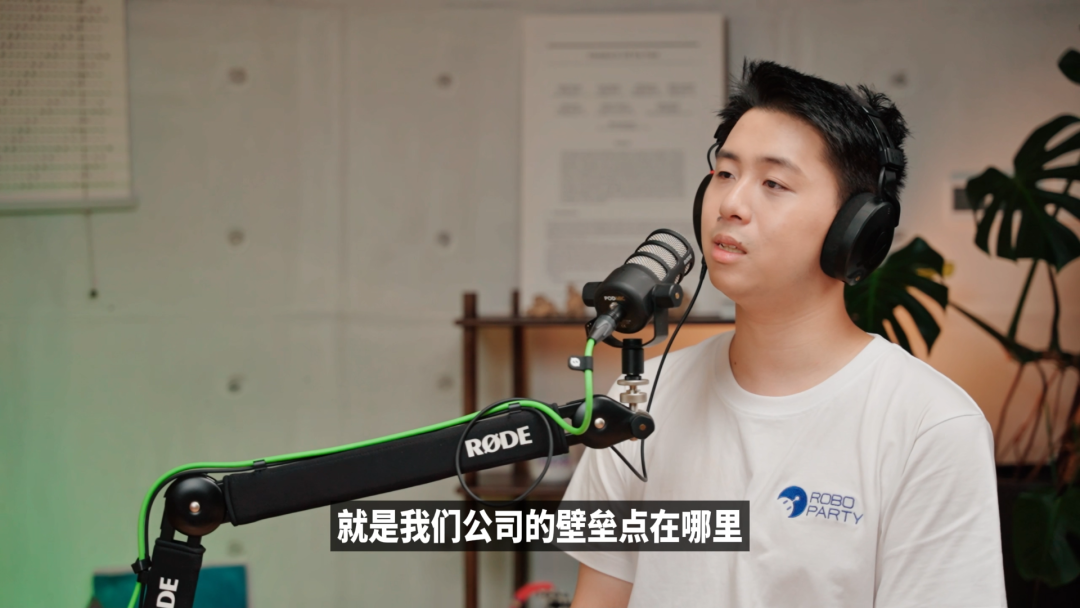
We've positioned ourselves in a very sweet spot — a missing layer. Model companies don't have their own hardware bodies. If they use other companies' bodies, they can't develop deep enough to reach the layer they actually need. Can the motor layer go one level higher? Can the URDF inertia of the stator and rotor be separated? These are things competitors can't provide, and that's the missing layer we've carved out.
The industry lacks a truly open platform for embodied intelligence.
Open source reduces collaboration friction and expands branding — right now, it's the best channel. But the fundamental truth never changes: can we go further and faster on the main path?
👦🏻 Koji
So what exactly will you sell in the future?
👨🏻💻 Huang Yi
We sell humanoid robot bodies — that's our foundation. You could even say we're a body company, a manufacturing and supply chain company, and that's fine.
But the potential goes beyond manufacturing. Manufacturing is make-to-order, but we'll have compounding user value. If a CMU professor buys our body and then recruits two or three PhD students to do R&D on top of it, the compounding effect is enormous.
It's like making 100,000 RMB selling the body, while also getting two engineers worth a million a year each working for you — and they publish papers for you afterward. It's like DeepSeek being open source, but that doesn't stop them from making money selling APIs.
👦🏻 Koji
In the large model world, China's open source forces are reshaping the global landscape. Will embodied intelligence see a repeat of "open source beats closed source"? Could companies like Unitree and AgiBot choose to open source too?
👨🏻💻 Huang Yi
There are two situations here — China vs. the US, and competitors. Let's start with China-US.
On the China-US front, something like Kimi K3 can directly detonate the US stock market. In embodied intelligence, the gap between China and the US will actually widen further. On the model side, the US still leads on the embodied brain — or rather, Chinese Americans in the US are ahead of Chinese in China.
But when it comes to humanoid robot bodies, the "cerebellum" side, China is far ahead — basically a generation ahead. Overseas, Figure and Tesla are somewhat in the game, but they're actually using China's supply chain ecosystem.
Looking at the competitive landscape, Chinese embodied intelligence companies have a very solid foundation. But talent density, including model capabilities, isn't as strong as the US in the short term. That's also why we might simultaneously set up a US base.
👦🏻 Koji
And competitors?
👨🏻💻 Huang Yi
On competitor dynamics, I have some pretty sharp takes. For example, I think wheeled forms probably don't have much future — they're likely just an intermediate state, essentially a legged form with infinitely large leg inertia.
👦🏻 Koji
Why doesn't wheeled work?
👨🏻💻 Huang Yi
It's not that it doesn't work. For recording this podcast, if you strapped my lower body to a chair, we could still have this conversation. Some bosses would love to chain employees to their desks. But the whole point of embodied intelligence is generality — why would I amputate part of that generality?
As algorithms improve, whether end-effector precision is 0.1 millimeters or 0.01 millimeters isn't actually that critical.
Humans don't execute tasks with some fixed repetition count either. Are we aiming for human-like or superhuman? Automation is already superhuman — there's no need to create an intermediate state to achieve "superhuman." "Human-like" is enough.
Who Will Reach the Final State of Embodied Intelligence?
👦🏻 Koji
So do you think leading competitors like Unitree and AgiBot might eventually choose to go open source too?
👨🏻💻 Huang Yi
Maybe — I think it's entirely possible. But it depends on how privatized each company's technical foundation is.
Open source itself isn't the biggest moat. What determines victory is still a company's commercial fundamentals. Moreover, migration costs for physical hardware are far higher than for software.
At the large model layer, switching from DeepSeek's API to Moonshot AI's API — there's almost no perceptible friction in user experience. You might just need to top up the context. But with hardware bodies, the friction and resistance of ecosystem migration and replacement is vastly greater.
👦🏻 Koji
Earlier you mentioned that when you start a company, you don't even have confidence — you need arrogance, you're at the peak of Mount Stupid. But later everyone goes through the Valley of Despair. Have you experienced that?
👨🏻💻 Huang Yi
Maybe not so much a Valley of Despair. Sometimes a flood of information hits you at once, or someone whose cognition far exceeds yours explains their analysis or strategy. You quickly realize how shallow your previous thinking was.
👦🏻 Koji
An example?
👨🏻💻 Huang Yi
Like talking with the head of a leading robotics company. We'd done a lot of thinking — whether to open our brain, how to handle data, how to reduce body weight, all these sample problems. You realize we're still at the question stage, while they've already built a very complete system. Their cognition rapidly dismantles yours, then you quickly reassemble.
For entrepreneurs, I don't think science is about knowing more. Cutting in when you don't know, when you're arrogant — that might be a good thing. Knowing too much can make you timid and cautious, calculating your bets.
For example, the brain involves data — Teleop, Ego, UMI, full-body all-human data collection, internet data. What's each tier of data worth, what's the endgame value? Ego data might be around 200 RMB now, but if JD.com enters at endgame, what's it worth then?
You can see all this, you can calculate the optimal ROI entry point. But that makes you extremely cautious. So people need some arrogance.
👦🏻 Koji
Like Romain Rolland's line: "There is only one heroism in the world: to see the world as it is and to love it." It's the same with entrepreneurship — the younger you are, the more fearless, the more willing to start something. But reaching midlife and still daring to start a company takes real courage and resolve.
After starting the company, what difficulties have you encountered?
👨🏻💻 Huang Yi
Not too many difficulties — things have actually gone pretty smoothly.
But from RPO to RP1, from arrogance sliding downward, you hit a lot of problems. Once you know the industry, break down competitors' robots, you discover huge cognitive gaps. Others are already using molds and die-casting, while we're still tinkering with small batches of 50 or 100 units — that's not okay.
👦🏻 Koji
How many RPO units did you sell?
👨🏻💻 Huang Yi
RPO was roughly 100 units per month, and basically these are all real orders now.
We might even pull all our customers into one group at some point. Commercially it doesn't make sense, but we'll probably do it.
👦🏻 Koji
Why go against conventional wisdom?
👨🏻💻 Huang Yi
Our customers are all very friendly. We already have many of them in our communication groups. You ask a question, another customer helps answer — that significantly reduces our after-sales costs.
I see us more as a community, an ecosystem.
👦🏻 Koji
Who are you mainly selling RPO to now?
👨🏻💻 Huang Yi
Every month roughly 30% to 40% goes to schools. It's not just top schools — there are tons of schools in China that want to understand what embodied intelligence is. Our RPO is kits and components; they buy it and build it themselves. So we position RPO as a 0-to-1 educational product.
Another category is startups — they want to understand too. In the early days of an industry, like with computers and phones, there were lots of enthusiasts tinkering with chips, and then Windows and Mac emerged. Maybe one of my users will turn out to be a Bill Gates.
👦🏻 Koji
I remember you mentioned an overseas institution once wanted to place an order for 500 units, but you didn't sell — why?
👨🏻💻 Huang Yi
We did deliver some — around 20 or 30 units. But large orders like that create too much delivery pressure right now.
We ship in kit form, but our supply chain was lagging behind our delivery capacity. Other customers would have to wait two or three months, and I can't give all 500 units to one customer.
👦🏻 Koji
So it was a production volume constraint?
👨🏻💻 Huang Yi
Yes, but now the supply chain is built out — much better.
👦🏻 Koji
Your next-generation product is RP1. What's the upgrade from RPO?
👨🏻💻 Huang Yi
RP1 upgrades across all degrees of freedom — for example, we added two degrees of freedom in the head. The overall configuration, all internal cable routing — everything's been significantly productized.
We researched problems from 20 to 30 competitor products — gripper issues, shoulder joint overheating, insufficient wrist support strength, fragile handles. Also, people struggled to pack them in boxes. We looked at competitors' solutions, whether autonomous standing up from a box was possible — all of this went into our product.
👦🏻 Koji
So there are a lot of product improvements?
👨🏻💻 Huang Yi
Yes, it's not just an engineering prototype — it's more of a product.
👦🏻 Koji
What's the price? When does it launch?
👨🏻💻 Huang Yi
Pricing isn't set yet. We're targeting around Q4, still discussing internally.
👦🏻 Koji
At this stage, competing with a body product — how do you build the main competitive advantage?
👨🏻💻 Huang Yi
For bodies, you need to ask the customers we've accumulated what problems they have with current products and what iteration needs they have. Just nail that, and you'll rise.
As behavior foundation models gain traction, the "cerebellum" problem is gradually being solved. The next frontier is Whole Body Intelligence — the full-body intelligence of humanoid robots. We're currently engaging with numerous startups working on this, such as ETH's Flexion, and domestic players like Current, Deta, and YuanCe.
Many "brain" companies are also looking to move into Whole Body Intelligence. We can provide them with an excellent foundation. The customization requests we've collected are incredibly diverse: some want a 48-to-24 reduction at the hand to connect a five-fingered gripper; others want a full-machine EtherCAT protocol solution for hard synchronization; still others ask whether co-design is possible between the head and ego data collection. All of this represents crucial know-how — essentially real PRDs being fed directly into our product.
👦🏻 Koji
Real demand from customers?
👨🏻💻 Huang Yi
Yes. This is the company's most important capability — maintaining high-frequency iteration within a large industry.
👦🏻 Koji
So how do you find the most genuine or most important needs among all these diverse requests?
👨🏻💻 Huang Yi
It's a balancing act. If Client A says the head needs two degrees of freedom, I'll check whether Current agrees and how the FOV should be placed. Gradually, you start setting standards: list out requirements 1 through 6, then see if Client B is satisfied. But we also maintain confidentiality for each client.
👦🏻 Koji
You've been talking to a lot of entrepreneurs and researchers lately. What are you sensing?
👨🏻💻 Huang Yi
We discuss who will ultimately crack Embodied Artificial Intelligence in ten years. There are many different views. Some believe it will end up with model companies like Zhipu AI or OpenAI, because they have enough GPUs, enough infrastructure, and talented researchers. They just need to add some robotics expertise, and they can quickly solve the scaling problem.
Others think you need people who truly understand robotics to achieve scaling up. That insight, I believe, is cheap — as long as you hire people who deeply understand robotics.
For example, OpenAI hired a series of researchers like Tairan He to fill that gap. Personally, I'm very bullish on large model companies moving into this space.
👦🏻 Koji
What about you? You're not that kind of company. So you don't believe in yourselves?
👨🏻💻 Huang Yi
It's both. We absolutely have to build models in our endgame. The plan is to start around 2027. Large-scale pre-training typically follows a pattern of rising then falling — take video generation, where model parameters first increased significantly, then came back down as more frameworks and know-how emerged.
Whether we ride the first wave of rise-then-fall, or enter directly in the second wave — that's a strategic decision.
We also have to consider competitive dynamics. If OpenAI enters the fray and establishes OpenAI Robotics, their scaling capability would far exceed any domestic startup, even surpassing domestic model companies.
Managing a 100-Person Team at 22
👦🏻 Koji
Your company is approaching 150 people now. What's the organizational structure like?
👨🏻💻 Huang Yi
It's similar to a honeycomb structure — we hope to drive through atmosphere. If you think of a person as a circle, the most stable structure when multiple circles come together in nature is the honeycomb.
Anthropic had an article about what made Anthropic — essentially building the honeycomb through sufficiently high talent density. That's also our lab's organizational model.
A honeycomb is hexagonal. Theoretically, a person's ideal management span or number of interaction targets is six — the six faces one person can maximally cover in nature.
👦🏻 Koji
Does honeycomb mean not much hierarchical structure?
👨🏻💻 Huang Yi
Right, basically no hierarchy.
👦🏻 Koji
So how many layers does your company have now?
👨🏻💻 Huang Yi
If you really count, two or three, but internally nobody cares much. Today anyone can reach me directly, and I can reach anyone.
👦🏻 Koji
Will your company keep hiring and growing? At what point does the honeycomb structure become impossible?
👨🏻💻 Huang Yi
Our company involves not just software and algorithms, but also hardware and manufacturing, which requires extreme process formalization.
Organizational management architectures basically fall into two categories: one is like Huawei or DJI, where extreme rules and processes turn the company into a legion; the other is driven by talent density, like ByteDance's emphasis on "talent redundancy," where self-motivation drives everything. For an Embodied Artificial Intelligence company that needs whole-machine manufacturing, delivery, sales, and supply chain, you have to combine both.
We spun out a lab that's entirely driven by honeycomb structure, or talent density. But in our whole-machine department, if we relied purely on talent density, we'd have a problem — who to buy components from today, how to divide responsibilities, none of it clearly defined. That would be a disaster.
👦🏻 Koji
So when you say honeycomb, you mean your lab, not the main company?
👨🏻💻 Huang Yi
The main company is influenced by it too, but also needs partial process — it's about how to combine them.
👦🏻 Koji
How do you combine them? That sounds contradictory.
👨🏻💻 Huang Yi
Quite contradictory. But things like talent density and meeting systems can be shared. The communication-system-like meeting流程 that the lab explored can be applied to the main company.
Organizations fundamentally rely on people. Previously our company might have leaned toward control or hardware, with less AI usage. But as soon as pure AI people joined, the entire company's AI atmosphere lifted. It's more about cross-pollination.
👦🏻 Koji
What kind of CEO do you think you are?
👨🏻💻 Huang Yi
People find me relatively friendly, but I understand that a friendly CEO isn't necessarily a good thing.
👦🏻 Koji
What are you doing to counter your current friendly image?
👨🏻💻 Huang Yi
No need to counter it — it's my personality. I don't like being very pushy or making enemies.
So I have to hold my nose and hire someone with the exact opposite personality to play the bad cop internally, pushing progress forward. A company with both tension and relaxation is a good company.
👦🏻 Koji
Have you found that person?
👨🏻💻 Huang Yi
Yes, we have some very strict or sharp departments. Finance, for example, is very sharp. If finance isn't sharp and everyone gets expenses approved easily, that's a disaster.
👦🏻 Koji
The average age at your company is probably older than you. How do you manage so many people older than you?
👨🏻💻 Huang Yi
People don't care much about age. It's more about your understanding of robotics, of the Embodied Artificial Intelligence industry, of the company. If your understanding is deep enough, you could be in high school and still manage.
👦🏻 Koji
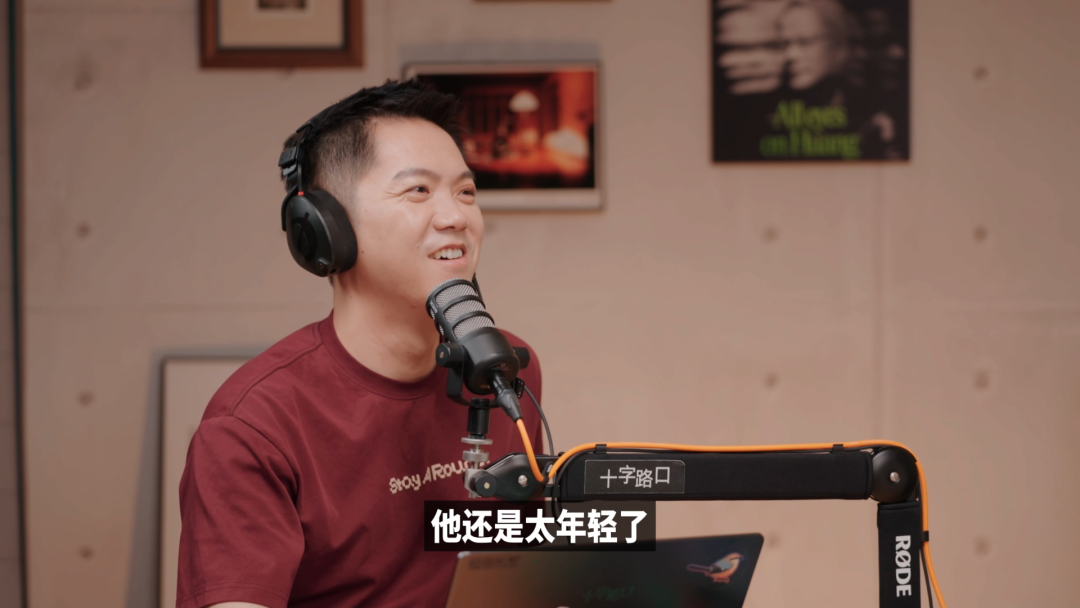
Have you heard the assessment "he's still too young"?
👨🏻💻 Huang Yi
I think youth is a great shield — why not use it? In high-stakes exchanges, we can quickly make asks and get decisions. People won't care about things that don't fit the atmosphere, even though they're necessary in business negotiations.
👦🏻 Koji
So how do you deploy this shield in practice?
👨🏻💻 Huang Yi
If I say something somewhat inappropriate, people will give me the shield because I'm very young, and find me sharp instead.
👦🏻 Koji
Have subordinates said that about you? Like "he's still too young, so..."
👨🏻💻 Huang Yi
Not really. We don't say "subordinates" internally — everyone is a colleague. Many colleagues know far more than me in specific domains, and that's fine.
How Do You Achieve Zero Voluntary Departures?
👦🏻 Koji
Last time we talked, you mentioned something quite surprising — in a year and a half, the company has had zero departures, nobody poached. How?
👨🏻💻 Huang Yi
Our talent density is relatively high. Although people are gradually starting to get poached now, but anyway, I care more about whether people feel they're gaining something at the company — what they can learn.
We love hiring people with extensive 0-to-1 experience in their industry but who haven't yet made the 1-to-10 leap. For example, someone who switched industries but excelled in their previous one, who comes in to fill their robotics knowledge gaps. Once filled, if they jump to a neighboring company, they can basically double their salary.
👦🏻 Koji
But nobody has jumped yet?
👨🏻💻 Huang Yi
Maybe they feel they haven't learned enough yet?
👦🏻 Koji
Does zero voluntary departures also mean you've never fired anyone?
👨🏻💻 Huang Yi
No, we have fired people, but that doesn't count as voluntary departure.
As long as people feel they can learn something at the company, they'll come even with a pay cut. We've brought in several executives from major tech companies who previously earned 2.5 to 3 million RMB annually, but only make around 800,000 at our company.
They're willing to pay tuition and bear the cost of transitioning. I think this is also why we're very cost-efficient.
👦🏻 Koji
You actually raised $100 million — you could afford to pay premiums. Why have people take pay cuts?
👨🏻💻 Huang Yi
We can afford it, but we need to control spending. We've analyzed early-stage new energy vehicle companies that raised well — many imploded due to burn rate, failing to survive until the industry scaled.
Take NIO — everyone initially thought it spent very freely. Just the other day, I saw NIO replaced the real flowers in NIO Houses with fake ones. William Li, who used to care deeply about brand image, probably couldn't have accepted that before. Every penny pinched is what people call capital efficiency.
So back to that line: insight beats vision, beats technology, beats management, beats hard work.
👦🏻 Koji
Is management really that unimportant? Fourth or fifth place?
👨🏻💻 Huang Yi
Management is still more important than hard work — hard work is the least important. Let me add one more: greater than hard work.
👦🏻 Koji
So what do you think is the most important insight for you right now?
👨🏻💻 Huang Yi
Taste for this industry.
If you predict that embodied intelligence is going to explode in the next three years, then this year you should be spending all your ammunition going all-in on the best models, or mapping out the competitive landscape — knowing which rivals you need to watch out for and cover, and which companies you don't need to care about at all.
Which of the 300 Companies Will Survive Until 2030?
👦🏻 Koji
What predictions do you have about the future?
👨🏻💻 Huang Yi
Right now there are over 100 humanoid companies and 300 embodied intelligence companies. I think maybe 10 to 15 will make it out by 2030.
The next wave to enter might be automakers at the hundreds-of-billions scale like Wei Xiaoli, HONOR, Geely — that tier. Going by industry average gross margins, embodied intelligence is currently around 40%, while automakers might only be at 20%.
Then at the trillion-scale level, when companies like BYD, Huawei, CATL, BAT, Xiaomi start getting in — that's basically a new era. If BYD decides to jump in, for example, they already have so many pieces in place. They'd just need to fill in a robotics division, acquire someone like me, and they'd have their ticket into robotics.
👦🏻 Koji
So do you see signals of scaling law at work?
👨🏻💻 Huang Yi
Jim Fan shared at HSG about what the tracking loss curve for robots actually looks like.
Xu Danfei also talked about how much data is needed. The numbers shifted a bit across interviews, but it's basically approaching hundreds of millions of hours. If you can get 100 million hours of data for training, you can still see some scaling effects.
👦🏻 Koji
Are you mainly doing the body, or are you also working on the brain?
👨🏻💻 Huang Yi
We're doing both in parallel. We've built some cerebellum BFM work, and on the Humanoid Foundation Model side too — some of our people have published papers.
On the BFM side, we've finished things like the upgraded version of BFM-Zero, UFO, and MimicLite. We've also done some reinforcement learning work based on BFM-Zero for object interaction, perception-based parkour, robot ping-pong, basketball — I think of these as the cerebellum part. A lot of it is waiting to be deployed on hardware, some is already deployed and we're still organizing the tech reports. All of this will be open-sourced.
On the brain side, we've also done some work. We published INTACT a while back — compressing action movements into a latent space, getting the latent distribution to a good place, making sure it doesn't collapse. That work was quite solid, got a like from Yann LeCun, and we also gave a talk at their company.
How Do You Decide What to Do and What Not to Do?
👦🏻 Koji
How do you decide what to do and what not to do? Because what you just described — the brain and cerebellum work — sounds a little random.
👨🏻💻 Huang Yi
Your own judgment is never going to be better than frontline researchers. When we recruit people, they can work on whatever they want, as long as it's within our branch. It's really vibe-driven.
It's like how Anthropic didn't plan out specific features either. Huawei initially said with a straight face that nobody should do cars, but then started empowering OEMs and taking a cut, and eventually explored their way into something new.
Our broad direction is: don't do pretraining in the near term. So they took our existing compute and hacked together some JEPA frameworks. I think it mostly comes down to your judgment of when the right time to jump in is.
👦🏻 Koji
So you set some exclusion criteria, and let people freely explore the rest?
👨🏻💻 Huang Yi
Yes, and the exploration cost is very controllable.
👦🏻 Koji
Why not do pretraining?
👨🏻💻 Huang Yi
It hasn't really started in the near term. I might not care about small-scale stuff — one or two billion, two or three billion parameters. But don't come in guns blazing building out massive data pipelines from day one.
We're getting the fundamentals in place first, like RP1. Eventually maybe some brain company will take our RP1 and build that pipeline, and we can just partner with them.
👦🏻 Koji
What's the most important decision you've made recently?
👨🏻💻 Huang Yi
Putting RP1 front and center.
👦🏻 Koji
Why is that important? Don't you just launch a product when it's ready?
👨🏻💻 Huang Yi
No. The product's been in development for a while, we're testing it now. A lot of companies launch before testing is even done. It depends on timing and cycle.
Timing is like pulling the trigger — when you fire, which customers you hit, that's crucial. Right now is probably a good back-to-school procurement window. Plus there are conferences like IROS, WRC, and the industry has also reached a point where it's about competing on production and mass manufacturing.
You have to ask customers: how's your last product holding up? If they feel it's not enough, that they've maxed out the hardware ceiling, then we start pushing the next wave.
👦🏻 Koji
But it doesn't sound like the timing decision is that hard?
👨🏻💻 Huang Yi
Some companies might put out a demo first. We also have to judge whether there's a genuinely threatening product launching around the same time. If a competitor launches when they're not really ready, they might capture more attention — attention is all you need.
👦🏻 Koji
RP1 is launching in Q4, right?
👨🏻💻 Huang Yi
RP1 carries our thinking. We're releasing a product today that's more oriented toward open source and research/education because I feel like what people are building on existing platforms right now is fundamentally not enough.
For example, is there a way to make sim-to-real much more precise? To get torque tracking for each module more accurate? If sim-to-real were zero error, you'd find that current motion generation or motion planner work could migrate seamlessly to robots, and embodied intelligence would basically be solved.
👦🏻 Koji
You mentioned RP1 is aimed at research, at universities. So that means its primary target users probably aren't dancing, performing, entering homes, or going into factories. How was that decided?
👨🏻💻 Huang Yi
Looking at industry cycles. We broke down sales directions across companies — roughly 70% comes from research and education, about 10% from factory applications, and maybe 20% from companionship, entertainment, cultural content.
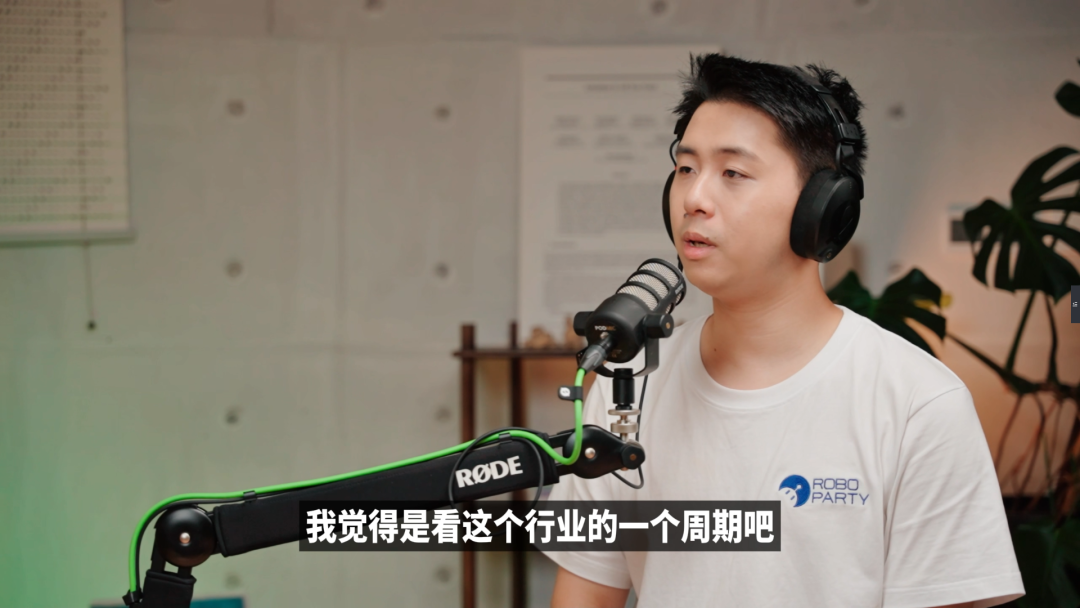
Growing the research market first — that's the most important thing right now. Get enough people using it, and the compounding value gets higher. Entertainment is basically a channel for brand-building and marketing, you can make money there too, but that's the next step.
We're also in touch with CATL and Xiaomi about some industrial needs — things like loading and unloading scenarios. Their original cycle time is around a minute, and we need to beat that. Because robots can run 24 hours, basically only needing intervention for some thermal imbalance issues, not much else.
👦🏻 Koji
So you've actually made a lot of trade-offs — like not doing pretraining at this stage, not really considering home entry or entertainment scenarios. What other important trade-offs come to mind?
👨🏻💻 Huang Yi
The most important thing for a CEO is deciding what not to do. We're basically not planning to invest in wheeled robots ourselves. Startups have limited resources, you can't horse-race everything. Big companies can do that, but I have requirements for capital efficiency.
👦🏻 Koji
Among all the embodied intelligence companies, in China or the US, is there anyone you particularly admire or like?
👨🏻💻 Huang Yi
Tesla, Figure — both solid. There are some US startups that are great too, like Sunday, Generalist.
What I really like about them is their focus, how much they choose not to do. Like Generalist — they basically only do models, no hardware, and they're committed to UMI-style data for grippers. They've scaled it to 200,000 hours, adding tens of thousands of hours per week. Maybe when their Gen-2 comes out, it'll change people's minds again.
I admire their courage to explore uncharted territory — in the US, that gets rewarded by the era, they can raise the most money, get the most resources. But actually, Chinese culture doesn't reward explorers that much.
👦🏻 Koji
So what does this culture reward?
👨🏻💻 Huang Yi
It rewards people who can build companies. Building a successful company today and exploring some paradigm that changes the world — those are two different paths.
👦🏻 Koji
Which path are you on?
👨🏻💻 Huang Yi
Right now I'm trying to build RoboParty.
👦🏻 Koji
What does "building it" mean? What counts as having made it? How would you know you're satisfied with yourself?
👨🏻💻 Huang Yi
My parents would buy one of my robots.
👦🏻 Koji
That seems pretty achievable?
👨🏻💻 Huang Yi
No, I mean as an example — they don't know my brand. In a completely unaware state, in a real choice scenario, they choose my robot.
👦🏻 Koji
That's a very concrete, vivid goal, but it feels hard to measure because your parents would definitely know it's yours.
👨🏻💻 Huang Yi
Or someone who doesn't know me, maybe not in this industry, doesn't understand how far robotics has developed. They know of us, and they go buy one.
👦🏻 Koji
For this startup, do you have some kind of endpoint you're trying to reach?
👨🏻💻 Huang Yi
There's no endpoint really, and I haven't thought through what I'd do after reaching that goal.
👦🏻 Koji
Does entrepreneurship feel happy to you right now?
👨🏻💻 Huang Yi
There are many kinds of happiness. Entrepreneurship isn't necessarily that happy for your body or overall mental state, but it's extremely happy for your psychology and growth.
Outside of entrepreneurship, it's hard to experience this kind of "compressed life" — compressing ten years of experience into one year, and knowing you'll keep living this way for another three to five years, even ten or twenty. It's like before you turn 30, you've already lived through what others have, with the wisdom of a centenarian. That's very different.
👦🏻 Koji
Besides entrepreneurship, what else do you want to do?
👨🏻💻 Huang Yi
I want to be a pirate.
👦🏻 Koji
What does "want to be a pirate" mean?
👨🏻💻 Huang Yi
Rent a boat and drift aimlessly. Like, go find a fish and name it "Huang Yi Fish."
👦🏻 Koji
So this isn't a metaphor — you actually want to go be a pirate?
👨🏻💻 Huang Yi
Yeah, discover some treasures the ocean gives you. Explore the sea, and some parts that might have absolutely nothing to do with me.
Like if commercial spaceflight works out, maybe I'll go up and take a look. It's more about whether I can experience things that are extremely hard to experience.
👦🏻 Koji
Why is that so important?
👨🏻💻 Huang Yi
The human need to chase.
Say you've been through all this compressed life. If Huang Yi ten years from now looks at the industry or embodied intelligence, it'll be crystal clear — who's doing what, who's good, who's not.
So how do you keep your edge? You probably need to go explore some new territory.
👦🏻 Koji
There must be a lot of classmates or younger students coming to you for advice, wanting to start companies. What advice do you usually give to people who want to start a company right after graduating?
👨🏻💻 Huang Yi
I usually give pretty general advice: the most important thing in entrepreneurship is actually growth after you've achieved a commercial closed loop.
Also, the industry needs to be big enough. Like Jensen Huang said — don't come in thinking about cutting into some so-called blue ocean. Focus more on whether you can do well in a specific track, then make that track bigger.
👦🏻 Koji
Let's end on something lighter — something about AI. What AI products are you using day-to-day?
👨🏻💻 Huang Yi
I prefer physical stuff more. Like Lark's Bean or Plaud and so on.
I see you use Notion. These excellent productivity products born in the pre-AI era still haven't been eliminated today, because they perfectly locked in the work and interaction habits humans built up over decades. As for AI I actually use, I generally use Cursor to write models, or Claude Code to write code. But at the model layer, I basically have zero loyalty now — whoever's good, I use.
👦🏻 Koji
Then who have you been using recently?
👨🏻💻 Huang Yi
Moonshot AI K3.
👦🏻 Koji
Before that?
👨🏻💻 Huang Yi
Before that I'd generally use their built-in Sonnet and other models.
👦🏻 Koji
Could you share how you specifically use AI in your work?
👨🏻💻 Huang Yi
For some things I want to see how certain demos work, I might hand-roll one myself.
👦🏻 Koji
Then what's the most recent demo you hand-rolled? Can you share?
👨🏻💻 Huang Yi
The week before last, my cousin hand-rolled a demo using a dexterous hand to recognize hand gestures for rock-paper-scissors. Very simple, probably doable in a few prompts.
👦🏻 Koji
Everyone says embodied intelligence is a marathon. A marathon means 42 kilometers. What kilometer do you think we're at now?
👨🏻💻 Huang Yi
That depends on the category.
First, "physical hardware." We're probably at about the 1/4 mark. Most system-level stuff has started to converge.
Second, "cerebellum control." We might have already sprinted to the halfway point. Limb coordination is basically done. For example, our hardware can be kicked while holding something, return to its original posture, and pick the thing back up.
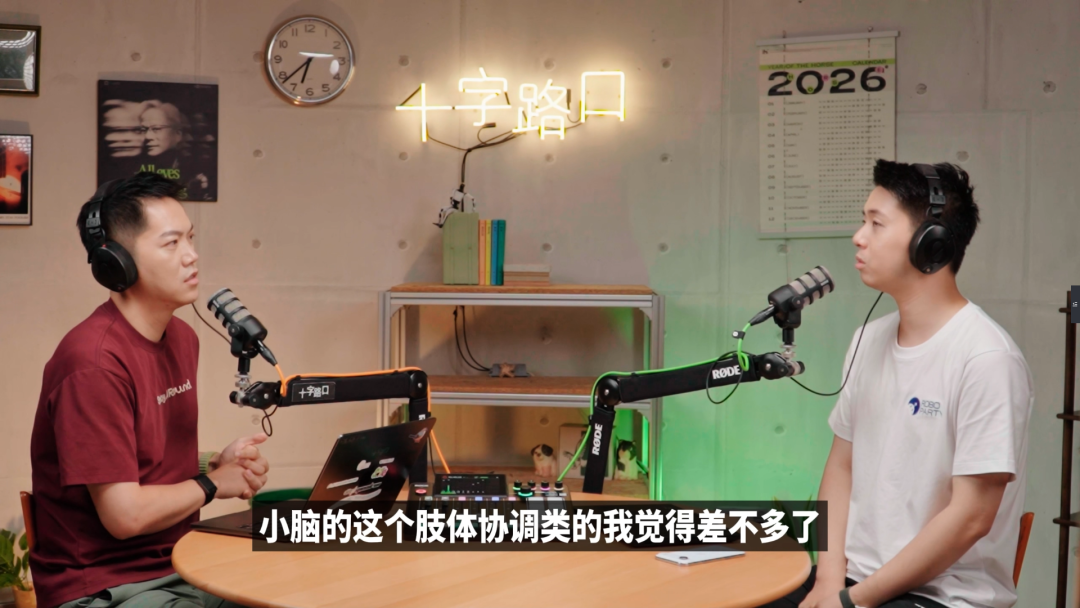
Finally, the brain — I don't know where we are. Because the industry hasn't really defined what the endgame of a brain model even looks like.
If the endgame is: our robot sits here, distills all my historical knowledge, and acts and responds exactly like me. Then I think we're at one or two kilometers today.
👦🏻 Koji
Thank you so much, Huang Yi. Really looking forward to Q4 when RP1 launches — we'll sit down for another deep conversation then. There will definitely be more exciting new thinking and observations that overturn what came before.
👨🏻💻 Huang Yi
Sounds good, thank you.