After analyzing 2,443 AI companies and 802 investors, we found...

In the golden age of AI entrepreneurship.

Over the past two years, the United States AI startup ecosystem has entered an unprecedented boom cycle, with capital flooding into the space at astonishing velocity, minting wave after wave of "AI unicorns" with surging valuations.
Amid this bustling entrepreneurial surge, how are star startups born? What do the leading founders look like? Which investors are quietly driving this technological revolution? And more importantly, what lessons can aspiring AI entrepreneurs draw from these companies?
With these questions in mind, we set out to investigate the capital flows in the United States AI startup market.
By systematically screening 2,443 AI startups founded in the United States since 2022, we identified 93 "star projects" that stand out in funding scale or industry impact, and analyzed the characteristics and preferences of 802 active investors behind them.
Through this research, we aim to provide Chinese AI entrepreneurs with a clear navigation map of the AI capital market — helping them understand which niche sectors are winning capital favor, how notable startups craft their fundraising strategies, and which investors may further shape the industry's trajectory.
Based on this study, we found:
- Analysis of 2,443 United States AI startups (founded in 2022 or later, at seed or early-stage funding) shows that over 92% remain at Pre-Seed or Seed stage, indicating the AI industry is still in its infancy.
- Individual funding rounds for early-stage projects are generally small and fast-paced: 855 projects raised less than $500,000 in their latest round, the largest bucket; over 70% have raised less than $2.5 million total to date.
- United States founders broadly adopt a "small and fast" fundraising strategy, securing early market validation and iteration opportunities as quickly as possible.
- Only 31 projects (<2%) have raised more than $100 million total. A tiny handful of frontrunners have attracted large bets.
- B2B enterprise applications dominate early-stage AI entrepreneurship in the United States: nearly half of star projects focus on general enterprise applications (AI dev tools, office automation, marketing, etc.) and vertical industry applications (healthcare, finance, legal, etc.). AI solutions addressing enterprise pain points in the United States market are favored by founders and investors alike for their clear business models and defined monetization paths.
- The AI middleware stack (developer tools, MLOps, data middleware, etc.) is rising: concentrated on model development efficiency and security, reflecting growing demand for AI systems engineering (e.g., model monitoring, version management, privacy protection).
- Silicon Valley dominates geographically: California (especially the Bay Area) hosts roughly two-thirds of star AI projects, forming a highly concentrated monopoly through dense technical talent, large-model infrastructure, and venture capital ecosystems.
- Early funding for star projects involved 802 investors, displaying a high-frequency collaborative capital network effect: multiple funds co-investing, prominent investors frequently betting together — the early-stage AI investment circle is tightly interconnected, a hallmark of United States early-stage investing.
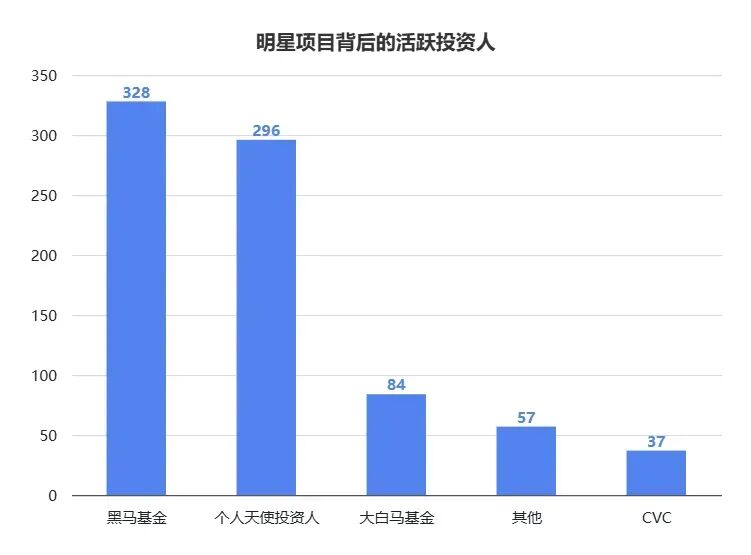
- In investor structure, emerging breakout funds and individual angels are the most numerous, forming the most active capital pool for early-stage AI; CVCs of large tech companies, while mostly entering at mid-to-late stages or for strategic synergy, are clearly rising as a share overall, as corporate capital accelerates its AI innovation positioning.

For AI entrepreneurs, especially those seeking funding from United States VCs, we recommend focusing on:
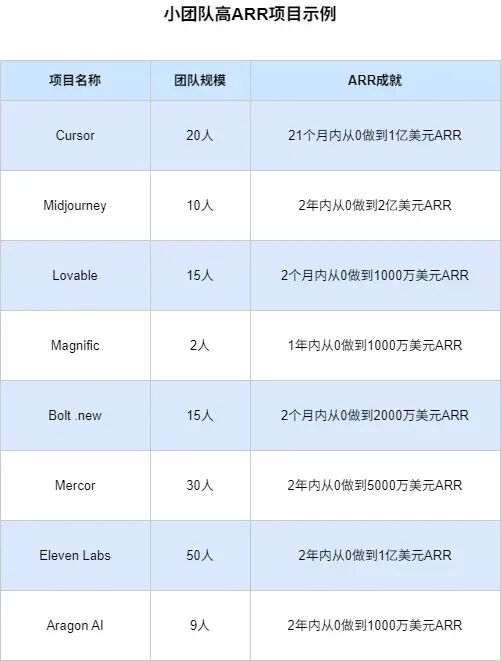
- United States investors particularly favor "small but elite, efficiency-first" AI startups. These star projects, with lean teams of fewer than 50 people, achieved tens of millions or even hundreds of millions in annual recurring revenue (ARR) within just one to two years. For example, Midjourney, with fewer than 10 team members, generated $200 million ARR in two years.
- The United States venture capital ecosystem differs significantly from China's market: United States early-stage institutions tend to syndicate across multiple firms, while from Series A onward, a single firm often leads; China's market is the opposite — early rounds typically involve only 1-3 institutions, while from Series A, large syndicates form to diversify risk. This means entrepreneurs going overseas may need to develop stronger networking skills and participate in more social activities to complete early fundraising.
- United States founders choose multiple institutions for early-stage investment mainly because United States VC capital largely comes from entrepreneurs, with higher tolerance. Generally, GPs won't trigger buybacks for investments below several hundred thousand dollars, nor intervene heavily in company operations. However, it's worth noting that board dismissals of founders or CEOs do occur with some frequency in the United States.
This research report comes from Jinqiu Fund:

01 Project Screening Methodology
Research Foundation
To ensure our analysis covers representative high-potential projects, we systematically screened United States AI startups using the following criteria, yielding 2,443 projects as our research foundation.
- Founding date: Established in 2022 or later
- Region: Headquarters in the United States
- Stage: Funding stage at Seed or Early Stage Venture, prioritizing high-potential projects in their growth infancy
- Sector: Focused on artificial intelligence
From these 2,443 qualifying startups, we further selected a cohort of star projects for in-depth study.
Star Projects
Baseline criteria (reasonableness of metrics + data availability)
- Category A: Projects with latest funding round ≥ $35 million (61 total), representing high capital recognition and rapid scaling capacity;
- Category B: Projects that have only completed Seed round funding but raised over $20 million in that single round (12 total), demonstrating exceptional market attention and founder team premium;
Supplementary sources
- Category C: Projects frequently covered by mainstream Chinese tech/investment media, with high industry visibility and buzz (20 total), possessing typicality and discussion heat

Below are brief introductions to the 93 projects.
For further materials on these 93 projects, please leave the message "底表" in our official account backend to receive project documentation.
02 Star Project Profiles
2.1 In the United States, becoming a star project isn't easy either
We first examined the round distribution of AI companies founded after 2022.
Overall findings:
- Early funding stages, most projects actively at seed: Among 2,443 projects, Pre-Seed and Seed stage projects numbered 2,256, over 92%. By contrast, only 159 projects (about 6.5%) reached Series A, and fewer than 30 (about 1.1%) reached Series B or beyond.
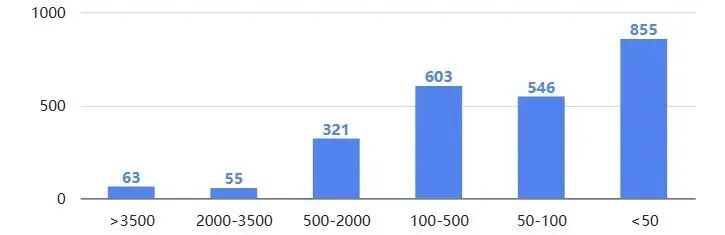
- Funding amount distribution: Early AI project single-round funding is generally modest, with "small and fast" becoming the norm. Data shows that in the latest funding round, under $500,000 was the most common amount, with 855 projects, about 35%; under $1 million projects cumulatively approached 60%. Even raising the threshold to the tens of millions, only 118 projects (under 5%) raised over $20 million in their latest round.
- Total funding characteristics: Affected by small single-round sizes, most AI startups currently have limited cumulative funding as well. Over 70% of projects have raised less than $2.5 million total, showing capital is still testing the waters for the vast majority. By contrast, projects that have secured tens of millions or even hundreds of millions are rare: only 31 have raised over $100 million, under 1.3% of the sample; those exceeding $50 million represent under 3%.
Latest Funding Round Distribution
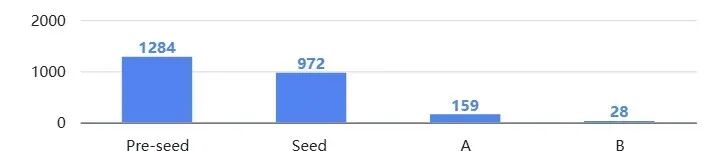
Latest Funding Round Amount Distribution
Total Funding Distribution
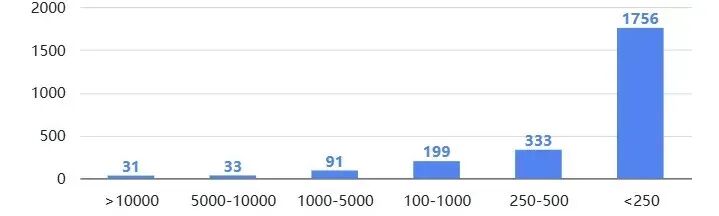
These figures make clear that even in the United States, star projects represent a small minority. Only 118 transactions exceeded $20 million in the latest round. For comparison, 855 projects raised under $500,000 in their latest round, the largest bucket; over 70% have raised less than $2.5 million total to date.
2.2 In the United States, B2B, Middleware, and Infra Are More Likely to Produce Star Projects
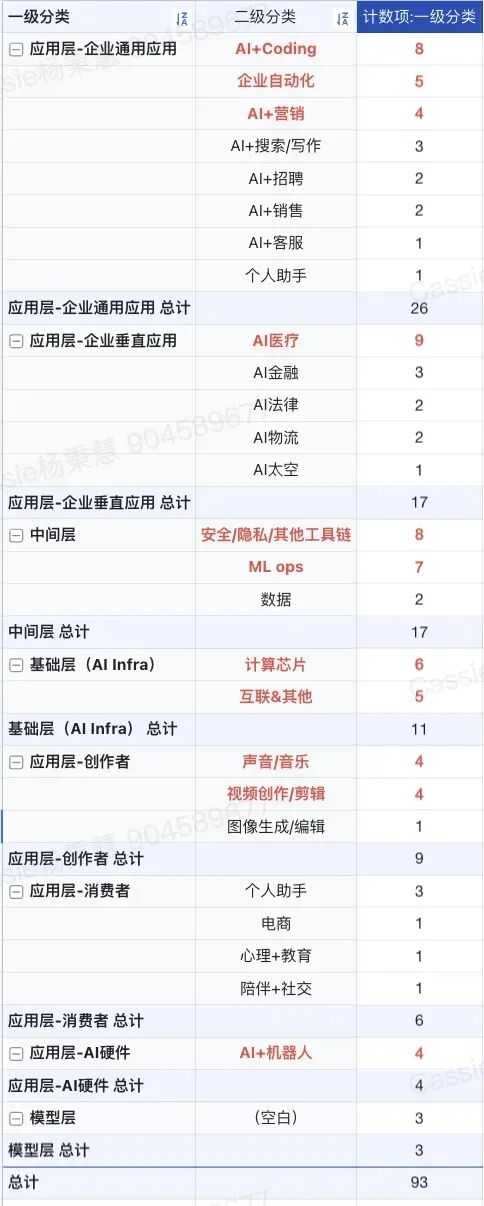
By sector, early-stage AI startups in the United States are heavily concentrated in the application layer, especially general enterprise applications (26 projects) and vertical enterprise applications (17 projects), which together account for over 46% of the total sample.
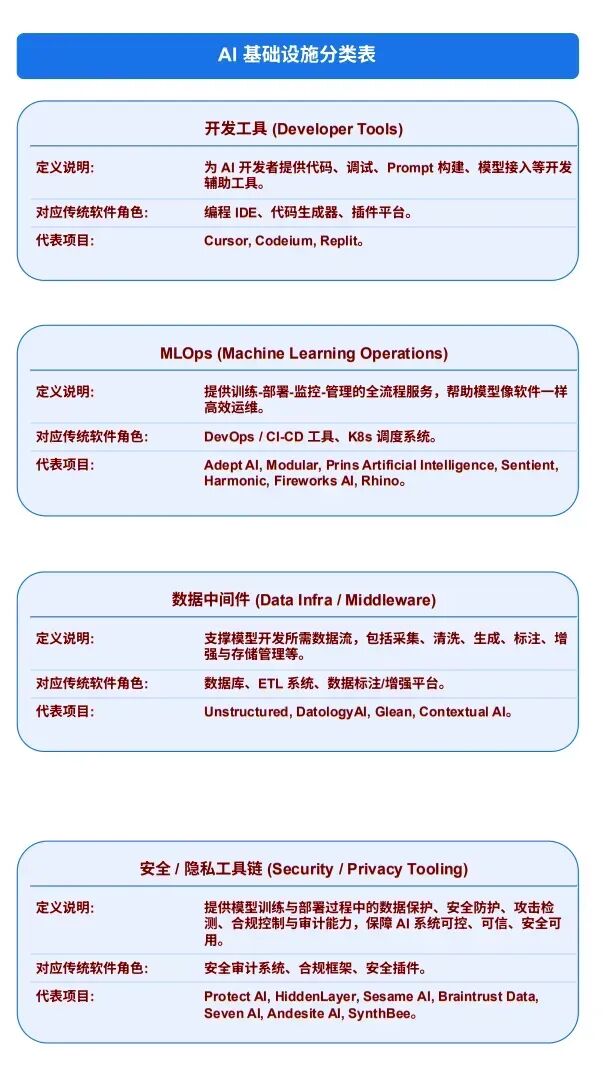
The middleware layer (development tools, MLOps, data middleware, etc.) also reached 17 projects, on par with the vertical application layer, indicating that the "engineering" of AI systems is becoming a focal point for entrepreneurship and investment.
2.2.1 B2B: The Easiest Path to Star Projects
By sector, AI startups in the United States are heavily concentrated in the application layer, especially general enterprise applications (26 projects) and vertical enterprise applications (17 projects), which together account for over 46% of the total sample.
On one hand, the U.S. B2B market is stable and well-established. American companies already have strong subscription payment habits, so AI startups tend to define from the outset: what scenario, what domain, what value the product delivers, what pain point it solves, and how it makes money.
On the other hand, B2B projects have clearer user profiles and product-market fit validation, offering more predictable returns and lower risk. Institutional investors, acting rationally, prefer B2B projects.
2.2.1.1 General Enterprise Applications
Among general enterprise applications, AI+coding leads with 8 star projects — the largest subcategory in general applications — showing that AI-assisted development tools (code completion, low-code platforms, collaborative IDEs, etc.) have become the "must-have hit" of AI applications.
Other high-frequency subcategories include enterprise automation (5) and AI+marketing (4), demonstrating AI's clear ROI advantage in improving organizational efficiency and reducing marginal labor costs.
This reflects that improving organizational efficiency and lowering marginal labor costs are highly valued by enterprise users. Products that significantly improve operational metrics (e.g., labor savings, higher conversion rates) are more likely to win favor from both enterprise customers and capital.
For entrepreneurs, focusing on enterprise must-haves and delivering quantifiable ROI is undoubtedly an effective path to impress investors in the current environment.
2.2.1.2 Vertical Enterprise Applications
In vertical enterprise applications, AI healthcare leads decisively. Healthcare AI projects number 9, covering AI medical record generation, diagnostic recommendations, drug discovery platforms, etc. — currently the vertical track with the greatest technical depth and commercial certainty.
Beyond healthcare, traditional "data-intensive" industries such as finance, legal, and logistics are also adopting AI to improve efficiency — for example, AI-assisted contract review and supply chain optimization.
Overall, reducing labor costs, especially in professional services, is a major direction for U.S. AI startups.
2.2.2 Middleware
The middleware layer (development tools, MLOps, data middleware, etc.) also reached 17 projects, on par with the vertical application layer, indicating that the "engineering" of AI systems is becoming a focal point for entrepreneurship and investment.
Security and MLOps drew the most attention.
The security/privacy/other toolchain direction accounts for 8 projects, reflecting noticeably heightened market attention to capabilities like monitoring AI model inputs and outputs, attack defense, and compliance auditing.
MLOps-related projects (7) emphasize engineering capabilities such as model training, version control, and deployment automation, providing assurance for continuous model updates in production environments.
In any new technology wave, selling "picks and shovels" and providing infrastructure is often a good business: when countless teams compete in the application layer, companies that provide tools and platforms can capture stable and sustained demand. The current vibrancy of the AI middleware layer validates this business logic.
2.2.3 Infra
Infrastructure Layer:
The chip track remains hot, with 11 infrastructure-layer projects, of which compute chips account for 6. Benefiting from the explosion in large model inference demand, inference acceleration chips (such as Etched, EnCharge, etc.) have become a favored direction for capital.
2.2.4 Application Layer:
AIGC remains a hotspot but is gradually becoming more rational. Creator applications (9 total) concentrate in voice/music and video generation. As AIGC tools proliferate, content creation barriers are rapidly lowered, but homogenization and commercial closed-loop questions remain to be validated.
Consumer applications (only 6) mostly concentrate in personal assistants, e-commerce recommendations, emotional companionship, etc., still in the product exploration and user education phase. Ordinary consumers need time to develop acceptance of emerging AI applications; many conceptually novel products face the challenge of getting users to understand and habitually use them. Meanwhile, the consumer market often implies large-scale user acquisition and subsidy spending, which doesn't align with the early-stage "small bets, fast iterations" funding environment. Thus many investors currently adopt a wait-and-see attitude toward pure consumer AI projects — unless a project shows exceptionally strong growth or retention, it's difficult to stand out among enterprise service projects.
2.2.5 Hardware
AI hardware is dominated by robotics, with representative projects like Figure illustrating the trend of AI-physical integration.

2.3 Geographic Distribution: Silicon Valley Remains the Innovation Highlands
The geographic distribution of U.S. AI startups is highly uneven, with venture resources showing a clear trend of concentration in top-tier tech hubs.
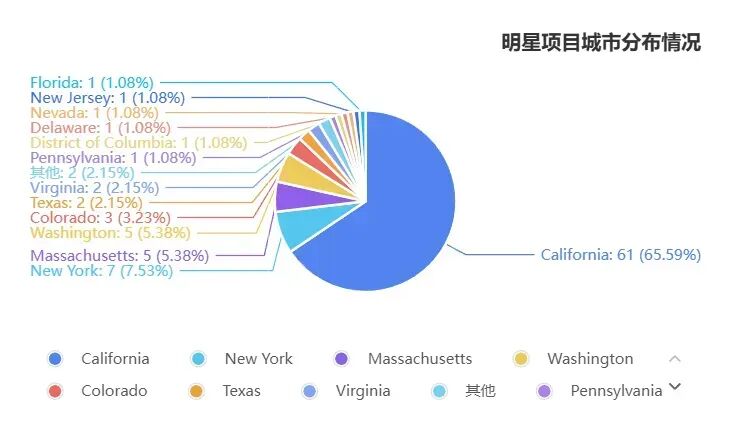
Unsurprisingly, California, home to Silicon Valley, is the absolute core of AI entrepreneurship. Nearly two-thirds of our star projects come from California.
Silicon Valley's dominance in the early AI ecosystem owes to its unique combined advantages: world-class AI research talent, major large model R&D institutions (OpenAI, Google Brain, etc. are all Bay Area-based), and a concentration of AI computing infrastructure alongside rich and dense venture capital.
This tight integration of talent, technology, and capital provides an almost perfect growth environment for AI startups.
The second tier includes New York, Massachusetts, and Washington, among others, which show competitiveness in specific domains.
New York, as a financial hub, has strong foundations in fintech and enterprise application AI — Wall Street's financial data and demands have nurtured considerable AI innovation, with companies able to serve financial institutions and large enterprise clients locally, and investors favoring related tracks.
Massachusetts (primarily the Boston area) leverages top-tier academic research institutions like MIT, excelling at academically driven AI incubation — for example, robotics and life sciences AI startups benefit noticeably from the academic push.
Washington State draws on Seattle's big tech ecosystem; the headquarters of Microsoft, Amazon, and other tech giants have fostered a local AI startup atmosphere, with many departing employees choosing to stay in Seattle to found AI startups and leverage big company resources and talent networks.
Additionally, states like Texas have also made moves in autonomous driving, aerospace AI, and other niche areas.
While these regions cannot compete with Silicon Valley in volume, each has developed "proximity to demand or resources" as a differentiated advantage. For AI teams outside California, making full use of local industrial resources and talent clusters can also yield competitive projects. For example, developing AI trading algorithms in New York, commercializing AI medical research in Boston, or incubating cloud computing-related AI services in Seattle could all become regional stars.
Overall, while the U.S. early-stage AI entrepreneurship map shows Silicon Valley-centric concentration, the trend of multiple blooming points is also noteworthy. When choosing location and strategy, entrepreneurs can consider their region's unique advantages: either dive deep into Silicon Valley for first-tier resources, or base themselves in other tech hubs to serve vertical domain clients and rise with local pillar industries. Wherever you are, connecting with leading AI ecosystems and integrating into regional networks is key.
2.4 A Key Shift: Small Teams Are a Hidden Prerequisite for Funding
The "small team, high return" phenomenon. In the past, tech startups often required massive funding to scale team size. Now, startups using AI tools have dramatically improved human efficiency. On one hand, this means "punching above your weight" through full utilization of AI technology and tools is a viable path — lean teams focused on product and business itself can also achieve impressive growth curves, attracting continued investor commitment. On the other hand, this has become a hard implicit condition for securing investment globally.
Jinqiu Fund summarized 32 projects that raised over $100 million, of which 13 had between 11 and 50 employees.
03 Star Project Hunters
Star projects don't emerge in a vacuum; they rely on the backing and empowerment of capital. So which investors are driving the vigorous development of early-stage AI projects in the United States? By梳理 the public disclosure of financing rounds for 93 star projects, we can sketch out this active investor ecosystem.
3.1 93 Star Projects and the 802 Investors Behind Them
Based on statistics from disclosed financing rounds of 93 star projects, after deduplication we formed a complete list of participating investors: 802 in total (including established blue-chip funds, emerging funds, individual angel investors, CVCs, and others). Some projects show multi-round follow-on investments, repeat investments, and high-frequency collaborative funds, reflecting a strong capital network effect in the early-stage AI entrepreneurship ecosystem.
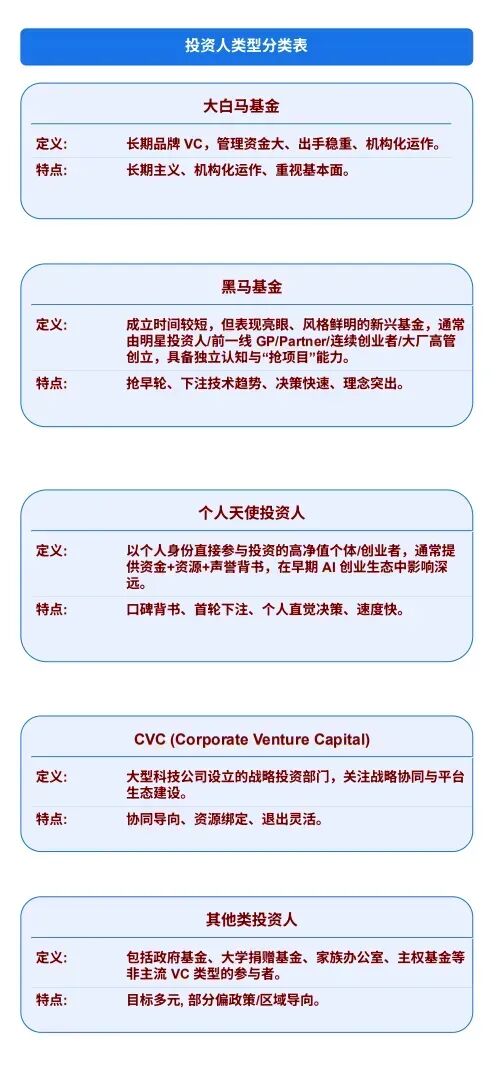
Particularly striking is the activity of emerging funds and angel investors in the early-stage AI track. Among the 802 investors, emerging funds (newer funds with aggressive styles) and individual angels are the most numerous. Many star project financings feature these new faces.
Some are founded by well-known Silicon Valley investors or Big Tech executives; others are serial entrepreneurs who have transitioned into investing, bringing independent judgment and a bias for fast decisions. In the wave of AI entrepreneurship, these emerging funds often dare to seize early rounds, make bold calls on frontier technology trends, and place decisive bets — becoming accelerators that help new projects break out.
In multiple financing rounds for the same project, there are even repeated instances of the same fund following on multiple times, or like-minded angels banding together to invest.
These phenomena show that early-stage AI entrepreneurship exhibits a clear capital network effect — influential investors tend to know each other and share similar convictions. They coalesce around promising projects to form "investment circles," collaborating continuously to support a project's growth.
For founders, this means winning the favor of core investors inside these circles often triggers a chain reaction: a lead investor's participation attracts more followers, amplifying the project across capital, resources, and industry reputation.
It's worth noting that beyond market-oriented VC and angels, CVCs (Corporate Venture Capital) under large tech companies are also becoming more visible in early-stage AI investing.
These corporate investors typically have a more conservative style, prioritizing strategic synergy, and historically entered projects at mid-to-late stages. But as AI's impact on industry deepens, tech giants are unwilling to miss out on high-quality early projects. Through their CVC arms, they are more aggressively laying groundwork for new ecosystems and expanding their own platforms ahead of competitors.
3.2 Individual angel investors have played a pivotal role
This study found that among the investor rosters of AI star projects, individual angel investors have played a pivotal role. Many respected figures in tech circles appear frequently on early-stage shareholder lists, deploying their own capital and experience.
Some are former executives from well-known internet companies; others are serial investors after successful entrepreneurial exits; still others are top experts in AI research. These individual angels typically possess both wealth and extensive networks, with a keen nose for frontier technology — making them bridges connecting capital to entrepreneurial projects.
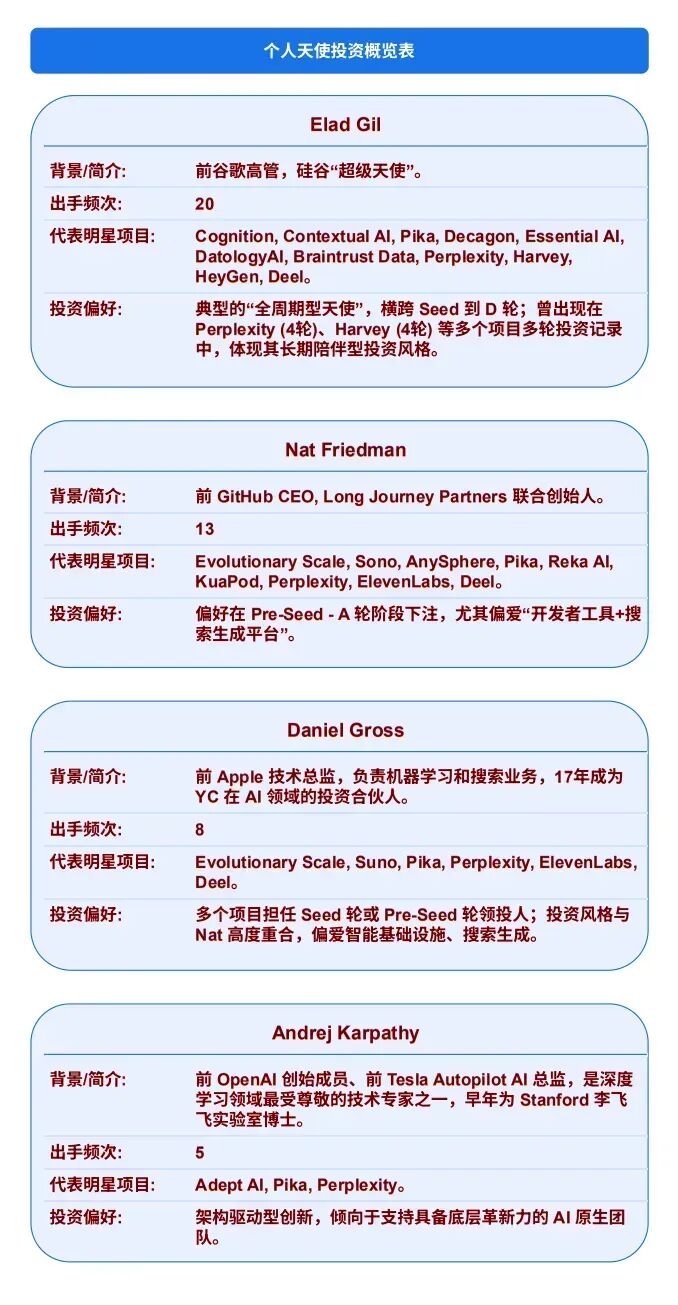
For example, former Google executive Elad Gil — known as a Silicon Valley "super angel" — invested in as many as 20 star projects in our sample. He has a notable characteristic: full-cycle, companion-style investing. From seed to Series D, we see Elad appearing repeatedly across multiple rounds of the same projects.
Take AI Q&A search company Perplexity and legal AI assistant Harvey: behind their multiple financing rounds is his presence, with four consecutive follow-on investments. This long-term support shows that Elad Gil tends to identify excellent teams and then run alongside them for the long haul, providing sustained capital and strategic guidance. For founders, attracting such a "patient, far-sighted" angel is invaluable — it not only solves early funding needs but also secures a steadfast backer for subsequent rounds.
We also compiled individual angel investors who have backed star projects five or more times.
In the financing network of these US early-stage AI star projects, a cohort of super angel investors stands out particularly prominently: Elad Gil, the former Google executive, made the most bets in our sample, investing in 20 projects cumulatively, with notable repeated follow-ons in Perplexity, Harvey, and others;
Nat Friedman (former GitHub CEO) has a passion for developer tools and generative AI, placing 13 bets on platforms like Replit and Codeium;
Daniel Gross (former Apple technology director, YC AI partner) has also moved swiftly, serving as an early investor or lead in 8 projects, with a preference for search and intelligent assistance directions;
Deep learning luminary Andrej Karpathy (former OpenAI founding member, Tesla Autopilot AI lead) made 5 investments, favoring底层架构创新, backing technology-driven projects like Resolve.ai;
Google AI chief architect Jeff Dean also has 5 recorded investments, mostly focused on early teams in computing architecture and model collaboration;
And Guillermo Rauch (Vercel CEO, core developer of the Next.js framework) specializes in AI developer platforms, with 5 bets supporting code generation and collaboration tools like Braintrust and ElevenLabs.
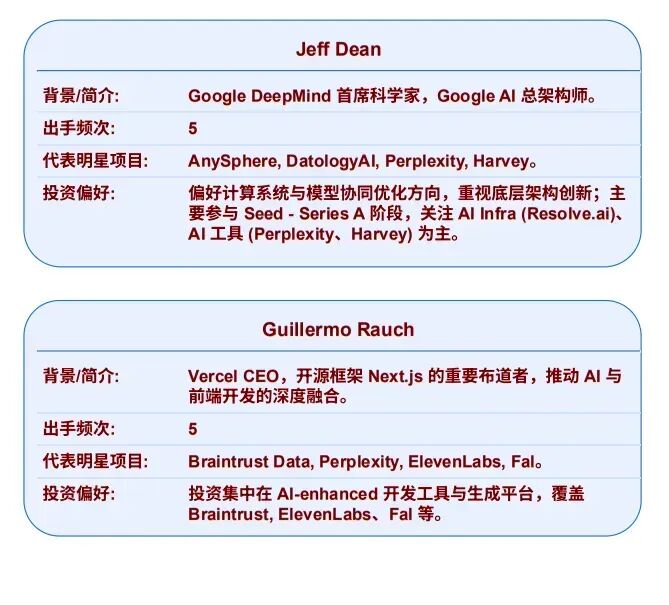
What these super angels share: deep technical backgrounds plus powerful industry trust networks. They use professional discernment to identify future stars, and their endorsement makes projects even more sought-after, attracting follow-on capital. It is fair to say that in the early-stage AI entrepreneurship ecosystem, these technically distinguished angels serve as critical connective tissue for "project clustering effects" — linking talented people and promising projects to create positive feedback loops.

3.3 CVC involvement in early-stage projects is also becoming increasingly pronounced
As the AI entrepreneurship landscape expands, large tech companies' CVC arms getting involved in early-stage projects is becoming increasingly pronounced. Traditional VC selects projects primarily for financial returns, while CVCs carry the mission of extending parent company strategy and ecosystem positioning — their investment logic is tightly coupled with industrial needs.
In our star project data, multiple well-known tech companies' CVCs appear on investor lists, and some with notably high frequency.
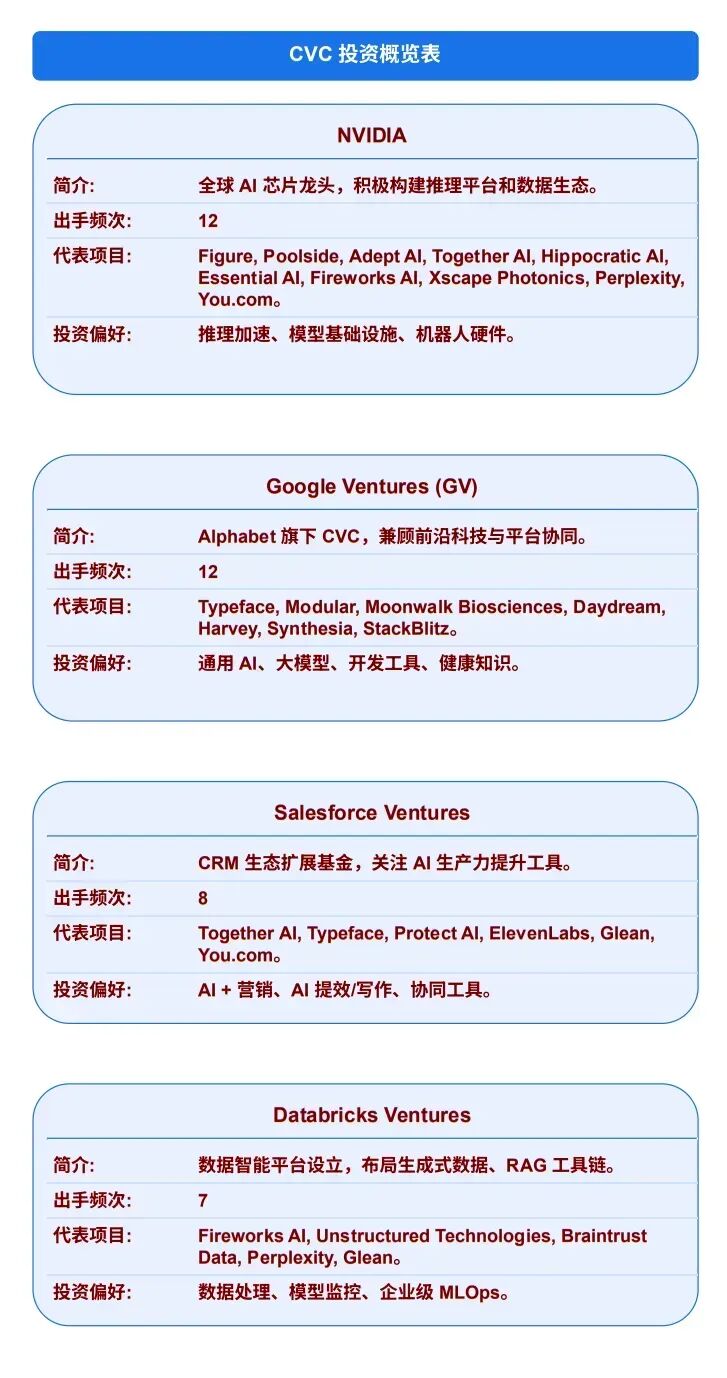
We also compiled CVCs that have invested in star projects five or more times.
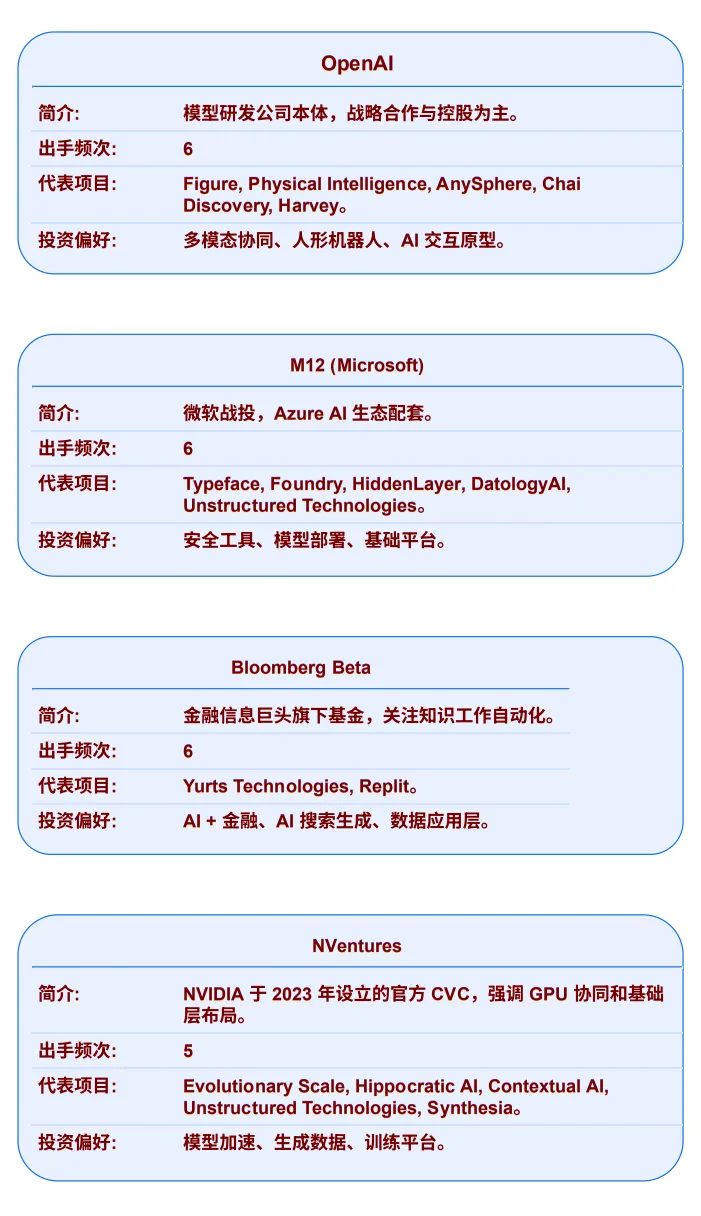
On the CVC (corporate venture capital) front, the most active is NVIDIA and its newly established NVentures, with a combined 12 investments in our sample, concentrated on inference acceleration chips, AI model infrastructure, and robotics hardware (such as Etched, Figure, and others).
Google Ventures (GV) also made 12 investments, covering general AI, large models, healthcare, and other directions (such as Perplexity, BridgeBio), with an emphasis on strategic synergy with the Google ecosystem;
Salesforce Ventures planted seeds in 8 star projects (such as Harvey, AI writing assistant Writer), focusing on enterprise efficiency and CRM ecosystem expansion;
Databricks Ventures made 7 investments,锁定数据处理、RAG 工具链、企业级 MLOps(such as Glean, Contextual AI), bolstering its own data intelligence platform;
M12 (Microsoft) deployed resources across 6 projects (such as Protect AI, ModelX),完善 Azure AI 的安全和部署服务;
Bloomberg Beta made 6 investments focused on knowledge work automation (such as Hugging Face, NeuroBlade);
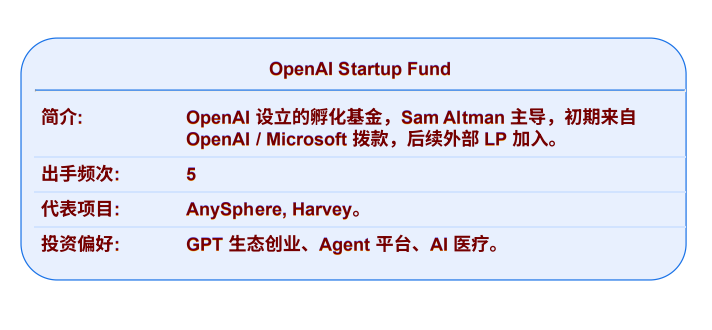
Additionally, the OpenAI Startup Fund has currently invested in 5 generative AI projects, tightly aligned with its own GPT model ecosystem.
Overall, CVCs' active positioning provides AI startups with another viable development path. These corporate investors bring not only capital but also valuable scenario resources and potential for subsequent collaboration.
For founders, if a product direction is highly aligned with a tech giant's strategic needs, securing CVC funding can be a multi-pronged win. It not only alleviates financing pressure but may also represent a fast track to integrate into an established ecosystem and achieve scale.

3.4 The AI Boom Has Also Spawned a Wave of Distinctive New VC Funds
The AI startup frenzy has given rise to a cohort of emerging VC funds with sharply defined styles. Founded by well-known industry figures, they have racked up eye-catching investment records in a short span of time and are widely seen as the "dark horses" of the venture capital world.
These funds typically focus squarely on AI, combining sharp trend radar with the conviction to move fast. In our tally of standout projects, several of these dark-horse funds show up repeatedly, having backed multiple companies at the earliest stages.
We've also compiled a list of dark-horse funds that have backed five or more of our star projects.
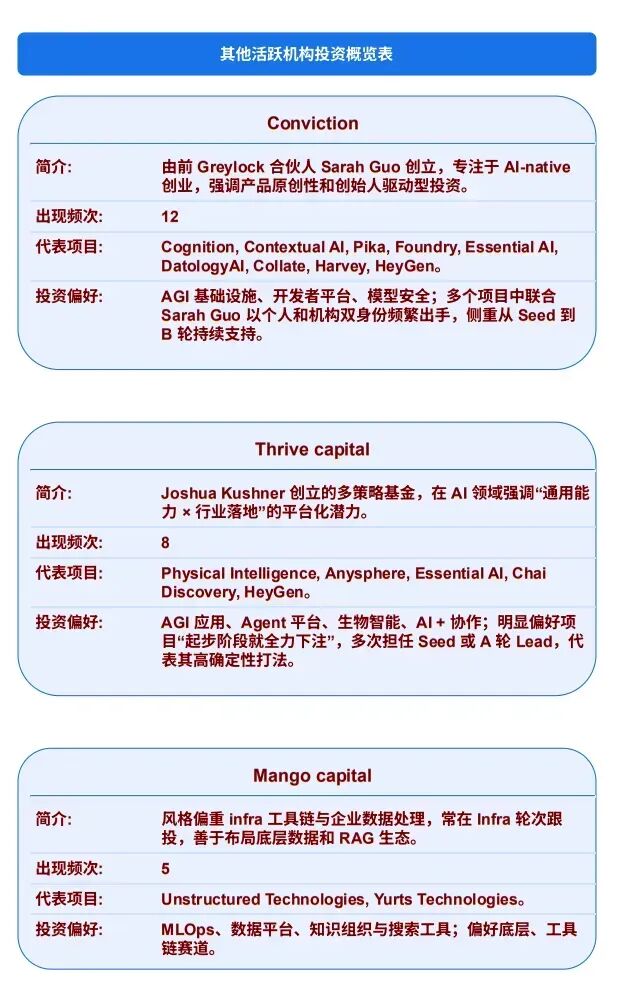
Conviction, launched by former Greylock partner Sarah Guo, has made 12 bets guided by an "AI-native" thesis (including the agent framework Pilot and model-safety tool Sentient), often following on across multiple rounds to stay with companies as they grow;
Thrive Capital has taken the lead in 8 cases (such as Cleary and Lovable), favoring a forceful lead-investor posture and supplying large seed or Series A checks to general-purpose AI and agent platforms;
Mango Capital, which zeroes in on foundational infrastructure, has made 5 investments (including Fireworks AI and Prins), concentrating on enterprise data processing and MLOps solutions.
Compared with established blue-chip VC firms, these upstarts are more aggressive and nimble. They lean on the star power and networks of their name-brand partners to rapidly assemble a stable of would-be unicorns in the AI space.
The rise of these dark-horse funds makes one thing clear: AI's golden age is spawning not just new startups, but a new generation of investment firms as well. Steered by seasoned operators with independent convictions, they refuse to be bound by the pacing and playbook of traditional VC. Instead, they deploy capital flexibly and heavily based on their read of where technology is heading. For founders, their presence means more diverse financing options and value-add services better tailored to the realities of building in AI.