Challenging WeChat Is a Death Wish? The Ambitions of a 25-Year-Old AI Founder | In Conversation with Chunyu Chen: Founder/CEO of Intent
After dropping out of Tsinghua University, he experienced seven failures.
Dropped out of Tsinghua after seven failed attempts.
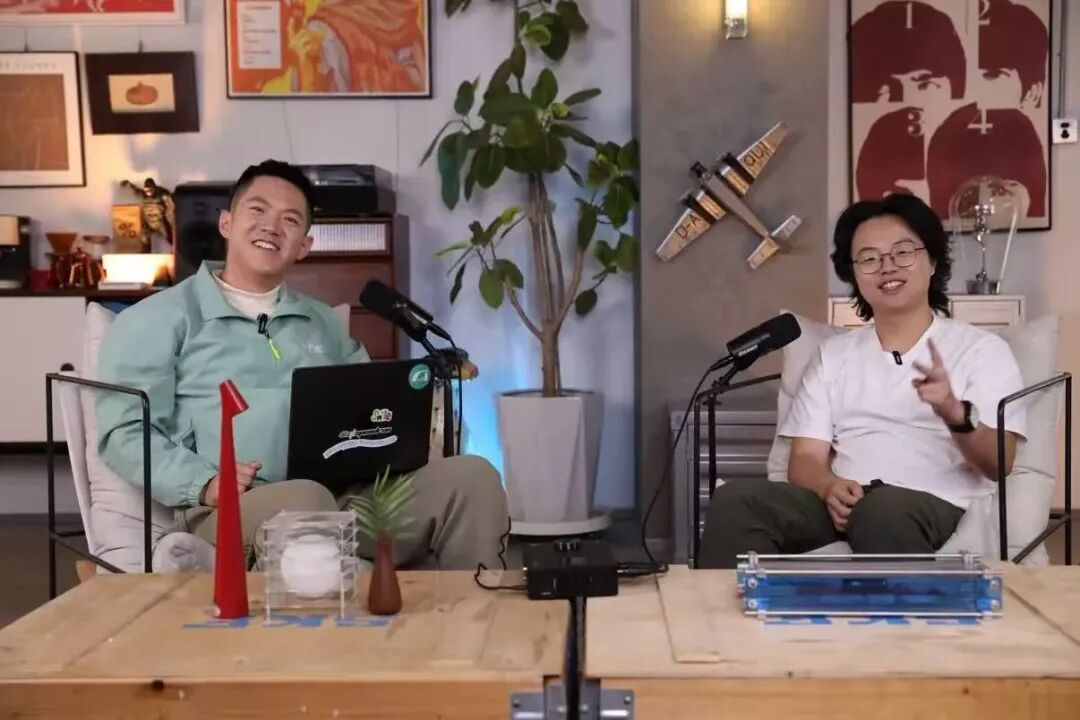
👦🏻 Podcast interview: Koji
🥷 Edited by: Crossing
🧑🎨 Layout: NCon

🚥 Chunyu Chen (Brandon) is attempting something many consider a suicide mission: challenging WeChat and WhatsApp — by building an instant messaging (IM) tool for the AI era.
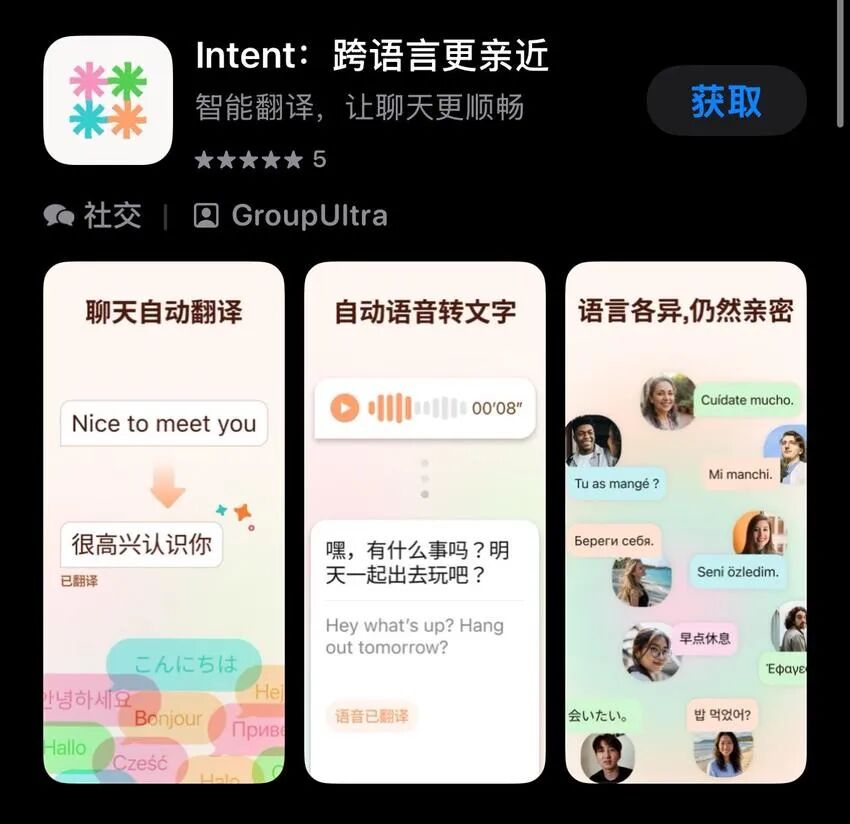
As this week's guest on "Crossing," the 25-year-old founder has an extraordinary backstory: dropping out of Tsinghua University, abandoning biology, flying to Silicon Valley on a one-way ticket, and at one point sleeping on floors. Today, his company has secured support and investment from multiple veteran internet entrepreneurs and investors, and just launched its new product, the Intent app (intent.app).
In this episode, Brandon shares the ups and downs of his two entrepreneurial journeys, his epiphany about dropping out, and his thinking on next-generation IM. Why does he believe doing something big is no harder than doing something small? How did poor English become his greatest advantage? In a market monopolized by giants, how will AI reshape the "intent" behind our communication and create new opportunities?
If you're interested in AI-era product innovation, the extraordinary journey of a young founder, and those seemingly impossible grand challenges, this episode should offer some inspiration.
Listen on WeChat:
Listen on Xiaoyuzhou:
🎬 The video podcast is also available on Koji's WeChat Channels, Xiaohongshu, Bilibili, YouTube, and other platforms
As the full interview is quite long (21,302 Chinese characters), here's the table of contents:
🟢 Lightning Round
Age, school, MBTI and zodiac sign, company and product introduction, funding status, revenue and profit, team size.
🟢 First Startup, Dropping Out of Tsinghua
"What's my biggest failure in college? That I'm still here studying."
- How to calibrate your life coordinates? — Stephen A. Schwarzman's insight: doing something big is as hard as doing something small; since both are exhausting, why not choose what makes you happy?
- Where does a biology degree lead?
- A game engine business plan more impressive than Unity's, which landed 1.2 million RMB in angel investment — then what? The product never got built.
- Epiphany moment: during a VC interview, asked about his "biggest college failure," his answer made the interviewer laugh.
- Why no fear about dropping out? "I wouldn't starve no matter what" — confidence came from solo "Beijing drifting" in his senior year of high school and a clear-eyed view of where biology led.
🟢 Silicon Valley Disenchantment
From being homeless in Palo Alto, sleeping on a friend's dorm floor, to living in a sea-view villa in Berkeley — what happened on this journey?
- Flew to the US specifically to meet Zoom founder Eric Yuan, then waited two months.
- Excitedly pitched his early multi-agent concept, only for Eric Yuan to cut through it: at its core, this is just a Discord bot.
- Living in a sea-view villa in the Berkeley hills, removed from social noise, listening to Allen Zhang's public lectures daily, watching the ocean, greeting deer — the epiphany about IM happened here.
- Filled more than a dozen large sheets of paper taped to the wall with notes from Allen Zhang's lectures.
- "Disenchantment" is the beginning of agency: when you realize Stanford people are just people, and many lack the sophistication of Chinese internet veterans, you dare to jump in.
🟢 Securing Investment from Two "Internet Big Shots"
"Young people daring to do something this big — impressive."
- Meeting the first "big shot," talking ambition: he barely listened to the product pitch, just said "young people daring to do something this big — impressive," and invested.
- Meeting the second "big shot," talking users: zero discussion of market, competition, or what if Tencent copies you — only one question: how do you do user research?
- Is founder networking useful? A friend once described him as "networking every day" — but how does he view the value and phases of socializing?
🟢 Challenging WeChat: Why Is IM Worth Rebuilding in the AI Era?
He attempted IM seven times, all failures. Now on his eighth attempt, what opportunity does he see that others don't?
- Why is IM a massive opportunity? It commands the highest user time spent and open frequency, yet monetizes far worse than Douyin.
- From chat summarization, AI search to personal assistants — countless AI features once imagined, why did "translation" become the entry point?
- User pain: a Vietnamese-American mother unable to have deep conversations with her US-born child due to language barriers.
- Translation exists elsewhere — what's the advantage of building your own IM? The core is "context" — only in IM can a large model know whether to use casual or honorific speech, or distinguish whether LLM means "Master of Laws" or "large language model."
- Data insight: WhatsApp averages 60 messages daily, ChatGPT 10 queries, Google Search 3 times — IM is the most complete record of personal digital life, and a goldmine of data.
- Why does WeChat have the capability but choose not to do semantic search for "Wednesday" vs. "Wednesday"? The "advantages" of big companies are precisely the opportunity for startups.
🟢 Dancing with Uncertainty
Not suited for research, "no matter how badly I'm doing now, it's better than staying at Tsinghua for a biology PhD."
- How to manage investor expectations? "I always say, I don't know where the market is either, IM has failed seven times, maybe the eighth will fail too."
- Personal growth: MBTI shifted from ENTP to INFJ, from relying on external exchange to looking inward for answers, paying attention to others' feelings.
- How to manage team anxiety? Combat uncertainty with continuous, tiny, but unmistakable "forward motion." From thousands of users to tens of thousands, letting the team know "we're on the right track."
- Advice for founders: all constraints are fake, do what you want to do immediately, turn an idea into a product over a weekend, then quickly accept the market's harsh feedback.
Lightning Round
👦🏻 Koji
Today's guest is Chunyu Chen, Brandon. He's attempting something many consider a suicide mission, because he's challenging WeChat and WhatsApp, building an IM for the AI era. Brandon dropped out of Tsinghua, has now left China, and is building in Silicon Valley. Their new product is called Intent, just launched, highly anticipated by many but also somewhat controversial. Recently Brandon also secured investment from two internet big shots — we'll keep the names confidential, but they'd definitely surprise people.
Hello Brandon, welcome to Crossing. Let's start with the lightning round — your age?
🧑🏻💻 Brandon
👦🏻 Koji
School?
🧑🏻💻 Brandon
Tsinghua, didn't graduate.
👦🏻 Koji
Your MBTI and zodiac sign?
🧑🏻💻 Brandon
My MBTI changed from ENTP to INFJ, zodiac sign is Aries.
👦🏻 Koji
One sentence to introduce your current company and product.
🧑🏻💻 Brandon
We want to build tools that help people communicate better. Our current product is an instant messaging tool with very smooth translation, called Intent.
👦🏻 Koji
Current funding status?
🧑🏻💻 Brandon
We've raised enough to fully explore this project. So when people use our product, they don't need to worry about us suddenly shutting down — we'll definitely provide stable service.
👦🏻 Koji
Current revenue and profit?
🧑🏻💻 Brandon
Some of our previous products had a few hundred paying users, so basically negligible, and no profit.
👦🏻 Koji
Current team size?
🧑🏻💻 Brandon
20 people.
👦🏻 Koji
I know IM is a very grand vision, very exciting to talk about, but regardless, the first step of any product is convincing users to download and use it. With this Intent you've launched, if you were pitching it to a user, what would you say in a few sentences to get them to try it?
🧑🏻💻 Brandon
I'd tell that user, "Use this and you can talk to your grandma." What's implied is that he's probably a second-generation immigrant in the US, more comfortable expressing himself in English, while his grandma might only speak Cantonese or Spanish, and maybe can't even type. With our software, he can communicate with his family — both sides just send voice messages to each other, but both sides can understand.
👦🏻 Koji
Is this a growth strategy you're already using, or a target scenario you had in mind when building the product?
🧑🏻💻 Brandon
This is a need we validated through early user research, and our current seed users are continuously giving us feedback for improvements based on this scenario.
First Startup, Dropping Out of Tsinghua
👦🏻 Koji
Before we talk more about IM and your current product Intent, I want to start with your background. We all know building an IM is pretty crazy — it takes serious conviction. I understand your first startup wasn't exactly smooth sailing. Could you walk us through that first experience?
🧑🏻💻 Brandon
My first startup began when my partner was applying for jobs. I wanted to see what someone with a biology degree like me could apply for, and found that on that website, after selecting biology as my major, I only had two options: lab technician or investment. I figured investment had to be more interesting than working in a lab, so I interned at a VC firm.
At that VC, I realized sourcing deals was crucial. Around then, Tsinghua had this "President's Cup" entrepreneurship competition. I teamed up with two guys I'd met through a gaming club — one of whom was also interning at a VC. He ended up pulling an all-nighter to write a business plan for a game creation platform, and someone wanted to invest in us.
👦🏻 Koji
Just a business plan? No product at that point?
🧑🏻💻 Brandon
No product, nothing. We didn't even know how to make games. I was co-founder, another classmate was CEO. He wanted to build a game creation tool better than Unity and Unreal. When the investor asked how much we wanted, he thought for a moment and threw out what he thought was a big number: 1.2 million RMB. The investor said, "I'm in." That's how it started.
👦🏻 Koji
What happened next? How did this play out — did you ship a product?
🧑🏻💻 Brandon
No product shipped. The team's conviction wasn't particularly strong. It came together through this entrepreneurship competition, and I think all three founders lacked real conviction. After hitting many setbacks, we didn't have the mental stamina to keep going. Also, the CEO and I were both young — twenty years old — pretty immature in a lot of ways. So it didn't work out.
👦🏻 Koji
A lot of people whose first college startup fails might go back to school for grad school, or land a job at a big tech company. But that wasn't your path.
🧑🏻💻 Brandon
Right. I got funding for that first project in 2021, and by early 2022, I'd given up all my equity and salary and left the company, since the CEO was already checked out.
So in 2022, I agonized for a long time. I considered going back to school, doing investment, getting a job, even taking the civil service exam. I considered everything — except "start another company," which I put dead last.
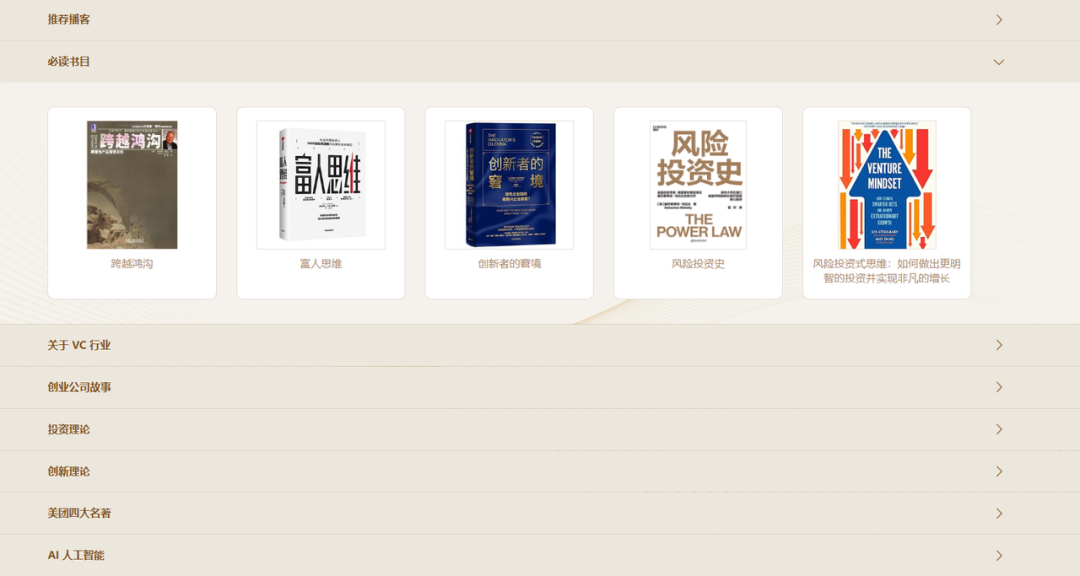
Until at a summer return offer interview at that same VC I'd interned at, they asked me: "What's the biggest failure of your college years?" Because of that first startup, I'd read through most of the book list ZhenFund gave to interns (https://www.zhenfund.com/List) — lots of biographies of founders and companies. I developed a vague intuition for how big things get done. After reading all that, my answer to "biggest failure" was: "That I'm still here in school."
👦🏻 Koji
An epiphany.
🧑🏻💻 Brandon
Yeah. I said, why am I still at Tsinghua? The interviewer smiled and said: "Well, Steve Jobs and Bill Gates dropped out because they had something to do — you can't drop out just to drop out, right?" I said: "Right, I'm suffering. That's exactly my point of failure. I'm already a junior and still don't know what I want to do."
After that interview, I started wanting to do something. I was on a boat with my partner at Xiaoqikong in Guizhou, joining the weekly meeting of a Peking University investor mentor I'd been learning from. At that meeting, I suddenly said I was going to drop out. I had no funding, nothing clearly defined yet, but had a preliminary sense that I wanted to do something related to group chat, messaging. In that moment, I decided to drop out — took a one-year leave of absence.
👦🏻 Koji
You had a fuzzy vision then, nothing fully thought through. Did you feel like if you didn't drop out, this startup couldn't happen?
🧑🏻💻 Brandon
Two things made me feel I needed to do something myself. First, there's a line in Stephen A. Schwarzman's biography: "Doing big things and doing small things are equally difficult." So I figured, might as well do the most valuable thing, and something I'm interested in.
Being a founder is exhausting, but being a corporate drone is exhausting too. As a founder, at least I'm burning myself up for something I'm genuinely excited about. In a company, you're miserably burning yourself up to hit KPIs. So I thought: do big things.
The other thing was that classmates and friends kept asking me — "Chunyu, got anything going on? Want to build something together?" I'd done all kinds of projects in undergrad, never really succeeded at anything, but people always thought I'd come up with something new. Lots of classmates were bored too. Since everyone wanted to do something, and everyone was so talented, I might as well lead the charge.
👦🏻 Koji
Did you feel any fear when you decided to drop out?
🧑🏻💻 Brandon
No. I think mainly because I chose a good major — biology. I realized that if I kept going for a PhD in biology, I'd probably be getting 3,000 to 5,000 RMB a month as a grad student stipend, living in a Tsinghua dorm converted from a single to a double, doing experiments day and night. That wasn't the life I wanted.
I'd gotten into Tsinghua through competition保送 [direct admission via academic competition], so I'd already joined a lab in my senior year of high school, published two papers between senior year and freshman year. I knew very early what continuing down the biology path would look like, and I didn't want it.
Another thing: around age seventeen or eighteen, because of competition awards, my hourly rate at tutoring centers was very high. I'd basically resolved my financial worries before even starting college. I realized that many people, after finishing school, go into tech or banking or consulting — and don't necessarily earn more than tutoring. So why bother? I had no fear of losing the degree.
👦🏻 Koji
So you were in a pretty well-padded position when you decided to start up.
🧑🏻💻 Brandon
Yes, but my safety net wasn't really from the competition tutoring income. It was from a moment where I realized I'd never starve no matter what. In my senior year of high school, my homeroom teacher thought I was distracting other students, so he kicked me out of the classroom. Since I'd already been admitted to Tsinghua through the competition, I emailed professors at Tsinghua's School of Life Sciences on my own, and one professor took me in.
I came to Beijing alone at eighteen, found my own place, built new social connections from scratch, figured out how to survive and earn money. I realized I'd come to Beijing with just a few thousand RMB, survived, rented a decent place, and was pretty happy. So I'd never starve. That was my safety net.
👦🏻 Koji
Compared to your other Tsinghua classmates, what do you think was most different about you?
🧑🏻💻 Brandon
Probably because I did so poorly in the preparatory program. I didn't fail any classes, but my math and physics grades were basically Bs, Cs, Ds — best was a B. This meant I was先天 [congenitally] disqualified from the GPA race, because no amount of grinding would save me. Calculus hit me with a 1.6, linear algebra another 1.6 — that's 5 credits and 4 credits respectively. I was done.
👦🏻 Koji
A lot of suffering comes from having too many choices.
🧑🏻💻 Brandon
I think the biggest difference was that not worrying about GPA completely detached me from Tsinghua's prescribed education system. My grades blocked that path, so throughout college I fully explored on my own, did all kinds of projects, and eventually ended up at entrepreneurship.
👦🏻 Koji
So the second time, when you decided on that boat in Guizhou to drop out and start up, what happened next? I remember you raised funding, got MiraclePlus [奇绩创坛] money?
🧑🏻💻 Brandon
Right. What happened was I got funding from MiraclePlus and a Beijing angel firm — a few hundred thousand dollars. Since it was USD, we had to set up the whole structure before getting the money. My co-founder and I even fronted a few hundred thousand RMB ourselves to get things running.
Initially, we wanted to build IM software. I'd just finished reading Zheng Huang's [黄峥] public account posts and was blown away — how could someone think so deeply? We asked ourselves: what asymmetric opportunities do we see? What's the massive opportunity? We realized chat software has enormous traffic, extremely long user session times, and very high open rates.
But even now, in the hands of Tencent and Meta, it's often still a defensive product. Although WeChat's mini programs, mini games, and Moments ads have built a very successful ecosystem, and Meta's business accounts have done decently too, neither has achieved what Douyin or Instagram have — native content advertising where you just keep scrolling and it's a money-printing machine.
I don't think chat software needs ads in the chat itself, but there must be some way to combine business and product really well, so that it creates massive value on its own. Not like when Pony Ma first thought QQ was nothing but server costs and nearly had to sell it.
I feel like even now, this problem hasn't been fully solved. WeChat has done a lot of excellent work, but I still think it's essentially pulling people out of chat.
I've kept thinking: chat itself, the highest-frequency user scenario — is it possible, through the right product form, to unlock massive value?
Disillusionment with Silicon Valley
👦🏻 Koji
So with this vision, you started your company in China. When did you decide to move to Silicon Valley?
🧑🏻💻 Brandon
Actually I wanted to go global from day one. But because of the pandemic in late 2022, international travel was still pretty restricted. I first went to Singapore and South Korea, which are relatively close to China, but found the markets small, and the people I met there probably weren't as smart as the people I met in Beijing.
Then I came back for Chinese New Year. During the holiday, Qi Lu told me he'd mentioned my project to Zoom founder Eric Yuan, and that Eric Yuan might want to meet me. I was so excited — a direct meeting with a big shot. So I said I definitely had to make a trip to the US.
After the holiday, global travel started recovering. I went to a friend's wedding, then headed to the US. Only when I got there did I realize that the Zoom founder's time needed to be booked in advance, not as simple as me and a friend deciding to go to an internet café downstairs.
👦🏻 Koji
How long did you wait?
🧑🏻💻 Brandon
I waited two months. We talked for one hour.
👦🏻 Koji
What kinds of questions did Eric Yuan ask?
🧑🏻💻 Brandon
He mostly listened to me present. I probably didn't present well, and he didn't really get it. At the time we'd already done some experiments in group chats, hoping to have something behind every group that controlled everything in the group and intelligently completed tasks — somewhat similar to today's multi-agent concepts, but running in the background. Our thinking wasn't very clear, and I couldn't clearly explain why users would want this or what was good about the product. Of course, it later turned out that product completely didn't work.
After our conversation, Eric Yuan said, fundamentally this is still a bot in Discord. I said it should be different from a bot. He said, isn't this still a bot? That was the result of our exchange.
👦🏻 Koji
You probably went wanting to pitch him for investment, but obviously the conversation didn't go that smoothly. But you still stayed in the US?
🧑🏻💻 Brandon
Yeah, I stayed a few more months, traveling around. We actually already had a product in development. Although we were doing consumer, we'd landed contracts with Baidu and Tsinghua University. Baidu gave us a great opportunity to open APIs in Baidu Tieba, building chatbot bots. We launched in the largest Sun Xiaochuan Tieba, covering over a million users.
Lots of people played with it at first, but ultimately those chatbots didn't provide any real value, so that partnership ended after the first phase. Later, a professor in Tsinghua's computer science department heard we were building our own web chatroom with lots of customizable AI features, and said: "Why don't we try it out, use it in our classes?" So while I was traveling around the US, my team was back in China working hard to develop that platform for Tsinghua.
👦🏻 Koji
When did you decide to base yourself in Silicon Valley? Was there a specific moment?
🧑🏻💻 Brandon
There was. At the end of that year, our Tsinghua product launched. It was mediocre, but teachers and students actually started using it. It was the first time I'd launched a product and received money, and got user feedback — an important moment in my entrepreneurial journey.
After the Tsinghua launch, we thought we had to take this thing abroad, with Stanford as the first stop. Because during my first US trip, I'd already gotten the sense that Bay Area people were just... like this. At first I thought everyone in Silicon Valley was amazing, that Stanford students must be way better than Tsinghua students. Later we looked and thought, it's just like this. So I figured, I can also go do something at Stanford.
After the Tsinghua launch, we tried to launch at Stanford. In Silicon Valley, by chance I met an investor whose firm is now called Llama Venture. I was still on a tourist visa. They had a friend set up a meeting at their office, we talked twice, and they said on the spot they'd invest — about $2 million. Only with that money did I have the capital to open a US company and cover expenses, because the initial angel investment was almost gone.
👦🏻 Koji
So the reason you decided to stay and start a company in Silicon Valley was, you felt Stanford was just like that, and you seemed to do pretty well there, so you wanted to give it a try?
🧑🏻💻 Brandon
I think I just became disillusioned. Just do the work seriously. Like WhatsApp founder Jan Koum — he didn't have some amazing background. Like Airbnb's founders, we all know those stories. Meeting real entrepreneurs there, you realize they're actually not that mature, and their understanding of monetizing many internet things falls far short of someone ByteDance could randomly pick. So I felt, if they can do it, I can do it.

👦🏻 Koji
Was there any specific trigger when you decided to base yourself in Silicon Valley?
🧑🏻💻 Brandon
The first point was I wanted to launch my product at Stanford, so I slept on a Stanford dorm floor for a semester. Later I fell out with that friend and couldn't keep sleeping on his floor, so I became homeless in Palo Alto.
While I was homeless, a friend introduced me to a kind person, an investor. He told me he had a house in the Berkeley hills I could stay in, no rent. So that's where I ended up.
👦🏻 Koji
So you're still there?
🧑🏻💻 Brandon
I'm still there. We set up an office in San Francisco two months ago, but we also work from his living room.
👦🏻 Koji
What's the house like?
🧑🏻💻 Brandon
It's a white seaside villa on the hill with great views, at the best viewpoint in the Berkeley hills, with a large terrace and big yard.
👦🏻 Koji
Wow, that sounds like you went straight from homeless to a big seaside villa in Berkeley. How does it feel?
🧑🏻💻 Brandon
I feel very peaceful and comfortable there. All my ideas for subsequent products formed during that time. I listened to Allen Zhang's WeChat open classes while writing notes on the wall. I bought lots of big white paper and stuck it on the walls, filled out more than ten sheets. At that point, I suddenly had some sense of what IM really is.
I think it's in a very reclusive, tranquil environment. I didn't have to go to events in San Francisco or Palo Alto, just stayed on the hill, sometimes not going out for one or two weeks, listening to podcasts, watching the sea, greeting the deer that came into the yard. I lived like that for a while.
👦🏻 Koji
You were watching Allen Zhang's open classes, and now you're building IM. Have you had any form of communication with Allen Zhang along the way?
🧑🏻💻 Brandon
Friends on the WeChat team supposedly sent something I wrote to Allen, but he apparently didn't respond. Maybe I can hope for a chance to chat with him someday.
👦🏻 Koji
If you could meet Allen, what would you want to ask him?
🧑🏻💻 Brandon
I don't think I have any specific questions. Maybe we could just talk directly about the product, our understanding of users' basic needs.
Securing Investments from Two "Internet Veterans"
👦🏻 Koji
I know Brandon recently got investments from two veteran internet figures. One wasn't that surprising to me — he's been very active lately, made several investments in Silicon Valley, all at very high valuations. But the other one really surprised me, because he hasn't appeared in public view for quite some time. I know we need to keep this confidential, but I'd love to briefly talk about your fundraising stories with them — for example, what questions did they ask that really impressed you?
🧑🏻💻 Brandon
For the first veteran, I think he wanted to see certain things through young people. I just happened to be in front of him at the right time saying I wanted to build IM. He probably hadn't heard other young people say they wanted to build IM, and I was qualified in some basic ways, so he just opened his hand and gave it. I think luck is sometimes important.
He didn't say much to me directly during our conversation, but I heard him talking to other entrepreneurs and found that he spoke in plain language, but every word hit the mark, many questions cut straight to the essence. One sentence really stuck with me — he said to other guests present: "Young people dare to do something this big, not bad." That might have been his only evaluation. When I tried to introduce product features to him, he didn't seem to listen, probably because I wasn't explaining well either.
👦🏻 Koji
Sounds very high-level — he dares to invest in a very young person with massive ambition. What about the other one? What did you talk about? He's very active now, has invested in many young people in the Bay Area.
🧑🏻💻 Brandon
The most enjoyable part of talking with him was that we didn't spend a minute on boring questions like "What if Tencent does this?" "What if Meta does this?" "Why you?" "How big is the market?" or "What's your growth plan?" He kept asking me about user needs — how I did user research, how I observed users. I found that incredibly refreshing. He's a great product manager, and I want to become one too.
👦🏻 Koji
So far, your fundraising ability and results have been excellent — but that also means a lot of VCs probably know you. I've heard friends comment that Brandon seems to be socializing every day in Silicon Valley and not actually building product. What do you think of that?
🧑🏻💻 Brandon
At earlier stages, especially in 2023 when I didn't know anyone there, socializing really helped me meet people who provided all kinds of help and information. Including how I got my first check in the US — through a friend of a friend. That friend was at an event, heard an institution say they wanted to invest in some AI projects, and introduced me. I was the first deal that fund made that cycle, so they were a bit looser with their standards. If they'd been stricter later on, I probably wouldn't have made the cut. So I think sometimes going out and bumping into things brings some luck.
But later on, once I'd solved my survival crisis, had some money to incorporate and live in the US, and got myself a work visa, I moved up to the Berkeley hills. From that point I barely went to events anymore. But because that landlord in the Berkeley hills was very supportive of young people's startup activities, it was basically like my own house was hosting events — and I was the venue coordinator helping everyone get organized. So in that later phase, often people would just come to my living room, I'd get to chat with them, and I didn't have to go anywhere. I was very happy.
👦🏻 Koji
So if you went back to that time, or for founders at the 0-to-1 stage, you'd still encourage them to socialize more?
🧑🏻💻 Brandon
If you haven't fully figured out what you want to do, or still have some need for external resources, meeting more people does spark inspiration. A lot of times you don't know what this dynamic world will bring you. But sometimes, when you've already figured out that you just need to build this thing, actually holing up somewhere and making it, then getting feedback from the world — that's also very joyful.
Challenging WeChat: In the AI Era, Why Is IM Worth Rebuilding?
👦🏻 Koji
Now you're in that second phase, heads-down building something you've already thought through. So let's talk about IM and Intent. You mentioned deciding to do IM on that boat in Guizhou, and at that time you felt WeChat, WhatsApp — they weren't really putting their full energy into solving communication problems. Specifically, what opportunities did you see?
🧑🏻💻 Brandon
At that time I didn't just look at WeChat and WhatsApp — we probably looked at every IM we could find in the world. KakaoTalk in Korea, LINE in Japan and Taiwan, ShareChat in India, Viber, Yalla in the Middle East, even an official Iranian government IM, and of course Telegram, Signal, and so on.
There are actually tons of IMs in the world, and each has massive user bases. Back then I just sensed that IMs carried enormous traffic, and it wasn't only WeChat and WhatsApp — all kinds of smaller IMs exist, many that Chinese people have never heard of but still have a hundred million users. So at that moment I only vaguely felt there was opportunity in IM.
I only truly figured out this year that the most important thing for IM is solving the problem of communication between people. Last year I vaguely knew IM could enable new product forms and interaction patterns, but I was still thinking about what AI features to put inside IM — I built a lot of prototypes and demos for chat summarization, auto-contact-notes, AI chat history search, personal assistants, and so on.
👦🏻 Koji
So now do you feel you can clearly articulate what the next-generation IM should look like?
🧑🏻💻 Brandon
I still can't, but I've vaguely found where my anchor point is — and my anchor point is simply enabling people to communicate better with each other.
👦🏻 Koji
For example, where do you think people aren't communicating well right now? What kind of friction exists?
🧑🏻💻 Brandon
For instance, my English actually isn't very good. After coming to the US, every time I text people I have to run it through ChatGPT first before sending, and a lot of times it's tone adjustments. And American-born Chinese or young people here have all kinds of abbreviations — like the first time I saw "lowkey" I had no idea what it meant.
Language is one aspect. Another is that even when we speak the same language, we don't necessarily truly understand what the other person is saying. I'm myself a painful user of translation — I feel that even with translation enhancements from Apple or WhatsApp, based on our user research, people still can't use them very well. And WeChat for pure foreigners isn't a tool that works great right out of the box. So if, say, Koji, you're traveling in Brazil, at a bar you meet a Latina, and you both really want to learn more about each other — you have no tool that lets you communicate.
👦🏻 Koji
So the main entry point for Intent right now is multilingual translation?
🧑🏻💻 Brandon
Yes, that's step one, because it's actually a very foundational function. For a team just starting to build an IM, we have demos of many complex features, including some we may have shown in videos, but getting them to where users can actually use them in daily life has extremely high requirements for product quality and stability. We've done some testing at the scale of thousands of users, and I feel there's still some distance to truly barrier-free, problem-free usage, so we're choosing a simpler function to start with.
👦🏻 Koji
The difference between using IM translation versus a translation tool is that IM requires both people to use it. If I personally have a translation need, there are actually many solutions — recently I've really liked Typeless and AquaVoice, where I can speak Chinese to it and it directly outputs English, saving the step of getting the other person to install an IM. Your solution requires the other person to be willing to install the app, meaning you have to solve this better than those tools. How do you do that?
🧑🏻💻 Brandon
We're doing our own evaluations of translation quality. Especially across different scenarios, translation can vary. If people know some Japanese and Korean, there's plain speech and honorifics. If your input method can't get context, the translation it gives isn't necessarily the most appropriate.
👦🏻 Koji
So because there's context within IM, you can know whether to translate into plain speech or honorifics at that moment?
🧑🏻💻 Brandon
Right, or many very detailed things. For example, what does LLM actually refer to? Sometimes it's Master of Laws, sometimes it's large language model. Many things are perceived based on context — even a simple "that," with context you know what it's referring to. So I think context, situational context, and the dynamics between two people's speaking habits are all very important for providing a better communication experience. Probably only by building a communication tool yourself can you most thoroughly solve this problem.
👦🏻 Koji
So you've probably talked to many people about the Intent product, or your whole big future vision — what's the most positive and most negative feedback you've heard?
🧑🏻💻 Brandon
I think the most positive feedback was simply a user telling me, "I need this." She was willing to use it with her family — she's a Vietnamese-American mom, her child was born in America, and her child only speaks English while her English is poor and she only speaks Vietnamese. A mother and her own child basically can't communicate, can only say "Are you back?" "Have you eaten?" "Have you slept?" — just that. They actually live together, they have so much to say. I find that kind of feedback the most positive, because I don't need to care about other people's evaluations — I only need to care whether these users' problems are truly being solved by me.
And negative feedback would be things like: you can't build an IM from scratch at all, translation is something a big company can easily do well, this isn't sexy at all, it doesn't feel like it leads to the future, you have no way to cold-start, and they think I'm a scammer — just endless comments like that.
👦🏻 Koji
Why would they think you're a scammer?
🧑🏻💻 Brandon
I don't know either. Maybe when a young person says they want to build an IM, people just think this person doesn't know what they're doing?
I think because we spent so much time on user research before launching this product, we're still interacting with our early seed users, letting them participate in building our product, and some power users are even willing to actively help promote it.
So it feels like we already have our first batch of users — we're just iterating based on their feedback. And once we iterate to a version we're fairly satisfied with, we'll have them tell me what their usual information channels are, because their communities definitely get information through the same channels, and then I'll do good marketing on those channels.

👦🏻 Koji
Before building the Intent app, I saw you once share that you'd already failed 7 times at doing IM — so how do you define each failure? What's the granularity of this failure?
🧑🏻💻 Brandon
The granularity of failure is that before doing IM, we built a lot of bots. Doing IM meant at least trying to build a client and frontend that could actually send and receive messages — that counts as one attempt.
The earliest version was a crude Python backend for a web chat room running on a single instance. Later we modified it and added a frontend interface. Then because Tsinghua University wanted to use it, we had to deploy it on public cloud for better stability. After that, Stanford wanted to use it, and many user habits and requirements changed, so we had to rewrite a lot of things and do custom development.
Then I finally decided I wanted to build something myself — a mobile app instead of a web chat room. We did the web chat room initially because I didn't know how to do app development. Once I learned, I started building on my own, writing another backend and client. But that was still a toy-level thing that helped us validate a lot of prototypes. After that, we built a third-party client based on Telegram called Lingogram, which added AI features like chat summarization, translation, and tone polishing on top of Telegram. And now, we're building Intent. So every attempt has still been about wanting to do chat.
👦🏻 Koji
So from those 7 failures, what are your biggest takeaways?
🧑🏻💻 Brandon
Start from real user needs.
👦🏻 Koji
So you feel like some of your previous attempts didn't start from real user needs.
🧑🏻💻 Brandon
A lot of the time, I was still figuring out how to build chat. If I didn't even know how to put the system together, I couldn't understand the needs that well either. On one hand, I was understanding better how the system works. On the other hand, through each attempt and each rejection by users, I got closer to users. It's a two-way process.
👦🏻 Koji
What kind of IM do you think the one you want to build in the future will be?
🧑🏻💻 Brandon
I want my IM to really understand you, to help you send and receive messages well. It's called Intent, which means any intention you carry in normal messaging can be well addressed.
For example, when I say to Koji let's order takeout, after we finish discussing what we want to eat, if authorized, it automatically places the order for us. Or if Koji sends me something I completely don't understand, maybe I press a button and it explains it for me, and then I can continue discussing it with Koji in the conversation. Or I simply pick it up and say I want to chat with someone today, and it says "oh, you should talk to this person?"
There are many things we now take for granted: making groups, adding notes, deleting contacts, clearing storage, blocking unknown numbers, searching with seven or eight keywords to find something. We shouldn't take these as given — there are many places they could be done better. Doing better doesn't mean adding 10 more toggles or 10 more groups, but rethinking the product logic from scratch. I don't think I have the answer now — I'm just constantly exploring forward with this mindset.
👦🏻 Koji
Going back to those 7 IM failures — you've been doing IM for three or four years, and it hasn't been entirely smooth. Were there moments when you thought "forget it, let's change direction"?
🧑🏻💻 Brandon
I never had such a moment. I did have two instances where the company built products unrelated to IM. Once, after the Stanford project failed, the team felt pretty demoralized, and based on my own need to apply for a work visa, I built a small AI tool for organizing documents. After launching it, we quickly got a lot of recognition from overseas users. They actively found our email and wrote asking if they could pay us for a business plan version. That was the first time we built a tool and got market recognition overseas, which gave our team a lot of confidence.
Later, since we still didn't know how to build apps well, our first app was also translation-related — a menu translation tool. Because often, even if you understand every word on the menu, you don't know what the dish is. A very typical example is fuqi feipian (husband-wife lung slices). Over there some pizza places have "four cheese" — but it's actually a type of pizza. Menu translation is a very interesting thing. That was our first app, which my co-founder wrote over a weekend, and it actually made us quite a bit of money. There were videos on TikTok with millions of views introducing it.
👦🏻 Koji
So both of these things got positive feedback, but you still returned to doing IM.
🧑🏻💻 Brandon
I once discussed this with one of my investors. I said, I took your money, and I feel like with this AI document thing, doing B2B SaaS in the United States, I could definitely earn back your investment. And the investor said: "Chunyu, we invested in you because you said you wanted to build something better than WeChat. We don't care whether you have one million or several million dollars in ARR. What we care about is whether you can build something meaningful enough." Having such an investor is incredibly lucky for me.
👦🏻 Koji
Angel investors all hope to find the next billion-dollar company. If you just become a business, that's theoretically not the asset class angel investing should cover. But it's different for individuals, because some people choose to earn safer money, accumulating bit by bit, but not everyone wants to shoot for the moon. So are you someone with both strong willingness and ability to take risks?
🧑🏻💻 Brandon
As long as I control my worst-case outcome — that I can still live — then everything else, whatever life brings, it will bring. I don't seem to need to obsess over how things will turn out.
👦🏻 Koji
About IM, we've talked about some things, but I want to dig deeper — do you have any interesting thoughts of your own? For example, things that most people don't agree with but you believe are very correct, or things you see that others don't?
🧑🏻💻 Brandon
Maybe many people also see some things in IM, but I have indeed thought quite systematically about what makes IM as a product special.
Let's start with some data: WhatsApp's monthly active users send about 60 messages per day, while ChatGPT's monthly active users ask only about 10 questions per day. Monthly active users search on Google only about 3 times per day. Many other ToC products we consider very impressive actually have lower user willingness to actively speak or complete actions. For example, Instagram — each user is willing to post less than 0.1 times per day, and Stories are around 0.3 to 0.4.
This is a very interesting point. The IM product form inherently gets users to say a lot, and you have no task. You don't open it and think "what should I say to everyone today? How should I ask? How should I organize my questions?" Often in this social interaction setting, you just naturally bring many things out.
I think this is an extremely special pattern. Even with ChatGPT, sometimes you don't know how to start. But say today you and I are chatting, and unconsciously we bring up many things. If today I were monologuing to ChatGPT, I definitely wouldn't produce as much as I do chatting with Koji.
IM is actually a social field. It has so many triggers, constantly having external entropy input that induces people to respond. It gets people to unconsciously give more information in a very relaxed environment. With more information, the AI system behind it may better understand your behavior and needs, and serve you better when you need it in the future. This is a very unique point of IM in terms of frequency and product interaction pattern.
Additionally, there's something about IM we may not have realized: IM is the first product to make something close to the most complete record of our personal lives. Countless things happen in chat records. We don't keep diaries — who keeps diaries? We don't write that much every day. We don't record 24 hours a day, though some companies might, but then a lot of typed information doesn't get captured. So IM is at least so far the only platform that records the most of each person's digital life, and the entire process is effortless.
Often when we try to record our lives, it's really tiring. I have a friend who marks on his calendar what he's doing every hour. I want to do that too, it seems great, it would let me know where my time goes. But I gave up after two days, while he's kept at it. But chatting on WeChat — I can do that every day.
So IM nicely records our lives, it has so many footprints. For example, how has my language habit changed? How has my state changed? And if I want to recall something, even simply what gift I gave her last year, what about the year before, what should I give this year? The answers to many things are ultimately in IM. It may need a better product form — not like now when we search for "Wednesday delivery" and discover they actually said "星期三" and we can't find it no matter what. There's a lot of room for product improvement here. I don't have a clear idea yet, but I feel it's very important.
👦🏻 Koji
Are you curious why WeChat hasn't addressed many of the pain points you mentioned? For example, why can't you search for "星期三" when you search for "周三"?
🧑🏻💻 Brandon
First, WeChat definitely has the capability to do it, and they've tried many things internally — they're clearly much better than complacent Meta. Another point, going back to something I wanted to say before: we need to turn our biggest disadvantage into our biggest advantage. WeChat's biggest advantage is that it already has a large enough existing user base, which means any tiny change affects the daily lives of a billion people.
👦🏻 Koji
So you're painting on a blank canvas. Because you're on a blank canvas, what different interactions or features do you think you can make?
🧑🏻💻 Brandon
I haven't thought this part through all that clearly. We put a short clip on the Intent.app website showing some examples — like when you're chatting about needing a ride, it helps you book one, even thoughtfully comparing Uber and Lyft prices. Or shopping lists: when you're talking about buying this and that for home, what to get and what to skip, it all condenses into something you can act on with one tap. These are all possible interpretations of what Intent could be, and we'd want to make that interaction better.
👦🏻 Koji
Still going back to that same question — I'm genuinely curious about this too. WeChat actually does do some intent recognition and conversation-changing features, like group roll calls. If I type something and add numbered items 1, 2... it immediately triggers the roll-call function.
But whether it's recognizing intent to book a ride, order food, or shop, WeChat doesn't do any of that. And I don't think it's incapable — I think it chooses not to.
Do you wonder why it chooses not to?
🧑🏻💻 Brandon
They want to push that into Mini Programs, and Mini Programs can dynamically share cards in chats too. But I think Mini Programs pull users out of the chat interface into another page. Once that page switch happens, your brain goes "buzz" and you forget what you were just doing. A lot of people have probably had that moment — we're having a great conversation, you tap a Mini Program card, and suddenly you can't remember what you were talking about.
That might be the best approach available now, but I still want to experiment further on top of it. Maybe my approach will be wrong too, but this matters too much — we all use it every day — so someone has to try innovating.
👦🏻 Koji
Because there are actually others here trying to solve this in different ways. Some people propose something called "proactive AI," meaning it's always with you, monitoring all your conversations, jumping in to help at the right moment.
But everyone runs into the same question: is this help or interference? How do you think about this? Say you and I are chatting, and suddenly it pops up suggesting we book a ride or order food — but maybe it misread the intent.
🧑🏻💻 Brandon
This is like early recommendation algorithms — are they pushing content you like or don't like? If we used the earliest Toutiao recommendation algorithm today, it definitely wouldn't be as good as Douyin's current one, but you still have to build it step by step. Only by trying and validating in real scenarios, and building a system to find your evaluation metrics to look at this, can you make it better. It never seems possible to just think in a lab about how to improve it and have it actually improve. So new products do need some early adopters to explore with us.
👦🏻 Koji
But with recommendation systems, if it guesses wrong, you just swipe past — the interference to users is extremely minimal, unless it's really terrible. But if during a conversation it misreads intent and keeps popping up cards interrupting the chat, that's actually pretty annoying. So have you thought of any ways to combat this?
🧑🏻💻 Brandon
Probably still starting from the user's perspective, using your own intuition to make features more restrained. It's not about seeking credit, but avoiding blame. First it has to be a really good communication tool, and only then can you see if there's possibility to add value elsewhere.
Actually, many of WeChat's features are decentralized — if a friend doesn't share it with you, you'd never find where that thing's entry point is. So that's actually a good approach: how to better recognize when users need something before prompting them. I don't have a particularly good solution for this process right now, except to keep it constantly in mind and keep exploring.
👦🏻 Koji
Do you think this ultimately gets solved through interaction design, or through intelligence improvements? What I mean is guessing user intent and pushing cards when needed — ride cards, food ordering cards, gift-giving cards, etc.
🧑🏻💻 Brandon
This should be both. On one hand, model intelligence needs to improve; on the other hand, more exploration in interaction design, because we don't know which interaction is good either — it can only be observed by validating in real scenarios.
👦🏻 Koji
Because you've been repeatedly talking about a product philosophy: start from user needs, go practice, get feedback to help iterate the experience better. Could you share what valuable insights you've gained from exploring these past two to three years about building the next-generation IM?
🧑🏻💻 Brandon
One insight is that the most important thing in IM is actually receiving messages and sending messages. Users don't need that many fancy features, and can't understand that many fancy features. So everything should probably be built on the foundation of messages being reliably delivered, and then do other things.
Many products try to make things very complicated — add a window here, an option there, a floating ball somewhere — this probably isn't a good solution. The good solution is probably still letting users focus on receiving and sending messages itself, with other features appearing at just the right moment. You must restrain the urge to add a window, add an option. Because users' working memory or attention they can spare is very limited. They've already gotten used to the current mode of sending and receiving messages, which is to some extent already an optimal solution, so you shouldn't lightly break it.

👦🏻 Koji
What topic has your team been discussing most internally lately?
🧑🏻💻 Brandon
We've recently been discussing translation quality. We seem to still haven't found a good benchmark for evaluating large model translation quality. In the earlier NLP era, people actually had lots of text trying to evaluate translation quality, including word alignment, and back then there was some work with word vectors or sentence vectors. But now we find large models can already translate very well much of the time, yet what is the next-level translation quality evaluation system? We currently vaguely feel it might only be possible to use a more advanced model to make judgments, which would create a loop in the end — that's paradoxical.
So we've been thinking about how to improve translation quality further. Because often it may be caused by missing context, sometimes it's wrong tone — the tone you use communicating with family may be completely different from work scenarios. So we now realize that in the large model era, wanting to do translation well is still not a particularly easy thing.
👦🏻 Koji
Your team, after all, everyone's dream is to build IM, but you've recently spent so much time, both team and personal, on translation — do you feel this is an imbalance or loss of focus?
🧑🏻💻 Brandon
Translation is essentially helping people communicate and transmit information, and the point of IM is also passing one piece of information to another. So my understanding is, it's still within our whole scope of "how to help people communicate better." Beyond that, we're actually also exploring directions including AI search of chat history, and many others like understanding intent.
Because being able to understand how to say a sentence in another language and understanding its intent are kindred spirits. So everything behind this may still be about how we better understand people's chats and help people. Translation is actually one very versatile part that connects with many things, and can help us build good understanding.
👦🏻 Koji
So your product's name is Intent, meaning intention. I understand that understanding user intent in chat is a particularly important thing for your company. But this is actually very hard too — a person says something, understanding their intent, and providing the help or service they need.
So far, what takeaways or insights can you share?
🧑🏻💻 Brandon
Our takeaway is: making this product well is really hard right now, we don't seem able to do it yet. But the more impossible something is, the more excited we get — it means there are many problems still unsolved, and that means room for us to innovate, whether in product or in technology.
So we've made Intent our product name and our company name simultaneously, and we look forward to step by step approaching this point in the future. We start from a very simple demo, or a very simple video, maybe like Google's earliest PageRank. In the future, if we repeatedly try to do this well, have enough conviction to move forward on this, our team is excellent and everyone has good learning ability, then we can definitely do this better.
Honesty is the best way. Pinduoduo is amazing — they stabbed themselves in the back at shareholder meetings, drove their stock price down, but it didn't actually affect the company's fundamentals. Many entrepreneurs always like to report good news but not bad to investors, but sometimes reporting more bad news is actually good. When others' expectations of you are low enough, when you hit rock bottom, every step is upward.
If people always had high expectations of me — say I claim now how amazing I can be, and everyone thinks that way — then I'd feel terrible if I didn't deliver. But I always say: I don't actually know where the market is, I don't have PMF, I'm constantly losing money, I can't do this, IM failed seven times, maybe the eighth time will fail too. I tell my investors all of this. Speaking this way, I have no pressure, they have no pressure, they figure they invested in a money-loser and that's that.
Dancing with Uncertainty
👦🏻 Koji
This is actually expectation management, or a mindset adjustment, and this mindset might be healthier for doing things.
🧑🏻💻 Brandon
The benefit of my mindset is that I feel like whatever I'm doing now is better than when I was doing my biology PhD at Tsinghua University. Because no matter what, it's better than doing my biology PhD at Tsinghua, so every step is upward, pretty good. So even if my company goes bankrupt now, I sign a buyback, lose everything — it still feels better than doing a PhD at Tsinghua.
👦🏻 Koji
Maybe different people get happiness in different ways, some people get a lot of joy from academic research.
🧑🏻💻 Brandon
Doing my PhD at Tsinghua wasn't the life I wanted. I didn't find joy in academic research, and I don't think I had real talent for it — I was just learning techniques for designing experiments and publishing papers. I think that's actually a bad thing. If I publish one paper this way, I shouldn't just repeat it ten more times. I should actually go find things I genuinely want to do. Otherwise, it's a waste of research resources and of my own time.
👦🏻 Koji
So it's really about people-mission fit. Do you ever feel anxious or worried that after three years working on IM, you haven't made particularly significant progress? Because I imagine some other founders who started around the same time as you, in different fields, might already have decent user traction or revenue traction. But it sounds like you guys tried many things, just launched Intent, and it's still translation — there's still a huge gap between that and the very future-oriented thing you want to build. How do you make sense of this choice?
🧑🏻💻 Brandon
I'm doing okay. When I started this, I wanted to build an IM — group chat at first, now just IM. I set that as my goal, not making money, not exiting, not getting on 30 under 30. So relatively speaking, I never cared that much about those things, so I don't feel anxious.
I feel like I'm continuously pouring more energy into IM, and our team's understanding of IM keeps getting deeper. We improve every year. These things greatly counter my anxiety, because my anxiety can only come from not doing this thing well, or wondering how to do it faster. If this is my goal, then what I should do is constantly reflect on this thing, not worry about other stuff. So if I'm very clear about what my goal is, it actually reduces anxiety — at least every step I take is moving toward my goal.
👦🏻 Koji
Does the team feel anxious? Because you yourself are very determined, supported by this vision, but what about the team? Have you encountered challenges?
🧑🏻💻 Brandon
The team does feel anxious, but they also see us moving forward. At the very beginning, our web chatroom had a few thousand users. Then our Telegram third-party client Lingogram had tens of thousands. We went from not really meeting user needs at all to now having a ton of first-hand user research. Everyone on the team observes us getting better step by step — recently in meetings we've even said "ah, we're on the right track."
So maybe only by truly getting close to users and actually building things can the team feel a bit better. But I do sense a lot of anxiety from many of my colleagues.
👦🏻 Koji
If this thing succeeds in the end, do you think there are specific things you did right that made it succeed?
🧑🏻💻 Brandon
If it succeeds, there's only one thing I did right: I truly understood users' scenarios and solved their problems with good products.
👦🏻 Koji
And if it fails in the end, what do you think you might have done wrong?
🧑🏻💻 Brandon
Reasons for failure would be varied and unpredictable. Probably the biggest one is that we didn't understand users well enough. Beyond that, it might be organizational capability — my organizational capability or our organization's overall capability. Because if there are engineering or internal management problems, I'd still see those as extensions and manifestations of organizational capability.
👦🏻 Koji
Speaking of organization — you have a co-founder now?
🧑🏻💻 Brandon
Yeah, I have a co-founder.
👦🏻 Koji
So what's your division of labor?
🧑🏻💻 Brandon
My co-founder spends more time on technical management and forward-looking technical exploration. He also supports me a lot, giving me a lot of product and strategic decisions.
👦🏻 Koji
So he's a Tsinghua classmate, you dropped out together?
🧑🏻💻 Brandon
We're Tsinghua alumni. I dropped out, he graduated.
👦🏻 Koji
Your team is across China and the US now. Can you describe what the team culture is like?
🧑🏻💻 Brandon
Our team culture is that on the product side, we tend to think independently rather than following existing frameworks or approaches from big companies. Because very few people in the world can build IM, so most existing product methodologies aren't that applicable to us. The fundamental things — like how to understand user needs — those are very useful, but we basically don't use any of the technique-heavy stuff.
Also, our whole team is small and elite, everyone knows each other. Telegram now has 1 billion MAU with a dev team of just 30 people. WhatsApp had 450 million MAU when Meta acquired it, with only 35 people. So we don't think our team needs to be that big — at a certain stage, using relatively few people to deliver good products is enough.
👦🏻 Koji
What kind of team members do you want to work with?
🧑🏻💻 Brandon
First, they should feel that building a tool for better human communication is important, and they buy into that.
Another thing is strong learning ability. Because our team members — our designer is learning to code, our product colleague with a psychology background is learning to use GitHub to manage PRDs. I'm from a biology background, now learning almost everything. So learning ability is very important, especially with AI now, people can quickly learn knowledge from another field and then specialize in their own.
Also we hope colleagues are genuinely sincere and kind, because people who join startups really want to build things. Another thing is we hope to remove the life burdens for people we work with, so they don't have to worry about living costs. We hope everyone gets huge returns in the long term, because doing something great together — as long as we do it well, everyone shares in the glory, nobody gets left behind.
👦🏻 Koji
We're seeing more and more Chinese founders in the Bay Area. The latest Y Combinator batch had over 50 startups with Chinese teams — you can tell from the last names. More than half of these 50+ teams went to the US only for college. This is actually a huge force in the mainstream Silicon Valley venture circle. Being there yourself, do you feel that — for example, between starting up in Silicon Valley versus Beijing — for your peer group of post-00s founders, what's similar and what's different?
🧑🏻💻 Brandon
On both sides there are people who genuinely want to do things well. Their traits are often similar — they have that spark in their eyes, they don't say they're building for ARR or for fundraising. But some people, you can clearly tell they don't really want to do this thing themselves, they just found a good way to build the product and commercialize it. So both sides have that.
In Silicon Valley, people probably get challenged less — not so many people trying to tell founders what to do. Founders just do whatever they want, everyone is responsible for their own decisions. In China, people relatively prefer to tell founders what to do.
👦🏻 Koji
So it seems like you found more suitable soil in Silicon Valley.
🧑🏻💻 Brandon
Mainly because we're targeting overseas users, so we have to be there. WeChat is too dominant in China, we can't compete. Overseas — if Meta's Apps Family ends up being led by Alexandr Wang someday, that would be huge for us. So I think overseas is a good opportunity.
👦🏻 Koji
I thought you'd talk about cultural or atmosphere differences that make you feel more at home in Silicon Valley.
🧑🏻💻 Brandon
It's not about Silicon Valley, it's the whole United States. WhatsApp only has about 100 million users in the US — it's not dominant like in China. The biggest is probably Messenger, the one inside Facebook and Instagram, maybe around 50%. iMessage is mainly used in more economically developed areas. So overseas IM isn't as concentrated as in China.
Also overseas, the social graph lives in your phone's address book, not WeChat's address book. The phone address book is accessible to every app — you can add to it, read from it. So this really is something that can work overseas, whereas in China the opportunity is pretty slim.
👦🏻 Koji
Have there been any new IM apps in recent years?
🧑🏻💻 Brandon
Not really. Signal maybe, but that's not recent either. Discord is almost ten years old, even over ten years now.
👦🏻 Koji
Besides you guys, do you know of any other strong teams working on IM?
🧑🏻💻 Brandon
There definitely are many, this is very worth doing. But I'm pretty socially reclusive myself, so I can't name any.
👦🏻 Koji
What's your MBTI?
🧑🏻💻 Brandon
This is very interesting. Before this year, when I chatted with ChatGPT, my MBTI was ENTP. Then this year, when I chatted with ChatGPT again, my MBTI became INFJ.
👦🏻 Koji
How did you chat about it?
🧑🏻💻 Brandon
I just said, based on our recent chats, what do you think I'm like? Then discussed further.
👦🏻 Koji
Do you think it's accurate? INFJ and ENTP are vastly different.
🧑🏻💻 Brandon
Yeah, but I do feel like I've changed somewhat.
👦🏻 Koji
So what do you think caused those changes?
🧑🏻💻 Brandon
More self-identity, or my way of thinking comes more from within. This year I started taking lots of notes in Apple's Notes app. Before, I often relied on talking with others — I couldn't generate new ideas on my own while alone. Also, I'm interacting with people less, and my desire to build social connections has decreased. And because I want to do good work, I've had to become more organized, because if I'm not organized, everyone else is even less so. So I have to plan and arrange things.
I have to empathize more, to understand certain things. For example, I used to wonder, why do people even have emotions? Shouldn't you just calculate the expected value — positive expected value, do it; negative expected value, don't do it? Though of course everyone may calculate expected value differently. I used to be someone who thought about problems this way, but now I pay more attention to people's feelings, how they feel in that moment — that's probably closer to how users actually make decisions.
👦🏻 Koji
Have you felt any extra friction as a Chinese-background founder in Silicon Valley?
🧑🏻💻 Brandon
I don't think I've really felt it. Because I haven't participated in anything where I'm competing against local founders. Instead, I feel like it's given me a great way to "defamiliarize" the world and observe it. There's a philosopher named Latour who wrote a book called Laboratory Life. Because I worked in a lab very early on, I read Laboratory Life when I was studying history of science, and there's this concept called "defamiliarization" — taking everything in life that seems familiar and looking at it from a new perspective, and you'll make unexpected discoveries.
Coming to the United States, I didn't know anything — I didn't even know how to use a credit card — and that made me rethink why things are the way they are. So this has given me a great window to observe the world.
Another point: I myself encountered serious language barriers, which made me deeply empathize with this issue. What's interesting is that it actually turned my biggest weakness into one of my most useful strengths. If my English isn't good enough to pitch American investors, why not just do what I'm best at? Because my English is poor, I'm especially sensitive to how communication works — I feel this pain most acutely.
At Tsinghua University, all incoming students had to take an English placement test with four levels. I was level one — the lowest level. Because I didn't take the high school entrance exam or the college entrance exam, I was this "fish that slipped through the net" who never properly studied language, so my language skills were terrible. Because of this, I can actually relate to, say, someone who crossed the US-Mexico border and arrived in San Francisco not knowing how to buy a Subway sandwich. I also don't know how to buy a Subway sandwich — to this day I can't name the breads, I only remember "no pickles" because I really hate pickles. So I still can't smoothly order a sandwich at Subway; I face the same situation as undocumented immigrants. So I hope I can build products that solve my own problems and also solve theirs.
👦🏻 Koji
So my next question was going to be, what benefits have you gotten as a Chinese founder? But it seems like you've already answered some of that. Any other benefits?
🧑🏻💻 Brandon
Also, to some extent I have friends in China who can tell me what's happening with the internet there. China's internet is significantly better than the US when it comes to operations and monetization.
👦🏻 Koji
You mentioned earlier that the way to combat personal anxiety is feeling like you're improving year by year. What progress do you think you've made compared to yourself last year?
🧑🏻💻 Brandon
Compared to last year, probably the biggest progress is that last year I was just starting to sort out what IM needs users had, then tentatively drawing some conclusions and descriptions. This year I can quickly judge whether something is on the user's core path, whether it has value to them. Many of my wild ideas from last year would be rejected by this year's me. I think my way of thinking has become simpler this year — that's probably some product progress.
And this year, I've had more realizations about how to find colleagues who are suitable to work with. Last year it was basically: if someone can come and get work done, great — we couldn't be choosy. This year I've finally realized that if we want to do this well, we need shared beliefs, shared values, and we need to be very efficient at learning, iterating, and shipping. So this year, our organization has become more cohesive. That's progress in my organizational ability, because I probably wasn't very good at it before.
👦🏻 Koji
How do you identify whether someone shares your vision? Because I imagine the salaries you offer aren't too low either — someone might perform "vision" for a high-paying job. How do you tell?
🧑🏻💻 Brandon
I also find it hard to identify — I just chat with people and go with my gut. But it's true that some people on our team took pay cuts to join, and there are also people who have no financial or life pressures at all and are just helping out without caring about compensation. So I feel especially moved that there are people like this, that we can all come together to do something valuable.
👦🏻 Koji
For younger friends still in college who still want to start companies, what advice would you give them?
🧑🏻💻 Brandon
All external constraints are fake — none of them are actually constraining you. Things like: you have to take final exams, your GPA has to be high, you have to get into grad school through the recommendation system — these are all external constraints imposed on you. Or that you have to learn something before you can start a company — that's also fake.
Probably the most important thing is: whatever you want to do, just go do it. Now there's ChatGPT, there are lots of courses on YouTube, so just go do what you want to do. Do it, get feedback directly, and the validation cycle is often much faster than you'd imagine. Because now you can do vibe coding — maybe one weekend to build what you want to do, then the next week get swiftly slapped in the face discovering what you built is completely useless. But then maybe the week after that, you find some people are actually using it. Your feedback loop will be very, very fast. So my advice is: if you haven't started yet, start immediately.

References
[1] intent.app: https://intent.app/%EF%BC%89%E3%80%82