"I Didn't Touch a Drop of Moutai and Still Did 30 Million Last Year" | AI in China ⑤: How to Make ToB Work in the AI Era and Actually Get Results?

He doesn't get Kweichow Moutai.
He just doesn't get Kweichow Moutai.

👦🏻 Podcast interview: Koji, Ronghui
🥷 Edited by: Starry
🧑🎨 Layout: NCon

For the past decade, SaaS entrepreneurship in China has, quite literally, killed off swaths of talented young people. The difficulty of doing domestic B2B, the notorious tightfistedness of enterprise clients — this has become something of a collective consensus among founders today.
Yet there's a group of entrepreneurs we see as "stubbornly hard-headed" who still choose to do B2B. What's interesting is that since the start of this year, we've run into quite a few AI-focused B2B founders telling us: we're getting results! Solid revenue, solid profit. And there seems to be a shared conviction: in the AI era, B2B has new life in it.
What results have they gotten? How did they get them? Why do they believe B2B is worth doing?
Today, Crossing brings in two AI B2B founders who've gotten results to share their experiences and perspectives:
- Xingji Zhai, founder/CEO of YUHE Tech[1]
- Rui Qin, co-founder of BISHENG[2]
🚥 This is also episode 5 of Crossing's "AI in China" series, where we track how AI is landing in specific industries and real-world applications.

Listen on WeChat:
Listen on Xiaoyuzhou:


👦🏻 Koji
First question for Xingji — how old are you? Where'd you graduate? What'd you do before founding?
👦🏻 Xingji Zhai
I'm 29, graduated from Hefei University of Technology. I worked at Fanruan Software, China's largest big data company — joined right after graduation. Fanruan is widely recognized as one of the more successful domestic B2B companies. I did project work there, and by the time I left, I was heading up their iPaaS product.
👦🏻 Koji
Your MBTI and zodiac sign?
👦🏻 Xingji Zhai
MBTI is classic ENTJ. Zodiac sign is atypical Libra.
👦🏻 Koji
One sentence on YUHE Tech and your core product?
👦🏻 Xingji Zhai
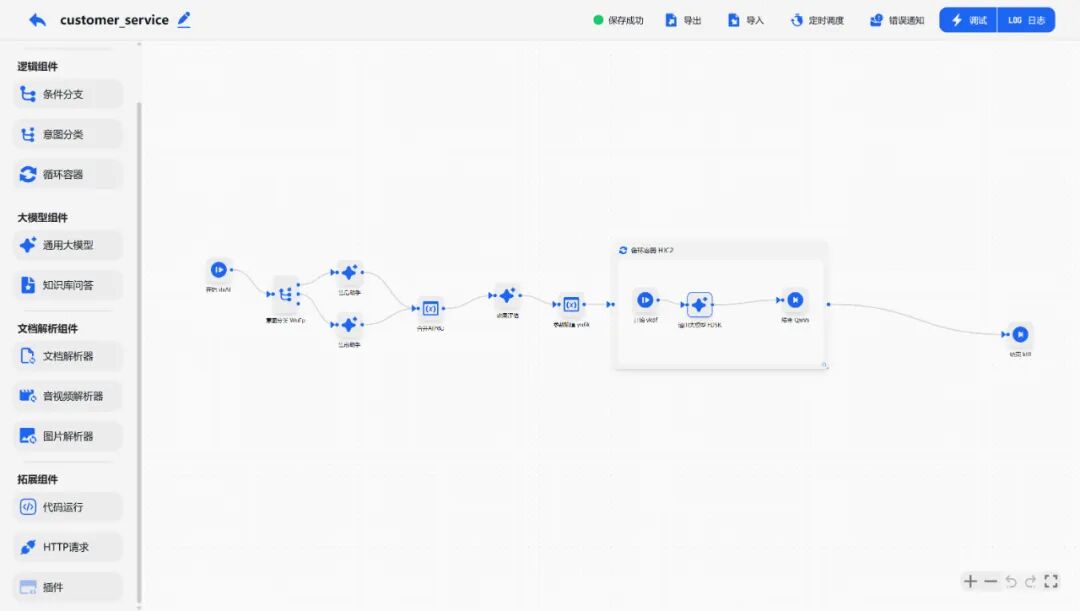
We're an Agent Native startup, primarily providing "out-of-the-box" digital workers (Agents) for high-tech industries. Companies just need a brief training period and they can deploy them directly. Currently we have three Agents: a pre-sales solutions Agent, a supply chain document processing Agent, and a production line technical support Agent. What we're selling isn't fundamentally tools — it's "people."
👦🏻 Koji
Can you briefly share revenue and profit?
👦🏻 Xingji Zhai
We started commercializing last April. Revenue was just a few million RMB last year; this year we're projected to hit 10 million, roughly 500% growth — fast growth for an early-stage company. We're currently focused on core KA enterprise clients domestically, with a different strategy overseas. Since last October, our cash flow has reached healthy equilibrium.
👦🏻 Koji
Funding situation?
👦🏻 Xingji Zhai
Seed round led by MiraclePlus. Currently looking at the next round.
👦🏻 Koji
Current team size?
👦🏻 Xingji Zhai
We're a small team — 20 people right now.
👦🏻 Koji
Now for our second guest, Rui Qin, co-founder of BISHENG.
Age and alma mater?
👦🏻 Rui Qin
I'm 33, graduated from North China Electric Power University.
👦🏻 Koji
Pre-founding experience?
👦🏻 Rui Qin
I started entrepreneurship during undergrad and grad school, mostly campus-focused projects. That was during the "O2O, mass innovation, mass entrepreneurship" wave. Got crushed pretty quickly by dominant teams like Ele.me. That experience made me realize how brutal operations can be, and I wanted to do something in hard tech. So I went decisively into AI. Facial recognition was hot then, so I joined YITU, working on public security facial recognition products, then later went to 4Paradigm.
👦🏻 Koji
MBTI and zodiac?
👦🏻 Rui Qin
ENFJ, Cancer.
👦🏻 Koji
One sentence on BISHENG?
👦🏻 Rui Qin
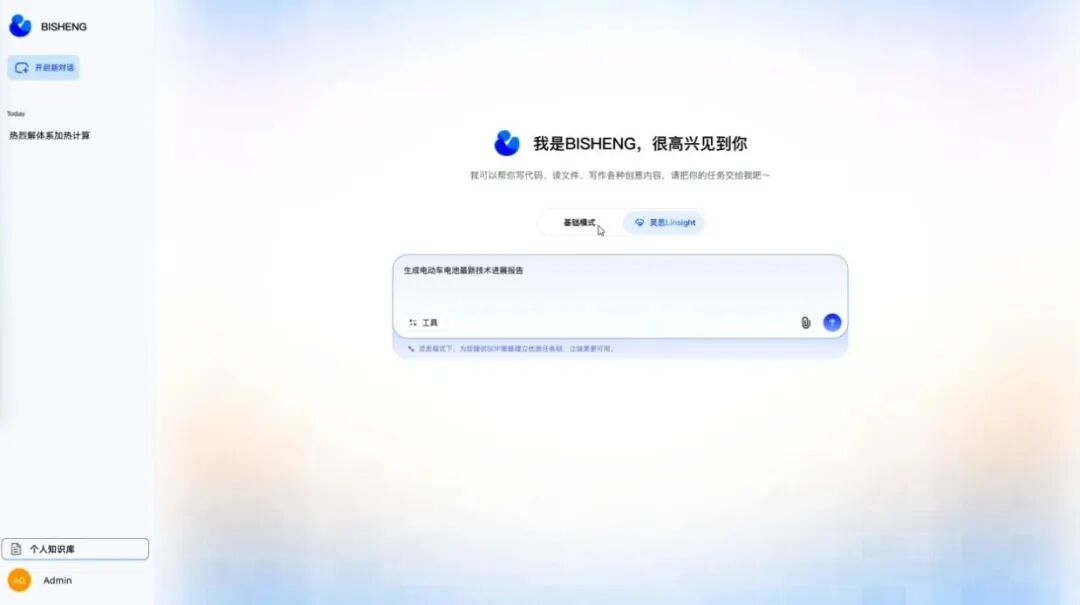
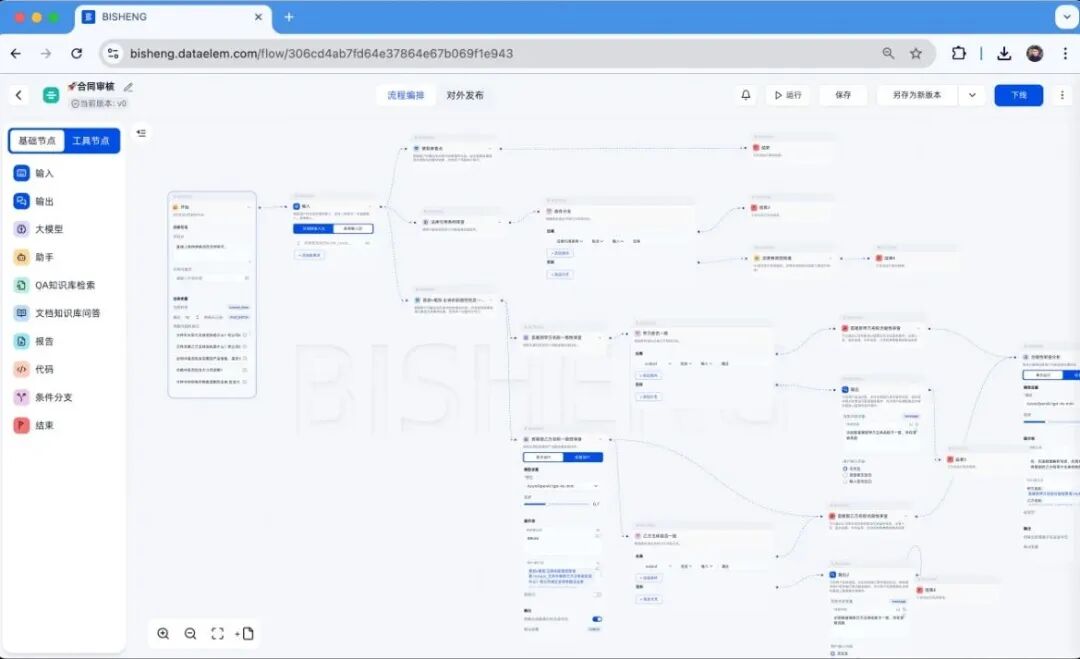
We're an open-source enterprise-grade LLM application development platform — think open-source Coze.
👦🏻 Koji
Current revenue and profit?
👦🏻 Rui Qin
Last year revenue was around 30 million RMB, profit around 3 million.
👦🏻 Koji
Funding situation?
👦🏻 Rui Qin
When our team left 4Paradigm, we brought out some IP, so 4Paradigm holds roughly 10%. Later Huatai invested a small amount — they basically had to invest as a condition for us providing services to them. Beyond that we haven't brought in much additional financial investment.
👦🏻 Koji
Team size currently?
👦🏻 Rui Qin
About 50 people now.
Why B2B in the AI Era?
👦🏻 Koji
Let's get into the main topic. We started by noting that doing B2B entrepreneurship now takes serious courage and conviction. Why did you choose B2B?
👩🏻 Ronghui
You both seem to show rare optimism about B2B, while the general perception is that B2B entrepreneurship is "brutally hard."
👦🏻 Rui Qin
I think it really is still brutal. Actually, achieving anything is brutal. Building a successful consumer product is incredibly hard too. I just don't think B2B is quite as brutal or hopeless as people make it out to be.
👦🏻 Xingji Zhai
I think it really is brutal, but entrepreneurship is brutal period.
Though I think in the B2B context, it's partly a matter of choice — for example, we don't take orders over 1 million RMB. Because generally, once a project hits three to five million, there's heavy custom development, long delivery cycles, which isn't healthy for cash flow at a startup stage. Plus the project chain gets long, requiring massive time investment in client relationship maintenance, which is extremely time and energy consuming. So our team prefers to stay more focused and lightweight. For early-stage companies that's much easier, and it's also better for data accumulation and product iteration.
At this point, we should really ask: why have North America and Silicon Valley been able to do SaaS and Agents so well? Why can't we?
👦🏻 Koji
Why?
👦🏻 Xingji Zhai
I think we absolutely can do it well.
The first-layer reason everyone sees is that capital currently provides relatively less funding for B2B projects. The previous generation of Chinese SaaS startups got funded and didn't deliver good results; Silicon Valley got funded and delivered, so funding continued. But that's just the surface reason.
I think the deeper reason is: in China's domestic B2B business model, there hasn't been enough focus on product and business value. People used to think Chinese B2B was rough because it's oriented toward serving large enterprise clients. But look at North America's leading Agent vendors, like Moveworks — they also serve large clients, yet we don't see them as "pathetic." Because we've been in China's B2B track, we've seen how in many large contracts, rather than competing on product or technology, companies won deals by competing on business relationships, on drinking table politics — we don't respect that value orientation.
But this is probably a stage we have to go through, a phase of national development. In a country's early stages, resource-based industries make the most money; technology and innovation-driven industries grow gradually alongside economic development.
For the previous era of SaaS, many customers were leapfrogging from zero to digitalization all at once, and demand suddenly exploded. China is also a society where personal relationships carry heavy weight, and many customers themselves don't really understand technology. This led some companies to discover that as long as their product was decent enough, they could win deals by outcompeting others at the drinking table. The end result was everyone trying to take shortcuts on resource investment and competing on client relationships.
But things are different now. First, a new generation of entrepreneurs has emerged. Second, the value delivery model for Agents has changed. In the past you sold systems, and the value of systems was "management efficiency improvement" — hard to quantify. ERP, MES, and similar systems empowered management standardization, but it was difficult to show direct, quantifiable returns. Agents are different. We can tell you directly: your sales conversion rate was 5%, we can get it to 7%; your revenue was 50 million, we can get it to 70 million; or your labor cost was 500,000, our Agent only costs 100,000. The effect is visible directly, and customers will pay for that.
Hitting 30 Million — How Much Kweichow Moutai Did That Take?
👦🏻 Koji
I ran into a pretty seasoned entrepreneur recently. He said that back when he was doing B2B in China, he became so disillusioned that he swore he'd never earn Chinese people's money again. At the time, his entire trunk was stuffed with Kweichow Moutai. But he actually came from a B2C background — dynamic, high-energy, his company was selling well. He never expected that switching to B2B would turn him into "the guy hauling Moutai around every day." His health broke down from all the drinking. Are you guys doing B2B now — do you still need to rely on drinking Moutai to move business forward?
👦🏻 Zhai Xingji
I don't drink. Never have.
👦🏻 Qin Rui
Actually this has a lot to do with current national policy. Many clients now actively try to avoid "having meals."
Why Start Yuhe Technology?
👦🏻 Koji
Why did you choose your current direction? Did you see something others didn't?
👦🏻 Zhai Xingji
We started the company in 2023, originally building B2C tools. Our fundamental belief is that AI is a productivity tool, and the value of productivity depends on who it serves. We started with B2C, user growth was decent, but we found the value for ordinary users too limited. The real value lies with professional users. On the other hand, B2B value creation is inherently more deterministic — enterprises are naturally productivity machines. As long as an Agent can deliver even marginal improvement, that value gets amplified. Looking at it through these two lenses: using Agent for productivity, and B2B represents a massive base within productivity.
The second point is practical: this is our first startup, so we have to do what we're best at. Our core team comes from FanRuan, and we were deeply involved in the organization's entire journey from 1 to 100. Following that path, we could achieve a relatively predictable outcome. Before starting up, I used to think B2C was uncertain and B2B more certain. Now I feel: both B2C and B2B seem highly deterministic. The deciding factor is whether you have the team DNA and methodology. If you do, you can make either path work. For us, B2B was the clearer direction.
We knew from the start that the Agent platforms everyone is building now are just transitional. By early last year, we'd already decided we needed to pick a vertical track. Whether you cut by function (marketing, customer service) or by industry (healthcare, manufacturing, retail). In the end, through a pretty comprehensive selection process, we chose our current direction: Agents for mid-to-high-end manufacturing, delivering digital workers directly.
👩🏻 Ronghui
What do you mean by "comprehensive selection process"?
👦🏻 Zhai Xingji
I mentioned two categorization methods earlier — industry and function — but ultimately it all comes back to one core question: the expert role you're replacing, what kind of knowledge structure does it have? Take sales: its knowledge is strongly function-type. Regardless of industry, the approach is roughly similar. But for highly vertical industries like semiconductors or automotive, industry knowledge far outweighs role knowledge. At that point, you need a different selection method.
We tried many industries. Take healthcare: the problem we ran into was that domestic giants would say they don't even need payment, they just want scenarios and data co-creation. But for a startup like us, that's very difficult. Plus the barriers in that industry are extremely high, traditional service providers are firmly entrenched. As innovators, what we bring to the table is fundamentally product and technology value. If that point isn't actually important in the client's decision-making, then that's probably not a track we should enter.
Manufacturing, by contrast. First, manufacturing is China's future foundation. It's a great track — you can't really go wrong choosing it. Second, we have sufficiently rich expert knowledge in this domain. Third, factory automation has been done well in the past, but there are still massive numbers of white-collar roles in operations, serving through expert services and the knowledge in their heads. Combining all these factors, plus our early product validation, through scenario-by-scenario user co-creation and building benchmarks, we found that scenarios could be replicated, and iteratively arrived at our final choice. So the best choice is often the one you don't hesitate about at all when making it. That was the case for us.
Why Build BISHENG?
👦🏻 Koji
Just now Xingji mentioned that Yuhe Technology's Agent platform is just a phase, and that you eventually have to enter vertical domains. But you at BISHENG are still building Agents. How do you view this statement? How did you make your choice?
👦🏻 Qin Rui
I think the reference value for listeners here is that many entrepreneurs actually struggle and waver when choosing direction. Our reason for choosing B2B was simple: we don't have backgrounds to lean on, we're not relying on fundraising, and we wanted to achieve something deterministic, so we chose B2B.
It's not that we were super determined from day one. Startups are hard to plan out. Like Xingji said, you need to do lots of POCs and industry exploration, iterating step by step. We previously worked at 4Paradigm on OCR, NLP, and intelligent documents. But when large models emerged, we realized the ceiling on that previous path was too low — we had to enter a bigger market. Whatever direction we chose, going large model was mandatory.

At first we also tried C-side, but in the first half of 2023 the technology wasn't mature enough, and capital was investing in models not applications, so that path didn't work. We came back to B2B. The main dilemma at the time was: should we open source? Everyone knows the open source atmosphere domestically is weak — developers rarely contribute code proactively. So we never counted on community contributions from the start. We lowered our expectations: if we just use it ourselves, the value is limited; if we open it up and more people use it, the value is greater — but that's a more idealistic state. More practically, open source brings extremely fast feedback. On a B2B project you might not get client feedback for half a year, but once you open source, immediately people use it, people push you, people request features — that's a huge morale boost for the team.
Another practical benefit is visibility: no need to buy ads, clients come to you on their own. And this is still without us having actively promoted ourselves. Our visibility is currently concentrated among enterprise clients and software developers, we haven't reached media and general audiences yet. This year we'll start trying to get more people to know about us.
👦🏻 Koji
So actually Qin Rui, you would also consider your general Agent platform to be a historical phase for the company? Going forward you'll still focus on a vertical domain?
👦🏻 Qin Rui
Our view is — just the domestic enterprise software development and services market alone is a trillion-level market. Across all industries, all roles, there's demand. So the platform won't be our "historical phase," it's our first-stage rocket. In a market big enough, getting a slice is pretty good.
The problem with platforms is that clients want to pay for outcomes, not tools and platforms. So what we deliver to clients is more BISHENG platform + services, with services including consulting and delivery services. So this business is less efficient than standardized product business. But on the flip side this is also a new opportunity — how do we use new technology, organizational structure, and division of labor to optimize efficiency? There are massive details and room for improvement there.
At the same time we're also looking at some standardizable vertical scenarios. Like the quoting robot Xingji mentioned — we actually built one too, currently for internal use mainly, but we might roll it out to clients later. Similar directions we're exploring include audit, bank client manager assistants, and others.
Typical Projects and Client Profiles
👦🏻 Koji
Qin Rui, you mentioned you did 30 million in revenue last year. Can you share a most typical project?
👦🏻 Qin Rui
Early on we were actually "chasing after" clients to win deals. Gradually accumulating experience, we discovered that "screening clients" matters more. Now it's more about building influence so clients come to us proactively. We confirm whether clients truly recognize us, whether they've used our products, and through initial communication confirm whether both sides' expectations for phase-one collaboration are aligned, ensuring goal alignment.
👦🏻 Koji
Is there a project you feel best demonstrates your capabilities? Who was the client? What did you do?
👦🏻 Qin Rui
A typical project came from the bulk commodities space. The client needed us to help them with market intelligence analysis, and further, business-finance integration. Overall, they had lots of internal and external information that needed to be aggregated for leadership. In the past they held a big meeting once a week, with reports all done via PPT, aggregated layer by layer. Now the top leader can directly view the previous day's latest data in real time through a large screen in the office, covering over a dozen business lines.
Behind this is massive unstructured data governance, which we implement using models. Additionally, there's lots of traditional, unconnected business data scattered across different departments. We integrate through systems to achieve process automation, thereby helping management make faster, more accurate decisions — things like purchase prices, shipping contracts, logistics scheduling (which port gets priority, supply sequence, etc.), all of which affect overall operational efficiency.
This project is typical in that when it actually landed, we weren't just delivering platform and technology — consulting, data governance, and delivery services were all critical success factors for the client. But from a client needs perspective, the example above isn't actually the most typical. The most typical application scenarios are still the three big categories: Q&A, review/audit, and report writing.
👦🏻 Koji
For a project like this, how much revenue can you generate?
👦🏻 Qin Rui
Phase one is typically in the high six-figures, phase two might reach two to three million, and with continued deepening of cooperation it can get to five or six million. It depends on whether you can truly help the client create business value.
👩🏻 Ronghui
How do you land these kinds of major clients? With so much internal data at stake, why don't they just build their own teams instead of hiring you? What irreplaceable value do you provide?
👦🏻 Qin Rui
Actually, before choosing us, they went to several big-name consulting firms and paid for their services. But the consultants basically concluded: "Incomplete data, can't do it." They pocketed several hundred thousand in fees and that was that. We stepped in when the project was on the verge of collapse and essentially rescued it.
But this isn't our main customer acquisition model anymore. These days, most of our clients come to us after using our open-source version. When they need to take it into production, they reach out. By then, they've already bought into what we do. The partnership is built on mutual understanding.
👦🏻 Koji
Xingji, could you also share a typical project from Yuke Tech? What's the client profile? What exactly did you do?
👦🏻 Zhai Xingji
One typical case is our co-creation project with COSCO Shipping Heavy Industry. COSCO Shipping Group is the world's largest container shipping company by comprehensive transport capacity, and COSCO Shipping Heavy Industry is its internal ship repair arm, serving both internal ship owners and external clients.
The scenario we tackled was a pre-sales quoting Agent, part of their broader pre-sales digital workforce system. The original process worked like this: when a ship needed repairs, the ship owner would send a PDF, Word, or Excel file—sometimes hundreds of pages long. Staff had to manually extract and break down irregular, specific requirements based on section headings (like dry dock, deck, etc.), then match them against their service catalog. That catalog ranged from a few thousand to several hundred thousand SKUs, and they also had to reference pricing and terms from historical agreements.
There was a relatively clear SOP here: transform the client's unstructured requirements into standardized service offerings with corresponding quotes, ultimately producing a complete quotation document. The biggest pain points in this process were:
First, the labor cost was extremely high. Business representatives handled this, spending a full week on each quotation document—massive time waste.
Second, the requirements were so complex that manual processing led to frequent errors.
As a result, junior employees couldn't handle it at all. You needed mid-to-senior staff, whose time should have been spent on far more valuable work. This inefficient, repetitive work dragged down internal satisfaction, and clients were frustrated by the long quoting cycles.
Our core value showed up in three ways:
- Strong content parsing capability — our self-developed small model can understand and break down client requirements;
- Dramatically shortened cycle — the Agent delivers results within 30 minutes;
- Higher accuracy than the client's equivalent staff — while we don't chase 100% accuracy, we aim to consistently outperform human averages.
This is a very typical standardized Agent project.
👦🏻 Koji
How much did you charge for this project? Is it considered a large one?
👦🏻 Zhai Xingji
Not large—kept it between 300,000 and 500,000 RMB.
👩🏻 Ronghui
For such a large enterprise, how did you convince them to adopt this kind of service? These clients seem hard to convert.
👦🏻 Zhai Xingji
This involves two parts: acquisition and conversion.
On acquisition, everyone has their own tricks. Our trick was leveraging FanRuan early on, using their marketing leads to get started, then gradually building our own brand, product capabilities, and technical advantages while constructing an ecosystem partner network. Put simply, we made our ecosystem partners feel that Yuke's products and scenarios were genuinely "strong," so they were willing to keep referring new leads to us. Right now our lead pipeline is quite healthy—we actually have the luxury of being selective about which clients to engage with. We don't necessarily respond to every inbound message.
On conversion, we use what we call "cognition-driven deal-making": in that first meeting with the client, we directly output our understanding of Agents—how AI should land in their context, what our product and core capabilities are, and how Agents should be deployed in their organization. After we run through this, the client has built strong trust in our expertise. At that preliminary stage, there's a 70-80% probability they'll choose us. The subsequent commercial process is just details, no longer the deciding factor.
👦🏻 Koji
That "cognition-driven deal-making" you mentioned—with a 70-80% success rate, that's impressive. Qin Rui, does BISHENG use the same approach?
👦🏻 Qin Rui
Yes, I completely agree. If you want to build a healthier next-generation B2B company, this has to be your primary model—you have to be more professional than your clients.

👦🏻 Koji
There's been a saying lately that in the AI era, all SaaS deserves to be rebuilt with Agents. What do you think? Are you using Agents to disrupt SaaS?
👦🏻 Qin Rui
We do see significant industry transformation impact in areas like coding, customer service, marketing, and content generation. But in more complex business scenarios, it's premature to call it revolutionary. Whether and when such transformation will arrive—I remain rationally optimistic. As entrepreneurs, we need to keep tracking technological progress and revisit whether past scenarios can now be better solved with new technology.
So the claim that all SaaS will be rebuilt by Agents—I think only certain scenarios, like coding and customer service, might be completely rewritten. It doesn't apply industry-wide.
👦🏻 Zhai Xingji
In my view, these are fundamentally different things. You can't even compare them.
SaaS solves process standardization—ensuring that as a company scales from 1 person to 10,000, business operations don't deform. It's essentially about taking existing resources and organizational capabilities, using process digitization and management digitization to solve the problem of a company that should be doing 1 billion in revenue but is only doing 800 million due to poor management.
Agents are different. Agents give a company that could only do 1 billion the capability to do 2 billion. They introduce new organizational capabilities and resources. Buying an Agent is like hiring senior talent or investing in building a factory—it's a productivity-enhancing investment.
Based on this logic, we benchmark against the human resources market, not the SaaS market or traditional digitalization market. We believe all enterprises and all business processes can be rebuilt through Agents. As some people in Silicon Valley say, they're benchmarking against the $60 billion human resources market—we fully endorse that perspective.
Therefore, our criteria for choosing scenarios is very clear: client ROI must be unambiguous. Either we help them make significantly more money, or we help them save substantial costs. Anything else, we simply don't touch.
What was the moment you thought, "This company is going to make it—we can survive and thrive"?
👦🏻 Koji
Got it—either help them make a lot of money, or help them save a lot of money. Here's something I'm curious about: both of you seem to operate with strong conviction in your current B2B businesses. Was there a moment, like a company aha moment, when something happened and you suddenly thought: "I've got the feel for this. This company is right. We can survive, and we can make money." Did you have a moment like that?
👦🏻 Zhai Xingji
For us, that moment came in the second half of last year. The most obvious signal was when we attended WAIC—the World Artificial Intelligence Conference. At that time, we had no product, no demo, no presentation video, and only one small client. Yet we ended up adding several hundred client contacts on WeChat. We realized our understanding of AI Agents might differ from most people's, but fortunately, everyone found our thinking and what we were doing interesting and meaningful. That was the macro-level realization.
On the micro level, every time we met with new clients and shared our recommendations on how Agents should land in their specific scenarios, the recognition rate was consistently around 70-80%. That feedback was extremely encouraging for us.
In the early stage, we could define real scenarios with clients based on mutually recognized value and co-create together. After co-creation, clients were willing to pay real money for our product—and not because of pure relationship-driven sales or custom project deals. They were buying what they genuinely wanted and what we genuinely wanted to sell: the core business value of our Agent. That meant we could replicate this kernel across different clients, and it worked well everywhere. That became genuinely exciting.
👦🏻 Koji
What about you, Qin Rui? Did BISHENG have a similar aha moment?
👦🏻 Qin Rui
Macroscopically, it's quite similar to what Xingji just described. On our end, we saw individual clients—not isolated cases—actively coming to us, saying our product was quite good, our team seemed solid, and they wanted to work with us. Some even said they wanted to support Chinese open source, which actually matters quite a bit.
Many people say China's B2B market is tough, but from our micro perspective, there's no shortage of individuals willing to support us. They may be constrained by existing systems—institutional rules, budgets, and so on—but once we align with their needs, those barriers cease to be obstacles. They actively help us solve problems and push partnerships forward.
So regarding the question of whether China's enterprise service market can produce clients willing to pay for value—from our lived experience, clients are indeed changing. The people we engage with tend to be younger decision-influencers: thoughtful, ambitious, and sharp. These emerging forces make me feel that, while not necessarily mapping directly to our product, the broader enterprise service market is showing early signs of transformation.
Compared to the "AI Four Little Dragons" (YITU) era, what has changed in today's environment?
👦🏻 Koji
Actually, Qin Rui, you lived through the "AI Four Little Dragons" era—you're practically a veteran. We know that in that phase, many people doing B2B got burned badly, with everyone ultimately struggling around the break-even line. Do you feel the times have improved? The environment has improved? Can you be specific—what's better now?
👦🏻 Qin Rui
Yes. First, I believe the entire AI B2B business, including some of what we did at YITU, genuinely delivered business value—we really did help public security apprehend many criminals. The problem was that the competition was too strong. Hikvision, for instance, with their integrated hardware-software approach, basically wiped us out. Their sales network was also incredibly powerful. Competing against that kind of opponent was extremely difficult.
So I do believe AI B2B is meaningful in terms of value creation. Second, beyond changes on the customer side, the supply side has also evolved in recent years. Entrepreneurs like Xingji have come to recognize that you can't just cling to customers—you need to focus on building things that are genuinely valuable. That shows a shift in mindset on the supply side.
Of course, this also has to do with some talented people going overseas, which has reduced the domestic pressure of hyper-competition. Finally, the capital environment has worsened, but that's actually pushed more genuine businesspeople to step up—no more relying on capital subsidies to run projects. That approach was never normal business logic to begin with.
Now customers also can't find many suppliers willing to "play along at a loss" anymore. For B2B, maintaining this state is actually quite good—it's healthy industry development. Capital expects returns to grow too fast, and B2B simply can't deliver that level of growth. To meet those high return expectations, B2B entrepreneurs end up "distorting their moves," which only makes their foundation increasingly unstable and sends them off course.
👦🏻 Koji
So this is also why you chose not to raise funding?
👦🏻 Qin Rui
Yes, this is one of our core reasons for not raising funding.
👩🏻 Ronghui
I'd like to follow up with Xingji on something. You said something very definitive earlier: "We only look for customers with very clear ROI—either we help them make a lot of money, or we help them save a lot of money. Beyond that, we don't touch it." Why do you hold this view so firmly? Did you go through something to reach this conclusion?
👦🏻 Zhai Xingji
Actually, this didn't come from experience—it's determined by the founder's values. I started my company pursuing only one thing: doing something truly valuable, something valuable to society. When large language models first emerged, I jumped in immediately. I gave up a very high income, didn't overthink it, and made the decision right away.
Because I believe this is an entirely new productivity revolution that will bring about social transformations I can't even imagine, and I want to be part of it. Everything I'm doing now has to be a critically valuable piece of this transformation. If I were just making money, it would be meaningless to me. This is entirely values-driven.
What Differentiates You from Competitors?
👦🏻 Koji
Everyone knows consumer businesses need differentiation. What about B2B? Do you think differentiation from competitors matters? If so, where does yours show up?
👦🏻 Zhai Xingji
In early markets, differentiation absolutely matters. Whether B2C or B2B, mature markets come down to execution, service, and scale—but early on, it's about innovation, about who understands users better, who can fastest deliver genuinely valuable solutions and make them replicable.
Our differentiation mainly shows up in product philosophy. We're extremely committed to doing only things that maximize core value, and firmly reject everything else. This philosophy shapes the entire company's organizational form and strategic focus. We won't build a heavy delivery team; we stay focused on the product itself. What we want is to make our Agent product sufficiently abstract and sufficiently general-purpose, and build a strong product team.
The same goes for our technical path—we only build the most core Agent-related capabilities. Even if there are high-revenue non-core projects, we firmly reject them. We co-create scenarios with customers, jointly refine high-value general-purpose Agents, and gradually evolve them into "digital employees" that can land across multiple industries. That's how we understand differentiation.
👦🏻 Koji
Xingji, I remember you said last time that Yuke Tech currently refuses to take orders over 1 million RMB. Is that standard still in place? Can you explain the logic behind it?
👦🏻 Zhai Xingji
Still the same, completely unchanged.
👦🏻 Koji
Why?
👦🏻 Zhai Xingji
This is a deliberate strategic choice. Our team has seven or eight years of B2B experience, and we're in a unique position: we're veterans who can build Agents well, but also young people who understand the rhythm of B2B entrepreneurship. That gives us insight others don't have. We know customers stratify: there are mega KAs, mid-to-large enterprises, and SMBs. And currently, orders over 1 million mostly come from super-large state-owned enterprises or top-tier KA customers.
The problems with these customers are obvious:
- High dependency. I have friends doing these projects—several million per order, easily hitting 20-30 million in annual revenue—but nearly all income depends on a handful of large customers, creating extreme business risk;
- Product gets pulled off course. Once the customer pays, it's hard to refuse customization demands; the product loses focus and distorts severely;
- Narrowed vision. These orders consume too many resources, you encounter fewer customer scenarios, and it's easy to fall into a small perspective, get lost in illusions, and miss out on truly promising PMF;
- High cash flow risk. Large customers have long payment cycles, uncontrollable rhythms, and can impact overall business health;
- Not necessarily high profit. Heavy investment, high complexity, and gross margins actually get diluted.
We've chosen to focus on the 300-500K RMB "sweet spot." Projects in this range have fast delivery cycles, clean requirements, and clear scenarios—making it easier for us to extract replicable solutions, quickly promote them, and establish benchmarks. This approach aligns with our product philosophy and is more suitable for continuously pushing PMF exploration at this stage.
👦🏻 Koji
We just talked about differentiation, and I'd like to hear Qin Rui's view as well. On the BISHENG side, when people come to you, they must ask how you're different from Dify, right? What's your differentiation from competitors?
👦🏻 Qin Rui
We divide competitors into two categories: major tech companies, and open-source startups like us—Dify, FastGPT, and so on. For open-source vendors, we believe "the customers you serve determine who you are." Dify, for instance, focuses more on overseas markets because domestic B2B is genuinely difficult, and they target an open-source individual developer ecosystem.
We focus on domestic enterprise customers. Because we interact with these customers every day, we're very familiar with their feature requests—enterprise management, security, single sign-on, traffic control, and so on. These may seem piecemeal, but they're essential for enterprise deployment. Building these into your product already creates differentiation at the product level.

From a delivery perspective, service still matters a lot in domestic projects, and many startups basically don't do this part. But we do, and that's a differentiator customers care about. We don't just deliver tools—we want to help customers actually produce business value.
For example, writing drilling reports, credit due diligence reports, contract review, or general Q&A—only when you truly deliver business value can you see larger phase-two orders from customers. Otherwise it's a one-time transaction with no real meaning. So our business model is quite different from theirs.
Compared with major tech companies, their organizational structure and operational strategy often can't serve customers at our million-RMB level. For them, these customers aren't big enough, not a priority. Also, it's too easy for them to make money—through advertising, with good cash flow—while serving enterprise customers is very "bitter" work that isn't their core direction in the long run. So I don't think they have competitive advantage against us either. That's roughly it.
How Do You Spend Your Day?
👦🏻 Koji
Could both of you share how you spend your days? For example, how much time thinking about product? How much about growth? How much interacting with or serving customers?
👦🏻 Zhai Xingji
My day basically revolves around three things: finding people, finding money, and finding direction. But "finding money" is actually very low on my list. At this stage, my most important thing is "finding people": I'm interviewing, doing internal performance reviews and coaching, which takes up about half my day.
Of the remaining half, a quarter goes to customer-related matters. But I don't directly participate in projects or sales—I only focus on customer needs and scenarios. I believe every case we sign, every POC we do, its core purpose is to help us iterate the product.
What I do is quickly extract value from each scenario: what's the value chain, what are the customer's core pain points and needs, can we meet them, can we abstract this into product. That's another quarter of my time.
The final quarter I spend on cognitive building. This "cognition" is broad, covering product, technology, and commercialization. I spend a lot of time looking at products, researching new directions, discussing with our internal co-founders, and exchanging with people externally, constantly iterating. Many of our ideas get polished through this continuous collision.
👦🏻 Koji
Last time we met, you were sitting right next to me posting jobs on BOSS Zhipin. You'd just been charged a huge fee and asked me why posting jobs was so expensive now, and why prices varied so much by role. Which role were you recruiting for?
👦🏻 Zhai Xingji
Sales.
👦🏻 Koji
Do you still feel sales is the hardest to hire for?
👦🏻 Zhai Xingji
For us, sales is hard to hire for not because the role itself is difficult, but because candidates fitting our profile are too rare. We have clear requirements for foundational traits. First, they must have strong geek spirit—even if not in a technical role, they need curiosity and learning interest. Second, they need an idealist temperament, willing to strive for the vision rather than just come to work for money. We also value learning ability, resilience, self-iteration ability, and so on.
👦🏻 Koji
You're looking for a CEO.
👦🏻 Zhai Xingji
No no, every member of our team is held to this standard. So our team is actually built quite well. But the thing is, sales is a bit special. There's a saying in sales: "If he's not realistic enough, he probably wouldn't be in sales." We're now looking for a sales partner to take on more internal matters, but we've found that many friends we originally knew don't have the idealist trait we hope for at this point. It's really hard.
Of course we could help friends do the math, make it very clear—expected annual signings, commission, how much in a few years—all negotiable, but I don't like that approach. What I prefer is after we talk, both sides feel excited, reach consensus on values, and then want to build this thing together and do it well. That's the person we want. But the reality is, such people are too hard to find.
👦🏻 Koji
So have you adjusted your approach now? Like accepting that salespeople are realistic, and using realistic ways to talk to them?
👦🏻 Zhai Xingji
No. I believe we can find the right people, and we already have. We're a small team now, but we want to grow to hundreds, even thousands of people. And every person should be a "regional governor" type — someone who carries our core values forward. So at this stage, we'd rather move slower and stay lean than let the company lose its shape.
👦🏻 Koji
That's impressive. It sounds like there's a lot of thought and trade-offs behind what you're doing. Let me ask Tan Rui — what does your typical day look like?
👦🏻 Tan Rui
Pretty similar, actually. Split mainly across marketing, client communication, product R&D, and strategic thinking — roughly even. We have other co-founders handling other areas.
One difference for me is that I stay directly involved with client matters. I'm not doing the execution myself, but I'll help diagnose where a project is going wrong, whether there's a gap in understanding the requirements. If results fall short of expectations, we need to find the root cause and work with the client on optimization plans — that's roughly my role.
👩🏻 Ronghui
Two keywords from what you both just said really stuck with me. Tan Rui mentioned "filtering clients," and Xingji said "avoiding heavy delivery." That's quite different from the stereotypical toB entrepreneur in China.
Because in China, when you're doing toB, you usually can't afford to filter clients at first — you need to survive. And Silicon Valley SaaS tools sell well because there's a massive SMB market where users will pay for efficiency. Chinese users care more about results. So how did you set that flag? Saying "I won't do heavy delivery" — and still getting clients to accept it?
👦🏻 Zhai Xingji
Isn't that a good thing? Isn't that exactly what the Agent era should look like? I can deliver results directly.
We've been through that phase too — early on, when we didn't have much money, we took lots of projects just to keep the team afloat. I think that's fine. American companies do the same before they raise funding; they need to survive too.
But the key is having a goal in mind, a strong sense of conviction: I'm doing this to iterate on the product. Even if I'm making money now, the end goal is still the product. Some people lose themselves in this process — they discover they can land million-yuan deals over dinner and drinks, or push budgets to ten million, and they get addicted to that, forgetting why they started.
Who's the Best toB Entrepreneur?
👦🏻 Koji
Who do you see right now as the best toB company or entrepreneur?
👦🏻 Zhai Xingji
Two people. One you know — Tony Gu, doing Sales Agent, right? We met early last year, hit it off, and I really admire him. The other is Zhao Lei, also working on Sales Agent. His product is still early-stage, but he used to do sales consulting and has already published a book on sales methodology and system building. Both are exceptional entrepreneurs in their respective verticals.
What attracts me is never how much funding they raised or how many deals they signed — it's their level of insight. They really think deeper than me. I'd consider myself fairly deep already, but their understanding of their vertical — past, present, and future — is remarkably thorough. They know how their Agent should be built, and as non-technical founders, they can clearly define the product and confidently tell clients: "My product should work this way; you adapt to me, not the other way around." I find that extraordinary.
👦🏻 Koji
Everyone should check out our episode with Tony Gu — "New Approaches to SaaS in the AI Era | Talking 'Doing Smart Things the Hard Way' with Serial Entrepreneur Tony Gu, Who's Been in AI Since 2018" — recorded about a year ago. I met him again recently and found his views haven't changed at all, which shows his thinking holds up over time.
👦🏻 Tan Rui
I looked at the profitability of several listed domestic software companies last year. In Q3 2024, the top five were Desay SV, Kingsoft Office, Hithink Flush, Hundsun, and CIC. Desay SV does automotive systems and has grown extremely fast in recent years, now ranking first among software companies.
Kingsoft Office and CIC are more consumer-facing, not strictly toB in the traditional sense. With the weaker economic environment in recent years, the most profitable companies tend to be those deeply rooted in vertical industries — you can see both industry barriers and product standardization at play.
This actually echoes what Xingji just said: you have to make trade-offs and choices. If you want everything and only look at short-term gains, you easily fall into a vicious cycle. Ultimately you have to choose a path that may have a higher probability of failure but is more likely to lead to a virtuous cycle — and you have to be willing to try. That's why we're actively pursuing vertical agents as our second growth curve. There are many directions to explore, and there's still a window of opportunity.
What's the Company Vision?
👦🏻 Koji
When you're doing toB, do you articulate a vision? We know toC companies set lots of visions, not just for users but for employees too. What about your two companies? What's your vision?
👦🏻 Tan Rui
Of course we need a vision. There's a point in Sapiens that I really buy into — humans are essentially organized by stories. We're not machines that just execute commands. To get everyone aligned on accomplishing something, you need goals and stories to bring people together.
Our vision is: Make work smart. This is the core philosophy for the BISHENG platform. We hope that especially for domestic enterprises, our platform can make work more intelligent, so Chinese companies can all use great enterprise software.
👦🏻 Koji
Xingji?
👦🏻 Zhai Xingji
See, the fact that you'd ask this, or that listeners want to hear it — that itself reveals a bias.
👦🏻 Koji
Yes.
👦🏻 Zhai Xingji
Every company needs a vision. This has nothing to do with toB versus toC. I'm obviously a vision-driven founder; I talked about this on that roundtable episode before, and it shapes my team's character too. People join us not just because I'm decent enough, but more importantly because they believe in what we're building.
Our one-sentence vision is: Truly liberate human productivity with Agents. We're pushing forward step by step — every time we automate a role, we replace it with an Agent, freeing people from tedious, repetitive work.
Our expectation for the future is that within perhaps ten years, a large portion of operational processes in enterprises will be delivered end-to-end by Agents producing business results. At that point, people's work will become much lighter — no more 996, maybe just three or four days a week — and social productivity will be massively elevated.
This is what we hope to achieve as a team, and we firmly believe our team can accelerate this transformation. And to realize this vision, toB is an indispensable piece.
The AI Agent Hype Is Making Clients FOMO
👩🏻 Ronghui
Do you feel that the current hype around the Agent concept is creating a "must transform" anxiety for many toB clients — fear of falling behind — and bringing you more opportunities?
👦🏻 Zhai Xingji
Absolutely. This is actually the sense of crisis and anxiety people should feel when an era arrives. If these emotions weren't there, we'd have to educate the market ourselves — explaining why our product is better and why they should adopt it. Now it's much easier; clients come to us proactively saying "I want to do something," asking us to help them plan where to start.
This is exactly where we can shine — we listen to their business processes, identify core pain points and bottlenecks, then show them "look, this is where Agents can solve it really well," improving revenue by 10% or 20%, or freeing up employees' time for more valuable work. At that point, the client's needs and our product align perfectly.
👦🏻 Tan Rui
Right now, a lot of toB clients do have top-down pressure driving this. Another angle: it's also exposing how inadequate past informatization and digitalization efforts were. These initiatives used to be pushed by CTOs or CIOs, and they'd stall once they crossed departmental boundaries. Now CEOs and even chairmen are personally driving it, which naturally mobilizes coordination across departments.
In many deep business scenarios, large models might only account for 30% of the value. What really delivers value is data connectivity between systems and automation level improvements. These used to be hard to push forward; now the internal persuasion cost has dropped significantly.
👩🏻 Ronghui
Is this phenomenon widespread, or concentrated in certain sectors?
👦🏻 Tan Rui
Among the clients we engage with most — broadly financial, state-owned enterprises, and large conglomerates, especially at the second- and third-tier subsidiary level — it's quite common.
How Do You Attract the Best Young Talent to toB?
👦🏻 Koji
I get the sense that many of the smartest young people today, because they have so many options, often don't prioritize joining toB companies or doing toB business. Do you feel the same? How do you attract talent?
👦🏻 Tan Rui
If we're talking about the "smartest" label, then yes, that's true. The smartest people might not work for companies at all — they might do research, become scientists. They typically want to do whatever has the "most leverage," whatever generates the biggest impact.
For our company specifically, "open source" and "large models" — these two elements alone create double appeal. So we haven't found recruiting too difficult.
At root, it's about leverage. Smart people want to generate maximum impact with minimum effort. And "open source" is high leverage — it's a standardized product whose design isn't dictated by clients. We're not doing foundational model innovation or theoretical innovation; we're more about finding the latest research from industry and academia, assessing whether it has practical value, and integrating it into our product.
👦🏻 Koji
Last question — what would count as success for each of you in this venture? Xingji, what's your definition of success for Yuhe Tech?
👦🏻 Zhai Xingji
For me personally, there's no such thing as "success." Or rather, not in that sense. This is my first venture, and what I pursue is the state of "being on the road," not reaching a destination. As my WeChat signature says, if I actually arrived at some result, that result would become meaningless.
So I'll keep pushing the company to do new things — if we're doing well domestically, we'll go overseas; if general Agents are stable, we'll do vertical Agents. Recently we've been trying to abstract the methodology for building vertical Agents into a product platform, making the vertical Agent construction process more generalizable.
For me, there is no finish line — just keep moving forward. And I don't have much personal financial pressure, so I don't really worry about it. But at the company level, there definitely need to be milestones of success.
Our core value is to use AI to accelerate enterprise intelligence. To that end, we want our team to have the most cutting-edge vertical domain technology, achieve the best commercial results, and ensure every member can live comfortably. Achieving that would, for starters, count as success.
👦🏻 Qin Rui
Pretty much the same for us. For us, the first stage of success is healthy cash flow — no more constant anxiety, more time to spend with friends and family. Less pressure on the team, better compensation.
B2B has accounts receivable issues; many deals take a long time from demand to payment. But if we can survive a year or two and reach relatively positive cash flow, that's our first-stage rocket successfully igniting and entering orbit. What comes after depends on personal ambition — whether you want to pursue greater success.
👦🏻 Koji
Thank you both. What you just shared really moved me. "Being on the road" is itself a purpose; it doesn't necessarily have to lead anywhere. The feedback and experiences along the way are powerful enough to keep us setting out again the next day.
I hope next time we meet at Crossing, I'll see you both still in high spirits — even more so, perhaps. Maybe still not drinking Kweichow Moutai, but ready to share more fascinating entrepreneurial stories.
🚥

References
[1] LangCore: https://langcore.cn/
[2] BISHENG: https://github.com/dataelement/bisheng
[3] "AI Era, What's New for SaaS Software | Talking with Serial Entrepreneur Tony Gu, Who Entered AI in 2018, About 'Doing Smart Things the Hard Way'": https://www.xiaoyuzhoufm.com/episode/6633008903bcdd73a91c5962