After five years on Lark, I've realized Excel's era is truly over

I thought it was just a fancy spreadsheet. Lark wants to use it to kill off expensive enterprise systems.
I thought it was just a fancy spreadsheet. Lark had bigger plans: replacing expensive enterprise systems.
 👦🏻 Author: Jingshan
🥷 Editor: Zeo
🧑🎨 Designer: NCon
 Today, we want to talk about something.
I've been using it for nearly five years. It lives inside Lark, and it's called "Bitable." You might have heard of it, or you might not. Or maybe you think — isn't it just a spreadsheet?
Honestly, that's what I thought at first too. But after watching Lark Bitable's string of "evolution launches," culminating in an actual "Declaration of Independence," I realized what it represents might be an entirely new, smarter way of working.
Yes, Lark Bitable has officially "declared independence" from Lark.
This article is more of a meandering conversation about how we think about work.
We want to break it down in plain language:
[1] What exactly is this "Lark Bitable" I've used for five years? How is it fundamentally different from Excel?
[2] What does it have to do with ordinary people like us?
[3] There are so many similar tools out there — why did we end up choosing this one?
P.S. While preparing this piece, we shared our story and reflections with the Lark Bitable team. They liked what they heard and generously decided to give every Crossing reader a special gift: 4 months of Lark Bitable Pro. Reply with "多维表格yyds" in our backend to claim it.
Let's start with a familiar pain point
Before we get to that thing that keeps bringing "something new" every time — Lark Bitable — let's talk about Excel. Specifically.
Excel is a magnificent tool. But we have to admit, we often use it wrong. We use it for project management, client tracking, event planning, content calendars... We cram everything into cells, then use folders, file names, and different sheets to tell things apart.
The result?
Files multiply, versions spiral into chaos. Data becomes "islands" — spreadsheets that can't talk to each other. Want to find something? Open three files. Want to update a status? Copy-paste manually, multiple times.
It's like all your belongings stuffed into unlabeled, disconnected cardboard boxes. Finding things means rummaging. Organizing means hoping for the best.
Our team was no different. Until we took on an offline event called "AI Daydream" and an SEO project that needed to process massive amounts of data. That's when it hit us: the cardboard boxes weren't cutting it anymore.
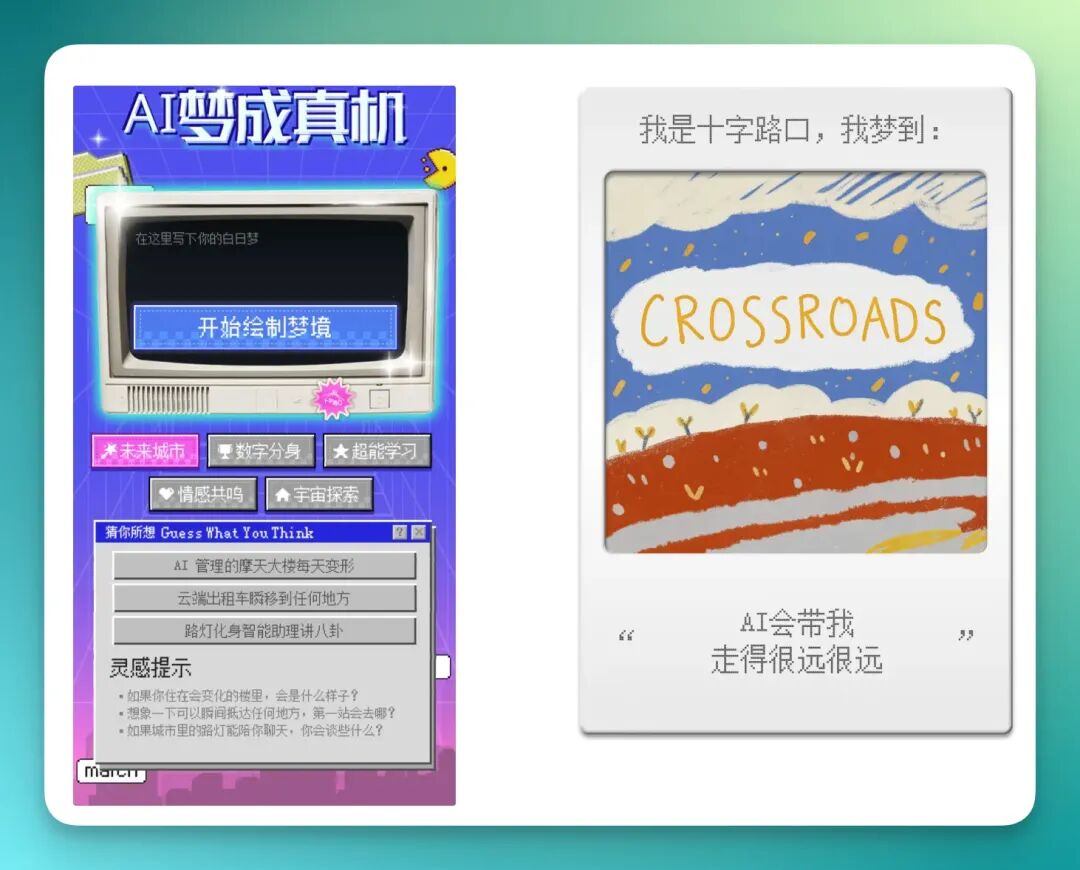 Yep, we built this in Lark Bitable.
We needed a "smart warehouse" — or more precisely, a database. A system where all information could auto-categorize, interlink, and even run itself.
"Smart" is the absolute key here.
Just two months ago, Lark Bitable held a launch event that gave this "smart warehouse" a major upgrade. It made us see more clearly: in the AI era, the future of tools like this can no longer be captured by the word "spreadsheet."
Lark Bitable, beyond its core atomic capabilities, barely has anything to do with "spreadsheets" in the traditional sense anymore...
This time, Lark Bitable went full "AI spreadsheet":
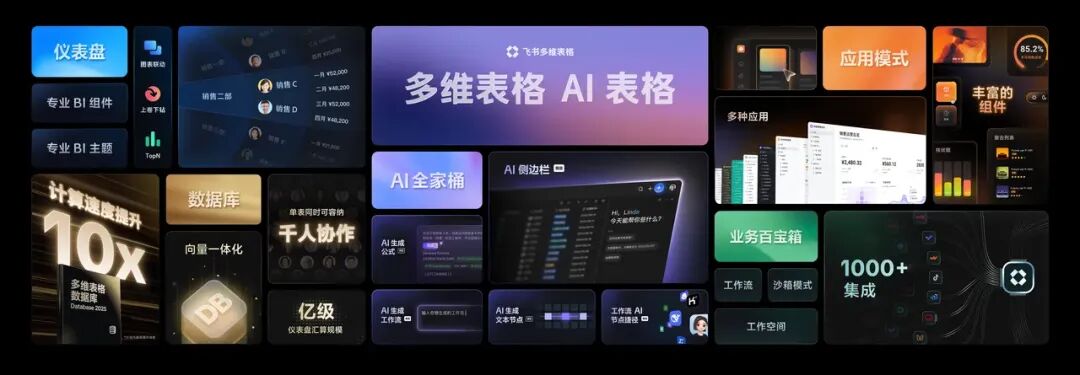
The new capabilities they released address pretty much every pain point we could think of:
The anxiety of "running out of room":
We used to worry that too much data would make things lag.
Now, capacity has jumped to tens of millions of rows, formula calculation speed is 10x faster, and thousands of people can collaborate simultaneously. Whether it's a personal side project or a company's core business, this warehouse's foundation is solid enough to grow with you from "small workshop" to "skyscraper."
The confusion of "not getting it":
Data sitting there is useless; understanding it creates value.
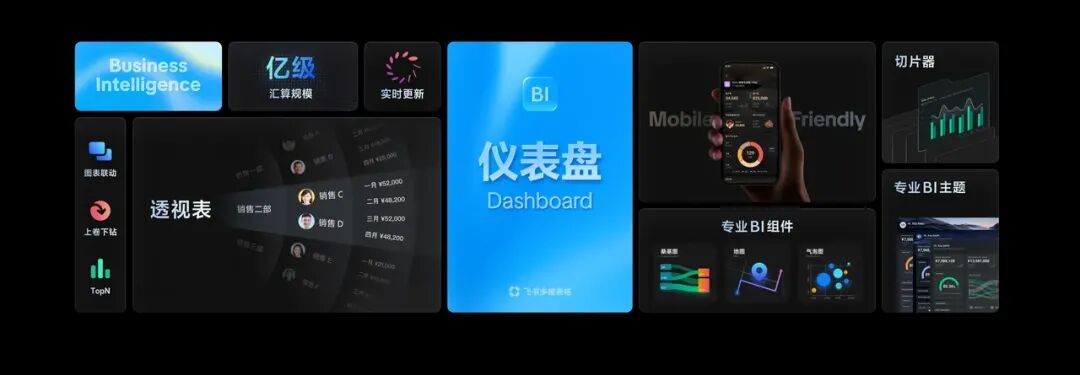
The new "dashboard" is like installing data screens in your warehouse. You can pivot, filter, and cross-analyze data as easily as playing with a Rubik's cube, quickly spotting business issues and making decisions.
The fear of "too complicated":
Many people worry that building systems is too much hassle. Now, it directly offers an "app mode" with many ready-to-use, polished applications — like pre-sorted "storage bins" you can use right out of the box.
The bottleneck of "not smart enough":
Its automation "workflows" and AI capabilities have grown more powerful too.
Not only handling more complex branching logic, but also letting AI classify data for you, or even create an automated workflow through conversation.
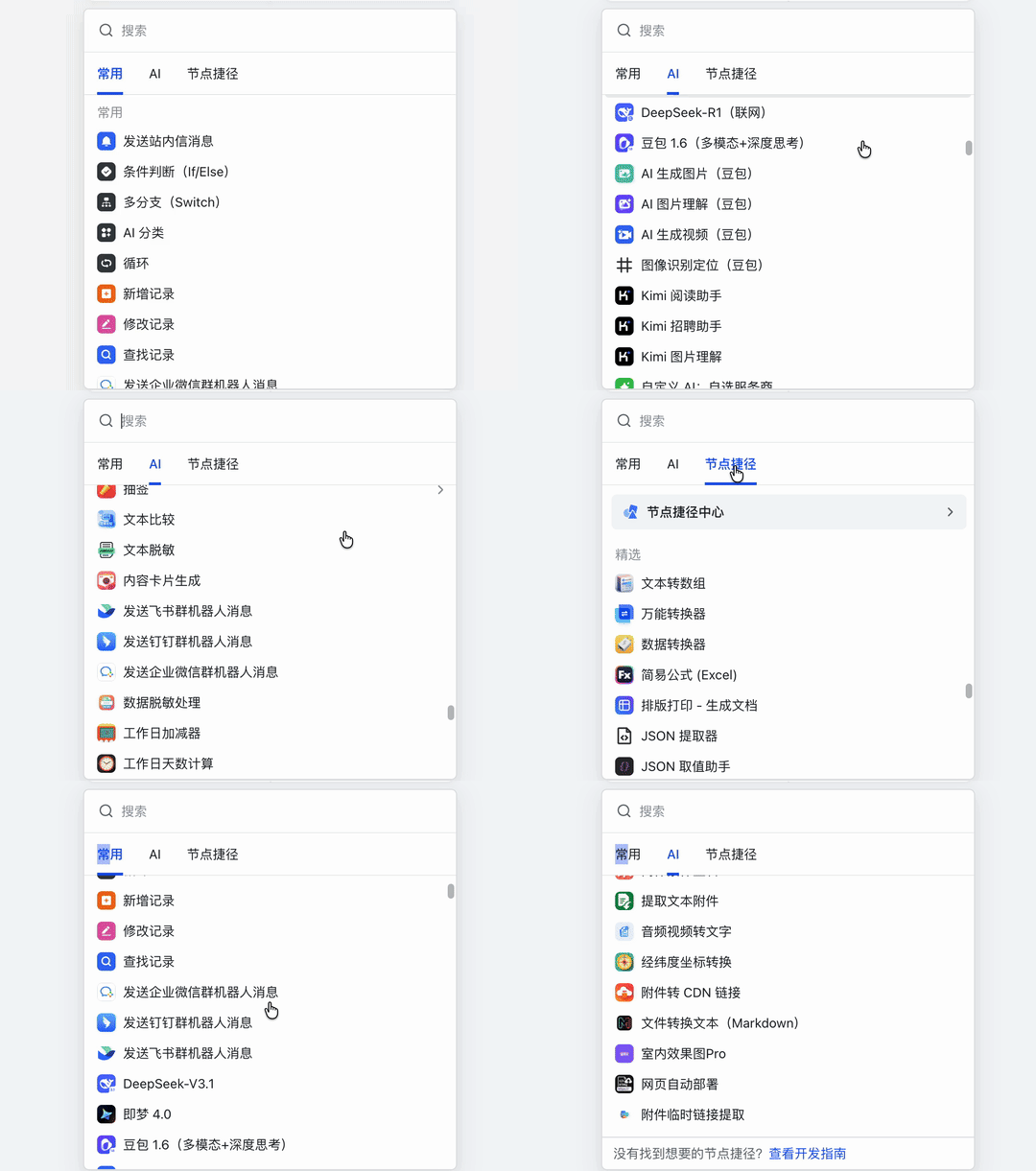 Lark Bitable's current workflow capabilities
The isolation of "not connecting":
Most crucially, this "warehouse" is no longer an island. It can now be used as a standalone product, and even integrate with DingTalk, WeCom, and other "friendly competitors" to become a "central hub system" for all your work, regardless of which platform you're on.
Getting friendly with the competition — that's pretty interesting.
This series of upgrades is like transforming an ordinary warehouse into a future factory with automated sorting lines, intelligent dispatch robots, and real-time data monitoring centers.
It clearly tells us: the ambition of tools like this is to solve the entire data pipeline — input, processing, presentation, and output — making data truly "horizontally connected and vertically integrated."
At this point, an increasingly clear, even slightly bold idea popped into my head.
Lark has invested so heavily in arming Bitable to the teeth — giving it AI, performance, and independent status. What it's trying to do may have long stopped being a "better spreadsheet." What it really wants to take on are those "enterprise-grade systems" that only big companies could afford in the past.
Honestly, having watched this tool grow up step by step, it feels like watching a kid learning to walk.
Now that it's so smooth and convenient, I almost forgot that just a few years ago, it was also a "clumsy kid" — slow to respond, missing features here and there.
Back then, scrolling got sluggish once you had too many rows of data; automation was just simple "you push me, I nudge you" triggers, nowhere near today's intelligence; many features we now take for granted were still just "planned" dreams.
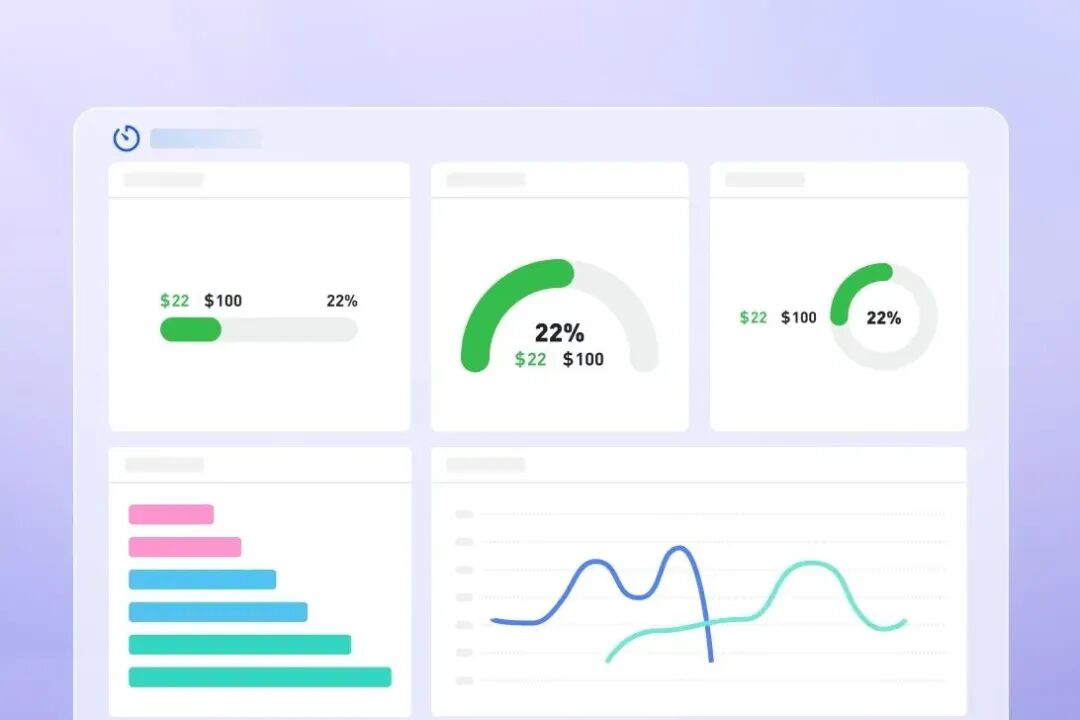 This is what Lark Bitable looked like at the start.
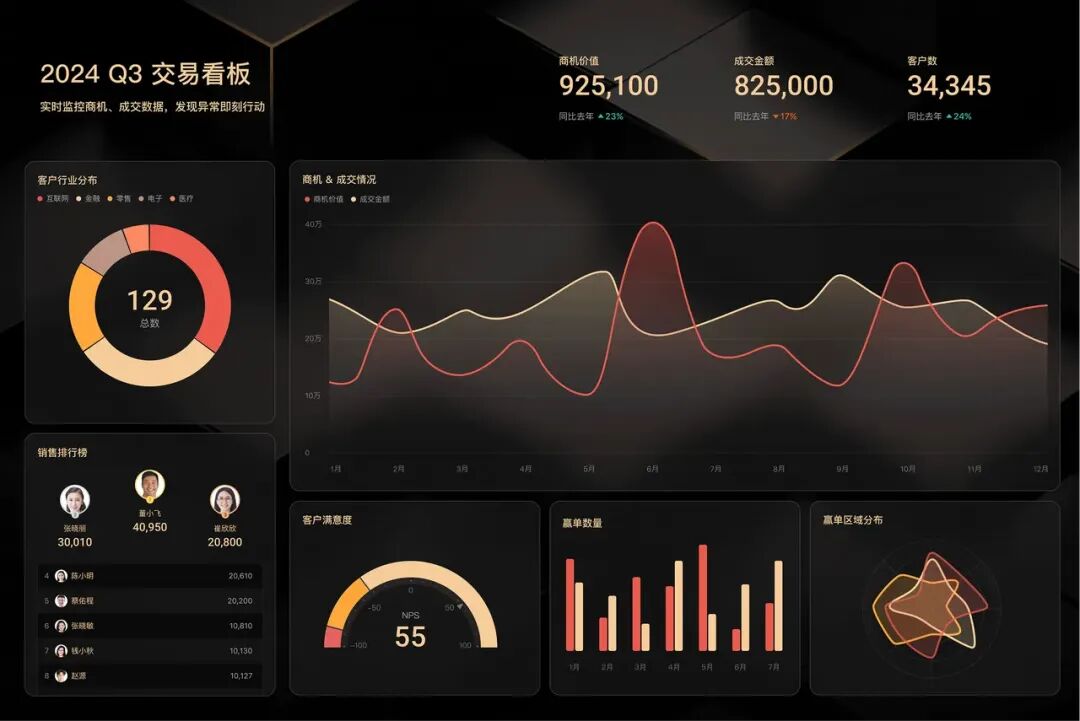 This is what a Lark Bitable dashboard looks like now.
I still remember back then, whenever I recommended it to friends, I'd have to add:
Don't pay yet. Wait until it's actually good before paying (sorry Lark Bitable hhhh).
The reason this path is so hard is precisely because it challenges deeply ingrained user habits, and the mountain that is Excel. It has to be easy enough for beginners to pick up, yet powerful enough for pros to build complex systems — that balance itself is the hard part.
So every smooth experience, every useful feature we see today, comes from countless teardowns and relentless refinement. That's already a good story about persistence and evolution.
So seeing it actually pull off both of these things now, I feel genuinely moved.
It's like that slightly awkward trainee you believed in, whose flaws you tolerated for years, and then one day they suddenly shine on the big stage. That feeling — pretty magical.

So when I looked around at all the new tools on the market and still ended up locking my gaze back on this old friend I'd used for so long and "complained about" for so long, I realized a key thing:
Its capabilities have evolved to the point where my old descriptions — "better spreadsheet," "online database" — feel too pale, too limiting.
If something is just "better," it hasn't changed. But Bitable has mutated.
This creates a communication dilemma. Every time I recommend it to friends and just rattle off those powerful features, they still look blank. They ask the two most classic, most fatal questions. And these two questions are precisely the starting point for the next chapter.
To answer these two questions properly, we have to completely switch channels. No more talking about features. We need to talk about its essence, its "worldview."
I thought it was an advanced spreadsheet. Turns out it's Lego.
Yep, I'm sure many of you have guessed what those two questions are. Every time I recommend Lark Bitable to friends, I get asked:
First: "Isn't it just a fancy Excel?" Second: "How is it different from WPS or DingTalk's spreadsheets?"
For the first question, my answer is: Excel is a "ledger"; Bitable is a "system." One records static numbers; one builds dynamic workflows. What that means for ordinary people, I already covered in the previous section.
For the second question, I found the perfect metaphor: Lego.

Many powerful tools on the market are like those Lego "City" sets. They give you detailed instructions and matching bricks, letting you efficiently build a fire truck, a police station.
That's fantastic, especially for executing standardized, well-defined workflows.
But Lark Bitable is more like a big bucket of basic Lego bricks.
It doesn't preset what you should build. But it gives you rich enough, flexible enough "bricks" and "connectors" to let you bottom-up create a system entirely your own. Could be a fire truck, could be a spaceship.
In this era of rapidly changing ideas and businesses, what we need is precisely this kind of "Lego" that can grow with us.
Its charm lies in two things:
[1] The "bricks" are rich enough: It has powerful automation and AI capabilities, able to connect various internal and external tools.
[2] The "foundation" is solid enough: It can handle massive data volumes, and remains smooth and silky even with many people collaborating.
One striking example: we roughly counted the integrated AI atomic capabilities in Lark Bitable, and there are already over 150. From small things like text correction and tone adjustment, to big things like image generation and calling models for complex analysis — it's extensive.
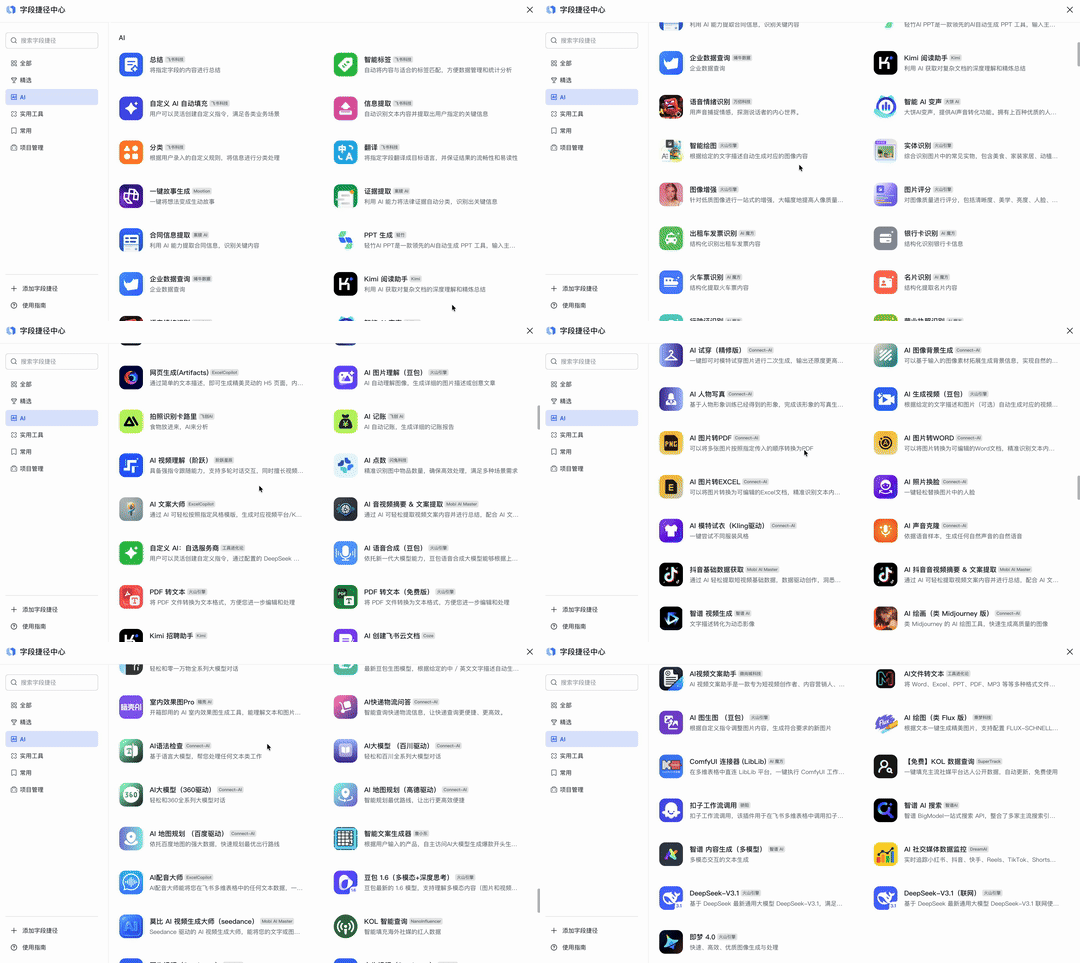
That wall got torn down
At this point, you might be thinking:
"Emmmm, but my company uses DingTalk / WeCom. Your Lark toy has nothing to do with me."
Good question. In the past, that was indeed a "dead end."
But now, the most crucial plot twist: Lark did something big. They tore down their own garden wall.
Not long ago, they took Bitable — this most core "treasure" (at least to me personally) — and spun it out from the Lark "family."
For ordinary people like us, this matters a lot. It means at least three things have changed.
First, the system is no longer picky.
You used to be able to say "my company doesn't use Lark, so I can't use it."
Now, whether your team communicates on DingTalk or reports on WeCom, nothing stops you from bringing Bitable — this "super Lego" — in as your team's project hub.
It became a "universal graphics card" that plugs into any motherboard, no longer picky about your system.
Second, this means the "barrier" is gone.
You no longer need to buy the whole cow just to drink a glass of milk.
Before, to use Bitable, you more or less had to accept the whole Lark suite. Now, you can download and use it like any ordinary app.
The cost of trying it out is now basically zero.
Take me personally: as an individual user, I particularly relied on Bitable for my personal knowledge base and database — I could dump anything I saw into it, then set up some automation.
But every time I entered Lark, I had to scan a QR code and go through steps... it was annoying. I only needed Bitable's features...
Most importantly, this means it truly became a "tool for everyone."
Whether you're at a startup, running a side hustle, or even planning a wedding, managing household finances...
It's no longer "enterprise software." It's a tool you can carry with you to solve complex problems.
Seriously, I've seen tons of entrepreneurial friends use Lark and Bitable to run a "company of one." In their Bitable, one side is a CRM tracking each potential client's follow-up status; the other side is a project kanban board — once a client closes, info auto-syncs over and generates project tasks. Invoicing, content calendars, even simple financial reports — everything lives in one place, interconnected, automatically flowing.
I've also seen people crushing it with side hustles. Someone uses it to manage their video account matrix — from topic selection, scripts, filming to publishing, data review, the whole pipeline is in there. Which step is stuck, visible at a glance.
These wildly varied use cases are the essence of the "Lego" metaphor.
It proves one thing:
When you give people a bucket of truly powerful, flexible blocks, they'll never just follow the instructions to build the castle on the box.
They'll go create things the designers never imagined. That's why I'm so "excited" about Bitable going independent this time.
Because once that wall called "ecosystem" came down, this powerful bucket of Lego was finally placed in front of everyone.
Alright, the wall's gone, the blocks are laid out before you.
After all this talk, let's return to the original question: what does Lark Bitable's independence actually mean for ordinary people?
It means a shift in mindset: from "recording information" to "building systems."
In the past, when we used tools, we were looking for a "better notebook." Now, we should try seeking a "smarter set of Lego." When facing a complex project, a chaotic workflow, don't just think "which Excel sheet should I record this in?"
Instead, ask yourself:
"What kind of automated system can I build for this?"
This system can auto-collect information for you, auto-sync progress, auto-remind about tasks, auto-connect everything you need in your work. It can free you from repetition and chaos, letting you focus on what truly matters — the creative stuff.
🚥
When everyone can easily build such "small systems" for their own workflows, individual creativity will be massively unleashed.
So it's not just a spreadsheet. It's more like an invitation.
An invitation to you, to re-examine your workflow, and to build your own efficient, elegant "Lego castle."
P.S. One last mention: every Crossing reader gets 4 months of Lark Bitable Pro. Reply with "多维表格yyds" in our backend to claim it. Have fun building!