Investing in 50 AI Companies a Year; What Was I Thinking When None of Us Knew the Answers? | A Conversation with Jie Yang: Founding Partner of Jinqiu Fund
The moment the wind picked up.
The moment the wind picked up.
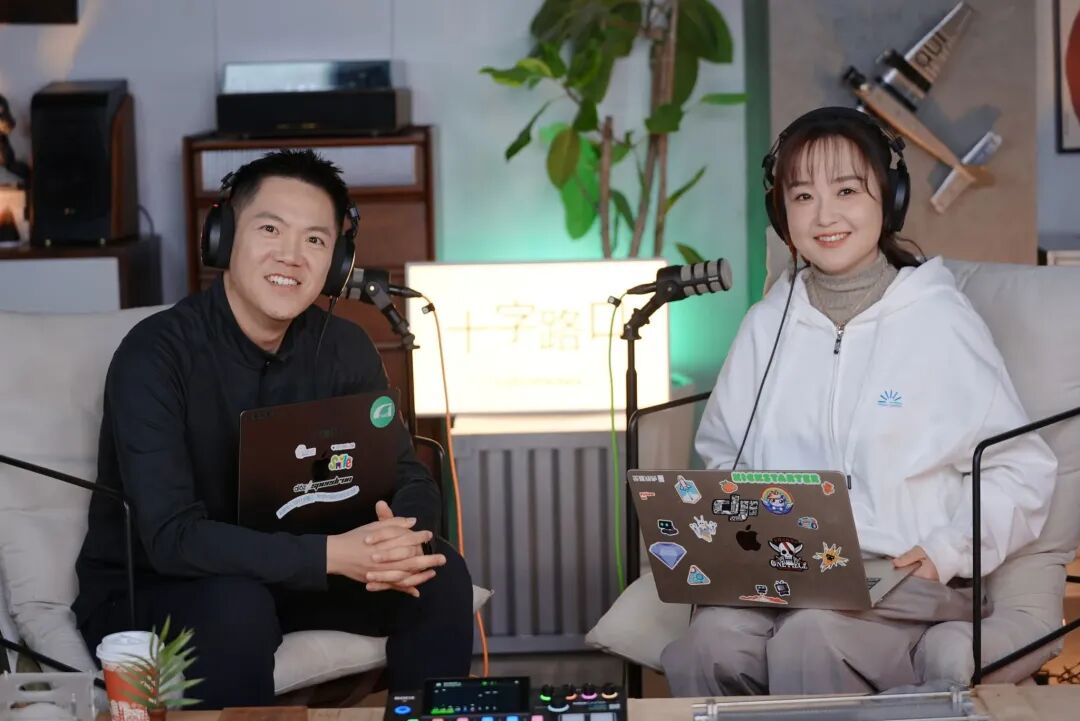
👦🏻 Podcast Interview: Koji
🥷 Edited by: Crossing
🧑🎨 Layout: NCon

🚥 This week's guest on Crossing is Jie Yang, founding partner of Jinqiu Fund.
Jinqiu has been one of the most closely watched new forces in venture capital over the past two years: a 12-year fund cycle, with over $500 million under management. Since its founding in 2022, she has invested in more than 70 companies, with 50 deals closed in a single year. Notably, over 90% of its portfolio consists of AI-related companies.
In this episode, Jie shares the story of building Jinqiu Fund from 0 to 1: how she raised capital, how she built an "AI Native Fund," how she finds investment opportunities, how she competes against heavyweights like Hillhouse and HSG, and as a leader, how she guides her team through the ever-present FOMO, insecurity, and information silos of early-stage investing.
We hope this conversation offers fresh perspectives for AI founders and investors navigating their own crossroads.
(Note: The figure of 50+ companies reflects completed deals as of the podcast recording date, excluding follow-on rounds. The numbers have since been updated, with further revisions expected by end of 2025.)
Listen on WeChat:
Listen on Xiaoyuzhou:
🎬 Our video podcast is now available on @Koji's WeChat Channels, Xiaohongshu[1], Bilibili[2], Youtube[3]
Given the full transcript's length (16,281 characters), here's the table of contents:
🟢 Rapid Fire
Age, alma mater, MBTI and zodiac sign, pre-founding experience
🟢 Betting on AI Winter: The Birth of a 12-Year Fund
"We could see clear signals: AI was supplementing productivity, replacing labor."
- When the AI industry looked bleak, what gave you the conviction to start a new fund against the tide?
- What story did you tell LPs at the time?
- Why design a 12-year fund cycle? — "This isn't an industry cycle; it's an infrastructure-level variable. With a 7-year fund, we probably wouldn't dare to invest in 70-80% of our current portfolio."
- Why $500 million in scale? Large enough to double down in later stages, yet not so large that you're forced to chase safe, mega-deals.
🟢 "We're an AI Company Investing in AI Companies"
Jinqiu is also an "AI company."
- How does Jinqiu actually use AI in its internal workflows?
- The sourcing system's "secret weapon": beyond analyzing paper authors and award rosters, it can spot deal opportunities from WeChat public account posts.
- How to design a team offsite using Claude Code and ChatGPT?
- What does your AI-powered day look like? How much money would it take for you to go a month without AI?
🟢 How to Read People?
"Everything else can be learned. Can't code? Open Bilibili and learn. But 'resilience' is, to some degree, innate."
- Ranking founder traits in the AI era: Why does "resilience" come first, even above learning ability and execution?
- Missing the early round in Manus: What was the biggest lesson? — "We over-evaluated the plugin product and misjudged the founder's core capacity for anti-fragility and creating order from chaos."
- A partnership of all INTJs — how do you assess something as intuitive as "resilience"? — "Break down what we value into components, then look for traceable evidence of each."
🟢 How to Raise a Fund?
"At the worst moments of fundraising, we chose to stop looking at the spreadsheet."
- What did it feel like when Jinqiu's first fund faced large-scale, concentrated rejections?
- One effective method against anxiety: When the progress tracker becomes painful, stop looking. Put energy into what you can actually move forward.
- "We're just a small fund, but there's massive capital in the market wanting into primary markets. Getting rejected by some people doesn't matter — we'll get it raised eventually."
🟢 VC Grind, FOMO, and Security
"I want people to work out of love, not tension."
- How to face the "grind" of the VC industry?
- How to break down team "information silos"?
- How to combat team "FOMO"?
- How to build team "security"?
🟢 What Matters in Investing
- If you could only invest in one direction next year, what would it be?
- Why did you explicitly rule out foundation model companies from 2023, and why no regrets?
- Do you care about valuation? Ownership percentage? Are check sizes inflating this year?
- A few interesting investment stories.
🟢 How to Compete?
"Not every founder needs to take their money (HSG and Hillhouse). Everyone's still looking for the right fit."
- Facing fierce competition from HSG and Hillhouse, where's our opportunity?
- Jinqiu's core value proposition to founders: "Fast yet certain." How to achieve this seemingly contradictory combination?
- Founder profiles are diversifying: Beyond elite schools and big tech, how to discover independent developers and atypical founders from "mountains, rivers, lakes, and seas"?
🟢 Outlook for 2026
- Prediction one: Capital markets will heat up; foundation model and embodied intelligence companies may see a wave of IPOs.
- Prediction two: Capital will grow more abundant; once-dormant mega funds are returning.
- What's unique about AI entrepreneurship: It's a "Shangri-La" where founders can temporarily ignore macroeconomic, exchange rate, and interest rate fluctuations.
- Opportunities exist long-term, but the window isn't infinite: As more people flood into this "Shangri-La," late entrants face stiffer competition.
🟢 10 "I am..." Sentences
- I am an entrepreneur building a VC firm.
- I am an AI builder trying to turn investing into a product.
- I am someone who believes resilience matters deeply.
- I am someone objectively optimistic about AI's future.
- I am the owner of 6 cats, 1 turtle, and 1 lizard.
- ...The last 5 await in the full transcript.
👦🏻 Koji
Hi, I'm Koji. This week's guest on "Crossing" is Jie Yang, founding partner of "Jinqiu Fund."
Jinqiu Fund has been one of the most closely watched new VCs lately. As a 12-year AI native fund, I know that since its founding in 2022, Jinqiu has already invested in over 70 companies.
Hello Jie, welcome to Crossing!
👩🏻 Jie
Thanks for having me. Hi Koji, hi everyone.
Rapid Fire
👦🏻 Koji
Let's start with rapid fire. First, Jie, your age?
👩🏻 Jie
I'm still at an age where I dare to bet, and can afford to lose.
👦🏻 Koji
Alma mater?
👩🏻 Jie
Zhongnan University of Economics and Law.
👦🏻 Koji
MBTI and zodiac sign?
👩🏻 Jie
MBTI is probably INTJ, zodiac sign is Pisces. But do you believe in astrology?
👦🏻 Koji
I actually believe in MBTI, but many of our listeners are curious about zodiac signs.
👩🏻 Jie
I think astrology handles emotional value; post-game analysis handles cash flow.
👦🏻 Koji
Last time you mentioned all three Jinqiu partners are INTJ?
👩🏻 Jie
Seems like it.
👦🏻 Koji
One sentence: What were you doing before founding Jinqiu?
👩🏻 Jie
Strategy and investing at ByteDance.
The Birth of an AI Native 12-Year VC
👦🏻 Koji
When and why did you decide to start Jinqiu?
👩🏻 Jie
In 2022, there were some internal adjustments at the company (ByteDance), so investing became relatively constrained.
That was when I made a difficult choice. On one side was my favorite company; on the other, my favorite thing to do. I chose my favorite thing. A few colleagues were in similar situations — we all wanted to keep investing. So we didn't look for jobs; we just started Jinqiu Fund together.
👦🏻 Koji
So it's been a bit over 3 years since founding. What's the overall feeling?
👩🏻 Jie
I underestimated the difficulty at first. But once you break problems down into specifics and solve them one by one, you find you can work through anything.
Has founding the fund changed you in any way?
👩🏻 Jie Yang
I think I can now more viscerally understand what founders go through. First, you have a long-term goal, but you break it down into short-term targets — targets you need to hit, and sometimes adjust. Every day is about facing problems, discovering problems, solving problems.
👦🏻 Koji
When you were raising Jinqiu Fund's first close, you had deep professional experience, but you'd never built your own fund before.
When you went out with Jinqiu's pitch deck to your LPs, what story did you tell them?
👩🏻 Jie Yang
In 2022, we were still talking about AI plus robotics playing a major supplementary role in future production processes.
I remember in that deck, we roughly calculated: how many construction workers globally, how many blue-collar workers, how many white-collar workers doing repetitive, simple tasks — and of that, how much AI could take on, what share it would represent. We ran numbers like that.
👦🏻 Koji
What opportunities did you see when you started Jinqiu?
👩🏻 Jie Yang
That's such a good question. A lot of people think we started this fund after the big model wave hit. Not at all.
In 2022, before the big model explosion, we could already see fairly clear signals: AI had a significant role to play in unleashing productivity, and so did robotics.
So what we wanted to invest in back in 2022 was AI and robotics. That's what we pitched when we were fundraising.
👦🏻 Koji
So what signals did you see then? Because the ChatGPT launch at the end of 2022 was an obvious signal, but before that, a lot of people didn't see AI's big breakout coming.
👩🏻 Jie Yang
Our team had invested in over 50 companies inside ByteDance, basically all AI or robotics-related. The clear signal we could see was: these companies were generating real revenue in concrete deployment scenarios.
Technology could supplement some productive capacity in industry, replace some labor — that was visible. So we wanted to keep investing in that direction.
For various reasons, that direction wasn't favored by the market then, which created exactly the kind of gap and window we needed.
👦🏻 Koji
I remember that was still the era of China's "AI Four Little Dragons." They were all suffering later — no profits, constant bleeding, which made the whole market despair about AI. Looking back, what specific companies or products did you see that gave you a premonition of AI's big breakout?
👩🏻 Jie Yang
For example, we'd invested in Future Robot. Even though the pandemic meant not many factories were opening, Future Robot's revenue was doubling year over year. That was visible.
👦🏻 Koji
Jinqiu's size is around $500 million, right? Was that a designed size? Why not smaller or larger?
👩🏻 Jie Yang
$500 million was deliberately designed. At roughly $200 million, it might be too small — you could make point investments in some projects, but you wouldn't have the capacity to increase your stake in later rounds.
$1 billion would be too large — you'd inevitably end up chasing bigger deals, demanding higher, more stable and certain returns. $500 million is a fund size where you can do early-stage investing and continue to add value.
👦🏻 Koji
So the current $500 million is the total across Jinqiu's two funds?
👩🏻 Jie Yang
The second fund is $500 million. The first one was quite a bit smaller.
👦🏻 Koji
So we're an early-stage fund, but you don't only do first rounds — you also look at Pre-A and A?
👩🏻 Jie Yang
About half our deals are first rounds. The rest are A round or slightly later. We mainly focus on three directions: compute technology, AI applications, and embodied AI and AI hardware.
The investment stages vary somewhat, mainly because these three areas develop at different paces, so the companies are at different stages.
👦🏻 Koji
So which direction corresponds to which stage?
👩🏻 Jie Yang
For compute technology, we do relatively few first-round deals. Our current fund started investing in mid-2024, and by then quite a few projects had already reached something like A or B round. AI applications are mostly first round or pre-A. Embodied AI also spans a wider range — some first round or A round, but also later-stage ones like Unitree.
"We're an AI company, investing in AI companies"
👦🏻 Koji
Jinqiu's been at it for almost three years now. Looking back at the journey, what do you think has changed?
👩🏻 Jie Yang
Quite a lot. First, continuing from what we were just discussing — in 2022 we were looking at AI plus robotics. Then before Spring Festival 2023, ChatGPT came out, and all the signals followed.
So by 2023, we realized: this wave of AI based on large models was no longer just an industry — it was infrastructure for many things, and it would transform industries across the board. We hadn't anticipated that in 2022.
But we got lucky — in 2022 we were already positioned there, basically waiting for the big model explosion. In 2023 we rode that momentum and continued investing in the large model direction.
Another thing: as model capabilities improved, they could also play a major role in our own work. Before, we used to say we were a traditional institution investing in AI companies. Now it's become: we're also an AI company, investing in AI companies.
👦🏻 Koji
Jinqiu's also an AI company? In what ways?
👩🏻 Jie Yang
For example, sourcing — AI can play a very powerful supporting role. It won't fully replace people, but it's a complement for every colleague.
Or due diligence: full-web sentiment analysis on companies, collection and organization; paper analysis and interpretation; even code review, competitive analysis. In all these tasks, AI is more efficient than humans and can gather information more broadly.
👦🏻 Koji
On one hand AI replaces some human work; on the other, it enables things people couldn't do before. At this AI company called Jinqiu, what are some things people couldn't do before that AI now helps you accomplish?
👩🏻 Jie Yang
There are definitely things many people can't do. For example, our team building — before, we'd come up with plans ourselves or hire an outside team-building company. Recently we used Claude Code plus ChatGPT to organize a team-building event. Everyone found it pretty exhausting.
👦🏻 Koji
What kind of team building was it?
👩🏻 Jie Yang
The whole event was a small-team competition focused on what Jinqiu should do next year. The overall framework and question design were all AI-generated — like how to categorize the questions, and even among our judges, one seat was reserved for AI.
👦🏻 Koji
Can you walk us through the whole team-building flow? What role did AI play from start to finish?
👩🏻 Jie Yang
This year we've clearly felt competition has intensified. In 2024 it was relatively better — we were investing in both China and the US, and the number of very active funds wasn't particularly large, so competition wasn't as fierce. But in the first half of this year, competition suddenly ramped up — HSG and Hillhouse have both been very active.
So the core question for our team building was: working together to figure out, if this intense competition continues next year, given Jinqiu's current resources and team, what approach should we take to differentiate ourselves under this competitive pressure? That was the problem the team building aimed to solve over those few days.
AI helped us design multiple rounds of discussion. Initially ChatGPT gave a rough framework — how many rounds, from which angles to discuss. Then it suggested that on the final day, everyone revisit and rediscuss, because after all the team competitions and discussions of the previous days, people's thinking would have evolved, so revisiting day one's questions on the last day would be valuable.
👦🏻 Koji
Since we're already on this topic, what differentiation strategy did you land on? Can you share a bit?
👩🏻 Jie Yang
Simply put: the core is still strengthening our investment capabilities, and the other part is delivering better value-added services to our portfolio companies.
👦🏻 Koji
Jinqiu has achieved very strong results in a short time. What's the biggest reason behind that?
👩🏻 Jie Yang
Timing. The moment the wind rose, we were already standing right there, everything ready.
So you could see, our reaction and moves were relatively fast. For example, in 2023 we were already actively making investments in the Transformer direction.
At the same time, we immediately set up a 12-year fund. The main reason, I think, was timing.
👦🏻 Koji
How did you decide on 12 years back then?
👩🏻 Jie Yang
This wave of technological change isn't an industry cycle — it's an infrastructure-level variable, so it will transform industries sequentially, one after another. In that context, a longer fund cycle would be more favorable for returns. Twelve years was the final number we landed on after discussion.
👦🏻 Koji
So if it could be longer, you'd want it longer?
👩🏻 Jie Yang
Yes, within what's feasible, we'd want a relatively longer time horizon.
Jinqiu's Approach
👦🏻 Koji
How does this 12-year fund cycle affect your investment mentality and actions?
👩🏻 Jie Yang
There are many projects a 7-year fund simply wouldn't dare to touch. For example, among AI software application companies, probably 70-80% would be un-investable with a short cycle. And many compute technology and embodied AI projects too.
👦🏻 Koji
How would you summarize Jinqiu's approach?
👩🏻 Jie Yang
We want to develop our own distinctive character: rapid certainty.
👦🏻 Koji
Two keywords there — fast, and certainty. But they sound contradictory.
👩🏻 Jie Yang
Actually they're not. "Rapid" is relative — if you front-load many things, the end result can be fast.
Certainty means that for founders, there's a certain predictability in engaging with us.
You can often picture it: an entrepreneur has a product idea, maybe even a working demo, the team is basically figured out, everyone's more or less on the same page. But they're just missing the money. In situations like that, we want to be able to move fast — get them the cash quickly so they don't have to spend too much time and energy on fundraising. I want our fund to be fast and certain.
👦🏻 Koji
A lot of early-stage funds want to be "fast" — it really is founder-friendly. But it's hard to actually pull off, because moving fast usually means more misjudgments.
You mentioned you do a lot of groundwork to enable that speed. What does that groundwork look like?
👩🏻 Jie Yang
For example, there are certain directions we'll look at proactively. As you're looking, you build up knowledge about what kinds of things work in that space, what doesn't, where the good people are, what the key elements are to win.
Once you've accumulated that, when you meet the right person, you can decide quickly. But the reverse is true too — without that upfront work, it's hard to move fast on projects, so you just look at fewer directions.
👦🏻 Koji
Which areas have you done the most upfront work in?
👩🏻 Jie Yang
I mentioned three directions earlier. But within each one, we're investing in very narrow slices.
Take compute technology — it's a huge space, but we've only invested in compute-in-memory and photonic computing. These both address compute bottlenecks, a small corner of compute technology. We haven't looked much beyond that.
Same with AI applications — we've invested more in AI plus marketing, AI plus creative production tools. Recently we've been looking more at AI plus healthcare.
There are opportunities in many other areas, but we haven't had time to look at them one by one. Embodied AI is similar, but because we've been looking at it longer, our investments there appear more comprehensive. At the time though, we went through very fine-grained sectors one by one.
👦🏻 Koji
Early-stage investing is often about betting on people. Many great companies transform completely from what they did on day one — they've "grown up and changed" many times over.
Doesn't that mean if you only look at the narrow sectors you just listed, you might be ruling out some possibilities?
👩🏻 Jie Yang
Yes, we do miss some. But I think that's unavoidable. Early-stage investing shouldn't be too afraid of missing things. The main thing is to draw your own boundaries, to have the discipline to control what you invest in and what you don't.
👦🏻 Koji
Would you say Jinqiu is a people fund or a thesis fund? Or some ratio between the two?
👩🏻 Jie Yang
It's quite dynamic — there probably won't ever be a standard answer. It varies by industry, and industries vary by cycle.
👦🏻 Koji
What about now?
👩🏻 Jie Yang
Setting aside compute and embodied AI, for AI applications specifically, I think the weight on people is still high. That actually came from retrospectives.
👦🏻 Koji
Can you talk about that? What cases did you look back on?
👩🏻 Jie Yang
We missed Manus. We actually had a shot at their earliest round, but at the time we were focused on evaluating plugin products.
👦🏻 Koji
What specific signal did you miss with Manus?
👩🏻 Jie Yang
Mainly, we missed the judgment on antifragility.
👦🏻 Koji
Antifragility?
👩🏻 Jie Yang
Right. He later built Monica, then Manus. It's Xiao Hong leading his team to build more interesting products, do more interesting things. But this is actually a kind of anti-disorder, antifragile capability. We didn't observe this capability early on.
How do you evaluate people?
👦🏻 Koji
How do you now observe whether someone has this kind of capability?
👩🏻 Jie Yang
It's a combination of many abilities. Learning ability, organizational ability, execution ability.
👦🏻 Koji
Side note — I feel like an all-INTJ partner team naturally drifts toward discussing "the thing," since T-types excel at analysis and logic. But if investing in AI applications requires shifting toward more emphasis on a person's growth potential, how do you make that adjustment?
👩🏻 Jie Yang
It can be adjusted. One approach is to feel what the person feels — that may not be our strong suit. But another approach is to break down the specific things we want to see, then check one by one whether there's a track record.

👦🏻 Koji
Is there anything you can share here? At this point in time, what traits have you abstracted as essential for outstanding AI application founders?
👩🏻 Jie Yang
Resilience is very important, learning ability is very important, execution is very important. These are probably the three we discuss most, and all three happen to have track records.
👦🏻 Koji
Why put resilience first?
👩🏻 Jie Yang
I think everything else can be learned. Can't code? You can learn — open Bilibili, open YouTube, watch and learn. Can't do marketing? You can learn, or hire someone if you don't want to learn. But resilience is probably a personality trait, I'm not sure how to categorize it, but to some degree resilience is innate, or it's genuinely tied to a person's growth experience.
👦🏻 Koji
What questions do you ask to judge someone's resilience?
👩🏻 Jie Yang
Mainly looking at past experiences — under what circumstances were past achievements made, how do they attribute things that fell short of expectations.
👦🏻 Koji
Do you have fixed questions you always ask?
👩🏻 Jie Yang
For example, if they mention their first startup didn't succeed, I'll follow up: Looking back now, what were the reasons for failure at the time? How did you attribute it? And how did you gradually find new approaches or form today's ideas from those attributions?
👦🏻 Koji
Do you consider yourself a very resilient person?
👩🏻 Jie Yang
Not bad. I think my resilience is okay.
👦🏻 Koji
When you hear the word "resilience," what experiences, images, or stories from your own life come to mind?
👩🏻 Jie Yang
Let's talk about starting the fund in 2022. First, that year really wasn't great.
👦🏻 Koji
But people often say, downtime is the best time for startups.
👩🏻 Jie Yang
Sure, that's what they say, but that "best time" is painful. The process was very hard.
How do you raise funds?
👦🏻 Koji
What were the main difficulties?
👩🏻 Jie Yang
Every aspect. First, fundraising itself was very hard. ByteDance and Sequoia Capital were both our anchors, great anchors. But even so, fundraising was very difficult.
And we had to constantly adjust who we targeted and our strategy. After the Russia-Ukraine conflict, for example, we had to shift focus to China-based investors. That process was quite tough.
👦🏻 Koji
So when you mention resilience, you recall that period of starting the fund. Compared to your past academic and professional experiences, was that an especially hard, or even the hardest period?
👩🏻 Jie Yang
Not necessarily the hardest, but it was the easiest time to give up.
Because things hadn't really gotten going yet — you could choose to say "I'm not doing this, I'll go get a job." But once a fund is raised, there's no turning back, you can only move forward.
👦🏻 Koji
But you didn't give up.
👩🏻 Jie Yang
Didn't give up, the team didn't give up.
👦🏻 Koji
What kept you going?
👩🏻 Jie Yang
Probably feeling like we hadn't tried every possible method yet.
At first we made a very long list, mapping out all the potential LPs who might invest in us. After each conversation, we'd record progress, tracking everything in Lark.
Later we found that list looked truly miserable. If you stared at that spreadsheet, it was extremely painful. So we just stopped making lists, stopped looking at the spreadsheet.
👦🏻 Koji
Then what?
👩🏻 Jie Yang
Follow up naturally with those where there was a next step, set aside those where there wasn't.
Don't retrospective, don't do retrospectives in the short term — focus attention on what can still be pushed forward.
👦🏻 Koji
Was that the first time you encountered concentrated, large-scale rejection?
👩🏻 Jie Yang
It definitely was.
👦🏻 Koji
Before that, you were more often the one rejecting others. How did you adjust to that role reversal?
👩🏻 Jie Yang
I can't quite remember. But there was one time I talked with Tianyu (Zang Tianyu, Jinqiu Fund partner), I said our numbers look miserable, let's not look at them.
👦🏻 Koji
What did Tianyu say?
👩🏻 Jie Yang
He said: "Anyway, just keep going. Talk to whoever we need to talk to, if we're not looking at the table, we're not looking at it."
👦🏻 Koji
Very interesting — no retrospectives, and don't look at that record, just keep our eyes on what can be pushed forward.
👩🏻 Jie Yang
Later I realized, actually when fundraising further down the line, the mindset got much better. Because how big is our fund? This small, but how much money is out there in the market? And there are many people whose money wants to go into the primary market. So being rejected by some people doesn't matter — we can always get this fund raised.
👦🏻 Koji
When did this shift happen? It feels like realizing this made a lot of worries disappear.
👩🏻 Jie Yang
After raising two funds, you feel the world is vast.
👦🏻 Koji
Very interesting, feels very energizing for many people. How many projects has Jinqiu invested in this year? What's the AI concentration?
👩🏻 Jie Yang
AI concentration is nearly 100% overall. The fund we're currently investing from started in mid-2024, and this single fund has 51 completed deals so far.
👦🏻 Koji
Among these founders you're investing in, do they share common traits? Especially traits you find particularly important in the AI era.
👩🏻 Jie Yang
There are. Like I said earlier, resilience is one, learning ability is another. In the past, industry know-how might have been a moat, but in AI, know-how isn't a moat — sustained, rapid learning ability is.
Then there's execution, which matters more than before. With AI tools amplifying what teams can do, strong execution gets dramatically magnified.
👦🏻 Koji
So if an entrepreneur is weak on any one of these three — resilience, learning ability, execution — you'd pass?
👩🏻 Jie Yang
Yes. Mainly because I don't think we should fear missing out. We've already invested in so many companies. Over the past couple years we've looked at four or five thousand teams, and this single fund has done 50-plus deals.
(Note: The 50-plus figure reflects completed closings as of the podcast recording date, excluding follow-on rounds. The number has since been updated, with further increases expected by year-end 2025.)
The investment rate was already just over 1% to begin with — not high. And honestly, early-stage investing shouldn't be driven by fear of missing out.
👦🏻 Koji
But humans are naturally FOMO-driven animals. When you say don't fear missing out, what specifically helps you resist that mentality?
👩🏻 Jie Yang
I can't think of a specific tactic offhand — it's just, don't be afraid.
VC Frenzy, FOMO, and Psychological Safety
👦🏻 Koji
For example, in your IC meetings or weekly discussions, are there specific agenda items or ways of shaping conversation to make people less FOMO-driven?
👩🏻 Jie Yang
Not really, at least not formally. If anything, maybe I sometimes proactively share: here's what I missed, and here's how I thought about it afterward, how I reassessed, what adjustments I might make. Like the Manus example I mentioned earlier — I bring that up repeatedly with the team. I think when people hear that, they feel less anxious about missing things themselves.
👦🏻 Koji
But some funds actually want to keep their teams in a state of FOMO, thinking it makes people work harder and stay more proactive. What do you think?
👩🏻 Jie Yang
If I could choose, I'd rather people work out of passion than out of anxiety.
👦🏻 Koji
For you personally, what specifically do you love about VC work?
👩🏻 Jie Yang
In the beginning, it was about getting to see so many things — that was the first ten years. I could explore every industry and rapidly learn essential knowledge from CEOs across sectors. That was the main reason I loved the job.
Now, I feel it's about building alongside the CEOs. With a wave as massive as this AI transformation, so much is going to change. It's incredibly interesting, and I don't want to be a spectator. Being able to co-build with people through investing — that process itself is meaningful.
👦🏻 Koji
Anything else? Some people would say VC offers attractive financial returns and high social status.
👩🏻 Jie Yang
Those are byproducts. If you want financial returns, there are better ways to get them. If you want social status or influence, there are faster paths to building those.
👦🏻 Koji
In a typical week, what do you most enjoy doing?
👩🏻 Jie Yang
Talking with founders — I really enjoy that. Though I spend less time on it now compared to before, since I also have fund management responsibilities.
Another thing is trying out various products and hunting for aha moments. That's fun too.
👦🏻 Koji
What's the most recent conversation with a founder that left you genuinely excited? Do you remember who it was and what you talked about?
👩🏻 Jie Yang
There was a founder at one of our small dinners — also quite young, with an afro that day. We were chatting casually over the meal, and he was explaining what he wanted to build.
I remember being struck because he articulated his vision so simply and clearly. And he quickly validated the user pain point right there on the spot: he pulled up Discord and showed me what people were actually saying, so you could see the pain point directly. Then he laid out a validation plan that could be executed in about three days. I just thought, wow, so clear.
👦🏻 Koji
Most recently, do you remember what product gave you an aha moment and what it was?
👩🏻 Jie Yang
Two recent aha moments, both with ChatGPT.
The first was its Pulse feature. At first Pulse wasn't that interesting, but I checked it again a couple days ago and found it had reorganized content specifically for my situation.
It wasn't pulling full articles from others — it was generating its own content. That day's digest had roughly three sections: one summarized trending AI tools on Twitter that I happened to be very interested in and actively following. Possibly because I had just used its agent mode to recreate a Twitter account where I followed about 20 builders, so it probably synthesized that summary based on that activity.
The second section gave me a recommendation: early-stage AI investors should build their personal brand, with a 90-day execution plan. I couldn't follow it exactly, but I found it genuinely useful.
Finally it offered a small suggestion about nutritional care for my father during his treatment.
👦🏻 Koji
Drawing insights for both professional and personal life.
👩🏻 Jie Yang
Exactly.
👦🏻 Koji
So after reading its advice that "early-stage AI investors should build personal brands and go on podcasts," you decided to come on Crossing? Haha, thank you OpenAI.
👩🏻 Jie Yang
Hahaha!
👦🏻 Koji
You mentioned two ChatGPT aha moments — what was the other one?
👩🏻 Jie Yang
After the 5.1 release, I used agent mode to spin up a new Twitter account. I started by giving it a website where someone had recommended 20 builders. I told it: follow these same 20 builders for this account, and give me weekly updates on what they post. It handled that first step.
👦🏻 Koji
You've been investing for many years. Do you feel the relationship between investors and founders right now is similar to the past, or has AI changed something?
👩🏻 Jie Yang
Hard to say, since my earlier years were doing corporate strategic investing — that was quite different. When I switched to pure financial investing in 2022, my biggest feeling was: you need to be the founder's 21st partner.
👦🏻 Koji
Why the 21st?
👩🏻 Jie Yang
One of our colleagues said AI might be our fund's 21st partner. The interpretation was: it's a partner, so it matters; but 21st means it's not that important.

👦🏻 Koji
In early-stage investing, some people maintain a very friendly network, always play nice, rarely criticize founders; even if they deeply disagree with an entrepreneur pitching them, they won't give direct feedback. What's your style?
👩🏻 Jie Yang
First, we have genuine respect for entrepreneurship and for founders. If someone is building a company, they've clearly thought about it — we don't casually criticize or tell founders "you should do this."
Second, we do have experience, or we've seen how certain things play out. We offer that as information, not as prescriptions.
👦🏻 Koji
Have there been projects that initially seemed wildly ambitious or even absurd, but the founder proved themselves?
👩🏻 Jie Yang
Search, for example — at first you'd think startups had no chance there. But Perplexity has done quite well.
👦🏻 Koji
Among the founders you work with, anyone who left a particularly deep impression?
👩🏻 Jie Yang
In 2024 we connected with Zheqing Zhu, who was still at Meta then. How did we find him? We were tracking RL, which not many people were paying attention to at the time. We were following a very well-known Stanford professor in RL, and among his students we saw a Chinese name — Zheqing Zhu. That's how we found him.
Even then, he shared a lot with us about opportunities in RL and what new business models might emerge around it. That was hugely valuable. The company he later founded, we invested in. Their fundraising went smoothly, and they later took strategic investments from Samsung and Intel.
My conversations with Dengke Wang were also fascinating. In 2023 he built "哄哄模拟器" (Honghong Simulator), a viral mini-product, so he was among the earliest to use large models to build "fun little products." Talking with him was great — the first time we met at a café to discuss his product, he live-coded a small English-learning tool on the spot.
👦🏻 Koji
Speaking of Dengke Wang, he recently started working on hardware. Many people hearing about his hardware plans might think it's too far-fetched. When he shared this with Jinqiu, how did you respond?
👩🏻 Jie Yang
We were supportive. First, it wouldn't hurt his existing business. Second, he finally has something he personally wants to do — why pour cold water on that?
Another thing: when we talk with founders, we try to assess their underlying motivation for starting a company. I still hope people work on things they genuinely love, or problems they're truly passionate about solving. Otherwise it's pretty miserable.
You wake up and start working, maybe 10-plus hours a day, barely any rest all week. If you're doing something you don't love, just chasing a higher valuation or being pushed by external factors, it's going to be painful.
👦🏻 Koji
My first job out of school was as a product manager working with Xing Wang. When he did campus recruiting, the team only had one PM — me — so I also handled a lot of miscellaneous tasks and went with him as logistical support for recruiting events.
That year, at every school he visited, he'd say young people choosing work should look for three things: first, interesting; second, profitable; third, meaningful. He put "interesting" first. That influenced many of my later choices. I was fortunate — I never ended up in work I disliked or found boring, which spared me a lot of suffering.
Jinqiu is now a team where everyone goes out to meet founders. Do you give people guidelines? Since everyone represents Jinqiu, are there things that must be done, or must never be done?
👩🏻 Jie Yang
Ask when you don't understand, give feedback promptly, and don't lecture founders.
👦🏻 Koji
Deng Ke was also on the Crossing podcast. I actually think this wave of AI founders has pretty diverse backgrounds — obviously plenty of elite schools and big tech, but also lots of people from all corners of the country.
👩🏻 Jie Yang
Exactly. We even invested in a company in Wuhan with a very young founder. He'd built an AI plugin for Lark basically on his own — something like 40-50% of all plugins.
We're definitely seeing more independent developers and people from varied algorithm and product backgrounds starting companies. The profile is getting more diverse.
👦🏻 Koji
But this challenges the traditional VC playbook. Before, talent was concentrated in known valleys, so sourcing followed predictable patterns. Now if people are scattered everywhere, how do you find them?
👩🏻 Jie Yang
Everyone on the team has their own ways of reaching different people. Plus we have an AI sourcing system.
👦🏻 Koji
An AI sourcing system? Anything you can share, without getting into trade secrets?
👩🏻 Jie Yang
Honestly, the general approach is pretty obvious. It pulls from fixed sources — paper authors, certain school rosters, award lists. We also parse selected WeChat articles to try and spot deal opportunities.
👦🏻 Koji
I see you've been running these AI founder dinners. They must be delivering value. What's the value?
👩🏻 Jie Yang
A lot of founders don't really need "mentors." They need a space — somewhere to talk to peers. We've always wanted to build a good space for them to exchange ideas and find collaboration.
If they need to hire, they can find people here. Looking for customers? They can explore better approaches. Our CEO summit follows the same logic — we don't invite non-portfolio CEOs, only our own. The core is this space: people come to exchange ideas, and they're the protagonists on the AI stage.
👦🏻 Koji
What's the team culture and work atmosphere like inside Jinqiu?
👩🏻 Jie Yang
At Jinqiu, I try to keep everyone aligned on information. People are basically working from the same baseline. There is pressure, though — the industry changes so fast, you have to keep learning, evaluate deals, follow up with potential founders. It's genuinely busy and stressful.
👦🏻 Koji
People do say Jinqiu is pretty intense. A lot of early-stage founders will say "I've already talked to Jinqiu" or "Jinqiu's term sheet is already in."
👩🏻 Jie Yang
Healthy competition is probably unavoidable.
👦🏻 Koji
How do you draw the line between healthy and unhealthy competition?
👩🏻 Jie Yang
From the fund's perspective, what we can do is align information as much as possible. Then you can know whether to compete, and how. The worst is when everyone's an island, blindly charging ahead.
👦🏻 Koji
But islands happen easily. Inside a fund, people protect their resources, networks, information.
👩🏻 Jie Yang
We've developed a habit of sharing. Project visits, discussions, information exchange — it's all relatively open.
👦🏻 Koji
Have you done anything specific to counter the island tendency?
👩🏻 Jie Yang
Nothing specific, really. Just built open platforms for exchange. And I try to give colleagues a sense of security around these things.
👦🏻 Koji
How do you give security? Primary market work isn't exactly secure.
There's this onboarding ritual at Sequoia in the US: everyone copies a sentence by the door when they join — "You are only as good as your next investment." People in this profession are prone to insecurity. As a leader, how do you give people security?
👩🏻 Jie Yang
I'm working on it, hopefully getting there.
First, it's about hiring. We want people who genuinely want to do this well, who want to win. But they also need capability — so they need to be smart, strong learners.
Usually people who want to win and are smart have decent self-awareness. They know when they need to collaborate with whom, how to work with their environment. You need to hire for this overall profile — people whose fundamental disposition is relatively positive.
Second, when problems come up, we address them directly and suggest how to do better next time. I tell colleagues: Have confidence in me and in each other. We're in a long-term partnership — one failed project won't completely write anyone off.
👦🏻 Koji
Early-stage investing is an industry where it's especially easy to be wrong — maybe 90 out of 100 decisions are wrong.
👩🏻 Jie Yang
Right. And I think another thing is admitting your own mistakes. If they see you making mistakes too, they won't feel so much pressure about their own.
👦🏻 Koji
Like the Manus story you mentioned — sharing that internally helps desensitize people to mistakes.
👩🏻 Jie Yang
Our colleagues are quite thoughtful. One young colleague said recently: people need to be honest with themselves. True — but that honesty requires security. So what I'm trying to do is make the environment more secure.
But competition is unavoidable. This industry is competitive.
👦🏻 Koji
Bob Xu encourages more team building. He feels eating together helps people get familiar and understand each other, so work conflicts are easier to express.
👩🏻 Jie Yang
Definitely effective. I envy that ability. But think about it — all three of us are INTJs. Team building is exhausting for us. Not just us — ask Jinqiu colleagues, they might say: team building is tiring.
👦🏻 Koji
INTJ-style team building tends to be "let's all think and discuss together," right?
👩🏻 Jie Yang
Right. Or competitive activities — either way, pretty exhausting.
👦🏻 Koji
Any competitive team building recently?
👩🏻 Jie Yang
The last one.
👦🏻 Koji
The last team building? So by "competitive" you meant competitive thinking? Haha, my first thought was skiing or table tennis, but it was competitive thinking. Very INTJ.
What Matters in Investing
👦🏻 Koji
We talked about some AI directions Jinqiu invests in. If you had to subtract, and could only invest in one focus area next year, which would you pick?
👩🏻 Jie Yang
If only one, I'd choose domain-specific expert knowledge applications.
👦🏻 Koji
AI applications落地 to thousands of industries?
👩🏻 Jie Yang
It could be software applications, or any form of落地. If it needs to interact with the physical world, it could include hardware or robots.
👦🏻 Koji
Are there hot investment themes everyone's chasing that you think are probably wrong?
👩🏻 Jie Yang
What's hot recently?
👦🏻 Koji
Haha, like embodied AI, dexterous hands, consumer electronics, etc.
👩🏻 Jie Yang
Probably none are fundamentally wrong. These are all viable businesses, but whether they're suitable for us to invest in is another question.
For example, with large language models, we were pretty clear from 2023 that we wouldn't invest in LLM companies. I think that decision still holds up.
👦🏻 Koji
So Zhipu AI and MiniMax are both going public next year, but you don't regret that decision?
👩🏻 Jie Yang
Right, no regret. Whether they go public or not — I can't predict that. Also, you can do the math: if you'd invested in them in 2023 or 2024 and held through IPO, how much would you actually make? Would it be a risk-reward-proportional investment? I think that answer only comes later.
But from the fund's perspective, models are an extremely brutal competitive space. And the competitors aren't just startups.
👦🏻 Koji
People often overlook that even today, Doubao has 100 million DAU and it's still free.
👩🏻 Jie Yang
The competition is brutal, and the resources required are massive — none of this is startup-friendly. So I don't see the point in forcing ourselves to chew on the hardest bone.
Also, we happened to be looking at differentiated things. We were quite active in embodied AI, AI applications, and compute-in-memory in 2023-2024. These more differentiated areas actually seem to offer better risk-reward for early-stage investing.
Another real story: OpenAI projects losing $78 billion by 2028. That's the reality of competition — pretty brutal.

👦🏻 Koji
Let's talk more about investment decisions. Do you care about valuation?
👩🏻 Jie Yang
I do.
👦🏻 Koji
Where does valuation sit in your decision-making? Any company you really liked but passed on early because valuation exceeded your range?
👩🏻 Jie Yang
Not really. Early stage, valuation is relatively less sensitive.
If something ultimately generates a very high multiple return, a slightly expensive early valuation doesn't impact final returns that much. Unlike later-stage deals, where valuation has much bigger impact on ultimate returns. So valuation isn't particularly sensitive at the early stage overall.
But it depends what I'm investing in. If it's growth, I look at how many years of growth the valuation is pricing in — one or two years, I can accept. But pure concept plays — we rarely invest in those.
👦🏻 Koji
Does Jinqiu target a minimum ownership percentage?
👩🏻 Jie Yang
We try to get sufficient allocation, but sometimes we're constrained by deal terms.
👦🏻 Koji
Comparing 2024 and 2025, have you noticed your check sizes increasing? Because market competition has intensified.
👩🏻 Jie Yang
Yes. For example, first-round investment amounts per deal have increased compared to 2024. On one hand, market competition has heated up. On the other hand, 2025 has seen quite a few people leaving big tech, so their valuation expectations are naturally higher. In 2024 we invested in more independent developer backgrounds, so their valuation expectations weren't as high.
Also, some of our 2025 deals were follow-ons to companies we first invested in back in 2024. Their valuations had gone up, so increasing our stake required larger checks.
👦🏻 Koji
I noticed Jinqiu Fund keeps emphasizing "continuous follow-on investing." Are you seeing more of that now?
👩🏻 Jie Yang
Of the more than 50 companies we've closed on, over half have already completed their next funding round. Another dozen or so are in process. Of those 25 companies, some are restricted by CFIUS — we can't increase our ownership. Of the remaining dozen-plus, we've done follow-on investments in 8, including two where we've followed on across multiple rounds.
👦🏻 Koji
Why do you place such emphasis on continuous follow-on?
👩🏻 Jie Yang
It's what I mentioned earlier — we want speed and certainty. The companies we invest in are in directions we've identified and believe in. In those directions, we continue to commit resources. Beyond capital, we're also building out our post-investment capabilities, and those resources get directed into these same areas too. So it reinforces certainty.
👦🏻 Koji
But as you just noted, historically most early-stage funds get most of their bets wrong. That's really the nature of angel investing — the smallest number of deals generates the highest returns.
👩🏻 Jie Yang
Right.
👦🏻 Koji
So if you overemphasize "continuous follow-on" as a fund style at this stage, it could mean repeatedly doubling down on projects you misjudged from the start, which actually amplifies risk.
👩🏻 Jie Yang
That can happen too.
How Do You Compete?
👦🏻 Koji
You mentioned earlier that you're running into a lot of competition from Sequoia and Hillhouse on deals. How do you view that competition right now?
👩🏻 Jie Yang
It's definitely intense. And it's hard to find areas where we can differentiate from them — they're looking at everything, investing in everything now.
But we still win some deals in competitive situations. Not every founder wants to take money from Sequoia or Hillhouse. And vice versa — not every founder wants to take money from Jinqiu. It's about finding the right match.
👦🏻 Koji
What do you think is the biggest reason founders take Jinqiu's money right now?
👩🏻 Jie Yang
One is speed and certainty. We can make decisions quickly and give fast feedback — yes or no, with clear reasoning. Some institutions will say they need more internal discussion, or need to introduce you to another partner. We're more direct.
Another is differentiated perspective. For example, how we distinguish between a product and a scalable product, how to make a demo product actually scalable, and how to avoid collapse during that scaling process. On these things, I think we can offer useful resources and advice.
👦🏻 Koji
You've invested in so many companies now — is there one that particularly excites you when you think about it? Not necessarily the highest return or fastest valuation growth, but one that really embodies your investment philosophy.
👩🏻 Jie Yang
Quite a few. I can share some across different sectors.
In compute infrastructure, we're seeing AI applications growing with seemingly endless demand for compute, but costs haven't come down. We've looked extensively along this thread. The most pressing problem now is the memory wall in compute, so we kept looking at how to solve that — which led us to invest in two compute-in-memory companies.
On the application side, take OiiOii — we invested in their first round. The founder had her own vision, she's a very seasoned product person, deeply passionate about this direction with lots of detailed observations, while staying highly attuned to AI capabilities. Now we're seeing strong results from OiiOii's beta, with users spontaneously buying invitation codes.
In embodied AI there are many interesting companies too. Once at a global family office conference in Switzerland, I mentioned to a Middle Eastern family office head that this robot cost about $100,000, and he was shocked. So embodied AI really has many fascinating companies, products, and people.
👦🏻 Koji
What do you make of the fact that embodied AI hasn't found real commercial applications yet?
👩🏻 Jie Yang
That's the next phase to work on.
👦🏻 Koji
Jinqiu has invested in many projects, and there are voices saying some of Jinqiu's investments are a bit thin. Do you worry about that kind of evaluation?
👩🏻 Jie Yang
Not particularly. Based on current data, I think we're doing quite well. We've invested in about 50 companies out of roughly four to five thousand projects we've looked at — that's about a 1% investment rate. Compared to most early-stage investing, that's not particularly high; it's certainly selective. Also, we focus more on team growth potential and future trajectory.
👦🏻 Koji
You mentioned Jinqiu is an AI-native fund, reflected in your extensive internal use of AI tools. Can you walk through how you personally use AI in a typical day?
👩🏻 Jie Yang
Basically all our work now runs on Lark. We use Lark's multidimensional tables and Q&A features. The multidimensional tables have so many AI capabilities built in, it's become hard to even separate what's AI and what's not.
Also, during due diligence on a project, we'll use AI for things like analyzing public commentary across the web, competitive analysis, and assessing paper quality. For some open-source projects, we might look at code duplication or do simple code audits.
👦🏻 Koji
If someone gave you money to not use AI for a month, how much would it take?
👩🏻 Jie Yang
Probably wouldn't take it at any price. Because during my father's treatment, I actually put all his treatment data into a ChatGPT project.
👦🏻 Koji
That really matters.
👩🏻 Jie Yang
Yeah.
Looking Ahead to 2026
👦🏻 Koji
Indeed. We already wished each other Merry Christmas and Happy New Year, which means 2026 is coming right up. We can't resist looking ahead and making some predictions. Do you have any AI-related predictions?
👩🏻 Jie Yang
A few. AI is still in the very early stages of a long cycle. I think many things will become increasingly practical and deliver better results as model capabilities improve and compute costs come down. And many products now are being refined in deeper waters, so we can expect more products with better usability and higher completion levels going forward.
On the capital side, I think the domestic capital market could be quite active next year. Several model companies may go public, and some embodied AI companies may IPO too. Hong Kong has pulled back somewhat, but we've already seen some AI-related listings there this year. So overall market signals are quite positive.
Meanwhile, the leading active funds have been raising capital one after another, so we can expect more abundant capital in the domestic market. Another less certain signal: some of the big late-stage funds that had gone quiet in China over the past couple years are starting to make noise again. I think that fills in the capital for later stages.
👦🏻 Koji
That's significant. Mega funds had virtually disappeared from the China market. Do you think 2026 will be a critical year for AI? Or do you see its impact on society and the economy as so prolonged that founders and investors don't need to rush?
👩🏻 Jie Yang
It will last a long time, penetrating industry by industry. I don't think we need to rush, but time isn't unlimited either. This space remains fascinating. For instance, many people doing AI entrepreneurship don't need to pay attention to macroeconomic trends, or exchange rate and interest rate fluctuations.
So it's a domain that looks very much like a "paradise" right now. Such a paradise-like environment will inevitably attract more people wanting in. So if you start late, competition will likely be fiercer downstream. But the opportunity is long-term.
Jie Yang's 10 "I Am..."
👦🏻 Koji
Let's do a bonus round — 10 "I am..." sentences. For example, "I am a VC" or "I am a mom" — though don't use those two, haha.
👩🏻 Jie Yang
Haha, let me try!
First, I am an entrepreneur building a VC firm.
Second, I am an AI builder trying to turn investing into a product.
👦🏻 Koji
Turn investing into a product? What kind of product?
👩🏻 Jie Yang
A product that provides fast, highly certain capital, together with reliable support.
👦🏻 Koji
OK, please continue.
👩🏻 Jie Yang
Third, I am someone who believes resilience matters enormously.
Fourth, I am someone who maintains objective judgment about AI's future while staying optimistic.
👦🏻 Koji
Cautiously optimistic. Good, but going forward please use fewer personality labels and more factual ones. Let me give you an example from myself: I am a birdwatcher.
👩🏻 Jie Yang
Birdwatching?
👦🏻 Koji
Yes, birdwatching. I record every bird I've seen, and I enter birdwatching competitions. Do you have anything like that?
👩🏻 Jie Yang
Fifth, I am the owner of 6 cats.
👦🏻 Koji
6 cats?!
👩🏻 Jie Yang
Yes.
👦🏻 Koji
Did it gradually become 6? Are they rescues?
👩🏻 Jie Yang
No. I buy the ones that pet shops can't sell.
👦🏻 Koji
What's the story there? Do unsold cats just find their way to you?
👩🏻 Jie Yang
There's actually a Starbucks in the sunken plaza at Phoenix Mall — it's where I often meet founders. Next to it is a pet shop that sells cats and dogs. Sometimes after meeting a founder I'd go in and look around. Occasionally you'd notice a cat that just never sells, but stays confined in a tiny space. After seeing it enough times, you end up taking it home.
👦🏻 Koji
Truly an angel investor.
👩🏻 Jie Yang
I can expand that — I am the owner of six cats, one turtle, and two lizards.
👦🏻 Koji
And lizards?! That's fascinating! That's number 5.
👩🏻 Jie Yang
Sixth, I am a mother of two.
👦🏻 Koji
Haha, you're also someone with three limited-edition Labubus hanging from your bag. Please keep thinking — you have 4 left.
👩🏻 Jie Yang
Seventh, I am someone who likes change.
👦🏻 Koji
Someone who likes change?
👩🏻 Jie Yang
You mentioned having to do something every year — I don't have that. I make sure every year I don't do what I did last year.
👦🏻 Koji
So VC actually suits you well.
👩🏻 Jie Yang
It suits me quite well.
👦🏻 Koji
It's an industry forever embracing change.
👩🏻 Jie Yang
Right.
👦🏻 Koji
That's 7.
👩🏻 Jie Yang
Eighth, I'm someone who gained 7,000 followers on Xiaohongshu from a single post.
👦🏻 Koji
Wow, what kind of post was it?
👩🏻 Jie Yang
That AMA (Ask Me Anything) project.
👦🏻 Koji
And number 9?
👩🏻 Jie Yang
Ninth, I'm someone who can make decisions amid imperfection.
👦🏻 Koji
That's an incredible quality. What's the most recent decision you've made in imperfection?
👩🏻 Jie Yang
I do it every day. You're constantly wrestling with the uncertainty of the decision. Back at ByteDance, the strategy and commercial analysis teams were huge, so I could gather as much information as possible before narrowing things down.
But it's different now. Even with AI tools, the granularity and depth of information I can get still isn't perfect — and yet I still have to decide.
👦🏻 Koji
Let's keep going, last one.
👩🏻 Jie Yang
Tenth, I'm someone who worries about my father's health every day.
👦🏻 Koji
I hope your father recovers soon!
Finally, thank you Jie Yang — I'm so glad we recorded this episode. Merry Christmas, everyone!
👩🏻 Jie Yang
Happy New Year to everyone too!

References
[1] Xiaohongshu: https://www.xiaohongshu.com/user/profile/548251dce779893bcf3f77bc
[2] Bilibili: https://space.bilibili.com/505301413
[3] Youtube: https://www.youtube.com/@kojiyang