He Couldn't Move a Muscle, Yet He Made a Video That Racked Up 60 Million Views — The Story Behind Going Viral With "Mind Control" Is One of Optimism and Love
"Pessimists are often right, but optimists usually succeed."
"Pessimists are often right, but optimists are often successful."
👦🏻 Author: Jingshan
🥷 Editor: Koji
🧑🎨 Layout: NCon

🚦
"Pessimists are often right, but optimists are often successful."
I've always been optimistic that technology and AI can help people live better lives.
So I've kept following and collecting stories about how technology has helped people become more efficient, solve problems, create hope and love, and bring new life. Recently, we decided to share these stories on Crossing.
These stories carry power and optimism. They don't just showcase technological breakthroughs and entrepreneurial opportunities — they constantly remind us: even in times of uncertainty, hope and light still exist.
Today's protagonist, Bradford G. Smith[4], is a patient who lost his speech and motor abilities to ALS (amyotrophic lateral sclerosis, also known as "Lou Gehrig's disease"). He's also the third person globally to receive a Neuralink brain-computer interface implant, and the first who couldn't speak on his own.
He shared on X his entire journey from losing all light in his life to Neuralink[1] helping him regain the ability to communicate with others, becoming an inspirational influencer.
Though his body is gradually being "frozen," his conscious mind remains alive inside him, unextinguished.
Last month, one of his posts hit sixty million views. Brad even added large English text to his profile picture, jokingly calling himself an "ALS Cyborg" — and netizens and fans have taken to calling him exactly that: "a cyborg生化人 with ALS, modified by Neuralink."
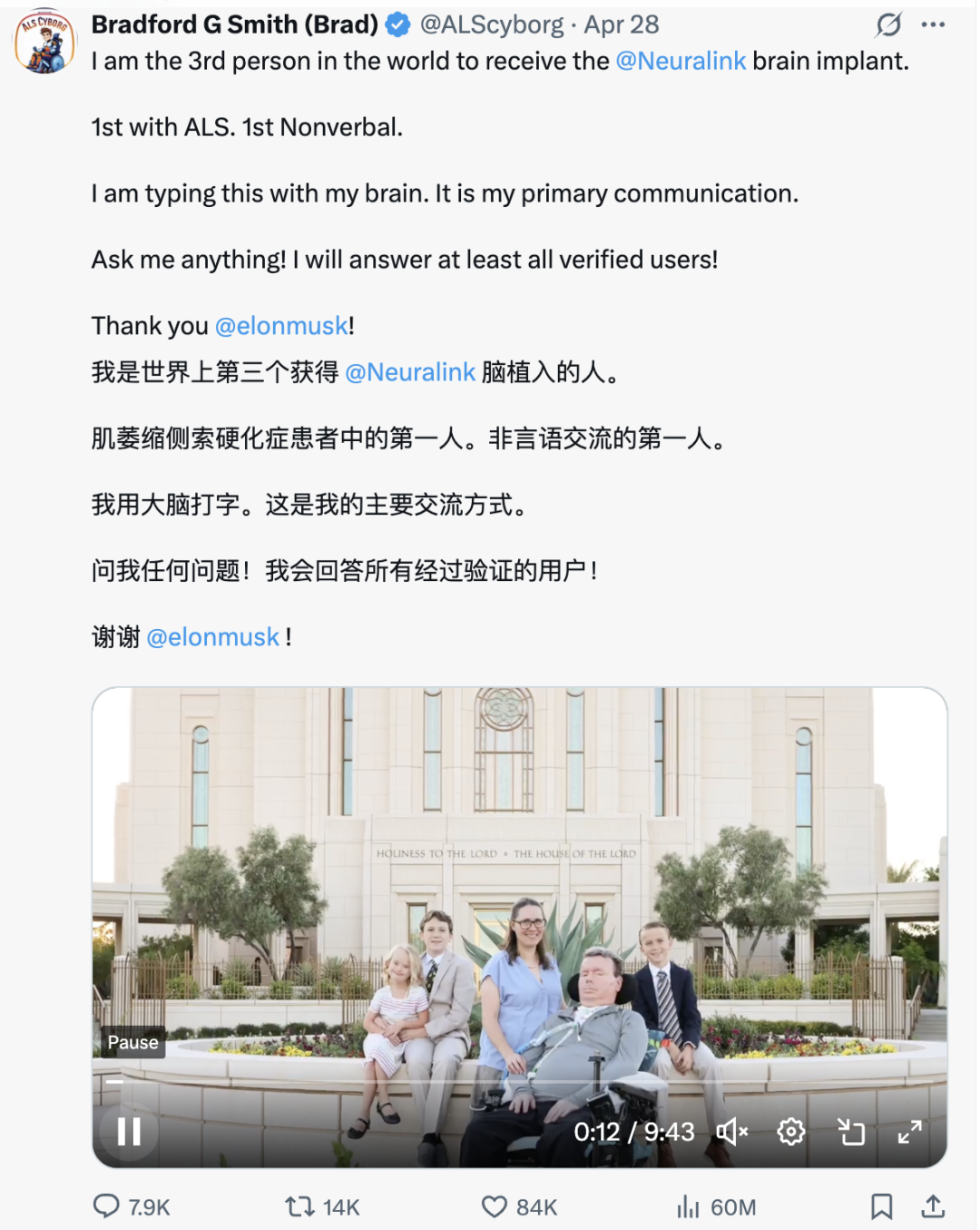
In what may be the first video ever edited using Neuralink brain-computer interface technology, Brad controlled a MacBook using only neural signals, narrating his story and producing this video through thought alone.
Beyond that, the video editing and publishing were also completed entirely through mind-controlled MacBook operations; the voice was cloned from Brad's own previous recordings using AI.
The story he tells is powerful:
"This time, I'm taking back everything that's mine."
Watch the video:
Crossing has done a deep dive into Brad's experience. Here's a look at this warm human comedy from silence to rebirth.
When the Light Is Gone, What Remains in the World?
Illness took so much from Brad: his healthy body, his ability to communicate normally, almost every source of light in his life.
Yet through the long darkness, this resilient protagonist and his family never gave up their love for life — even as that love was gradually worn down by hardship.
It's worth noting that Brad wasn't the only one in his family struck by disease. Both his son and daughter suffered from serious conditions to varying degrees.
A Family Crushed by Illness
Shortly after his eldest son was born, he was diagnosed with Hirschsprung's disease, a congenital digestive system defect. Before his son had even seen the light outside the hospital, Brad had to send him to the neonatal intensive care unit.
But fate wasn't done with Brad.
His daughter Abigail was also hit by Hirschsprung's disease. On top of that, she had a heart defect and Down syndrome, requiring three major surgeries.
During these relentless operations, the infant girl even had most of her large intestine removed to become a child who could, to some degree, live a normal life.
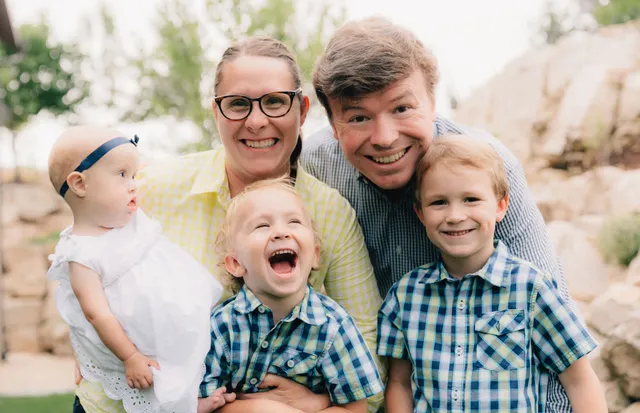
A photo of Brad before his ALS diagnosis
Brad himself was diagnosed with ALS in late 2018, all because he twisted his shoulder during a game of dodgeball. But he found his muscles simply wouldn't recover, and his gait slowly began to change. The family finally realized something was wrong.
He quickly went to the hospital for an MRI to check for spinal damage or other conditions, but nothing obvious turned up. One doctor, however, sensed something: he had a neurological disease.
So Brad was referred to a neurological research center to identify what exactly was ravaging his body.
In the end, he was tragically diagnosed with ALS.
On the way home, he broke down, realizing: this rare neurological disease would slowly kill the motor neurons connecting his brain to his muscles.
He could still communicate now, but in the future, he would lose all abilities.
Virtually everyone in the Brad family spent long periods battling a series of severe complications.
As a father, he could only watch his son and daughter tormented by disease; as the family's breadwinner, he was about to lose all ability to work and would need lifelong care.
So, when almost all light has been stripped from life, what remains to sustain them?
Brad answered with his own experience: what remains is true love, faith, and an optimistic heart.
He still wakes up cheerfully to face life — or rather, he has no choice but to do so.
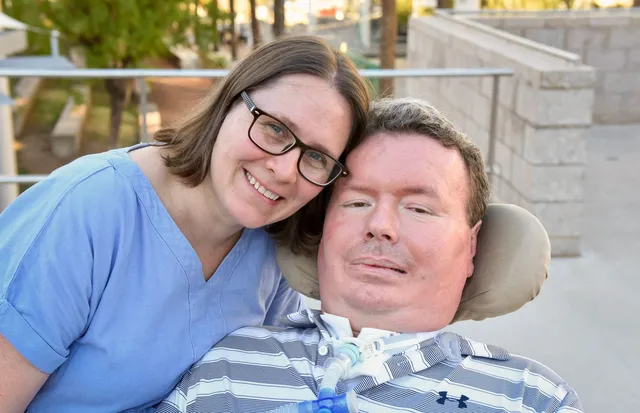
Brad once wrote an article on a website, drawing on his faith, titled "How Could I Not Be Happy?"
In this article, we seem to see someone who absolutely refuses to be defeated — a person sealed inside a shell, yet still trying to communicate with the outside world through any means possible.
"I spent a long time getting a handle on my emotions and fears, and as my body gradually faded away, I learned a lot." — Bradford G. Smith
Trapped in the Prison of His Body
ALS causes the motor neurons in his brain and spinal cord to progressively degenerate, stripping away bodily functions bit by bit until complete paralysis.
Most frustrating of all, this disease is entirely uncontrollable — some people can walk normally for over a decade, while others lose the ability to speak and eat within just a few months.
Since his 2018 diagnosis, Brad, already well into middle age, has lost almost every ability except thought itself.
ALS gradually consumed Brad's body: from walking with crutches, to being forced into a wheelchair, to soon becoming quadriplegic and unable to move a single limb on his own.
A year or two after diagnosis, the disease nearly "killed" the muscles controlling his voice and breathing. He had to have his trachea cut open and rely on a ventilator to live, then completely lost his ability to speak.
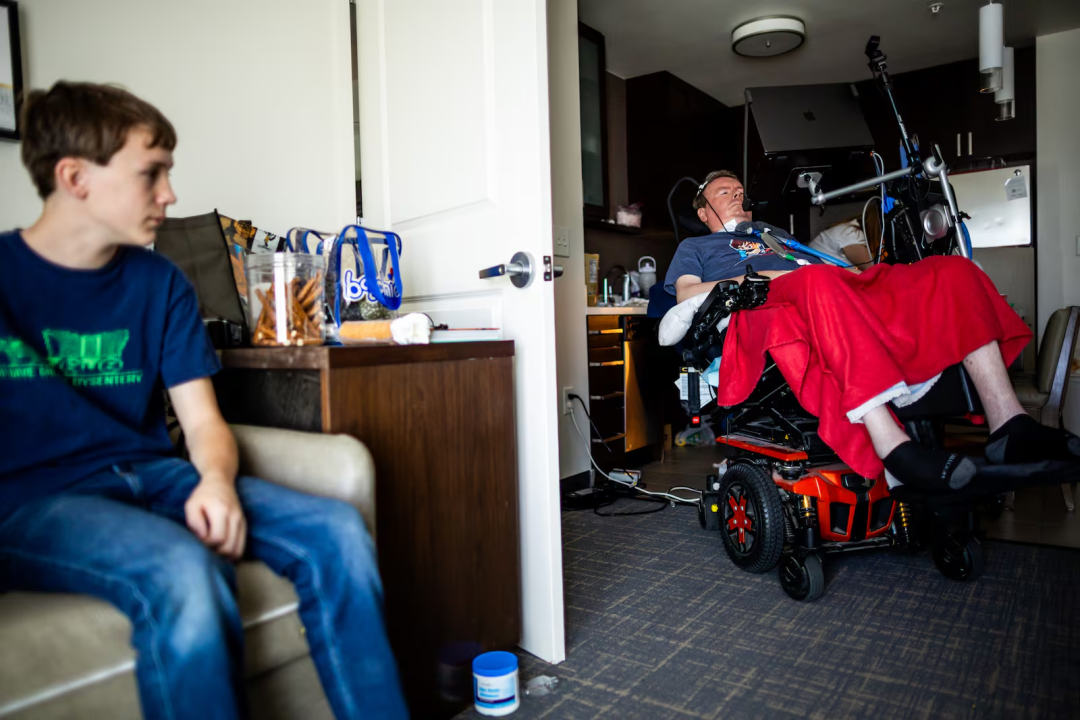
At the time, he remained optimistic and found other ways to communicate with the outside world: training himself to use an eye-tracking computer, using this method to communicate with his wife and children and write diary entries, excruciatingly slowly.
His world had no choice but to shrink down to a bed and a machine.
Because of the eye-tracking technology, the entire communication system couldn't function under bright light; all the room curtains had to stay drawn.
And so, in Brad's seasons, only night remained.
"I used to type 100 words per minute, but now I'm lucky if I can do 5..."
— Even facing such "insurmountable" difficulties, Brad was still cracking his characteristically bittersweet American humor.
His wife repeated the same routine every day: spending two hours helping Brad get up, bathing him, doing housework, spending the entire day feeding him, cleaning up waste, maintaining the ventilator.
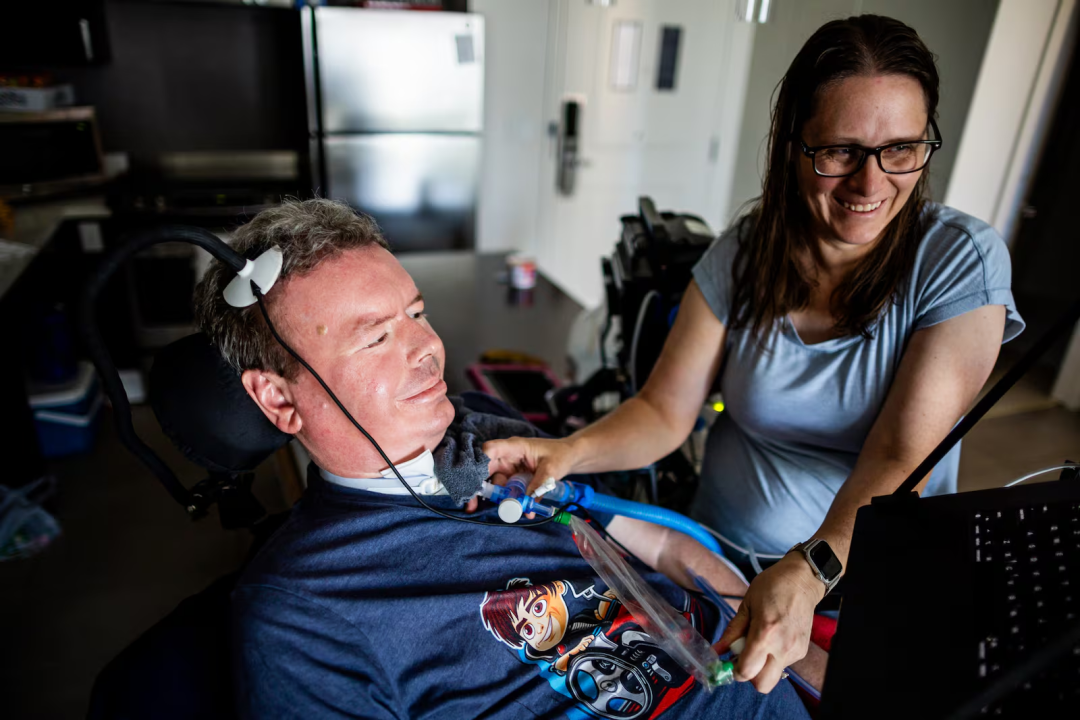
A life like that of a prisoner had nearly trapped the entire family.
Until one day, Neuralink suddenly sent him an email — good news had arrived.
His Voice Had Been Taken, But Neuralink Took It Back
Hard-Selling Himself to Neuralink
Brad desperately needed to save himself.
Even with all strength lost, confidence is humanity's only choice when facing ultimate despair.
He chose to fight for himself, to fight for his family.
Neuralink appeared at just the right moment, sending Brad a letter inviting him to become their third human trial participant.
What many don't know is that this was actually the result of the Brad family's relentless self-promotion.
Brad and his wife had been following news of new mind-reading computer devices. Starting in 2024, he had been trying to join Neuralink's implant studies through self-promotion, even placing an ad in the local newspaper saying "I really want to have the Neuralink surgery" in an attempt to get Neuralink to notice this determined potential trial subject.
Experimental medical technology is the last straw for patients.
Neuralink probably never expected that instead of them seeking out patients, now patients were coming to them.
At the time, though, Brad seemed to think brain-computer interfaces were something like telepathic mysticism.
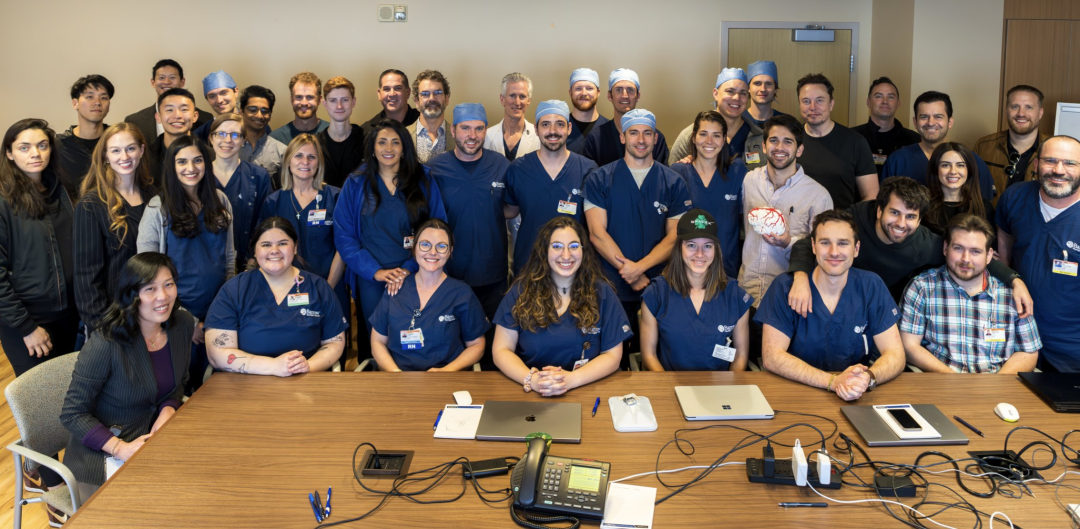
Brad's medical team
Though he initially didn't believe what would happen when Neuralink's invasive brain-computer interface was inserted into his brain, the Neuralink team clearly had the polish of professional salespeople. They successfully convinced him, and he gladly accepted.
The day before surgery, November 7, Neuralink co-founder DJ Seo came to answer all the Brad family's questions, and finally called his boss — Elon Musk — letting the tech titan chat with Brad for over ten minutes.
"There's always risk with surgery, but the potential is enormous. I hope this is a game-changing technology for you and your family." — Elon Musk said at the time.
Neuralink Gave Him His Voice Back
The surgery that would soon shock the world lasted two hours, conducted jointly by robot and human neurosurgeon. Part of Brad's skull was removed, and Neuralink's N1 Implant — roughly the thickness of five pennies — along with various electrode threads were "plugged" into his brain's motor cortex.
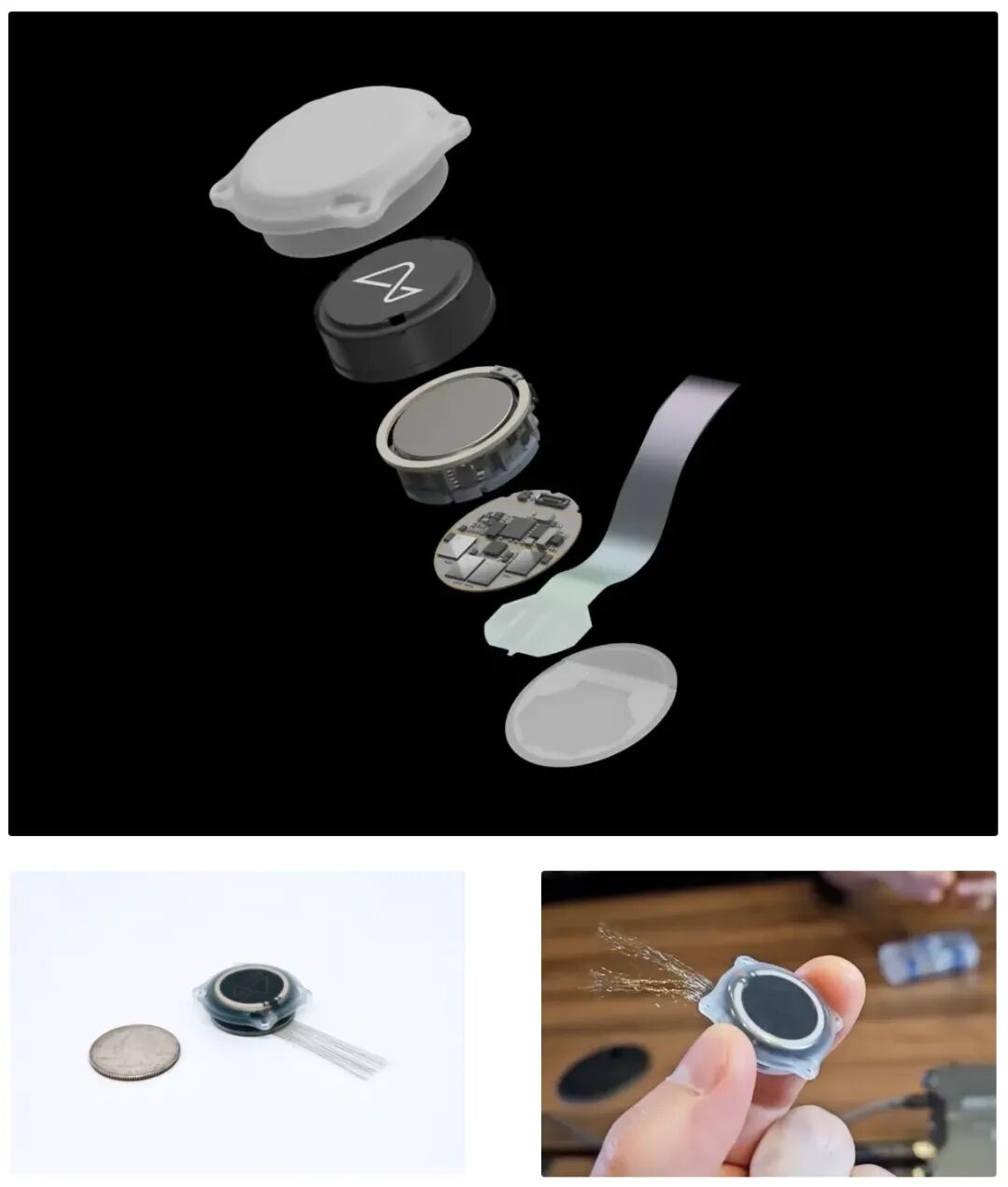
Neuralink N1 Implant
During surgery, doctors made a small hole in the skull, and Neuralink's surgical robot inserted the electrode threads a few millimeters into the brain, perfectly avoiding blood vessels, with almost no bleeding throughout.
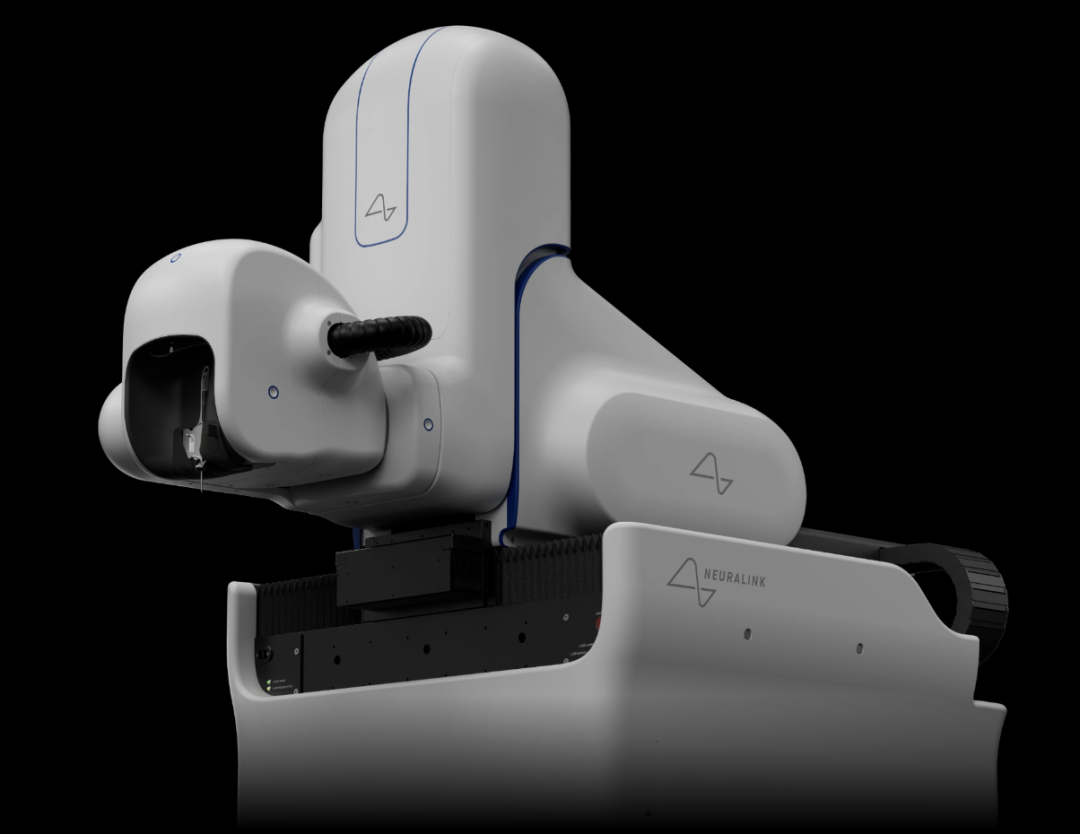
Neuralink's surgical robot
The surgery went smoothly. Brad stayed in the hospital just one night and went home the next day.
"I'm out of the hospital and doing well."
Post-surgery, Brad began converting thought into action through Neuralink's implant. He only had to think "move the cursor on the computer screen" to make it happen.
This was thanks to Neuralink's key technology — the N1 Implant, which connects to computers via Bluetooth and can process massive amounts of data. With 1,024 electrodes, it records neural activity every 15 milliseconds.
The N1 Implant can record and even stimulate neural activity, detect neural "spikes," and transmit signals via Bluetooth to external devices, then feed the generated data to AI for processing, analyzing whatever action Brad wants to perform.
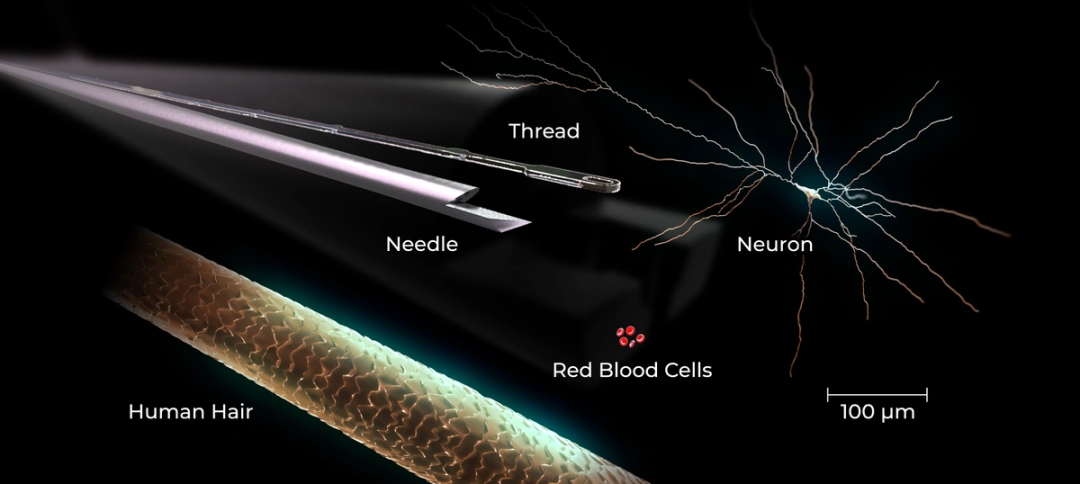
During implantation, the surgical robot's needle inserts the implant's threads into the brain; these threads are thinner than human hair, similar in thickness to neurons.
Based on this tiny device, Neuralink can't yet read Brad's complex thoughts, but it can sense the direction he wants to move the cursor.
Brad trains with the Neuralink implant 80-90 hours per week, using his mind to move the cursor to bubbles on screen and hold it there until they disappear, like playing a game.
There are two types of bubbles on screen: yellow bubbles train Brad to move the cursor with his mind and "hold steady" until the bubble disappears, practicing cursor movement precision; blue bubbles train him to move the cursor and "click" with his mind, like learning to use a mouse left-click.
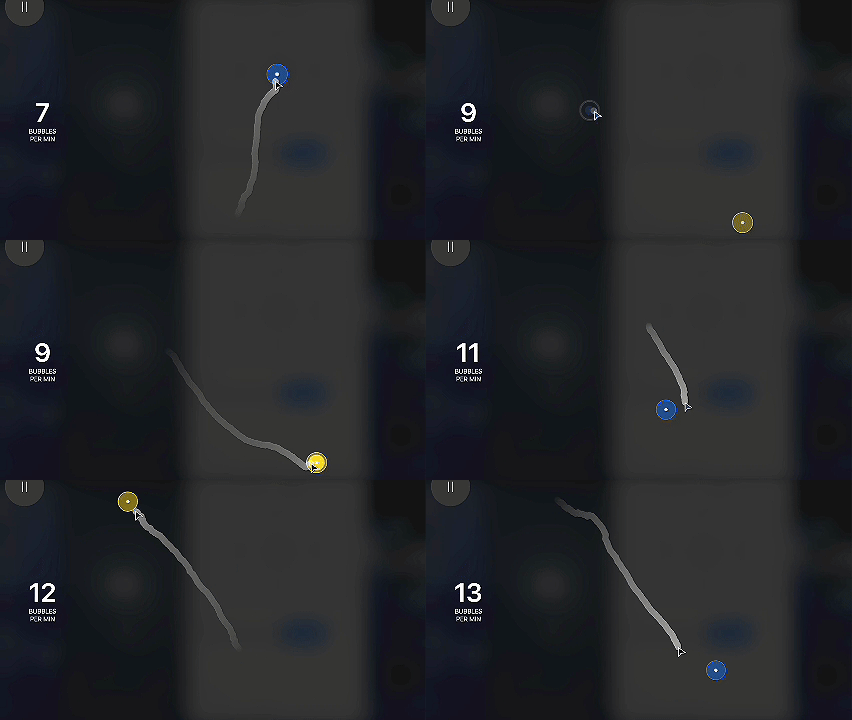
Over time, Brad has been able to subconsciously click the cursor and complete various basic interactive operations.
How much did Neuralink improve Brad's capabilities compared to eye-tracking?
In a tool called Webgrid[2], users can test cursor movement precision by clicking squares on screen to score points. Brad's highest score was 5, while with eye-tracking he could only manage 1.
And perhaps more importantly: Brad no longer needs to hide in dim spaces like Batman, because Neuralink's technology isn't blocked by light.
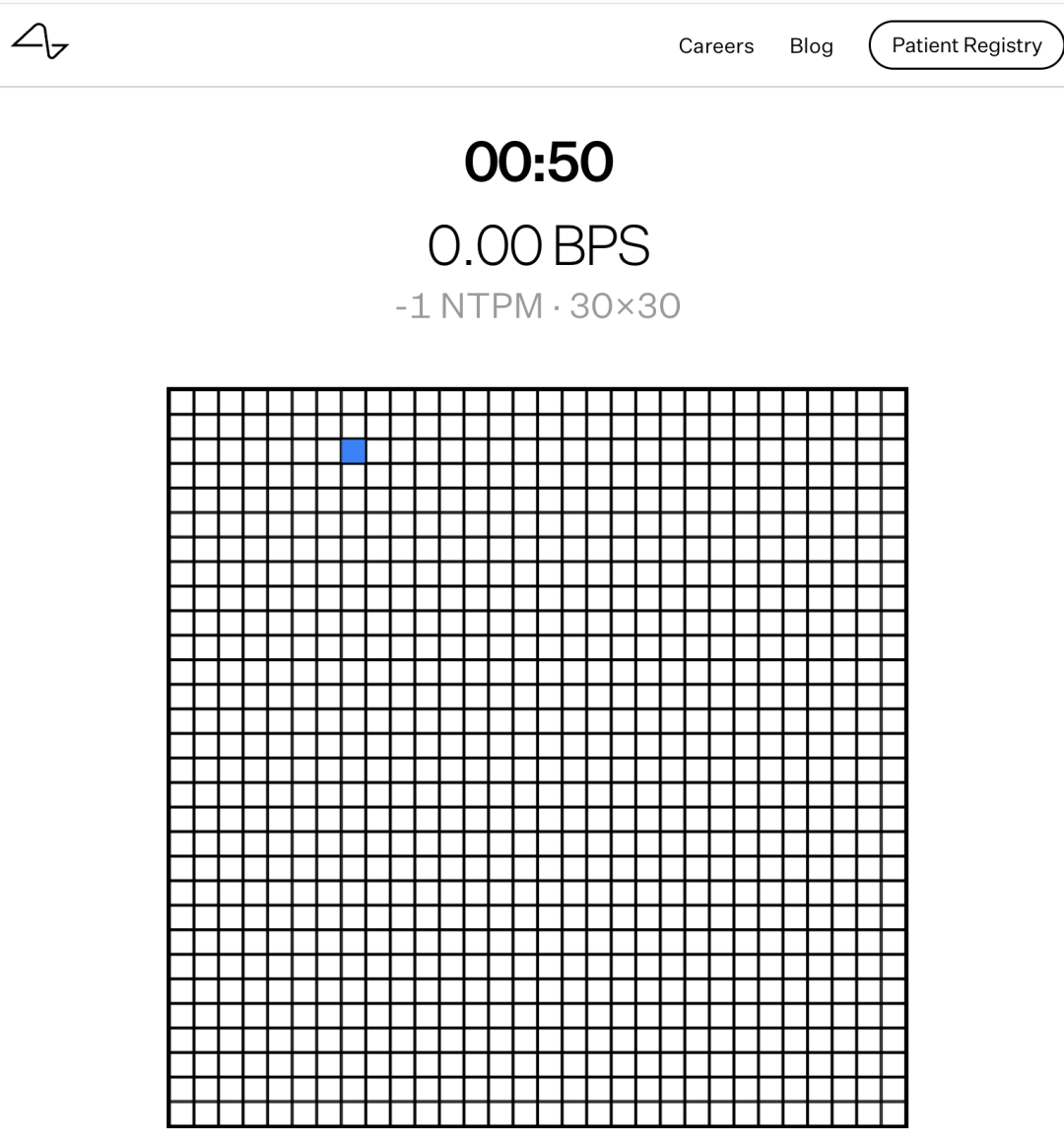
Neuralink's Webgrid mini-game
Neuralink also designed a virtual keyboard with various functions, like text suggestions, app switching, and more.
Now Brad can use keyboard shortcuts to select all, copy, and paste text, and can keep the cursor hovering in a circle at the bottom right of the screen, making it convenient for him to watch videos or rest.
The convenience of this entire operation system is enough for Brad to manage daily life.
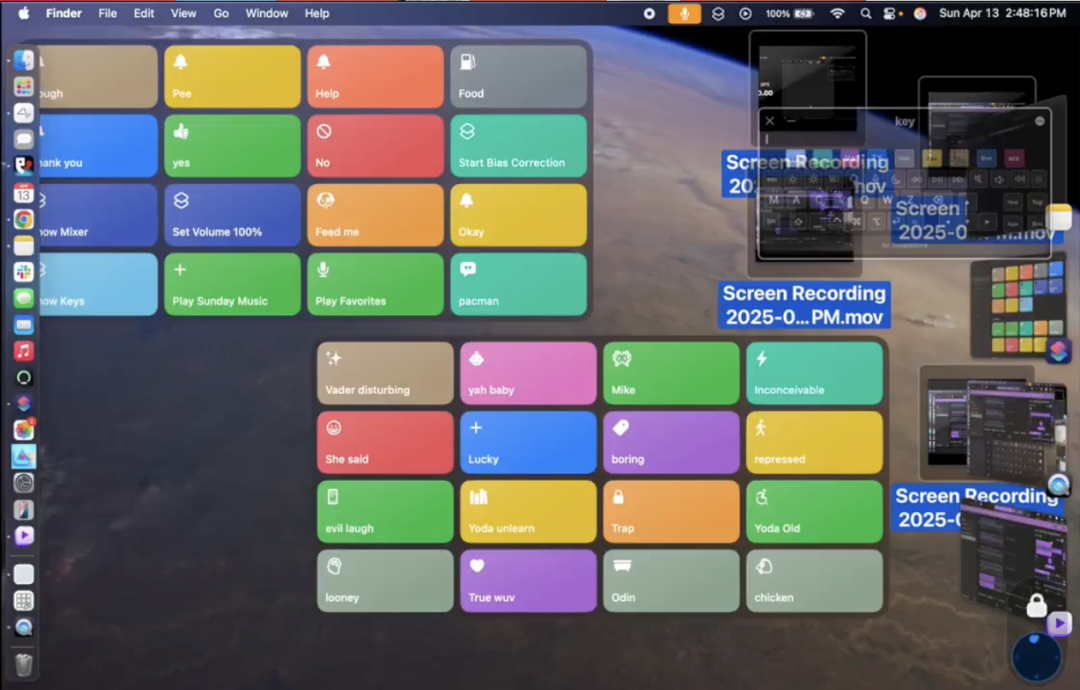
The MacBook interface as Brad sees it
Of the three people in Neuralink's neural connection trials, Brad was the most severely affected, because while the other two were paralyzed, they could still vocalize. This became a problem, and Neuralink specifically sent a team of engineers to help enable Brad to achieve basic communication with others.
Through actual collaboration, they constantly tried new ideas and implemented them.
For example, within just a few weeks, Neuralink built an AI-driven communication system for Brad — the system listens to conversations happening around Brad and uses Grok-3 and ChatGPT large language models to pre-fill reply options on Brad's screen.
Brad's communication efficiency thus improved dramatically. No longer needing to slowly think of words, he can send a complete sentence within 1-2 seconds.
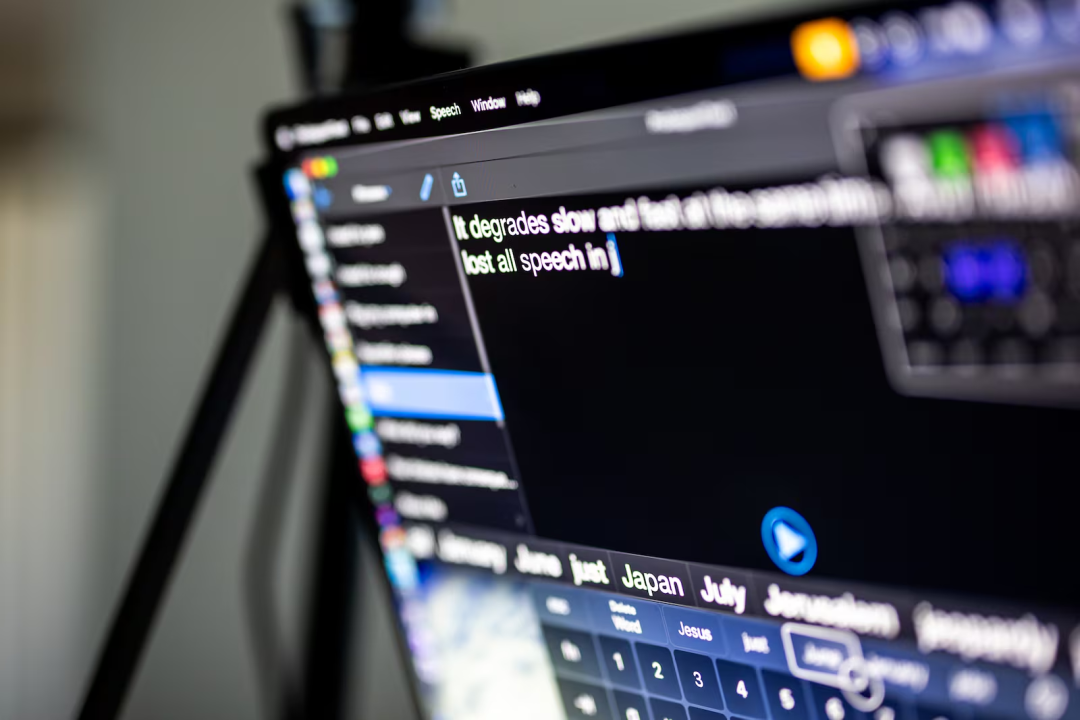
On May 2, 2025, Brad used the AI-driven communication system during an interview with a journalist.
Text replies alone weren't enough — the engineering team also gave back the voice that ALS had stolen from him.
They used Brad's previous recordings to build a cloned "new voice" through ElevenLabs'[3] AI system. Now Brad can speak in his original voice, not just a mechanical one.
His wife gave this a thumbs-up too.
According to a journalist who followed Brad throughout, Neuralink engineers also connected the N1 Implant in Brad's brain to a webcam mounted on top of his laptop, allowing him to adjust the camera angle using only his mind — a genuinely important humanitarian design.
Normally Brad couldn't move his head and could only stare at his computer screen; now he can use the camera to see his family and surroundings.
The redemption this design brought Brad is hard for ordinary people to imagine.
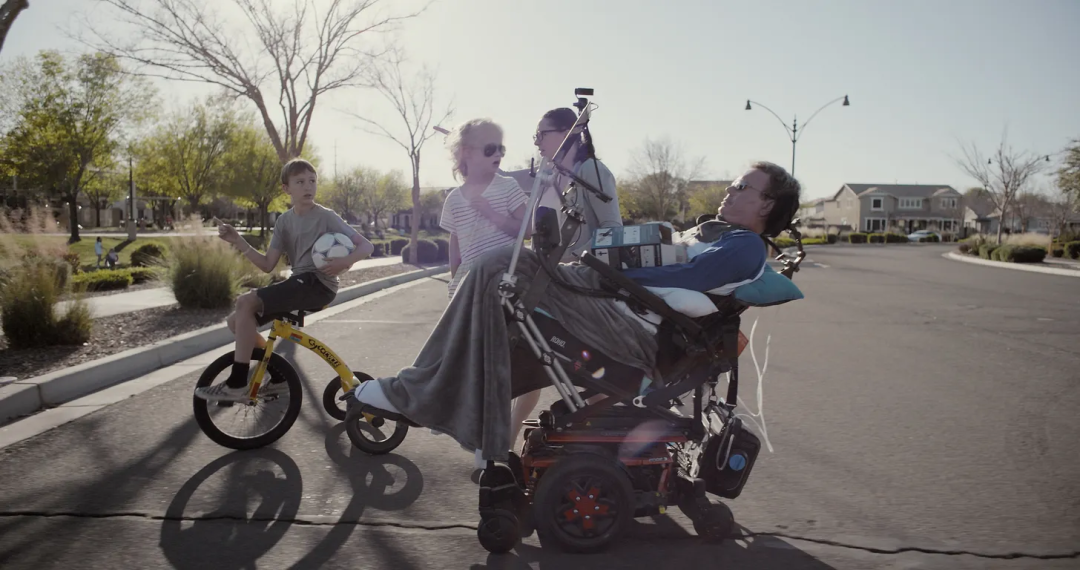
The Brad family at a park
One could say that it's precisely because of Brad's remarkably optimistic mindset that we get a glimpse of this warm little story between a "successful optimist" and technological hardware.
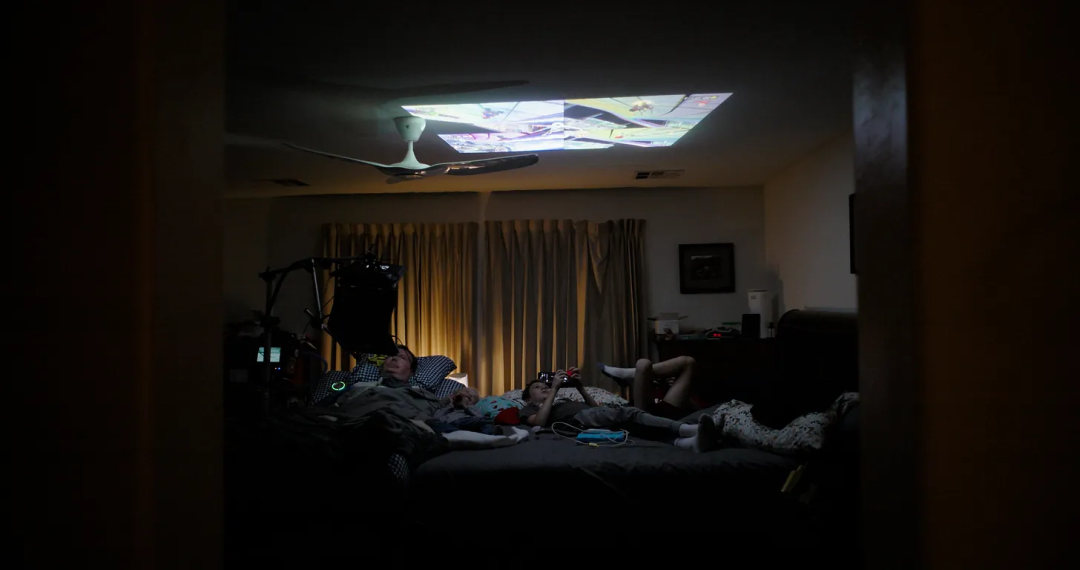
Brad playing video games on his bedroom ceiling
Earlier this month, Neuralink announced it has received Breakthrough Device Designation from the U.S. FDA, striding quickly toward its next stage, and Brad too has moved to the next stage of his life.
"Pessimists Are Often Right, But Optimists Are Often Successful"
Finally, we discovered one small post-surgery story about Brad:
On a sunny afternoon, Brad slowly rolled his electric wheelchair into the school gymnasium. It was a robotics competition his son Lincoln was participating in, and he felt both nervous and excited.
Through the webcam overhead, he could clearly see his son busy on the competition field.
Whenever Lincoln looked back at the audience, Brad would cheer him on using his AI-synthesized voice, drawing many curious glances.
At first, some children stood off to the side timidly watching this "special" dad, but they were quickly drawn in by Brad's humorous and witty conversation. A group of kids gathered around him, chattering away with questions, and Brad patiently answered every one.
After the competition, these new friends even enthusiastically invited him to visit the school swimming pool and park together.
I imagine that at that moment, Brad must have seen the proud smile on his son's face.
🚥
Brad had always jokingly called himself "Batman," because he could only stay in his lightless home with curtains drawn tight.
This time, Neuralink let this Batman fly out of his "Gotham City."
This is why Crossing wanted to share this story. Many people today fear technology and question AI, but we continue to believe:
Technology helps people become more efficient, solves problems, creates hope and love, and brings new life.
The power and optimism in this story don't just demonstrate technological breakthroughs, the value of technology, and entrepreneurial opportunities — they constantly remind us: even in times of uncertainty, hope and light still exist.
🚥
"Everything will be all right in the end. If it's not all right, it is not yet the end." — Bradford G. Smith
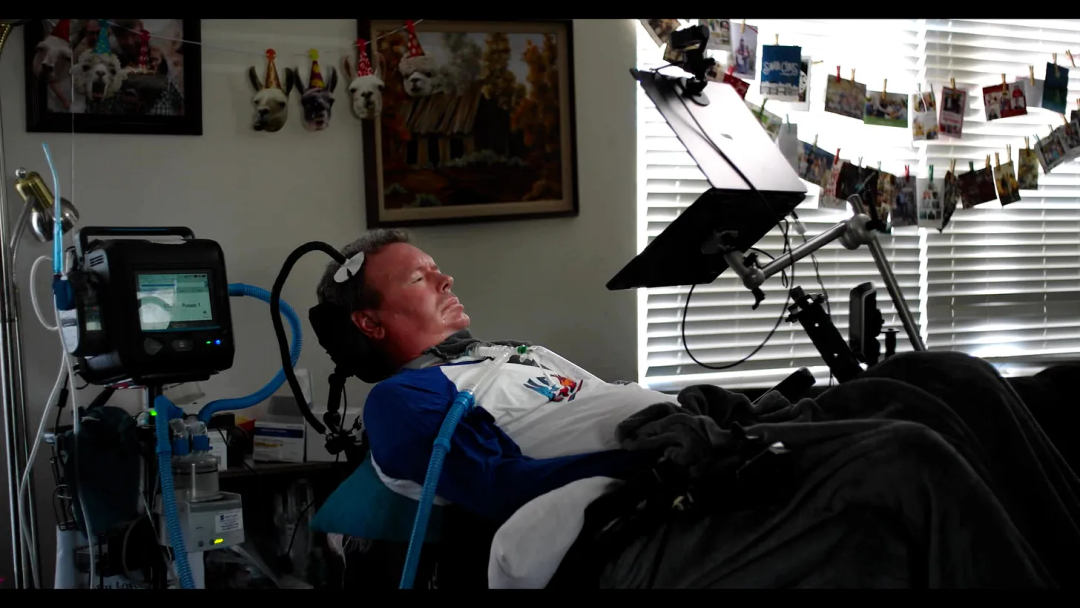
Today, Brad can communicate with others using Neuralink brain-computer interface technology in brightly lit indoor spaces.

References [1] Neuralink: https://neuralink.com/
[2] Webgrid: https://neuralink.com/webgrid/
[3] ElevenLabs: https://elevenlabs.io/
[4] Corememory: https://www.corememory.com/p/exclusive-mr-smith-gets-a-neuralink?utm_campaign=post&utm_medium=web
[5] technologyreview: https://www.technologyreview.com/2025/05/07/1116139/this-brain-implant-gets-a-boost-from-generative-ai/
[6] church: https://www.churchofjesuschrist.org/study/liahona/2025/04/07-how-could-i-not-be-happy?lang=eng