How Gensmo, Which Raised $60 Million in Its Seed Round, Uses AI to Make "Discovering Beauty and Creating Beauty" Simple

Let me enjoy the process of discovering beauty and creating it.
Let me enjoy the process of discovering beauty and creating it.
👦🏻 Authors: Jingshan, Xiaoju
🥷 Editor: Koji
🧑🎨 Layout: NCon

As AI foundation models "dimensionally reduce" one traditional field after another, practitioners in nearly every industry are asking the same question: "Will the AI base model companies just come in and rebuild my business too?" This anxiety has spread like dominoes.
But sometimes, crisis breeds opportunity — and "virtual try-on," once a minor feature tucked away in the corner of e-commerce platforms, suddenly finds itself in the spotlight.
Some sharp-nosed entrepreneurs discovered that the combination of "virtual try-on + community" could become a complete product in itself.
At the end of 2024, in the global AI fashion track, a US-market app called Gensmo closed the largest single seed round in the sector at over $60 million. For a seed round, that's a pretty "proud" figure.
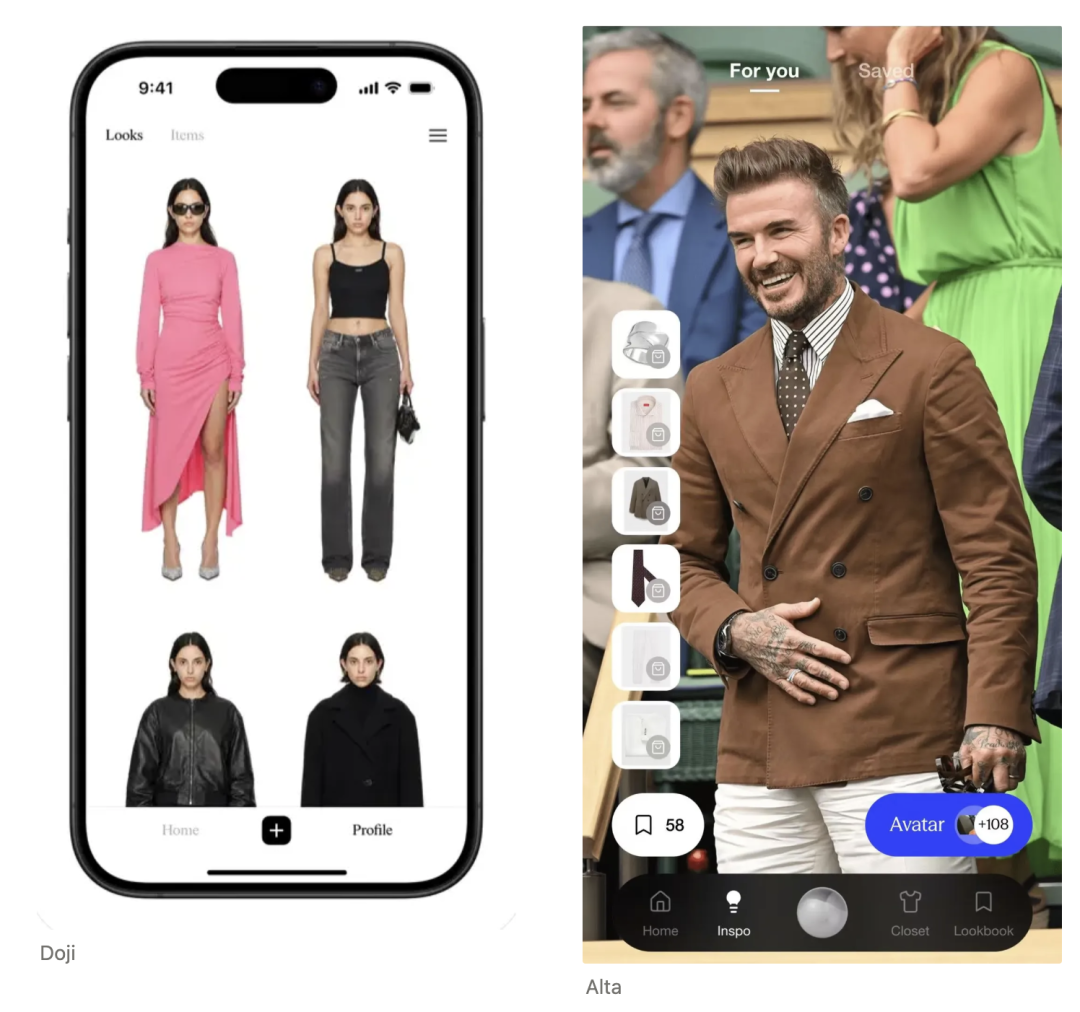
Of course, Gensmo is not alone on this track. Taking the "virtual try-on" function and building various approaches around it are Google's experimental Doppl, as well as products like Doji and Alta. But judged by results, this "newborn calf" seems fearless, having delivered a rather impressive report card in overseas markets.
🚥
Next, the Crossing team will provide an in-depth analysis of how Gensmo established itself "first and foremost" overseas, along with a comprehensive product review.
How Gensmo established itself "first and foremost" overseas
1) Listening matters more than talking
Product operations are a strength that cannot go unmentioned for Gensmo. As AI foundation model capabilities mature to the point of supporting basic product functions, users' discerning tastes no longer grant startups' new products the same degree of forgiveness. What they want is: more features, better experience, more completeness.
When a product first hits the market, it needs to strike "with the force of a breaking wave."
From its initial launch, Gensmo quickly gained massive attention on TikTok, with numerous well-known KOLs vouching for it.
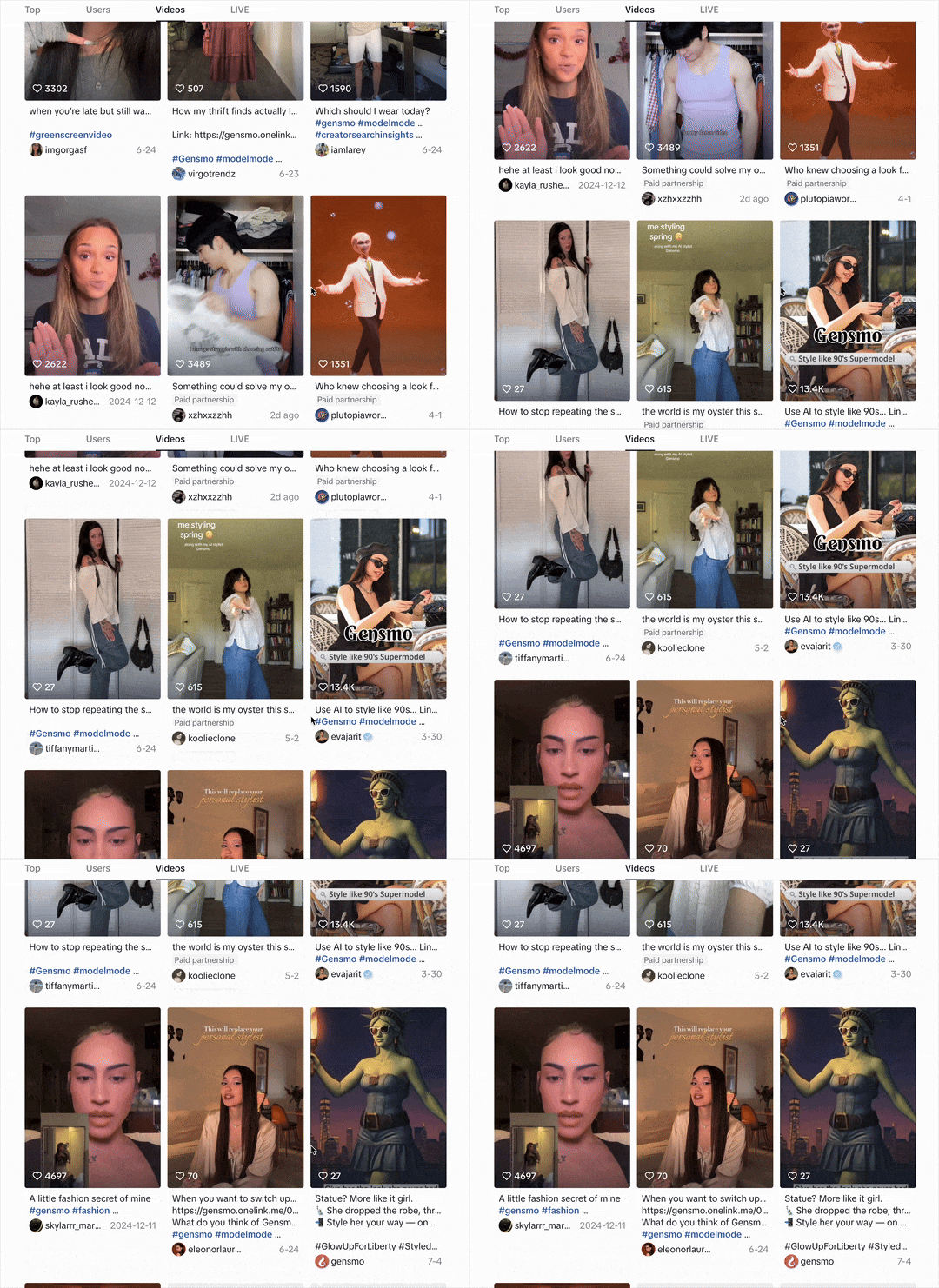
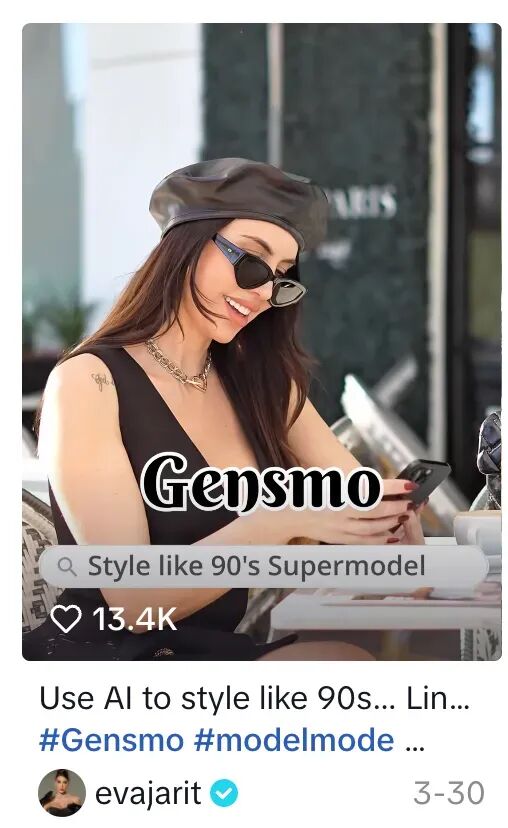
Take one of my personal favorite TikTok creators, evajarit, with over 425K followers and 1.3M likes, who also "endorsed" it:
Behind this lies Gensmo's rapid product iteration capability.
We did a brief tally:
On December 3, 2024, Gensmo released its Alpha version. From the moment the product went live, they displayed the "ferocity" befitting their team's background: 74 version iterations completed in 29 weeks.
Building AI products in the AI era very much requires this kind of AI Native approach of constantly iterating and evolving.
2) The "All in one" product philosophy
We observed that the Gensmo team built an "All in one" product in a very short time. It no longer merely provides a simple, thin "virtual try-on" function, but has established an AI fashion community supported by technologies like "AI digital humans" and "AI try-on."
From a user experience perspective, what's most impressive about Gensmo is how it seamlessly integrates immersive real-time try-on, AI-native search experience, and "seeded" inspiration community into one fluid user journey. By comparison, its competitors — whether Doppl, Doji, or Alta — focus more on AI try-on.
We've mapped out Gensmo's workflow:
[1] First, it enables immersive real-time clothing try-on — Gensmo offers not just a simple "see product image → click to try on → done" flow, but a very complete try-on experience built around a single item.
[2] Second, it provides AI-native search functionality — AI can recommend suitable outfit combinations based on user preferences, scene requirements, price, same-item identification, and even food, housing, and lifestyle.
[3] Finally, it has an inspiration community function like Xiaohongshu and Douyin — where users can discover various fashion outfits, see others' styling insights, and share their own dressing experiences.
Next, we'll share our in-depth review of this product from these three angles.
Gensmo is far more than an AI fitting room that's "a little better"
Immersive real-time try-on
As an AI fashion community, immersive real-time try-on is Gensmo's core competitiveness. From the very simple AI digital human creation to basic Try On (virtual fitting), users can basically "try on" dozens of outfits within 10 minutes.
Beyond these basic operations, I want to share my favorite feature: Vibe curation, which truly enabled me to do "immersive" real-time try-on.
Vibe curation is a very interesting yet practical function integrated into Gensmo.
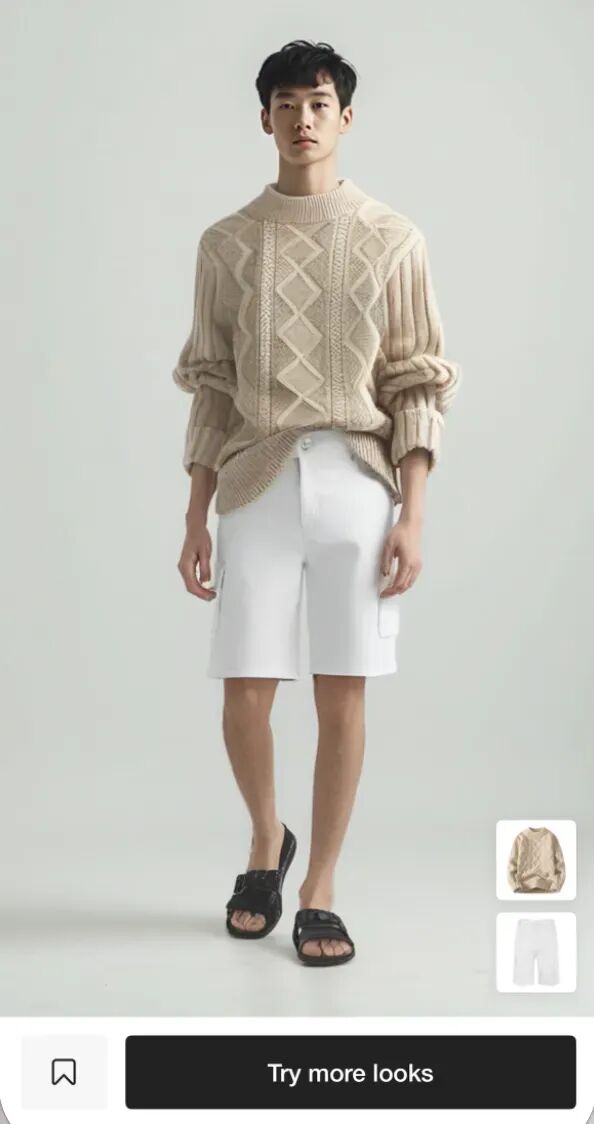
For example, when I tried on an outfit of white shorts and a cream-colored argyle sweater, the "Try more looks" button would be highlighted in dark, prompting me to try more items. Then, Gensmo would recommend more similar-style items based on my top and bottom separately.
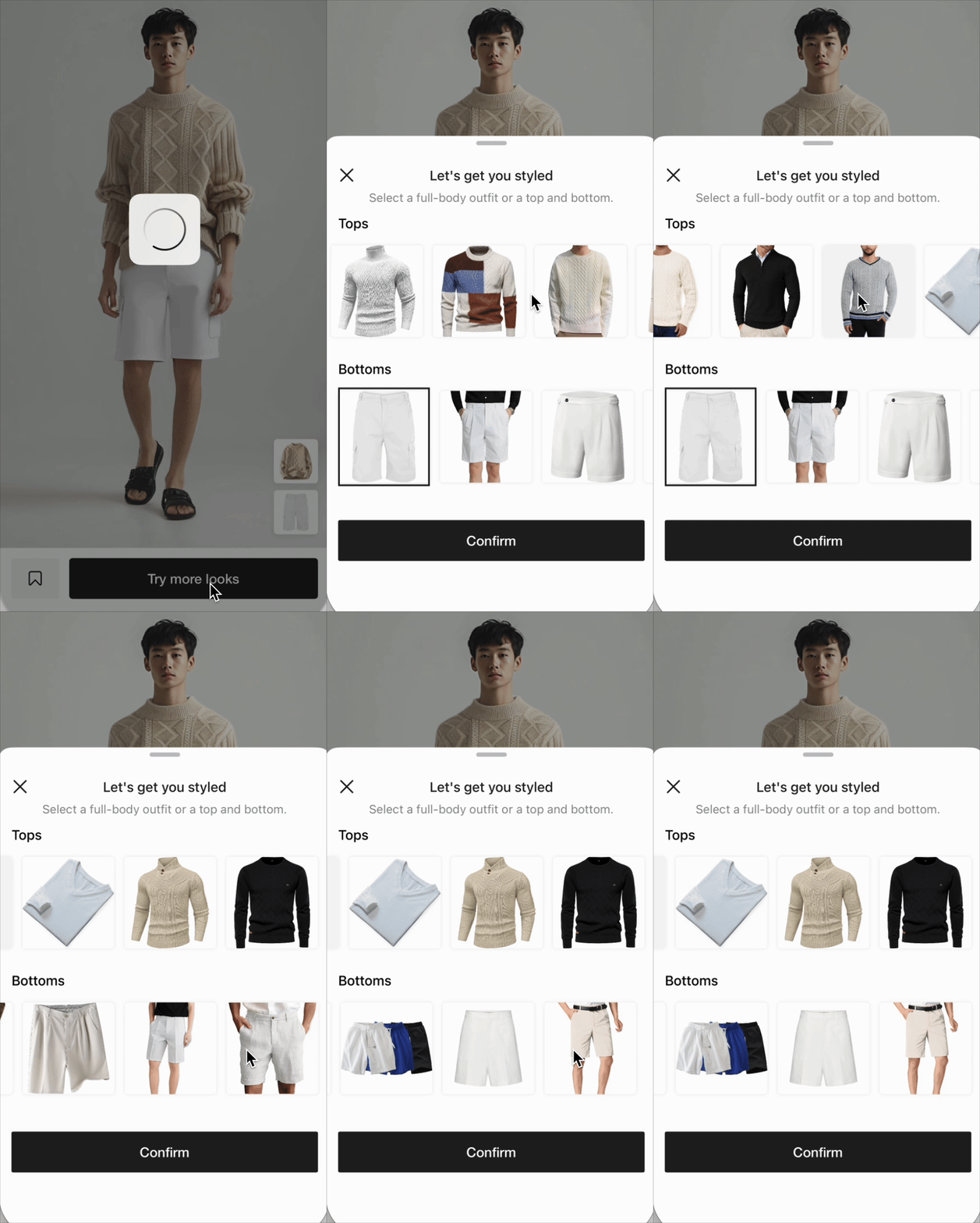
More importantly, the models in these real-time try-ons are not limited to one fixed pose, and backgrounds can be swapped freely. This is also a very useful and practical feature of Gensmo.
For example, I can input a short prompt and let Gensmo enrich it automatically.
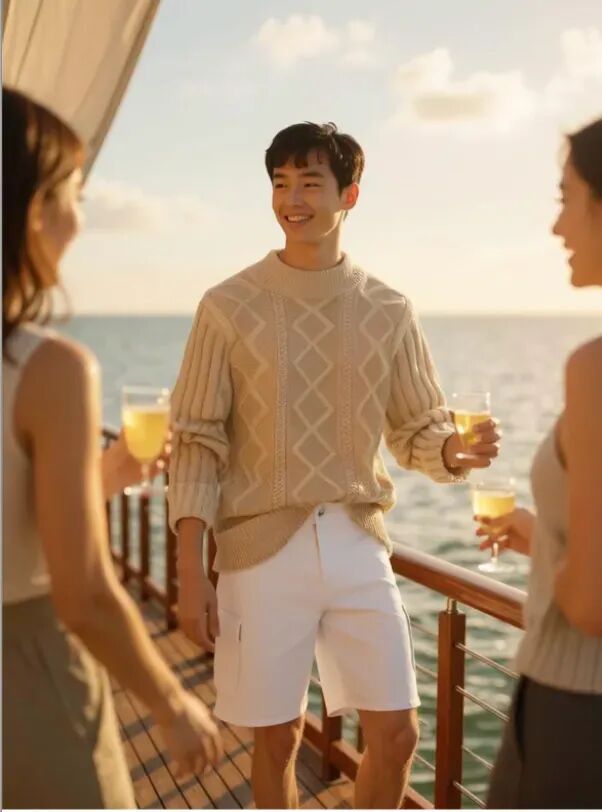
Like a scene on a yacht deck:
The same young man, wearing white shorts and a cream argyle sweater, leans against a smooth mahogany railing. Sunlight bathes the yacht deck in honeyed, soft light; the air carries the salty tang of sea waves and the fragrance of teak. He is handing a glass of iced lemonade to a smiling woman; a blurred sail echoes the argyle pattern on the sweater. Low-angle framing, with the ocean framed in the background.
Runway scene:
The same young man, wearing white shorts and a cream argyle sweater, walks confidently down a minimalist runway. Industrial spotlights cast sharp light and shadow on the textured concrete floor, echoing the geometric lines of the sweater. He pauses mid-stride, exchanging a playful glance with a woman in the front row, who holds a glossy program booklet as casually as a vinyl record. The air is filled with designer perfume and fresh cut flowers; rows of stacked fashion lookbooks draw the eye toward backstage, where warm light glows.
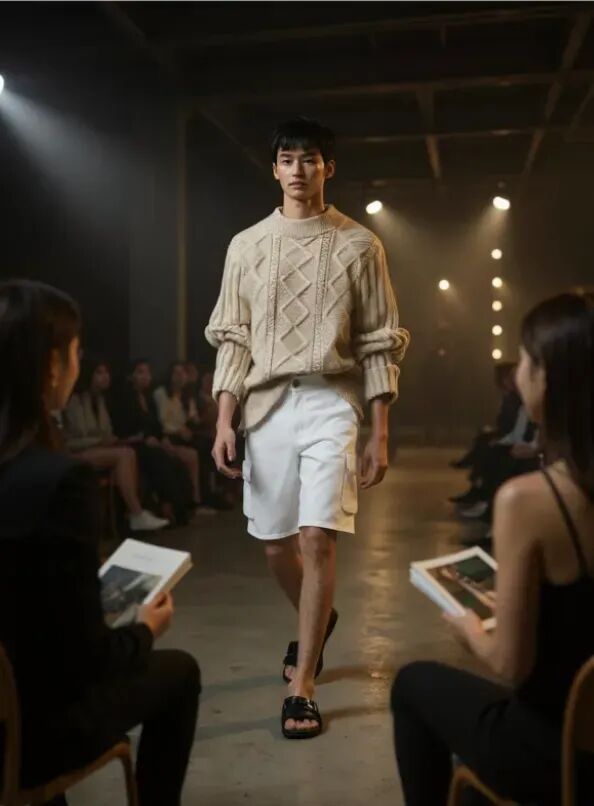
Everyday office scene:
The same young man, wearing white shorts and a cream argyle sweater, stands by a large window in a modern office. Morning light streams through the glass, casting soft shadows on a desk scattered with design sketches and a steaming cup of coffee. He is discussing with a colleague, casually holding a tablet between them displaying an inspiration collection. The air carries the scent of fresh coffee and printer paper; a row of potted plants draws the eye toward a bright collaborative area in the distance.
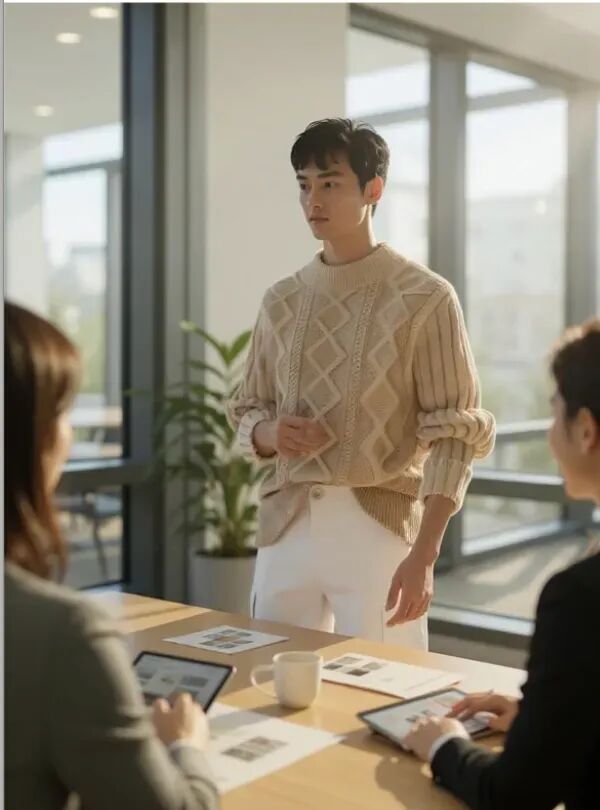
The ultimate purpose of these features is to provide other possibilities: Gensmo's recommendations may not be the most suitable for you, but it will try its best to give you other options.
Now let's look at the women's section experience.
I tried on a slightly hip-hop style outfit, but the model's pose was rather stiff, making it hard to tell if it actually worked. At this point, I could click "Vibe curation" below to change the background and pose.
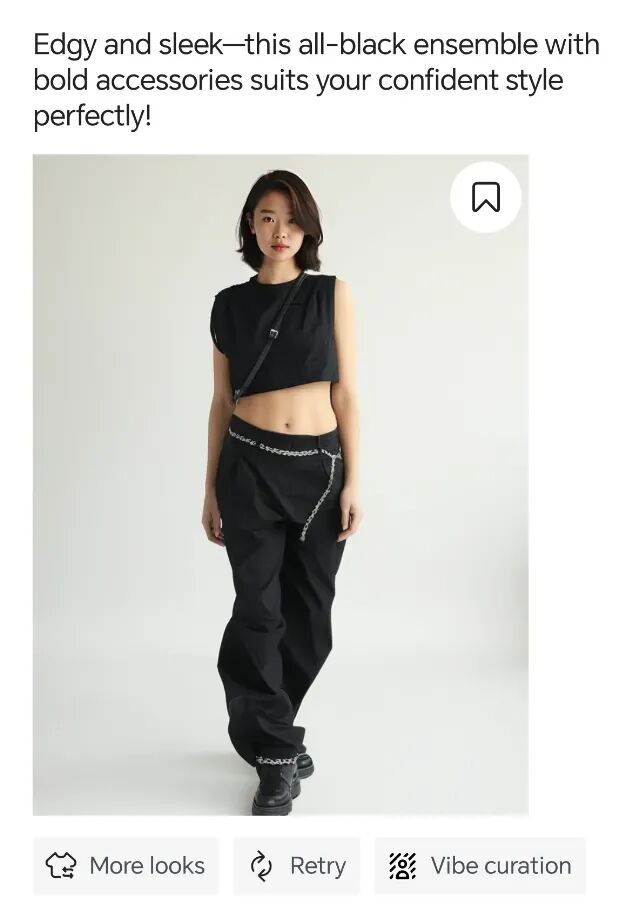
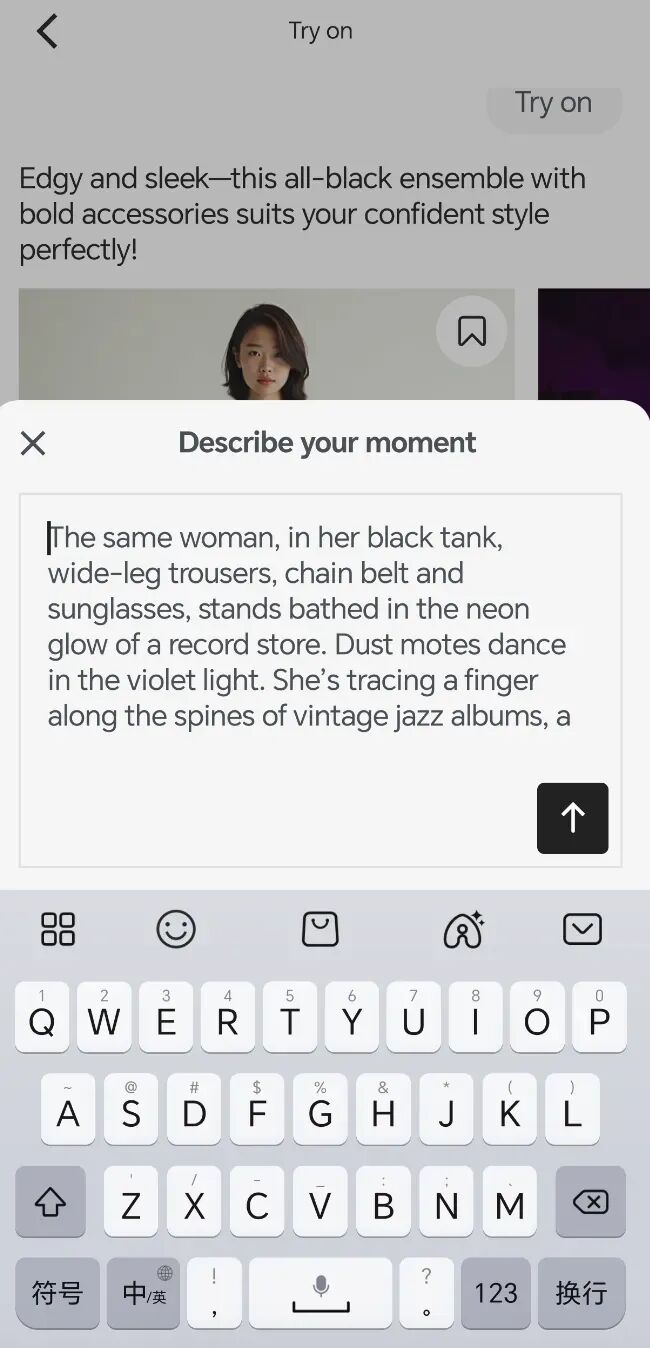
For example, I had her appear in a bar to see if this hip-hop outfit was really "hip-hop" enough and suitable for this kind of occasion:

Besides Vibe curation, Gensmo's "Complete the look" also gave me a sense of "reassurance."
Simply put, "Complete the look" supports generating multiple complete outfit schemes based on any single item. I only need to click on a product image, and the system will automatically identify the garment's gender, style, usage scenario, seasonal attributes, etc., and sequentially fill in other clothing categories.
Take the outfit below — I thought Brad Pitt's denim shirt looked great, so I could directly click on this item and let Gensmo complete the look:
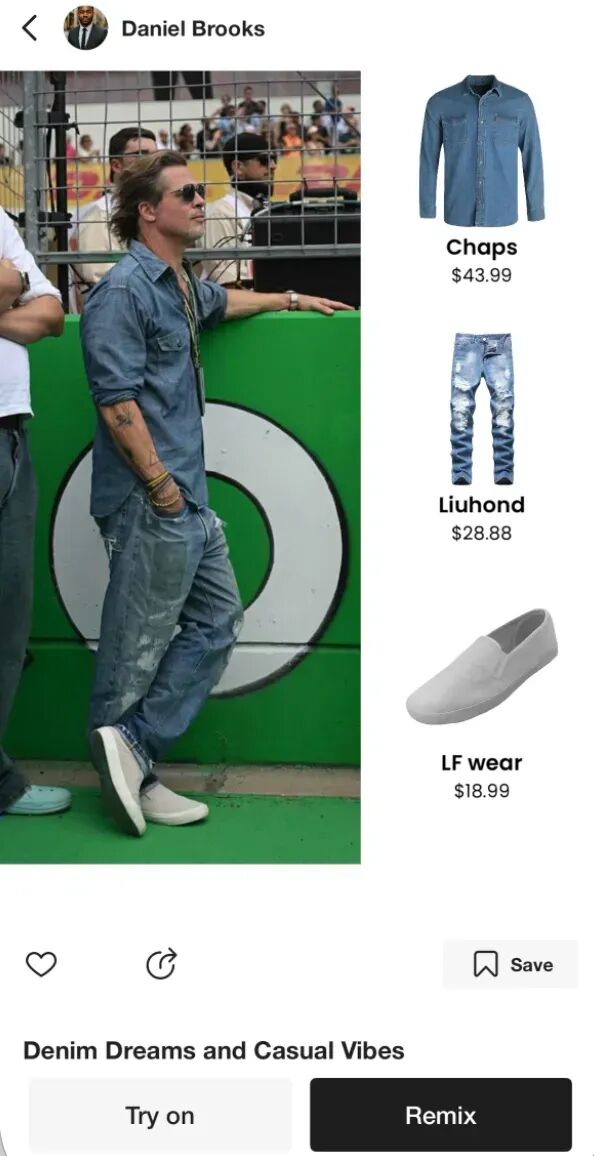
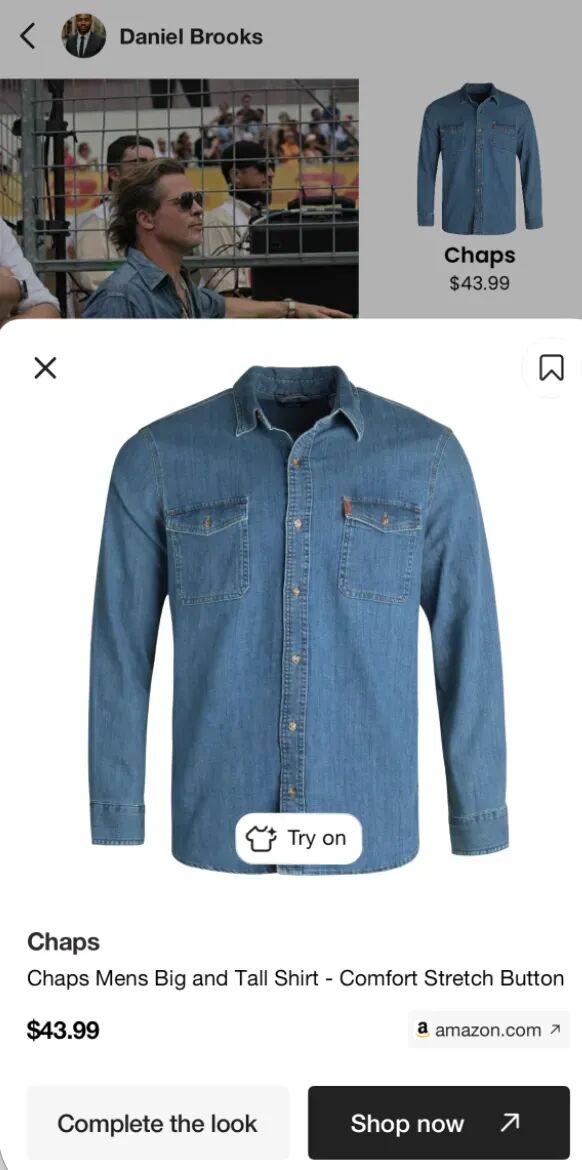
Gensmo's "Complete the look" function is indeed very powerful in actual use. It can recommend four complete outfit sets containing this denim top in one go:
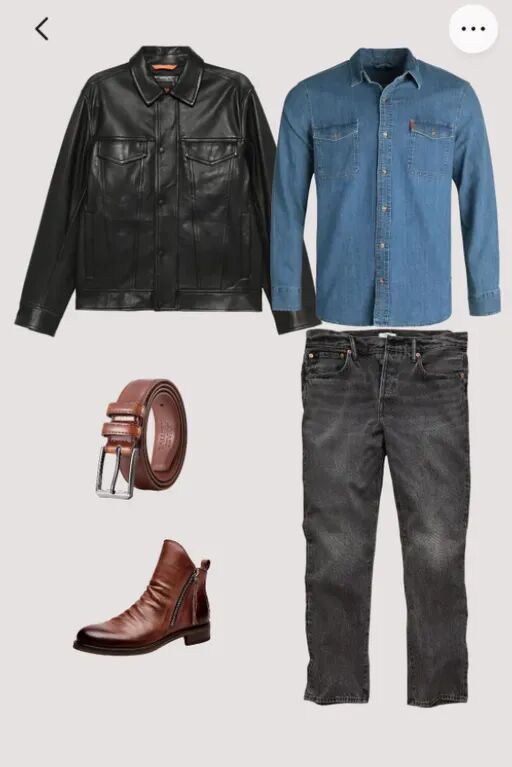
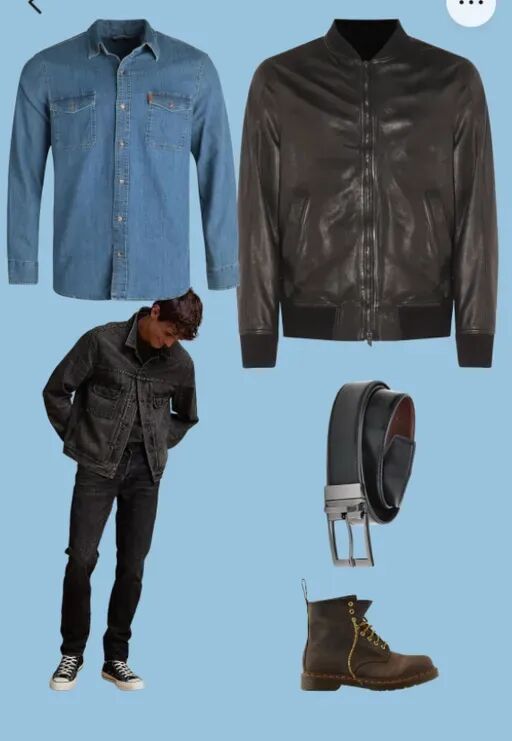
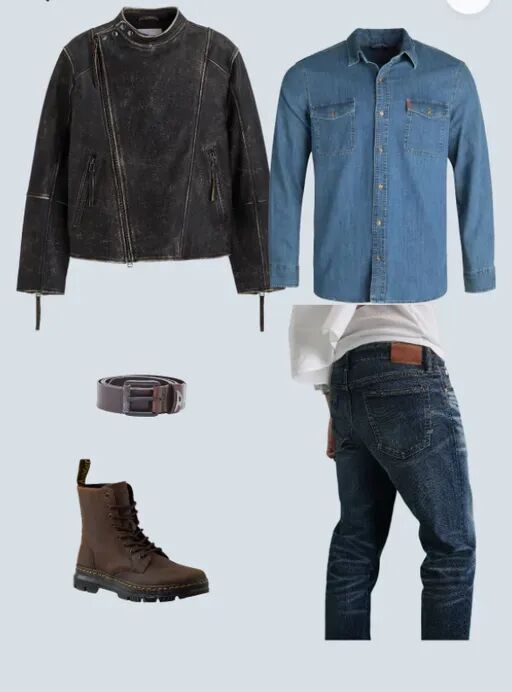
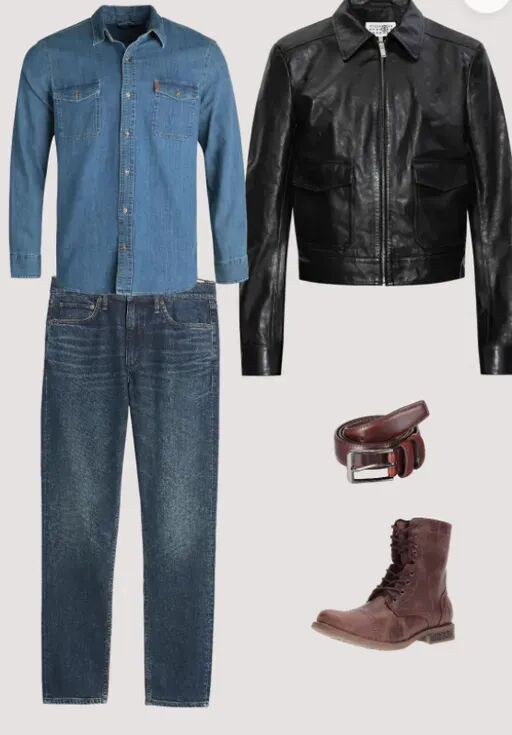
If you look closely, you'll notice it doesn't just throw things together, but selects through "styling," with relatively harmonious colors.
AI-native search experience
Gensmo's AI search capability is very strong — it can directly connect to the backend database to find outfit combinations that meet user needs and are the most suitable, and this capability extends far beyond clothing. It fully embraces AI capability for search, abandoning traditional keyword search entirely. This is even more radical than the newer "Doji."
Let's look at a few simple examples to see how it works.
1) Tell it the scenario, it styles the outfit for you
This is the most direct use of Gensmo's AI search.
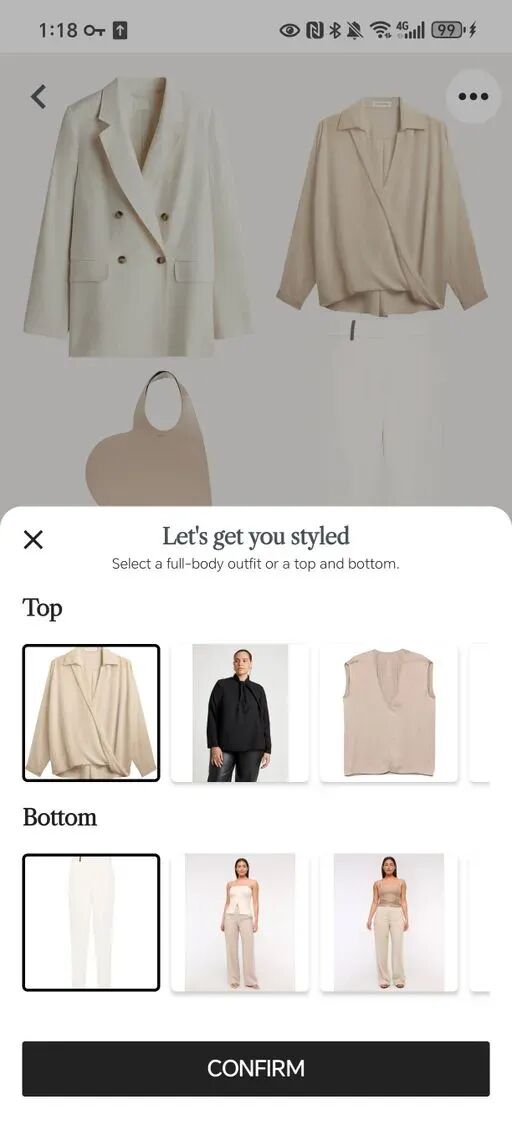
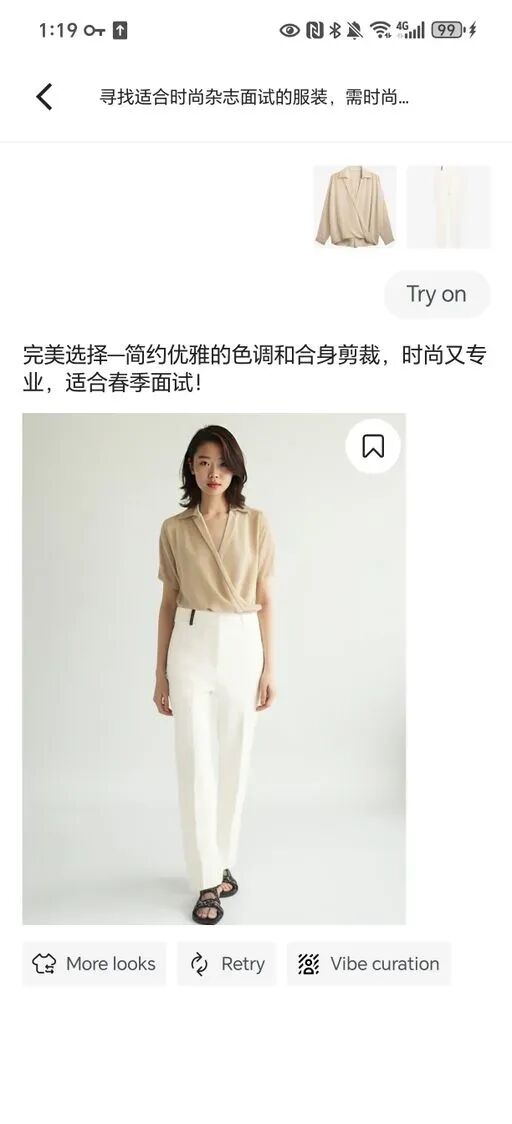
You can directly input outfit requirements in the dialog box, and through the system's prompt optimization function, preset style and budget in advance. For example, if I want to find clothes suitable for a fashion magazine interview, I can input:
Find outfits suitable for a fashion magazine interview, professional yet stylish, to match existing shoes and bag, prioritizing comfort and fit.
Next, Gensmo will search through massive product catalogs to find combinations matching the prompt requirements. If unsatisfied, users can further refine requirements for "infinite fine-tuning."
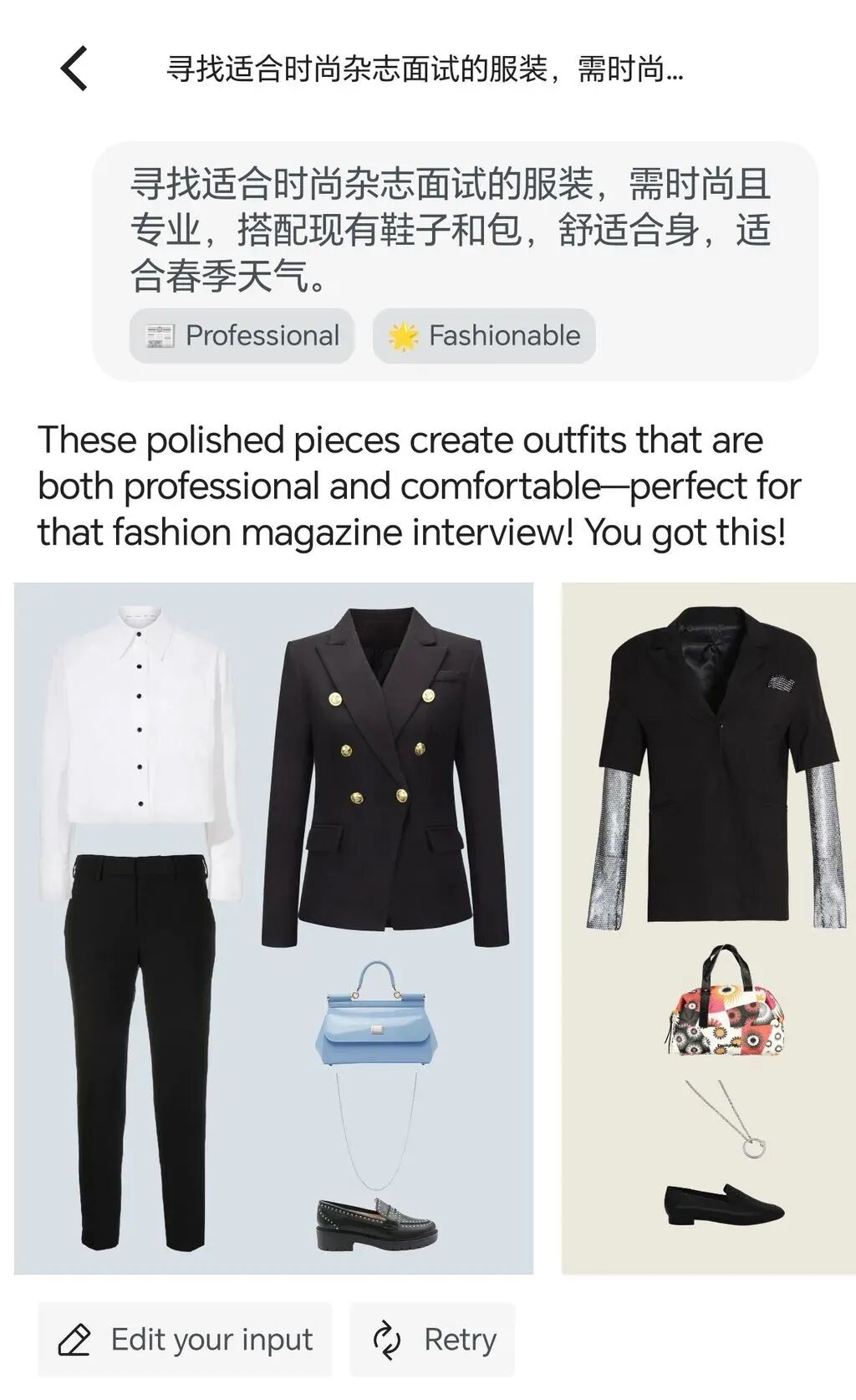


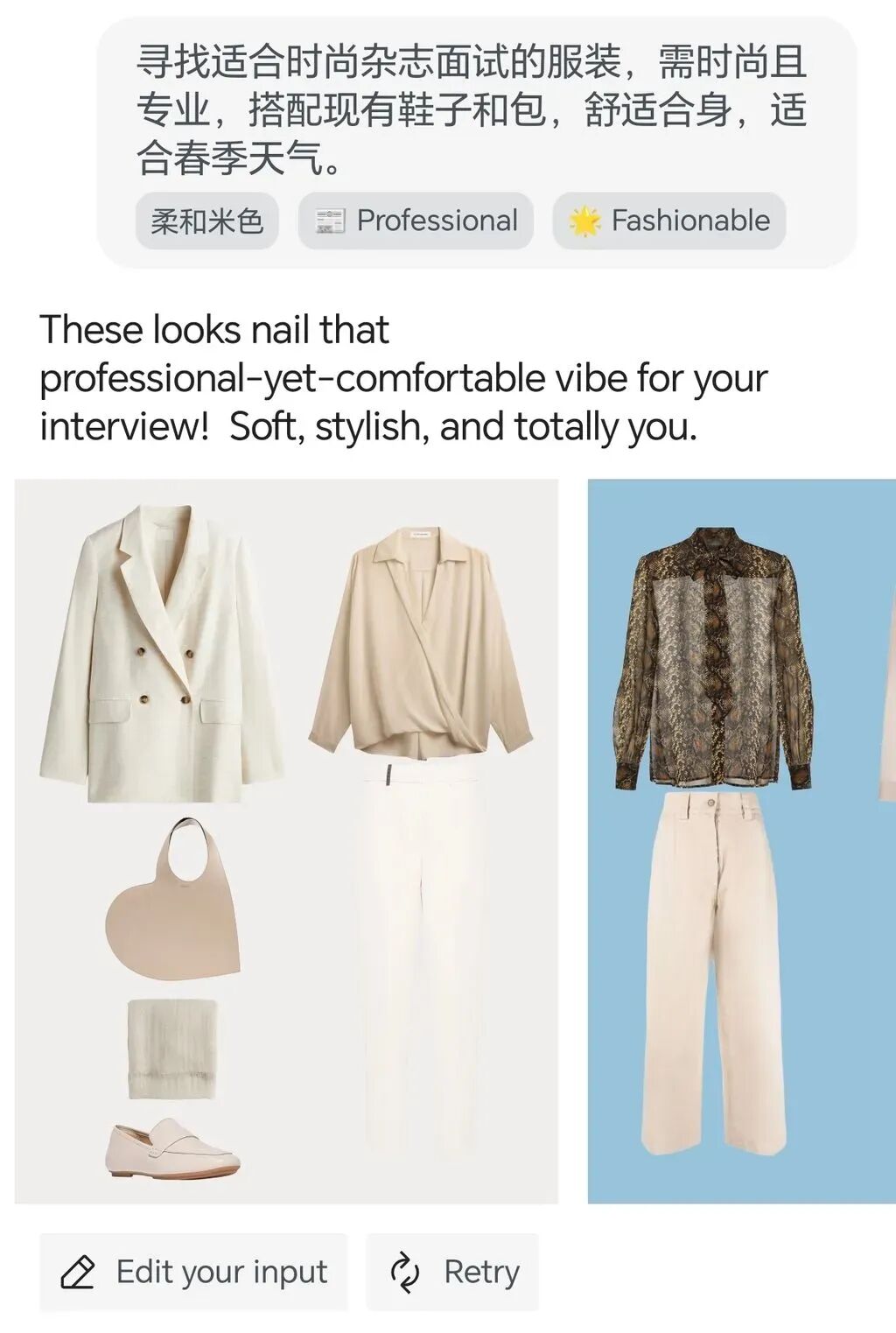
After selecting a preferred set, you can quickly jump to having the AI digital human try it on for you, generating appropriate scene images for your judgment.

2) One photo, AI styles the outfit
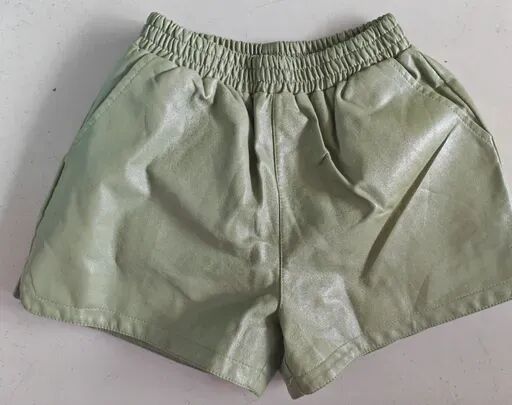
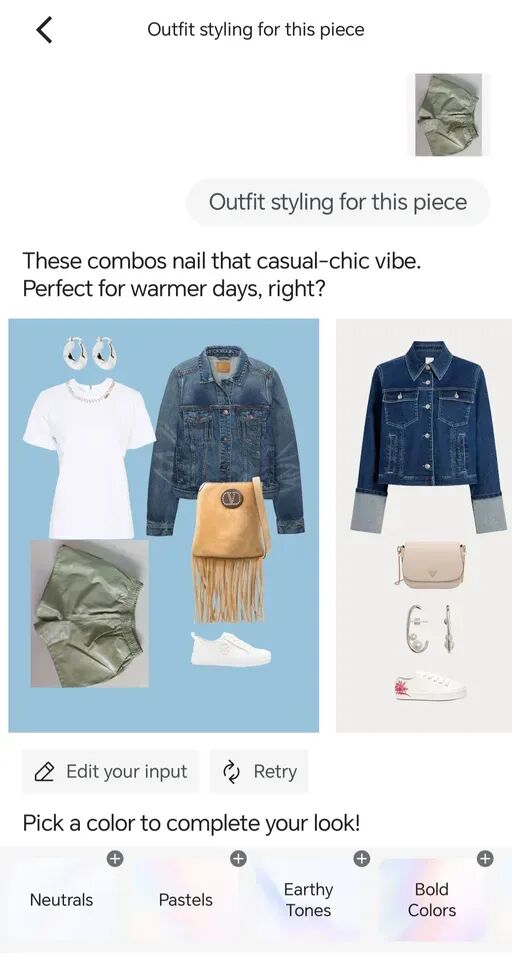
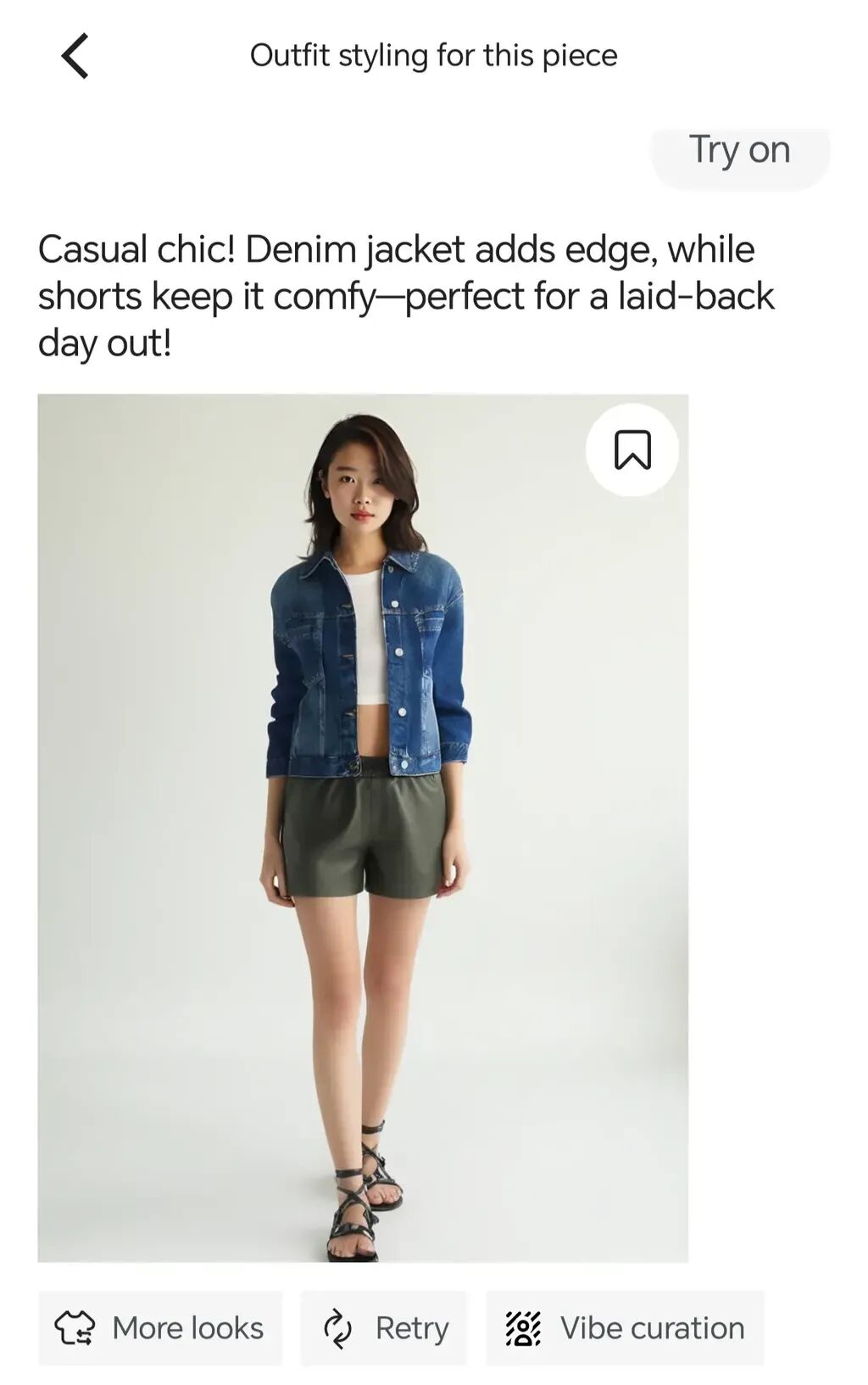
Gensmo's AI image recognition technology itself is nothing new, but when AI recognition capability merges with AI styling know-how, it can solve a very practical problem: how to style those clothes buried at the bottom of your closet.
For example, a user has a pair of green leather pants they've always wanted to try, but felt too flashy and never dared wear out. They can upload them to Gensmo, which will provide multiple daily outfit options for selection.
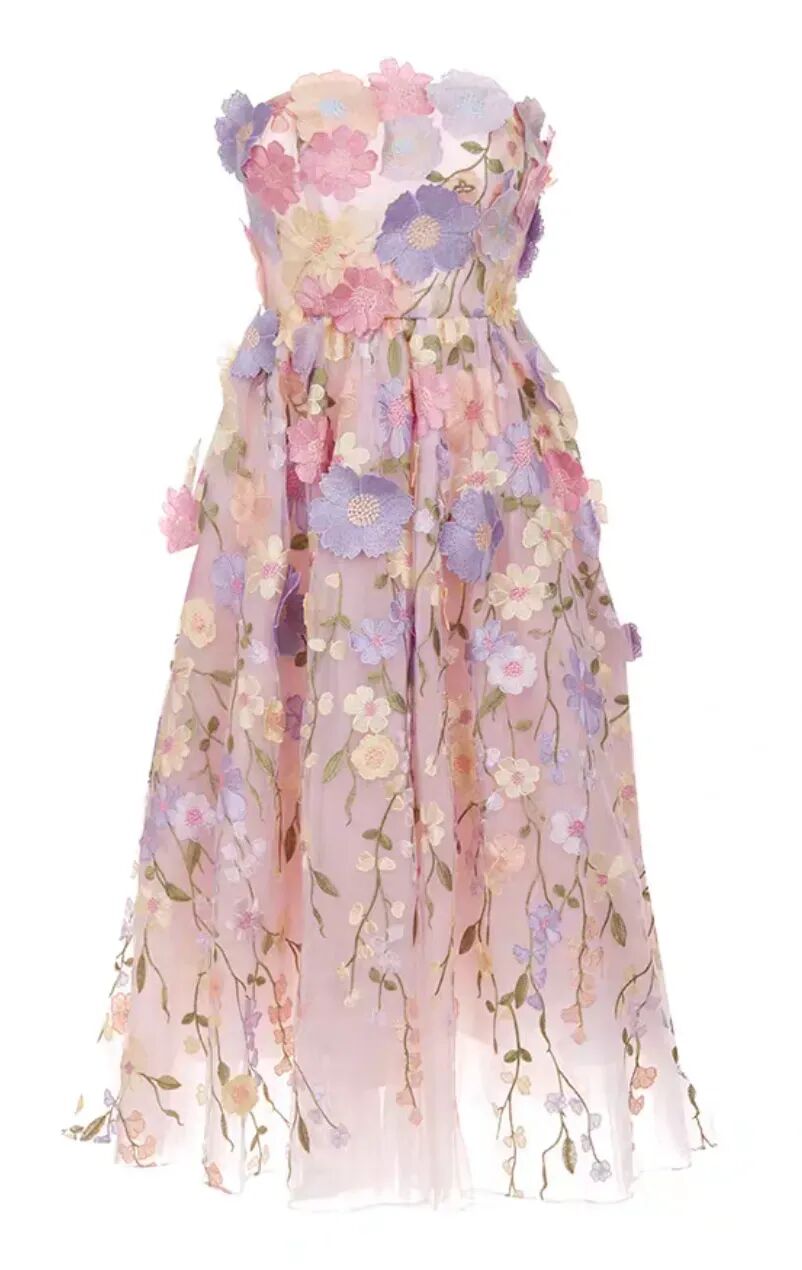
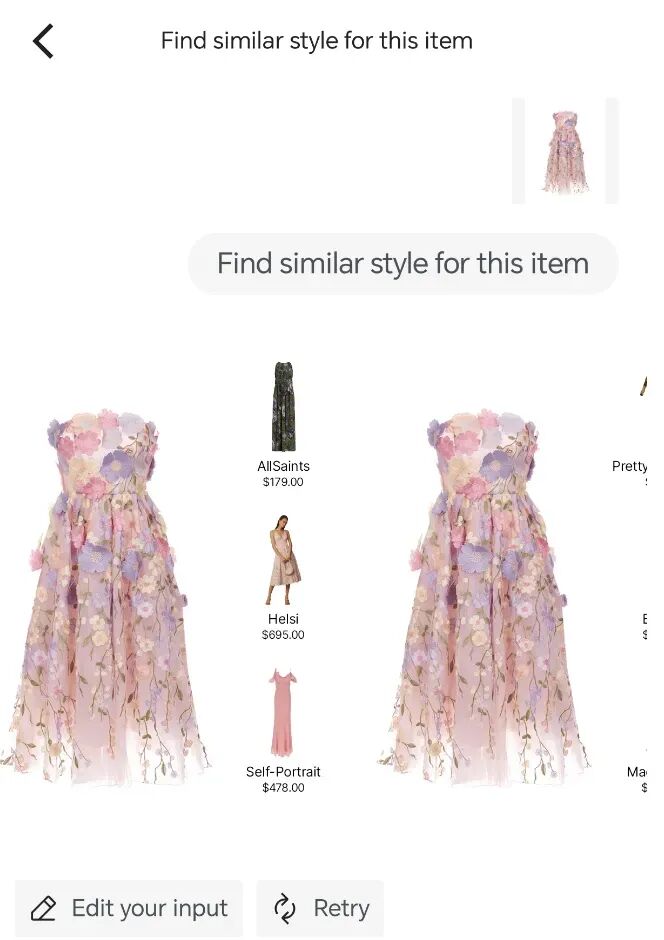
For users who enjoy online shopping, Gensmo's AI recognition has another great use: finding affordable alternatives and completing the look with one click.
For example, if I see a ¥3,000 dress on Taobao, I can try finding a similar cheaper version on Gensmo. When it finds similar items, I can continue using Gensmo for styling.
Taobao image
Gensmo product image
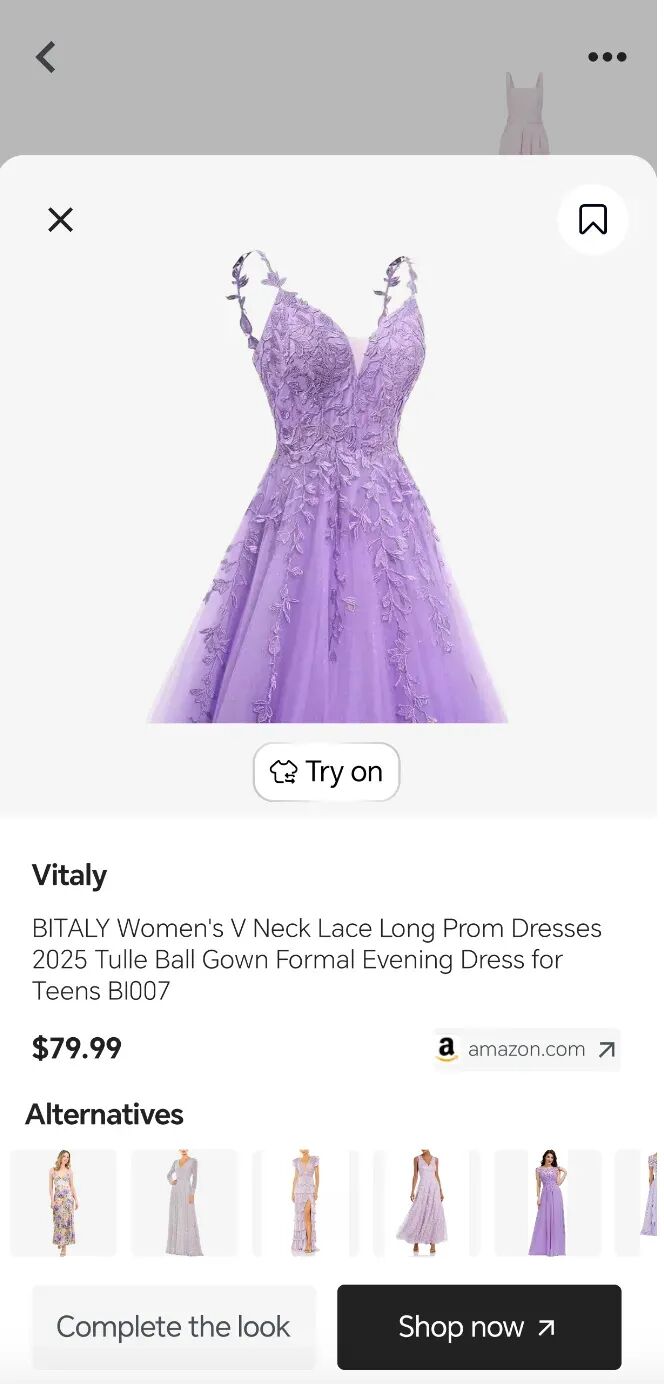
For example, I had Gensmo find me a purple dress, then "Complete the look," followed by real-time virtual try-on — the entire selection process forms a closed loop:
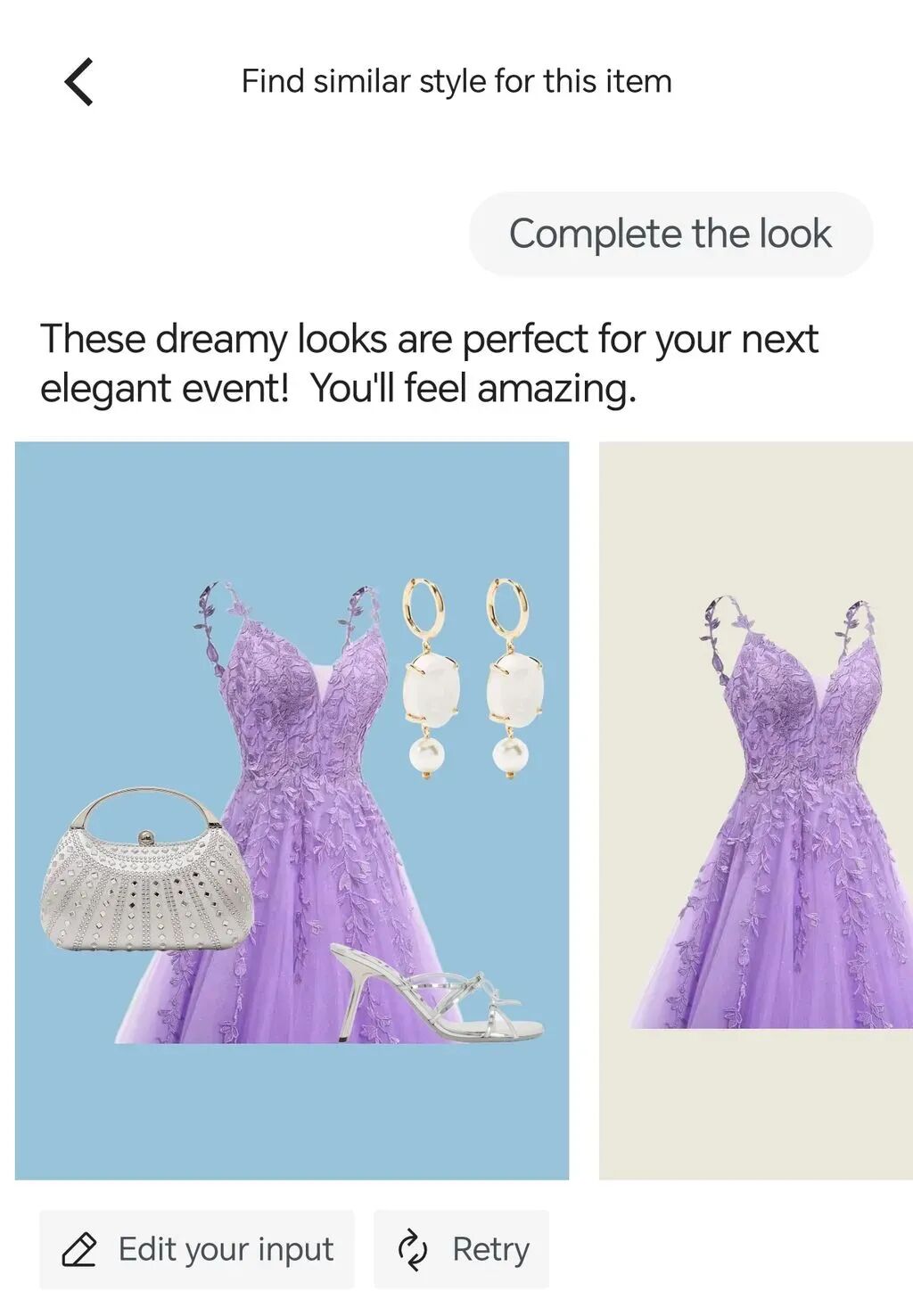
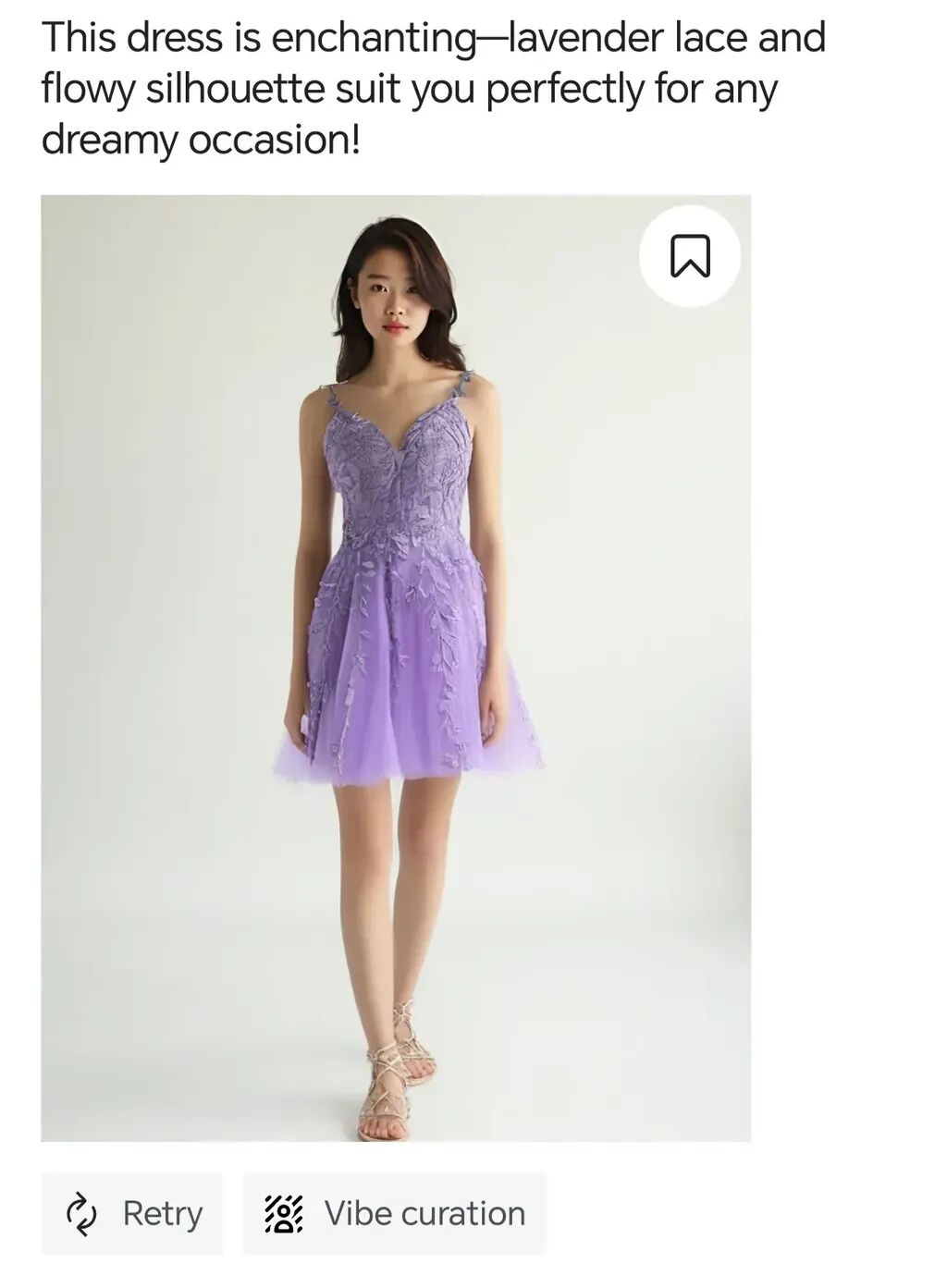
Overseas users have found even more creative ways to play with Gensmo's AI recognition.
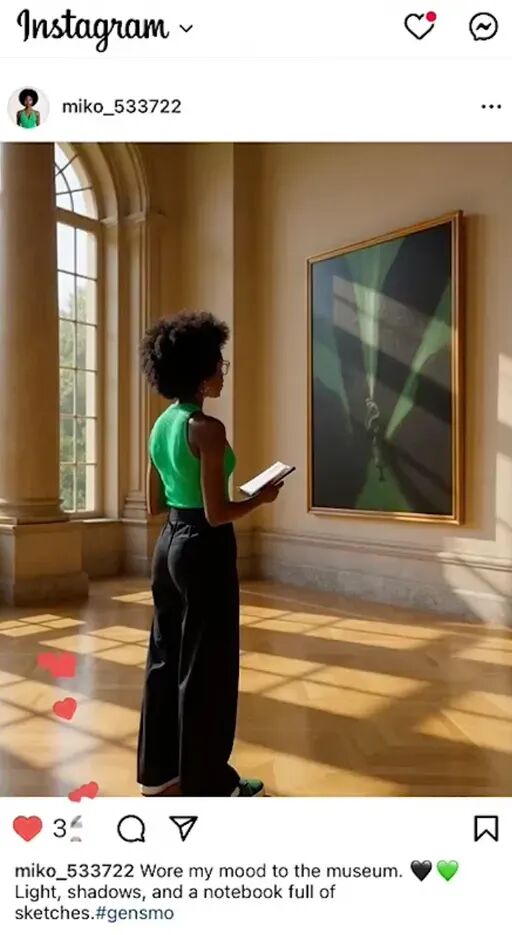
For example: "wearing" a Monet painting. This is obviously very "social media friendly." We can have Gensmo recognize a Monet painting, then find corresponding style outfits.
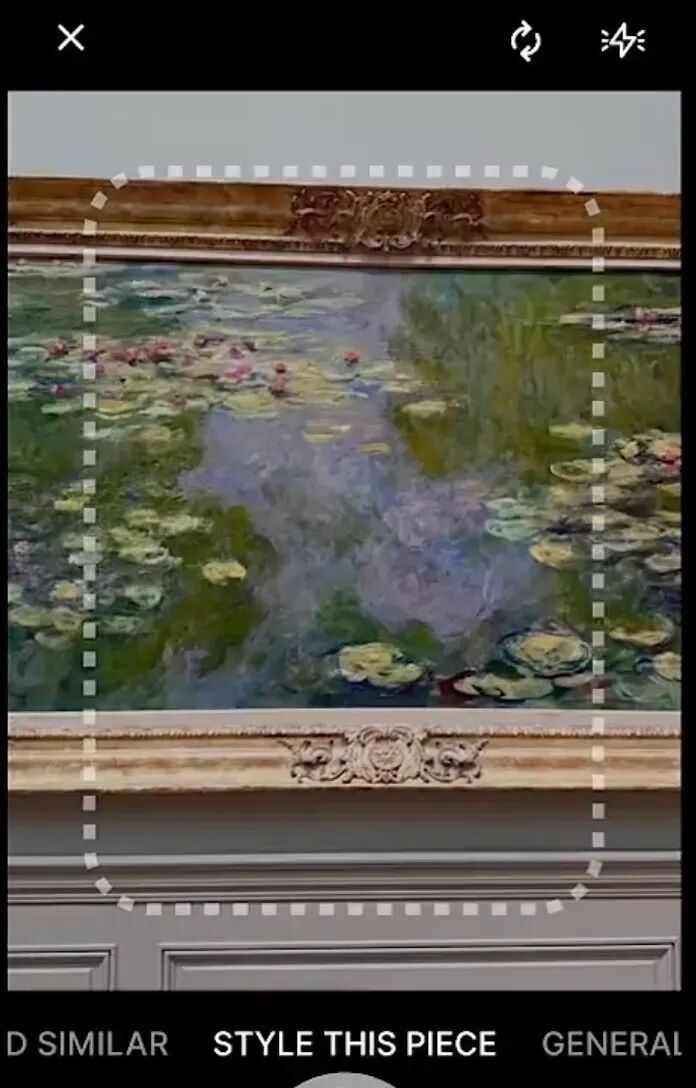
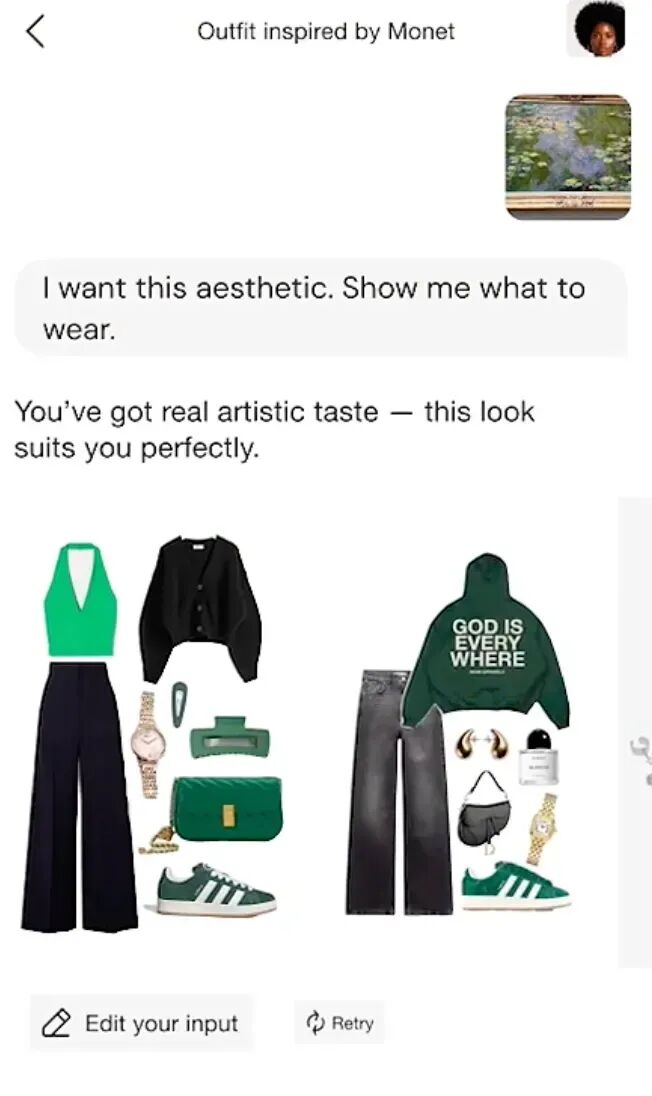
After trying on, swap the scene, and you can share to social platforms with one click — a viral post completed in under 5 minutes.


"Seeding"-style inspiration community
Gensmo's interface design adopts a seeding community model rather than a conventional e-commerce platform. In the same track, products like Doji and Alta lean more toward "AI try-on" in terms of product attributes, with weaker community elements.
In the main feed, each piece of content appears in "note" form:
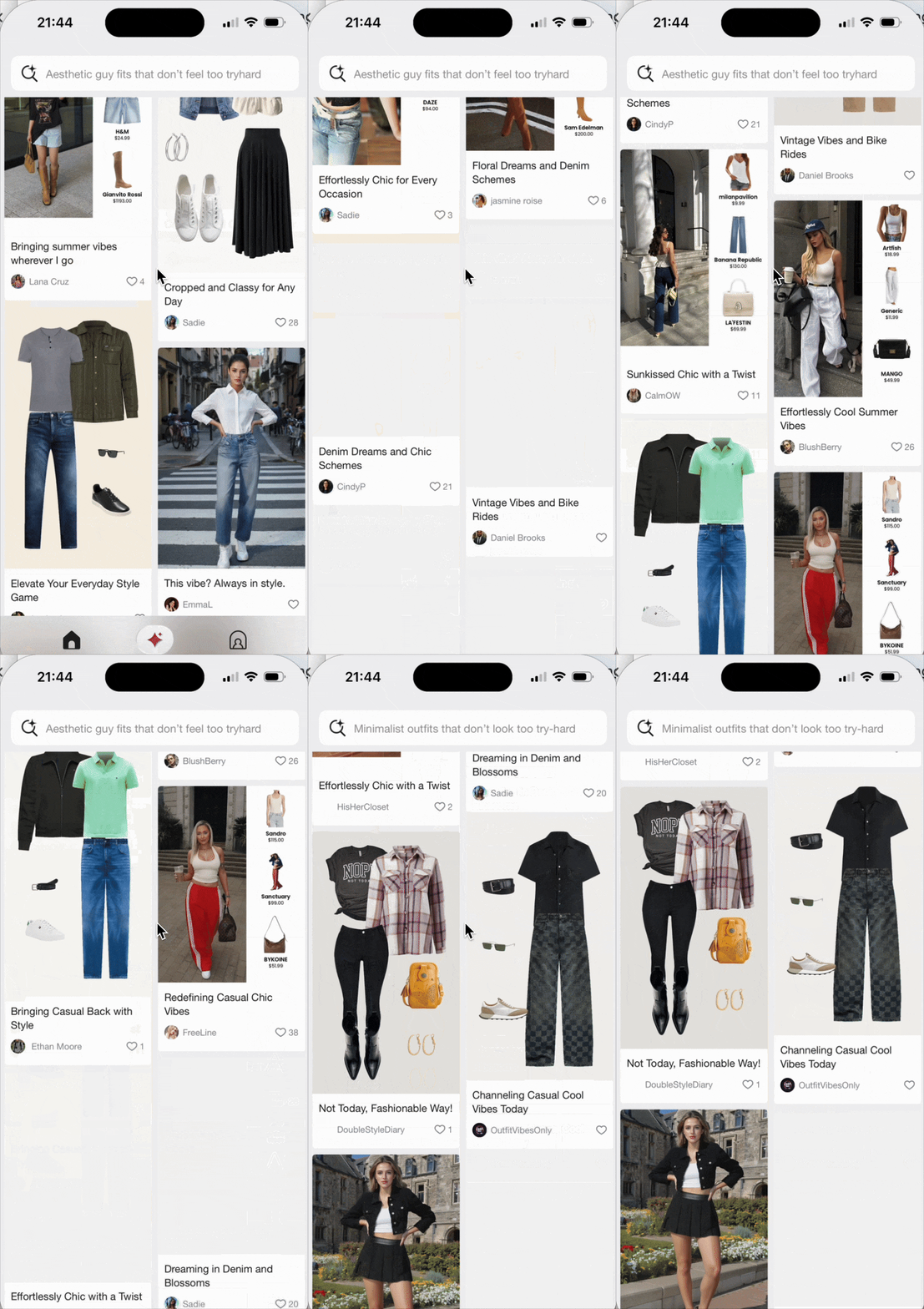
In this "seeding" community, Gensmo doesn't directly provide purchase options, but connects with e-commerce platforms.
The overall interaction is smooth and clean. For example, in the outfit note interface, each item can be clicked to enter the purchase page:
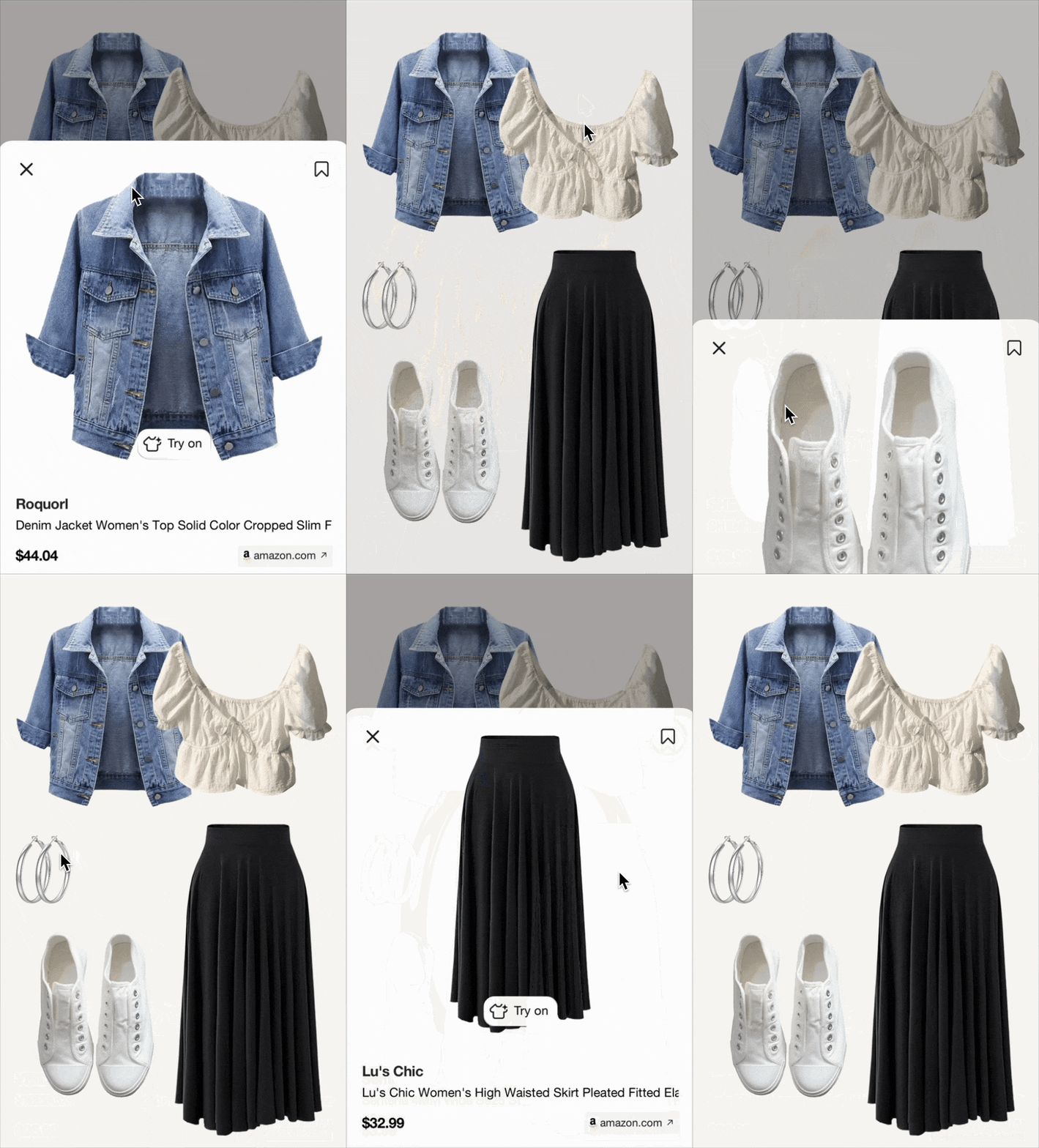
After satisfactory try-on, you can click to jump to Amazon, MODESENS, or FARFETCH to complete purchase with one click.
The product's entire basic operation flow forms a closed loop: Search → Product → Jump to merchant to place order.
More ways to play
Gensmo doesn't just focus on users' outfits — it also generates lifestyle inspiration based on temperament and preferences.
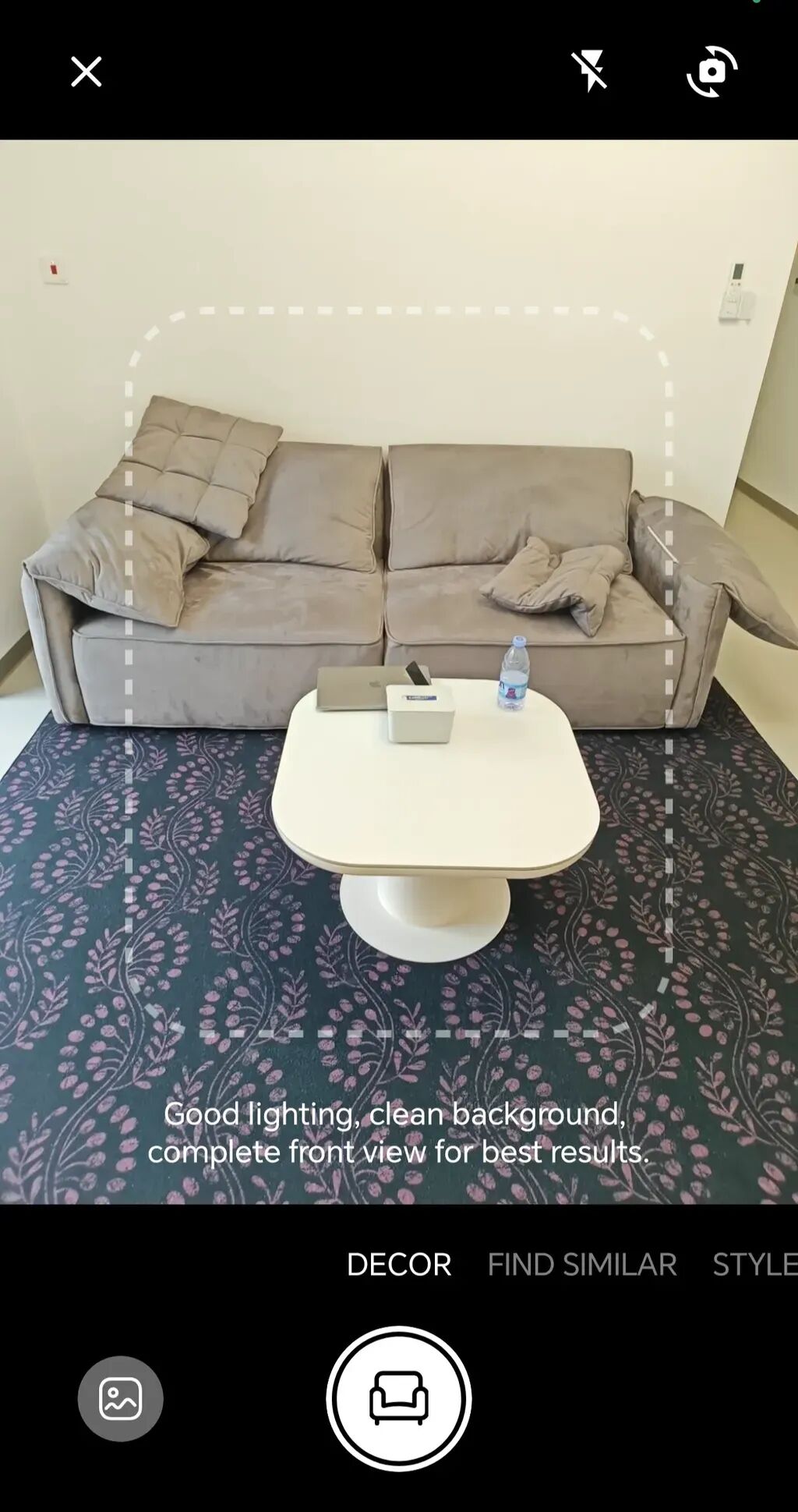
For example, Gensmo now supports uploading home photos to provide renovation proposals. With just one furniture image, it will analyze the scene and recommend complete sets of rugs, sofas, coffee tables, throw pillows, even potted plants:
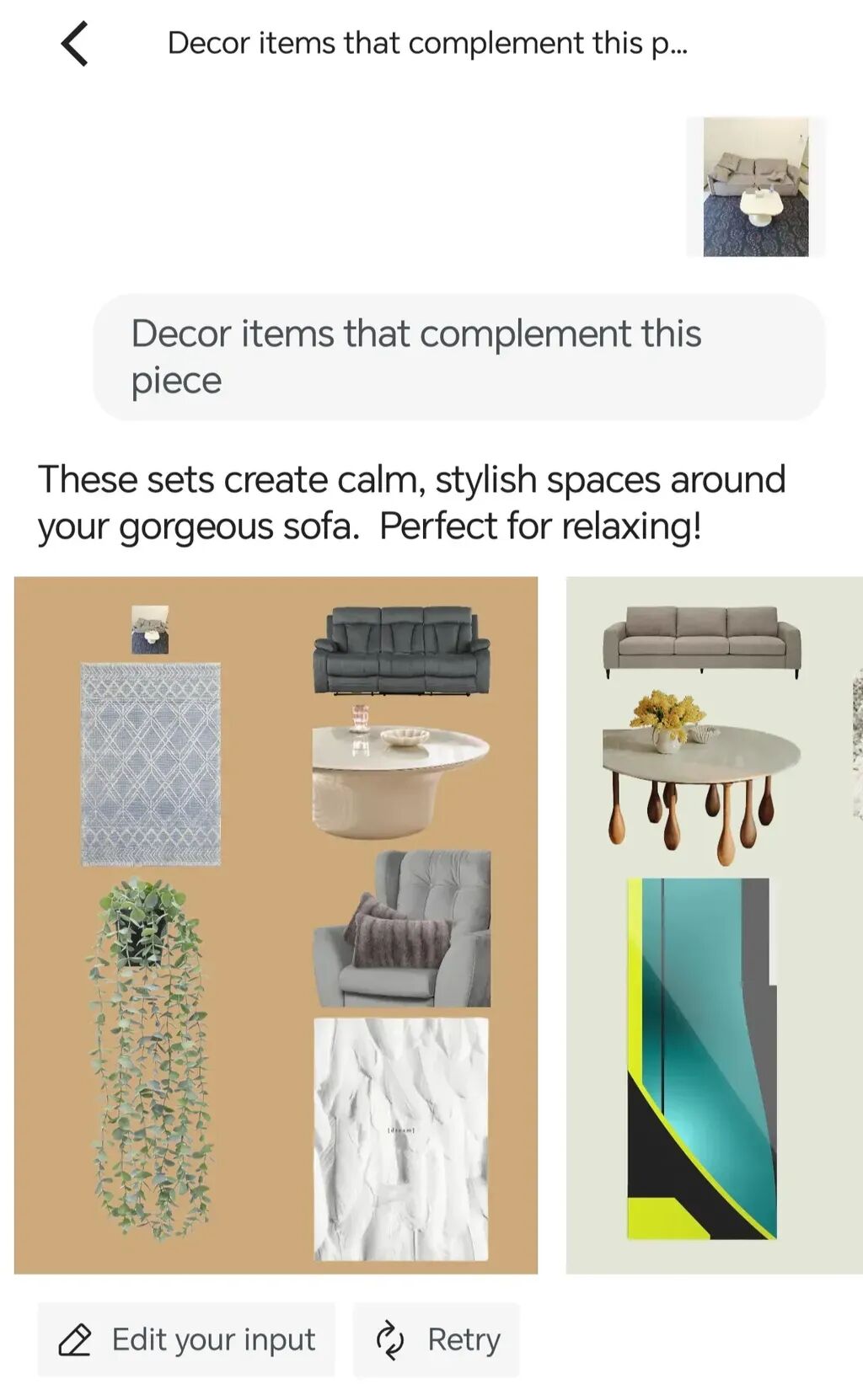
Beyond these relatively "serious" features, Gensmo is also quite skilled at social media operations — for example, they love encouraging users to do something "creative":
Like designing outfits for Donald Trump's child:

X creator @SarahAnnabels
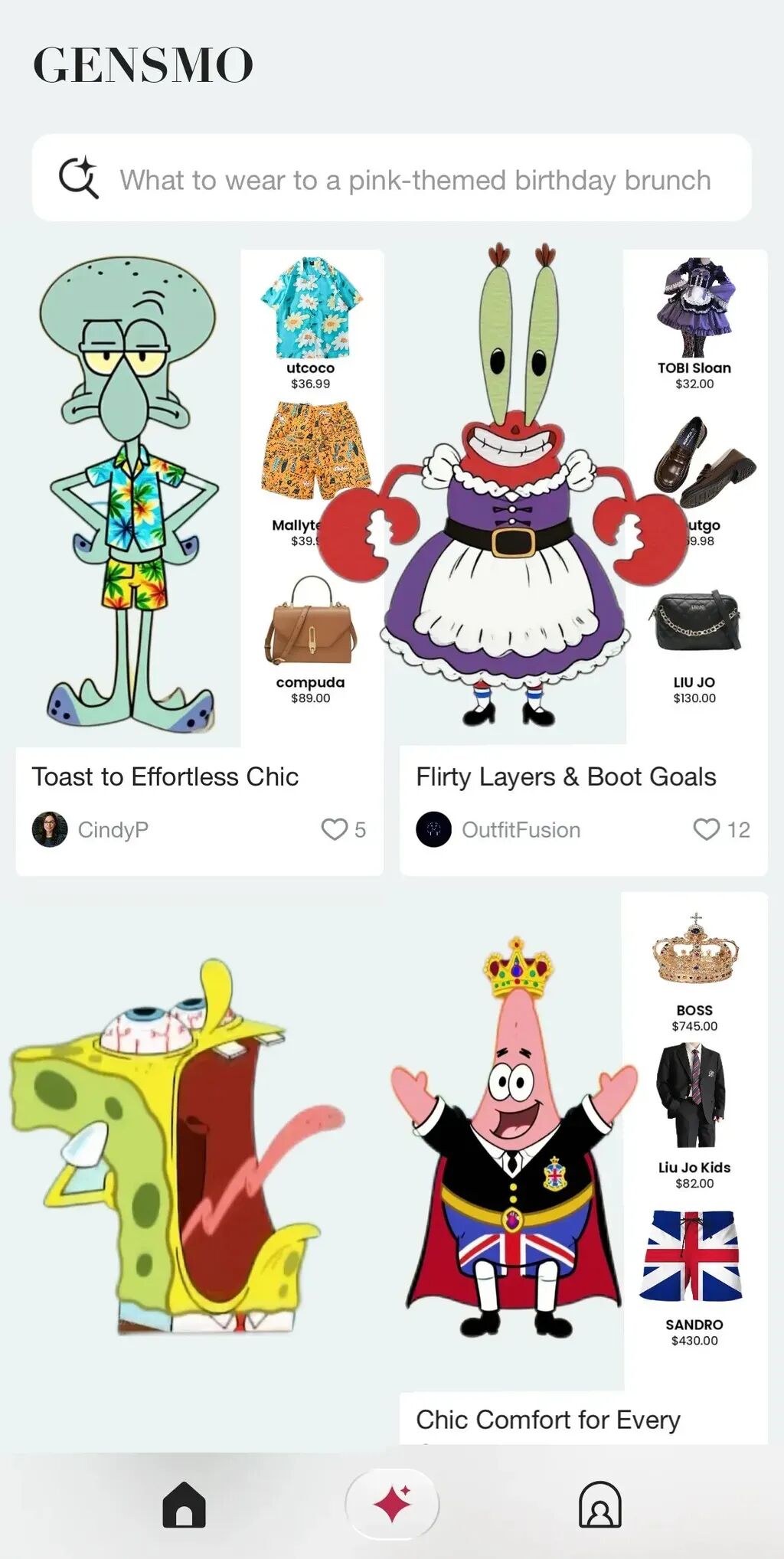
Or another example: X creator @allen_lattimer used the "find similar" function to locate celebrity clothing lookalikes, creating a SpongeBob matching outfit:
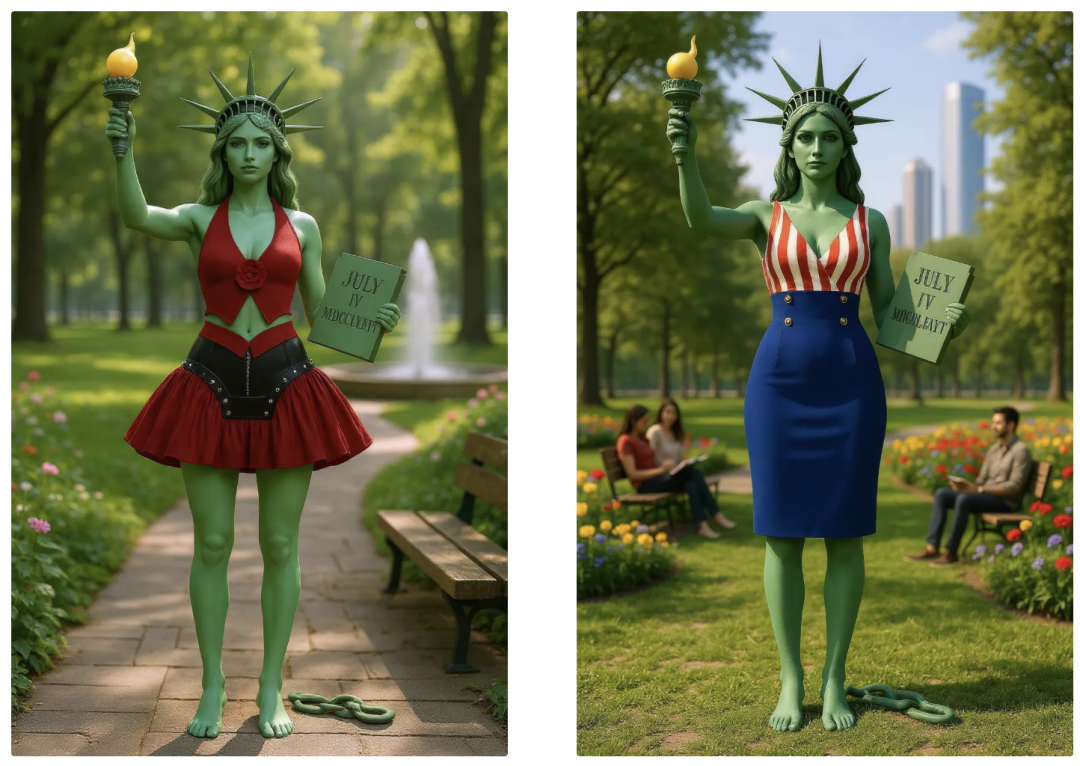
And Gensmo's official "favorite" — the Statue of Liberty outfit series:
Not long ago, after Anna Wintour stepped down as Vogue's editor-in-chief after 37 years, Gensmo reposted this news with the comment:
"A chapter in fashion history closes. For decades, taste has been top-down. In the AI era, taste is collaborative, personalized, and diverse. Gensmo is not here to replace fashion editors — it is here to give everyone their own fashion editor."
This probably means Gensmo's goal is: fashion democratization.
Although this young product still has many features to refine, based on its current performance, using AI to build a fashion community where everyone in the community can enjoy fashion — this is something that may be achievable.
🚥
An OpenAI product lead, formerly Shopify's AI director, once shared insights on building AI products, of which the most thought-provoking point was:
Discover and identify those tedious, high-friction workflows.
The focus here is that users typically don't care whether they're using GPT-4 or GPT-99 — they only care which "tedious and annoying" things have been systematically simplified.
Pure virtual try-on is just one user pain point among many, while a complete AI fashion community is what addresses these "tedious, high-friction workflows."
Deep in users' hearts, the hidden need is not "let me try on clothes," but rather — let me enjoy the process of discovering beauty and creating it.