Yunqi Capital Searches for "Post-'98" AI Founders: Faster, Lighter, More AI-Native

Yunqi Capital set aside a dedicated fund, targeting AI founders born after 1998.
Yunqi Capital is putting up RMB 100 million in dedicated capital, with a clear target: AI founders born in 1998 or later.
👦🏻 Interview: Koji
🥷 Editor: Belulo
🧑🎨 Layout: NCon

In 2025, China's AI venture capital scene is loud and divided. As foundation models evolve, capital and entrepreneurs alike are flooding into the application layer, trying to find the next super-entrance in this technological wave.
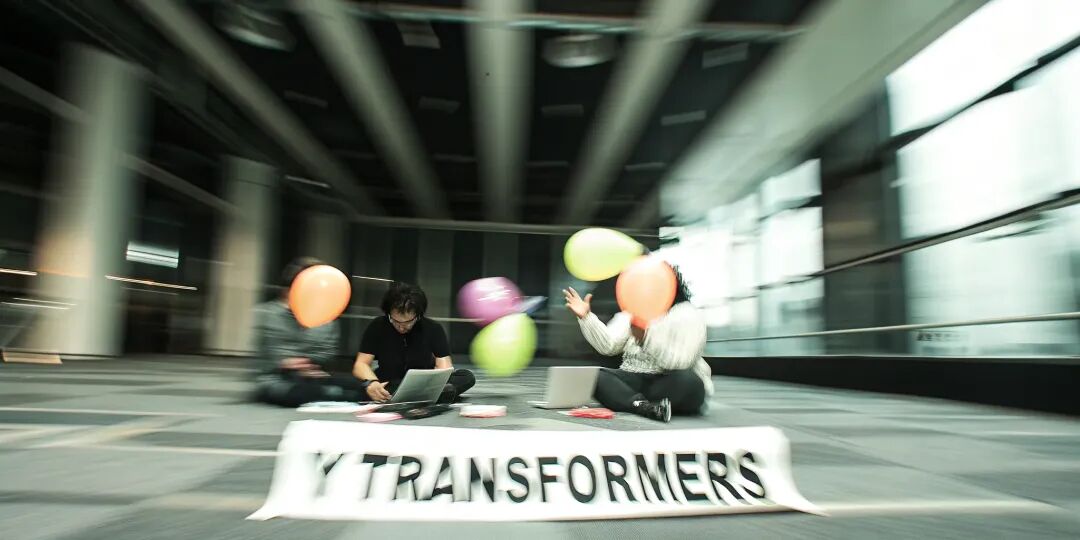
At a moment when every VC is shouting "All in AI," Yunqi Capital announced a notably specific move: the launch of the "Y Transformers" program. The program commits RMB 100 million in dedicated capital, explicitly targeting young AI entrepreneurs born in 1998 or later, with promises of fast decisions, founder-friendly terms, and a suite of early-stage resources.
What exactly is the Y Transformers program? Why should entrepreneurs pay attention? And why target the post-'98 generation? With these questions in mind, Crossing sat down with Linda, Managing Director at Yunqi Capital, to understand the logic and value judgments behind Y Transformers.
We've also appended the full program details at the end of this interview for interested founders.
Y Transformers: To the New Generation of Changemakers
👦🏻 Koji (Founder, Crossing)
First, pitch the Y Transformers program to AI founders for us?
👩🏻 Linda (Managing Director, Yunqi Capital)
Y Transformers is a dedicated investment initiative from Yunqi specifically for post-'98 AI entrepreneurs. We're bringing RMB 100 million in real capital, plus a practical "startup toolkit" covering compute, office space, and other essentials for getting off the ground — to find high-potential young founders on the AI path.
Put simply: if you're working on something cool and AI-related, we want Yunqi to be the first one standing beside you.
👦🏻 Koji
The Y Transformers budget is RMB 100 million. How many projects do you plan to invest in, and over what timeframe?
👩🏻 Linda
Roughly 20-25 projects, to be deployed over the next 6-12 months.
👦🏻 Koji
Every VC is aggressively investing in AI this year. In this moment of "total mobilization," why did Yunqi feel the need to launch a dedicated program for young entrepreneurs? How does it differ from Yunqi's main fund making direct investments?
👩🏻 Linda
It's true — almost every VC is talking about AI today. But zoom in and you'll find most are still clustering around "higher-certainty" bets: the model is already working, the commercial path is relatively clear, then they place their chips.
Through extensive contact with entrepreneurs in their early twenties, we've found that large language models have dramatically lowered technical barriers. They're the most active and action-oriented group in this AI entrepreneurship wave. They don't carry much traditional baggage; they naturally have an AI-first mindset. Building with AI is almost an "instinctive response" for them.
This kind of experimentation also energizes our own team. Our younger investment colleagues naturally understand the lifestyles and worlds of their peers, creating stronger resonance with these founders. We also hope Y Transformers creates more growth opportunities for this new generation of investors.
From a market perspective, AI applications have been accelerating since last year. Both startups and tech giants are exploring application innovation atop increasingly cost-effective base model capabilities; on the demand side, more young users are willing to pay for AI applications. This means it's genuinely a good moment for young entrepreneurs to enter.
To be clear: Y Transformers isn't a completely new fund, but an extension and externalization of our existing philosophy. Yunqi's overarching logic has always emphasized finding the intersection between macro industry trends and team advantages. Y Transformers puts more emphasis on the "people" dimension: we want to support young, high-potential changemakers at the idea stage. So we also want this program to make our stance unmistakably clear:
We believe in the possibility of young people creating magic in AI.
👦🏻 Koji
The name "Y Transformers" is interesting — any special meaning behind it?
👩🏻 Linda
Y is the first letter of Yunqi's English name, also the first letter of Young, and a homophone for Why (representing curiosity). Transformers, on one hand, pays homage to the core AI architecture Transformer; on the other, it signifies transformation and reshaping.
The most direct reference — the Transformers are called Transformers.
Put together, the message is: we hope to join forces with a new generation of AI changemakers, turning curiosity and action into world-changing power.
👦🏻 Koji
What kind of AI entrepreneurs do you most want Y Transformers to invest in?
👩🏻 Linda
We most want to invest in entrepreneurs who are "fast," "light," and born in 1998 or later.
Fast — reflected in their execution speed and learning curve. With large models lowering technical barriers, they can land ideas in the shortest time and iterate rapidly.
Light — meaning no path dependency, not much historical baggage. They're willing to build teams, develop, and collaborate in new ways.
Post-'98 isn't just an age bracket, but a generational trait. They grew up in an environment where AI was already everywhere — true "AI natives" who naturally treat AI as a productivity tool. This generation of entrepreneurs is defining AI, not adapting to AI.
Fast, Light, Post-'98: The First Check, The First Partners
👦🏻 Koji
Y Transformers mentions "2-3 week fast decisions per project." What specific process redesigns or delegation structures did you implement to achieve this speed?
👩🏻 Linda
Under the Y Transformers mechanism, internal discussion and decision-making processes are significantly shortened. Broadly speaking, investing usually requires simultaneous judgment across two dimensions: "the person" and "the thing" — is the person reliable, has the thing shown traction?
But the post-'98 entrepreneurs we focus on often don't have clear product form yet, sometimes just an idea or initial demo. In these cases, our core judgment focuses on the person: do they have an AI-first mindset, are they exceptionally action-oriented, are they someone we're willing to bet on? Combined with our team's long-term research and investment accumulation, we can immediately enter validation mode when encountering new teams and vertical directions, rather than starting from zero.
So the process can be fast. But this doesn't mean quality control is relaxed. Fund-level gatekeeping remains; we've simply front-loaded and focused the core decision logic, allowing the team to give clear answers within 2-3 weeks.
👦🏻 Koji
Does this mean compromises on risk management?
👩🏻 Linda
Internally, we do allow certain flexibility: for Y Transformers projects, the process is faster and lighter, but boundaries remain on check size, partner consensus, and other dimensions to ensure fundamental risk management.
Most importantly, our core judgment always returns to "the person." If we identify a young entrepreneur with the traits we value, we're willing to give sufficient space and trust; on risk management, we balance through portfolio construction, stage distribution, and overall fund allocation.
👦🏻 Koji
What's the profile of Yunqi team members participating in Y Transformers? Are their ages and backgrounds close to the entrepreneurial generation?
👩🏻 Linda
The core investment team members participating this time are mostly post-'90s and post-'95s, with backgrounds spanning top domestic and international STEM programs, as well as experience in overseas markets and product roles. Like their post-'98 founder counterparts, their social development coincided with the rapid emergence of large models — a generation that quickly embraced change, naturally understands working with AI tools, and can more easily grasp entrepreneurs' thinking in a peer-to-peer way.
So this isn't just an investor-investee relationship, more like peer-to-peer, same-generation dialogue.
👦🏻 Koji
Another highly attractive point for founders is "light": more founder-friendly investment terms. What specifically does this entail? And why do you think this matters so much for young entrepreneurs today?
👩🏻 Linda
By "light" we mean investment terms that maximize these entrepreneurs' room to experiment and explore freely.
On one hand, many post-'98 founders may have just left school or the lab, and need this space. On the other, we've observed that in the current environment, many entrepreneurs are squeezed by excessive term pressure, diverting energy that should go to product and users.
So without violating the fund's core processes and investment discipline, we take "innovation priority" as our guiding principle, making friendly designs across term structure, project control rights, and multiple other dimensions.
👦🏻 Koji
Can you give examples — SAFE, valuation anchoring, board seat arrangements?
👩🏻 Linda
Term design still depends on the specific project; after all, as a fund we have basic risk control requirements. But the core philosophy is clear: minimize constraints while balancing risk control, so entrepreneurs can travel light.
On valuation, for example, we won't demand premature locking of unreasonable anchors, instead leaving room for teams to experiment quickly on product and users. Overall: on the foundation of reasonable fund risk control, let entrepreneurs devote their precious time and energy to rapid product iteration and user feedback.
👦🏻 Koji
Are there clear "won't dos" — no premature ratchets, no heavy liquidation preferences?
👩🏻 Linda
Yes, those points align with the core philosophy I just mentioned. No premature performance ratchets, no liquidation preferences — these help prevent young entrepreneurs from carrying excessive burdens from day one. What we want is for these young founders to focus on rapid iteration of product and users, rather than spending too much time and energy on term negotiation. Real value comes from building things together.
👦🏻 Koji
I noticed you specifically proposed "post-'98" — it's very precise, more specific than the common "post-'95" or "Gen Z." Why specifically "post-'98"?
👩🏻 Linda
Because the growth trajectory, or career trajectory, of the post-'98 cohort happens to coincide with the key inflection points of this Gen-AI wave.
In 2017, the Transformer architecture was proposed, fundamentally changing the deep learning paradigm; in 2020, GPT-3 burst onto the scene, and large models truly entered public consciousness. At that time, post-'98s were in university or just graduating. In other words, the stage where they began independent study and work was almost synchronized with AI's paradigm leap.
This means from day one of entering society, they've lived in an "AI-first" environment, without needing to "turn around and learn AI" like the previous generation of entrepreneurs. They're the generation that naturally treats AI as a productivity tool. We hope this label emphasizes that what we most believe in is this generation of true "AI natives."
👦🏻 Koji
What post-'98 teams have you already met with (or invested in)? How do their communication styles and product thinking differ from previous generations?
👩🏻 Linda
We've observed several distinctive traits:
They have sharp insight in emerging fields, often driven by interest to explore to the extreme; strong hands-on ability, quickly turning ideas into prototypes.
They think out of the box, unconventional and bold. We've also observed that new-generation AI entrepreneurs prefer smaller teams or even solo founder structures, using "AI employees" to the maximum.
Meanwhile, as natives of social media and AI, they naturally understand how to leverage rich communication channels and tools to get their advantages seen faster and more widely.
👦🏻 Koji
Beyond the generational characteristic of "post-'98," when evaluating a very early-stage AI project, what founder traits do you value most?
👩🏻 Linda
When evaluating very early-stage AI projects, what we value most is actually the founder's idea and traits.
With technical barriers rapidly lowering today, "how to do it" is no longer the hardest part — "what to do" is the watershed. What truly matters is whether the founder can propose a unique idea, find a direction imaginative enough yet pain-point-accurate, and act fast.
So we focus on three things:
- AI-first mindset: instinctively treating AI as a toolbox and way of thinking, not just an additional skill.
- Creativity and obsession: the passion and endurance to continuously refine a direction.
- Rapid experimentation and action: turning ideas into prototypes in short time, iterating constantly.
👦🏻 Koji
Any "definitely won't invest" traits?
👩🏻 Linda
We don't require founders to have mature products or clear profit models from the start, but there are several traits we "definitely won't invest" in:
Speculative mindset: just riding the hype wave, lacking genuine technical or product thinking;
Lack of execution: having ideas but never landing them;
No long-term orientation: easily pivoting when encountering difficulties, unable to persist in a roughly correct direction.
Yunqi: An Institution and Its Value Proposition
👦🏻 Koji
In this year's AI application entrepreneurship boom driven by DeepSeek and Manus, what specific opportunity points do you see that are overlooked or drowned out by mainstream voices?
👩🏻 Linda
Mainstream discussion may focus more on general Agents; beyond the spotlight, here are a few opportunity areas we see:
AI Infra below the waterline: policy-driven + compute demand + enterprise spending driving AI infrastructure growth opportunities;
Deep waters of the application layer: not building the next "general assistant," but going deep in specific vertical industries to build AI-native industry-specific workflows;
Organizational restructuring brought by Agents: many treat Agents as tools, but the bigger opportunity may be that they will change how enterprises operate, even catalyze entirely new organizational forms.
👦🏻 Koji
How does Yunqi view the two paths of AI application software versus AI-native hardware? For Y Transformers, will you lean more toward one type of entrepreneur?
👩🏻 Linda
We believe AI application software and AI-native hardware are complementary paths, not in opposition.
With technical barriers rapidly lowering today, the software end may be more suitable for young entrepreneurs to rapidly experiment with small teams; the hardware end requires longer cycles and heavier investment, because beyond technical feasibility and PMF, supply chain capability is often a key determinant of whether hardware can succeed.
But whether software or hardware, returning to the source, "product definition" is the starting point that makes things different.
For Y Transformers, we won't artificially limit ourselves. We care more about the entrepreneur's mindset and unique ideas: if in software, we want to see them break out of homogenization, truly integrating AI into workflows and user scenarios; if in hardware, we want them to rethink products with AI-first logic, not simply layering AI onto traditional hardware.
👦🏻 Koji
Which of Yunqi's past investments align with the Y Transformers ethos?
👩🏻 Linda
Over the past decade-plus, quite a few cases have resonated with the Y Transformers ethos. Two examples:
Take Manycore Tech. In 2013, when the founding team had only a demo, with product form and business model both undefined, our founding partner saw their potential in home design and became their first institutional investor. Today, Manycore has not only grown into a leading home design intelligence company, but also opened new opportunities as an "embodied intelligence data training ground" in the embodied intelligence wave, and is approaching IPO.
Another example is MiniMax. When we met them in 2021, GPT hadn't broken into mainstream consciousness, and "large model entrepreneurship" was still a non-consensus topic. But the team articulated a clear AGI vision and demonstrated extreme obsession with technology and product. We decided to bet on them then, and as it turned out, they quickly grew into one of the most representative foundation model companies domestically and globally, and among the AI startups with the deepest commercialization.
👦🏻 Koji
In your view, what do young AI entrepreneurs need most right now? Compared to Yunqi's early investments in Xiaohuang Huang of Manycore and Junjie Yan of MiniMax, what similarities and differences do you see in today's entrepreneurs in terms of state and needs?
👩🏻 Linda
In our view, young AI entrepreneurs today and Manycore a decade ago, MiniMax a few years ago, share one biggest commonality: they all have that pioneering spirit. Today's post-'98 founders are similarly carving new possibilities in their own way.
But the differences are also clear:
First, they face more intense competition — in an "everyone's doing AI" environment, young people today face more crowded playing fields than ever before;
But there's also more room for ideas to land, because large models and open-source tools have lowered barriers, making it easier to turn ideas into products;
They also have a higher starting point for globalization — today's post-'98s naturally have global collaboration and overseas expansion in their DNA;
Plus rhythm and psychological challenges — the pace is faster today, young entrepreneurs need to both experiment rapidly and maintain endurance and steadiness in long-term races.
So we can say, young AI entrepreneurs today can run faster, but the track is more crowded; tools are richer, but differentiation is harder; global opportunities are greater, but challenges are more complex.
👦🏻 Koji
Final question: if an excellent AI entrepreneur receives multiple term sheets simultaneously, what reasons do you hope would lead them to choose Yunqi (and Y Transformers)?
👩🏻 Linda
For Yunqi, over these 11 years one of our most important starting points has been "together." Yunqi's pinyin abbreviation is YQ, which is also the abbreviation for "together" (一起). And over the past 11 years, what we've consistently emphasized with entrepreneurs is doing hard things together.
Under this peer-to-peer relationship, we fully respect entrepreneurs in terms, letting them travel light; on resources you can see our full sincerity, providing tangible support that early-stage portfolio companies need; meanwhile, our "Yunqi partners" across the portfolio span from large models to hardware and multiple other directions, and they will also become partners of Y Transformers, forming a real synergy network.
So if you ask why choose Yunqi, I think the answer is:
Here, what you get isn't just money, but a group of partners who genuinely want to run "together" with you.
Y Transformers is a dedicated initiative launched by Yunqi Capital for a new generation of AI changemakers, focused on supporting early-stage "AI native" entrepreneurs born in 1998 or later. The program is co-launched by Yunqi alongside 10+ long-term partners who have accompanied young entrepreneurs, with a total capital pool of RMB 100 million, to support 25 post-'98 AI entrepreneurial teams over the next 6-12 months.
Y Transformers will provide entrepreneurs with:
- First investment: real early-stage startup capital;
- First resources: covering compute, model APIs, office space, talent recruitment, and other key support;
- First community: a peer network from top VCs, AI entrepreneurs, and industry ecosystems.
Mechanism-wise, it emphasizes "fast, real, comprehensive, light" — decisions within two weeks, real capital, comprehensive resources, founder-friendly terms.
Y Transformers hopes to become the first light for a new generation of AI changemakers, turning question marks into world-changing power together.
Whether you've just launched your project and haven't raised funding yet, or are polishing your demo and fixing bugs — if you're using AI to change the world, we look forward to Y Transformers walking with you.
Scan the QR code below for direct access.
