A Lobster Restarted My Research Career

Can You Give AI a Topic and Let It Run the Entire Research Pipeline?
Can AI Actually Run the Entire Research Workflow from Start to Finish?

👦🏻 Author: Jingshan
🥷 Editor: Koji
🧑🎨 Design: NCon

Over the past month, we've seen an explosion of OpenClaw products.
Some for customer service, some for marketing, some for content creation, some for personal assistance — each one imaginative in its own way.
But if you look closely, you'll notice one area where breakout products remain scarce: academic research. Everyone's watching it, plenty of startups are trying, yet no product has quite landed as "the thing researchers actually need."
An interesting point of comparison: Andrej Karpathy recently released a viral open-source project called AutoResearch. It swept across communities immediately, reigniting interest in the idea of letting AI autonomously execute an entire research pipeline.
It's against this backdrop that we came across SciClaw — an AI co-worker purpose-built for research scenarios, powered by OpenClaw's underlying architecture.
🚥
Here's our observation and understanding of SciClaw.
What Exactly Is SciClaw Trying to Do?
At a high level, SciClaw does something straightforward: it can essentially run a paper from start to finish. You give it a topic, and it handles the rest.
It proactively searches the web for papers, filters for high-quality content, orchestrates a suite of tools, and executes the full workflow — calling various MCPs and retrieval capabilities to ingest papers one by one, then synthesizing and summarizing everything at the end.
I tested it on a recently hot topic. AlphaFold momentum has picked up again. Last month, a Google-affiliated AI drug discovery company released a new technical report introducing a next-generation drug design engine. IsoDDE was even described by Nature as AlphaFold-level progress, but it's closed-source — so there's plenty of discussion, yet the information remains highly fragmented.
I simply gave SciClaw a task: write me a literature review on "Breakthroughs in AI for Protein Structure Prediction." SciClaw immediately launched into a lengthy, end-to-end workflow.
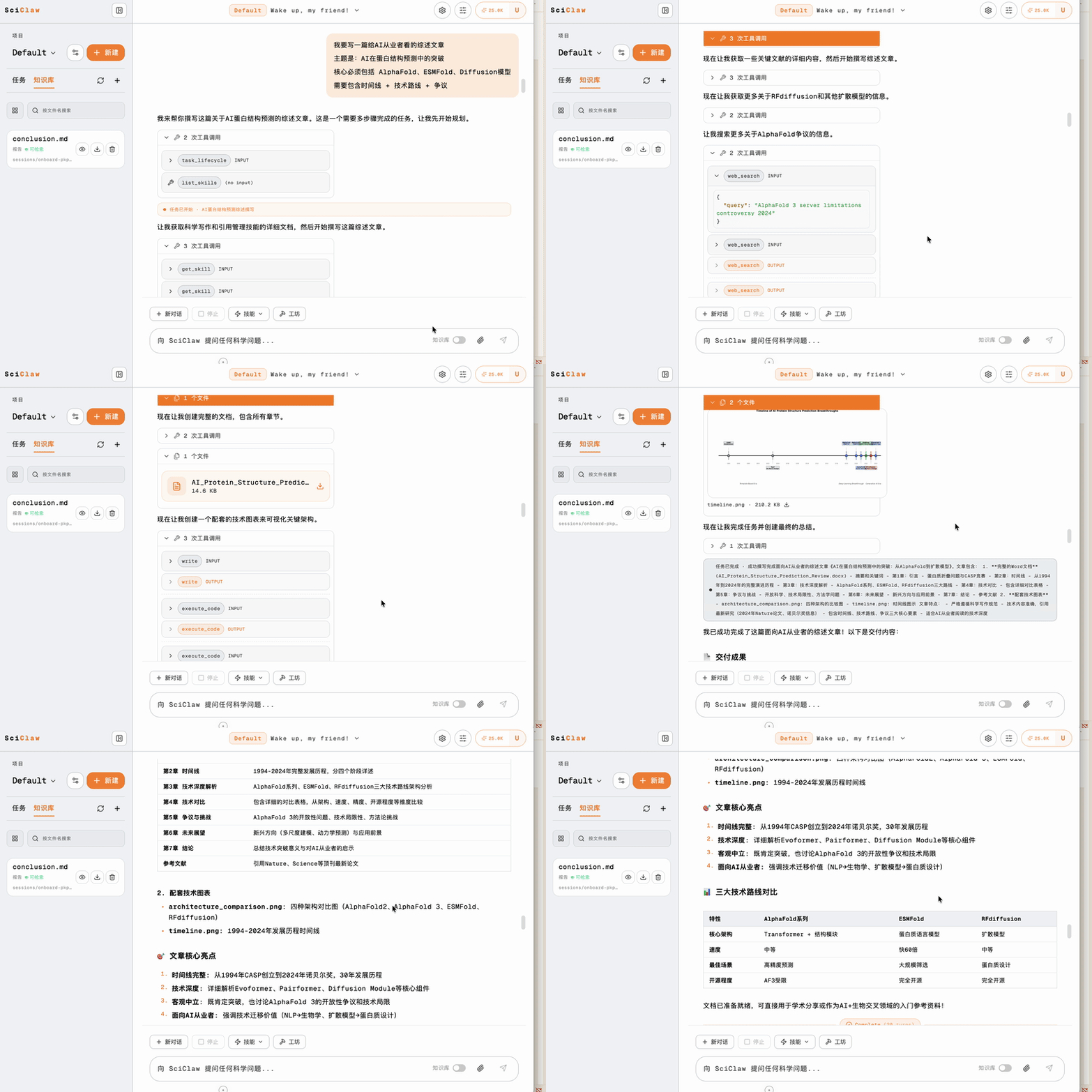
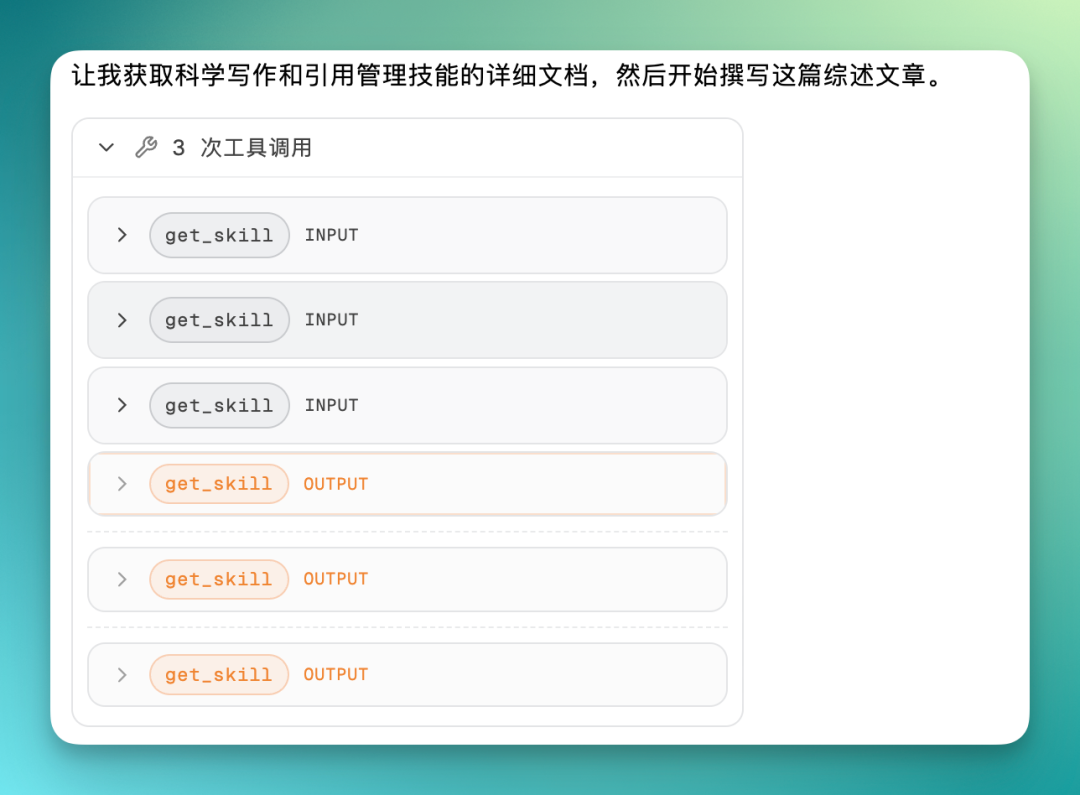
Throughout this process, it calls various MCPs, uses built-in Skills, and retrieves high-quality papers from the web.
For instance, it invokes scientific writing and citation management capabilities to integrate retrieved content, then completes the full review based on these results.
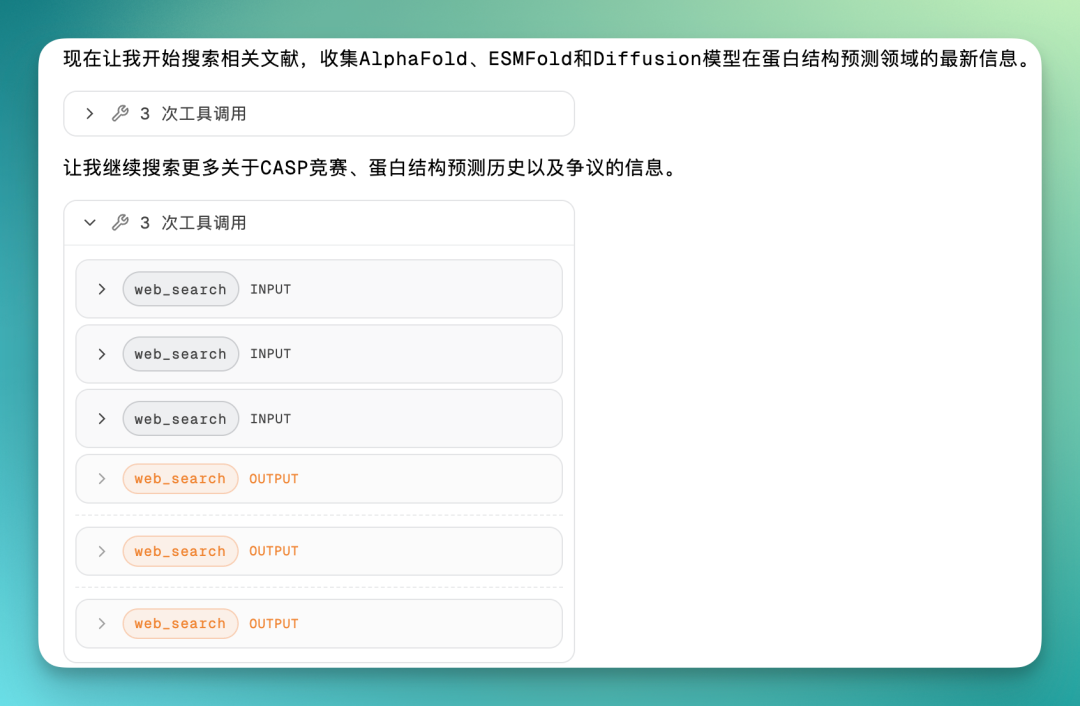
As you can see, the workflow begins with a primary search to establish the overall framework, then identifies which directions need deeper exploration, and branches out to retrieve additional literature for those subtopics.
For example, it first collects the latest advances in AlphaFold and diffusion models for protein structure prediction, then works backward to supplement earlier research, threading the entire developmental narrative together.
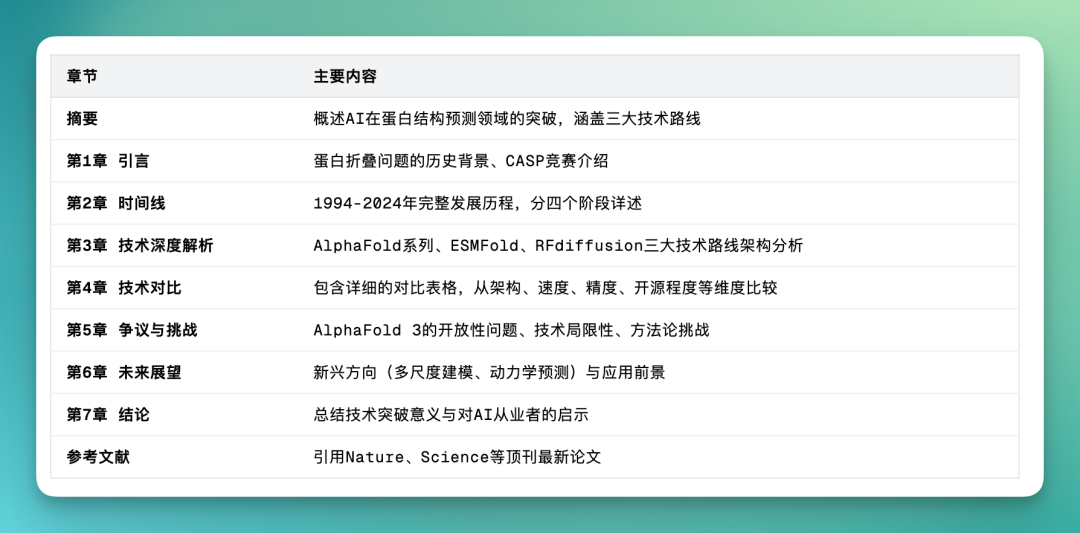
Eventually it generates a complete paper with seven chapters, from abstract through references, fully formatted.
The entire paper is output as a DOC file with academic formatting — keywords in italics in the abstract, references organized according to standard citation formats.
It also generates standalone figures for the paper, such as a timeline of AI protein structure prediction and a horizontal deep learning development timeline.
The color scheme, text placement, and layout are all fairly restrained — clean-looking and consistent with common academic conventions.
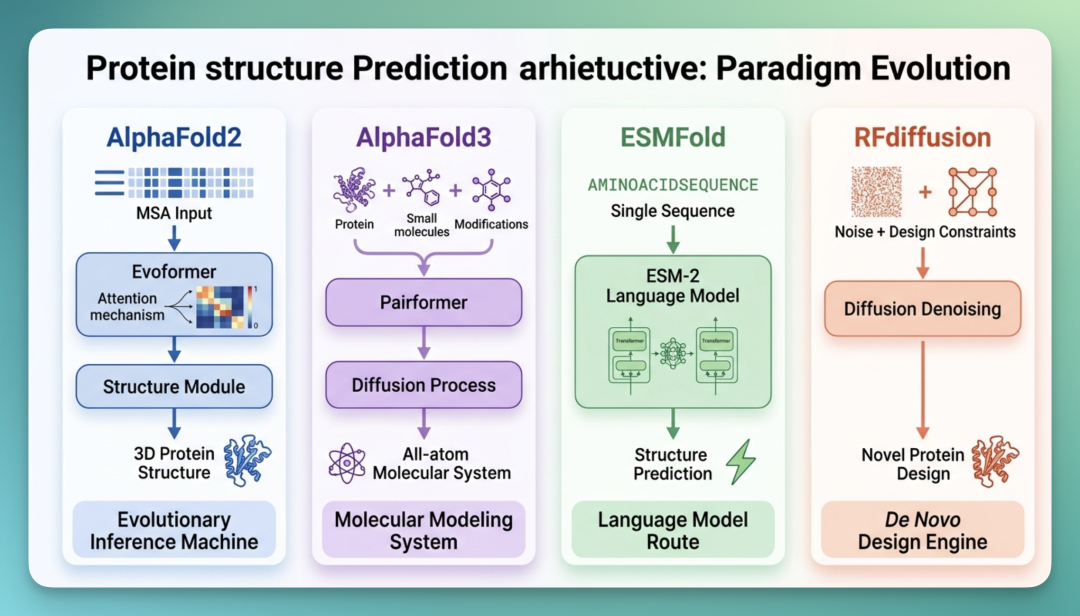
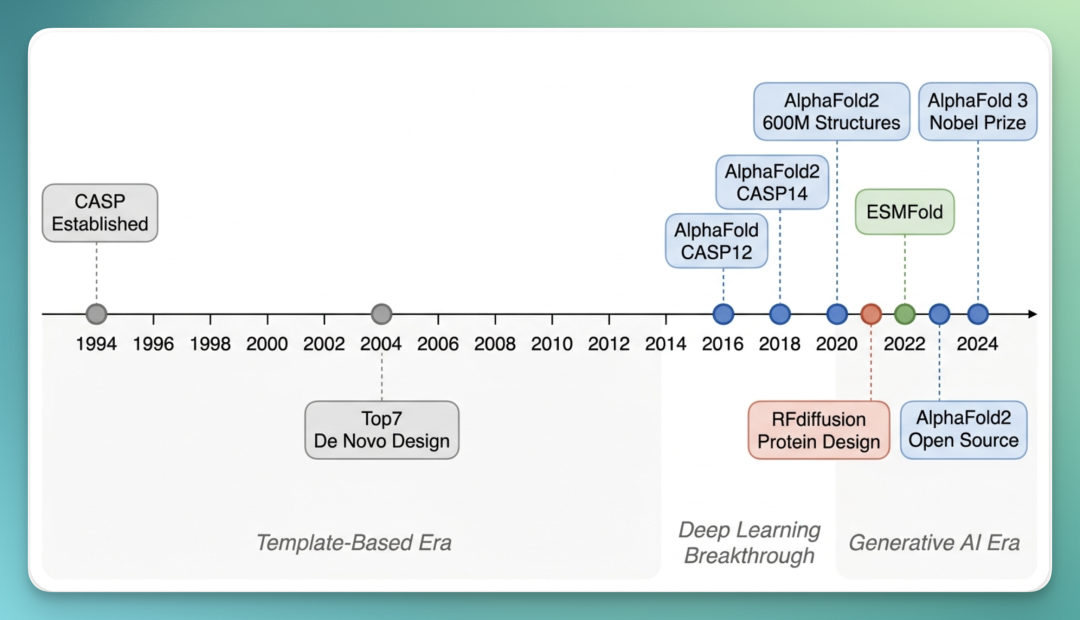
One thing I noticed: the initial citations skew heavily toward top-tier journals like Nature, without covering broader academic databases.
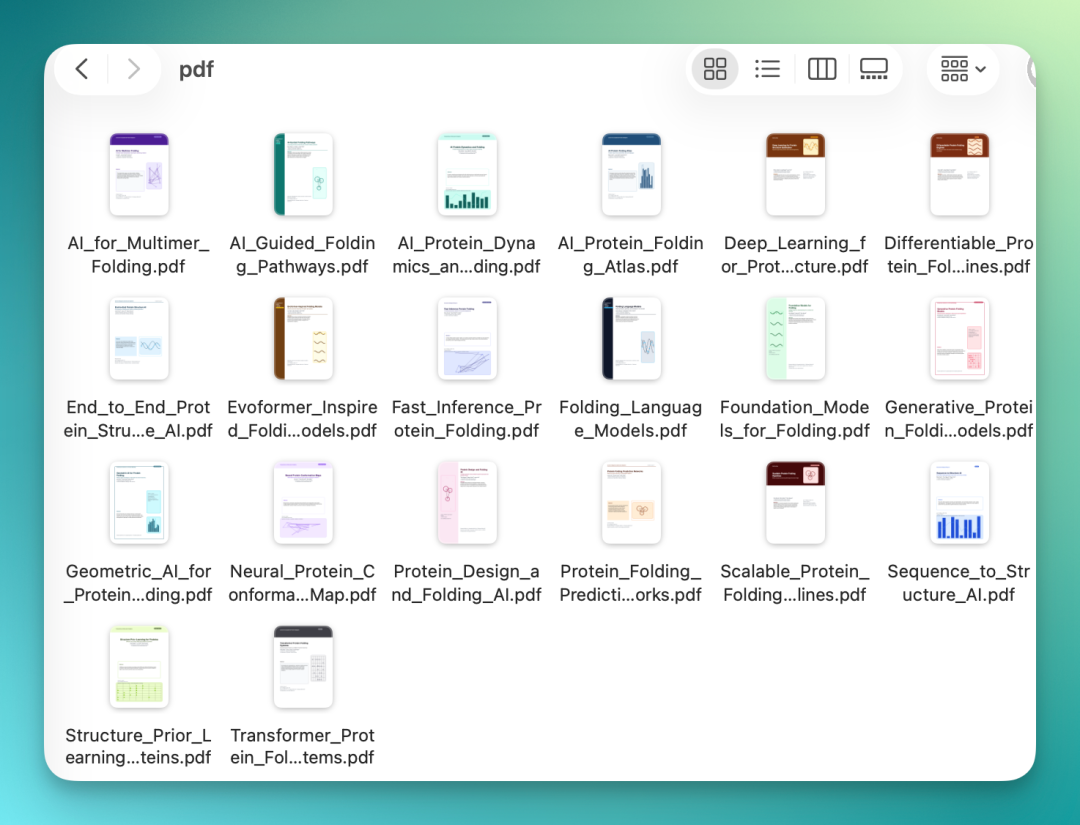
This is where its knowledge base capability comes in. You can upload PDFs directly as additional inputs, adding a supplementary layer beyond web retrieval.
If you already have a local collection of paper PDFs, you can feed them all in. This way, when writing the review, it can integrate both web-sourced information and these local papers for a more comprehensive synthesis.
It then generates an expanded review document with more technical details and application cases, with citations increasing significantly to roughly 60+ high-quality references.
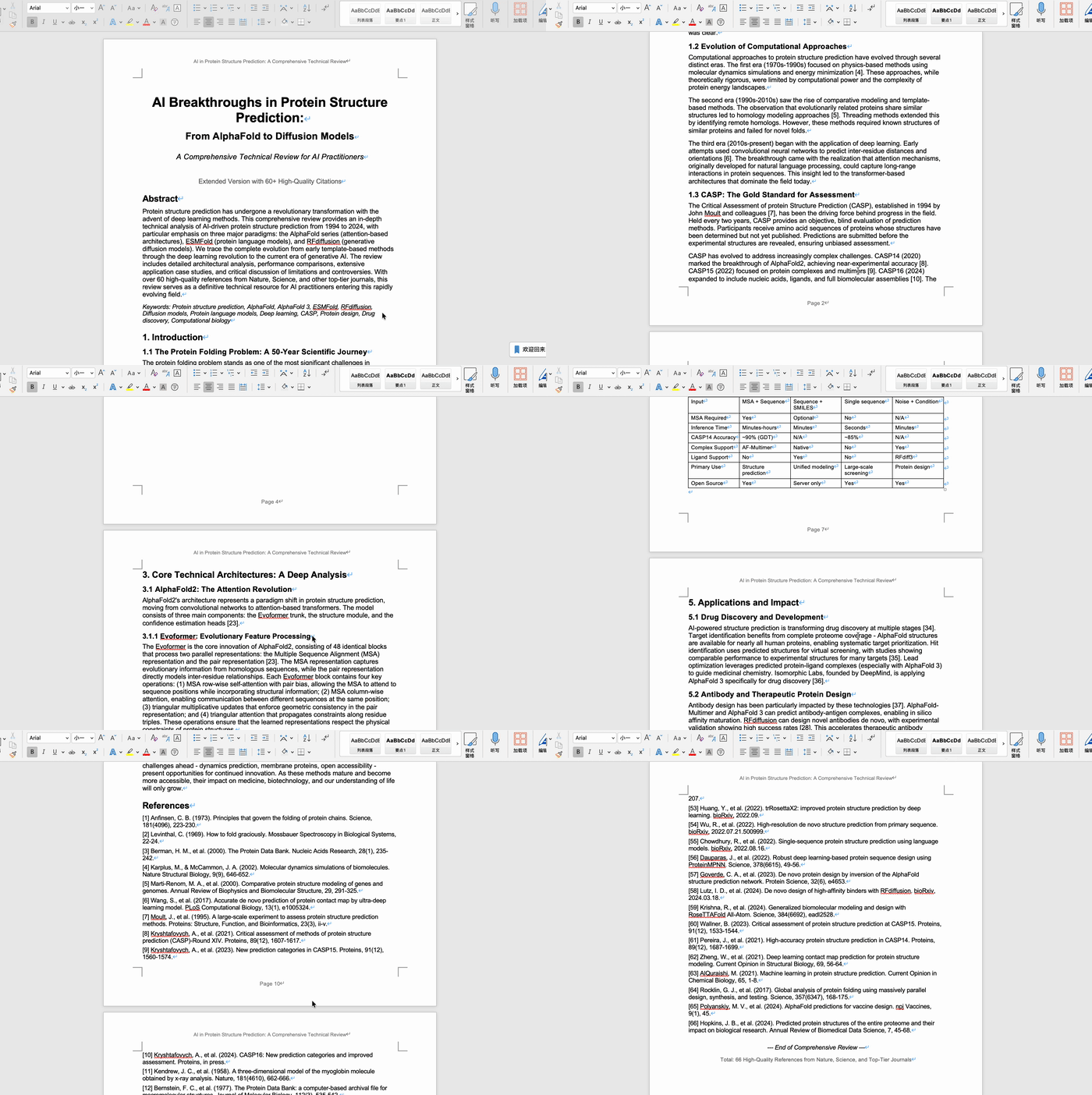
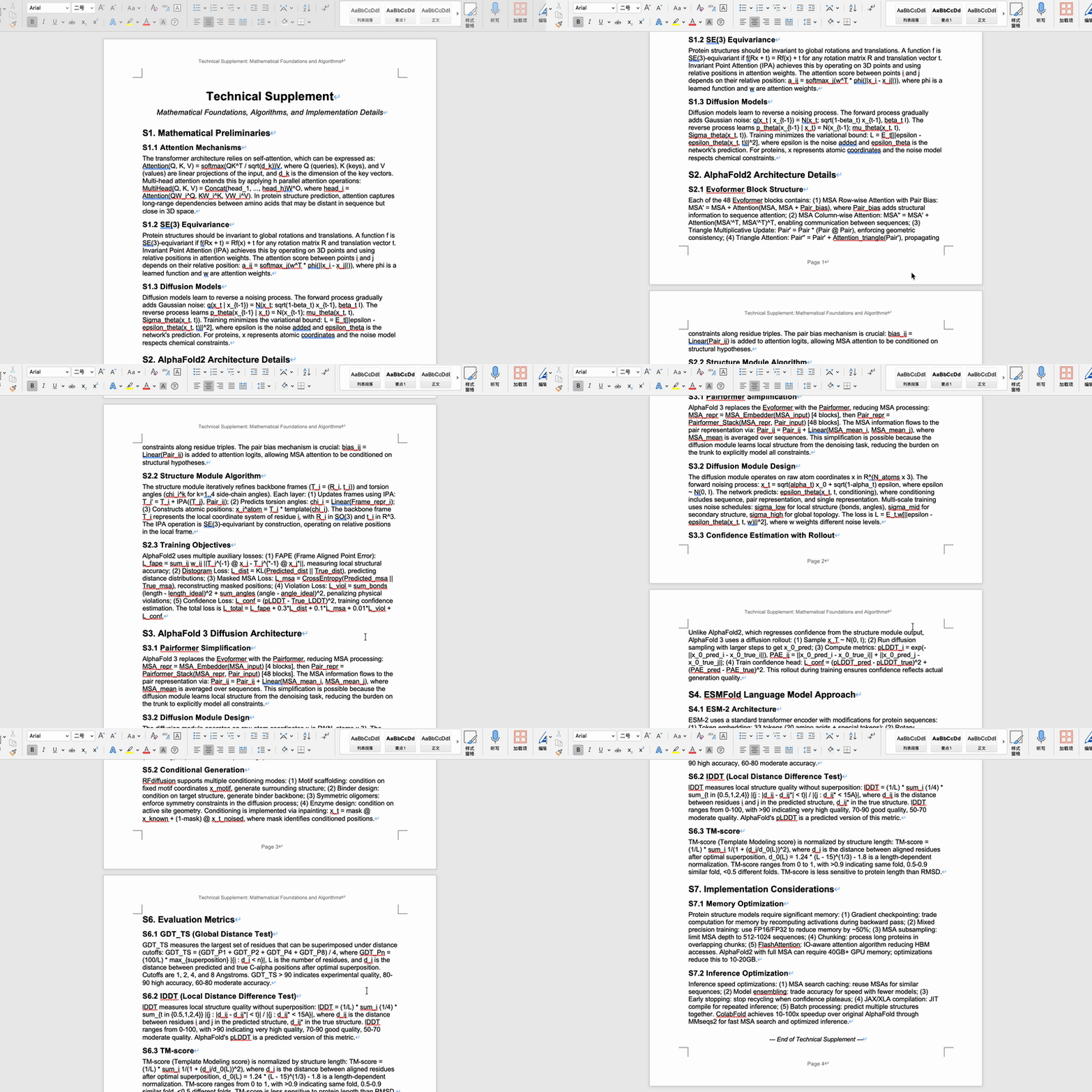
Beyond the final academic paper, it also produces a separate technical supplement with expanded mathematical details and algorithmic content.
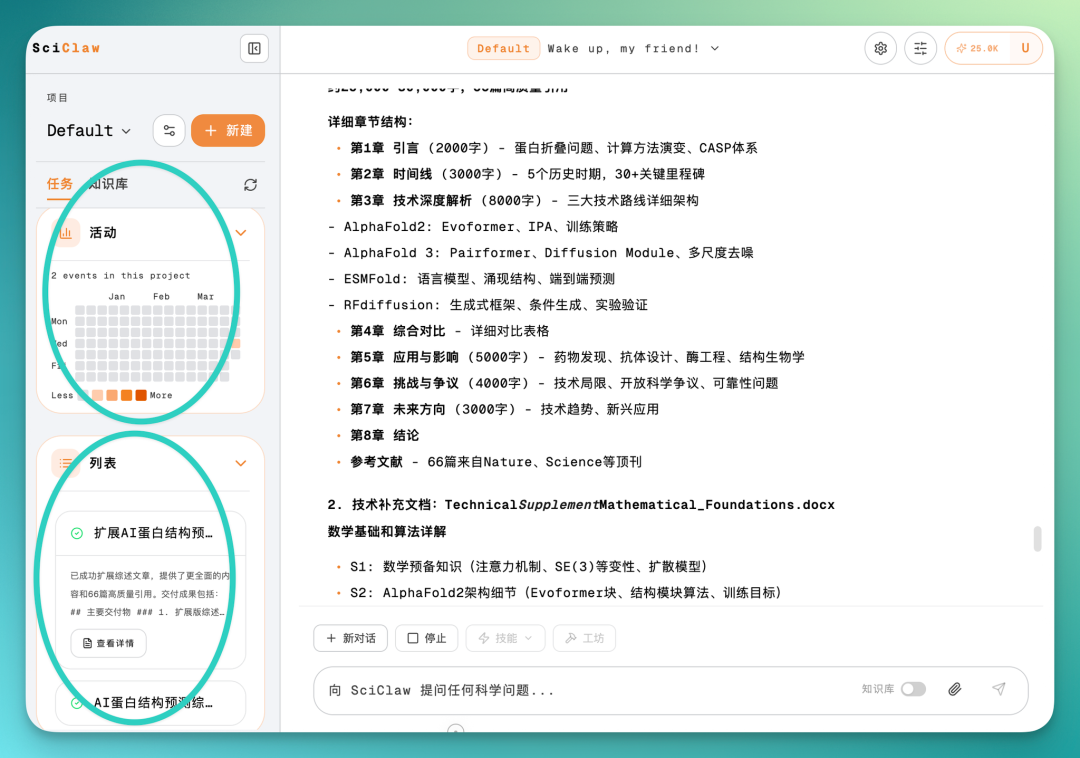
In SciClaw's interface, the right panel is your conversation area with the Agent, while the left side features an activity dashboard that stores all task nodes in a task list below.
Everything you generate — documents, images, tables — gets logged here for easy access and management.
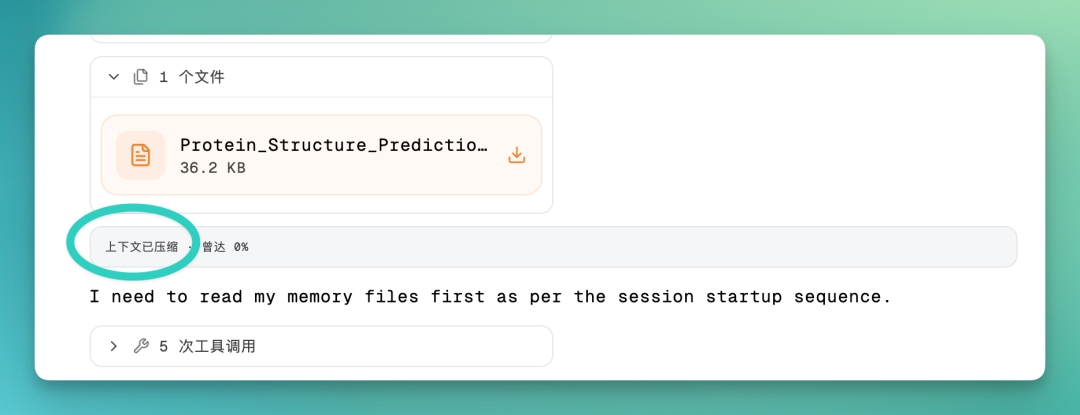
One detail I noticed: writing high-quality papers involves many steps, and as workflows stretch longer, context balloons — much like how Claude Code windows can fill up entirely.
SciClaw has a similar context compression mechanism that automatically condenses context during workflow execution, keeping the entire process running smoothly.
SciClaw Actually Supports Multiple Academic Document Formats
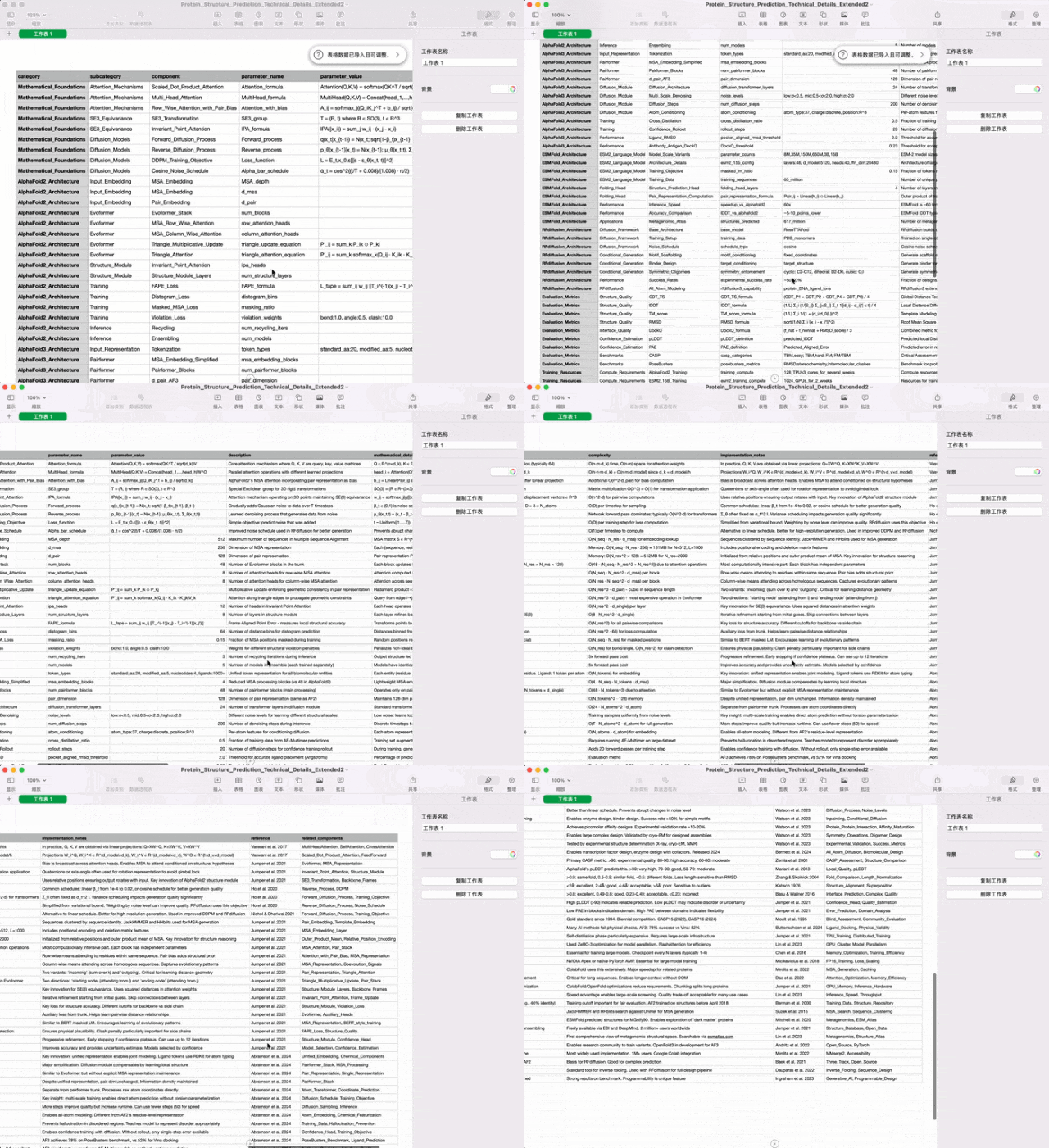
For example, you can have it convert content from a technical supplement into a structured CSV file.
In my case, I used a document containing mathematical formulas, algorithmic details, and parameter information — it extracted all of this into a complete table.
The resulting CSV is remarkably granular: 81 records across 12 fields, systematically organizing everything from foundational mathematics to AlphaFold's model architecture, evaluation metrics, training resources, and datasets.
You can even use it directly for academic presentations — conference talks with slides and supporting visuals.
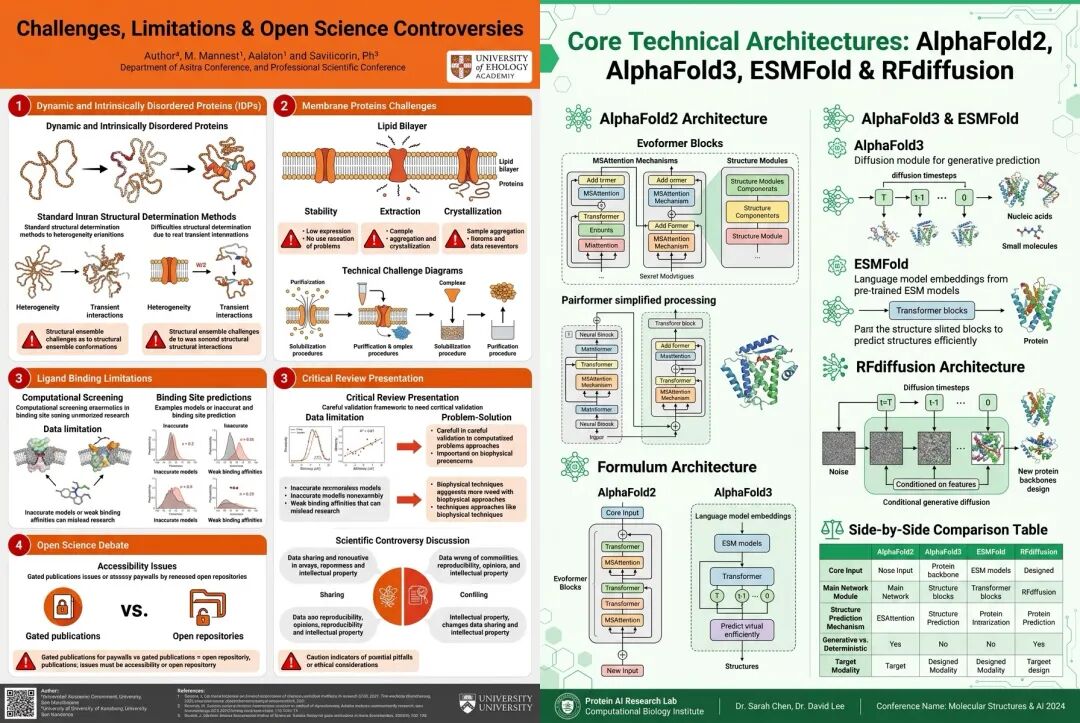
For instance, I had it prepare a complete presentation based on the review content. It organized 50 years of development history, AlphaFold's network architecture, and CASP competition results across editions, generating corresponding radar charts, pie charts, and timelines to visualize everything together.
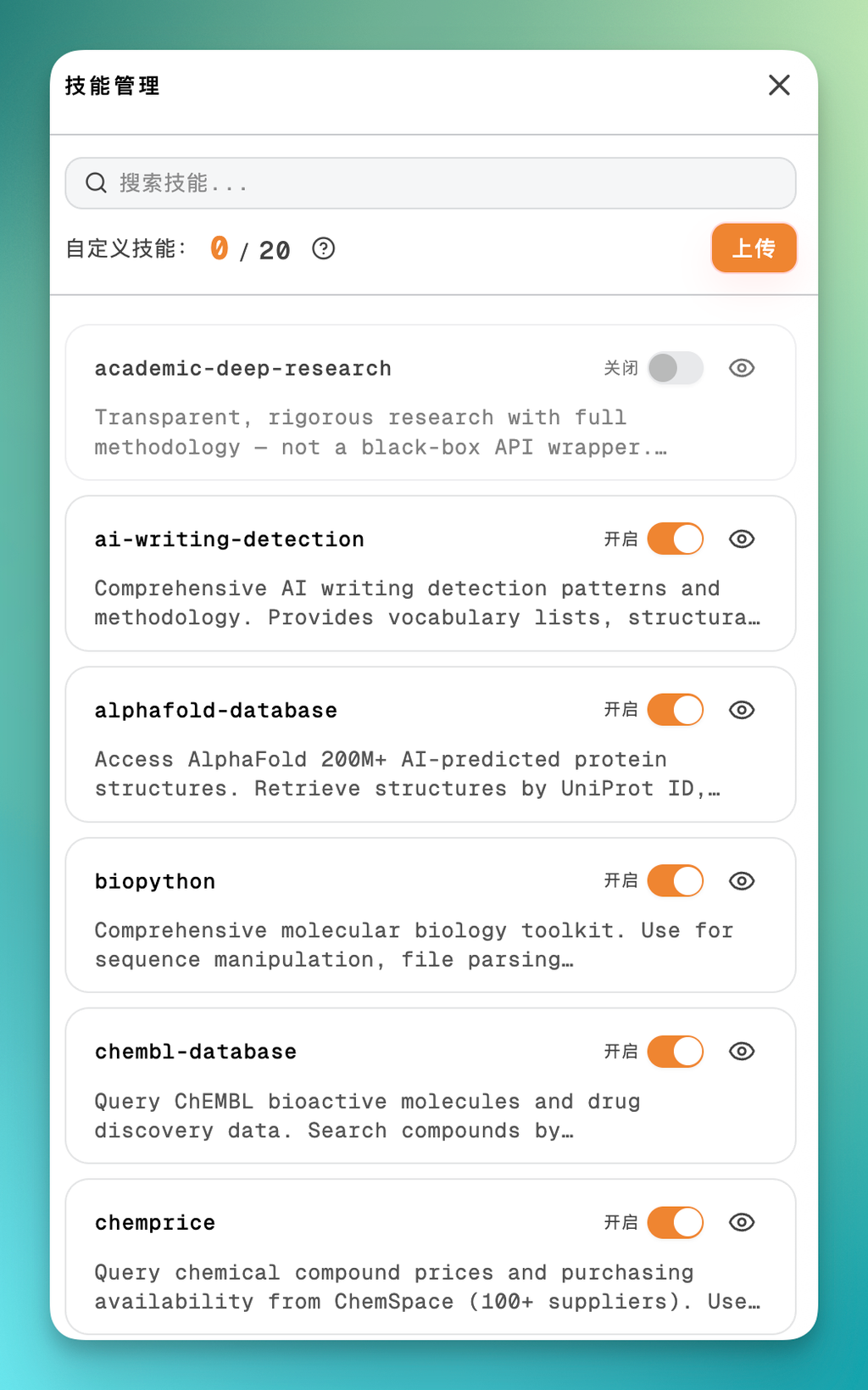
As mentioned earlier, it comes with built-in skills and supports custom extensions. You can package local skills as zip files for direct upload, then configure them in skill management — enabling or disabling different skills as needed.
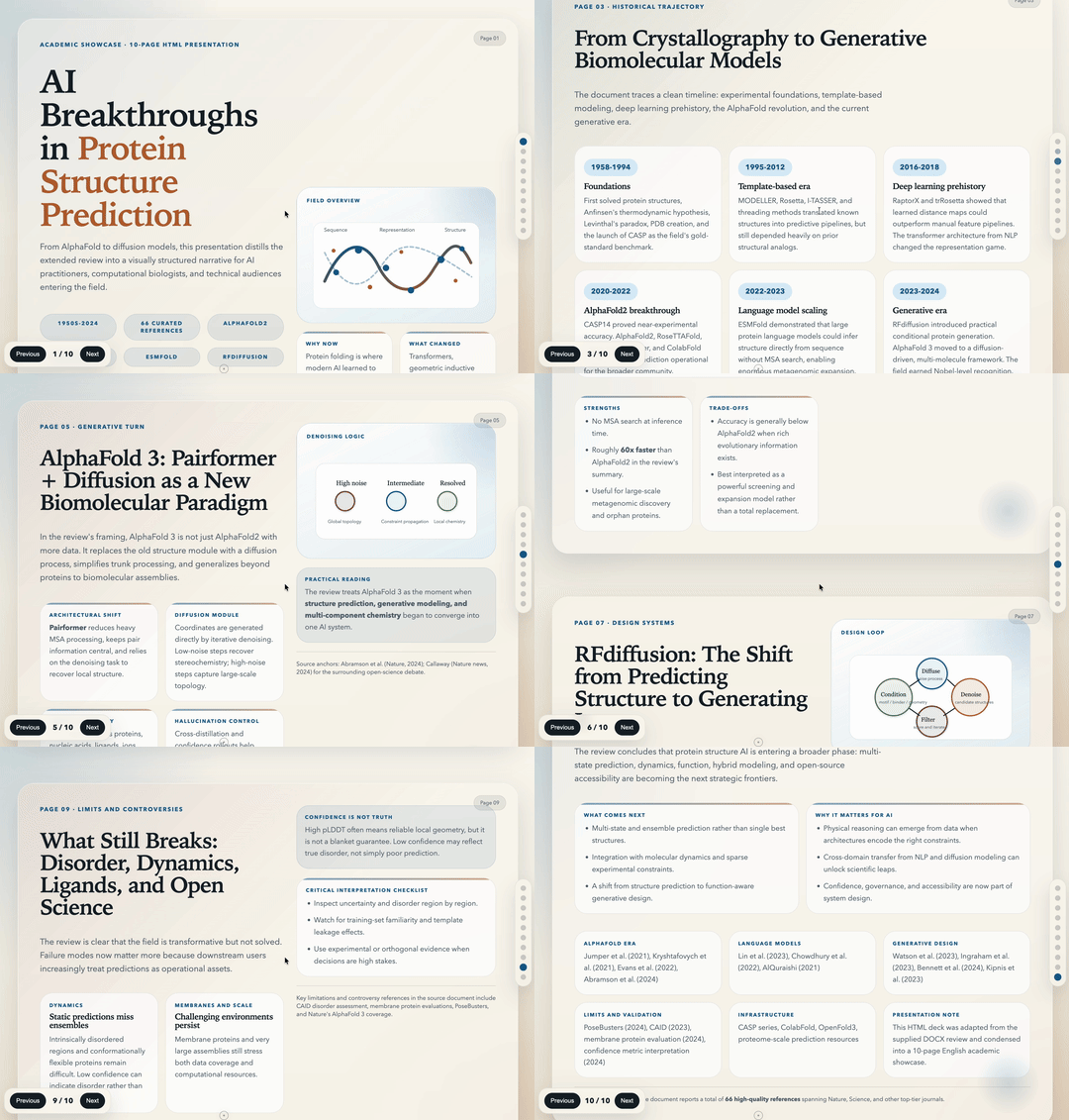
In the example below, it generated a complete HTML webpage with solid overall layout. I uploaded a commonly used web design skill to produce this output.
The page structure is clear, with most necessary figures included. Coverage spans from AlphaFold2 to AlphaFold3 to diffusion models, with key milestones and literature review sections expanded in greater detail.
Overall, the information cards are well-organized and the reading experience is decent.
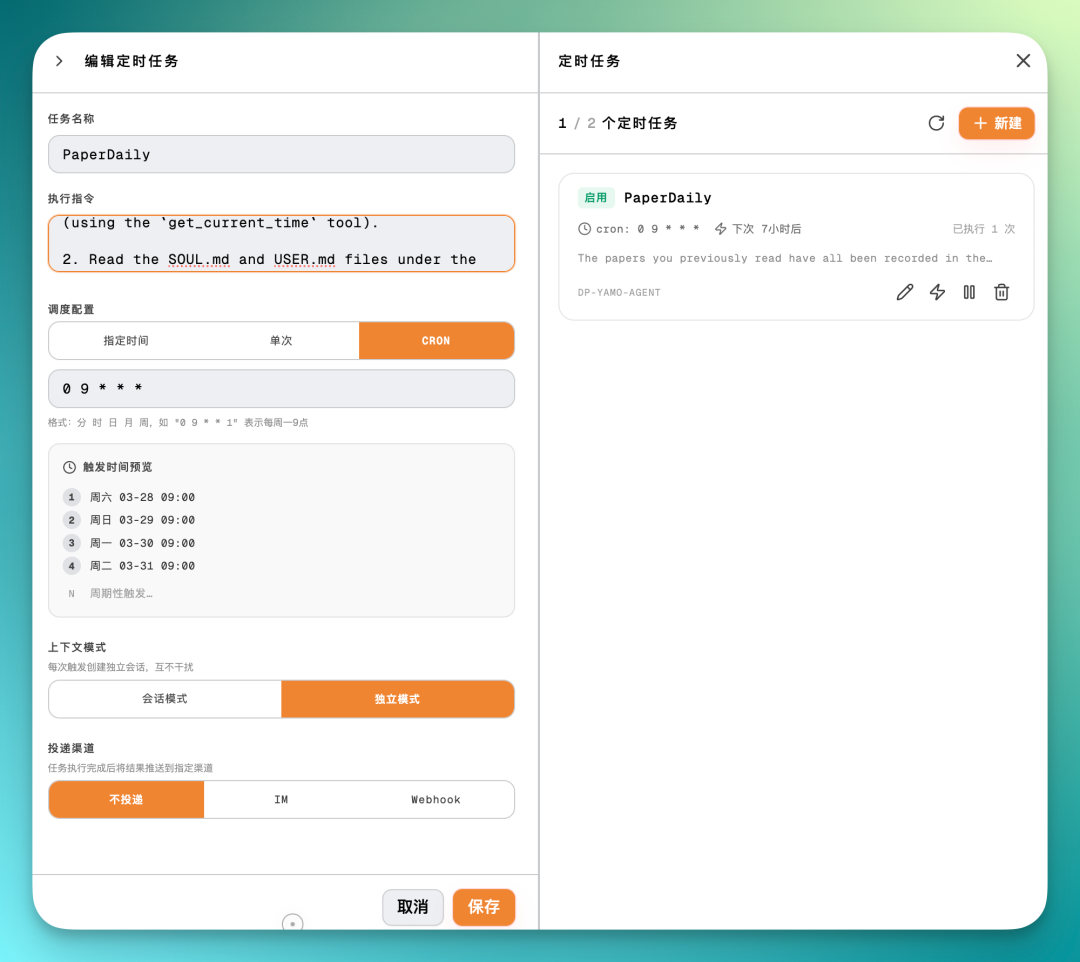
SciClaw also supports scheduled tasks via a dedicated task management panel, where you can create and edit workflows with minimal effort. You simply describe what you want in natural language, and it automatically configures the scheduling into a complete process — basically point-and-click usable.
For example, I set it up to read my curated markdown documents daily, find the latest papers in my research area, extract dates, authors, and content summaries for each, append these results to a running log, and finally report back to the team.
This runs once a day automatically, requiring essentially no manual follow-up.
Like OpenClaw, SciClaw supports integration with IM platforms — currently Lark, Telegram, Discord, and DingTalk. I connected it directly to Lark since I was already familiar with the setup process.
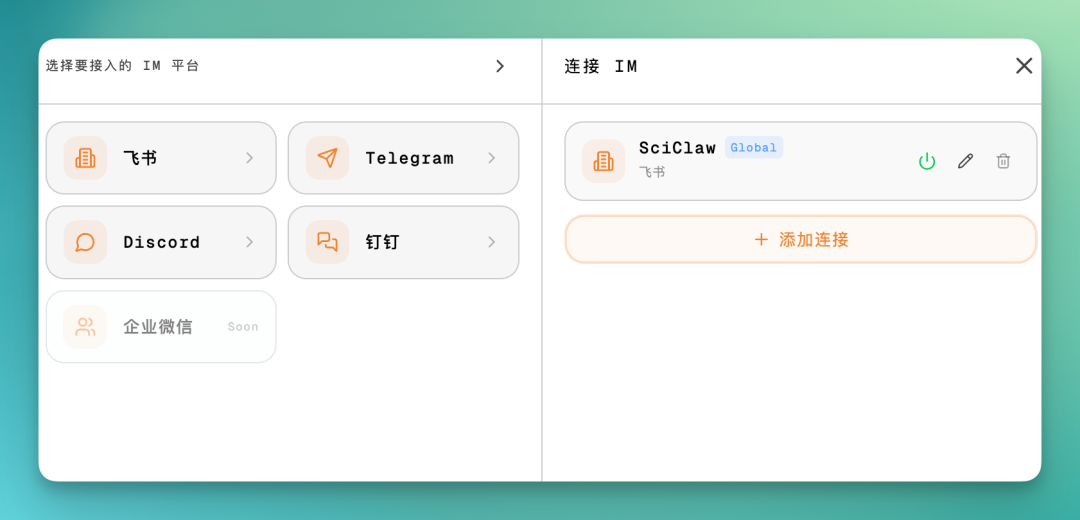
Once connected, you can chat with SciClaw directly in Lark. It doesn't just write papers, conduct research, or make academic figures — but high-quality papers can't be fully delegated to AI, so you still need to review the content yourself, especially core sections like the review.
I typically ask it in Lark to send me just the review section of my "AI and Protein Structure Prediction" review, so I can go through it paragraph by paragraph.
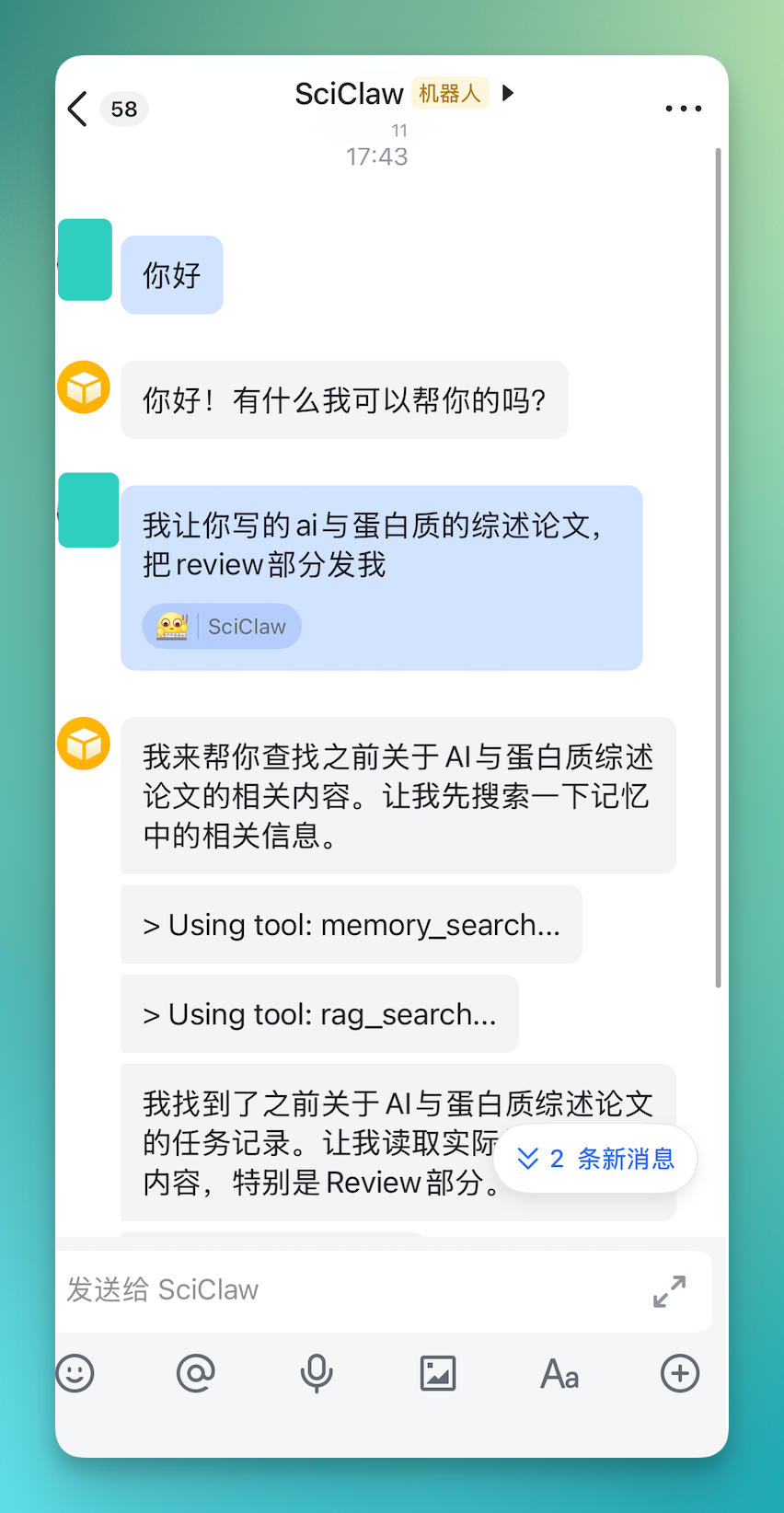
In this workflow, every node syncs to Lark. It reads my previously written paper document, extracts the review portion from section six, and sends it to me directly.
The corresponding citations for this section are also compiled and pushed together for convenient cross-checking.
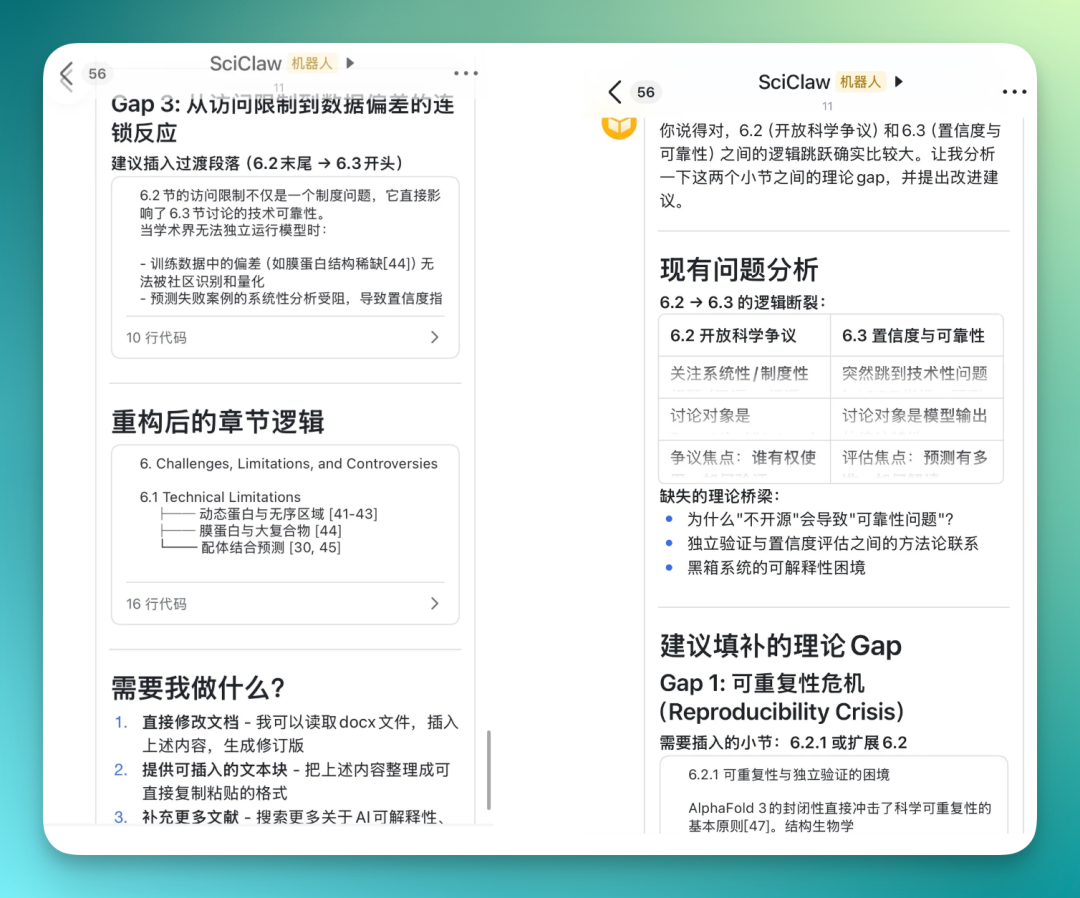
At this point, you can review the generated content in Lark anytime. For instance, I noticed that sections 6.2 and 6.3 felt disjointed, as if some theoretical bridge were missing — so I simply asked whether there were any theoretical gaps to fill.
It analyzed the issues between these two subsections independently, determined whether logical jumps existed, and provided specific improvement suggestions — identifying missing theoretical support, or flagging key explanations like "why being closed-source affects reliability."
These gaps are listed in a structured format, along with suggested transition paragraphs and a restructured chapter logic. From there, you can continue — having it directly modify the original text, insert new content, or conduct additional retrieval to fill in relevant literature.
Looking at the overall usage flow, what SciClaw is attempting is project-level closure. You give it the context of a research project, and it continues working within that project.
Literature retrieval results get沉淀 in the project, data analysis conclusions connect back to previous papers, and written reports can directly reference existing project data and figures.
Once this logic clicks, it changes how research teams collaborate.
Of course, SciClaw still has room to grow, but this doesn't diminish the potential of the "academic project-level AI Agent" space.
🚥
Everyone knows AI will enter academic research, yet no product has quite felt like "yes, this is it."
SciClaw points toward a direction worth watching.
How far this ultimately goes remains to be seen.
But at least directionally, SciClaw is trying to answer a crucial question:
What kind of AI do researchers actually need?
Most likely, the answer will be a co-worker that sticks with projects, helps accumulate knowledge, and delivers results.