a16z's Latest Batch of AI Projects: AI Startups Are Starting to Grind Through the Dirty, Unsexy Work

I quickly reviewed a recent batch of a16z Speedrun projects and wanted to share my findings. These projects span tax filing, construction bidding, litigation, meetings —
I put together a quick overview of the recent a16z Speedrun batch for you.
These companies span tax prep, construction bidding, litigation, accounting, commercial lending, agricultural procurement, insurance brokerage, elder care, real estate investment, and home robotics.
What's obvious is that these are all industries that standard software has struggled to fully transform, because the work is too fragmented, too communication-heavy, and too dependent on experience and judgment.
Let's look at how this batch of a16z AI startups is cracking into them.

Tax, Bidding, Litigation, Accounting: AI Starts Taking the Most Soul-Crushing Back-Office Work
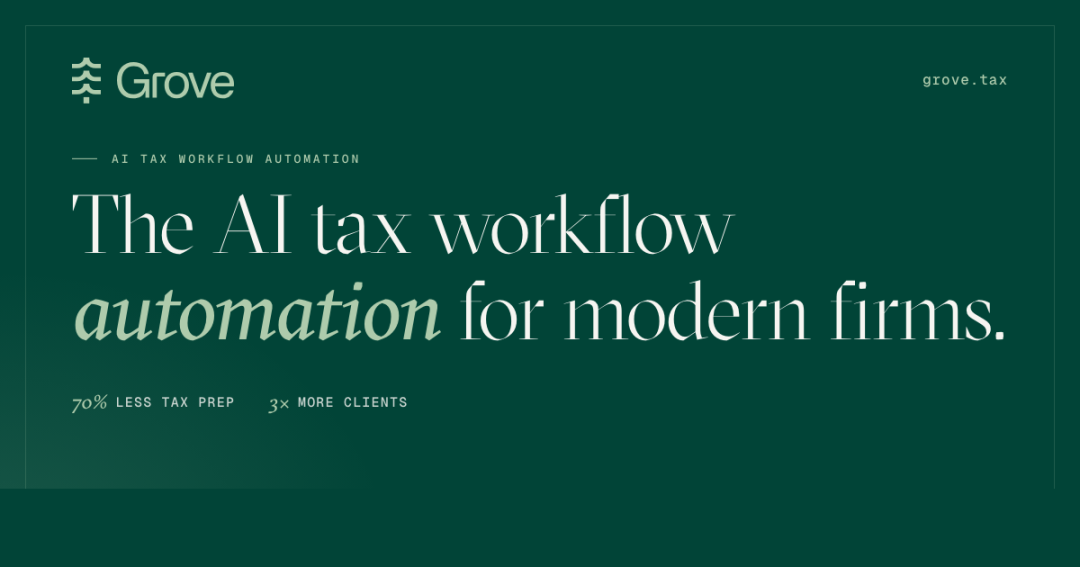
Grove Tax builds AI labor for tax firms.
Grove Tax isn't targeting individual filers — it's going after the repetitive daily grind of tax practitioners: chasing client documents, data entry, organizing materials, preparing returns, delivering results.
The company's site notes that tax preparers spend 65% of their time not on actual tax judgment, but on this kind of scut work; it aims to use agents to cover the full pipeline from information intake, document extraction, to filing preparation and delivery.
Grove also mentions that early clients are processing returns 3x faster through the platform.
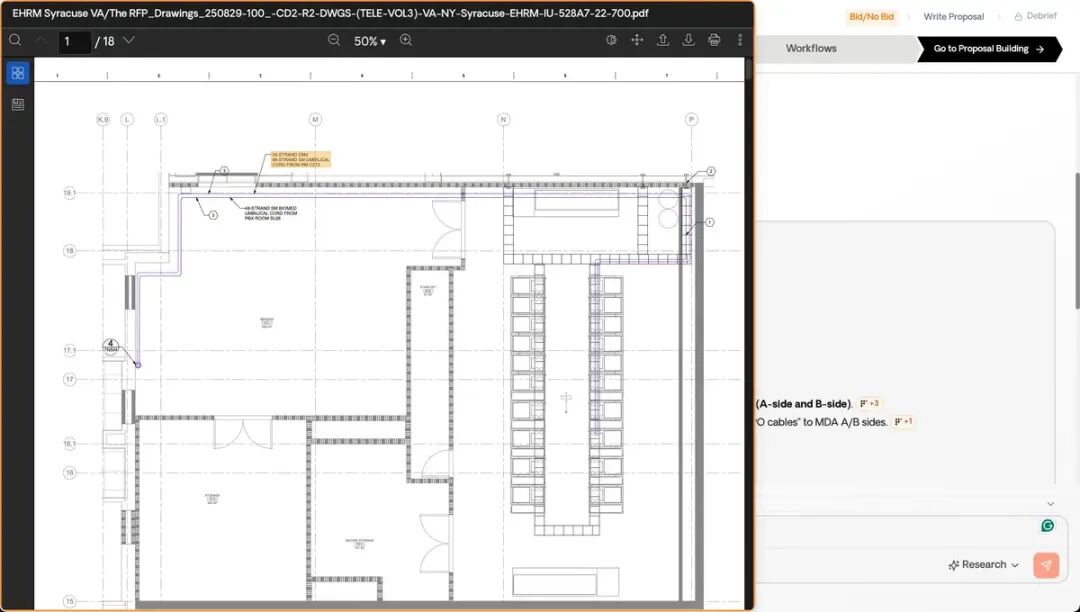
Piper-ai handles construction bidding.
When general contractors bid on projects, they often have to digest massive volumes of bid documents, drawings, contracts, addenda, and pricing materials in very short windows.
The problem isn't "are there documents" — it's that these documents frequently contain omissions, conflicts, and hidden risks.
Piper-ai positions itself as AI labor for the construction industry, helping GCs understand what they're actually bidding on, what scope must be included in pricing, where risks might lurk, and which contradictions could later become costs.
Concorda runs litigation workflows.
Concorda defines itself as "the AI operating system for trial lawyers." The founding team combines legal and engineering backgrounds, and the site discloses $210K in annualized revenue within three months.
It doesn't just help lawyers draft documents — it tries to run litigation end-to-end, collecting both legal services revenue and software platform revenue.
Quanto builds AI labor for accounting firms.
Quanto's focus isn't giving accountants a chat window — it's automating client acquisition, client onboarding, and bookkeeping cleanup.
The site discloses $800K in signed annualized revenue and over $5M in sales pipeline.
Founder Anderson Petergeorge is a CPA himself, and previously used off-the-shelf AI tools to scale a bookkeeping practice to 40 clients in six months, so this product feels like it grew out of actual accounting operations.


Lending, Agriculture, Tax Credits, Insurance: The Messier the Industry, the More Vertical AI Thrives
Bilrost builds commercial lending infrastructure.
The pain in commercial lending isn't simply reading documents — it's that loan materials, tax returns, financial data, borrower history, and underwriting judgment are scattered across different systems.
Bilrost's approach turns the documents behind each deal into structured "context graphs," covering the full lifecycle from origination, underwriting, servicing, to monitoring.
The company claims it has already processed over 10,000 transactions and is piloting with top-tier lenders.

Vereda does agricultural procurement, based in Brazil.
The concept is straightforward: small and mid-sized farmers have weak bargaining power, fragmented channels, and inefficient processes when buying agricultural inputs, so Vereda moves procurement into WhatsApp, using AI to aggregate demand, negotiate directly with suppliers, and connect credit.
Vereda's goal is to give smaller farmers purchasing power comparable to large industrial farms.

Taxnova handles R&D tax credits and capital expenditure documentation.
Many tech companies don't lack R&D activity — they just scramble to reconstruct and backfill documentation when filing season hits.
Taxnova continuously extracts evidence from Jira, GitHub, technical docs, and Slack, generating auditable, traceable R&D tax and capex documentation.
It emphasizes that it doesn't replace tax advisors; it does the dirty work before advisors ever get involved.
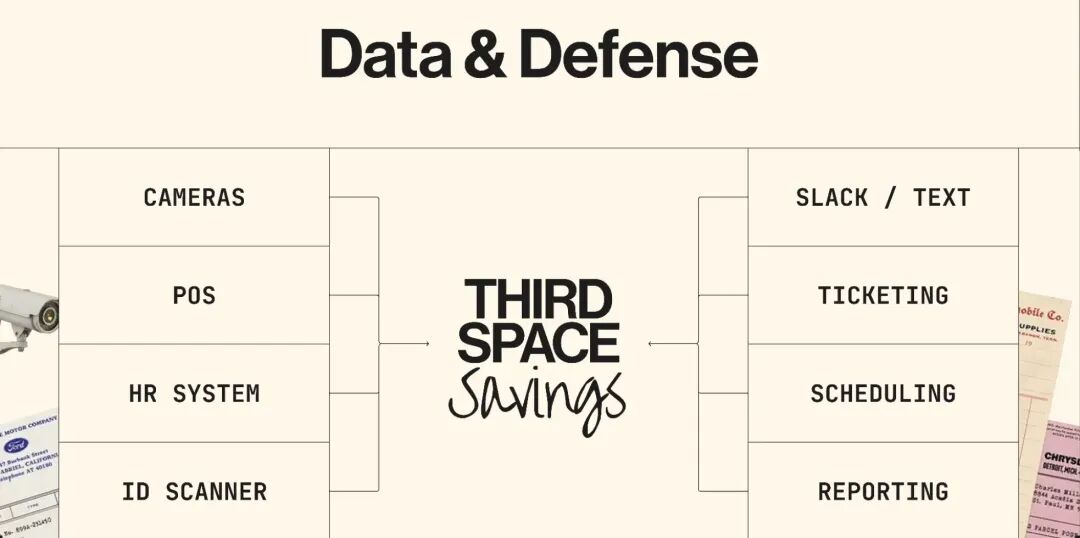
Third Space sells commercial insurance for brick-and-mortar businesses, starting with nightlife — bars, music venues, clubs.
It's not a generic insurance comparison platform. Instead, it uses operational data from security cameras, POS systems, HR records, and incident reports to make finer underwriting decisions, and tries to help merchants push back against liability premium hikes driven by litigation risk.
The company discloses LOIs for 50+ locations, representing roughly $3M in premiums.
What these companies share: they picked unsexy industries with complex workflows, and customers willing to pay for outcomes.

Memory, Safety, Verification, Collaboration: What AI Needs to Do Real Work
Sentra builds "organizational memory" for enterprise agents.
It collects where work actually happens — meetings, messages, emails, agent execution traces — and turns these into shared organizational memory.
Sentra's bet is that the starting point for enterprise general intelligence isn't the model itself, but whether a company has a coherent, callable body of working memory.
SafeWorld does robot safety assessment.
It generates rare but critical test scenarios for robots operating around humans, helping teams discover failure modes, quantify risk, and deploy with more confidence.
As robots move from labs into warehouses, factories, hospitals, and homes, safety testing becomes a hard requirement — not a pre-launch afterthought.

Modaic verifies and calibrates AI decisions.
The problem with many AI systems isn't that they can't do the task — it's that they don't know when they're uncertain.
Modaic assigns confidence scores to every AI decision, routes uncertain cases to humans, and uses that feedback to continuously optimize underlying instructions.
It targets classification, review, and automated evaluation workflows — judgment-intensive processes. The site mentions design partnerships with Accenture, Dropbox, and Vercel.

Alike builds the agent collaboration layer for enterprises.
Alike's question: when a company doesn't have one agent, but a swarm of agents working together, how do they share information, coordinate tasks, avoid duplication, and maintain privacy and permission boundaries?
Alike's site discloses that its product is already running across 10 company teams, with 100 companies on the waitlist, and 20 design partners signed.

These companies aren't always easy for casual observers to grasp, but their direction matters.
Because as AI shifts from "answering questions" to "executing tasks," what's missing isn't model parameters — it's memory, permissions, verification, collaboration, and safety.
In other words, the more autonomous the agent, the more valuable the underlying infrastructure.

Real Estate, Chores, Health, Elder Care: AI Steps Out of the Screen
Smart Bricks builds an intelligence system for real estate investment.
It's not simple property recommendations — it turns the fragmented, opaque data in real estate markets into a computable, judgeable, actionable system.
The site shows Smart Bricks uses autonomous agents, multi-model reasoning, and continuous learning to help capital discover, evaluate, and manage real assets, and discloses roughly $12M in annualized revenue.

Syncere builds home robots, but its first product isn't humanoid — it's a lamp.
Its product Lume looks like an ordinary desk lamp most of the time, but can transform into a pair of robotic arms to do chores like folding laundry, then return to lamp form.
The company says the product can already fold laundry autonomously, and is preparing for production and delivery, with hundreds of pre-orders and millions in waitlist value.

Clair Health makes continuous hormone monitoring devices.
It's a health wearable worn on the wrist like jewelry, aiming to help women understand fluctuations in estrogen, progesterone, LH, and apply that information to skin health, fertility, mood, perimenopause, and female athletic performance.
The company discloses $800K in direct-to-consumer revenue, and $18M in enterprise contracts signed within eight weeks.

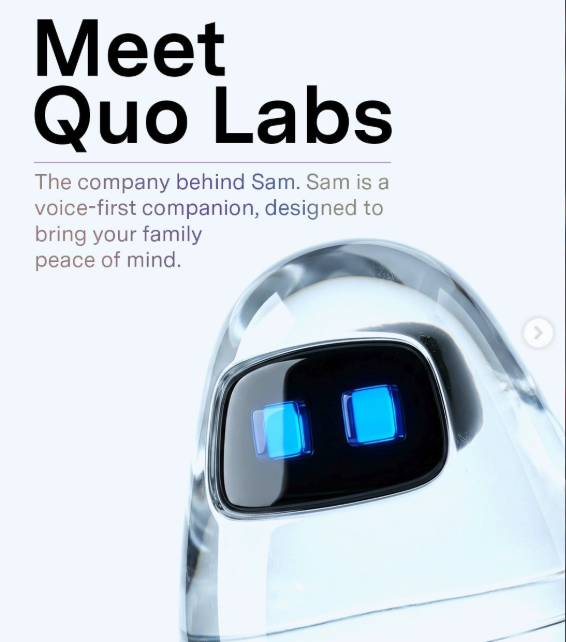
Quo Labs does elder care.
It starts with an AI assistant called Sam, providing daily check-ins, complex medication and appointment reminders, and keeping seniors connected to family through hands-free texting and voice calls.
The long-term vision is turning seniors' homes into environments continuously monitored, assisted, and protected by AI systems.
This category carries higher risk.
Hardware needs manufacturing, medical devices need validation, elder care must handle safety and liability, and home robots still face questions of price, reliability, and actual usage frequency.
But if these companies work, their moats are usually deeper than pure software. Because they capture not just user clicks and document data, but real-world behavior, devices, contexts, and workflows.

Consumer AI Isn't Dead, But the Bar Is Higher
Oasiz calls itself "the TikTok for AI-native software."
Oasiz starts with games, building a social, interactive software distribution platform.
The site discloses that within a month of launch, users have spent over 9,000 hours in the product, generated 300K+ plays, and earned 7M+ organic views on TikTok.

SUN makes personalized AI audio.
It can generate podcasts, audiobooks, or structured audio on any topic, with user control over length, voice, and language, plus the ability to ask questions mid-listening.
The founding team includes Harvard CS, Stanford AI PhDs, and early engineers from Amazon Podcasts.

PicPet builds a social messaging platform around virtual pets.
Users "feed" their pets with photos — essentially turning friend-to-friend interaction into a lightweight social game.
The company discloses 240K+ DAU with 45%+ 90-day retention.

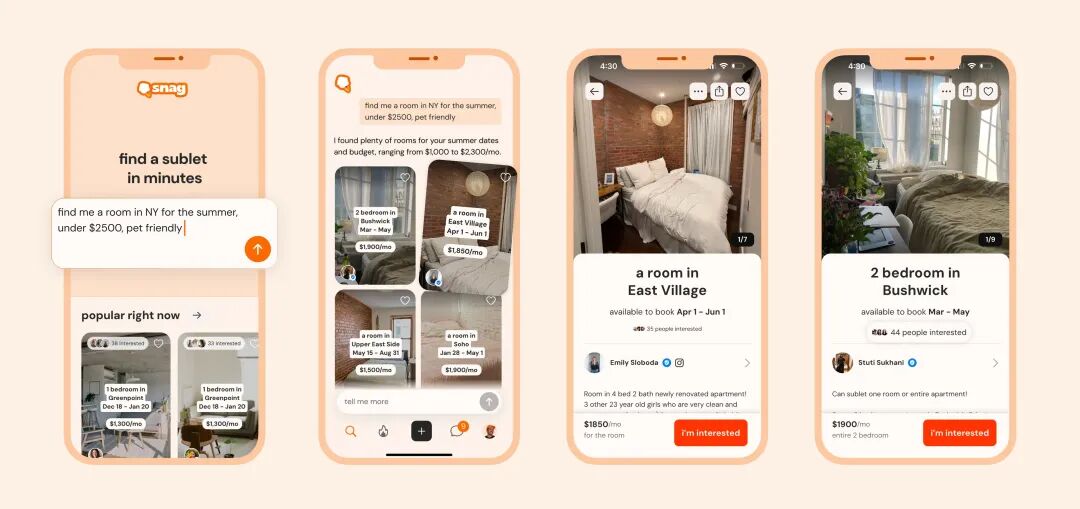
snag builds an AI subletting marketplace for Gen Z.
Young people's short-term rental and sublet needs are still scattered across Facebook groups, Instagram, Craigslist.
snag uses AI to automatically turn these messy posts into quality listings, matching renters in seconds.
The company discloses $6.5M in request volume over the past 30 days, 40% monthly growth, and 3,000 listings in New York.
Consumer AI logic differs from enterprise AI.
Enterprise customers will try anything that saves money, grows revenue, or reduces risk. But regular users download apps easily — and uninstall just as easily.
So consumer AI can't just say "we use AI." It needs distribution, social mechanics, content loops, and strong reasons to return.
That's why PicPet's DAU and retention, Oasiz's organic traffic, and snag's request volume matter more than pure technology narratives.
That's all — have a good one.