This AI drug discovery company just raised 200 million yuan in its Series A. What's it planning to do?

AI-powered drug discovery has a bright future ahead.


🔍 OpenAI launches SearchGPT
🔧 Amazon accelerates "de-NVIDIAfication"
💼 JPMorgan Chase rolls out AI chatbot
🧠 AI training AI causes model collapse
🎬 Zhipu AI releases video generation model "Qingying"
🎮 AI transforms Naraka: Bladepoint gaming experience
💰 AI drugmaker ReviR Therapeutics raises $30 million
🌐 Web3 AI platform Assisterr secures funding
🚀 Notion surpasses 100 million users

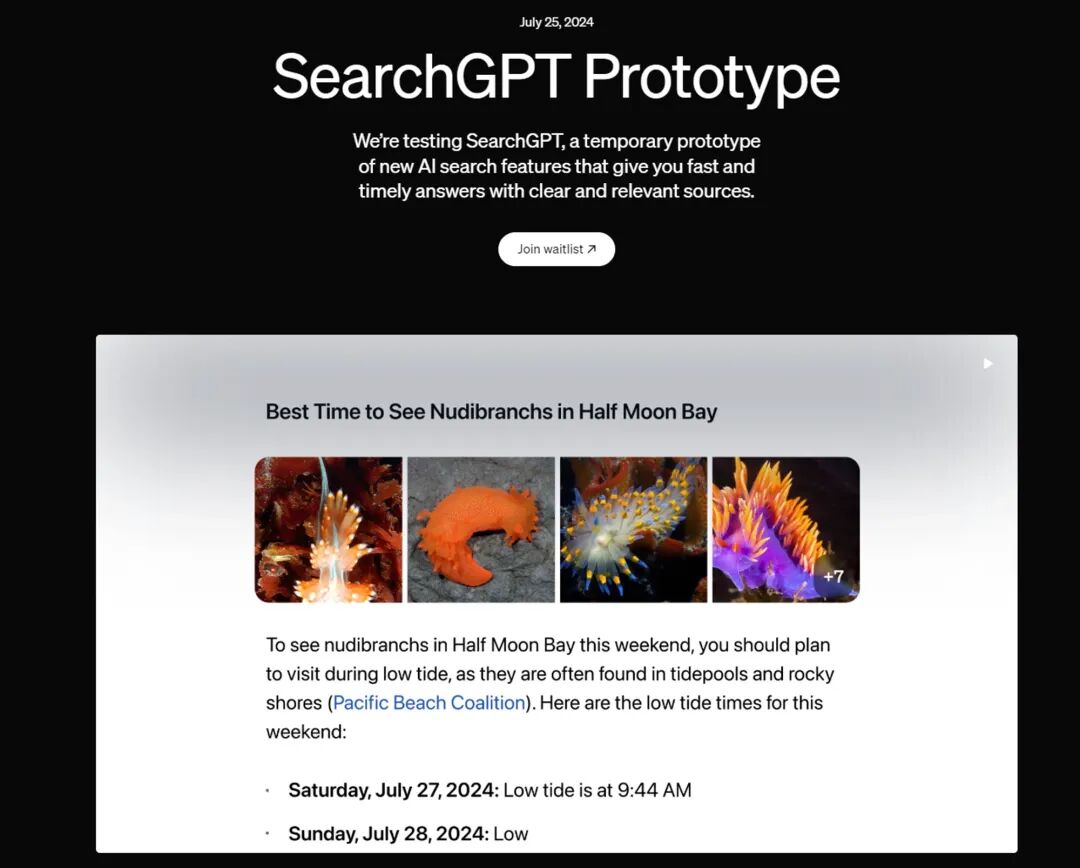
OpenAI launches SearchGPT
OpenAI has announced SearchGPT, an AI-powered search engine marking its official entry into the search market. The new product features a conversational interface powered by GPT-4 series models, designed to deliver faster, more accurate search results. SearchGPT supports multi-turn dialogue, understanding complex queries and providing detailed answers. Currently, SearchGPT is only available to 10,000 users in a closed beta, with an alpha release for paid subscribers expected next week. OpenAI plans to integrate SearchGPT's capabilities into ChatGPT to further strengthen its competitive position. Compared to traditional search engines, SearchGPT demonstrates significant advantages in understanding queries and synthesizing information. OpenAI says it will partner with publishers and creators to ensure search results include clear source attribution and links. This initiative aims to improve user experience while balancing the interests of content creators. The launch of SearchGPT could pose a threat to search giants like Google and Perplexity, potentially reshaping the search engine landscape.
Amazon accelerates "de-NVIDIAfication"
Amazon Web Services is testing a new generation of self-developed AI chips, with performance up to 50% higher than NVIDIA products and costs potentially cut in half. These chips are designed to provide more efficient, lower-cost compute power for AWS cloud services, meeting customer demand and boosting business competitiveness.
Tech giants are joining the "de-NVIDIAfication" camp one after another. Microsoft, Google, and Meta are all developing their own AI chips to reduce dependence on NVIDIA, cut costs, and improve performance. This trend reflects the chip cost pressure facing large tech companies, as well as the demand for customized hardware.
However, not all companies are taking the self-development route. Broadcom is positioning itself to become the "second NVIDIA," with Q1 2024 AI revenue expected to exceed $10 billion. The company may also develop custom AI chips for OpenAI, showing the diversified development trends in the AI chip market.
JPMorgan Chase rolls out AI chatbot
JPMorgan Chase has launched an AI chatbot called LLM Suite, now available to approximately 50,000 employees. Described as a "ChatGPT-like product," the tool is designed to assist staff with writing, idea generation, and document summarization.
LLM Suite has been compared by executives to a "research analyst," capable of providing information, solutions, and recommendations. The tool is a proprietary large language model developed internally by JPMorgan Chase, designed to protect client data security. The company prohibits employees from using consumer-grade AI chat products like Claude, ChatGPT, or Gemini for work purposes.
JPMorgan Chase CEO Jamie Dimon believes AI will "change every job," with impact potentially comparable to major technological inventions like the steam engine. Whether LLM Suite suffers from the "hallucination" problems common to other AI models remains unclear.

AI training AI causes model collapse
Research from Oxford University, Cambridge, and other institutions has found that repeatedly training new models on AI-generated data leads to a phenomenon called "model collapse." Model collapse manifests as the disappearance of tails in the original content distribution (low-probability events), with model output quality degrading. In experiments, LLMs completely collapsed by the 9th generation, producing gibberish.
Researchers analyzed the causes of model collapse, including the accumulation of statistical approximation error, functional expressivity error, and functional approximation error. Theoretical analysis shows that model collapse is inevitable for both discrete and Gaussian distributions. Language model experiments further confirmed the phenomenon, with performance declining across iterations.
To address model collapse, researchers proposed methods such as preserving some original data and using diverse data sources. This research underscores the critical role of high-quality human-generated data in AI development, offering new insights for future large language model training and iteration.

Zhipu AI releases video generation model "Qingying"
Zhipu AI has officially released its video generation model "Qingying," capable of producing high-quality 6-second videos at 1440 x 960 resolution from text or image prompts. Qingying is now live on the Qingyan App, available free and without usage limits to all users, supporting dialogue, image, video, code, and Agent generation capabilities.
Qingying is based on the self-developed CogVideoX model, employing a 3D variational autoencoder architecture and causal 3D convolutions to significantly improve training efficiency and inference speed. The model excels at generating landscapes, animals, sci-fi content, and other types, supporting multiple styles including cartoon, photorealistic, and anime. Zhipu AI says Qingying could eventually be applied to short video production, ad generation, and even film editing.
Zhipu AI has also launched the Qingying API for enterprise and developer use.

AI assistant transforms Naraka: Bladepoint gaming experience
The Naraka: Bladepoint mobile game has introduced an innovative AI Copilot feature, bringing intelligent gameplay to players. Developed by 24 Entertainment in collaboration with NetEase Fuxi Lab, this feature leverages advanced AI large model technology to provide players with an AI teammate that can communicate in real time, understand commands, and execute tasks autonomously.
AI teammates don't just respond intelligently to player commands — they can also chat and engage in playful conversation. Each has a unique personality and voice, capable of performing follow, combat, and support tasks, even independently judging whether backup is needed based on battlefield conditions. This feature enriches the single-player experience and solves the teammate-finding problem for solo players.
Technically, Naraka: Bladepoint's AI Copilot employs advanced natural language processing and deep learning techniques. The system converts player commands to text through voice recognition, then uses large language models to understand player intent. Tight integration between the game engine and AI model allows the AI to analyze game state in real time and make decisions. Some high-end devices support local AI computation, using on-chip NPUs for edge inference to improve response speed. The system also employs reinforcement learning, enabling AI teammates to continuously learn and optimize strategies during gameplay.

AI drugmaker ReviR Therapeutics raises $30 million in Series A
ReviR Therapeutics has announced the completion of a $30 million (210 million RMB) Series A round led by Dragonstone Capital, with participation from multiple existing and new investors. The funds will be used to further develop its AI drug discovery platform VoyageR and advance multiple preclinical and clinical-stage programs targeting neurological diseases.
Founded in 2021, ReviR focuses on developing oral gene therapies that regulate RNA to influence protein expression through small-molecule drugs. The company's VoyageR AI platform enables splice target prediction, molecular activity prediction, and molecular generation and optimization, significantly accelerating pipeline development.
ReviR's innovative approach could bring breakthroughs to multiple currently untreatable hereditary neurological diseases and cancers, offering patients more convenient and safer treatment options. The company is now transitioning from early platform building to clinical stages, and will continue optimizing its AI platform while advancing pipelines into clinical trials.
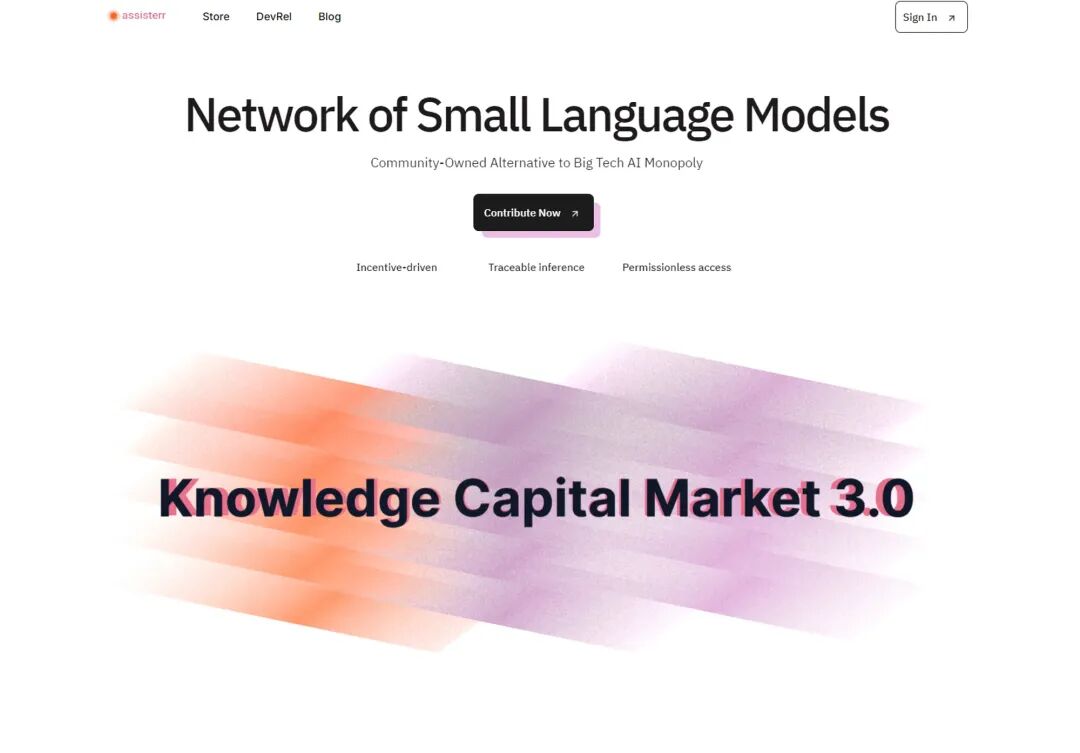
Web3 AI platform Assisterr secures pre-seed funding
Assisterr is a Cambridge-based AI infrastructure startup working to transform artificial intelligence through community ownership and a network of small language models. The company has completed a $1.7 million pre-seed round backed by several prominent Web3 venture funds and angel investors. Assisterr aims to enable developers to build AI applications using its infrastructure.
Assisterr leverages the Solana blockchain to let communities collaborate, aggregate, and monetize domain-specific data and knowledge. The company has attracted 150,000 registered users, launched over 60 small language models, and won multiple global hackathons. Assisterr was also selected for Google's AI Startups program, receiving $350,000 in funding support.
The company's core technologies include a data provenance protocol, AI Lab, and SLM-Agent Marketplace. The new funding will go toward protocol development, establishing strategic partnerships, and launching incentive programs. Assisterr has also introduced a no-code AI Lab module, with the goal of attracting more AI model builders and bringing the first 1 million SLM builders into its ecosystem.

Notion surpasses 100 million users
Notion[4] founder Ivan Zhao [5] announced the platform has crossed 100 million users, reflecting on 11 years of entrepreneurship. From starting up in 2013 to near-bankruptcy in 2015, Notion went through multiple product rebuilds. After the 2018 release of Notion 2.0, user growth accelerated to 1 million, and version 3.0 is now on the horizon.
Ivan shared three key design strategies: comparing multiple versions to select the best, preserving all work records to learn from experience, and growing through grassroots penetration. Notion has stayed committed to its mission and craft, continuously iterating to meet user needs. Ivan emphasized the importance of teamwork, thanking colleagues who have fought alongside him over the years.
Looking ahead, Notion hopes to continue augmenting human intelligence, building software tools that are both practical and beautiful. Ivan said the company is working toward 1 billion users, and will keep creating value for its users.

I wish you a happy day today. I'll save my wish for your happy tomorrow for tomorrow.
—— Wang Xiaobo



Editorial Team Editor: Ziwen
Design: Ivan
For business partnerships, add on WeChat: Rwkfbcianvd
References [1] SearchGPT: https://openai.com/index/searchgpt-prototype/
[2] Zhipu AI: https://chatglm.cn/
[3] Assisterr: https://www.assisterr.ai/
[4] Notion: https://www.notion.so/
[5] Ivan Zhao: https://x.com/ivanhzhao