Which Path Leads to the "World Model" Endgame? | A Conversation with Biwei Huang: Founder of Aether AI

Causal World Models: A New Paradigm for AI
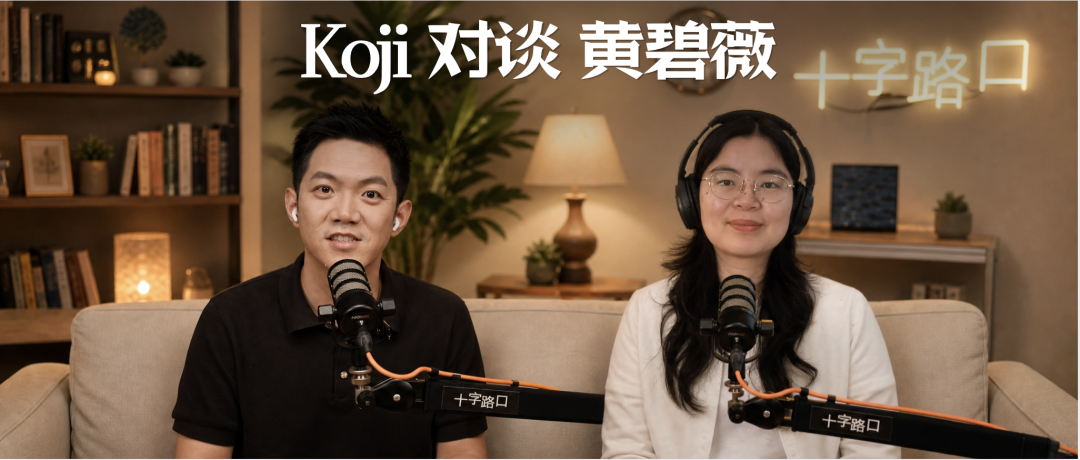
👦🏻 Podcast interview: Koji
🥷 Edited by: Crossing
🧑🎨 Layout: Zeoooo

🚥 Someone is always pushing toward the stars.
World models are one of the hottest keywords in AI and embodied intelligence for 2026. But the more popular a term becomes, the more it's overused: video generation, 3D generation, JEPA, VLA, WAM — all seem to get labeled as world models. When we actually talk about "world models," what are we really talking about?
This week, Crossing welcomes Professor Biwei Huang, founder and CEO of Aether AI. From Germany's Max Planck Institute to CMU to UCSD, she has spent her career deep in causal discovery and causal AI, and is one of the field's key academic contributors.
Aether AI recently closed a $20 million angel round in rapid succession. Huang is taking causal AI — long considered "more principled, but harder to realize" — into the territory of Physical AI and robot brains, building what she calls a "causal world model."
I spoke with Biwei Huang about where the boundaries of world models actually lie, why video generation isn't the same thing, why VLA hits walls on real-world tasks, why WAM may only be an intermediate state, and the three core problems her "causal world model" is designed to solve.
This is also an episode about the choice to start a company. Why would a UCSD professor decide to jump into entrepreneurship in early 2025? What signal did she see?
If you're tracking world models, embodied intelligence, robotics, causal AI, or trying to figure out where the next paradigm of AI will emerge, this episode might help you recalibrate one question: which path actually leads to the endgame for world models?
Listen on WeChat:
Listen on Xiaoyuzhou:

🎬 Video podcast now live on Koji's WeChat Channels, Xiaohongshu, Bilibili, YouTube, and other platforms
🚥
Rapid-Fire Q&A
👦🏻 Koji
Hi, Professor Huang. Let's start with some rapid-fire questions. Could you walk us through your academic background?
👩🏻 Biwei Huang
It's been quite a journey. After graduating from the computer science department at East China Normal University in Shanghai, I went to the Max Planck Institute in Germany, then did my PhD at CMU, and joined UCSD as an assistant professor after that.
👦🏻 Koji
Your MBTI and zodiac sign?
👩🏻 Biwei Huang
Leaning INTJ, sometimes INTP. Aquarius.
👦🏻 Koji
Describe Aether AI in one sentence.
👩🏻 Biwei Huang
We're building true causal world models that let AI understand the causal relationships and physical laws behind the world, so it can generalize and actually help people in the physical world.
Our first application is embodied intelligence — the robot brain.
👦🏻 Koji
Sounds like a very ambitious, star-seeking kind of startup. What's your current funding situation?
👩🏻 Biwei Huang
We've received strong support from top-tier dollar-denominated funds and raised about $20 million in a very short period of time.
👦🏻 Koji
Congratulations. What were you mainly working on before starting the company?
👩🏻 Biwei Huang
Twelve years in causal discovery and causal AI.
From my master's at the Max Planck Institute, through my PhD at CMU, to being an assistant professor at UCSD — this has been my core research direction the whole way: how to go beyond correlation-based AI and find the causal relationships underneath.
Three Paths to World Models, and the Fourth No One Mentions
👦🏻 Koji
We'll get into causal models in detail soon, but let's start with "world models." Could you give us a primer — what exactly is a world model?
👩🏻 Biwei Huang
"World model" might be the most mentioned term this year, but its definition is extremely inconsistent.
Right now, video generation models, 3D generation models, including V-JEPA and others, are all being called world models.
But if you look at actual practice, the emphases are completely different: some focus on rendering, some on the model's own understanding of dynamical systems, some on video generation quality.
My definition is: a world model needs to understand the underlying physical laws and causal relationships.
In other words, it can simulate how the world operates — how, based on time or different actions, the world transitions from its current state to the next state.
👦🏻 Koji
What do you see as the most mainstream approaches right now?
👩🏻 Biwei Huang
First, the well-known video generation models. Second, 3D generation models. Third, the JEPA approach led by Professor Yann LeCun.
The core of JEPA is learning underlying laws. It removes the entire decoder from latent space to pixel space, keeping only smooth transition information in the latent space.
👦🏻 Koji
Which one are you most optimistic about?
👩🏻 Biwei Huang
The world model that ultimately gets deployed has to understand the underlying laws and causal structure of the physical world, and understand physical dynamics.
But current world models haven't truly achieved this yet.
👦🏻 Koji
So of those three paths, which is most likely to reach the ideal state you described?
👩🏻 Biwei Huang
Probably our causal world model.
👦🏻 Koji
So not those three — you're working on a fourth path.
👩🏻 Biwei Huang
Of course, we're also standing on the shoulders of giants.
We're combining early causal small models, correlation-based large models, and video generation models. Fusing these different approaches at various levels is what formed our current causality-centered world model.
What Makes a Causal World Model Different
👦🏻 Koji
What's the core difference between a causal world model and the 3D generation, video generation, and JEPA approaches?
👩🏻 Biwei Huang
The core difference is that our model achieves three things in latent space:
First, learning causal variables and features. Things like an object's shape, quantity, velocity, angular velocity, friction, and so on.
Second, learning the causal structure and mutual influence among these variables. For example, when grasping a cup, how do grip point, speed, and angle affect success rate.
Third, autonomously learning physical dynamics. For instance, given a certain action, what state will be reached at the next moment.
With these three elements, you've learned a complete causal system, enabling true generalization. When moving a robot from one environment to another, or from one task to another, because it understands the underlying laws, it can generalize like a human and adapt quickly.
👦🏻 Koji
Why is causality so important? In large language models, through sheer scale, the model doesn't need to know causality to exhibit rigorous logic.
But in world models, why is causality indispensable? Isn't it possible that with enough data and good enough algorithms, causal relationships could eventually "emerge" the way they seem to in large models?
👩🏻 Biwei Huang
That's an excellent question. First, let me ask you: why has LLM success been largely confined to natural language and coding tasks?
👦🏻 Koji
Because in the real world, we don't yet have enough training data in video or other modalities?
👩🏻 Biwei Huang
That's one reason, but the core issue is: natural language and coding are two very simple modalities whose information exists only at the surface level of language.
Take something like "Because the weather is nice today, I'm going out for a walk" — this causal relationship has already been summarized and written on the surface of language. Plus language consists of discrete tokens, and the data volume is massive, so the LLM paradigm of simply learning surface-level correlations works very well.
But if you move into harder embodied tasks, robot manipulation, and complex scientific discovery — biopharma, new materials research, astronomy, and so on — the existing LLM paradigm clearly falls short.
Take embodied intelligence as an example. Every time a robot interacts with its environment, it's performing an intervention — this is inherently a causal process. Without understanding causal relationships, you simply cannot do manipulation tasks well.
Imagine asking a robot to make a pancake. If it only learns from watching videos, it might just pick up a surface-level procedure: pour batter, wait a bit, flip. From a video generation perspective, the generated video might look fine.
But step into a real kitchen, and every situation is different: this time the pan is hotter, or less hot; the batter is thicker, or thinner; there's more oil, or less.
If the robot doesn't understand the causal relationships underneath, it will just mechanically imitate, unable to flexibly generalize. When the pan is very hot, waiting 30 seconds might burn the batter; when it's not hot enough, 30 seconds is nowhere near enough.
The physical world demands far greater precision in manipulation than video generation does.
👦🏻 Koji
You mentioned earlier that your data has a self-circulating system. How does that work?
👩🏻 Biwei Huang
It's a concept of "self-evolution."
First, on the data input side, collecting data from a causal perspective lets you be much more targeted. Say you collect 10,000 data points — maybe only 100 of them contain genuinely new information the model needs. We only need to feed those 100 high-value data points to the model, and efficiency becomes much higher.
Second, on the data output side, once the causal world model is trained to a certain level, it can itself serve as a simulator, generating high-quality, long-horizon data, including various corner cases and controllable failure cases. This data then feeds back into training the model.
This kind of data generated by causal world models is often extremely difficult to collect in real-world robot deployments. It effectively compensates for the shortcomings of real-world data, especially in extreme corner cases that teleoperation can't cover.
You can see the loop here: high-quality data serves as fuel for the model; as the model gets stronger, it produces even higher-quality data, which feeds back into its own training.
The First Version of the Causal AI World Model
👦🏻 Koji
What are the hard requirements in terms of data volume and compute to train the first milestone model?
👩🏻 Biwei Huang
For our first version, we're targeting 7,000 to 8,000 hours of data.
On the compute side, we need several hundred GPUs. We currently have roughly 400.
👦🏻 Koji
What are the main components of this 8,000-hour dataset?
👩🏻 Biwei Huang
There are four main parts:
First, simulated data. This includes data from physics simulators, plus self-generated data from our causal world model.
Second, first-person perspective data.
Third, video data.
Fourth, teleoperation data. This is the last mile, responsible for mapping the underlying physical laws onto the robot's physical body.
👦🏻 Koji
Once this first version is trained, what level of generalization can it achieve?
👩🏻 Biwei Huang
First, it can execute very long-horizon tasks.
Second, it possesses genuine reasoning ability. For example, when tidying a room, it sees a bill and judges it as a personal item that should go in a drawer; it sees a book and recognizes it as a public item, neatly placing it on the desk.
Third, generalized manipulation. Even when encountering unseen objects or new tasks, it can operate fluidly — provided the physical laws underlying the task were already present in its training data.
These are our targets for the first version.
👦🏻 Koji
In current R&D, what positive signals have you seen that give you confidence?
👩🏻 Biwei Huang
Here's a simple example. We had the robot learn two tasks from training data: Lift, and Pick and Place.
Then we tested it on a completely novel task it had never encountered: Stacking.
If the model were simply memorizing learned motions without understanding the underlying causal relationships and laws, it couldn't complete Stacking.
But our causal world model, having mastered Lift and Pick and Place, could directly execute Stacking perfectly.
👦🏻 Koji
Beyond Stacking, can other more complex tasks generalize in the same way?
👩🏻 Biwei Huang
As long as the underlying physical laws are shared, yes.
It doesn't look at surface-level steps; it understands the physical essence beneath. If a new task is composed of ten known physical laws combined, it can perform it well.
Of course, if it encounters a completely unfamiliar physical law, it also needs to explore and learn, just like a human.
👦🏻 Koji
Why can Lift and Pick and Place directly lead to Stacking? What physical laws do they share?
👩🏻 Biwei Huang
Breaking down Stacking: it also requires picking, placing, and lifting upward. So Stacking is essentially a combination of the physical laws from Lift and Pick and Place.
👦🏻 Koji
Have these research results been published in papers?
👩🏻 Biwei Huang
You can follow several papers we've published recently.
One appeared at this year's ICML, titled Learning Task-Sufficient World Models by Synergizing Agentic Exploration and Structured Modeling; another is Ada-Diffuser: Latent-Aware Adaptive Diffusion for Decision-Making.
👦🏻 Koji
How much training data was used to demonstrate the generalization effects in these papers?
👩🏻 Biwei Huang
The data came from simulated environment tasks in the papers, including Lift, Pick and Place, and Stacking.
The data volume was actually quite small — roughly just over a hundred hours.
👦🏻 Koji
So all current training and validation has been in simulators? Have you begun training and real-robot validation in the physical world?
👩🏻 Biwei Huang
In our previously published papers, we mainly conducted tests in simulators.
👦🏻 Koji
What's your roadmap for real-world deployment?
👩🏻 Biwei Huang
We plan to release a real-robot demo this year, demonstrating the robot's generalization and reasoning capabilities when executing long-horizon tasks.
Since entering this field in 2014, I've been thinking about this: previous causal paradigms could perform extremely well in perfect environments, but in the real physical world, they face all kinds of "imperfections" — unobservable hidden variables, biased data, missing values, distributional shifts.
When these problems arise, how do you truly find the underlying causal relationships? You need both theoretical proof and algorithmic derivation. This was also my main research contribution during my PhD.
👦🏻 Koji
Even in an extremely imperfect world, you still have to find ways to distill essential causal relationships?
👩🏻 Biwei Huang
Yes, that's the core.
The "Three Kingdoms" of Causality
👦🏻 Koji
Causal research has a long history. Are there schools of thought within academia? What are the mainstream approaches?
👩🏻 Biwei Huang
Broadly speaking, there are three schools. In the early days, they didn't really get along.
One is the CMU school, focused on causal discovery, represented by Clark Glymour and Peter Spirtes.
The other two belong to causal inference:
One centers on graphical models to estimate causal effects, led by Turing Award winner and UCLA professor Judea Pearl;
The other doesn't use graphs as its core — it's the potential outcomes framework, led by Harvard University professor Donald Rubin.
They're all in their 80s now, highly respected. But in the early days, the schools were like the Three Kingdoms — each不服 the others.
👦🏻 Koji
Which school do you belong to?
👩🏻 Biwei Huang
We're mainly in the CMU school. I graduated from CMU, directly studying under professors Clark Glymour, Peter Spirtes, and Kun Zhang.
My advisor at the Max Planck Institute, Bernhard Schölkopf, is also from the CMU school. Of course, at the conceptual level, we've also been deeply influenced by Judea Pearl.
👦🏻 Koji
How did you end up on this academic path of causal AI? Many scholars arrive at their research trajectory through fate or coincidence — was it the same for you?
👩🏻 Biwei Huang
I was an extreme case of coincidence.
When I was doing my master's in Germany, my major was computational neuroscience. My thinking at the time was simple: I wanted to study how to bring mechanisms from the human brain into AI, to provide some fresh inspiration.
That summer, I happened to attend a lecture at a summer school. The speaker was Professor Bernhard Schölkopf, and his topic was causal discovery. That was my first exposure to the concept.
Although I didn't fully understand it at the time, I somehow felt this problem was extremely fundamental, with far-reaching significance. Afterward, I reached out to relevant labs and formally entered the field.
👦🏻 Koji
Was it that lecture that struck you and made you grasp this proposition?
👩🏻 Biwei Huang
Yes. I found that looking at problems from the underlying logic of causality is not only enormously helpful for research, but also provides a fresh, essence-cutting perspective in everyday life.
👦🏻 Koji
What year was that roughly?
👩🏻 Biwei Huang
👦🏻 Koji
That's almost 13 years now.
👩🏻 Biwei Huang
Yes. Later, as AI developed, we realized that the existing machine learning tasks were entirely based on correlation for prediction.
Naturally, we began thinking about how to use causal mechanisms to better solve these machine learning tasks. We did a series of works in reinforcement learning, classification, clustering, non-stationary prediction, representation learning, and transfer learning.
You'll find that almost all machine learning tasks can benefit from causal understanding — this brings performance improvements, enhanced generalization, and greater data efficiency.
Later, large models became hot, but they're built on correlation. I also thought: theoretically, causal AI is clearly more sound, so why did correlation-based large models explode first in application?
After becoming independent from CMU, I began thinking about how to combine causal theory with large models and big data, to pioneer the next generation of AI paradigms centered on causal intelligence.
Causality and Large Models
👦🏻 Koji
Has causal research produced any substantive benefits for large language models so far?
👩🏻 Biwei Huang
There are mainly two paths, approaching from the outside and inside:
First, external assistance. Using traditional causal discovery methods to identify causal relationships between variables, then providing these to large models through RAG or prompt engineering, making their responses more reliable and reducing hallucinations.
Second, internal architectural restructuring. Directly changing the internal architecture of large models so they can autonomously learn causal relationships during training.
👦🏻 Koji
Are major labs like OpenAI, Anthropic, or Google using these methods? Are there products deployed, or is this still frontier exploration?
👩🏻 Biwei Huang
Major labs have their path dependencies. OpenAI and Anthropic are the founders of the LLM paradigm; their focus remains heavily on extending LLMs. They haven't truly crossed over to the causal path yet.
👦🏻 Koji
Actually, you faced two choices when starting your company: using causality to build better LLMs, or building causal world models to solve embodied intelligence. How did you decide?
👩🏻 Biwei Huang
Large language models already perform quite well on language and coding tasks — if we were scoring, they're already at 90.
But in embodied intelligence, the industry is probably at a 10. What I want to do is push that 10 to 90.
A Brief History of Causality
👦🏻 Koji
Can you walk us through the full academic history of causal AI?
👩🏻 Biwei Huang
Causality was first explored in philosophy — in the West starting with Aristotle, and in China tracing back even further to the I Ching. After more than two millennia of inquiry, it wasn't until modern times that a clear, intervention-based definition emerged: A causes B if and only if changing A (or intervening on A) changes the probability of B. That is the modern definition of causality.
The earliest practical application of causality was in medicine: the randomized controlled trial, or double-blind experiment. To determine whether a drug effectively treats a disease, subjects are randomly assigned to either the treatment group or the placebo group, and the probability of recovery is observed.
This was the first method for discovering causal relationships through deliberate human intervention.
But experiments are extraordinarily expensive, and in many scenarios impossible to conduct due to ethical constraints. By the late 1980s, three professors at CMU realized that relying solely on randomized controlled trials wouldn't work. We have vast amounts of observational data — so could we directly mine causal relationships from that?
So Clark Glymour, Peter Spirtes, and Richard Scheines at CMU proposed the PC algorithm for the first time. It allowed us to use sophisticated statistical methods to move beyond mere correlation and recover the underlying causal structure.
This framework developed extremely well between 1989 and 1997, producing a remarkable cohort of outstanding researchers. But after that, causal discovery hit a bottleneck and struggled to advance further. From 1997 to 2006, the field went through a relatively quiet period.
Then in 2006, Finnish scientists discovered that under non-Gaussian distributions, there exist additional mathematical properties that allow us to determine, using only observational data, the causal direction between any two variables — whether A causes B or B causes A.
Key figures who drove this breakthrough included my later PhD advisor Kun Zhang, Bernhard Schölkopf, and others.
👦🏻 Koji
Of those four types of training data you mentioned earlier, what's the current mix in your practice?
👩🏻 Biwei Huang
Roughly speaking: the first three — simulation data, first-person-view data, and video data — together account for about 80%; the remaining last-mile teleoperation data makes up about 20%.
👦🏻 Koji
The goal you described for your first-generation model aligns with what many teams are now calling the World Action Model. How do you see the relative strengths and weaknesses?
👩🏻 Biwei Huang
The current WAM is essentially a beefed-up variant of VLA.
The reason it seems to work well in the short term comes down to one core factor: video data is extremely abundant.
The logic is: first predict what the next video frame will look like, then work backwards to infer what action must have occurred between those two frames.
But for the causal world model we're building, our approach aligns more closely with how the physical world actually operates.
The most reasonable form should be an action-conditioned world model, paired with a policy model.
👦🏻 Koji
What's the biggest lesson you've drawn from WAM or earlier VLA practice?
👩🏻 Biwei Huang
VLA is essentially a VLM with an Action Head tacked on.
I don't think that's ideal. Because people are still trying to understand and solve action problems through a language lens. Actually, action should be treated from a time series perspective.
👦🏻 Koji
Right now the industry consensus seems to be "WAM good, VLA bad." What's your specific take on their lifecycles?
👩🏻 Biwei Huang
Let's start from VLA's origins. People initially chose the VLA path mainly because they saw how successful large language models had become with natural language, and tried to directly transplant that approach.
But why does the task completely fail when the table is just 2 centimeters higher? The core issue is that action exists in continuous space. It's nearly impossible to exhaustively collect all possible states in that continuous space in your training data. This is the fatal flaw that makes VLA lack generalization and unable to work in the real physical world.
Precisely because of this, everyone has now shifted to WAM. I think WAM is a decent intermediate state — at this stage it's genuinely better than VLA, because we have massive amounts of video data. It can predict what the next video frame looks like, then use an inverse dynamics model to work backwards and infer the action between those two frames.
But this still isn't the most natural state transition process. The most natural process should be: given the current state at time t, input an action, and observe how it evolves into the state at time t+1.
If the full score is 10, VLA's ceiling might be 5, WAM might be around 6.5. It can provide some transitional progress, but it can't get us to the ultimate end goal.
We firmly believe the final model form will be an Action-conditioned World Model plus a Policy Model.
👦🏻 Koji
Then what score would you give the causal path you're committed to?
👩🏻 Biwei Huang
Causality actually has many dimensions. If you fully achieve causality at every critical node, that's a 10.
Of course, for our company, we're gradually introducing causal mechanisms at various levels — we won't take an extremely aggressive posture and rush straight for 10 right out of the gate.
👦🏻 Koji
If a WAM team looked at your approach, what would be their biggest criticism or skepticism?
👩🏻 Biwei Huang
Actually, on the point that "causality is the ultimate goal," the entire industry is in complete consensus — there's no doubt about that.
The skepticism isn't about whether causality is right or wrong, but rather: how exactly do you implement a causal world model? Because this is genuinely an extremely difficult engineering and theoretical challenge. In both industry and academia right now, people who truly understand causal architecture are extremely scarce.
👦🏻 Koji
The success of large models has convinced everyone that "just pile up data and Scaling Law miracles will happen." Would people suspect that causal relationships don't naturally emerge from simply stacking more data?
👩🏻 Biwei Huang
The concern is mainly about the specific implementation path.
How do you face various raw inputs — whether video, time series, or sensor signals — and precisely extract the underlying causal variables? And on that foundation, learn causal structures and master the physical causal dynamics of how they evolve over time.
People aren't sure how to close this loop.
👦🏻 Koji
So this path can actually achieve better data efficiency?
👩🏻 Biwei Huang
The Scaling Law concept as discussed in the industry is actually somewhat hollow.
True Scaling Law must be deeply bound to data quality and the model itself.
For example, in LLMs, stuffing in 1 million data points might boost performance by 20%; but a model that understands causality and has grasped underlying principles might achieve the same performance with just 200,000 high-quality data points.
👦🏻 Koji
Leaving academia to start a company is an enormously consequential life decision. Was there a specific trigger?
👩🏻 Biwei Huang
It was the result of both internal and external factors coming together.
From a personal ambition standpoint, research and entrepreneurship have always been the only two things I've wanted to do in life — two essential pillars I had to complete. After twelve or thirteen years in academia, we had essentially solved the core theoretical problems of causal AI. Internally, I was ready to actually implement these algorithms in business and real-world applications.
From an external environment perspective, AI has evolved extremely rapidly in recent years. While LLMs have achieved great success at the language level, in embodied intelligence the existing VLA path has already hit a wall, yet people are still trying to solve it through blind, brute-force data scaling.
At that point in time, I felt I had to bring my years of deep causal research into the real world, to tackle this bottleneck problem of the "robot brain."
👦🏻 Koji
Why did "starting a company" become a must-do?
👩🏻 Biwei Huang
Research is typically a process from idea to paper — it's carried by publications as its output.
Entrepreneurship, on the other hand, transforms what were previously paper- and algorithm-level results, those small models, into a highly available, systematic, commercially deployable entity that can serve more people.
At the paper stage, you might be serving only a tiny handful of academic peers; but once you turn the technology into a product, you reach thousands of households. Getting robots to truly enter reality — helping ordinary people tidy up, cook, providing tangible daily convenience.
👦🏻 Koji
Academia requires patience and slow refinement; the vast majority of professors are accustomed to staying in the ivory tower. At what moment did you realize you had to become an entrepreneur too?
👩🏻 Biwei Huang
The turning point came in early 2025.
I was talking with a friend, having a deep discussion about the bottlenecks in embodied intelligence and the limitations of current AI paradigms. Suddenly, the idea that I absolutely had to go out and start a company right away was completely ignited in me.
👦🏻 Koji
What kind of friend was this, and what did you talk about?
👩🏻 Biwei Huang
This friend was discussing with me the real ecosystem of robots and automation in factories.
At the time, many robots had already been sent into factories for testing, but they were often returned after not very long. Because they couldn't truly replace humans in handling variable and complex production situations — instead they became a burden on factory operations.
Their core fatal flaw: they lacked a "brain" with genuine intelligence, one that could think and understand physical laws.
I immediately realized: isn't this precisely the problem that causal AI is best at and most suited to tackle? At that moment I knew the timing was fully ripe, and I had to take this step.
👦🏻 Koji
Professor and PhD entrepreneurship is hot right now, with a bit of frenzy to it. Do you see yourself more as a scientist who happens to be founding a company, or an entrepreneur doing academic work? What's the difference?
👩🏻 Biwei Huang
I think these two coexist very strongly in me.
I'm definitely a scientist operating in the commercial arena, committed to landing products. Regarding our path — because we're focused on more foundational, more base-layer technological innovation, dedicated to opening up the next-generation AI paradigm centered on causal intelligence.
So at this stage, our company's entrepreneurial activities and scientific research are highly overlapping.
Our company is closer in nature to a frontier lab. Only by achieving genuine invention and creation at the underlying technology level can we make substantive breakthroughs in embodied intelligence brains, and thereby serve the public.
Is a PhD Still Worth It?
👦🏻 Koji
Many in our audience are PhD students or young scholars. AI has become so powerful — it can write code, even write papers — and there's a general sense of disorientation. Do you think the bar for research has been raised or lowered today?
👩🏻 Biwei Huang
This is an excellent question.
My take: for truly core, groundbreaking research, the bar hasn't changed.
But if you're only doing repetitive, follow-the-leader, low-bar research, then yes, the barrier has become extremely low. Because now you can use AI to churn out code and papers at incredible speed.
The key is to embrace AI without becoming dependent on it. You must use AI rationally, not surrender your most precious critical thinking to it, letting it control you.
👦🏻 Koji
How do you personally draw that line in your own work? What's the subtle distinction between "using AI" and "being controlled by AI"?
👩🏻 Biwei Huang
The core ideas must be your own.
In research, the scarcest and most valuable things will always be highly creative original ideas, and critical scrutiny of key technical paths.
👦🏻 Koji
How should young researchers train themselves to build this kind of critical, creative thinking?
👩🏻 Biwei Huang
First, you need a certain amount of hands-on accumulation.
In daily work, life, and research, you must consciously maintain deep scrutiny: Why did this paper choose this particular approach? Could a different perspective do better?
Second, don't blindly follow trends.
Because directions that everyone is chasing usually mean that area is already relatively mature and crowded. We need to learn to look past the current noise, predict where the next real explosion will happen, and work toward that.
👦🏻 Koji
During these years when large language models have been all the rage, what's been the atmosphere and mindset in the causal inference community?
👩🏻 Biwei Huang
Broadly two camps.
One is a very small number of highly respected senior scholars. They're almost Zen-like, still steadfastly doing theoretical research they consider more fundamentally meaningful.
Young scholars are much more pragmatic. Facing survival and job-hunting pressures, they tend to seek compromise — combining causal mechanisms with current trends, so they can publish high-impact papers while also landing decent offers in the market.
👦🏻 Koji
At the moment ChatGPT was released, what was your state of mind? What turns has your journey taken through the waves of recent years?
👩🏻 Biwei Huang
That moment left an extremely deep impression. I did some very profound reflection.
I was somewhat puzzled: causal AI is logically the most reasonable, most perfect paradigm — so why did large language models capture all the attention overnight?
Before that, my academic path had been trying to crack an ultimate problem: how to do causal discovery without requiring extremely strong external assumptions. Even with latent variables, lots of bias in the data, distribution shifts, or missing data — we were still trying to solve it theoretically and completely.
But the explosion of large models forced me to confront a commonsense truth that academia had ignored: the brute-force scaling of data has genuinely objective power.
Even though large language models only extract very simple surface-level associative information from massive data, they do unleash enormous general-purpose energy.
I later figured it out: data scaling is an irresistible law. What we need to do is, on top of massive data scale, use deeper causal mechanisms to mine underlying dynamics, combining the strengths of both to define the next inflection point.
👦🏻 Koji
From that reflection to your decision to start a company — what stages did you go through?
👩🏻 Biwei Huang
Roughly two stages.
In the first stage, after the reflection, I tried to improve LLMs. For example, researching how to alleviate hallucinations in large models from a causal perspective, improving their underlying performance.
Then I started looking at embodied intelligence. I realized that as LLMs rapidly self-update generation after generation, the marginal returns in pure language are actually diminishing — the incremental advantages they can offer us are very limited. Meanwhile embodied intelligence, the AI paradigm for the physical world, remains a complete wilderness.
This drove me to make up my mind and fully pivot to causal world models, entering the second stage of physical AI and embodied brain deployment.
👦🏻 Koji
For causal world models, is all the data self-collected, or can you purchase from third-party data providers?
👩🏻 Biwei Huang
The vast majority is self-generated and self-collected.
For simulated data, we can generate unlimited, boundary-less amounts through our own systems. For last-mile teleoperation data, we collect a very small number of core samples ourselves, then commission suppliers for targeted, customized long-tail specialty data.
👦🏻 Koji
If an undergraduate came to you now and said: "The world is changing too fast, I don't want to spend five or six years on a PhD anymore, I want to get into industry quickly" — what would you advise?
👩🏻 Biwei Huang
My understanding of the PhD has never changed.
I believe only those who have an intense desire for exploration and research itself, who derive genuine intellectual pleasure from it, should pursue a PhD.
If your goal is simply to use the degree as a job-hunting credential, there's really no need to spend the prime five or six years of your life on a doctorate — you might miss many opportunities to accumulate wealth and advance in industry.
👦🏻 Koji
How do you identify whether that so-called inner thirst for research is genuine academic desire, rather than fleeting功利跟风 [opportunistic bandwagoning]?
👩🏻 Biwei Huang
Often those with a certain streak of pure idealism are better suited for a PhD.
In this AI era, you get bombarded with tech hype every day. Someone truly suited for academia won't get swept along by the excitement, but will maintain the conviction of "I'm walking on the path I've defined as correct."
They can strip away noise in complex environments and see clearly what truly belongs to them, what has genuine scientific research value.
👦🏻 Koji
That's hard. When you're holding steady in the lab, you see classmates who went to industry early or joined OpenAI, maybe already financially independent. Under such intense peer pressure, how do you steady your mindset?
👩🏻 Biwei Huang
Indeed. Before truly immersing yourself, many people may not fully understand their own nature.
If you're already certain that what you most crave in life is exploring the unknown boundaries of human knowledge, then don't hesitate — just do the PhD.
But if you're still纠结 [torn], going back and forth, the most practical approach is to try, to desensitize. You can start with a PhD, or go to industry for a few years first — if you find it's the wrong direction, adjust anytime. The barrier between academia and industry has never been lower.
👦🏻 Koji
When will the ceiling of large language models become visible, and in what form?
👩🏻 Biwei Huang
It depends on the complexity of the specific task.
In embodied intelligence and other physical-world interaction tasks, the ceiling of LLMs is already clearly visible.
You may have noticed that recently, people in the industry are increasingly mentioning the word "causal."
This is an extremely gratifying change. It represents growing清醒 [clarity] that relying on simple "associative matching and probabilistic prediction" cannot solve the embodied brain.
Our ultimate goal must be to train underlying models that truly master causal structure and understand objective laws.
👦🏻 Koji
Beyond academia, which industry forces have started standing up and mentioning "causal," making you feel that causality is gaining broader attention?
👩🏻 Biwei Huang
Professor Yann LeCun, in numerous recent public interviews, has been vigorously advocating for causality at a high level, exploring how causal mechanisms are key to improving generalization and performance in large models.
And Professor Fei-Fei Li — many of her recent foundational ideas about embodied intelligence and spatial intelligence are essentially connected to causality, even if she doesn't use the word directly.
Domestically, many cutting-edge leading teams have also started introducing causal concepts in their technical descriptions. For example, in DeepSeek's previously disclosed information, they mentioned and integrated causal mechanisms to some extent.
However, in my view, most teams' current exploration of causality either remains at a high-level conceptual level, or only does integration at very local, relatively simple points — such as predicting future states from historical inputs.
Truly having the patience to start from the essence of the physical world and build the deep world model we described earlier that integrates "causal variables, causal structure, and causal dynamics" as a trinity — in both industry and frontier academia, we are currently the team that has gone deepest.
Turing Award winner Professor Yoshua Bengio is very bullish on our causal model framework, you could even say "extremely excited." We previously had extremely deep discussions on how to break through the technical boundaries of classical causal discovery, and he has cited my research papers multiple times.
👦🏻 Koji
Have you had in-depth direct exchanges with Professor Yann LeCun or Professor Fei-Fei Li?
👩🏻 Biwei Huang
I previously had direct contact with Professor LeCun.
When we were organizing an academic symposium, I sent him an invitation. Although he couldn't attend due to a conflicting conference in Paris, he replied with a very warm and lengthy email, expressing high affirmation and praise for the underlying technical approach of our causal world model.
👦🏻 Koji
This time you raised $20 million in a very short period — a massive chip in the current winter. Where do you plan to spend this money?
👩🏻 Biwei Huang
Mainly three core directions: acquiring high-quality compute, building causal data moats, and recruiting top-tier talent.
👦🏻 Koji
Have you brought in personal investments from academic heavyweights?
👩🏻 Biwei Huang
The main capital necessarily comes from VCs.
Friendly investments from academic peers make up a small portion. They provided some financial support out of trust in this technical direction and our research. I definitely couldn't take too much from them.
👦🏻 Koji
For this talent recruitment, what types of people are you most urgently looking for, most eager to find?
👩🏻 Biwei Huang
We are desperately seeking talent. Currently we most value core talent joining across three dimensions:
First, algorithms. People with extremely high passion for AI algorithms, especially causal computation, and mature hands-on experience.
Second, large-scale engineering training. Heavy hitters with very deep, proven experience in training architectures for heavy-load models like video generation models, with verified track records of training excellent models.
Third, full-stack robotics experts. Not only thoroughly familiar with traditional hardware and classic low-level motion control, but also able to keep pace with cutting-edge AI algorithm evolution.
If there are experts in relevant directions among our listeners, please feel free to reach out to our team anytime.
Looking Back from Five Years Out: What Will Prove Wrong Today
👦🏻 Koji
Suppose we're sitting at the five-year mark, looking back at the thunderous "world model" wave of 2026. What consensus that everyone firmly believes today do you think might be proven wrong?
👩🏻 Biwei Huang
It can't really be strictly characterized as "wrong." Technological exploration is inherently a process of continuous trial and error — every step leaves its mark in history.
Even if the VLA approach that everyone is wildly chasing today turns out not to be the endgame, it will still have contributed the multimodal Action Head modeling framework. By the same token, WAM may also prove to be merely a stepping stone, but it will have forged the engineering pipeline from "video generation" to "physical world simulation."
The exploration of these interim paths, whether they succeed or fail, possesses its own unique historical validity in the present moment.
👦🏻 Koji
Suppose an omniscient, all-powerful God stood before you right now, and you could ask Him one ultimate question about AI or world models. What would you ask?
👩🏻 Biwei Huang
What I'd most want to ask is: "Is causality objectively real? Or is it simply a framework that helps humans better understand the world?"
This is analogous to time. To this day, no one can be entirely certain whether time actually exists.
👦🏻 Koji
That is an extraordinarily profound philosophical question. If causality doesn't exist, we'd be plunged straight into an existential crisis of massive proportions.
👩🏻 Biwei Huang
Yes. It's perfect as a topic for speculative conversation over tea.
But returning to real life and the entrepreneurial track, we must remain pragmatic: assume that time exists, that the physical world is concretely real, that causality is genuinely real.
👦🏻 Koji
I'm incredibly grateful to have had such a deeply substantive discussion with Professor Huang today.
Thank you for your time. We look forward together to the real-robot demo from Aether AI coming out as soon as possible — let's meet again then to talk about the latest progress on putting causality into practice. Thank you, Professor Huang.
👩🏻 Biwei Huang
Thank you, Koji, and thank you all.

Crossing is looking for independent contributors to write AI product and model reviews.
If you've written pieces like: "[Hands-on] PixVerse C1[1]," "[Hands-on] LibTV[2]," please reach out to zeo0811@gmail.com. Your email should include: ① a brief bio, ② AI review articles you've written.
We offer competitive rates. We look forward to observing and documenting the AI era together 🎪