After DJI and Insta360, He's Building Cars Like Robots
European cargo e-bikes, made in China.
European Cargo e-Bike, Made in China.

👦🏻 Author: Ms. Yi
🥷 Editor: Koji
🧑🎨 Layout: NCon

The integrated hardware-software capabilities that Chinese companies have honed in consumer electronics are now spilling over into Europe's two-wheeled mobility market — specifically, the vast Cargo e-Bike segment.
In 2025, Europe's E-bike market surpassed $20 billion and is projected to exceed $40 billion by 2034. Cargo e-Bike growth stands out in particular, with double-digit expansion across multiple European countries. Cargo e-Bike is becoming the primary mobility alternative to a second car for young European families.
This is an opportunity for Chinese smart hardware companies. On the ground, European本土 brands generally excel in mechanics but are almost collectively absent when it comes to system-level intelligence. TARRAN is one company filling that gap.
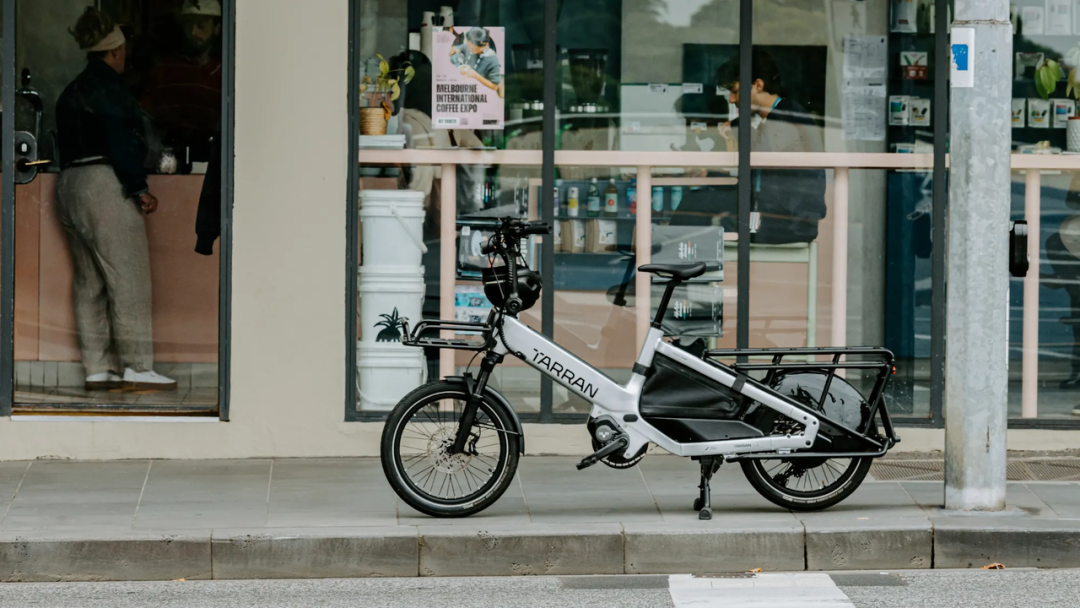
TARRAN founder Zhuo Guo comes from DJI and Insta360, with complete R&D experience across multiple consumer tech hits. His entry into the Cargo e-Bike market isn't about "adding electricity to a bicycle" — it's about "building a vehicle with robotics thinking" — offering families a new option for urban short-distance travel through vehicle-level intelligence, safety, and cargo-carrying design.
Three years since founding, TARRAN has completed five funding rounds, with its latest raising approximately $14 million. Its two product lines, the T1 Pro and L1 series, are now in stable mass production and delivery across Europe, priced between €4,000 and €7,000, with distribution through over 150 retail stores in core European markets — a number that is growing rapidly.
From R&D to mass production to reaching end consumers — how did Chinese company TARRAN establish itself in Europe's premium market in just three years? What advantages has it built that will be difficult to surpass in the near term? And what does the real European Cargo e-Bike market actually look like? With these questions in mind, we sat down with founder Zhuo Guo for an in-depth interview. Below is the edited transcript.
Rapid Fire
🚥 Crossing
Let's start with some rapid-fire questions to help people get to know you. Your age?
🤵🏻♂️ Zhuo Guo
🚥 Crossing
Alma mater?
🤵🏻♂️ Zhuo Guo
Undergraduate at Shanghai Jiao Tong University, Master's at The Hong Kong University of Science and Technology.
🚥 Crossing
MBTI and zodiac sign?
🤵🏻♂️ Zhuo Guo
ENTJ / Aquarius.
🚥 Crossing
One sentence to describe your current company and product?
🤵🏻♂️ Zhuo Guo
We are a next-generation intelligent short-distance mobility platform and product company, based in China and serving the world.
🚥 Crossing
Funding status?
🤵🏻♂️ Zhuo Guo
Founded in 2023, five funding rounds completed to date, with the latest raising approximately $14 million.
🚥 Crossing
Revenue and profit?
🤵🏻♂️ Zhuo Guo
Revenue growth is strong, not yet profitable.
🚥 Crossing
Team size?
🤵🏻♂️ Zhuo Guo
About 85 people, roughly 70% in R&D.
🚥 Crossing
What were you doing before starting this company?
🤵🏻♂️ Zhuo Guo
2015–2019: Product manager on the R&D side at DJI. 2019–2023: Head of product line R&D at Insta360.
From DJI to Insta360, Then Going Out on His Own
🚥 Crossing
You're 45 now. You started your company at 42, when you were already a pillar at Insta360. Why leave to start your own thing?
🤵🏻♂️ Zhuo Guo
Entrepreneurship has always been my "North Star." That drive came largely from my father, who has always been my role model.
My father was born in a rural village in Guangdong, got into Shanghai Jiao Tong University in the 1960s, and after graduation was assigned to work as an engineer at a Guangzhou machinery factory. When reform and opening up began in the 1980s, he became one of the first wave of entrepreneurs going into business, changing his own fate and our family's through learning and hard work. I wanted to become that kind of person too — someone who masters his own destiny.
In autumn 2014, I proactively reached out to DJI founder Frank to ask how to build hardware-software products. He had me think through some product questions. I was fortunate — not long after that conversation, in early 2015, I got the opportunity to join DJI as a product manager.
At DJI, I worked on the OSMO, Spark, Tello, and other product lines. I started with software, moved to accessories, then hardware, and finally independently led a small complete product project — I walked the entire chain.
In early 2019, I left DJI and joined then-little-known Insta360, reporting directly to founder JK. As head of product, I simultaneously led two product lines: the GO series from Gen 1 through Gen 4, and the X series from Gen 2 through Gen 4.
The real entrepreneurship started in 2023. I felt the timing was right, so I left Insta360 after more than four years and founded Tarran Innovation, building intelligent platform systems and products for lightweight mobility.
🚥 Crossing
What was the specific moment that finally pushed you to make the leap?
🤵🏻♂️ Zhuo Guo
The pandemic was a fairly direct trigger. I'm from Guangzhou, went to Shanghai Jiao Tong for undergrad, then to HKUST for my MPhil, and stayed in Hong Kong to work and settle down. Later I returned to Shenzhen for DJI, then Insta360, shuttling back and forth between Shenzhen and Hong Kong, which became increasingly difficult to manage.
During that period, I also took a hard look at where I stood. At DJI, I'd accumulated hardware-software product experience. At Insta360, I'd walked the complete journey from R&D to delivery for a complete product. I felt my experience and resources were sufficient — it was time to get in the game myself.
🚥 Crossing
How did you land on "smart mobility" as your direction?
🤵🏻♂️ Zhuo Guo
I looked at several directions at the time and eventually locked in on "cycling." Three main considerations:
-
First, market logic. I read a lot of industry research reports, and 2022 cycling market data looked strong — large scale, fast growth.
-
Second, capability fit. In our observation, the entire cycling industry was undergoing electrification and intelligent upgrading, which was exactly the direction where my strengths could play.
-
Third, a more personal reason — I love cycling myself, especially riding with family, and I've always wanted to build tech products that bring people joy.
With these ideas, I reached out to Professor Zexiang Li, who happened to be looking at E-bikes. He then introduced me to Dean Bingqiang Gao. Both gave me invaluable advice, especially emphasizing that I needed to go see the market for myself.
In early 2023, I made a dedicated trip to Europe for research.
🚥 Crossing
What did you discover on that Europe trip?
🤵🏻♂️ Zhuo Guo
Europe is the world's largest E-bike market. I visited several Western European countries.
What I found was that the cycling environment in Europe and China are vastly different. Europe has its own dedicated cycling infrastructure, a huge cycling population, and cycling is many people's first choice for getting around.
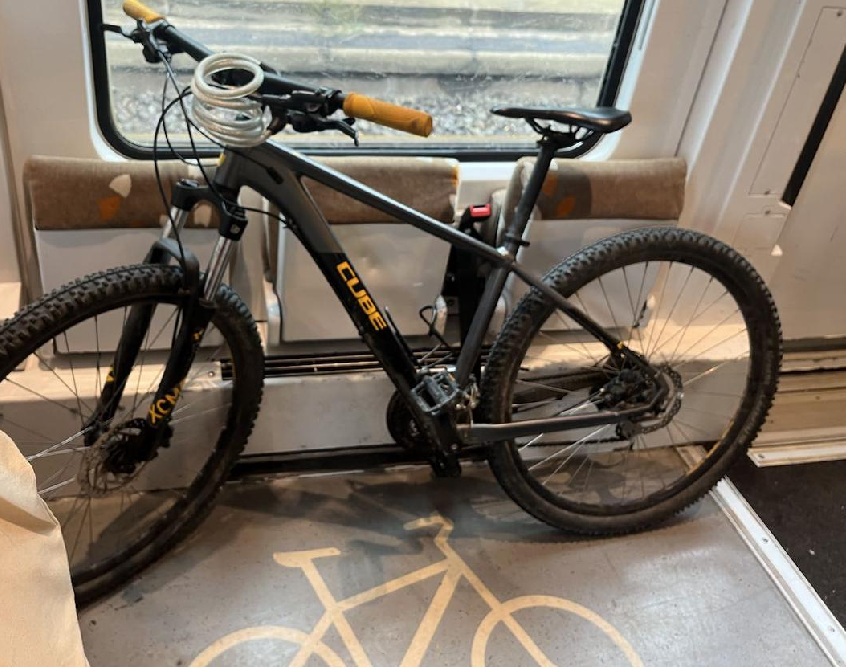
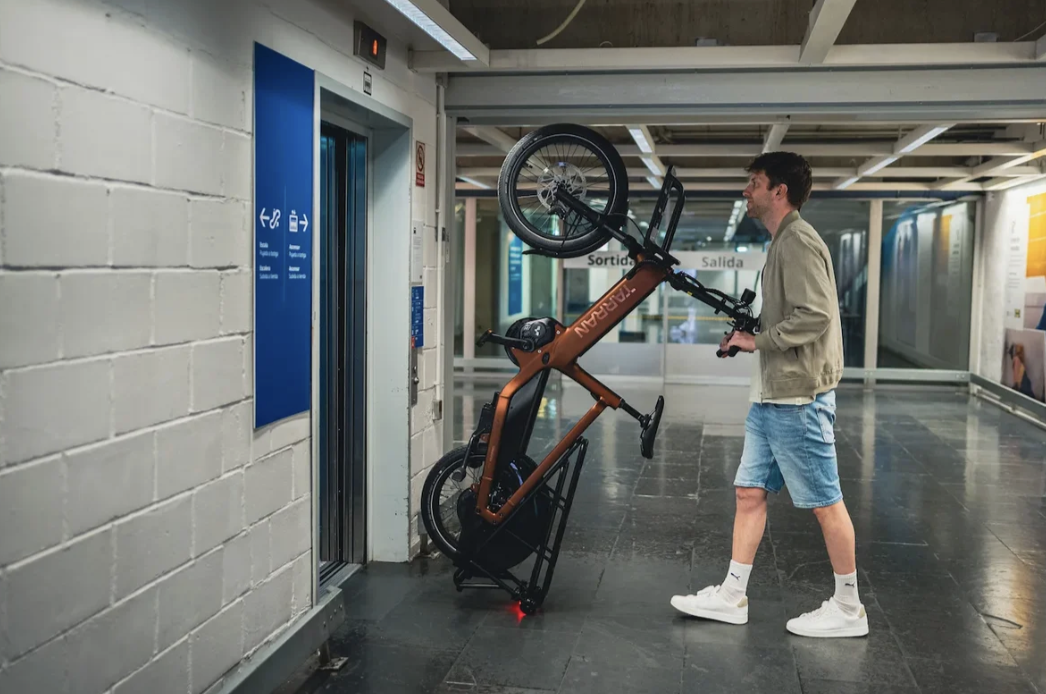
Europe's cycling infrastructure is excellent — many public transit vehicles have dedicated bicycle areas
One particularly telling contrast: the electric scooters ubiquitous across China are classified as motorcycles in Europe due to safety concerns, restricted to roads, expensive, and heavily regulated — so virtually no one uses them. This has created Europe's unique cycling market.
What particularly caught my attention was Cargo e-Bike, a distinctly European category.
Many families use it to carry kids and cargo. Cargo e-Bike is becoming the primary mobility tool replacing a second car for many young European families.
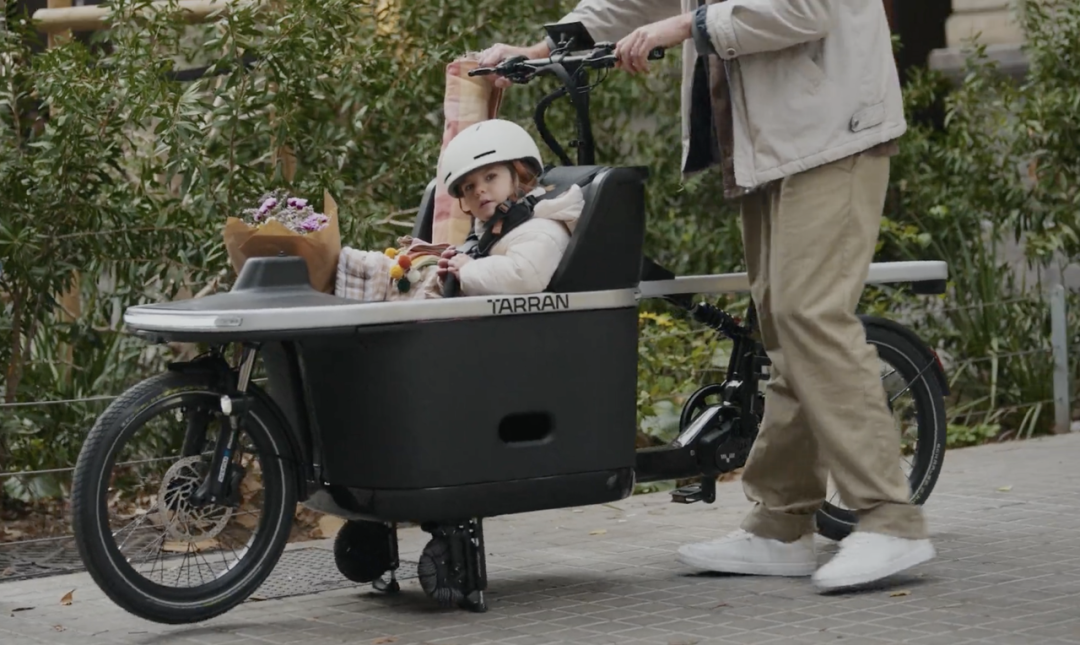
Locally, you see "cargo bike replace car" advertisements everywhere. But looking at actual products for sale, prices are high while the experience still has massive room for improvement — in quality, safety, anti-theft, and intelligence.
This aligned perfectly with my idea of using an intelligent approach to build differentiated products.
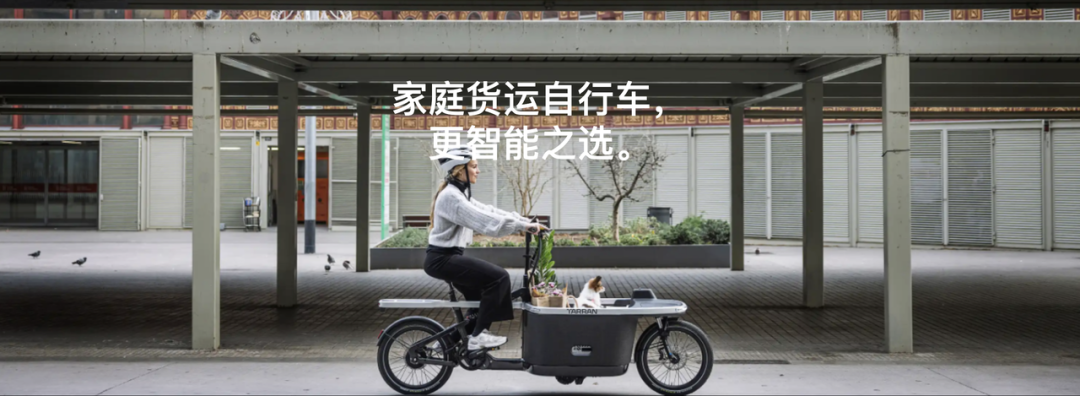
Actually, there's also a deeper strategic consideration behind choosing Cargo e-Bike: it provides an excellent "training ground" for intelligent motion systems.
First, the vehicle's inherent characteristics. Starting under heavy load, cornering stability, and braking safety — the control algorithm challenges for Cargo e-Bike far exceed those of ordinary bicycles, and that difficulty itself is valuable.
At the same time, high-frequency real-world road scenarios continuously generate high-quality data, which is crucial for system iteration.
There's also a very practical point — Cargo e-Bike has a high unit price. This means the cost added by intelligence can be absorbed, so it works commercially.
🚥 Crossing
Family is an important factor in your career decisions. What was your family's attitude toward this at the time?
🤵🏻♂️ Guo Zhuo
Actually, since graduating from HKUST, I've had many entrepreneurial and product ideas — dozens of them sitting on my computer. I often discuss them with my wife to hear her thoughts.
She's the smartest person I know. She graduated from HKUST in bioengineering and is now a partner and patent strategy expert at a patent law firm. She's been an important "filter" for my entrepreneurial ideas — 99.9% of them get killed by her. Only this one she thought was viable.
Of course, by the time I discussed Cargo e-Bike with her, I had already done a lot of groundwork. The business plan had gone through several revisions, and I had already spoken with investors. In her words, "The preparation you did this time is on a completely different level from the ideas you brought up before."
Another important point: she also really likes the "family mobility" direction and has been very supportive.
🚥 Crossing
Where do the names "Xunlu" and "TARRAN" come from?
🤵🏻♂️ Guo Zhuo
TARRAN is derived from the ancient name for reindeer (Tarand, Tarandus).
Our first product is a front-loading Cargo e-Bike, and the image of Santa Claus delivering gifts in a sleigh pulled by reindeer fits this concept perfectly.
In the long term, we are committed to serving "family users," and reindeer, Christmas, and related imagery naturally evoke associations with family, gathering, and reunion.
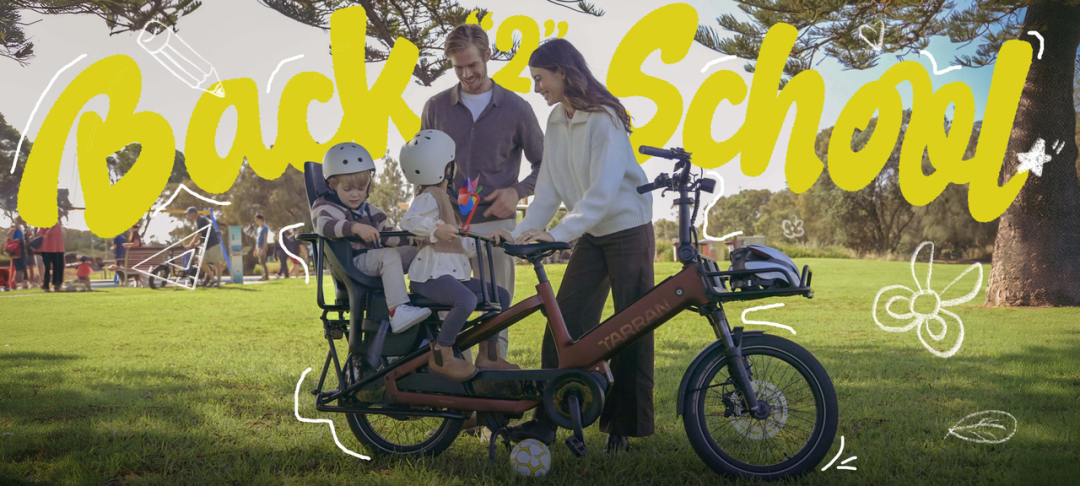
Building a Cargo e-Bike the way you build a robot
🚥 Crossing
Three years since founding, Xunlu TARRAN has launched two mass-produced models, the T1 Pro and L1. What are their respective characteristics?
🤵🏻♂️ Guo Zhuo
The T1 Pro and L1 represent our two solutions for family urban mobility.
T1 Pro is a front-loading family cargo e-bike with an MSRP of €6,999. Its biggest feature is that it brings some active safety and intelligence approaches from cars into two-wheeled mobility.
For example: Dynamic Dualdrive™ intelligent landing gear that assists with stability when parked and at low speeds; a front cargo box that can carry two children or daily cargo; plus rear-facing radar, cameras, intelligent anti-theft, and dual-battery expansion, among other features.
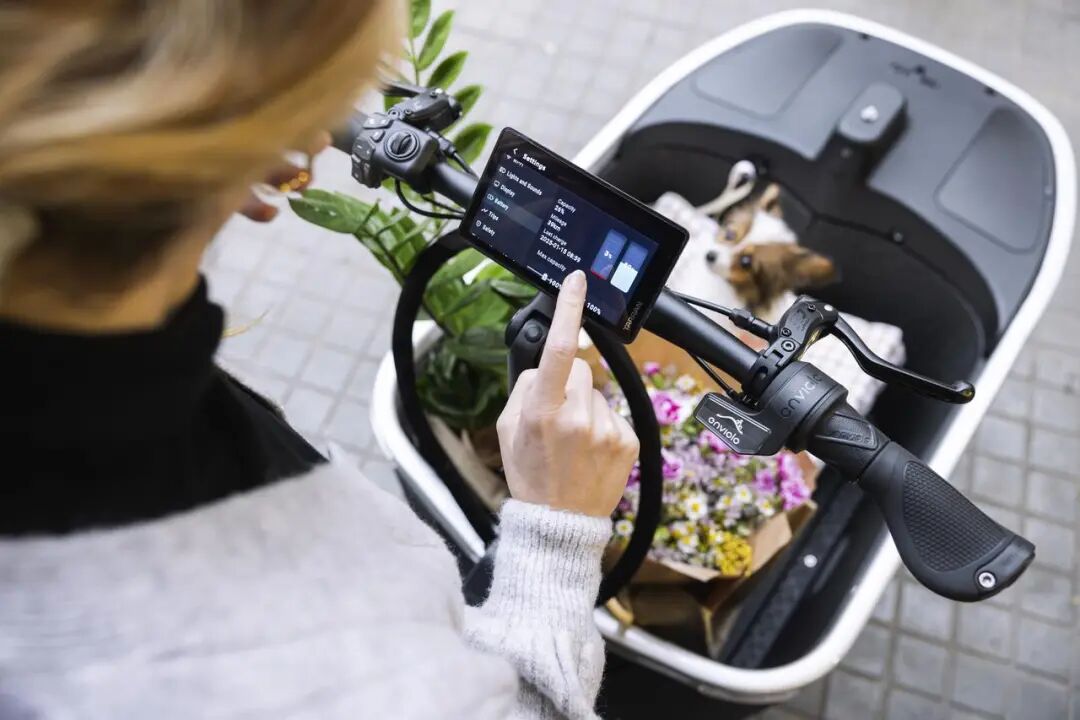 The central display shows real-time vehicle status
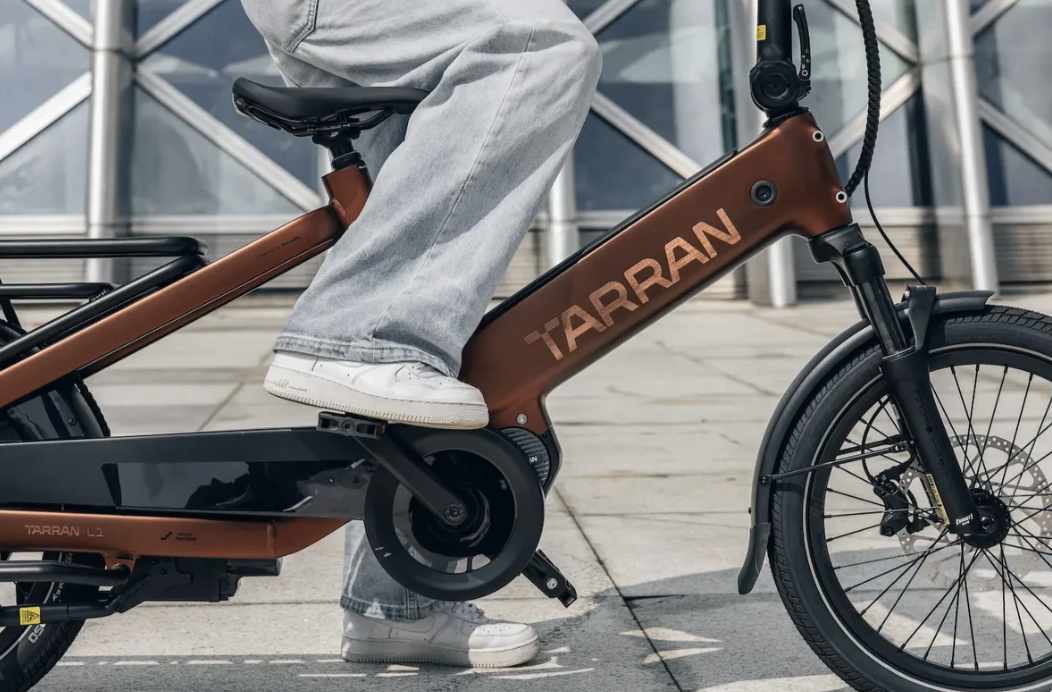
L1 is a more compact and agile long-tail family cargo e-bike.
It features a 100 Nm mid-drive motor, 215 kg maximum total weight, and modular front and rear cargo systems, covering daily needs like school drop-offs, commuting, and shopping.
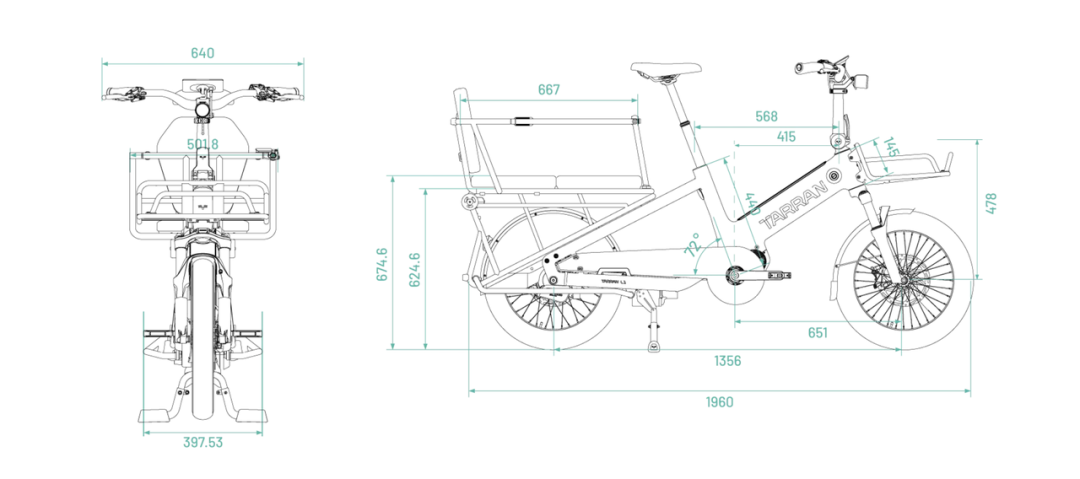
The L1 comes in two versions: L1m and L1s.
The L1m offers a riding experience closer to traditional manual bicycle control, with an MSRP of €4,599. The L1s adds automatic shifting, electronic kickstand, electronic dropper seatpost, and rear-view radar camera, making starts, stops, and rear observation easier under heavy loads, with an MSRP of €5,999.
🚥 Crossing
How do the two models differ in usage scenarios?
🤵🏻♂️ Guo Zhuo
T1 Pro is better suited for heavy loads, child transport, and family scenarios where stability is paramount.
For example, dropping two kids off at school in the morning with a stop for groceries on the way; weekend trips to the park with kids and gear; or transporting larger everyday items around the city. The intelligent landing gear addresses the loading, starting, stopping, and low-speed handling challenges of front-box bikes under heavy load, and the front cargo box lets the rider keep children in sight and communicate with them at all times.
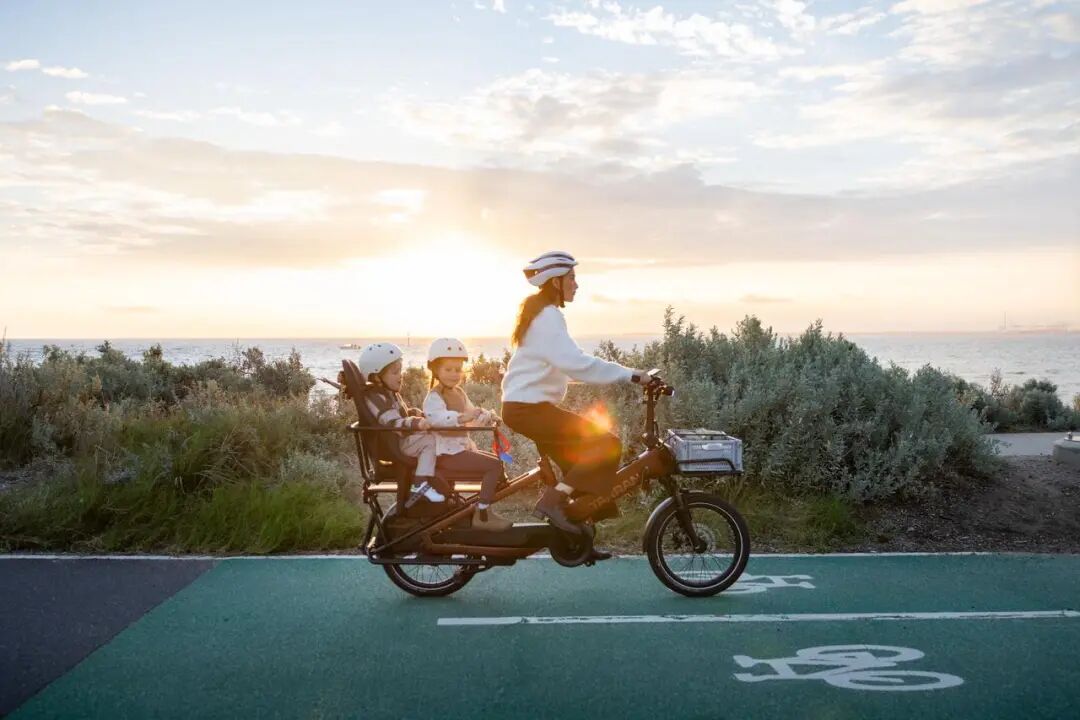 Riding at a seaside park
L1 is better suited for high-frequency, mixed urban living — school drop-offs, commuting, grocery shopping, or quickly switching between tasks.
With the L1s, through automatic shifting, electronic kickstand, electronic dropper seatpost, and rear observation assistance, we reduce the operational burden of riding under heavy load, making it more convenient.
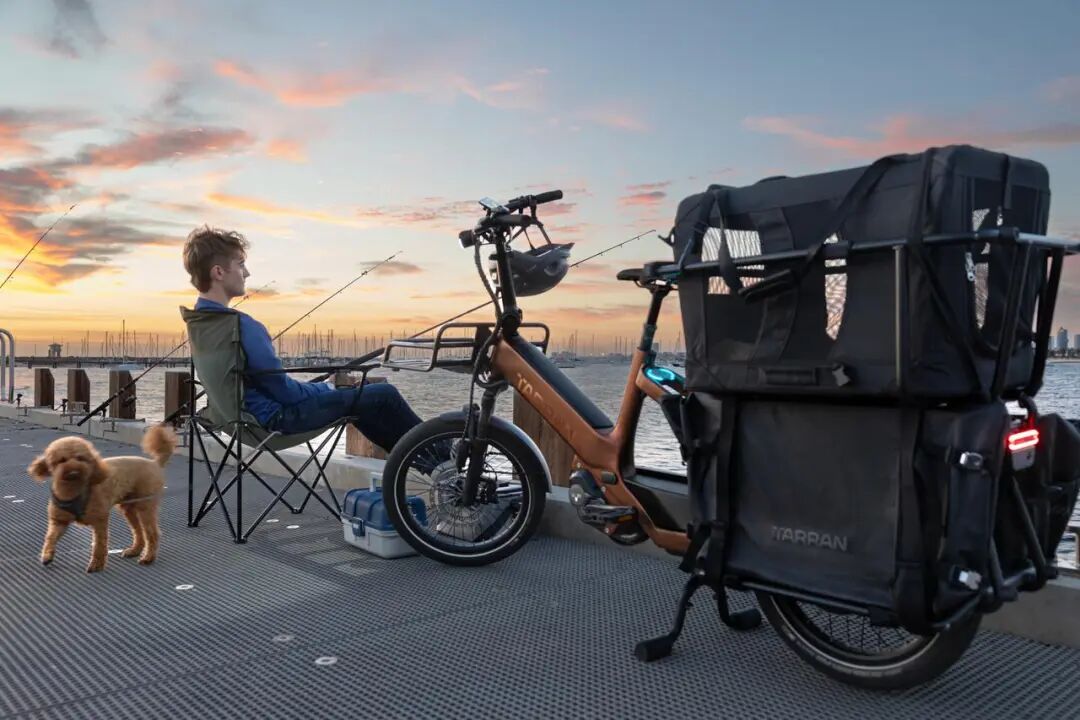 With pet accessories, you can take pets out for excursions
🚥 Crossing
TARRAN's pricing positions it in the mid-to-high-end range of the European market. Why lock into this segment from the start?
🤵🏻♂️ Guo Zhuo
Because from day one, our goal has been to become a company that wins through product strength and can truly build brand value over the medium to long term.
Choosing a relatively premium positioning isn't just more suitable for an "innovation-oriented" product team like ours — it also aligns with our desire to make products that are genuinely useful.
Premium positioning is definitely harder. It means we need to put in more effort, and possibly take longer, to win over users. But fortunately, we've established this positioning. In the recently concluded L1 pre-sale orders, the vast majority of users chose the premium version — something that's relatively uncommon in many industries.
🚥 Crossing
Among comparable products in the European market, where does Xunlu TARRAN's competitive advantage lie?
🤵🏻♂️ Guo Zhuo
The European premium e-bike market above €6,000 is actually not small.
If we focus on family cargo e-bikes, the more representative brands include Germany's Riese & Müller, the Netherlands' Urban Arrow and Lovens, Germany's Ca Go, and Tern.
These brands each have their strengths, but many traditional premium products still center on excellent frame, powertrain, and component combinations, with generally low levels of intelligence. TARRAN's distinguishing feature isn't simply pushing one spec higher — it's bringing the consumer electronics industry's integrated hardware-software approach into bicycles on top of already excellent components.
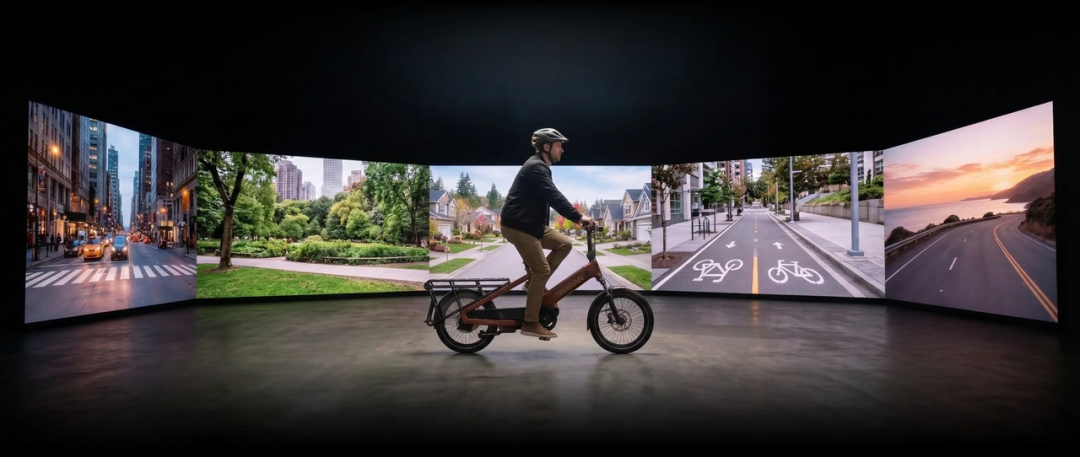
We build vehicles with a robotics system mindset: collecting ride information, algorithmic processing, and executing corresponding actions through an integrated system — getting the motor, transmission, parking, dropper seatpost, radar, cameras, central display, and anti-theft systems to work together, all perceived and controlled by the same unified system, continuously optimized through OTA — "solving old challenges with new thinking."
We're not simply electrifying a bicycle. We're building a truly intelligent Cargo e-Bike, using vehicle-level intelligence, safety, and cargo-carrying design to make families more willing to use one vehicle for urban short trips that they would otherwise depend on a car for.
🚥 Crossing
What does Xunlu TARRAN's target user profile look like?
🤵🏻♂️ Guo Zhuo
Looking at our core European market, our target users are middle-to-high-income families living in cities or suburbs, with children or pets.
They have stable careers, value product quality, safety, and design, and are open to trying new technology. But they're not looking to "buy a premium bicycle" — they're seeking an alternative that can replace some car trips. Daily school drop-offs, commuting, shopping, or weekend family outings. If one vehicle can handle these tasks frequently and reduce the need for a second car, they'll evaluate it from long-term use value rather than just the one-time purchase price.
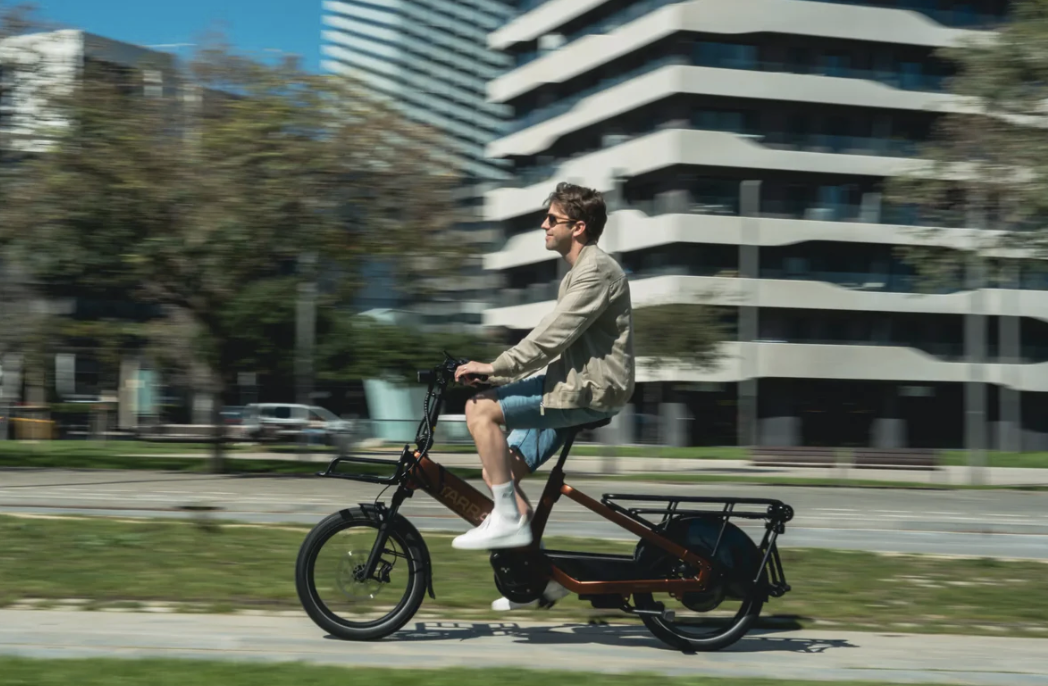
The restrained but stubborn technologist
🚥 Crossing
You emphasize "only doing useful technology, rejecting gimmicks" and being a "more moderate kind of technologist." How does this manifest in the product?
🤵🏻♂️ Guo Zhuo
We're more like a "restrained but stubborn technologist."
-
First, we prioritize new features that solve high-frequency pain points on users' main usage paths, rather than chasing innovations that look good on paper but get used only a handful of times.
-
At the same time, we don't simply dismiss features that competitors haven't done, that require user education, but that we believe are genuinely useful. For example, the high-load electronic kickstand and rear-view radar module both fall into this category.
Our slogan is "Built to Connect" — using technology to strengthen human connection.
This has two layers of meaning.
The first is that our intelligent system connects all components together, so a single central display shows all information and controls all functions.
The second is that technology doesn't create distance; it lowers the barrier to traveling together. For example, a conversation between a parent riding up front and a child sitting beside them, an outing shared between owner and pet, or even the rider themselves reconnecting with the street, with nature, and with their surrounding community.
This core philosophy is what guides our product definition.
🚥 Crossing
You place heavy emphasis on R&D investment. Technically speaking, what capabilities has Xunlu already built up?
🤵🏻♂️ Guo Zhuo
For the tri-electric system, OS, and other areas, we develop everything in-house. Specifically, this includes four technical foundations: power drive, perception fusion, control algorithms, and human-machine interaction — and on top of these, we self-develop a central control general-purpose platform.
We're building a hardware company with a platform-system mindset. From Cargo e-Bike to future intelligent trailers and even more categories, the underlying electronic control, sensors, and closed-loop algorithms can all be reused across product lines.
We believe that in the light mobility space, the most efficient approach is to have both system platform capabilities and the ability to rapidly ship complete products based on technical foundations. As the product matrix expands, the efficiency gains become very significant.
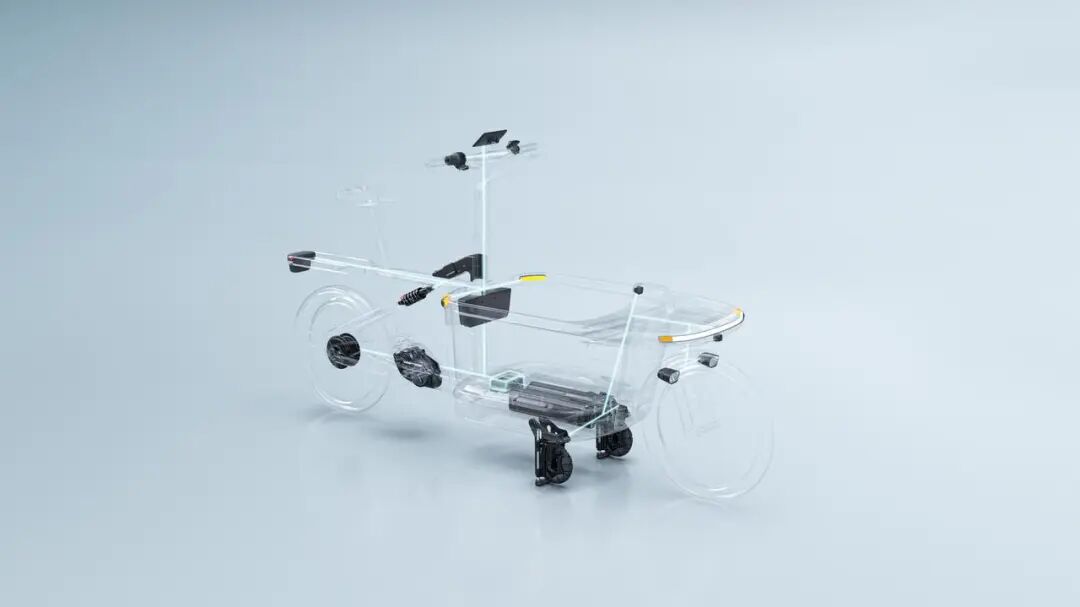 A unified control system connects many ride-related components together
In fact, the fundamental reason for developing in-house is our dissatisfaction with the status quo, and our desire and pursuit to push the boundaries of technology, capability, and user experience.
Because how smart an e-bike is depends largely on the motor — it's like the brain of the system. Choosing off-the-shelf motors would be easier, but wouldn't let us develop new features according to our vision. By self-developing the vehicle central control system, we gain much greater autonomy to define what we want on top of existing motor technology. We believe there's no other way to pull off something this complex and long-chain. This is the way.
🚥 Crossing
How does this heavy investment translate into tangible user experience?
🤵🏻♂️ Guo Zhuo
Developing in-house means we can autonomously define and develop new features based on our accumulated knowhow and user feedback.
For example, the dashcam function on our camera — based on user feedback, we optimized the trigger actions and logic for saving key footage. Though a small adjustment, it's an important detail for improving user experience.
Additionally, our core team comes mainly from the drone and action camera industries, so we have extensive experience in extreme miniaturization of devices. The modules we develop in-house are roughly 60% the industry average size — smaller and lighter.
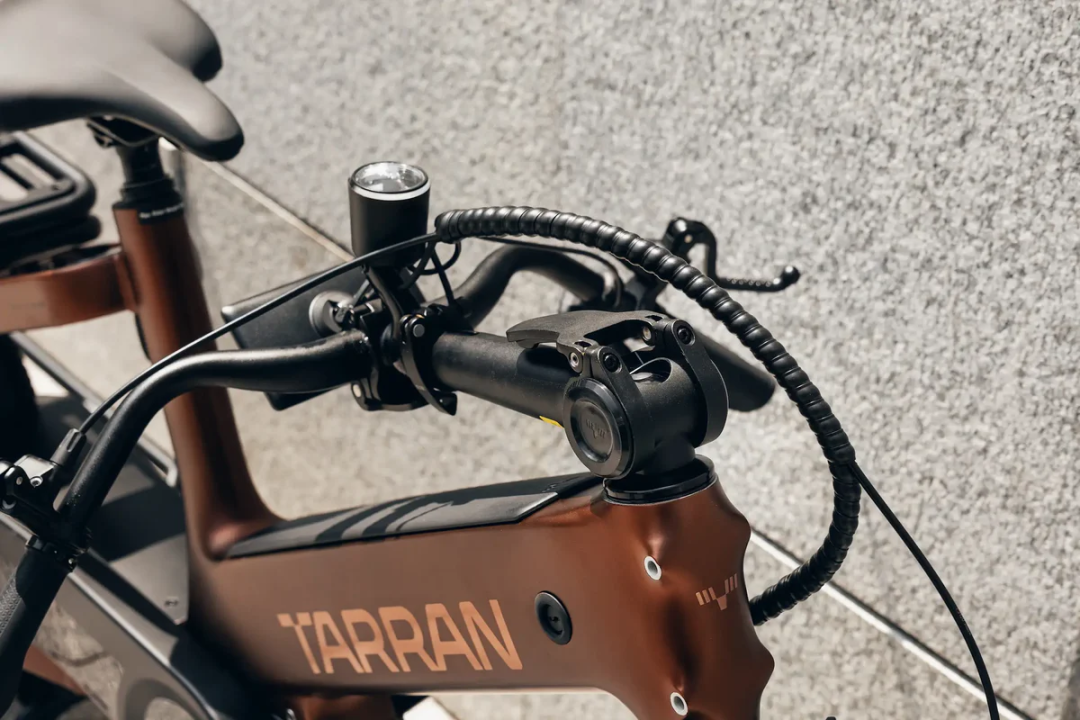
This means the same functional modules can fit more vehicle models, we impose fewer constraints on ID design, products look better, overall vehicle weight is lighter, and users find them more convenient and enjoyable to use.
Moreover, all our updates are pushed to users free via OTA. They're not buying a fixed product, but an ever-evolving riding experience. Companies that directly purchase third-party solutions can't do this.
Of course, some companies relying on solution providers can offer certain features, but require users to pay subscription fees.
Finally, on the after-sales side, our self-developed OBD helps users and shops quickly diagnose issues themselves.
🚥 Crossing
What other thoughtful design details stand out?
🤵🏻♂️ Guo Zhuo
There are many, many carefully considered details.
For instance, we once hid an Easter egg in the vehicle. We concealed name tags of all company employees from the product launch inside the bike — only a curious user who removed a certain cover could find them. About a year later, a French user actually discovered it.
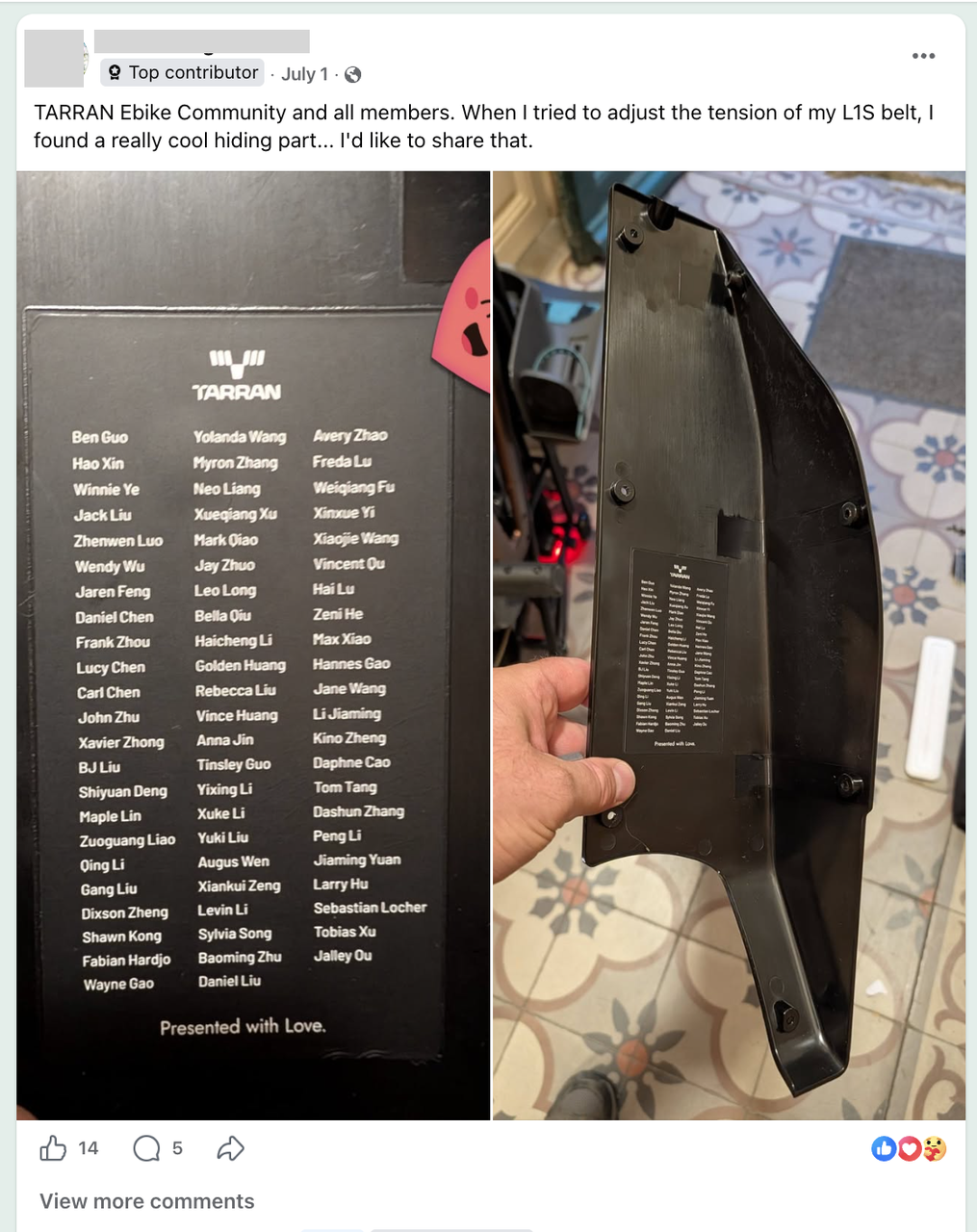 A TARRAN user community post about discovering the Easter egg
Also, in the storage bag accessory we made for our first-generation bike, a screw that fastens the bag actually doubles as a hook for a dog leash.
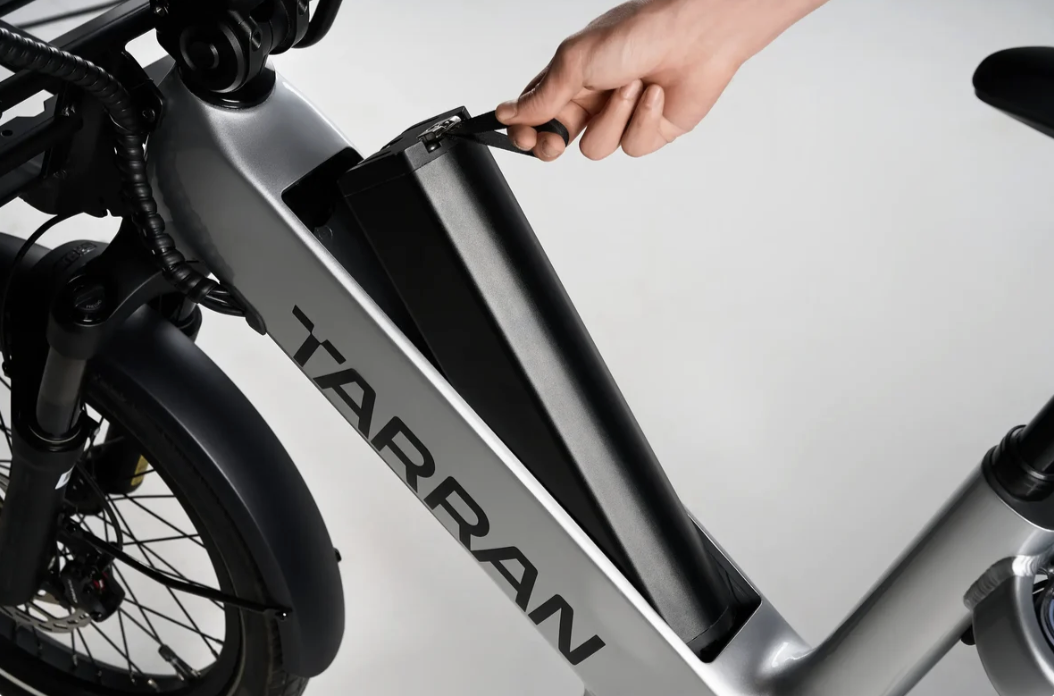
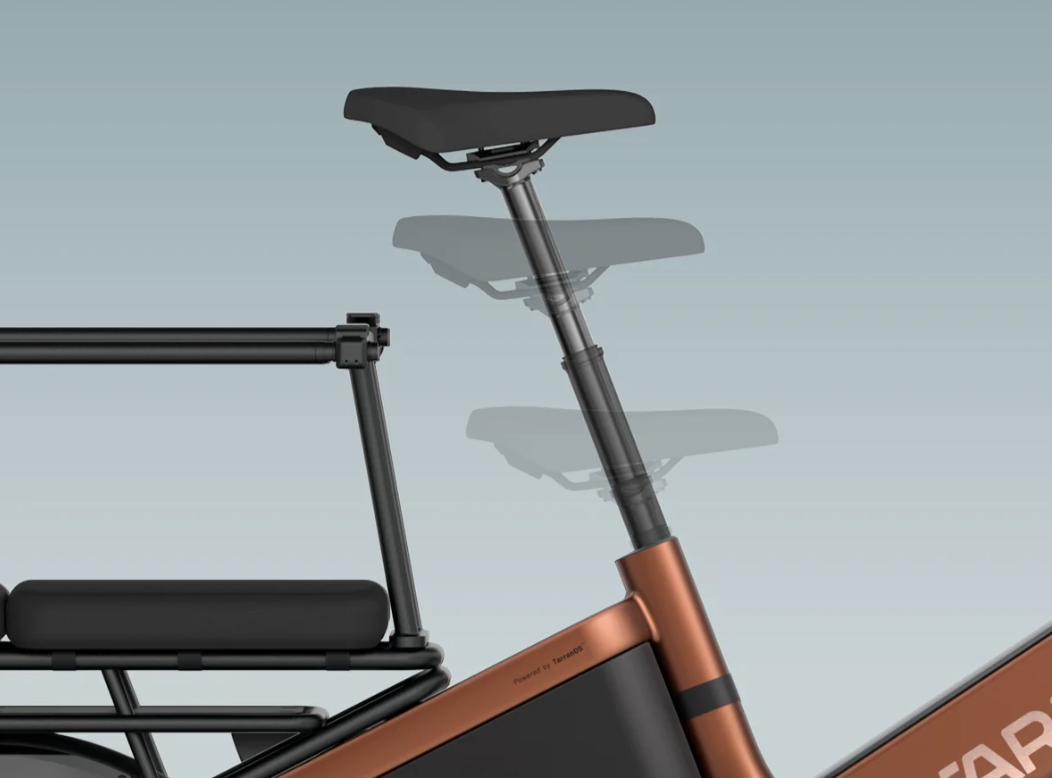
Another thoughtful detail: the battery compartment cover on our L1 series can be locked, and it's separate from the battery itself, which prevents theft. We also hid a hex key inside the cover so users can adjust the seat post height.
🚥 Crossing
In brand-user interactions, are there any particularly memorable stories?
🤵🏻♂️ Guo Zhuo
Once, when a user's bike had an issue, I went to their home to fix it.
It was July 2025. The T1 Pro had just shipped, and first-batch users had just received their bikes. We happened to be in Germany for Eurobike, Europe's largest bicycle trade show.
Normally after-sales repairs are handled by shops, but since this was the first shipment and shops were also handling issues for the first time, we figured we'd go directly rather than going back and forth between us, the shop, and the user.
At the same time, I wanted direct contact with customers to understand their product feedback and our thinking as a Chinese team. So on the last day of the show, we drove three hours to get there.
Later, this user stayed in touch with us and even became a beta tester for our second-generation product. He's often active in the community, helping answer questions from other new users — like a good friend.
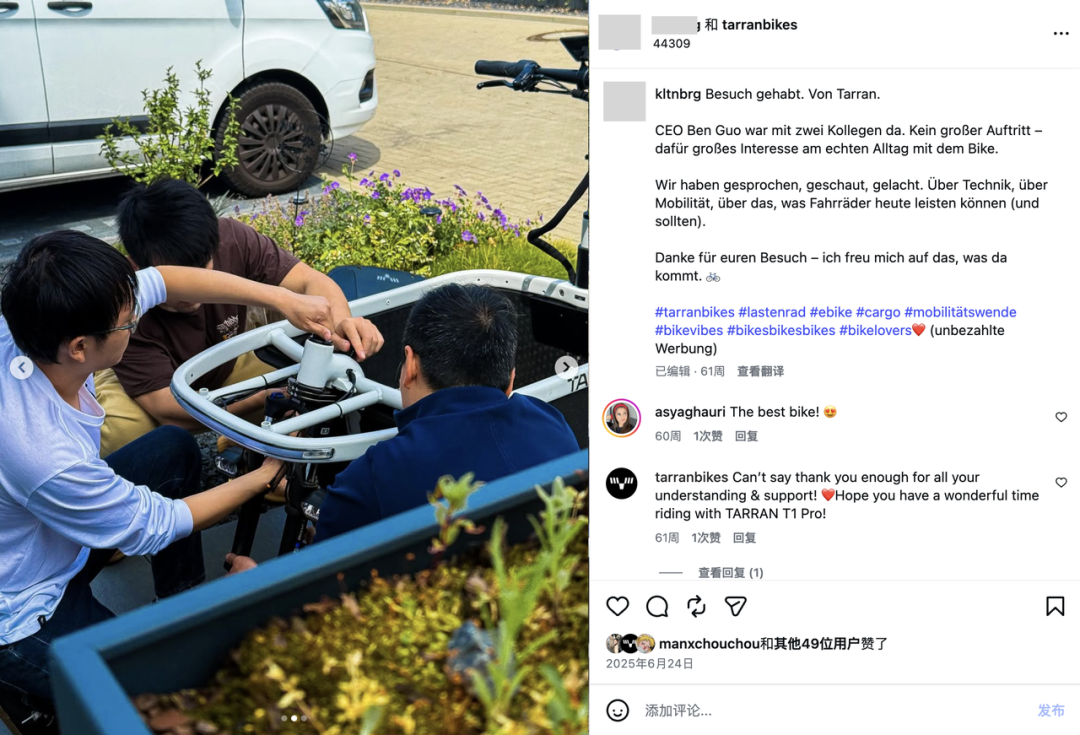 The user's social media post at the time
To this day, we maintain consistent standards for all user after-sales — not rigidly adhering to fixed rules, but as much as possible thinking through each case individually to solve problems better and faster.
We always believe that when you treat users with care, they'll feel your sincerity. There's another Easter egg: in the first Christmas after shipping, we gave every user and shop owner a personalized gift with their name on it, thanking them for choosing to trust our new brand in year one. We received a lot of positive feedback.
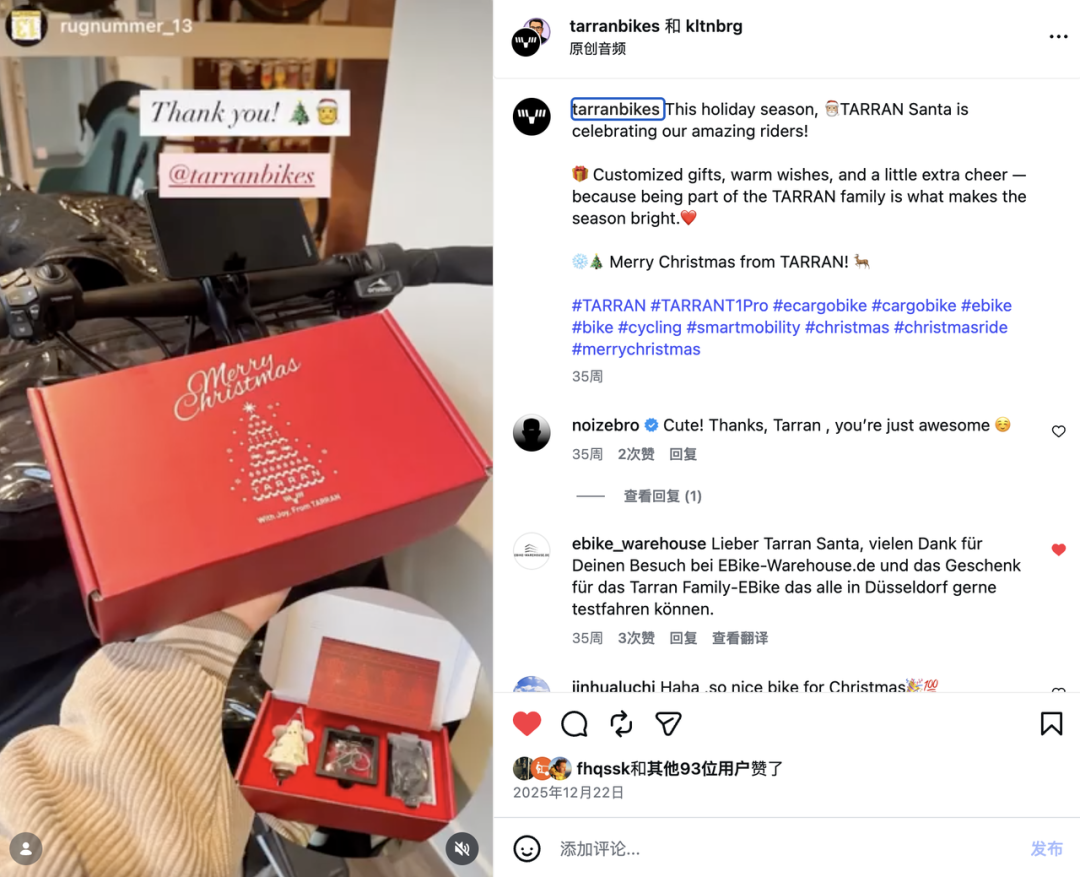 Custom Christmas gifts for first-year seed users
After raising $14 million, where to next?
🚥 Crossing
What's the composition of Xunlu's core team?
🤵🏻♂️ Guo Zhuo
Our core members have over a decade of accumulated industry experience. They are Xunlu's most valuable asset.
Among them, our Head of Operations Avery has ten years of overseas sales and GTM experience, having managed global market expansion for key products and built new business teams and channel systems from scratch.
Head of Marketing Freda also has roughly ten years of product brand marketing, international digital marketing, and GTM experience, specializing in building new brands and product lines from 0 to 1, with full lifecycle product operation capabilities.
Head of Engineering and Supply Chain Myron has 13 years of consumer electronics development and R&D team management experience, with 7 years of mechanical structure design background. He was one of the core developers on DJI's first hit drone product.
Head of Software and Hardware R&D Vincent has 13 years of full-stack embedded software development experience and has managed R&D teams for over 8 years.
🚥 Crossing
What's your current funding situation?
🤵🏻♂️ Guo Zhuo
The latest round closed around the end of last year and beginning of this year, raising approximately $14 million, led by existing shareholders Brizan Ventures, Bingqiang Gao, and HLC. Shareholders also include Zexiang Li's Clear Water Bay Startup Fund, Decent Capital, Shunwei Capital, Monad Ventures, and HSG.
🚥 Crossing
After this round, what are your product and market plans going forward?
🤵🏻♂️ Guo Zhuo
On the product side, we have another new vehicle launching this year, and early next year we'll release the world's first full-featured e-bike trailer. Other projects are also advancing rapidly.
On the market side, beyond Europe, we've already begun entering the United States and Australia, as well as more European countries and regions outside the EU.
According to plan, next year's new products will also expand into Asian markets, especially the China domestic market.
🚥 Crossing
How extensive is Xunlu's current sales network? What's your channel strategy?
🤵🏻♂️ Guo Zhuo
We run a parallel online-offline strategy.
As a mid-to-high-end brand, our online presence isn't just a sales channel — it's a brand showcase. Right now, customers in North America, Europe, and several other regions can place orders online, and we provide door-to-door delivery.
On the offline side, in Europe's core markets, our first product reached over 150 retail stores across Germany, Switzerland, Austria, the Netherlands, Belgium, Luxembourg, France, the United Kingdom, and the Nordics in less than a year after launch.
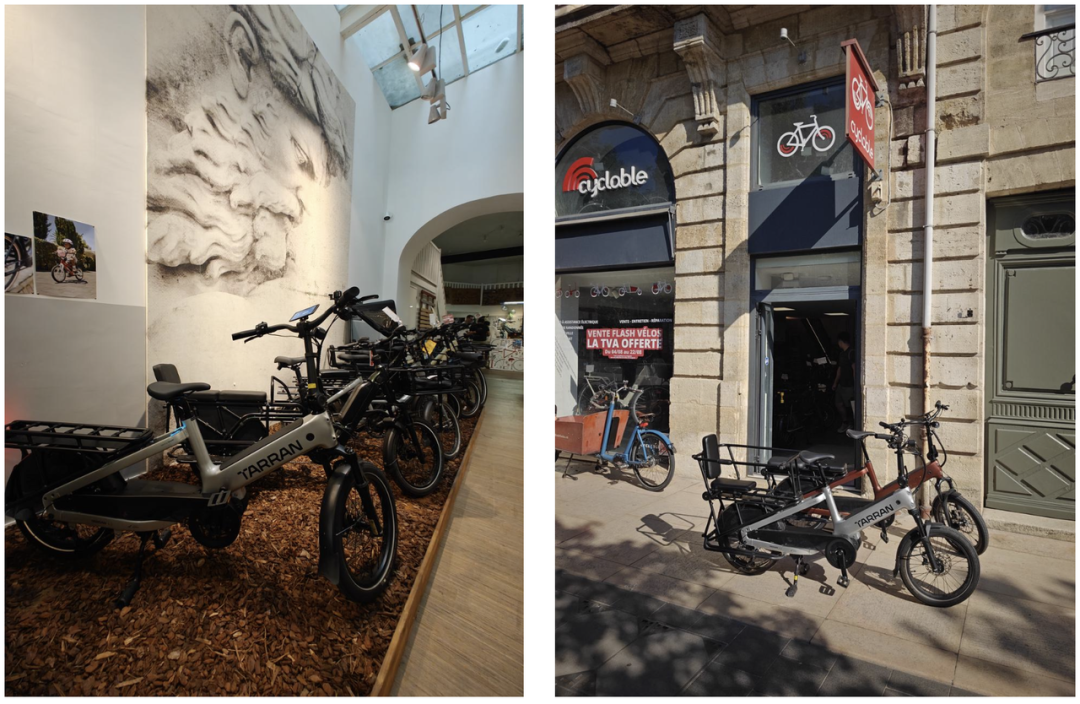
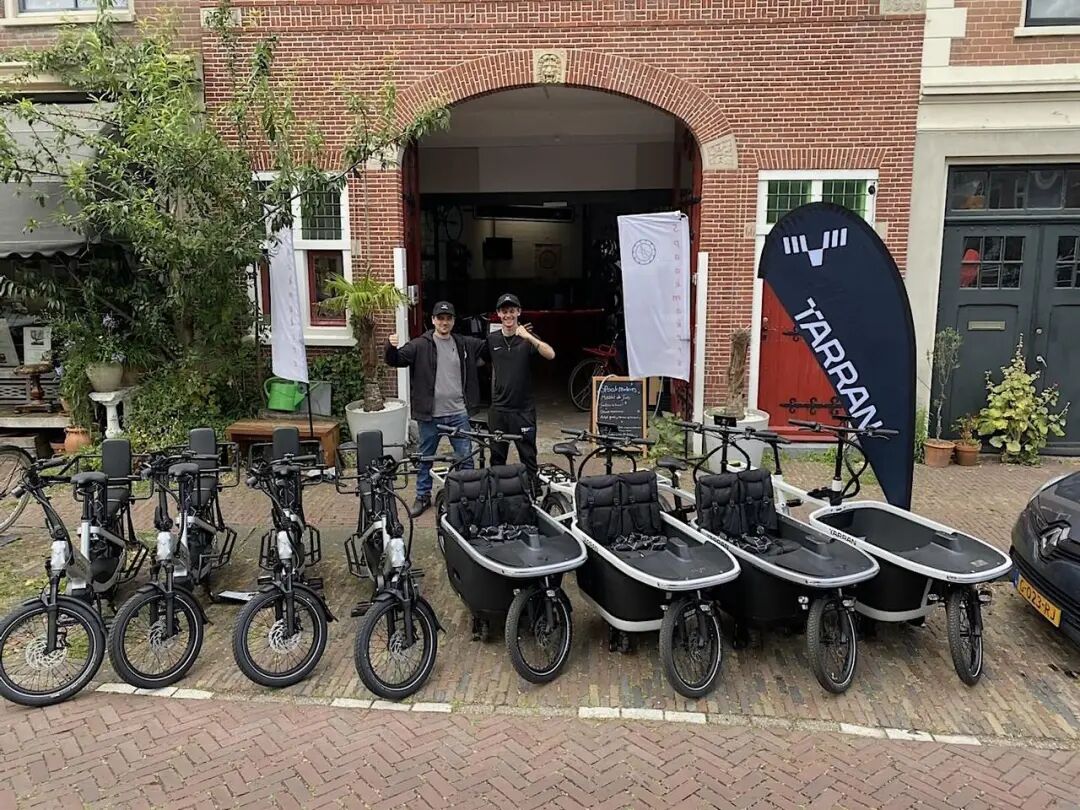
With the launch of our second product, we've started entering premium large-format retail chains, such as Cyclable in France and AureusDrive in Switzerland. We've also gradually built up local leasing partnerships, including Bikeleasing GmbH, Business Bike, Eurorad, and O2O leasing.
Our principle is that online and offline should be mutually reinforcing. We reached internal consensus from day one: the online channel serves as our brand window, cultivating interested users for offline and even paying to drive foot traffic that converts into sales.
We believe that once we've built sufficient word-of-mouth, offline will in turn feed back into online, creating a positive cycle.
What first-mover advantages have you built up over three years?
🚥 Crossing
Supply chain is critical for any manufacturing company. TARRAN's supply chain shifted from "China + Europe" to "China + Southeast Asia." What drove that change?
🤵🏻♂️ Guo Zhuo
Our first product used a China-plus-Europe supply chain model, but we found it inefficient — one plus one was less than two — and margins weren't ideal.
So in May 2025, as we began developing our second product, we switched to a China-plus-Southeast Asia approach.
But to meet the requirements for local origin certificates in Southeast Asia, over 45% of components had to come from Southeast Asia or Europe. So we moved our entire three-electric system (motor, battery, controller) to Vietnam for manufacturing, frame production to Cambodia, and final assembly in Cambodia, with finished goods shipped directly to Europe and the United States.
The result: significantly improved margins and a direct boost in efficiency.
Of course, we'd still prefer to manufacture everything back in China — it's the most efficient and lowest-cost option — but that's constrained by geopolitical factors. We can only hope for the future.
🚥 Crossing
Europe has extremely strict and time-consuming compliance requirements. What have you done on that front?
🤵🏻♂️ Guo Zhuo
For any company wanting to do this kind of product in Europe, GDPR and regulatory compliance are unavoidable. You could say "we got our hands dirty early."
In our first year, we hired KPMG to conduct a GDPR privacy compliance audit.
Europe's understanding of compliance isn't that you get a certificate before launch and you're done. It's a process that runs through product definition, R&D, testing, mass production, sales, and after-sales service.
The complete vehicle needs to meet corresponding safety, mechanical, electrical, battery, and wireless communication requirements based on its product form — completing risk assessments, technical documentation, and declarations of conformity. After entering the market, you must ensure batch consistency, traceability, and the capability to handle software updates, user complaints, recalls, and regulatory spot checks.
Especially for passenger-and-cargo models, the vehicle weight is greater and operating conditions more complex. Structural strength, braking, stability, battery safety, and long-term durability can't be judged by whether individual components pass muster.
We've also conducted "beyond-specification vehicle testing." We don't just strictly pass all required tests under EN17860, EN15918, and other cargo e-bike standards. More importantly, we test at higher values and in more scenario-based conditions based on actual user behavior.
To support this, we built our own testing lab at our Shenzhen office. Many of the testing machines for our patented new features are self-developed and patented as well.
This "beyond-specification" approach is really about our understanding of real-world usage scenarios.
For example, regulations and standards set market-entry baselines, but family users might carry kids daily, go up and down hills, stop and start frequently, and encounter rain, snow, bumps, low temperatures, and sustained heavy loads.
So beyond standard test conditions, we add more rigorous whole-vehicle durability, heavy-load braking, structural fatigue, waterproofing, environmental adaptation, and abnormal hardware/software testing — verifying that the system remains reliable under long-term use and extreme conditions.
For a brand positioned in the premium segment, we see this investment as part of our product strength and long-term credibility.
Compliance is the precondition for innovation to be continuously trusted by the market and used by families over the long term.
🚥 Crossing
Last question — in your real experience, how do you see Europe's market growth and policy friendliness?
🤵🏻♂️ Guo Zhuo
Europe is the largest bicycle and e-bike market, with excellent cycling infrastructure, strong ESG policy support, various socially influential non-profit organizations, a deep cycling culture, and strong purchasing power.
In recent years, with Europe's economic downturn and persistently high energy prices, e-bikes — especially cargo e-bikes — have become the first choice for many young families considering transportation options. This has created a very favorable window.
On the supply chain side, over 80% of global bicycle supply chain capacity is in Asia, especially China.
Almost all well-known European bicycle brands source components from here. The three-electric systems required for e-bikes are also largely developed and manufactured in China. So although we're based in China, we naturally have supply chain and R&D advantages targeting European and American brands.
Moreover, compared to the US and Australia, Europe's cycling market and demand are more mature — very favorable for building a mid-to-high-end brand.
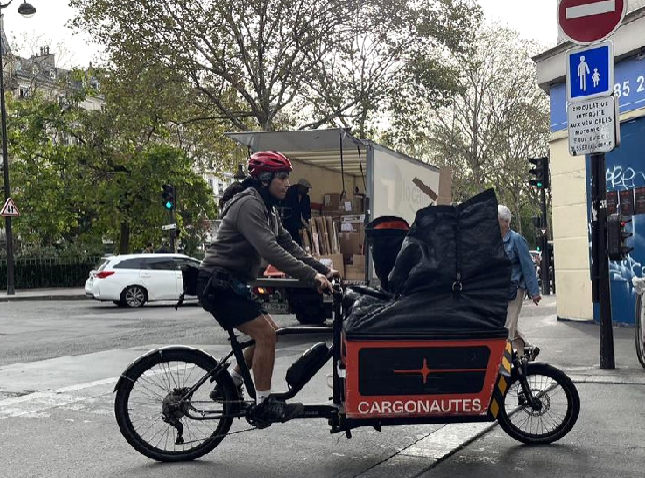
A user making deliveries with a cargo bike on the street
The policy support for cargo e-bikes in Europe is indeed substantial.
Germany's National Cycling Plan 3.0[1] specifically calls for supporting cargo bikes and trailers in terms of bike lanes, parking areas, and more, with investment standards reaching €30 per person per year. Paris's Paris bicycle plan phase 2[2] plans to invest €250 million.
At the EU level, the ECF (European Cyclists' Federation)[3] also provides a real-time tracker for national cycling support policies. In Germany alone, there are over 16 active purchase subsidy and tax incentive programs.
In the past two years, due to the global economic downturn and regional conflicts, Europeans' transportation habits have shifted significantly — more people are choosing bikes over cars. E-bike sales are accelerating, with cargo e-bike growth at one point reaching 30%.
Looking ahead, one thing is certain: whether for economic or environmental reasons, the e-bike industry will continue to grow — and that's all positive for us.
References
[1] National Cycling Plan 3.0: https://bmdv.bund.de/SharedDocs/DE/Artikel/StV/Radverkehr/nationaler-radverkehrsplan-3-0.html
[2] Paris bicycle plan phase 2: https://www.paris.fr/pages/un-nouveau-plan-velo-pour-une-ville-100-cyclable-19554
[3] ECF (European Cyclists' Federation): https://www.ecf.com/en/resources/tracker-money-for-bikes/