What's the Best Form for an Investment Research Agent? AlphaEngine Offers a New Answer

How far can OpenClaw go in the investment research space?
How Far Can an "OpenClaw" for Investment Research Go?

👦🏻 Author: Jingshan
🥷 Editor: Koji
🧑🎨 Layout: NCon

Since OpenClaw blew up, every industry has been racing to implement it. You see new use cases popping up almost weekly.
A lot of teams are thinking: treat OpenClaw as a "digital employee," plug in search tools, and let it work in specific scenarios.
But finance is a special case. The reason is simple: investment research is, at its core, an industry of extreme data density.
An investment manager faces an entirely different level of information complexity when making calls. Massive amounts of information are scattered across different databases, broker research, meeting transcripts, and internal documents.
If everyone is looking at the same data, the information itself doesn't create an edge.
So, if you fill the gap with professional data and pair it with OpenClaw, how far can you actually get in investment research?
Recently, a new product emerged in this space. It's called Alpha Claw — essentially OpenClaw layered on top of a professional-grade financial database.
Here's our deep-dive hands-on review.
How Far Can an "OpenClaw" Backed by a Massive Database Go?
AlphaClaw clearly takes inspiration from Claude Code and Co-work. It's a full Agent system, well-adapted to investment research workflows.
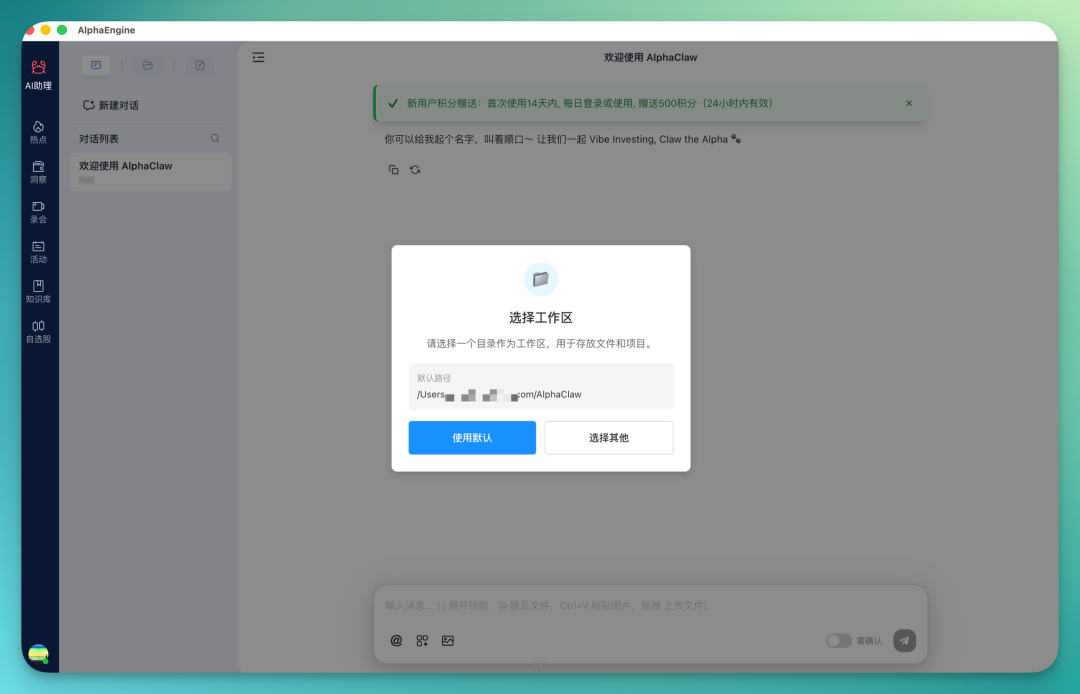
Before using it, you pick a local workspace. Once selected, it can directly manipulate files inside or drop generated files there.
OpenClaw has a well-known strength: strong memory.
In Alpha Claw, you can just tell it: From now on, you're my investment assistant. Start every response with "Dear esteemed retail investor, wishing you fortune upon fortune."
It automatically saves this to memory. Every future response follows the script.

From then on, every conversation opens with this greeting.
As for Alpha Claw's barrier to entry — honestly, it's low. No configuration, no tinkering. Open and go.
1) Deconstructing Miro AI's Valuation Compression
Alpha Claw actually originated from a web version called Alpha Engine.
The original packs a massive professional investment research database. Meeting transcripts, overseas research, domestic research — it's all there. Research reports come out fast. Plus extensive knowledge bases and insight content.
The database is huge, in short:

When I browsed their website earlier, I noticed one particularly distinctive module: meeting transcripts.
Because AlphaEngine has channel partnerships with many companies, these transcripts are basically first-hand. Click into one and you get more than text — full transcription, Q&A, even audio recordings.
Now Alpha Engine has launched a desktop version, Alpha Claw, bringing over everything from the web version. It also serves as the underlying infrastructure for the investment research Agent, enabling genuinely professional work.
Here's a recent example.
Several former sector leaders in traditional industries have seen their valuations plummet in the AI era, yet their products remain competitive.
The two most typical cases are AirTable and Miro AI. One dominated spreadsheets, the other collaborative canvases — both once richly valued. Their valuations have dropped sharply in recent years, but because the products are solid, plus other factors, they're now interesting AI SaaS names worth watching.
So we can directly use Alpha Claw to rapidly study the logic behind such traditional companies' valuation compression in the AI era, analyzing from multiple dimensions.
Also, Alpha Engine inherits much from OpenClaw, including a large built-in library of Skills.
One in particular — Skill Creator — is quite interesting. You ask it a question, give it an answer, and it converts the entire process into a new Skill for easy reuse.
The prompt:
`Help me thoroughly research the logic behind Miro AI's significant valuation compression in the AI era.
Analyze from multiple dimensions, and organize the research framework into a structured Skill. `
Alpha Claw is fundamentally an Agent.
Give it an instruction and it first gathers extensive relevant information from two sources: web search and its internal database.
So the foundational data it works with is both abundant and comprehensive.

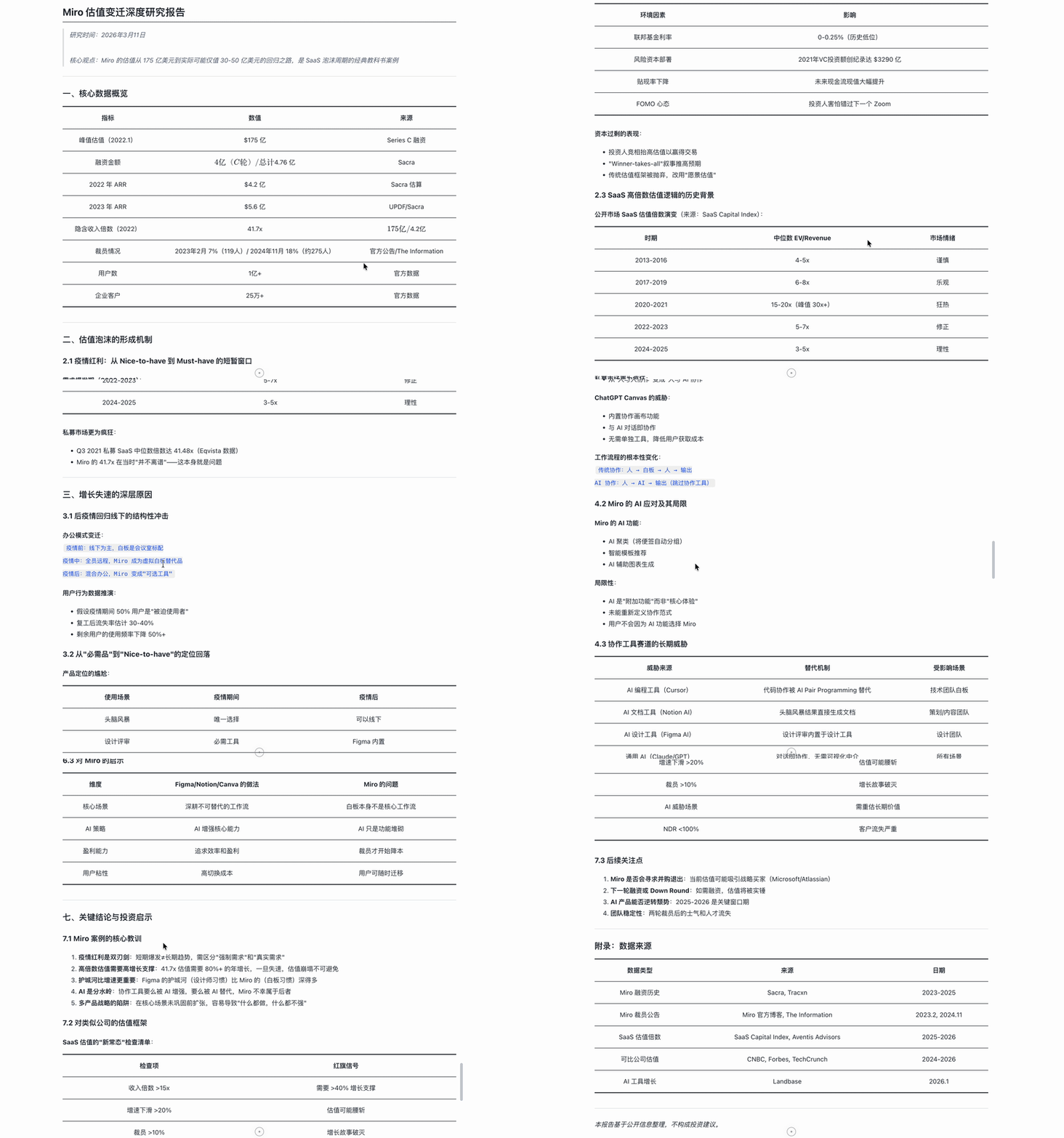
It's fast — three to five minutes. What comes out is a deep research report on Miro AI's valuation compression, with professional structure.
Look closely and you'll see a complete research framework: core data, bubble formation, growth deceleration, AI impact, valuation reassessment, plus comparable company analysis of peer collaboration tools, ending with investment conclusions.
Honestly, this structure closely resembles a VC Investment Memo.
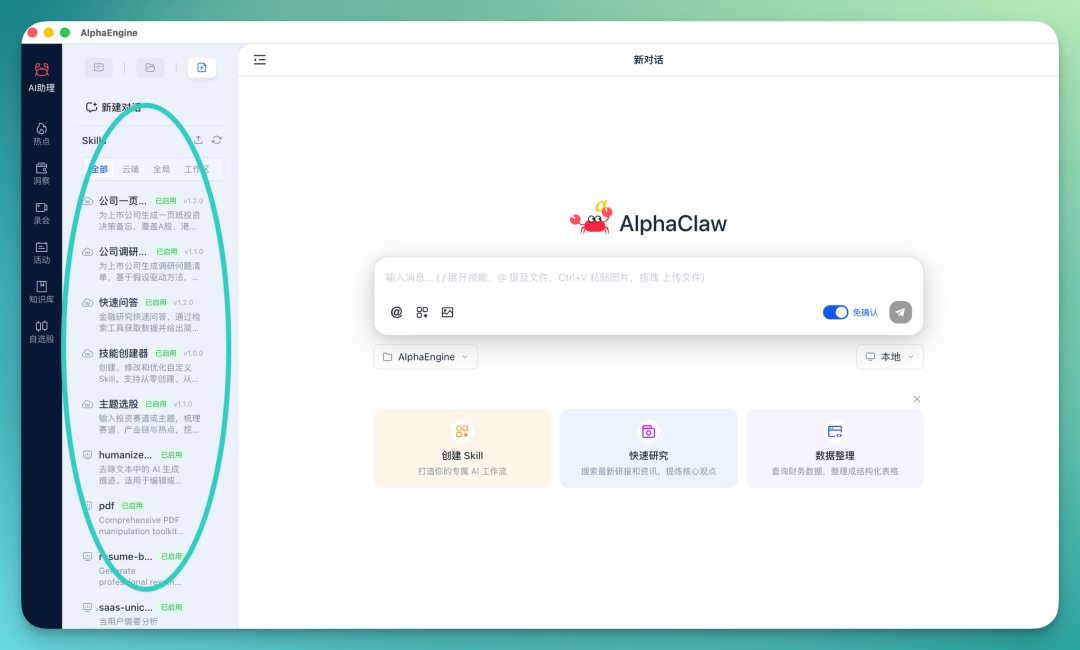
As mentioned, Alpha Claw comes with many built-in Skills. One is Skill Creator, which is pretty neat. It can directly create new Skills for you.
No manual configuration needed — let it handle everything.
After the report came out, I was satisfied with the structure and didn't need changes. So I had it create a Skill right away.
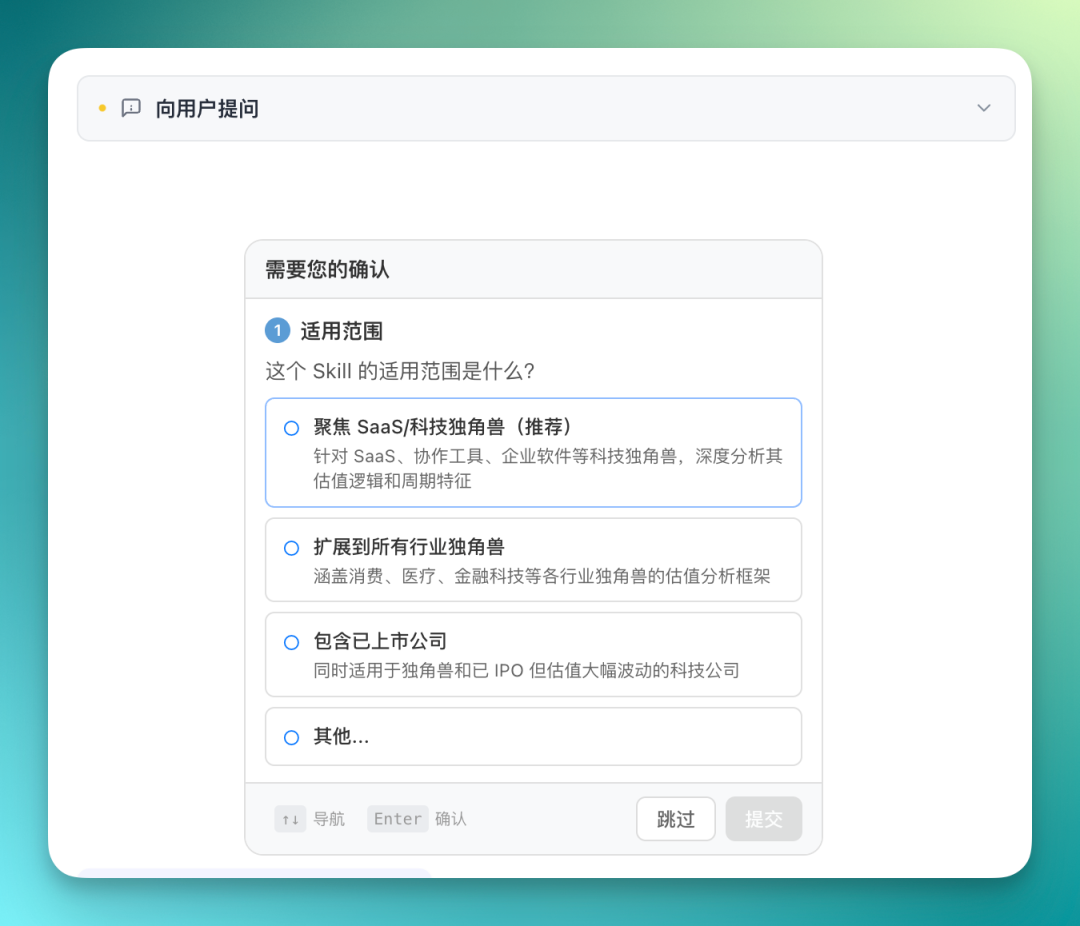
Once the report was done, it started creating the Skill. Then it asks: What type of companies is this Skill mainly for? SaaS-focused, tech unicorns?
It recommends a direction based on context, then asks you to confirm.
Then it builds the Skill.
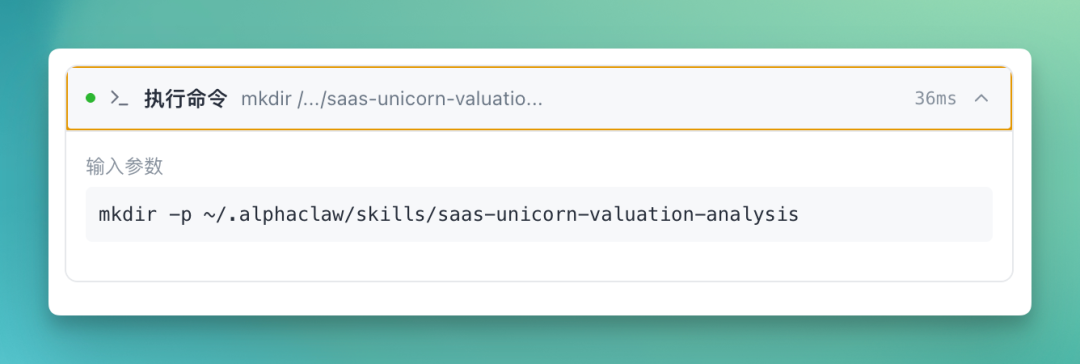
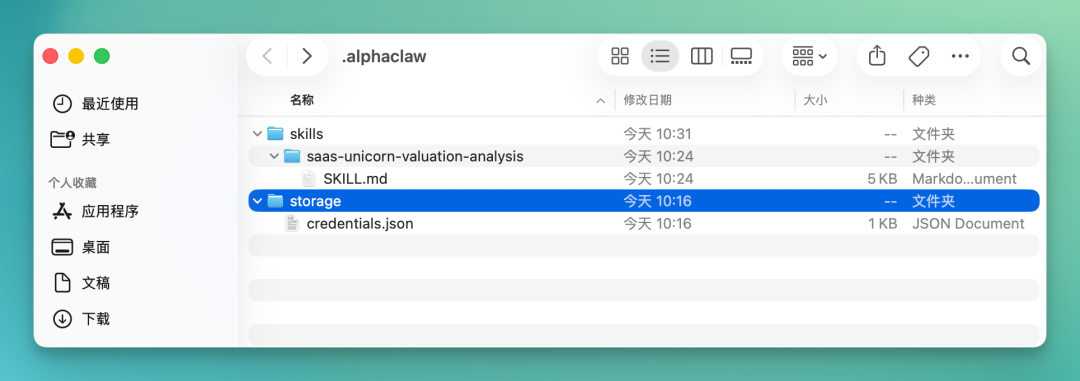
Once built, the Skill goes straight into AlphaEngine's backend folder. This is a global directory, accessible across all projects — no need to recreate it.
It also tells you how to trigger it. Say "analyze Company X's valuation" or "what's Unicorn Y worth now" in conversation, and it automatically invokes this framework.

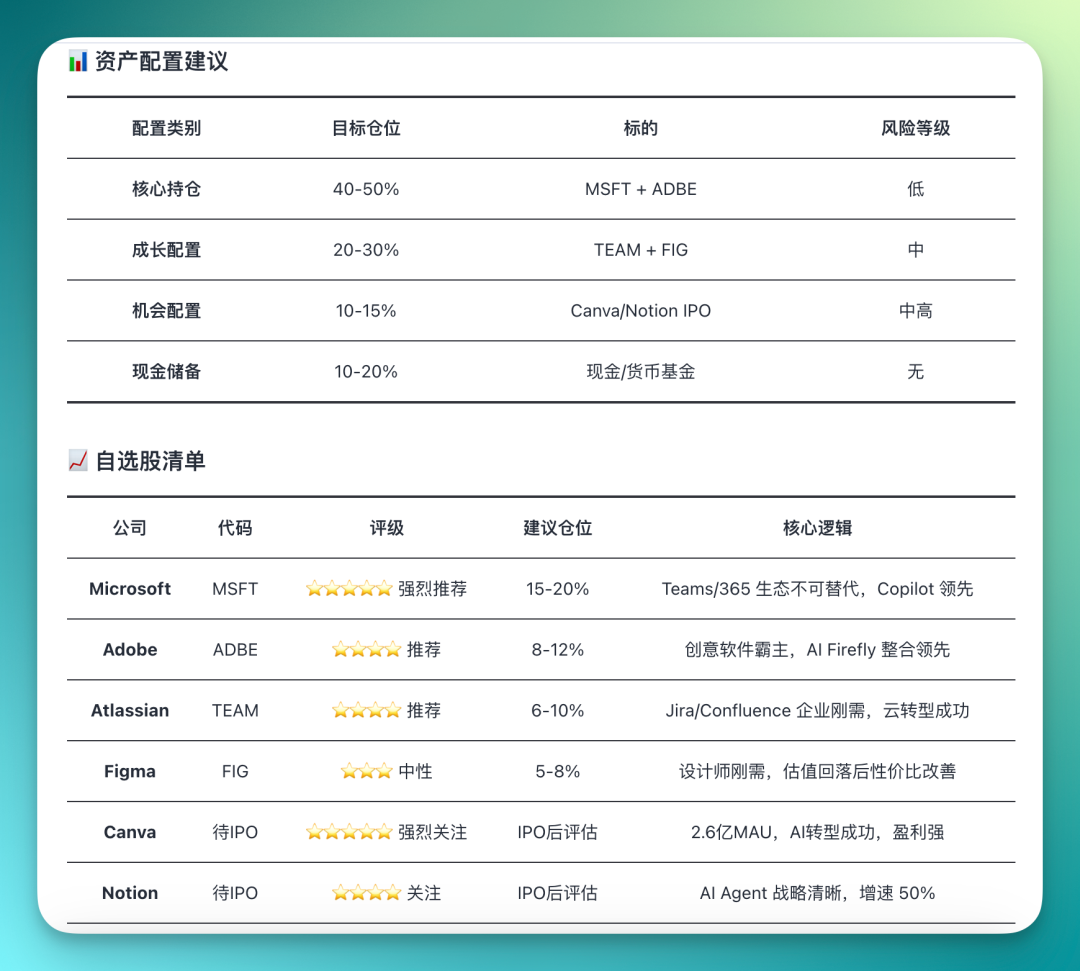
Later I had it pull the latest valuation multiples for comparables like Figma, Canva, and Notion as references.
Then it generated an asset allocation recommendation and even put together a watchlist.
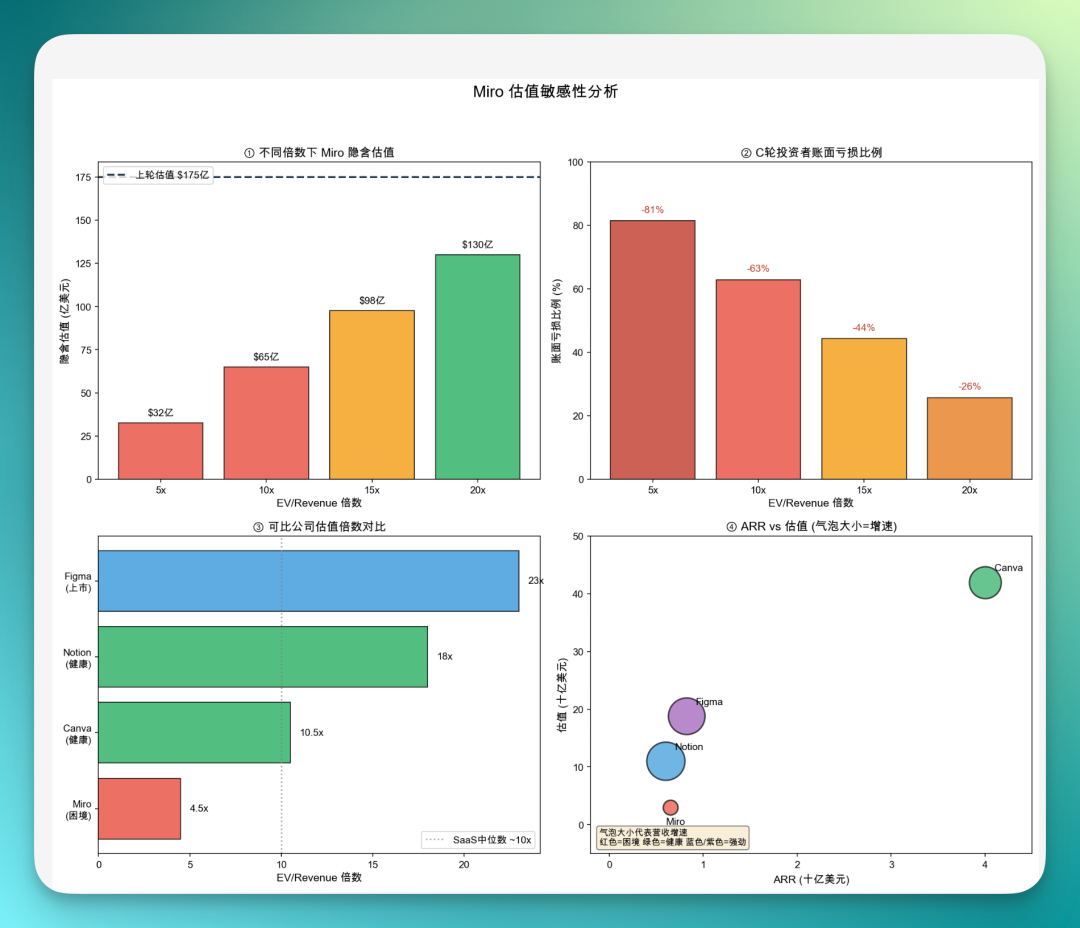
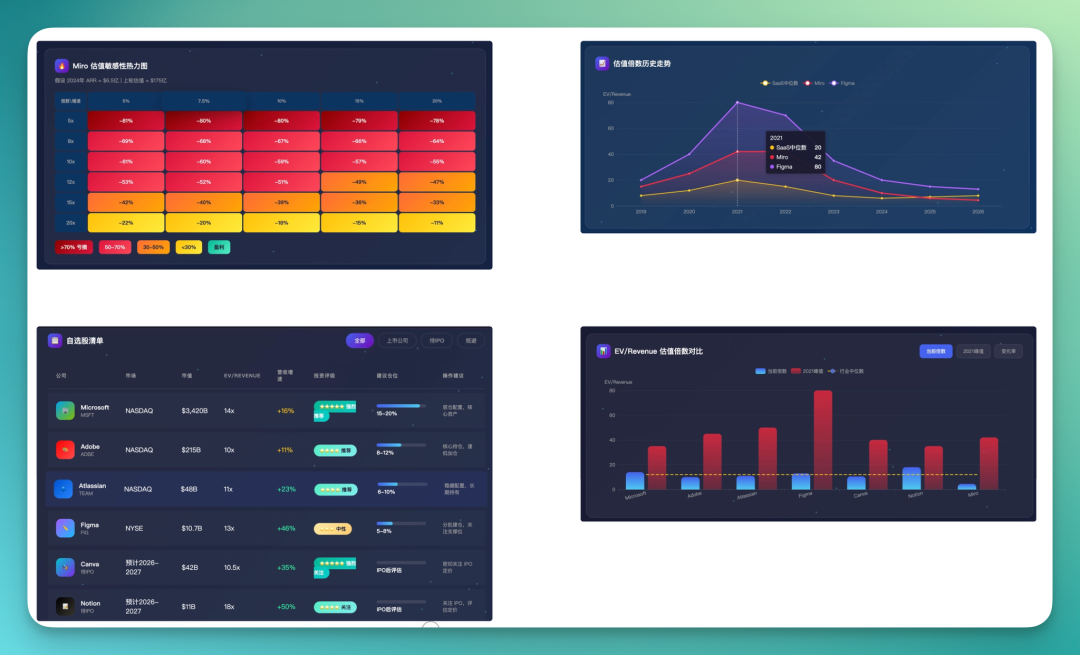
Another thing: Alpha Claw has built-in professional charting tools and can directly draw sensitivity analysis charts:
Later I also had it make an Excel spreadsheet.
Alpha Claw being an Agent, it can directly produce actual files and save them locally. I asked it to build a VC-grade complex workbook based on all previous reports. Seven worksheets, with rich color coding and formatting.
The seven worksheets: Dashboard, Watchlist Details, Valuation Comparison, Sensitivity Analysis, Asset Allocation, Risk Matrix, Investment Strategy.
Each with multi-level headers and annotations.

You can also have it turn all this into an HTML page directly in Alpha Claw.
Miro valuation sensitivity heatmap, historical trends, multiple comparisons, watchlist — it's all there, interactive and clickable.
2) Turning Your AI Industry Thinking Into a Reusable Analytical Framework
The Skill creation mentioned earlier is really just the beginning.
After deeper use, I discovered it can do something even more valuable: take your accumulated long-form thinking and directly convert it into a reusable analytical framework.
Like many people, I have extensive scattered thoughts on the AI industry. Constantly reading news, papers, studying products — your mind is always forming judgments: which products might break out? Which models are more monetizable?
But everyone views AI differently, and these ideas are uniquely yours.
If you could organize this scattered thinking into a framework and turn it into a Skill for repeated use, the experience improves dramatically.
I did exactly this. I took all our articles plus my own thinking, had a general-purpose Agent compile it into a single document. 500+ pages, nearly 300,000 words.

This document is essentially my complete collected thinking on the AI industry, all organized by a general-purpose Agent.
Next, you can directly feed this thinking to Alpha Claw and have it build an analytical framework. Then use that framework to analyze traditional industry products or companies — seeing how they might evolve in the AI era.
The logic flows. It's a fairly closed loop.
The prompt:
Here are my thoughts on the AI industry and AI products over the past few years, including product analysis, industry judgment, and technology trends. Please read carefully, summarize my core analytical framework, and organize it into a Skill.
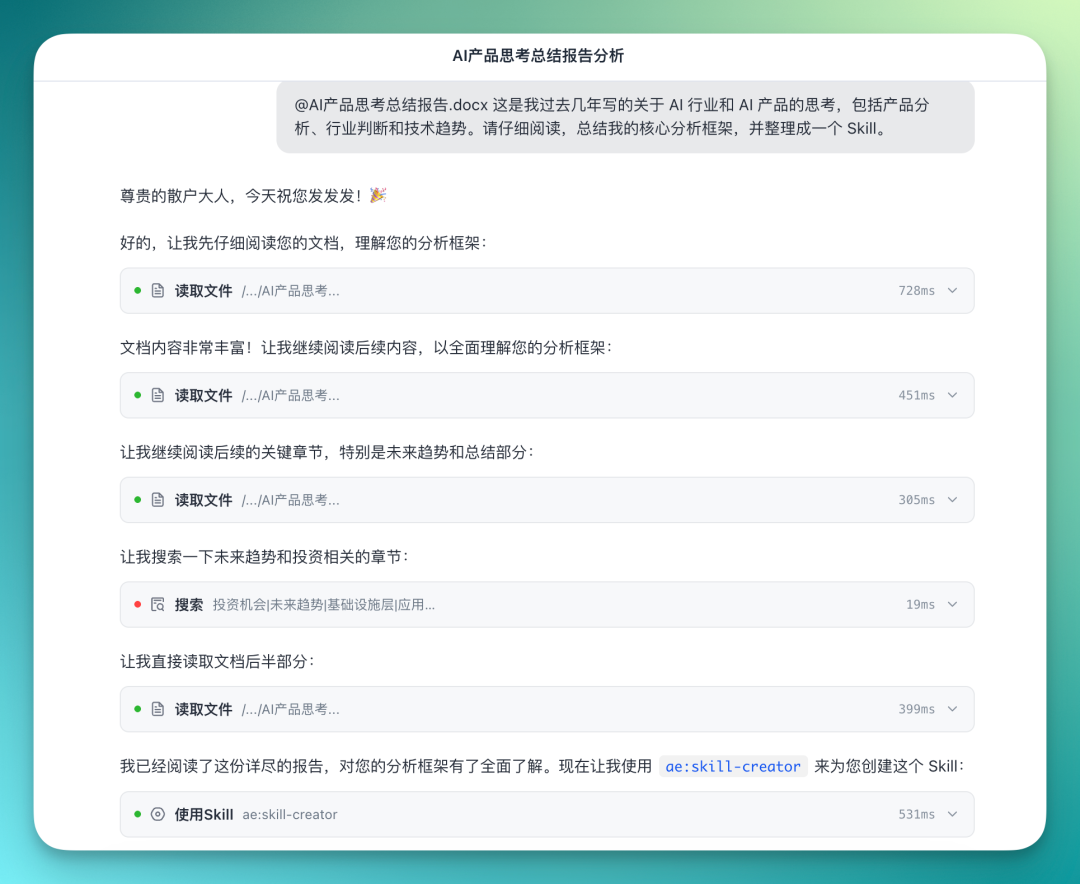
Alpha Claw read this 550-page, ~300,000-word document and distilled everything into an AI product perspective analytical framework.
Then you can use this framework to analyze opportunities for traditional industries in the AI era.
The prompt:
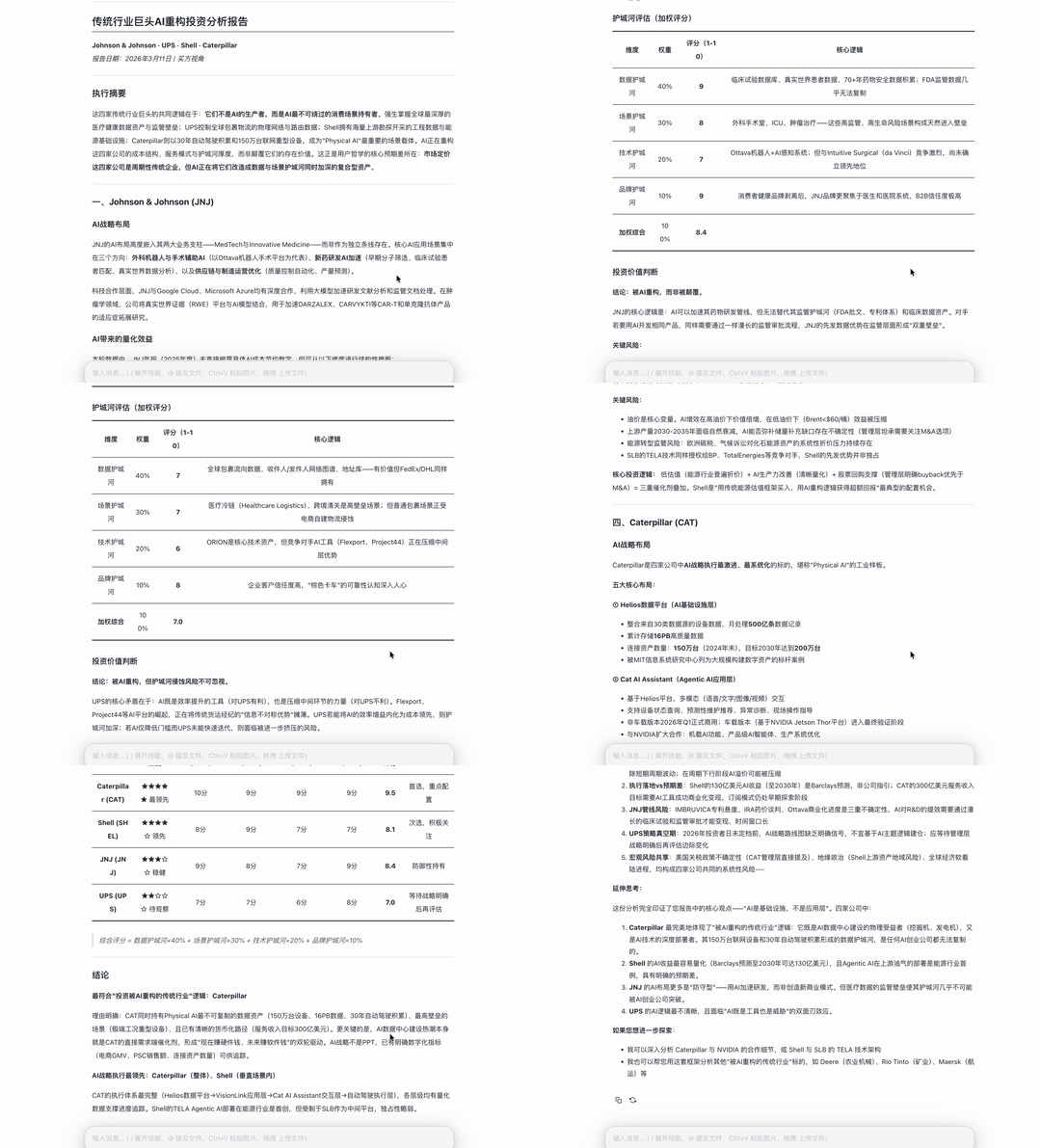
Use this Skill to analyze opportunities for a traditional industry in the AI era, such as Johnson & Johnson, UPS, Shell, Caterpillar
These traditional enterprises are all, to varying degrees, pivoting toward AI.
But the thing is, everyone looks at a company differently. The perspective you've built up is often what's most valuable.
After Alpha Claw invokes my organized Skill, it analyzes through my usual angles — AI strategic maturity, data moat, scenario moat, technology brand, and other dimensions:
3) Industry Chain Mapping
Finally, one scenario I found particularly useful: industry chain mapping.
Previously, using general-purpose AI chatbots for Deep Research on industry chains basically yielded a deep-dive report — not vertical enough.
Alpha Claw is different. With its vertical database, plus search and charting capabilities, it does industry chain mapping very well.
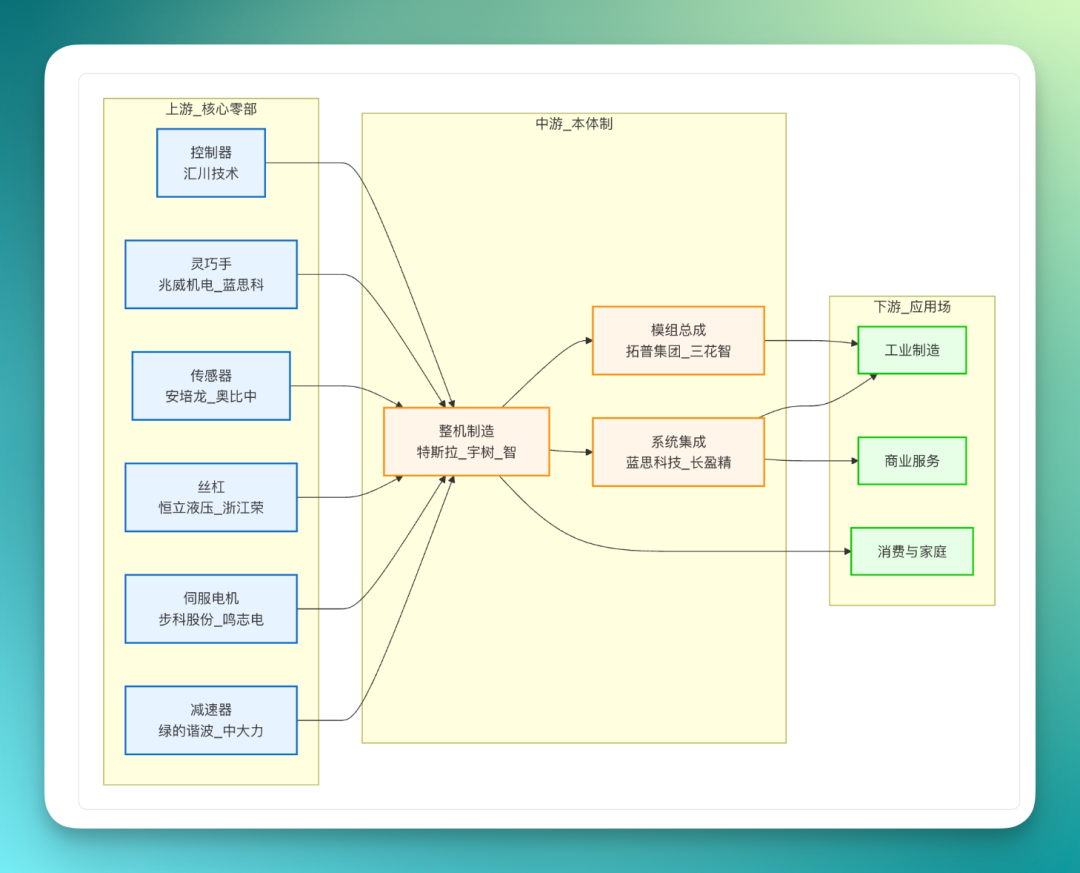
Here's an example. I had it map the humanoid robot industry chain — upstream, midstream, downstream segments, core companies, plus key metrics for each company: revenue, gross margin, R&D investment, all visualized.
This is actually a fairly complex task.
The prompt:
Map the humanoid robot industry chain. Pull the industry chain map from the research report database, organize upstream/midstream/downstream segments and core companies, extract latest revenue, gross margin, R&D investment and other key metrics for each company. Ultimately generate an investment research report with industry chain visualization and individual stock comparison matrix (PPT or Excel both acceptable).
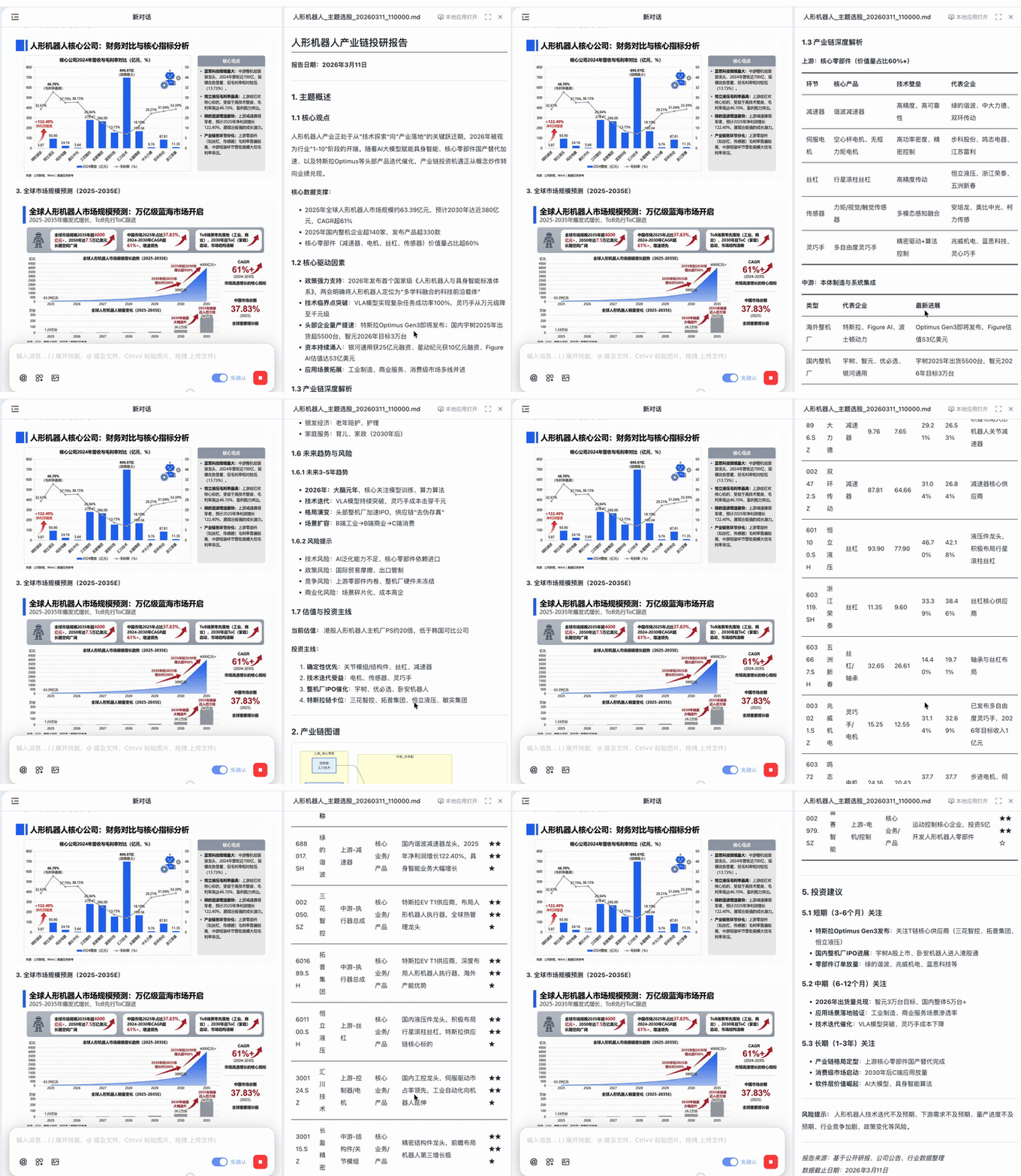
Alpha Claw then produced a fairly comprehensive humanoid robot industry chain report, covering industry map, core company financial comparisons, key metric analysis, and overall market size forecasts:
Let's look closely at what's impressive in this report.
First, the industry chain map. It draws an investment research-style diagram breaking down the entire chain in detail. Upstream covers various core components — servo motors, sensors, reducers, these very granular items.
Midstream is complete machine manufacturing — Tesla, Unitree, AgiBot, plus module and system integration companies. Downstream covers various application scenarios.
And this map is actually just a simplified version, an overview it shows you first.
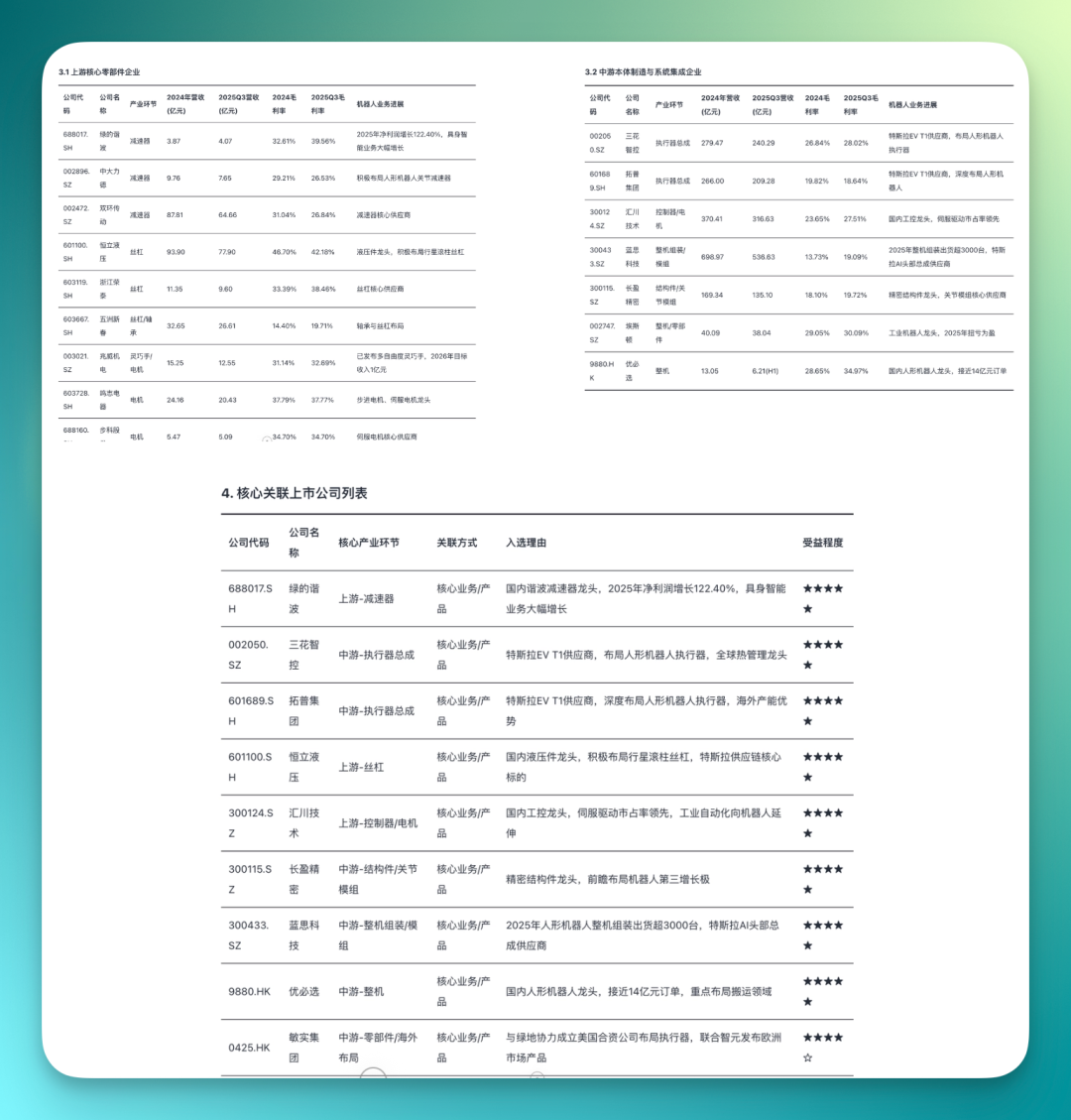
Scroll down and you'll see it digs deep into the entire chain.
Upstream component companies, midstream complete machine manufacturing and system integration companies, plus related listed companies — all listed out. Each company's ticker, name, industry segment, revenue, gross margin, whatever it could find.
2024 data, 2025 Q3 data — it's all there. Latest progress on each company's robotics business, also organized.
And I haven't even screenshotted everything — this is just partial. The full industry chain mapping covers roughly 50 companies.
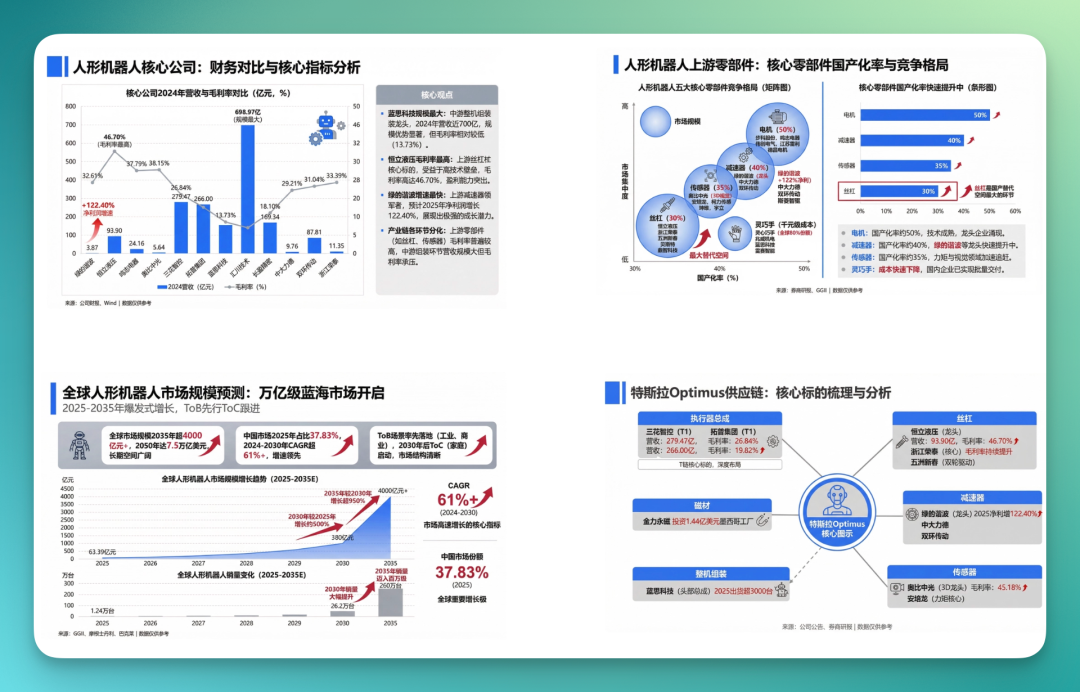
Alpha Claw's investment research charting is decent — financial comparisons, core metric analysis, upstream/downstream component matrix maps, market size forecast line charts, it's all there.
And every chart cites data sources — nice attention to detail. Look closely and you'll even find it looked up localization rates for various components in the chain.
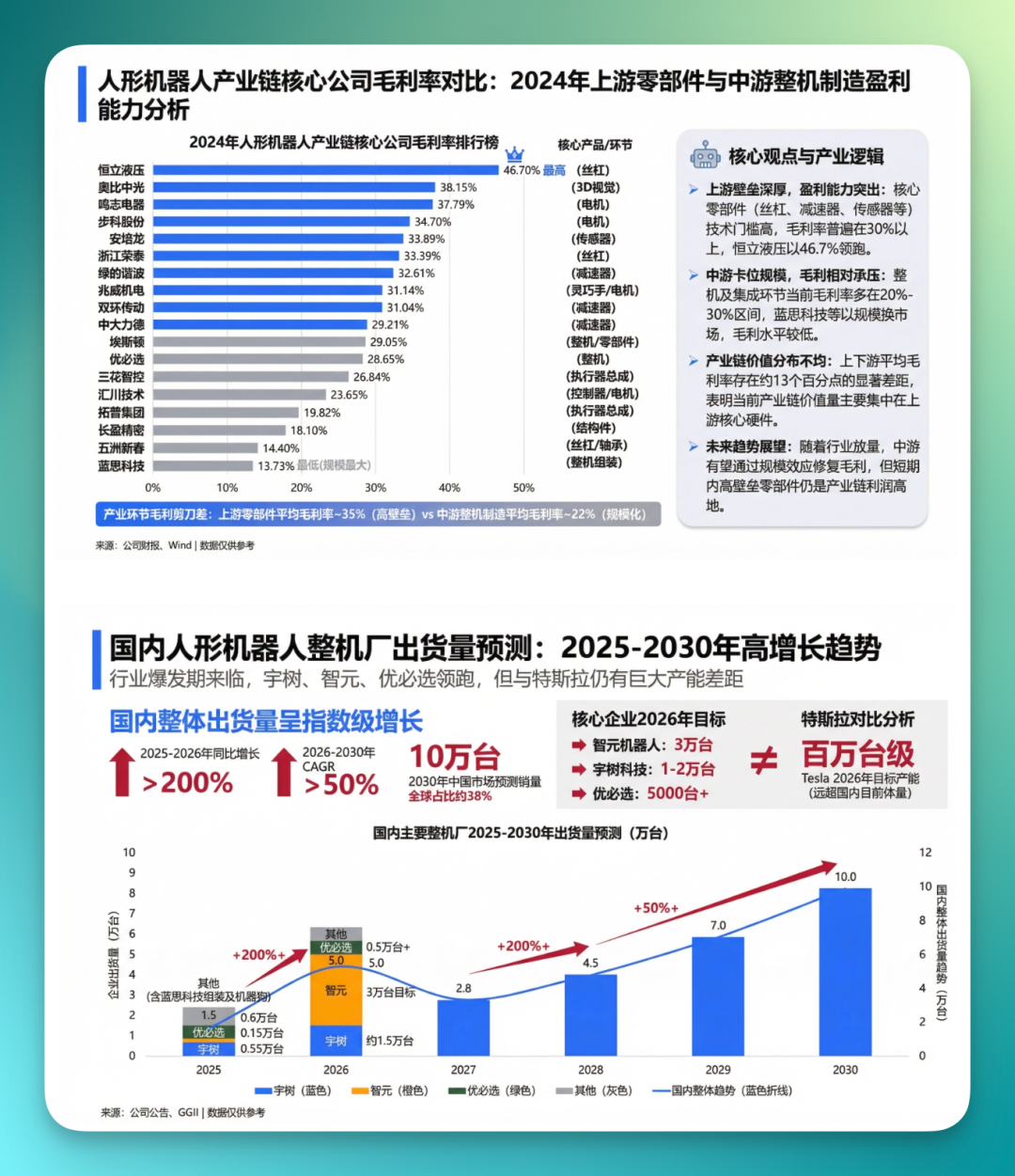
There's also a gross margin ranking of core companies, sourced from various research reports — very proper.
In the line chart below, it forecasts domestic humanoid robot OEM shipments from 2025 to 2030, with well-coordinated color schemes, overall consulting report style.
After the full experience, AlphaClaw connects several things together.
Previously, using general-purpose AI for investment research was often seen as "selling snake oil to outsiders," because the fundamental problem was insufficiently professional data. The output looked plausible, but anyone who actually does investing could immediately tell it was "theoretical hot air."
AlphaClaw plugs in a massive professional investment research database — research reports, meeting transcripts, industry data, all directly accessible.
Then the Skill design lets you save your own analytical frameworks, writing styles, even others' investment logic for reuse anytime.
Of course, AI-generated output definitely can't be used as-is. Final judgment still depends on humans.
But it can indeed run through those extremely time-consuming tasks first for you. You take the results and adjust, dig deeper — the efficiency difference is substantial.
When OpenClaw first blew up, many felt it was still quite distant from finance. But within just a few months, people are already trying to enter the space.
In the coming year or two, the way investment research works will likely change. This doesn't mean AI will replace analysts — AI's "replacement capability" is currently insufficient.
But analysts who use AI will become increasingly efficient, able to cover more and more.
If you also work in investment research, or are interested in the finance + AI direction, Alpha Claw is worth trying hands-on.
Alpha Claw download: www.alphaengine.top
(Currently institutional investors only)