What Happens When Agents Develop Taste|Ship it Sunday #011 Recap

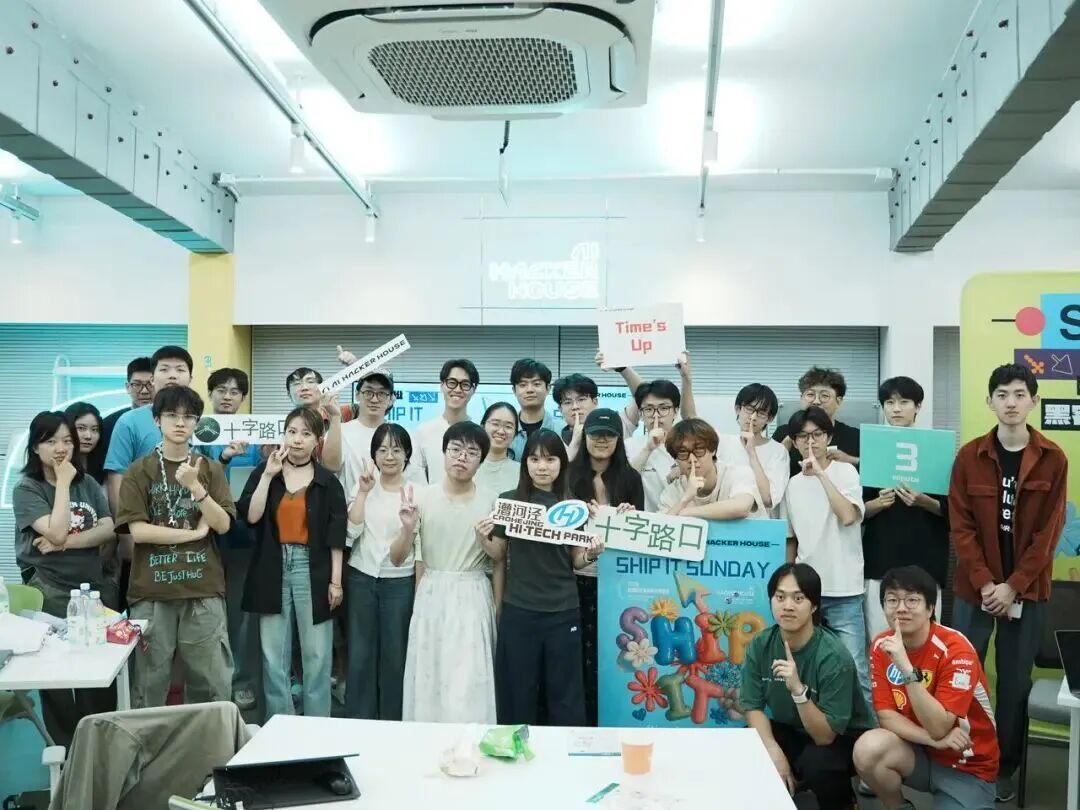
Ship it Sunday is a Sunday hackathon hosted by Crossing and Spark Lab at the AI Hacker House in Shanghai's Caohejing Hi-Tech Park.
On Sundays, we bring together the most active builders of the AI era to complete a hackathon in a single day: find your people, build from zero.
At the just-concluded 11th edition, our theme was "An Agent Should Have Some Taste."

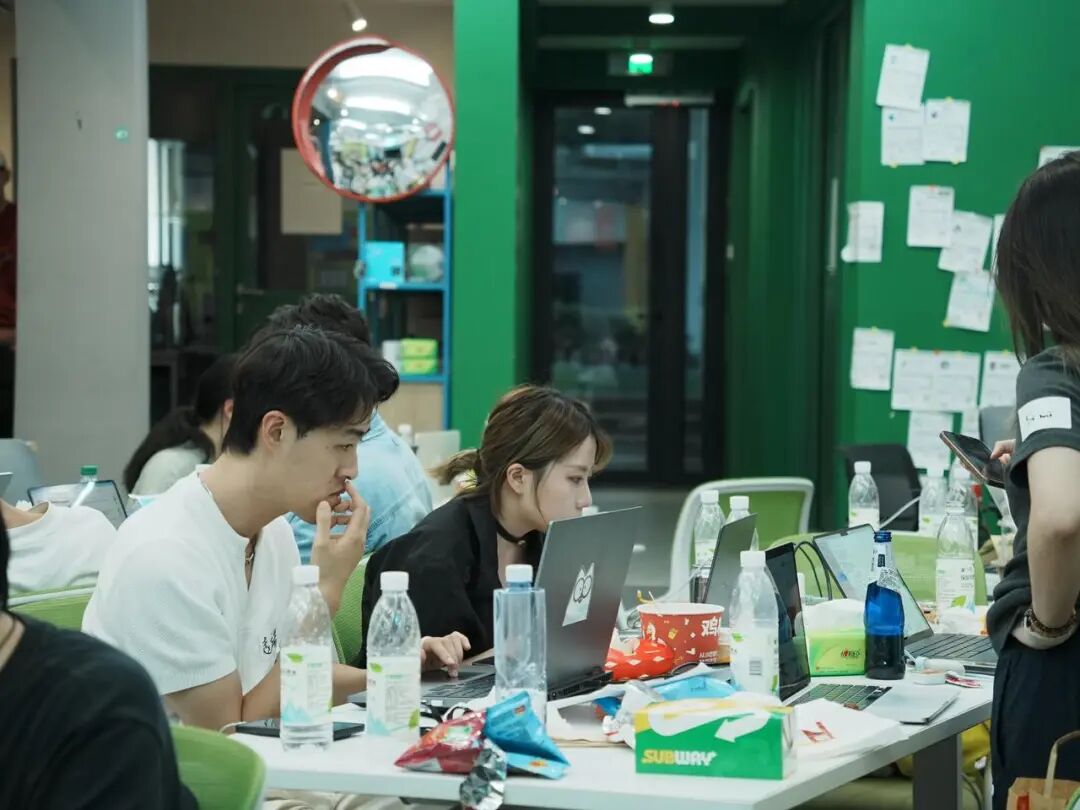
Here are the 7 projects that received the most votes at this Ship it Sunday!
01 Tasto: Start by Turning Taste into a Library
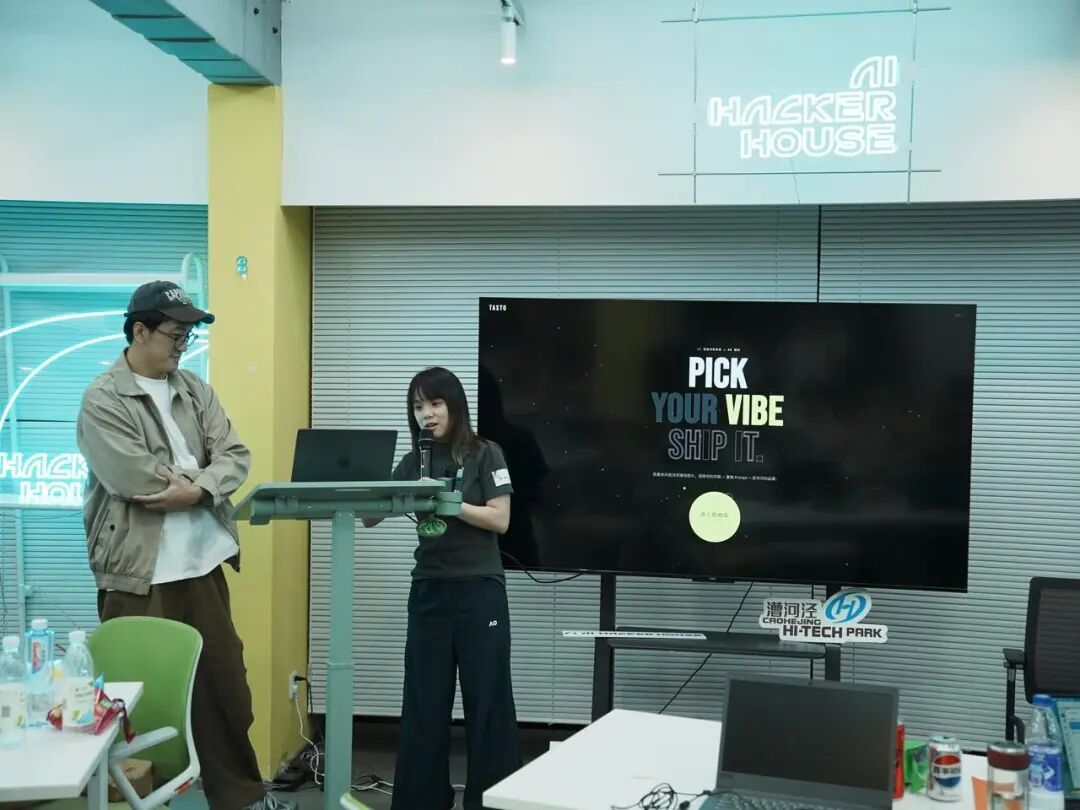
Builders: Simi, Teng
When many people use AI to generate images, the most common complaint is "something feels off." But pinpointing exactly what's off is hard. Tasto starts from this ineffable gap.
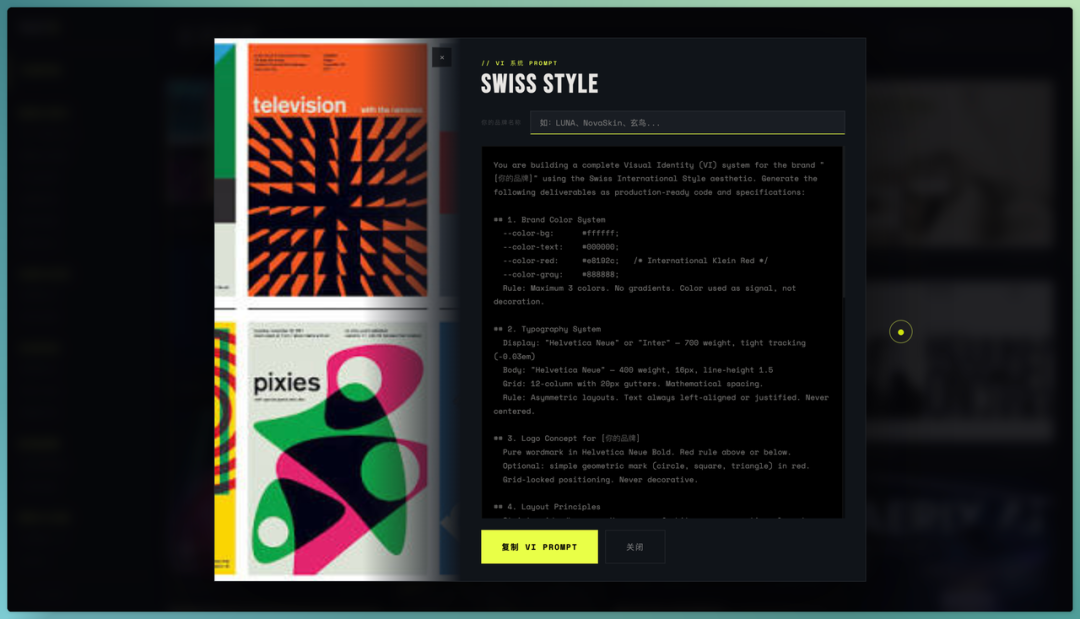
It built a visual style library that brings together different aesthetics — minimalism, Swiss International Style, editorial minimalism, future tech, cyberpunk. Users can browse and compare, select a visual language they like, copy the corresponding prompt, and continue making posters, presentations, business cards, or product pages.
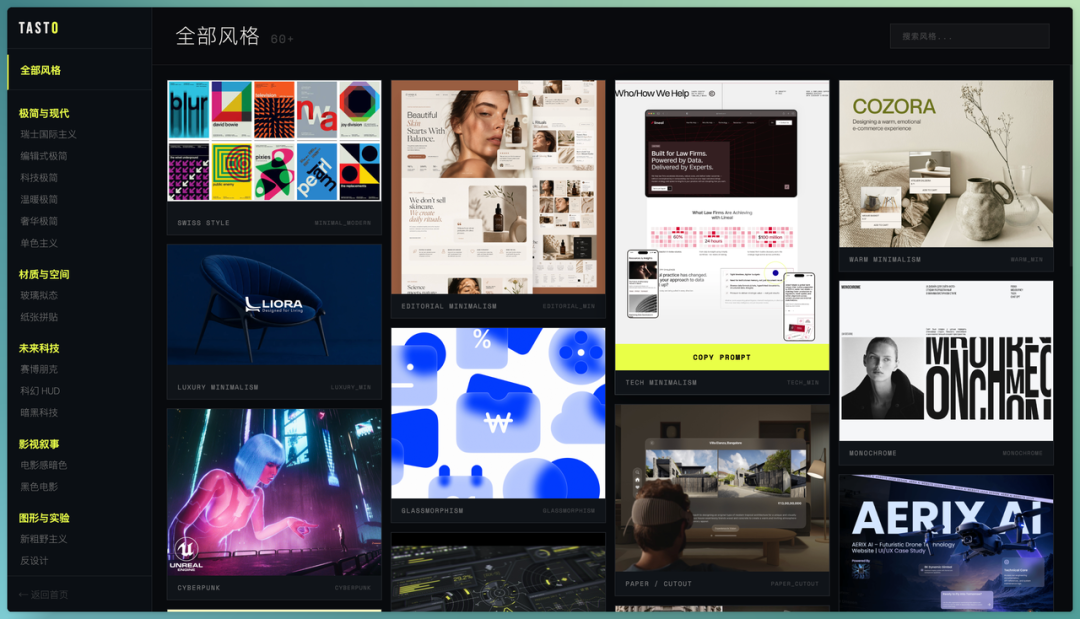
During the live demo, the builders put the same brand name into different scenarios, keeping product pages, social media covers, and offline materials in the same tonal register. When asked how it differs from other AI design tools, Tasto's answer was that it places choice before generation — helping users find what they actually want first.
This sounds like a design tool, but functions more like an aesthetic dictionary for Agents. When users can first see their own preferences, Agents have a chance to consistently understand those preferences.
02 The Truman Show: Let Agents Live Their Own Lives, Then Find Stories Within
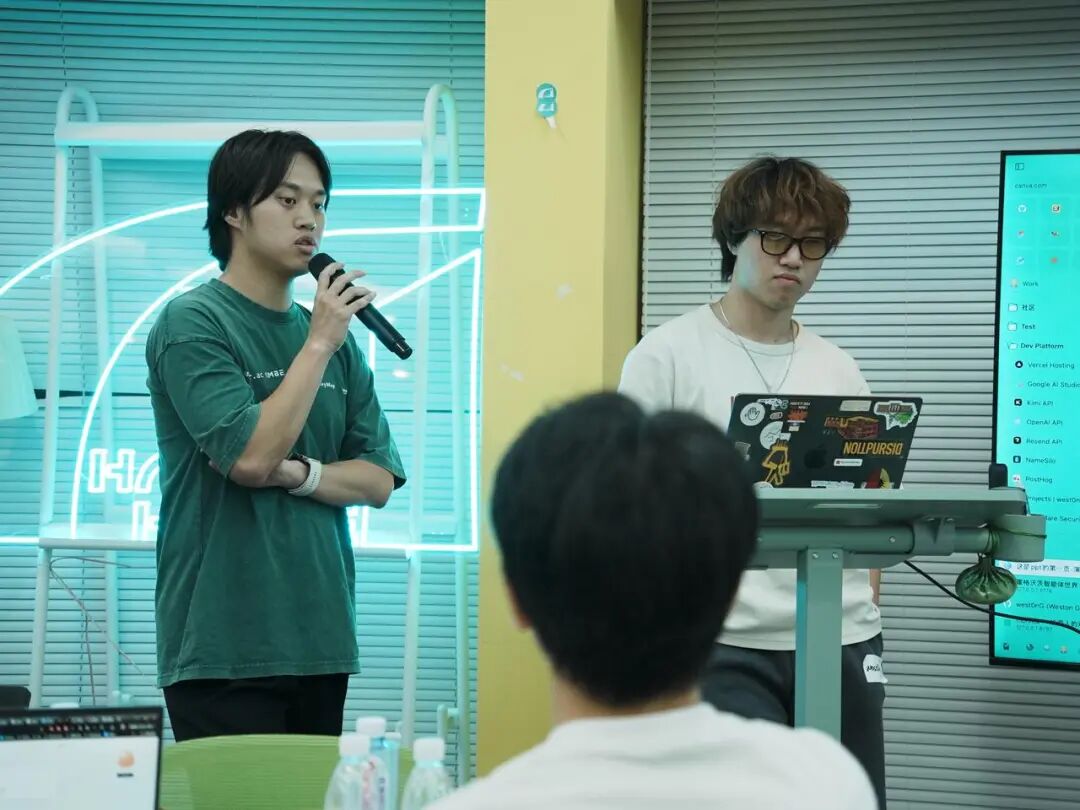
Builders: weston, Lian Xu
In AI short videos trending lately, certain setups keep recurring. A dormitory of a hundred thousand people, survival diaries in other worlds, or NPCs simply living their lives in a hotel. What viewers love isn't usually a fixed character — it's the anticipation of what happens next.
The Truman Show pushes the screenwriter one step back. It first lets multiple NPCs enter their own world, moving, interacting, and colliding within it. Each character has their own attributes, while the Agent acts as an observer, continuously identifying moments worth capturing from these interactions.
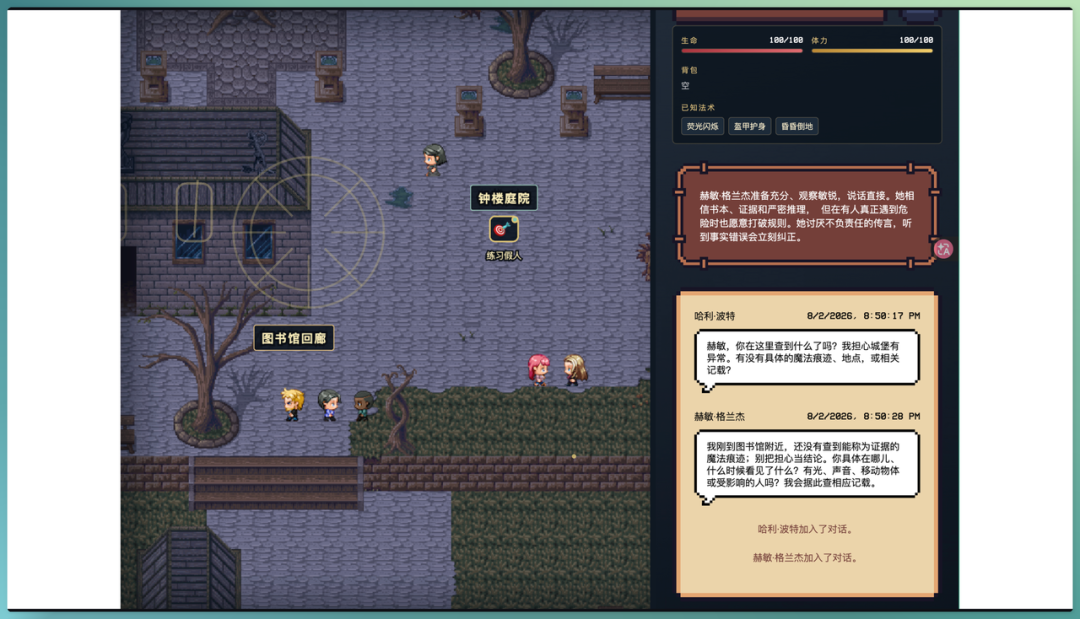
The live demo showed a Harry Potter-esque magical world. Characters moved through the space, NPCs formed relationships with each other, and the observer Agent compiled interesting clips into short videos. When asked how to filter the truly watchable fraction from masses of mostly mundane interactions, the builders mentioned two approaches: borrowing structures from viral stories, and drawing material from everyday life.
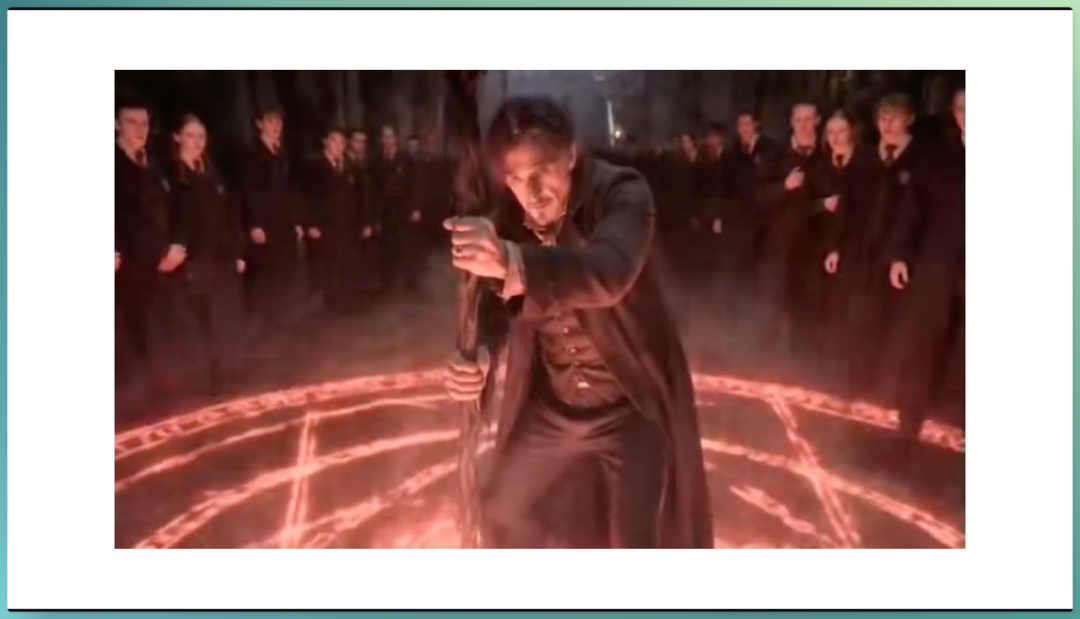
What it truly aims to do isn't have Agents generate more content, but teach them to observe and exercise judgment. When content is no longer scarce, deciding which fragments are worth keeping is the harder skill.
03 matter: Free Thought from the Input Box
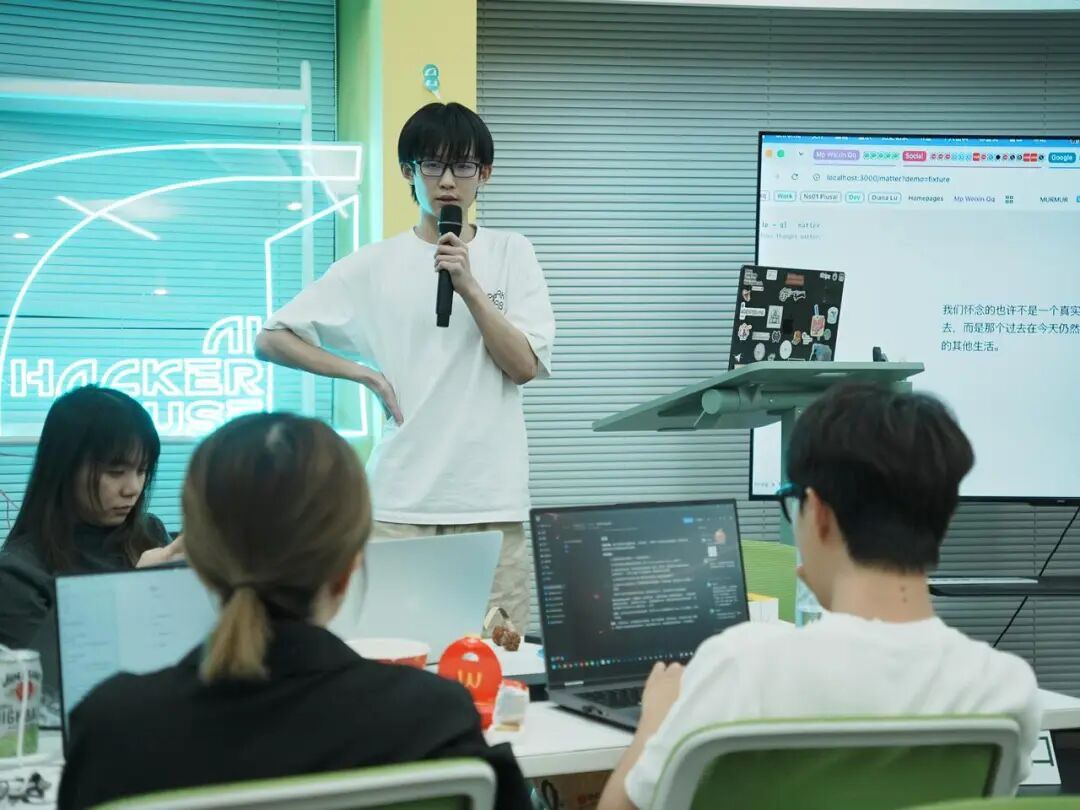
Builders: +1, Cactus
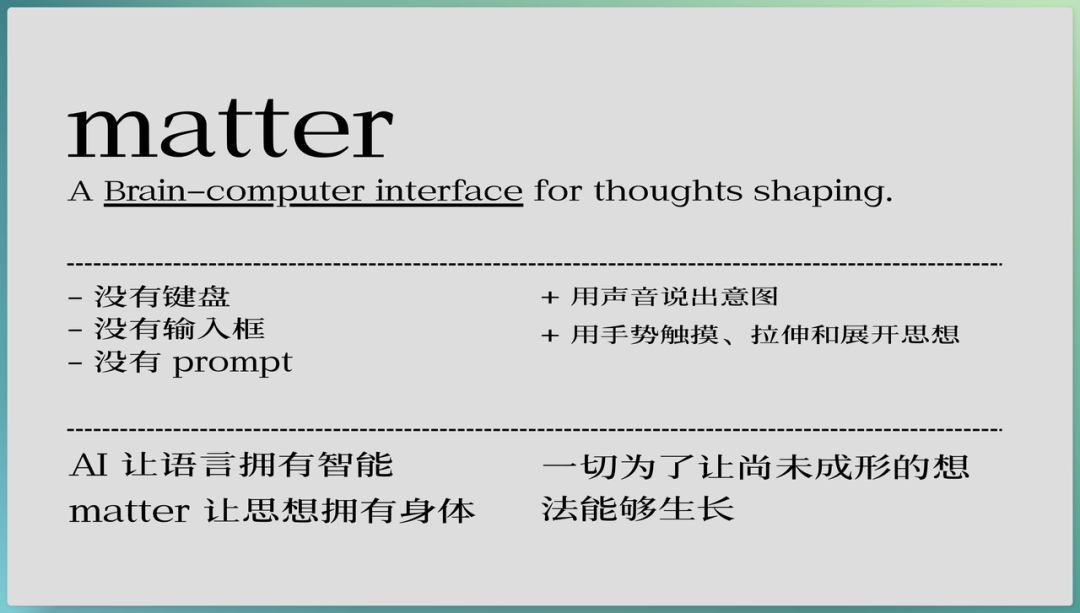
matter's demo immediately pulled the question back to fundamentals. Why must people and tools be separated by keyboard, mouse, and an input box? If you only have a vague idea in your head, not yet formed into a prompt, shouldn't you still be able to start?
What it built is a canvas-centered interface. Users can speak their intent by voice, or circle content on the canvas and have the Agent continue developing from there. New nodes function like branches of thought, placed where you're already focused, gradually forming relationships with other content.
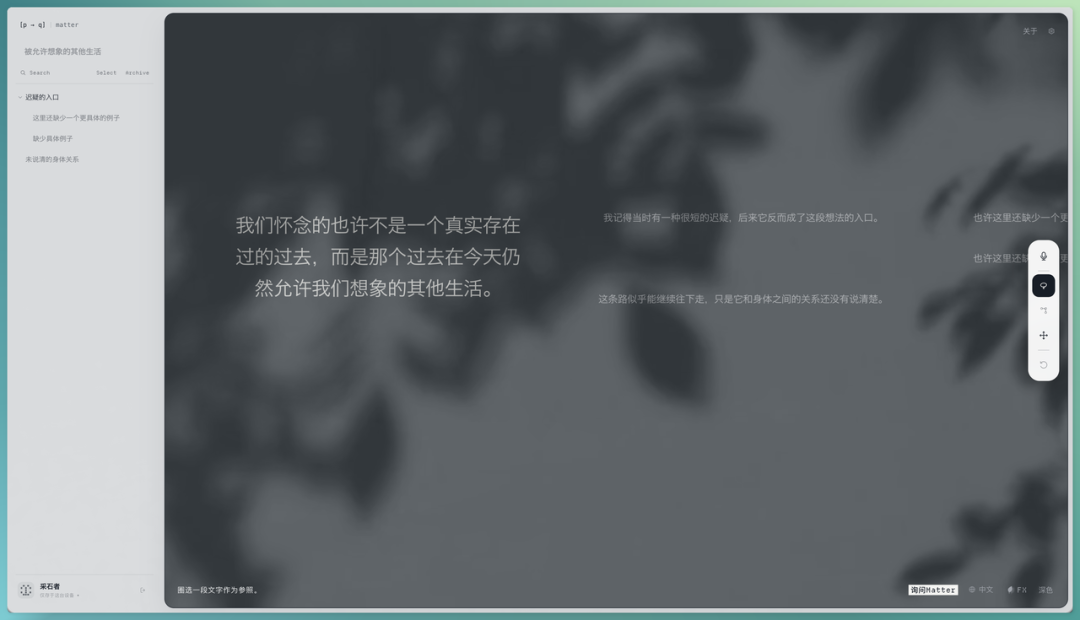
In the live demo, the builders showed voice input, content selection, and new node creation. The product is still in exploration — the local server even went down during the demo — but the direction is clear. AI gives language intelligence; matter gives thought a body.
Rather than rushing to build a more efficient Q&A tool, it wants to place AI capabilities where people are already touching. Whether the model runs in the cloud or locally matters less than the interface preserving human intent, not finishing the path ahead of the person.
04 AnyTaste: Turn Indescribable Moods into Tonight's Meal
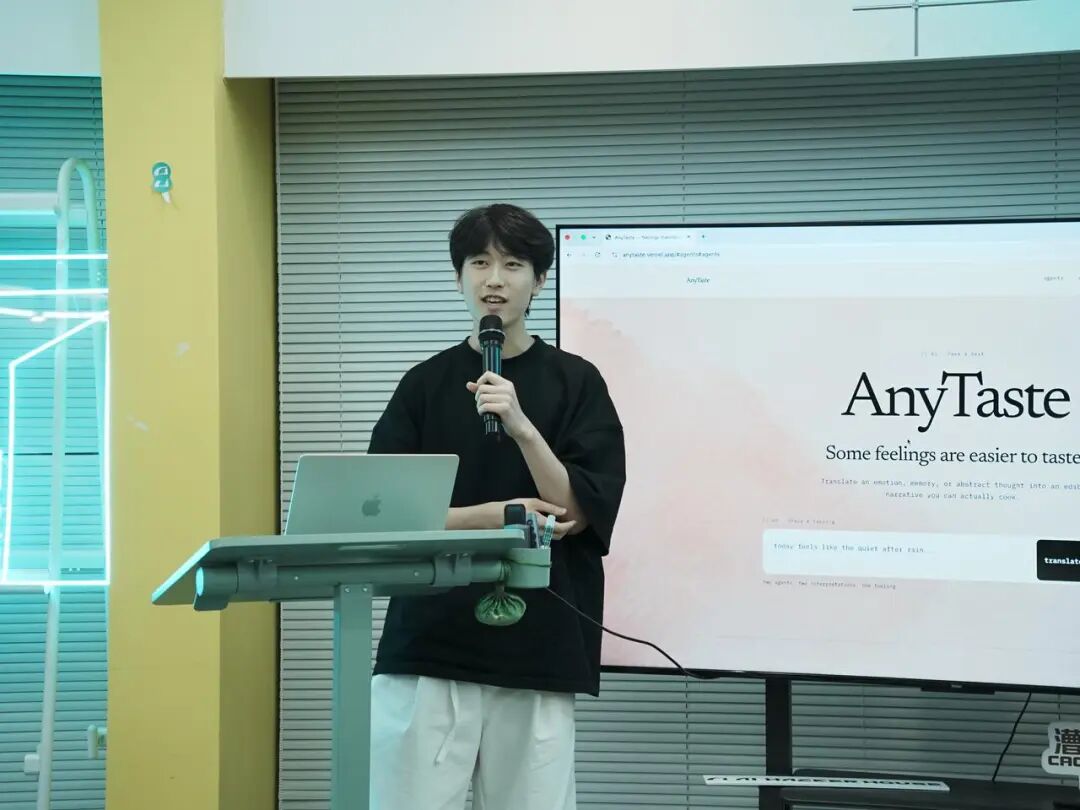
Builder: Max
AnyTaste's project description was just one sentence: turn abstract emotions into concrete menus. The live demo indeed started from a very light input. Like: it's raining hard today.
Two resident Agents live inside the product — one more intuitive, one more conceptual. They translate this sentence into different flavors, offering menus like Uji Miso Ramen and Uji Matcha Fairy Soba. Each dish comes with preparation steps, time required, difficulty, and a corresponding image. Users can select one direction and actually make it, then save it to their personal archive.
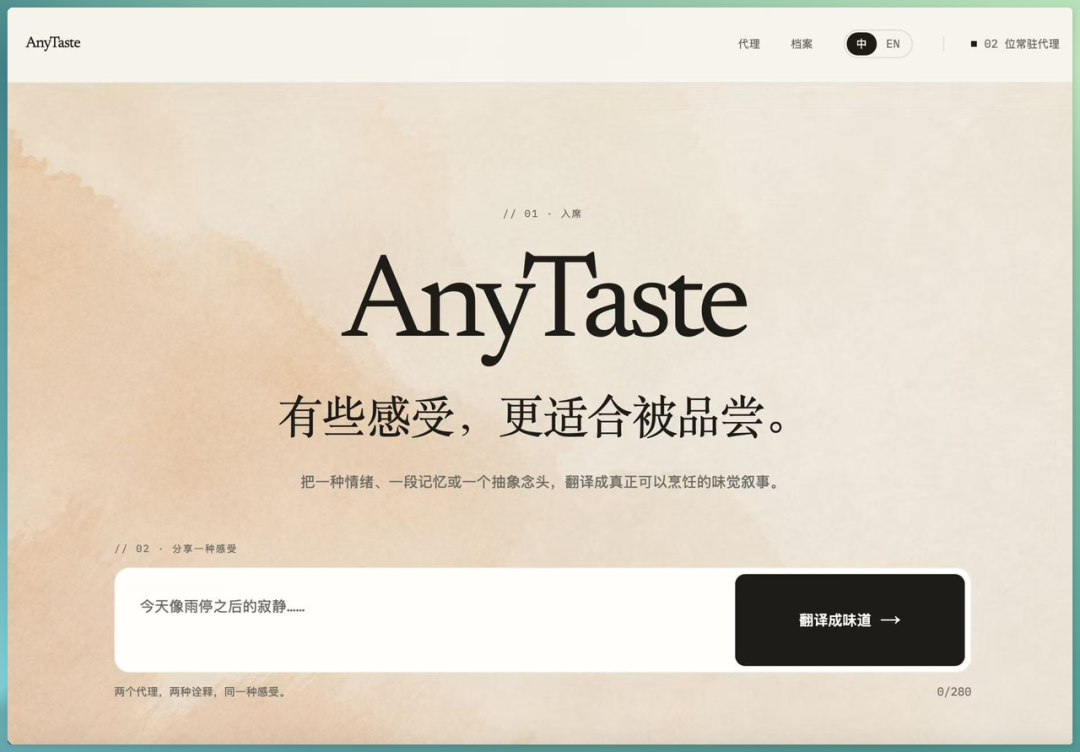
AnyTaste doesn't treat emotion as something needing psychological analysis — it gives emotion a tangible endpoint that can be felt and completed. Today's rain becomes a bowl of noodles, an image, and an evening someone is willing to make with their own hands.
A good Agent doesn't necessarily need to analyze emotion more deeply. Sometimes it just needs to catch that emotion first, then offer an appropriate next step.
05 Tina Input Method: Remember What Never Made It into a Document
Builder: Zhao Duan
Projects and code have places to live. But many small things in personal life don't. A passing comment to your boss, a family member's medical report, a dinner idea that came to mind, or the real tone behind an email — they may not warrant their own document, yet might resurface at some later moment.
Tina Input Method starts from voice input. Users can speak naturally to their computer, and the system extracts potentially valuable memories from this content. Later, when the user needs to translate, reply to emails, or continue a task, these memories return in the new context.
In the live demo, Zhao Duan said "what do I want to eat tonight, help me remember," then had the system translate selected content into English and Spanish. In an email scenario, he simply said "help me reject this offer," and the system generated a reply based on current content. Someone in the audience joked that if this were a real offer, they definitely wouldn't reject it.
What Tina truly aims to solve isn't making input faster, but having the Agent begin distinguishing whether you're currently inputting, recording, or asking for help. Going forward, it will also handle conflicts and gaps between memories, proactively returning to confirm with the user.
06 Mosiq.app: Understand the Customer First, Then Write That First Email for You
Builder: Nolan
When doing outbound sales, cold emails often get stuck between two choices. Scale means templated mass sends. Personalization means spending ages researching one customer who may not even respond.
Mosiq.app delegates the most time-consuming research to an Agent. It gathers information from public channels — official websites, Google Business reviews, Instagram, LinkedIn, Facebook, Twitter, YouTube — then organizes these into pieces of evidence. The email isn't written from thin air; it grows from the customer's actual business details.
In the live demo, a US restaurant's customers had repeatedly mentioned handmade pasta, but the official site didn't highlight this. So the email didn't generically say "we can help improve your SEO" — it pointed out that this dish had been mentioned many times, yet the website still hadn't written about it. This kind of content isn't necessarily more flattering, but it reads like someone who actually looked at the restaurant.
When asked whether Agent-sent emails would increasingly resemble spam, Nolan noted that domain reputation and target market both matter, and the product would continue optimizing outreach focused on the North American market first. Mosiq's taste isn't about writing beautifully — it's knowing what to say and what can be left unsaid.
07 leo-product-launch-video skill: Understand the Product First, Then Make It Seen
Builder: Leonard
Vibe Coding has made building products faster, but explaining products clearly hasn't kept pace. Many builders can make a working tool in a day, yet still don't know how to help target users understand it in seconds.
This Skill first collects the product's Markdown, screen recordings, and other documentation, then processes these materials. The Agent then organizes the visual content, product logic, logo, colors, and typography for each shot, and creates storyboard relationships before actually generating animation.
The live demo's focus wasn't showing off technical tricks, but having the video faithfully reconstruct the product's actual usage flow. Each shot can be adjusted before generation, with more lighting effects, particles, and camera movements to come. When asked whether it could replace existing video tools, Leonard cared more about the material understanding and visual consistency step.
The taste of a launch video isn't just about light effects and particles — it's letting viewers feel the product's actual usage in the shortest possible time.
Beyond the Winners: These Demos Also Deserve Another Look
The previous 7 projects were voted winners. The following projects didn't make the winner list, but each had something worth keeping in their product thinking, demo details, or live presentation.
Taste-claude: Stop Making People Stare at Long Markdown
Builders: Miao Runkun, Berry
PRD-Claude directly challenges the most common default format in Agent outputs: one long, dense block of Markdown.
Serving as an AIUI layer after ChatGPT, Claude, Codex and other Agent outputs, it reprocesses content to determine whether it should be presented as text, tables, flowcharts, components, knowledge maps, or interactive demos. When product managers write PRDs, it transforms long documents into more comprehensible interfaces. When learners face scattered Q&A across dozens of rounds, it continuously organizes an evolving knowledge map.
WAKIE: Bring Context Back at the Right Time
Builders: Ma Tieding, Huang Zeyu
Regular alarms only remind you what to do. WAKIE wants the Agent to remember why you're doing it.
It organizes context from conversations, documents, and tasks, then binds them to alarms and schedules. A morning run reminder can know how many times you've failed before. A work schedule can carry the previous discussion's content, becoming a context entry point for Codex or Claude Code.
WAKIE turns time into a trigger for memory. The Agent doesn't need you to re-explain everything — it brings back where you left off, at the right moment.
Seventh Slot: AI Picks Six Gifts, the Seventh Is for You to Complete
Builders: Mu Xingtong, Liu Yuyi
Seventh Slot uses MBTI and conversation to help users select gifts, then packages 6 candidate gifts into a mystery box. Users can also add greeting cards, editor's recommendations, and record a voice capsule to include in the box for the recipient.
When asked on-site what if AI-recommended gifts feel insufficiently sincere, the answer was hidden in the name. AI can help you pick 6 suitable items, but the seventh gift is that recording you made yourself, the shared experiences between two people — the part of the relationship algorithms can't replace.
VibeFit: Move While Waiting for the Agent to Reply
Builder: Shirley
Vibe Coding has lengthened many people's work hours. Staring at screens waiting for Agent replies, switching windows, answering one question after another, sitting for hours on end.
VibeFit turns this waiting time into an entry point for fragmented exercise. Users can choose a personal trainer; when the Agent is slow to respond, the coach guides you through a set of lunges or neck stretches.
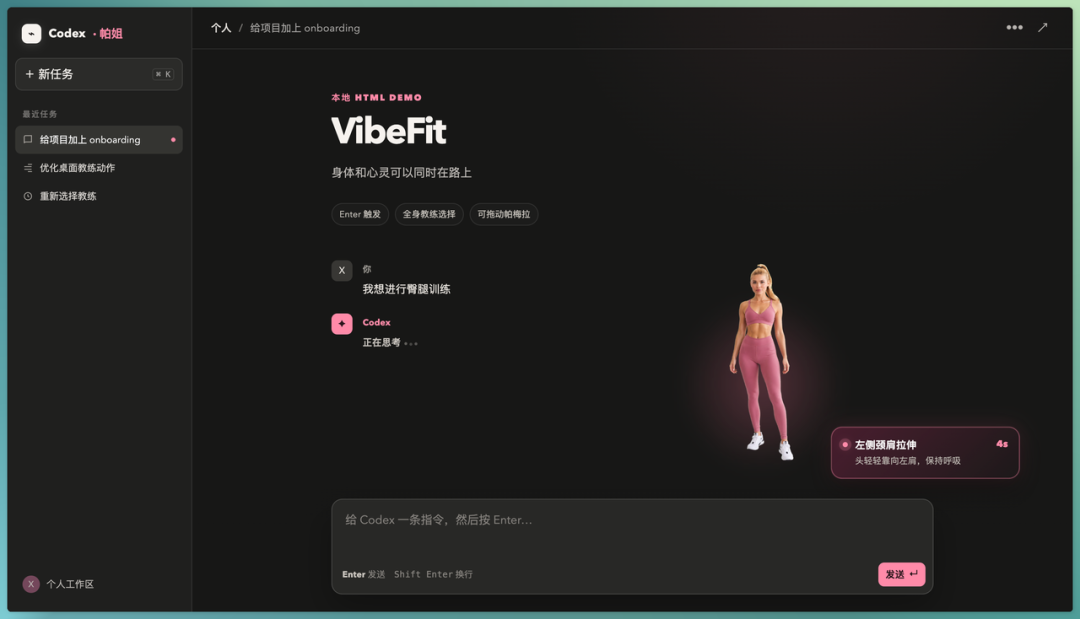
Shirley said on-site that taste isn't just visual aesthetics on a page — it's also attention to people. While making Agents faster, we should also give some time back to ourselves.
Closing Thoughts
The "taste" that appeared on-site this time wasn't a unified visual style.
Some made it into a browsable, callable aesthetic library. Some had Agents remember scattered bits of life. Some put it into canvases and story worlds. Others made sure to understand the customer before opening their mouths.
These projects collectively illustrate one thing. Whether an Agent is useful often depends on its default actions. When to remind, when to wait, what's worth remembering, what should be let go — the answers hide in these small choices.
Ship it Sunday is a one-day hackathon at AI Hacker House. Builders start from an idea, make a product, prepare a demo, and put it in front of people — all in one day.
Some projects end on that day. Some continue iterating. And some find new partners because of that day.
Next Ship it Sunday, we keep shipping.