Deep-Dive into Lark's New AI Features: Possibly the Most "Genuinely Useful" AI Implementation of 2025
After several months of beta testing, Lark finally released it to the public.
Lark "Knowledge Q&A" Enters Broader Beta Today

👦🏻 Author: Jingshan
🥷 Editors: Koji, Xiaoju
🧑🎨 Design: NC

"Advanced teams choose Lark first" is one of my favorite tech company slogans.
Now, I believe it's not just advanced teams like Crossing (ahem) — more and more individuals, teams, and enterprises simply can't do without Lark and its entire ecosystem.
Lark hasn't disappointed its users, either. It keeps rolling out new features, constantly helping people boost their productivity and collaboration.
Today, Lark's "Knowledge Q&A" enters a broader beta. — According to the Lark team, who told Crossing that while the feature still requires applying for beta access, approval times will be significantly faster starting today.

What Is Lark's "Knowledge Q&A"?
Simply put, all the historical documents and chat records you've accumulated on Lark over the years are now automatically transformed into AI data assets for your organization.
When you ask a question, it searches through all Lark documents and chat history using either DeepSeek-R1 or the Doubao large model to find answers. It also supplements with publicly available internet knowledge to generate more complete responses.
As Lark users, we've been eagerly awaiting this feature since the day generative AI was born. We always knew it was coming — it was only a matter of when.
It Actually Works Well
Since its gray-scale testing began, Crossing has already felt its value, so our team has been actively putting it through its paces.
"Knowledge Q&A" isn't a brand-new concept, but "functional" and "actually good" are two completely different things.
After two months of use, we can say with confidence: It works really well! For organizations that know how to leverage it, this is likely the most valuable AI implementation of the year.
It's Getting Serious Attention
Notably, Lark is treating this with serious priority: once an organization enables "Knowledge Q&A," it automatically becomes the first tab on every member's mobile app home screen, and ranks prominently on desktop too.
This fully demonstrates Lark's commitment to the feature — a commitment rooted in its assessment of user value and its expectation that this will become a high-frequency tool.
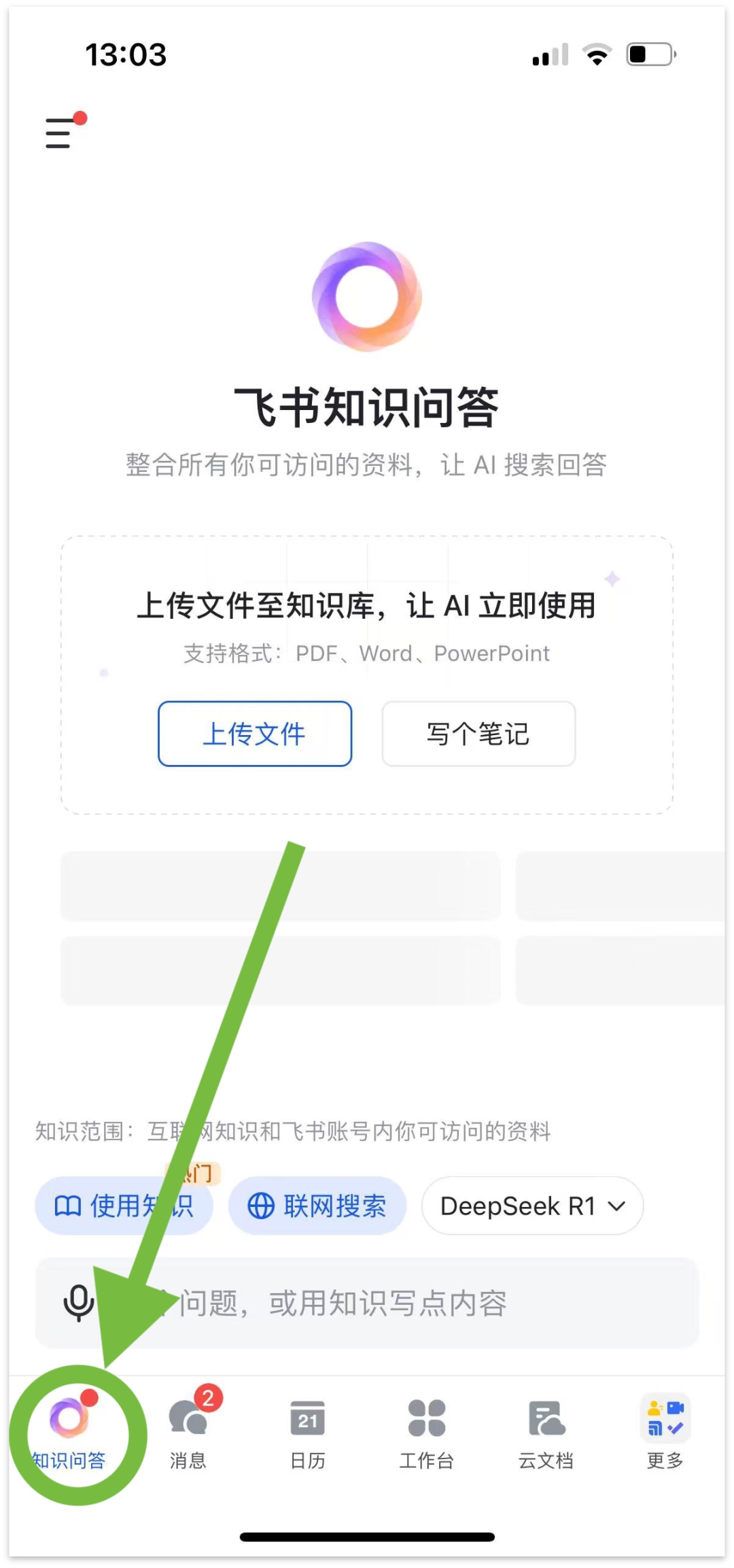
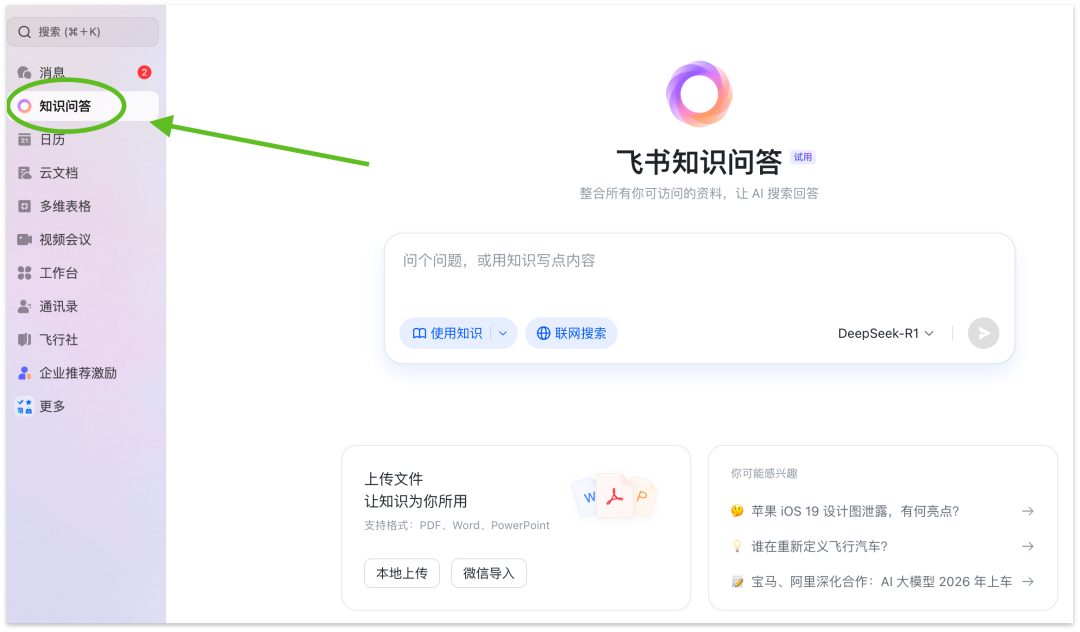
In this review, Crossing aims to comprehensively introduce and stress-test Lark's "Knowledge Q&A," while sharing insights from our two months of deep usage.
Our Favorite Feature: "Fuzzy Intent Search"
Among everything "Knowledge Q&A" can do, the most valuable and compelling use case for us is "fuzzy intent search" — scenarios like:
Who talked to me about [xx] yesterday? I can't quite remember.
Which weekly report mentioned the progress of [xx] project?
Which group chat did I once discuss [xx] topic in?
We also tried various angles, such as:
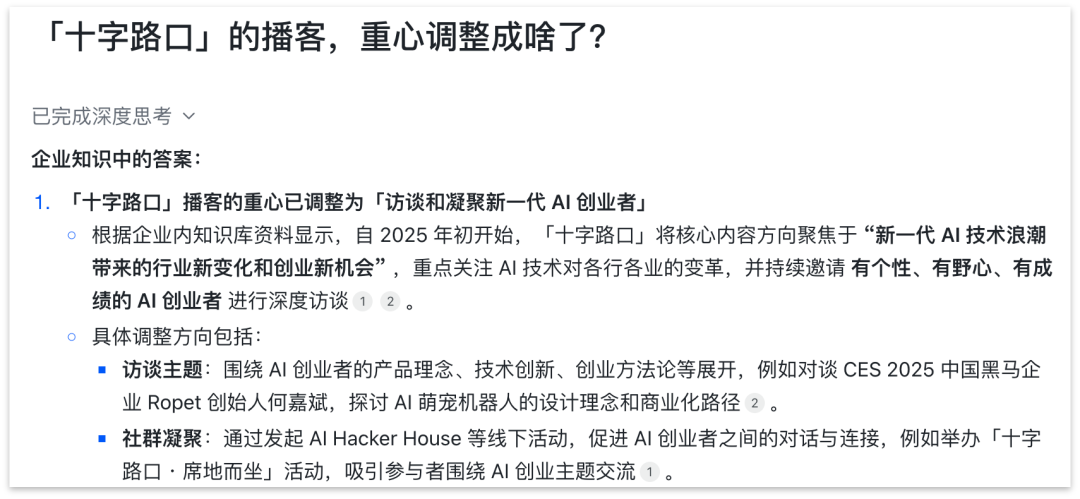
"What's the current focus of Crossing's podcast?"
"I remember Koji had a meeting with a Gen Z founder — what did they discuss?"
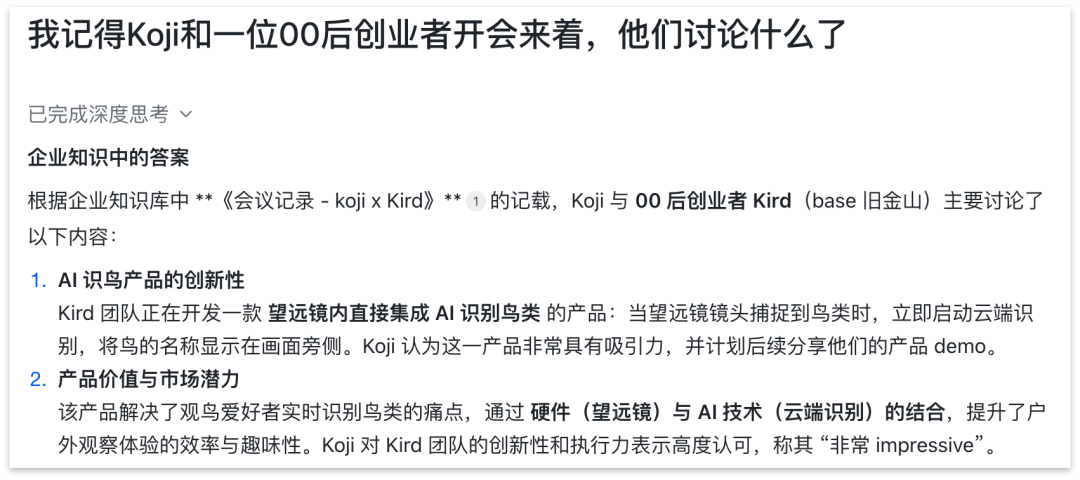
Lark's responses were excellent, quickly surfacing the answers we needed.
"Knowledge Q&A" Can Dig Up Ancient Knowledge
Much of Lark's commercial success as a "national-level" collaboration tool stems from users having habitually migrated all their knowledge into it.
But the more you use it, the more knowledge piles up. We constantly hoard "potentially useful" documents that gradually become "dusty archives buried in history."
We've been lurking in "Flight Club," a special community of Lark enthusiasts — an organization with three years of accumulated context and a massive knowledge base.
Let's put Lark's "Knowledge Q&A" to the test: what can it accomplish in such an organization?
For instance, I wanted to find the sharing content from Koji, who was the third "flight guest" when Flight Club was founded in 2022.
So I simply entered a prompt:
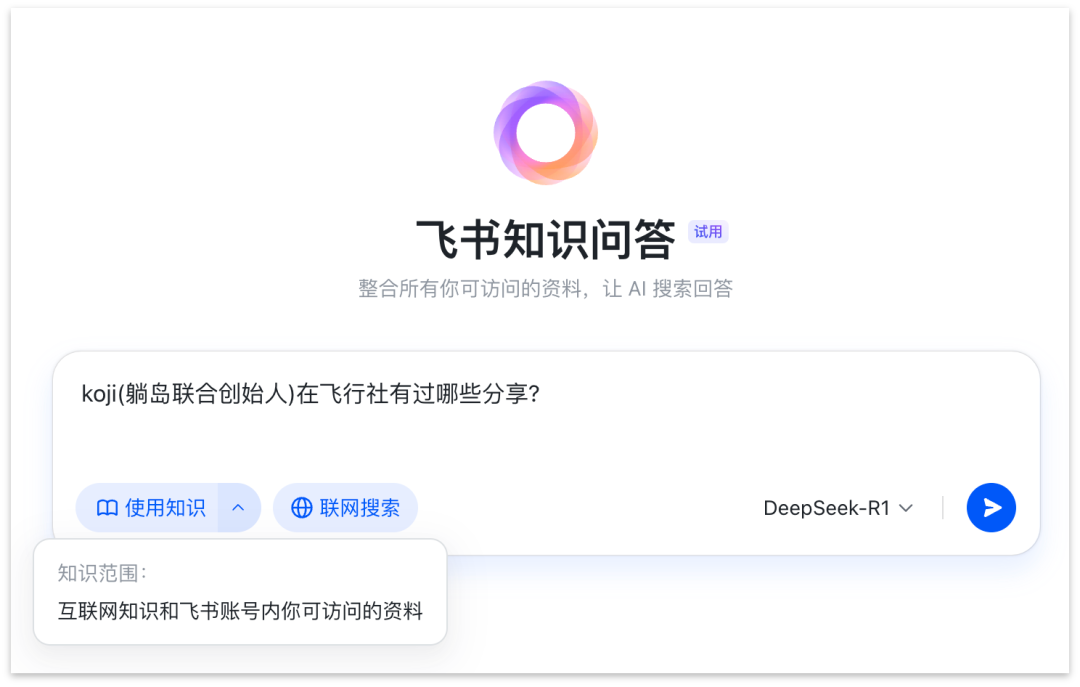
What sharing sessions has Koji done at Flight Club?
By the way, when using "Knowledge Q&A," I generally enable both "Use organizational knowledge" and "Web search" simultaneously for the most comprehensive answers.
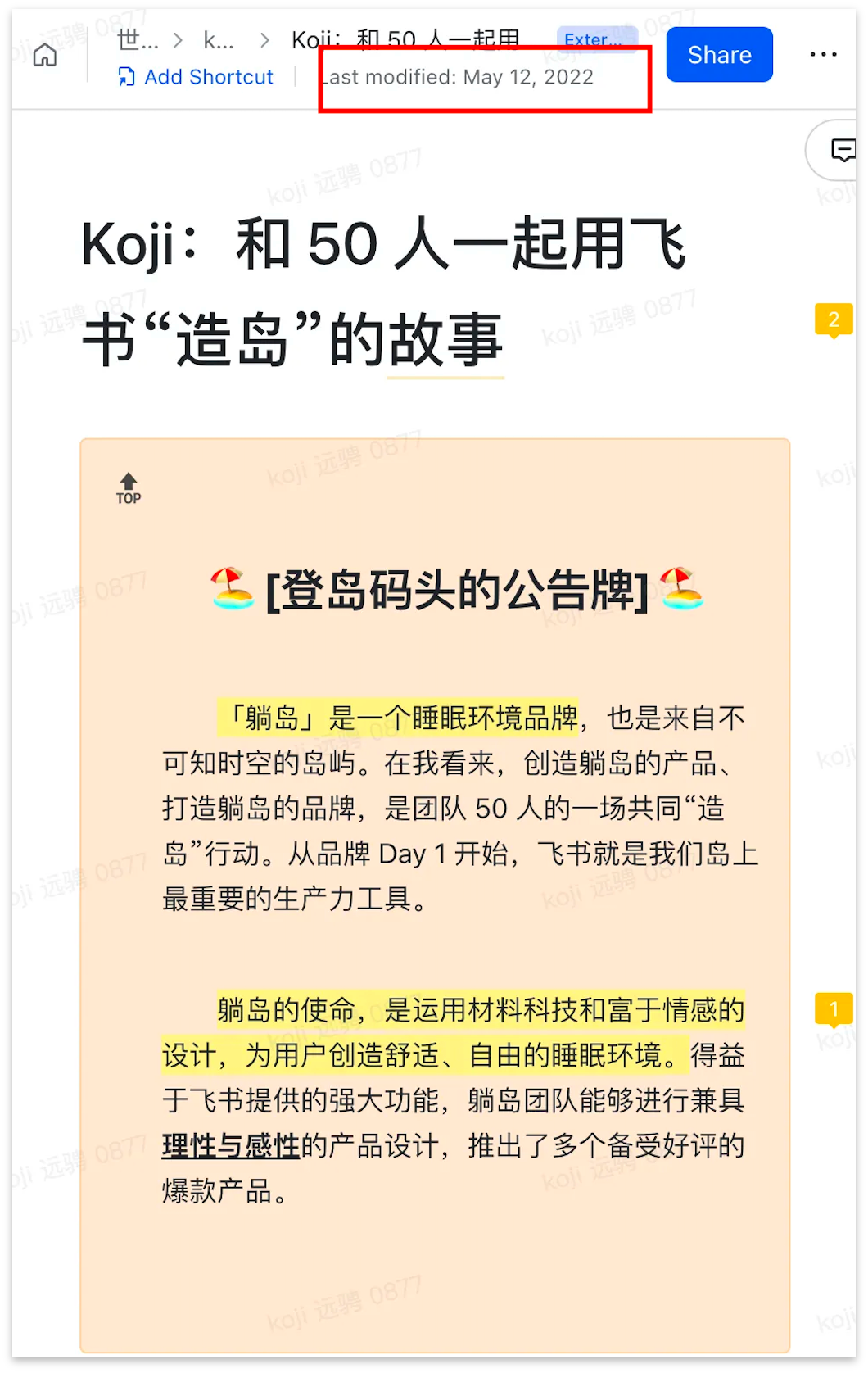
Seconds later, in DeepSeek-R1's reasoning chain, I found a series of Koji's sharing records — most importantly, the document from that session: Koji: The Story of "Building an Island" with 50 People Using Lark.
Keep in mind, Flight Club has far more documents than a typical enterprise, given its large, active membership. While the exact count is unknown, conservative estimates put it at tens of thousands, possibly hundreds of thousands.
Finding this specific needle in such a massive haystack — impressive.
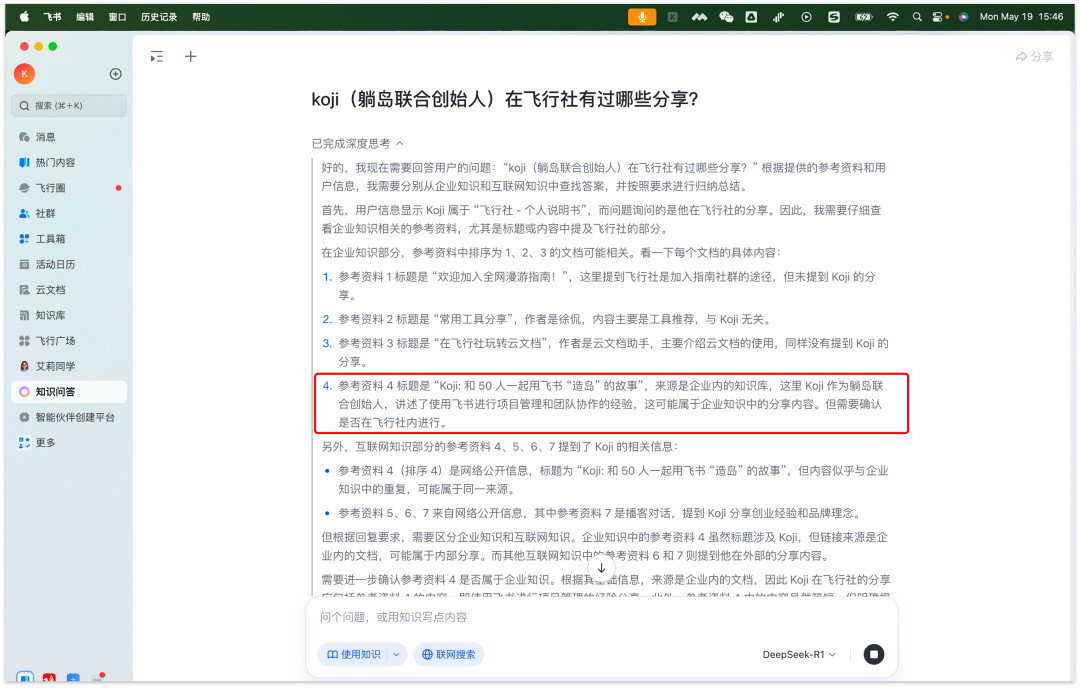
This document records Koji's 2022 sharing about how to use Lark's collaboration tools to work efficiently with Tangdao's 50-person team.
Beyond searching massive internal document repositories, it's also remarkably tolerant of how users phrase things.
It Really Doesn't Need "Good Prompts"
1) In Fragmented Scenarios, "Knowledge Q&A" Is Very Forgiving
Modern work happens on the go, not just sitting at a computer crafting the "perfect prompt" and waiting for AI to slowly respond.
If a single voice message with clear intent but fuzzy phrasing can solve the problem, it often unlocks productivity in these fragmented moments.
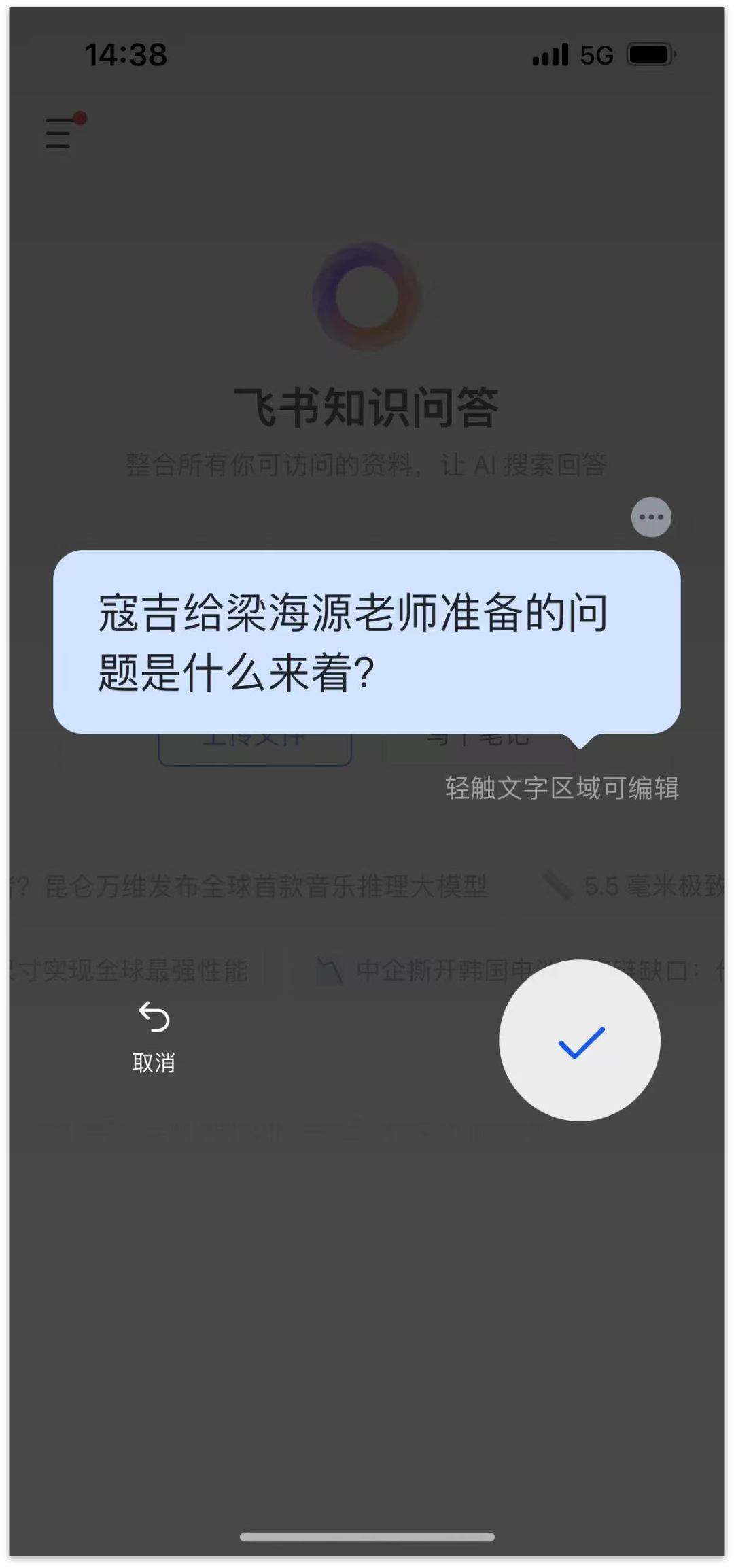
Imagine this: I'm rushing to catch a flight and urgently need to find a document from a Lark group about Koji interviewing teacher Liang Haiyuan, but the chat history is buried under new messages. What do I do?
Lark's "Knowledge Q&A" solves this pain point well — mobile supports direct voice input, and automatically infers and aligns with fuzzy user intent based on knowledge from group messages.
For example, voice recognition might struggle with "Koji" as an English nickname, transcribing it as "Kouji" instead.
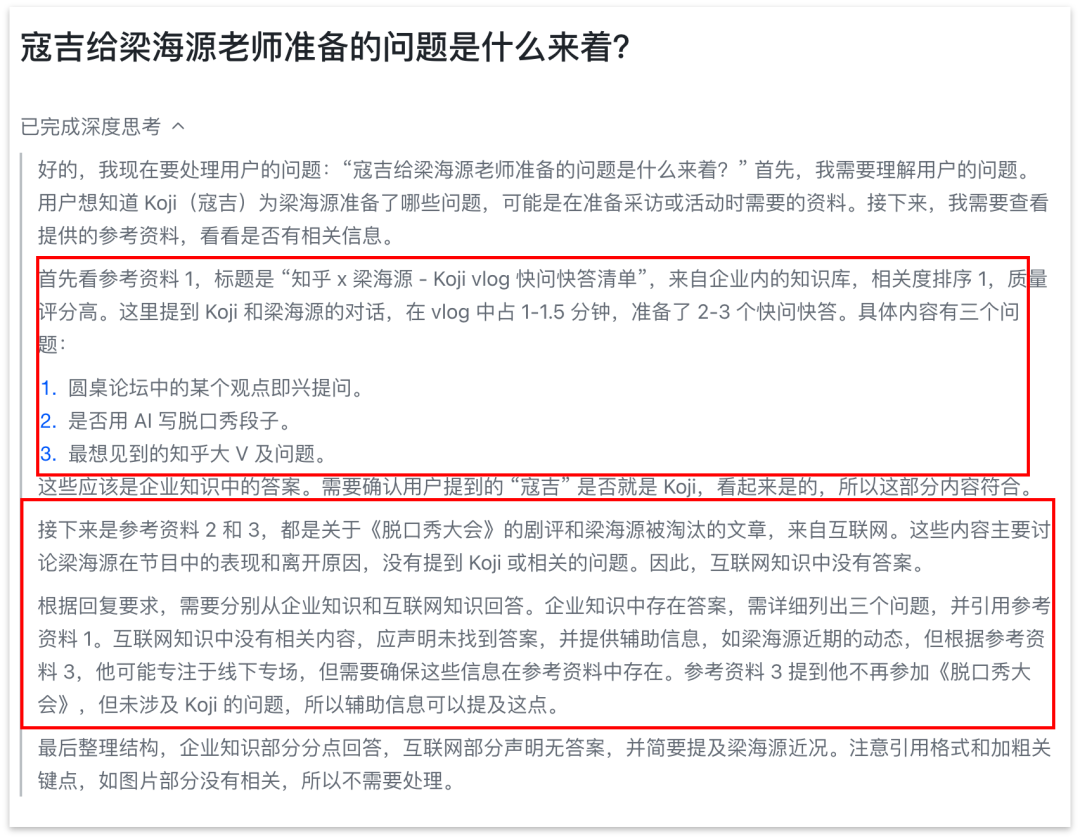
Even with this slightly garbled question, "Knowledge Q&A" uses "Liang Haiyuan" to find three reference sources — one from a knowledge file in group messages, the other two from unrelated sources like Rock & Roast.
Yet it still matches the logically correct answer from Crossing's internal knowledge base.
"In the user's question, teacher Liang Haiyuan doesn't exist in isolation — the knowledge source needs to couple the concepts of both Koji and Liang Haiyuan, and only then comes the correct answer." — This, I imagine, is how "Knowledge Q&A" reasons.
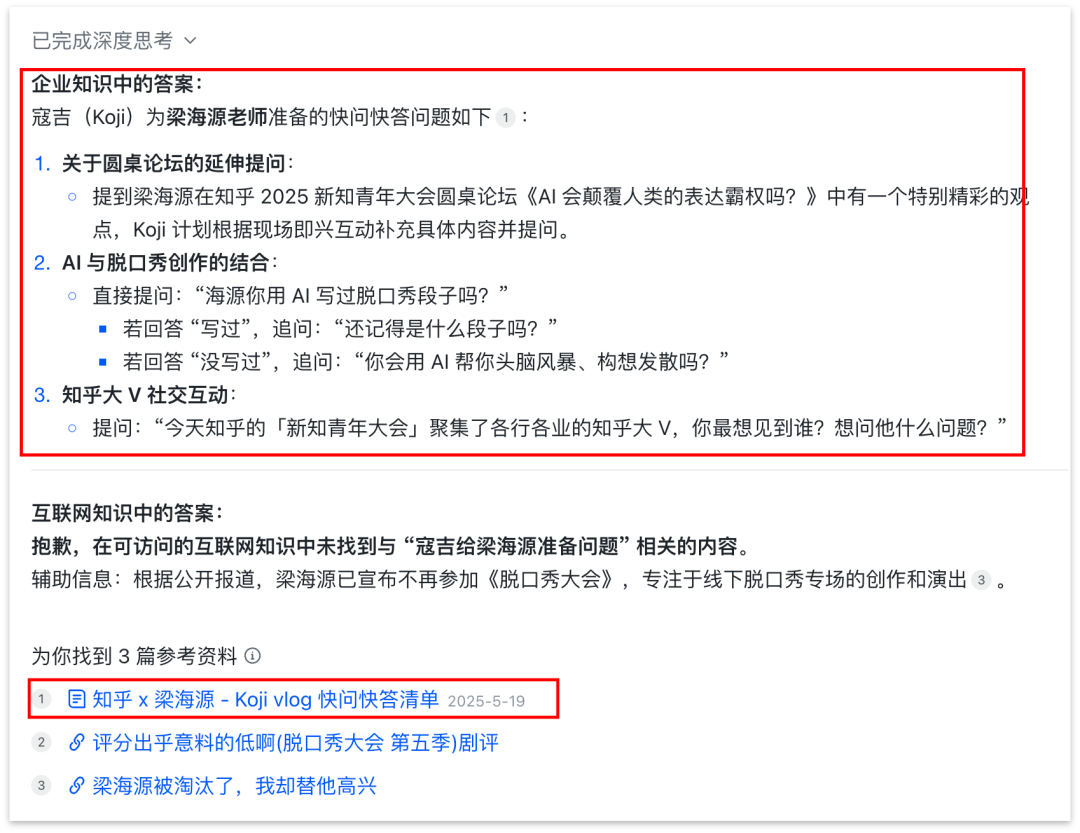
In just over ten seconds, "Knowledge Q&A" delivers a quick Q&A response.
For everyday answers, both Doubao and DeepSeek R1 versions of "Knowledge Q&A" provide concise, precise responses.
2) Finding All Those Files You Forgot About in Lark
"Knowledge Q&A" proves even more valuable when searching for specific files.
It excels at scenarios like this: there's a file embedded "in some corner of some document in some knowledge base" in Lark, years have passed, but you remember roughly when...
Then you can simply say something vague like:
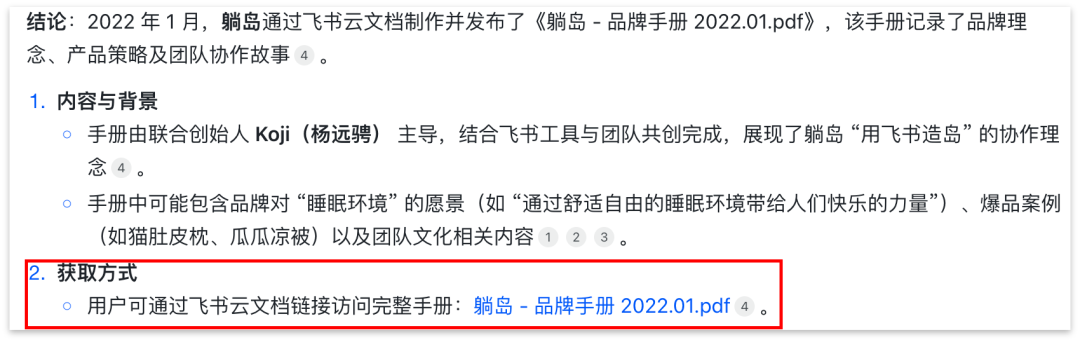
I remember Tangdao released a brand handbook early 2022...

Again, the full DeepSeek-R1 reasons very quickly, finding it directly in a Lark document not even in the enterprise knowledge base, and extracting the PDF filename and size.

"Knowledge Q&A" also automatically synthesizes content based on the PDF's contextual surroundings for a brief summary, and thoughtfully provides a direct link to "Tangdao_Brand Handbook_2022.01.pdf" for one-click access.

What Sparks Fly When Three Knowledge Domains Collide?
Traditional "AI knowledge base" products typically follow this structure:
- Upload PDFs or other files to the knowledge base
- Have AI perform web search for retrieval-augmented generation (RAG)
- Generate an answer reasonably matched to the knowledge content
However, these AI knowledge bases often operate separately from work platforms, or use social media as their medium, unable to leverage knowledge accumulated in daily workflows.
"Knowledge Q&A" makes clear advances here, achieving three-domain fusion:
"Personal uploaded files + public web information + internal Lark knowledge," powered by DeepSeek R1 and Doubao — the experience is genuinely well-executed.
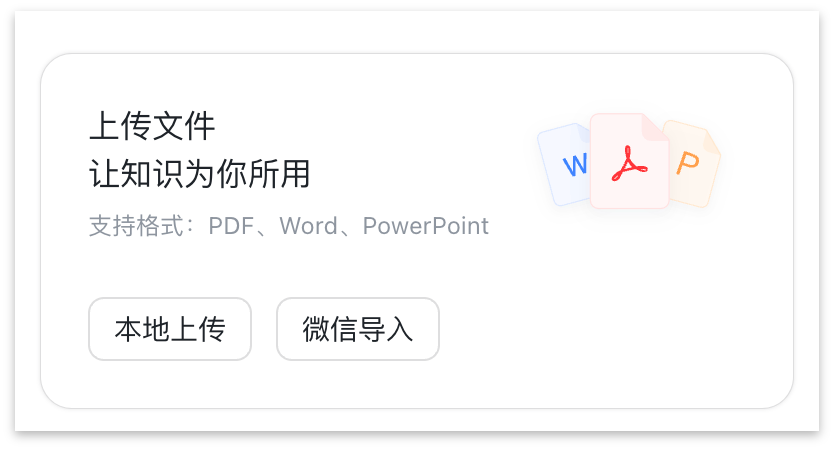
The knowledge base supports three upload formats: PDF, Word, and PPT. Beyond local upload, WeChat import is also available.
With web search enabled, "Knowledge Q&A" draws from remarkably broad sources: Jike, various blogs, traditional websites, even Boss Zhipin.
Moreover, content generated from knowledge base-grounded "Knowledge Q&A" demonstrates high accuracy.
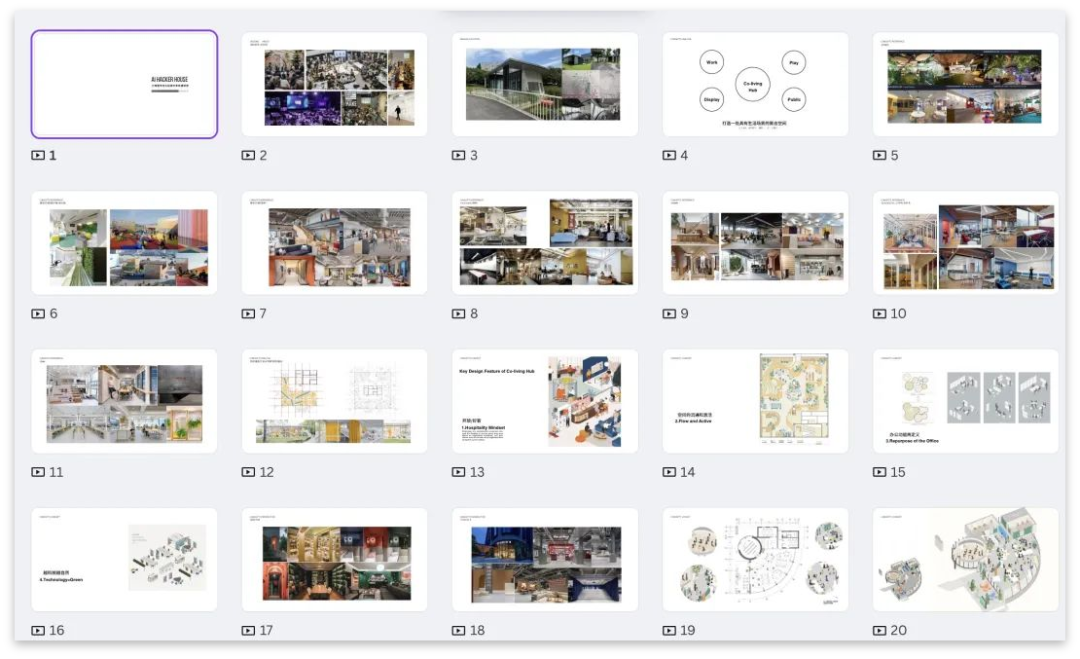
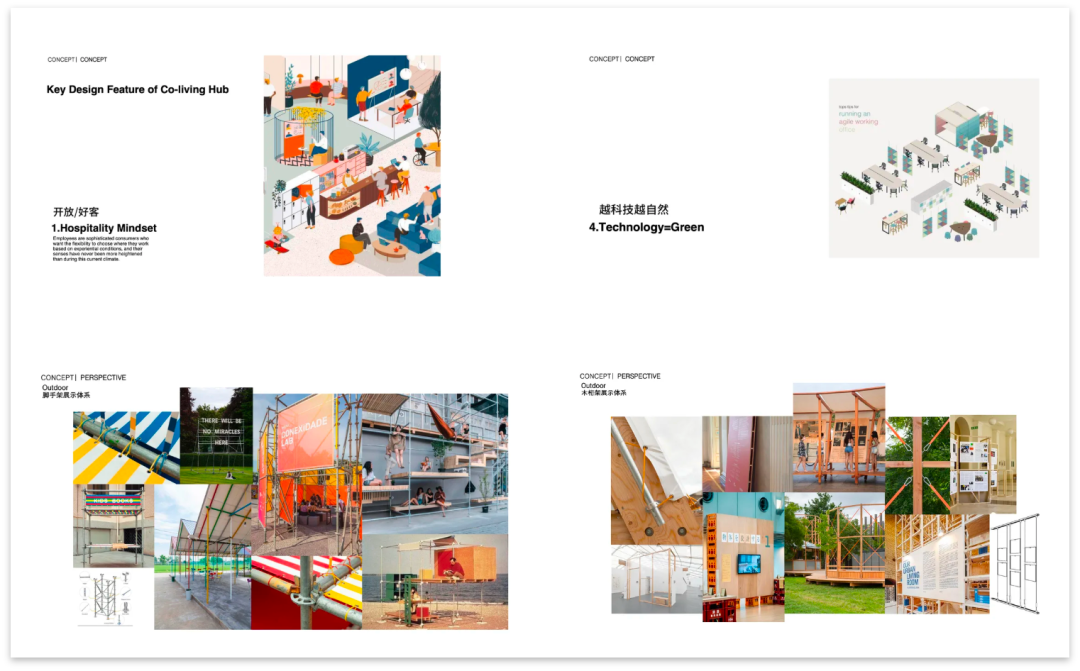
For example, I uploaded an AI Hacker House design document to my knowledge base — almost entirely architectural interior and exterior design prototypes:
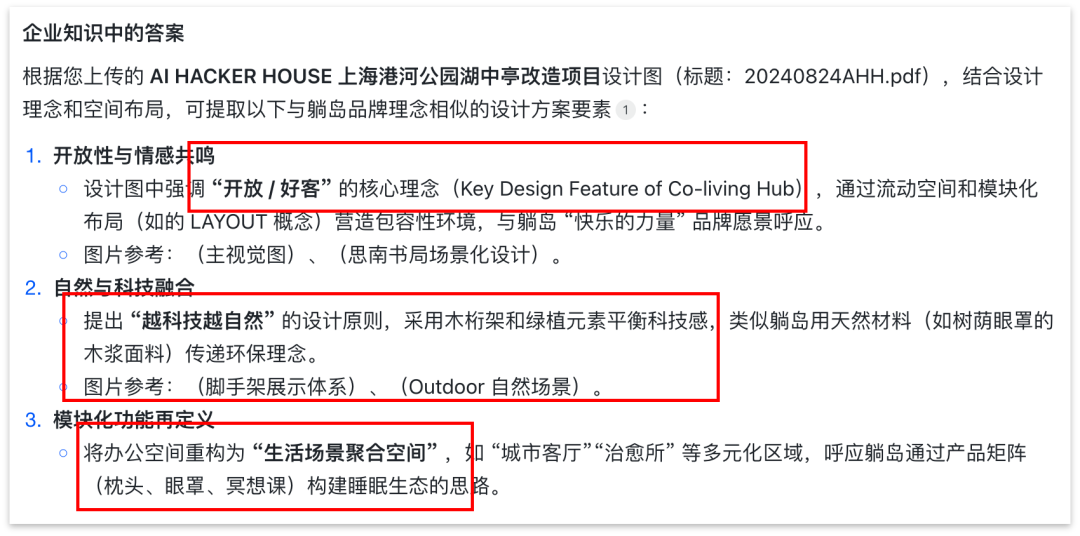
In "Knowledge Q&A," I entered a brief prompt asking it to fuse the AI Hacker House design with Tangdao's brand and product concepts:
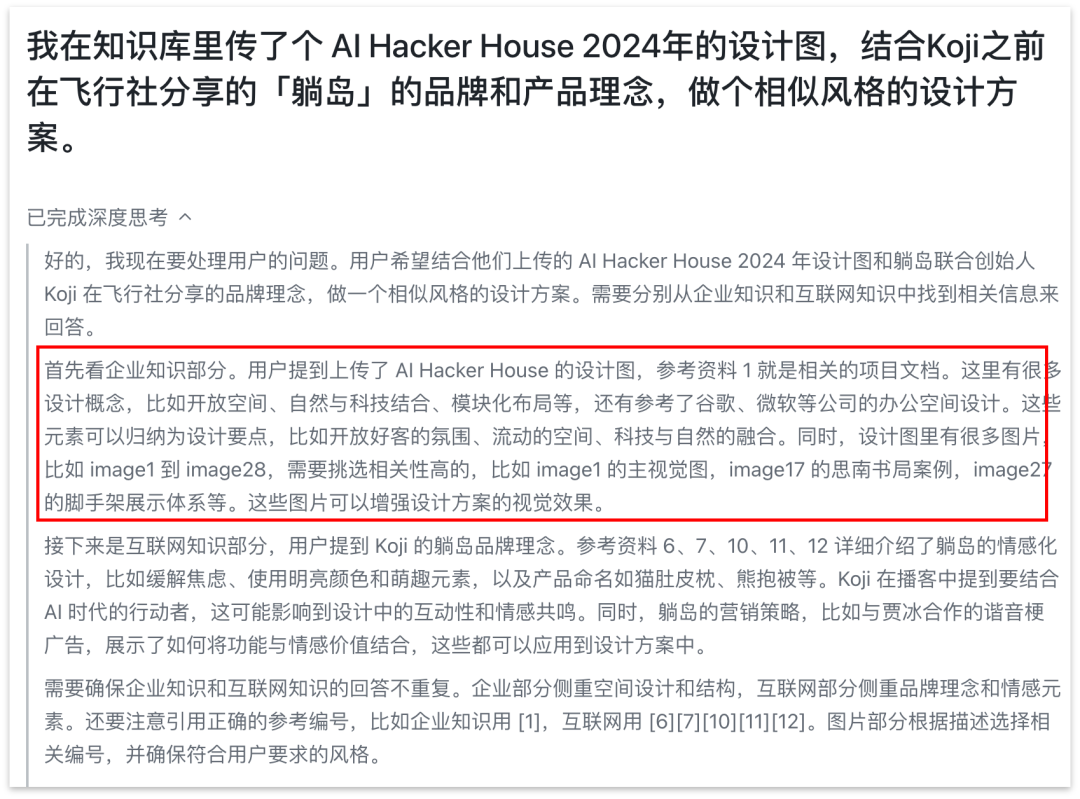
The results were quite good.
In these images, Lark successfully identified multiple key design elements: "openness/hospitality," "the more tech, the more natural," "scaffolding display system," and "wood truss display system." It not only precisely located these keywords in the document but also generated creative, divergent thinking based on these concepts.
"Knowledge Q&A" produced a report with solid results — successfully and naturally fusing AI Hacker House elements with Tangdao's product philosophy.
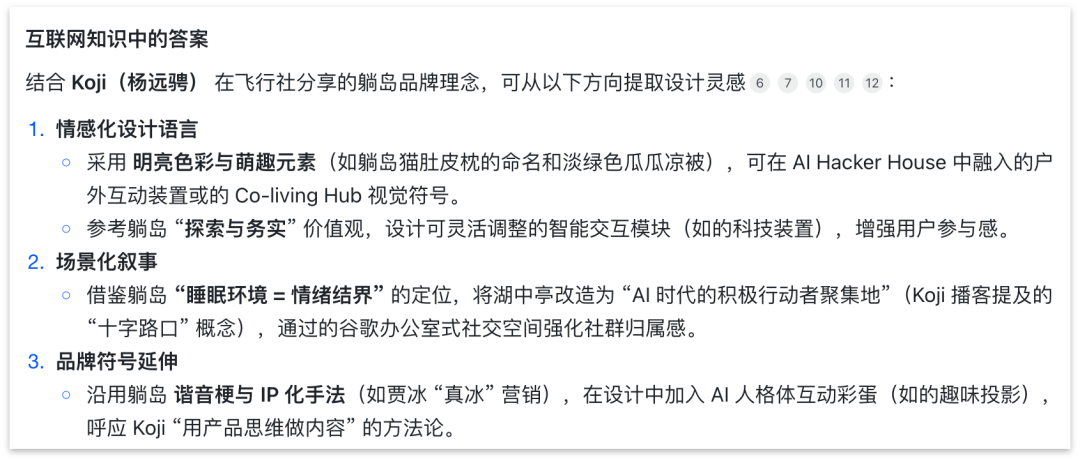
Beyond personal uploads and enterprise knowledge bases, internet knowledge also feeds into generated results.
For instance, I noticed: "Tangdao's pun-based IP approach (Jia Bing the actor vs. 'real ice')" was incorporated into the answer — this knowledge came from a news website.
Beyond combining three-domain knowledge, it proactively searches seemingly unrelated knowledge and provides concrete channels for creative execution.
For example, in cross-dimensional brand collaboration cases, it actively looked up information about design agent Lovart and suggested: you could use Lovart to create the initial prototype for this "AI Hacker House x Tangdao" project.
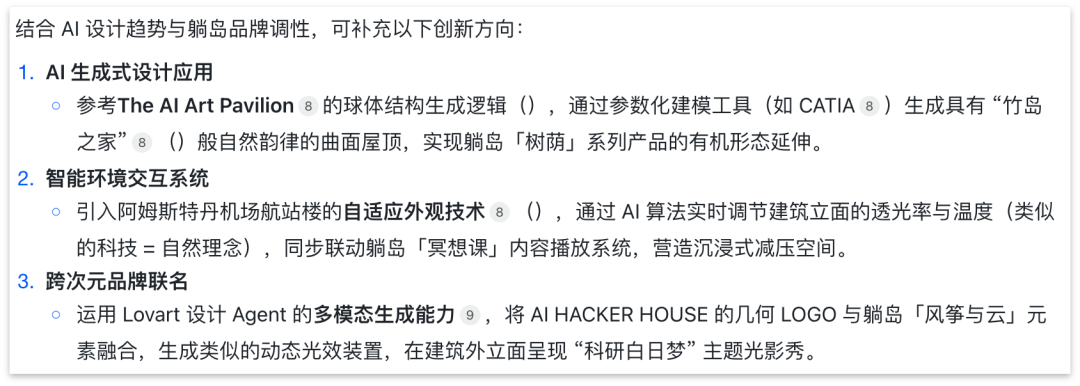
Through continued conversation, you'll find "Knowledge Q&A" can spark more creative inspiration, even generating a simple "fusion design proposal example" for you.
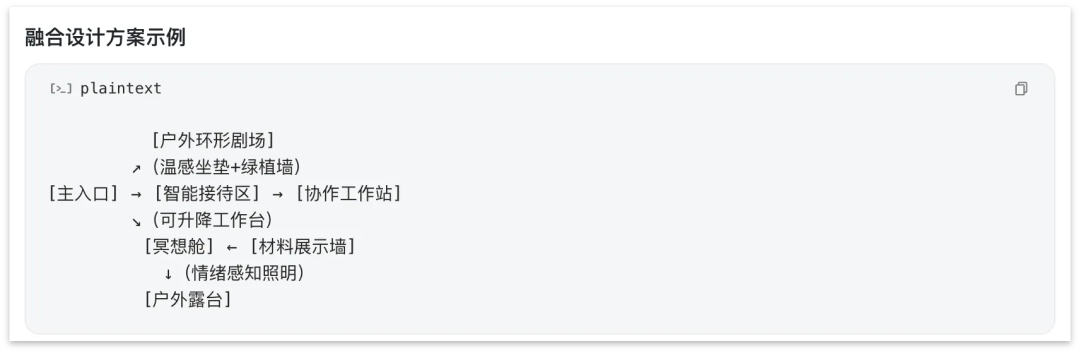
We Also See More Possibilities in "Knowledge Q&A":
Lark's official team has released some case studies; here are the most promising and innovative directions:
1) All Fragmented Knowledge Is Treasure
In daily work and life, enterprises and individuals constantly generate valuable information scattered across various file formats: documents, spreadsheets, Lark databases, and more.
Current "Knowledge Q&A" can already organize fragmented information based on user commands:
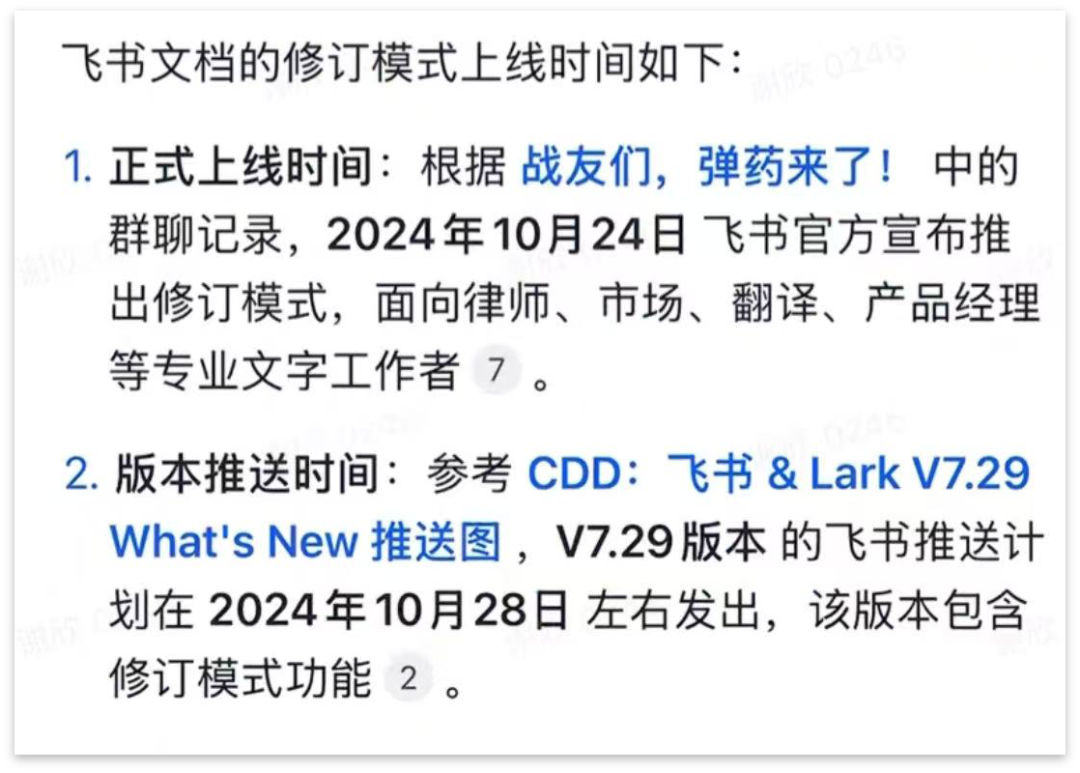
If this fragmented information could be organically integrated, unexpected effects might emerge.
For instance, with better multimodal AI integration with "Knowledge Q&A," users could even perform image searches: directly uploading a meeting screenshot for the system to extract key discussion points and link related documents, etc.
I'm getting excited.
2) Knowledge Bases "A Thousand Faces for A Thousand Users"
"Knowledge Q&A" provides personalized answers based on each user's permission scope within enterprise knowledge. If a user lacks access to a document, that document won't be used as a search source.
For example, when asking "What was our Douyin channel's profit last month?" — a financial question — managers with access to financial reports get specific answers, while regular employees without permissions cannot access this information.
This top-level design ensures enterprise information security.
Beyond this, it can customize Q&A modes based on user roles (finance, HR, IT, operations, etc.) and permission levels (regular employee, department head, etc.).
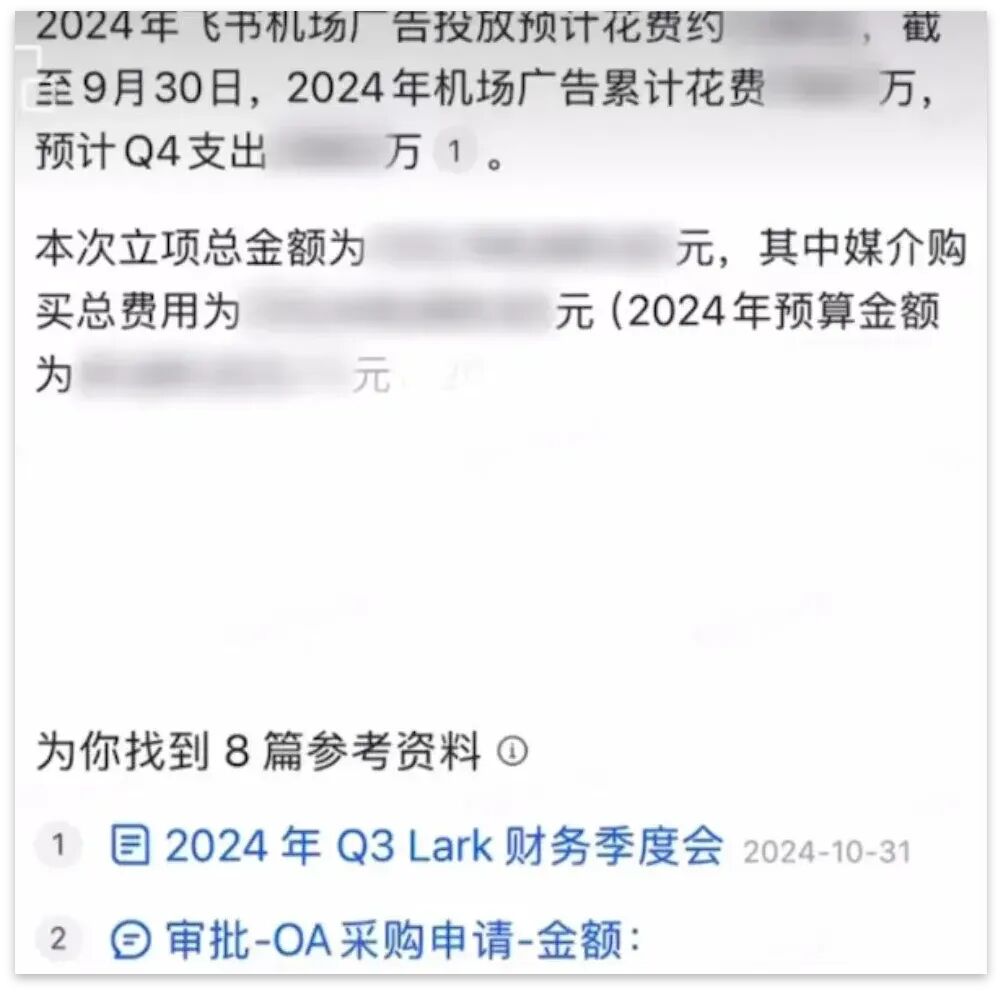
Manager view: accurate answers appear based on permissions
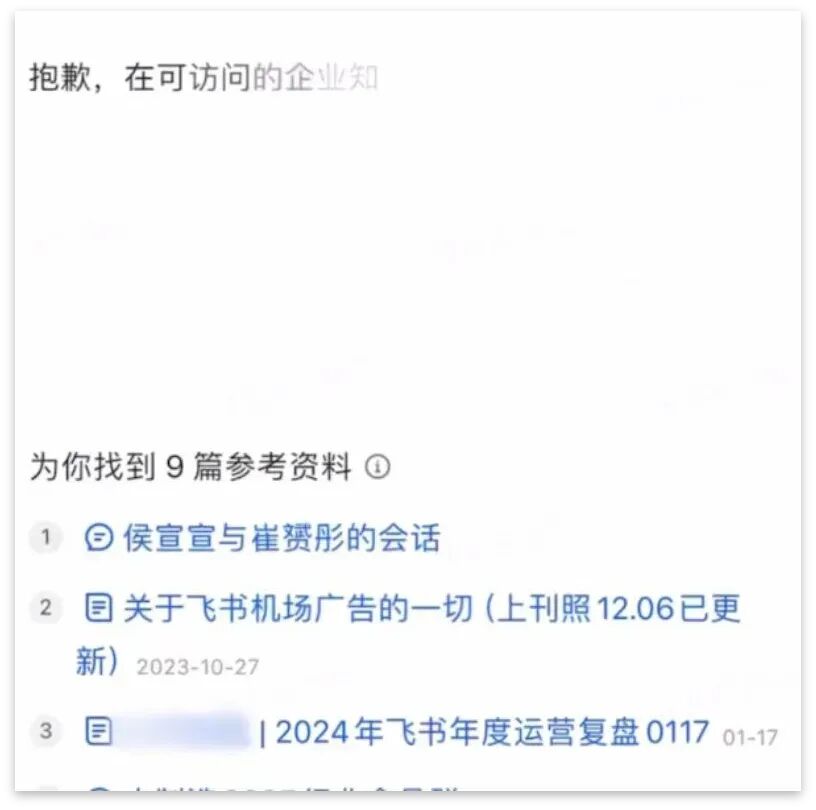
Employee view: "Sorry" prompt appears
Going forward, the Lark platform has sufficient technical foundation to connect "enterprise internal knowledge bases with external consultant knowledge bases."
By granting limited permissions to specific external parties, internal-external team collaboration efficiency can be significantly enhanced.
3) AI Ready — Pushing Users to Get Their Knowledge Management in Order
I noticed something interesting: Lark's "Knowledge Q&A" didn't just build this excellent product and throw it at users. Instead, it took the opposite approach — "challenging user mindsets."
They want users to spontaneously get AI Ready and autonomously do the work of structuring knowledge during team collaboration.
Here are their recommendations:
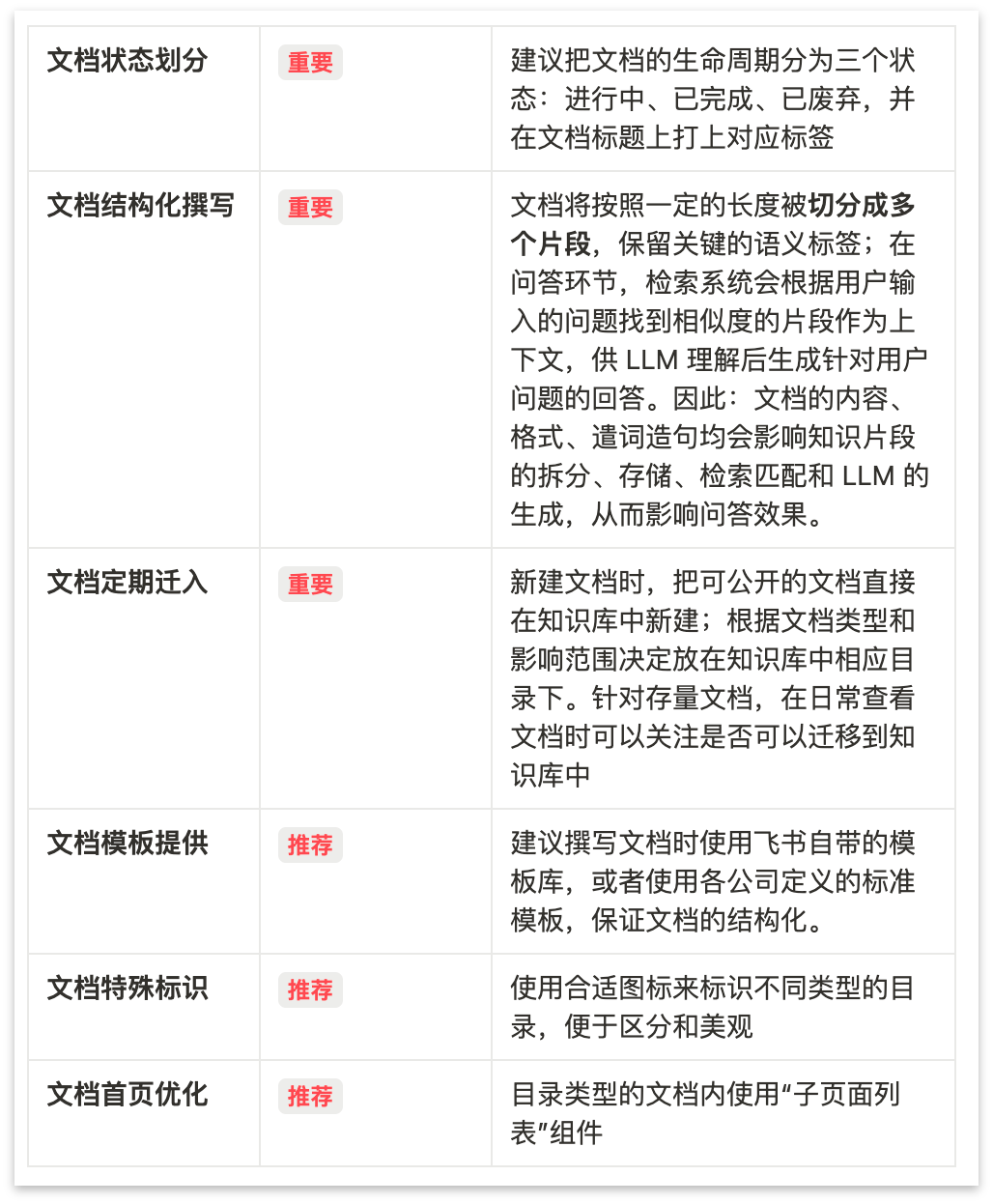
Lark isn't designing AI features as a "black box" — it wants to help users become "knowledge architects."
There are thousands of AI knowledge base products out there; this is the first one I've seen that pushes back and challenges user mindsets.
Lark, Quietly Going Deep on AI
Lark has always used AI to reshape productivity and push boundaries. We've always believed the "Lark + AI" combination will keep delivering surprises.
Especially after this deep dive into Lark's "Knowledge Q&A," we feel: AI deeply integrated with workplace scenarios isn't just about efficiency gains — it's about completely activating our hoarded, dormant knowledge assets.
This knowledge is no longer chaotic historical fragments, but treasure carefully excavated, organized by AI, and given new value.
In this revolution of "AI knowledge assets," Lark is on the front lines.
This reminds me of a recent insight shared by a Sequoia Capital partner at the AI Ascent conference:
In AI companies, 95% are just building companies; only 5% are actually building AI.
Lark, quietly going deep on AI, deserves more applause.