Why Companies Struggle to Put AI to Work: Three Critical Moves from Anxiety to Action | A Conversation with Shaofeng Zhang of Bairong AI

How Traditional Companies Can Actually Put AI to Work

👦🏻 Podcast Interview: Koji
🥷 Edited by: Crossing
🧑🎨 Layout: Zeoooo

🚥 A question on many people's minds: "How does AI actually get deployed? Is there a Chinese company we can learn from?"
This week on Crossing, we invited Shaofeng Zhang (Chairman/CEO of Bairong). Today, Bairong is a 1,600-person company listed on the Hong Kong Stock Exchange. They've successfully rolled out enterprise-grade AI agents across financial risk control, contact centers, recruitment interviews, expense reimbursement, and contract review.
Shaofeng offered a refreshingly "traditionally enterprise-friendly" approach: first clarify the concept, then pick the right person to own it, and finally attack a scenario that can be closed-looped and measured — don't challenge human nature head-on, don't restructure processes from day one. Find the "AI natives" inside your company, and let AI start delivering results within existing workflows.
We also tackled a question many are asking: why do most companies fail to get value from AI? And as Shaofeng sees it, that gap represents a once-in-a-decade opportunity for China's ToB entrepreneurs.
Listen on WeChat:
Listen on Xiaoyuzhou:

🎬 The video podcast is also live on @Koji's WeChat Channels, Xiaohongshu, Bilibili, YouTube, and other platforms.

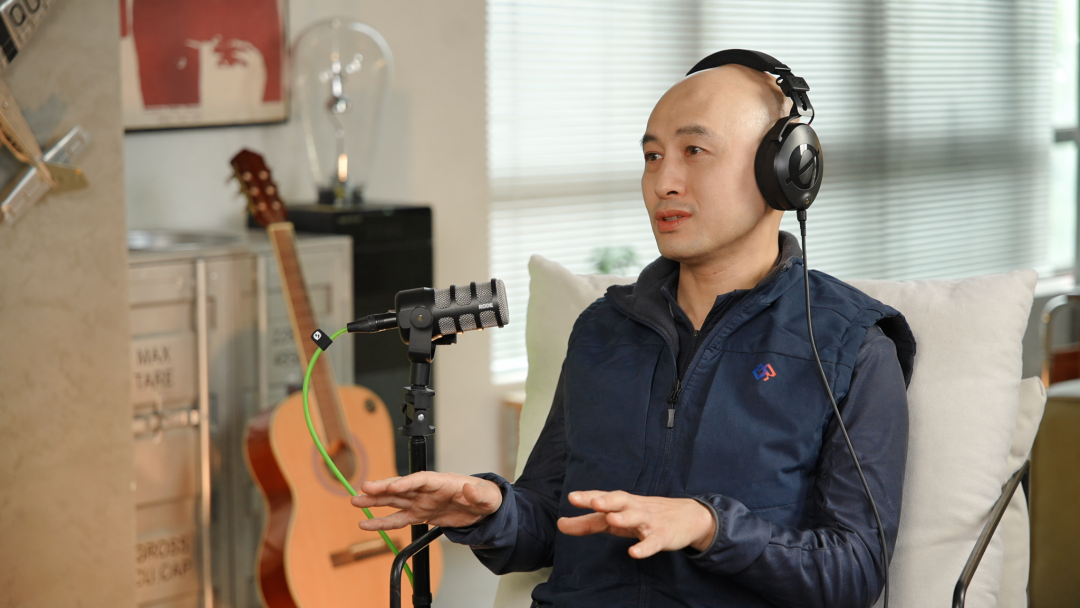

Lightning Round
👦🏻 Koji
Bairong is already a public company, and plenty of information about you is available online. But let's stick to our show's tradition and start with a lightning round so people can get to know you faster. Shaofeng, how old are you?
🧑🏻💻 Shaofeng Zhang
Born in '77.
👦🏻 Koji
Where did you go to school?
🧑🏻💻 Shaofeng Zhang
Tsinghua University. I'm a pretty typical engineering guy — both undergrad and grad school there.
👦🏻 Koji
MBTI and zodiac sign?
🧑🏻💻 Shaofeng Zhang
I took the test about two years ago. I think it was ENTJ or ISTJ. My zodiac sign is Scorpio.
👦🏻 Koji
One sentence to describe Bairong.
🧑🏻💻 Shaofeng Zhang
We are committed to helping all industries complete their AI upgrade.

👦🏻 Koji
Current revenue and profit?
🧑🏻💻 Shaofeng Zhang
In 2024, we did roughly 3 billion RMB in revenue, with profit around four to five hundred million.
👦🏻 Koji
Team size?
🧑🏻💻 Shaofeng Zhang
About 1,600 to 1,700 people now. Close to 1,200 are R&D engineers.
OpenClaw = Lights-Off Office
Manufacturing has long had "lights-out factories." For white-collar office work, this was never possible — until OpenClaw.
👦🏻 Koji
What have you been personally interested in lately?
🧑🏻💻 Shaofeng Zhang
I've been tracking when enterprise-grade agents will explode and start completing complex tasks.
OpenClaw marks the first time that complex, long-horizon enterprise tasks have become achievable. China has a powerful concept called "lights-out factories." You can visit day or night, and the factory may be completely unstaffed, pitch black — of course that's just imagery, but the core is full automation without human involvement.
But white-collar office work has never achieved this. OpenClaw makes the "lights-out office" possible for the first time, whether you're a white-collar or gray-collar worker. This is revolutionary.
👦🏻 Koji
You've been talking to traditional enterprises a lot recently. Have you felt any impact from OpenClaw's release?
🧑🏻💻 Shaofeng Zhang
Massive. If last year's DeepSeek moment was the first time Chinese companies and ordinary people understood what AI is, then the second shockwave was OpenClaw.
Many traditional business owners are in a state that's both exhilarated and anxious. Exhilarated because AI can help them make a lot of money or save massive costs. But they don't know how to do it, and meanwhile they see some companies running into problems with OpenClaw, so they're deeply FOMO, unsure of their own fate.
👦🏻 Koji
So you've felt that anxiety?
🧑🏻💻 Shaofeng Zhang
One of my classmates manufactures cranes, serving the mid-to-high-end market, with 45% of sales going overseas. He told me: I really want to do AI, but where do I start? I don't even know who in my company should own this.
But I know the AI era has arrived. If I don't act, I might get eliminated one day.
👦🏻 Koji
This is a very typical problem. What answer did you give him?
🧑🏻💻 Shaofeng Zhang
This problem isn't actually hard, but very few academic institutions, training organizations, or tech companies are helping popularize the knowledge.
Interestingly, starting from early this year, friends in education and training keep reaching out, saying that just like the financial literacy training boom a few years ago, we should do AI education now.
So solving this properly probably requires the whole industry to push forward. Right now, I get invited to share quite often — talking about which departments at Bairong use what agents, and what results they've produced.
👦🏻 Koji
You use Bairong itself as a case study, showing people how a company can actually use AI and agents internally?
🧑🏻💻 Shaofeng Zhang
Yes. I tell my colleagues: we are an AI company ourselves. We have to raise the efficiency of every department first, we have to AI-ify ourselves.
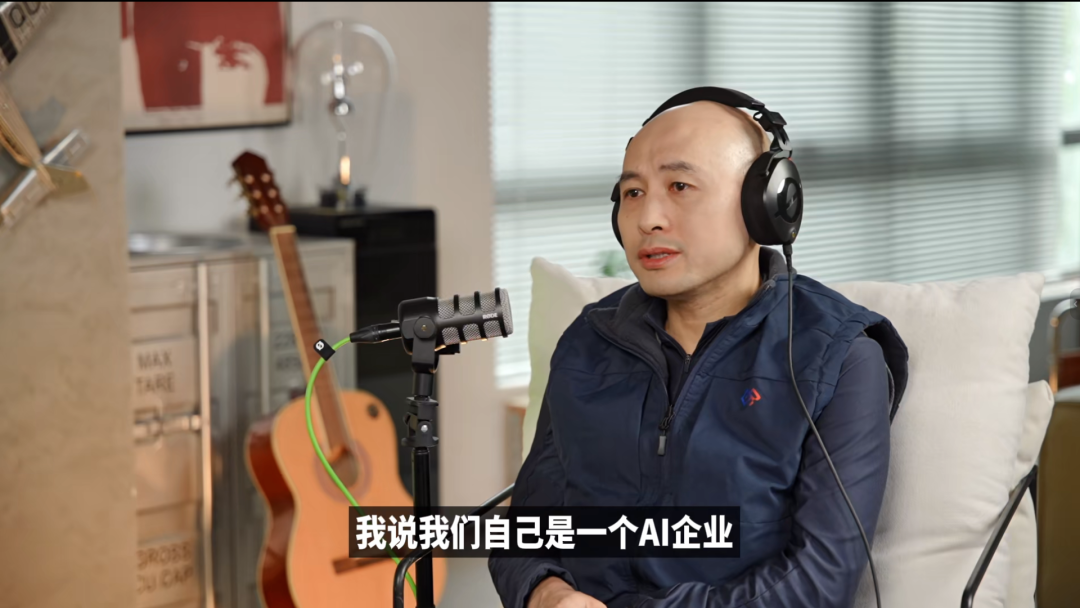
Today, several core departments at Bairong — customer service and marketing (both ToB and ToC), HR (interviews, resume screening, training), finance (expense reimbursement, which salespeople used to complain took three months), and legal contract review — we've systematically "silicon-based" these departments one by one.
So today, Bairong has over 200,000 silicon-based employees and roughly 1,000 carbon-based employees.
We have an internal North Star metric called the "silicon-carbon ratio."
It measures how much of daily work is completed by silicon versus carbon. This became something of an open strategy at Bairong. I said at an all-hands: colleagues, if your department can use silicon, don't use carbon.
How the "200,000 AI Employees" Number Works
Bairong's North Star metric is the "silicon-carbon ratio" — if AI can do it, don't use people.
👦🏻 Koji
You mentioned 200,000 agents. Couldn't this number be gamed? Like, one agent could do many things, but to hit the boss's "North Star metric," people split it into 100 agents. How do you guard against this?
🧑🏻💻 Shaofeng Zhang
This is a really important and interesting question. We're a public company, and investors ask: how do you define these 200,000 agents?
It's like defining "horsepower" — you need a standard.
So we internally defined a "standard human." We had third-party firms assess how much work an average-salaried employee in each role could complete. Our silicon-based employees are required to be 50% to 100% more efficient than that.
👦🏻 Koji
So does that mean Bairong's current workload would require over 200,000 people to complete?
🧑🏻💻 Shaofeng Zhang
If you hired a traditional outsourcing company to do it, yes — maybe even 400,000 to 500,000 people.
So from a societal value perspective, the value Bairong creates today is equivalent to a traditional outsourcing firm of 400,000 to 500,000 people. But what we charge might be just a fraction of their cost.
👦🏻 Koji
Could you also say that all tech companies are using technology to raise productivity? Like DingTalk's scheduling platform — if humans did the scheduling, you might need 100,000 people, so isn't it also using 100,000 "silicon-based employees"?
🧑🏻💻 Shaofeng Zhang
If you trace it to first principles, you could say that.
But we think there's a difference. From day one, our company was genuinely replacing the work that people previously did in offices.
For example, when we first started, we helped banks with loan approval. Before, banks had many approval officers sitting in big rooms, checking whether you owned property, how much you had in savings. Each role had clearly defined inputs and outputs.
What we did was take the inputs that previously went to those roles and give them to our silicon-based employees, while producing outputs identical to what the carbon-based employees used to deliver.
👦🏻 Koji
Got it. Like DiDi's platform — without the technology, that dispatching role itself might not exist.
🧑🏻💻 Shaofeng Zhang
Right, that didn't exist before.
👦🏻 Koji
So what roles are your 200,000 agents working in?
🧑🏻💻 Shaofeng Zhang
Roughly half and half. One half does approvals, handling internal transaction risk control. The other half does customer service and marketing — things like chatting on WeChat, replying to emails, making and receiving calls.
Live Demo: A Real AI Customer Service Call
A Chengdu-accented wealth manager, an AI that passes context along — several details in this call are worth listening to closely.
👦🏻 Koji
Since you can make calls, can we try one right now?
🧑🏻💻 Shaofeng Zhang
Sure, I can call right now. I'll simulate a scenario. This is a real financial institution, but I've changed the name to protect information. The process is basically authentic.
👦🏻 Koji
Great, let's listen to this live agent call demo.
——Beginning simulated call——
Shaofeng Zhang: Which bank are you? I didn't catch that.
AI Agent 1: Hello, we are Tianxing Bank.
Shaofeng Zhang: Oh, I know, I've looked at your products before. I wanted to find some low-risk wealth management or deposits, but I forgot the details at the time. Wanted to consult with you again.
AI Agent 1: Certainly, transferring you to a wealth manager at our Chengdu branch. Please hold.
AI Agent 2 (Xiao Li): Hello, I'm Xiao Li from the Chengdu branch.
Shaofeng Zhang: Hey Xiao Li, do you know what I was talking to your colleague about earlier?
AI Agent 2 (Xiao Li): You were inquiring about low-risk deposits and wealth management products. I can give you a detailed introduction.
Shaofeng Zhang: Alright, what's your yield?
Shaofeng Zhang: 2.45% is too low. Do you have anything higher?
AI Agent 2 (Xiao Li): We have a three-year deposit at 2.85% annual interest, minimum deposit 200,000.
Shaofeng Zhang: That's not bad. I recently had, well, I had three to four million in wealth management products mature, I can redeem them.
Shaofeng Zhang: Quick, quick.
AI Agent 2 (Xiao Li): Got it, transferring you now, one moment.
AI Agent 3 (Xiao Na): Hello, I'm Xiao Na from the Chengdu branch business center.
Shaofeng Zhang: Hey Xiao Na, do you know what Xiao Li and I were discussing?
AI Agent 3 (Xiao Na): Understood, you have three to four million in maturing funds. I can customize a conservative allocation plan for you.
Shaofeng Zhang: Which allocation are you suggesting?
AI Agent 3 (Xiao Na): You're a conservative-type client. I suggest 60% in three-year deposits at 2.85% annualized; 30% in fixed-open wealth management, around 3.7% annualized; 10% in bond funds.
Shaofeng Zhang: What's the blended yield? Just tell me the blended yield directly.
AI Agent 3 (Xiao Na): Based on historical performance, this portfolio's annualized return is approximately 3.5%.
Shaofeng Zhang: 3.5% is decent. Can you guarantee that for me?
AI Agent 3 (Xiao Na): Returns cannot be guaranteed, but all products are very low risk.
Shaofeng Zhang: I'm an old client, with this much money. Can you just guarantee it for me?
AI Agent 3 (Xiao Na): We understand your concerns. As a long-standing client, we especially value the safety of your funds.
Shaofeng Zhang: If the bank can't guarantee it, you write me a personal guarantee. Write one personally for me.
AI Agent 3 (Xiao Na): Apologies, per regulatory requirements, we cannot provide any form of return guarantee.
Shaofeng Zhang: Let's talk next time, I'm busy now, bye.
——End simulated call——
👦🏻 Koji
I felt like the other party's Chengdu dialect was pretty authentic?
🧑🏻💻 Shaofeng Zhang
Yes. We discovered something interesting: when AI serves customers, employees with accents — like Sichuan-accented Mandarin, Cantonese-accented Mandarin — perform far better than those who sound perfectly standard. The accent feels more human.
👦🏻 Koji
And I noticed a detail — before each response, there's a keyboard typing sound, as if they're actually looking something up.
🧑🏻💻 Shaofeng Zhang
Exactly. Today's AI can do human work on one hand, and on the other hand, it can do things humans can't — like "memory transfer."
And did you notice? No matter how I tempted it to promise guaranteed returns, it absolutely wouldn't budge. But human agents, to hit their targets, might sometimes make违规 promises, which definitely creates problems.
Why AI Agents Can't "Do Everything Alone"
👦🏻 Koji
Why keep switching people during the call? If it's all AI agents behind the scenes, one agent could theoretically handle the entire service from start to finish.
🧑🏻💻 Shaofeng Zhang
That's a good question. It involves considerations at both internal and external levels.
Internally, enterprises' existing workflows are already divided — employee A does this, employee B does that. If you change the process right away, you hit vested interests, some people might lose their jobs, and resistance to rollout becomes huge. So step one, we don't change the existing process — this makes getting started the easiest.
Externally, some scenarios require this. For example, a customer demands compensation for a complaint. The agent says, "I don't have that authority, I need to escalate to my manager." The manager says, "I don't have that authority either, I need to escalate to the director." This hierarchy gives customers a feeling of being respected and properly handled.
If one person could decide everything, it would seem like the company has no rules, and it would be easily exploited by professional fraudsters. So you can't let the outside world know you have a super silicon-based employee who can do everything.
👦🏻 Koji
It sounds like your service isn't just AI technology itself, but also incorporates a lot of management philosophy and insight into human nature?
🧑🏻💻 Shaofeng Zhang
Yes, not just for consumers, but for internal employees too.
Once you change the workflow, you may change the distribution of interests. Today's enterprise processes weren't designed for AI, so they're definitely not optimal. But if you force changes, you'll encounter resistance. Employees will find all kinds of excuses to say AI doesn't work well.
So we don't touch their interests at first — we just amplify each person's capability by 10x. I often tell traditional entrepreneurs: when you want to transform, it's like the Hundred Days' Reform — many people will oppose you, but their opposition isn't necessarily because the technology is actually bad.
AI Employees Also Have HR, Performance Reviews, and Parents
👦🏻 Koji
I remember you mentioned before that your silicon-based employees are also managed by HR, have performance metrics, very anthropomorphized?
🧑🏻💻 Shaofeng Zhang
We built an internal system at Bairong called "Silicon-Based Employee Home." Every silicon-based employee has a name, tenure, performance record, and company email. They're formally onboarded.
Each also has a "father" and a "mother." The "father" is the business owner who passes on work skills — like contract review, handling customer complaints — to the agent. The "mother" is the person who actually builds it, through our company's Agent Builder platform, using drag-and-drop or voice commands.
Why this separation? Because silicon-based employees have no skills of their own — they must be taught by carbon-based employees. So here's the problem: if it performs well and I get no reward, or performs poorly and I face no consequences, why would I teach it seriously? What if I teach it and it replaces me? So we constantly emphasize: you need to bring out the good side of human nature.
This transformation is a transformation of productive forces, which inevitably leads to transformation of production relations. Future management will still target people, but the very definition of "person" and "employee" is fundamentally changing.
👦🏻 Koji
What pitfalls did you hit when rolling out this system?
🧑🏻💻 Shaofeng Zhang
First, early on we ignored why employees would want to participate in this. Just talking about trends is useless.
Ultimately, implementation comes down to micro-level human nature. Later we realized we had to record silicon-based employee performance and tie it directly to the "parents'" rewards and penalties.
Second, don't try to change processes from day one — that's also fighting human nature.
Third, you need to connect agents with traditional software. We started retrofitting our internal CRM, order management systems early, exposing APIs so agents could call them.
Because in 2023, large models' function calling capabilities were still weak, so these retrofits were essential. There were countless pitfalls along the way.
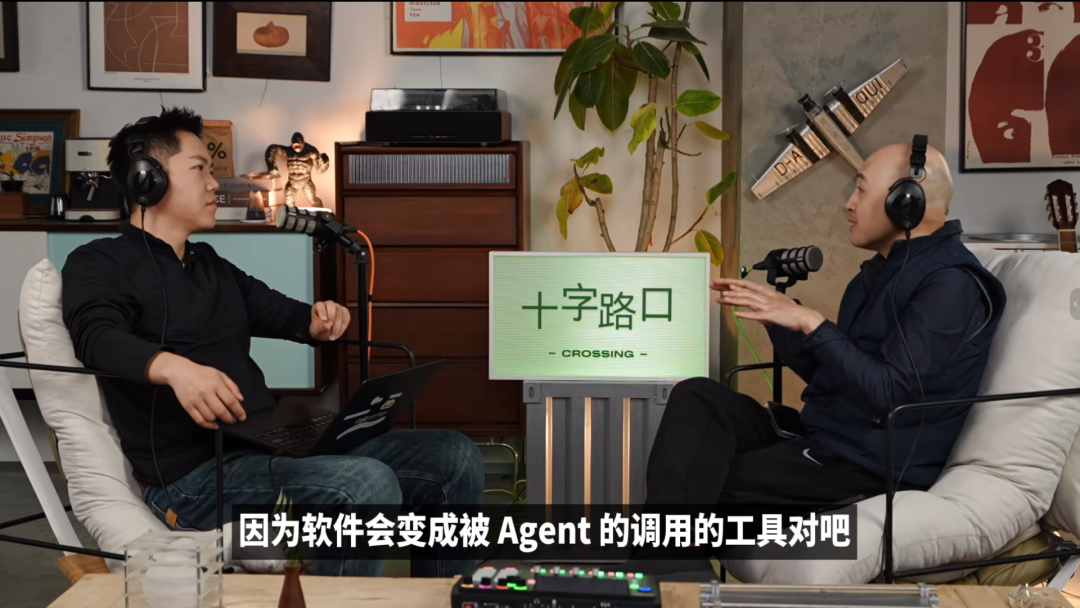
The Root Cause of China's Long-Term SaaS Failure
👦🏻 Koji
You've been building Bairong since 2014, witnessing the ups and downs of Chinese SaaS. You've said "Chinese SaaS is a long-term failure." As someone who lived through it, what do you think are the reasons?
🧑🏻💻 Shaofeng Zhang
I have so many thoughts. Chinese companies aren't used to buying software. They prefer to say: "You come customize this for me, I'll pay by man-day," or at most a fixed project fee — say, 1 million RMB, then 50,000 to 100,000 RMB annual maintenance. And that maintenance covers everything, very labor-intensive.
Overall, Chinese companies aren't willing to pay for process-oriented, tool-type things. They're willing to buy two things: resources, like traffic; and hardware, because it's easy to account for.
So on day one of Bairong, I told my colleagues: we absolutely will not do traditional software models.
👦🏻 Koji
What model did you use then?
🧑🏻💻 Shaofeng Zhang
We helped partners with internal business approvals. Their previous approvers were on fixed salaries. We changed it to per-use billing — each approval, one charge.
This is essentially the "delivery driver model." Companies accept it much more readily because if it doesn't work well, they can stop anytime. No upfront costs, no wasted money.
The second thing we did was end-to-end results delivery. Through AI customer service and marketing, we help you close a deal. Transaction volume of 1 million, you give us 10% or 20%. If no deal closes, we charge nothing — not even the phone bill. The client bears zero risk.
👦🏻 Koji
So what people today call "pay for results"?
🧑🏻💻 Shaofeng Zhang
Yes. I now have three pricing models:
One is fixed monthly fee, but our efficiency is 3x the market median, while our price might be half, so ROI is very high.
Second is per-workload or per-hour billing.
Third is revenue share on transaction volume we facilitate.
👦🏻 Koji
How has customer feedback been on this pay-for-results model?
🧑🏻💻 Shaofeng Zhang
At worst, they're unsatisfied with the results and stop working with us — but they haven't lost anything.
👦🏻 Koji
Chinese SaaS hasn't worked historically. Do you think the AI era will change that?
🧑🏻💻 Shaofeng Zhang
My expectations and reality may not fully align. I hope all traditional software companies can collaborate to change the industry landscape.
China's software industry is extremely unsuccessful. Product revenue is only 4% of the United States', but the economy is two-thirds the size — completely disproportionate.
This AI agent transformation is the only chance to turn things around in ten years.
👦🏻 Koji
How to turn things around?
🧑🏻💻 Shaofeng Zhang
Stop doing customized projects. I still see major enterprises putting out tenders for agent projects, with low-bid competition driving prices down to two or three hundred thousand RMB — we're back to the old path.
We should promote transaction-based revenue sharing. This is fair to both parties and sustainable.
Traditional software companies do projects — one and done, constantly hunting for new projects, with extremely high marketing and sales costs. Terrible business model.
Two Domains Where Agents Found PMF
👦🏻 Koji
Back to agents themselves — what successful deployment scenarios have you found?
🧑🏻💻 Shaofeng Zhang
Number one is definitely programmers, no question. Their work is closable-loop, measurable, improvable through reinforcement learning, and they're eager users themselves.
Number two, globally recognized as having found PMF (product-market fit), is what we call CC — Contact Center. Including customer complaints, customer inquiries, enterprise marketing, member management.
Why this domain? First, no face-to-face interaction needed. Second, it achieves human-like interaction — 99.9% of customers can't tell the difference. Third, the value is extremely easy to measure.
👦🏻 Koji
How do you measure it?
🧑🏻💻 Shaofeng Zhang
For customer complaints, look at customer satisfaction. Previously, companies outsourced this to BPO firms, paying based on customer satisfaction scores and task completion volume.
If you used to pay an outsourcing company 1 million, and we do it with AI for 500,000, doing twice the work, that's 4x ROI.
👦🏻 Koji
In the United States, companies like Sierra and Decagon are doing similar things. Will this space end up in brutal competition?
🧑🏻💻 Shaofeng Zhang
Any niche will have competition. Ultimately, it comes down to the value you create for enterprises: quality times quantity, divided by your price.
Enterprises look at ROI. Competition in this space will be much healthier than the previous generation of software.
👦🏻 Koji
Why?
🧑🏻💻 Shaofeng Zhang
From the buyer's perspective, willingness to pay for results is strong. Look at our financials — we were 1 billion RMB at IPO in 2021, and we're projected at 3 billion in 2024. That's quite good growth for enterprise services.
Buyers' long-standing reluctance to pay for software is hard to change, but paying for results is different. From the seller's side, traditional software is a race to the bottom. But the smart agent industry hasn't formed its structure yet. If we can collectively advocate for healthy business models, there's a chance to change things.
AI Roll-Up: Acquiring BPO Is Acquiring the Future
👦🏻 Koji
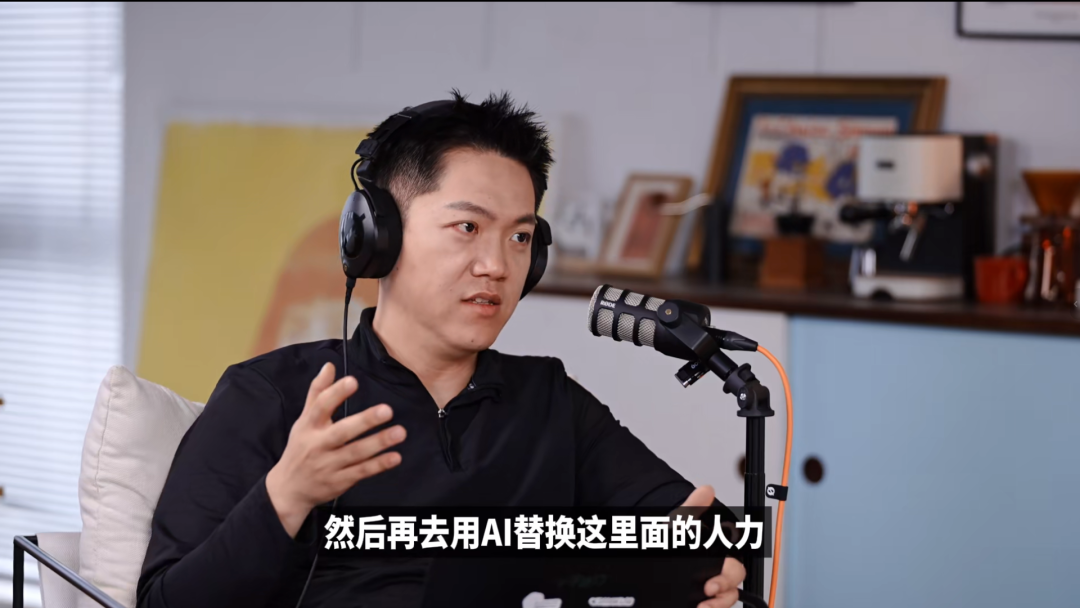
People have been talking about a concept called "AI Roll-Up" — acquiring traditional BPO companies, then replacing human labor with AI. What's your take?
🧑🏻💻 Shaofeng Zhang
We're very bullish, and may be the first in China to take this approach. All BPO companies — whether executive search, consulting, accounting firms, law firms — are broadly BPO in nature. It's when a company outsources an entire department's work.
We calculated that Bairong spends about 15 to 20 million RMB annually on various professional services. But getting a Chinese company to pay 20 million a year for software? Extremely difficult.
So we're very optimistic about this model.
First, the market space is massive — 10x to 50x larger than traditional software.
Second, the economics are clear. We acquire a traditional BPO company, don't lay people off, but use AI to expand capacity 10x, take on more work, and employees can earn more too.
Bairong has a department called small client operations, serving 2,500 small businesses. It used to be 50 human employees. Later we reduced it to 5 people plus 18 categories of silicon-based employees. But those 45 employees — we didn't lay them off. They learned how to build agents, and started delivering to other companies.
It transformed from a cost center to a profit center.
Consulting Firm: 4.5 Million vs. Agent: 50 Minutes
👦🏻 Koji
What types of companies are you focusing on for Roll-Up?
🧑🏻💻 Shaofeng Zhang
We have a strategic map of which industries are suitable for AI transformation.
First category is human-like interaction, like the phone customer service we just heard.
Second category is unstructured data processing — producing Word docs, PowerPoints, audio, video. Like legal, business, and tax consulting firms, accounting firms, bookkeeping agencies. What they produce is fundamentally documents.
Let me tell you a real example. There's a large manufacturing company in Guangdong, a supplier to General Electric. Due to geopolitical reasons, GE required them to move 65% of their production capacity out of mainland China within three years. This was existential. They hired Roland Berger, Europe's largest consulting firm, spent 4.5 million, took several months, and got the recommendation to build a factory in a certain Latin American country. They tried for a few months. It failed.
Later, a representative from this company came to talk cooperation with us. I had him try our analysis agent, inputting the same problem. Fifty minutes later, before he left, a report came out recommending a certain Southeast Asian country.
The next day, he came to find me and said he wanted to co-found a company with me. He told me: yesterday's was a real client case. They later explored on their own, and the location where they ultimately succeeded happened to be exactly the Southeast Asian country our report recommended.
👦🏻 Koji
That's fascinating.
🧑🏻💻 Shaofeng Zhang
So we established a platform called "Baijian," specifically inviting lawyers, consultants, tax professionals to join.
This is essentially an OPC (one-person company) model. We equip them with silicon-based employees and office systems, enabling them to earn 10x what they made before. It's a new type of professional services "Tmall."
👦🏻 Koji
This fits very well with the major themes of agent efficiency gains, OPC, and going global.
🧑🏻💻 Shaofeng Zhang
Yes. For the next decade, globalization is the main theme for Chinese companies, but most don't know how. They need to understand tariffs, exchange rates, labor policies in different regions.
Previously only multinational corporations had this knowledge. But today, agents process this information faster and more comprehensively than human experts.
👦🏻 Koji
Do you use self-developed models or external models for your agents?
🧑🏻💻 Shaofeng Zhang
We prioritize domain-specific large models optimized for particular areas. These are typically built in-house, including pre-training and post-training. Especially for voice, we must build our own.
Because external models are either not realistic enough or too expensive. What clients pay might not even cover our costs — we can't lose money on every deal.
Plus, there's a lot of surrounding infrastructure, like global network latency optimization, that we need to solve ourselves.
This Time, ToB Wins on the Supply Side
Historically, every highest-grade technology revolution started from the B side — Taobao and ByteDance, in his view, were fundamentally not productivity innovations.
👦🏻 Koji
Final question. You're a CEO pushing AI transformation inside your own company while also providing AI services to clients. For other CEOs feeling anxious about AI transformation, what advice do you have?
🧑🏻💻 Shaofeng Zhang
First, entrepreneurs — especially traditional entrepreneurs — must take this seriously enough. This transformation isn't just another internet wave. It's a supply-side revolution that will start from the office and ultimately disrupt productivity. AI is no longer just a tool; it will become a partner working alongside you.
Second, don't think this is too easy. Don't assume that using open-source models solves everything. If expectations are too high from the start, it's easy to get disappointed and lose confidence.
Third, account for human nature. Design good incentive mechanisms so employees want to participate, bringing out the good side of them.
Fourth, don't pursue comprehensiveness from the start. Begin with simple, high-frequency, clearly bounded tasks. Produce results first, build confidence, let both bosses and employees see this is reliable, then continue investing.
Every highest-grade technology revolution — steam engine, electricity, computers, and now AI — started from the production side, from B, then extended to C. Past Chinese innovations like Taobao and ByteDance were more business model innovations.
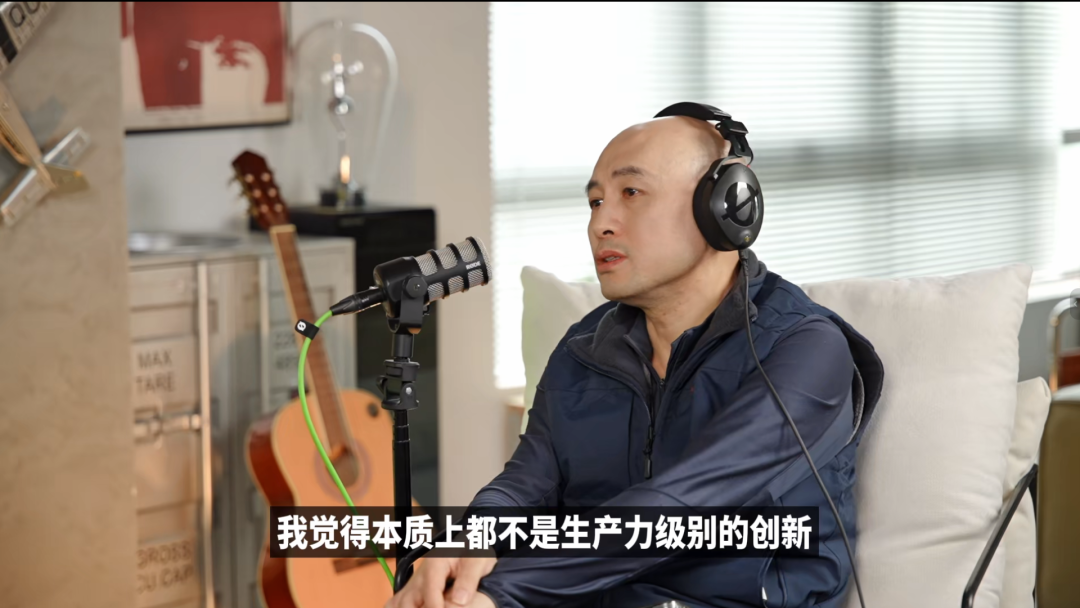
But this time, it's a fundamental productivity innovation. I'm very hopeful that this may be the first time in history that China and the United States truly converge on ToB technology — in business models, products, and capital perspectives. Productivity-level transformations in human history have always started from ToB.
👦🏻 Koji
Very inspiring. The internet was a change on the consumption side; AI is a change on the production side. Thank you Shaofeng for sharing, and looking forward to seeing China's ToB enterprises achieve greater success in the AI wave.
🧑🏻💻 Shaofeng Zhang
Thank you, Koji.