Is AI the Decisive Factor for Embodied Intelligence? After Raising 300 Million in Six Months, How Is VBot's First Product Shaping Up? | A Conversation with Vbot Co-founder Zhe Lun Zhao
I want to make a product that I can bring home to my mom.
I hope to build a product I can take home to my mom.
👦🏻 Podcast interview: Koji, Ronghui
🥷 Edited by: Starry
🧑🎨 Layout: NCon

Last week, the World Robot Conference in Beijing was unprecedentedly packed.
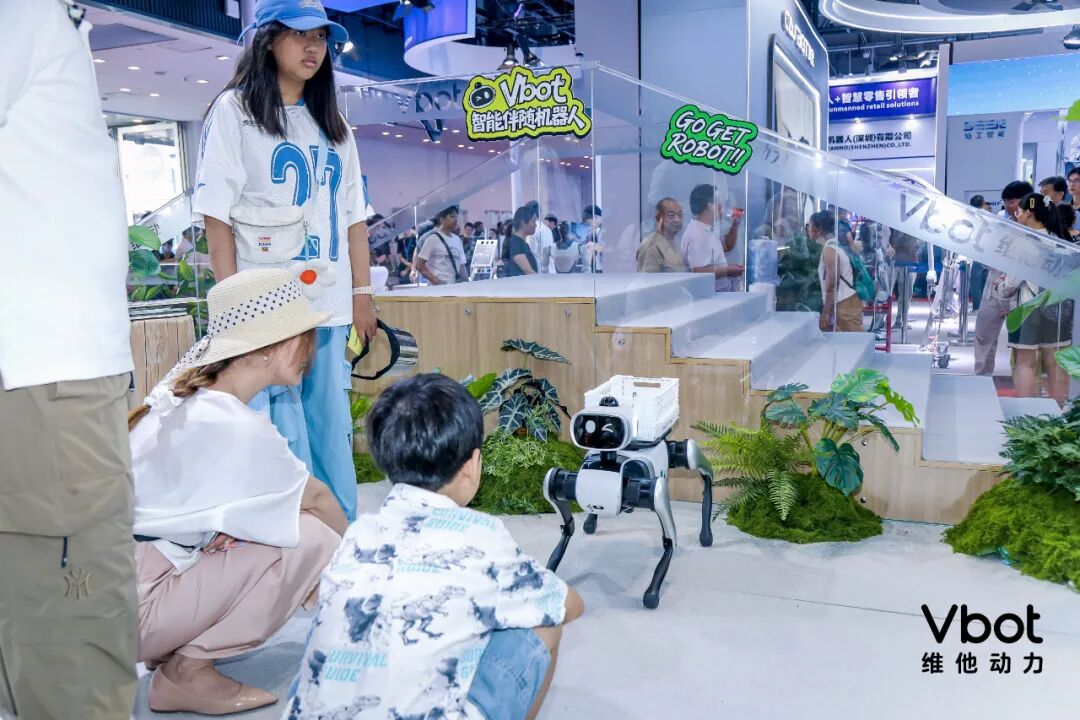
Vbot raised 300 million RMB within six months and made its debut with a new product, becoming one of the most crowded booths at the entire venue thanks to its uniqueness.
Zhao Zhelun (Zhelun Banzhang), co-founder of Vbot, was thrilled. He believes:
In ten years at most, China's robot conference could be analogous to the London World Expo of its era — the 1851 Great Exhibition was the first world's fair, drawing over 6 million visitors during its five-month run, with exhibits including engines, textile machinery, and other iconic creations of modern industry.
In this episode, we invited Zhelun to share his observations from the World Robot Conference, and to walk us through the evolution and key technologies of the robotics industry from Boston Dynamics' first robot dog to today. We also discuss how Vbot, the company he co-founded, built its first remote-free robot dog: how they chose their technical approach, and how they view this year's goals.
Additionally, Zhelun tells us why he left Li Auto to start a company, how robots can inspire children, robot culture, and his predictions for the future of the robotics industry.
Listen on WeChat:
Listen on Xiaoyuzhou:

Lightning Round and Introduction
👦🏻 Koji
Hello everyone. This week's guest on "Crossing" is Zhelun Banzhang. Zhelun is the co-founder of Vbot, a robotics company that has attracted considerable attention, having raised a total of 300 million RMB within six months. At the recently concluded World Robot Conference, Vbot unveiled its first robot dog, becoming one of the liveliest booths at the entire event. Zhelun may be the most-followed founder guest we've had since launching the podcast. Zhelun, please say hello to everyone, and then we'll kick things off with a lightning round.
👦🏻 Zhelun
Hello, listeners of "Crossing." I'm very glad to join this podcast. I worked in media for a while, so I have a bit of a fan base. I was an early employee at Tesla during the early days of smart EVs in China, and now I'm running a robotics company. I'm very happy to talk about robots today.
👦🏻 Koji
Great, let's do the lightning round. Your age?
👦🏻 Zhelun
I'm 31 this year.
👦🏻 Koji
How long has Vbot been around?
👦🏻 Zhelun
Only nine months, actually.
👦🏻 Koji
What did you do before Vbot?
👦🏻 Zhelun
I was an early employee at Tesla China, then founded "Garage 42" and spent over two years as "Zhelun Banzhang." Later I joined Li Auto, where I led intelligent driving products for five years. I started my own company at the end of last year — China's first consumer-grade embodied intelligence company, hoping to develop robots that everyone can use and bring into their homes.
👦🏻 Koji
Your MBTI and zodiac sign?
👦🏻 Zhelun
My MBTI is ENFJ, the "Protagonist." Leo, born in August.
👦🏻 Koji
Can you share Vbot's current revenue and profit?
👦🏻 Zhelun
Since our first product won't officially launch until the end of the year, we don't have revenue yet.
👦🏻 Koji
Latest funding and valuation?
👦🏻 Zhelun
As of May this year, we've completed three rounds totaling roughly 300 million. We're currently in another funding round, and the valuation hasn't been disclosed.
👦🏻 Koji
Team size?
👦🏻 Zhelun
We've been hiring pretty fast. Since formally establishing the company last December, we've built out hardware, systems, software and AI, plus product and marketing. Altogether about sixty to seventy people.
👦🏻 Koji
Zhelun, you just attended WRC, right? It was also Vbot's first time there. What was your overall impression?
👦🏻 Zhelun
It left a pretty deep impression. I took WRC very seriously. Why? Because around August last year, when I started researching the state of China's robotics industry and got the itch to start a company, much of what I learned about companies' movements, industry experts' views, and leaders' assessments of trends came from last year's WRC materials and media coverage. So I consider WRC one of the most important conferences in China's robotics space — a lot of understanding and consensus gets formed here.
So from the moment I started the company late last year, I placed heavy emphasis on WRC. Around February or March this year, I spoke with our CEO, Yu Yinan, and said WRC is our chance to "get a seat at the table," we have to take it seriously, and we should set it as a major milestone for the product and do some external exposure.
We prepared thoroughly. We brought three to four dozen R&D colleagues to the venue two days early. WRC started on August 8; we arrived on the 6th. On August 7, we even held a workshop on-site — the only company to gather over 20 media outlets the day before opening. The booth next to us was still under construction, and we were pulling everyone in to present slides and experience the product, because that was the only window where media could relatively freely try our product. After that, there were simply too many people.
It turned out we made the right call. This year's WRC was extraordinarily hot. I'd originally planned to wander around a bit on the final two days, Monday and Tuesday, but I ended up busy until noon on the last day before squeezing in time to look at a few nearby halls. The conference was incredibly lively — parents with kids, industry folks, government officials, investors, and overseas visitors, all very enthusiastic. I thought it was a fantastic event.
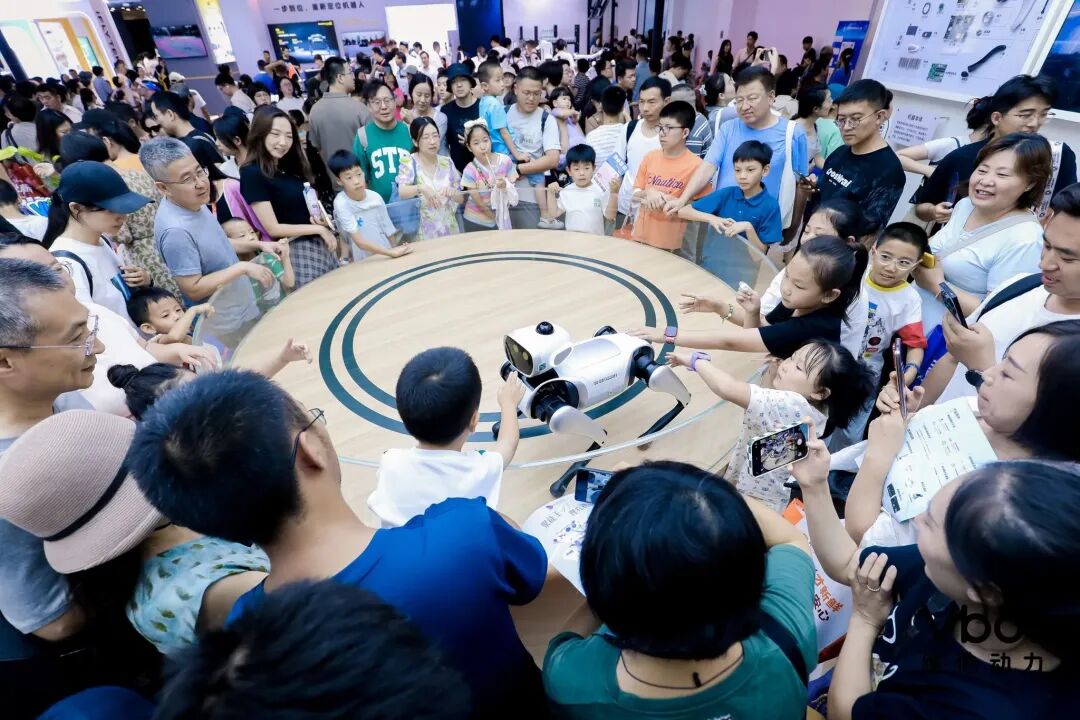
Interactive circular stage: Children enthusiastically calling out for "Big Head"
👦🏻 Koji
I remember you told me before that you felt in ten years, WRC would be like the London World Expo of its time.
👦🏻 Zhelun
That feeling probably emerged on the second day of WRC, August 9. The first day, August 8, was for professional visitors, and I noticed some overseas media had already arrived. I've attended auto shows for at least ten years, in Shanghai and Beijing, and there were always plenty of Europeans, Japanese, Koreans — they came mainly because China's EV technology and supply chain were solid, wanting to see what they could take back or how to collaborate. The feeling was that they remained the "owners" of the industry, just seeing something useful here in China.
This time was completely different. There weren't many Americans (mostly Chinese Americans), but there were lots of Japanese and Koreans, plus visitors from the Middle East and Southeast Asia. They came purely to learn, to see how far Chinese robotics had developed and what they could take back to use or sell. I think although the total number of overseas visitors isn't large yet, the trend is already there. In five to ten years at most, China's robotics industry and this conference will become a global focal point. Within ten years, China's robot conference will very likely become the highest-level representative globally — everyone will come to see how far Chinese robotics has progressed.
I analogize it to the London World Expo of over 150 years ago (1851), or going further back, to CES in the US — it will have similar influence.
👩🏻 Ronghui
And the London World Expo exhibited products including steam engines and textile machinery.
👦🏻 Zhelun
Right — those were the sources of development for that era, providing energy and drive methods. Today I tried to summarize what robots mean: I believe robots provide a form of spatial mobility. Whether it's dexterous hands, robotic arms, bipedal or quadrupedal forms, the essence is moving mechanisms from point A to point B in space. This ordered, multi-dimensional combination process enables them to generate completely deterministic value for humans. They can act in any scenario and location, unleashing widespread value.
👩🏻 Ronghui
I find your analogy quite interesting. Perhaps as you said, in five or ten years, some products exhibited at such events could be analogous to those products that drove the Industrial Revolution.
👦🏻 Zhelun
There will be. Yesterday (the first day after the exhibition), a friend familiar with the US named David called me and said he showed our video to American friends, and asked if I could bring two units over. In the US, this kind of autonomously mobile product has different value propositions than in China. American houses are larger, with more people living alone and more elderly — these conditions create additional value.
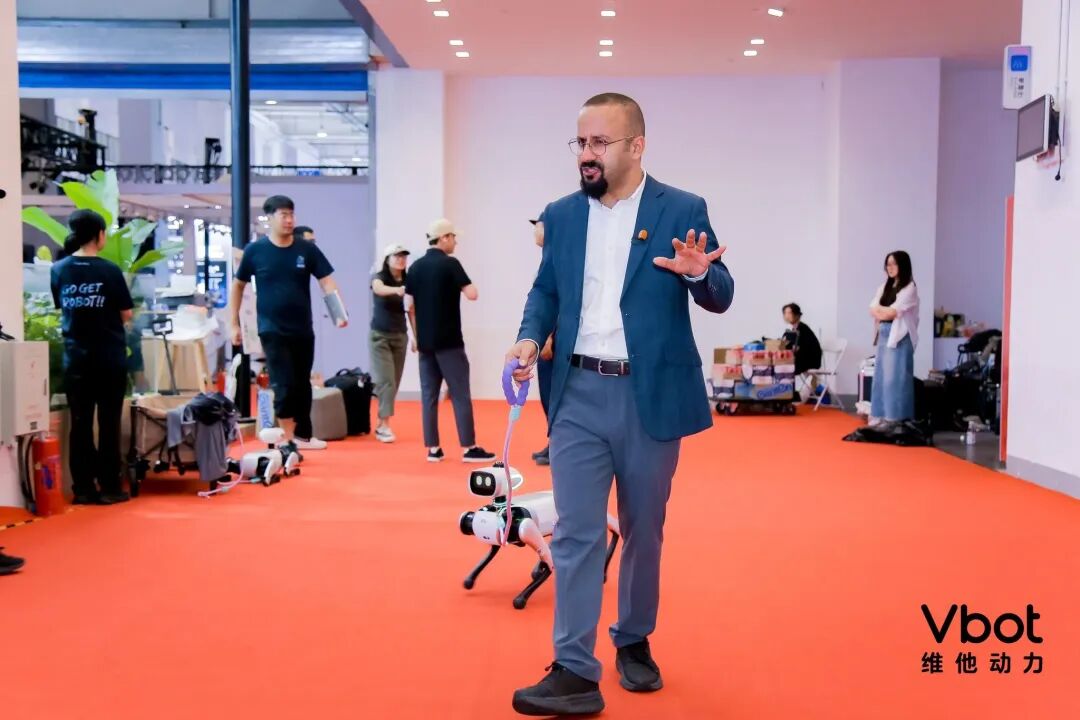
International friends asking when they can take Vbot back to their countries
Three Stages of Evolution in the Robotics Industry
👦🏻 Koji
This is a good segue — from Boston Dynamics releasing its first robot dog to now, it's been almost ten years. From an outside user's perspective, there doesn't seem to be any qualitative change. They look about the same, and no one has found a large-scale commercial application. But from inside the industry, what progress or breakthroughs have you seen? Including what you just mentioned — that you made the first quadruped robot that doesn't need a remote control. Could you give us a primer on how the industry has evolved and where things stand?
👦🏻 Zhelun
If I were to break it down, robot dogs and humanoid robots are actually quite similar, but robot dogs are relatively more mature. I think they can be divided into three stages.
The first stage was dominated by Boston Dynamics — this was the cybernetics phase of robotics. Through traditional programming and rule-based algorithms, humans controlled quadrupeds and robotic arms via code. Although it was remote-operated, you could control the quadruped's movements. For example, you'd use a remote to make it move forward or backward, but the logic for maintaining balance and the interplay among its 12 motors were all internal computational logic. This logic was something Boston did quite well, but the cost was extremely high. The motor drive methods at the time included hydraulics, which were also very expensive. So Boston's robot dog Spot was an extraordinarily expensive machine, but excellent within the framework of robot cybernetics. This was the first stage of robot dogs.
The second stage is represented by Unitree. Leveraging China's supply chain and clever design, Unitree achieved a certain degree of cost reduction in robot dogs. For example, the Unitree Go2 has sold relatively well, mainly to schools and research institutions for secondary development. The research version is priced near 100,000 yuan — still expensive, but much cheaper than when schools bought Boston's Spot. Plus, with the development of AI, by 2022–2023 people discovered that quadruped locomotion and balance maintenance could be entirely achieved through reinforcement learning. So many people at that time switched from rule-based methods to reinforcement learning. Today, many of Unitree's gaits are trained through reinforcement learning, making them more stable. In the past, Boston's traditional control methods required switching between different rules for different terrains — flat-ground gait, stair gait, low-power gait. But reinforcement learning gives it all-terrain adaptability, automatically switching gaits. This generation's technical framework is almost identical to today's exoskeletons — also physical-level perception and automatic switching. But at this stage, we still call it "blind walking" — gait switching has nothing to do with vision; it just switches when physical conditions change. The remote control still dictates where it goes. We're fortunate to stand on the shoulders of giants, trying to make it into a better product.
From our perspective, three technologies have now matured:
First, quadruped robot dog body technology is already quite mature. In many videos you can see them climbing mountains and wading through water — their all-terrain capability exceeds that of human athletes.
Second, autonomous driving. We've worked on autonomous driving for nearly a decade, and we've found that autonomous mobility is essentially a migration from high-speed traffic environments to low-speed, complex living scenarios. Although the speed decreases, the scenarios become more complex and less rule-based. At the WRC venue, we tried letting the robot walk on its own, but there were too many people, too crowded — it couldn't even squeeze through crowds, just like Shanghai's subway during evening rush hour.
Third, large model technology enables natural interaction. Our robot now doesn't need a remote control; it communicates through natural language, letting it follow you, help carry things, or film you. This level of experience frees up your hands and lets it truly help people.
So we believe we've now entered the third generation. Quadruped robot body technology, autonomous driving technology, and large model technology have arrived at a crossroads, converging to create the opportunity for third-generation robot dogs.
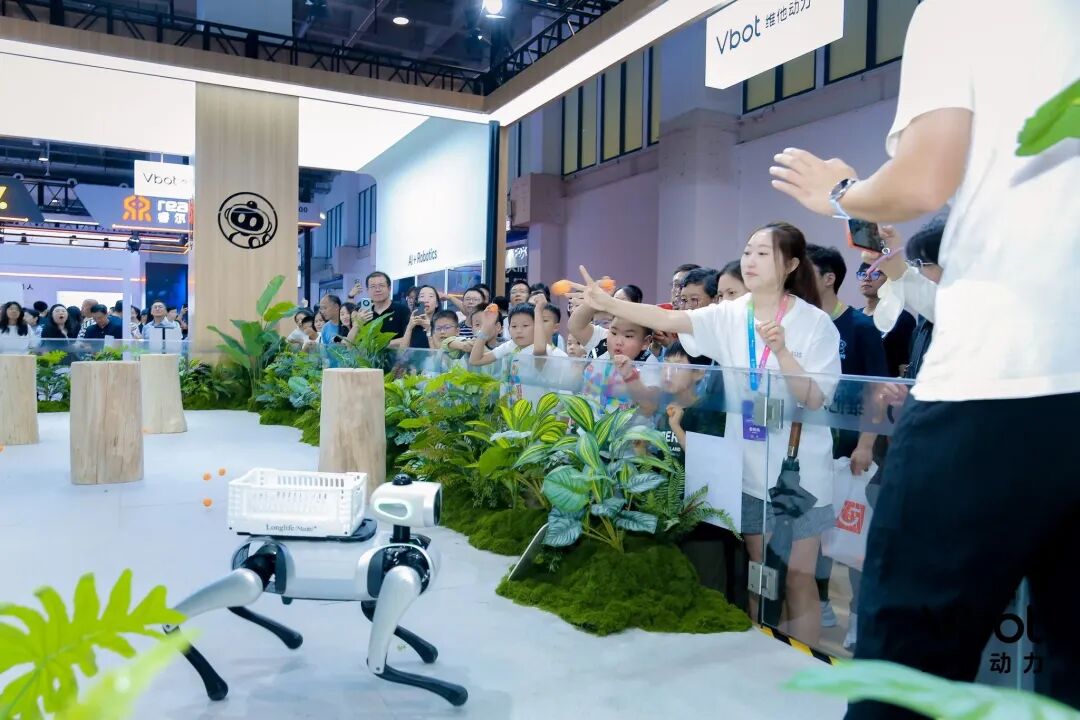
Datou's rich array of back-mounted accessories
👦🏻 Koji
So this third generation is large models plus autonomous driving, plus the foundation built on past quadruped robots — is this the industry consensus? From Boston Dynamics to Unitree to other major players, do they share this consensus? Are they all moving in this direction together?
👦🏻 Zhelun
If we're talking about it today, I think most people would probably agree, but it seems like no one has really broken it down and discussed it seriously in this way. In fact, the reason everyone finds this wave of robotics so hot right now is really two things: first, robot bodies have matured, and second, people see that AI development has the opportunity to do spatial computation better. So it's the combination of these two things that people see as the opportunity.
👦🏻 Koji
Got it. Because on the first day of WRC, I saw Xingxing Wang make a lot of provocative statements, one of which was that he considers the VLA architecture relatively simplistic. And you guys actually use VLA, so I'm curious — what do you think? Because he questioned the VLA approach, arguing that data volume is insufficient in the embodied intelligence field, and that VLA models themselves aren't good enough — he had his arguments. What do you think?
👦🏻 Zhelun
I have two perspectives.
First, when we build robots, we definitely want robots to autonomously create value and provide services. It's true that VLA architecture's data sources are relatively inefficient. Although you can have a good data closed loop in vehicles, data collection on robots is comparatively inefficient. So even if VLA isn't good enough and has generalization issues, there still isn't a better solution in the entire industry. We chose VLA because it's currently the relatively best option.
Second, robots have lower limbs and upper limbs, corresponding to autonomous mobility and autonomous manipulation respectively. The core reason we haven't immediately pursued upper limbs (autonomous manipulation) is that we feel the lower limb (autonomous mobility) track, due to accumulated experience from autonomous driving, has a more mature R&D paradigm — for example, how to collect data, how to generalize, how to draw inferences from event models — it's all more mature, and therefore has more data foundation making autonomous mobility more likely to work. The R&D paradigm for upper limbs (autonomous manipulation) is still not efficient. This is also why we chose to enter through quadrupeds first.
👦🏻 Koji
Right, I was also curious about this — since you're targeting the entire robotics industry, why start with robot dogs instead of humanoid robots? You didn't take on the most difficult challenge right away. What was your thinking?
👦🏻 Zhelun
There is indeed this perception that robots are cool, and robot dogs seem like a step easier than humanoid robots. I think our thinking was quite clear: at the startup 0-to-1 stage, we must first make a product and deliver it, and robot dogs are easier to deliver.
I hope that at your AI Hacker House, there can be one of our robot dogs in the future.
👦🏻 Koji
Very welcome, even welcome to send a whole pack of robot dogs over.
👦🏻 Zhelun
You happen to have a park right outside your door where you can walk them, hahaha. Because Koji, you also make products, so you know that only when you have real users can you drive the whole thing into a closed loop — only then does the blood flow smoothly. So we hope to make a product and deliver it out. Therefore we must choose a technical and product direction that is relatively easier to land. There are several points here:
First, choose a relatively mature body;
Second, the AI paradigm, including data and models, must be feasible to a certain degree.
Although no one has done it before in history, we believe there's a feasible path. Today the most mature body is the quadruped. Quadrupeds are the most mature form of machine, followed possibly by robotic arms, but bipedal and dexterous hands are not mature. An immature body means demos are fine, but put it in AI Hacker House for casual use and it'll have problems — that's the difference. So we need to choose a mature body. Then on the AI path, choose relatively feasible autonomous mobility. We believe this is functionality that can be achieved.
So we chose to enter through quadrupeds. But in terms of building robot capabilities, we're going for the full suite. At WRC I showed almost all the hardware and did exploded diagrams.
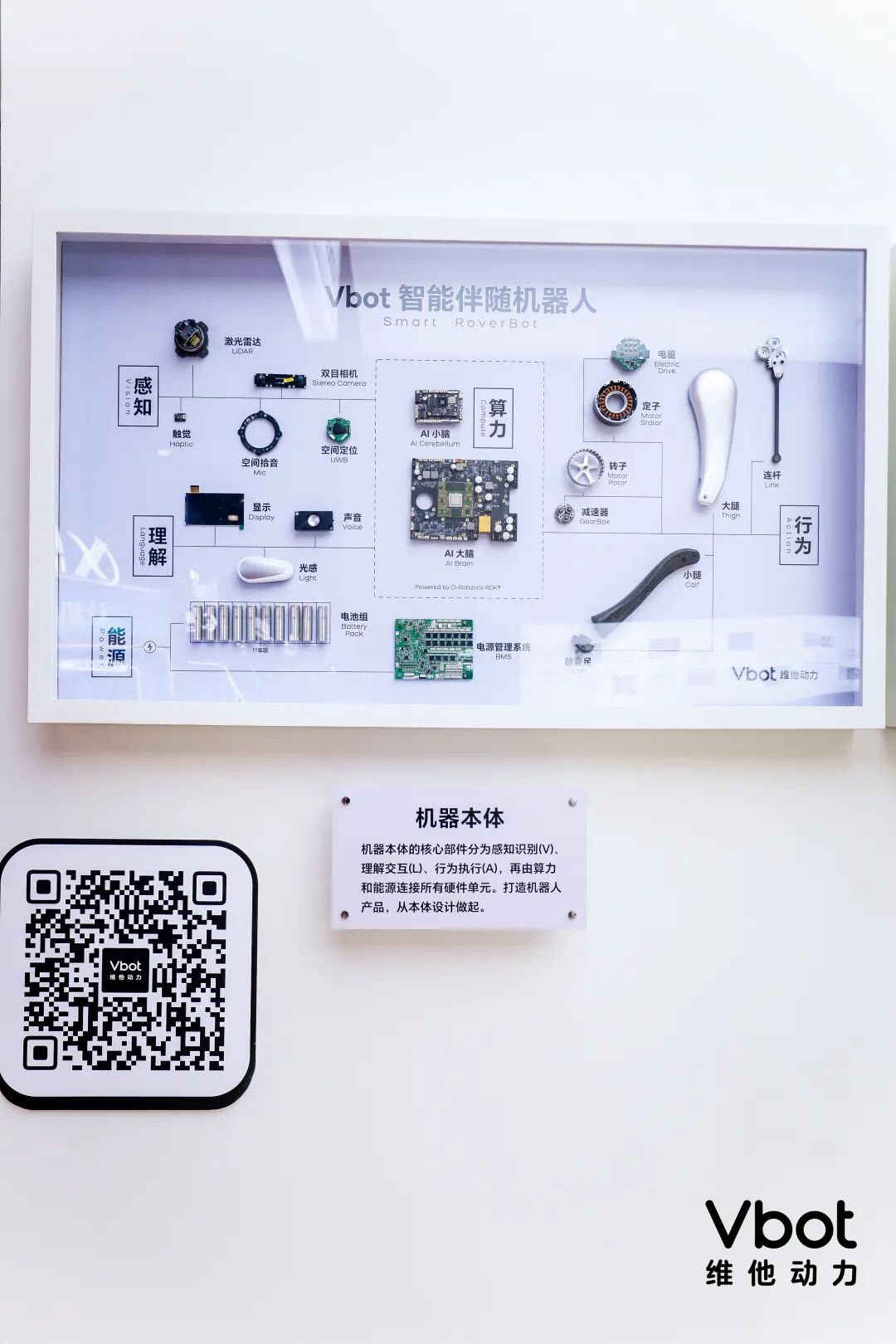
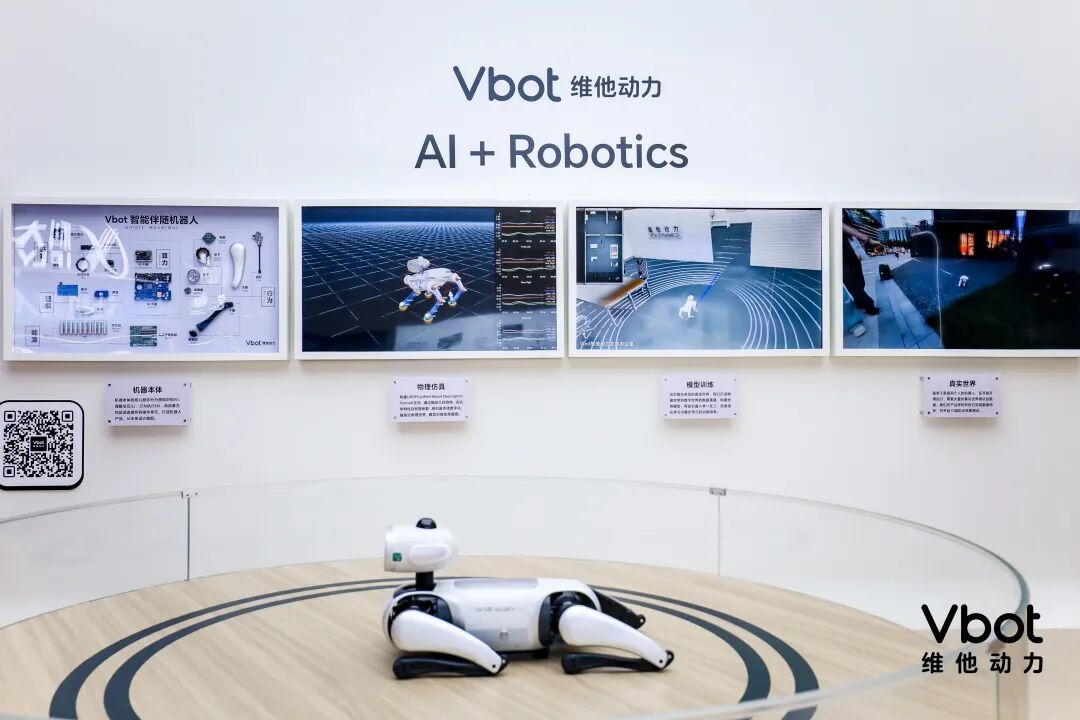
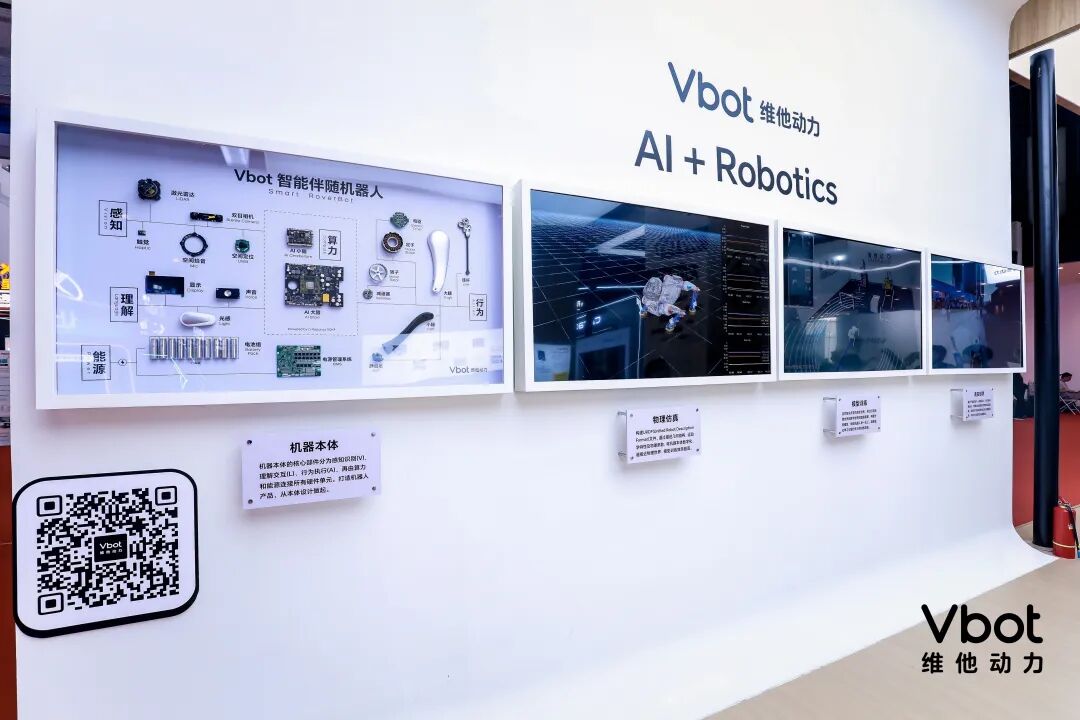
Whether it's perception units, interaction units, or execution units, including AI's brain, cerebellum, controllers, chips, power systems, energy systems — the only difference from humanoids is the execution unit, whether it's 10 motors, 20 motors, or 30 motors. The other chains are consistent, from perception to thinking to energy supply, all consistent — just a matter of switching limbs. So we define our company as AI-centric, believing quadrupeds are the most suitable entry product. Doing it with the most embodied intelligence, the most cutting-edge AI approach, helping the organization run through capability and business closed loops. When upper limb manipulation capabilities and humanoid wholes have their opportunity, our organization will be ready. This is the core thinking.
ToC Choice and Entrepreneurial Thinking
👩🏻 Ronghui
I read the LatePost interview with Yinan Yu, where he talked about a lot of your ideas. It's quite different from ordinary robotics companies. There were several interesting points — for example, before starting the company, he looked at many robotics companies, all of which were doing toB, while you started with toC products right away. How did you think about this?
👦🏻 Zhelun
Our founding team has two core genes.
First, both Yinan Yu and I believe that we must deliver products and ultimately serve users — only then do we have a chance to hit the technical ceiling. Today many technically capable companies have products that directly serve users. Sales channels can be toB or toC, but the product must face users, so that it can possess the strongest technical capabilities. This is why we insist on delivering products.
Second, this connects more closely to Yinan Yu's background. He was among the first generation of AI scientists in China, having lived through multiple AI cycles, including the last wave of AI hype (the so-called "AI Four Dragons" era). When the tide receded, Horizon Robotics was one of the few companies still above water — it had genuinely created value and built capabilities. So when he looks at problems, he thinks about the "chain master" in the value chain and what position to occupy. In many B2B businesses, the chain master is the enterprise client, and the company's core competency often becomes distribution and sales relationships rather than technology. Technology can simply be bought or transplanted.
But we don't want to become a company that just does deals, chases revenue, or tells stories. Yinan Yu has genuine technical ambition. He wants the company to reach the ceiling of what's technically possible, to build the strongest technical team in the industry, and to keep shipping products. Only a B2C business makes this possible. So in the long run, we chose this track.
We also believe that once a company starts with B2B from 0 to 1, it's very hard to pivot to B2C. The organizational paradigm and R&D methodology become locked in — switching becomes difficult. So we chose the B2C path from the very beginning.
👩🏻 Ronghui
And you chose from the start to focus on family users with relatively settled lifestyles. How did you think about that? How do you get a robot dog into homes?
👦🏻 Zhelun
There are indeed many problems to solve. I mentioned earlier that the core rationale for choosing a robot dog was threefold: technological maturity. But from technology to productization and commercialization, there are two more hurdles. The first is productization — how do you use the technology to create strong user value? This is what we've been thinking about for families and individuals: what can a robot dog actually do?
Around February this year, we did extensive research. We manually found users on Xiaohongshu, Weibo, WeChat Channels, and Idle Fish who had bought quadruped robot dogs and reached out to them. We did both standard surveys and deep-dive interviews — one to two hour phone calls. We found that while there was indeed a market for quadruped dogs in the past, it was mostly novelty purchases, and buyers often regretted it. Though people bought them, NPS (net promoter score) was very low. The core problems were: required remote control, short battery life, loud noise, and fragility.
So we need to solve these problems solidly. At the same time, users also suggested value propositions. If you look at many videos, including bloggers' depictions of future life scenarios: a little assistant that helps carry things, automatically fetches deliveries and takeout — that's value. So we need to move in this direction.
First, we need to achieve good productization. For example, quality issues — historically, quadruped return rates were quite high. In March this year, we visited Roborock's factory to learn how they do quality management. We also need to do quality well, while thinking about commercialization — selling to consumers at a reasonable price.
👦🏻 Koji
So in your company's OKRs right now, where does commercialization rank?
👦🏻 Zhelun
If we're talking about this year's full-year OKRs, the most core metric is shipment volume — that's the most important metric driving the company. Along with NPS. We're not solely pursuing volume, because the first-generation product isn't judged by volume alone. What we care more about is: users buy it and feel it's good — that's NPS.
👦🏻 Koji
So you still need to sell B2C. I myself searched for "robot dog" on Xiaohongshu and Tmall, and found that most are bought as toys, even as toys for kids. On Tmall, whether it's Unitree or others showing sales of one or three thousand units, the main selling point is for children to play with. What do you think? Would you treat this as your first selling point or use case to promote?
👦🏻 Zhelun
This is an industry-wide problem. If you position it as a toy, unless you make it a designer toy — you need artists to nail the "cool" factor. If it's just a toy, its pricing and scale are inherently limited, and user demand is simply "fun." But then it can't use good technology, and it can't sustain an AI team behind it — the business doesn't work. So we don't want it to be just a toy. We want it to be both fun and useful. We want to achieve both.
One key difference is that our robot dog may be the first one that can actually go outside. Previous toys lacked quadruped mobility — insufficient motor torque, legs too short — so they couldn't go outdoors. Unitree's Go2 can go outside, but it requires remote control to move around, which is a poor experience. If a kid wants to play, you have to hold the controller the whole time, like playing with a remote-control car. We need to solve autonomous mobility.
Going further up the stack, we showcased a multifunctional backplate at WRC, positioning the robot dog as a general-purpose mobility platform. It can go wherever humans can go. Devices mounted on it can use my power and compute, and I also provide the ability to secure equipment. So you can mount imaging equipment, robotic arms, storage devices, even projectors and mini-fridges. It can become an excellent outdoor functional platform.
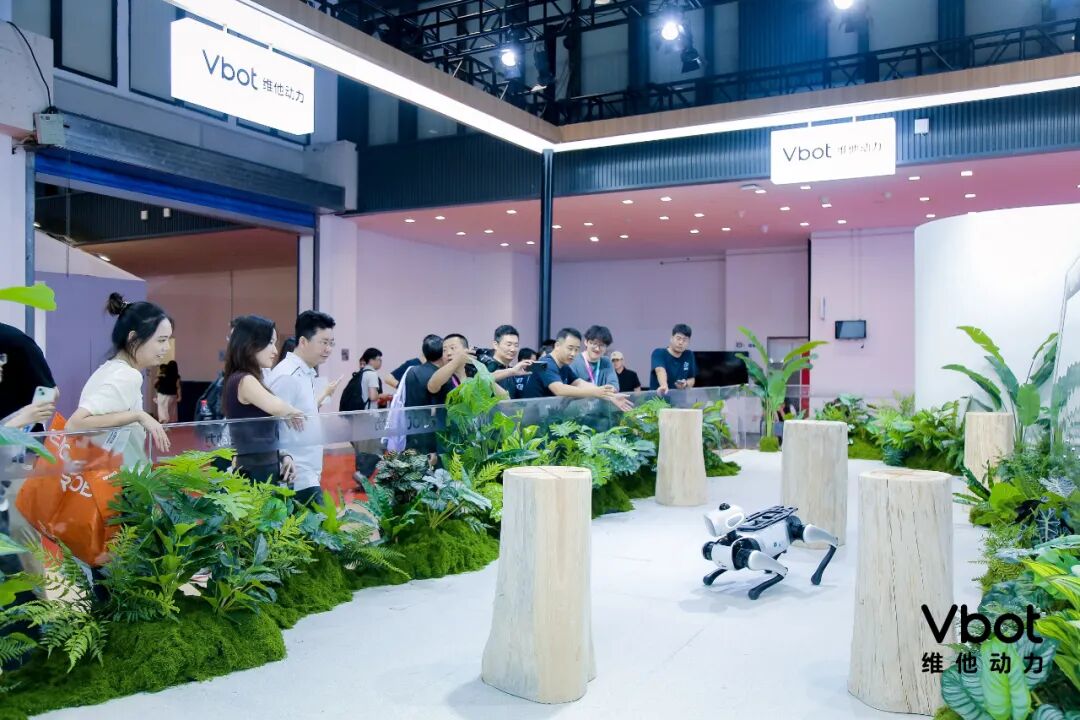
Datou's rich array of back accessories
👩🏻 Ronghui
I'm wondering — many people who tried this space before didn't choose this path. Was it because there are some very difficult problems to solve in this domain?
👦🏻 Zhelun
It's quite hard. In the past, whether quadruped or humanoid, they all relied on remote control. To enter home scenarios, you have to throw away the remote — that wasn't viable before. It requires autonomous driving and AI foundational capabilities. For us, the choice was also difficult, because choosing quadruped over humanoid makes valuation and fundraising harder. If we thought purely in terms of valuation and fundraising, given our team's ability to eliminate the remote, the better way to raise money would be to tell a bigger story. So this is also why many people didn't choose this track: you have to give up easier fundraising opportunities to do something more grounded, and that becomes a choice for the few.
👩🏻 Ronghui
You've chosen a domain with few pioneers and little reference material. Have you encountered unexpected challenges along the way?
👦🏻 Zhelun
It's indeed quite big and quite hard. Because we're building a product, I kept emphasizing at WRC: we have to do both hardware and software ourselves. While we can't manufacture components like cameras, LiDAR, or battery cells ourselves, the hardware body, system architecture, system chain, including mechanical structure and exterior — we do all of that ourselves. This means we have to make up for our gaps in robot hardware, ensuring the body can be well controlled.
Before April this year, we had two parallel tracks inside the company: the AI team doing secondary development on Unitree's quadruped to get algorithms running first; and the hardware team building our own hardware body, designing motor structures and quadruped architecture. Around April 28, the first-generation hardware came out — we called it A Sample. Starting in May, we began integrating software and hardware with this A Sample. The result: algorithms that the AI team had debugged and matured on Unitree's body completely failed to run on our own body. We had to solve the gap between software and hardware.
Unitree's hardware capability is genuinely world-class, possibly even the best globally, so we had to cross this threshold. Our founding team's background is more comfortable with AI, while hardware body is a different paradigm altogether. So many teams choose to develop on someone else's body. But we put both groups in the same company, collaborating on one project. This creates interdependence — AI progress gets constrained by hardware iteration, and hardware iteration gets pulled by AI demands — with both sides affecting each other, creating major challenges for overall progress.
As of today, we can only say we've solved 80-90% of it. After WRC, we're still working on it. The goal is to make the hardware more stable so AI can be better developed. I'm confident we'll fully resolve this before launch this year. Once solved, the value is enormous, because we can apply the same method to more complex form factors. A quadruped is a mini bot, but it has all the essential organs. When we build larger forms, we can walk the same path.
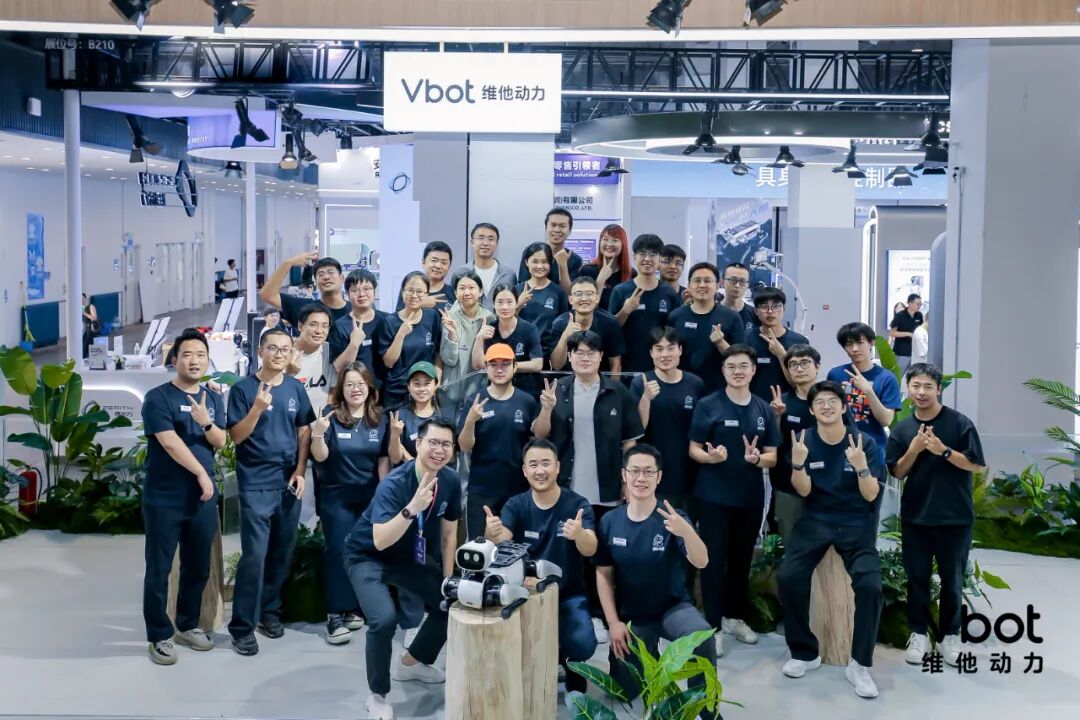
The Vbot team
👦🏻 Koji
You mentioned that Unitree's robot dog body is world-class, possibly even the best. From your time inside Unitree, what did you learn about how they see their next development direction?
👦🏻 Zhelun
Currently there are two development paths for robots: one is, after building strong body control capabilities, to build bodies with more joints and higher degrees of freedom — this is an extension of the same line. The second is, with a good body, to make it fully autonomous, AI-driven.
From what I can see, Unitree is taking the first path, making the body increasingly solid. Doing quadruped well, then humanoid well, then iterating toward more complex, cheaper humanoids or stronger quadrupeds — this is their strength, and it's Xingxing Wang and Unitree's advantage.
But to build products that create real value for users, the second path must be taken: from environmental perception to information understanding, to planning, decision-making, and control — this AI path is the challenge, and it's the challenge both we and Unitree face. And the people who grasp this cognitive layer are currently not mainly inside Unitree.
👩🏻 Ronghui
So where are they?
👦🏻 Zhelun
They're in autonomous driving teams and AI teams.
👩🏻 Ronghui
Sounds like this is a shared challenge for the new generation of physical AI companies.
👦🏻 Zhelun
Exactly. Today for many AI companies, the challenge is actually building robots. Essentially, both sides face challenges. Organizationally, AI teams have to accommodate hardware people, and hardware people have to accommodate AI people — only then can a complete organization be formed.
From Li Auto to Entrepreneurial Journey
👦🏻 Koji
You must have been pretty happy as a product manager at Li Auto, and Xiang Li himself trusted you a lot. At the Beijing i8 launch event, I saw a 20-minute film of a conversation between you and Xiang. I was thinking, Xiang must really like a PM to put such a long conversation in a launch event. So why did you leave Li Auto to start Vbot?
👦🏻 Zhelun
The core reason is that I saw the opportunity while working on autonomous driving at Li Auto. The intelligent driving space has become intensely competitive these past two years — last year it was end-to-end, this year it's VLA. Actually, when we were doing end-to-end last year, I saw the possibility of doing robots. The reason is that it possesses spatial mobility capability. A car is a form of spatial mobility — though planar, it still requires understanding the environment to control. Robotic arms, mechanical assemblies, quadrupeds, bipeds, dexterous hands — they're fundamentally similar. I saw the possibility of this R&D paradigm on robots. Of course, Tesla has also been pulling this forward, so I was itching to do it.
Another layer is intelligent driving itself. I love intelligent driving and hope it can reach L4 someday. Achieving L4 would indeed bring massive changes to life — this is what I believed in for the past decade. But I also saw a large chasm in its path to deployment. This isn't something that can simply be solved by scaling up.
In the physical AI space, I see two axes: scene complexity and fault tolerance. Driving isn't actually that complex in terms of scene complexity — it's fairly rule-based. Humans can learn to drive in two weeks to a month. AI can even solve complex problems that would take humans years to master. But where AI struggles is fault tolerance. Autonomous driving is one of the most fault-tolerant-demanding products I can think of; the cost of failure is extremely high. So I feel there's still a massive chasm before L4. And that chasm means L4 isn't an independent business unit — it's part of the car competition itself. The industry has seen lots of intelligent driving marketing concepts over the years, but in reality it's never been a standalone business. It's whatever intelligent driving you need to sell cars.
I didn't want to be working on something that couldn't become an independent business unit when I saw the opportunity in robotics. So I was especially drawn to robotics. Actually, starting from 2024, I'd really wanted to do robotics — I just didn't say it publicly. I even talked to people at Li Auto who were more experienced than me, saying if there was ever a robotics business, they had to call me. The opportunity came through my conversations with Yu Yinan, so I went for it decisively. I even feel that once robotics matures to a certain point, it could in turn push L4 forward. These things are connected. But the prerequisite is having something with physical AI at its core that can commercialize on its own first. That was very important to me.
👦🏻 Koji
Interesting. So how does the feeling of starting your own company compare to working at Li Auto under Brother Xiang?
👦🏻 Zhelun
Working with Brother Xiang was quite remarkable. At Li Auto, there was this incredibly capable leader who would always explain the thinking behind his decisions. You'd find it made perfect sense, and you could keep learning and growing — there was a strong sense of having someone to rely on. After leaving Li Auto, that support was gone. A lot of sharp judgments you have to make yourself. But that's also a valuable process — it's testing whether these five years gave you the judgment for markets, users, and technology trends. Before, Brother Xiang had drawn the framework for you; you were doing multiple choice or fill-in-the-blank. Now it's a blank sheet, and you have to write it yourself.
👦🏻 Koji
So what does Brother Xiang think of what you're doing now?
👦🏻 Zhelun
Before I started my company last year, I went to see him and shared my ideas. He looked at me with wide eyes: "Zhelun, have you thought this through?" That gaze was so serious. I was in his office, just the two of us — I couldn't avoid it. In that moment I couldn't lie to myself. If I hadn't thought it through, I couldn't say I had. I told him, I genuinely want to do this. Then he said: "If you've really thought it through, I'll support you." That moved me deeply. I'll remember it for the rest of my life.
That conversation last year is what made me determined to start my company. We've stayed in touch since — running into each other at auto shows, or when I visited Li Auto headquarters. He still gives me input on product, brand, and user experience. Very helpful.
👩🏻 Ronghui
What kind of ideas did he give you?
👦🏻 Zhelun
This time at headquarters, we talked about product. He agrees with my current direction — at least it's a pragmatic path from the user and product side. If something is technically feasible and valuable, Li Auto, with its cash reserves and AI ambitions, will definitely do it. But today there aren't really any visible moves in humanoid robotics. Brother Xiang feels humanoid form factors aren't mature enough yet. From a product perspective, he knows I follow Li Auto's product methodology, and there are many parallels with Li Auto, so he recognizes my direction.
At Li Auto, truly going from 0 to 1, then 1 to 10, is the process of building your own brand. Brand equals "who am I" — especially critical in the consumer space. How do you communicate who you are to others? Brother Xiang also shared his complete thinking from the Li ONE to the Li L9, and then to the i series. For example, with the Li ONE, the brand was the product. Users understood who you were through the product itself, so you didn't need flashy packaging — the core was product experience. That insight was hugely inspiring for me.
Also, I have many good friends at Li Auto who've helped me a lot in my entrepreneurial journey. For example, the partners we announced: JD.com, Volcano Engine, Horizon Robotics, Hesai, EVE Energy — all extremely strong players in the industry. Horizon Robotics, Hesai, and EVE Energy in particular are also Li Auto's good partners. These companies are pragmatic, many are public companies. Partnering with them means we're really doing mass production. If we were just doing demos, we wouldn't need these partners at all.
👩🏻 Ronghui
So you actually had many options when you started your company. Why join Vbot? What convinced you?
👦🏻 Zhelun
There were indeed many options for starting a company, but also many constraints — because what you're investing isn't just money, it's primarily time. Since you're going to do this, you have to commit for a long time, so partners are crucial. I lean more toward product and market background, but while robotics needs good product definition, the core driver is AI and engineering. To pull this off, I absolutely needed a very strong technical co-founder.
There are many people in the market with impressive titles, but those who can actually deliver and whom you can fully trust are usually brothers you've fought battles with. Choosing a co-founder is essentially entrusting your time to them.
Yu Yinan and I had worked at different companies but had deep collaboration. From Li ONE through Li L8, the Journey 3 and Journey 5 platforms were all developed together with their team, and the final delivered products became industry benchmarks. We have revolutionary camaraderie. I also knew he has high standards for technology, is strict with his team, has strong engineering capabilities, and is open-minded and flexible as a person — with his own pursuit of good products. All of this made me feel he was an excellent complementary partner. So this was a mutual choice of people.
👦🏻 Koji
I find that quite inspiring. Choosing a co-founder isn't just about selecting capability — it's deciding who to entrust the next few years of your life to, so you don't waste them.
👦🏻 Zhelun
Exactly. Because the final result has to be created together — I couldn't do it alone. Actually, I also thought that if I left Li Auto and went completely independent, I might do something content-related, because I could fully control that. But that would be small and beautiful. To truly do something big, you need co-founders to expand the scope together. This was also fate — it wasn't just my one-sided choice. Yu Yinan happened to find me too, and he pushed me forward, giving me the opportunity to do something bigger. If I had only relied on myself, I probably couldn't have done it at all.
The Future and Culture of the Robotics Industry
👦🏻 Koji
Being a PM for what you're building now must be pretty exciting, right? After all, you're defining an entirely new species, a new product. Beyond toys and education scenarios, what C-end scenarios do you see as most likely to succeed and have commercial value?
👦🏻 Zhelun
Actually, we spent the first month or two of our startup just discussing this question, and finally mapped out a broad direction: indoor and outdoor scenarios, thinking in terms of a ten-year endgame.
Why did we initially choose quadruped? Because in the Autodog space, in outdoor environments, quadruped is almost an "ultimate form." It's more stable than bipedal and more traversable than wheeled, so we were quite firm on quadruped. We believe as long as the scenario is outdoors, all derived capabilities can build on it — helping you take photos, exercising with you, delivering things, and so on.
But indoors, quadruped isn't as suitable. It's heavy, noisy, and prone to falling — far less stable than wheels. So at home, wheeled structure is actually a brilliant invention. If you add a robotic arm, it can help with housework or execute specific tasks. So our judgment for future home robots is: the first generation will be outdoor robots centered on quadruped, and later there will be indoor-focused products — wheels plus robotic arm, focused on truly completing housework for people.
In design, we'll also simplify as much as possible: use wheels instead of legs where possible, one robotic arm instead of two, grippers instead of dexterous hands. This reduces technical difficulty and cost, making it more accessible for users. So I think the robots consumers will interact with in the future will fundamentally divide into two categories: outdoor quadruped robots and indoor wheeled robotic arm robots. They may develop separately at first, then gradually converge into more general forms.
👦🏻 Koji
I know Tesla chose one approach: remotely controlling robots to do tasks, accumulating data or discovering scenarios in the process. What do you think of this path?
👦🏻 Zhelun
Tesla's background is very different from startups. The path they chose suits them, with several prerequisites:
First, Tesla has its own factories where it can trial-and-error infinitely;
Second, Tesla has unlimited funds to continuously invest heavily — R&D resources are hundreds or thousands of times what domestic startups have;
Third, Tesla itself needs to do bigger, more general things to match its valuation and brand.
But the core problem with this product is that the actual value it creates isn't much. I have friends doing similar things, and it's more suitable for high-risk or uncomfortable scenarios, like factory paint spray booths. Humans have to wear protective suits, and while time inside is limited, the work is grueling — these scenarios suit remotely controlled robots. But there aren't many such scenarios.
In most cases, if you use this approach, it's purely spending money to collect data. Small companies can't afford it, and can't operate this way. So the value it creates is limited and unsustainable. It suits Tesla, but not necessarily startup teams.
👦🏻 Koji
Do you think "finding scenarios" is the most discussed topic among founders and PMs in the industry? Because it seems like not finding scenarios is quite headache-inducing.
👦🏻 Zhelun
Probably not yet. People are more waiting for or pushing technology development. Maybe also because the robotics capital market is still quite active, so startups have raised a lot of money and don't urgently need commercialization. People discuss more whether they can make new demos or novel showcases, rather than specific commercialization scenarios. But the next step should enter commercialization discussions.
👦🏻 Koji
Interesting. I'd heard of an American VC called Turpentine VC. The origin of their name is: when art critics gather, they discuss commercialization; when artists gather, they discuss where to find the cheapest turpentine, because that's essential for painting.
Back to WRC — you mentioned unprecedented excitement, but was there anything that truly caught your eye? Whether product, feature, or technology?
👦🏻 Zhelun
As an industry participant, it's hard to be truly surprised, because most displays were within expectations. But what I could see is that this year's showcases were more mature than last year's. At last year's WRC, many robots made elementary mistakes — suddenly falling, twitching randomly — indicating immature hardware. This year such incidents clearly decreased, showing the industry is continuously eliminating its floor. While there weren't breakthroughs in the ceiling, the floor is disappearing. This is a necessary process for an industry to thrive.
Another thing that really struck me — the audience. Since this was in Beijing, on a weekend, during summer vacation, huge numbers of kids showed up from Saturday through Tuesday. They were incredibly interested in robots and full of ideas. At our VBot booth, we had a structural column we couldn't work around, so we wrapped it as a "brand pillar" for people to sign and doodle on. Starting from August 7th, the media day, people began signing it. Later, kids got especially involved — the upper half became signatures, the lower half completely covered in drawings. So much creativity and imagination left behind.
This moved me deeply. I believe China's new generation of children has excellent education and economic foundations, and I genuinely think robot culture has a chance to be born here, just as car culture emerged in Europe and America. Tonight I'm even attending the opening ceremony of the Robot Games, as a spectator. Many people find it strange: why should robots run or play soccer? But there's no need to overthink it. Cars went through something similar: why build such powerful engines? Why Formula 1? China never had answers to these, but Europe and America did. China didn't have this kind of thing before — robots might be the opportunity today.
I was personally deeply affected. From middle and high school, I would buy tickets to the Shanghai Auto Show — that was my awakening. Seeing kids today buying tickets to a robot show, I feel this is the new generation's awakening. Just as I wanted to build cars after attending auto shows, I believe these children will grow up to become the backbone of China's robotics industry.
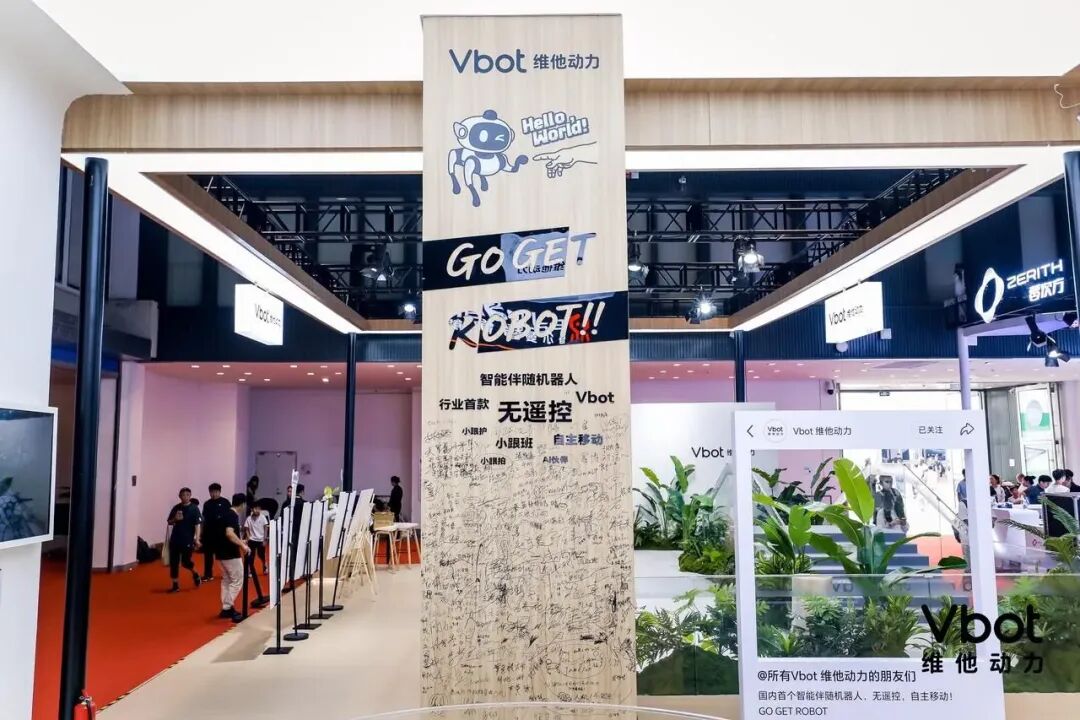
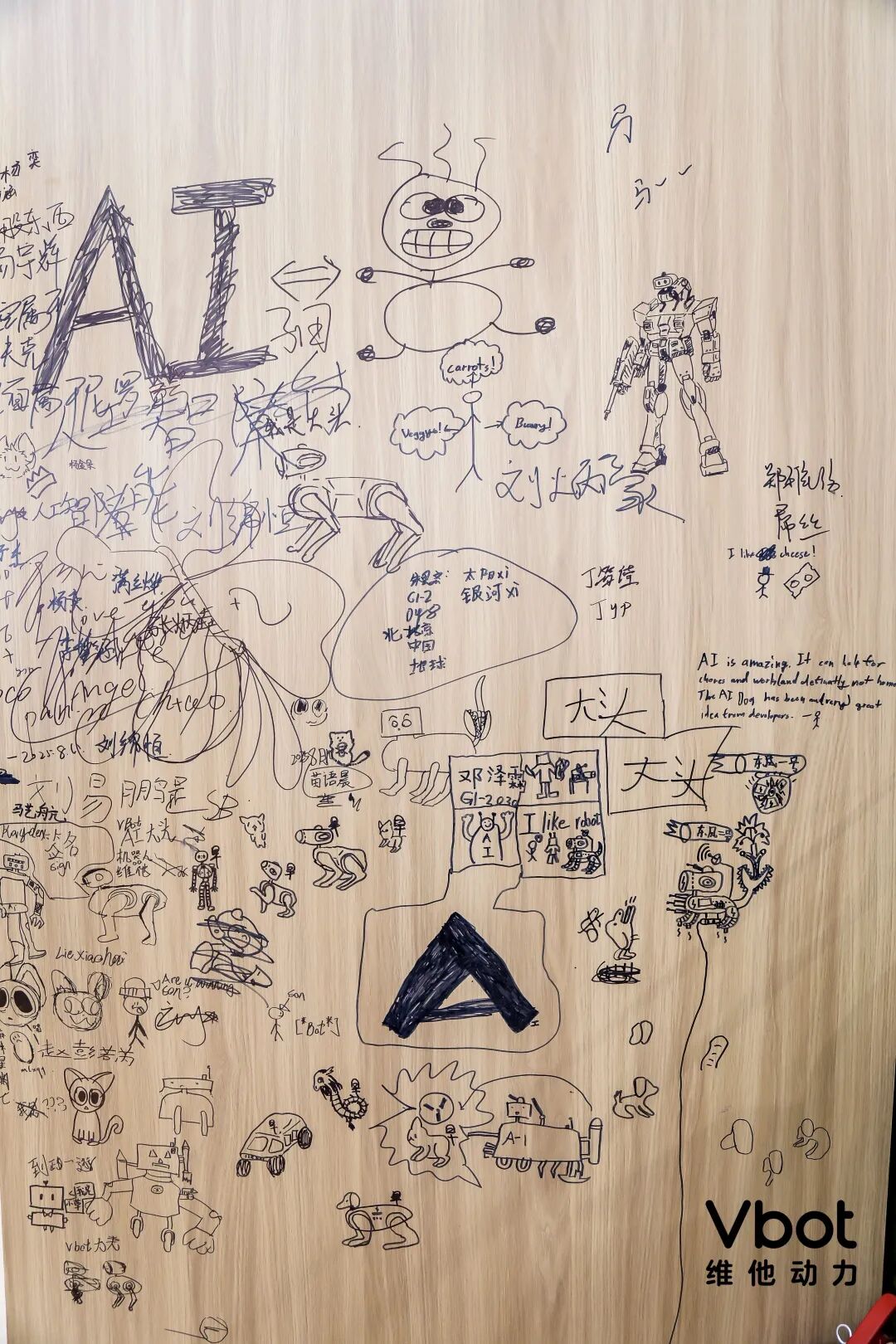
Kids spontaneously doodling to express their love
👩🏻 Ronghui
Right — when they grow up, seeing robots might be as commonplace as seeing cars is for us today.
👦🏻 Zhelun
Yes. I think we'll see an enormous variety of form factors and vertical categories emerge in robotics. It reminds me of Japan and America in the eighties and nineties, when electronic products bloomed everywhere: Walkman, Game Boy, digital cameras, Tamagotchi, mobile phones — ultimately consolidated by Steve Jobs into the iPhone, launching the smartphone era. That process was beautiful, and I believe it will happen again in robotics.
👩🏻 Ronghui
But the industry is so hot right now — are you worried about a bubble?
👦🏻 Zhelun
Not worried — the bubble is already certain. Even so, it's actually beneficial for people inside the industry. Without attention, the industry can't develop. A bit of bubble can actually promote growth. The key is not to be in an unsustainable position when the bubble bursts.
We must keep R&D investment and spending at reasonable levels. Even if the bubble bursts, the company can continue operating healthily. If you use the bubble to hire too many people, expand too broadly, or launch too many product lines, it'll be hard to recover when things pop. So what you see with VBot today is just one product — it looks simple, the company is very focused, with about seventy-some people concentrating on this single thing. That's our answer to the bubble.
👦🏻 Koji
Some bubbles are soap bubbles — they pop and disappear. Others are beer foam — in the end, it settles into good drinkable beer. Maybe not as much as you initially imagined, but it's still there, and potentially quite valuable.
👦🏻 Zhelun
Yes, that's a good metaphor.
👩🏻 Ronghui
Some ideas from your previous interviews struck me as quite different from many companies — for example, that robots should avoid talking when possible, and that people shouldn't be too close to electronic devices. I'm curious: if you synthesize all the choices behind this product — technical maturity considerations, philosophical principles about what to do and what not to do, commercial trade-offs — how do you make these judgments step by step?
👦🏻 Zhelun
On the points mentioned earlier: we're currently doing full-stack hardware and software, controlling the hardware ourselves, with AI at the core. We insist on fully autonomous capabilities. I think remote control alone can create value, but that's mainly for schools. So Unitree's first batch of customers being educational and research institutions makes sense, but that's not the path we chose. We insist on being user-facing — something users can directly use, something I can take home and give to my mom.
We also insist on good natural interaction capabilities, but we believe natural interaction doesn't mean smart speakers. We actually had this intuition already, and later when we saw the book Warm Technology by Hayashi Kaname, founder of Lovot, he wrote the same thing, which gave us some validation.
His description: when someone communicates with you verbally, but you notice their language expression doesn't match your expectations, or they can't fully understand you — your trust actually decreases. But when they can convey things through body language and tone, trust builds instead. This is essentially the relationship between humans and animals. I strongly agree with this view, so we made a different choice. We've given it strong large language understanding capabilities, but we don't have it respond through speech — instead, it communicates more through vocal timbre and intonation.
We also insist on keeping the product as affordable as possible. Whether in component integration or overall exterior design, we want users to find it acceptable. Today, robots priced at thirty, forty, fifty thousand yuan are considered cheap, but we think users still find that hard to accept. So we're working hard to continuously integrate the supply chain, reduce costs, even lower costs through in-house development.
👦🏻 Koji
Very much looking forward to seeing your product launch. You mentioned earlier that in five or ten years, you believe WRC could become something like the London World Expo. Could you predict what the robotics industry will look like then? What specific changes will it bring to our lives?
👦🏻 Zhelun
I'm particularly fond of the movie WALL·E. I rewatched it before officially starting my company this year, and I think its imagination of robots might be quite similar to the next 5 to 10 years. In the film, WALL·E is a waste-collecting robot that compresses trash into cubes. EVE searches for life on Earth. When they return to the spaceship, there are many robots aboard — some mopping floors, some delivering food, some doing various tasks. I think in 5 to 10 years, we'll see many special robots appearing in all kinds of living spaces, providing various services for humans. Indoor, outdoor. It will increase the happiness index of the physical world.
The reason we want people to stay away from electronics and digital information as much as possible is that information is too explosively abundant today, decreasing people's sense of well-being. We think robots have the opportunity to bring physical-world happiness back — I'm very drawn to this vision of various robots in various spaces, understanding what you say, helping you with some service.
This is the wonderful state in WALL·E — they don't have to be humanoid, but they all have vitality. Like the characters in Cars — not humanoid, but full of life. Our earliest company name was Vita Dynamics; "Vita" means life. We believe robots should have expression, emotion, language, body language. In 5 to 10 years, this is what it should look like.
👦🏻 Koji
We look forward to that day together! And we hope that among the robots people love by then, many will come from VBot. Thank you, Zhelun, for coming to "Crossing" today — we look forward to having you back as a guest another time.
👦🏻 Zhelun
Thank you Koji, thank you Ronghui, great chatting with you, bye.
👩🏻 Ronghui
Bye.
🚥