"Potential Energy" Is the Moat for AI Products | Latest from a16z

You need to break the mold.
🎪
a16z recently published a new article, In Consumer AI, Momentum Is the Moat, summarizing marketing strategies for AI products.
This year, Crossing has been alongside many new AI product launches. We published in-depth reviews within 24 hours of Manus, Lovart, and Clacky's debuts, and immediately interviewed founding teams at Flowith, Medeo, and RockFlow Bobby. Flowith Neo even held its product launch at AI Hacker House, which we organized.
I co-founded The Fair and Tangdao, and I've always loved studying content marketing and brand-building strategies.
So when I saw this a16z article, I thought it was a rich and valuable summary worth sharing.

How do you build a moat for your product in toC consumer AI?
Right now, unfortunately, you basically can't.
This space is evolving at extreme speed.
When AI models and infrastructure change every month — even every week with new updates! — it's nearly impossible to build products slowly or methodically like we did in the mobile internet era.
In this dynamic environment, what really matters is speed: how fast you can ship, gain traction, and capture mindshare.
Ship Early, It's Critical
Every startup wants to go viral. But that's getting harder, thanks to the sheer volume of AI product launches, rapid iteration cycles, shifting social algorithms, and the general availability of underlying models.
The reason is the sheer volume of AI product launches, rapid iteration cycles, shifting social algorithms, and the general availability of underlying models.
Truly viral breakout moments are becoming harder to engineer.
What were once textbook product launches or growth marketing playbooks no longer work, even for genuinely useful productivity tools and professional consumer products.
To quote my colleague Andrew Chen[1] bluntly, every marketing channel sucks right now[2].
Paid acquisition and SEO can still boost user numbers in the short term, but in consumer AI, these strategies rarely create lasting retention anymore.
You need to break the mold.
AI Products Launching Wildly, Like a Massive Flock of Pigeons Taking Flight
When I try to explain this new competitive landscape to founders, I use a somewhat eccentric metaphor: starting an AI company today is like releasing a pigeon into the sky and hoping it takes wing. (Bear with me.)
There's an entire flock of AI startups flapping their wings together, trying to gain enough speed and altitude before they run out of fuel and crash.
They're released in rapid succession, often building similar products, sometimes even using the same underlying models.
Some of these symbolic pigeons barely get off the ground.
Others climb to a certain height and then stall; their growth slows, they eventually tire out, and maybe find a soft landing (like getting acquired or quietly pivoting).
But a rare few shoot straight up, pierce through the clouds, and keep climbing, leaving their peers flapping desperately to catch up.
They become mainstream. They reach users' "mindshare air."
Now, in AI, even once you've flown above the clouds, you still need to flap harder than your competitors.
The faster you ship new features, new capabilities, new models, the greater the distance between you and the second-fastest pigeon, the third-fastest pigeon, and the rest of the flock.
To sum it up:
In AI today, it usually comes down to who builds first, who iterates fastest, and who distributes best.
"Momentum" Is the Moat for AI Products
What does all this mean? Early launches are crucial.
Of course, the momentum from a successful launch only lasts if the product keeps iterating.
When you ship fast, every product iteration gives you new material to showcase and share.
Products that understand this competitive environment and execute well on it — like Perplexity[3], Lovable[4], Replit[5], and ElevenLabs[6] — are pulling ahead.
So what are the tricks to make your "pigeon" take off vertically and keep climbing?
Spoiler: in this moment defined by novelty and innovation, I don't have a ready-made playbook.
That said, here are some proven, cutting-edge marketing strategies we've seen, with case studies behind them.
1. Hackathons, Reborn as "Performance"
Hackathons used to be niche, developer-focused short sprints.
Today they've become stages for public performance: livestreamed, shared on social media, and designed to generate viral spread.
Meanwhile, AI-native tools have lowered the barrier to entry.
These hackathons provide an environment where new projects (built using your AI product) can go viral.
For example: ElevenLabs held a global hackathon[7] earlier this year to showcase the potential of its AI voice platform.
Developers and creators were invited to build anything from roleplay bots to interactive audio.
Then, during a demo of Gibberlink[8], something unexpected happened: an AI voice suddenly realized it was talking to another AI.
This unscripted exchange, two robots conversing in human-like tones, went viral on social media.
It wasn't just impressive tech; it was a culturally bizarre moment that sparked debate about AI self-awareness and voice authenticity.
That event generated massive exposure for ElevenLabs.
Another example: Lovable recently held a live showdown pitting an experienced designer using Webflow against a "vibecoder" using Lovable's AI Design Copilot, to see who could build the best landing page.
The event was timed and livestreamed, heightening the competitive tension.
It was less about the final product than about the spectacle of watching AI compete with humans — plus the voyeuristic thrill that the vibecoder[9] might outperform the professional.
It demonstrated Lovable's product in action and planted the seeds for social virality.
These events are part performance, part stress test, part viral engine.
2. Bold Social Experiments
Taking this idea to the next level, Bolt recently announced plans to break a Guinness World Record by hosting the largest hackathon ever, specifically targeting non-developers, with a $1 million prize pool[10].
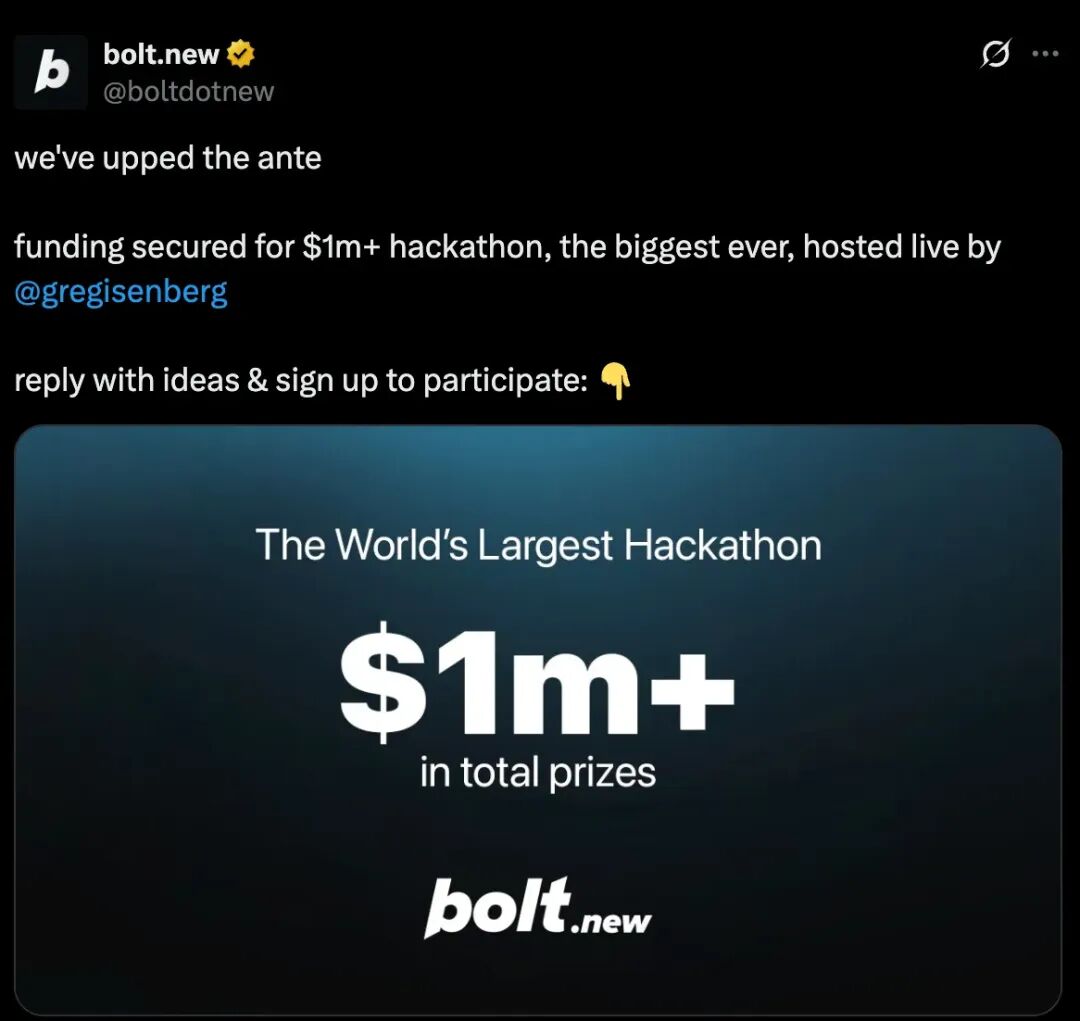
Similarly, in early spring this year, Genspark[11] launched a series of social "challenges"[12], inviting users to try to defeat its super-assistant.
Participants were encouraged to test the AI assistant with complex or unconventional tasks to expose its limitations.
The most creative or insightful failure cases won shares of a $10,000 prize pool.
By comparison, these lightweight, low-cost events don't require much investment but can quickly spark buzz and user engagement.
Another example: In China, a top VC fund (5Y Capital) ran a three-day Truman Show-style experiment where they locked developers in a room with only computers and generative AI tools.
Participants were challenged to make as much money as possible using only AI.

Image: The after party for the 72-Hour AI Survival Challenge, held at AI Hacker House organized by Crossing.
3. Unite All Forces That Can Be United
Today, users typically need to combine multiple AI tools to achieve their goals, switching back and forth between applications for generation, editing, optimization, and output.
In this fragmented environment, partnerships are power.
We're increasingly seeing top players in AI band together. A wave of coalition launches[13] has emerged.
AI startups bundle their capabilities and cross-pollinate their user bases.
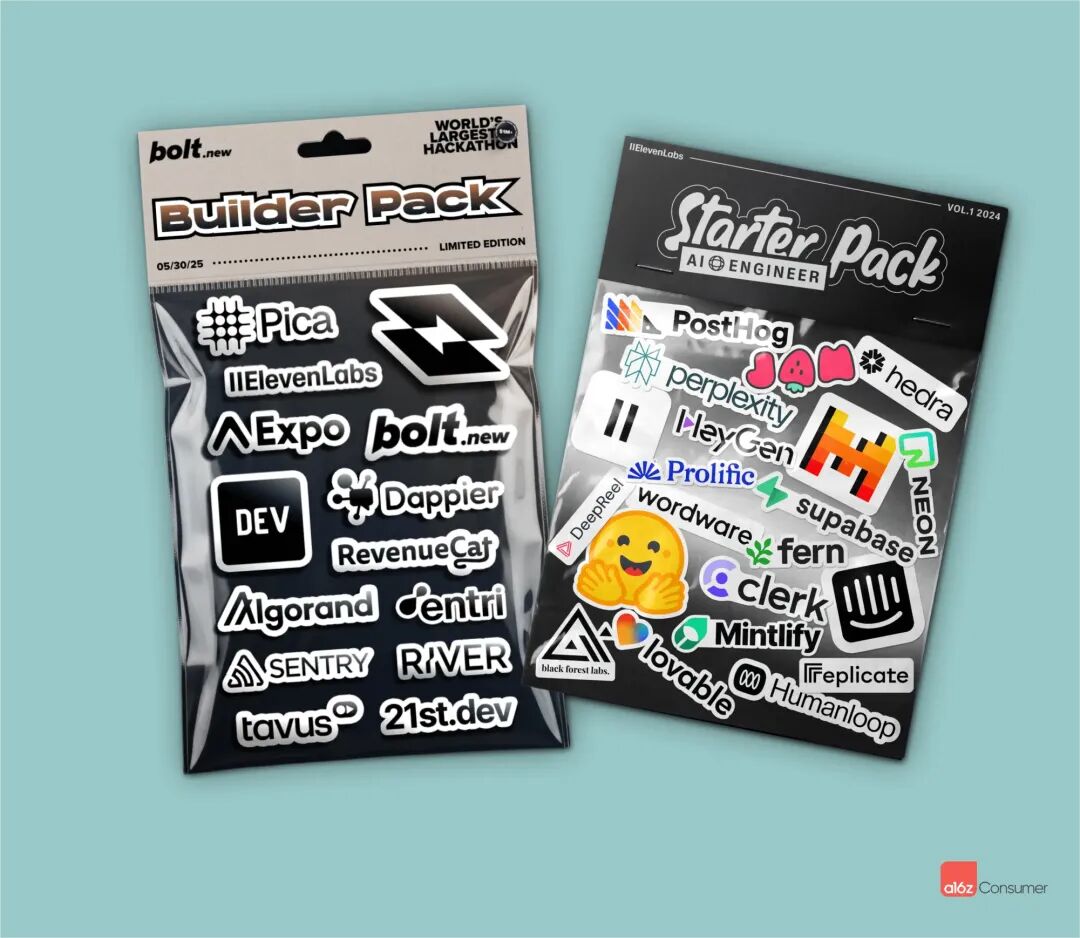
Take Captions[14] partnering with Runway[15], ElevenLabs[16], and Hedra[17] to jointly create a full generative video stack (from text to visuals to sound).
Or look at Bolt[18], which launched a curated "builder's kit" containing AI agents alongside infrastructure and creative tools like Entri, Sentry, Pica, and Algorand.
Similarly, Black Forest Labs[19] launched[20] its new model Kontext simultaneously with partners including Fal, Leonardo AI, Freepik, and Krea.
These starter kits aren't just clever marketing — they're functionally complete tech stacks showing users how to go from idea to finished product without having to force together half a dozen different tools.
They also vouch for each other — every partner adds credibility to the others.
4. Partner with KOLs
Another advantage in building moats: getting AI-native builders and designers to speak for you.
Let AI-native builders and designers speak for you.
These people aren't traditional KOLs or brand ambassadors.
Their posts might bring brief traffic spikes, but these users rarely convert.
In the AI era, the focus isn't on hiring big-name KOLs and creators, or even stacking top-tier angel investors on your cap table for surface-level effect.
Instead, I'm seeing more leading AI companies give access to credible early adopters — people respected in their own fields and active in the right Reddit forums, Discord channels, and those unique, creative corners of the internet.
Think developers, artists, technologists, and builders who might not have millions of followers but whose opinions genuinely shape how tools are perceived.
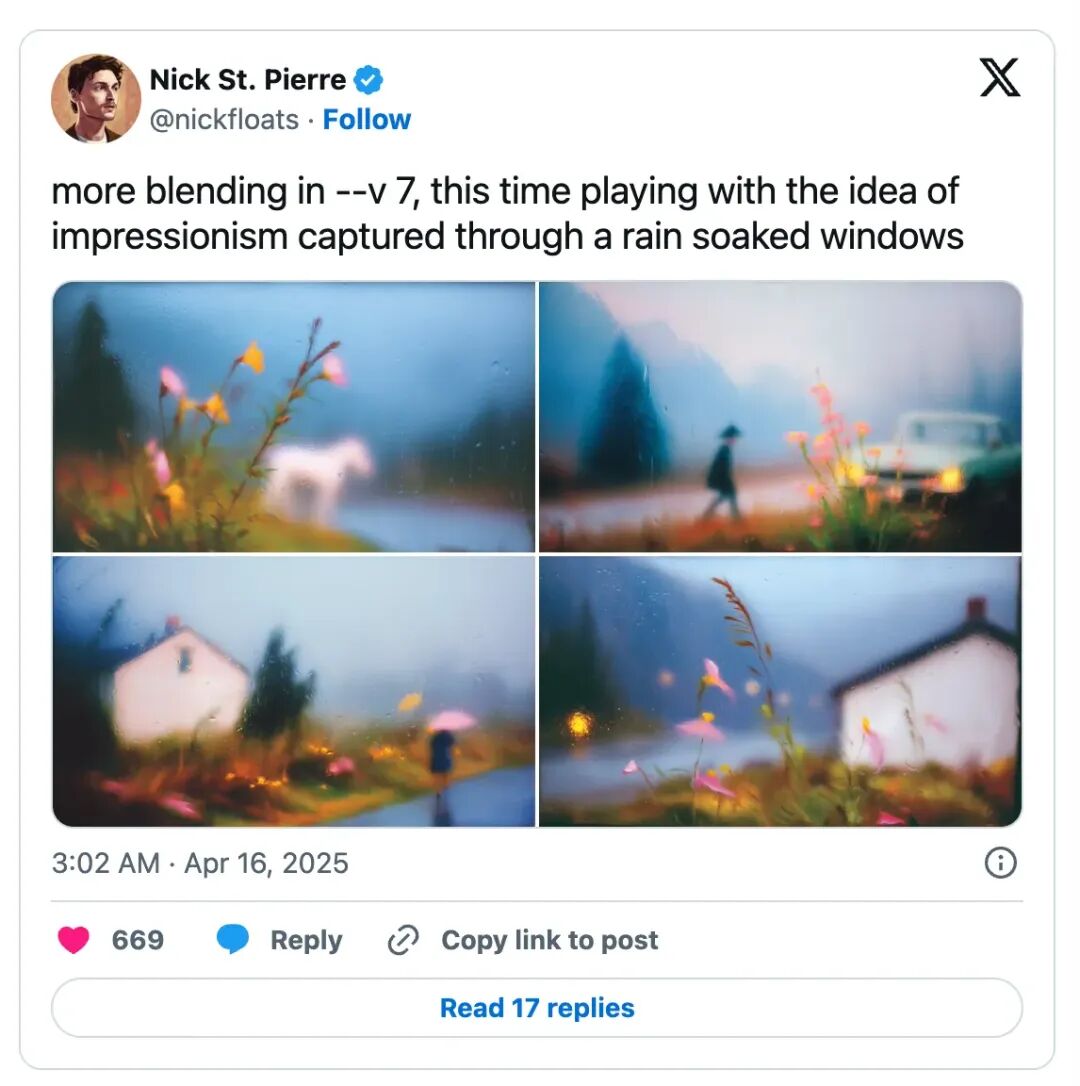
People like Nick St. Pierre[21], who early on became a de facto evangelist for Midjourney.
Luma[22] recently followed[23] a similar strategy, giving early access to a small group of AI-native creators.
Bloggers like Min Choi[24] and PJ Ace[25] produced impressive videos before Google Veo 3's launch, helping showcase the product's capabilities.
These posts weren't just demos — they were endorsements of the product by credible people.
By building a "cult following[26]," leading AI companies are tapping into a moat rooted in community and hands-on experience.
5. A Good Launch Video Is Worth Its Weight in Gold
Have you heard the phrase "show, don't tell"?
In AI, it's: show, don't pitch.
Traditional PR is too slow and too conservative for AI's new pace.
On the other hand, we've seen unknown small teams create breakthrough moments through product strength and instinct for a good story.
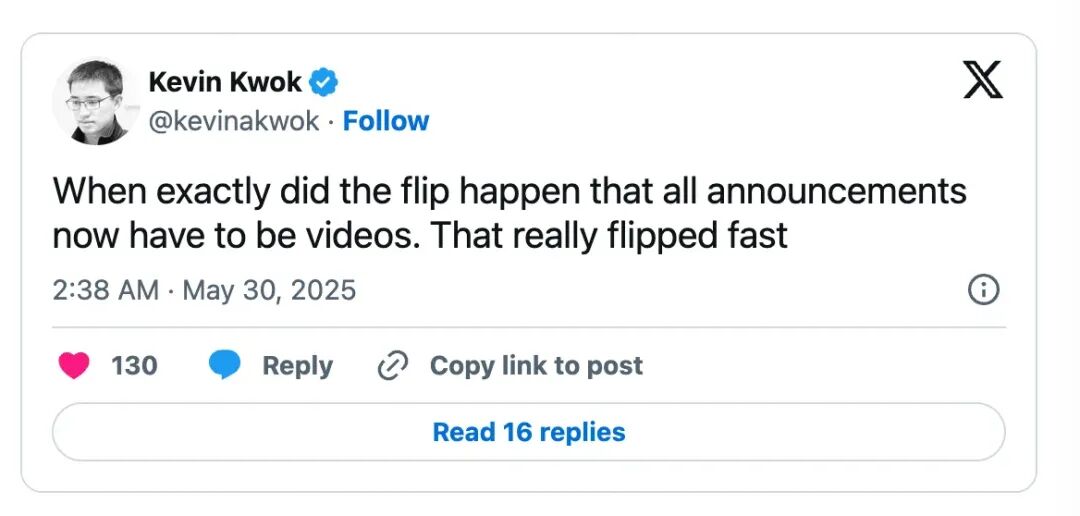
Take the AI agent product Manus[27]. They released a 4-minute demo video directly on X and YouTube. The video sparked interest in the product's capabilities and racked up over 500,000 views.
One fundamental shift I'm seeing is startups hiring builders as heads of growth. Your growth lead should create quirky demos with viral potential;
Think of them as your chief "agitator" officer.
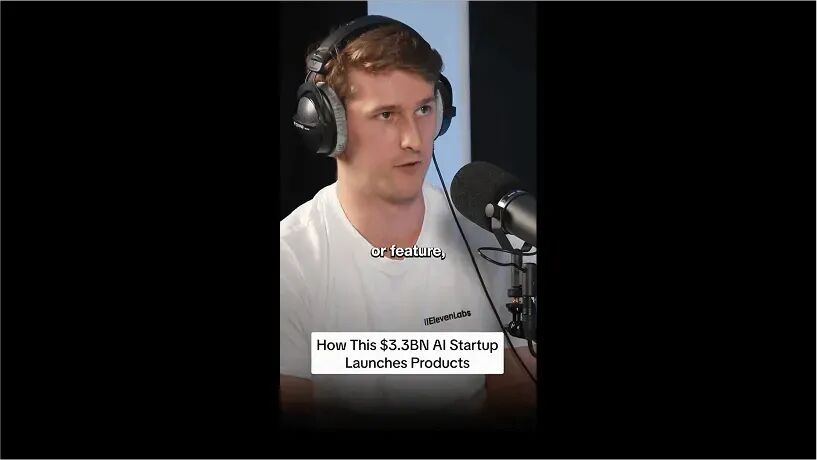
One example is ElevenLabs's head of growth Luke Harries[28].
He's not just running marketing campaigns — he's building interactive, distinctive demos, like constructing an MCP server for WhatsApp.
Luke Harries of ElevenLabs, via 20VC
Another archetype of this is Ben Lang[29], who did this successfully as one of Notion's earliest employees.
Long before the product went mainstream, Ben started creating fun experiments, showcasing design capabilities, and crafting niche demos that helped build community and shape Notion's identity.
Now he's doing the same thing at Cursor[30], where he builds in public and turns product launches into shareable content.
6. Build in Public
Growth metrics used to be strictly confidential, quietly disclosed only to select investors.
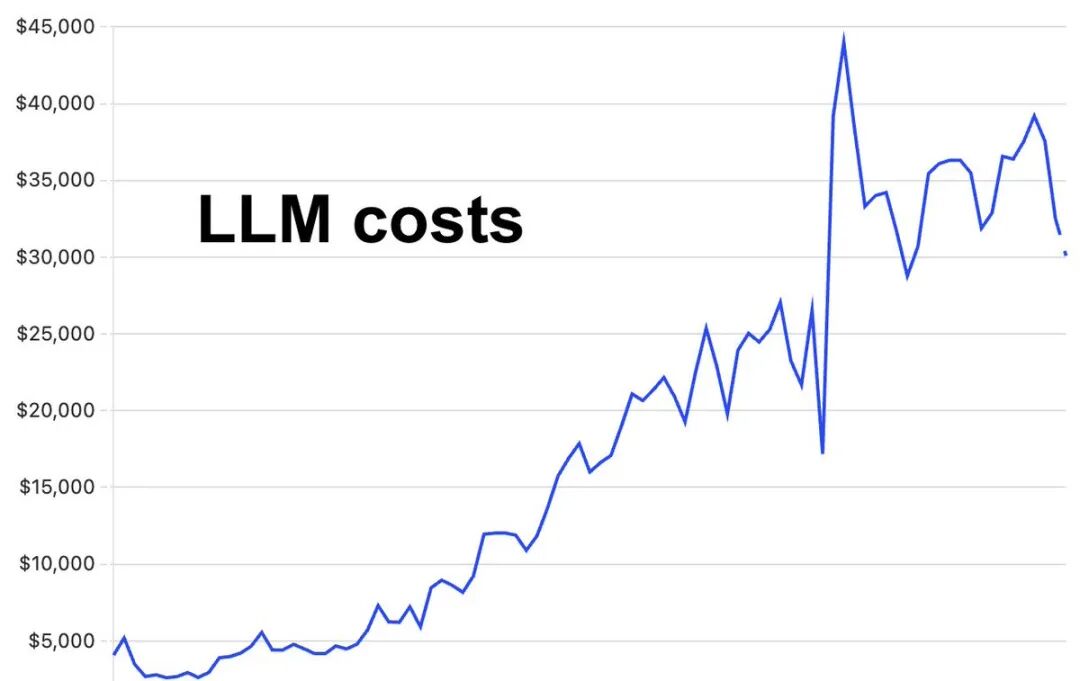
Recently, we're seeing more and more AI companies build in public, openly sharing their ARR, momentum, and product milestones.
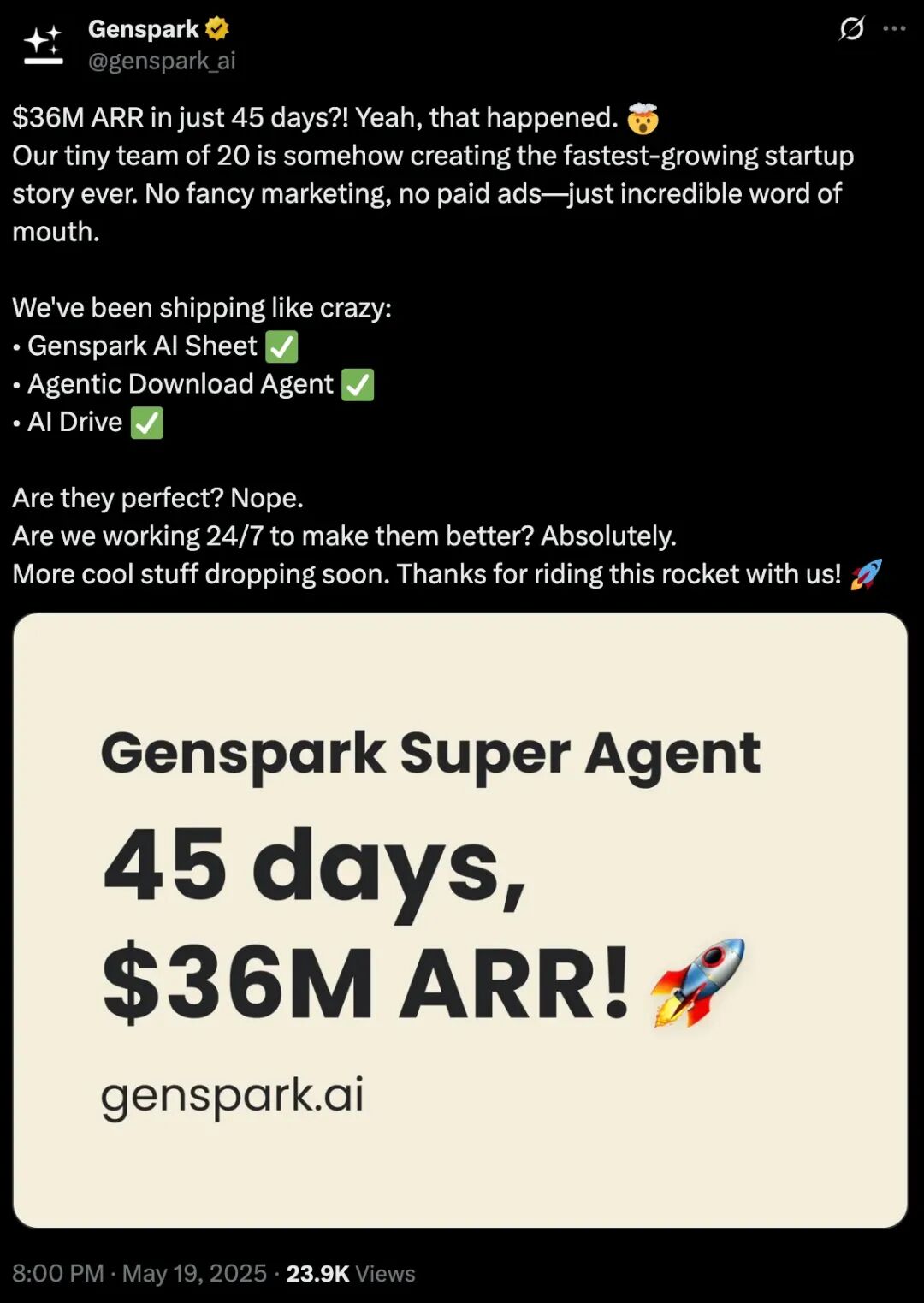
Companies like Lovable[31], Bolt[32], Krea[33] have embraced this approach, regularly posting everything from revenue benchmarks to daily active users to failed experiments.
This transparency makes people feel like they're part of the building process, not just bystanders.
It also sparks competition.
When one company announces a major milestone or new feature, it often provokes competitors to go public too.
This is healthy rivalry that can ultimately create greater momentum for all participants.


References
[1] Andrew Chen: https://x.com/andrewchen
[2] sucks right now: https://andrewchen.substack.com/p/every-marketing-channel-sucks-right
[3] Perplexity: https://www.perplexity.ai/
[4] Lovable: https://lovable.dev/
[5] Replit: https://replit.com/
[6] ElevenLabs: https://elevenlabs.io/
[7] global hackathon: https://x.com/kirbyman01/status/1894120918462730713
[8] Gibberlink: https://www.youtube.com/watch?v=EtNagNezo8w
[9] vibecoder: https://a16z.com/podcast/whos-coding-now-ai-and-the-future-of-software-development/
[10] $1 million prize pool: https://x.com/boltdotnew/status/1902064573261476001
[11] Genspark: https://www.genspark.ai/
[12] social "challenges": https://x.com/genspark_ai/status/1910631428045291655
[13] coalition launches: https://x.com/boltdotnew/status/1928095590610784494
[14] Captions: https://www.captions.ai/
[15] Runway: https://runwayml.com/
[16] ElevenLabs: https://elevenlabs.io/
[17] Hedra: https://www.hedra.com/
[18] Bolt: https://bolt.new/
[19] Black Forest Labs: https://bfl.ai/models/flux-kontext
[20] launched: https://x.com/bfl_ml/status/1928143019355558083
[21] Nick St. Pierre: https://x.com/nickfloats
[22] Luma: https://lumalabs.ai/
[23] followed: https://x.com/LumaLabsAI/status/1853834672494535057
[24] Min Choi: https://x.com/minchoi/status/1926658961706500347
[25] PJ Ace: https://x.com/PJaccetturo/status/1925464847900352590
[26] cult following: https://x.com/lulumeservey/status/1922277064045998189
[27] Manus: https://www.youtube.com/watch?v=K27diMbCsuw
[28] Luke Harries: https://x.com/lukeharries_
[29] Ben Lang: https://x.com/benln/
[30] Cursor: https://x.com/benln/status/1919755610523881891
[31] Lovable: https://lovable.dev/
[32] Bolt: https://bolt.new/
[33] Krea: https://www.krea.ai/