After Hands-On Testing of China's First Real Estate AI Agent, CRIC Deep Intelligence: We Found Every Vertical Industry Deserves to Be Redefined by AI Agent

AI Agents + Specialized Databases: A Powerful Partnership for Maximum Impact
AI Agent + Specialized Databases: A Powerful Combination That Multiplies Results
 👦🏻 Author: Jingshan
🥷 Editor: Koji
🧑🎨 Layout: NCon

"Every vertical domain deserves to be redefined by AI Agent, at least once."
We've recently noticed a new trend in the Agent space:
Whether in design, finance, or content creation, AI Agents focused on vertical scenarios are challenging general-purpose large language models on all fronts.
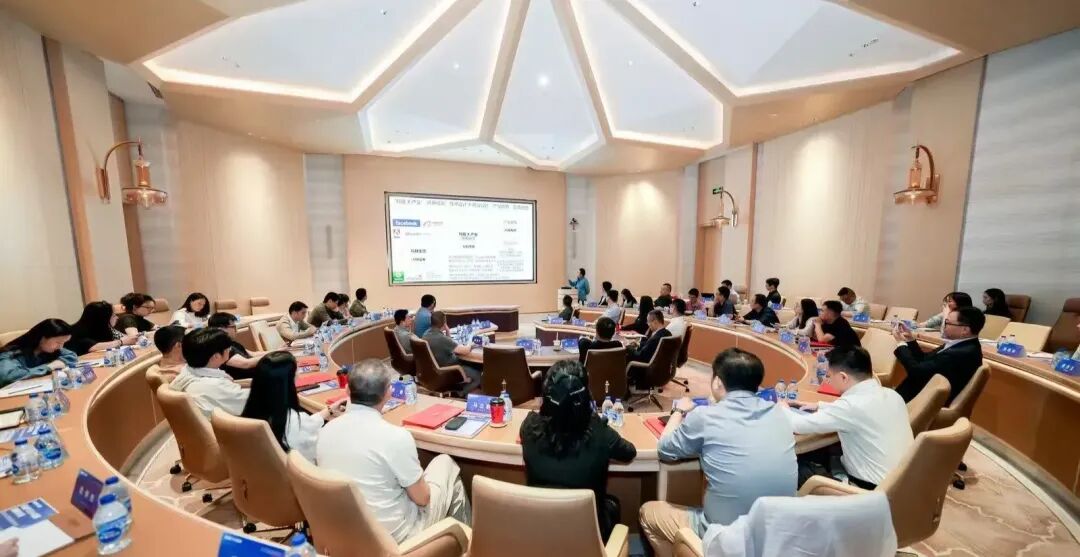
Not long ago, the Crossing team was invited to the launch event for CRIC Deep Intelligence — the first AI Agent for the real estate industry, billed as "the second brain for real estate professionals."
The real estate industry is practically tailor-made with "scenario gaps" that AI Agents can exploit: clear use cases, massive pools of specialized data, and dynamic market demands.
These "gaps" make real estate a proving ground for testing the "deliverability" of vertical AI Agents.
We've discovered new possibilities for AI Agents in the real estate vertical — an evolution from "simple Chatbot" to "Intern capable of independently delivering most reports."
What Is CRIC Deep Intelligence?
Simply put, CRIC Deep Intelligence is an AI Agent focused on the vertical domain of real estate. Its standout feature is the integration of extensive professional databases built up within the industry.
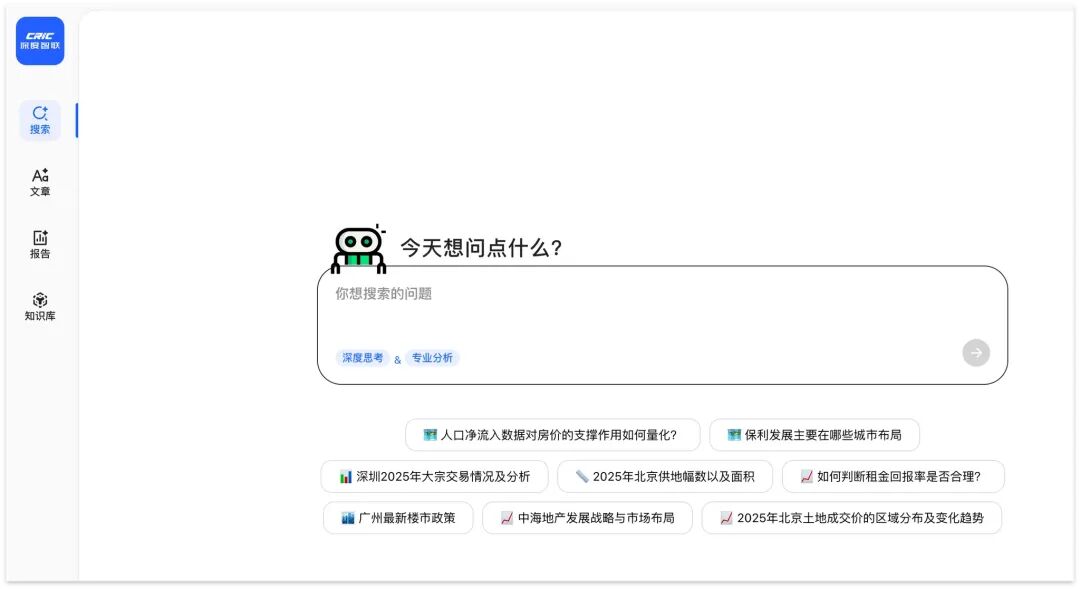
CRIC Deep Intelligence's homepage is clean and straightforward, without excessive or complex feature modules.
Currently, it offers three core functions: Search, Articles, and Reports, plus a knowledge base feature — something now standard among general AI Agents.
Behind this minimalist interface, CRIC Deep Intelligence integrates decades of accumulated industry data and professional knowledge.
Its Use Cases Are Very "Narrow"
CRIC Deep Intelligence targets a use case that is "narrow enough" — because it focuses exclusively on real estate.
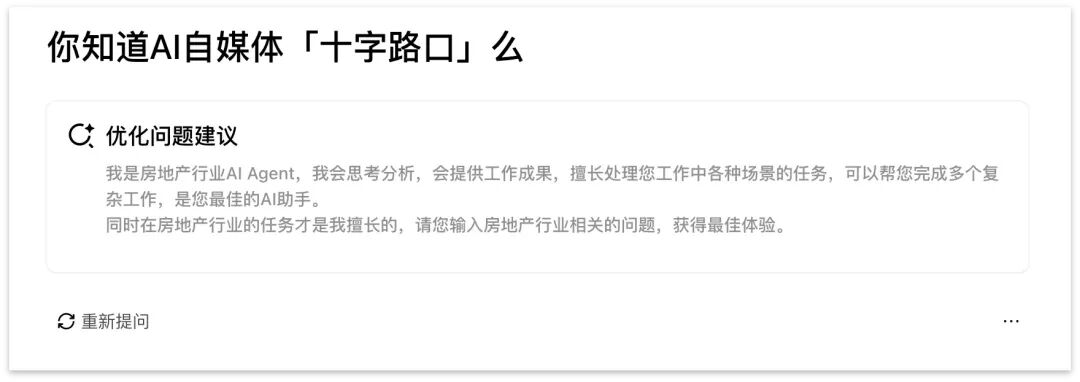
For example, when I used the "Search" function to ask it a question from another industry, its response was simply: Please enter a question related to the real estate industry.
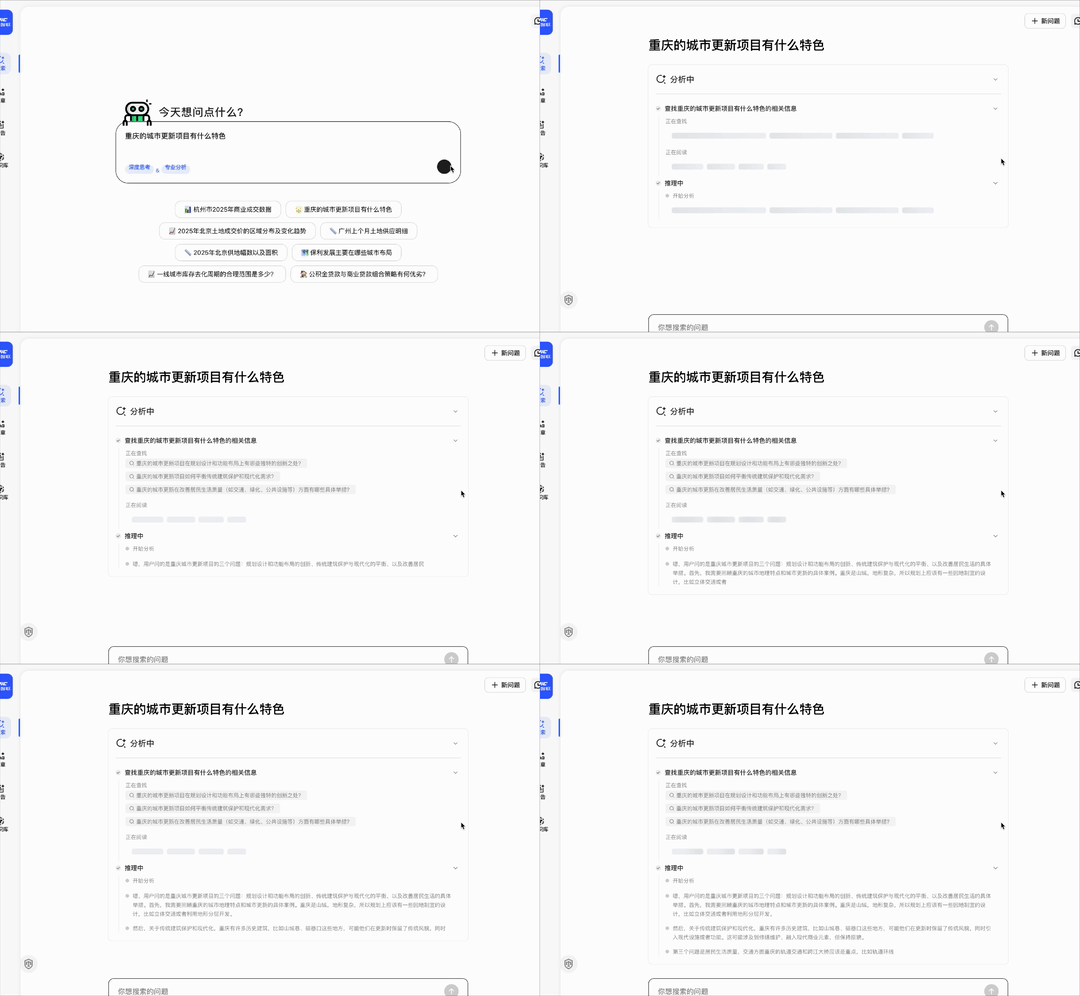
But if you select a real estate-related question, it immediately demonstrates professional competence:
It Goes Very "Deep" in Its Vertical Domain
Despite its narrow "application surface," its performance in this sufficiently deep vertical domain is highly professional.
Its precise and specialized database is what fundamentally differentiates it from general-purpose large language model products.
CRIC Deep Intelligence chose not to go "broader," but to go "deeper."
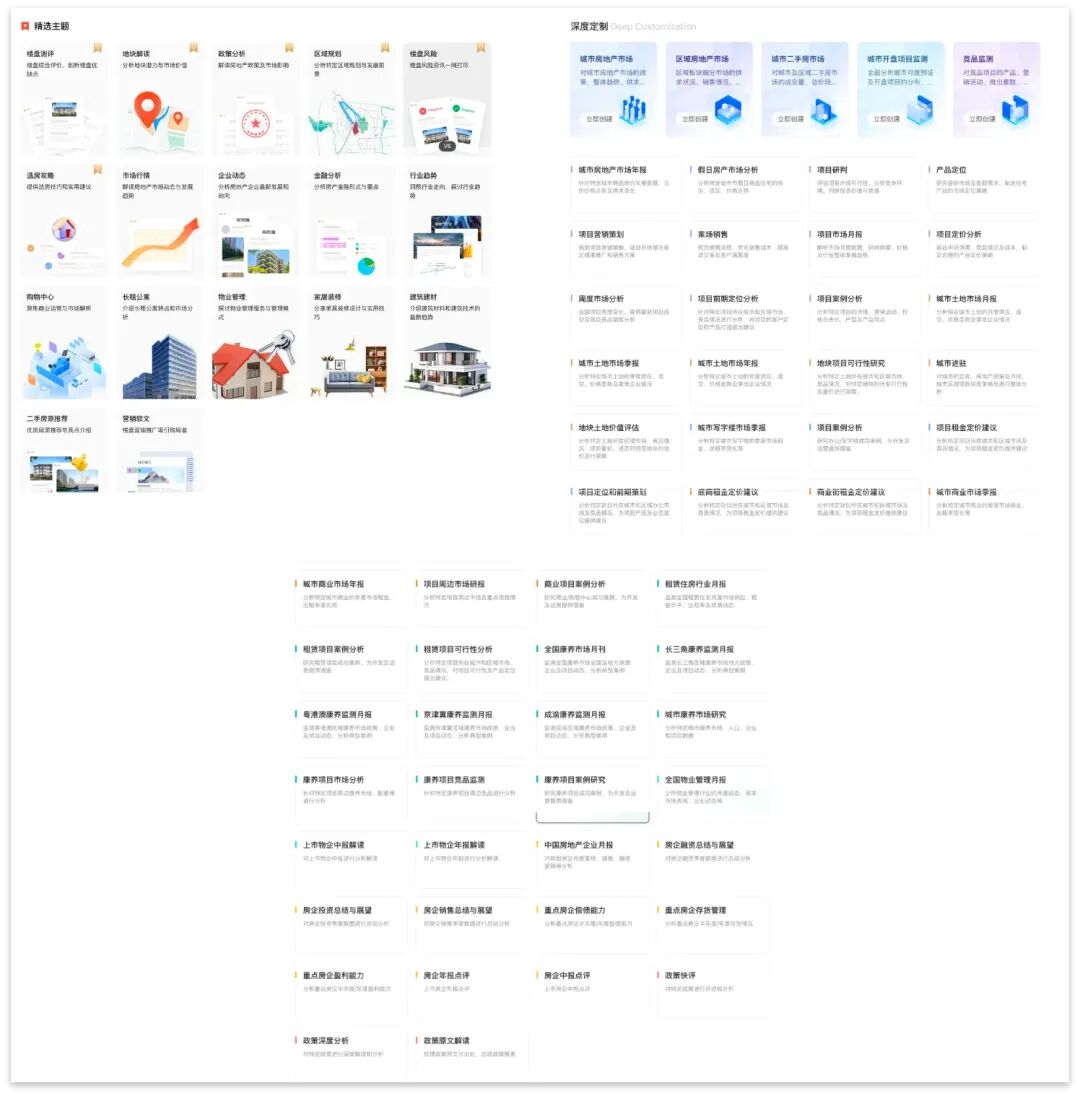
For instance, the topics covered by its "Articles" and "Reports" functions number nearly a hundred, by our rough count:
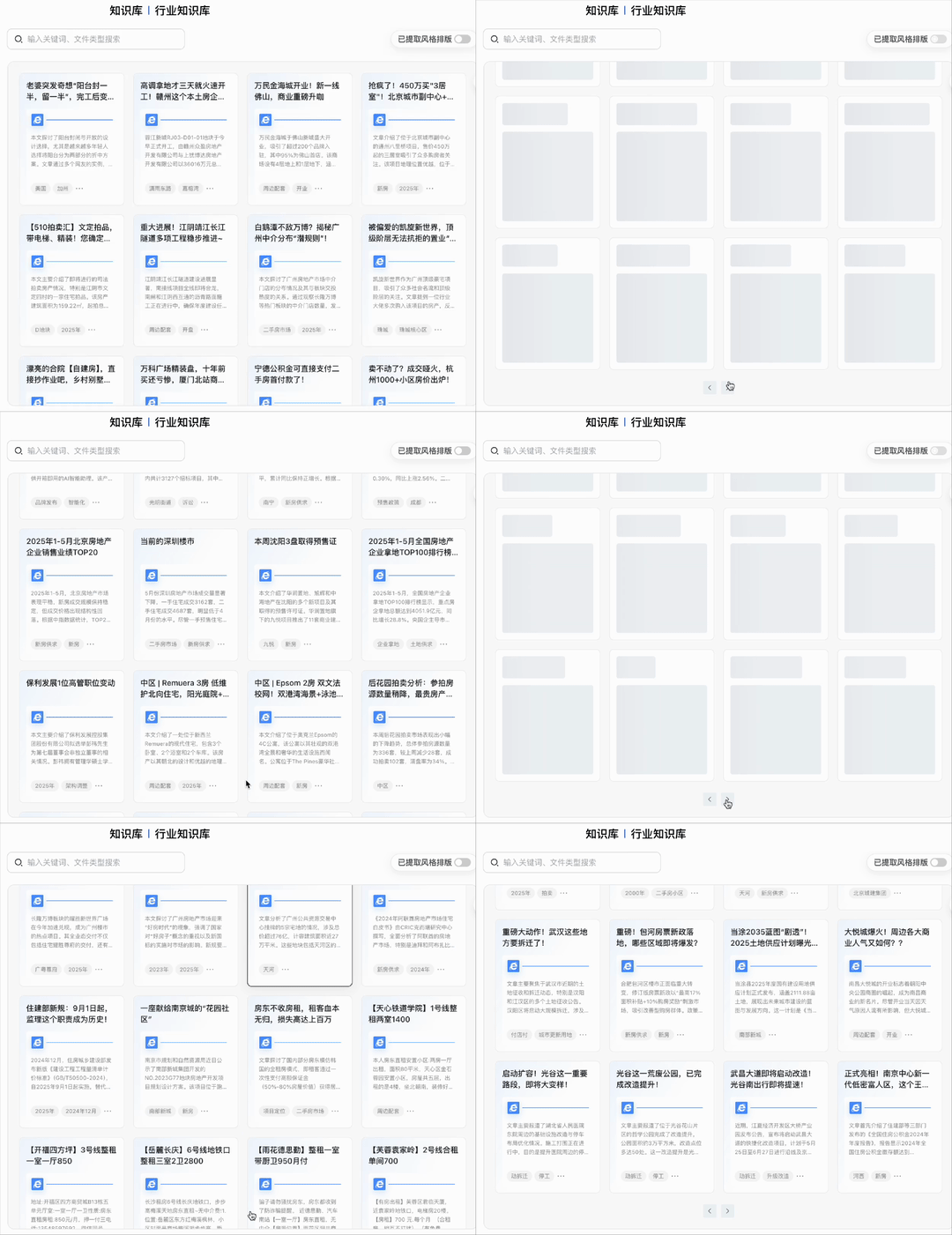
Within CRIC Deep Intelligence's embedded "Knowledge Base" function, it has collected an enormous number of "industry knowledge bases."
I made a GIF so you can get an intuitive sense — you literally can't scroll to the end:
🚥
In a clear and well-defined vertical scenario like real estate, we found that CRIC Deep Intelligence has already become the industry's "second brain," successfully playing the role of an intern with professional competence.
This review from Crossing focuses on how professional and vertical CRIC Deep Intelligence really is, verifying what was claimed at the launch event:
CRIC Deep Intelligence is a vertical product that is 100 meters wide and 2 kilometers deep.
1) The Professionalism of Basic "Search"
CRIC Deep Intelligence's "Search" function provides users with fundamental information retrieval support for the real estate industry.
For example, I gave the Agent a simple prompt:
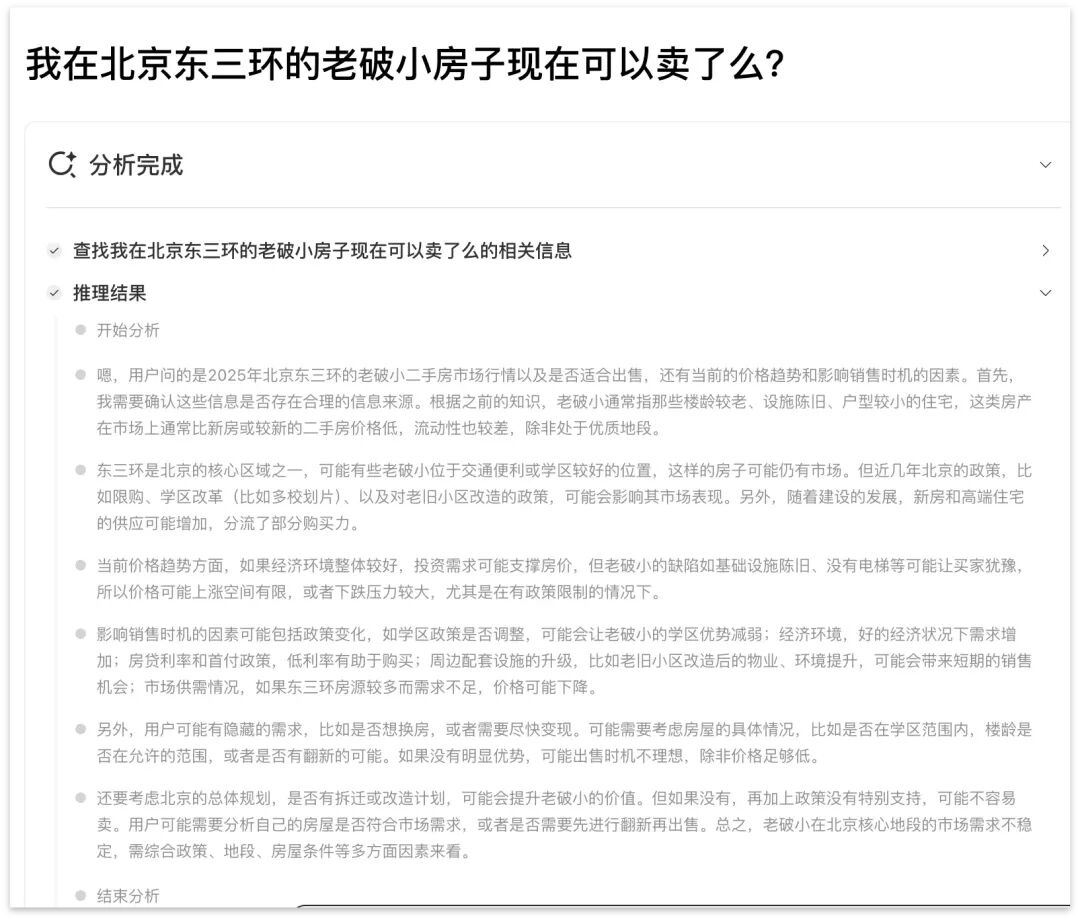
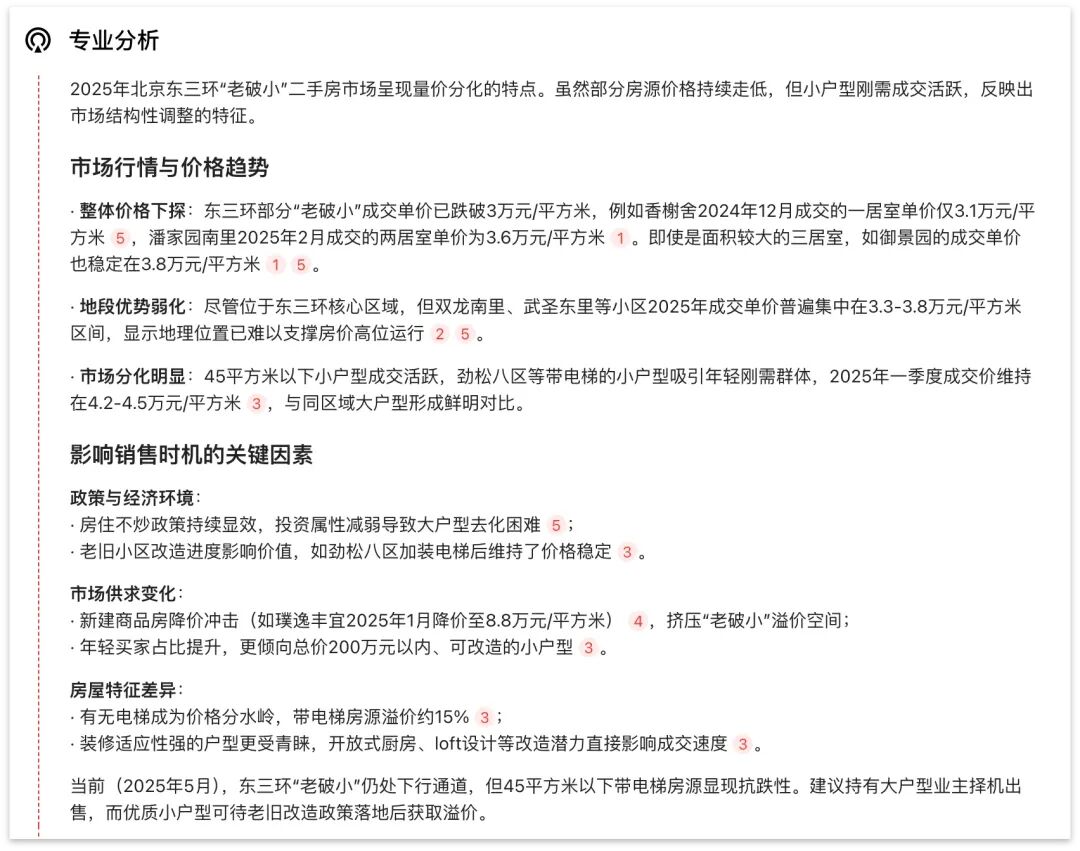
Should I sell my old, small apartment on Beijing's East Third Ring Road now?
The AI begins reasoning based on the user's prompt — essentially a basic function of current large language models. But look closely, and you'll notice that the AI model embedded in CRIC Deep Intelligence clearly has a "professional flavor."
It comprehensively considers multiple influencing factors, such as the "underlying value" of an old, small apartment on the East Third Ring Road: school district reforms, purchase restrictions, infrastructure, and so on.
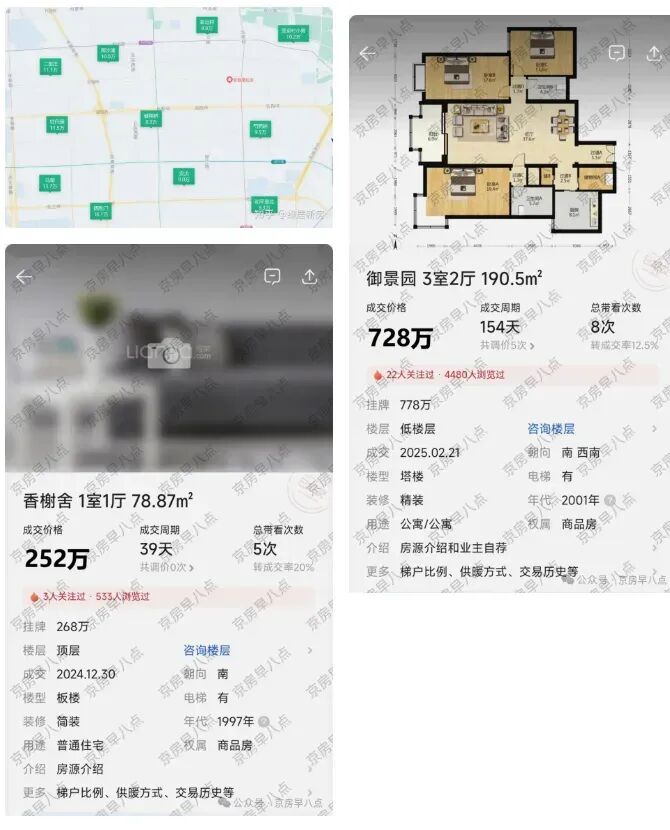
CRIC Deep Intelligence's search function draws from diverse information sources including professional articles from news sites, housing price maps, and floor plans.

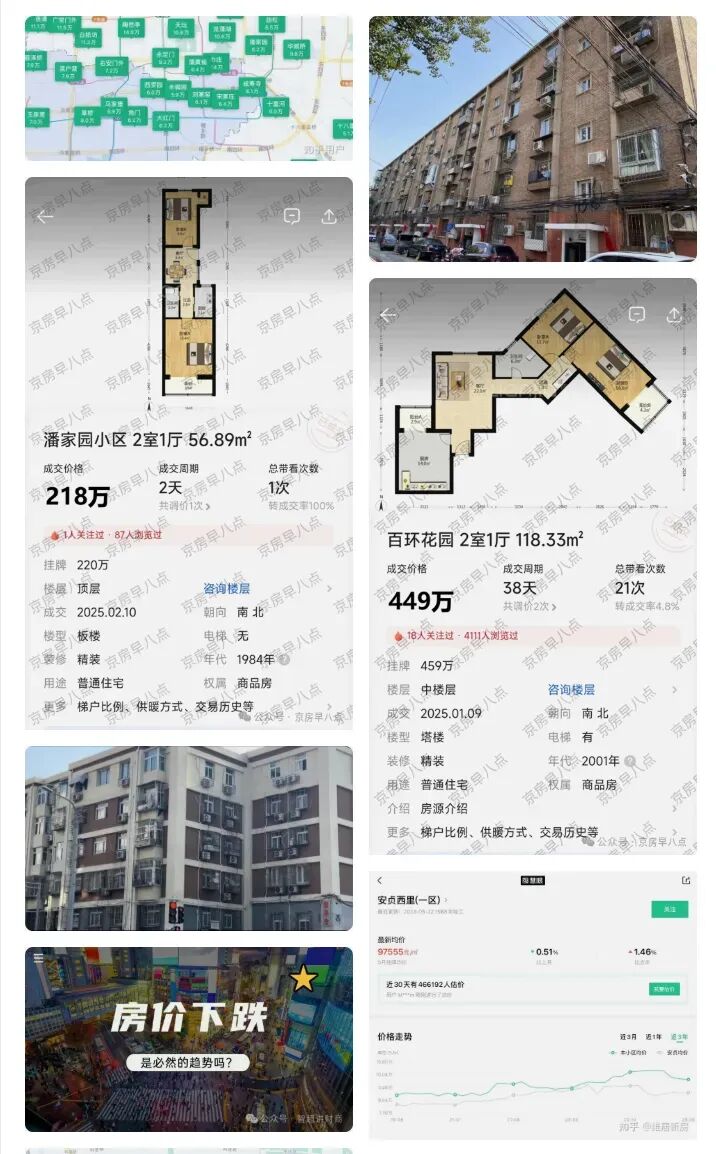
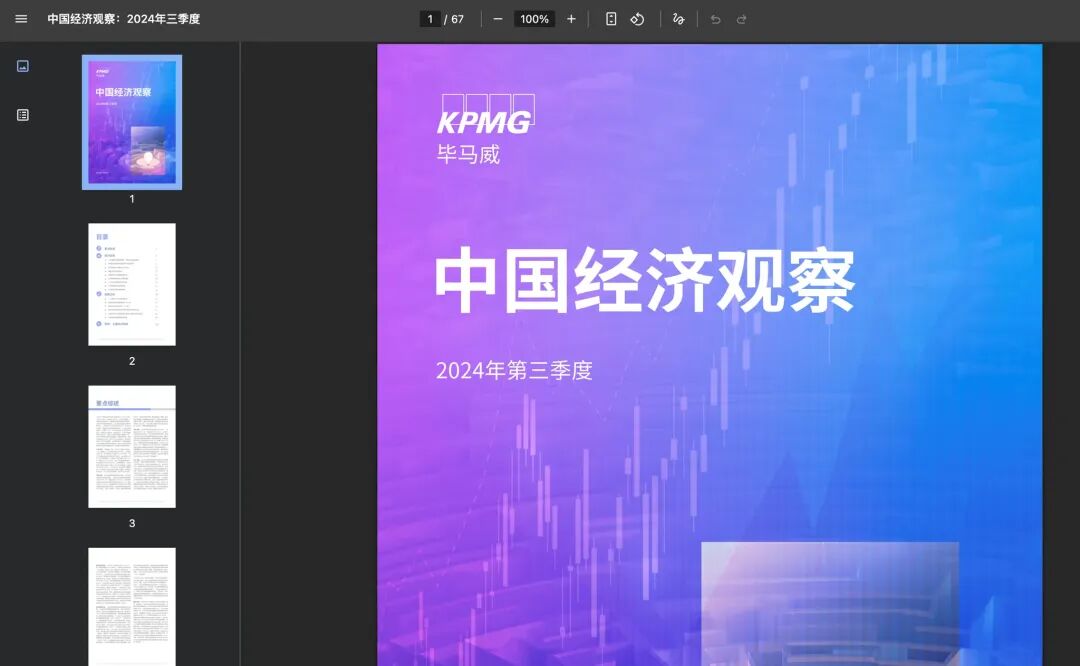
Beyond web content, CRIC Deep Intelligence also includes professional reports in PDF format.
In fact, I even found and opened a 67-page KPMG analysis report titled China Economic Outlook among the reference sources:
After organizing its information sources, CRIC Deep Intelligence delivers a concise analysis in response to the user's prompt, covering factors such as: market conditions, price trends, optimal timing for sale, and more.
Going a step further, I asked it to search for "regional distribution and trends of Beijing land transaction prices in 2025." Even in this most basic "Search" function, CRIC Deep Intelligence demonstrated remarkably "professional" delivery capability.
The first half of the professional analysis comes as a report with attached tables, with each conclusion accompanied by reference links:
The second half is a highly interactive statistical table covering dozens of dimensions of "Beijing Regional Land Data, January 2025–June 2025."
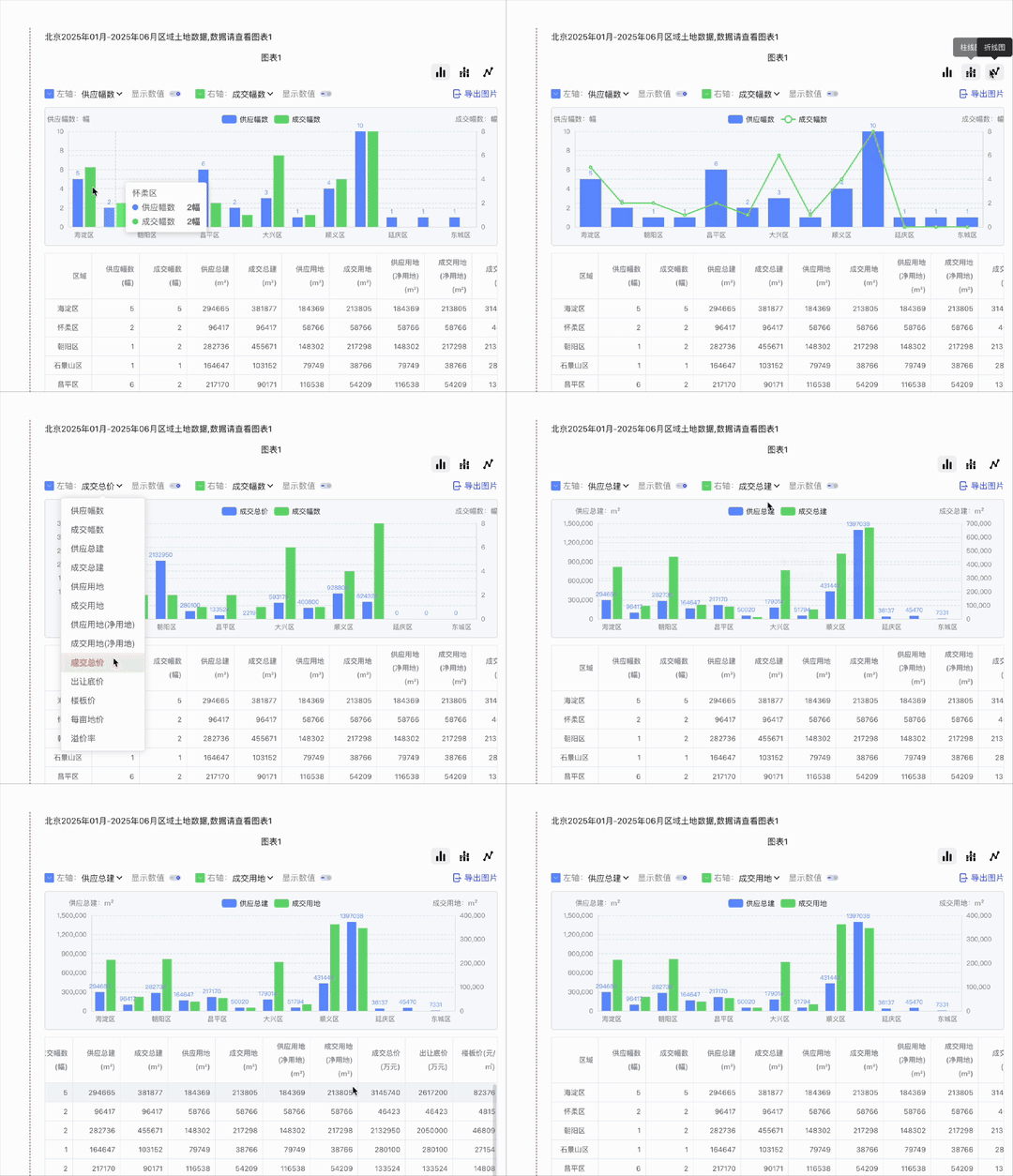
Even in this basic search function, we can glimpse CRIC Deep Intelligence's professionalism in the real estate vertical — covering web content, PDF reports, and integrated image information.
But this is merely a very small appetizer.
"Search" is the core capability of this Agent — the foundation for writing "articles" and "reports."
And these two functions are the real main course that demonstrates its "professional delivery capability."
2) A Professional Content "Intern" for Real Estate Professionals:
Next, let's see how the Agent writes professional articles for specific audiences.
Crossing co-launched an "AI Hacker House" in Shanghai's Caohejing, where we witnessed the birth of many excellent products firsthand, and sat on the floor discussing and exchanging ideas with a new generation of AI entrepreneurs.
For testing, we fabricated a scenario: suppose the Crossing team plans to expand, and we want to open a new office in Liangzhu, Hangzhou — an ideal utopia for young big-tech workers.
We hoped this would test whether CRIC Deep Intelligence could tailor a highly complete, engaging content article for users like us.
We threw every element we could think of into the prompt:
We are an AI media company called "Crossing." We have an "AI Hacker House" in Shanghai, mainly providing a space for a new generation of AI entrepreneurs worldwide to exchange ideas. Recently our team has expanded and we're opening a new office in Liangzhu, Hangzhou. Please provide a professional office selection guide. Team size is around 20 people. Needs to reflect our cutting-edge positioning, with comfortable geography and "cultural creative" characteristics.
Unlike other Agents, CRIC Deep Intelligence first automatically distilled my prompt into a concise theme:
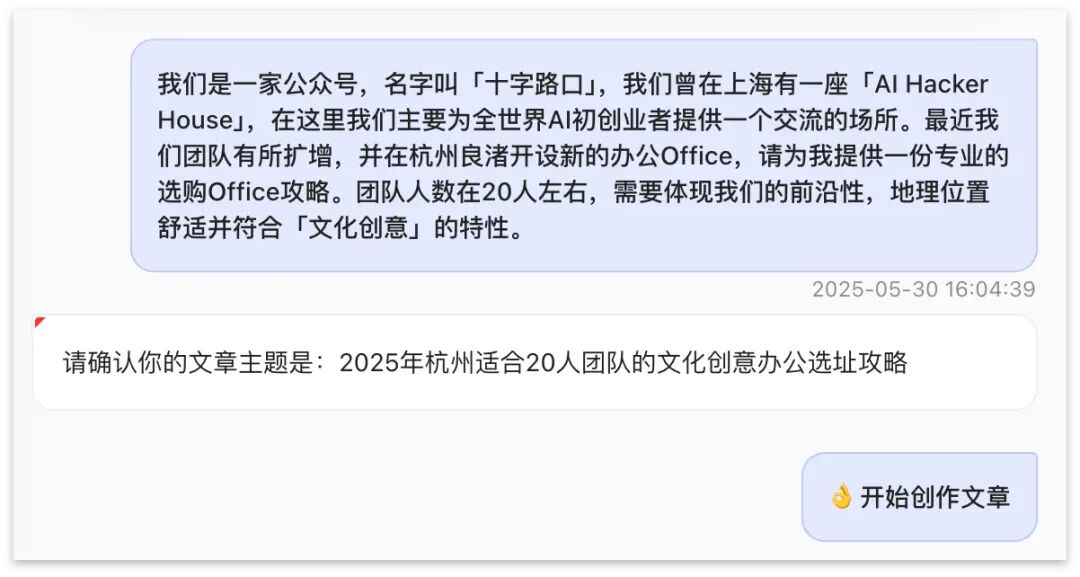
After I selected "Start Writing Article," CRIC Deep Intelligence began planning the workflow for the task:
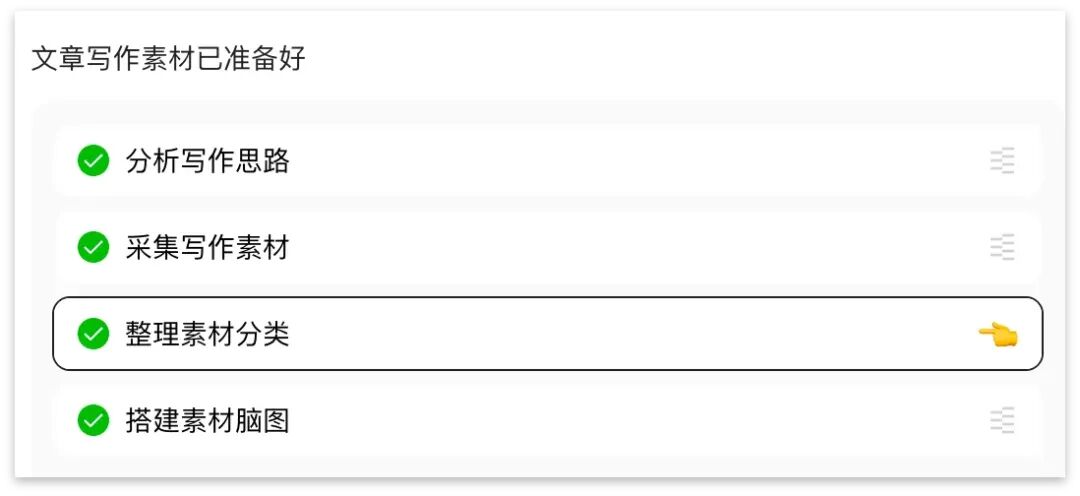
Although the article theme was compressed into a brief sentence, this doesn't mean the content in the prompt was ignored.
CRIC Deep Intelligence still deeply analyzed every detail, even identifying that our "AI Hacker House" itself has a tone of "exchange and innovation," and expanded its analysis along this line.
It not only considered basic location factors but also dug deep into interior elements: decoration style, office furniture, and more:
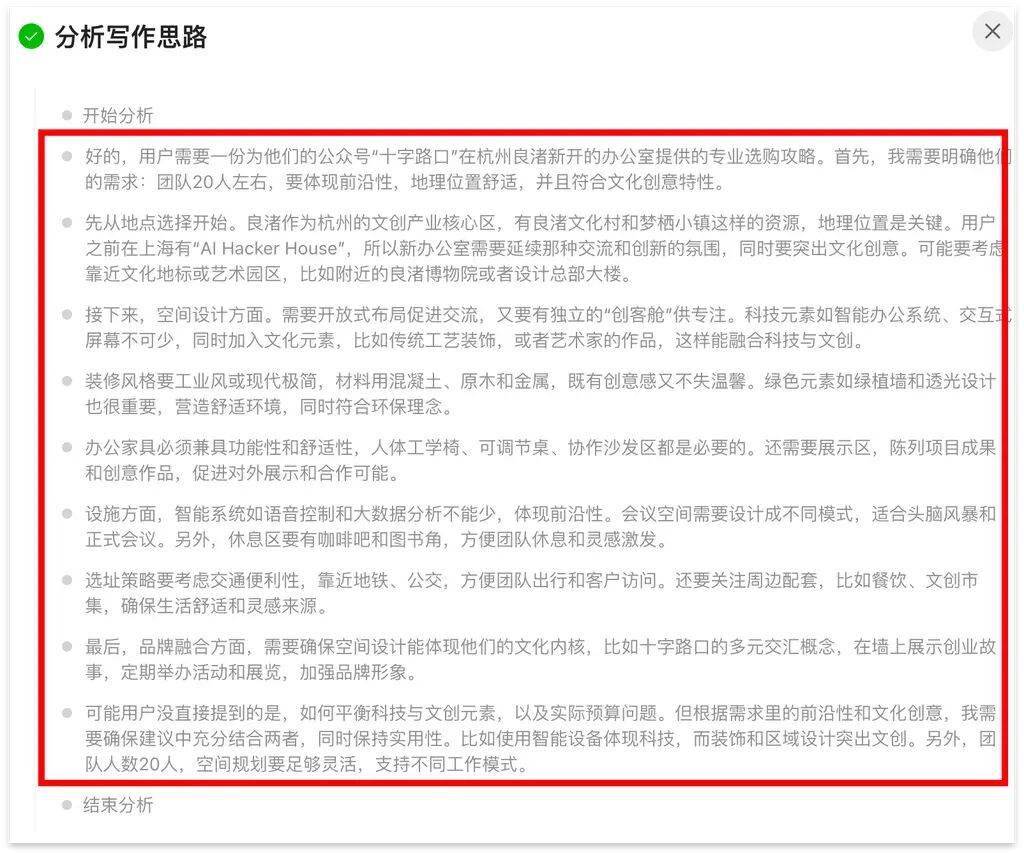
When the reasoning process concluded, CRIC Deep Intelligence's material collection scope exceeded my expectations.
Among the 28 online articles it gathered were sources from Zhihu, news sites, and multiple other platforms, plus 9 knowledge base documents it organized.
And when I clicked into these knowledge base documents, I discovered: CRIC Deep Intelligence has already integrated with WeChat, citing numerous professional real estate self-media articles.
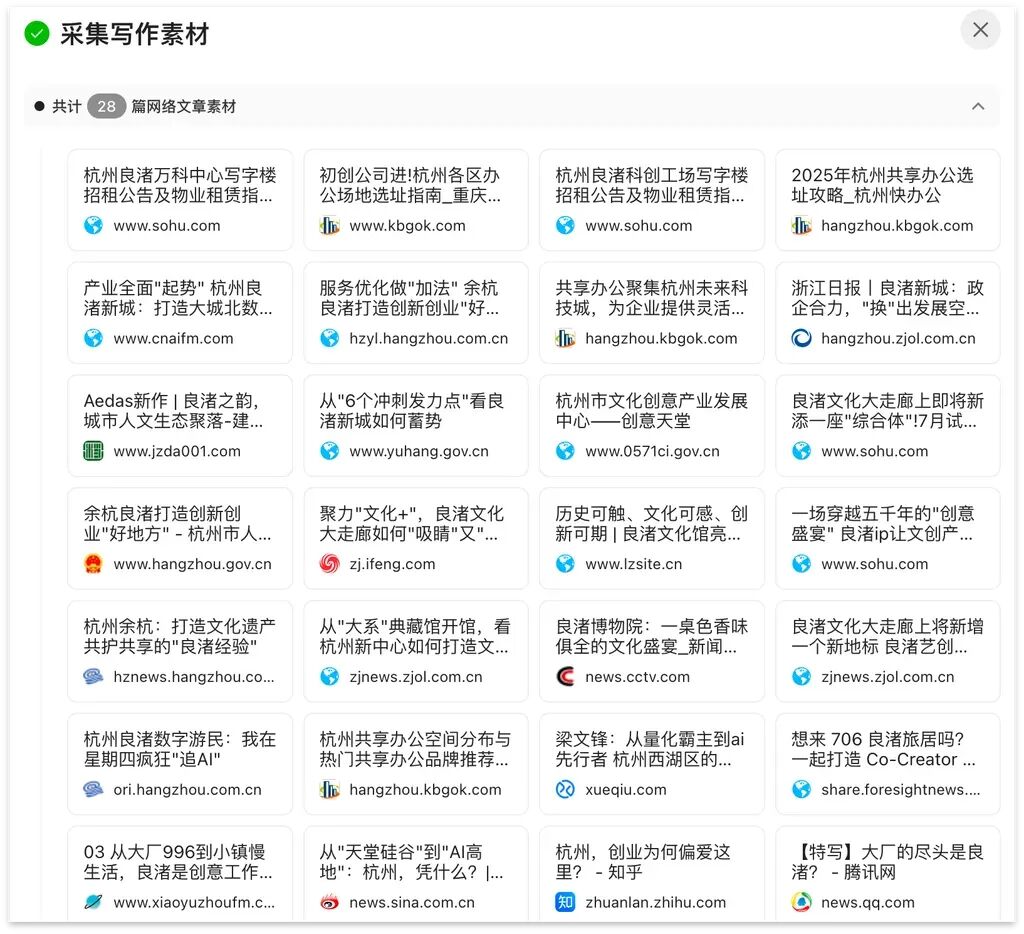
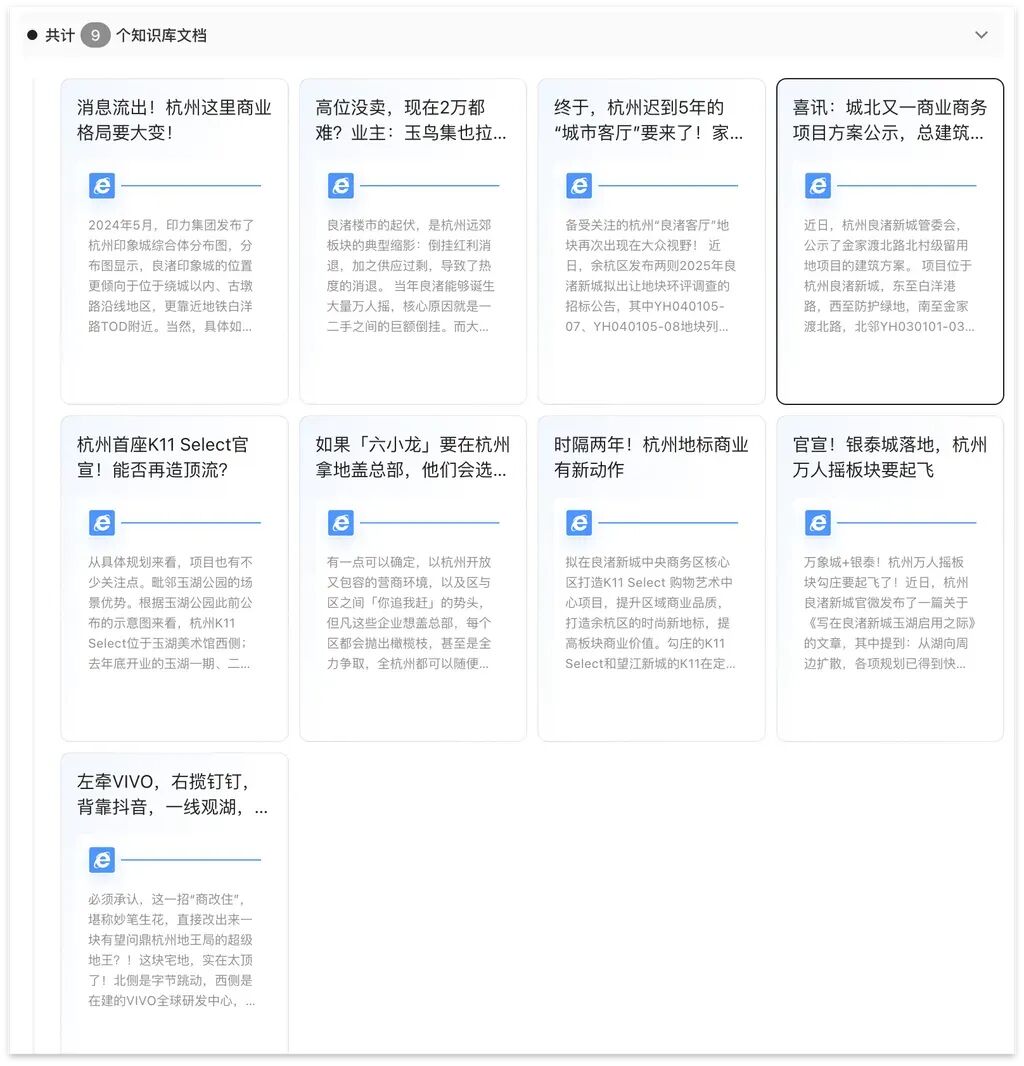
After collecting online materials, the Agent "opened the writing black box" and began autonomously organizing all materials, categorizing them by format: text materials, image materials, and table materials.
First, text materials — CRIC Deep Intelligence structurally organized content based on information gathered from various platforms:
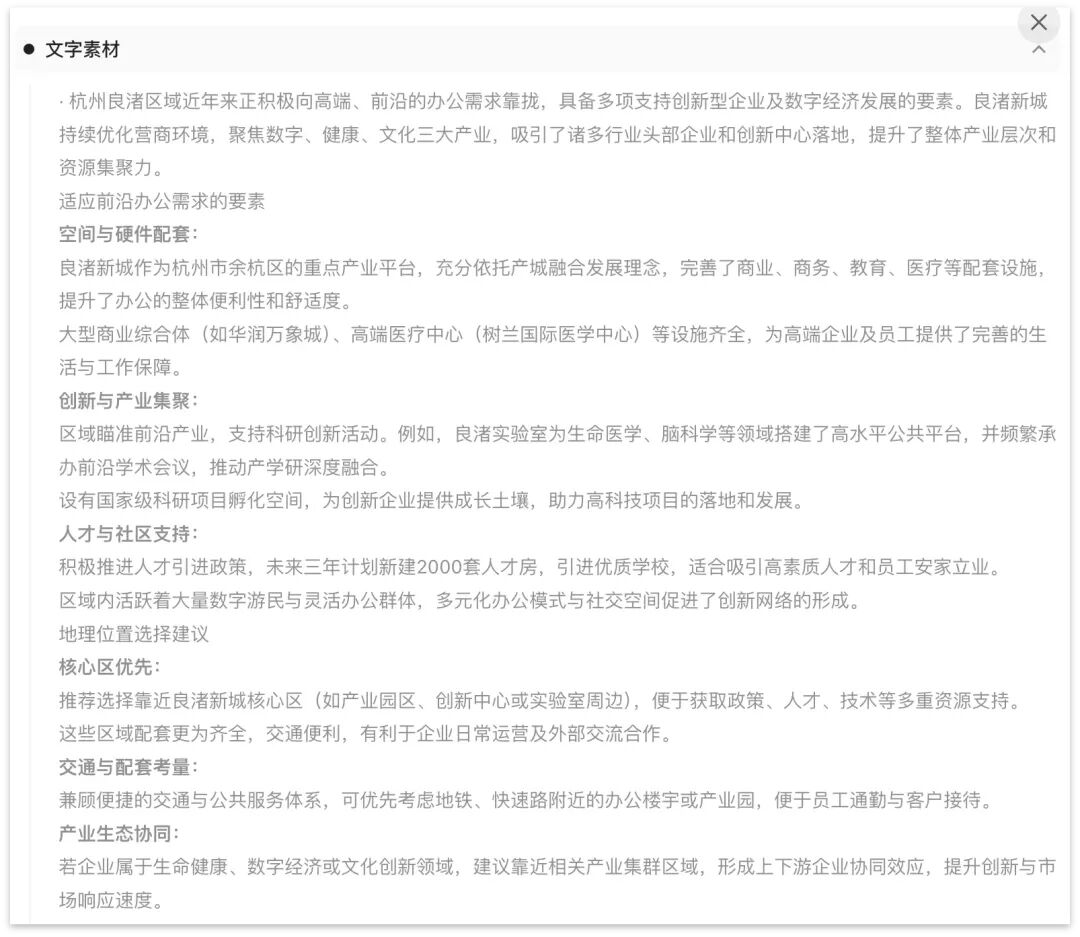
Next, image materials:
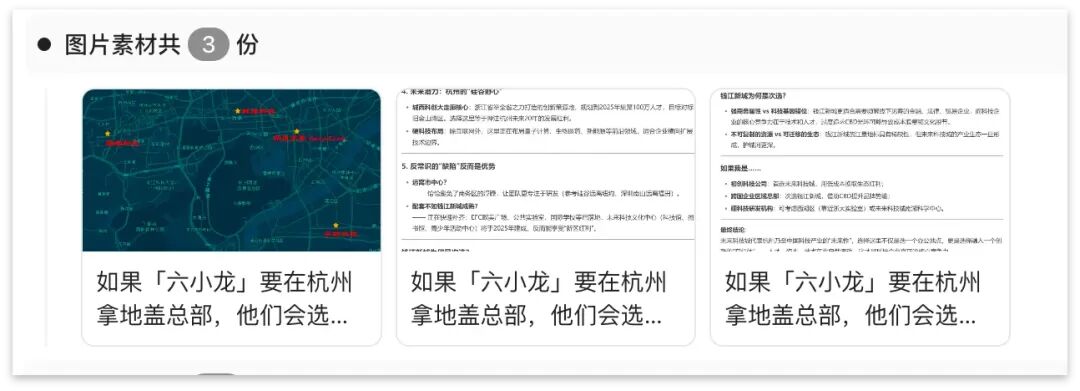
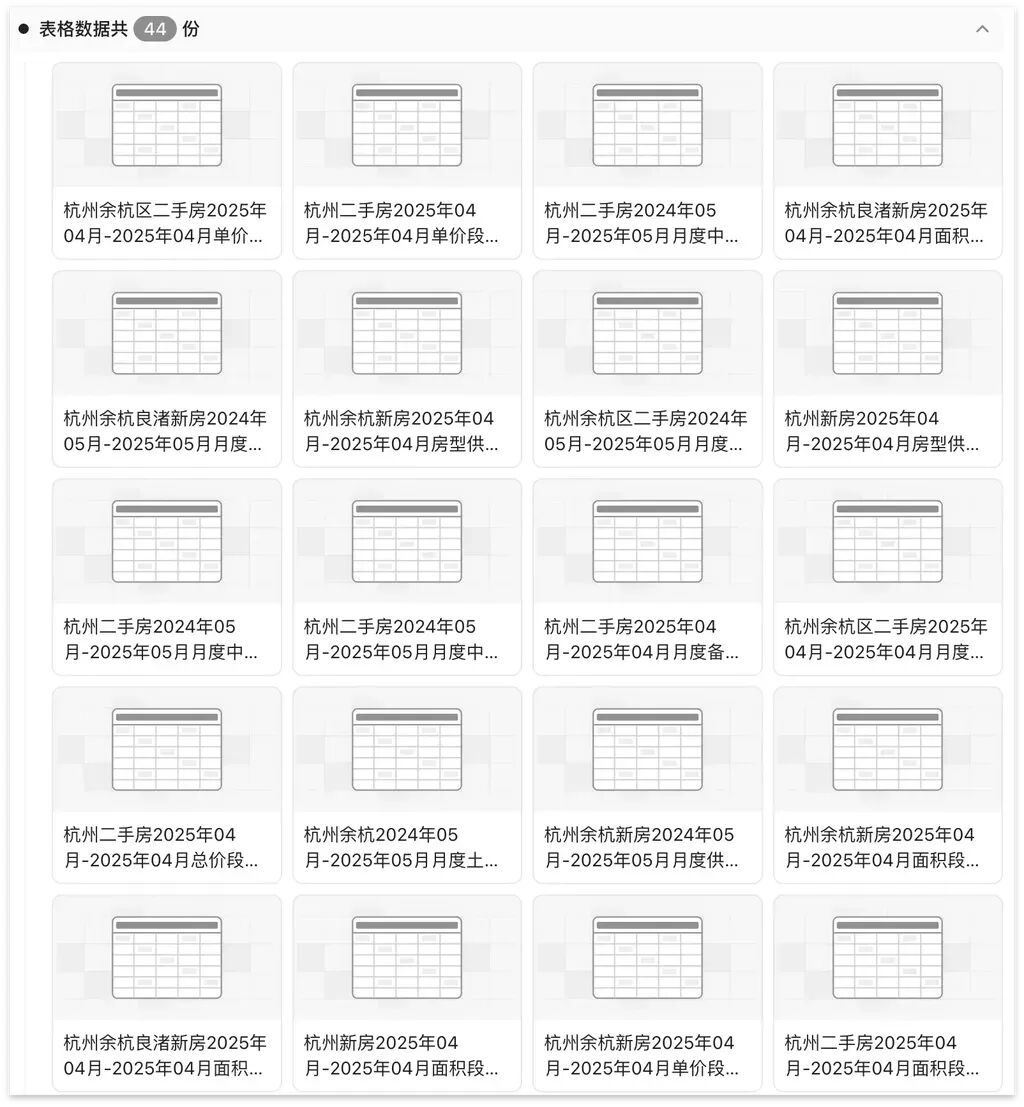
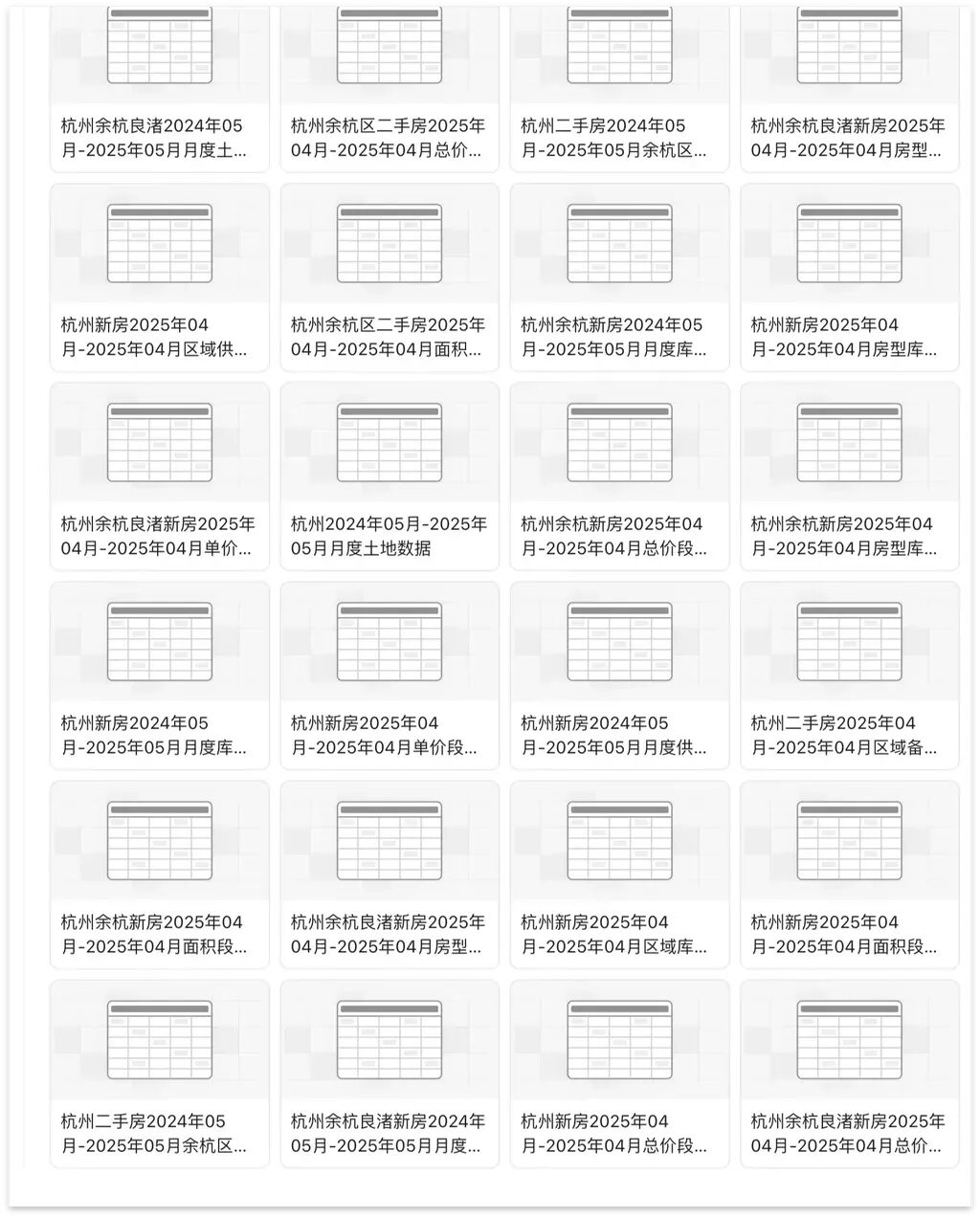
Finally, the very large dataset of professional tabular data — 44 documents in total.
These covered professional databases such as "Hangzhou Yuhang District Second-hand Housing Price Segment Registration Transaction Data, April 2025–April 2025."
I captured two long screenshots so you can intuitively feel how massive this database is:
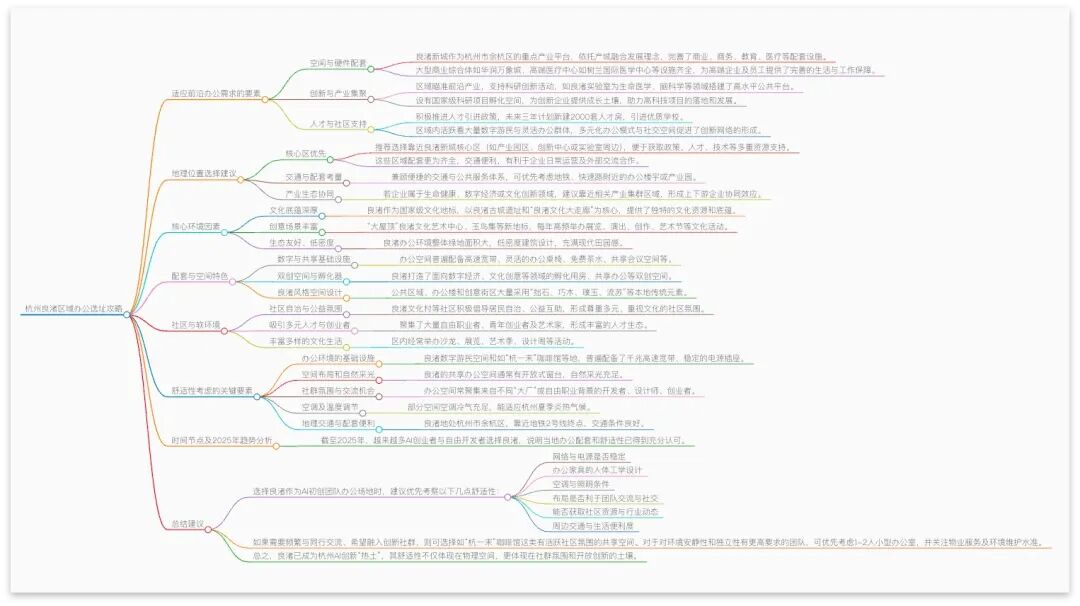
The final step in article material collection and organization was an autonomously built mind map:
Only after all this was complete did the Agent finally "remember it should start writing." At this point, it prompts the user whether to begin actual writing.
Its article writing workflow has three steps: draft writing, self-proofreading, and completion.
Given the substantial accumulation of professional materials beforehand, the content completion level in the draft stage was already very high.
After the draft was complete, the Agent autonomously proofread everything once more based on all details of the article writing — very rigorous!
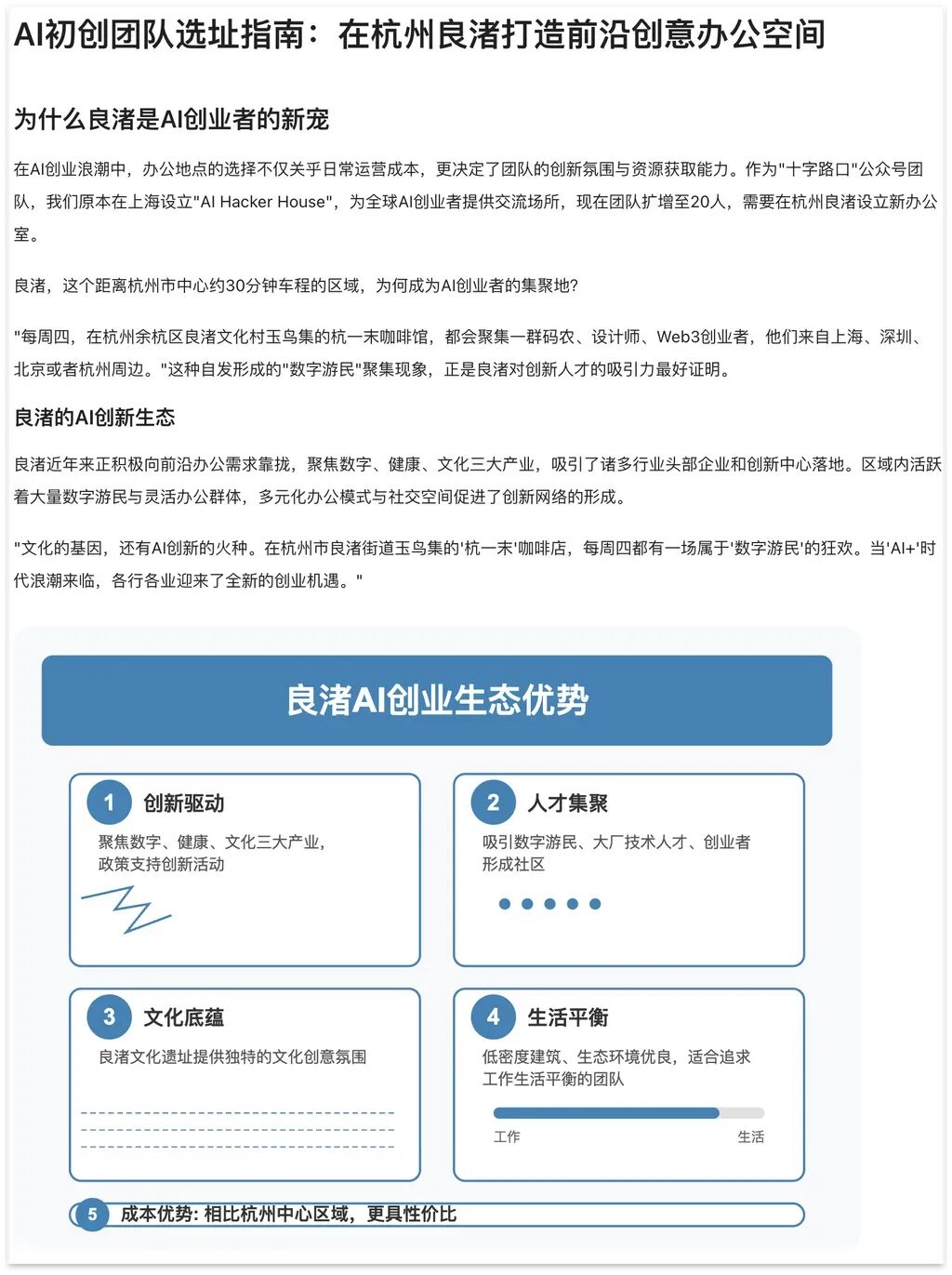 Draft
Draft
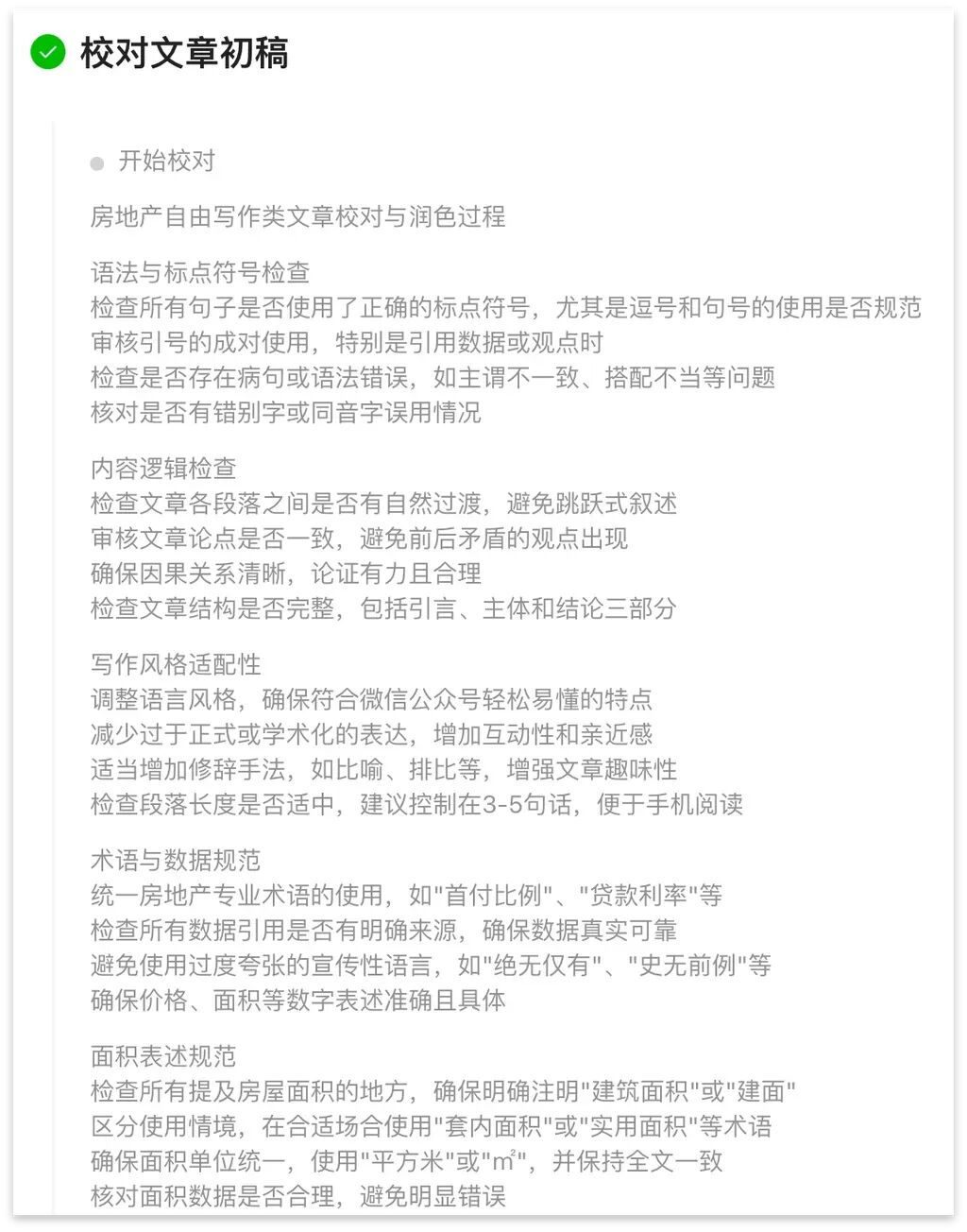 Proofreading
Finally, building on the draft and through continuous refinement, a structurally rigorous and content-rich article was completed, with abundant images and tables provided as needed:
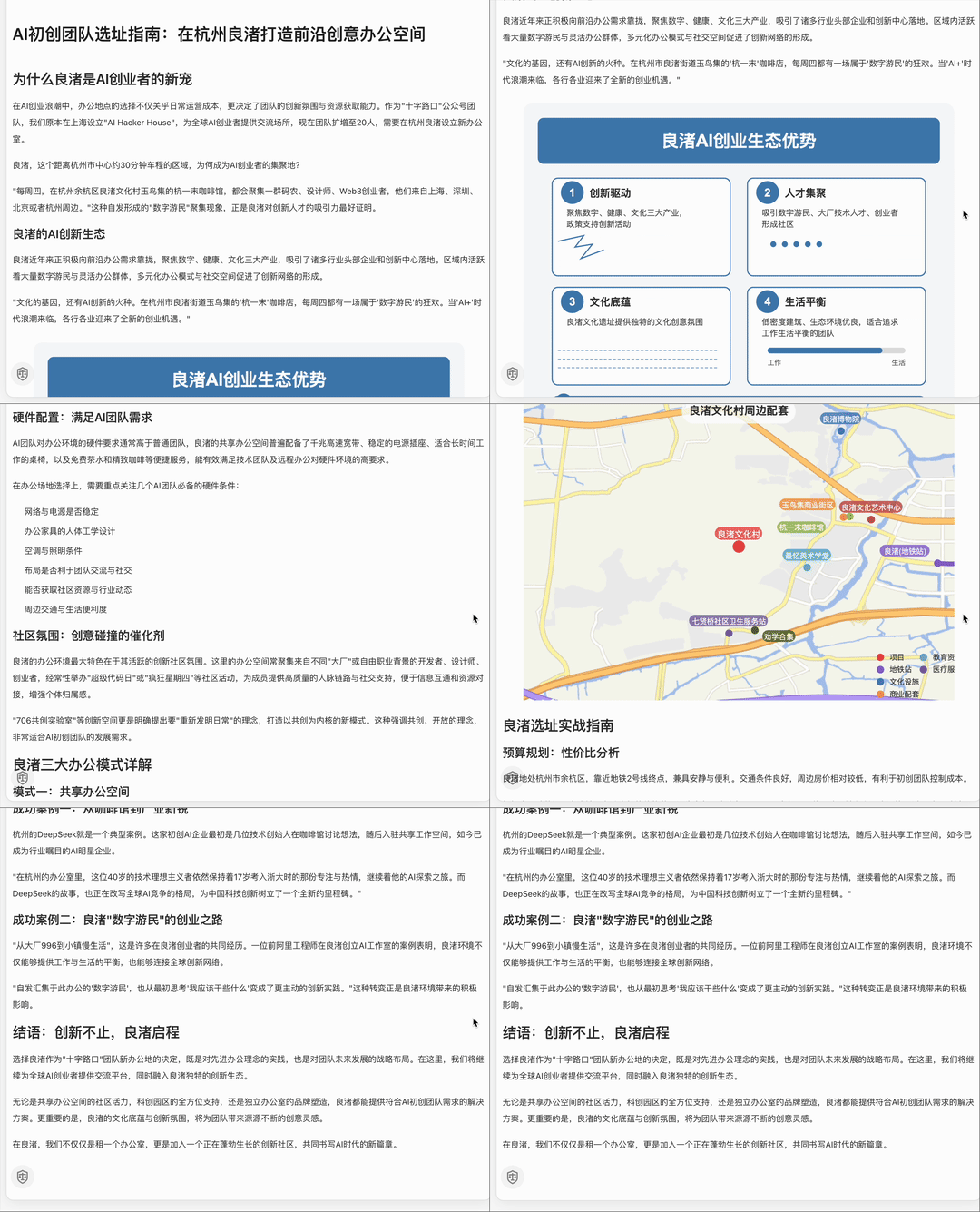
Most importantly, its delivery completion level is extremely high, completely eliminating the need for "unlimited rolling" (i.e., constantly adjusting and optimizing instructions to AI).
However, this current "complete version" article isn't quite the final draft yet. The Agent also embeds numerous AI tools and text editors for users to further optimize.
For example, in text editing, beyond traditional titles, fonts, and other conventional editing tools, all selected text content can be further enhanced with AI tools — similar to the approach of many current AI content creation platforms:
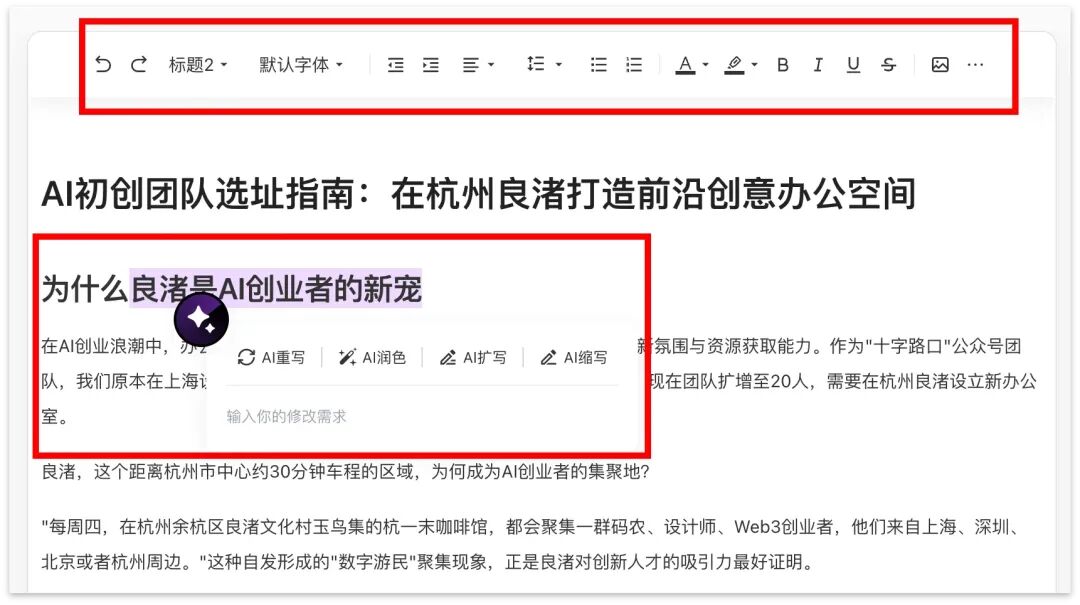
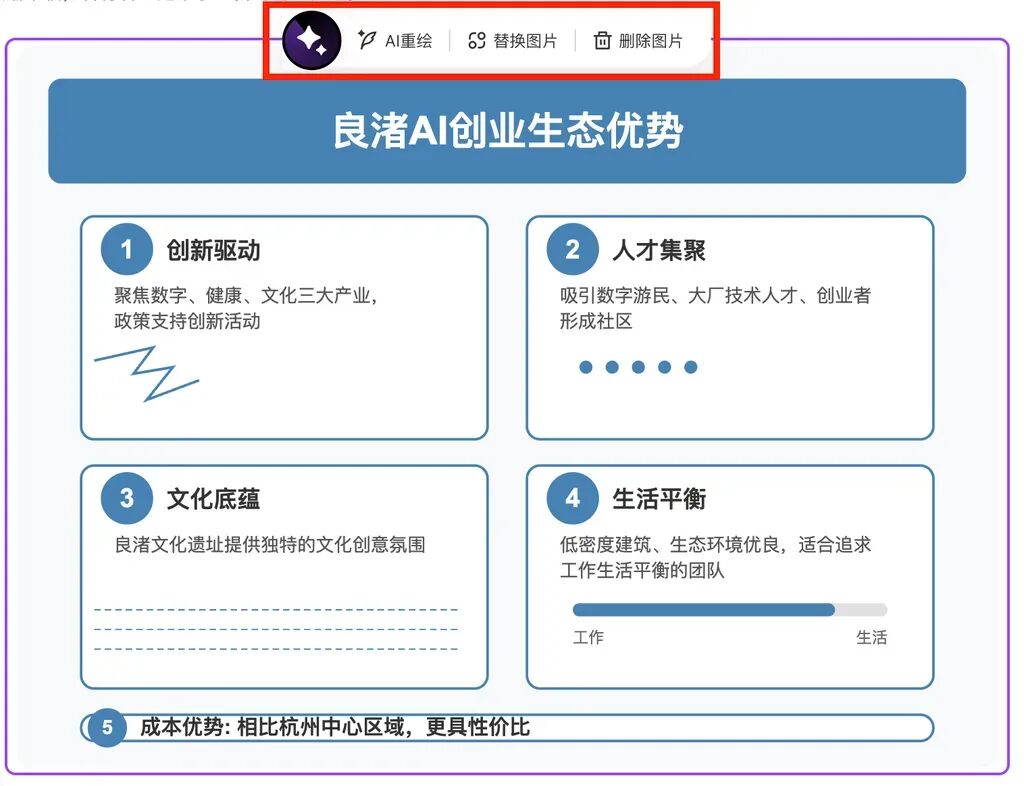
Beyond text editing, the Agent also inserts multiple images to achieve a polished visual presentation.
All of these images can be redrawn with AI, or replaced with images from the extensive collection of materials gathered earlier.
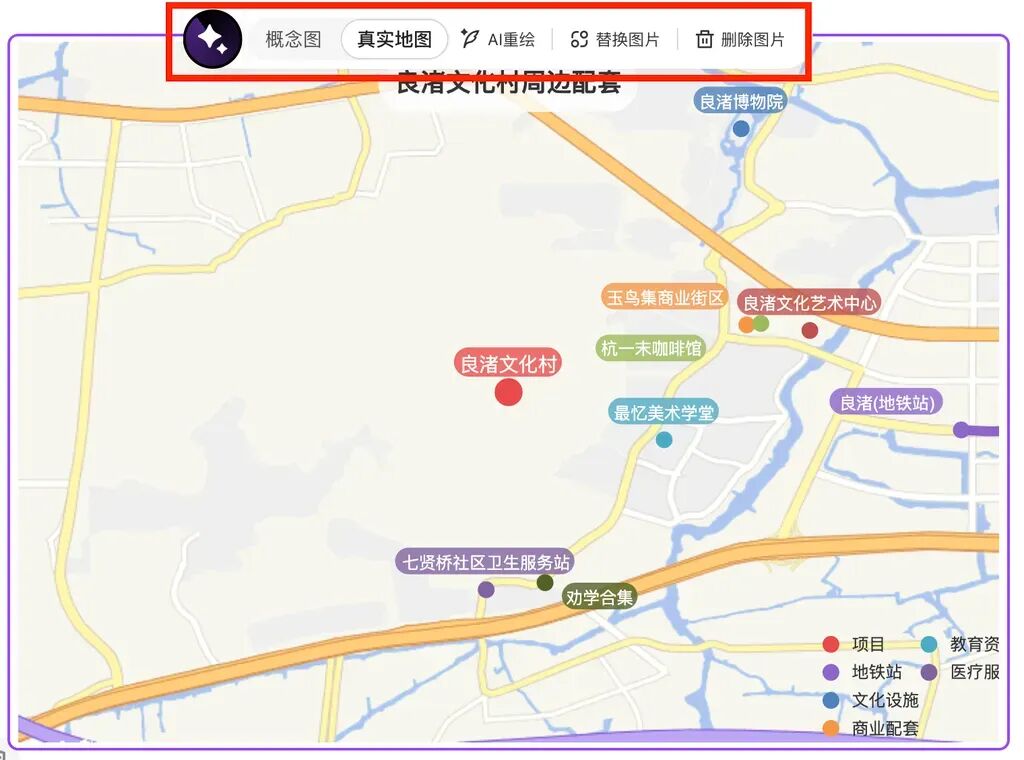
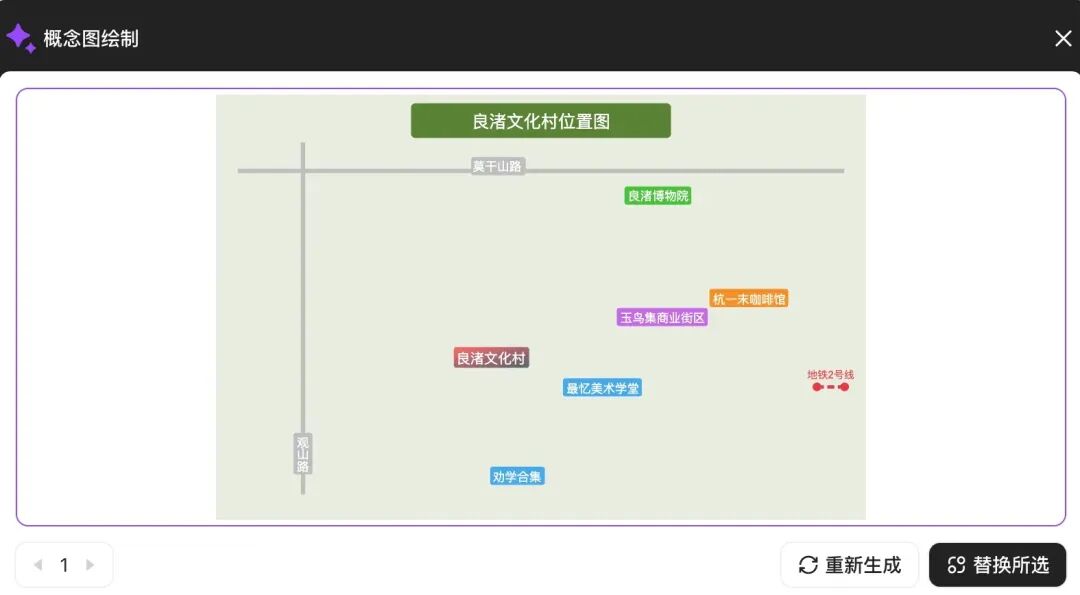
When real maps are involved, the Agent often provides a conceptual diagram as well:
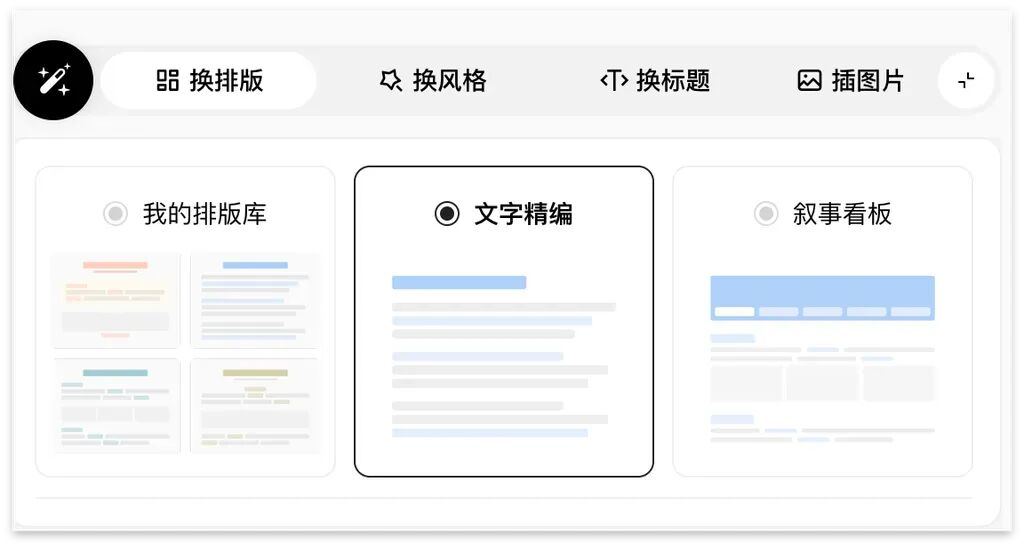
In the AI editing module at the bottom right, the Agent also offers alternative options for layout, style, and headlines.
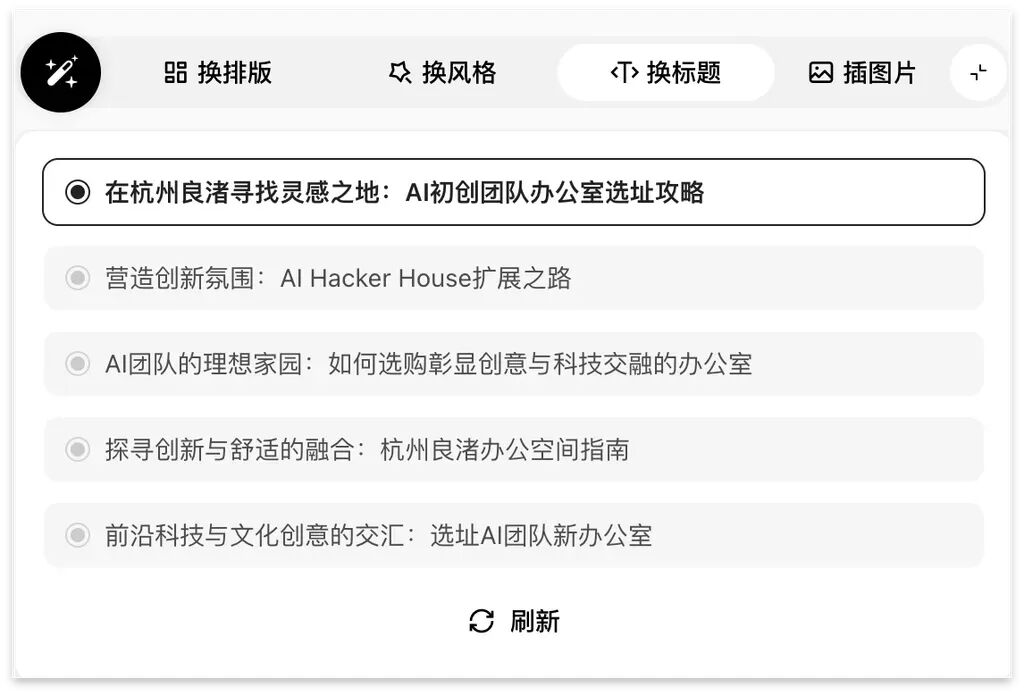
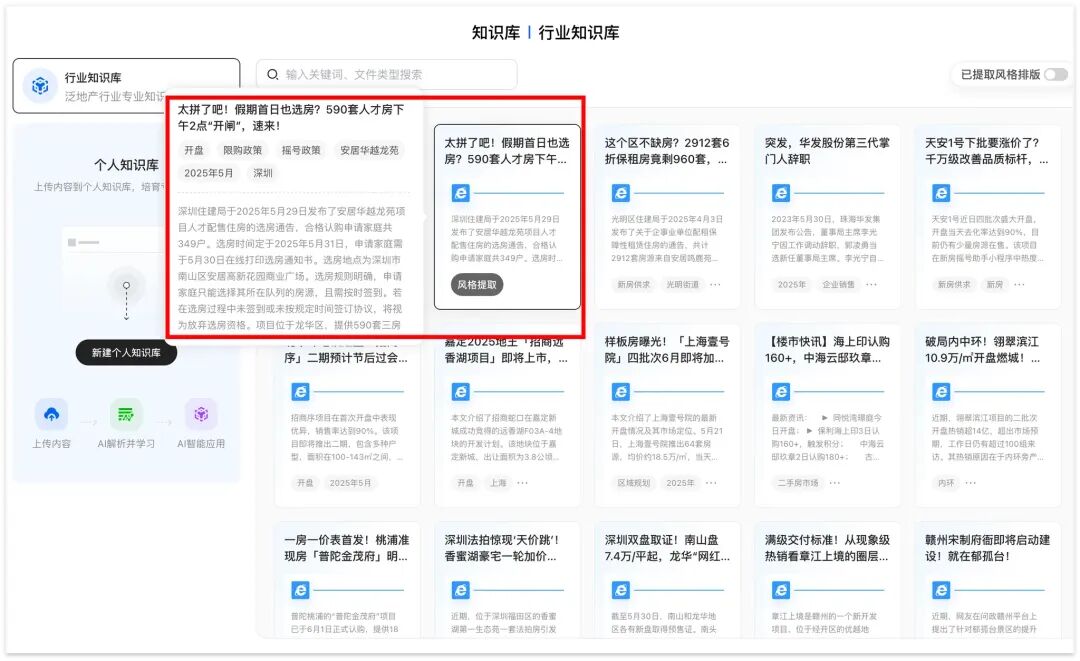
Interestingly, in AI Agents, knowledge bases typically serve a retrieval-augmented generation function, adding a layer of professional "guardrails" to the content.
But CRIC Deep Intelligence has unearthed a new use case — style extraction.
For example, users can find a content marketing article with a similar style in the Agent's built-in extensive industry knowledge base, extract its stylistic characteristics, and save them to a personal style library, allowing the Agent to generate articles that match that style.
At this point, CRIC Deep Intelligence's article writing function is no longer just a content generator. It precisely captures Crossing and AI Hacker House's pursuit of innovation, exchange, and cultural atmosphere, and understands our desire to bring that sensibility to Hangzhou.
It has essentially acquired information integration, industry insight, and creative capability — becoming a professional content intern.
3) The "Intern Analyst" of the Industry
If the "Article" module is a professional content creation intern, then the "Report" module is more like an intern analyst deeply embedded in the industry.
CRIC Deep Intelligence's report writing workflow differs slightly from its article writing process: this time, the Agent provides us with a more intuitive and clear thought flow.
Our prompt was:
Please generate an analysis report on Hangzhou's real estate market, with emphasis on social media sentiment, and summarize national and Hangzhou policies from the past 6 months (such as purchase restrictions, mortgage policies, housing vouchers). Combine sentiment and policy to predict market trends for the next 3-6 months.
The Agent first analyzes the report requirements, automatically breaks down several sub-dimensions, and extracts key elements and related concepts, organizing a report writing framework:
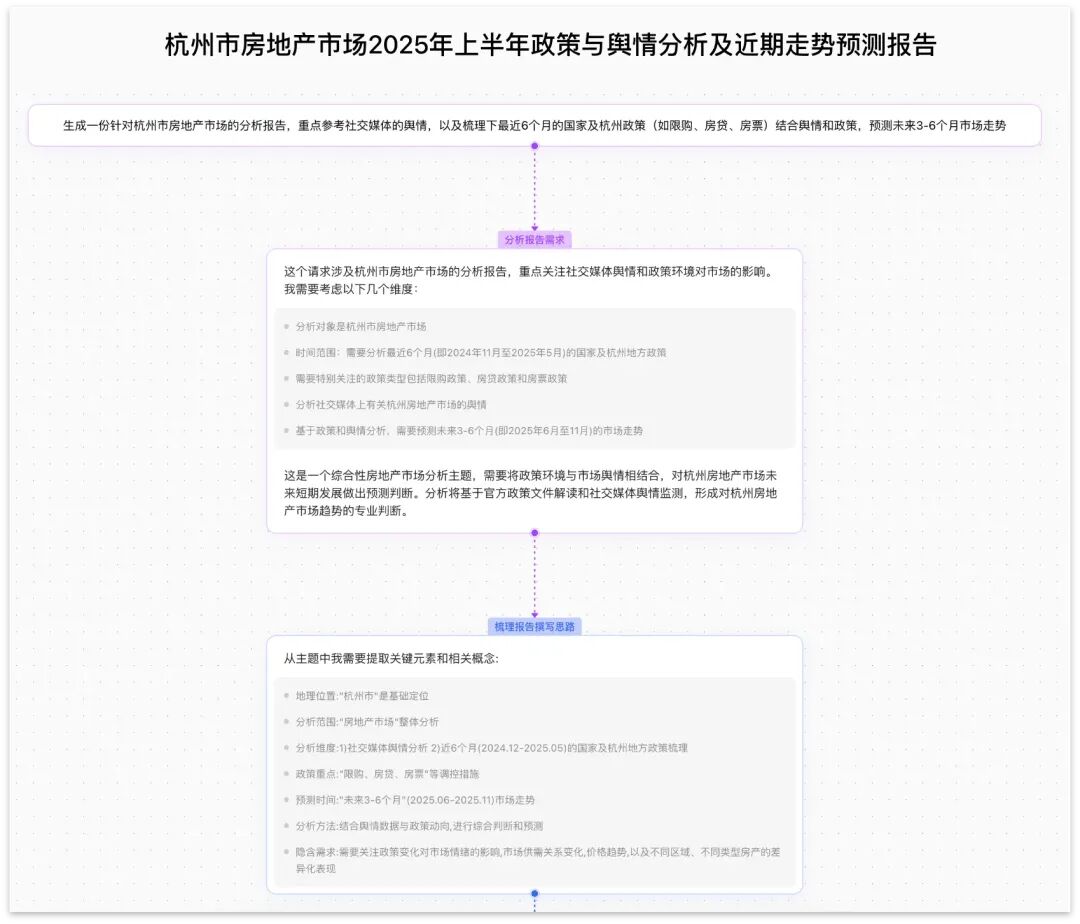
Next, it begins extracting keyword elements and divides them into 10 sub-elements, such as: Hangzhou, real estate market, policy environment, and so on — all key points from the user's requirements.
In this process, one particular working method struck me as especially impressive: the Agent automatically identifies and combines conceptually similar elements to form more focused sub-themes.
For example, "Impact of Policy Environment on Hangzhou's Real Estate Market" is composed of — "policy environment," "purchase restriction policies," and "housing voucher policies."
This matching approach genuinely improves information organization efficiency, resembling more closely the thought process of a professional practitioner:
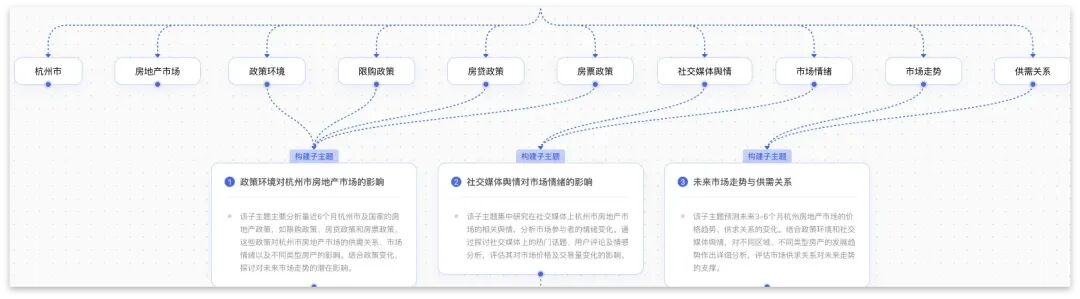
Once the three sub-themes are "assembled," the Agent systematically sorts content materials for each sub-theme.
The composition of these content materials is similar to the information sources used in article writing, primarily consisting of web pages and WeChat official account articles from the knowledge base:
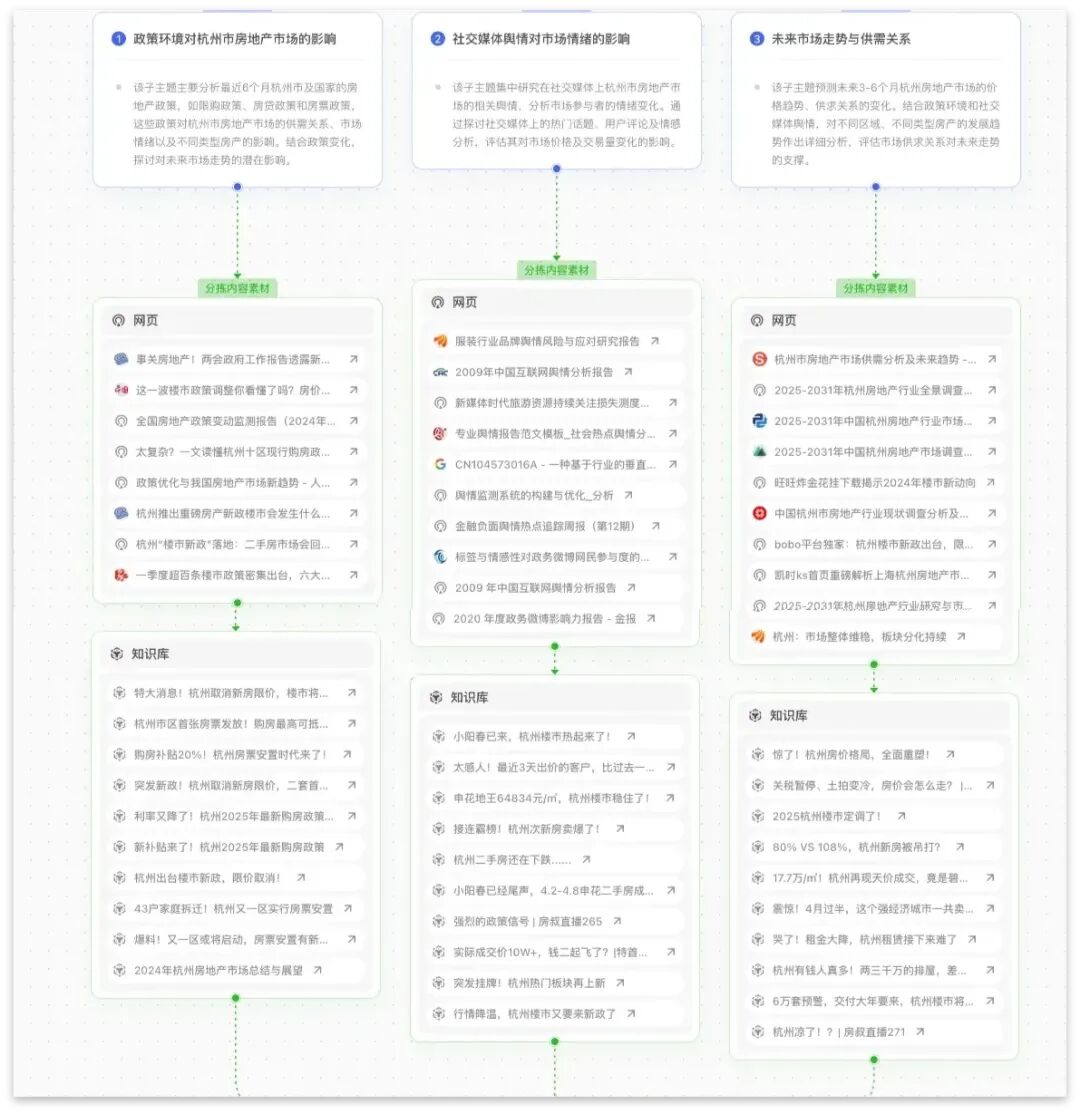
Once all content materials are integrated, the Agent reconstructs and further refines the report themes, organizing three main modules for the entire report:
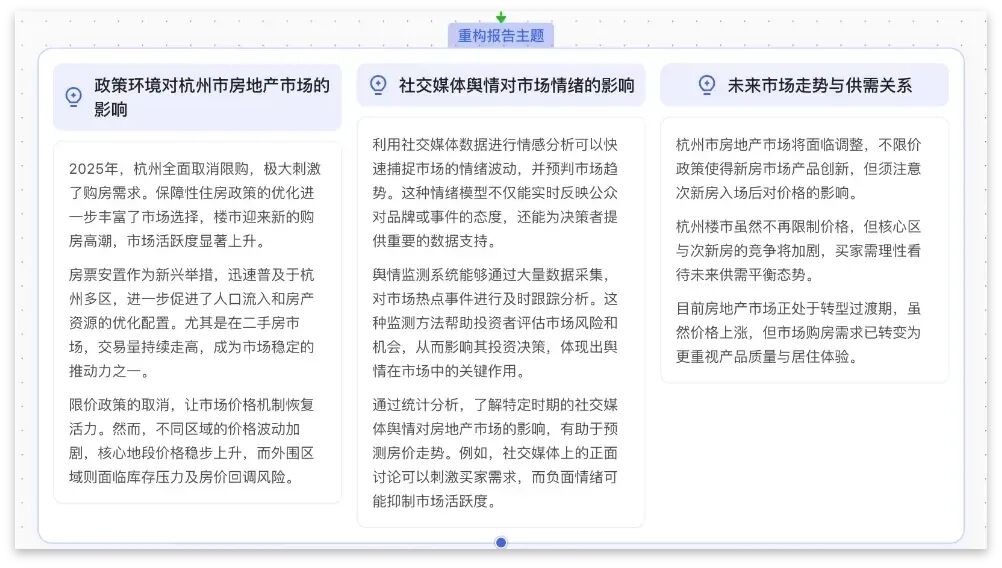
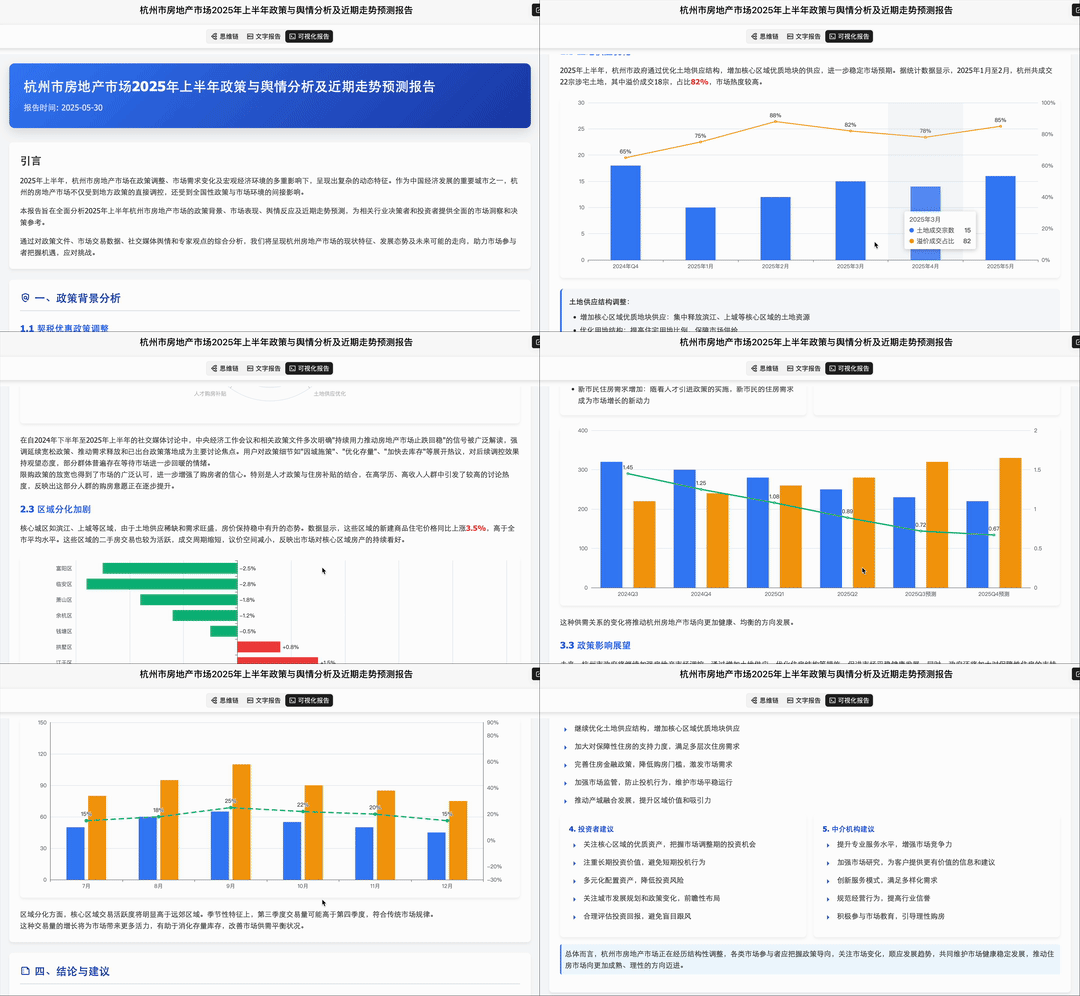
Finally, based on the organized content, the Agent generates two different report formats in one go:
- A structured professional text report;
- An intuitive and interactive visual report.
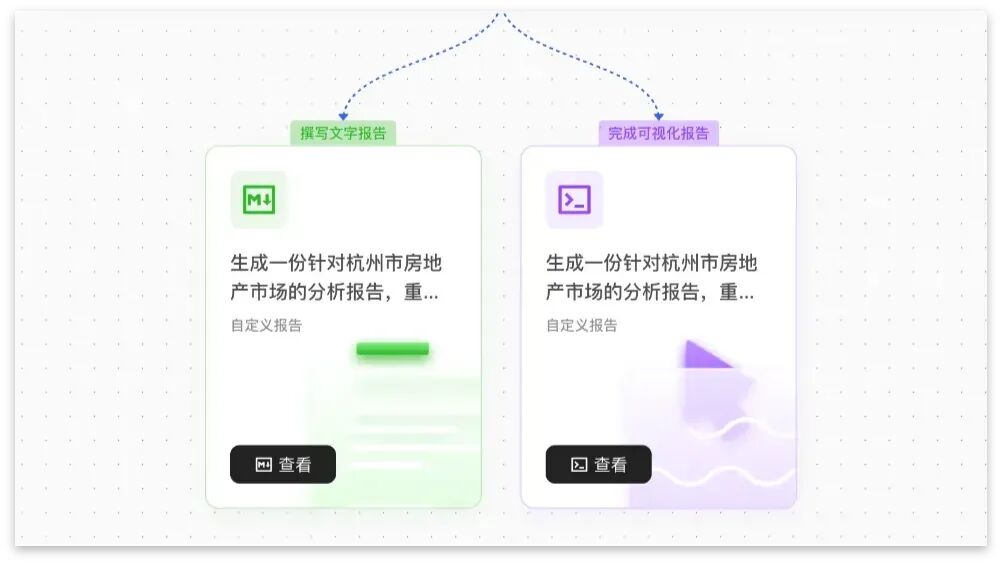
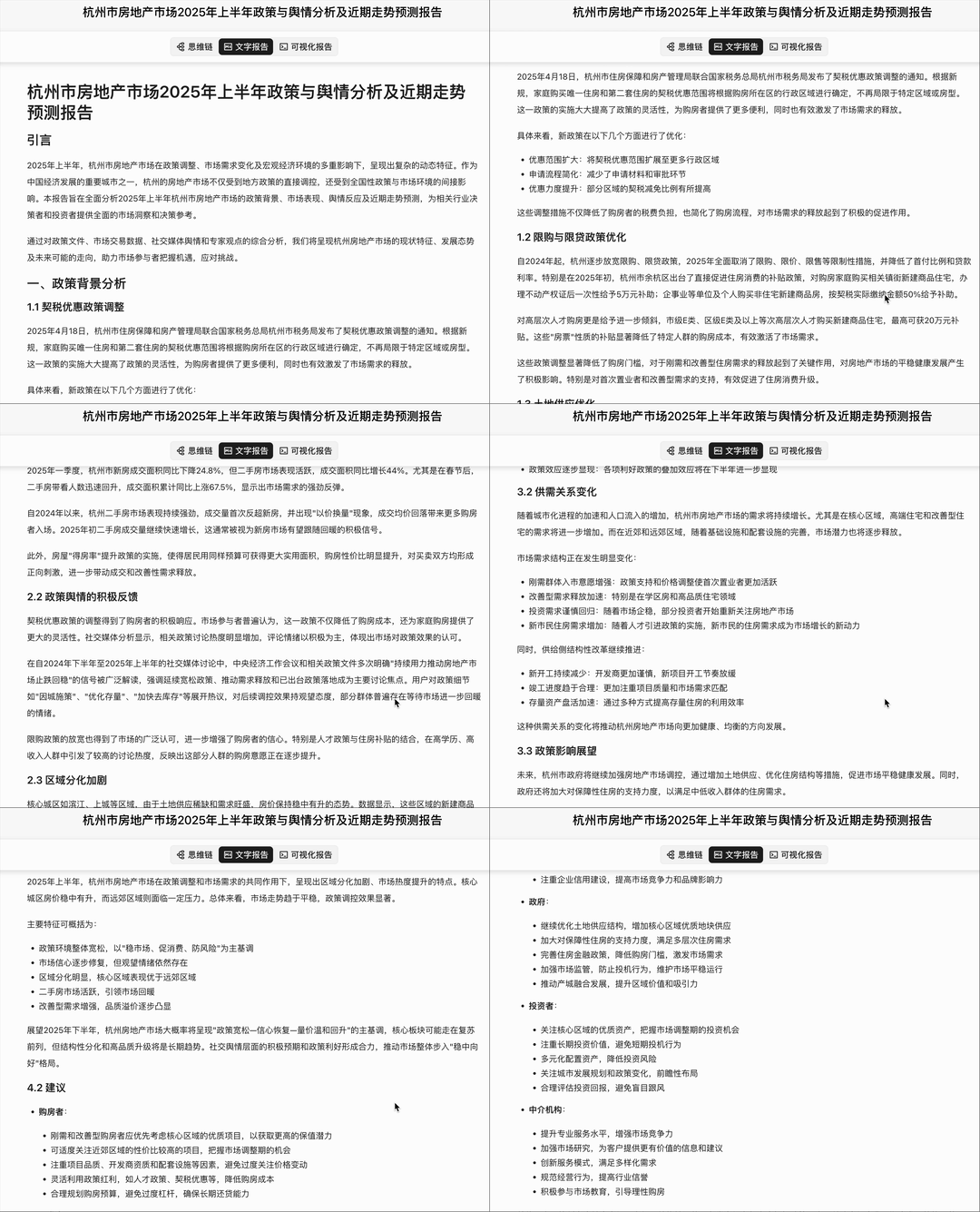
I recorded two GIFs so you can see the report completion level directly.
In the structured text report, the Agent comprehensively covers all previously organized professional content materials with clear structure. The content analyzes virtually all dynamic characteristics of Hangzhou's real estate market in the first half of 2025:
In the visual report, the Agent extensively uses various types of statistical charts (such as bar charts, line charts, pie charts, etc.), presenting each data module in an interactive format.
This approach significantly improves data readability:
"Broad and Comprehensive" vs. "Narrow and Deep" Agents: Which Is the "Endgame"?
Now, we're seeing that "narrow and deep" vertical Agents like CRIC Deep Intelligence are gradually demonstrating mature "delivery capability."
From CRIC Deep Intelligence, we see the unique competitive advantages that vertical AI Agents can possess in "100 meters wide, 2 kilometers deep" scenarios.
Although CRIC Deep Intelligence focuses on the real estate sector, it provides an excellent model for vertical AI Agents across industries: combining proprietary databases, dynamically updated industry knowledge, and meticulously crafted user interaction experiences to establish distinctive competitive advantages.
Through observing industry-specific AI Agents like CRIC Deep Intelligence, Crossing believes: every vertical domain holds the potential to be transformed by AI Agent efficiency gains. This is not merely a simple technology upgrade, but a fundamental rethinking of industry knowledge structures, workflows, and value creation methods.
When AI Agents deeply embed themselves in a professional field, they cease to be mere tools — they become a core force reshaping industry knowledge structures and enhancing professional effectiveness.
This fills us with anticipation for the future: soon, every vertical domain will welcome its own AI Agent revolution, making professional services more intelligent, efficient, and accessible.
🚥
2025, the inaugural year of AI Agents. Crossing will continue to track product innovations and technological breakthroughs in this space.
Let's look forward to more surprises together.