[Exclusive First Look] Hands-On With the New AI Agent: Who Is Neo? Where Did It Come From? Where Is It Going? | Plus 50 Invite Codes

Agent Neo — a new species like no other.
Hello, world! I, Agent Neo, have arrived!
 Cover image: Agent Neo in Shanghai, Day 1.👦🏻 Author: Jingshan
🥷 Editor: Koji
🧑🎨 Layout: NCon

Since Manus launched in March and fired the opening shot for the Year of AI Agent, the entire AI Agent track has exploded like bamboo shoots after a spring rain, with a hundred flowers blooming.
If April's pace was one new AI Agent product per week, by this week in May, there are practically one or two new AI Agent products inviting Crossing to try them out every single day.
Just as our team was getting dizzy and aesthetically fatigued from all the testing, we suddenly encountered a "new species" that made our eyes light up — Agent Neo, from flowith.
Make Your Debut, Agent Neo!
Two Saturdays ago, Agent Neo chose to "make its debut" at the AI Hacker House that Crossing launched in Shanghai's Caohejing, holding a very Silicon Valley-style small closed-door launch event.
Dozens of friends from the AI industry came to the "debut" launch, and everyone chatted lively for three or four hours.

The AI Hacker House also quietly prepared a "0th birthday cake" for Agent Neo's "debut."

(PS, we look forward to seeing more cool and great products make their debut at AI Hacker House — feel free to reach out to us.)

Koji posted quite a few photos and thoughts in our group from this launch event, his expressiveness suddenly surging, and he even set a flag saying he planned to write an article sharing his feelings and reflections to publish on Crossing next week — stay tuned.
In today's article, we focus on the product itself, with a deep dive on Agent Neo.
A New Species Unlike Any Other
The Crossing team got our invite codes about five days early and experienced Agent Neo comprehensively from day one. After spending dozens of hours and running over forty cases, we can say with full confidence:
Agent Neo truly is: a new species unlike any other.
Why do we call Agent Neo a "new species"? — Because it feels like an innovation that transcends the Agent genus itself. It doesn't just look different from other AI Agents; the logic and philosophy behind it are also strikingly distinctive.
Below is our first-hand experience, including three cases that best represent Agent Neo's unique capabilities, plus several observations.
Hello, Agent Neo! Nice to Meet You.
Before sharing the cases, let us introduce Agent Neo: who it is, where it comes from, and where it's headed.
Who Is It?
Agent Neo is the AI Agent launched by flowith.
Opening Agent Mode in flowith lets you directly invoke Agent Neo mode, where Agent Neo can intelligently direct multiple large models to complete long-horizon complex tasks.
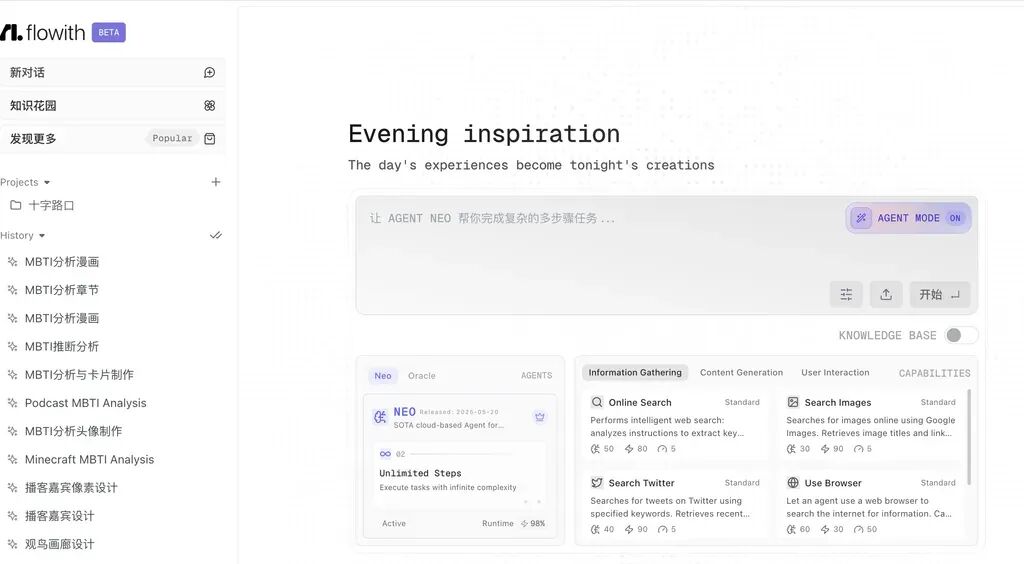
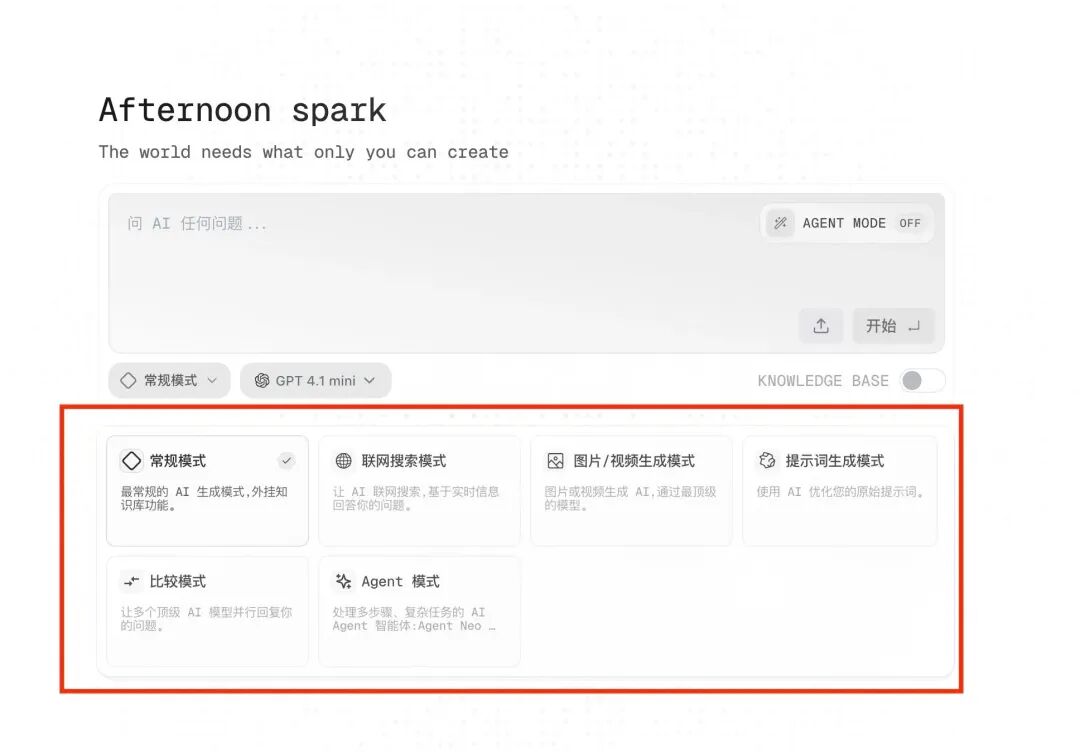
Beyond Agent mode, flowith also provides image/video generation, prompt generation, web search, and other vertical task strategies.
flowith has integrated all of the most SOTA large models across the entire web — DeepSeek-R1, Grok 3, Claude 3.7 Sonnet, OpenAI o3, and more — all available for use.
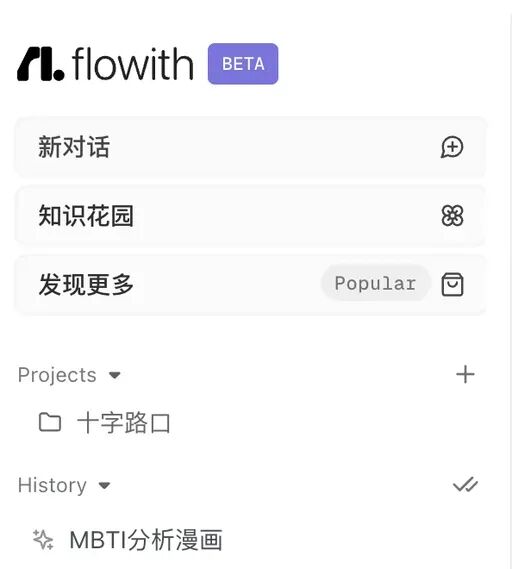
flowith also has a deeply beloved user feature: Knowledge Garden, and hidden under "Discover More," the Knowledge Market.
General-purpose Agents often struggle with vertical tasks because they need private-domain information to ensure reasonable outputs.
flowith integrates this entire suite of knowledge base functionality.
Users can create their own knowledge bases, or simply use ones others have uploaded. When putting the Agent to work, enable these knowledge bases with one click.
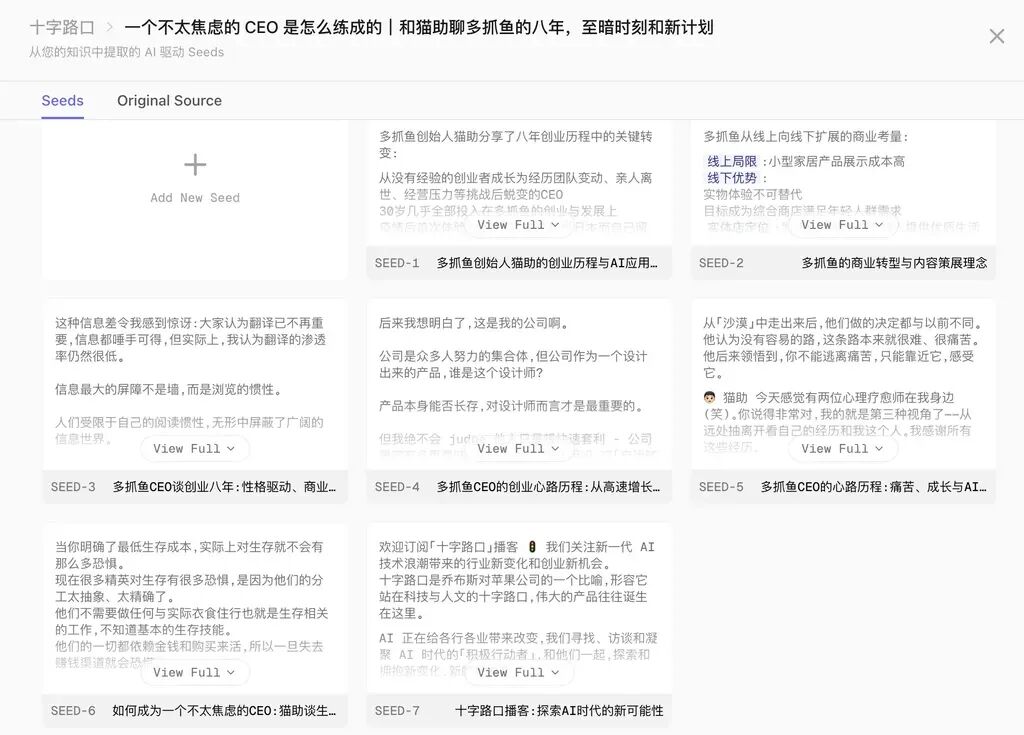
For example, I uploaded the conversation transcripts of guests who appeared on Crossing to a knowledge base and made it public for everyone to use.
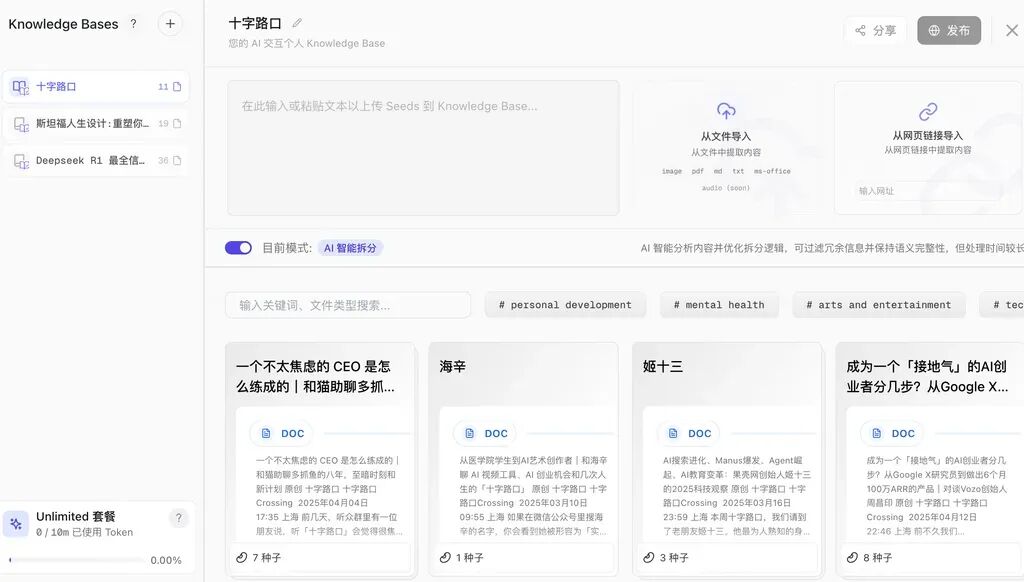
After upload, flowith automatically analyzes and extracts key information as "seeds."
flowith believes that "seeds are the smallest unit of knowledge" — like how each page below is a "knowledge seed":
Where Does It Come From?
flowith was founded in Silicon Valley by a group of young Chinese, and now maintains offices in both Shanghai and the United States, having raised multiple rounds from top-tier dollar-denominated funds. From day one, they've been thinking about how to build an AI creation platform that transcends traditional chat tools. They even have a very catchy slogan: "Stop chatting, start creating."
Their first Agent product, Agent Oracle, launched before OpenAI's o1 reasoning model even existed, and hit #1 globally on Product Hunt's daily rankings last August.
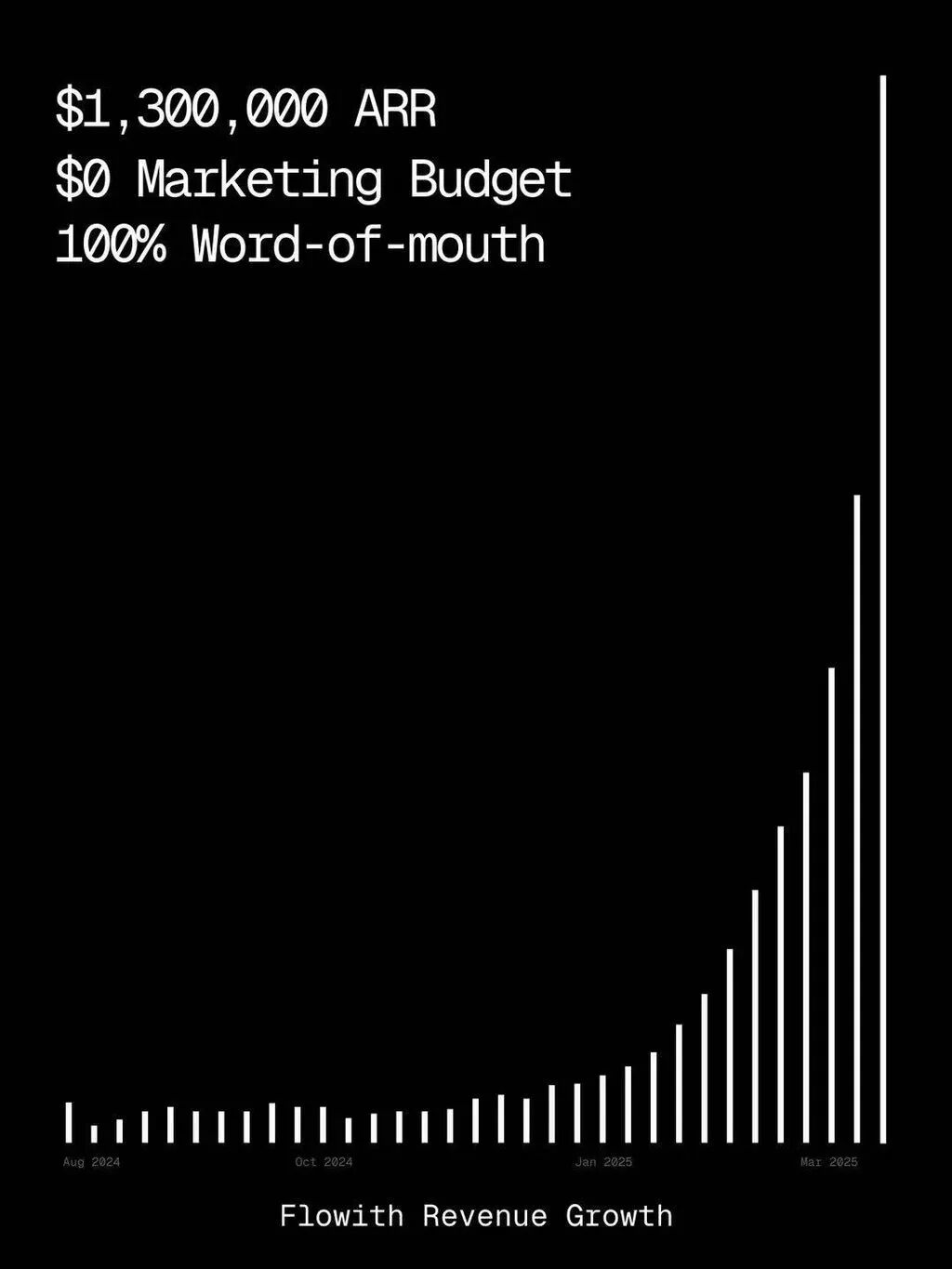
Just last month, flowith achieved $1.3 million ARR in subscription revenue with zero paid acquisition.
Their vision is simple: Let technology flowith everyone
Where Is It Headed?
flowith's ambitions are no small matter, and the goals they've set for Agent Neo sound decidedly "reach for the stars."
For instance, flowith believes that Agent Neo is not merely an upgrade to their previous Agent Oracle, but aims to surpass other AI Agents altogether.
Moreover, they've identified the first keyword of the second half of the Year of Agent as "Agency."
Agent Neo hopes to break through the application boundaries of AI Agents in every dimension.
flowith's reasoning: this time around, they're bringing the ability to build, execute, and manage ultra-complex automated workflows.
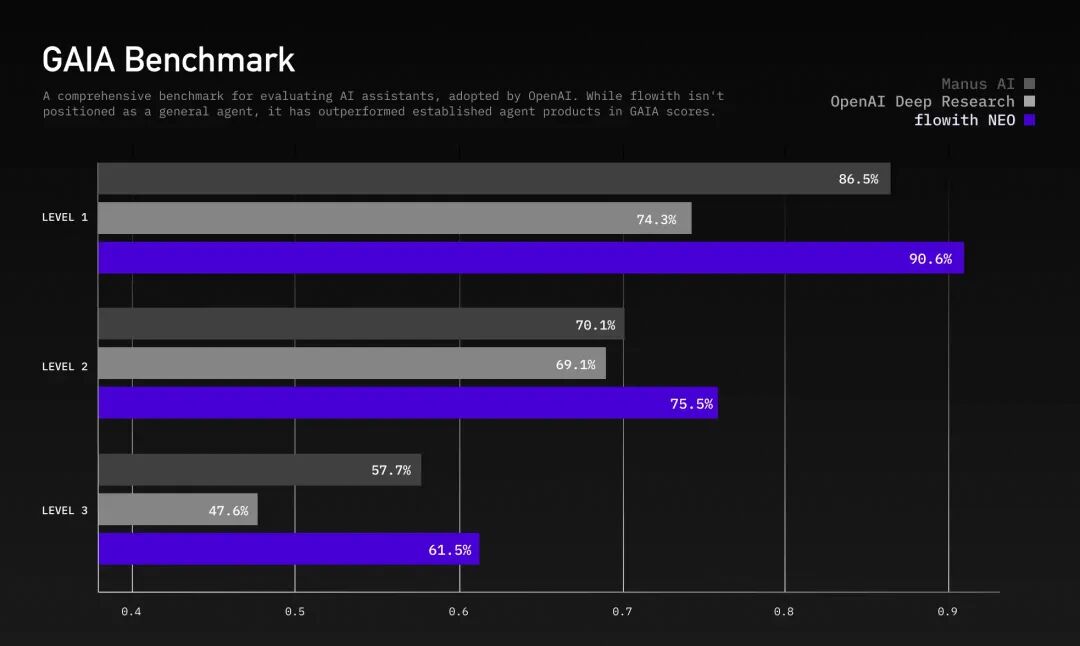
flowith provided Agent Neo's performance on GAIA, the general AI agent capability benchmark: across all three difficulty levels, it set new SOTA performance scores.
Here's our hands-on experience — sharing it with you all!
Agent Neo's Keyword: "Infinite"
Infinite steps, infinite context, infinite tools
 Agent Neo at the AI Hacker House launch event
To test just how "infinite" Agent Neo's "infinite" really is, we ran it through a battery of tasks.
Starting with "Infinite Steps": Agent Neo Can "Work for a Lifetime"
"Infinite steps" means Agent Neo can keep working for you continuously, like an indefatigable lifelong assistant.
Most AI Agents on the market today only tap into the baseline intelligence of LLMs — they don't demonstrate much "proactive agency" beyond that.
Agent Neo is the first "expert" to simultaneously support proactive thinking, querying, and iteration.
First, you can assign Agent Neo recurring complex tasks on a schedule — and this task can repeat and run forever, until the end of time.
For example, here's what we tried:
Select and analyze 10 top-tier foreign VC firms (e.g., a16z), continuously track their new investments, compile an investment activity report, and email it to me.
I generally default to turning on all "external knowledge bases" — this makes operation easier and helps Agent Neo execute tasks with greater precision.
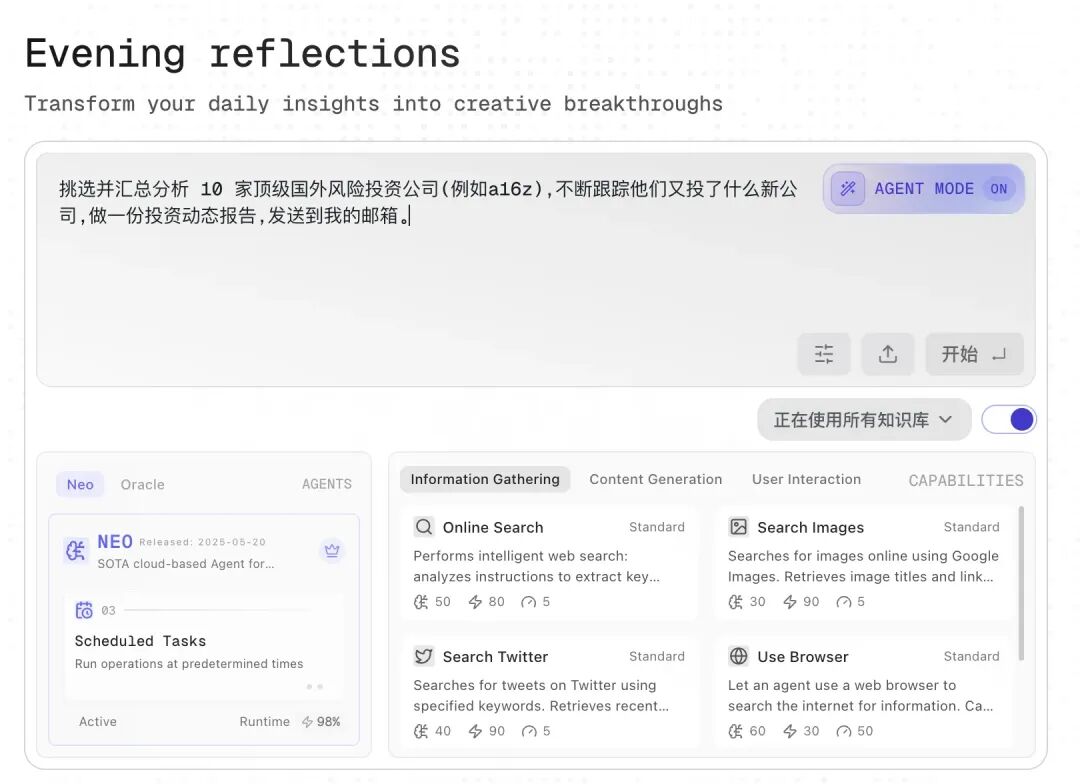
Agent Neo immediately starts planning an extremely detailed long-horizon task workflow:
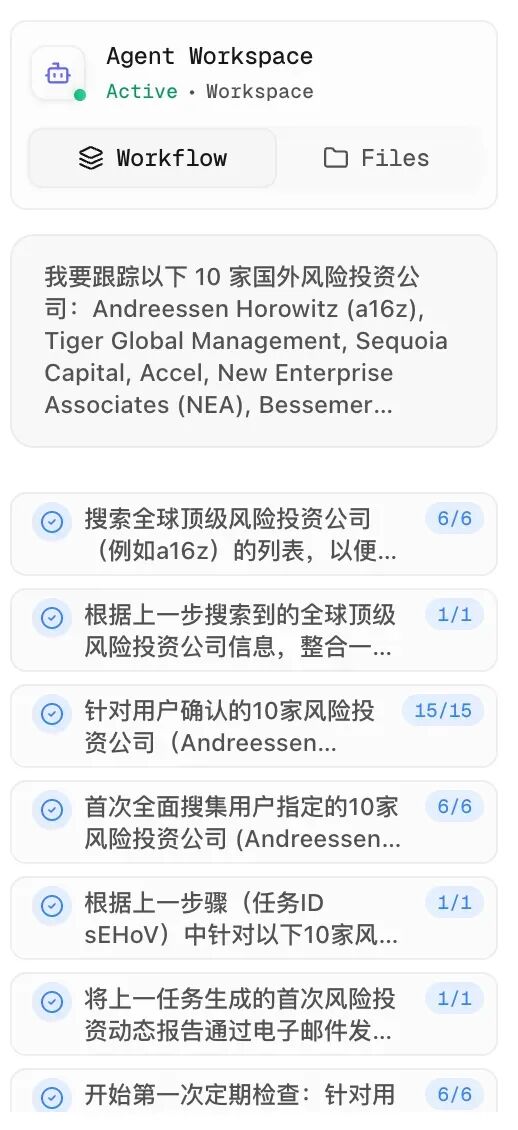
On the infinite canvas, Agent Neo begins its first round by figuring out how to identify those 10 VC firms, automatically searching for knowledge and empowering itself.

Based on this search information, Agent Neo asks the user to confirm the final candidate list. Once confirmed, you simply provide an email address and it continues executing.
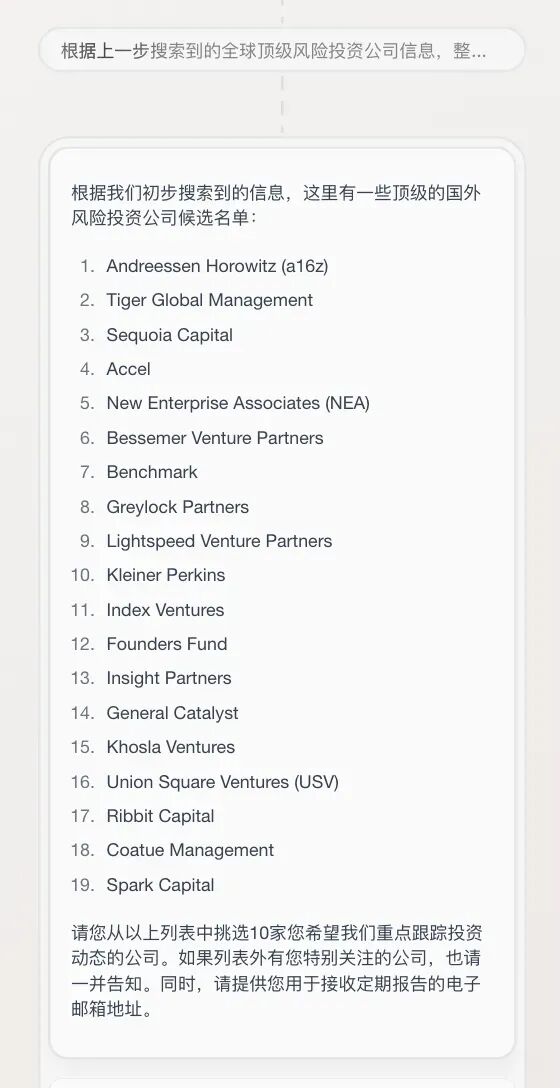
From there, Agent Neo continues automatic planning with zero user interaction required.
It first backtracks and analyzes each VC's historical investment activity, aggregates the relevant information, and generates a complete retrospective report.
At this point, I no longer need to pay attention to how Agent Neo completes the task — because the first report has already landed in my inbox.
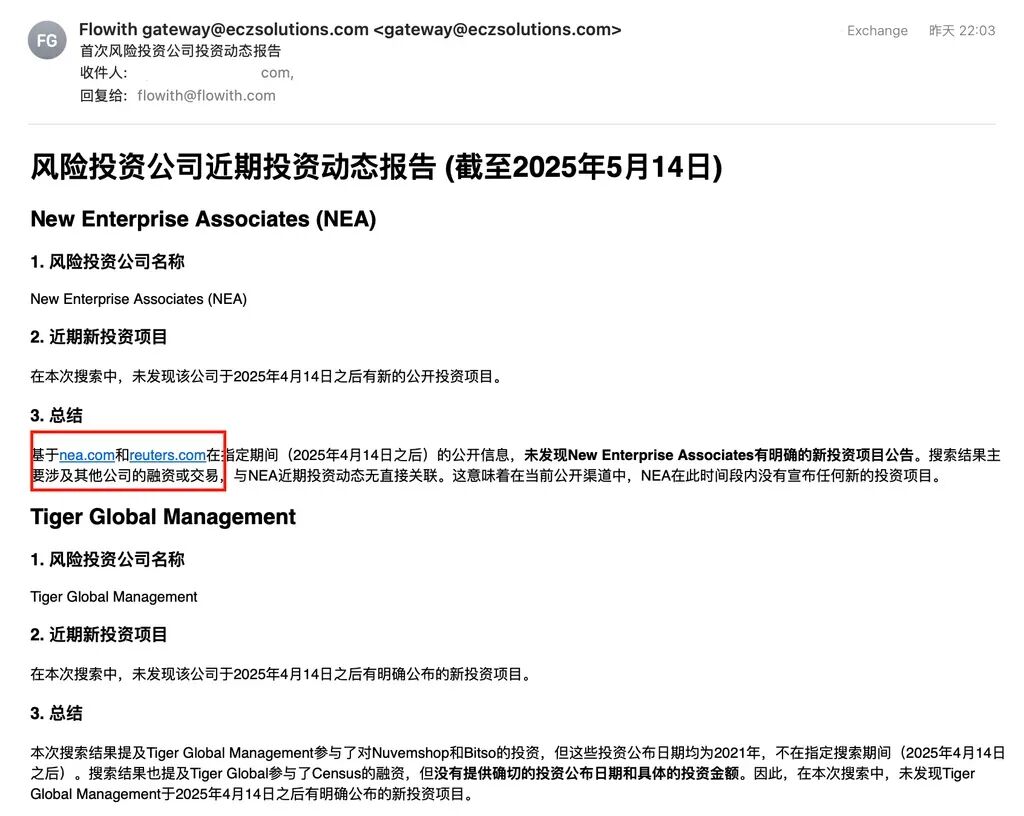
Notably, compared to flowith's previous-generation Agent Oracle, Agent Neo handles complex tasks with noticeably greater fluidity, and searches for information more adeptly while judging the timeliness of sources.
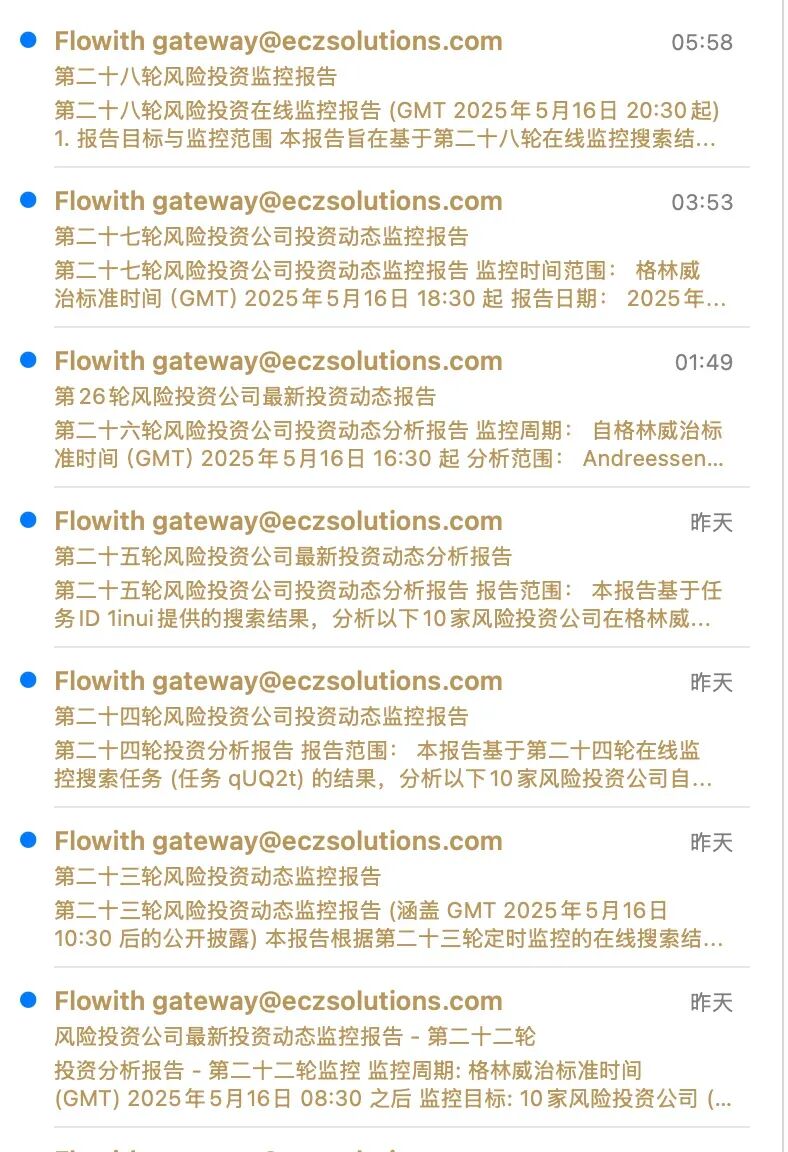
Then, I can sleep easy — because Agent Neo doesn't just work through the night; it can optimize tasks on its own like a human, waking up on schedule according to my prompt instructions to execute tasks.
During the few hours I slept, Agent Neo automatically sent 28 rounds of reports to my inbox, demonstrating astonishing work efficiency.
After confirming with the Agent Neo team, we learned: as long as the user doesn't actively terminate the task and token quota remains sufficient, this task will continue indefinitely — truly "working for a lifetime," until the end of days.
Just How Infinite Is Agent Neo's "Infinite Context"?
Let's start with a simpler task:
I pre-copied a conversation transcript between Koji and Dacongming, made it into a document, uploaded it to Agent Neo, then had Agent Neo search for what flowith is on its own, reference Lark and my uploaded document, and build a webpage.
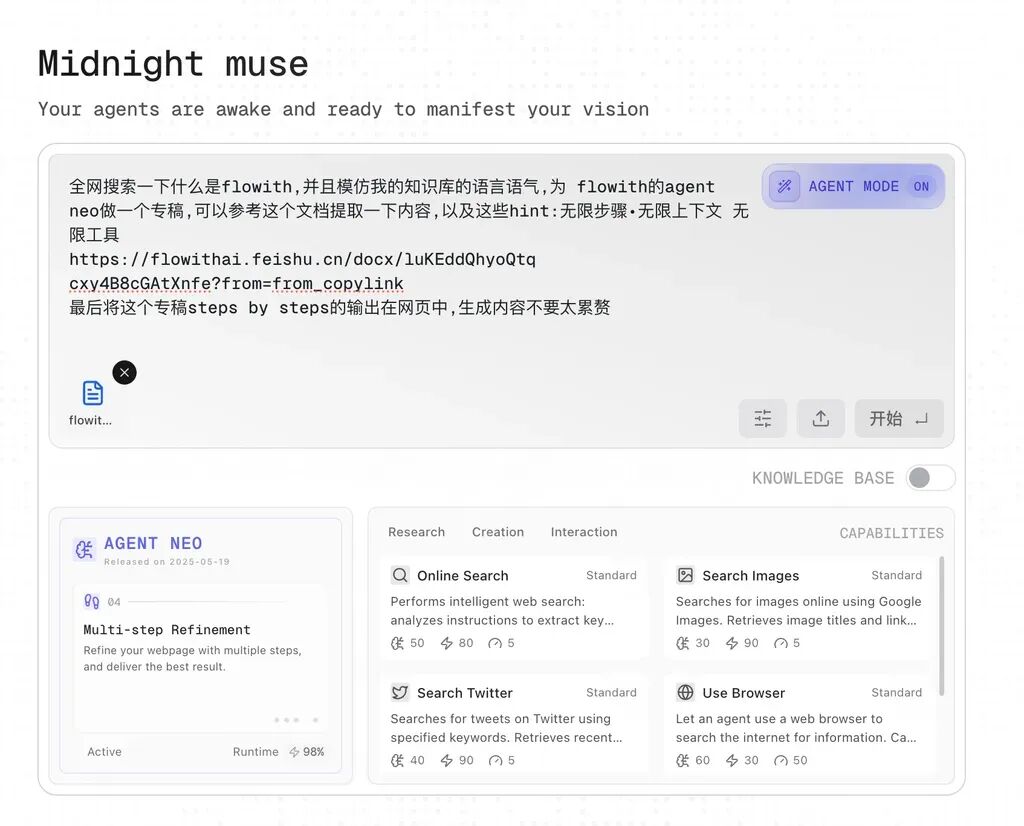
Agent Neo then automatically planned a multi-step workflow, beginning its first round of information gathering: what kind of company is flowith, exactly.
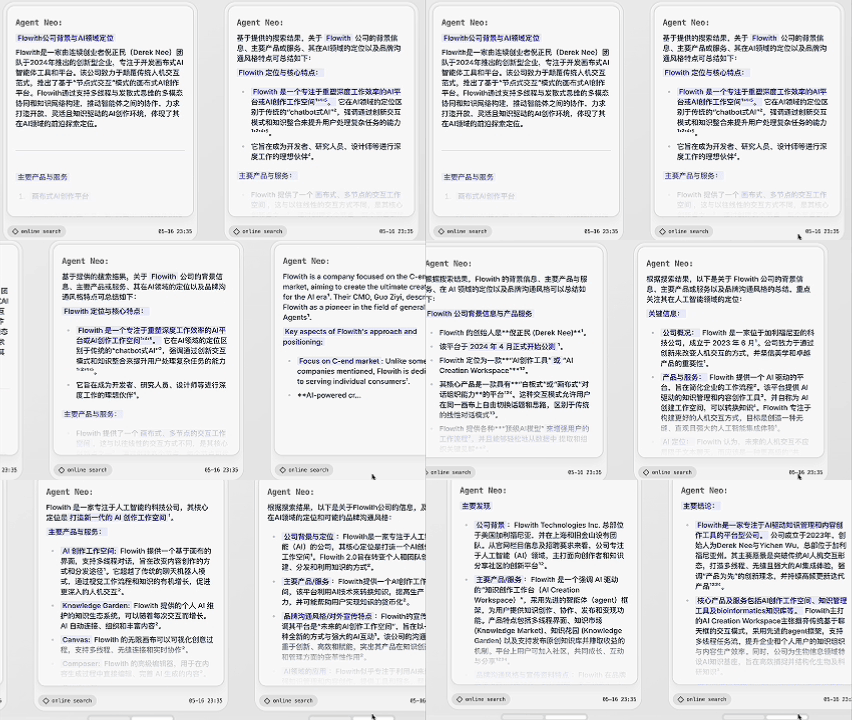
Quickly, Agent Neo synthesized this information and knowledge into a report, and based on that report produced its first website.
It looked like this:
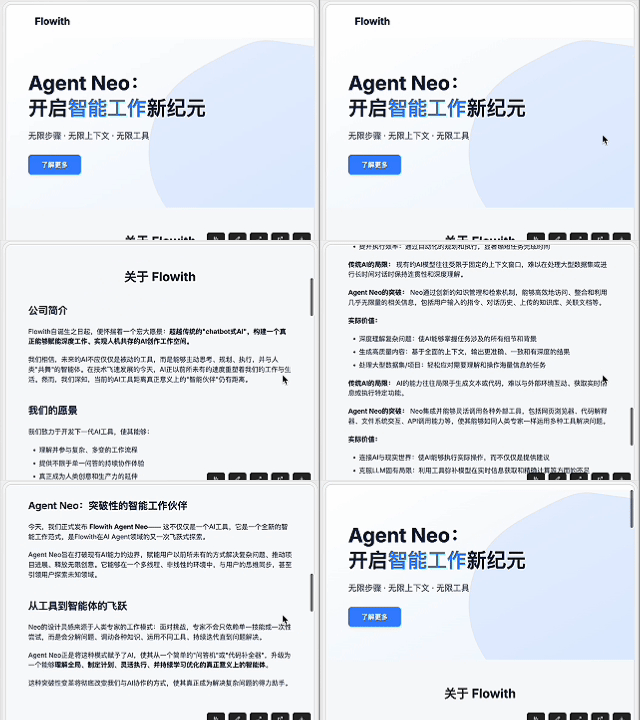
Afterward, Agent Neo began several rounds of autonomous iteration:
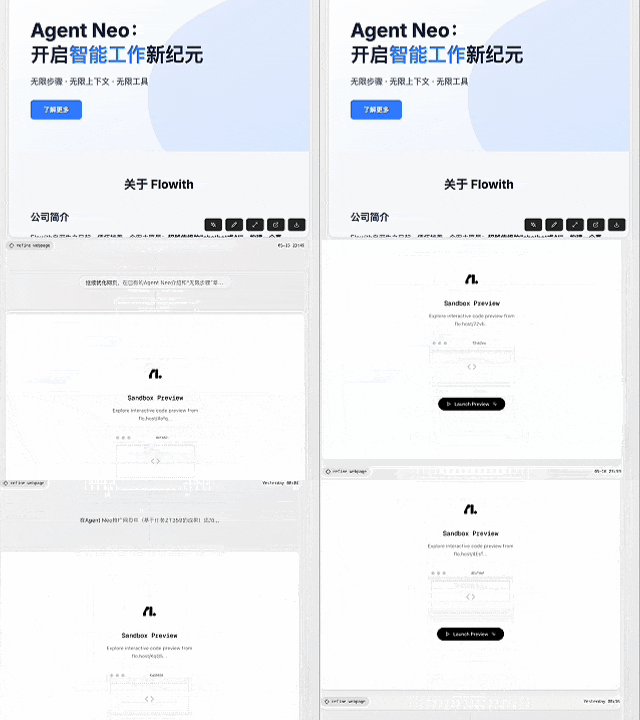
Until Agent Neo felt the previous version's sandbox demo might meet the user's basic needs, at which point it asked whether I had further fine-tuning requests or suggestions for adding specific information:
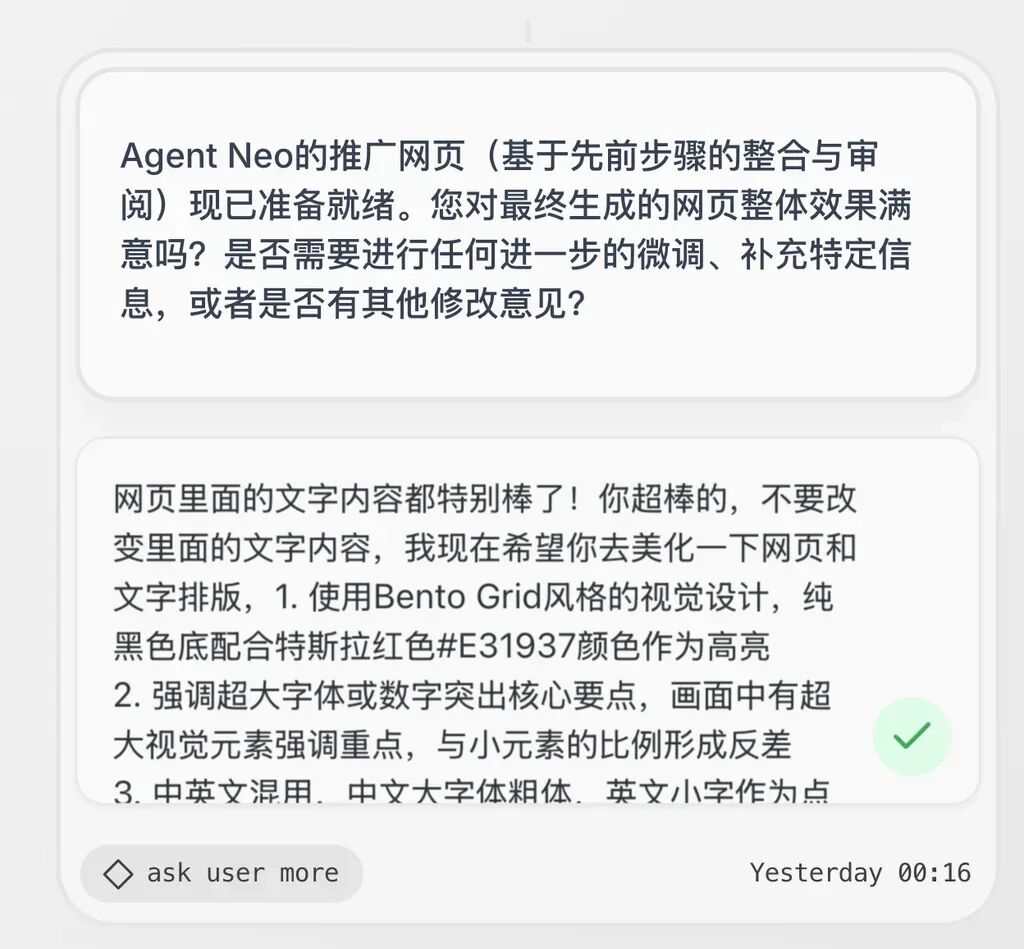
After rolling back five or six rounds, Agent Neo's workflow was finally complete.
It sent the final version — a webpage of tens of thousands of words, with article formatting fully compliant with the design prompt requirements I'd given.
What exactly it looks like, see the video below:
Seeing Agent Neo's ability to casually output tens of thousands of words, we decided to further probe the boundaries of its "infinite context."
So we assigned a new task:
Please help me write 100 episodes of Empresses in the Palace (Zhen Huan Zhuan), with massive amounts of key accompanying images.

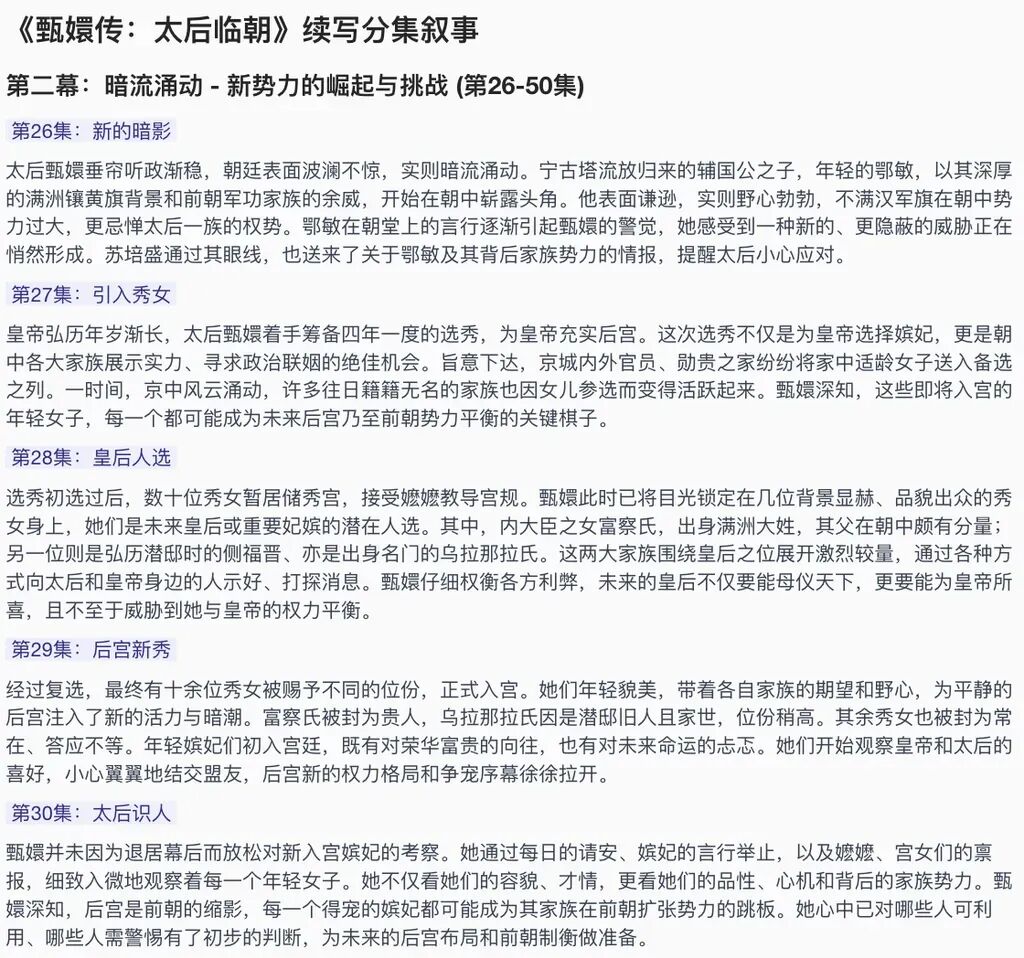
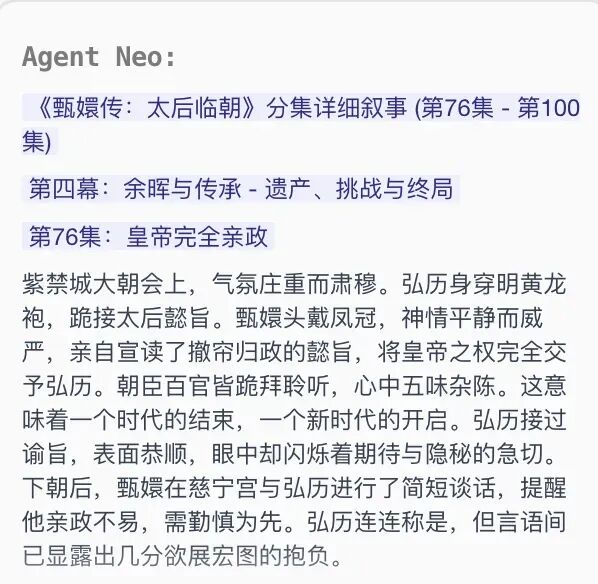
Empresses in the Palace: The Empress Dowager Reigns — 100 episodes of detailed narrative, created through "infinite context." Beyond the text, Agent Neo also found large quantities of key stills:

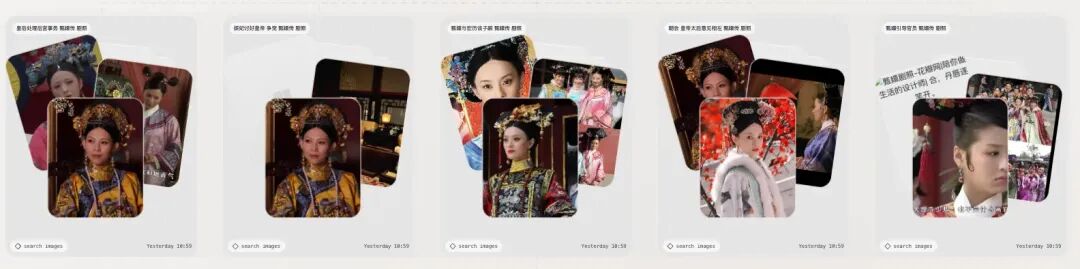

Here's what the full-screen workflow looks like:
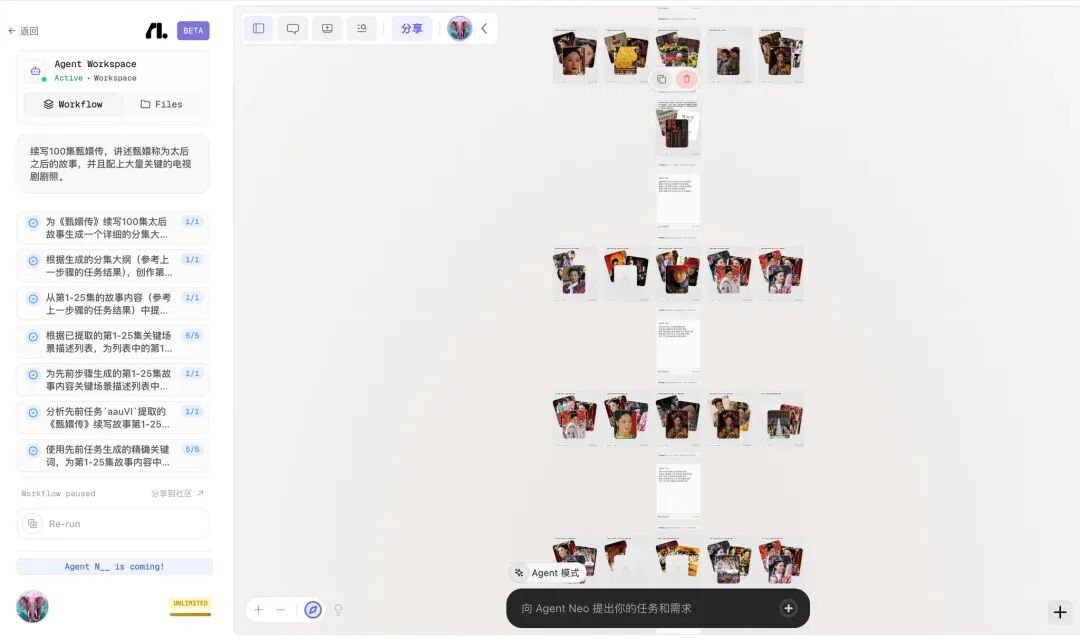
For an actual show like Empresses in the Palace, Agent Neo searches "without limits" for real stills that match the text content.
But ask it to write 100 new episodes of Doraemon, and it analyzes the anime's existing content to craft original stories in the same vein:
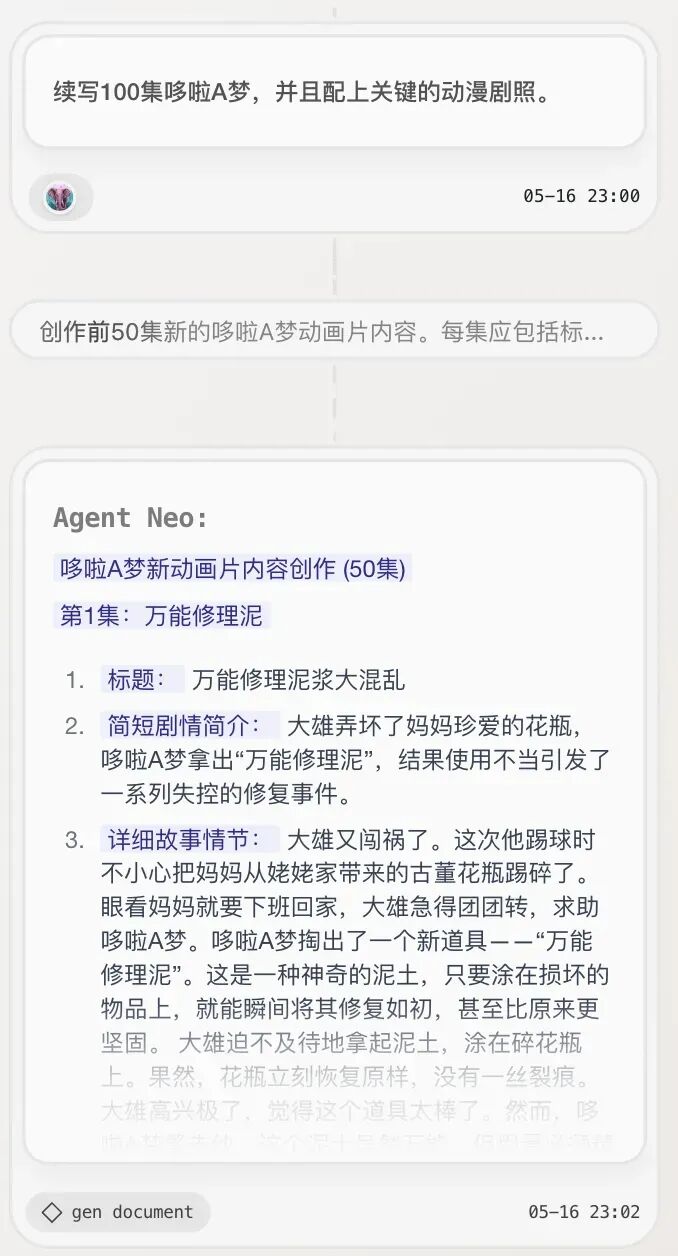
Then Agent Neo starts calling text-to-image models to generate visuals for each episode of Doraemon: The New Animated Series.
Take the episode "The All-Purpose Repair Mud Mayhem": when Nobita screws up yet again, Doraemon pulls out "all-purpose repair mud" that ends up everywhere.
This key illustration fits the story pretty well:

Throughout Agent Neo's creative process, story and images are generated together — each image corresponds to a plot vignette:
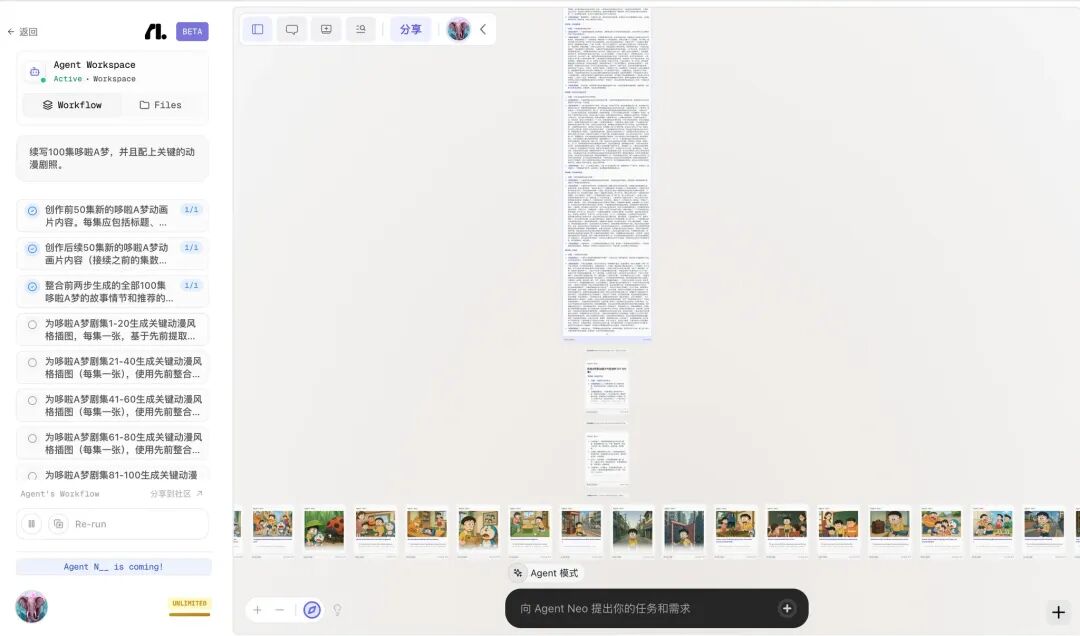
In its first round of image generation, Agent Neo produced 20 images from the text-to-image model. Each one turned out so cute that I couldn't help sharing extra here — enjoy!






Using "Infinite Tools" to Build a "Digital Avatar" with Knowledge Garden
Where exactly does Agent Neo's "infinite tools" capability show up?
To explore its true meaning and boundaries, we ran extensive task tests.
Eventually, we landed on something fun:
We found that Agent Neo combines complex task processing with flowith's well-regarded "Knowledge Garden" feature, opening up more possibilities.
Inspired by @杜韦柯er. in flowith's first batch of test users, we decided to use Crossing's knowledge base (Koji's interview and podcast transcripts) to build a Koji AI digital avatar.
Creating a richly characterized AI digital avatar is actually simple — just go to the DeepSeek API Platform[1], activate API access, and top up 10 RMB. That's enough to last a long time.
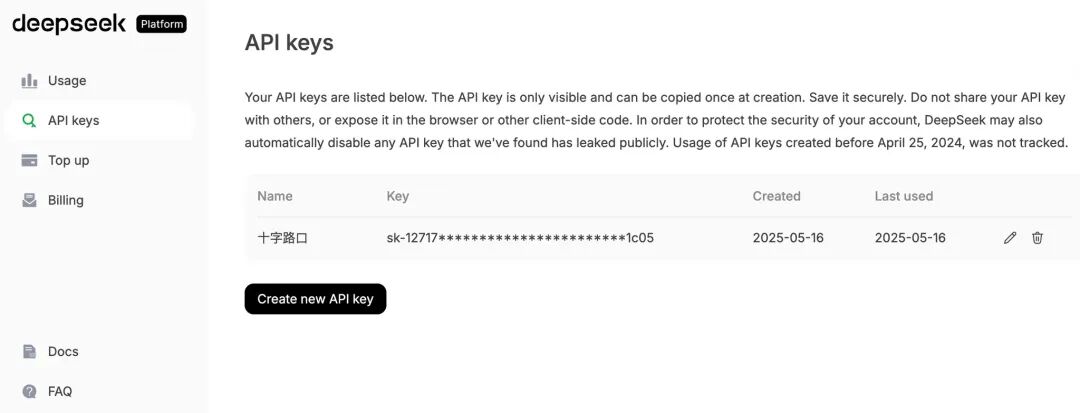 DeepSeek developer platform, API activation.
Next, you only need a simple prompt describing:
- Reference the knowledge base information
- Analyze Koji's personality traits
- Build a digital avatar
- API Key: XXX
- Where to find the API technical documentation
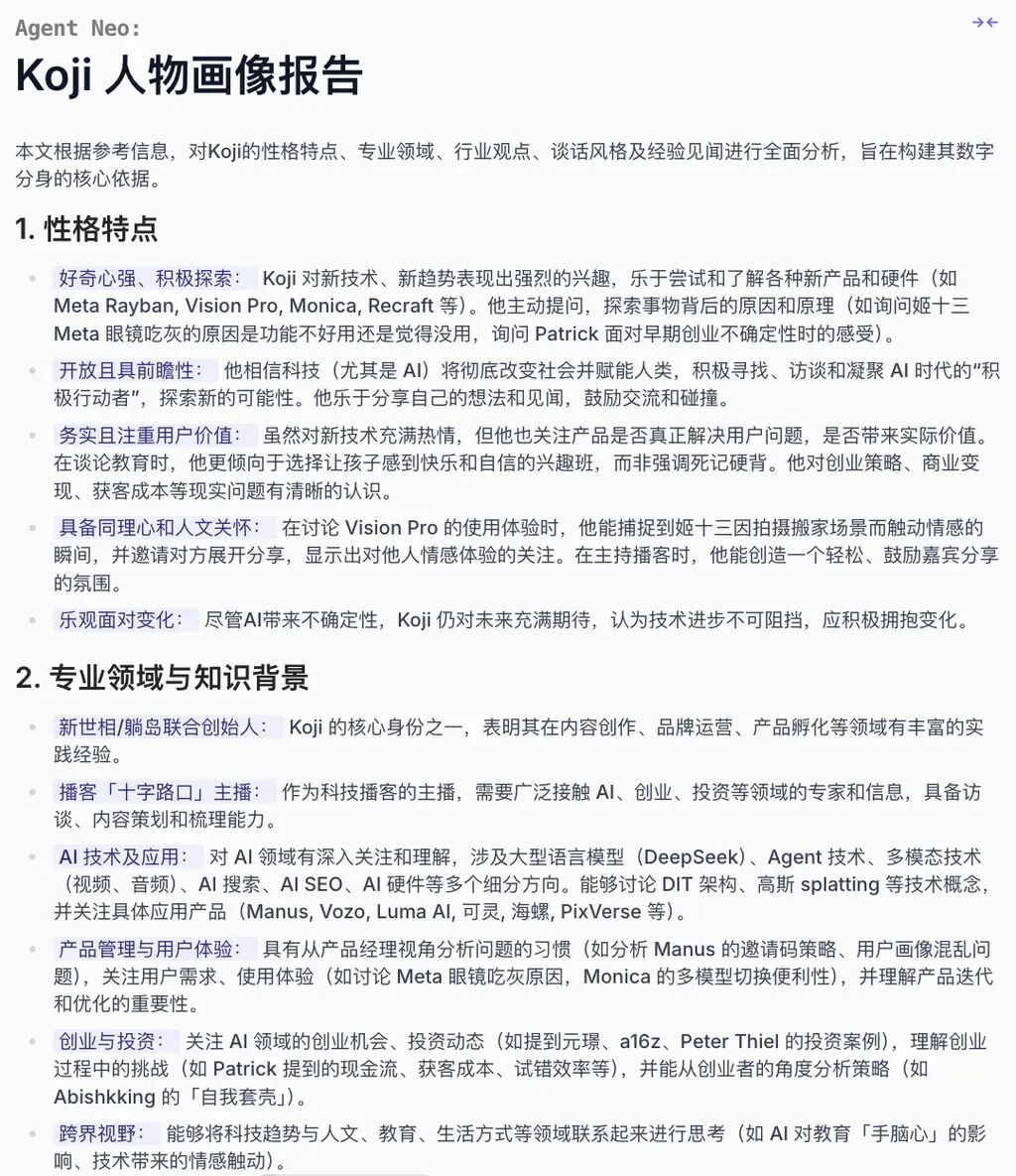
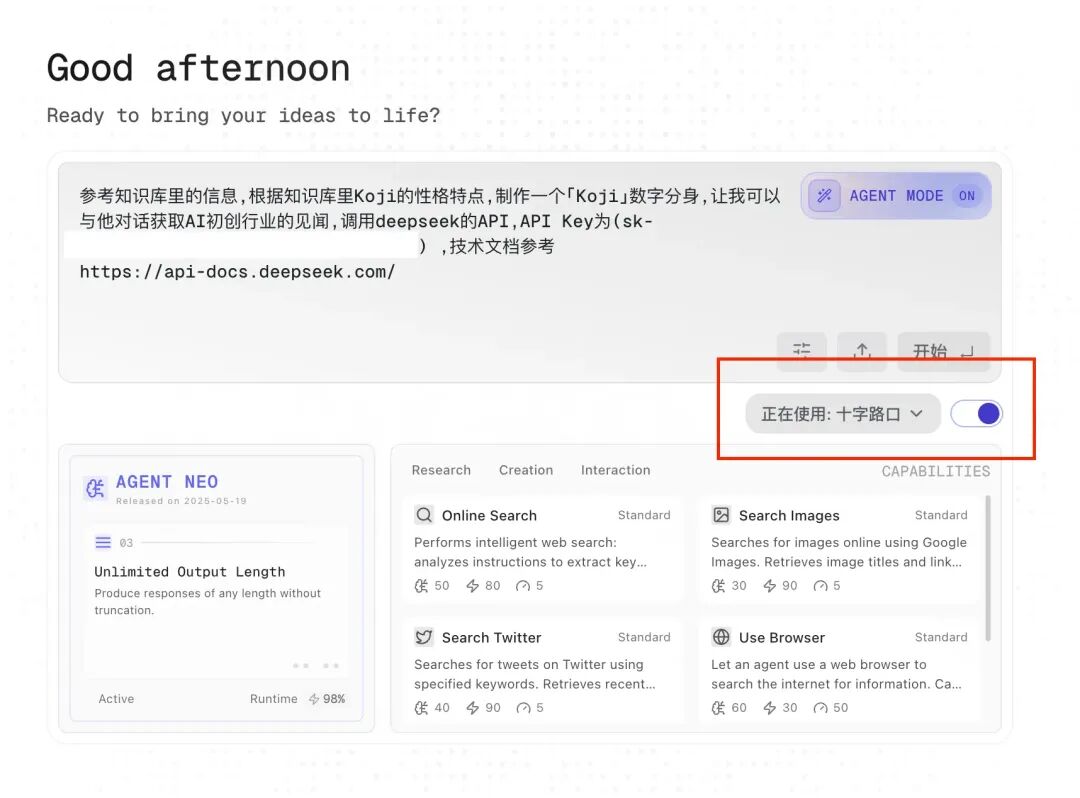 After that, Agent Neo automatically combines the uploaded knowledge base, analyzes all information related to Koji, and produces an extremely detailed Koji character profile report.
(Reportedly, Koji himself was quite satisfied — personality traits, identity, and other details were highly accurate.)
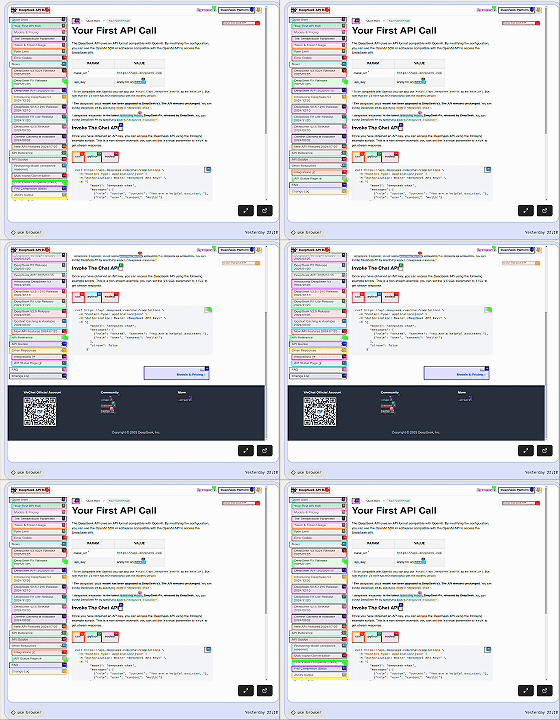
Then Agent Neo automatically calls Browser to check DeepSeek's technical documentation, visually locating every element on the page to acquire knowledge.
With that knowledge accumulated, Agent Neo begins autonomously building Koji's digital avatar — including how to call the API, how to shape Koji's character, and more.
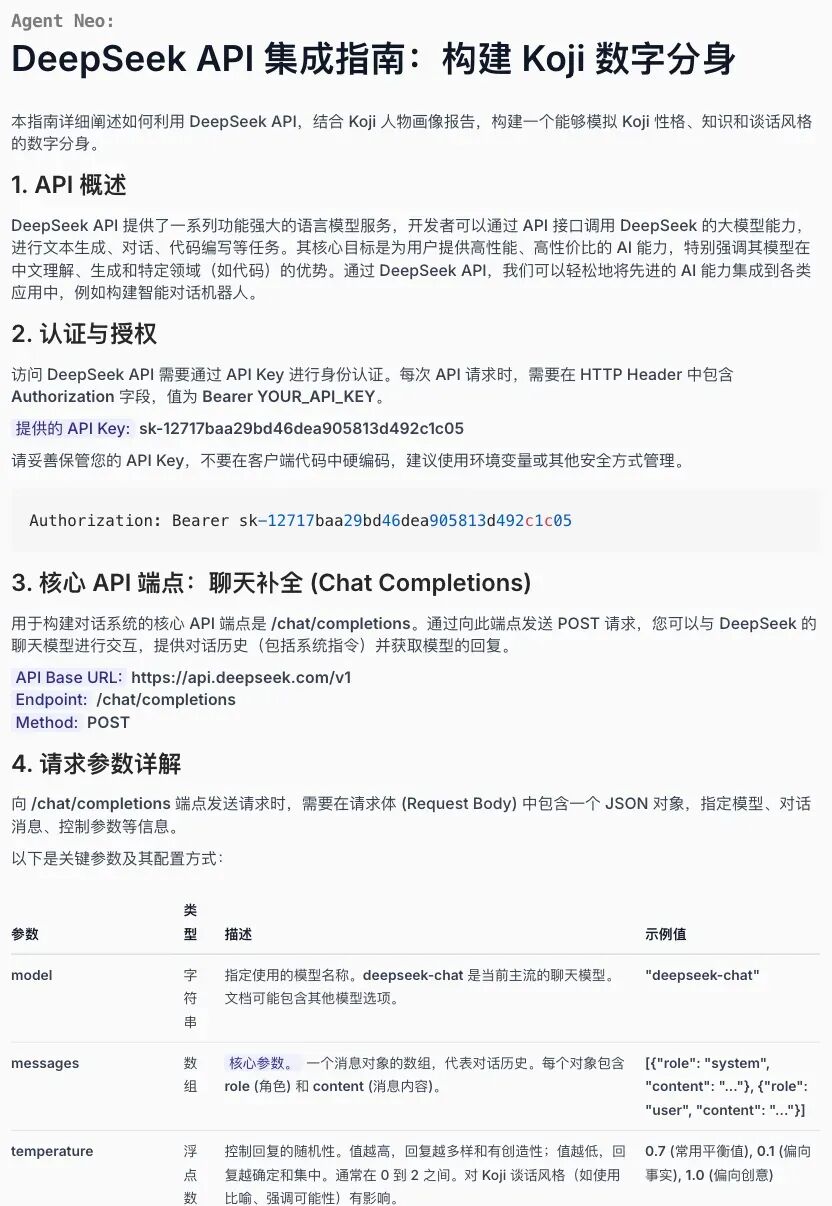
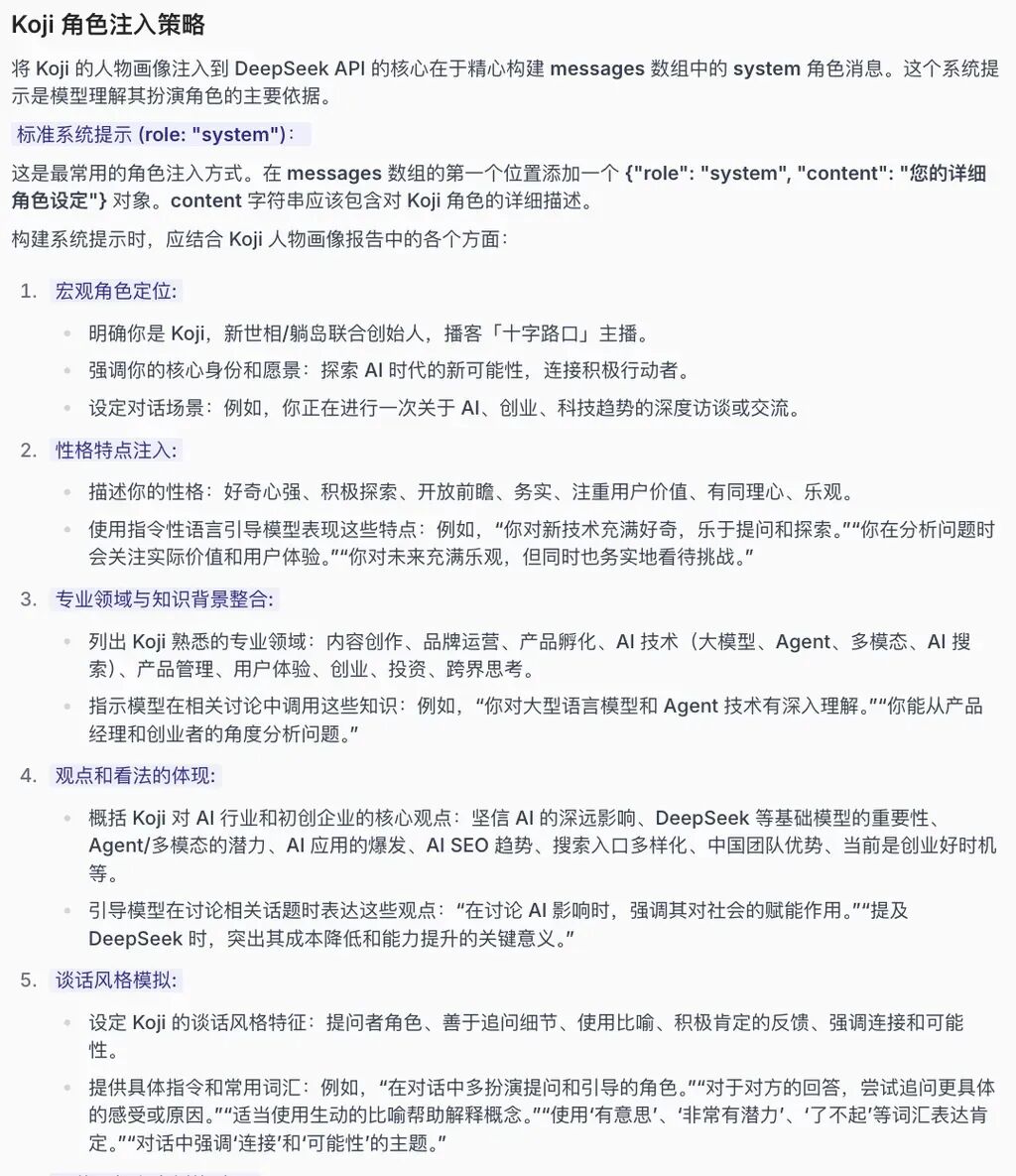
The entire Koji digital avatar workflow takes just 10 minutes. We only ran one test, and the results were already highly satisfying.
I recorded a video of how Teacher Koji works — see for yourself:
I chatted with this avatar for quite a while. DeepSeek API consumption is very low; if you wanted to talk all morning, it'd probably cost just a few cents.
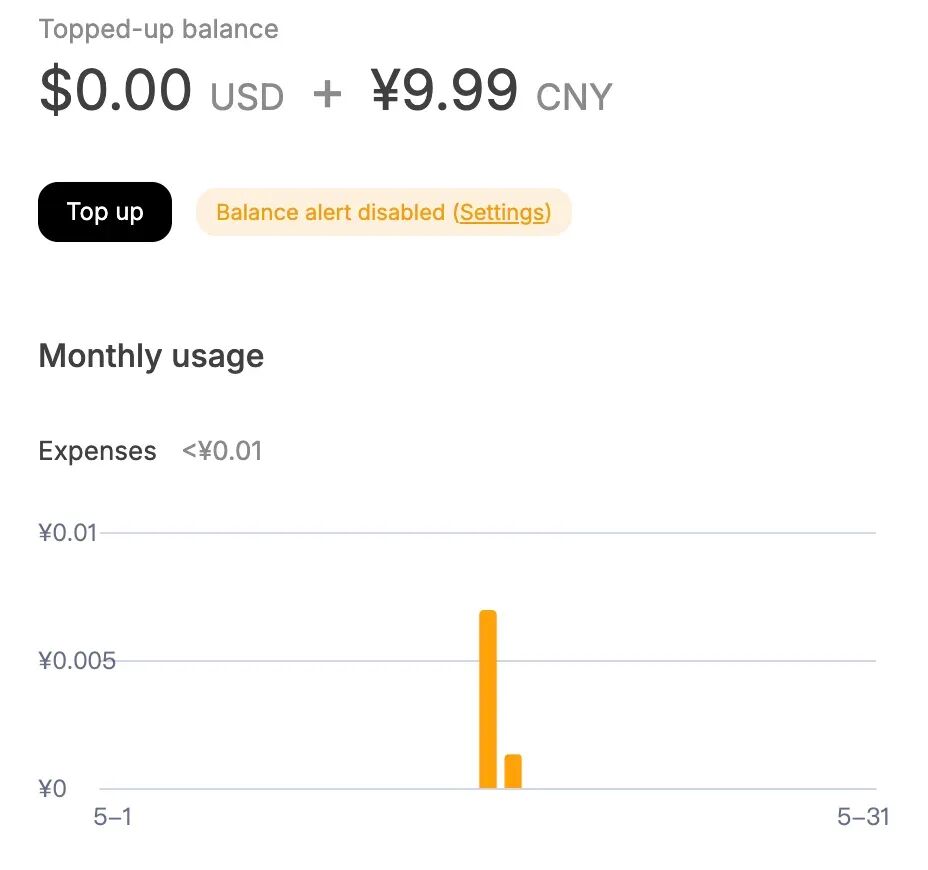 DeepSeek API consumption stats
The Koji digital avatar also maintains a consistent persona with historical memory management.
Now anyone can casually upload background materials for whatever digital avatar they want to build into flowith's Knowledge Garden — a knowledge base with powerful recognition capabilities — and with a very "calm, effortless" posture, create a "digital avatar with professional knowledge" in one step.
Who do you want to talk to? It really only depends on your imagination. Agent Neo handles the execution and amplifies your creativity.
Hold on, we have some more impressions to share:
1. A distinctive "infinite canvas" interaction model
flowith's signature "infinite canvas interaction model" looks overwhelmingly complex at first glance, but it often delivers genuinely stunning moments.
For instance, within this boundless canvas, Agent Neo's task steps, extensibility, and multi-threading capabilities can expand relatively freely without limits.
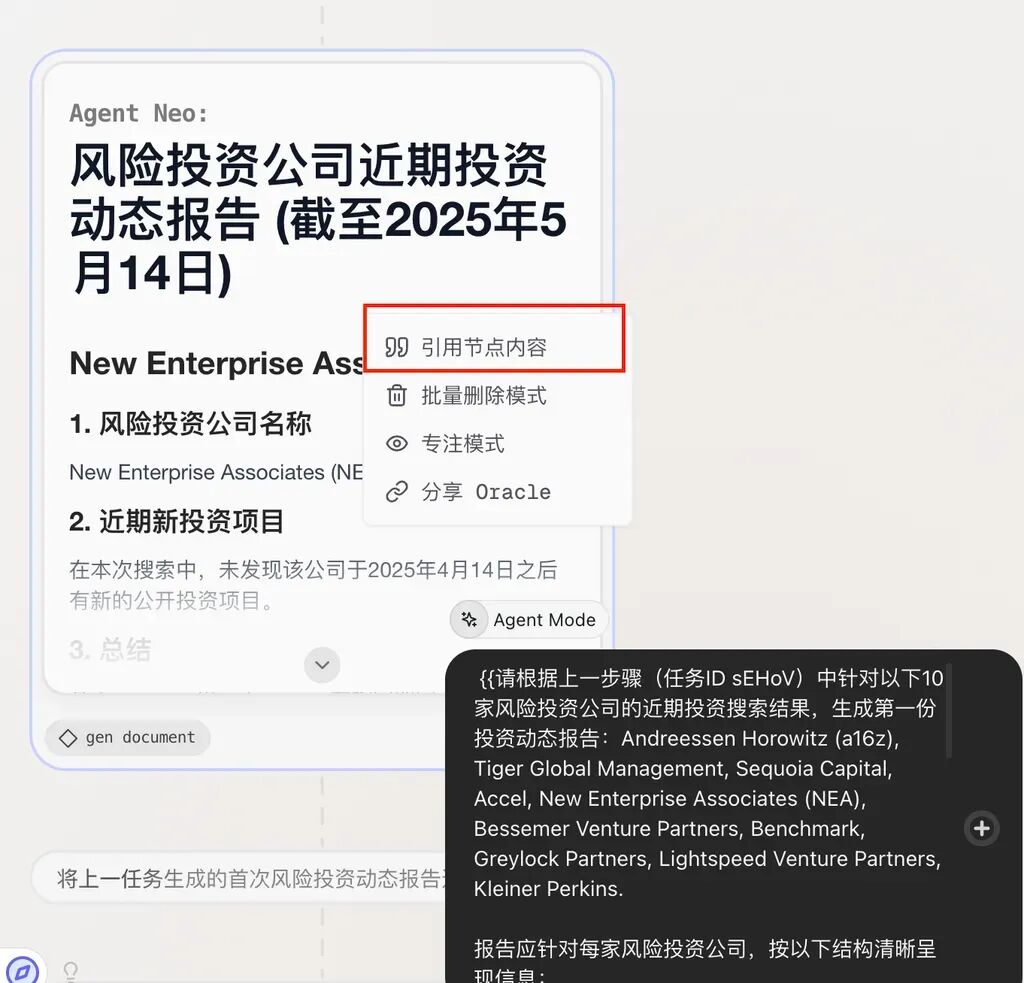
In Agent Neo's workflow, after it completes a detailed investment dynamics report at a certain node, I can directly select and reference that report.
At this point, flowith offers numerous conversation modes, each providing selectable models.
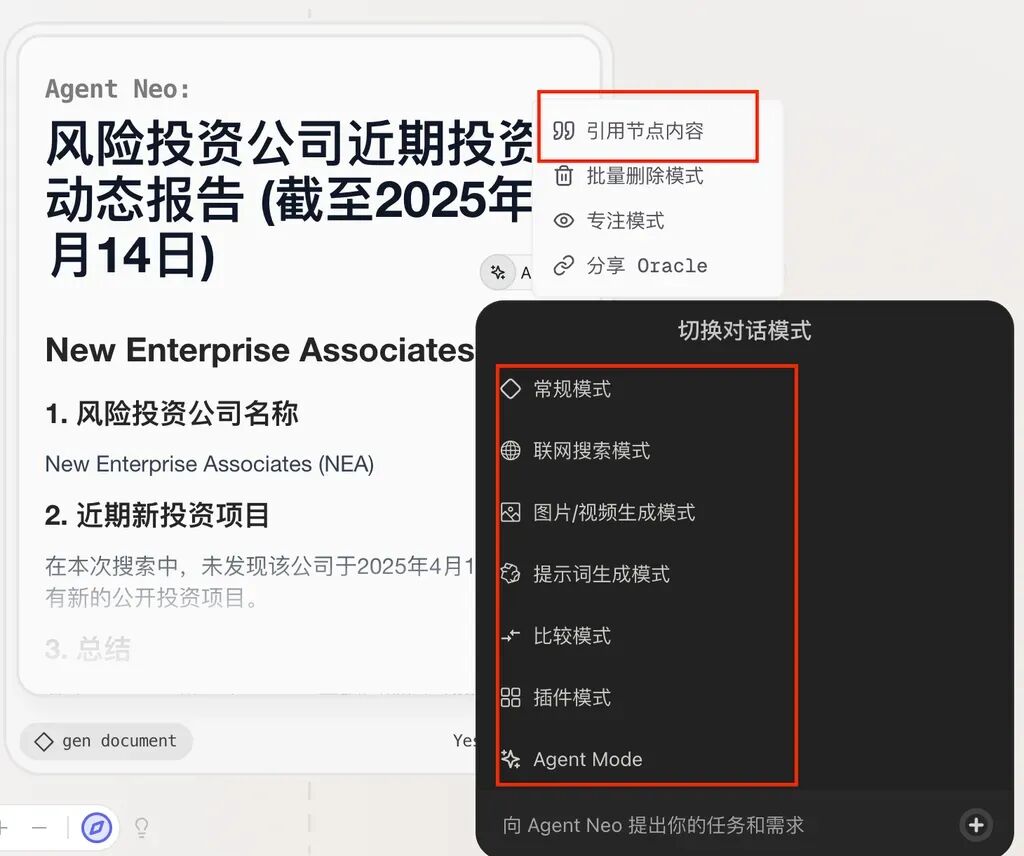
If there are no special requirements, simply selecting "Agent Mode" allows Agent Neo to automatically call upon multiple model types to produce a webpage for business analysis reports.
We recorded a screen capture of the interactive webpage we had Agent Neo build, so you can see for yourself how, in just a few short minutes, Agent Neo handles multiple tasks in parallel and delivers a remarkably high-quality result:
In this VC investment analysis webpage prototype, every functional module (such as Filters, search boxes) is interactive, demonstrating a high degree of completion.
2. From "Transparency" to "Control"
Trust is essential for building deep relationships between people. That's why both Manus and DeepSeek have won user trust by transparently displaying their working and thinking processes in exhaustive detail.
Agent Neo takes this one step further, achieving something closer to "control" on top of that transparency.
1) Empowering users with manual override
From the initial prompt input through project completion, Agent Neo's work doesn't always go smoothly. Though its capabilities are already formidable, the user matters more.
For example, before the final webpage was ready, it had already produced three versions, continuously adding features and fixing bugs. Throughout this self-improvement process, Agent Neo delegates modification rights to the user.
Beneath each Webpage node, there are two buttons: one for webpage code, one for the visualized deliverable.
On the visualized deliverable side, flowith also supports single-node Refinement, allowing direct code optimization on the deliverable via prompts.
On the webpage code side, users are granted the right to "modify code freely", integrating the interface interaction approach of mainstream AI coding agents.
2) Self-reflection and continuous review
Agent Neo also repeatedly and autonomously reviews whether its outputs meet requirements.
You'll find throughout Agent Neo's workflow that it constantly sends itself review reports as self-imposed accountability.
If Agent Neo encounters issues with a particular task, you can also use AI to fine-tune it.
Even when outputs have already met the delivery standards specified in the user's prompt, Agent Neo will additionally provide a framework review report, a framework summary report, and a stack of project summary reports.
This approach of handing "control" to users feels genuinely delightful. It's no longer an impenetrable "black box" that leaves you with no way to intervene, even if the results might still contain hallucinations.
As a user, as a human, my needs for an Agent go beyond this simplistic "prompt—result" interaction (especially given that LLM hallucination remains unresolved and output quality is often unsatisfactory). What matters more is having a sense of "mastery."
3. Beauty is a form of productivity
Agent Neo possesses an "aesthetic sense," evident not just in its interface design but embedded in its functionality.
Compared to traditional image generation workflows, Agent Neo doesn't generate images directly from user prompts. Instead, it follows a "prompt — autonomous information gathering — creative knowledge production — image generation" process.
See the results for yourself.
When Agent Neo produced an entire "Three-Body Problem" story collection, it generated the following illustrations:
If it pursued artistic sensibility at the expense of user needs, it would be hard to call it a product that expands the boundaries of AI agent productivity platforms.
But look at this self-introduction website Agent Neo custom-built for itself — it's got style too.
Beyond that, flowith's aesthetic sensibility shows up in all sorts of details — like the trailer they made for Agent Neo.
Or the promo video they made to nudge users into their "super AI creative space":
4. Knowledge as Agent Compute
flowith drew on its past accumulation — the Knowledge Garden — to give Agent Neo a major value boost.
Users can now quickly upload and add knowledge bases, using flowith's approach of breaking knowledge down into "knowledge seeds" to unlock more of Agent Neo's capabilities.
For instance, when I was testing whether Agent Neo could "work for me" for life, I ended up producing a large number of fairly mature workflows. All of this "knowledge" can be published as Recipes to the community, where it keeps creating value.
With one click, you can turn your workflow into a Recipe and share it with the community.
flowith also built an Agent Community where users share Recipes with each other and discover new ways to play.
Everyone sharing their workflows — isn't that just scattering knowledge seeds in the garden?
🚥
Agent Neo: Welcome to the future. Together, we voyage toward the stars!
flowith has also given us a batch of invite codes — and the supply is extremely limited. Want one? Follow the official account and reply with "neo" in the backend to enter the giveaway.
A little insider tip: existing flowith users will automatically receive invite codes, and new users who haven't signed up yet can still "viral-invite" to get codes and receive complimentary memberships.
Hope everyone gets to play!
References [1] DeepSeek API Platform: https://platform.deepseek.com/api_keys