When all the AI competitions are about how high you can fly, this AI is about whether you can eat your fill.

This Spring Festival, we handed everyday, down-to-earth questions off to Xiaotuan AI.
**
This Spring Festival, we handed the most everyday-life questions to Xiaotuan AI.
👦🏻 Author: Jingshan
🥷 Editor: Koji
🧑🎨 Layout: NCon

Over the two weeks of Spring Festival, ByteDance, DeepSeek, Moonshot AI, MiniMax, Zhipu AI — a whole lineup of companies took turns releasing new products, each breakthrough pushing at the ceiling of AI capabilities themselves. This work is critical, and well worth watching.
But here's the interesting thing: when everyone's focused on model capabilities, another equally important question tends to get overlooked: How do these capabilities actually become things people use every day?
This isn't a "models vs. applications" standoff. It's two sides of the same coin that the AI era demands we watch simultaneously.
Meituan's launch of "Xiaotuan AI" at this moment gives us a useful lens: When general-purpose model capabilities are already strong enough, real competition shifts to who best understands a specific scenario, and who can most naturally weave AI capabilities into every decision moment in a user's life.
Going out during Spring Festival — "what to eat," "where to go" — stops being a search problem and starts having direct answers.
That's a breakthrough on another dimension.
🚥
Next, sharing our "field notes" from this Spring Festival — running around, eating everywhere, asking about needs.
Xiaotuan AI: Hands-On
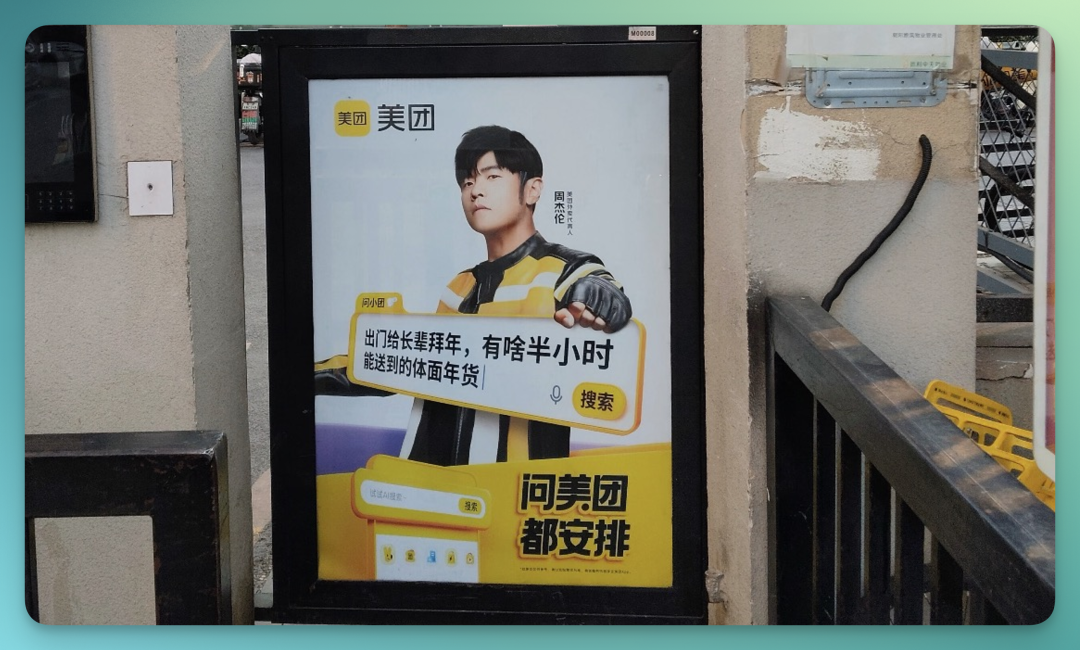
Many of you have probably seen that slogan on bus stop and billboard ads near your home lately: "Ask Meituan about anything, we'll sort it out for you." What it's referring to is the upgraded AI assistant "Xiaotuan" inside the Meituan app.
And it just so happens to coincide with the New Year. From New Year's Eve through the holiday, people's needs suddenly become dense: booking restaurants, finding places still open, buying things last-minute, planning group gatherings, comparing prices, checking deals.
Xiaotuan AI fits the holiday scenario well — it can handle some fairly complex or seemingly unconventional requests.
Xiaotuan AI's entry point is in the search bar of the Meituan app; tap in and you'll see "Ask Xiaotuan." It's not just a search feature — the experience is quite complete, already functioning as an Agent.
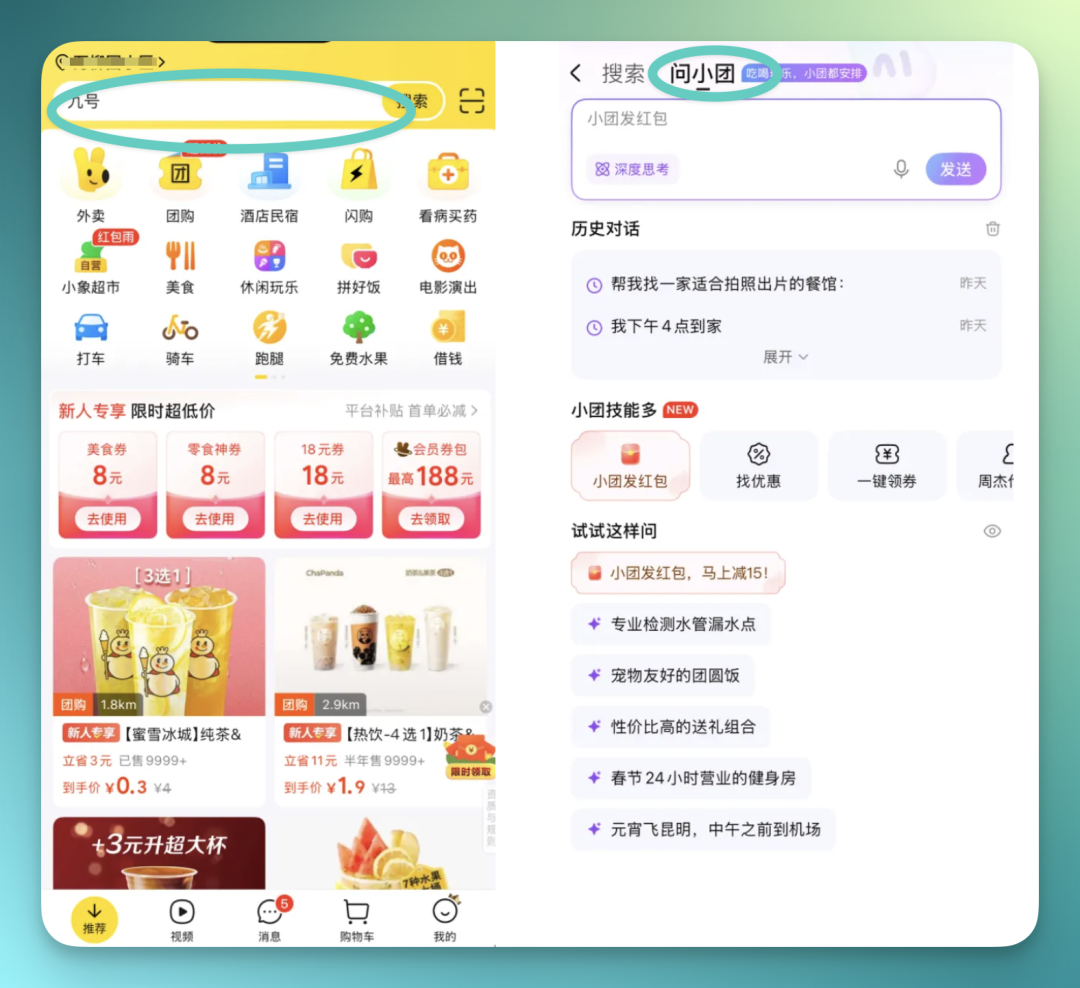
My first time using Xiaotuan AI, I just wanted it to help me grab coupons.
Everyone knows about Meituan Waimai's big "god coupons," but there are actually tons of hidden coupons that are a pain to find. Some require promo codes, and when work and life get busy, you genuinely don't have the energy to dig around everywhere.
So my first interaction with Xiaotuan AI was simply asking it to find coupons across the entire platform.
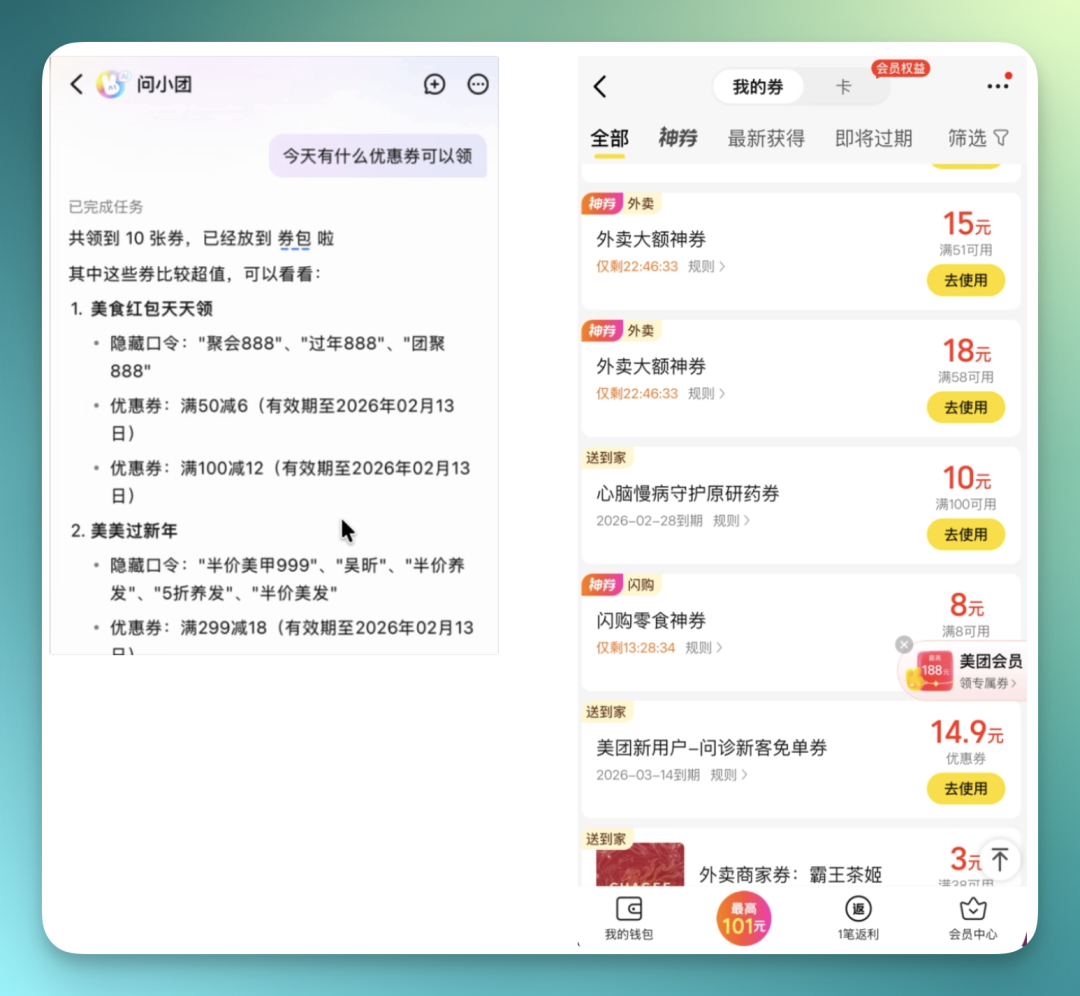
After grabbing the coupons, I realized it could handle pretty complex local life needs.
For example, I wanted to have a family dinner during the holiday — a big group, with elderly and kids, so I needed a restaurant that could satisfy all kinds of requirements. Also had to check the per-person price, and confirm whether they'd be open during Spring Festival.
In Beijing, more than half of restaurants typically close for the holiday. Sometimes a place shows as open on the map, but you show up and it's shuttered — happened to me several times in previous years. So every time I look for a restaurant, I get pretty anxious.
People say AI can order milk tea now, but the reality is that plenty of people still don't use AI to find restaurants, because hallucination remains a widespread problem, and real offline life doesn't tolerate errors — certainty matters most.
Especially at a moment like Spring Festival, many people don't need AI to write poetry or paint pictures. They just want to know which lamb skewer shop downstairs is open right now, or which dessert shop still has cakes available for preorder.
You can just hand the whole bundle to Xiaotuan AI. Here's the prompt I used:
Having a family dinner during the holiday, 8 people, with elderly and kids. Looking for a restaurant that:
- Is relatively quiet
- Has private rooms
- Allows dogs
- Has convenient parking
- Preferably Cantonese or Huaiyang cuisine
- Under 150 RMB per person
- Open during Spring Festival
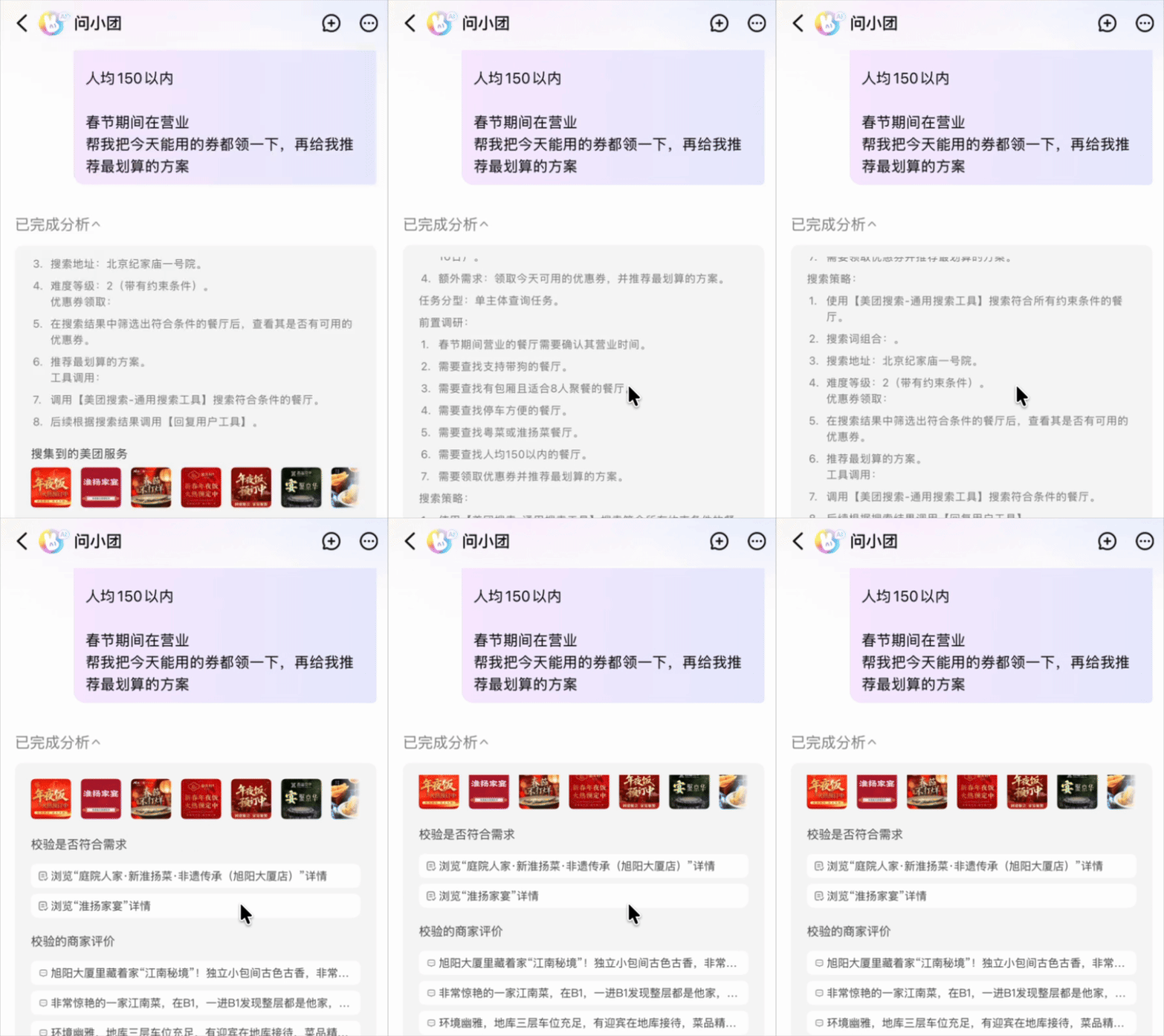
After asking, you can tap the "Deep Think" feature. Opening it shows you the complete analysis flow.
Keyword recognition is basic stuff — every AI search can do that. But Meituan has a local life data advantage. Xiaotuan AI isn't retrieving public information; it's drawing on Meituan's own accumulated data from delivery riders, merchants, and consumers — information that's already been verified offline, essentially checking the answer key before responding.
For instance, why is Xiaotuan AI's "currently open" more accurate than other AIs? Because if a store is operating, delivery riders will be accepting orders, and merchants will be updating menus and promotions. This service information gets refreshed daily, far faster and more punctual than public search engines.
Merchant reviews are even more important. In local life, this is an absolutely critical information channel.
The way it delivers answers is quite interesting. Before showing recommended store cards, it first summarizes your needs.
You'll notice it doesn't mechanically parrot back what you said.
Because a lot of the time our own requirements are pretty fuzzy — it takes those requests and cross-checks them against the realities of local life, doing some sorting and clarifying first.
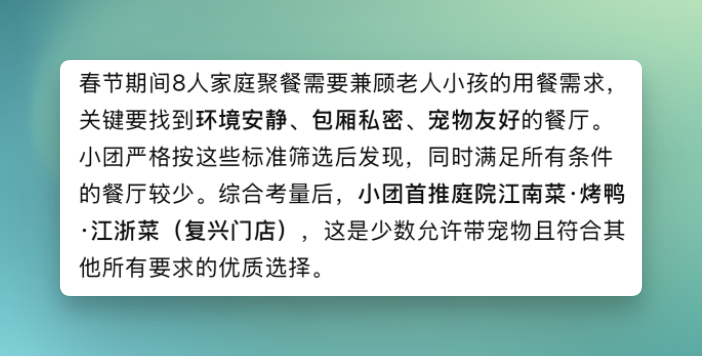
A condition like pet-friendly, combined with several other requirements, genuinely makes for a tough search. Lots of places don't allow pets inside these days.
One thing I particularly like about Xiaotuan AI: it uses real data. Pet-friendly restaurants are genuinely rare, so it straight-up tells you "there are very few of this type, probably just these few." It acknowledges the reality on the ground, then makes recommendations based on that.
It recommended a pet-friendly restaurant to me, and I was actually pretty skeptical. Because store pages generally don't directly label themselves as "pets allowed."
I clicked in to check the official store info — sure enough, no pet-friendly tag. So how did it find this?
Looking closely at its answer, I realized it digs through merchant comment sections. In this store's reviews, someone had written "no pressure bringing pets to dine."
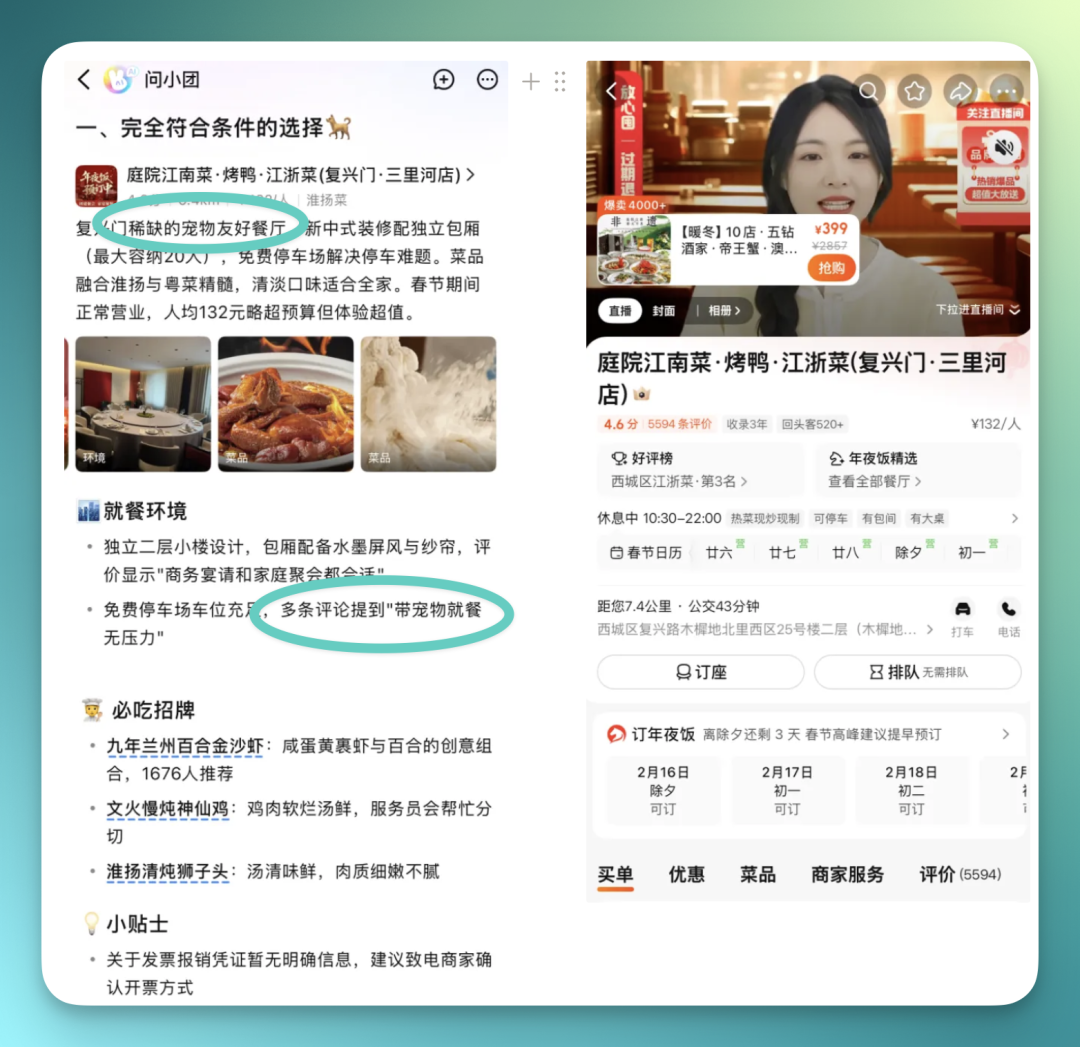
Within this chat interface, the whole experience flows quite smoothly. After recommending stores, it gives you follow-up question options to guide you deeper.
A summary alone isn't enough — I also wanted to know what viral dishes, signature dishes, desserts, and mains this place has. Just tap the options below to ask, and answers come quickly.
The way it serves product cards is also quite deliberate — typically two item cards followed by a group-buy package card.
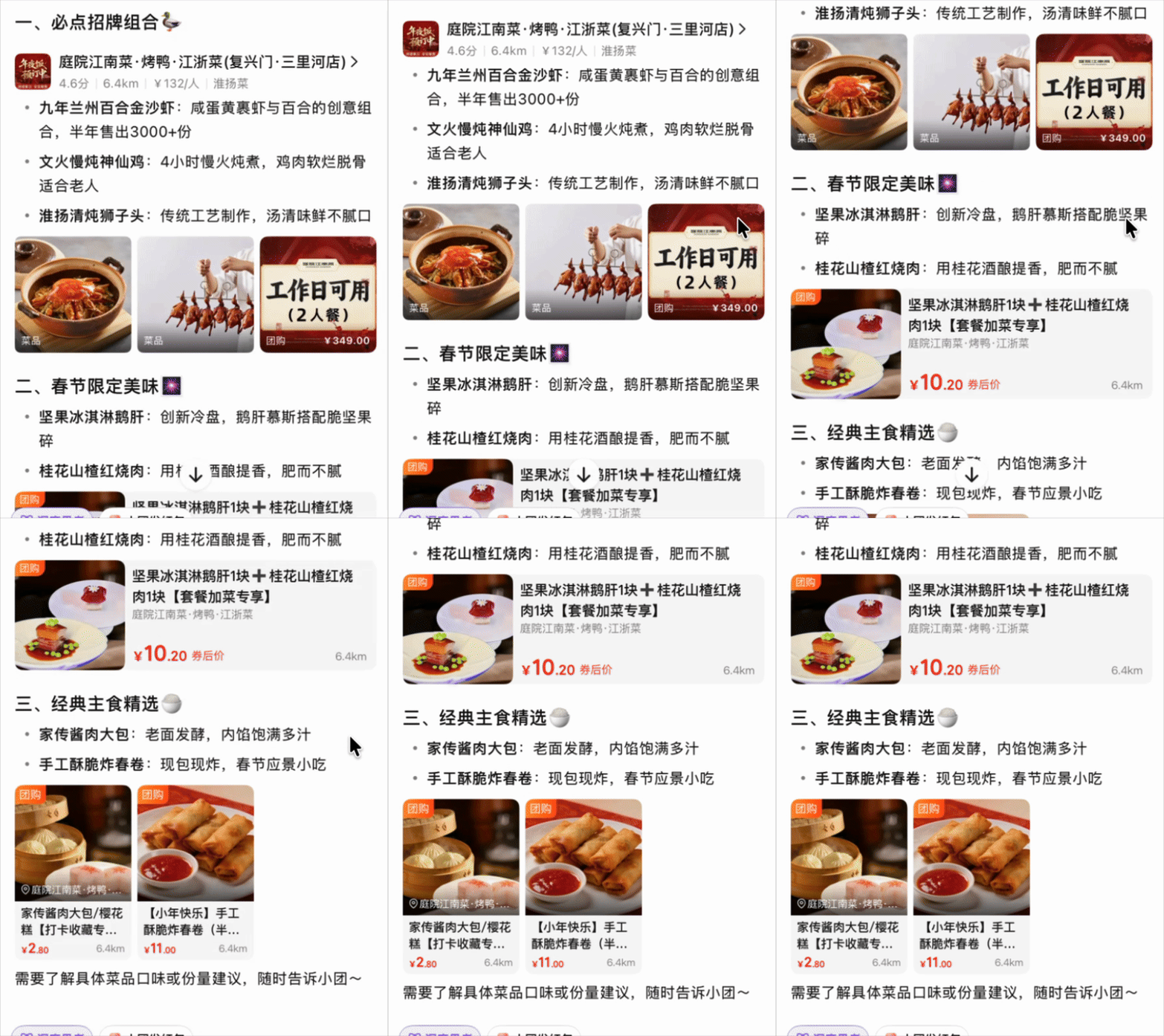
Complex scenarios like that family gathering example genuinely solve a lot of headaches. A bunch of relatives with different opinions — you can just dump everyone's requirements on it, and it'll integrate them itself.
Another pretty real experience: barbershops are often closed during the holiday, so finding an open one is genuinely difficult. This used to stress me out every year.
So I had it find an operating barbershop in Chaoyang District for me, with a pile of specific requirements:
I'm in Chaoyang District, forgot to get a haircut. Find me a barbershop that's open right now:
- Can be done within 2 hours
- No waiting in line
- Can book directly
- Within 3 km of me
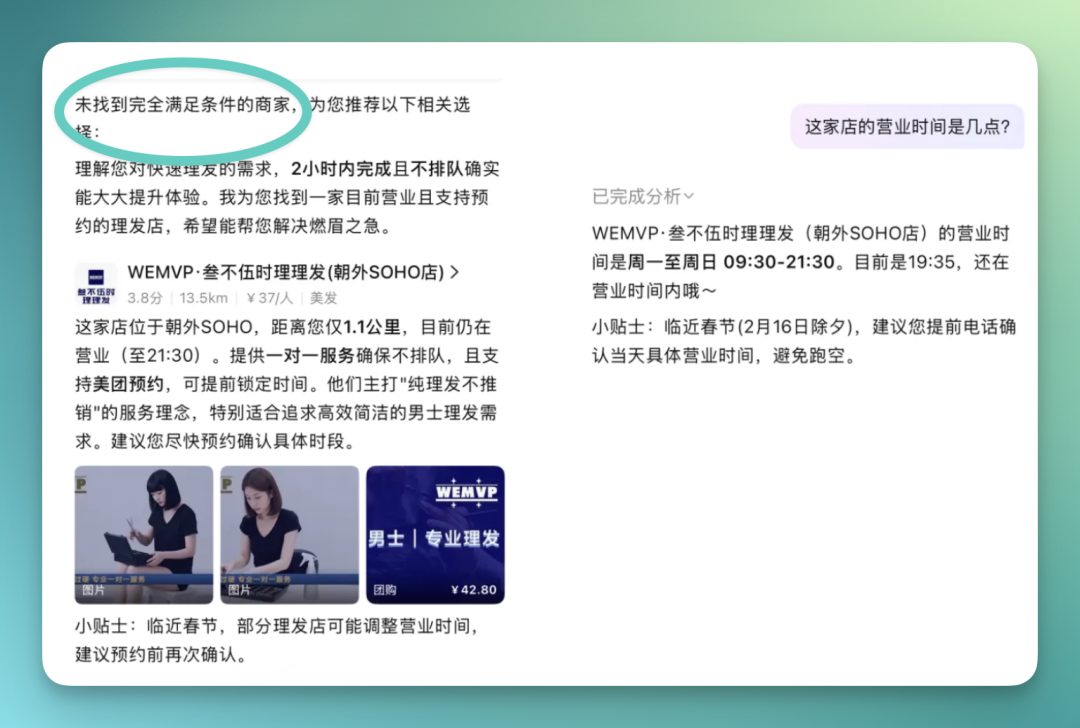
As I mentioned earlier, Xiaotuan AI has a great quality: it's honest.
If it can't find something that fully matches, it won't force it — it'll directly tell you "no merchants fully meeting all conditions found," then recommend the closest possible options.
That's a genuinely big experience upgrade.
A lot of AI features, when they can't find a matching merchant, will deliberately ignore certain conditions. You give 5 requirements, it satisfies 3 and still says "fully matches" — then you show up offline and feel like an idiot.
Another example: during the holiday people often make plans to hit bathhouses — a particularly common need in northern China. But there's a real pain point: many bathhouse and massage parlor reviews are bought and paid for, if you know what I mean.
You open the comment section and it's wall-to-wall five-star reviews: "great environment," "great service," "great value." But you show up and find the water temperature's too low, no scrubbing service, the fruit plate is basically nonexistent or not fresh, and they're pushing membership cards aggressively. The review-inflation problem at these places is severe.
So I asked it to find me a bathhouse, with the requirement of real user reviews, no marketing account spam:
Find me a bathhouse in Chaoyang District with authentic user reviews, no marketing account spam
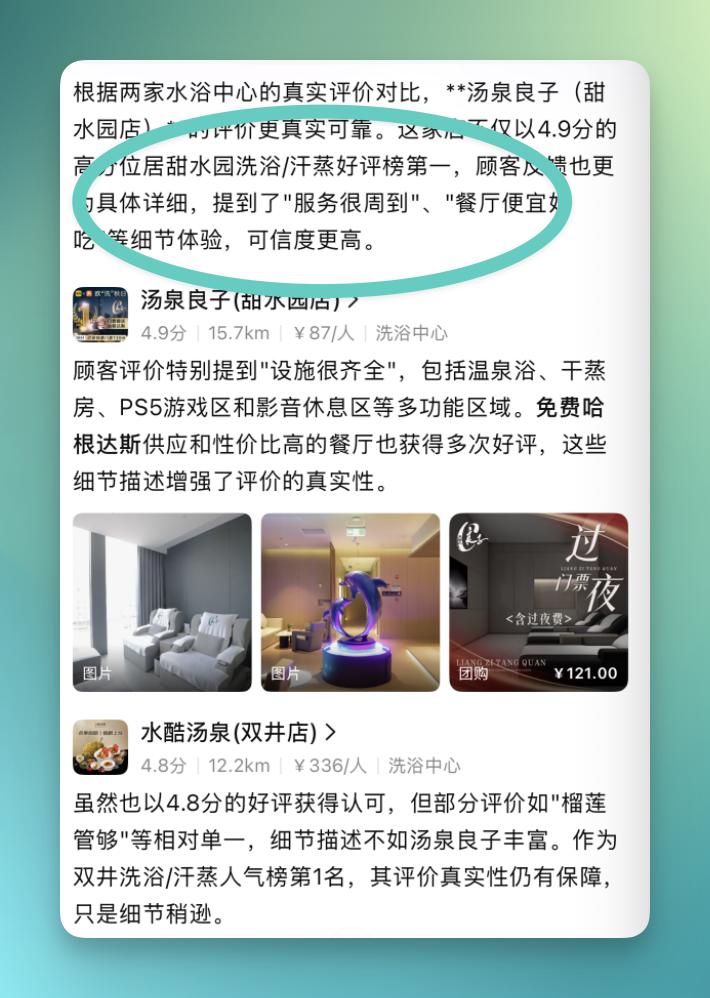
Completely avoiding inflated reviews is genuinely tough. But Xiaotuan AI leverages Meituan's local life data to do comparisons among real reviews.
It looks at review detail level — if there are specific experiential details, credibility goes up. Then it recommends stores based on this, mapping out detailed selection criteria for me. For instance, both might praise "great environment," but one writes just three words while another writes "the window seat on the second floor has great natural light, best time to go is around 3 PM."
The latter is obviously more credible, because marketing accounts generally don't write with that level of specificity.
During the holiday or just in normal life, there are actually lots of requests that seem pretty ridiculous but genuinely reflect popular psychology. Especially with today's "photo-worthy" culture, the requirements can get quite demanding.
For example, finding a restaurant suitable for taking photos — the needs are genuinely hard to satisfy.
The place needs aesthetic, design-conscious decor. The food needs to look atmospheric in photos. Ideally there are viral photo spots or installations suitable for group shots. These are all very real requirements.
Same approach — hand the whole bundle to Xiaotuan AI:
Find me a photo-worthy restaurant:
- Not expensive, under 100 RMB per person
- Aesthetic, design-conscious interior decor
- Relatively niche, not too noisy
- Has viral scenery or installations suitable for group photos
- Recently had real people taking photos and checking in
- Open today
- Within 5 km of me
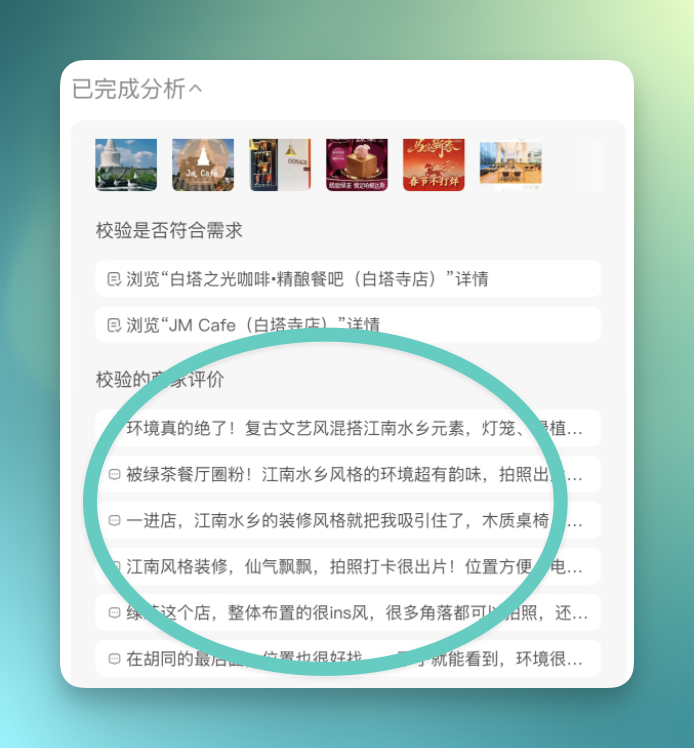
When I asked for photo-worthy restaurants, you'll notice it focuses even more on verifying each store's merchant reviews.
Because everyone's chasing that viral aesthetic, merchant reviews contain some relatively authentic comments. Keywords like "the environment is absolutely killer," "won me over," "drew me in," "super photo-worthy," "Instagram-worthy" are actually quite important.
It doesn't just mechanically identify these words — it reads the surrounding context. For instance, if someone says "Instagram-worthy," it continues reading what specifically they praised: the lighting, the renovation, or the tableware presentation. If someone says "super photo-worthy," it notes whether they actually attached photos, and what angles they shot from.
This kind of deep parsing of reviews is what separates "looks photo-worthy" from "actually good for taking photos." After all, some places have gorgeous promotional shots, but you show up and the lighting's wrong, the angles don't work, or it's too crowded to shoot anything.
This is far more reliable than just looking at official photos or ratings.
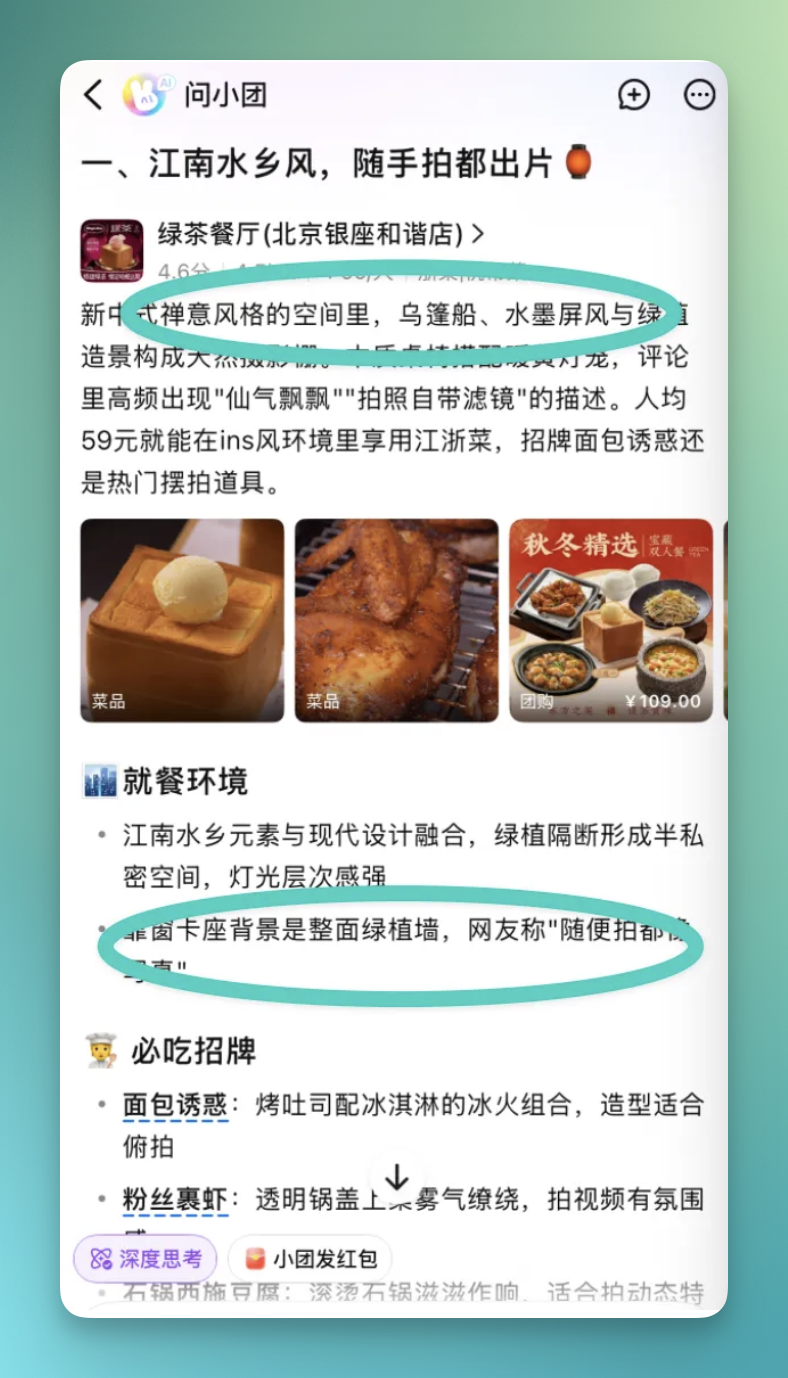
For instance, the first Green Tea Restaurant it recommended — every Green Tea location is actually somewhat different.
It specifically writes about this location's spatial layout, whether it has photo-worthy installations, how the Instagram-worthy environment is. Even down to details like the window booth's backdrop being a green plant wall, with many netizens commenting "easy to get good shots anywhere." These granular details are spot-on.
Since it's a restaurant, it definitely needs to recommend food too.
But under the "photo-worthy" premise, the dishes it recommends lean in that direction. For instance, telling you that grilled toast with ice cream photographs better, even noting that the presentation works well for overhead shots.
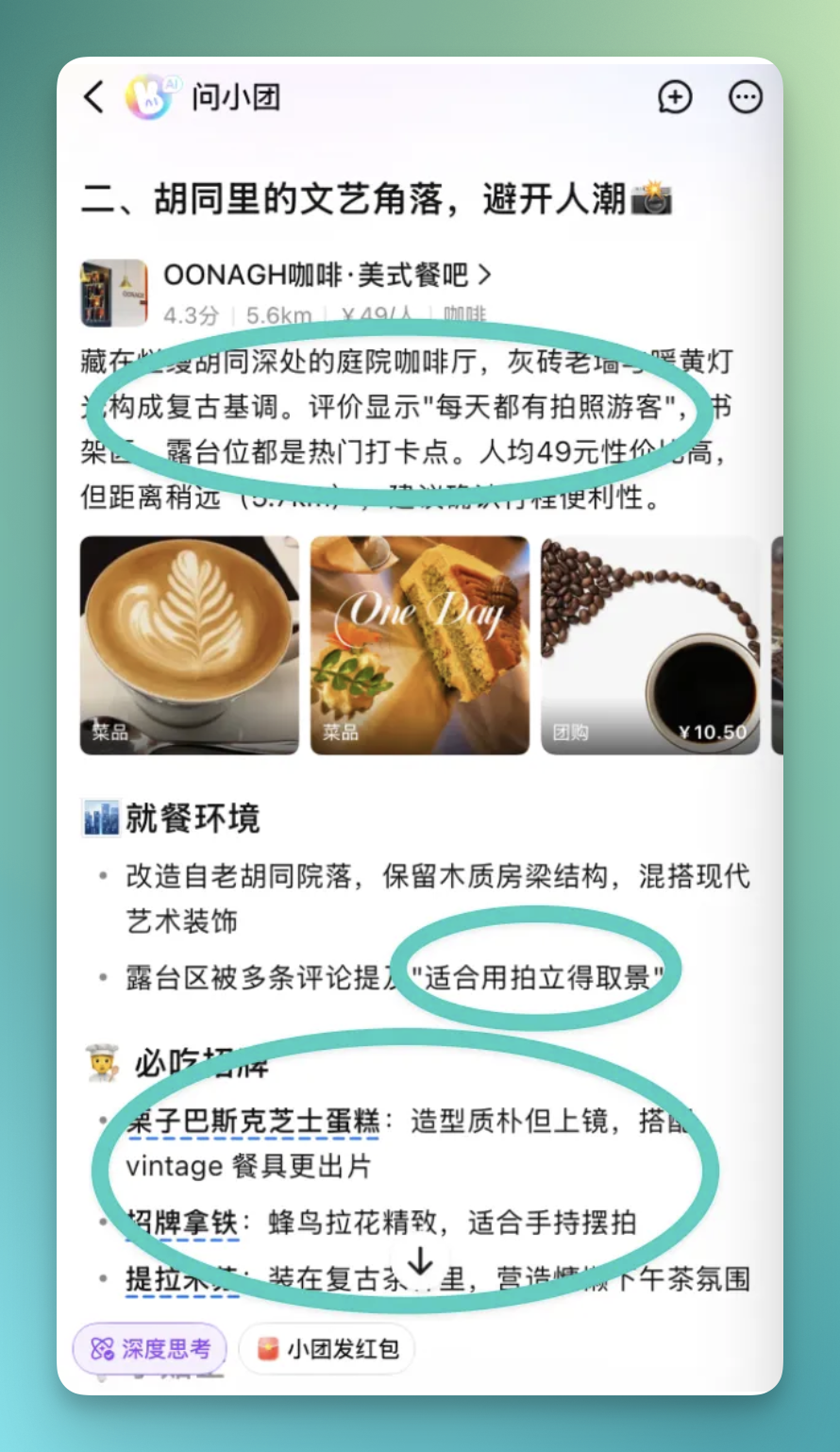
Same with the coffee and bistro below — it details the overall decor style, and which specific spots netizens actually prefer for photos.
For example, the retro foundation of gray brick, old bridge, and warm yellow lighting; where the hot photo spots are; that terrace seating is a check-in hotspot; the per-person price. It even specifically notes that the terrace area works great for Polaroid framing.
Among must-order signatures, that Basque cheesecake pairs with vintage tableware for better photos, and oat lattes work well for handheld shots. The granular detail is extremely thorough.
My biggest takeaway from using it: Xiaotuan AI is honest, and its database runs deep.
Can't find it? Says can't find it. Only partially matches? Explicitly says only partially matches. This honesty actually makes the whole experience more trustworthy, because I know the information I'm getting has been filtered, not fudged.
And it can afford to be honest because of the database Meituan has built up over the years — not so much about how many "merchants" it has. The critical part: the massive volume of authentic merchant reviews from netizens. These aren't official promotional copy; they're feedback left by users after actually spending money.
Some praise the environment, others complain about service, some detail what a specific dish was like, someone mentions the store allows pets.
These fragmented, authentic pieces of information are the foundation that lets AI make "AI + local life" recommendations.
Xiaotuan's experience integration this time around is, at its core, more of an opening act. AI接入本地生活这件事,现在才刚刚起步,远没有到定型的时候。
There will definitely be more players entering, more product forms emerging, and someone will take this deeper, finer, and more usable.
But one thing is quite realistic: local life isn't a field you can conquer with models alone — it heavily depends on real store data and user reviews. Seen in this light, Meituan is naturally in the first tier.
Another interesting point: someone recently posed the viral "car wash dilemma" to Xiaotuan — "I want to wash my car, the car wash is 50 meters from home, should I walk or drive?" Many large models flopped on this, but Xiaotuan AI didn't just avoid failing — it directly recommended nearby car washes.
This perhaps indicates that Xiaotuan AI isn't a pure language model, but rather invokes some kind of service logic. Other AIs interpret "recommendation" as "optimal path planning," while Xiaotuan interprets "recommendation" as "necessary steps to accomplish the task."
The latter is how humans actually make decisions. Other AIs are doing "math problems"; only Xiaotuan AI is doing "life problems."
Following this direction, the AI + local life thread is definitely going to get more interesting this year.
2026 is worth looking forward to.