From 'Using AI' to 'Becoming an Intelligent Enterprise': How xFusion Unlocks the Enterprise AI Value Chain?

Make compute consumption measurable, controllable, and value-creating.
Making compute consumption measurable, controllable, and value-creating.

👦🏻 Author: Miss Yi
🥷 Editor: Koji
🧑🎨 Layout: NCon

In 2026, enterprise AI is crossing a watershed.
Agents are moving from isolated pilots to scaled deployment, entering enterprise production systems. The core question facing businesses is no longer "how capable are the models and compute," but "can intelligence be reliably supplied, effectively operated, and integrated into business operations."
How can AI spending be converted into measurable business value? What does enterprise evolution in the AI era actually require?
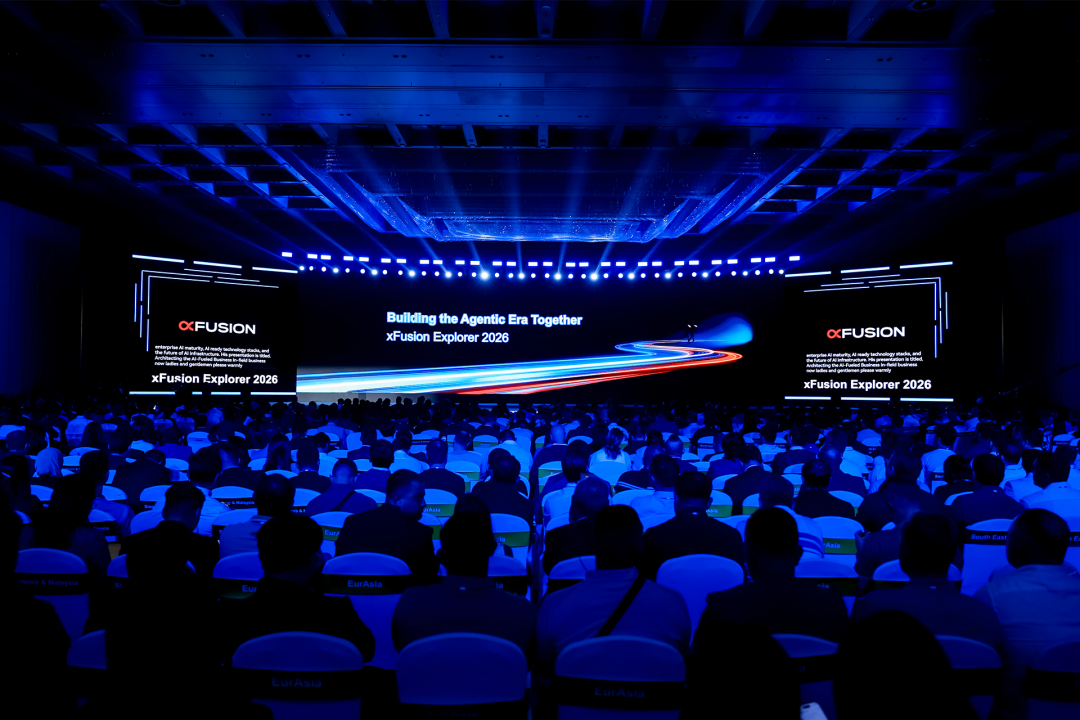
On September 21, the xFusion 2026 International Explorer Conference, themed "Building the Agentic Era," was held in Zhengzhou. Enterprise customers, industry partners, and guests from around the world gathered to discuss enterprise intelligent evolution, Token Factory practices, and global partner collaboration — a concentrated conversation on enterprise AI implementation.
From "Using AI" to "Becoming an Intelligent Enterprise"
Opening the conference, xFusion CEO Liu Hongyun offered his answer: the "Intelligent Enterprise."
By xFusion's definition, an Intelligent Enterprise is one that achieves comprehensive internal intelligence in the agentic era. It is not simply about deploying more AI tools, but about gradually embedding intelligence into R&D, production and operations, creative collaboration, and analytical decision-making — making it part of the enterprise operating system. This is a direct response to the core contradiction in current enterprise AI deployment.
KPMG's 2026 Global Technology Report shows that 88% of surveyed enterprises have begun integrating Agentic AI into their systems, yet only 24% have achieved ROI across multiple AI use cases. Behind this "high penetration, low return" lies the practical friction enterprises face in agent deployment.
At the conference, Liu Hongyun further elaborated on xFusion's specific vision for the "Intelligent Enterprise", identifying two pillars required for its realization: an efficient, secure Token production platform; and an AI-reconstructed enterprise production, operations, and analytical decision-making system.
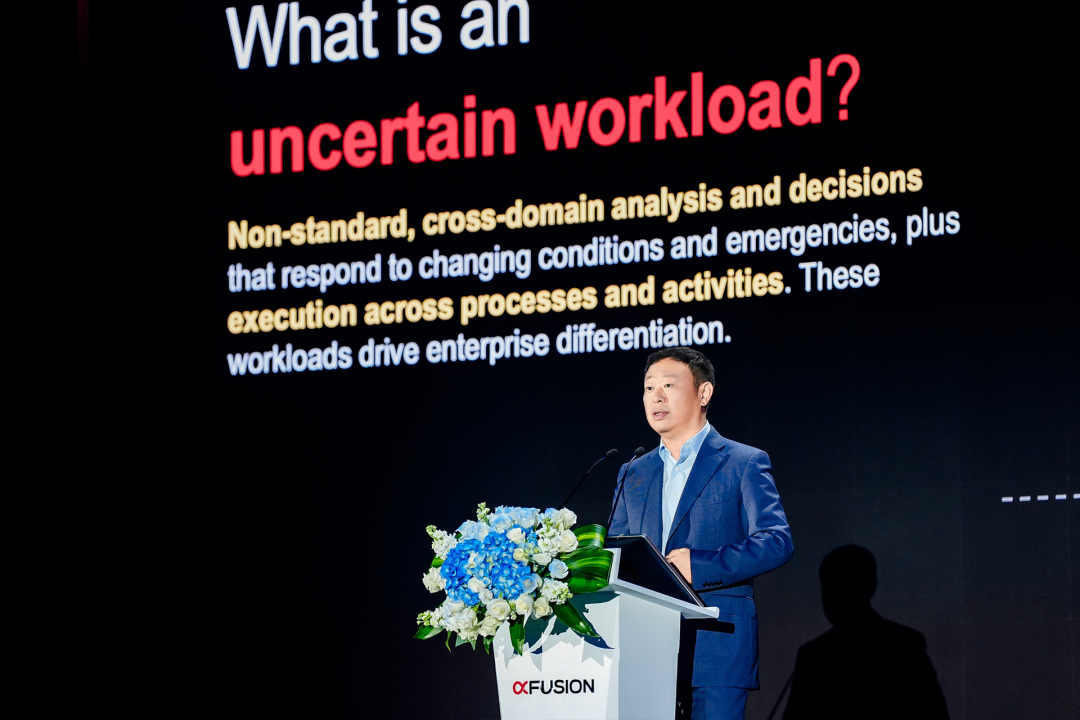
Liu Hongyun, CEO of xFusion
If compute cannot match workloads, Tokens cannot be produced efficiently; if AI cannot enter business operations, no amount of Tokens will generate value.
To some extent, xFusion's "Intelligent Enterprise" concept redefines the competitive benchmark for enterprise AI. For the past two years, industry discourse centered on "whether to adopt large models" and "which model to use." The introduction of "Intelligent Enterprise" shifts the competitive focus to three deeper questions:
Can enterprises manage Token production and consumption as they manage electricity? Can AI truly understand business logic rather than remain at the conversational interface? Can intelligence evolve from handling single tasks to cross-system, cross-role process collaboration? Since 2024, xFusion has been incubating Intelligent Enterprise-related projects, formally launching "Intelligent Enterprise 1.0" in 2025. It has now established an enterprise ontology layer and digital-intelligent technology engineering platform for Agentic AI, completing a systematic layout from compute infrastructure, AI enablement platform, to business digital-intelligent services.
At the conference, Wang Hongxin, Vice President of xFusion's Intelligent Enterprise Ecosystem Business Unit, offered a more specific assessment.
He noted: the challenge of enterprise AI implementation lies not merely in connecting models to existing systems, but in enabling AI to understand how the enterprise actually operates.
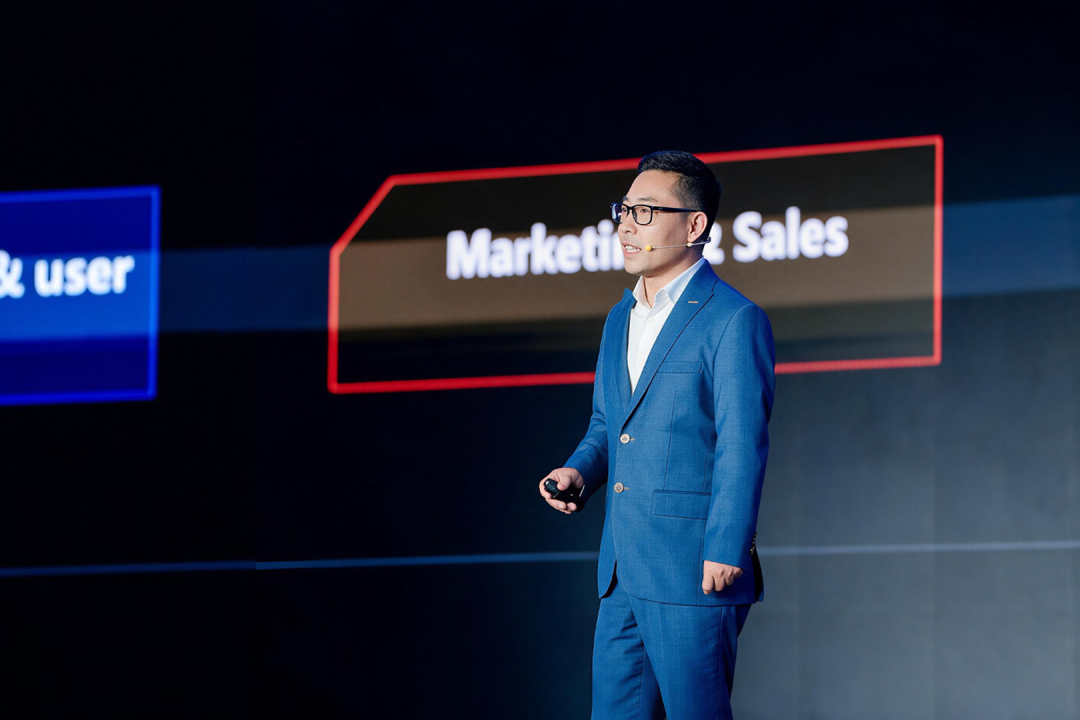
Wang Hongxin, Vice President of xFusion's Intelligent Enterprise Ecosystem Business Unit
To this end, xFusion constructs enterprise ontologies that map business objects — customers, orders, products — along with their relationships and rules, connecting business capabilities scattered across different systems so that agents can progress from handling individual tasks to participating in cross-role, cross-system process collaboration.
A key problem this ontology layer addresses in technical architecture: large models understand enterprise business through the enterprise digital twin created by the ontology layer, and based on unambiguous ontology modeling, minimize inference hallucinations — allowing AI to move beyond peripheral assistance and truly enter enterprise operations, collaboration, analysis, and decision-making.
The evolution toward Intelligent Enterprise is not achieved overnight. Specifically regarding the path for AI to enter enterprise operations, xFusion breaks it down into four progressive levels: activity-level agents handle specific tasks like customer service Q&A and contract generation; process-level agents advance AI from "point execution" to "linear collaboration"; enterprise-level analytical decision-making forms an enterprise brain; and ecosystem-level intelligence extends collaboration beyond enterprise boundaries.
The key to this path lies not in how many agents are deployed, but in whether enterprises can enable AI to understand business, participate in processes, and continuously generate measurable value within clear data, permission, and responsibility boundaries.
Liu Hongyun believes that over the next three to five years, enterprises that deeply practice AI early may gradually pull ahead of observers.
This means enterprises must establish Token Factories matched to their own business workloads, allowing compute to pass through model selection, inference optimization, and measurement-based operations to form stable, trustworthy, manageable intelligence supply.
The Complete Chain from "Compute Investment" to "Business Value"
Of the two pillars of "Intelligent Enterprise," the efficient, secure Token production platform addresses how intelligence can be reliably supplied.
How can enterprises manage Token assets as they manage production materials?
As Tang Qiming, President of xFusion's Compute Business Unit, explained, xFusion's solution is to reconstruct operational logic along the value chain from WATT → FLOPS → TOKENS → AGENTS → VALUES. Here, Token is the cost center, Agent is the profit center, and only high-quality Tokens actually consumed by business can be converted into real value.
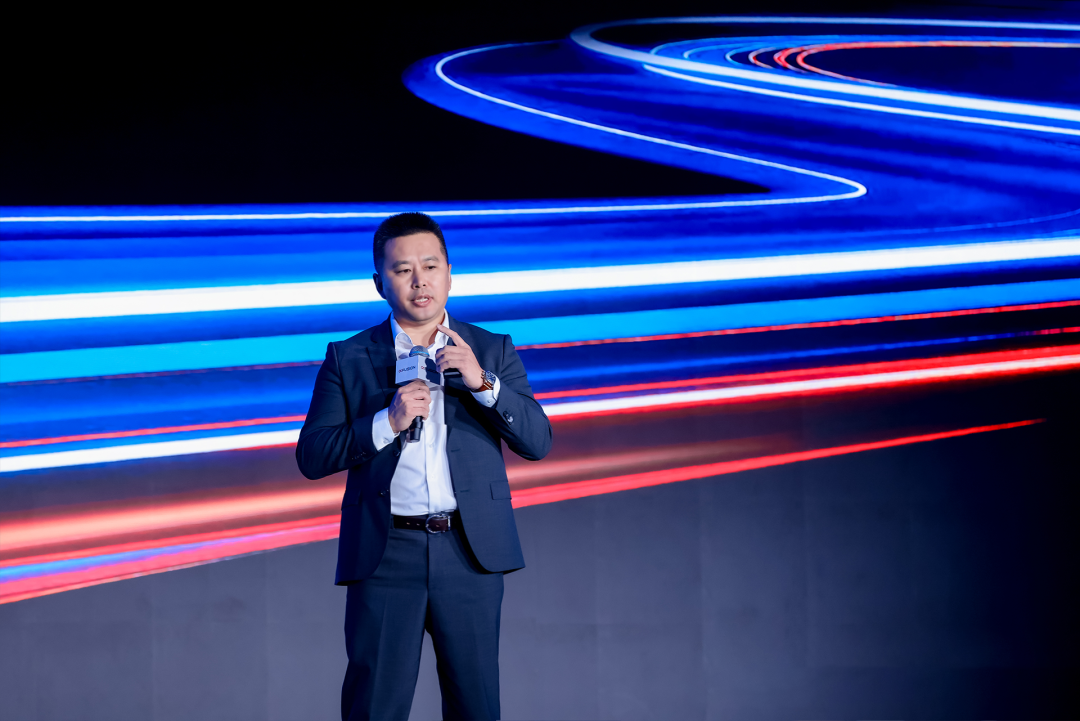
Tang Qiming, President of xFusion's Compute Business Unit
For this value chain to materialize, a core question must be answered: how does compute infrastructure convert to Tokens, how are Tokens measured and operated, and how does AI capability extend from data centers to offices and desktops.
Addressing these questions, xFusion's FusionOne AI enterprise-grade Token Factory solution connects compute, models, and Token operations. According to its overall architecture, the Token Factory comprises three interlinked components: compute infrastructure, model and compute services, and Token measurement and operations — respectively addressing how Tokens are produced, how they are efficiently supplied, and how they are continuously managed and optimized.
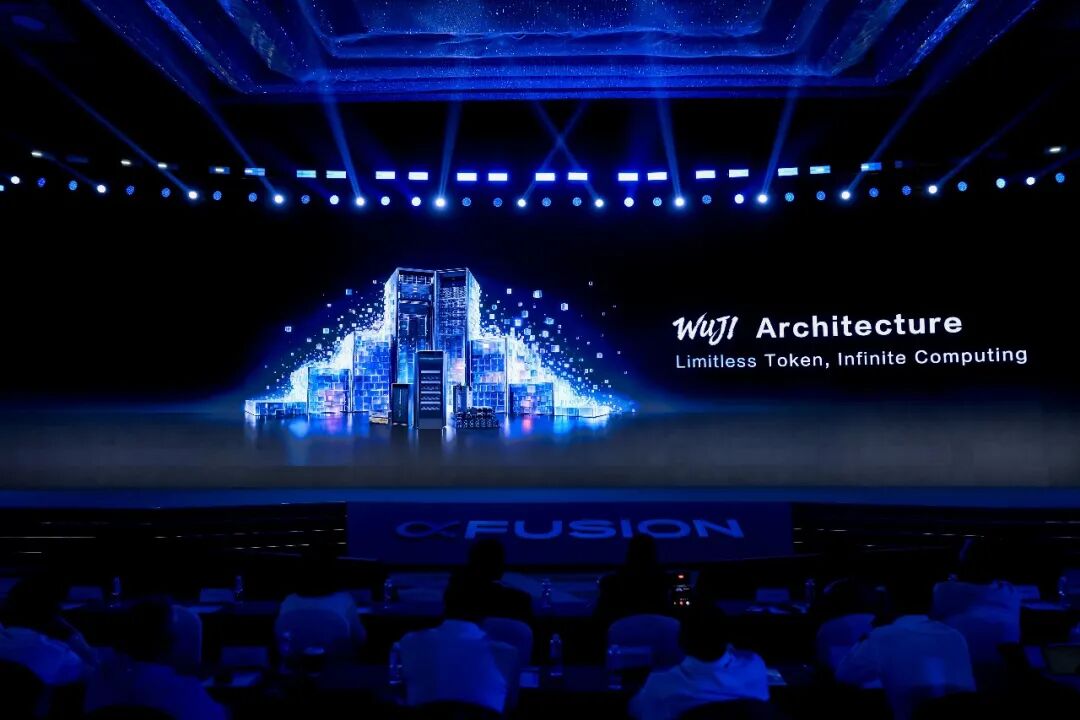
At the data center layer, xFusion newly released the FusionServer "Wuji" architecture, along with its first product based on this architecture, the FusionServer V9 series.
As large model capabilities accelerate and AI enters an inference-dominant "getting things done" phase, global Token consumption continues to explode, making supernodes a clear trend for medium-to-large AI data centers. The core significance of the "Wuji" architecture lies in its modular decoupling and heterogeneous compatibility, with systematic optimization around power supply, liquid cooling, and interconnect — giving data center foundations evolutionary capability, providing unified infrastructure for general-purpose computing, AI computing, and storage, and pushing edge computing toward desktop form factors.
As physical AI drives compute from server rooms to industrial sites, retail floors, and desktops, enterprises have new requirements for edge ecosystem completeness. In the view of Zhou Xun, General Manager of xFusion's Edge Computing Domain, edge compute is not simply an extension of central compute, but the core origin point where AI and the physical world deeply integrate to create real industrial value.
Under this logic, xFusion adheres to horizontal expansion and vertical deepening of the Token Factory. At the conference, Zhou Xun and Kevin Ji, AMD Greater China Marketing Vice President, jointly launched the FusionXpark M series desktop AI supercomputer. This product line embodies xFusion's practical vision and implementation path for advancing localized terminal AI compute deployment in the Intelligent Enterprise era.
The globally launched FusionXpark M series, built on the AMD Ryzen AI Max+ PRO 495 platform, supports up to 192 GB of unified memory, focusing on three scenarios: local large models, agent development, and AI Agent office work. It supports data remaining on-device, Token metering, and AgentCare — bringing agents to industrial sites, retail floors, and desktops for real production needs.
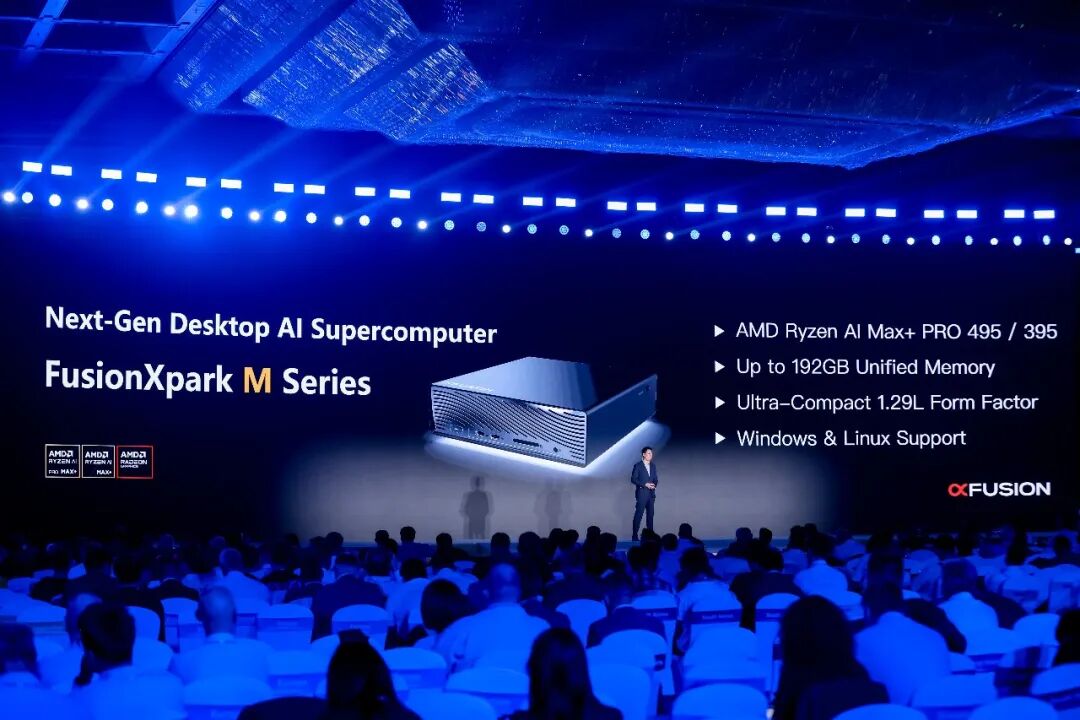
From the "Wuji" architecture and FusionServer V9 for data centers, to the FusionOne AI enterprise-grade Token Factory solution, to the TokenBox local AI super workstation and FusionXpark M series desktop AI supercomputer, xFusion has formed a Token Factory product system covering different deployment scales: large-scale production in data centers, agile production in offices, and portable production on desktops.
But the value of Token Factory lies not merely in producing more Tokens, but in making Tokens measurable, manageable, and continuously optimizable.
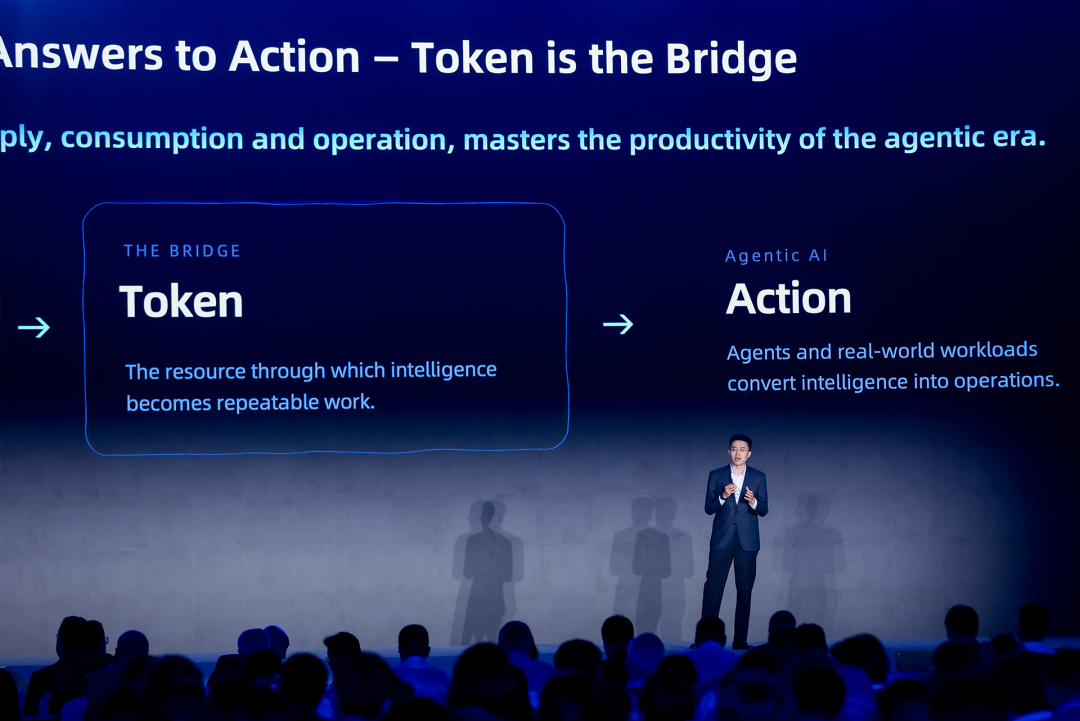
Wang Liangdong, Vice President of xFusion's Compute Domain
Wang Liangdong, Vice President of xFusion's Compute Domain, noted that in multi-model, multi-agent environments, different tasks have varying requirements for context, latency, and security. Enterprises must not only match appropriate tasks to appropriate models, but also see clearly who is consuming Tokens, why costs are changing, and whether investment is truly generating business value — avoiding Token operations becoming a "black box."
xFusion also serves as the "Customer 001" for its own solution. Currently, its internal Token Factory supports over 100 agents across more than 30 business scenarios. Based on this internal practice, xFusion has further distilled a six-step implementation framework to help enterprises reduce repeated trial and error and accelerate AI's progression from isolated pilots to production applications.
Token Factory thus moves further from industry concept to deliverable products, platforms, and application scenarios — letting Tokens follow business to every on-site problem that needs them.
Reaching the Last Mile of Intelligence
Producing Tokens does not equal creating value.
The leap from Tokens to VALUES requires AI to enter specific enterprises and specific processes, combined with industry knowledge, data systems, and business rules.
In external implementation, xFusion's system has already been validated across multiple industries.
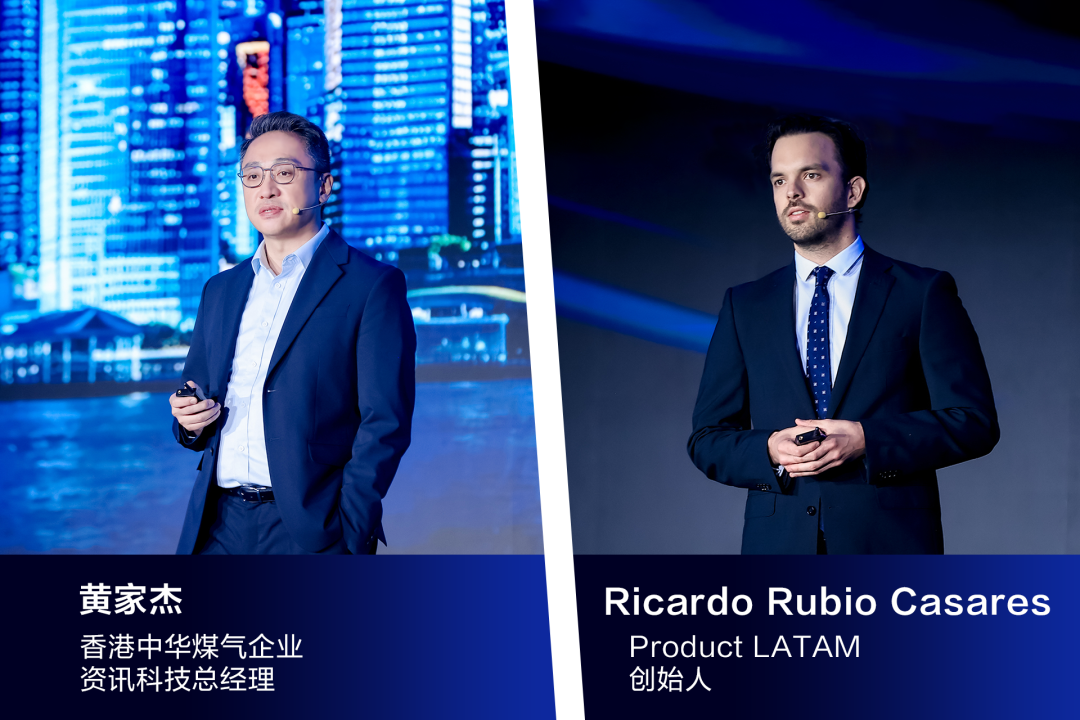
At the conference, Wong Ka Kit, Enterprise Information Technology General Manager of Hong Kong and China Gas, clearly explained how this energy company advances transformation through data governance, AI platforms, and business agents, with xFusion's digital-intelligent transformation solutions helping unlock AI business value.
Ricardo Rubio Casares, Founder of Product LATAM, also shared his company's practices in data governance and AI collaboration from the Latin American market. Based on xFusion FusionXpark's local inference capabilities, they apply the ERPA model to SMEs and hotel groups, integrating multi-source data at lower cost and with greater security, driving AI capability deployment in the Latin American market.
In this transformation originating from the AI compute layer, xFusion positions itself as "a horizontal full-stack solution provider for enterprises in the AI and data era."
What xFusion builds is a set of cross-industry replicable "compute infrastructure, Token production and operations, enterprise ontology, and platform capabilities." From underlying compute infrastructure, AI and data enablement platforms, to horizontal business process software and scenario-based implementation services — all universally available to enterprises.
Ecosystem partners combine industry software, specialized models, industry knowledge, and local delivery experience to jointly drive these capabilities into specific industries and business processes. This division of labor is not simple product integration. Different industries have their own business rules, data systems, and professional knowledge; only by combining replicable horizontal capabilities with vertical industry experience can AI truly reach the business frontline.
In terms of global ecosystem deployment, xFusion currently has over 30,000 global partners. For the next phase, xFusion will focus on four directions — Intelligent Enterprise, Token Factory, compute-electricity synergy, and ecosystem co-creation — to explore with global customers and partners, combining local industry experience and delivery capabilities to form solutions suited to specific markets, jointly advancing intelligence through the "last mile" of business scenario implementation.
Conclusion
The core message xFusion delivered at the 2026 International Explorer Conference is a clear technical narrative for the AI era: xFusion aims to use Token Factory to solve intelligence production efficiency, use enterprise ontology modeling to solve AI's understanding of business, and use horizontal full-stack capabilities with ecosystem partners to jointly advance AI implementation at the business end.
As Liu Hongyun emphasized in his speech, for enterprises, the question is no longer simply whether to use AI, but how to keep pace with change, control costs, and make investment produce measurable value. This is not only a description of industry status, but also implies xFusion's strategic direction: during this window period of uneven AI implementation pace, helping enterprises more quickly make compute consumption measurable, controllable, and value-creating.
Whether this path succeeds depends on whether xFusion's Token Factory business model can continue to be validated, and whether the "interface" between horizontal full-stack capabilities and vertical scenarios proves sufficiently clear and efficient.