Fresh off a nine-figure funding round, how does he plan to tackle the "impossible triangle" of AI hardware? | A conversation with Ma Xiao: Founder/CEO of Future Intelligent

"Only by doing what makes you happy can you unleash your full energy."
"Only by doing what makes you happy can you unleash your full energy."
👦🏻 Podcast interview: Koji, Ronghui
🥷 Edited by: Bella
🧑🎨 Layout: NCon

In this year's booming AI hardware赛道, AI earbuds have become something of an "open secret."
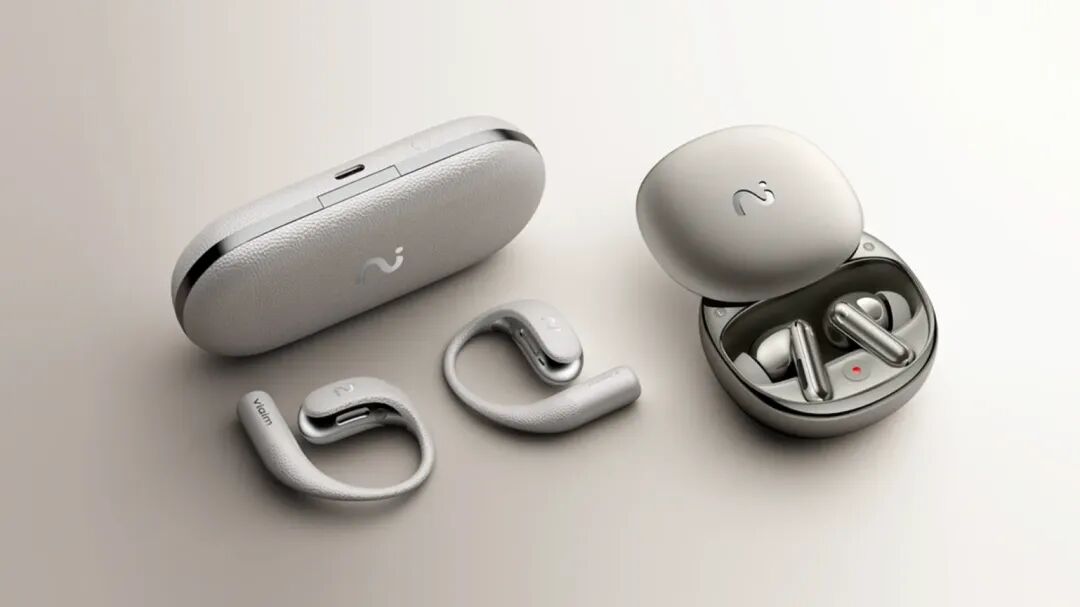
They're portable, can record what the user hears to serve as AI's "ears" and supplement real-world information, filling in the context that AI needs.
But for a pair of earbuds, balancing performance, battery life, and weight is an almost impossible triangle.
In this crowded field, someone is trying to break through — Ma Xiao, founder and CEO of Future Intelligent.
Recently, Future Intelligent completed a new funding round led by Ant Group, with Qiming Venture Partners making an超额跟投, at a hundred-million-yuan scale. This marks their third funding round this year.
Less than four years since founding, Future Intelligent is already profitable, and its iFlytek AI earbuds have long held the top spot on major e-commerce platforms' AI earbud sales charts. This year, they also launched a new overseas-facing brand, "viaim."
Today, we want to talk with this founder who has "crossed cycles" about his entrepreneurial journey. Especially in building an AI hardware product that has won market recognition and achieved strong sales results — what key decisions did Ma Xiao and the Future Intelligent team get right?
Beyond that, Ma Xiao also shared with us some of his personal reflections from his years in the workplace.
When his decision to keep pushing forward with earbuds wasn't understood, when everyone told him this path was a dead end, how did he withstand enormous pressure and repeatedly challenge himself internally: "What if everyone else is wrong?"
It was this very reflection that taught him to understand himself in the lows, and ultimately, with guidance from a "benefactor," to make the decision to "follow my heart" and embark on the entrepreneurial path.
We hope these reflections bring something valuable to you all.
🎥 This episode was recorded at AI Hacker House. The video podcast will be released on Koji's Xiaohongshu, Bilibili, WeChat Channels, and YouTube.
Listen on WeChat:
Listen on Xiaoyuzhou:

Part I Rapid-Fire Q&A: Getting to Know Ma Xiao and Future Intelligent
👦🏻 Koji
We'll start with a rapid-fire Q&A. First, your age?
👦🏻 Ma Xiao
👦🏻 Koji
Alma mater?
👦🏻 Ma Xiao
Xiamen University, graduate degree.
👦🏻 Koji
Your MBTI and zodiac sign?
👦🏻 Ma Xiao
INFJ, Scorpio.
👦🏻 Koji
Pitch your company and product in one sentence.
👦🏻 Ma Xiao
Future Intelligent is an AI company focused on office scenarios with integrated hardware and software.
We made a hardware product with millions of users called iFlytek AI earbuds. Going forward, we aim to become the world's best integrated hardware-software office assistant company.
👦🏻 Koji
Can you share your funding situation?
👦🏻 Ma Xiao
The company has gone through three funding rounds. The most recent one, led by Ant, just closed. The company's valuation has reached close to 1 billion RMB.
👦🏻 Koji
Are you able to share your revenue and profit figures?
👦🏻 Ma Xiao
Revenue in the hundreds of millions, and we just became profitable.
👦🏻 Koji
Current team size?
👦🏻 Ma Xiao
We have about 150-plus people. Offices in Hefei, Beijing, Shanghai, Hangzhou, and Shenzhen. We've always been quite accustomed to remote work.
👦🏻 Koji
Can you describe in one sentence what you were doing before this startup?
👦🏻 Ma Xiao
Previously I was at a fairly well-known public company, iFlytek, as head of a business unit, did many things. My last job there was making earbuds, and it wasn't particularly successful, so I left to start my own company.
Part II Starting from Earbuds, A New Logic for AI Entry Points
👦🏻 Koji
Future Intelligent is already quite well-known in AI hardware circles, but since your products aren't named after the company, many listeners may not be familiar yet. Can you give a quick introduction?
👦🏻 Ma Xiao
Our company was founded in 2022. While the name "Future Intelligent" may not ring a bell, the "iFlytek AI earbuds" you see on e-commerce platforms or in electronics stores — that's our flagship product.
Going forward, we'll launch more smart devices around office scenarios with integrated hardware and software.
👦🏻 Koji
What kind of company do you ultimately want to become?
👦🏻 Ma Xiao
We're constantly thinking about this. Simply put, we believe all hardware can be reimagined with AI.
But we can't do everything. We need to focus where we can immediately deliver real value to users.
The direction we've chosen is AI-powered, hardware-software integrated office assistants.
👦🏻 Koji
Let's talk about the earbud product. Many AI hardware entrepreneurs are betting on what the "AI entry point" will be — even OpenAI acquired the company of Apple designer Jony Ive.
Did you choose AI earbuds because you believe they'll be the best entry point?
👦🏻 Ma Xiao
There's actually some serendipity to this. We didn't set out from day one to build "the AI entry point" — we discovered the potential while making earbuds.
I've always felt the future AI entry point won't be just one thing. People tend to view the future through the lens of the past. Phones succeeded, so they wonder if there'll be a product that replaces phones in the AI wave.
But I don't think it has to be that way. The future may be a multi-modal, composite form: not one hardware defeating another, but a set of hardware — even hardware-software entry points coexisting, sharing a single "brain" to form an intelligence matrix.
Over time, users' time on phones will gradually be distributed, and new entry points will slowly emerge.
We started on earbuds early because they're an ideal vehicle for natural language interaction with AI.
Going forward, they may become an important way to分散用户使用时长 and expand interaction scenarios.
As interaction methods evolve and AI grows smarter, many tasks won't require picking up a phone at all.
New devices won't suddenly replace phones — it's a gradual process, and different devices will all become media for human-AI interaction. Behind them, a cloud service will continuously integrate this data to enable more natural interaction.
The advantage of earbuds is always-on communication and hands-free use. Even without a screen, they'll become one of the core AI interaction methods of the future.
Part III Get the Hardware Right First, Then Talk About AI
👩🏻 Ronghui
When we interviewed AI glasses entrepreneurs before, they said: a good pair of AI glasses must first be "glasses people are willing to wear." How did you think about this with AI earbuds? After all, Apple has already set the standard for what earbuds should be.
👦🏻 Ma Xiao
I completely agree.
Good hardware must first nail its core functions — you can't rely solely on AI features.
We actually fell into this trap early in our startup journey.
Later we distilled the core competitiveness of earbuds into "5 + X." The "5" are the five most basic attributes: sound quality, design, battery life, noise cancellation, and wearing comfort.
If these five aren't solid and you're just using AI to attract users, consumers won't buy it. Even if curiosity drives a purchase, they won't keep using it, let alone recommend it to others.
I believe AI earbuds need to build on the foundation of "good earbuds" and go further. In our current scenario, it doesn't just recognize the user's own voice — it can distinguish between Koji's and Ronghui's voices too.
👦🏻 Koji
I noticed there's a setting in your product where you can choose to record only your own voice, or capture sound from the entire space.
👦🏻 Ma Xiao
Right, this lets the user decide whose voice AI's "ears" should listen to. Only then can it truly become your assistant, achieving "hearing what you hear."
👦🏻 Koji
But this makes the hardware more complex and demands more from battery life. What other features like this are there?
👦🏻 Ma Xiao
There will be many more — this is just one.
Actually, people will ask whether earbuds can push wear time even further. The earbud form factor was essentially standardized by Apple — in-ear, half-in-ear, ear-hook, ear-clip styles, and so on. We hope to achieve a second hardware breakthrough on this foundation, like ultra-long battery life, imperceptible wear, always-on availability, making earbuds truly all-day smart devices.
But there are many challenges here, because earbuds face an "impossible triangle": battery life, weight, and performance — it's hard to have all three, so you must learn to make tradeoffs.
👦🏻 Koji
So what's your choice? Aim to be a "hexagonal warrior," or focus on one of these three?
👦🏻 Ma Xiao
Being a hexagonal warrior is almost impossible — it also depends on supply chain and hardware technology breakthroughs.
Under current conditions, we'll use the best components and chips possible to push performance to the limit.
What we care more about is how hardware can fully support AI functionality.
For battery life, our earbuds mainly target business users who need longer call times. Ordinary earbuds last about 5–6 hours on a single charge for calls, 7–8 hours for music. We want to achieve 9–10 hours of talk time without charging, and with the charging case, total battery life reaching 30–40 hours.
Coming back to the use case, our most important goal is to push the core experience for business users to the extreme. So we'll make trade-offs in certain areas — the design may not be as "elegant," but overall it'll be tougher and more reliable.
👩🏻 Ronghui
Were there any particularly difficult trade-offs in this process?
👦🏻 Ma Xiao
Quite a few. The hardest one was sound quality.
When users buy earbuds, to a large extent they want something that works for both meetings and music.
But the speaker driver is the main power drain. Whether you go with a single dynamic driver, dual dynamic drivers, or a dynamic driver plus balanced armature setup — each choice significantly impacts power consumption. And higher power consumption means shorter battery life. So we had to constantly weigh "sound quality" against "battery life."
👦🏻 Koji
AI earbuds are kind of an open hand in this wave of entrepreneurship — everyone can see this opportunity. Do you think this is more about who has more money, who moves first? Or are there actually many risks where "one wrong step and you lose"?
👦🏻 Ma Xiao
I think on the first level, it is indeed an open hand — everyone sees the opportunity. But the key lies in what kind of earbuds you make. There's actually a lot of non-consensus here.
For example, phone makers need to build earbuds with massive volume and broad appeal. They already have huge user bases, so they have to push those five core attributes to the extreme.
We, as a startup, knew from day one that we couldn't compete head-on with giants like that. What we can do is innovate and break through in vertical scenarios, delivering differentiated value.
Our starting point leans more toward meeting and office scenarios — the use cases are relatively more serious, and the demands for data reliability are higher.
So beneath the broad consensus that "AI earbuds are an opportunity," different choices lead to completely different directions.
👦🏻 Koji
I noticed your product also has a translation feature?
👦🏻 Ma Xiao
Yes, but I believe translation is something that all phone makers and general-purpose hardware companies will eventually tackle. Recording, note-taking, and AI assistant services built around closed office workflows — those aren't things they're eager to do.
For example, a company like Apple would first consider the shared needs of over a billion global users, like cross-language communication. So they're more likely to pour more resources and technology into translation.
But if you build a vertical assistant for office work, no matter how much you invest, you're only covering tens of millions of people. For them, the ROI is too low — it's like "using a sledgehammer to crack a nut."
This is the difference between platform products and vertical products. Platforms need to satisfy common needs for everyone; vertical products solve pain points for specific users. Just like Apple makes iOS and Google makes Android — they provide general platforms. It's the various apps that truly address细分需求 (segmented needs).
👩🏻 Ronghui
So can we understand it this way: compared to the big players, your core competitive advantage is your understanding of office scenarios?
👦🏻 Ma Xiao
Yes.
👩🏻 Ronghui
Then within office scenarios, what core needs do you think your earbuds best solve?
👦🏻 Ma Xiao
The biggest difference between earbuds and other products is that they can record anytime, anywhere.
For example, if I'm in a Lark meeting, I can use Lark's built-in recording. But if I switch to Tencent Meeting, I have to switch to another system.
And in scenarios like WeChat, there's often no unified way to record at all.
👦🏻 Koji
I probably switch between three platforms every day.
👦🏻 Ma Xiao
Exactly, that's the problem.
When you're constantly switching platforms, your meeting notes and voice memos get scattered everywhere — hard to manage in one place.
Our earbuds can record and organize across platforms uniformly. No other product can do this, and we want to push this advantage to the extreme.
Second, earbuds are wearable devices — you don't need to hold them in your hand like a phone.
We're also optimizing heavily for how to activate them instantly, letting users interact with them more naturally. This is another critical office scenario.
👦🏻 Koji
I have two especially great experiences using your earbuds.
First, whenever I start a call in any app — whether it's a Lark meeting, a WeChat call, or a Zoom call — it reminds me to start recording.
Second, while it's recording, it transcribes to text in real time. Every time I finish a call, the text record is already generated.
I'm curious — how do you achieve real-time transmission and transcription while recording? After all, the earbuds aren't that large. Even Plaud, that card-sized recording device, didn't manage this.
👦🏻 Ma Xiao
This capability comes from extensive self-developed work on the earbud chip — it's our team's core technology.
People assume Bluetooth transmission is fast, but that's "classic Bluetooth" mode. When it's occupied by a call, it can barely transmit any other data.
This is where another digital Bluetooth protocol comes in — BLE GATT. We did底层改造 (low-level modifications) to this protocol, enabling it to stably transmit voice streams continuously.
This is extremely difficult because it's equivalent to having to guarantee both audio quality and stable transmission through an extremely narrow channel. And Bluetooth uses the 2.4GHz band, which is easily interfered with by Wi-Fi, traffic lights, and other devices. Once interference hits, the data stream can中断、变慢或丢包 (interrupt, slow down, or drop packets).
There's another scenario: if you forcibly compress to ensure stable transmission, you lose audio detail and reduce recognition accuracy. We did extensive optimization on these issues, ultimately achieving high-quality, real-time, stable data stream transmission even under low-bandwidth conditions.
👦🏻 Koji
I can genuinely feel the difference from competitors. Do you have patents that could serve as a long-term moat?
👦🏻 Ma Xiao
Honestly, I'm not particularly a believer in technology moats. In this era, almost no technology is something others absolutely can't replicate. We have filed for patents, but in principle, others could achieve similar results using different encoding methods or transmission schemes.
I believe technology never becomes the ultimate moat. What matters most is user experience.
We've spent enormous effort polishing the experience, making users truly satisfied — that's our real moat.
👦🏻 Koji
We also talked with Manus before. They said nobody really has a true moat right now. Their answer was: keep innovating, and speed is their moat.
👦🏻 Ma Xiao
Strongly agree.
Part IV Finding Blue Ocean Tracks and Non-Consensus in a Red Sea
👩🏻 Ronghui
I saw in a previous interview that your earbud supply chain's core manufacturer is an Apple supply chain supplier?
👦🏻 Ma Xiao
Yes.
👩🏻 Ronghui
How did you convince them to work with you? Your order volume isn't the same magnitude as Apple's, right?
👦🏻 Ma Xiao
At the start we were very small — our MOQ was just tens of thousands. And for factories like that, the standard minimum for long-term production line scheduling is usually millions.
In our early days, we approached almost twenty or thirty upstream and downstream manufacturers, but basically none were willing to take our orders. Still, we persisted in communicating, insisting on explaining our vision clearly.
At that time, our "AI earbud" concept was quite ahead of its time. Now everyone takes it for granted, but in 2021, many suppliers couldn't quite accept the concept.
👦🏻 Koji
Because ChatGPT didn't exist yet back then.
👦🏻 Ma Xiao
Right, it wasn't the current AI boom yet — we were still in the previous AI cycle.
But this major factory's chairman had exceptional foresight. He believed at the time that they were already doing very well in mainstream earbud OEM, but the next growth opportunity might lie in something that looked small then but had future potential.
With sincerity and persistence, plus the chairman's vision, we finally made the collaboration happen. Our order volume was only tens of thousands then, but they were still willing to grind through product development with us. Actually, it wasn't just them — many large companies across the supply chain, upstream and downstream, and chip vendors were willing to support us early on. Back then it really was all about sincerity, trying our best to earn their support.
👩🏻 Ronghui
Can you give an example of that persistence?
👦🏻 Ma Xiao
It was really about visiting multiple times. I think what moved them most was our vision for the future.
Back then there was a lot of non-consensus, but few people described the future clearly.
I think one thing we did fairly well was推演 (deducing) a feasible path from the present to the future. This made them feel that we weren't just suddenly having a dream and then asking for resources.
👦🏻 Koji
How did you make it convincing back then? Because generative AI didn't exist yet, transcription accuracy wasn't high, and there was no automatic summarization.
👦🏻 Ma Xiao
True, we weren't just storytelling. We actually had some real data to back us up.
At that time, I had built earbuds at iFlytek. Although that product wasn't commercially successful — it only sold about 40,000 units total, almost negligible compared to today's KK-level (millions) scale.
But one data point was extremely striking: users who bought these earbuds had to download a companion app, and the app's MAU remained around 80%. This exceptionally high retention rate showed us the product's real value and potential.
👦🏻 Koji
What did they use the app for?
👦🏻 Ma Xiao
Mainly for meeting recording and speech-to-text transcription. There were no large models back then, so no summarization — but you could record a two-hour meeting and automatically transcribe it to text.
For users, this was already a huge efficiency gain. Listening to a recording, even at 2x speed, takes over an hour. But reading through the text? 20–30 minutes and you're done.
👦🏻 Koji
So ASR (automatic speech recognition) was already fairly accurate by then?
👦🏻 Ma Xiao
Yes, under certain conditions it could already significantly improve efficiency.
👦🏻 Koji
80% of users becoming monthly active — that's an incredible number. And they were heavily dependent on a specific function. So why didn't that product continue?
👦🏻 Ma Xiao
It did lose our old employer quite a bit of money. The market was brutal back then — many phone makers were already making excellent earbuds, and even many established audio brands were retreating steadily.
In such a red ocean, you had neither earbud-making experience nor a well-known consumer brand, and you wanted to sell a relatively expensive "AI earbud" — a concept users weren't familiar with yet.
People questioned back then: faced with such strong competitors, what gave you the right to break through?
And iFlytek already had several successful "blue ocean" products, like the iFlytek Smart Office Notebook, voice recorders, and translation devices.
What these products had in common: the tracks were relatively vertical. The markets were small, but hadn't been transformed by AI yet. Once AI was added, the effect was immediate. Plus, iFlytek's products genuinely excelled in experience and quality, so they quickly became category leaders.
In consumer electronics, once you become the leader, you have pricing power. Once you have pricing power, you can lead the entire track — even letting later products drive traffic back to you.
👦🏻 Koji
So that was iFlytek's comfort zone.
👦🏻 Ma Xiao
Right, but earbuds aren't that kind of track. Earbuds were a red ocean from the very start.
You face countless strong competitors. Without sufficient capital, excellent supply chain, and resources, you simply can't compete.
I was curious — if everyone could see so many difficulties, where did you find the courage to do it anyway?
👦🏻 Ma Xiao
Part of it was belief in the future. I felt certain that AI had much more room to grow — like in the sci-fi films Her and The Wandering Earth, where people wear earbuds and converse naturally with AI.
At the time I didn't even know about Transformers, but I believed technology would eventually solve these problems. At iFlytek, some of our top scientists and algorithm teams also believed AI had a real shot; it was just a question of who could survive until the technology matured.
Also, I don't believe "intense competition" means no opportunity. Even in a red ocean, you can find your own vertical blue ocean.
Two companies that deeply inspired me were Shokz and Insta360. Shokz focused on the niche of bone-conduction headphones and absolutely owned the sports scenario. From what I understand, many people who already own Apple earbuds still buy a separate pair of Shokz for working out. This made me realize: even in saturated markets, new scenarios and opportunities always emerge. The key is whether you can spot and seize them in time.
Another example is Insta360. Around 2017–2018, almost everyone used GoPro. But through relentless experience optimization, Insta360's products now far surpass GoPro. This shows: even in a mature industry, innovation doesn't have to come from the incumbents. The latecomers still have a chance to surpass the pioneers.
So I was firmly convinced — as long as you find the right track, keep innovating, and build on previously validated user needs, AI earbuds absolutely have a shot.
Actually, there was a pretty interesting phenomenon at the time: our users would complain while continuing to use the product. They'd gripe, "These earbuds are ugly, feel cheap, sound terrible" — yet they couldn't quit the functionality.
This actually gave me tremendous motivation. I thought: if we can get the hardware itself right, the value of the AI features will gain broader recognition. As product experience improves and word-of-mouth spreads, users won't just stay — they'll recommend it to others. That's when you get real "zero-to-one growth."
👩🏻 Ronghui
True, many people own Apple earbuds but still buy others — over-ear, sports, all these sub-categories exist. But aren't you worried that the tech giants might add AI features to their earbuds too?
👦🏻 Ma Xiao
I think for general-purpose functions like translation, the giants — Apple (which already has AI features), Huawei, Samsung — will absolutely do it.
But if you want to go deep and granular with AI recording and organization, that's "using a sledgehammer to crack a nut" for them. These giants prefer building general platforms and letting developers handle vertical applications. So in the near term, I'm not too worried about them entering our specific track directly.
👩🏻 Ronghui
Before we recorded, I asked ChatGPT to recommend some AI earbuds. The top results were indeed all Chinese brands — including you, plus two other companies from Shenzhen.
👦🏻 Ma Xiao
Right, those are actually our competitors in the industry. I think the real competition comes down to judgment about the future.
Others can copy what we've built today because it's all out in the open. But can they copy what we'll have in six months? Can they understand our vision of the future?
Even if they understand it, do they buy into it? These are all unknowns. "What kind of earbuds to ultimately build" is actually a non-consensus question.
I welcome competition with all the AI earbud companies. Through competition, we'll continuously eliminate the false and preserve the true, refine our views, serve users with better experiences, and let the market test whether our vision of the future is right.
Part V Building AI Hardware: Don't Copy Internet Logic
👦🏻 Koji
Who do you see as your main competitors? How do you view the competitive landscape?
👦🏻 Ma Xiao
I think we're more in a co-opetition relationship. This generation of Transformer models is already incredibly capable. If you compare AI to a human brain, this "brain" has gotten a major upgrade — it now has reasoning, logic, even a certain problem-solving ability.
So the brain has gotten stronger. To make it even stronger going forward, you need foundation models to keep evolving.
As foundation models get stronger, the applications built on top get stronger; as applications get stronger, the Agents based on them get stronger too. You can think of it as a chain: at the bottom is the foundation model (the brain), in the middle are tuned models — versions fine-tuned for specific scenarios, and further out is the Agent layer that executes tasks and closes loops.
The next step is really about having foundation models interact with people. The mainstream carriers today, phones and computers, are already monopolized by giants. So in scenarios where those devices aren't convenient, who helps the model "hear" and "see"?
Like the lapel mic we're using for this interview — it's converting real-world information into digital signals. Essentially, what we build are the ears and eyes for large models: earbuds are "ears worn by your ears," card-style recorders are "ears stuck to the back of your phone," speakers are "ears and eyes placed on your desktop."
The real competition is about who can accompany users longer. The longer the accompaniment, the more precise the data collected, the stronger the AI's learning and service capabilities become — forming a positive cycle.
These two reinforcing each other is what we call our "dual-engine strategy": optimizing hardware experience on one side, improving AI services on the other. This is what I see as the core of new-generation AI hardware entrepreneurship. To go the distance, you must deeply embed yourself in users' daily lives.
That's why Silicon Valley recently produced so many imaginative products — like the AI Pin clipped to your chest, or things hanging around your neck — but they all failed. The reason is simple: these entirely new hardware forms require users to first understand, then accept them. And acceptance requires delivering sufficiently high value. When understanding costs are high and perceived value is weak, products simply don't sell.
But the earbud form factor has already been validated. It's already a good earbud, and it seamlessly fits into work and meeting scenarios — this is the core logic for why AI earbuds can succeed.
👩🏻 Ronghui
So what would you say is your brand differentiation?
Because when I asked ChatGPT just now, the products it listed all looked pretty similar, honestly.
👦🏻 Ma Xiao
Right, maybe our brand differentiation isn't strong enough yet — we're continuously refining that.
But I always believe that a product's character is inevitably tied to the founding team and the problems they set out to solve.
We probably won't go the fashion route, because our positioning is for business professionals who need something rugged and durable. I want our products to give users the same solid, reliable feeling as early IBM ThinkPads. I want earbuds that work right out of the case, with precise enough service to be a truly dependable AI assistant.
Everyone knows AI hallucinates, so in our products we use a self-developed model to control hallucinations as much as possible, ensuring results come only from users' actual recordings.
We're also deliberately narrowing our scope. I worked on intelligent assistants years ago, and the biggest problem was they seemed capable of everything but actually did nothing well — creating a cliff-like gap between user expectations and actual experience.
So this time we're focusing our AI assistant on office scenarios, starting from the most fundamental need of "recording." Get that solid and reliable enough first, then gradually extend to more work scenarios.
This is also the brand character we want our products to convey.
👦🏻 Koji
There's another product approach now: 24/7 continuous recording — either recording audio all day, or automatically snapping video every few minutes.
We previously interviewed "Yage" (Yan Wang) in Silicon Valley. He modified an Apple Watch into a 24-hour recording device, and hung a GoPro from his chest to take photos every few minutes. Essentially equipping himself with AI "ears" and "eyes." I'm curious — what do you think of this "record everything" direction?
👦🏻 Ma Xiao
This direction is indeed pretty radical. I won't deny that maybe someday it becomes mainstream, but right now it's very early, still non-mainstream behavior.
Because users are extremely sensitive about privacy. There's a little story: at a dinner party, someone bragged about their brand of smart glasses' capabilities, and the dinner went cold — because everyone was afraid to talk. People actually care a lot about privacy.
Of course, AI accompanying you to listen and see is a trend, but getting from now to that future requires clearing many hurdles. Including technology, battery life, plus clarity and content comprehension, and more importantly ethical standards and societal acceptance.
What we're doing is more pragmatic: first do a good job recording the 8 hours of work that need documenting each day. It's a steady, small step forward compared to the "record everything" approach.
👦🏻 Koji
You mentioned earlier that the earbud concept from Her also inspired you, but you ultimately didn't build a companion-style earbud?
👦🏻 Ma Xiao
Right. Our earbuds do have AI interaction, but always centered on office scenarios. Going forward we'll launch more interactive hardware, but I don't want to build that "knows-everything AI assistant" again.
At iFlytek, I built China's first Chinese voice assistant similar to Siri. But later I discovered these products have major bottlenecks. First, back then AI's ability to understand human language was too weak — though that's been largely solved now.
But the next bottleneck remains, especially service integration capability. To voice-book a flight, or even have AI auto-book a flight, you need to connect many commercial links. The reality is, platforms won't easily open their APIs. Even with MCP now, or screen-control workarounds, they can get blocked anytime. So I believe in today's business environment, a comprehensive do-everything AI assistant won't work.
But if you narrow the scope enough, you can succeed. For example, when we built in-car AI assistants, there were really only four scenarios in a car: navigation, adjusting AC, playing music, making calls. These interfaces were all open on the vehicle OS, so adding intelligent interaction on top created obvious value.
The problem is, the complexity of AI interaction often hides beneath the surface. On the surface it looks like just a voice interface, but the development and integration behind it is enormously complex. And once user experience falters, perception drops off a cliff.
And current interaction methods are still far from meeting user expectations. Even if technology can solve it, actually integrating various services into a closed-loop experience still holds much uncertainty. So our strategy is to focus on vertical scenarios — more pragmatic.
👦🏻 Koji
You mentioned you'll be launching new hardware products — anything you can share?
👦🏻 Ma Xiao
Still in confidential R&D, but what we want to build is the best software-hardware integrated office assistant. These new products will definitely be related to office scenarios.
Right now much hardware can't truly satisfy user needs. We hope to empower these devices through AI, so they can solve office problems while being portable enough for more users to carry around.
👦🏻 Koji
Sounds like earbuds.
👦🏻 Ma Xiao
Earbuds are certainly one form factor, but let's keep some mystery (laughs). Everyone will see the new products around end of this year or early next year.
👩🏻 Ronghui
AI hardware venture investing is extremely hot this year — what's your own sense of it?
👦🏻 Ma Xiao
Our company actually started preparing in the second half of 2021, before large language models even existed. At the time, I was a complete novice at fundraising—figuring things out as I went, talking to investors. We probably didn't have enough practical experience back then, so a lot of people felt we weren't worth investing in.
👦🏻 Koji
Back then, hearing "AI" basically meant "money-losing business."
👦🏻 Ma Xiao
But by 2023, everything changed—OpenAI sparked this wave. Except the direction back then wasn't applications, it was foundation models.
Some people advised me to build foundation models too. After all, we came from iFlytek, we had technical backgrounds.
But we were very clear: that wasn't for us. For one, it wasn't in our DNA. For another, foundation models burn through too much money.
And actually, the underlying Transformer architecture had been proposed years ago. It was only the extreme expansion of compute power that finally made "predict next token" viable.
Before, compute wasn't sufficient—this simply couldn't run. To do it, you needed massive compute investment.
We had strong self-awareness: this wasn't our domain. So we stayed in the application track.
Some far-sighted investors were analyzing back then: foundation models compete on three things—compute, algorithms, and data. Data was roughly similar across players, compute was about money, and while algorithms had their differences, there hadn't been any true next-level innovation yet. So we judged that competition at that layer would eventually become homogenized.
👩🏻 Ronghui
So what was your goal for this funding round? How do you seize the window of opportunity while also keeping the financing size "reasonable"? How do you personally judge what's "reasonable"?
👦🏻 Ma Xiao
We basically estimate based on our revenue, using two to three times the PS ratio. So our current valuation actually isn't high—there are peers in the industry with valuations five to ten times ours.
I think fundraising is investors' trust and bet on your future. The company has a responsibility to create value and return capital to investors. So we'd rather be steady, and raise when we have more conviction. Because I've always felt: the money investors give you is a form of trust, and you have to deliver on that promise within a certain cycle.
Before the industry undergoes "earth-shattering" change, you shouldn't ask for money beyond your capabilities. We did catch a tailwind. But I think a steady, grounded company still needs to return to rationality.
👦🏻 Koji
You must see competitors who maybe don't even have a product yet, but have a $100 million valuation. Do you worry about not taking advantage of this bubble, and losing some competitive edge?
👦🏻 Ma Xiao
I don't. At least in the AI hardware-software integration space, that logic may not hold.
Software can scale fast, then you fill in with excellent people, then rapidly achieve explosive user growth. That logic was validated in the internet era.
Some investors think AI and the internet are both rapidly expanding markets, so they apply internet logic to value hardware companies.
But when the underlying logic of these two things has changed, you can't use the previous era's framework to box in the next era's business model.
Many internet companies haven't succeeded at hardware because they approached it with internet thinking.
The core logic of internet products is the "long-board principle": as long as one feature attracts users, it doesn't matter if other parts get criticized—you can iterate quickly in version two, version three.
But hardware isn't like that. Once launched, if some feature gets roasted by users or has a fatal flaw—R&D, tooling, production, inventory—it all crashes down on you like a mountain. Even if your first three generations succeeded, one failed generation can drag down the entire chain.
Doing hardware must start from user value and market demand. So applying internet valuation frameworks to AI hardware companies simply doesn't hold.
I'm not worried about competitors who've raised more money either. Even with more capital, they can't iterate as fast as software. Hardware still depends on production, opening sales channels, building brand—step by step. Brand-building might go a bit faster, but burning money can't substitute for this foundational work.
👦🏻 Koji
So you think even if others raise more money, it doesn't necessarily accelerate competitiveness?
👦🏻 Ma Xiao
It accelerates things a little, but it's not a decisive factor.
In the internet industry, if the business model is proven, you just scale the team tenfold, users a hundredfold, and the returns from user growth can be directly calculated. Once scale is achieved, once you form a monopoly and squeeze out competitors, you become the industry's traffic hub. E-commerce is like this—you have to squeeze out other players to become the platform that both sides of a transaction can't live without.
Right now we're like content platforms: users who provide content and users who consume it. I have to become the biggest in this industry, where everyone trades content through me—then I've won.
👦🏻 Koji
Internet companies have data flywheel and network effects.
👦🏻 Ma Xiao
Right, but in hardware, the flywheel doesn't work that way.
👦🏻 Koji
Sounds like you actually could have gotten a higher valuation, raised more money.
👦🏻 Ma Xiao
I definitely could have.
👦🏻 Koji
Then for you, wouldn't pursuing a higher valuation, getting more "ammunition," let you run faster? Or at least, grabbing the money in the market before others do—isn't that a competitive strategy?
👦🏻 Ma Xiao
I never thought about "taking all the money in the market." There's too much money in the market, and our capabilities are limited (laughs).
I care more about getting the product right first, creating value for users bit by bit, moving forward with correct thinking—success will naturally follow. On this point, I very much agree with Yongping Duan's concept of "being grounded."
👩🏻 Ronghui
You just said AI hardware and internet product logic are completely different. When did you come to this realization? You mentioned "if one product generation fails, the whole company could be done." Have you experienced such a moment?
👦🏻 Ma Xiao
At my previous company, once products didn't sell, they'd stagnate and spiral downward—nobody wanted to sell them; the more they didn't sell, the less money there was for promotion, until the entire chain collapsed. So hardware carries extremely high risk.
I mentioned earlier that internet is about the long-board principle, but hardware is about the short-board principle.
Whichever link is short, your hardware will be constrained by it. I've experienced this myself, and seen major companies stumble. For example, some enterprises back then acquired brands that were still at their peak, only to see products get worse and worse, sales collapse, and finally had to clear inventory at one-tenth the price—a truly bloody lesson.
Then there's distributor confidence. Because hardware needs channels, and distributors are people who put up real money to stock and sell your products.
A typical mistake: when products aren't selling, the boss says "cut prices," and distributors immediately return goods because trust breaks. They don't know if you'll keep cutting prices—what happens to the inventory they're holding?
Once you hurt distributors' trust, the company's reputation is ruined. New products come out and nobody dares to take them. Internet products are different—you can fail and start over. But hardware, once trust is lost, is hard to revive. These are completely different logics.
Part VI From Headphones Project Canceled, to Starting Point of Entrepreneurship
👦🏻 Koji
You were doing internet software products before headphones, and now you sound a bit envious of that business model.
So knowing full well how hard hardware is, why still "walk toward the tiger"?
👦🏻 Ma Xiao
Actually, when we first started out, we hesitated between software and hardware. But we later realized software advantages don't accumulate easily. Hardware is slow, clumsy, and has long chains, but it can gradually build moats. It feels more like "spring plowing, autumn harvest"—there's a sense of groundedness.
👩🏻 Ronghui
In your past career, did you go through a process of deeply understanding yourself and finding your direction?
👦🏻 Ma Xiao
From my growth experience, I've formed a relatively stable self-perception. I've always felt I'm not the most outstanding person, but in any circle, I can work my way to above-average. I tend toward stability, and have a somewhat long-term view of myself.
My first job was at China Mobile. When I first joined, I felt everyone around me was too excellent, but I gradually integrated and became one of them.
Later I went to iFlytek, surrounded by PhDs and scientist-types. I couldn't keep up at first, but gradually found the rhythm.
I increasingly believe people should do what they're truly good at, play their own role.
I'm not the "epiphany" type—there was no sudden flash of inspiration to change the world. I'm more of a long-distance runner, making things clearer and more certain through continuous refinement and thinking, walking more firmly, forming positive feedback.
👦🏻 Koji
I saw you shared before that before starting up, you made a 30-minute call to a senior, and decided to start a company right after hanging up. Can you talk about who that was and what you discussed?
👦🏻 Ma Xiao
That person is my current chairman—Hu Yu, co-founder of iFlytek.
I was under enormous pressure at the time. iFlytek wanted us to continue with blue-ocean products that fit the company's positioning; but I wanted to do headphones—a difficult but correct path, with a long timeline and little optimism. Later the company decided this business line couldn't continue as before.
The company gave me two paths then: transfer to another role, or leave. Everyone was actually very good to me—they didn't directly fire me. But I struggled internally, because I held a bunch of data and thought: "One more generation, these headphones might work, why not try?"
But leadership had set the direction, and ultimately I had to choose to leave.
I was especially lost then, persisted for half a year, every day trying to convince others to adopt my ideas, but hit walls almost everywhere. That period really felt like groping through fog of war. Later I called my current chairman Hu Yu. He didn't directly give an answer either—he just told me to listen to my own heart, because only then can your energy truly be released.
He told me that if you do something you don't like, you're suppressed. No matter how hard you try, you can't truly commit, let alone be happy.
The moment he said "happy," I roughly got it.
I knew if I did something else, I could do it well enough, but I wouldn't be happy. Rather than that, better choose something highly uncertain, but that might truly make me happy.
The biggest insight from that conversation was to follow your heart.
Though it sounds cliché, he helped me truly understand the weight of those words, and from that moment I became firm in my direction.
👦🏻 Koji
I understand after this funding round, you have many new plans—whether products, channels, or going overseas, right? And you're hiring many new colleagues now. What kind of company do you hope Future Intelligent becomes? What kind of people do you want to attract?
👦🏻 Ma Xiao
I've always hoped Future Intelligent would be a grounded company. Our core philosophy is continuously creating real value for users.
Second, I hope Future Intelligent can achieve excellence in technology, product experience, and interaction design within AI vertical domains—making things natural and easy to use.
AI is, in some sense, technology that competes with human capabilities, so many people feel resistance. What we want to do is human-AI collaboration, letting technology liberate human capabilities, help everyone realize their potential—rather than replacing anyone or taking anyone's job.
Our philosophy is: AI is not your opponent, but your partner. It helps you work more easily and live a better life.
I hope friends who share these beliefs will join us.
Future Intelligent won't pursue becoming a massive conglomerate. It will be a warm, friendly, user-centric company — that's the Future Intelligent I envision.
And right now, we especially need AI talent.
I have an observation — there's a clear fracture in today's AI talent structure. I came up through the last wave of AI, and that generation had a very typical way of working: algorithms were algorithms, product was product, code was code.
But this generation is completely different. They fuse algorithms, product, and code into one. These people are extremely rare, yet they're the truly AI-native thinkers of the future.
I see this quality in some young people — college freshmen already getting hands-on with Transformers, treating AI as part of their thinking. They naturally use AI tools to build small agents, write utilities, solve problems.
People my age have to force themselves to learn new tools; they, from Day 1, live inside this fused system.
So now you hear people say that a "company of one or two" can create what used to take hundreds.
At its core, this is a shift in mindset. So I especially hope to meet young people who genuinely want to build the next generation of AI — who understand this new way of working and can grow alongside AI. This is the group I most want to meet and collaborate with right now.
Koji
A big thanks to Ma Xiao for joining us at Crossing today and sharing so many thoughts on AI hardware, entrepreneurship, and team-building. If listeners are interested in Future Intelligent, we'll leave their contact information in the comments.
Ma Xiao
Thank you, everyone.