The Future of AI Startups Will Be Decided by "GTM" | A Conversation with Gushan, Founder of Matrix Cube

Unpacking the viral playbook behind "Version as Event, Category as Destiny."
The playbook behind "Your release is your event; your category decides your fate."
 👦🏻 Author: Koji
🥷 Editor: Zeo
🧑🎨 Designer: NCon
 What's the real distance between a good AI product and a successful AI company?
Today, that distance may not be about technology or code — it's about growth. As the AI wave reshapes our understanding by the day, countless technically brilliant founders, armed with polished products and fresh funding, find themselves caught in a "sweet dilemma": money in hand, but no idea where to fire the first shot.
The old growth playbook seems broken on this unpredictable new continent of AI. Category windows snap shut in an instant. Big tech's shadow looms everywhere. Granular operations barely move the needle. Go big and loud, or stay small and move fast? Every choice feels like a bet in the fog.
Has anyone walked this path and found a clear way through?
We found Gushan.
A serial entrepreneur who "time-traveled" from the mobile internet era, he's ridden the full cycle of ups and downs. In the AI age, he chose not to compete in any single category, but to become a "category enabler." His company, Cubo Group, has in the past year alone served over 100 AI products going global — from breakout stars built from scratch to projects that grew from millions to $50 million ARR in just four months.
After fighting alongside hundreds of AI founders, Gushan distilled a methodology he calls "GTM for AI." His core belief: "Your release is your event; your category decides your fate." In today's environment, without a splashy launch, you're doomed to follow forever.
In this interview, he shares that methodology for the first time.
Rapid Fire
👦🏻 Koji:
Age?
🧑🏻💻 Gushan:
33
👦🏻 Koji:
Alma mater?
🧑🏻💻 Gushan:
None (dropped out to start a company)
👦🏻 Koji:
MBTI and zodiac sign?
🧑🏻💻 Gushan:
INFJ, Capricorn

👦🏻 Koji:
One sentence on your current company and products?
🧑🏻💻 Gushan:
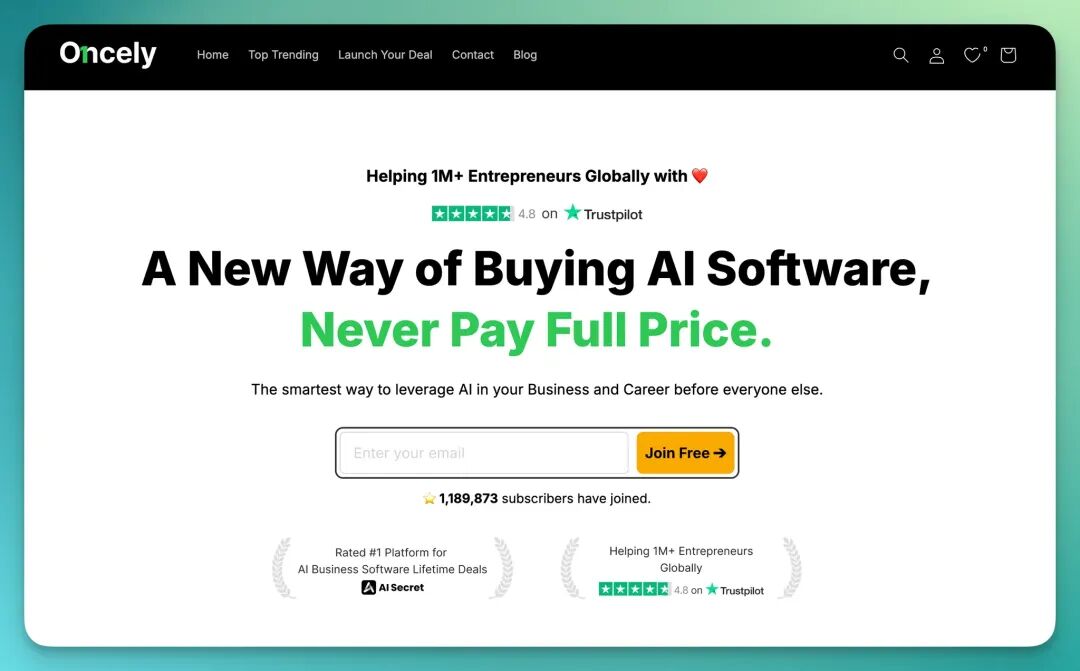
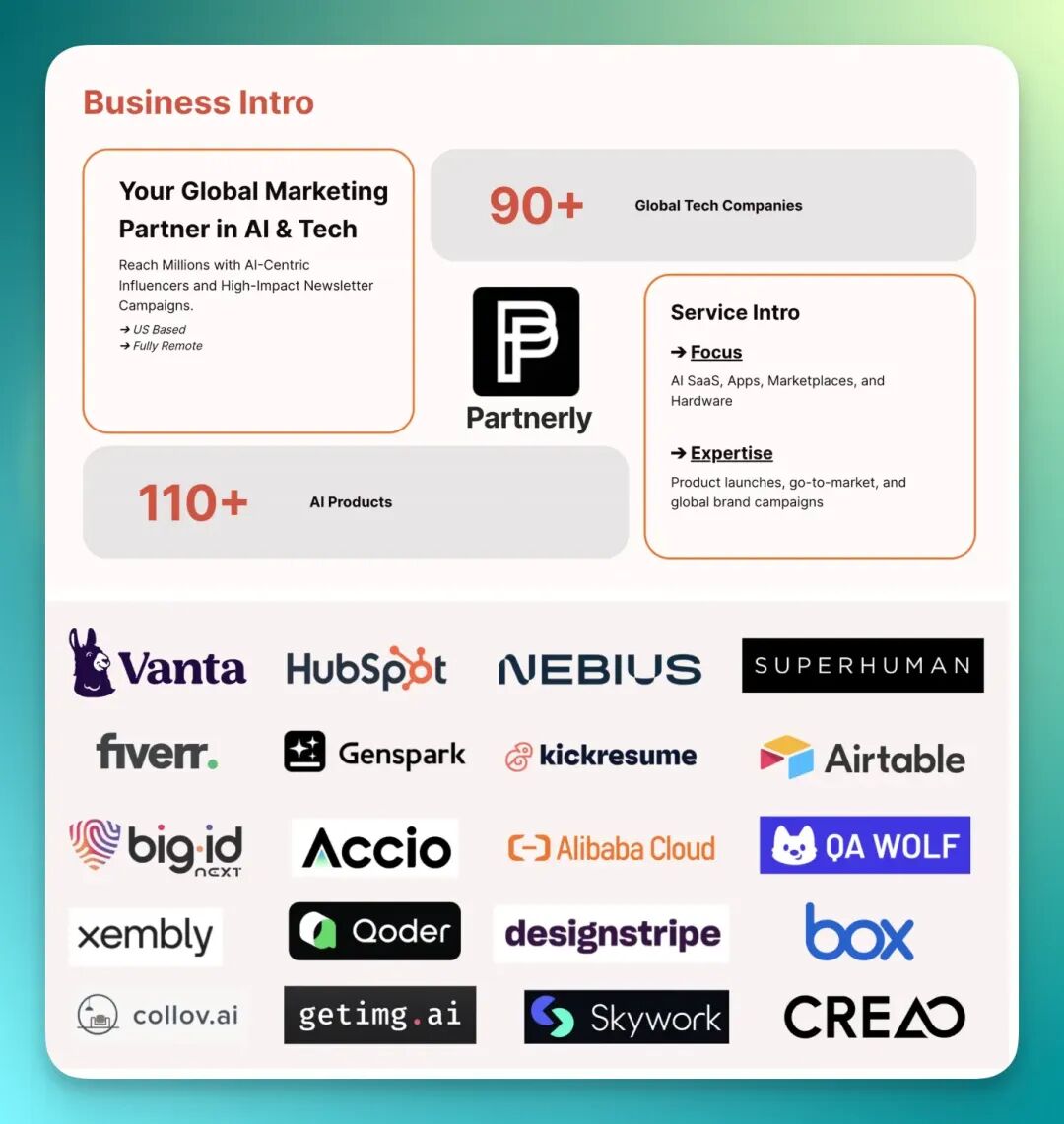
Cubo Group does full-stack GTM for AI companies going global — we want to be the bridge and launchpad for AI products worldwide. Our services include Partnerly (full-service AI global marketing), AI Secret (the largest AI newsletter in the United States), Oncely.com (an AI app distribution and growth platform), and more.
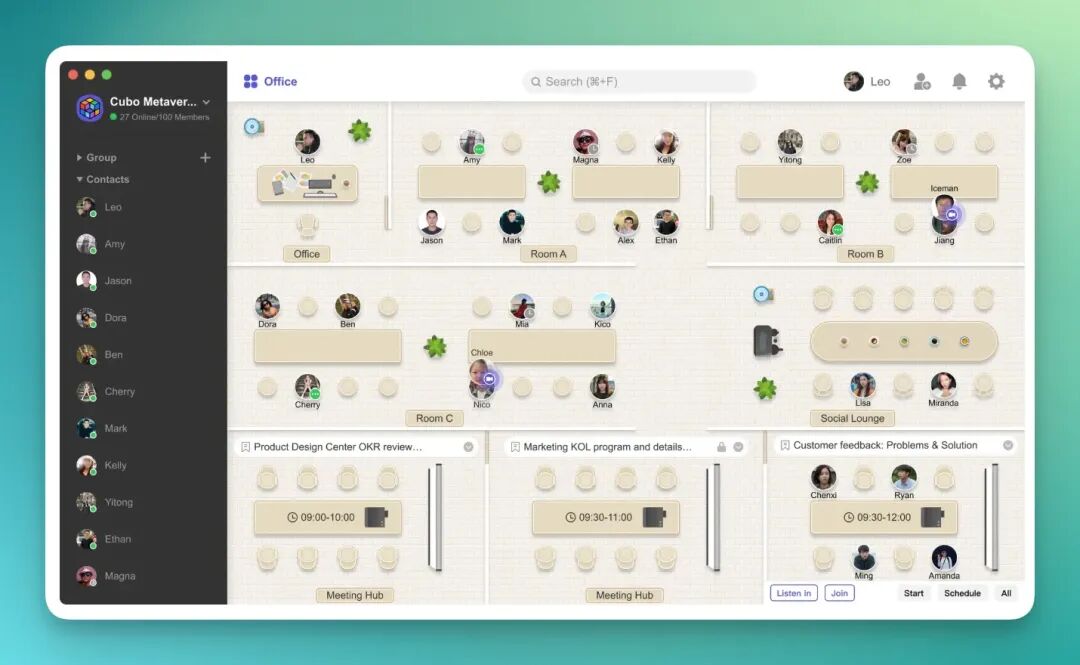 Cubo is fully remote. The company built its own "cloud office" system.
👦🏻 Koji:
Funding status?
🧑🏻💻 Gushan:
One round completed.
👦🏻 Koji:
Revenue and profit?
🧑🏻💻 Gushan:
Tens of millions of USD, profitable.
👦🏻 Koji:
Team size?
🧑🏻💻 Gushan:
Nearly 100 people.
👦🏻 Koji:
What were you doing before entrepreneurship?
🧑🏻💻 Gushan:
In school.
Part 1: Millions Raised, But Afraid to Spend: AI Founders' First Growth Experiences
👦🏻 Koji:
Gushan is a serial entrepreneur who "time-traveled" through the mobile internet cycle. Could you briefly share your previous entrepreneurial achievements?
🧑🏻💻 Gushan:
My mobile internet venture hit annual GMV of over 3 billion RMB, with more than 2.3 million paying users (lifetime deals + annual subscriptions), annual marketing budgets exceeding 200 million RMB, and 1 million new paying users per year. Our team went through multiple cycles of 0-to-1, growth, marketing, and brand building.
We started physical overseas expansion in 2019, then went fully digital after the pandemic. That transition took five years of learning and adaptation.
👦🏻 Koji:
From your past experience to Cubo Group today, what have you observed about product growth across different eras and business cycles — what challenges remain constant, and what's uniquely, even more extreme in the AI age?
🧑🏻💻 Gushan:
The constants: marketing attribution is hard, and product-channel fit is hard.
The new challenges: AI product categories evolve fast, and timing brand investment is tricky.
👦🏻 Koji:
Can you expand on that?
🧑🏻💻 Gushan:
First, marketing attribution has always been tough. A classic example: someone sees an elevator ad, pulls out their phone, and orders on Taobao. Which channel gets credit?
The same problem exists in AI.
Second, product-channel fit. In new categories and new markets, every channel demands fresh methodology. You figure it out as you go. This isn't as acute domestically, where a few platforms monopolize traffic and set the rules.
Abroad, even with major platforms, media attention is highly fragmented. You need comprehensive capabilities yourself. For teams just going global, it's much harder.
👦🏻 Koji:
Right, those two are evergreen problems. What changes have you felt in the AI era?
🧑🏻💻 Gushan:
First, AI product categories now evolve extremely fast, with very short windows for each opportunity.
If you don't seize category mindshare quickly, you lose the chance to stay in the market's spotlight through iteration. You'll be stuck at a permanent disadvantage.
This demands extraordinary conviction and marketing execution for global launches and cold starts. For major categories, there's almost no room for step-by-step growth. (It's very similar to the domestic new consumer brand wave a few years back.) You need the right category, a standout product, and thorough marketing execution.
Second, whether to invest in brand early on is a genuinely hard call for many teams.
When there's no single channel or silver-bullet strategy for AI software globalization, brand strength — your position as the category leader — becomes the decisive source of efficiency. Most teams simply haven't experienced this before. (Apps are somewhat different; their ecosystems are closed enough that market entry strategies are more standardized.)
👦🏻 Koji:
After working with hundreds of AI founders, what's the most common, most painful growth dilemma you've seen?
🧑🏻💻 Gushan:
Most founders we meet have technical backgrounds; a smaller portion come from product or operations. They share a few common struggles. Years of technical experience with little exposure to marketing, user operations, or monetization creates blind spots and a sense of helplessness, plus information gaps.
Another issue: some founders raised serious money in this AI wave but never actually spent big money in their careers. This creates confusion and paralysis around deploying resources and working with agencies.
👦🏻 Koji:
Raised a lot but don't know how to spend it — haha, truly a sweet dilemma.
🧑🏻💻 Gushan:
Exactly! Many founders have this sweet dilemma. Continuing:
Third, domestic and foreign media may seem analogous in characteristics, but on the ground they're completely different. Cultural differences, market dynamics — the whole thing.
For AI products and projects going global for the first time, this basically requires relearning from scratch. (Even teams with strong domestic growth and marketing DNA typically face a two-year relearning curve on their first overseas push.)
Part 2: "No More Bets. I Want It All."
👦🏻 Koji:
You once told me that facing the AI wave, you decided "no more bets — I want it all." This led you from a single business to building a "GTM for AI" ecosystem spanning media, marketing, and distribution. Why so much?
🧑🏻💻 Gushan:
I lived through the most brutal phase of mobile internet. My experience is: when every major wave hits, whether any company — giant or startup — can stay at the table is genuinely uncertain.
Whether giant or startup, we all hope to stay active at the table.
So I felt I could do something bigger than being a category player — become a category enabler.
👦🏻 Koji:
What exactly is a category enabler?
🧑🏻💻 Gushan:
When any industry rises, both category players and category enablers find their place.
Category players are the ones running vertical flagship products. They bear the most direct competition, but also have the chance at the highest multiples.
For me, at this stage, I want to be the one helping more young AI founders get to the table — packaging my past marketing, growth, and operations experience into services, products, and solutions to empower more strong teams. And through this entire system, exploring opportunities for AI app factories as AI scenarios land.
👦🏻 Koji:
What products has Cubo Group launched? What work have you done?
🧑🏻💻 Gushan:
On AI global marketing services: from 2023 to now, we've served nearly 100 AI companies going global, running global marketing launches for over 120 AI products. Our most successful project grew from millions in ARR to $50 million in four months. We've also helped dozens of first-time global teams achieve their first 100,000 to 500,000 global users.
In newsletters, we've incubated the largest AI vertical newsletter media property in the US market, with over 500,000 US and European tech industry professionals and AI enthusiasts reading daily.
AI app distribution platform Oncely is also completing a full rebuild in October, evolving from a lifetime deal marketplace into a comprehensive AI launchpad.
We've incubated several major projects still under NDA, planned for launch in H2 this year and early next year.
👦🏻 Koji:
With so much going on, is there synergy between them?
🧑🏻💻 Gushan:
For us, GTM + Studio is the core strategy. Media, marketing, distribution — these are all standardized strategies required for AI app globalization. This ecosystem is just getting started, and there's no external infrastructure, so we're building this major infrastructure ourselves to lower the barrier for strong product teams entering AI globalization.
Hardware and software studios serve two purposes: exploring which categories have better solutions, and keeping our hands super close to the ground so we can better empower our AI globalization product clients.
👦🏻 Koji:
You repeatedly emphasize the role of KOLs. How does Partnerly identify the right KOLs, not just influencers with traffic?

🧑🏻💻 Gushan:
Simply put, software and consumer goods marketing are actually similar — you need enough seeding to have anything to harvest. Since 100% of our clients are AI products going global, all our KOL and media resources are fundamentally built to serve this category.
Whether AI newsletters or global AI topic creators, all our media properties maintain daily publishing, staying sharp on AI trends while aggregating the attention of end users and enterprises focused on AI business and productivity applications. Rather than just blanketing generic influencer accounts that match possible audience profiles.
👦🏻 Koji:
What's the conversion rate on that AI app distribution platform, Oncely?
🧑🏻💻 Gushan:
6-7% on product pages.
👦🏻 Koji:
What drives that conversion rate?
🧑🏻💻 Gushan:
The beauty of a marketplace is that it captures user intent. Everyone coming to Oncely is looking to buy AI products and gain productivity through AI. Intent is crystal clear: browse and buy. So conversion rates are closer to e-commerce platforms than typical software company websites.
👦🏻 Koji:
If a typical AI startup team has a product taking shape, how should they use Cubo Group's help to plan growth?
🧑🏻💻 Gushan:
For teams with big vision and ambition, we recommend using Cubo Group's global AI media and full-channel marketing resources for a splashy, high-profile launch event to cold-start the product. This can compress the typical 6-8 month PMF search to 1-2 months, while effectively capturing large numbers of high-quality core users in Europe and the US.
It looks like spending money, but actually saves money and time. With each major release, repeat this disciplined version marketing to reinforce brand and category mindshare, securing sustained attention and new user acquisition.
For indie developer teams, consider joining Oncely for various cold-start waitlist and subscription sales distribution. Since Oncely is purely commission-based with no upfront costs, it's favorable for low-barrier early launches. The platform handles unified marketing and traffic buying to warm up each launch and sales event.
👦🏻 Koji:
What is your "GTM For AI" (Go-To-Market Engine for AI)?
🧑🏻💻 Gushan:
In the AI globalization GTM process, there are numerous scenarios — cold start, marketing, advertising, community, distribution — and most haven't been standardized yet.
👦🏻 Koji:
Do you think these can be standardized?
🧑🏻💻 Gushan:
We're systematically building out each piece to drive standardization and lower barriers to entry, so more startup teams and big-company AI innovation projects can capture this generation's AI globalization dividend.
👦🏻 Koji:
What's the fundamental difference between marketing an AI product versus traditional SaaS or consumer goods?
🧑🏻💻 Gushan:
At the business logic level, all three are actually very similar: category brand + marketing distribution + user operations.
👦🏻 Koji:
Expand on that?
🧑🏻💻 Gushan:
On marketing distribution, it's very similar to consumer goods. Precisely because it's so similar, and lacks real standardized infrastructure, we feel that building this infrastructure well can accelerate this wave of AI globalization and industrialization.
Part 3: "No Event, No Spread; No Version, No Event"
👦🏻 Koji:
Can you walk us through a real client case — how do you turn an ordinary product update into a splashy market campaign?
🧑🏻💻 Gushan:
Since we have NDAs with all clients, I can't do a full teardown with logos and strategies. But I can share part of our own methodology. This has some overlap with how we did marketing domestically too.
In Cubo's methodology, there are two dimensions: event + spread.
👦🏻 Koji:
Right — no event, no spread. So the question becomes: what "marketing events" do you suggest AI products create?
🧑🏻💻 Gushan:
For AI and software products, "your release is your event." Without a release, there's no hook for event marketing.
You can see this with OpenAI, Google, Microsoft — every major event is tied to a major release. So we generally encourage clients to develop big, leapfrog versions on a regular cadence, using them to break into broader markets and expand influence.
And each leapfrog version, looking back, is actually supplementing and adding points to your category positioning and category brand.
👦🏻 Koji:
For successfully executing this kind of new version launch, what advice do you have?
🧑🏻💻 Gushan:
Do "extreme" spread.
At the top of every topic pyramid are people who control discourse. Tech is no different. Internally we call them tech megastars — some are core Silicon Valley VCs, some are decades-long veteran influencer employees at big tech, some are editors-in-chief at AI tech media, some are chief scientists at AI companies.
Typically for a cold start, we organize large numbers of megastars to give authentic, substantive evaluations and endorsements for a project, then use mass quantities of AI/tech media and topic accounts for secondary and tertiary spread to capture full market attention. Simultaneously we deploy multiple channels — Newsletter, Reddit, LinkedIn, YouTube, TikTok, Instagram — for comprehensive topic deployment, letting the topic ferment further to produce global spread effects and category momentum aggregation.
This methodology and resource system is our original creation in AI globalization, and has achieved massive success in dozens of project launches worldwide. Over the past two years, we've generated over $100 million in ARR for clients.
Because the industrialization behind our methodology and execution process is so high, we can rapidly deploy entire global marketing plans in 3-4 weeks. By the time domestic media picks it up, it's already been fermenting abroad for a while. (Though domestic AI/tech media is quite sensitive to overseas information now, usually it comes back within 2-7 days.)
👦🏻 Koji:
Earlier you mentioned "every leapfrog version adds points to category positioning." So how do you help a product find and "claim" its new category positioning?
🧑🏻💻 Gushan:
Let me give some category examples:
- ChatGPT = Chat with AI for Everything
- MidJourney = AI Image Generation
- Perplexity = AI Search & Research
- Manus = The General AI Agent
- Cursor = The AI IDE
- Lovable = The Vibe Coding Platform
These are the ones that immediately come to mind for product recall. The core is capturing priority of choice in a specific scenario.
Currently every sub-category has at least 20 strong global players, some with hundreds of top-tier competitors. So distilling your positioning into one sentence of six words or less is critical.
👦🏻 Koji:
The importance of positioning is clear. How do you find it? Do you have a methodology?
🧑🏻💻 Gushan:
For a while, "AI XXX" became a viable positioning. Then "AI XXX Agent." Then "The First AI XXX Agent." Each shift was actually driven by one or two benchmark products through a landmark marketing push. Then everyone followed. But benchmark products often achieved massive success, and the fastest followers also ate well.
Behind these positionings, brand perception needs to shape "The Top 1" or "The Best." This depends on launch and every version release — can you reinforce user awareness of Top 1 and Best, achieving genuine heartfelt recognition, thereby producing real brand effect? (I call this: priority of choice.)
This is why product definition and brand positioning need to be sharp and simple, while marketing needs to be bold and sweeping, hitting hard out the gate. Otherwise you're forced to follow behind — you put in effort, and the guy ahead of you gets the results.
Part 4: "Either Hit Big Out the Gate, or Follow Behind Forever"
👦🏻 Koji:
"Go bold and sweeping; if you don't hit big, you'll chase forever." This means going heavy at launch. For a budget-constrained AI startup, how do you "precisely" fire that first shot? Where do you advise them to put their money?
🧑🏻💻 Gushan:
From early 2023 through August 2023 was actually the honeymoon period for AI product launches. Back then basically anything you launched got massive media and market attention. From September 2023 through end of 2024 was a phase of global tech media commercialization, with more and more AI product information bombarding the industry and business world. During this time, granular marketing was still somewhat effective.
This year, the entire environment has shifted dramatically:
First, head products have matured — in brand strength, user scale, and product completeness.
Second, many strong teams are already on their second or third products, more mature in marketing, product selection, and category strategy. This raises the bar for market entry and systematic operations.
Third, media commercialization demands and intensified business competition have driven costs up several-fold across the board, making it impossible to evaluate most investments on pure traffic value.
👦🏻 Koji:
External conditions are changing fast and dramatically. What do you advise doing now?
🧑🏻💻 Gushan:
So to return to our recommendation: proposing a sharp, precise new AI solution for a target scenario and audience is critical.
A simple product description and positioning — one sentence, six words (no line breaks on social posts) — is my usual minimalist standard.
Another point: can your target customer, hearing this positioning, mentally reconstruct your interaction scenario through imagination? If not, can you explain the interaction scenario in 1-2 sentences? If still not, your message is too fuzzy. This massively increases spread friction and market education costs.
Only with all this preparation do we get to your question of "where to spend money."
👦🏻 Koji:
Haha, so now tell us — "where to spend money"?
🧑🏻💻 Gushan:
My advice: with limited budget, if your category positioning and product solution genuinely have advantage, seize the window to raise funding, then be bold in spending to rapidly capture category brand advantage.
👦🏻 Koji:
I actually agree on spending boldly now to capture category brand advantage. But in the "Go Viral or Go Home" sprint, it's easy to chase vanity metrics of "going viral." How do you internally measure whether a GTM campaign is truly successful?
🧑🏻💻 Gushan:
We generally look at a few things. In cross-campaign comparison, we look at Viral Rate for each channel mix. Different channels have different Viral Rates.
👦🏻 Koji:
What specifically is Viral Rate?
🧑🏻💻 Gushan:
Viral Rate means, within a channel during a campaign execution, what proportion of posts go viral. Viral standards vary by platform and account characteristics. This is very much like a VC fund — a fund with 20 projects, how many generate 10-100x returns? That's your Viral Rate.
For example, in AI product marketing campaigns on TikTok, the best products hit 40% Viral Rate; the worst might be below 5%.
After each major campaign, every channel gets a wrap report reviewing project performance and market performance, actually cross-comparing against other AI projects running at the time and historical same-category projects, to provide more marketing-side insights and feedback to the product.
👦🏻 Koji:
Some founders worry that marketing too early exposes them to copying by big tech or competitors. What do you think?
🧑🏻💻 Gushan:
If you're going to expose yourself to the market early, one risk is that many software veterans — with money, marketing capability, and systematic AI product chops — will quickly spot and replicate new products.
Startups might rise early but arrive late, never knowing who'll flip the table next month. Assuming a startup isn't planning to raise funding and has limited budget, I suggest starting small and vertical in category definition. Big opportunities that form industry consensus too early aren't suitable for startup teams.
👦🏻 Koji:
Thanks for sharing, Gushan. Final question: if you could, what would you tell yourself in the early mobile internet days?
🧑🏻💻 Gushan:
Haha, great question — we do this internally all the time. We call it our "Yesterday Once More" review.
And my answer to this is:
Go global sooner.