Apple Rumored to Launch Desktop Robot and AI-Powered iPhone

yyds


📜 Anthropic publishes system prompts for Claude AI models
📱 Apple rumored to launch desktop robot and AI-powered iPhone
🗣️ Samsung brings Bixby voice assistant to BESPOKE AI home appliances
🌐 Unisound launches Shanhai multimodal large model
🧠 Fudan University and HKU team develop dynamic neural network
🚗 Xpeng Motors successfully tapes out self-developed chip
💰 Viggle raises $19 million in Series A funding
💹 XPENG AEROHT establishes flying car manufacturing company
🌌 Claude 3.5 AI assistant helps build homemade "nuclear fusion reactor"
Anthropic publishes system prompts for Claude AI models
Anthropic has taken an unusual step in the industry by publishing the system prompts for its Claude AI models. System prompts are system-generated instructions that set the conversational context, provide guidance, or establish rules to help AI models better understand human commands.
Typically, generative AI companies use system prompts to prevent undesirable model behavior and guide the overall tone and emotional register of responses, but these prompts are usually kept confidential for security and competitive reasons. Anthropic chose to publish the system prompts for its latest models — Claude 3.5 Opus, Sonnet, and Haiku — to make its AI operations more transparent. Alex Albert, Anthropic's head of developer relations, said the company plans to regularly release such information as it updates and fine-tunes its system prompts.
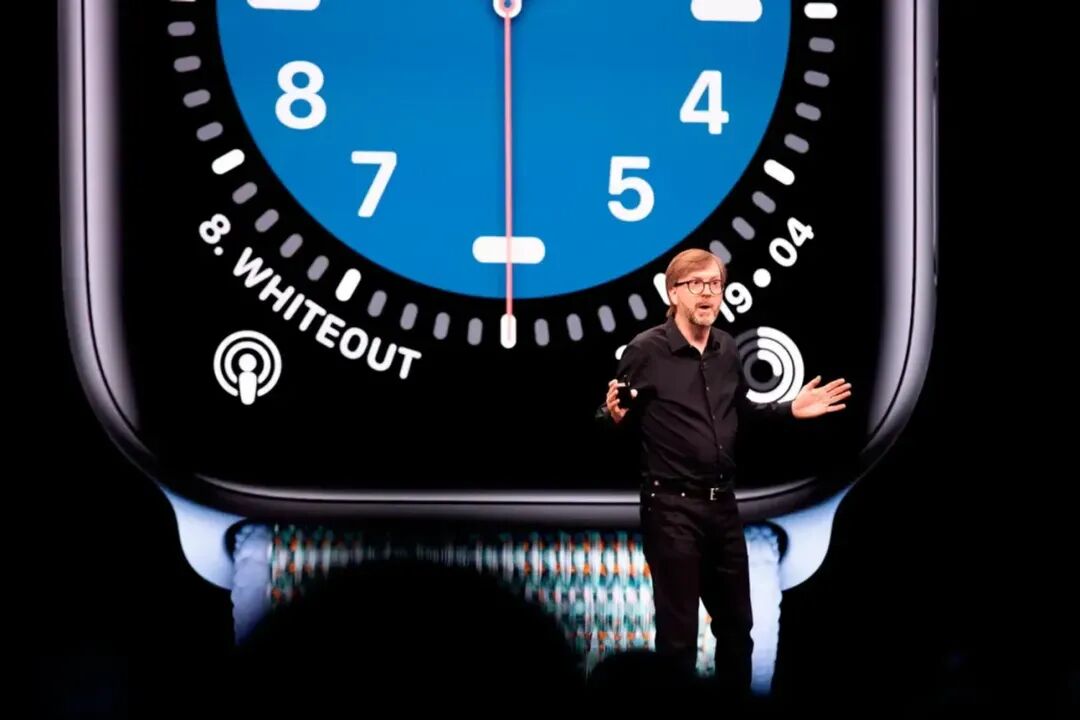
Apple rumored to launch desktop robot and AI-powered iPhone
According to well-known Apple reporter Mark Gurman, Apple is exploring the development of a desktop robot codenamed "J595," expected to launch in 2026 or 2027. Gurman also teased a special event on September 10 where Apple will unveil its first AI-powered iPhone, Watch, and AirPods.
The "J595" desktop robot may feature an iPad-like display and camera, expanding smart home scenarios. Apple aims to strengthen its competitiveness in the smart home space through the desktop robot, with the goal of surpassing Amazon and Google. Apple plans to transfer technology and talent from its autonomous vehicle project to the home robotics field. The company's accumulated expertise in sensors, chips, and AI will be applied to robotics products, and its existing sales channels will also come into play.
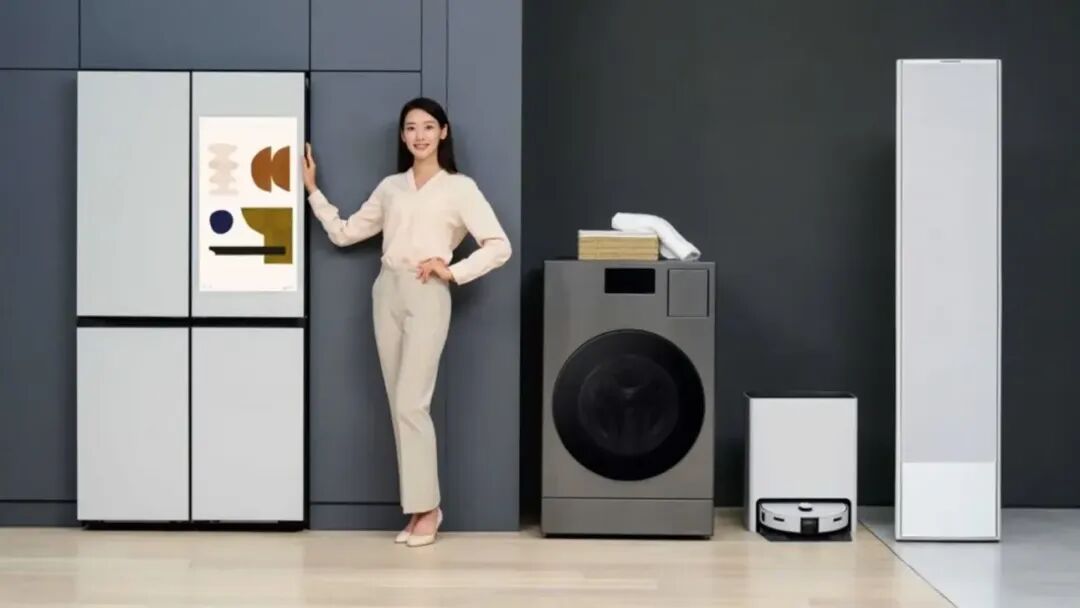
Samsung brings Bixby voice assistant to BESPOKE AI home appliances
Samsung announced it is integrating its AI-powered digital voice assistant "Bixby" into its "BESPOKE AI" series of home appliances, allowing users to interact with their appliances through natural language.
Bixby can understand context, process complex commands containing multiple instructions, and remember previous conversations. It can also access information about connected devices to provide more personalized services. The integration will expand across appliance products, with the "BESPOKE AI Family Hub" refrigerator introducing generative AI through a generative wallpaper feature that creates custom backgrounds, first debuted on the Galaxy S24 series phones.

Unisound launches Shanhai multimodal large model
Unisound's newly released "Shanhai Multimodal Large Model" can process multiple input formats including text, audio, and images, and generate corresponding outputs in real time. It features real-time responsiveness that simulates the natural response time of human conversation, and supports immediate interruptions during dialogue.
The Shanhai Multimodal Large Model has broad application potential across intelligent assistants, customer service, content creation, and other fields. By analyzing voice and text, the model can not only determine user emotions but also capture subtle vocal changes to achieve emotional interaction. Combining images and text, it provides easy-to-understand environmental summaries that enhance visual comprehension. It can transform voice tones according to user needs, even learning and replicating a user's personalized voice. It can also create visual content based on user instructions, satisfying personalized artistic creation needs.
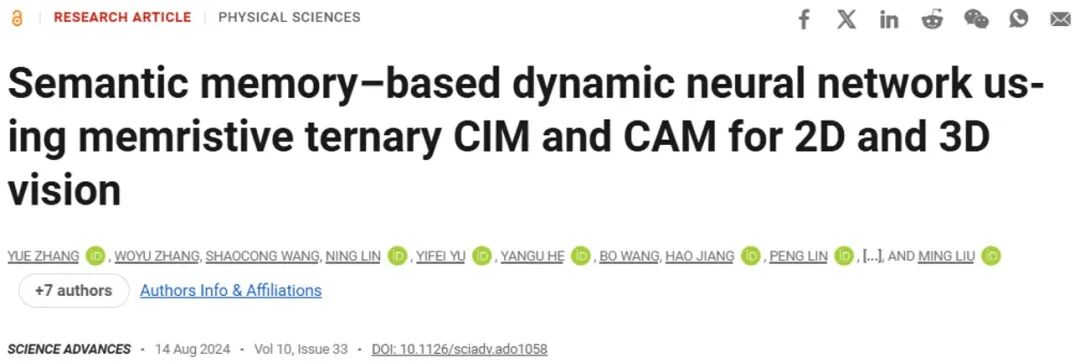
Fudan University and HKU team develop dynamic neural network
A joint team from Fudan University, The University of Hong Kong, and other institutions has developed a brain-inspired dynamic neural network[1] that demonstrates ultra-high energy efficiency in visual processing. Using memristor-based dynamic neural networks, the system simulates the brain's dynamic reconfiguration and associative memory, achieving a hardware-software co-design approach.
The network combines compute-in-memory (CIM) and content-addressable memory (CAM) circuits, with the design validated on ResNet and PointNet++ through memristor macros. While maintaining accuracy comparable to software implementations, the system reduces computational budgets by 48.1% and 15.9% respectively, and cuts energy consumption by 77.6% and 93.3%. Compared to traditional static neural networks, this dynamic neural network demonstrates greater adaptability and resource allocation efficiency, with broad application potential in autonomous driving, robotics, augmented reality, and other fields — particularly in resource-constrained devices or distributed computing environments.
Xpeng Motors successfully tapes out self-developed chip
Xpeng Motors has made important progress in its self-developed intelligent driving technology, with its proprietary intelligent driving chip successfully completing tape-out. The chip is specifically designed for AI requirements and end-to-end large models, providing support for a cockpit-driving integrated central computing architecture with powerful AI computing capacity approaching the level of three mainstream intelligent driving chips combined. Xpeng Motors plans to officially announce details of its self-developed chip at its 10th anniversary celebration and the launch event for its new model, the M03.
Xpeng Motors began building its self-developed chip team in 2020, which now numbers between 200 and 300 people. In May this year, Xpeng launched its end-to-end intelligent driving large model comprising three components: XNet, XPlanner, and XBrain. Xpeng Motors CEO He Xiaopeng expects the intelligent driving team to reach Waymo's Robotaxi level within 18 months.

Viggle raises $19 million in Series A funding
Viggle AI, a 3D animated video generation company founded by Chinese entrepreneurs, announced it has completed a $19 million Series A funding round led by Andreessen Horowitz (a16z), with participation from Two Small Fish.
Viggle trained a 3D video foundation model called "JST-1" that can "truly understand physics," allowing users to specify character movements and generate animations that obey physical laws. The company partners with cloud service providers including Google Cloud, using GPU and TPU clusters to train and run its AI models. Viggle's AI model has been widely used to create viral memes, where users can upload videos and character images, or use text prompts alone, to create animations. The technology attracts not only meme creators but also serves as a visualization tool for creative professionals, helping filmmakers, animators, and video game designers quickly transform ideas into visual effects.
XPENG AEROHT establishes flying car manufacturing company
Xpeng Motors has taken solid steps in the flying car sector, with the official establishment of Guangzhou HT Flying Car Manufacturing Co., Ltd., wholly owned by its subsidiary "HT Flying Car (Hong Kong) Limited," with registered capital of 500 million RMB. Guangzhou HT Flying Car Manufacturing Co., Ltd. is wholly owned by Guangdong HT Flying Car Co., Ltd., which in turn is wholly owned by Xpeng Motors subsidiary "HT Flying Car (Hong Kong) Limited."
In early August, XPENG AEROHT announced it had secured $150 million (approximately 1.07 billion RMB) in Series B1 funding and initiated its Series B2 round. XPENG AEROHT plans to build a modern factory in Guangzhou Development District for large-scale production of flying cars, which will manufacture the aerial vehicle portion of its modular flying car product, the "Land Aircraft Carrier." This product is scheduled to begin pre-sales in Q4 2024.

Claude 3.5 AI assistant helps build homemade "nuclear fusion reactor"
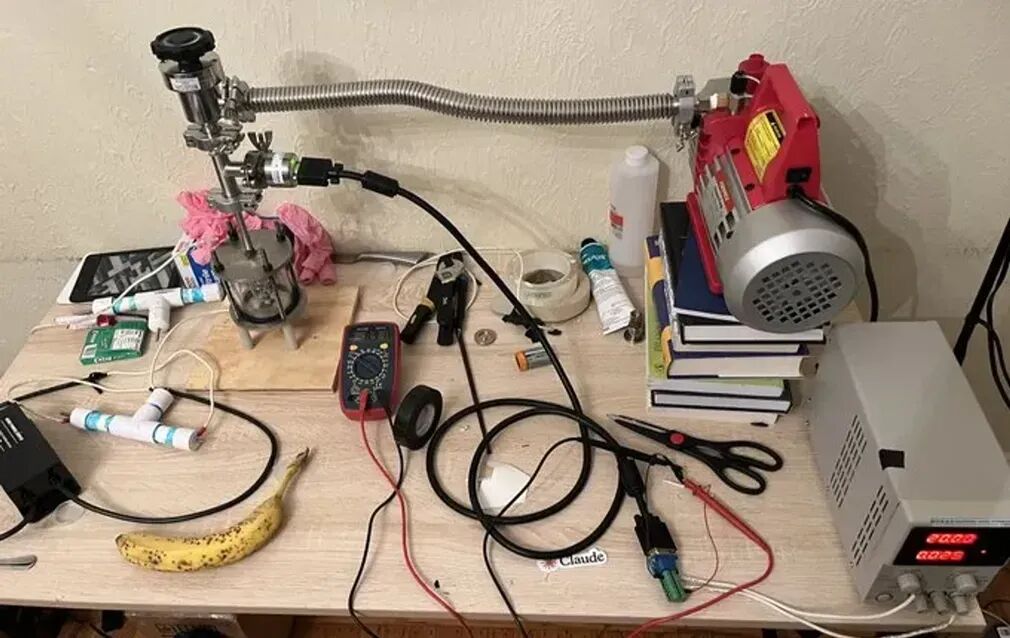
With the help of AI assistant "Claude 3.5 Sonnet," Canadian mathematics undergraduate Hudhayfa Nazoordeen successfully built a miniature nuclear fusion reactor in his bedroom. Nazoordeen completed the entire project in one month with no prior hardware experience, with "Claude 3.5" providing critical support throughout the build process.
"Claude" helped integrate datasheets and provided usage tips and troubleshooting information. Nazoordeen also received help from top engineers specializing in chip design, computer engineering, safety guidance, and machining. Michael Liesenfelt, assistant professor in the Department of Nuclear Engineering at the University of Tennessee, Knoxville, noted that the project has not yet achieved actual fusion and provided professional guidance.

Even if the wind rises, never give up on life.
— Run with the Wind



Editorial Team
Editor: Yuki
Design: Ivan
For business cooperation, add WeChat: Rwkfbcianvd
References
[1] A brain-inspired dynamic neural network: https://www.science.org/doi/10.1126/sciadv.ado1058