AI Is Infinite, Life Is Finite: A Conversation with Koji and Shanyin, Frontline AI Creators
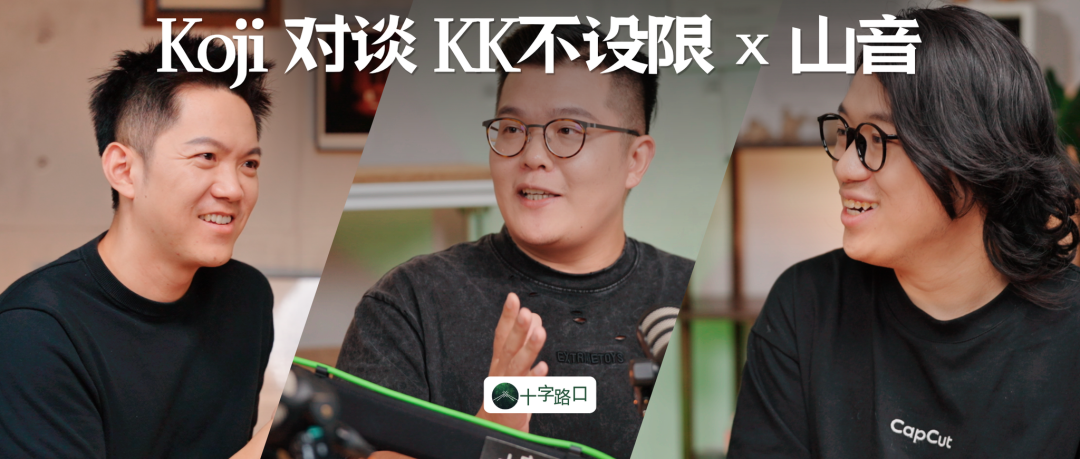
👦🏻 Podcast interview: Koji
🥷 Edited by: Crossing
🧑🎨 Layout: Zeoooo

🚥 Three years ago, Shanyin graduated from the Shanghai Theatre Academy and left the film industry without hesitation.
KK was also working nine-to-five at an ad agency.
Becoming a director had once been a distant dream for both of them.
Two years later, that dream came true — they became AI directors, created outstanding work, and made it onto the stages of domestic and international film festivals.
None of this would have been possible without AI.
Crossing has always kept an eye on proactive actors in the AI era. KK and Shanyin are exactly that kind of people: AI unlocked their creative potential, and through their own initiative, they turned what had been a far-off directing dream into reality.
We've also been tracking entrepreneurial opportunities in the AI era. These two creators on the front lines are also among the heaviest users of AI video products — from CapCut to various generative tools, they use them almost daily. This week, we're talking about how AI transformed their lives, and drawing from their real-world creative experience, we're discussing a mainstream track in AI application entrepreneurship: video products.
If you're also using AI to create content, make films, or build products — I think this podcast episode will give you direct or indirect inspiration.
Listen on WeChat:
Listen on Xiaoyuzhou:

🎬 The video podcast is also available on Koji's WeChat Channels, Xiaohongshu, Bilibili, YouTube, and other platforms
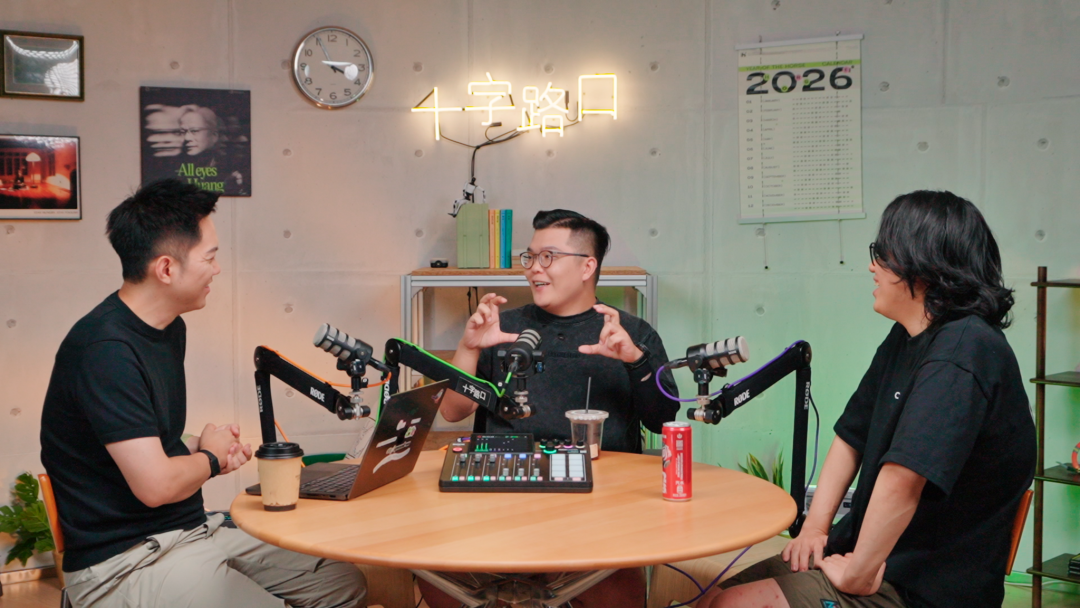
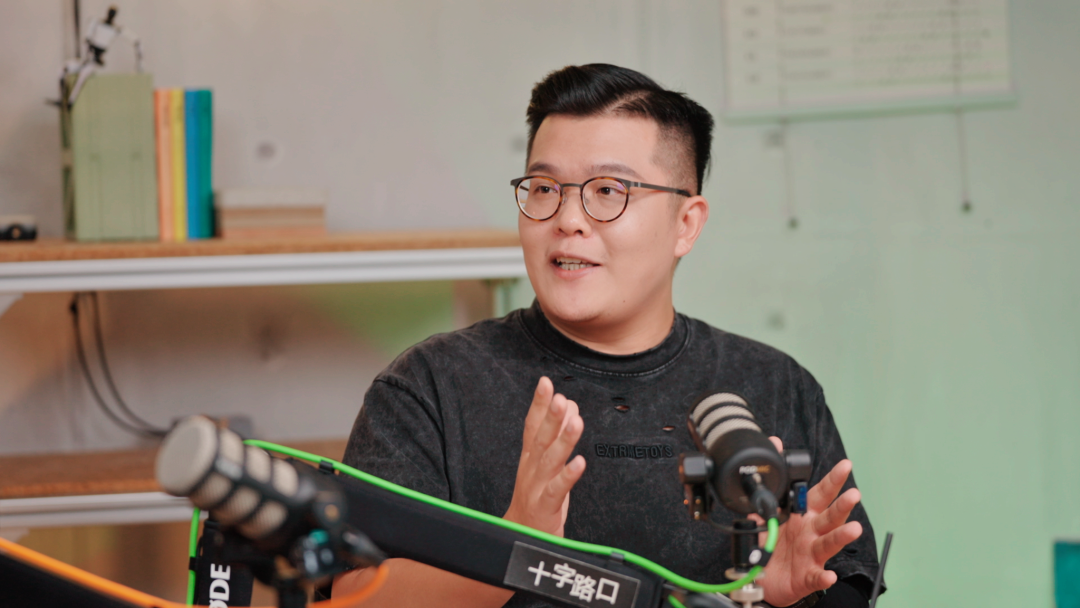
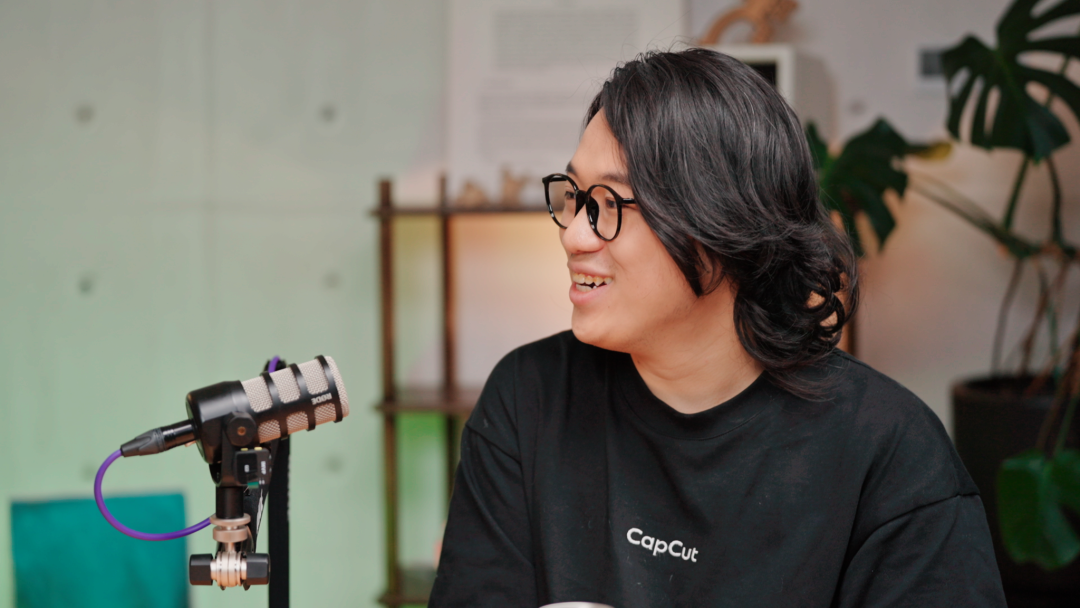
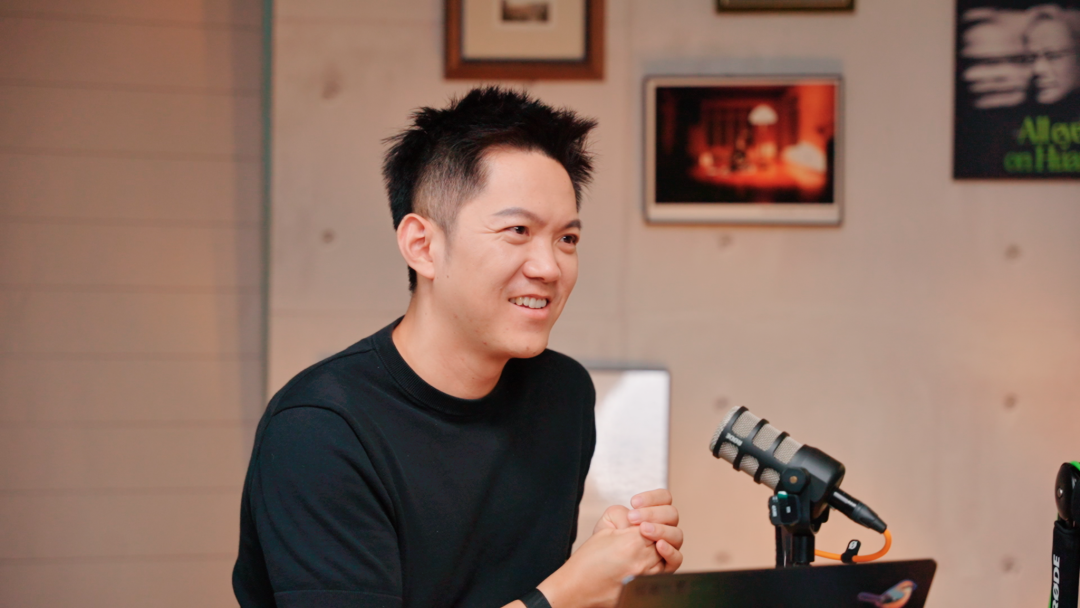
👦🏻 Koji
Today I've invited two guests to talk about how they fulfilled their filmmaking dreams in the AI era, and to see what level ordinary people can reach when making films with AI.
First question: I'd like you both to introduce your two representative works — how did you each use AI to make them?
👨🏻💻 KK
Around 2014 or 2015, I heard a folk metal track by the band Nine Treasures called "Ten-Zhang Bronze Beak." The fantastical scenes it imagined were wildly inventive — how does an older sister transform into a ten-zhang bronze-beaked beast hunting down her younger brother? Two years later, I came across a comic of the same name by artist Youpi, which gave me another interpretation. I felt there were still many details and deeper stories that no one had told.
At the time I wanted to present it through the language of film, but I was still working at an ad agency, and live-action production would have required a massive budget — completely out of reach. Until AI came along.
👦🏻 Koji
So what was the first thing you did then? Did you discuss it with AI, or start with concept art?
👨🏻💻 KK
I first worked out the complete story structure myself. Traditionally, making a short film requires writing a full script. Later I came across CapCut's Video Studio, which has strong agent capabilities and is very helpful for developing stories.
I brought a four- or five-hundred-word story outline, first building out the framework, core themes, and character designs. The rest was communicating with AI. AI was already involved at the text creation stage — going back and forth in Video Studio's dialogue box for many rounds before arriving at the final shooting script.
👦🏻 Koji
What about you, Shanyin? What was the starting point for A Ming's Day?
🧑🏻💻 Shanyin
I come from a screenwriting background, but this film had no written script from start to finish. I initially had just one idea: what if a person changed personalities every time they changed clothes?
At first there were only vague concepts. I didn't know how to write prompts at all, so I used CapCut's features to tell it: I only have this concept, help me freestyle something. When people create, they're often not good at going from 0 to 1 — they're better at going from 0.5 or 0.7 to 1. AI gives you a reference; even if only 0.4 of that 0.7 is usable, you can clearly filter out that 0.4 and push it forward into a complete work.
In the reference it gave me, putting on a wolf skin made someone a wolf-culture employee, and changing into Snow White's dress made them a gentle, patient customer service rep — this fed back into my text. After seeing the images, how the story developed and what the dialogue should be all took shape in my mind, expanding from one sentence into a complete story.
How AI Is Reconstructing the Video Production Chain
👦🏻 Koji
Shanyin, you studied screenwriting at a top drama school — years of formal training, and now you're not writing scripts anymore?
🧑🏻💻 Shanyin
Screenwriting students often go through this frustration: you finish the script, and the director says it can't be shot on set — maybe the budget isn't enough, maybe the actors can't deliver, and productions often need on-set writers to make last-minute adjustments.
But with AI, the whole chain doesn't need to be so long. In the past there were storyboard artists, directors, actors, screenwriters, and many other roles. But when filmmaking returns to individual creation, what the audience sees from beginning to end is just one editing track. Creation returns to this single function, no more endless back-and-forth. What CapCut gives me most is confidence: starting from the editing track, after doing the on-set blocking and feeling like this shot works better, I can then go back and lock down the script.
👦🏻 Koji
How long did Manggus take to shoot?
👨🏻💻 KK
On and off, nearly two months total.
👦🏻 Koji
Is that a normal production cycle? Two months sounds longer than I expected.
👨🏻💻 KK
No, I had other things going on.
👦🏻 Koji
What would be normal, then? For example, how long did A Ming's Day take?
🧑🏻💻 Shanyin
Three days. From that one sentence taking shape to the final locked cut — exactly 3 days.
At that time I hadn't produced work in a long time and was sinking into anxiety. Besides creating, I had to deal with various events, keep the studio running, handle business partnerships — I couldn't calm my mind at all. When making A Ming's Day, I thought: if I stripped away all social personas, what did I myself actually want to do? I told my partner: don't look for me for these 3 days, I'm going into retreat.
It was extremely painful at first — too long without creating, couldn't write a script, could only occasionally turn to the tool and fumble my way toward this new workflow. I chose CapCut because it's fundamentally an editing tool; unlike canvas products on the market, it stays closer to the native form of content. All conceptions grow outward from the editing desk — what's missing here, what shot, what blocking, what art and text to fill in, everything centered on the editing desk.
Making Films with AI: What's the Top Tier Today?
👦🏻 Koji
You both have formal training. Can ordinary people today produce work at your level? What do they need?
👨🏻💻 KK
Absolutely. Take Mx-Shell, who made a zombie sanitation worker film — not from a professional background, but the film is excellent.
For non-professionals to reach this quality, the first things needed are viewing volume, aesthetic accumulation, and control of pacing. How much you've watched determines your taste — you know when something should happen, you know how structures rise, turn, and resolve.
As for professional skills, current AI tools and Video Studio can compensate for that. They'll remind you what to consider. The key is whether you can make the right decisions after hearing the suggestions.
👦🏻 Koji
From getting the Manggus script to final picture, what did the workflow look like?
👨🏻💻 KK
CapCut Video Studio has an infinite canvas where you can produce art styles, character assets, and scene assets. Once those are set, you pull references in the canvas according to the script and each segment's prompt, directly generating video for the corresponding shots.
Then you drag the footage into the editing track for rough assembly. After cutting, you can immediately see whether the shots flow together. Final picture and text are often two different things — what looks smooth in a storyboard script may break when actually assembled, and here you can go back and fix it in real time. From pre-production generation to post-production editing, everything is closed-loop within the same canvas.
👦🏻 Koji
There have been more and more excellent AI works recently. Besides your own, what films have truly moved you lately?
👨🏻💻 KK
Paper Phone from early this year, and another favorite of mine called The Childhood Friend Who Exploded in the County Town — both very emotionally touching.
🧑🏻💻 Shanyin
I also put Paper Phone first. The creator is from WAI Studio, someone I saw on social media and my first reaction was "this person is incredible" — then looking closer, it turned out to be someone I knew. It triggered my competitive spirit: why could he make something this good, and I couldn't?
I watched it over and over. The story is incredibly simple, and the score carries enormous weight. A lot of people have since tried to imitate this warm, sentimental style, but you can tell their motives aren't as pure — it doesn't land.
Paper Phone came out in March, and nearly six months later, I still haven't seen anything better in this genre. The creator probably didn't anticipate this level of response, but often the more pure your intent, the more directly it hits people.
👨🏻💻 KK
Scrolling through short videos, you constantly see formulaic pieces where you can instantly tell they're chasing trends and fishing for traffic. Once you lose that original point that genuinely moved you, the piece won't have any impact on anyone else.
👦🏻 Koji
So the core principle never changes: move yourself first, then you can move others?
🧑🏻💻 Shanyin
I often say to my studio partners: the less you think, the better you create. Before you start writing, don't think about traffic, audience reactions, or master techniques.
Last year, when the tools weren't mature yet, I made a short called Building Blocks and rewrote the script three or four times. The director I collaborated with kept pressing me: what are you actually trying to express with this story? I finish reading and I don't know what you want to shoot — where's your creative impulse? Which image is something you have to get out?
That collaboration completely reshaped my creative habits. Whenever I get stuck writing, I force myself backward: why did I want to tell this story in the first place? Where's the impulse? Which line of dialogue, which shot, which emotion is non-negotiable? Grab that handle, then build the script out from there.
👦🏻 Koji
At the end of the day, it's about maintaining intense expressive desire?
👨🏻💻 KK
I highly recommend you watch Shanyin's Building Blocks — it was my first introduction to his work. I'll say this: whether in animation or live-action, nothing on Alzheimer's has surpassed Building Blocks.
👦🏻 Koji
What was the origin point of that story?
🧑🏻💻 Shanyin
In 2018 I wrote a short story about Alzheimer's. No one in my family had the disease at the time; it was pure imagination, very heavy, falling into conventional stereotypes about caring for the elderly.
Two years later my maternal grandfather became critically ill. In his final months he couldn't recognize family members and showed similar symptoms. Last year I revisited that story and kept asking myself: is it really as tragic as outsiders imagine when an elderly person falls into this condition? Actually, the person inside doesn't perceive things that clearly — they just feel submerged in chaos, can't tell the month or year, can't understand what people around them are saying, don't know their own age. They gradually sense something is wrong from within this prolonged chaos, and only when memory floods back at a certain moment does the immense grief truly hit.
When making the film, I used a less sorrowful treatment at the beginning, trying to restore the elderly person's authentic experience of unknown chaos. This delicate psychological reconstruction became the brightest spot in the entire film — the inspiration all came from those real final months with my grandfather.
AI is infinite; life is finite 👦🏻 Koji
Completely born from genuine feeling. KK mentioned earlier that when he first started shooting with AI, he could produce two or three pieces a day, creative desire overflowing — but now the pace has stretched out. When past experiences have been mostly consumed, how do you face creation now?
👨🏻💻 KK
You just have to accept it openly. What moves people must come from what you've seen with your own eyes and felt with your own body. Creators have to be "on the scene" — whether that's the family scene or the music scene. Only by being on the front lines can you transform it into infectious cinematic language.
More than a decade of accumulated material came from fermentation in the scene of life. When that stockpile runs out, if I just have AI generate dozens of scripts for me every day, those stories without authentic presence won't move me; after being processed by a director and worn down layer by layer, they definitely won't move audiences. At this stage, I have to go experience and settle into the scene of life more, then express.
👦🏻 Koji
Is this a bottleneck all AI directors will face? Traditional directors shoot one film every three or four years, and might only run dry by sixty — they still have time to experience life in between. But AI directors have compressed the creative cycle to an extreme. Shanyin, do you feel the same?
🧑🏻💻 Shanyin
It happens a lot. Writing A Ming's Day was excruciating; I felt washed up, incapable of making anything, and just locked myself at home to force it out. Creation often requires physical isolation to see clearly what it is you have to express.
Directors come in different types. Spielberg, Eastwood — the prolific kind, one film every year or two, extremely high quality. Cameron — the decade-per-sword type, either not shooting or stunning everyone when he does.
Everyone's rhythm is completely different. Some people settle and polish a hardcore masterpiece for half a year. Others, when inspiration strikes, have to lock themselves away for a few days and blitz it out. KK's time got fragmented a lot this year, but when he dropped Manggus, it immediately brought back that sense of awe from watching Pumpkin last year.
👦🏻 Koji
When AI helps you brainstorm and weave stories, if you don't have that sense of presence, you won't shoot. So AI isn't the source in creation — more of a downstream execution tool?
👨🏻💻 KK
When you have no clue at all, AI can offer some inspiration on topic selection. But the core is that the creator has to have an expressive kernel first, then use AI to extrapolate from it.
Last year at the Hainan Film Festival hackathon, 24-hour extreme creation with just three keywords given. In that completely blank state, I'd have AI throw out 20 one-sentence stories and see which one hit me. At the time I made an anti-war piece because AI gave an anti-war prompt that I then expanded into a complete story. When you have no handle, it can serve as an entry point.
🧑🏻💻 Shanyin
For an introvert like me, AI is an excellent partner. You should be talking scripts with people, but locking yourself in a room easily gets you stuck; finding someone to talk for two hours, maybe only ten minutes touch the soul, and the rest is all small talk.
AI is different — skips the small talk, throw ideas directly at it: what's not working? How to fix it? How would you write it? Its ideas aren't always right, but its feedback helps you clarify the direction for revision.
How far ordinary people can get with AI doesn't depend on how long they've studied directing and screenwriting — it depends on your "furrowed brow" judgment. AI spits out a thousand-word outline; you get to word 200 and your brow furrows because something feels off, then again at 500, again at 800. Through that furrowing process, you come to understand how you actually want to write. As long as you have sufficient aesthetic criticality and don't copy wholesale, anyone has the potential to make something good.
👦🏻 Koji
Not becoming AI's puppet — the initiative in creation stays in your own hands?
👨🏻💻 KK
You have to have your own judgment. AI rattles off a story, and what it thinks are the highlight moments might all be clichés; instead, some casual first line or closing line strikes you as clever, expandable. Some subtleties only humans can catch — AI just output them unconsciously.
AI lowers collaboration costs, but raises professional barriers 👦🏻 Koji
Between traditionally accomplished directors of the past and directors today making work with AI — what do they share, and what's different?
👨🏻💻 KK
The biggest similarity: the director remains the ultimate arbiter of work quality. They're the only person on the entire team who clearly knows the final form and has unilateral authority to approve the finished piece. This is completely consistent between old and new eras.
The biggest difference is collaboration style. Traditional directors need to coordinate numerous trades, with extremely high demands for interpersonal communication and on-set control. If I were a traditional director, I'd probably be a spectacular failure — I'm not good at yelling and pressuring people on set. But big directors blowing up on set is often inevitable; facing massive budget burn and team inertia, you have to be forceful to guarantee results.
For introverts who don't want to navigate interpersonal relationships, AI is the best creative partner — we can put all our energy into directing the model.
👦🏻 Koji
Sounds like the barrier to entry is lower — no need to organize a massive crew?
👨🏻💻 KK
But it raises another barrier. Traditional directors could just be responsible for selecting options and making final calls, with each trade covering the specifics. But AI directors have to master all details across the entire pipeline — what lens to use, what lighting, how to frame the shot. If you don't master professional standards, the finished piece will be extremely crude. This is the watershed between professional and non-professional creators.
👦🏻 Koji
Are there categories of renowned traditional directors who, placed in today's context, might not make qualified AI directors?
🧑🏻💻 Shanyin
That's a sharp question. I haven't observed famous directors' working methods up close on set.
Though on-set directors divide into two types: some are extremely versed in technical details — how to position the camera, how the actors perform, how to cut the score, everything under control. Others are very good at grasping the big picture and letting go of small stuff, even handing things off to an assistant director. But either way, they have extremely strong on-site communication efficiency, ensuring all departments collaborate smoothly without conflict.
But being an AI director, there are no excuses. Traditional directors can blame actors for bad performances, cinematographers for lack of professionalism, producers for insufficient budget. When AI work turns out bad, it's purely your own problem — bad prompts, rough editing, poor musical taste. The AI era strips away middle layers; when the tide recedes, you can instantly see who's swimming naked.
👨🏻💻 KK
It pushes the requirement for comprehensive individual professional competence to the extreme.
👦🏻 Koji
That's brutal. In the past there was a team to share the pressure; now AI is omniscient and omnipotent, and if you do poorly it's all on you?
👨🏻💻 KK
There used to be some easygoing directors who'd let art departments come up with options — approve or send back. That completely doesn't work now. You have to be like the most hardcore technical director, precisely telling the cinematographer what aperture to use, what angle of light. Only directors who grasp the underlying hard techniques will become stronger in the AI era.
👦🏻 Koji
Can being an AI director support you two financially now? Is the income better than working at an ad agency?
👨🏻💻 KK
Depends on personal ambition. Right now supporting yourself is absolutely no problem; if you want to earn more from commercial projects, you can take more on.
🧑🏻💻 Shanyin
My material desires are very low — enough to eat is fine. The vast majority of my energy goes into thinking about the next good piece; I take very few commercial projects. AI's greatest value is giving me choice: want to earn money, take projects. Want to focus on creative work, you can settle in.
👦🏻 Koji
Has AI brought true freedom?
🧑🏻💻 Shanyin
Relatively speaking. But behind this freedom is greater pressure. In the past you could cut corners on some steps; now every detail has to be shouldered yourself, and the psychological load is actually far greater than traditional division of labor.
👦🏻 Koji
I understand that traditional film directors struggle to achieve absolute freedom — if you can't raise financing, you can't roll camera. In China's film market, directors who can raise financing and roll camera are exceedingly rare; most people exist in a prolonged state of floating. AI directors seem to put destiny back in their own hands?
🧑🏻💻 Shanyin
In the past making films cost tens of millions. Now AI creation costs are extremely low. Even without formal training, as long as you have ideas in your head, you can realize them at very little cost.
👦🏻 Koji
Both of you started making AI short films two or three years ago. From then until now, how have the iterations in models and tools revolutionized your workflow?
👨🏻💻 KK
The paradigm shift was mainly brought by Seedance. Before, it was Image-to-Video — you had to draw out all the keyframe static storyboards for the entire film first, then convert them to video for editing.
With Seedance, it became Reference-to-Video. Once the script is ready, you set up all the art assets — characters, scenes, props — in one go, and they can be reused infinitely. This eliminates the step of manually crafting keyframes in advance. The remaining bulk of shots can be generated directly from text descriptions alone. This is the core evolution from the 2.0 to the 2.5 era.
🧑🏻💻 Shanyin
When I first started, I used Midjourney, and I couldn't even lock in character consistency across images.
I'm pretty fast at making films. My first AI short in February last year — five minutes — took half a month. At the time that speed was already unbelievable. Now, the same scale of project takes three days. In the past, directors had to divert attention to fixing technical flaws. Character consistency is something directors should never have had to worry about in the first place.
👨🏻💻 KK
Every time the character switched to a new shot, they'd have a completely different face.
Before Seedance, Nano Banana was also a milestone. It preliminarily solved continuity for the same character within the same scene. Before it emerged, when I made Pumpkin, 95% of the shots were generated in Midjourney, then I used Photoshop to manually retouch and swap heads frame by frame to force consistency. After Nano Banana, a single image could extend into different angles of the same person, dramatically improving consistency.
👦🏻 Koji
Can the entire workflow now be completed end-to-end in CapCut Video Studio?
👨🏻💻 KK
Absolutely — image generation, video generation, and editing all in one place.
👦🏻 Koji
Beyond that, what other distinctive CapCut features would you recommend?
👨🏻💻 KK
Its model ecosystem is more open and international. Many cutting-edge overseas models can be called directly, and the overall aesthetic is quite diverse.
🧑🏻💻 Shanyin
Its core advantage is that it's built on an extremely low-barrier editing tool. In college I used high-threshold professional editing software. Later I encountered CapCut and realized editing could actually be this simple.
Last year I participated in the overseas Chroma Awards competition, and for the first time I used the international version of CapCut in depth. I discovered it's incredibly aggressive in integrating native AI features.
👨🏻💻 KK
For Chinese creators, Chinese-language interaction is also a natural advantage. Combined with Video Studio's asset generation capabilities and text-stage Agent, it truly achieves an All in One closed loop from script to generation to editing — an experience no other tool can currently replace.
👦🏻 Koji
I heard you two just returned from a global creator exchange in Singapore. What were your firsthand impressions?
👨🏻💻 KK
The biggest takeaway was seeing what directions global creators are exploring with CapCut — what expressive differences emerge across different regions on the same tool foundation, and what gaps exist between us and our overseas peers.
👦🏻 Koji
What do creators mainly talk about when they gather?
👨🏻💻 KK
Specific techniques and tips: How was this effect achieved? How's the overseas reception and playback data for your film? Everyone cares about whether their work gets seen.
👦🏻 Koji
Picasso said: art critics gather to talk about style; artists gather to talk about where to buy cheap turpentine. From this exchange, what new features or techniques did you learn?
👨🏻💻 KK
I definitely learned features I hadn't used before. For example, previously if you found a clip didn't work during editing, you'd have to regenerate it and pull it back into the timeline. Now CapCut's editing desk supports one-click replacement. Even after the entire film is cut, you can still make global modifications.
For commercial delivery, when clients request changing outfits, products, or even the lead character, you used to have to start over from scratch. Now you can batch-change these directly on the editing desk.
🧑🏻💻 Shanyin
No more worrying about actors getting canceled.
👨🏻💻 KK
Also commercial ad music. Previously you'd have to export the finished video and send it to a large language model to generate Suno prompts based on the rhythm, then generate externally and import back. Now you simply drag on the CapCut timeline, and it automatically matches and generates corresponding background music based on the visual rhythm and mood — another efficiency gain.
From Hackwork to Expression: How Does AI Unleash Creativity?
👦🏻 Koji
Shanyin, you graduated from the Shanghai Theatre Academy. There were reports that your filmmaking dream shattered in your freshman year. What happened?
🧑🏻💻 Shanyin
Getting into STA has an extremely high barrier. Once inside, I discovered I was surrounded by geniuses. After all my hard work, I had merely become one of the hundred thousand heavenly soldiers sent to subdue Sun Wukong.
Before enrolling, I thought I wrote decent fiction. Inside, I found everyone could write. Some had already performed in plays, some had already shot films. When people discussed movies, the clash of perspectives was intensely fierce. I was desperate at the time: does this industry really need so many screenwriters and directors? Could I actually make a living after graduation? The probability was vanishingly low. My proudest talent became Tulong Zhishu in the face of reality. It was excruciating.
👦🏻 Koji
Was this Tulong Zhishu activated after encountering AI?
🧑🏻💻 Shanyin
In my freshman year I was so depressed I even grew to hate watching movies and plays. Since I couldn't make it, I might as well give up early.
It wasn't until last year, when I accidentally made my first AI short — no one forced me — that I couldn't stop after finishing one, then wanted to make a second, a third, and kept going to this day. Even in the early stage when tools were extremely crude, everyone gritted their teeth and persisted out of passion. Only later did I realize I had never put down film; I had just been extinguished by reality before.
In this era, people who truly have ideas and talent finally have a path to forge their own way.
👦🏻 Koji
What's the current situation for your classmates back then? Is your psychological journey common among them?
🧑🏻💻 Shanyin
The vast majority aren't screenwriters. Some switched to games, some became teachers. But since Seedance exploded this Spring Festival, quite a few classmates who had left the film industry long ago actively messaged me asking: how exactly does AI work, can you teach me?
👦🏻 Koji
What advice would you give to those eager to jump in?
🧑🏻💻 Shanyin
I sent them my prompts, and they were astonished at how low the barrier actually is.
AI doesn't require ten years of bitter study at all. When DeepSeek went viral last year, bookstores were filled with tutorial books titled From Beginner to Expert. But doing AI creation doesn't require reading ten books or watching hundreds of online courses. The core consists of just two words: start.
👦🏻 Koji
The act itself matters most. KK, you previously mentioned accumulating massive amounts of discarded drafts during your traditional advertising period. What was that state like?
👨🏻💻 KK
Previously the budget was in the client's hands; whoever puts up the money calls the shots. Creative people all resist mediocrity — first drafts tend to be wildly imaginative. Clients always feel they're too out there and demand pulling back. The final work that goes public has mostly been through layers of compromise.
We deeply envied explosive hits that went public and were full of creativity, but those were results of the right timing, place, and people. You need top-tier creativity itself, plus tremendous EQ in pitching and selling the concept, plus encountering a tolerant boss and powerful channel promotion. Extremely difficult to replicate.
Most of my clients were major FMCG brands endorsed by A-list celebrities. The films came out visually extremely luxurious and fashionable. Fans bought into them. But in the eyes of creative people, they had zero soul. They sold the appeal of the celebrity IP, leaving absolutely no room for the audience to think. Utterly hollow.
🧑🏻💻 Shanyin
In the industry this is called "doing hackwork" (gan hanghuo). Literally it means professional work, but in context it's actually derogatory.
👨🏻💻 KK
"Hackwork" is extremely damaging to creativity, and it left behind massive amounts of discarded drafts. It wasn't until late 2024, when Yili Group held an AI advertising competition, that things changed. I had spent ten years deep in FMCG advertising, and because I had been serving Yili Group's various products early on, I knew the brand's pain points intimately. I casually finished the entry and directly won the national championship.
I was stunned at the time: AI could finally let a frustrated, unfulfilled ad person unleash their excess creative energy to the fullest. So I decisively resigned to go independent.
🧑🏻💻 Shanyin
Many people now criticize AI for flooding the world with information garbage. But from another angle, AI lets those top-tier ideas killed off by layers of approval finally see the light of day. With AI, people finally realize how much stunning creativity has been accumulating among ordinary folks.
👦🏻 Koji
If AI had emerged ten years earlier, how would your life be different?
👨🏻💻 KK
My thinking and perspective would be much broader. However, these ten years in advertising shaped my aesthetic system, values, and professional understanding. I'm still grateful for this decade of accumulation. But if I could do it over, seizing AI would definitely let me run much faster.
Who Does the AI Era Favor Most?
👦🏻 Koji
Who does the AI era favor most? And who will it eliminate?
👨🏻💻 KK
It best suits people with extremely strong action orientation — those who embrace and try things immediately, rather than instinctively resisting. For fresh graduates just leaving school, there's no path dependency, nothing to lose at all. It's pure opportunity.
🧑🏻💻 Shanyin
It best suits creative people whose heads are full of ideas but who are blocked by real-world constraints.
Those most impacted are the assembly-line hackwork doers. Many extras and basic cinematographers have already been hit and switched careers. Someone like Stephen Chow, with his highly stylized performance, would be irreplaceable even in the AI era. Whether in front of or behind the camera, everyone must bring forth unique style and creativity that AI can't yet learn.
👨🏻💻 KK
People who are always making excuses are the easiest to eliminate. Early on they said the Will Smith eating spaghetti footage looked too fake to use. By the Seedance 2.5 era, they're still making excuses. People accustomed to procrastination and rejecting new things will struggle to adapt to this era.
👦🏻 Koji
How should education respond in the AI era? Many traditional skills — on-set coordination, interpersonal maneuvering — are diminishing in importance. How should we cultivate the next generation?
🧑🏻💻 Shanyin
My parents work in education, and I've thought about this for a long time. AI achieves the long-sought turn in education: transforming children from "people who can answer questions" into "people who can ask questions."
In the past, various online question banks were essentially about helping children find answers. AI has lowered this barrier to the extreme. The core of future education lies in how children ask questions, how they define and solve problems. When even a perfect score on the gaokao no longer holds absolute advantage before all-knowing AI, everyone must confront the existential question of "what about humans is irreplaceable."
👨🏻💻 KK
To put it another way, the next generation more needs to learn "how to make wishes" — to grasp the essence of the world and preserve curiosity eternally. If faced with an all-powerful magic lamp, you can't even articulate a wish, then you've completely lost initiative.
🧑🏻💻 Shanyin
Cutting-edge large models are emerging constantly, yet 90% of people haven't even heard of them — the awareness gap is massive. My requirement for the team is: everyone must ask AI ten questions and open ten chat windows daily, even if it's just asking what to eat for lunch. Curiosity gets activated through high-frequency questioning.
👦🏻 Koji
Both of your works have appeared on the international stage. KK's Mangus and The Masterless Age were selected for the 30th Flickers' Rhode Island International Film Festival, while Shanyin and teammates' TANGO won the Gold Award at the Cannes Film Festival Sci-Fi Summit. Is AI helping a new generation of Chinese directors reach the world stage more equitably?
👨🏻💻 KK
Inevitably. Hollywood's traditional industrial pipeline is deeply bound to Western discourse power and value systems. AI has upended conventional industrial processes, putting everyone on the same starting line.
In this chaotic period of redefining audiovisual language, Eastern creators finally have an equitable opportunity to break free from old industrial shackles and express themselves.
🧑🏻💻 Shanyin
Previously, domestic film and television followed a one-way logic of "succeed at home first, then go overseas." But many genres naturally have audiences abroad. AI shortens the distribution chain, allowing works to instantly penetrate geographical boundaries and reach target viewers directly.
👦🏻 Koji
When you're making films, do you预设 your audience as global?
👨🏻💻 KK
I lean toward universal human expression. My works rarely use narration or cumbersome text to explain background; I push the narrative forward through pure visual storytelling as much as possible. Even if viewers are illiterate, as long as they're members of the human species with basic emotional experience, they can fully understand. Mangus and Pumpkin have almost no dialogue, lowering the barrier to the minimum.
🧑🏻💻 Shanyin
What I pursue is a kind of cultural refraction "through the fog." People have stereotypes about both Chinese and Western cultures — mention the West and it's blockbuster popcorn fare; mention the East and it's Chinese dragons, classical imagery.
I studied in Hong Kong and prefer multicultural fusion. I hope my works have both the underlying logic of how things are done in China's grassroots and transcendent understanding that resonates in the West, so people from different cultural backgrounds look at them and find them simultaneously familiar and alien. This complexity is the unique undertone of the work.
👦🏻 Koji
In your view, where does China's AI director community stand in global competition today?
👨🏻💻 KK
We're still in an early chaotic period. No absolute leader has emerged globally who dominates everything; it's hard to say who's stronger or weaker.
🧑🏻💻 Shanyin
Counting from the Seedance explosion, this wave hasn't even reached six months. But Chinese creators have unique advantages: first, the massive population base; second, our open mindset without so many traditional doctrinal constraints; plus the rise of domestic top-tier video generation models, with enormous push from both official and private sectors.
👨🏻💻 KK
Chinese creators have greater advantage in thematic breadth. We grew up watching Hollywood and European films and understand Western culture extremely well; but Western creators, influenced by centrist education, rarely touch Eastern culture. Chinese creators can cross East and West, local and even ethnic minority themes without any baggage — the thematic span is much wider.
🧑🏻💻 Shanyin
When blockbuster production costs plummet and everyone can make films, what should this generation do with AI?
Nolan making The Odyssey is tracing back Western civilization, relying on Western film and 3D IMAX technology accumulated over years. If in three to five years, we can use entirely new technology to decode the underlying密码 of Chinese culture and explain where we came from, that would be an enormously ambitious proposition.
Technological iteration is gestating new film language. The names that will be engraved in film history in the 2020s may be right beside us.
👦🏻 Koji
You're both currently called "AI directors." Will this title exist long-term? When will people drop the prefix and just call you "directors"?
👨🏻💻 KK
The prefix will definitely be dropped. Just like when people used to say "computer engineer" — now computers are ubiquitous, no one emphasizes that anymore.
When AI becomes as ordinary as water and electricity, tools recede to the background. Everyone will only look at the final work: Is the story compelling? Is the audiovisual quality good?
When underlying models converge, where do AI video products' moats lie?
👦🏻 Koji
When tools become omniscient and omnipotent, what is the core trait of a director that can never be stripped away?
👨🏻💻 KK
Taste and decision-making.
🧑🏻💻 Shanyin
It's what I call "the moment of furrowed brows." Faced with 20 ideas spat out by AI, which one you pick, how you adjust it, how you modify it — what lies behind that is the director's unique aesthetic and style.
I even have a provocative take: traditional directors are actually farther from the image. They're essentially the调度中枢 of the crew, existing to maintain the operation of a massive production apparatus; AI directors, relying on micro-teams and absolute decision-making power, face the editing table and images directly. In a sense, AI directors are closer to the essence of image itself.
👨🏻💻 KK
In the future there may only be AI directors — traditional directors will no longer exist.
👦🏻 Koji
In your creative process, do you use the latest top-tier models throughout, or cross-use different models based on cost?
🧑🏻💻 Shanyin
It depends on specific needs. Seedance's strength lies in its uninhibited shot expressiveness; complex storyboards can achieve results in just a few rounds of prompting. But if I only need a steady handheld shot or realistic blocking, the motion it gives may be excessive. I've been working on pieces combining live-action footage recently; many shots require restraint, so I'll mix in other models. This is why no single model can dominate everything currently; multi-model canvas platforms still hold core value.
👨🏻💻 KK
I also primarily use Seedance. But in commercial delivery, clients need tiered control at the still-frame stage. For process certainty, we still need to fall back to the original manual storyboarding workflow.
👦🏻 Koji
There's now technology that can do "generate 5 seconds of video in 3 seconds" — generation speed exceeding playback speed, achieving real-time streaming generation. How do you view the potential of such technology?
🧑🏻💻 Shanyin
Its exploratory significance far exceeds immediate commercial value. Video models had their Seedance leap-forward moment; the game industry's moment is actually close at hand too.
Since I personally love gaming, I've actually been conceptualizing a game design document recently, thinking about how real-time generation can fuse with image. I believe that beyond interactive video, there will definitely emerge new species we can't yet imagine.
👨🏻💻 KK
Fully agree — the industry is approaching this inflection point.
👦🏻 Koji
If you were given $1 million to invest in another creator, who would you invest in?
👨🏻💻 KK
AI creators couldn't spend this much money at all. If forced to choose, I'd particularly want to invest in Dazha Xiong. He does Journey to the West material — The Battle of Chechi Kingdom — as an annual-release creator, and is now also using AI to create. If this $1 million could pressure him to accelerate making a Journey to the West feature film, I'd give it.
🧑🏻💻 Shanyin
Pure video work couldn't spend $1 million. If I actually had this money, I wouldn't invest in a single video creator. I'd invest in people doing tech-fusion exploration — for example, teams using AI to make next-generation games or entirely new interactive forms. Making games requires building assets, tuning APIs — it burns far more money than video. I'm particularly curious to see what avant-garde things the next generation will be playing ten years from now, standing on today's technological shoulders.
👦🏻 Koji
With AI, what are your hopes for the future development of film language?
🧑🏻💻 Shanyin
In the past, pioneering film language was written by overseas masters. Now AI has brought the winds of equity here. Chinese creators technologically have a starting line equal to anyone's.
Chinese filmmakers have their first opportunity to synchronize with global peers, to define the audiovisual paradigms of the next ten or twenty years, to write an entirely new film language. This is precisely the most powerful force driving me to constantly make the next film.
👦🏻 Koji
Looking forward to seeing more stunning works from both of you in the future. Thank you.
Join the membership group