10 Key Questions on the PhD Journey in the AI Era: A Conversation with Lei Li, HKU PhD and Xiaomi MiMo Researcher

👦🏻 Podcast Interview: Koji
🥷 Edited by: Crossing
🧑🎨 Layout: Zeoooo

🚥 This week's guest on Crossing is Lei Li, a post-training researcher at Xiaomi MiMo and a PhD candidate at The University of Hong Kong. Splitting his time between training large models and pursuing his doctorate, he's navigating the same currents as many of his peers — riding the wave of AI's enormous opportunities while caught in its breakneck rhythm: exhilarated, yet anxious.
In this episode, we tackle the question: In the age of AI, how do you get a good result from your PhD?
We walk through ten critical questions on the PhD journey: slow science or fast science? How do you choose your school and advisor? How do you weigh mainland China, Hong Kong, and the United States? How do you land research opportunities and internships? After publishing a paper, how do you use open-source and social media to get your work seen and make real impact? And if you can join an AI lab straight out of undergrad, is a PhD still worth it?
We also dig into the "big fan theory" making the rounds in PhD circles: when your Xiaohongshu follower count exceeds your paper citations. Behind the quip lies a real shift in how research travels.
Finally, we touch on RSI, data quotient, benchmarks, and other topics drawing attention lately.
If you're preparing for a PhD, or feeling the pressure of research, graduation, and job hunting, we hope this conversation helps you figure out: what's worth investing in next, and where to start.
Listen on WeChat:
Listen on Xiaoyuzhou:
🎬 The video podcast is also live on Koji's WeChat Channels, Xiaohongshu, Bilibili, YouTube, and other platforms
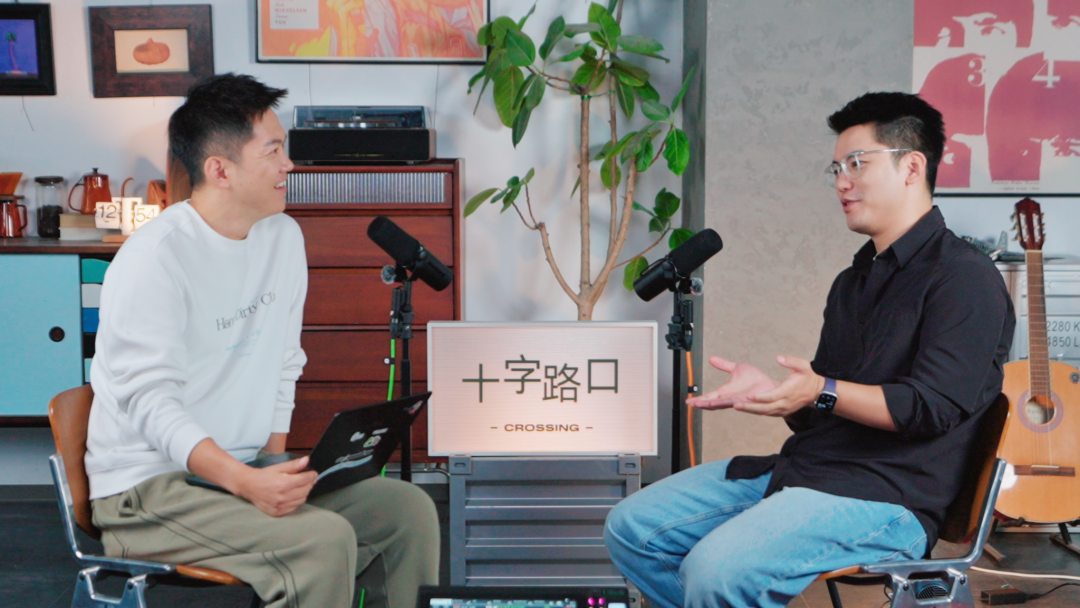
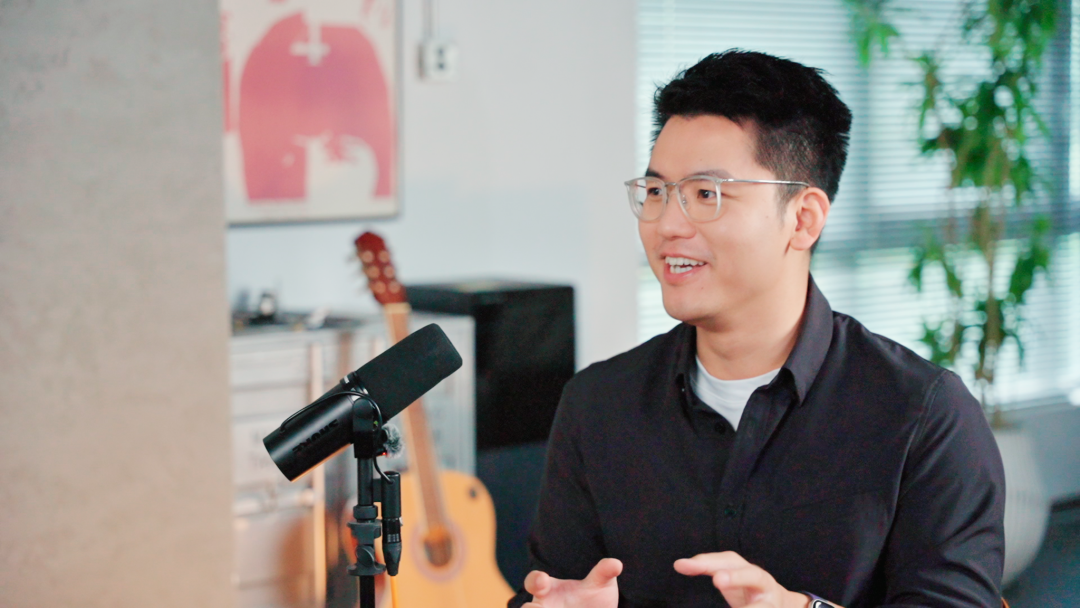
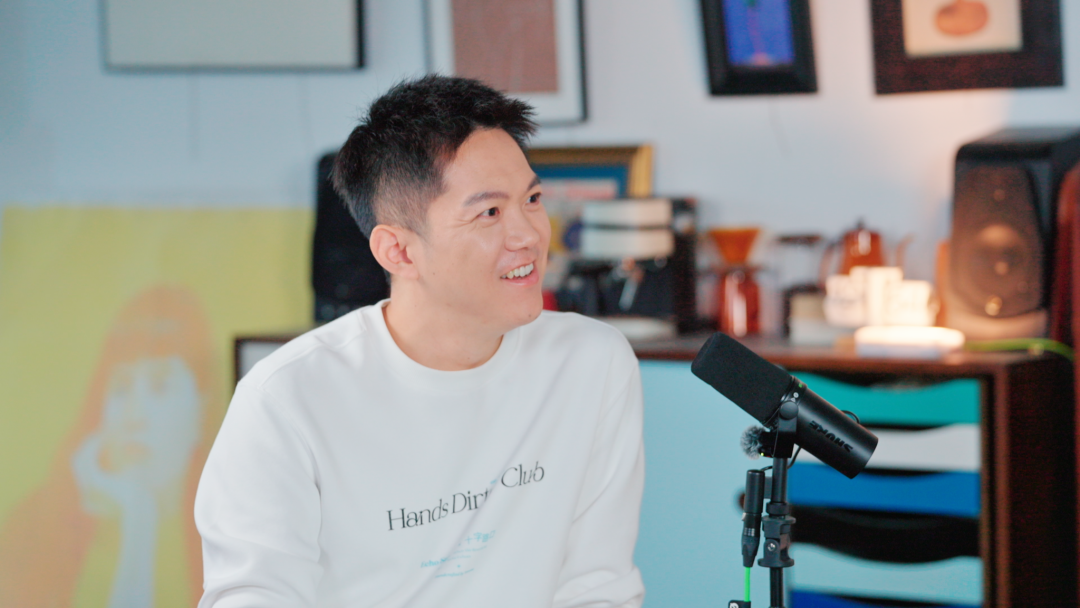
👦🏻 Koji
Let's start with rapid-fire questions to help everyone get to know Lei Li better. How old are you?
🧑🏻💻 Lei Li
👦🏻 Koji
MBTI and zodiac sign?
🧑🏻💻 Lei Li
ENTJ, Cancer.
👦🏻 Koji
Can you walk us through your academic background?
🧑🏻💻 Lei Li
I did my undergrad at Xidian University starting in 2016, then moved to Peking University's Institute of Computational Linguistics for my master's in 2020, and joined the NLP Group at The University of Hong Kong for my PhD in 2023.
How to Get a Good PhD Result
👦🏻 Koji
Xiaomi MiMo did something pretty interesting recently — you livestreamed the post-training for MiMo-V2.6's Pro and Flash models, which drew a lot of attention and discussion both domestically and internationally. You were the person behind that push.
What's fascinating is that you're simultaneously immersed in this rapidly evolving AI industry and still a fourth-year PhD student. Today I want to talk about something a lot of people are curious about: in the AI era, how do you do a PhD well enough to get a solid result?
🧑🏻💻 Lei Li
Let me start with the major milestones of a PhD. First, the decision to do one. I agonized over it for a while, and finally gave myself this answer: if I'm lying in bed ten years from now, I'd probably still regret not doing a PhD. Since that's the case, just go do it.
This step matters a lot. People have all kinds of considerations now — the opportunity cost is huge, especially with the pay gap between industry and academia. But I think money can wait. This is a period where you can focus on doing what you want to do. If I hadn't gone, I'd look back and still want this experience.
The next milestone was pretty dramatic. During my final stretch at Peking University, I collaborated with a junior labmate and we won Best Paper. Two months into my PhD, I attended my first conference where that labmate's paper won Best Paper, and I had a paper of my own accepted too.
When I first started, I actually had doubts about whether I could pass my doctoral qualifying exam. But in November 2023, just two months in, I won an award. At the time it felt like a peak opening — I was even afraid it might be peak everything, right out of the gate.
👦🏻 Koji
After such a peak opening, has the road stayed smooth?
🧑🏻💻 Lei Li
Overall, I'd say it validated an approach I'd already developed.
👦🏻 Koji
What approach?
🧑🏻💻 Lei Li
To sum it up: first, rapid iteration — you need a focused, efficient work rhythm, timely engagement with the community, and feedback from peers or more senior researchers.
Second, in terms of tactics and mindset, choose to work on hard but important problems. If something isn't hard enough, you'll have too many competitors, and in today's climate you'll get wiped out easily.
"Important" has two dimensions: one is problems that lots of people care about, which are likely to matter; the other is difficulty. When you're tackling an important problem, even if it's hard, as long as you make a little bit of progress, you can end up with outsized impact.
👦🏻 Koji
"Hard but important" sounds like it would move slowly while needing positive feedback — those seem in tension, but you've already answered: on something hard and important, even marginal progress reads as significant.
🧑🏻💻 Lei Li
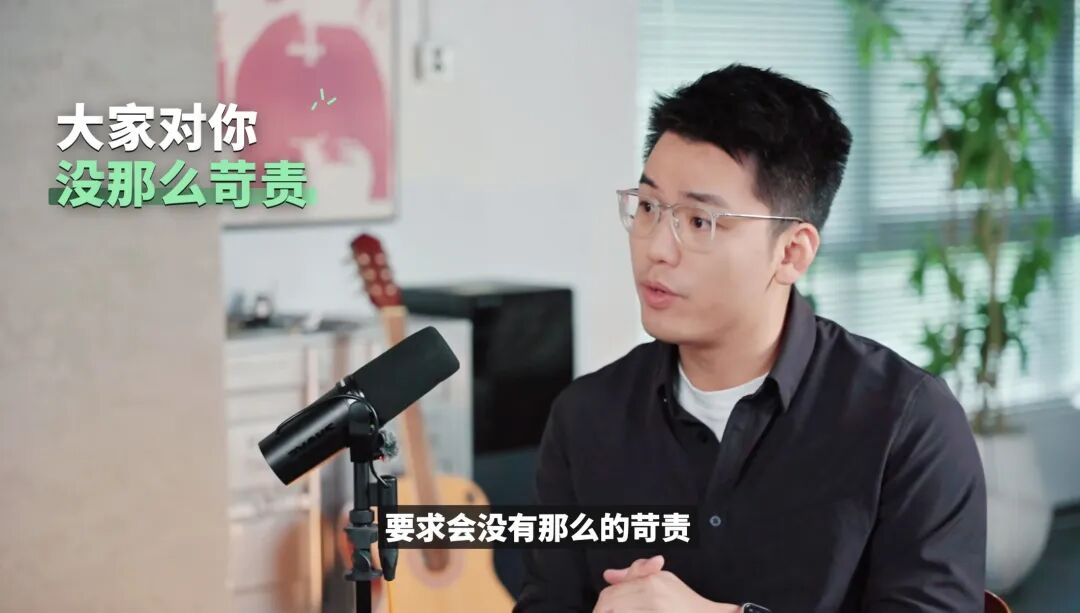
Exactly — people actually hold you to a less harsh standard because everyone knows it's hard. A lot of people look at a difficult problem, feel overwhelmed at step one, and don't know where to begin. But if you can find a good angle, provide some solid analysis or experimental theoretical grounding, that becomes an important milestone for anyone who wants to tackle this problem later.
👦🏻 Koji
Do you think this PhD playbook works for everyone?
🧑🏻💻 Lei Li
Not necessarily for everyone, but from what I've observed, it goes a long way toward reducing anxiety.
👦🏻 Koji
What are PhD students anxious about?
🧑🏻💻 Lei Li
First and foremost, publications. But then there's this dramatic problem: the entire top-conference system, under the assault of AI, is in a somewhat unsustainable state.
Then there's meeting graduation requirements in the first place. Beyond that: are all those papers even useful anymore? For example, after Astra came out, a lot of people in embodied AI felt their whole domain got upended — that's another source of anxiety.
Finally, even after doing meaningful work and getting publications, there's the transition from PhD to actual employment.
👦🏻 Koji
Facing these anxieties, what advice do you have?
🧑🏻💻 Lei Li
If you're still going to play this game, you need to stay relaxed mentally. Competition is fierce, but the community is also working to shore up the review system. You have to trust that this system has been running for a long time and has inherent resilience — good work does get accepted.
Second, whether your work matters. At first glance Astra looks amazing, but look closer and you'll find plenty of rough edges. People need to understand the jagged intelligence of large models: they can look incredibly capable in some places and completely blank in others.
This really tests whether you're actually sitting at your computer coding, designing harnesses, running experiments to see how the data and model actually perform — rather than being paralyzed by hype on social media. What's visible gets amplified, but there's so much that's invisible that's still worth thinking about and researching.
👦🏻 Koji
Give a concrete example — what's something you've seen recently that's still worth exploring, particularly some rough edges on SOTA models like Astra?
🧑🏻💻 Lei Li
We're doing some embodied experiments ourselves. One question worth studying: where do capabilities come from? You can trace back to see which models generalize from where. Knowing where it comes from lets you improve it better.
👦🏻 Koji
My superficial understanding is that OpenAI has been procuring embodied data, and trained on that kind of data?
🧑🏻💻 Lei Li
We suspect that might be the case. Going deeper into specific domains — how does it perform in simulators versus on real hardware, are there generalization gaps — these are all very worthwhile research questions.
Will AI Papers Break the Top-Conferences System?
👦🏻 Koji
All the top academic conferences are being flooded with AI papers. Do you think this system can still hold up?
🧑🏻💻 Lei Li
The pressure is real. When I serve as a reviewer or Area Chair, I used to look at maybe two or three papers; now it's more like ten. Reviewer workload is taking the most direct hit. Given that everyone's a deadline fighter, you used to carve out half a day to finish off the last few papers — now, under these conditions, the randomness in your decisions goes up. That's the most immediate impact.
The whole conference is expanding too. NeurIPS now has three venues. But the community is pushing back: limiting submission counts, getting more experienced reviewers to take on greater responsibility, introducing AI-assisted review to improve accuracy. AAAI now requires two senior SPCs to discuss before making a decision — trying to keep things manageable while getting accept/reject calls right.
But where there are people, there will be randomness. Don't treat accept or reject as the final reward.
👦🏻 Koji
So it sounds like there's a hack: use a SOTA model to generate 100 papers and shotgun them out, playing the odds. What do you think of that?
🧑🏻💻 Lei Li
That's a bad approach. It's basically a DDoS attack on the system. Even a blind cat finds a dead mouse sometimes. But a paper isn't about getting accepted — it's about doing interesting research and finding a place to share it with others. It's knowledge sharing.
With 100 of these things, did the people behind them actually figure things out? Is there rigorous argumentation, theory, or experiments to validate the hypothesis? That's what matters, not whether the paper got in.
If a human-plus-AI combo can pose 100 valuable questions and solve them well with AI's help, providing reliable answers, then whether you submit or not doesn't matter. Like when OpenAI released hundreds of math proofs — some right, some wrong — it had some value, but it also consumed a lot of human effort to verify.
👦🏻 Koji
Do you think new evaluation systems will emerge?
🧑🏻💻 Lei Li
We're already starting to de-emphasize the publication system. But as long as there's any evaluation system, there will be reward hacking.
For example, when screening candidates now, papers are more of a nice-to-have. They used to be a solid gold standard. Now that everyone has them, not having them becomes less important too.
👦🏻 Koji
Why does "99 people have it and you don't" become less important? Because it makes you look like an outlier?
🧑🏻💻 Lei Li
Right — it might mean they know the game is broken and opt not to play. We actually quite like that profile. Contributing to open-source projects is a strong plus now, but that has hacking mechanisms too. Some people get AI to submit PRs that get merged, then call themselves contributors.
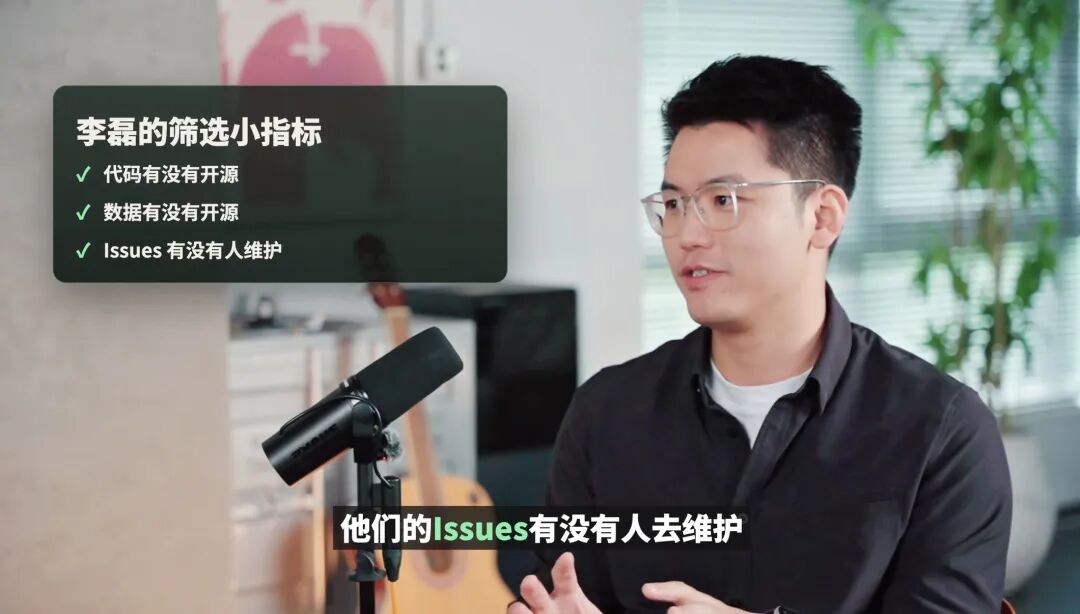
I have one small screening metric, especially for people with publications: whether they've open-sourced their code and data, and whether they maintain the issues after release.
👦🏻 Koji
So it's more about seeing whether your work has had real-world impact?
🧑🏻💻 Lei Li
Exactly. We care about things like Hugging Face download counts. If you claim your model is SOTA but it only got a few dozen downloads on Hugging Face last month, maybe it's not solving a particularly important problem.
👦🏻 Koji
Can Hugging Face downloads be hacked?
🧑🏻💻 Lei Li
They can, but the cost is pretty high. You'd have to actually download and store them on hard drives, and hard drives are expensive.
Why Should a PhD Do Xiaohongshu?
👦🏻 Koji
I checked — your Xiaohongshu follower count is 24,000 today. Last time we talked, you joked that it's higher than your paper citation count. Why compare citation count with Xiaohongshu followers?
🧑🏻💻 Lei Li
This falls under the must-do list for PhDs: do social media.
Social media gives fast feedback. Whether what you post is good — likes and saves are direct signals. People have fewer offline interactions now, but on Xiaohongshu or Twitter, the recommendation algorithm can help you find others with similar research taste. You get great exchanges. That's the feedback layer.
Another layer is the "Big Follower Theory" that's been discussed recently: a PhD student's Twitter or Xiaohongshu follower count and like count should exceed their citation count. That means you're practicing the Big Follower Theory. I think it's a manifestation of Attention Is All You Need.
There are so many papers now. The old distribution mechanism was: look at the few hundred ACL accepted papers each year, pick out a few based on keywords and advisors. But now a conference has four or five thousand papers — impossible to read. People rely on paper recommendations or social media recommendation systems. If you can gain more weight in that system, amplify your voice, your work gets seen by more people and its value gets reinforced.
👦🏻 Koji
In PhD circles, besides the Big Follower Theory, what other theories are there?
🧑🏻💻 Lei Li
The Lean Muscle Theory should be promoted to PhDs too. A PhD is a long process. Physical and mental health always come first. You really need to clear your head sometimes.
👦🏻 Koji
As a PhD, how do you run a Xiaohongshu account?
🧑🏻💻 Lei Li
First, be useful to others. Controversial takes can blow up, but people will just like and comment — they won't feel connected to you as a person. Only by consistently producing content that helps others will influence become a byproduct.
Second, persist. I started by posting lots of paper notes on Xiaohongshu, with very slow follower growth. Then one day I posted about the relationship between citations and followers, and it suddenly blew up. Make it a daily thing — post whatever comes to mind. Present your most authentic self, and you'll attract the people you want to attract.
Third, be yourself. The space is crowded. Copying others is exhausting because you don't know their underlying motivations. Be yourself. Post what you think of, as long as it meets the first two conditions. Follower count isn't the most important thing. Finding a community of like-minded people and having a good platform for exchange — that's the goal.
👦🏻 Koji
Usefulness, frequency, being yourself — those are solid tips. Which of your Xiaohongshu posts have the most likes?
🧑🏻💻 Lei Li
Award posts do best — like the QingCloud Scholarship, and the one about citations passing 10,000. On the research side, notes on On-Policy Distillation got quite a bit of attention. Our team adopted this new paradigm relatively early, and I wrote notes after finding it very promising.
👦🏻 Koji
I noticed that when teachers like Dai Jifeng and Ziran Yizhi release new work, you post analyses and interpretations that seem to get good traffic too?
🧑🏻💻 Lei Li
People pay close attention to Neo Lab's updates. Dai and his team do excellent work. Some of their RSI work happened to use Xiaomi's base model, so I took a look.
👦🏻 Koji
Is Xiaohongshu now a complete externalization of your personal work, life, and research interests?
🧑🏻💻 Lei Li
Yes.
👦🏻 Koji
If you divide a PhD from enrollment to graduation into stages, how would you break it down?
🧑🏻💻 Lei Li
First, knowing how to do research — that's a crucial milestone.
Before doing research, there are preliminary basics. You need to learn a lot of foundational knowledge — machine learning, statistics. These courses might seem unnecessary now that AI is here, but it's very worthwhile to work through them yourself. We implemented basic algorithms like SVM from scratch in TensorFlow, NumPy, and MATLAB. Andrew Ng's Coursera courses were essential. Today, classic concepts like generalization and overfitting still operate throughout the system. PagedAttention in vLLM comes from operating systems concepts. These are basics.
The second stage is research as knowledge sharing: how to spread knowledge more effectively. This includes paper writing, experimental design, how to validate your hypothesis — these need to be learned. AI can serve as a good reviewer or teacher, giving suggestions and strengthening your assumptions.
The third thing people often overlook: how to maximize impact. Do social media well, do open-source well. Every project needs accompanying promotion, software, blog posts, and sharing. At this stage, you can independently produce a paper and gain influence — this is foundational competence.
The next stage is leadership. I'm very grateful to the mentors I've had. Early on, Professor Xu Sun told us to cultivate leadership. Once you've mastered the whole pipeline, you need to hand it off to more junior students. Every student is different — you need to guide them case by case. You go from being a generator to being a critic who helps them. Some students are self-motivated — a little guidance and the whole chain clicks. Others need stronger pushing to build things up.
There's also the transition from academia to industry — operating in a more realistic environment with more dimensions of competition. I'm still learning this part.
No Resources — How Do You Start Research?
👦🏻 Koji
How do you cold-start a PhD?
🧑🏻💻 Lei Li
My cold start came from bravely sending a cold email as a junior. I emailed my future master's advisor — actually I sent about ten emails to various professors and only got one reply. Professor Sun was willing to give me a chance, letting me intern in his lab the summer before my junior year. That opened the door to everything after: top conference publications, smooth admission to grad school.
It's harder now. Well-known professors' inboxes are flooded with cold emails, lots of RA applications. Industry too — given compute constraints, headcount is even scarcer.
On how to cold-start, the first thing is to maximize your impact. These days people don't just look at papers — they look at output: GitHub projects, useful harnesses, or interesting applications. These don't demand as much compute. With creativity you can build something product-like, which is the path toward product-oriented roles.
For research-oriented roles, while everyone's using AI for sloppy writing, you can get the fundamentals straight and write good research blogs. Write solid Notion posts one by one; if you have the means, design small experiments to derive and improve things. Jianlin Su's early blog was all derivations, not much compute, but that didn't stop him from eventually proposing RoPE, which everyone uses now. He's a researcher at Moonshot AI.
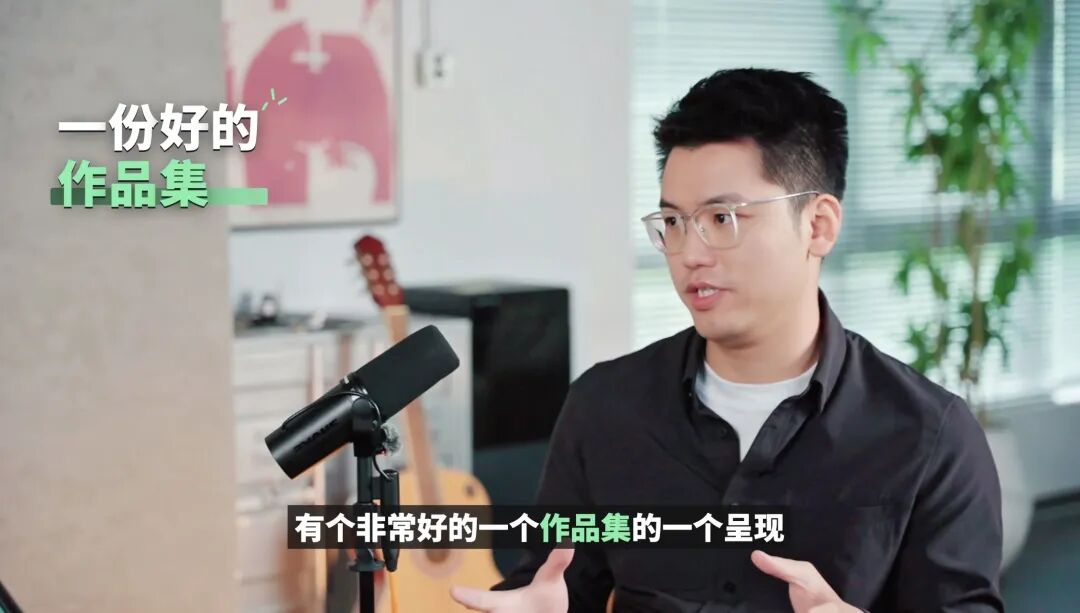
The path is: reach out aggressively. You'll definitely get lots of no-replies or negative feedback along the way, but keep producing output. It's a process of learning and growth. Build a strong portfolio, bubble sort your way up slowly, and you'll get noticed. My first internship offer came from Kingsoft — they found me through my blog. But I wanted to do machine learning, so I didn't take the software development role.
👦🏻 Koji
This reminds me of something Crossing always says: As long as you keep building, good things will happen.
🧑🏻💻 Lei Li
That's really how it is.
👦🏻 Koji
The bubble sort metaphor is interesting — keep bubbling, and you're more likely to float to the top?
🧑🏻💻 Lei Li
Floating to the top matters quite a bit. There's a book called The Formula: The Universal Laws of Success. They used big data and network science to study the pattern of when Nobel laureates published their prize-winning papers.
👦🏻 Koji
What pattern did they find?
🧑🏻💻 Lei Li
The conclusion was that there is no pattern — you just have to keep publishing. They couldn't even predict which paper would become their masterpiece.
The second effect: paintings in the Met don't go straight from the artist's studio to the museum. How do they circulate? Studying the movement of paintings between collections reveals that after landing in some lesser-known municipal museum, they're very likely to be borrowed by a famous one.
There are critical nodes in this network, highly accessible nodes. By bubbling up onto the critical path, your probability of success increases significantly. On one hand you need to keep creating and releasing work; on the other hand, there are still discernible patterns: keep working hard, build smart.
👦🏻 Koji
Which PhDs do you consider very successful, the ones who got "big results"?
🧑🏻💻 Lei Li
One example I think of is Eric Wallace from Berkeley. He worked on large model safety, then joined OpenAI after graduating. When the Swarm incident took down Hugging Face, he came out as an internal researcher to do the post-mortem. Looking at his research, the ideas are all simple, but he raises and defines problems at exactly the right moments.
School or Advisor?
👦🏻 Koji
For PhD programs, what advice do you have on choosing school versus advisor?
🧑🏻💻 Lei Li
Choosing school should be far lower priority than choosing advisor. Doing a PhD is a lot like the ancient apprenticeship system. Domestic and international situations vary case by case. Generally speaking, the dynamic in China is more hierarchical; elsewhere it's more collaborative, with the advisor providing supervision and support.
Go to the best platform you can — the school name will bump up your valuation a bit — but between Top 30 and Top 50, there may not be much fundamental difference. Compared to rankings, the differences between research groups are probably more worth paying attention to.
One very important thing: look at alumni outcomes and mental states. Privately ask graduating and current PhDs.
👦🏻 Koji
How do you gauge mental state?
🧑🏻💻 Lei Li
See whether people are doing their PhD in a relatively happy state. There are also painful but successful PhDs — maybe very prolific but deeply miserable.
👦🏻 Koji
Which groups would you say are on the happier side?
🧑🏻💻 Lei Li
Let me plug my own group: HKU-NLP. Also Peking University's Institute of Computational Linguistics — the atmosphere in both is very relaxed and pleasant.
👦🏻 Koji
How should you choose a PhD advisor?
🧑🏻💻 Lei Li
It's quite difficult. Google Scholar, CSRankings, and public talks are all public information. Many private details only emerge after actually collaborating for half a year or longer. It's a two-way match.
👦🏻 Koji
What did you do?
🧑🏻💻 Lei Li
I was interning at Shanghai AI Lab and met my current co-supervisor, Professor Lingpeng Kong. We collaborated for about half a year and felt the styles matched.
If you still have time, I'd recommend doing an RA position directly. On one hand you can connect with current and graduating PhDs to get more inside information; on the other hand you can understand the group's style, which helps you make a quick judgment.
Slow Research — Right or Wrong?
👦🏻 Koji
Recently a student "slow research" initiative caused huge controversy online — over 100 Chinese and American professors and researchers co-signed it, hoping undergraduates wouldn't rush to publish papers but would slow down and do research properly. What do you think of this initiative?
🧑🏻💻 Lei Li
The dramatic part is how much it contrasts with current rhythms. The evaluation requirements for grad school admission season seem to conflict with it.
I've read the specific initiative. The professors are saying they won't use papers as the sole screening criterion. When everyone has them, papers become less important. What they advocate is having research output and experience, solid fundamentals, being able to clearly explain what you did, why you did it, and how you did it — rather than adding a few more papers to your resume through guest authorship or sloppy work. They're calling for not doing that kind of thing; they're not saying don't do research at all.
You need to balance coursework and research yourself, approach important things with a relaxed mindset. The pace can be slightly slower, but with gradual progress. Fast and slow are relative.
👦🏻 Koji
Are you personally a fast person or a slow person?

🧑🏻💻 Lei Li
I spend quite a long time choosing what to work on. The more time spent upfront, the more worthwhile it is later.
I had an experience earlier where I worked on an idea but didn't do the preliminary experiments carefully enough. Spent over half a year tuning algorithms, only to discover the hypothesis was wrong.
Now before running experiments, I'll isolate a small hypothesis and quickly validate it with toy experiments — end-to-end testing reveals a lot. Same for choosing directions: intensively reading papers, discussing with professors I admire, forming a direction to commit to next. Once enough time has been invested, execution needs to be fast — maximize your GPU utilization and data processing speed, use AI to help parallelize and accelerate output.
Mainland, Hong Kong, or US?
👦🏻 Koji
What are the pros and cons of doing a PhD in mainland China, Hong Kong, and the US?
🧑🏻💻 Lei Li
The advantage of mainland China is faster access to industry. The downside is the relatively traditional apprenticeship system, with horizontal and vertical evaluation pressures in academia. Some advisors' behavior gets distorted under this pressure, which isn't good for student growth — you need to screen carefully. Some groups balance this well, ensuring both group operations and student development.
Hong Kong is closely integrated with the mainland while having unique port-city advantages. The professors it attracts tend to have more dynamic profiles, but there are also life pressures.
The US is closer to Silicon Valley and the US academic circle, but visa and CPT internship issues are relatively painful right now.
👦🏻 Koji
What profile is better suited for a US PhD? What about staying in mainland China or Hong Kong?
🧑🏻💻 Lei Li
For the US, first you can't be too picky about food — you need to endure the loneliness of good food, and enjoy the cultural atmosphere there.
In mainland China and Hong Kong, what matters more is whether you can balance many things under certain pressure. If you can handle that, staying in mainland China or Hong Kong is a very good choice.
👦🏻 Koji
When PhDs get together these days, what do they talk about most besides academics?
🧑🏻💻 Lei Li
Package. Final-year students get anxious about job searching; more junior students think about which research directions are more worth pursuing, what's on industry's mind, hoping for a smooth transition after graduation.
👦🏻 Koji
In undergrad everyone was classmates, but in PhD you discover different majors lead to completely different worlds — especially AI versus non-AI, completely two different worlds?
🧑🏻💻 Lei Li
This is also why I often feel lucky. There's what's called the "i-shaped divergence" — people in AI are like the dot above the i, everyone else is like the vertical stroke below, with a huge gap in between.
But AI is a very democratizing thing. Before, learning meant going to Coursera or listening to Stanford lectures. Now the access you have to ChatGPT, DeepSeek, or MiMo contains an enormous amount of knowledge. Using it well can help you improve efficiency and transform work paradigms in your own domain.
The future isn't AI replacing humans — it's people who can use these tools well who will win. Just like Homo sapiens who mastered fire outcompeted other human species. Realize the world is undergoing dramatic change, and embrace it actively. There are plenty of ladders in that gap — people can bridge these two things together.
👦🏻 Koji
Professor-founded startups are a huge wave now. How do PhDs view their advisors starting companies?
🧑🏻💻 Lei Li
The current funding environment is technology-oriented, so the most cutting-edge researchers and professors naturally get pushed to the forefront. After raising funding and forming a company, resources let you build things faster with more flexible mechanisms. Schools are constrained by budgets when buying GPUs, hiring engineers, or purchasing data. The startup form can gather these elements together, acting as leverage for acceleration.
But the flip side is that once you take money, investors have demands, and those cascade down to students, who may end up doing dirty work outside of research. It gives you greater resources, but to use them you have to pay a price. The key is weighing what you need at different stages.
Is a PhD Still Worth It?
👦🏻 Koji
Some people say if schools lack compute and resources, you might as well skip the PhD and go straight to industry. Do you think a PhD is still necessary in STEM or AI?
🧑🏻💻 Lei Li
It depends on what you expect from a PhD. If the goal is to get into a big tech company, it's not necessary—undergrads can do that too. People like Jason Wei and many OG researchers did outstanding work straight out of undergrad, or even high school. Whether you get in depends on whether you're exceptional, not your degree.
But if you want a relatively complete, low-pressure, semi-detached period of time to pursue research you're genuinely interested in, to satisfy your curiosity about a field, then a PhD is valuable. If you don't do it, no one else will do it for you. Building foundational knowledge, learning skills to maximize impact, treating it as a unique journey in life—it's very worthwhile. You live 80 years; five years for a PhD isn't that long.
👦🏻 Koji
Looking back at 2026, what AI moments gave you that "aha" feeling?
🧑🏻💻 Lei Li
The entire Agent paradigm being pushed to the forefront—the societal impact has been stunning.
When I first started researching, I worked on classification tasks, judging whether a sentence was positive or negative. Later, as models got stronger, machine translation and essay writing. Today, Agents equipped with tools can automate so many things for people, reaching into every corner of life through scaffolding. They already have significant capabilities in the digital world; the next step into the physical world will spark even more possibilities.
The second was Xiaomi's post-training livestream. Large-scale RL brought comprehensive capability improvements. Even during early training, we felt something comparable to the R1 moment.
Why Did MiMo Livestream Post-Training?
👦🏻 Koji
What was the original thinking behind Xiaomi livestreaming its post-training process?
🧑🏻💻 Lei Li
There were rumors and discussions circulating that were quite damaging to the image of Chinese large models. We wanted to provide positive leadership. People weren't doing RL perhaps because it's difficult, with extremely high demands for infrastructure and data. We wanted to give everyone confidence, to prove this could be done, and done well.
We showed it in a very transparent way, open-sourcing what should be open-sourced, absorbing feedback through the livestream, improving what was lacking, and amplifying what worked.
👦🏻 Koji
After the livestream, what were the most common responses Xiaomi received from domestic versus international audiences?
🧑🏻💻 Lei Li
Domestically, people were particularly fixated on the cost, because the amount was displayed directly on the livestream page. People clicked in and saw RMB burning, which was pretty stimulating.
Internationally, people were shocked by our transparency. On Twitter, there were comments that this was the first industrial-grade livestream, showing training dynamics at almost TensorBoard-level detail—a gold mine for researchers to analyze.
👦🏻 Koji
Over the past two or three months, the data industry has been heavily discussed, and many high-valuation data companies have emerged domestically, like UniPat, Humanlaya, and so on.
What's your take on this? What explains their high valuations, and how sustainable do you think this business is?
🧑🏻💻 Lei Li
High valuations make sense. Push large models down and you get compute, data, and talent—none of them are cheap. Good data, solid algorithms, and good infrastructure produce good results. Data is the source of human intelligence. The complexity and quality requirements for expert data production have risen several orders of magnitude. Those who can do it well deserve their slice of the cake.
Sustainability is a dynamic process. As model capabilities improve, data companies that can consistently produce high-quality fuel will continue generating value. Model capabilities advance in a sawtooth pattern; you need to find the gaps, organize scalable systems and incentive mechanisms to deliver. If model companies do it themselves, they分散精力、浪费算力—in the push toward the intelligence frontier, time is an irreversible resource. So the demand to buy data will persist.
But if a data company can't produce high-quality data, the business won't survive. As models improve, the cost of self-generating data drops dramatically, and competition intensifies. Companies that can consistently scale high-quality fuel pipelines will see their advantages magnified.
👦🏻 Koji
What kind of company or organization, with what capabilities, can sustain a high-quality data pipeline over time?
🧑🏻💻 Lei Li
Quality is always relative to a specific model. Data that's too difficult won't be learnable by a weak model. You need to define data difficulty, gauge the level of the model you have access to—there's a lot of know-how here.
You also need to judge which data is more valuable: on one hand, PR value—demos that look cool; on the other, economic value from what the model actually learns. Balance these trade-offs, find experts, and build scalable production lines.
RSI, Data Intelligence, and Benchmarks
👦🏻 Koji
From the front lines of model training, are you seeing signals of RSI?
🧑🏻💻 Lei Li
The signals are getting stronger. In the broadest sense, RSI is when models generate data to improve themselves.
A more precise definition is models training themselves—searching for better parameters and algorithms on benchmarks like PostTrainBench or ML bench. Progress here will be very rapid because the problem definition is clear, models excel at search, and they can find paths by scaling compute. Like Karpathy training language models, PPL will definitely keep dropping.
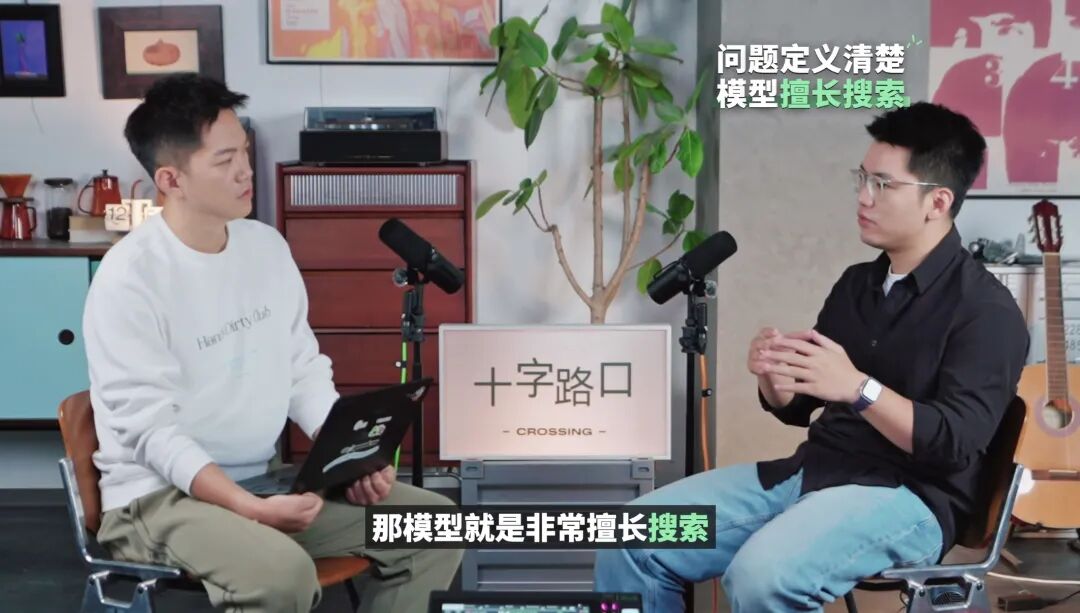
But what hasn't been well-explored yet is taste—the ability to define problems: what problems matter, what needs to be solved next. Only with the ability to define problems can researchers confidently hand over end-to-end work. Currently, researchers handle directional decisions while models handle data generation and training self-improvement. We haven't seen good progress on that front-end decision-making yet.
👦🏻 Koji
In the RSI field, which benchmark do you find most influential?
🧑🏻💻 Lei Li
There are quite a few now, but nothing that particularly excites me yet. It's still early days, a hundred flowers blooming—no consensus has formed.
👦🏻 Koji
Today more and more people are building benchmarks. For a good benchmark to emerge, get noticed, earn respect, and make people want to compete on it—what does it need to do?
🧑🏻💻 Lei Li
First, it needs to measure new, important capabilities. For example, with our Video-MME, while others were still doing 6-second video understanding, we pushed to over an hour. As Agent capabilities strengthen, understanding long-form video is a capability at an entirely new dimension.
Second, data quality needs to come from real use cases, avoiding synthetic data. Synthetic data is easily captured by models, creating strong awareness and anomalous performance with a large gap from real user experience.
Third, impact. Make it easy to use—one-click launch, one-click evaluation, adapt to mainstream benchmark suites. The core is saving others time; that's what makes them more likely to adopt your work.
👦🏻 Koji
Recently, mechanical engineering became the most popular major among MIT freshmen, while four-year CS undergraduate enrollment across the US dropped 8.4% year-over-year. Fewer people are studying CS. What do you think?
🧑🏻💻 Lei Li
Every generation has its meta. Entry-level coding demand has indeed been partially eaten by AI. Even if people don't major in CS, they'll take courses to ensure a general understanding of CS and do coding with AI assistance—this is becoming a required skill.
👦🏻 Koji
In a parallel universe where you had a younger brother in his final year of high school, about to take the gaokao, with good grades—what would you advise him to study?
🧑🏻💻 Lei Li
I wouldn't advise him on a major. Every field produces its champions. You don't need to be in the top 1% of a field, because that's too exhausting. Just keep comparing yourself to yourself, maintain a level in the top 20% or 30%, make progress every day, and every field will produce outstanding achievements and talented people.
👦🏻 Koji
To close the show, many current PhD students and students are facing difficulties, anxiety, and confusion. If you could distill one simple piece of advice from your experience to help people be a little happier every day, what would it be?
🧑🏻💻 Lei Li
Your paper will get accepted eventually. You still need to eat, you still need to sleep—it's not the end of the world.
👦🏻 Koji
Eat well, drink well, sleep well, then write your paper. Thank you, Lei Li!
🧑🏻💻 Lei Li
Thank you, Koji. Bye.
Recommended Reading


Join Our Member Group

Comment to Win