Obsession, Ambition, and a Pair of AI Glasses: The Raw Fuel of Elite Product Managers | A Conversation with Li Auto SVP Fan Haoyu
Not content to let the world stay as it is.
Unwilling to accept that the world is just like this.

👦🏻 Podcast Interview: Koji
🥷 Edited by: Crossing
🧑🎨 Layout: NCon

🚥 I've always believed that AI won't truly enter daily use until it arrives on a new form factor. And AI glasses may be the most strategically underrated of them all.
So, one month after Li Auto released its AI glasses Livis and sparked widespread discussion, this week "Crossing" invited Fan Haoyu, Senior Vice President at Li Auto.
Haoyu's background and temperament are truly unique — he's a rare veteran product manager who, after twenty years in the industry, still maintains a "hands in the dirt" spirit. He has the aesthetic foundation of industrial design, the "dig to the root" mindset of a technical engineer, and more importantly, he's an obsessive who still believes "products should have soul" even when the industry has become cutthroat.
So this episode goes far beyond a pair of glasses:
On Li Auto's AI strategy: Why did Li Auto choose glasses over pendants or earbuds? Has Li Auto discussed making robots? Why is Li Auto developing its own models and OS? How were 36 grams and 18-hour battery life achieved? Why are glasses a crucial "continent" in the AI era? On product methodology: As an executive managing thousands, he still emphasizes "hands in the dirt." From the "6211" time allocation rule (how should product managers spend their time?) to "product managers aren't gods, they're the ones who beg gods to work for them" — this is a masterclass in product management. On people and products: What is a product manager's ambition? It's still wanting to "change the world" when everyone else thinks "good enough is fine." Fan Haoyu says, "As Camus wrote — there is an invincible summer in me."
If you're an entrepreneur or product manager following AI hardware, or if you're going through the pain and confusion of building something, the discussion about "obsession, ambition, and summer" in this episode might give you a long-missed sense of strength.
Listen on WeChat:
Listen on Xiaoyuzhou:

🎬 The video podcast is also available on @Koji's WeChat Channels, Xiaohongshu, Bilibili, YouTube, and other platforms
As the full interview is quite long (20,413 words), here's the table of contents:
🟢 Rapid-Fire Q&A: Age, alma mater, MBTI and zodiac sign, introduction to Li Auto Livis AI glasses
🟢 A Product Manager's "Proud Moment"
A great product doesn't have to ship, but it must have truly existed.
🟢 CES 2026 and the AI Glasses Explosion
Why do virtually all global AI glasses companies come from China?
🟢 The North Star Metric for AI Glasses
"We want to bring the Li Tongxue everyone loves out of the car, making it a companion that's always there."
🟢 Making Glasses at a Car Company: Overcoming Opposition or a Natural Fit?
How does a product that "seems unrelated" establish itself internally?
🟢 A "Counter-Mainstream" Technical Path
Why skip Qualcomm's AR chip and choose a smartwatch MCU instead?
🟢 The "Hands in the Dirt" Product Manager
True authority is built in the dirtiest, most granular details.
🟢 The Product Manager's 6211 Time Allocation Method
Making products is fundamentally about managing your state.
🟢 Three Elements of a Good Product Manager
See clearly, learn fast, can't let go.
🟢 What Does AI Mean for Product Managers?
AI isn't the answer — it's just a sharper knife.
🟢 Every Trade-off Serves One Goal
Not more features, but something you want to wear every day.
🟢 Will Li Auto Make...?
🟢 An Island or a Continent: The Worldview of Future Tech Giants
"It depends on how you understand this world."
🟢 Ten "I Am" Sentences
🟢 Let's Keep Moving Forward Together

Rapid-Fire Q&A
👦🏻 Koji
While all new energy vehicle makers were racing on price, refrigerators, and big screens, Li Auto made a surprising new product — AI glasses, named Livis.
Today, Crossing has invited Fan Haoyu, Senior Vice President of Li Auto's Product Department. He oversees Li Auto's products, including these AI glasses.

👦🏻 Koji
Let's start with rapid-fire questions. Haoyu, how old are you?
🧑🏻💻 Fan Haoyu
👦🏻 Koji
Alma mater?
🧑🏻💻 Fan Haoyu
Xi'an Jiaotong University, Industrial Design Department.
👦🏻 Koji
MBTI and zodiac sign?
🧑🏻💻 Fan Haoyu
INTP, Leo, Aries rising, type O blood.
👦🏻 Koji
First time a guest has shared so much at once. Truly a product manager who knows how to exceed user expectations!
🧑🏻💻 Fan Haoyu
Hahaha!
👦🏻 Koji
One sentence to introduce Li Auto Livis glasses?
🧑🏻💻 Fan Haoyu
This is Li Auto's first AI terminal consumer electronics product.
Its biggest features are three:
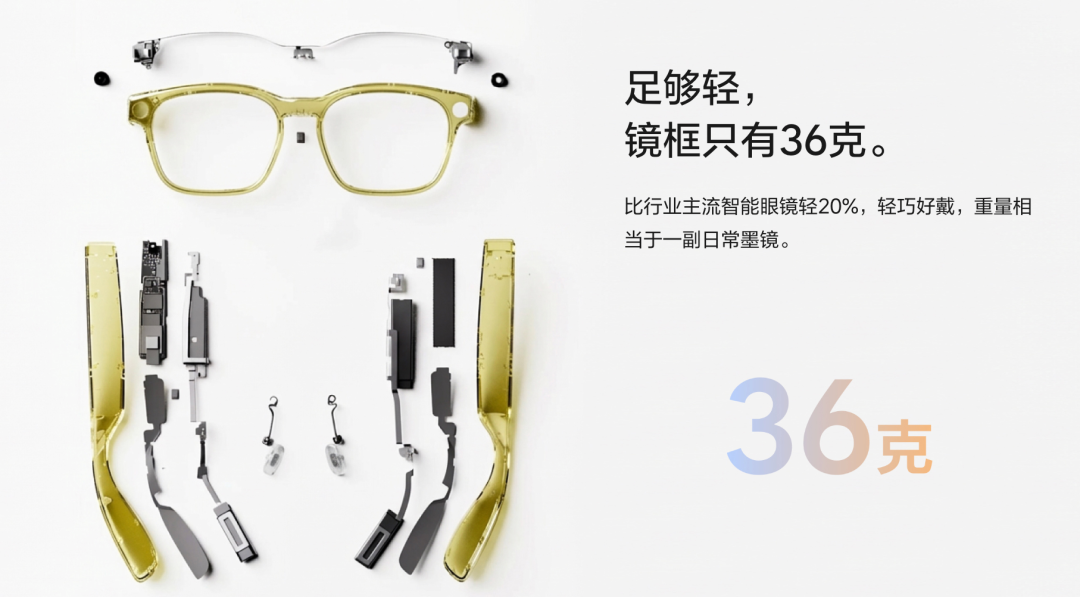
First, extremely comfortable to wear — at 36 grams, it should be among the best in the industry.
Second, very long battery life — typical use reaches 18.8 hours a day, and pure standby lasts over 70 hours.
Third, it has the fastest AI Q&A response in the industry, at 800 milliseconds, achieved through a completely new voice architecture.
A Product Manager's "Proud Moment"
👦🏻 Koji
You sounded very proud introducing Livis. I'm curious — of all the products you've made, which one are you most proud of?
🧑🏻💻 Fan Haoyu
The most interesting one was a self-media app I made for Eason Chan over ten years ago, but it never launched due to various reasons.
At the time, we turned Eason's resume and life story into a calendar — one was the Gregorian calendar, and another let him set his own year zero and dates, creating a completely different timeline. His fans could interact on it, and he could post some B-side demos.
👦🏻 Koji
I'm surprised. I thought you'd say the Li ONE or Li MEGA, but it was an Eason Chan app that never shipped.
🧑🏻💻 Fan Haoyu
Yeah, it's fun. Coming to Crossing today — isn't your tagline "standing at the crossroads of technology and humanity"?
Since I'm here, let's talk about something different. Let's talk about what new technologies we have today, and also what moves people, what makes them feel moved, or smile knowingly.
👦🏻 Koji
Of Li Auto's past models, which one makes you smile knowingly, feeling especially proud?
🧑🏻💻 Fan Haoyu
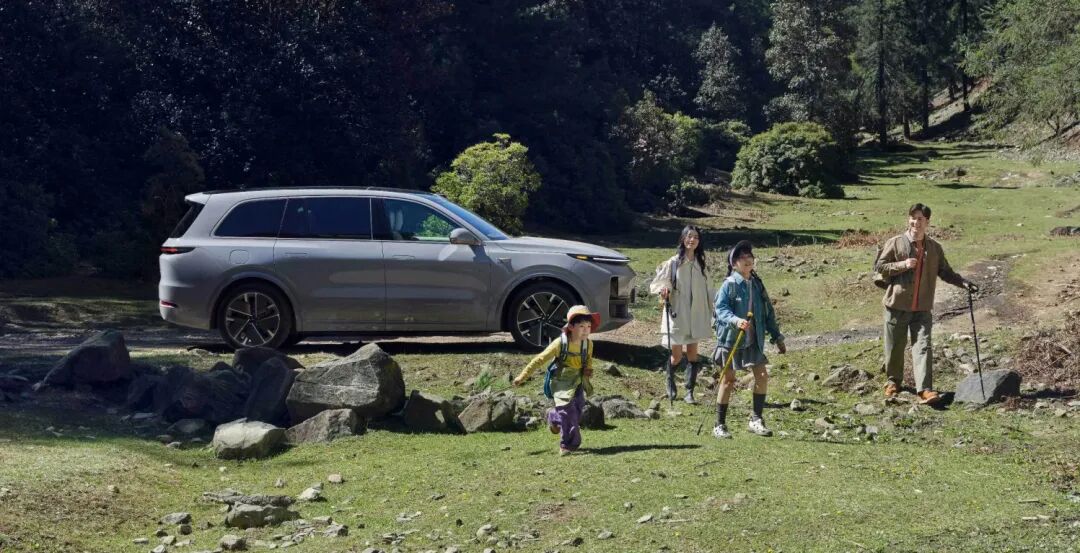
Has to be the L9. Think about the small details — like putting in two 3K dual-layer laminated OLED screens that not even iPad had at the time, an industry first. We pushed the in-car space experience to a new height, the inside-outside interaction experience, including the pioneering little blue light, so many things.
The L9 generation had many breakthroughs — it was phenomenal at the time.
The funny thing was, the L9 accidentally leaked during an outdoor shoot, drawing a lot of criticism. We were forced to post one photo a week on Weibo, introducing one feature each time, and this反而 became an industry benchmark. Before the launch event, the product was trending every week.
And that timing was right after the pandemic — many people felt suppressed, somewhat defeated, but the L9's arrival brought a refreshing feeling.
I still remember, the earliest users were tech workers in Beijing, Shanghai, Guangzhou, Shenzhen, Chengdu, and Hangzhou — they really recognized this product. At that moment, there was a sense of rising prosperity, like everyone finally getting to breathe after being locked down for a while. Thinking back, that period really felt great.
👦🏻 Koji
So on one hand it's the product innovation itself, and on the other it was born in a special historical period — everything felt restless like in the spring, at the Jingzhe solar term.
🧑🏻💻 Fan Haoyu
Haha, so cultured.
CES 2026 and the AI Glasses Explosion
👦🏻 Koji
As we record this podcast, CES is happening. I saw news that this year's AI glasses exhibition area has 16 companies, 15 from China and one remaining being Meta. What do you think of this scene?
🧑🏻💻 Fan Haoyu
I think it's great that everyone wants to show themselves on the CES stage.
You'll find that so many companies suddenly appeared because everyone is bullish on this direction. And many of these companies haven't just been around for a year or two — Thunderbird, Rokid, Xreal, they've been building for many years, whether they were doing VR or optics before.
Today, no one doubts that a product that can stay with users effortlessly and continuously is a good direction.
Before recording this podcast today, I asked a colleague to send me a chart — a long list of dozens of eyewear manufacturers, each with their own angle: some going for a sporty look, some doing display-only without speakers, some as teleprompters, others for translation. But one thing made me quite pleased: there was a "weight" column, and every single one was in the 40-gram range, 39 grams... Seeing that, I felt pretty proud. Our glasses are extremely light by industry standards — 36 grams.
There was another column for "main chip." Looking at that, most used Qualcomm, or added a coprocessor. The only one using just a single MCU was us. So I'm proud of that too — we took a very different path from everyone else, which is also why we didn't go to CES.
So far, our product has sold very well, with extremely positive user feedback. But we're currently facing some supply constraints that we're working through. Once resolved, we'll reopen sales. I believe we still have many car owners we need to deliver to first, before the tech enthusiasts.
👦🏻 Koji
It's been over a month since Livis launched. It sold out instantly at launch, and it's still not easy to get one.
🧑🏻💻 Fan Haoyu
Right, we sold through a month and a half of production capacity in three days.
👦🏻 Koji
Did that exceed expectations?
🧑🏻💻 Fan Haoyu
Far exceeded them. For this launch, both budget and scale were kept very tight — we just wanted to focus our message on car owners. We didn't expect the traffic and impact to be so strong. Now about 12% of buyers are non-car-owners, which surprised me, since all our external communication was aimed at car owners.
We believe serving car owners comes first. Basically by day three, we'd sold through nearly two months of production capacity. The few tens of thousands of units we kept in inventory sold out in three hours. Then we sold through subsequent production capacity too, and immediately hit supply constraints. Because our yield requirements are very high, we can't compromise, but yields haven't come up yet, so supply is tight. But once we get through this period, we'll ramp volume back up.
I'm very confident in this product. Because it has a real-time operating system and a low-power chip, it can achieve ultra-long standby time, with features that keep getting better through OTA updates.
So in 2026, I'm not worried about competition, and I don't even think about it, because everyone is expanding the market from their own angle — we're not really clashing yet. Our first priority is serving our car owners.
The North Star Metric for AI Glasses
👦🏻 Koji
Of all your data, what's the north star metric you care about most?
🧑🏻💻 Fan Haoyu
I focus on two metrics.
First, single-session wear time. We put enormous effort into letting users wear these comfortably for long periods and keeping them always on standby, so this number is quite good. Many people feel like they've "welded" the glasses to their face, wearing them daily like regular glasses.
Second, intelligent voice interaction frequency. Currently, across our tens of thousands of users, the daily average — not outliers, not lows — is about 40-50 rounds of conversation per day. This really impresses me, because we see many users actually communicating and conversing with it, not just asking questions.
In the car, daily conversation rounds are 18-20; on the glasses, it's over 40. Of course, this is partly because it just launched and users still have novelty — I'll keep watching this.
What we really want to do is simple: take "Li Tongxue" that our car owners love so much from inside the car and bring it out, making it a companion that's with you all the time. It can help you, pay attention to you, take notes and answer questions anytime, recording moments through your eyes.
👦🏻 Koji
What do users mainly talk to the glasses about?
🧑🏻💻 Fan Haoyu
In the car, navigation, music, and media content are the top queries. After that it splits into over a dozen categories — casual chat, knowledge Q&A, news, and many other domains.
On the glasses, there are three typical use cases.
First is Q&A and communication, including voice Q&A and visual Q&A. Like seeing something and asking "what's this?" or "help me remember this thing."
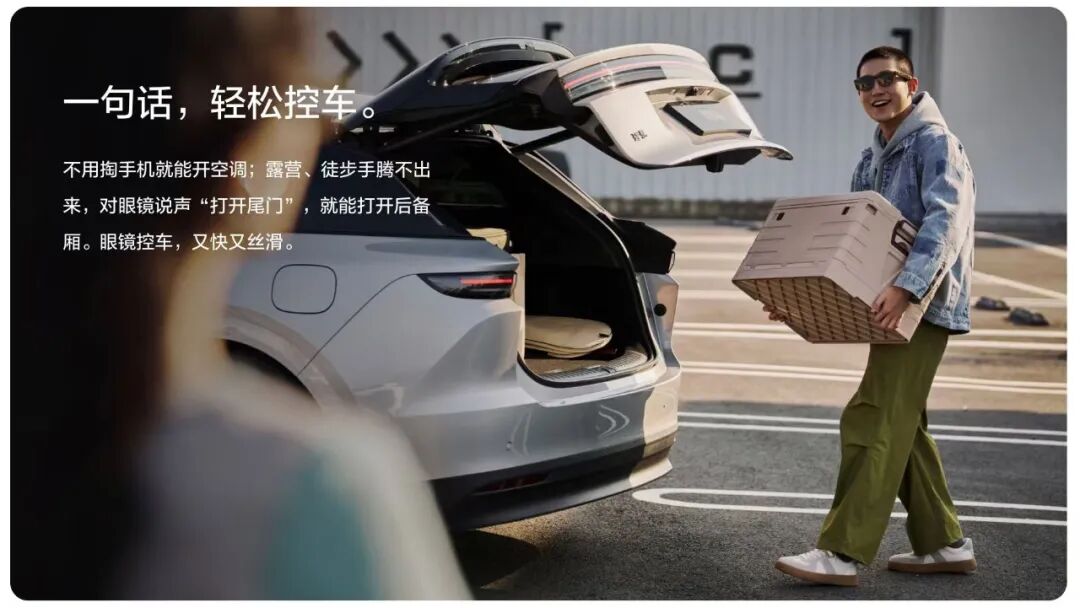
Second is car control, which accounts for 30% of daily active use, because it's just so convenient. For example, I might be wearing the glasses walking near my car and say "open the trunk for me"; or getting off an elevator and say "turn on the steering wheel heater, seat heaters, warm up the AC a bit." It replies "Done, all set for you." Way more convenient than pulling out your phone.
Third is the "notepad" function. You can have it remember things for tomorrow or the day after, and it'll reactivate those memories in later conversations. The notification reminder for this isn't fully built yet — it'll upgrade in about a month, when it'll proactively remind you. We may also integrate calendars to blend into daily work scheduling.
Another is deep learning and deep research — currently average users use this a few times per week by active user count. Sometimes users have it do asynchronous tasks that might take dozens of minutes.
👦🏻 Koji
I use Livis AI glasses for photos and recording, but it sounds like these aren't your north star metrics?
🧑🏻💻 Fan Haoyu
Taking photos, recording video — these functions are very common, just control commands. And people's living habits vary hugely. Some people naturally love shooting photos, others rarely do. I know some users only really started taking weekend photos after getting the glasses.
Before, when I took photos I'd compose the shot — after all, I studied design, so picking up a camera I'd immediately start thinking about proportions, light and shadow, exposure, very "precious" about it. But with glasses photography, you just press a button. I really love using it now, because you don't think about design and composition, just click-click-click.
These functions' usage frequency varies by person. We certainly care about efficiency and convenience, but it's not my most core metric.
👦🏻 Koji
As far as you know, do other AI glasses manufacturers focus on the same north star metrics as you?
🧑🏻💻 Fan Haoyu
I'm not sure about others. I only know that from day one, what we focused on was:
Can this assistant we give users stay with them all day? That's the most important — if you're not together, you can't use it.
Second, is this "person" actually helping the user? Sure, it can carry bags, take photos, but what matters most is this companion staying with you long-term and actually assisting you.
Making Glasses at a Car Company: Forcing It Through or Natural Evolution?
👦🏻 Koji
When you internally greenlit Livis AI glasses, what was the story? Was everyone supportive, or did you have to push it through against opposition?
🧑🏻💻 Fan Haoyu
That's a sharp question. Making glasses in a car company amid such fierce competition and cutthroat environment — of course it drew criticism, absolutely. But internally, it was actually quite smooth.
We didn't suddenly decide to make glasses in 2025. We started thinking and preparing in early 2024.
By mid-2024, we collaborated with others to make a prototype, even achieving this scenario: I enter a room, toss my phone aside and walk off. A few minutes later, I ask my glasses "where's my phone?" and it tells me "you left it on the table by the door when you came in."
Through the prototype, we proved what always on means, what true companionship is, what the product's core essence is, and what key problems in the industry remain unsolved. Once these were clear, it basically grew bottom-up. People thought this thing was pretty cool, wanted to make it, but it didn't seem very related to cars.
People thought the connection wasn't that strong, but we could try it, give it a shot. But unexpectedly, one car control function made everyone feel the connection was huge. When we built car control, people found it incredibly convenient. Around September-October 2025, with the product mostly polished, we tested it in internal employee groups, and everyone exclaimed: "My god, this is so comfortable, one sentence and it's done."
We later even want the car to proactively talk to you. For example, in August, if the car's been baking in the sun, it might say: "Haoyu, I'm about to melt out here, can you move me somewhere else?" It's funny. It's like two living beings interacting — people find that really interesting.
There are two modes of thinking. One is Isaiah Berlin's hedgehog — top-down, we need big ideas and act according to them. The other is bottom-up — we see interesting things and slowly grow and cultivate them.
I think the glasses project has both bottom-up exploration and top-down thinking. Bottom-up: we were all interested in trying it, we believed AI entering daily life would inevitably spawn new product forms. Top-down: we wanted to bring users entirely new experiences, while seeing that existing AI devices on the market were too heavy with poor experience, failing to solve the most basic problems.
All of this converged into the challenge we faced. Solving it, we can at least say that Li Auto's first-generation AI glasses attempt opened up a new possibility, giving both the team and users hope. Like the L9 back then — initially people asked "are you sure this is okay?" but after doing it, people resonated deeply, feeling it was right, and something no one had done before.
If we always wrote in eight-legged essay style, following the rules step by step, even doing it well with low costs, that would be pretty boring. Users don't just need cost-performance ratio, they need high-quality experience. This experience comes partly from materials and craftsmanship design, and partly from mixing seemingly unrelated things together — this boundary-breaking feeling where people think "wait, you can do that?"
👦🏻 Koji
Mm, then users will have that aha moment.
🧑🏻💻 Fan Haoyu
Right, pretty fun. When we first did structural design, the estimated weight was 42-43 grams. I said no way, absolutely not, target is 38 grams. Later everyone got competitive, not thinking about the metric but "if I'm going to wear this myself someday, I definitely couldn't accept 40 grams." Everyone worked hard, and even to save weight, we developed a transparent adhesive for the frame — lighter and thinner than traditional black adhesive.
I remember the day we finalized the structure and form — 3 PM, I said: "Looking at drawings isn't enough, get to 3D printing immediately." Around 7 or 8 PM, the print came out, the guy ran over polishing burrs as he came. I put it on, felt comfortable, measured it: 36.2 grams. We'd set a 38-gram target, and after three months of effort, ended at 36.2 grams — same weight as the first printed model on day one. Everyone smiled knowingly.
I remember that night, wearing that 3D-printed frame, leaving the R&D center, taking a car home, wearing it the whole time. Next morning, wearing it to breakfast, then to a meeting with Xiang Li. I said: "Bro, look, this is our final product." He looked and said: "Hmm, looks pretty good." And that was that.
This is the joy of making products: you're challenging the impossible, but the final result exceeds expectations. And this doesn't come from one person's cleverness, but from everyone working toward a shared goal.
👦🏻 Koji
The bottom-up part sounds great — the team clearly felt the thrill of creation. What about top-down? What was Li Auto's AI strategy that guided you toward making AI glasses?
🧑🏻💻 Fan Haoyu
Actually, it's really simple: we built a pretty good intelligent experience inside the car, but the moment you stepped out, the experience just cut off.
So why not take it with you? That one sentence was it.
After we launched the glasses, so many users in our community said: "Why are you making glasses? Hurry up and make me a speaker!" They loved the experience and wanted it everywhere.
See, we even put out a tap-to-turn-on lamp at year-end. At first we wanted to put voice control in it too, but resources were tight, so we started with a simple light. When one product inspires users to come up with more interesting demands — that's resonance.
👦🏻 Koji
But how do you respond to the criticism that "Li Auto isn't focused"?
🧑🏻💻 Fan Haoyu
Li Auto isn't focused? We're extremely focused — on user experience and creating new value.
👦🏻 Koji
But you're making cars and glasses at the same time?
🧑🏻💻 Fan Haoyu
With the glasses, we didn't start from scratch. We heavily reused capabilities from the car.
For example, the glasses' operating system didn't come out of nowhere — it's the same system we'd been developing for two or three years for the touch bar in our cars, rewritten in Rust, very efficient. We ported it over.
Power management, thermal management — even the imaging team for the glasses was the same team behind our widely praised streaming media rearview mirror.
Reusing existing capabilities to do this — that's not lack of focus.
What's interesting is, making glasses also built new know-how for us: highly integrated microelectronics design, extreme material craftsmanship. When these people return to automotive projects, they bring new ideas — like introducing new cooling systems, or bringing in microelectronics and high-integration techniques in novel ways. That's real chemistry. Not like before, where you're forever stuck in one vertical domain, grinding parameters within fixed x-y coordinate tables.
👦🏻 Koji
So Li Auto's organization had capability redundancy that gave you room to innovate?
🧑🏻💻 Fan Haoyu
You could say that. Why did we greenlight glasses in the first place? Because we saw that we could actually deliver an excellent experience on a single BES 2800 MCU. If we'd gone with an "MCU + Qualcomm AR1" solution, first, we couldn't make it light enough, second, we couldn't get this kind of battery life.
We looked and thought: wow, the timing seems perfect, all the ingredients are here — let's do it.
People worry we're not focused because they're afraid we're neglecting our main business. But now, many non-car owners who bought the glasses are saying: "I really need to buy a car to experience the full functionality." That's a fascinating interactive process.
A "Counter-Mainstream" Technical Path
👦🏻 Koji
These glasses are light, long-lasting, and fast-responding — looks like an "impossible triangle." Is this because of that special chip?
🧑🏻💻 Fan Haoyu
If you only innovate at the application layer, it's impossible. The core this time was our nearly half-year deep collaboration with MCU vendor BES, jointly developing the mainline system and baseline for their 2800 chip on glasses.
This chip was originally designed for watches. Using it for glasses was a massive challenge. But precisely because of this deep hardware-software coupling, our RTOS operating system has extremely high integration with the chip — that's how we achieved the results we wanted. This is fundamentally different from doing app development on someone else's optimized system.
There aren't many companies willing to invest in glasses' underlying software. Meta is one, and domestically Xreal is pretty good too.
We have two sets of RTOS: one on the main 2800 chip, and another inside the ISP (image signal processor). This ISP chip comes from Yanji Micro, previously used in surveillance — low power consumption, but slow startup. To make it boot fast, we collaborated with Yanji Micro to develop an RTOS for it.
So you could say these glasses are the world's only pure RTOS edge-side glasses — pure embedded development. Anyone in tech knows embedded delivers excellent power efficiency, but the development difficulty is high, and the bar for the team is high too.
👦🏻 Koji
At this year's CES, most AI glasses ran on similar solutions, but you chose an unusual path — which also meant high risk. How did you confront those risks?
👑🏻💻 Fan Haoyu
When deciding on BES, we had late-night long conversations with their executive team, including CEO Zhang Liang. For both sides, this was a huge challenge, with very tight timing. Their team had just returned from Shenzhen after delivering a product for another brand, and dove into this new battlefield with almost no rest.
But both our technical and operations teams believed the solution was feasible. Just — and because I hike often, I'll use this analogy — saying a trail is feasible versus actually walking it are two different things. Actually walking it? Pretty brutal. Very brutal. So from the start, everyone mentally prepared themselves, locked in together for development, and solved every corner case.
Actually, the thing I'm least satisfied with in this generation is WiFi transfer speed. Because this chip's WiFi module has inherent bandwidth limitations — that really pains me. We've done all kinds of optimization to improve stability and efficiency, and we'll keep pushing.
👦🏻 Koji
Compared to the voice recorder I used before, I actually find Livis transfers pretty fast — that recorder's WiFi transfer mode was truly awful and slow.
🧑🏻💻 Fan Haoyu
You mention recording — that's something I wanted to talk about too. We've been doing spatial audio in our cars, with a dedicated acoustics team. For the glasses, this same team handled all the acoustic solutions.
Breaking it down today: the entire acoustics, audio, weight, materials, craftsmanship, surface treatment... Let me share one fascinating detail. We're a car company, and all the curves on these glasses achieve G3 continuity. It's not simply chamfered edges — the surfaces are fully continuous. The designers and engineers who built these surfaces all came from automotive. They said, "We're applying car-grade requirements to the glasses' form." So the glasses have beautiful light play under illumination. Early prototypes still had some opaque materials, but once we went transparent, the designer said: "With transparency, you can't express the light play anymore." I said: "Don't worry, it'll show in dimmer environments."
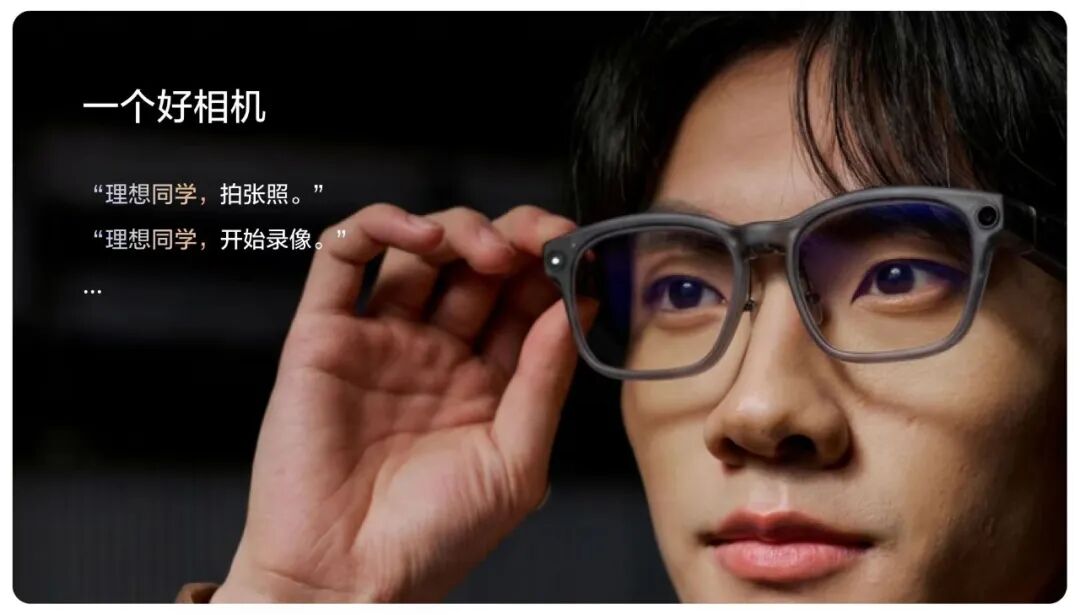
At Li Auto, whatever we make — a car, interior, exterior, software, system,商城 — everyone pours their heart into it. No one is thinking about just completing a task. Everyone is thinking about that knowing smile when the user gets the product.
What makes me happiest is that the team has maintained this state for so long. No matter what doubts or involution the outside world throws at us, every day at the company we're just thinking: "Hey, we made another pretty great thing."
A product isn't a simple concept. It's a mountain built from countless details, and every flower and blade of grass in that mountain has been designed and considered.
👦🏻 Koji
In our previous conversations, you repeatedly described making AI glasses as "getting your hands dirty." Can you describe that picture? What are you getting your hands dirty with?
🧑🏻💻 Fan Haoyu
"Getting your hands dirty" isn't just me — our product and engineering colleagues, including Xiang, none of us just listen to reports. We're all on the front lines of product and design.
What is "dirt"? It's the gap between your imagination, the result you want to create, and reality.
You walk into an empty lot, imagining a building here in the future. The process of connecting imagination to reality — that's where you get dirty.
A Product Manager's 6211 Time Allocation
🧑🏻💻 Fan Haoyu
For time allocation, my standard requirement for regular product managers is the "6211 rule."
👦🏻 Koji
What are each of those?
🧑🏻💻 Fan Haoyu
60% of time, doing things with complete focus. Don't overthink. Enough focus is what lets you put energy where it matters.
20% of time, active communication. Note: active, not passive meetings. Proactively reaching across levels and domains to coordinate, in service of your goals and the experience.
10% of time for reflection: Were my previous judgments and decisions kind of stupid? Did I pile on features out of fear, or cram in things users don't need out of desire?
The final 10%, leave for yourself to play.
👦🏻 Koji
Just purely play?
🧑🏻💻 Fan Haoyu
Yes, let yourself completely relax.
Think about it: if the person making a product is miserable every day, working through tears, the product will inevitably taste bitter too.
If the maker feels "wow, this is so interesting," even with both feet in the mud, but looking at the blue sky feeling happy — then the product will carry that smile too.
👦🏻 Koji
So "play" isn't for sparking inspiration, but for regulating your state?
🧑🏻💻 Fan Haoyu
Yes. What kind of person you are determines what kind of thing you make.
For directors or senior managers, I'd suggest swapping the 2 and 6 — spend 60% of time communicating, building trust. We product managers don't write code or draw diagrams. We work with our mouths.
There are two kinds of impressive people in the world: one is "I'm god, come beg me"; the other is "I beg all the impressive people in the world to help me get things done." Product managers are the latter.
You can't just issue orders — no one will genuinely listen. You communicate to transmit your passion, to ignite others' power. At the same time, you spend 20% of time with your hands dirty, pushing specific modules forward, so everyone can fight together. Not you drawing pie in the sky while others do the work.
Steve Jobs also dove hands-first into details, spent massive time communicating and building trust. When projects hit difficulties, he'd talk with everyone, helping them understand where things were headed.
Three Elements of a Good Product Manager
👦🏻 Koji
They say a product manager is the CEO of a product, but sometimes I think it's harder than being a CEO, because a CEO naturally has authority, while a product manager is often a CEO without power.
This means you have to earn people's support and trust without formal authority, get them willing to follow you, listen to your arrangements and ideas, and ship a product.
🧑🏻💻 Fan Haoyu
Exactly. There are two kinds of power. One is top-down — someone slaps a "General Manager" label on you. The other is bottom-up — it comes from your team genuinely wanting to back you.
For a product manager, the latter matters most.
👦🏻 Koji
So what's most important for being a good product manager?
🧑🏻💻 Fan Haoyu
First, observation. Observation is the starting point of everything. Painting, planning, building products, even planning your weekend — it all begins with observation. You need to understand what changes are happening around you. If you're not sharp enough to see the problems, you can't do anything. As we northerners say, "nothing catches your eye."
Let me give you an example. Once I was eating at "Café de Coral" and noticed some black blocks on the ceiling. I was curious what they were. I asked colleagues, waiters, the manager — nobody knew. Finally the restaurant director told me: they were antennas for tracking plates, helping servers deliver food more efficiently. See? That's observation. It's finding what others haven't found, discovering the raw material for product innovation.
Another classic example: Sherlock Holmes. Watch the show — someone walks into a room, mud on their shoes, some fur on their clothes, something under their nails, then you look at their eyes, hairstyle, clothing, and you can start piecing together what might have happened to them. This ability matters because observation is about finding what others haven't found, locating those new elements for product creation.
If the world could be summed up with just 1-2-3, fine. But once you've finished summarizing, the world has been abstracted away, and all the details disappear.
People summarize "three factors for your success, three factors for your greatness," but what I want to say is: all those messy, granular details require you to first be able to observe them — to observe this rich, beautiful world.
You can see people's suffering, and you can see their joy and delight. Only after seeing these things do you know where a good opportunity lies, where you can create some new delight and something interesting.
👦🏻 Koji
Mm, "observation" is the first point. What else?
🧑🏻💻 Fan Haoyu
Second, learning ability. Building products means dealing with many intersecting industries: frontend, AI, materials, manufacturing, supply chain, marketing... Each domain is highly specialized. You need to learn quickly and understand these domains. Communication itself is the best learning process. You're not there to give orders — you're there to listen.
A truly good product manager is someone who carefully understands what pain the developers are experiencing right now: "I really can't finish this frontend today, it's genuinely painful." They speak, you listen carefully. When you're done listening, actually that developer might also say "I can still think of something," but you'll tell them: "I understand. Now let me figure something out."
Third, a bit of obsession, or ambition.
👦🏻 Koji
Are obsession and ambition similar?
🧑🏻💻 Fan Haoyu
They're isomorphic. Why is he obsessive? Why does he have ambition? Because you refuse to accept that the world should just stay like this. I think the reason product people end up begging — and I mean literally begging, the "pleading for help" kind of begging — going around asking "please help with this, please help with that," running out of money today so going to raise some funds, no R&D tomorrow so going to plead with someone...
What drives that begging? It's ambition. He knows "this thing isn't good enough," and he wants to change it. And after changing it, it's not just about making a lot of money — the act of changing it itself is the highest high. That's ambition itself.
A simple example: I was reading a book recently that genuinely moved me. It's called The Invincible Summer Within Me, by Camus. I was moved just seeing the title — really wanted to read it, because I felt that empathy.
Because for over 20 years of building products, walking up to everyone, people would say "impossible, can't be done," and you'd rely on that persistence and ambition to say "I will definitely make it happen," like a summer that keeps radiating heat from within you.
Reading that book, I was quite moved, feeling that the products I'm making now are still too small — maybe in two or three years people won't remember them. Then you must have an ambition, saying you must take one more step forward. A product like iPhone is the dream of many product people — you'd say "if I could have the chance to make such a product," it could really change so many things.
I think this is the ambition and that bit of obsession, believing you can become the one, the only, able to do something new, something incredible.
👦🏻 Koji
So you want to make a product as great as the iPhone?
🧑🏻💻 Fan Haoyu
Every era has its own different kind of greatness. I'll work hard to make the world a little better. Making a great product is the "thing," but the purpose of doing this "thing" is to make the world more beautiful.
👦🏻 Koji
Going back to the earlier question — are there other elements for being a good product manager?
🧑🏻💻 Fan Haoyu
I think the top-down three are enough, but bottom-up there are too many.
For example, many product managers may have previously been in R&D, or design, or operations. After all, so far there's no "Product Manager" major in university.
I've seen many product managers who came from R&D backgrounds, some even used to do embedded systems or development, then gradually moved into product. Why? They'd say "I just felt that product wasn't good enough, I felt I could make it better, and I'm quick with my hands, just bang — got it done."
Some came from sales, operations, growth backgrounds. They'd feel "I'm promoting this product every day, it's exhausting, what is this thing? If I made one myself, wouldn't that be great?" Some came from design backgrounds — even more fundamentalist, they'd say "I originally wanted to design better things," so I'd design it, then find a developer to build it, find marketing and sales to deliver it to users.
So people from different backgrounds all enter this direction. But if your observational ability is insufficient, your learning and listening abilities are relatively weak, and you can't maintain passion and drive to keep moving forward, I think it'll be very hard to make it.
Like when we go hiking. I remember reading an interview with Japanese animation master Hayao Miyazaki, asking him: "Master, how did you become a master?" He said: "I was just climbing the mountain. Climbing, I noticed three or four fewer people around me. Climbing more, I reached the summit and there was no one around. I was just climbing." Like a path, he could just keep walking. Many people might give up halfway for various reasons.
So this sounds a bit cult-like, but I think truly being able to persist in your original intention, wanting to make something happen — like making a "improper" pair of glasses in an auto company, yet gaining so much user recognition, feeling it's quite interesting new stuff, inspiring us to keep moving forward.
I think this is the original intention and thinking of all of us who make products.
What Does the AI Era Mean for Product Managers?
👦🏻 Koji
If we add the prefix "AI era" to "good product manager," would your answer change?
🧑🏻💻 Fan Haoyu
Actually not much difference. AI is a capability, a tool.
Like product people who built for WAP encountering mobile internet — their previous stuff became obsolete, previous tools became obsolete, they had to embrace new tools. Then people accustomed to building for mobile internet, internet, or terminal products, when they encounter AI, they feel obsolete. The essence is still those two things: learning and observation.
Today through learning, I truly understand what this AI thing is, what its fundamental driving force is, what value it can bring users. Then through observation to understand the surrounding environment, to see where I can use the bridge of product to transport this technology to users' side, letting users feel they can naturally communicate and interact with it. The fundamental essence hasn't changed.
But returning to AI, I think three things are important. In the learning part I mentioned earlier, through constantly communicating with engineers, algorithm people, model people, doing some prototypes and demos yourself, slightly finetuning things, doing some prompts, modifying things — after doing these projects, ultimately three things matter: dataset, model architecture, and evaluation set.
You can think of it as: what data, through what model architecture, can achieve what result, and how do you evaluate and assess this result? It comes back like raising a child — you constantly train and polish, letting such a capability emerge.
When this capability reaches a certain level, ready for use, it can jump out to "run an errand." Maybe in a couple days, it becomes a middle schooler, can help you buy things; a couple more days, can help you do research; a couple more days, you can hand it a project, even authorize it with your money to do a project. This is step-by-step polishing.
You must understand the model's boundaries. AI's boundary isn't a straight line — it's curved and winding, strong in some places, weak in others. Only by clearly knowing where this boundary lies can you leverage strengths and avoid weaknesses when building products. When the model's capabilities change, when the boundary expands, new product opportunities emerge.
👦🏻 Koji
Was there any "inflection point" in model capabilities that helped you with Livis?
🧑🏻💻 Fan Haoyu
One important inflection point was the 4o real-time dialogue capability we launched before this year's Children's Day. We tested this feature in a very inconspicuous corner of the car, and found many users would have very long conversations with it. This didn't happen before.
Because previously people thought of voice as a pushed tool — you'd have to think about how to talk to it, think it through, then say "navigate to somewhere," with a clear query.
But today under that 4o framework in "Little Deskmate," users just chat freely — it's a conversational scenario, not a command scenario. This was quite moving for us. And it can respond so quickly, and through some prompts we do personality shaping, letting it generate some personality feeling — this also moved people quite a bit. This is now the dialogue infrastructure in our glasses.
👦🏻 Koji
Going back to "getting your hands dirty" — what specific "dirt" have you gotten on your hands?
🧑🏻💻 Fan Haoyu
For example, when shooting effects are bad, IMU stabilization is terrible, and the team feels it might not be solvable, you have to charge in, lead the team to review every detail, every line of code. I once went to Wuhan and reviewed code line by line with the R&D team at our partner Black Sesame. They were shocked — how could a big leader look at things so granularly. I opened every detail, and that night decided on a higher bitrate solution.
You must enter the dirtiest, most granular parts of the business, not to point fingers, but to inspire everyone, think together, tell everyone we can't give up.
Someone said there might be delays. I said: On one side is making something we don't believe in; on the other side is possible delay. I'd rather delay and do the right thing. In the end there was no delay.
I think every R&D partner on the team would say, "Let's figure this out." It touches ISP post-processing, display imaging, how the intermediate system transmits data — so many pieces in one place. Every attempt meant looping through a very long cycle.
But the effect we ultimately achieved was this: when we ran a test, we could get results that same day. We eventually found what we see as the optimal solution now, including solving that IMU jitter problem.
So everyone felt like, wow, this is pretty hard, but we actually pulled it off in the end, and the results are pretty good.
👦🏻 Koji
Building cars and building glasses feel very different. Cars have lots of rules and frameworks, while glasses are freer but also lack industry experience. Is that right?
🧑🏻💻 Fan Haoyu
Yes. Cars have a hundred-year history. It's like writing the eight-legged essay — there are strict rules. Germans, Americans, Japanese have all written in different styles within this framework. Today it's the Chinese people's turn.
People used to mock Li Auto for "refrigerator, color TV, big sofa." But what's wrong with pursuing a better life? Is it not okay to be a bit more comfortable? When our products go overseas, driving MEGA out of Apple Park, Cybertruck owners across the street give me a thumbs up. That's dialogue between different cultures.
But glasses are different. It's like writing prose — not so many constraints. We're developing based on a watch chip, with almost no baseline. When there are no boundaries, how do you find your own boundaries? That's hard. You could easily lower your standards and say "45 grams is fine," but our internal consensus was no, it has to be 36–38 grams, otherwise it can't be worn daily.
This sense of boundaries comes from the philosophy we established building cars: high usability matters most.
Many products rushed to market by capital aren't very usable — they break after one use. We've been building cars for ten years. Any product we deliver must have high usability. So we obsessed over weight, battery life, response speed — these fundamentals — rather than piling on features from the start.
Every Trade-off Serves One Goal
👦🏻 Koji
You made many trade-offs on this Livis product, like not having a display function. How did you think about that?
🧑🏻💻 Fan Haoyu
I think display technology isn't quite ready yet. If I have a screen image in front of my eyes, it blocks my communication with the other person — I can't accept that. And when the other person looks at me, they see me through this weird rainbow moiré pattern. That makes me uncomfortable too.
Of course, some people need teleprompters, translation. But personally, this technology hasn't reached a stage of high usability. I've been following the MR/AR/VR space for nearly 15 years, since before Oculus was acquired by Meta. When the technology matures, we'll definitely present it with a completely new experience solution.
I personally think putting a display in the main field of view is a very engineer, very "computer" approach.
In my main line of sight, it's like a monitor. Why do people say "teleprompter"? Because the computer is right in front. But in glasses, apart from geeks and engineers, does the average person need a computer? Like Vision Pro — it gives you a giant screen, because the main visual area will definitely need higher resolution, better image quality. But today, when you wear regular glasses, do you need to do those things in your main visual area? I personally put a question mark on that.
So when Meta Display came out, I thought it was pretty cool, because it doesn't display in the main visual area — it's auxiliary, monocular on the right side. But there are still some issues, like when my two eyes have different prescriptions, it's hard to match. Still, it's a good attempt.
My direct front position — that's definitely where my information density is highest. That position must give me information about the physical world. After all, I'm not wearing VR glasses to enter another world. These are just my personal thoughts, not fully formed yet, but we'll keep researching the direction of this technical path. When it becomes highly usable, we'll definitely launch it in our products.
👦🏻 Koji
Besides the display, what other important trade-offs were there?
🧑🏻💻 Fan Haoyu
For the overall architecture selection, we didn't use Qualcomm's AR solution — that was the biggest trade-off. For extreme power efficiency and weight, we cut a lot of things.
For example, to reduce weight, we ended up with a 4-microphone solution instead of the industry-standard 5 mics. At that point we were obsessing over weight to the extreme. A single microphone is just a fraction of a gram, but we ran round after round of simulation and testing, confirmed that 4 mics could still achieve good spatial audio effects, and cut one that same day.
From battery to substrate to sensors, we removed everything we could — like replacing the hinge sensor with software algorithms.

👦🏻 Koji
I heard you went to Chengdu recently to work as customer service for a day? Any special stories?
🧑🏻💻 Fan Haoyu
Yeah, this also counts as getting your hands dirty. The night we started selling, someone on our team in Chengdu just broke down crying, crying their eyes out, because the traffic was too massive, too many user questions, maybe we weren't prepared well enough — they felt like we let our users down. Then for the next three days, we basically sold out our production capacity, and even more calls came in.
Then what happened next? Because people needed to upload their prescription reports, some users, in a rush to place orders, grabbed an envelope or a sticky note, scribbled some numbers, snapped a photo and uploaded it — so the data was wrong.
The massive back-and-forth communication here was really a struggle. So I went to experience it myself, talking directly with users.
That day at noon, for 3 hours, I took 17 tickets — almost all of them were people rushing their orders. This made me deeply feel that a product isn't just about the product itself being okay; the subsequent service and experience are equally critical.
I'd like to take this opportunity to apologize to all Livis glasses users. Our customer service preparation this time was inadequate. But as Confucius said, "A gentleman does not make the same mistake twice." We'll definitely do better going forward.
👦🏻 Koji
Looking further ahead, where do you think Livis needs to break through most to become better? Memory, battery life, weight, or something else?
🧑🏻💻 Fan Haoyu
First, basic performance is the bottom line — battery life, response speed, these must be defended. But often you'll find a product getting slower and slower over time — that's unacceptable. Including our transmission speed in the future, we'll keep optimizing through algorithms.
Second is "proactivity." For example, on a hot day when your car's been baking in the sun, it proactively reminds you: "I'm about to overheat, help me move to a different parking spot?" The old AI was: you push it, it moves. The future should be: it actively comes to you.
👦🏻 Koji
The etymology of "Agent" is agency — proactivity. A qualified Agent must be proactive.
🧑🏻💻 Fan Haoyu
Yes, but the prerequisite is its capability has to be okay. If it comes to you proactively just to proactively find bugs, or proactively create problems — users will go crazy.
👦🏻 Koji
Right, users would feel harassed.
🧑🏻💻 Fan Haoyu
Finally, "user participation." I want to launch a user participation program, combining the capabilities of glasses and car, letting some users participate in the R&D process and shape product features together.
Is a painting something we finish and show you, or something we paint halfway and invite you to complete together? I prefer the latter.
👦🏻 Koji
To what extent would Livis need to succeed for you to consider it a success?
🧑🏻💻 Fan Haoyu
I look at it from three dimensions.
Social dimension (sales, profit) — I don't demand much from a first-generation product, so we barely did any marketing.
Company dimension (strategic value) — I think it's already succeeded. It showed everyone the "win through surprise" play, creating possibility in an elegant way.
User and team dimension — we've just started. Tens of thousands of users have given us plenty of complaints and dissatisfaction. That's wonderful. I see the world from one angle alone, but tens of thousands of users mean tens of thousands of angles — they can help us make the product better.
I probably need one or two years standing with users, letting the wind and rain hit me, always focusing on you, paying attention to you, wanting to make something good for you.
A Product Manager's Soul Is Burning
👦🏻 Koji
I feel like your soul as a product manager is burning — I sense you radiating summer-like passion.
🧑🏻💻 Fan Haoyu
You need to have heat. Whether sunny or rainy, keep moving forward. This feeling of wanting to make something happen — it's what drives the world forward.
Sometimes when you do things, you encounter resistance. There definitely will be.
I chat with colleagues and say, in this world, you have to accept that 90% of people just stand in place. They'll say, "Good enough is fine, let's just leave it, muddle through."
But there's always that few percent who want to be different, who want to make something new. As soon as these people take any step — as soon as they step even slightly outward — they change the space. And change will definitely attract criticism. Many people won't understand, thinking "What are you doing? What are you doing?"
Just like the day the iPhone launched — that night there was a flood of hate: "What is this piece of crap? No keyboard? You're kidding. Ridiculous." It was definitely like that.
But when it becomes the norm, you just take it. You realize not everyone is making these changes every day, but we product people are here to push things forward, to make something happen.
Through shooting a film, making a product, optimizing an experience, completing a supply chain transformation, using entirely new ways of collaboration — we keep pushing things forward. But you'll definitely face some criticism. It's inevitable. Since you'll face criticism, just take it. Don't overthink it. Just focus on your users, focus on the work you want to express.
👦🏻 Koji
This is easier said than done. How do you manage to block out external noise and focus only on your users and experience?
🧑🏻💻 Fan Haoyu
It's like when you were a kid writing an essay, terrified inside: "Oh my god, 15 minutes until I have to hand it in, am I going to fail? What will others think of me?" Thinking so much is useless.
At that moment, you only think one thing: "15 minutes until hand-in, I've only written the opening, I need to focus on how to finish this essay today."
The real ability is to stay quiet and composed amid all the anxiety, irritation, and noise — and say: "I know what I want."
I was probably around the same era as Han Han — we both came up through the New Concept Writing competition. I really admired him back then. I'd wonder, how does he write like this? Why does he think about things this way? Later I realized, he wasn't thinking about other people at all. He was just expressing whatever came to his mind. He simply saw things differently.
So how do you observe the world today, understand it, learn from it — and express what you see with sharpness and conviction?
👦🏻 Koji
Staying focused on one thing is crucial to doing it well, but many people can't manage it. How do you keep yourself focused?
🧑🏻💻 Fan Haoyu
I think there are two kinds of focus.
One way is to go straight into the Zhongnan Mountains where there's no signal at all, so you can focus. That's basically like unplugging every wire connected to your body, turning yourself into an insulator. But even with everything unplugged, there's something called "prisoner's cinema" — when you completely blindfold someone so they see no light at all, their mind starts generating its own images. Even then, your heart keeps producing things that disturb you.
True focus is the hermit hiding in the city. In the middle of a noisy marketplace, with people bustling all around, in a world so strange and varied that countless new products and ideas emerge every day — in a world that seems so chaotic, you can still quietly ask yourself: "What is my core? What can I do?"
This is genuinely fascinating. I know some people need this, they resonate with it. So I just face you, step by step through my product I get closer to you, until eventually we shake hands, we embrace, I become your companion.
It feels pretty good, because making products is making friends. You've made new friends, you see hundreds of thousands or millions of users using your product — every single one is your friend.
👦🏻 Koji
What's the model behind these glasses?
🧑🏻💻 Fan Haoyu
We're running on MindGPT 4o.
👦🏻 Koji
Is this a model Li Auto developed itself?
🧑🏻💻 Fan Haoyu
Yes. Actually what we emphasize more is the post-training. This is an end-to-end voice and multimodal model. It splits into OA and OV. OA is basically streaming voice Q&A, and OV is vision plus voice streaming Q&A.
👦🏻 Koji
Why did Li Auto decide to train its own model?
🧑🏻💻 Fan Haoyu
Whatever terminal or product you're building today, there's going to be what you could call an agent or a living entity inside it. It merges all the capabilities of your terminal — whether that's a car or a pair of glasses — and delivers results through the model, rather than writing if-else statements one by one.
So there's a critical piece of middleware here: using the model to generalize, to understand user intent, to solve user problems.
This is unavoidable. It's similar to how we're doing autonomous driving — our VLA model is also trained in-house.
👦🏻 Koji
So what benefits has training your own model brought Li Auto?
🧑🏻💻 Fan Haoyu
It costs a lot of money. That's not really a benefit — it genuinely burns through a lot of money and resources.
I think it's about possibility. If today we just took someone else's standard solution and tweaked it, we couldn't get down to the real hardware-software foundation. Only by pulling together the entire chain — chips, operating system, model, applications, services, cloud, communications — can we find the optimal solution, rather than just building a layer of applications and services on top. I think this is crucial.
Whether in intelligent driving or assisted driving, our VLA driver model is end-to-end, from the entire perception chain through pre-training and post-training, to today's planning and control, to the rule-based elements inside.
And the Li Tongxue you see today in the glasses and in the car cockpit — it's all a completely self-developed end-to-end system. Only by truly achieving this end-to-end system can we, when users discover problems or need new capabilities, complete those tasks at any time.
And there's another important point: only when we truly master model capabilities can we take one step further and make the chemistry happen between multiple devices and multiple user scenarios. Because it's all in our self-developed stack, we can be fast, stable, and reliable while also being highly extensible.
An Island or a Continent: The Worldview of Future Tech Giants
👦🏻 Koji
Why is multi-device interaction so important to Li Auto?
🧑🏻💻 Fan Haoyu
What do we mean by multi-device? It describes multiple terminals or product forms, but really multi-device means using multiple devices to surround a family, a user.
Even though the user is on different terminals, the experience must be complete and seamless.
👦🏻 Koji
So this also implies that Li Auto wants to build multiple devices, not just cars?
🧑🏻💻 Fan Haoyu
We made this decision four or five years ago. Apple was originally called "Apple Computer," then they had the iPod, the iPhone, and changed their name to just "Apple."
On the back of our cars, it says "Li," not "Li Auto." We will definitely move toward multiple devices, but not for the sake of having multiple devices — we need to wait for the right moment when technology, product, and user acceptance are all ready.
AI glasses are our first step.
👦🏻 Koji
Why, among all the hardware options, did you choose AI glasses first?
🧑🏻💻 Fan Haoyu
It depends on how you understand this world.
At the end of 2024, we had a thought experiment: we could look at the world entirely from the car's perspective — a market with many brands, looking at China's 25–27 million annual volume, who captures what share. Or we could look from the internet and traffic perspective — what kind of user engagement and activity is being generated today.
But as we often say, let's shift perspective. Today, let's stand from the AI, the artificial intelligence perspective, and imagine what the future world looks like?
At the time we had this analogy: first, East and West are definitely two different worlds. This isn't determined by policy but by culture, because all models carry cultural DNA, so they will definitely be two separate cultural spheres — but there will definitely be things connecting them.
You could say that Apple, Huawei, Xiaomi — each is a "continent." And services in the "ocean," like a very specialized lawyer or a good LBS location service, these flow through the ocean. They'll choose which continent has enough land area, enough people living on it — then that port will be bigger, and they'll use it more.
But from another angle, what is this continent? The continent actually has three rings. The innermost ring is your model, because the model represents the upper limit of capabilities you can provide.
The second ring is your terminals. Take Apple — its second ring of terminals is extremely strong, but what people criticize now is that your "core" isn't strong enough, Siri feels a bit behind the times. Then you look at a company like Tesla — it's got Grok in the middle, its E2E Optimus end-to-end model, and on the outside it has brain-computer interfaces, various product forms.
The outermost ring is applications and services — this is the surface that connects with the ocean, forming a large continent.
And what determines the continent? Today when a user chooses Huawei or Apple products, they're exclusive — they basically say "I'm living on this continent, not that one."
So how many users you can attract through your model and new terminals determines the volume and area of your continent.
Similarly, we describe Tencent as the "hegemon of the seas" — it can operate completely without obstruction, even with privileges at the ports, because so many phones make adaptations for WeChat. But some services are relatively weaker, still growing.
I believe that today, based on AI, the frequency, speed, and efficiency of communication across this ocean will only increase, because of A2A (Agent to Agent). With A2A, all transactions and deals no longer have to be person-to-person — Agent to Agent can complete them. So the "sea routes" of this ocean will become more and more efficient, but at the same time, the continent must also become more focused, centered on the experience you build and the value you create for users.
For example, your continent might have the Himalayas, while another continent might just be an island — and that island could easily be submerged by seawater. So that was the previous vision. With this vision, you start thinking: today, around your AI core, your multiple terminals and user forms, and your ecosystem of hardware- and terminal-based services — how do you build your continent?
👦🏻 Koji
What kind of continent does Li Auto want to build?
🧑🏻💻 Fan Haoyu
Right now we've just barely emerged from the ocean's surface as a small island. Our user base is still small.
The glasses could be seen as a new corner jutting out from this island, because they've attracted nearly 15% non-car-owner users. In the future, we'll keep making the hardware experience more seamless, so users can access the experiences and services this continent provides anytime, anywhere, in very natural and extremely low-cost ways. This is also why we chose glasses instead of phones.
Ninety percent of phone functionality belongs to the last era. Glasses, on the other hand, truly face a future where information and technology surround you, rather than a past where you have to search for something.
Will Li Auto Make...?
👦🏻 Koji
What do you think of AI devices in earbud or pendant form?
🧑🏻💻 Fan Haoyu
I think these are all personal choices, because every business team has its own strengths.
I think it's just a matter of circumstances. First, because we have RTOS and system integration capabilities, we challenged ourselves with a product that's extremely sensitive to weight, form factor, and design. Weight sensitivity means your company's integration capabilities need to be strong; form sensitivity actually means styling and aesthetics, because glasses, like cars, say something about your taste — what car you drive represents your taste, what glasses you wear represents your identity.
So putting these capabilities together, this is where we are at this stage. Different teams have different materials at hand — I think it's just different choices at different stages, because the future they envision and the materials they have available differ.
👦🏻 Koji
So you don't think they're worse entry points than glasses?
🧑🏻💻 Fan Haoyu
This kind of thinking is very much like an investor's top-down mindset — there always has to be a ranking, "if I'm going to invest, I should invest in #1, not #2 or #3." But as product people, we've never thought about having to be #1.
What we think about is: how can we currently provide a complete and highly usable product to users? That's what we think about.
👦🏻 Koji
But do you ever occasionally wonder, "would it be better if I made a pendant or earbuds instead"?
🧑🏻💻 Fan Haoyu
I think the question here is, I have my own product inclinations.
Personally, I believe that when new AI products emerge, they probably won't create entirely new physical product forms.
Why? Because if you want ordinary people to wear something, or put a product in their home or car, that thing most likely already exists in some form. It's something that existed before. When AI concentrates a capability into it, it gains new powers.
Take these glasses today — Zeiss lenses, lightweight, well-made. Those are the most basic physical qualities. Then AI capability sits right on top. But coming back to a pendant — personally, I'm not particularly fond of it because it requires extra effort from me. I have to hang it on my body, then take it off to charge and power it. Unless there's a very high need, but if that need isn't met, it gradually fades away.
But something like the pen OpenAI released a couple days ago — I think that's quite clever. Because most people find having a pen nearby completely natural. A pen is fundamentally for recording, and today with multimodal audio, it can also record. I just add a microphone to this pen and it can record. It's actually following the thread of "recording," using AI to make recording better.
Even when I'm handwriting, the IMU tracks my handwriting trajectory, so what I write also transmits multimodal signals directly to me. I can write on any surface, any content, and it all gets recorded. I think that's a very interesting form. It's still recording, but because of AI, it becomes better.
Another pretty good product is a telescope made by some folks in Hangzhou. With AI capability, before, a telescope could only "see" — you'd look and have no idea what you were seeing. But now the telescope can not only see, but tell me what it is, and record it.
This is already an existing device that people use. Because there are so many terminals and devices already out there, they need to be continuously transformed and reimagined. But getting users to accept a terminal that never existed before is actually quite difficult. This is definitely a personal bias and inclination of mine.
👦🏻 Koji
What about robots?
🧑🏻💻 Fan Haoyu
Amazing! Isn't the ultimate dream of AI to build a person?
👦🏻 Koji
Have you discussed the possibility of making robots?
🧑🏻💻 Fan Haoyu
Of course we have. But you have to see — we're a product company. We have to wait for the right moment to do this. But that doesn't mean you don't work on it. Your accumulation of models, embodiment, perception, intent understanding, context, and how to use models to understand the surrounding environment — this takes a very long time.
Robots are definitely a direction, because this is humanity's ultimate dream: we can finally reshape an intelligent agent that can achieve goals and complete tasks like we do, freeing people from labor.
But what's its characteristic? It's similar to — today you have a robot vacuum at home. You come home, open the door, and the robot suddenly starts running, a bunch of noise, all sorts of things. What you want is to come home to a clean house, and ideally these devices have disappeared.
Same logic. Today people say, what are robots doing? In the home? (I'm not talking about industry, just consumers.) If it really enters the home, it should do housework. But think about it — if you have a housekeeper at home, it's not that the housekeeper is cleaning when you come home. Rather, you come home and the house is already clean, the housekeeper isn't there — that's the state of "home." So today its product form will be different.
If we analogize to autonomous driving, we still have a long time of supply chain accumulation, capability accumulation, and all that data from driving on roads. But for robots, the data is still extremely impoverished.
👦🏻 Koji
So you think the entire industry isn't ready, not just that you aren't ready?
🧑🏻💻 Fan Haoyu
I would say, if you want to make robots today, it requires a very long time of accumulation. Look — we spent 2 years accumulating to launch a glasses product; we spent 10 years making cars. But if today we want to take on robots, to fulfill this long-held wish, I think the time spent in deep squat might be quite long.
Don't think that maybe in half a year, a year, using some open-source frameworks, piecing together some supply chain, assembling something, doing simulation training, making it dance — that's enough. I think it takes a long time.
It still comes back to that saying: when Li Auto chooses to make a product today, "highly usable" — these three words are very important. Of course, many people will accept lower usability and are willing to pay for new things, but they definitely belong to a minority of early adopters.
And what we truly want to do, including our entry point into the glasses track right now, is actually similar to the point when we entered the new energy vehicle industry with the Li ONE back then: that inflection point where it crosses from early adopters to the early majority.
Because "highly usable" is what we're good at, and we're not good at making prototypes and demos.
Even now Li Auto doesn't make concept cars. In ten years, we've never said we want to develop a concept car. What we're good at is taking really good technology and capabilities, putting them together, using our models, using our observation and understanding of products and users, and creating a good product.
Ten "I Am" Sentences
👦🏻 Koji
Then let's end with a bonus round. Please, Haoyu, make ten sentences starting with "I am." For example, you could say "I am someone who likes hiking," but it can't be too simple. You can't say "I am Haoyu" or "I am an Aries." Are you up for the challenge?
🧑🏻💻 Fan Haoyu
OK.
First, I am quite an arty person. I hope to make some fun things.
Second, I am a very curious person. I always want to observe fresh things.
Third, I am someone with a bad temper. I look nice, but I often get very angry and blow up inside the team.
Fourth, I am a rather impatient person. I don't like rambling — best to finish in two or three sentences.
Fifth, I am someone who really likes spending time with my kids. I feel especially fulfilled and happy when I'm with children.
Sixth, I am someone who likes to draw. I often start doodling and sketching on scratch paper during meetings, connecting unrelated things together.
Seventh, I am a router.
👦🏻 Koji
Wait wait, I've never had a guest who flows this smoothly, that's incredible! Did you just say router?
🧑🏻💻 Fan Haoyu
Yes, router. Because I have many wires connected to me: user experience, technology, supply chain... I have to understand a bit of everything. Being a "jack of all trades" is quite interesting.
Eighth, using Isaiah Berlin's metaphor: I am a fox, not a hedgehog. I'm full of curiosity about the world, but I don't intend to explain it with one or two grand principles.
Ninth, I am someone who likes going into the mountains. I grew up in the Qinling Mountains since childhood; going into the mountains is like coming home.
Tenth, I am a very passionate person. If in the process of doing something I lose that passion, then I might as well not do it.
👦🏻 Koji
I thought you might also say "I am someone who has written scripts and wants to make documentaries."
🧑🏻💻 Fan Haoyu
That would belong to the fox's experiments.
Oh right, I want to do an encore for someone named Shi Zhan, because I've been reading his new book called River and Mountain these past two days. It's extremely interesting.
The original intention of that book can be summed up in one sentence: if you removed all the people from Chinese history, stripped away all the shells, China would still be China.
Because there are China's mountains, there are China's rivers. Because there are mountains, there is water; because there is water, there are rivers; because there are rivers, they carved out a river valley; because of the river valley, people gathered; because of gathering, there was communication; because of communication, there were stories; because of stories, there was culture; because of culture, there is China.
👦🏻 Koji
And only then did Li Auto and Li Auto AI come into being.
🧑🏻💻 Fan Haoyu
Yes, and today whatever you do, you are on this thread and this river. As I said, when Chinese people write the essay of the automobile, they will certainly leave behind the bloodline and understanding of Chinese people.
👦🏻 Koji
Wonderful! Thank you, Haoyu.
Let's Move Forward Together
🧑🏻💻 Fan Haoyu
Today I must tie it back to the theme: we are standing at the crossing of technology and humanities. We carry a temperament of compassion for humanity and uncompromising spirit, wanting to create miracles, while holding the best weapons of this era in our hands.
I want to say to all product people, engineers, creators, and designers today: let's move forward together. No matter what the era brings, as long as we still have this breath in us. It was precisely the chaos of the Republican era that produced so many great people; it is precisely the solemn grandeur of this era that may produce moving, epic stories. Each one of us is shaping our own story, becoming part of the China story.
👦🏻 Koji
Applause! That was incredible! Thank you, Haoyu, looking forward to having you back next time.