AI4S Needs Fanatics and Visionaries | A Conversation with Odin from Valhalla: "If God Exists, How Could I Tolerate Not Being God?" [Road Podcast]


👦🏻 Podcast Interview: Koji
🥷 Edited by: Crossing
🧑🎨 Layout: Zeoooo

🚗 This is a "road trip podcast" — we took the podcast on the road, recording while driving. The scenery and relaxed vibe along the way drew out conversations we wouldn't normally have.
➤ This week's guest on Crossing has a resume so unconventional it almost sounds made up.
He is Odin, founder of Valhalla. He dropped out of high school and homeschooled his way into Zhejiang University; completed dual undergrad degrees in pharmacy and physics; left two master's programs; then got into David Baker's lab — and when Baker soon won the Nobel Prize in Chemistry, he chose to leave, diving into AI for Science entrepreneurship and raising tens of millions of dollars in short order.
He named himself Odin (the Norse All-Father) and his company "Valhalla" (where warriors gather to face Ragnarök). He said: "If gods exist, how could I tolerate not being one? Therefore gods do not exist — if you can create all things, you are god."
Along the way, he dropped one quotable line after another:
-
On entrepreneurial motivation: "Entrepreneurship is fundamentally my dissatisfaction with the world."
-
On leaving a Nobel lab: "For me, it was a jade shackle — beautiful, but it limited my becoming great."
-
On worldview: "The world isn't a slapdash operation; it's a randomly diffusing particle — what you need isn't to guess the right direction, but to converge on the next collision point as fast as possible."
-
On fundraising and temptation: "In the fundraising process, you get easily alienated — are you building for VCs, for the market, or for yourself?"
We also talked about his vision for an "omnimodal molecular world model" and "general scientific AI" — essentially building "a steam engine for scientific discovery in the new era" that could compress centuries of human scientific progress; and we discussed Buddhism, Jiang Wen, Zen and the Art of Motorcycle Maintenance, and his constant refrain — "eyes open, get to work."
This is a conversation about ambition, original intent, rebellion, and a young man's bet on "molecular world models" in the AI era. You'll hear how a 00s founder who studies Buddhism and wears a headscarf talks about "practicing discipline, concentration, and wisdom; extinguishing greed, anger, and delusion" while throwing himself ambitiously into AI for Science entrepreneurship.
Listen on WeChat:
Listen on Xiaoyuzhou:

🎬 The video podcast is now live on Koji's WeChat Channels, Xiaohongshu, Bilibili, YouTube, and other platforms

🚥
Rapid-Fire Q&A
👦🏻 Koji
Let's start with rapid-fire questions. How old are you?
🧑🏻💻 Odin
I just turned 26, born in 2000.
👦🏻 Koji
What schools did you graduate from?
🧑🏻💻 Odin
I've attended quite a few. Undergrad and master's at Zhejiang University, then University of Washington.
👦🏻 Koji
Your MBTI and zodiac sign?
🧑🏻💻 Odin
MBTI is probably INTJ, zodiac is Taurus.
👦🏻 Koji
In one sentence, what does Valhalla do?
🧑🏻💻 Odin
Long-term, we aim to build toward ultimate general scientific AI.
Short-term, we want to make the most powerful AI drug discovery platform.
👦🏻 Koji
What's the difference between general scientific AI and general AI?
🧑🏻💻 Odin
Look through the history of science — Kepler discovering the three laws, for instance, was essentially massive data analysis and hypothesis generation until finding the right path.
If we can fully automate this process, we can continue compressing human historical progress.
From Newtonian mechanics to quantum mechanics, humanity took 300 or 400 years; if this process were automated, it might take just 10 years, or even less, to traverse that entire scientific journey.
👦🏻 Koji
And this is still built on the current generation of AI?
🧑🏻💻 Odin
Yes. It's more like it's composed of different infrastructure layers, one of humanity's ultimate and most important application scenarios.
👦🏻 Koji
What's your current funding situation?
🧑🏻💻 Odin
Our first round was led by 5Y Capital, followed by MiraclePlus.
Our second round was a quick investment from ZhenFund, then a small add-on round, totaling in the tens of millions of dollars.
👦🏻 Koji
How big is your team now?
🧑🏻💻 Odin
We just hit 30 people yesterday. Before starting the company, we were already a fairly complete small research team.
After founding, it was mostly about reconvening previous teammates to pursue more ambitious goals — things we couldn't afford to do when we were broke.
👦🏻 Koji
In one sentence, what were you doing before founding the company?
🧑🏻💻 Odin
We were always doing research. Started with AI plus small molecules, then went to Baker Lab to formally push AI protein design.
After returning, we wondered: why fragment all the modalities? So now we're building a more general omnimodal design model, which will ultimately be a molecular world model.
A "Mistaken" Name That Stuck
👦🏻 Koji
Can you elaborate? What exactly is an omnimodal molecular world model? Where do you break the phrase?
🧑🏻💻 Odin
Initially we called it "molecular world, model" — with a pause between them, before world models became a thing.
Why "molecular world"? Because biological molecules basically divide into DNA, proteins, small molecules, RNA. If you have the ability to simulate and design molecules in every modality, you're essentially a "god" of the microscopic world, capable of creating and understanding these molecules.
"Omnimodal" means we don't just care about proteins, but also small molecules, RNA, and DNA — they're indispensable components of life processes.
👦🏻 Koji
So when world models became hot, people naturally assumed you were doing molecular world models?
🧑🏻💻 Odin
Exactly. So we just rolled with it.
👦🏻 Koji
You mentioned that at Baker Lab, everyone was only doing proteins, or just one single modality. Why didn't others choose to go omnimodal?
🧑🏻💻 Odin
It relates to historical evolution. For instance, people working on small molecules mostly came from medicinal chemistry backgrounds; they cared more about how to use AI as a computational tool to solve specific problems in small molecule R&D. Once you have a good hammer, you want to swing it at your own pipeline. People tend to push on their pipelines once they achieve breakthroughs in a single modality.
At Baker Lab, David Baker proposed protein design very early on; everyone was constantly looking for good protein design methods, and once that "hammer" appeared, people wanted to swing it at every task.
Beyond historical reasons, there's also the architecture debate. Our biggest advantage is having worked on both small molecules and nucleic acids, and in small molecules we were among the more cutting-edge groups at the time, with deep accumulation.
Eventually you realize you have the opportunity to tackle how to unify three modalities, find their commonalities and differences, and then design an architecture that unifies everything. It's a matter of right time, right place, right people.
👦🏻 Koji
So it's not that others couldn't do it, but that people had path dependency?
🧑🏻💻 Odin
Depends how you think about it. This involves prior versus posterior.
If it's posterior, you already know this can be done, so of course you can do it if you want.
But at the prior stage, you need enough courage to bet on this direction, because it might not work out, and you might not figure out a good technical path.
👦🏻 Koji
So you're prior?
🧑🏻💻 Odin
We're prior. I've always believed there will ultimately be one model that unifies everything.
👦🏻 Koji
Was there a specific signal you saw?
🧑🏻💻 Odin
This intuition came much earlier.
Five years ago studying physics, we knew there are four fundamental interactions: gravity, electromagnetism, strong interaction, and weak interaction.
Under this framework, you realize that what biology calls hydrogen bonds, hydrophobic effects, van der Waals forces — they're just Taylor expansions of electromagnetic interaction at different orders. They all derive from one fundamental force.
We wondered then if there could be a unified force that brings together all molecular interactions. If you have this physical intuition, you'll eventually find the solution.
Early on, limited by physics development and human engineering capacity, it was hard to find a unified physical equation.
But in the AI era, you can approach this more like a black box. So we've been pushing on AI until we found this path.
👦🏻 Koji
What did you do following this hypothesis?
🧑🏻💻 Odin
We took a circuitous, indirect approach. With so many modules, we first had to nail one part. Master small molecules first, then proteins, then nucleic acids.
Eventually, you realize they do share common ground in modeling — and that's when you get the chance to tie everything together.
👦🏻 Koji
What was the moment that convinced you this was worth leaving academia to start a company?
🧑🏻💻 Odin
Honestly, many major scientific discoveries are already happening outside academia now. Whether it's team organization, industrialization loops, or compute — it's all much more accessible to young people in industry.
We'd actually done an academic open-source project before, called ODesign. Our engineering was pretty basic back then, building everything from scratch with limited resources. But the tools we built actually worked.
So we thought: if we had real funding now, could we turn this into a genuine industrial project?
One undergrad, eight targets, all-in on one round
👦🏻 Koji
What kind of project was ODesign? Can you walk me through it?
🧑🏻💻 Odin
ODesign was a collaboration with Lingang Laboratory — an early open-source exploration of omnimodal molecular design. One model that could handle small molecules, RNA, DNA, and proteins simultaneously.
We also ran some simple downstream wet-lab validation and saw some really exciting results.
👦🏻 Koji
What kind of results specifically?
🧑🏻💻 Odin
We were designing against eight targets. The team was tiny — we had one undergrad, Du Gang. We went all-in on one round of protein design across all eight targets, and basically every round produced molecules with sub-nanomolar activity.
You could see intuitively how AI was helping science. Before this, each of those eight targets might have needed its own PhD to follow the entire design and experimental pipeline. Now, one undergrad could handle all of them with guidance.
That dramatically lowers the barrier to scientific research, letting people focus their energy on the truly critical scientific questions.
General scientific AI isn't ultimately about replacing humans — it's about freeing humans from tedious engineering problems so they can attend to more philosophical, more fundamental questions.
"Scientific General Artificial Intelligence"
👦🏻 Koji
Scientific general AI, omnimodal, molecular world models — these all sound like grand, ambitious visions. But day to day, what does your schedule look like from waking up to going to sleep?
🧑🏻💻 Odin
My life is actually very simple. The Buddha taught me three things: waiting, fasting, and thinking.
What is waiting? Sometimes in entrepreneurship too, when material conditions aren't enough to support something more ambitious, you just wait for the right moment.
Fasting means having your own discipline. What time to wake up, what time to sleep, what to do when.
Thinking is simple — constantly thinking about what comes next, while doing what's in front of you.
Specifically, day to day: wake up, get ready quickly, eat four eggs, start the day.
Most of my time goes into research, discussing with people, identifying problems, finding solutions. A lot of coding myself, reading massive amounts of literature. Of course, after starting a company, there's also commercialization and team building to manage.
👦🏻 Koji
You're already thinking about commercialization?
🧑🏻💻 Odin
Yes, that's actually the most essential difference between academia and industry.
👦🏻 Koji
What does commercialization look like for you right now?
🧑🏻💻 Odin
Even though what we're talking about is grand, it also lands in a very concrete place. It's like wanting to become a Buddha — you still have to land in daily practice. What should I do today to reach the other shore of wisdom?
👦🏻 Koji
What's the next milestone you consider important?
🧑🏻💻 Odin
Actually, there are two.
One is technical: we've talked so much, we need to prove to people that although we haven't fully achieved it, we've at least taken a solid step. For example, releasing our own ODesign model — a version closer to the final molecular world model.
👦🏻 Koji
What kind of model is that?
🧑🏻💻 Odin
The architecture would be extremely complex to explain — that's a very technical report. But in terms of what it can do: we're designing and validating molecules across arbitrary modality combinations.
For example, designing proteins based on small molecules — that's "enzyme design." Designing small molecules based on small molecules — that's "host-guest systems," which can be used to detect metabolic waste in the human body.
Or designing DNA based on proteins — that's "reagent detection." Say you have some p-tau 217 proteins in your body; we can use that as a biomarker to design DNA aptamers that bind to it.
The most intuitive application: today when you go to the hospital for a blood test, for just 20 RMB more you could detect whether you have p-tau 217, which tells you whether you need early screening for Alzheimer's.
👦🏻 Koji
Why couldn't this be done before 2026? What technical breakthroughs made it possible?
🧑🏻💻 Odin
I think a key reason we can do it in 2026 is that the capital markets have become active — we have the money to do it.
We actually had the capability to do this much earlier; we've just been waiting for the right moment.
👦🏻 Koji
So it's not that some technical inflection point only arrived recently.
🧑🏻💻 Odin
Actually, by the time we finished ODesign, the technology was basically there.
What we lacked before was a complex system for organizing everything — expert coordination, algorithm team coordination, engineering team coordination, and downstream partnerships with which CRO companies or universities to work with for actual implementation. It requires a very complex system to support.
👦🏻 Koji
So this system includes both technical breakthroughs and resource coordination?
🧑🏻💻 Odin
Exactly, exactly.
Everyone is "waiting for the wind" in their own domain
👦🏻 Koji
Looking back at recent AI breakthroughs centered on Transformer, what elements specifically accelerated or enabled what you're doing?
🧑🏻💻 Odin
This goes back quite far. AlphaFold was actually a variant of Transformer — it gave people the ability to scale up protein structure prediction.
Then we have to thank the invention of Diffusion. At the time, it was quite interesting — after Professor Yang Song published that SDE paper, we started very early trying to use Diffusion models for molecular conformation prediction.
Later, Baker Lab started using Diffusion for protein design and found it really worked.
Before, you might have to screen tens of thousands of proteins to find one or two active compounds. Now with RFdiffusion, maybe one out of forty-eight works. That's actually a major breakthrough.
AI for Science also relies on breakthroughs in different technologies, carrying that wind into its own scientific problems.
👦🏻 Koji
"Carrying the wind into its own scientific problems" — that's a vivid metaphor. Everyone's waiting for the wind in their own field.
🧑🏻💻 Odin
Yes. On one hand, waiting for the wind; on the other, trying different methods to solve problems. Both are actually indispensable.
👦🏻 Koji
Will you build drug pipelines?
🧑🏻💻 Odin
Not in the short term.
Building pipelines has two problems:
First, it diverts your energy from AI R&D;
Second, if you build your own pipelines, it becomes very hard to offer your platform services to large multinational pharma companies — because you've become their competitor, not their ally.
Building a platform versus building pipelines looks like a binary opposition, but from a historical development perspective, they're also organically unified — I build a platform to generate more pipelines, and my pipelines in turn prove the real value of my platform.
👦🏻 Koji
Your team is about 30 people now — a fairly typical AI for Science team. What's the internal structure like?
🧑🏻💻 Odin
Our company structure is actually quite interesting.
Most startups lack a proper administrative team on day one, but we had a very strong COO from day one — not just operations, but from a biotech background.
So from day one, from COO to admin, HR, cashier — everything was ready. That supports our entire research and product progress.
Then there's the Research team. Their job is the grand vision; they don't need to think about commercialization, just do the coolest research. This is mainly CUHK students and postdocs.
The commercialization side is more conventional — the core is having good interfaces, knowing how to interact with users, how to communicate with pharma companies.
👦🏻 Koji
Where does our AI show up? Where's the AI strength in an AI for Science team?
🧑🏻💻 Odin
It's in our Research team — they're basically all AI-native young researchers.
👦🏻 Koji
You call them AI-native because they were already very good at using AI tools and techniques for drug discovery? Do you have anyone with a CS background, or pure model training background?
🧑🏻💻 Odin
We do. But I actually don't think these labels matter that much. Honestly, nobody has studied that much longer than anyone else.
What matters more to us is whether they're willing to learn, to adapt to the demands that different challenges bring.
👦🏻 Koji
Specifically for AI for Science, what more concrete roles does AI play in your daily work? And what do the colleagues behind these roles look like?
🧑🏻💻 Odin
What profiles — it's mainly PhDs and postdocs we've collaborated with before, all from AI drug discovery.
Specifically, the role AI plays is that we're actually developing various AI models.
For example, working on ODesign — small-molecule design models, protein design models, or some models we collaborated on with David Baker. It follows the traditional R&D path for models; it's just that because we're AI Native, we can be sharper and more direct.
👦🏻 Koji
When we talked before, you mentioned Zen and the Art of Motorcycle Maintenance. I read that book ten years ago too. What do you like about it?
🧑🏻💻 Odin
It's a very particular feeling. The book explores what a university really is, what education is, what "quality" means, and how one ought to live.
Just looking at the title Zen and the Art of Motorcycle Maintenance, people probably think it's nonsensical — what could these two things possibly have to do with each other? But that's actually real Zen.
It tells you: nothing is added in sainthood, nothing is subtracted in ordinariness. When you become a saint, you don't have anything more than an ordinary person; when you're ordinary, you don't lack anything a saint has. It's a really interesting book.
👦🏻 Koji
What have you been reading lately?
🧑🏻💻 Odin
Recently I've been re-reading some books I've read before, including Zen and the Art of Motorcycle Maintenance and Demian. I really love this kind of book. Besides that, I also read some historical texts, like Strategies of the Warring States and Zizhi Tongjian, and some Buddhist sutras, like the Sutra of Perfect Enlightenment.
👦🏻 Koji
What triggered your decision to start a company?
🧑🏻💻 Odin
Because young people still have relatively few opportunities. I think entrepreneurship is, at its core, a kind of "dissatisfaction" with the world.
Whether you're at a big tech company or in academia, you run into the same problem: you create value, you earn recognition, but that recognition and the returns don't ultimately come back to you.
So for us, starting a company was an excellent opportunity.
👦🏻 Koji
You said entrepreneurship comes from dissatisfaction with the world. What specifically is your "dissatisfaction"?
🧑🏻💻 Odin
Actually, whether it was leaving Zhejiang University, leaving Baker Lab, or dropping out of high school even earlier — fundamentally it was all dissatisfaction with the world. It's like no matter how hard you try, there are always these "mysterious forces" keeping you boxed in.
It's an atmosphere; it's hard to point to one or two specific things. But for example, we recently ran into an issue: we wrote a book called Graph Neural Networks and Modern Drug Design. Then the publisher told us we had to list my advisor first because he's a full professor, so the book would look more authoritative, and we had to consider "social impact."
You find it strange — this book is clearly the crystallization of your ideas, something you spent two and a half years painstakingly writing, yet the authorship gets redistributed for so-called "social impact." To us this is incomprehensible; you constantly feel some kind of unfairness in the world.
So I really love Jiang Wen's films. I came to Goose Town for three things: fairness, fairness, and fucking fairness!
👦🏻 Koji
Since starting your company, do you find things around you fair?
🧑🏻💻 Odin
Of course there are still unfair aspects.
There's a metaphor: the process of cultivating or awakening to the Way is like holding onto a branch while crossing a vast bitter sea. The branch inevitably rises and falls as it moves forward; you have to hold to your principles, but sometimes you also have to become a bit more "flexible," otherwise you can't navigate around all those winding streams.
I bet on Baker winning the Nobel, then I left
👦🏻 Koji
What was the story of going to Baker Lab? You hadn't been there long before your advisor David Baker won the Nobel.
🧑🏻💻 Odin
At the time, on one hand, we were working on small molecules and felt that path was nearly exhausted. Because the bottleneck for small molecules is essentially an engineering problem — human engineering capability limits small-molecule preparation, which creates a disconnect between AI prediction and the physical synthesis of small molecules.
Back then, the only way out everyone saw was probably working on pipelines, using various chemical synthesis models to predict whether something could actually be synthesized. There were too many compromises in that.
My thinking was, I'm still young, there's no need to bash my head against this wall forever — I can try something new. I applied to three schools and ended up choosing Baker Lab; it was actually a "bet."
At the time I felt Baker would definitely win the Nobel, I just didn't expect it to happen so quickly.
👦🏻 Koji
You intuitively believed back then that he had a shot at the Nobel?
🧑🏻💻 Odin
Yes. That conviction came from intuition. I felt he could win the Nobel, so I decided to go all in.
👦🏻 Koji
Being in a top lab that had already won the Nobel, with the best momentum and resources — why did you choose to leave at that moment?
🧑🏻💻 Odin
There were many challenges there too. In that environment, you could become an extremely excellent senior engineer, but you'd rarely get the chance to pursue your own technical path. Basically no one supported my ideas at the time.
You could ask yourself this: do you want to directly create something great, or do you want to first collect some titles, and then create something great?
I couldn't wait. I used to merely admire philosophers; today we have the courage and audacity to be our own philosophers.
I remember it very clearly — back then in Seattle, standing on a balcony with a view of Mount Rainier, I figured this out completely. I looked at the snow-capped mountain and recalled a few lines of verse:
"All my life I never cultivated good karma, only loved to kill and burn. Suddenly I break the golden ropes, here I tear off the jade lock. Hah! The tide on the Qiantang River comes — today I finally know who I am."
Actually, Baker Lab's reputation, and all those things that seem so wonderful and glamorous titles — they're all like shackles made of beautiful jade. They look nice, but they limit your ability to become great, they limit your progress toward true goals.
Do you have enough courage to tear off all these "golden ropes" and "jade locks" and embrace a more authentic self?
👦🏻 Koji
At that time, what did the "authentic self" you saw and understood look like?
🧑🏻💻 Odin
It's simply that if I believe something is right, I'll find every possible way to get it done. Like working on this "omnimodal molecular model."
My judgment is: if you want to do something great, you can't keep following, can't keep chasing other people's work. You need to establish your own school of thought, write your own books, try things no one has ever done, and make them work.
👦🏻 Koji
So you felt that if you stayed at Baker Lab, you'd always live in your advisor's shadow?
🧑🏻💻 Odin
Exactly, and in that kind of environment, you don't have the power to determine the ultimate direction of the technical architecture. Because in a massive lab, the jostling among various factions inevitably leads to some kind of compromise, and the final model ends up being a "greatest common divisor" born of compromise.
But science is a field that can barely tolerate any sand in its eyes. You always want to do things a bit better, a bit more extreme, a bit more true.
Like Zhu Yuanzhang raising a rebellion, returning to Pei County to call on his brothers
👦🏻 Koji
So after leaving Baker Lab, where did you go?
🧑🏻💻 Odin
We first returned to China to prepare our ODesign project.
👦🏻 Koji
The "we" you mention — besides yourself, does that include other team members?
🧑🏻💻 Odin
Yes. I started calling people in January, reaching out to PhD students I had previously collaborated with or mentored.
I told them: "Today we have something like this to do." Like when Zhu Yuanzhang went to Pei County to recruit his brothers for the rebellion. I gathered a group of people and began step-by-step implementing our plans.
👦🏻 Koji
Seems you have pretty strong rallying power?
🧑🏻💻 Odin
It's more about shared conviction and will, plus the reputation you've accumulated. Because looking at past experience, the things we've wanted to do have basically all gotten done, so it's also easier to bring everyone together to fight for something even greater.
👦🏻 Koji
If this great thing really comes to fruition, what would it actually look like?
🧑🏻💻 Odin
Actually there are two phases: a "lesser greatness" and a "true greatness."
"Lesser greatness" means that today we can design molecules of different modalities, and with our biological infrastructure, continuously stack capabilities onto the model. At this stage, what people can directly benefit from is that we have the ability to develop more "orphan drugs," or various rare disease drugs.
Right now many diseases have very few patients, and pharmaceutical companies, for commercial considerations, often won't do R&D, leaving many conditions without treatments. Like ALS patient Cai Lei — after getting sick, he found very few people were paying attention to this field. But under his call, countless research forces, pharma companies, corporate investments, and academic funding have been mobilized. You can see that recently more than ten drugs in this field have entered clinical trials.
This shows that rare diseases aren't beyond human capability — there's just a lack of attention and tools.
"True greatness" is genuinely accelerating the progress of human civilization. If we have a platform or model that can automate all scientific discovery, whatever its specific future form may be, the entire historical trajectory of human science will be greatly accelerated.
There's a metaphor: in the industrial age, the spinning jenny allowed a child to produce as much cloth as ten adults used to make.
What we hope to achieve now is to enable undergraduates to make PhD-level or even professor-level scientific discoveries — to become "the steam engine of scientific discovery for the new era."
👦🏻 Koji
The steam engine of scientific discovery for the new era?
🧑🏻💻 Odin
Yes.
👦🏻 Koji
What's the biggest difficulty in this?
🧑🏻💻 Odin
The biggest difficulty is "not enough money."
This is a very real and critical problem. Your ideals may be grand, but if there's no rice in the pot, you can't get things done. So we have to move forward step by step, one foot after another. Ultimately this will require academia and industry to form a collaborative body to accomplish this feat together.
But this is a good thing — a fulfilling sense of challenge.
Everything is a good thing
👦🏻 Koji
"That's a good thing" — is that your catchphrase?
🧑🏻💻 Odin
Yes. Because I've already abandoned the binary opposition of good and bad.
👦🏻 Koji
So everything is good?
🧑🏻💻 Odin
Yes, everything is good. Even when you encounter something sad or heartbreaking, ultimately it becomes a good thing.
I started thinking this way quite early. The vast majority of human conflict actually stems from greed, anger, delusion, arrogance, and doubt. It's your inner attachments that cloud your mind with dust and make you think something is bad.
Once you wipe away that layer of dust, you'll see: it's simply something happening. Your thought is just a thought, the matter is just the matter itself. It has no inherent good or bad — it's your own mind that makes the distinction.
So "this is all good." When you change your own state of mind, that's what "the environment follows the mind" means.
👦🏻 Koji
True. You might not be able to change the world, or change established facts, but you can change the angle from which you view them.
🧑🏻💻 Odin
"Changing the angle" is actually a relatively passive way to put it. In reality, when your mind truly changes, the environment you're in and the circumstances you face will change along with it. That's "the environment follows the mind."
👦🏻 Koji
"The environment follows the mind" — that reminds me of a story from my childhood. I used to get extremely carsick. One day my aunt told me: when you start feeling carsick, silently tell yourself, "I'm the best. I absolutely will not get carsick today."
From then on, my carsickness gradually got better. Because every time I felt uncomfortable, I'd give myself that mental suggestion.
🧑🏻💻 Odin
From a scientific perspective, that's a mental suggestion producing a placebo effect.
👦🏻 Koji
You also dropped out of high school?
🧑🏻💻 Odin
To be precise, I kept my student status but left school to study at home.
👦🏻 Koji
How did you do it? After dropping out, you actually got into Zhejiang University through self-study.
🧑🏻💻 Odin
After dropping out, I felt I couldn't study at home — I had this ascetic mindset at the time. There was a library near my home, about 10 kilometers away. I'd ride my bicycle there every day.
Winters in Shanxi are brutally cold, and I didn't even wear gloves when cycling. Every day I pushed forward purely on willpower to win.
My English was poor back then, so what did I do? I printed out every English exam paper from past college entrance exams and went through them again and again, reading them over and over. Eventually my body developed a physiological reaction to English. When you feel like vomiting at the sight of English — that's when I scored my first perfect mark on an English exam.
So I believe when it comes to learning, you just open your eyes and get to work. I don't have any clever study methods. Rather than cutting corners, I'd even advocate "being a bit clumsy on purpose." I had no shortcuts — just 16 hours of study every single day, rain or shine.
👦🏻 Koji
But you could have done all of this while staying in school. Why choose to drop out and then cycle 10 kilometers through freezing cold to study at a library?
🧑🏻💻 Odin
I see it as an active arrangement. At school, every day the teachers arrange things for you — study this today, that tomorrow.
It's the same idea: Today I have the courage, wisdom, and guts to be my own philosopher. I used to merely admire philosophers; now, this is my exploration of self.
Like the protagonist in Zen and the Art of Motorcycle Maintenance — he could have stayed at the university, teaching classes and preaching ideas on the side. But he didn't. He chose to break with all of it, ride his motorcycle with his son, and take a completely different path.
「The Secret to Winning a Nobel」
👦🏻 Koji
Now you're the CEO of a 30-person company. People see you as "the boss." What kind of boss do you think you are?
🧑🏻💻 Odin
I have roughly two keywords in mind.
The first is "approachable." I don't have my own private office. I sit in the open workspace with everyone else, so I can immediately understand what people are working on and what ideas they have.
This was actually inspired by David Baker. At Baker Lab, my biggest takeaway was: if you want to know how to win a Nobel Prize, it's actually quite simple — when you're in your 60s, you can still clearly grasp what every single PhD student is researching and know every technical detail of what they're doing. Then you're not far from the Nobel.
The second keyword is "you decide." This I learned from Professor Hou at Zhejiang University. When you trust someone, you hand over complete judgment to them. Because you can't possibly know everything — I don't understand more than the researchers on the front lines.
When people come to me asking how to do this or solve that, I usually say: "You decide." You take charge of the big picture, but on specific business details, let the people who hear the gunfire make the call.
👦🏻 Koji
So on big decisions, what's the most important "big call" you've made recently?
🧑🏻💻 Odin
Probably whether to raise money, how much to raise, and at what valuation.
On this, everyone has their own reasonable argument. Some say at this stage you must aggressively build cash reserves and not care about valuation. Others argue that too low a valuation means too much dilution, and you'll lose control of the company. Different voices keep clashing in your head.
👦🏻 Koji
So what was your final decision?
🧑🏻💻 Odin
Our current decision is — though it may not be entirely correct — to be "a good company that all Chinese investors can afford to invest in."
The core is still to pool wisdom and strength, and move forward together.

👦🏻 Koji
Make it so there's no hard-to-invest company under heaven. But this also means you can't ask for too high a valuation, which could lead to very serious dilution of your equity.
🧑🏻💻 Odin
Actually, once an investor puts money in you, they're no longer your adversary in a game — they're an allied friend. As an ally, they wouldn't just stand by and watch you truly lose control of the company. For example, you can gradually recover control and options through executive incentive plans later on.
Everything has its corresponding solution. But the most crucial point is still to do the right thing and stay on the right path.
Entrepreneurship Is Cultivation — Constantly Subtracting
👦🏻 Koji
I remember before this, you actually participated in a startup as number two?
🧑🏻💻 Odin
Yes, I tried starting a company.
👦🏻 Koji
Being number two then versus being number one now — what do you see as the similarities and differences?
🧑🏻💻 Odin
Before, it couldn't really be called serious entrepreneurship. My thinking was quite naive — I just wanted to be a "stinking old ninth."
What's a "stinking old ninth"? It's someone who only provides the technology, who doesn't care about commercialization or operations. You give me the money, and I'll quietly do my research.
But later I realized I simply couldn't be that kind of person, because I'm impatient and have extremely high standards for things. Rather than anxiously watching from the back, I might as well step up myself.
👦🏻 Koji
So you still need to be the one calling the shots?
🧑🏻💻 Odin
You can't simplistically say "I want to call the shots." Essentially, very few people in this world dare to truly bear the unlimited responsibility behind it all.
Since I believe what I'm doing is right, and the times and environment haven't left me the opportunity to follow the conventional path, then I'll step up without hesitation to bear this responsibility. Regardless of the final outcome, I'll take all the responsibility.
👦🏻 Koji
What responsibility do you think you're bearing?
🧑🏻💻 Odin
The unlimited responsibility for the success or failure of the enterprise.
Actually, for hard tech entrepreneurship, the number one basically only gets one shot. If you fail with a hard tech company, the market rarely gives you a second chance. Behind this is an enormous bet, a career-defining gamble.
Because I know that most research talents tend to first be a number two or number three to gain experience and build connections, then get a faculty position, and only when they're in their 30s or 40s and more mature do they go for the kill shot.
👦🏻 Koji
But that's not the path you chose?
🧑🏻💻 Odin
I also thought about the safer path. But unfortunately, the environment doesn't give you a perfect script. People rarely get to make choices under perfect preparation. It was a gust of "karmic wind" that blew me to this intersection.
Since I'm here, let's do it!
👦🏻 Koji
What kind of "karmic wind" blew you here?
🧑🏻💻 Odin
The term "karmic wind" is quite interesting. It refers both to every small choice you've made in the past, and to your innate character, and also to the current times, environment, and industry cycle.
All these elements collide together to form an invisible force that pushes you to this point. It's actually very difficult for people to truly be fully prepared for everything.
👦🏻 Koji
In ambiguous times, take this half-step first?
🧑🏻💻 Odin
Right. First raise the torch. Just like coming out to start a company — the most important thing is that you first "come out."
👦🏻 Koji
During this fundraising process, did you encounter anything interesting or absurd? After all, you came out to raise money during the most emotionally charged, most bubbly period of AI for Science.
🧑🏻💻 Odin
You'll find that most investors, at their core, are still buying into big tech credentials. Like whether you have top big tech background, executive experience.
Investors' trust in young people is built step by step, with lots of clashes over technology trends in between. For example, some firmly believe pure technology and model capability don't matter, that commercial闭环 is what matters; another group believes you must pursue the most extreme, most cutting-edge technological breakthroughs.
In the end you'll find that to some degree, all of these are noise.
I strongly agree with one saying: strip away external noise, strip away internal noise, focus on one thing, and finally achieve unity of person and sword.
👦🏻 Koji
These words sound simple but are extremely hard to execute. How specifically do you practice this?
🧑🏻💻 Odin
Through constant self-awareness and reminders. Actually, entrepreneurship is a form of cultivation. Whether cultivating Buddhism, Dao, or doing research, the core is all about how to teach you to subtract.
What is subtraction? The Sutra of Perfect Enlightenment says: "All sentient beings possess the wisdom and virtuous appearance of the Tathagata, but cannot realize it due to deluded thinking and attachment." It's about constantly stripping away deluded thinking and attachment.
You'll have many delusions, like fantasizing: "If I were that so-and-so, I could perfectly solve this problem today"; or developing a technical obsession: "My technical path is the only truth in the world, all of you are wrong." These are all attachments.
If you can strip away these delusions and attachments one by one, you're already on the path to enlightenment. So I constantly remind myself: I don't actually know more than others, and always stay in a state of learning.
👦🏻 Koji
What's the most recent delusion that arose in you?
🧑🏻💻 Odin
For example, while recording this podcast today, there might have been a fleeting thought: "Do I have that feeling of being a public figure, a star entrepreneur?"
But then thinking back, this is just chance and circumstance. I don't actually have such a grandiose self. So always warn yourself: cultivate precepts, concentration, and wisdom; extinguish greed, anger, and delusion.
👦🏻 Koji
How do you manage to keep so many wise classics and memorable quotes in your head?
🧑🏻💻 Odin
Read enough books, revisit them repeatedly, let them sink in — they naturally get etched into your memory.
👦🏻 Koji
You don't deliberately memorize them?
🧑🏻💻 Odin
When something truly shakes me to the core, resonates with my soul — I'll make a point of writing it down. Later, as you keep running into dilemmas and crossroads in life, you go back and revisit them. Face enough similar problems, and they become second nature.
👦🏻 Koji
So what's the most recent quote you deliberately wrote down?
🧑🏻💻 Odin
That's a great question.
The one that's moved me most lately, that I've made a point of revisiting:
"The most important thing about starting a business is the starting a business part. But even more important than that — you have to actually get out there."
👦🏻 Koji
Absolutely. You can think through a thousand scenarios, obsess over business models and team-building, but none of it beats just taking that first step.
🧑🏻💻 Odin
Exactly. However perfect your plan, you can't learn to swim on dry land — you have to jump in the water.
👦🏻 Koji
When you're assembling and vetting team members, what traits do you gravitate toward? What do you steer clear of?
🧑🏻💻 Odin
Honestly I don't have that many rigid criteria or strong biases about people. It's more about chemistry. You sit down and chat, and if you can sense they're reliable, fundamentally decent — that's enough.
If I had to name something I particularly favor, it'd be technical people with strong convictions and deep hacker spirit.
When you mention some industry legend to them, or a competitor's impressive product, and you see them immediately get fired up, eyes lighting up, going full "red-zone" wanting to take them on — you know, that's the person I want to recruit.
Because only when you have enough dissatisfaction with the status quo, enough competitive drive, can you truly create something.
👦🏻 Koji
Has it been a while since you rode in a car this bumpy?
🧑🏻💻 Odin
On the contrary — this turbulence, this slight swaying, is exactly what it feels like to actually be in a car on the road.
👦🏻 Koji
I feel the same. It has that quintessential road-trip texture, that state of being en route.
Earlier you mentioned that many VCs stubbornly press you on your technical architecture. But you consider that the least important thing.
🧑🏻💻 Odin
Model architecture certainly matters — it establishes a company's initial technical moat. But it's also unimportant; you mustn't become attached or dogmatic about it.
Architecture itself is constantly iterating and evolving. It's impermanent too, and technology updates at breakneck speed. There's no need to cling to a label: am I Transformer, Diffusion, or some hybrid?
The core thing is always: what specific problem are you solving? That problem to be solved is the destination we're journeying toward. To get there, I'll try different architectural combinations along the way — they're just vehicles to ferry us across.
👦🏻 Koji
Recently China has seen a massive wave of AI for Science entrepreneurship, with top PhDs and university professors streaming out of ivory towers. What's your read on this trend?
🧑🏻💻 Odin
I think it's a good thing — it shows the industry is getting fresh water, that people have food on the table.
After the previous trough in AI drug discovery, this field had been quiet for a long time. Now whether it's AI pharma or AI for Materials, the heat is back.
Of course, right now nobody can really see the endgame clearly; everyone's still probing. This is actually a Warring States period of rising powers.
But I believe that in five years, we may see the kind of technological convergence that Qin achieved in unifying China. Where AI for Science is now is like the early LLM era.
👦🏻 Koji
For those eager young PhDs and senior professors preparing to start companies or raise funding, what candid advice would you give?
🧑🏻💻 Odin
First, find a solid, professional FA — that's far more important than coming to ask me.
Also, find a good law firm, and quickly teach yourself business and capital basics. Understand the commercial implications behind every financing term. This is something you learn by doing, and do by learning.
You want to leverage professional FAs, but you also need the discernment to judge their quality. Talk with them more, see if there's chemistry — that's quite subjective.
👦🏻 Koji
But here's the problem: if my own business acumen is still low, getting along well might just mean we're equally clueless. How do you break through that?
🧑🏻💻 Odin
Consider it paying tuition for experience. There's blessing in losing too.
👦🏻 Koji
Have you yourself figured out one or two golden questions that can quickly test an FA's real caliber?
🧑🏻💻 Odin
Honestly, no. I don't love deliberately summarizing patterns or formulas, nor do I like doing templatized post-mortems. I don't think one or two questions can truly see through a person.
You just need to collide with them in a real context, have one deep conversation, and you'll naturally sense whether your frequencies align.
Our company divides labor similarly: I'm more responsible for bottom-layer intuition and "feel," while our COO handles the layered, progressively sharper, highly specific questions.
👦🏻 Koji
Beyond Valhalla's deep focus on omnimodal world models, among today's other mainstream AI for Science tracks, which technical directions do you still favor?
🧑🏻💻 Odin
Right now AI for Science basically breaks down into these major territories: AI Biology (including drug discovery, AI protein design), AI materials design. The industry is starting to explore more frontier directions, like organoids, Virtual Cell.
Each has its unique value. I hope investors will invest more, invest heavily. The more capital flows in, the more vibrant this ecosystem becomes.
In the LLM wave, we were to some extent a generation behind the United States. But in embodied intelligence and AI for Science, we not only have the confidence to match overseas players, but have real opportunities to surpass them. In this battle, we hope to truly take the lead.
👦🏻 Koji
We're almost at our destination — Qingpu Lakeside. In a bit we'll set up camp by the water, find a quiet spot to sit and continue.
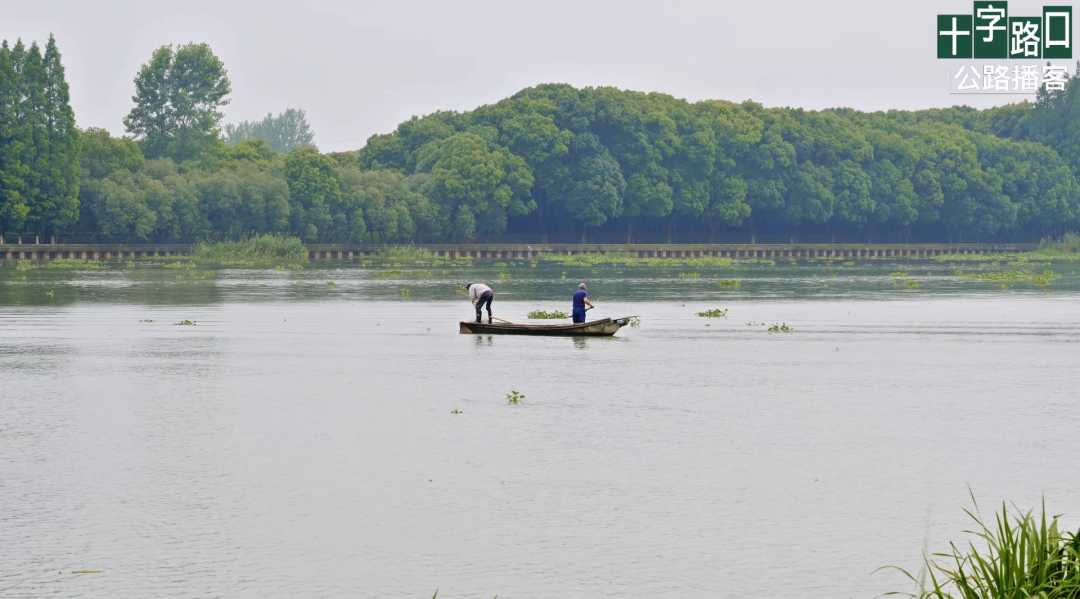
🧑🏻💻 Odin
Very poetic, like a road movie.
👦🏻 Koji
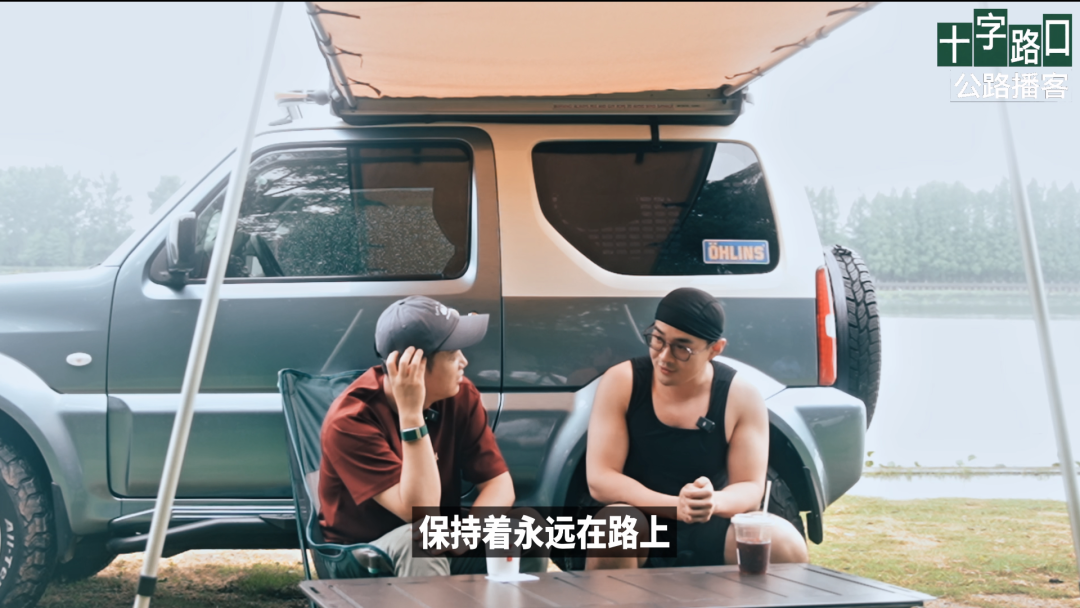
We've now arrived at Qingpu's lakeside, camp set, seated comfortably, a gentle breeze brushing past.
Earlier in the car we talked a lot about ideas and entrepreneurial thinking, but we haven't heard about your research path. Could you walk us through when you first got into research, and what turning points and key stages you went through?
🧑🏻💻 Odin
I more or less started research in my sophomore year, 2019. I was in Zhejiang University's School of Pharmaceutical Sciences, and was also doing a physics double major. I was always itching to do something different.
Right around then, Tingjun Hou — who worked on drug simulation — was at Zhejiang University. I sent him an email earnestly expressing my aspiration for computational pharmacy. Professor Hou was incredibly kind; he replied: "Haotian, sure, let's schedule a face-to-face." And he added a smiley face at the end of the email. That was the starting line of my research marathon.
After talking with Professor Hou, he gave me a long reading list, recommended physics and pharmacy courses I needed to cram, and urged me to build solid fundamentals first. I went back, caught up on coursework, and started exploring where I could plug in.
Later I began working on molecular dynamics research, because the most natural and intuitive intersection of physics and pharmacy is right there. During my molecular dynamics period, Frank Noe's team published their Boltzmann Generators work — they were among the earliest to try using generative models like VAE and Flow for molecular conformation generation.
But I later discovered that classical dynamics can sometimes resemble a "religion" — it works if you believe, doesn't if you don't.
Its conclusions are overwhelmingly post-hoc explanations: you observe a macroscopic phenomenon in experiments, then you run a dynamics trajectory and force-fit it to match. This is a "first believe, then see" technical path. I started to waver, wanting to find something more first-principles, more AI-native.
In 2021, I fully pivoted to AI small-molecule discovery. Started with AI molecular conformation generation, but soon felt that wasn't radical enough — went straight to using generative algorithms to design entirely new chemical structures. We published several Nature sub-journals during this period.
But gradually, I recognized the fatal flaw in AI small-molecule discovery: the molecules you design, lacking synthesizability constraints, often can't actually be synthesized in the lab. If you can't synthesize them, the bioactivity of your AI-designed drugs can never be validated in a closed loop.
This is also why it was ultimately David Baker and his team who won the Nobel Prize, not the first wave of AI small-molecule discovery researchers. The fundamental reason is that the "wet-dry closed loop" threshold and difficulty for protein design is far lower than organic chemical synthesis for small molecules.
👦🏻 Koji
So this also drove your decision to apply to and join the Baker Lab?
🧑🏻💻 Odin
Yes. I applied to Baker Lab before he won the Nobel. I was deeply convinced this direction represented the future of computational biology, that he would definitely win. Later when I got to Seattle, sure enough, he did.
But after the celebration, I started focusing on a larger scientific landscape. Theoretically speaking, life is tightly woven from DNA, RNA, proteins, and small molecules. Its operational chain runs: DNA transcribes to RNA, RNA translates to protein, proteins then execute the diverse functions of life.
At Baker's team, we were dedicated to protein-level intervention through artificial protein design. If we broaden our view to epigenetics, to the entire central dogma of life, there are actually many intervention points: if we can interfere with and design RNA, blocking pathological processes at the transcription stage, you might go from needing daily pills and injections to just one RNA therapy injection per month; if we go further up, and gain the ability to safely and precisely edit DNA at the genetic level, then we can solve nearly all congenital diseases at their root.
This is our first principle: all magnificent life processes are fundamentally interactions between molecules of different modalities. If we gain the superpower to simulate and intervene in every molecular interaction, then in essence we are reprogramming life itself.
👦🏻 Koji
Because of this, you led your team to create the predecessor of ODesign?
🧑🏻💻 Odin
Right. Building ODesign back then was like making a breakthrough attempt in the digital, virtual world. Now that we're out here starting a company, we have to bring it into the real world — to reprogram life.
When you truly possess the ability to reprogram life, to freely create any molecular interaction and signaling pathway you want, then at the endgame, you might literally create an artificial cell, a new form of life.
That's also why I chose the name Odin — it represents the chance to truly explore and create new life.
👦🏻 Koji
How do you view the idea of "creating life," which sounds rather awe-inspiring?
🧑🏻💻 Odin
It's absolutely something magnificent, with the beauty of reaching for the stars. It's also our unchanging ultimate dream.
The core proposition of creating new life is: whether you can possibly start from chemical combinations of inorganic matter, and have "consciousness" emerge from it. Along this path, you'll run into many questions about the origin of life itself: How do you define life? How do you define consciousness?
As for ethics, we're still too far from that endpoint to touch that layer yet. What Valhalla is doing today — AI-targeted drug discovery, synthetic biology design — these are merely scientific byproducts we're leaving behind on the long march toward that starry sea.
👦🏻 Koji
If you used the most plain, most accessible language to tell ordinary people, how will Valhalla's R&D today one day give back to every individual, what kind of value will it bring?
🧑🏻💻 Odin
The fastest achievable milestone is that future medicine will move toward true "absolute customization."
Instead of enduring the side effects of one-size-fits-all drugs on the market, based on your unique personal genotype and your body's real-time protein expression levels, a drug will be precisely custom-made for you on the spot — one that belongs only to you.
Why I Chose the Name "Odin"
👦🏻 Koji
Coming back to you personally, where did the name Odin come from?
🧑🏻💻 Odin
My Chinese name is Haotian. In Taoism, Haotian represents the supreme heavenly emperor of the natural world.
Later when I went to the United States, I had a French friend around me. When he spoke English, he didn't pronounce the "h," and habitually voiced the "t" into a "d." "Haotian" started sounding like "Odin" the more he called it, so I just went with it.
The meaning also fits particularly well. Odin is the All-Father, the chief of the gods in Norse mythology. My Nordic classmates at the time all thought this coincidence was extremely hardcore, very rock and roll.
There's actually another layer of meaning behind it. As that saying goes: "If God exists, how could I tolerate not becoming God?" So there are no gods in this world. But when one day you can arbitrarily simulate and create all things in the world and all molecules, in that microscopic world, you are God.
👦🏻 Koji
Carrying such a massive mythological top-tier name, do you feel pressure normally?
🧑🏻💻 Odin
My fate is hard enough to withstand it.
Besides, I share the same birthday as Siddhartha Gautama. No matter how you think about it, I can't be too weak.
👦🏻 Koji
Incredible. Your company name is also quite interesting — Valhalla.
🧑🏻💻 Odin
Right, this is also from Norse mythology. It's equivalent to Odin's dwelling place. The spirits of warriors who died in battle gather in Valhalla, brought here by the Valkyries, preparing for that final war of Ragnarök.
👦🏻 Koji
Why did you choose it as the company name? What hopes do you place in your future endeavors?
🧑🏻💻 Odin
On one hand, the name is unique enough, standing apart from the crowd. At first our name was quite generic — we called it Wanxiang Bio. Later we felt it wasn't rock and roll enough, so we might as well call it Valhalla. This is a very rock and roll thing.
Second, it conveys a certain do-or-die determination to fight. To face Ragnarök head-on. The future competition in the AI for Science track is actually very much like a battlefield of Ragnarök.
There will be bone-chilling lows along the way, and there will be soaring highs, but ultimately, technology will arrive at that endgame where the waves wash away the sand and all rivers converge to the sea.
👦🏻 Koji
So in your view, the entrepreneurship ahead will be a tough battle like Ragnarök?
🧑🏻💻 Odin
In the commercial market, real competition with real stakes is inescapable. Starting a company is like being on a battlefield.
👦🏻 Koji
Are you someone who enjoys fighting, who likes to fight?
🧑🏻💻 Odin
I'm someone who was forced to choose fighting.
👦🏻 Koji
Who's forcing you?
🧑🏻💻 Odin
My personality as a child actually leaned toward gentle. And precisely because of this, I later specifically took up boxing.
Boxing taught me the most valuable lesson: only those who can fight are able to stop fighting.
👦🏻 Koji
I can indeed sense that you have a very rock and roll, anti-establishment spirit that doesn't follow conventions. When did you start becoming this way?
🧑🏻💻 Odin
Actually, I don't think this is rebelling for the sake of rebelling. I'm simply insisting on doing the "right thing."
It's the world that, due to various compromises or concerns, has gradually deviated from its most essential track — what in entrepreneurship is called first principles.
For us, first principles means doing the right thing, pursuing the right choices.
You'll always encounter all kinds of challenges along the way. I might look quite heretical to you, but everything I do has only one purpose: seeking truth in science, seeking beauty in art.
👦🏻 Koji
Seeking truth in science, seeking beauty in art. In the Valhalla project, how do you seek beauty?
🧑🏻💻 Odin
Seeking beauty is simple. For example, if what you make is true, you'll find it beautiful.
👦🏻 Koji
Do you still feel that many people think you're quite different?
🧑🏻💻 Odin
I probably haven't changed at all.
👦🏻 Koji
From when did you not change at all?
🧑🏻💻 Odin
From birth I haven't changed, returning to original simplicity.
I think it's because everyone else has changed too much. Before you enter society, someone tells you how things should be done; after entering society, whether in grad school, PhD, or work, someone also tells you how things should be done.
But you equally have the right to hold your ground: this thing is right, that thing is wrong, and I'll walk toward what's right.
If in this process you encounter many difficulties, it's not my problem.
👦🏻 Koji
Difficulties aren't your problem?
🧑🏻💻 Odin
Difficulties certainly aren't your problem. But if in your state of mind you feel that difficulties are difficulties, then that's your problem.
👦🏻 Koji
Have there been some pivotal turning points in your life?
🧑🏻💻 Odin
There have been many turning points. It's hard to say which one is key and which one isn't important.
For example, you might suddenly realize that relying on your parents isn't as good as relying on yourself, because they don't actually know more than you do; at some moment you'll realize that relying on your boss isn't as good as relying on yourself, he doesn't necessarily know more than you either — the boss may have had many achievements in his era, but when it comes to your own era, because you've been working on the front lines, many of your judgments are actually more precise.
Further on you'll also discover that relying on friends isn't as good as relying on yourself. Before starting a company you might fantasize that some all-knowing CEO will descend from the heavens and lead you forward, but actually that's not how it works either.
👦🏻 Koji
So rely on yourself for everything?
🧑🏻💻 Odin
Mainly rely on yourself for everything, because this is your own choice, and you have to take responsibility for it.
For example, with this funding round — how much to raise, how to price it — you might think you should find an FA with more market experience, someone who's done many deals, to help you price it.
But after talking with the FA, they say maybe raise $100 million, $120 million, or $90 million, and when you press them on why, they can't really say, and you can only think to yourself: "Huh? What?"
Even if you repeatedly review and reference how much seniors raised, or look at peer evaluations of how much everyone is raising, the final choice still rests with you. You have to make the call yourself: this is the price, no need to ask why.
👦🏻 Koji
Right, you arrived at that conclusion.
🧑🏻💻 Odin
People often feel like the world is a makeshift operation.
Actually, I think the world isn't a makeshift operation. The world is a very random world, and all initial choices are basically the same. What's different is, after making a choice, how you transform it from a choice into a final result.
The world is made of random particles. What you need to do isn't make this particle collide in a specific direction, but make it collide as soon as possible, converge to the next stage as quickly as possible.
👦🏻 Koji
What kind of collisions have you experienced? For example, more serious ones.
🧑🏻💻 Odin
Hard to say, because all collisions are small ones, and only in the end do they compose a big collision.
For example, returning from Baker Lab was a relatively big collision recently; starting a company is also a relatively big collision. You converge quickly in academia and discover that academia has in some ways entered a "Dharma-ending age," where it's hard to accomplish great things under that system, so you decide to turn back.
When turning back to entrepreneurship, you might want to raise funding slowly, build product slowly. But time waits for no one, we have to converge quickly, at minimum do a round of commercialization first, and test the real battlefield.
👦🏻 Koji
If the capital market weren't so good today, would you still start a company?
🧑🏻💻 Odin
I would. Because the winds of karma have blown you here, it would be unconvincing not to start a company. And even if the capital market weren't good, there would always be people willing to support you.
👦🏻 Koji
I see you've always worn a bandana — what's the reason? When did you start wearing it?
🧑🏻💻 Odin
I was already wearing it before going to the United States. At first, going to America was partly to check out hippie culture, and the bandana is their iconic accessory. After arriving in the US, I discovered there were no hippies anymore, it seemed like something from a previous era.
Later I wanted to maintain this style, constantly reminding myself to stay true to my original aspiration and keep moving forward. After that, the reason became even simpler — because you don't have to deal with your hair.
👦🏻 Koji
What original aspiration are you maintaining?
🧑🏻💻 Odin
Always being on the road. Being on the road is more important than arriving at the destination — this is also a line from Zen and the Art of Motorcycle Maintenance.
👦🏻 Koji
In the process of starting a company and fundraising, what other interesting discoveries have you made?
🧑🏻💻 Odin
One very interesting phenomenon: it's easy to get alienated during the fundraising process.
Sometimes I wonder too — are you building for VCs, for the market, or for yourself? Inevitably, you have thoughts like: VCs are telling this story today, so I'll tell it too, just get the money first.
The stories trending in VC circles right now basically revolve around pipelines. Package it as AI for Science, find a senior expert to run the pipeline, sell the pipeline — that's what people want to hear today.
Or you assemble buzzwords. Assemble world models, assemble Agents. When Agents go out of fashion, assemble Robotics, Physical Intelligence, you can even splice in longevity.
There are so many fancy terms to mix and match, to construct a startup aimed at VCs. That's alienation.
👦🏻 Koji
So what's your choice now? Building for VCs, for the market, or for yourself?
🧑🏻💻 Odin
Be Yourself.
Actually, entrepreneurship, life, and doing anything — it all comes down to that saying: "All sentient beings possess the wisdom and virtues of the Tathagata, but cannot realize them due to their delusions and attachments." In the process of starting a company, delusions inevitably arise. Like the delusion that if you bolt on robotics today, you'll get a higher valuation, raise more money. You'll also develop attachments, feeling you must stick to only your own story. These are all delusions and attachments.
You need to shed these delusions and attachments, and return to your original intention in starting this company: what do you actually want to do? At the same time, stay humble — you don't necessarily know more than others. To reach the ultimate goal, you can make adjustments, rather than thinking about how to inflate your valuation or raise more money.
👦🏻 Koji
Many people's problem is they say Be Yourself, but they don't know what "Myself" actually is.
🧑🏻💻 Odin
Honestly, I don't know either.
But I have a rough outline in my mind. For instance, what do you most want to do right now? What kind of person do you want to become? The most important thing is, if you genuinely have an idea and want to start a company, just getting out there matters most — rather than having everything figured out.
👦🏻 Koji
Take half a step first. In your words, open your eyes and just do it?
🧑🏻💻 Odin
Yes, open your eyes and just do it.
👦🏻 Koji
After starting the company, compared to your previous expectations of entrepreneurship, what's been the same and what's been different?
🧑🏻💻 Odin
The difference is that I've become increasingly serious about it. Before, I thought I could take the money, come back and nail down the technology and various things first, then think about commercialization. I eventually realized that's not how it works — you probably have to think about commercialization from Day One, becoming more pragmatic.
What's the same is that the original intention has never changed. I always feel like a broke guy.
👦🏻 Koji
How do you understand that? Because you actually have money in the bank now.
🧑🏻💻 Odin
Having money in the bank actually makes me constantly remind myself why I started this company in the first place.
"What is the meaning of the Patriarch's coming from the West?"
👦🏻 Koji
If today you could ask any one person in the world any one question, who would you ask and what would you ask?
🧑🏻💻 Odin
Probably Mark Zuckerberg. I'd ask him:
"What is the meaning of the Patriarch's coming from the West?"
The meaning is: when you've become very wealthy, very successful, can you still remember your original intention? Why did the Patriarch come from the West to transmit the Dharma in the first place? Though this is a very abstract question, it corresponds to: is your original intention still there?
👦🏻 Koji
Why is this question so important to you?
🧑🏻💻 Odin
Because original intention matters more than anything. It tells you whether you've built a business that makes money, or a great business.
Whether it's entrepreneurship, academic research, or anything else, they're all essentially just organizational forms. Like spiritual practice — there are different methods, but they all lead to the same destination.
👦🏻 Koji
What kind of answer are you hoping to hear?
🧑🏻💻 Odin
I don't know. He might talk about how his original intention has changed, or he might see more things. What if the guy has actually attained enlightenment?
👦🏻 Koji
Alright, thank you Odin. Really enjoyed recording this podcast with you.