Cheated, Rescued, Put on a Pedestal, and Brought Down by Pain—Now She's Betting on Adventure in the AI Era | A Conversation with Kuaikan Comics CEO Chen Anni
"Go ahead and enjoy it!"
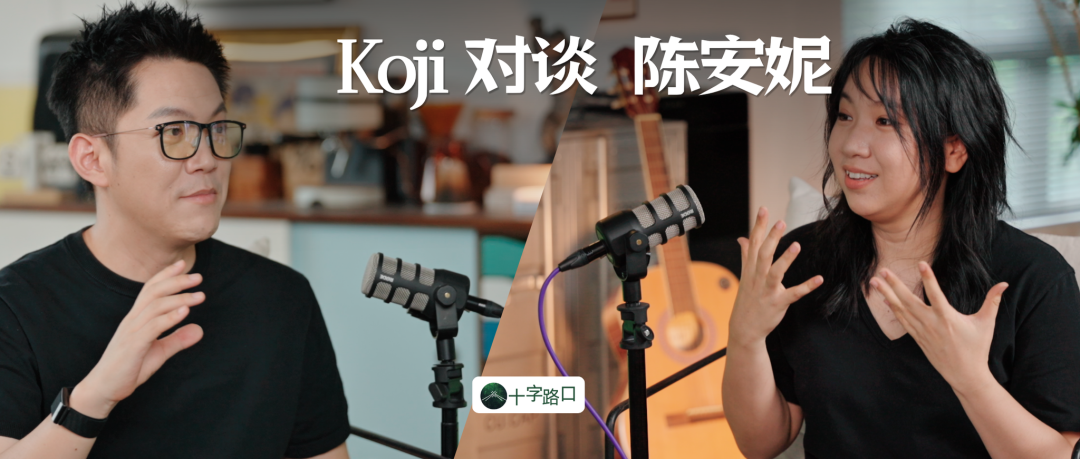
👦🏻 Podcast interview: Koji
🥷 Edited by: Crossing
🧑🎨 Layout: Zeoooo

🚗 This week's guest on Crossing is Anni Chen, founder and CEO of Kuaikan Manhua — a leading figure in China's comics industry, here to share how AI will reshape the content business.
Anni Chen founded Kuaikan Manhua at 22, fresh out of college. Over the 12 years since, she's lived through nearly every plotline a startup can throw at you: she's been burned — an investor who had signed the agreement kept delaying the wire transfer, stringing her along with "next week" until the company's cash flow snapped; she's been saved — at her most desperate moment, a mysterious wire from a stranger-investor pulled the company back from the brink; she's been put on a pedestal — massive traffic, a growth miracle, a US$200 million funding round; and she's been knocked down by pain — after that lifesaving round closed, she spent an entire month in such bodily stiffness and pain that she couldn't stand, working from the office sofa.
Twelve years later, with the core business growing steadily, she's decided to bet the next chapter on building an AI-native product from scratch: Livo, "a real-time living AI world." The AI characters have their own stories and dreams — if you hold one back from becoming the Pirate King, he'll storm off in anger and even block you; every word you say triggers a butterfly effect; and the product's most important feature is literally named "Destiny."
In this episode, we walk through the whole 12-year arc, chapter by chapter: the fight for survival when cash flow was strangled; the "crawl if you have to, but finish this road" conviction that followed finding her mission — inserting human curation into the algorithmic recommendation pool at the height of traffic, watching the data drop 30% within a month or two, only to see IP derivative revenue grow to over half the business a few years later; and, after all the ups and downs, her true methodology — the "gamer's spirit": act without attachment, don't fear failure, let curiosity rather than fear drive you.
If you're walking through the startup tunnel yourself, or you're curious how a 12-year CEO turns wild swings into the courage to keep taking risks in the AI era, this episode might give you a strength you haven't felt in a while. Do listen to the end — there's just one thing she wants to say to her 22-year-old self, the one who had just started the company:
"Just enjoy the ride!"
Listen on WeChat:
Listen on Xiaoyuzhou:
🎬 The video podcast is also live on @Koji杨远骋's WeChat Channels, Xiaohongshu, Bilibili, YouTube, and other platforms
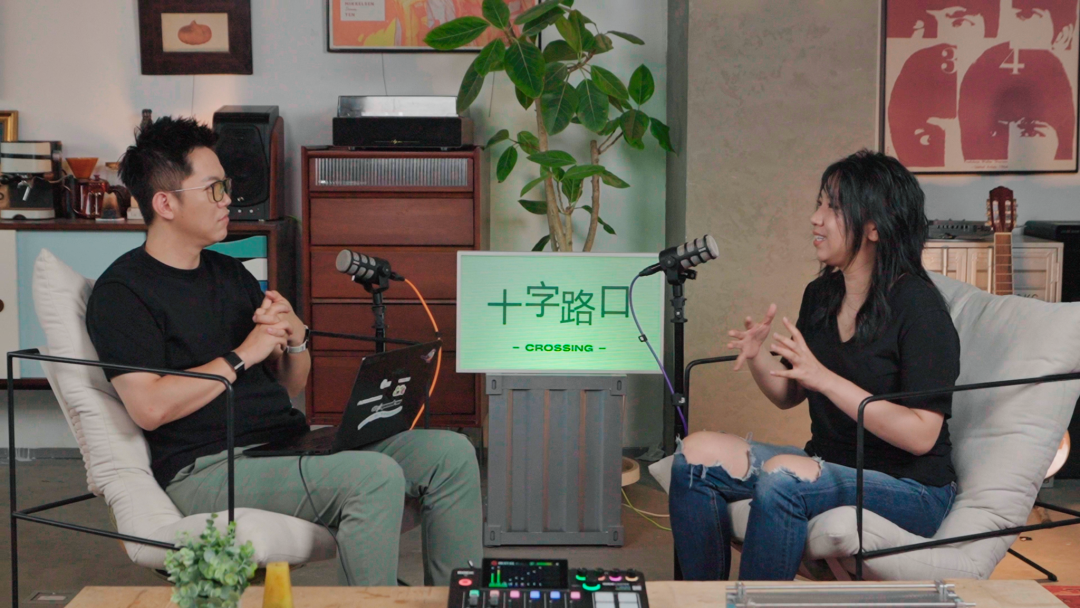
Rapid-fire Q&A
👦🏻 Koji
Let's start with a rapid-fire round so everyone can get to know you quickly. Anni, how old are you?
👩🏻 Anni Chen
👦🏻 Koji
MBTI and zodiac sign?
👩🏻 Anni Chen
ENTP. My sun sign is Sagittarius, and my rising sign is Capricorn.
👦🏻 Koji
How long have you been building Kuaikan?
👩🏻 Anni Chen
Twelve years.
👦🏻 Koji
So you were just 22 when you founded it?
👩🏻 Anni Chen
Right, 22, fresh out of college.
👦🏻 Koji
How big is the Kuaikan team now?
👩🏻 Anni Chen
Around 300 to 400 people.
👦🏻 Koji
Introduce today's Kuaikan Manhua in one sentence.
👩🏻 Anni Chen
Today's Kuaikan Manhua is a company that has always pursued building innovative content products.
Livo AI
👦🏻 Koji
We're recording this episode because Kuaikan is building a new AI product called Livo. In one sentence, what is Livo?
👩🏻 Anni Chen
Livo is a real-time living AI world, one that generates all kinds of fascinating destiny experiences that you can change.
👦🏻 Koji
I saw you recently released a concept video for Livo — it's quite distinctive. Can you tell us more?
👩🏻 Anni Chen
I think Livo is a whole new paradigm for storytelling in the AI era.
We believe the invention of AI is like the invention of electricity. Before electricity, people experienced stories through live stage plays; after electricity, film replaced the stage and became the dominant new storytelling paradigm.
If AI is like electricity, it will likewise give rise to an entirely new paradigm, the way film did. This paradigm looks nothing like film, but it will become the mainstream form of storytelling in the AI era.
Livo is building exactly that kind of product.
👦🏻 Koji
Say I open Livo for the first time today. What would I actually experience? What kind of product, what kind of story?
👩🏻 Anni Chen
Have you seen the show Westworld?
👦🏻 Koji
I watched the first episode.
👩🏻 Anni Chen
The first episode is enough.
When you enter the product, there are several different world sections for you to choose from based on your taste. Some people like suspense and power struggles; others like the sweetness of a schoolyard coming-of-age story. Pick a world you like, and you dive right in.
👦🏻 Koji
Say I pick suspense?
👩🏻 Anni Chen
For suspense, one of our works takes place on a train — an ensemble story of intrigue and mystery, with some elements of war.
Once you enter, what greets you is a living map, with the moving trajectories of many lives on it. At the same time, there's a system panel recording, in real time, everything happening in every life in that world.
Do agents count as "real people"?
👦🏻 Koji
Are those people real humans, or NPCs?
👩🏻 Anni Chen
Every one of them is a living soul, with autonomous consciousness, their own thoughts, and a profession, goals, and dreams within that worldview.
They can choose how they evolve, just like humans do.
👦🏻 Koji
But they're not other players, right?
👩🏻 Anni Chen
No, they're all agents.
👦🏻 Koji
So in this world, I'm the only real human?
👩🏻 Anni Chen
Right.
👦🏻 Koji
Can I pick any person and step into their life, or into their role?
👩🏻 Anni Chen
A world usually has many characters, and you can participate and experience their stories. There's a main storyline, plus many side quests.
And you can intervene in both the main and side storylines to influence their destinies. In this world, you set off butterfly effects.
A destiny might have been heading left — say, a certain officer was supposed to detonate a bomb — but you might develop a friendship or even a romance with him. You influence him, tell him, "Let's not detonate that bomb," and you've completely changed the fate of that train.
👦🏻 Koji
If I don't open the app for a while, does the world inside Livo keep running on its own?
👩🏻 Anni Chen
Yes. The characters in this world aren't dependent on the player. They live there and evolve autonomously.
Actually, since you just asked whether you're the only real human, I'd love to turn the question around: how do you define a real human?
👦🏻 Koji
I'd say carbon-based life.
👩🏻 Anni Chen
I don't think the key to being a real human lies in being carbon-based.
We usually consider ourselves real and agents not, because I believe I have autonomous consciousness, while an agent is just a pile of code being manipulated by someone.
But in our system, we place enormous emphasis on each agent's autonomous consciousness, and their souls evolve dynamically. At that level, it becomes very hard to say who's real and who's fake.
👦🏻 Koji
So for the same suspense-and-intrigue train, would different players end up with different outcomes?
👩🏻 Anni Chen
Of course. Everyone's destiny is their own, one of a kind.
👦🏻 Koji
And if I play it many times, it's different each time?
👩🏻 Anni Chen
Absolutely.
It's like if you traveled back in time right now to the start of this interview — our destinies might turn out differently. Say you went back and suddenly slapped me — do you think things would play out the same?
👦🏻 Koji
Probably not, haha — I'd instantly go viral for all the wrong reasons.
👩🏻 Anni Chen
Exactly. Travel to any point in time and space, and any different decision triggers a butterfly effect in destiny. The outcome is completely different.
👦🏻 Koji
But this sounds like it burns a lot of tokens. If a user plays for a minute and then goes silent and churns, but the backend keeps running to keep the world going — how do you solve that?
👩🏻 Anni Chen
It definitely burns tokens. From a business perspective, it ultimately comes down to which team can achieve the same or better results at lower cost. That's a real test of a team's capabilities.
👦🏻 Koji
There are similar products on the market — Smallville from Stanford, AIvilization, and Nintendo's Tomodachi Life. What do you share with them, and how do you differ?
👩🏻 Anni Chen
On certain features, we're similar. But the experience feels completely different.
👦🏻 Koji
Different how?
👩🏻 Anni Chen
Smallville, for example, emphasizes a god's-eye view. We emphasize that the user is an important character in the worldview and the story.
It's a feeling of participation from inside destiny, rather than standing outside observing a bunch of humans who have nothing to do with you.
At its core, what people truly care about isn't other people — it's stories and people connected to themselves. You have to become part of the story.
Lessons from running an AI-native organization
👦🏻 Koji
What's the makeup of the creative team behind Livo?
👩🏻 Anni Chen
The team is extremely diverse. We have product managers from the traditional internet era, Gen Z product managers who've built AI-native products, game product managers, plus game narrative designers and comic artists.
👦🏻 Koji
In a game, the game designer is a crucial role. Who plays that role in Livo?
👩🏻 Anni Chen
Once the product takes shape, there will be many worlds behind it. Creating those worlds is the job of the screenwriters and content creators.
They define what kind of worldview they want to build, what compelling characters and storylines to create. But for the 0-to-1 paradigm-building of the product itself, we have no single person in charge.
👦🏻 Koji
Will it become a UGC platform? Will I be able to create my own world?
👩🏻 Anni Chen
It's not UGC right now, but in the long run, it definitely will be.
👦🏻 Koji
You mentioned there's no single leader on the team. So how does everyone work? Who makes the final call?
👩🏻 Anni Chen
People might find this a bit wild — we rely on collective intelligence.
This runs very much against how we used to build internet products. The way the whole team iterates and organizes itself is like a large model.
As CEO, I used to be the decision-maker. Today I'm more like a user submitting queries to a large model. I put forward my questions, my needs.
Then everyone on the team comes up with various proposals, and we all vote on them together using something like a "yes and hope" dataset.
👦🏻 Koji
What's "yes and hope"?
👩🏻 Anni Chen
"Yes" is what's good about a proposal. "Hope" is how you'd like to see it adjusted. Everyone can weigh in on every proposal.
👦🏻 Koji
You can't vote "no"?
👩🏻 Anni Chen
No. Because it serves no constructive purpose.
👦🏻 Koji
What if you really dislike a proposal and can't say no?
👩🏻 Anni Chen
Forget about it.
👦🏻 Koji
But isn't that suppressing people's opinions in disguise?
👩🏻 Anni Chen
No, because all of your opinions can be expressed through "hope."
👦🏻 Koji
Couldn't someone say: "yes, but I hope this proposal doesn't happen"? That's basically saying no in disguise.
👩🏻 Anni Chen
In our mechanism, you don't need to do that to achieve your goal. Your goal is for better proposals to be chosen.
Once the mechanism runs, the proposals with the most "yes" and "hope" votes move forward, and everything ranked lower gets dropped — naturally eliminated. So you only need to say what you want; there's no need to say what you don't want.
Let me give a concrete example.
We were once designing Livo's icon. The design team came up with about 10 proposals. The product folks weren't satisfied but were afraid of discouraging the team, so they held back.
I said this was a perfect chance to use the "yes and hope" mechanism. Say you're overall unhappy with a proposal but love its color scheme — that color is your "yes." What you're unhappy about is that the icon doesn't express Livo's product essence at the level of the "soul." So extract that essence and tell them: you "hope" the proposal evolves in a direction that better embodies that "soul."
They did exactly that, and the designer was completely energized. The next day he cranked out nearly 100 proposals — because he felt his design ingenuity had been affirmed and seen.
In this mechanism, even though I've positioned myself as a user, that doesn't mean I'm just a bystander on the Livo team.
I still play a role — it's just changed, from the traditional decision-maker to what is now a fine-tuner. For example, when a non-consensus voice doesn't get many votes but I strongly endorse it as a user, I'll weight it up; and vice versa.
👦🏻 Koji
Livo sounds like a game. Does your team see it that way internally?
👩🏻 Anni Chen
How do you define a game? Do you think life is a game?
👦🏻 Koji
Life is a game.
👩🏻 Anni Chen
If life is a game, then Livo can be understood as a game too — it's a second-life experience.
👦🏻 Koji
Do you need a game license?
👩🏻 Anni Chen
I don't think it's a game in the traditional sense. It leans more toward a content experience and a life experience.
👦🏻 Koji
Actually, whether it's games, Livo, or other products, the underlying purpose of playing them is the same.
👩🏻 Anni Chen
Right. Reading novels, reading comics, watching movies, and playing games all serve the same underlying need — experiencing different lives.
Of course, by games I mean content-driven games like RPGs. If it's something like a match-3 game, the experience is entirely different.
👦🏻 Koji
How long can you play Livo? Is it like Douyin, hoping users spend an hour a day, or like a game with a clear beginning and end?
👩🏻 Anni Chen
It creates a life experience. It doesn't set boundaries on how long users can play — the product mechanics support playing indefinitely.
👦🏻 Koji
And you can switch between different worlds and keep experiencing new ones?
👩🏻 Anni Chen
Of course.
👦🏻 Koji
And you said you can also play indefinitely within the same world?
👩🏻 Anni Chen
Yes, because what we've created is a set of causal rules governing how the world works — whatever cause you sow, you reap the corresponding effect. Everything you do in the world generates a corresponding destiny.
Now that the Agent world is consensus, what non-consensus bet is Livo really making?
👦🏻 Koji
Since the AI boom, everyone's been talking about building an infinitely evolving world populated by Agent-driven characters with autonomous consciousness.
What do you think Livo has seen — a non-consensus insight that everyone previously overlooked within the consensus?
👩🏻 Anni Chen
The consensus is that in the future, Agents will create more immersive, more realistic experiences.
But beneath that broad consensus, building a product that truly hits user needs involves many difficult judgment calls.
Take Smallville — it never truly satisfied users' underlying desire to enter a virtual world. We believe what users most want to experience is "destiny."
Destiny is essentially made up of plot lines. Take our meeting right now — if our lives were playing out on someone else's TV, this would be a storyline, and also our destiny.
People enter a virtual world to experience these storylines. And that destiny must be shaped by me at every moment — I can't just be a spectator. Every word you say profoundly influences where things go.
Without that sense of destiny — if you're just watching a bunch of code-people walking around a map — users quickly lose interest.
And for Agents to constantly weave compelling destinies for users, you need extremely strong content-creation capabilities behind the scenes, plus a method for endowing Agents with those capabilities.
👦🏻 Koji
What advantages does Kuaikan Comics have in doing this, compared to a game company, ByteDance, or a team with a film and TV screenwriting background?
👩🏻 Anni Chen
First, this product ultimately does demand strong content-creation capabilities, and Kuaikan has that in its DNA — we were always a content technology company.
Second, we're standing at the moment when AI has just emerged — an intersection of the old era and the new.
To build a new-era content product at that intersection requires far more than content-creation ability. What it really demands is a kind of disruptive, innovative thinking.
People say it's a big leap for us, going from a comics company to building Livo — they've compared it to all sorts of things. But in my view, it's the same thing; there's no difference.
Both are made from the same dough — one is a steamed roll, the other a steamed bun. People ask why a bun maker is making rolls. I say: I'm a dough maker.
This requires a mindset capable of making leaps, and at the very core of that mindset, the team must be truly, truly unafraid of failure.
👦🏻 Koji
Unafraid of failure?
👩🏻 Anni Chen
Yes, because this is itself a disruptive paradigm. Behind the capacity for innovation is usually the capacity to not fear failure.
👦🏻 Koji
You started trying to bring AI into your products back in 2023. Could you share what phases you went through and what you tried?
👩🏻 Anni Chen
We started by adding interactivity to comics. In the second phase, we added AI on top of interactive comics.
👦🏻 Koji
What did it look like after adding AI?
👩🏻 Anni Chen
We added the ability to converse with characters inside an interactive storyline.
But we felt that still wasn't enough. We believed the entire storyline, the entire world, had to be AI-native. So we swapped out the foundation — made AI the base layer, and grew the world, the stories, and the characters on top of it.
👦🏻 Koji
Besides yourselves, have you seen others exploring in a similar way?
👩🏻 Anni Chen
No. Products on the market today fall roughly into two categories.
One type is AI-native, but not a complete form. Take a lot of today's chatbots — chatting with those characters feels incomplete to me. I can't build an emotional connection with them, because we haven't been through anything together.
It's like grabbing a random stranger on the street — what could you even talk about? It would just be awkward small talk. But your deepest friendships, the people you love, are always people you've shared experiences with. Without shared experiences, chatbot products are incomplete.
The other type is like the "interactive comics plus AI" we tried before. It layers some localized AI capabilities on top of a traditional model, and that means very little.
If AI is electricity, then film is the paradigm of the new era. Putting a few lightbulbs on an old stage play still just gives you a prettier stage play — its ceiling can never compare to film. So we made up our minds to create the "film" of the AI era.
👦🏻 Koji
You want to invent the new cinema of the AI era?
👩🏻 Anni Chen
Yes, that's what we're thinking.
👦🏻 Koji
Do you consider yourself a storyteller?
👩🏻 Anni Chen
Yes. That's where everything starts, and it's my most fundamental color.
👦🏻 Koji
The reason people first followed you on Weibo was also because of your comic stories, right?
👩🏻 Anni Chen
Yes.
I've always believed that innovating for the sake of innovation rarely succeeds. Our motivation for starting Livo was simple: what is the entirely new way to tell stories in the AI era? You have to find it.
Take instant noodles. Master Kong and Uni-President used to fight tooth and nail, each terrified of being overtaken by the other. But in the end, what overtook them wasn't a more advanced instant noodle — it was food delivery platforms. Because delivery is freshly cooked, served hot, knows what you want, and brings fast food straight to your door.
👦🏻 Koji
That raises a question. People consume comics and films because they need collective narrative — everyone watches the same story, cries and laughs at it together, and resonates.
But if in Livo's worlds, ten thousand people experience ten thousand different stories, and collective resonance no longer exists, does the magic of storytelling get diminished?
👩🏻 Anni Chen
There will be both commonality and individuality.
It's like us — we're completely independent individuals, each with our own fate, but we live in the same country and go through some grand eras together.
It's the same in these worlds. The major storylines of the world are something everyone experiences together — that guarantees shared topics of conversation. The personalized part lies in which specific person you choose to form a deeper bond with.
👦🏻 Koji
So each world could potentially become an IP?
👩🏻 Anni Chen
Of course.
Why does the AI era actually demand premium content?
👦🏻 Koji
Do you think Livo's ultimate success will depend on whether the story settings of each world IP are good enough, or on whether the Livo platform itself is built well enough?
👩🏻 Anni Chen
What we pursue is that the IPs this platform carries are all premium — able to bring users joy and moving experiences, like the best films.
We don't chase quantity, because the cost of running a world is extremely high. The content has to be premium enough for the business model to work.
I think many paradigms of the AI era will go back to the early days when film and records were first invented. Back then, only Teresa Teng could release records, and only the best directors could make films.
Under the new paradigm, we'll return to an era of premium content. That's a fairly non-consensus view right now, because everyone is talking about how AI will kill premium content.
That's because people are still looking at the old paradigm. A lot of the AI-generated short dramas and AI comic dramas today are still products of the last era. Products of the last era have reached the end of their lifecycle, devouring premium content in cutthroat competition.
But the production cost of the new paradigm will remain high for quite a long time. So for Livo, right now only the most premium content deserves to be published.
👦🏻 Koji
Back to digital life. You said agents have souls. What does it take to make people actually feel that?
👩🏻 Anni Chen
There are a few key points.
The first is quite simple. When we judge whether a real person has a soul or is just an alienated tool, we look at whether they have rich, meaningful stories. It's the same for agents.
The second is at the level of life itself — they must have agency.
Agency means they can say no to the user. For example, if an agent's dream is to become the Pirate King, and you keep pestering him and getting in his way, he'll cut off contact with you. If you go looking for him again, he might ignore you — or even block you. He has boundaries and a temper.
The third is that his consciousness evolves autonomously, and the direction of that evolution is decided by him, not controlled from the outside.
He can decide to stick with becoming the Pirate King, or he can decide to give it up for the user. When his thinking changes, all of it gets stored in the underlying engineering — there's a set of rules that guarantees the autonomy of his soul.
👦🏻 Koji
Roughly how many of these "souls" are there in one world?
👩🏻 Anni Chen
About four or five main characters, and a dozen or so supporting characters.
👦🏻 Koji
Are you personally involved in creating the worlds in Livo now?
👩🏻 Anni Chen
I'm still involved in content creation.
👦🏻 Koji
Is there any world that you made yourself?
👩🏻 Anni Chen
No. My involvement now probably wouldn't be me writing it directly.
But I do participate in the whole world-creation process, helping judge whether something is interesting.
👦🏻 Koji
From comic artist to founder and CEO — how long did that take?
👩🏻 Anni Chen
I actually only drew comics for two years. Once I became CEO, I stopped.
The time I spent drawing comics was just those two years from my sophomore to senior year of college. After I graduated, I never drew comics again.
👦🏻 Koji
Did you not want to draw anymore, or did you not have time, or was there some other reason?
👩🏻 Anni Chen
I'm drawing a different kind of comic now — my life is that comic.
👦🏻 Koji
But in the narrow sense of comics — did you just not want to draw anymore? What made you stop creating?
👩🏻 Anni Chen
It's not that there was any special reason I definitely had to stop.
The original motivation for founding Kuaikan was that I discovered many creators more talented than me.
At the time I had gained some fans of my own — I'd blown up overnight and had quite a lot of readers on my Weibo account. But I saw so many comic artists who clearly drew better than me yet had fewer readers.
I felt they probably weren't good at operations and promotion, so I thought, I can help them with that. That way, instead of just my own soul creating works, I could see stories written by many more rich and interesting souls — and I found that really meaningful.
How did Kuaikan survive its first near-death experience?
👦🏻 Koji
Twelve years of entrepreneurship — looking back, how many phases did it break into?
👩🏻 Anni Chen
Three very distinct phases. And each transition between phases was accompanied by a violent, almost despair-inducing crisis.
👦🏻 Koji
What was the first phase?
👩🏻 Anni Chen
The first phase was when the company's cash flow ran dry.
👦🏻 Koji
From raising your first money to the cash flow breaking — how long was that?
👩🏻 Anni Chen
The first funding should have been December 2014, and the cash flow broke around December 2015, I think. I'm not sure of the exact dates, but I remember the event very clearly.
👦🏻 Koji
That fast? How many salaries did you have to pay back then?
👩🏻 Anni Chen
The first round wasn't much money. Since the product was growing well, of course we wanted to spend it quickly on promotion.
The real reason it broke was that we got cheated by an investor. One investor signed an agreement with us, locked us in, and then defaulted — never gave us the money. For a period of time, we couldn't switch to another investor either.
He didn't wire the money as agreed. We thought he would, so we spent it. And after we spent it, the cash flow was gone.
👦🏻 Koji
Which VC firm was it? Does it still exist today?
👩🏻 Anni Chen
I haven't really kept tabs on them, so I don't know if they're still around. After that, I went around borrowing money everywhere to save the company.
👦🏻 Koji
And which VC fund did the good deed? Can you talk about that?
👩🏻 Anni Chen
They're still our shareholder now, anyway. They saved the company, so the company didn't die.
When you're going around borrowing money, you start wondering: should I keep doing this? I never expected entrepreneurship could make me this poor.
While I was still hanging on, fate suddenly gave me a hand. So from that moment on, a belief took root: as long as you haven't failed yet, keep going — you just haven't failed yet, and a turn for the better will come.
That's when I started to have the mindset of a real entrepreneur. Just one year into starting a company, I realized many more things like this would probably happen in the future.
👦🏻 Koji
After that experience, did your feelings about money, your relationship with money, change?
👩🏻 Anni Chen
Not really.
When I founded Kuaikan, as part of the first generation of self-media, my personal income was very substantial.
I founded Kuaikan while earning a very good personal income, and I put a lot of my own savings into it. So my relationship with money didn't change in any fundamental way.
👦🏻 Koji
After the funding crisis, were there cost-saving measures — like downgrading business travel standards to a standard room at a Home Inn?
👩🏻 Anni Chen
My family wasn't well-off when I was growing up, so I've always lived fairly frugally — and that's still true today.
There was never any sudden switch to first class or anything like that. I've always flown economy.
👦🏻 Koji
The cash flow break was the first of the three major phases you mentioned. Do you think that phase had any impact on the company?
👩🏻 Anni Chen
The impact was that our employees all came to feel this company has a certain kind of luck about it.
👦🏻 Koji
Believing you have good luck?
👩🏻 Anni Chen
Not good luck. Even our cleaning lady and our drivers believe the company has an invisible hand pushing us forward at the most critical, most difficult moments, refusing to let us die. That's a very genuine feeling among a lot of our employees.
I used to think I was just imagining things, but after similar things happened countless times, everyone started to believe it.
The way I see it, heaven helps those who help themselves. If you persist, don't give up, and keep putting in more effort than everyone else, fate will definitely come to your aid.
👦🏻 Koji
Did your earliest comics also carry this idea?
👩🏻 Anni Chen
Yes. My earliest comics got a lot of criticism. Back then I drew a comic called Sorry, I Only Live a 1% Life, which quite a lot of people misread as saying you should strive to be part of that 1% — the "elite above everyone else."
That was a complete misreading — not at all what I intended.
What I wanted to express is that everyone holds many beautiful wishes in their heart. Given the constraints of current circumstances and conditions, the probability of realizing them is very low — maybe just 1%.
And the wish doesn't have to be grand. It could be something small — a wife, a dog, a cat. These are all beautiful wishes.
But if, right now, it looks like the odds of achieving it are low, or everyone around you tells you it's unrealistic, you have to believe that through effort you will eventually get there — you just have to work much, much harder than everyone else. I truly believe that.
👦🏻 Koji
Did starting the company reinforce that belief?
👩🏻 Anni Chen
Yes, so many things reinforced it.
Why Did You Deliberately Let Your Data Drop 30%?
👦🏻 Koji
So that was the first of the three important phases you just mentioned. What about the second phase — when was it, and what was its defining event?
👩🏻 Anni Chen
The second phase was around 2018 and 2019. The product's traffic had reached a peak.
But at that time, a lot of content appeared on the platform that I didn't think was quality enough. That was also when recommendation algorithms suddenly became popular. Everyone was rushing to plug in algorithms, and nobody really knew how to handle them yet. People didn't yet know how to work with algorithms the way we do today — doing ecosystem governance together, protecting quality content.
When you just blindly plug in an algorithm, with no restraint and no governance, it ends up pushing super short, fast, clickbait content.
👦🏻 Koji
Did users push back at the time?
👩🏻 Anni Chen
Not at all. Users were clicking like crazy. Click-through and retention rates shot way up in a short time, and so did revenue.
But when that kind of content flooded the product's homepage, something felt wrong to me. It felt like the product had drifted away from its original purpose.
👦🏻 Koji
You said each phase had a dramatic defining event. So what was the dramatic event triggered by this situation?
👩🏻 Anni Chen
At the time, I actually wanted to leave the company.
👦🏻 Koji
You yourself wanted to leave the company?
👩🏻 Anni Chen
I've always believed that this company belongs to society. I genuinely think that.
So I felt that maybe I wasn't the right person to manage this company on society's behalf anymore, and I wanted to leave — in whatever form that might take.
👦🏻 Koji
And hand it over to whom?
👩🏻 Anni Chen
Back then I thought there must be someone more capable than me. I thought maybe I just wasn't good enough — I couldn't make sense of these strange things: the data was going up, but I felt it was all wrong.
During that period, I was very seriously planning to leave. Every day I spent at the company, my mental state was so bad I could barely function at work.
👦🏻 Koji
Did your colleagues know?
👩🏻 Anni Chen
I don't know if they knew. Probably not.
For a while I was looking for every possible way to properly hand the company over to someone else. As I mentally prepared myself for that, and even brought in professional partners and friends to push the process forward, I noticed my body was fiercely resisting it.
In the final stages of pushing it through, the physical resistance became overwhelming. I didn't understand why, so I went looking for the reason.
I walked around the office and saw figurines on employees' desks, and little motivational banners they'd written for themselves, like "Fight for the rise of Chinese comics." They might not have been earning high salaries, but because of my rallying call, they were fighting for this every single day.
And there were creators who messaged me saying that if the team shut down, they'd consider switching careers — they'd stop drawing comics altogether.
In those moments, I felt that the decision I'd wanted to make — to leave — was a truly, truly terrible one.
👦🏻 Koji
Had you already found a CEO by then?
👩🏻 Anni Chen
We were in the middle of the process at that point.
That was an important milestone. It established that the purpose of founding a company goes far beyond the founder wanting to make a great product.
A company's meaning, in many ways, is about its employees and the people working in this industry — their growth and happiness are the company's purpose.
👦🏻 Koji
Was there a specific moment when this idea suddenly hit you?
👩🏻 Anni Chen
It was the two moments I just mentioned. One was seeing the employees' desks, the other was seeing the messages from the creators.
👦🏻 Koji
So what did you do after that? If you stayed on as CEO, you'd have to keep running a company that made you unhappy — wasn't that also unfair to yourself?
👩🏻 Anni Chen
After that turning point, I decided that no matter how inadequate I was, I'd finish this road even if I had to crawl it on my knees. With such an important purpose at stake, I had to make myself stronger.
That purpose gave me enormous courage and strength — far more than the courage that comes from merely wanting to build an impressive product. And it was that courage that carried me through a decision my gut told me was right for the company's long-term future: I asked the algorithm engineers to remove content I didn't approve of from the recommendation pool entirely.
That decision caused all of our metrics to drop 30% in a short period.
👦🏻 Koji
Everything crashed?
👩🏻 Anni Chen
Yes. Because at that point we hadn't yet figured out how to work in tandem with the algorithm. Later, of course, we got very good at it — we could let the algorithm do its thing while still surfacing good content.
But in that moment, when you can't find a way, you have to choose between protecting the ecosystem and protecting the numbers. The data dropped a lot in the short term, and some colleagues on the team didn't understand and left.
👦🏻 Koji
Because some people probably felt that what users like is the real truth — and what you like is just personal preference.
👩🏻 Anni Chen
That's one line of argument. Another is that you should trust the data — data is rational, while ideas are emotional.
But these arguments are actually quite mediocre. A product must have its own aesthetic. That comes down to your taste.
👦🏻 Koji
But when you first wanted to leave the company, didn't you not yet believe that "a product should have its own aesthetic" was absolutely worth holding onto?
👩🏻 Anni Chen
I lacked some courage. Because saying something is easy — doing it is hard.
To really walk a lonely path the way Steve Jobs did takes enormous courage. Establishing the company's greater mission gave me the courage to make the right decision.
👦🏻 Koji
What is that mission?
👩🏻 Anni Chen
It's what I said earlier: a company's meaning goes far beyond building a great product — it's also about the growth and happiness of all its employees and the many people working in this industry.
During that period, we made the decision to remove content we didn't approve of from the recommendation pool. Our data crashed in the short term, but the cause bore fruit three or four years later. The content companies that only chased traffic, that only made short, fast content — most of them eventually got swallowed up. The ones that survived and thrived independently were companies like Kuaikan that held firm on quality content and IP derivative value.
If you make traffic-driven content, there's no way users will buy derivative products for it.
👦🏻 Koji
When you made that decision, did you not foresee this future commercial impact?
👩🏻 Anni Chen
I didn't see it that clearly, but I knew we had to build a product with unique value for users.
All commercial results come from the one-of-a-kind value you create. The higher the value you create, the higher the profit.
I just realized that if we kept being driven purely by the algorithm, the company would lose its unique value — and then the company would cease to exist. So I trusted my gut.
At that time, there was no way to plan out when IP derivatives would become really valuable.
Back then, the merchandise department's annual revenue was only one or two million yuan — factoring in labor costs, it was still losing money. Nobody could predict the future. But I believed that creating unique value for users is the root of profit.
👦🏻 Koji
Interesting.
👩🏻 Anni Chen
Right, so that was also an important turning point. Establishing the company's greater mission gave me the courage to make the hard but right decision.
How Close to the Edge Were You Before the $200 Million Raise?
👦🏻 Koji
Was there more after that? Would you say you're now in the third phase or the fourth?
👩🏻 Anni Chen
There was one more phase — the last one — before we got to today. Around 2021, we ran into a cash flow crisis again.
Before 2021, the capital markets were extremely hot, and lots of companies were growing while burning money. But in 2021 the entire macro environment changed dramatically. The old grow-at-a-loss logic hit a turning point, and many companies that depended on fundraising to keep going suddenly found themselves out in the cold.
👦🏻 Koji
Including you?
👩🏻 Anni Chen
Of course, including us.
When the financial crisis hit again in 2021, the number of employees and creators affected was far greater than in 2015.
👦🏻 Koji
You mentioned earlier that you had 1,000 employees by then?
👩🏻 Anni Chen
Not quite — not that many, maybe several hundred. But the number of creators was very, very large. Having a financial crisis right when the external environment changed so drastically was an even more searing experience than 2015.
But with cash flow at a critical point, we closed that round of financing in 2021 — and the level of drama was far greater than in 2015.
👦🏻 Koji
Because borrowing money was completely off the table as a solution?
👩🏻 Anni Chen
Completely off the table. There were only two outcomes: either wake up two months later to find the company had vanished into thin air, or keep moving forward.
👦🏻 Koji
Did you have personal liabilities at the time — joint liability, things like that?
👩🏻 Anni Chen
I actually didn't look closely at the terms back then.
And some of it may involve confidentiality obligations, so it's not very convenient to get into specifics. But there's definitely enormous pressure — any founder facing standard terms would feel enormous pressure.
👦🏻 Koji
How did you convince the investors at the time? They must have been aware of the predicament you were in.
👩🏻 Anni Chen
Do you mean new investors or existing ones?
👦🏻 Koji
New ones.
👩🏻 Anni Chen
The company itself still had value — I think that's the fundamental thing. It wasn't really a matter of persuasion. If there's value, someone will eventually be willing to back you.
It's just that the turning point came so abruptly that it caught everyone off guard. We had to make adjustments in an extremely short time, or we'd lose the opportunity.
👦🏻 Koji
How much did you raise in that round?
👩🏻 Anni Chen
$200 million.
Before the round closed, I barely slept a single night.
After it closed, everyone was celebrating. But for that whole month, my body was stiff every day I came to work. For the previous few months I'd been in combat mode, my body barely holding up. Once it was all resolved, the exhaustion and fear released all at once — at work I could only lie on the office sofa.
My body's protest made me realize: commercialization is extremely, extremely important.
Because we're in the comics industry, our creators and employees are all very idealistic.
👦🏻 Koji
Very idealistic?
👩🏻 Anni Chen
Yes — including me, we're all very idealistic. But if idealism isn't backed by commercialization, you can't protect the most beautiful content you have.
If the product you've built can't be commercialized well, no amount of fundraising matters.
I'm no longer enchanted by fundraising either. I think it's all secondary. What matters most is whether the product truly creates unique value for users, and whether users are genuinely willing to pay for it.
👦🏻 Koji
Whether you're actually making money?
👩🏻 Anni Chen
Right — whether you're actually making a reasonable profit is the most important thing.
Once that arrives, everything else follows. If it doesn't, even a valuation is useless.
After that turning point, conflicts also erupted between me and some employees and creators. They felt like, why is Anni suddenly obsessed with making money every day? Users also complained that we had too many ads, raised membership prices, and kept rolling out merchandise.
The employees didn't understand because the contrast with before was too stark. We used to care so little about commercialization that some of the moves we made afterward may have been overcorrections.
But commercialization capability takes time to build — finding the balance between experience and commerce. Most importantly, you have to survive first. Otherwise you lose even the chance to keep giving users beautiful content.
👦🏻 Koji
How serious were the conflicts?
👩🏻 Anni Chen
The most serious was that some employees and creators I was deeply close to, whom I really admired, left us for a time. They may have felt I had changed. That was genuinely a blow to me, both emotionally and operationally.
But I believe that over a longer time frame, they'll support my decision. Because my original intention never changed — I just made the best choice I could with everything I had at the time.
👦🏻 Koji
Going back to 2014, back to when you were 22, would you choose to start a company again? Or would you choose to be a comic artist?
👩🏻 Anni Chen
Before starting a company, the word "entrepreneurship" had never even appeared in my life. I had no idea what it meant.
I founded Kuaikan just because I wanted to make a product. I found that no company in the market was doing it, so there was nowhere I could go work — I had to do it myself. So it was by accident, thanks to the opportunity of this era, that I ended up doing it through entrepreneurship.
👦🏻 Koji
Now that you know all this, if you went back to being 22, how would you choose?
👩🏻 Anni Chen
Do you mean going back after I've finished this life, or right now? Right now I would still continue, because I still have unfinished things.
But maybe after I die and go back, I'd want to experience a different, more relaxed life — I could just go play.
The final stage is now: facing the opportunity of the AI era, how do we survive into the next era?
👦🏻 Koji
Are you profitable now?
👩🏻 Anni Chen
Yes. If you strip out the new investment in AI, the original core business already has a reasonable profit.
👦🏻 Koji
The original core business is already profitable, but you're still firmly committed to investing in AI?
👩🏻 Anni Chen
That's right.
Entrepreneurship Requires a "Game Spirit"
👦🏻 Koji
In our previous conversations there were a lot of topics about organization and culture. You mentioned your company has a very important term called the "game spirit."
After going through two near-death funding crises and feeling that entrepreneurship is serious — not a game — you still think the game spirit is an important concept. How should that be understood?
👩🏻 Anni Chen
After hearing the story just now, you probably won't have too many misconceptions about the game spirit.
At first listen, people think it sounds frivolous. But the essence of the game spirit isn't to make you lose your sense of purpose — it's to free you from baggage.
👦🏻 Koji
Free from baggage?
👩🏻 Anni Chen
Right, free from baggage. It's not about losing your sense of purpose. Everyone thinks the point of entrepreneurship is to win.
My goal is also to win. I just believe the way to win must be through the game spirit.
👦🏻 Koji
What is the game spirit? What does it look like to not have it?
👩🏻 Anni Chen
The core of the game spirit is not fearing failure.
It's like a very small child who's built a little castle on the beach. You go over and knock it down and say, let's build a new one — and the kid might be pretty happy about it.
But in real life, when you make a proposal and your boss says no, it needs changes, you might feel really unhappy, like you've failed. And then you miss out on a lot of adjustments and the right choices.
So the game spirit is the spirit of having no baggage — constantly tearing things down, adjusting, and searching for the next, more correct decision.
👦🏻 Koji
Can people really do that? Say my proposal gets overturned by the boss, but because of my game spirit, I feel fine about it and immediately start happily working on a second proposal.
That's easier said than done. How do you make it happen?
👩🏻 Anni Chen
Human nature usually makes this very hard. So I think the solution is to make everyday work feel like "playing."
👦🏻 Koji
How do you make everyone feel like they're playing in their daily work?
👩🏻 Anni Chen
It takes an overall atmosphere. You have to create an environment where people feel they're at play, without overemphasizing performance metrics.
For example, at our company we use a "yes and hope" mechanism; the company group chats must be flooded with stickers and memes; and the boss's office isn't called an office.
👦🏻 Koji
What's it called then?
👩🏻 Anni Chen
The Invincible Cosmic Vortex Brainstorming Chamber.
👦🏻 Koji
You live inside a cosmic vortex every day?
👩🏻 Anni Chen
Yep — every day thirty people sit on the floor brainstorming. I don't have a boss's chair, and the meeting table has rounded corners, because right-angled tables are solemn while rounded tables are equal. And for instance, during meetings the boss tries to keep quiet or speak last, and lets the introverts talk more — the company atmosphere radiates from these underlying principles.
At that point, everyone feels it's fine for a proposal to get overturned. If even the boss is fine with it, what's my problem? Our employees are often pretty cheeky — they'll say right in the company: "Spending the company's resources to grow my own skills."
They say all kinds of things in the various group chats. I might actually be one of the less frequent ones — when I talk, they don't even reply to me.
👦🏻 Koji
How often do they chat?
👩🏻 Anni Chen
Very frequently.
👦🏻 Koji
A 300-person group chat? On Lark or DingTalk?
👩🏻 Anni Chen
DingTalk. I often post my photos in the big group — like when I bought a new electric scooter, I took a picture and posted it to the big group.
Every morning on my way to work, whatever music I'm listening to — like if I'm listening to "Nunchucks," I'll send the high-definition lossless version of "Nunchucks" to our company's baby group for all the babies.
👦🏻 Koji
Besides you, do other people also post things like a new electric scooter to the 300-person group, or share songs they like?
👩🏻 Anni Chen
Maybe not as exaggerated as me, but they post plenty of things too — like which restaurant gave them food poisoning, that also goes in the group.
👦🏻 Koji
Sharing that stuff in a 300-person group — I find that a bit hard to imagine. In my experience, a group of ten or twenty people is already the limit.
👩🏻 Anni Chen
Aren't you an extrovert?
👦🏻 Koji
I think the E-and-I thing is only part of it.
On the other hand, especially with coworker relationships, in a group of dozens of people everyone is still somewhat cautious — embarrassed to post that kind of stuff.
👩🏻 Anni Chen
Weren't you asking me how to implement the game spirit?
If you treat everyone around you like a kindergartener, then of course you don't care anymore.
👦🏻 Koji
When the photos, jokes, memes, or one-liners you post to the big group get no replies, how do you feel? Do you feel the game spirit hasn't spread?
👩🏻 Anni Chen
No — that is the game spirit. The CEO isn't the most important person.
Occasionally someone does reply to me, and everyone replies as equals — nobody gives you a pile of likes just because you're the CEO.
Sometimes my narcissism gets bruised and I go ask employees why they didn't reply. They all give the same answer: "Oh, I was busy." And then I understand.
👦🏻 Koji
Honestly, sometimes I think a CEO believing they're equal to everyone is a bit wishful thinking. I've observed some founders who wanted a very flat company at the start, but when they found that goal nearly impossible to achieve, they went back to accepting: I am the CEO, I am the ultimate holder of power in this company — and readjusted their relationship with employees.
👩🏻 Anni Chen
I believe that the CEO having the highest decision-making power and everyone being equal souls are not in conflict.
For example, I feel I'm equal to the cleaning lady, but that doesn't affect my decision-making power. Our employees understand this very clearly, and at critical moments they respect my decisions.
But that doesn't conflict with treating them as people equal to me — interacting with them, appreciating them.
👦🏻 Koji
Have there been particularly good outcomes and particularly bad stories that came from the game spirit?
👩🏻 Anni Chen
The particularly good outcome is Livo — it exceeded my expectations. The idea behind Livo self-evolved within this organization.
There's a line in the Diamond Sutra: "Let the mind arise without dwelling on anything." That's the core of the game spirit. Don't get attached to success, failure, pride, humiliation — anything. On the basis of non-attachment, let your curiosity arise.
From another angle, it's also called the "mind of renunciation."
👦🏻 Koji
The mind of renunciation?
👩🏻 Anni Chen
Right. When you're going through something extremely painful and difficult, look at it like a game: you're just running an extremely hard dungeon. In games, you have to pick the hard dungeons for it to be exciting.
As long as you know it's a game, you lose the psychological burden — and instead you play more beautifully, and ultimately win.
Why Must You Empty Out Past Success to Build AI?
👦🏻 Koji
When did you start talking about the four words "game spirit"?
👩🏻 Anni Chen
I think it was last year.
👦🏻 Koji
Did something happen at the time? What was the trigger for this change?
👩🏻 Anni Chen
The trigger was that at the end of last year, we knew very clearly that we could no longer do incremental improvements of comics plus AI — we had to build a completely AI-native, disruptive paradigm.
👦🏻 Koji
What's the connection to the game spirit?
👩🏻 Anni Chen
Only the game spirit makes this possible.
👦🏻 Koji
How so?
👩🏻 Anni Chen
Because it's too disruptive. If you fear failure and chase certainty, you simply cannot empty out your past successes and understanding — you can't build this product.
👦🏻 Koji
Success becomes an obstacle instead?
👩🏻 Anni Chen
Of course.
👦🏻 Koji
But isn't all that past experience a resource, a form of wealth?
👩🏻 Anni Chen
Not at this moment — none of the specific experience is. Things like conviction still have continuity value, but very concrete skills are entirely baggage and obstacles.
For example, now I see many people building AI products who are still thinking about how to leverage some past advantage. The moment they raise that idea, they're still in the old way of thinking.
👦🏻 Koji
The iPhone also borrowed from the industrial design of the iPod and iPod Touch, didn't it? Like a three-stage rocket launch, with the company building more and more impressive products step by step?
👩🏻 Anni Chen
I believe the iPhone's product paradigm had nothing to do with the past, but some methods used to realize that paradigm could be reused. For this product, for example, we reused the method of storytelling.
But defining a product paradigm comes entirely from understanding the newest technology and having insight into current user needs. That has little to do with the past.
You need to understand the latest technology deeply enough and be sensitive enough to user needs to come up with a completely new paradigm product that isn't contaminated by past experience.
👦🏻 Koji
So to build a product with a whole new paradigm — a disruptive innovation — you need a spirit of play and a sense of detachment, without fearing failure.
👩🏻 Anni Chen
Yes, that's extremely important. This also explains what I said earlier: big organizations may have very successful experience in the short term, but that can mean they face more obstacles when trying to embrace the spirit of play.
👦🏻 Koji
Back when you were building Kuaikan, there was a kind of conviction — you could even see it in the note employees put up: "Work for the rise of Chinese comics." Now that you're building Livo, what's the new conviction?
👩🏻 Anni Chen
It's similar. During this year's Spring Festival, I thought deeply about this question, because AI tools keep emerging one after another, and it feels like you can never catch up. The anxiety really does creep in. I chatted with Gemini and told it I was anxious.
Gemini asked me to recall why I succeeded when I drew my very first comic. I asked it: how do you think I succeeded?
It said: you didn't succeed because your drawing was gorgeous, or because you chased trends quickly. You succeeded because when you drew that first comic, you were thinking about only one thing — how to make the person on the other side of the screen laugh, how to move them.
I was deeply touched at that moment.
👦🏻 Koji
Why did that hit you so hard?
👩🏻 Anni Chen
Right — I immediately ran downstairs, pulled my husband into the living room, and we started dancing.
I think this is an enormous source of power, and ultimately the reason a product succeeds.
No matter how the world changes, products are made for humans. Focusing too much on technology often means neglecting the human side. A product that truly heals people must be created from the purest intention — the simple desire to move people's hearts. That conviction is the same.
👦🏻 Koji
So you want to get back to that state of focusing on making something good?
👩🏻 Anni Chen
I think that's the key to success. Whatever combination of technologies you use can be learned — AI can even propose solutions for you.
AI is a mirror without inclinations. Whatever is in your heart, that's what AI will reflect back to you.
AI mirrors the thinking of the person using it. As powerful as it is, it can't decide for you what kind of product you want to make. The original intention is the key to success.
👦🏻 Koji
You previously mentioned a term, "retro humanism." Is that because you oppose using AI to draw comics today?
👩🏻 Anni Chen
In the comics space, we really aren't that eager to use AI at scale.
Although with Livo we're firmly committed to being AI-native, in comics, AI can't solve the core creative problem.
👦🏻 Koji
What do you think it can't replace?
👩🏻 Anni Chen
I think comics are relatively hard to replace.
But when I talk about retro humanism in the comics business, I don't mean we 100% refuse to use AI. Whether you use AI or not doesn't matter — what matters is whether you move people.
A lot of so-called AI content just treats AI as a gimmick, with no aim of touching people's hearts. Right now, flooded with massive amounts of low-quality AI content, people have a strong need for the healing that quality content provides. So I encourage my colleagues on the comics team not to force themselves to use AI — just keep making good content.
Will AI kill the content industry?
👦🏻 Koji
Do you think AI will kill the content industry?
👩🏻 Anni Chen
No. AI is a newer tool and medium for presenting content.
In the future, there may be a completely new medium where countless agents perform a grand drama of life for you, but behind it you still need creators to decide the direction and the values. Content creation becomes more like directing.
👦🏻 Koji
AI can't do that?
👩🏻 Anni Chen
I still want to say: AI is a mirror. The question is what you want to become — the mirror will show whatever that is.
AI can of course do a great many things, but it's a mirror without inclinations.
👦🏻 Koji
So the ultimate original intention, the innermost core of the story — the heart that AI generates — still lies with the creator?
👩🏻 Anni Chen
Right. There's no replacing that.
👦🏻 Koji
Today there are many young people who start companies right after graduation. If you could go back 12 years and say one sentence to your just-graduated, just-starting-out self, what would you say to her?
👩🏻 Anni Chen
Enjoy it to the fullest! No need to be so hard on yourself — just enjoy it.
👦🏻 Koji
I thought you'd give her some advice, like "start making money earlier"?
👩🏻 Anni Chen
When you were in your early twenties, would you have listened to anyone?
👦🏻 Koji
Haha, so you think advice is useless?
👩🏻 Anni Chen
If my 50-year-old self came to talk to me now, I wouldn't listen either. I just want to say to her: "Let me do it myself. Things I haven't experienced — let me experience them myself. I'll learn within my own fate."
Just go enjoy that fate. It's wonderful!
👦🏻 Koji
Okay, thank you, Anni. I hope you continue to enjoy the entrepreneurial journey ahead.
👩🏻 Anni Chen
Okay, bye-bye.