The AI That Defeats Time: MIT's New Tech Spots Breast Cancer Risk Five Years Early

A chance to make a major contribution.


🗣️ GPT-4o rolls out voice mode testing
🤖 NVIDIA showcases AI-powered humanoid robot tech
⚙️ New AI hardware: Friend
🎨 Midjourney v6.1 released
🧠 '98-born AI PhD founds Waveform Intelligence
💻 JD Cloud launches eight AI products
💰 AI robotics company Astribot raises tens of millions in Pre-A round
🐝 Bee AI raises $7 million
🔬 MIT develops AI model that predicts breast cancer 5 years early

GPT-4o Rolls Out Voice Mode Testing
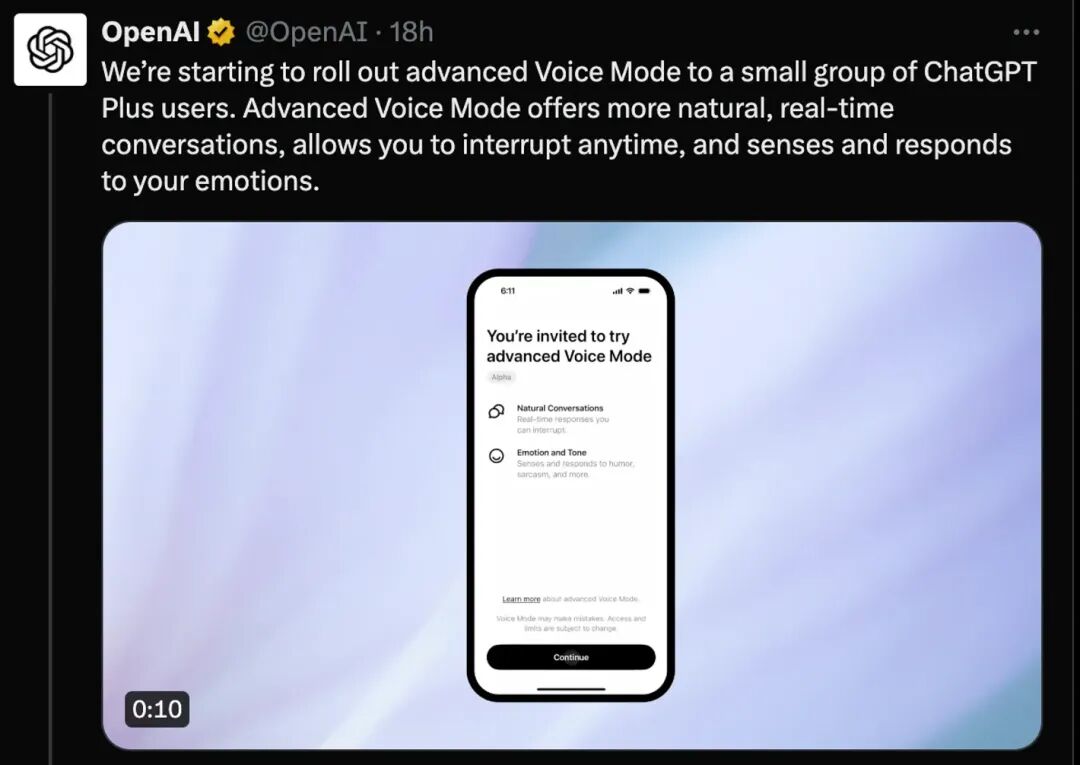
OpenAI has pushed an Alpha test build of GPT-4o's advanced voice mode to select Plus users. The feature allows users to interrupt conversations at any time, and the system can detect and respond to emotional shifts in the user's voice. Video and screen sharing capabilities will arrive later. OpenAI plans to open this feature to all Plus members this fall.
Overseas users have already started putting GPT-4o through its paces. It shows promise as a language tutor, seamlessly switching between multiple languages. Users have also tried having GPT-4o tell jokes, spin stories, and tackle tongue twisters. A handful even got to test real-time video understanding, reporting an experience close to chatting face-to-face with a well-read friend.
NVIDIA Showcases AI-Powered Humanoid Robots
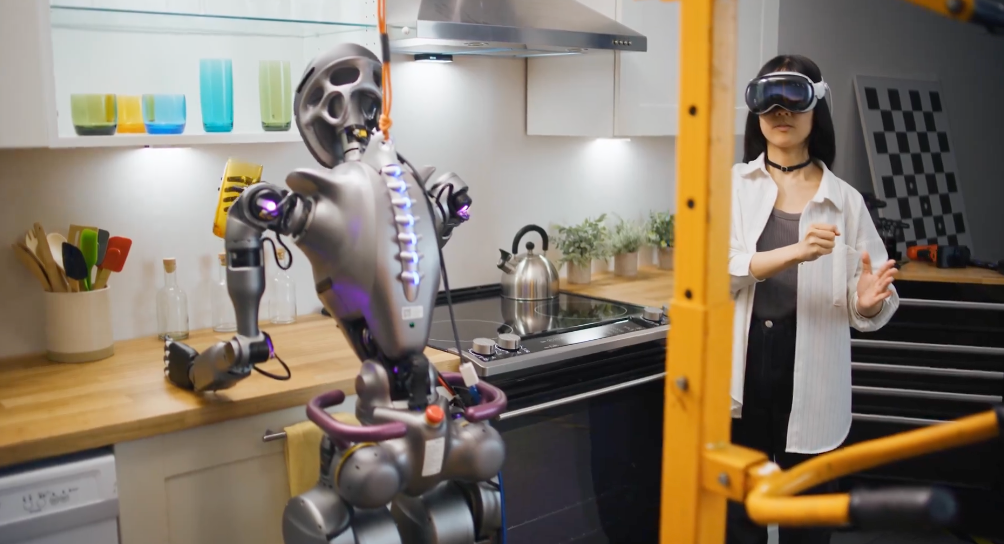
At SIGGRAPH 2024, NVIDIA demonstrated the latest progress on Project GR00T, its general-purpose foundation model for humanoid robots. The company integrated RoboCasa and MimicGen into its Omniverse platform and Isaac robotics development platform, streamlining the development workflow.
Most strikingly, developers can now use Apple Vision Pro to remotely control humanoid robots as they perform tasks. NVIDIA is using an innovative approach to scale robot data, using GPU-accelerated simulation to amplify small amounts of real-world data by a factor of a thousand. This breaks through the constraints of traditional data collection, accelerating humanoid robot development.
NVIDIA introduced new tools including NIM microservices and the OSMO orchestration service, dramatically shortening development cycles. The company also launched a humanoid robot developer program, giving more developers early access to these new technologies.
New AI Hardware: Friend
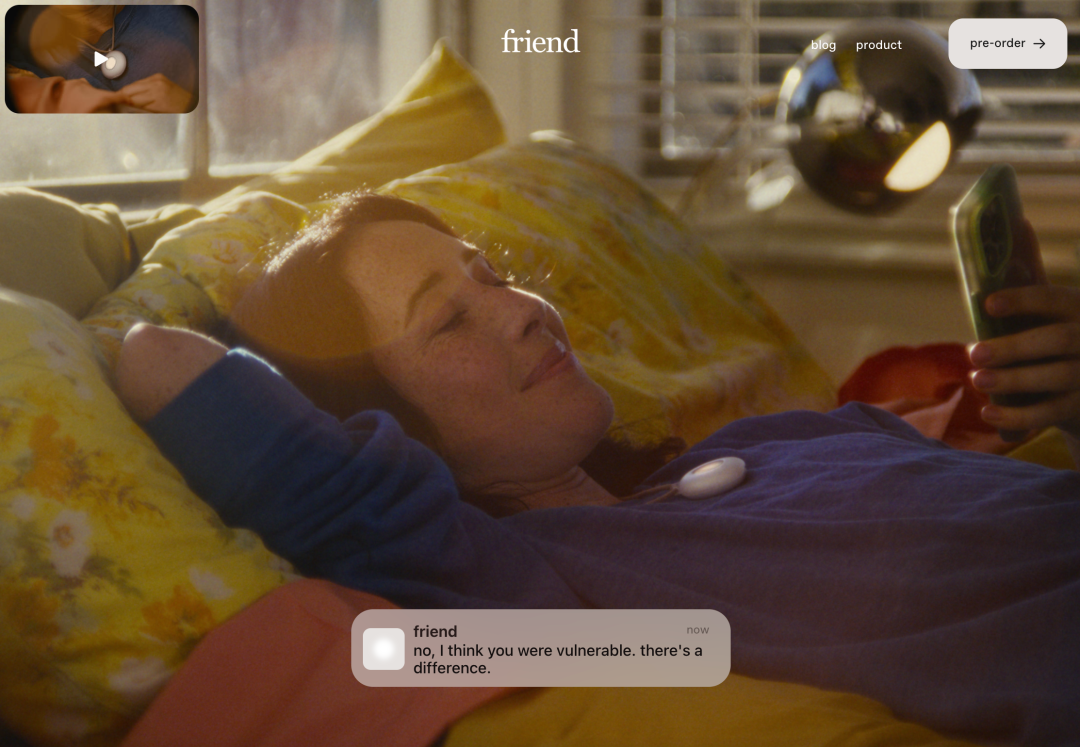
Harvard dropout Avi Schiffmann has launched Friend, a new AI hardware device — a circular pendant worn around the neck. The device centers on companionship, designed to help users combat loneliness. Friend continuously listens through a built-in microphone and responds via a mobile app. Powered by Claude 3.5, it can solve problems, offer encouragement, and carry on conversations.
Friend is available for pre-order now, with the base white pendant priced at $99 and shipping expected in January 2025. Schiffmann says persistent companionship will be one of AI's most important use cases. However, this always-on AI friend has raised concerns about privacy and mental health. Some experts worry that over-reliance on AI companionship could dampen people's willingness to build real human relationships.
Schiffmann has raised $2.5 million from investors, valuing the company at $50 million. He previously built the world's first COVID-19 case tracking website and developed a site to help Ukrainian refugees. Despite the challenges facing the Friend project, Schiffmann says he's prepared for the criticism.
Midjourney v6.1 Released
Midjourney's latest version, v6.1, has drawn significant attention since its release. This update upgrades multiple aspects, with the primary goal of improving image quality and realism.
Key improvements in v6.1 include: stronger image consistency, higher overall image quality, more precise detail handling, faster generation speed, and more accurate text comprehension. The new version performs especially well in portrait generation — many users find the output nearly indistinguishable from real photography.
The release also introduces a new personalization model and a -q2 mode, giving users more creative options.


'98-Born AI PhD Founding Waveform Intelligence
Yuchen Jiang, an AI PhD born in 1998, founded Waveform Intelligence and secured Pre-A funding. Her team was first to propose the concept of "infinite long-form text generation" and developed the AIWaves Agents architecture to address model hallucination. Recently, Waveform Intelligence introduced the Life-long Personalized AI (LPA) concept, aiming to develop AI systems that adapt to individual needs.
To realize LPA, the company developed the AI Persona framework. At its core is a Prompt & Agent module composed of six fields that comprehensively capture user characteristics. On the model training side, AI Persona offers methods based on LoRA and test-time alignment, pre-training a series of LoRA modules and preference models. It retrieves phrases to calculate weights and merge them, enabling personalized inference.
Waveform Intelligence built a specialized LLM inference engine to support complex personalization methods. The engine can associate different LoRAs with different inputs during batch inference, and allows different inputs within the same batch to use different combinations of preference models. The company has applied LPA technology to products like "Frog Writing," achieving a highly personalized creative process and building a private assistant that "gets to know you better the more you write."

JD Cloud Launches Eight AI Products
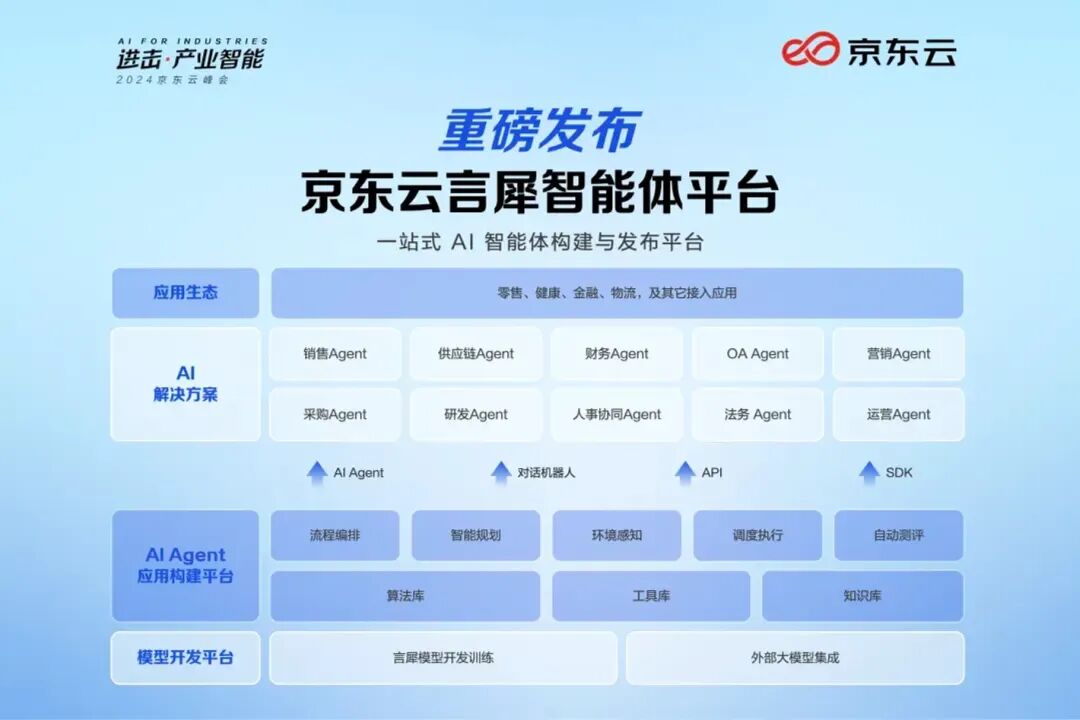
At its 2024 summit, JD Cloud unveiled eight major AI products, showcasing industry applications of its Yanxi large model. The lineup includes enterprise large model services, AI development computing platform 2.0, large model security and trustworthiness platform, Cloud Ship AI computing cloud, and distributed storage Cloud Sea 3.0. Enterprise large model services support one-stop creation of proprietary models, while AI development computing platform 2.0 provides over 20 open-source models and more than 100 algorithm toolchains.
The Yanxi Agent Platform and Yanxi Digital Human 3.0 were standout releases. The agent platform serves as a new-generation one-stop AI Agent development platform, already connected to dozens of large models and hosting over 3,300 active agents internally at JD. Yanxi Digital Human 3.0 supports 100+ personalized characters and 50+ industry-specific scenario attributes, introducing various innovative formats for livestreaming.
JoyCoder, an intelligent programming assistant, was another eye-catching product. This self-developed programming tool based on large model technology offers features like code prediction and completion, and comment-to-code generation. Currently, tens of thousands of developers across JD Retail, Logistics, and Health are using JoyCoder, which reportedly improves R&D efficiency by 30% with a code adoption rate exceeding 35%.

AI Robotics Company Astribot Raises Tens of Millions in Pre-A Round
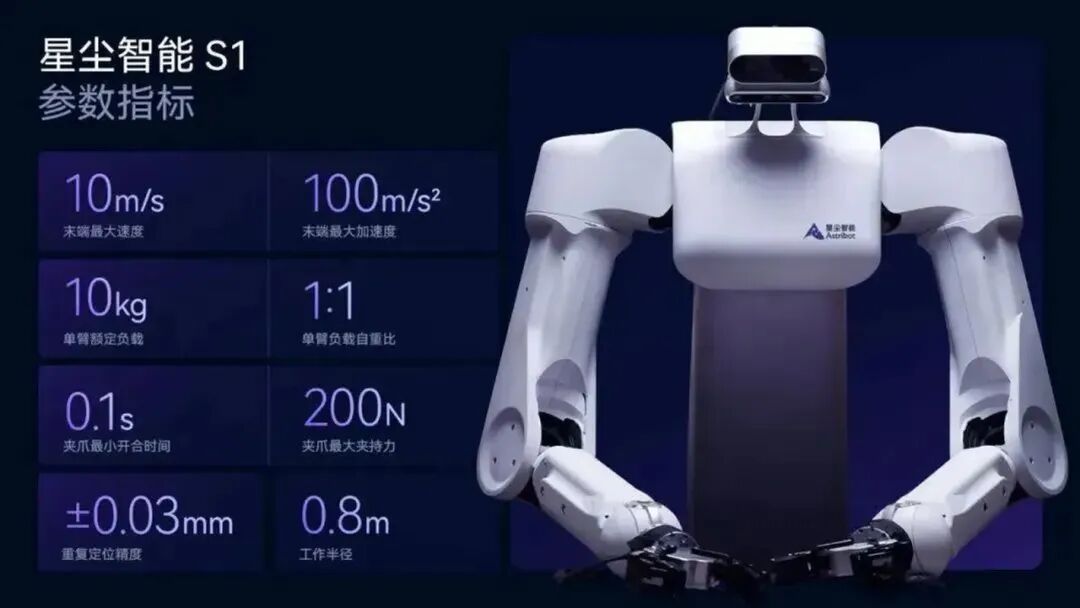
Astribot announced the completion of a Pre-A round raising tens of millions of dollars, led by Matrix Partners China with participation from Dalton Venture, Qinghui Investment, and others. Founded in December 2022, the company is dedicated to developing a new generation of AI robot assistants. This round will fund talent recruitment, R&D investment, and commercial deployment.
Astribot showcased its self-developed AI robot, Astribot S1, with versatile operational capabilities. S1 employs an AI-oriented hardware-software integrated system architecture, combining powerful AI capabilities with innovative robot hardware design. The company achieved breakthroughs in embodied intelligence data acquisition, enabling low-cost, efficient use of existing data. Through flexible-rigid coupling design and innovative algorithms, S1 delivers "the strongest operational performance" among comparable robots.
Astribot has already partnered with multiple industry leaders across scientific research, logistics and warehousing, and intelligent manufacturing. The company plans to release its first-generation product soon and achieve commercialization within 2024. It will continue iterating products and expanding application scenarios.
Bee AI Raises $7 Million
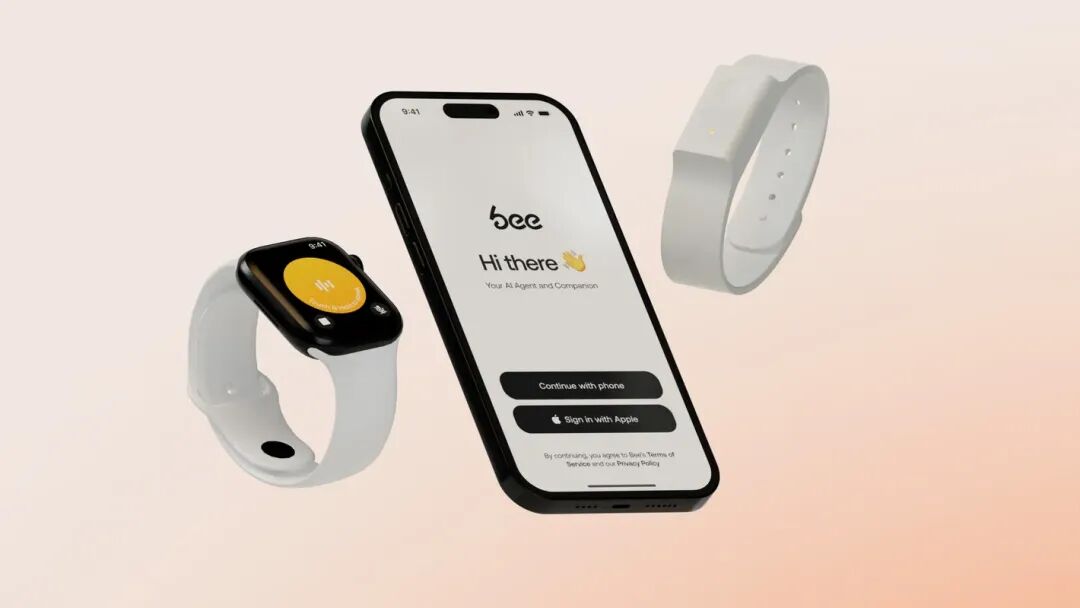
Bee AI has raised $7 million in a round led by Exor to develop a wearable AI assistant. The device listens to users, takes notes, displays reminders, and builds lists. The company also launched a companion Apple Watch app. Greycroft, New Wave VC, Banana Capital, and other investors joined the round.
Bee AI's core focus is the software powering the assistant, but the company developed a wearable device to avoid constantly commandeering users' phone microphones. The company has ambitious plans, hoping to give every consumer a "cloud phone" with access to their accounts and notifications. Early test features include reading notifications, fetching important information, and drafting emails.
The product is currently in testing, and the company plans to stop using non-consensual recordings before official launch. Bee AI claims it doesn't store recordings, using only transcripts to learn about users. The device costs $49 with a $19 monthly subscription, targeting order acceptance by Black Friday.

MIT AI Model Predicts Breast Cancer 5 Years Early
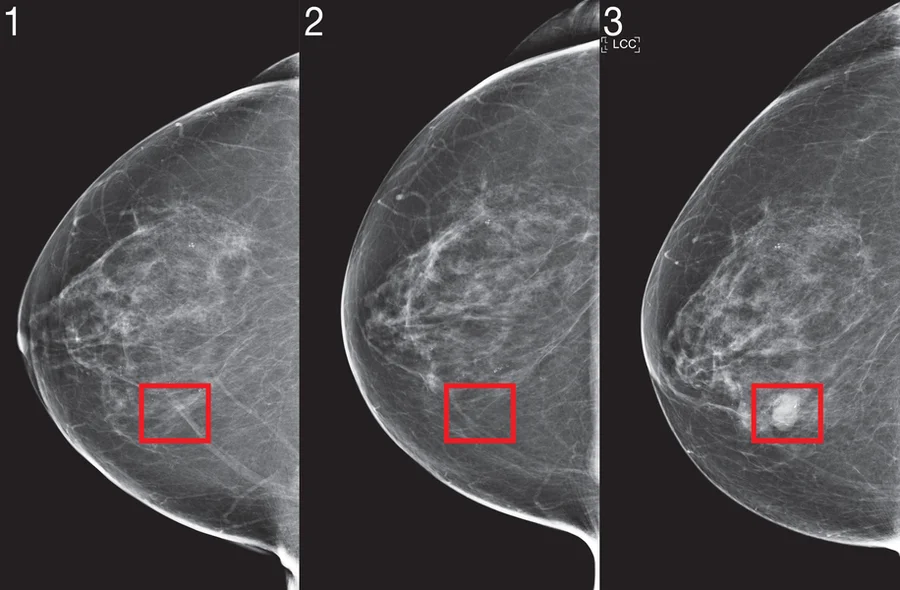
MIT's Computer Science and Artificial Intelligence Laboratory and the Jameel Clinic have jointly developed Mirai, a deep learning model for breast cancer risk prediction. The model can predict breast cancer risk 1-5 years into the future and has demonstrated strong performance across multiple datasets.
Mirai addresses limitations of existing risk assessment models, including insufficient accuracy, underutilization of imaging information, and disparities across race and equipment types. It can handle missing risk factor information and ensures consistent risk assessment across different mammography devices through conditional adversarial training.
On multiple test sets, Mirai significantly outperformed existing models. For example, in identifying high-risk patients within 5 years, Mirai's sensitivity far exceeded that of the Tyrer-Cuzick model. Moreover, Mirai performed consistently across different racial groups, age brackets, and breast density categories, demonstrating broad applicability. Future research will further validate Mirai's effectiveness in actual clinical settings and explore ways to further improve its predictive accuracy.

Be like a cat — please only yourself, ignore others, and life might just become more wonderful.
— Haruki Murakami



Editorial Team
Editor: Ziwen
Design: Ivan
For business inquiries, contact on WeChat: Rwkfbcianvd
References
[1] Astribot: https://www.astribot.com/