The AI Voice Recorder Card Wars: Big Tech Sees Organizations, Plaud Sees "Super Individuals"

Plaud's "race against the tech giants" in China is far from over.
Plaud's "race story" against China's tech giants is still unfolding.

👦🏻 Author: Jingshan
🥷 Editor: Koji
🧑🎨 Layout: NCon

Over the past six months, a category that had been quietly dormant suddenly got noisy.
DingTalk launched its AI recording hardware A1. Lark partnered with Anker to release a recording pod. And Huaqiangbei in Shenzhen was flooded with a wave of white-label recording cards that all looked more or less the same.
Most people trace all this back to a single starting point: Plaud, the company that defined the AI recording category, announced its entry into the China market on September 22, 2025.
A recording device — historically a marginal player in consumer electronics — had suddenly become a hotly contested battleground for both tech giants and startups.
Why? One angle into answering this: who are tools actually built for? What do users really need?
DingTalk and Lark have their answer. Plaud has another. Two paths pointing toward two completely different futures.
🚥
What follows is our comprehensive take on this "siege" of AI recording hardware.
AI woke up a sleeping category
The voice recorder has been around for decades, always a peripheral product.
If you trace its lineage, Sony's Microcassette Recorder might stand as a representative. From cassette to digital, the category marched through decades with stubbornly narrow use cases.
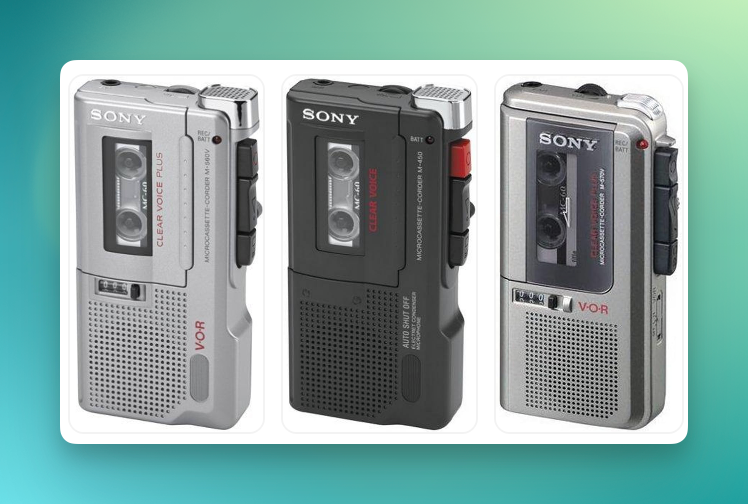
Journalists used them. Lawyers occasionally. White-collar workers sometimes for meetings. Students might bust one out for finals. Beyond that, most people who bought a voice recorder used it a handful of times before it gathered dust in some drawer.
The reason is simple: recording without organizing is as good as not recording at all.
A one-hour meeting produces a one-hour audio file. Few people ever listen to the whole thing again. Even at 2x speed, the time cost is "non-compounding." You spend an hour in the meeting, then spend the same or more time afterward sorting and reviewing. It's bizarre.
So the voice recorder category has long been stuck in an awkward position: the capture capability was there, but the entire downstream chain of "turning information into something usable" was essentially broken.
AI fixed that chain.
At the end of 2021, Plaud's founding team identified a clear need: vast amounts of information from meetings, interviews, and phone calls were being recorded but never effectively utilized.
They proposed a direction: from audio capture, to data structuring, to ultimately building a personalized knowledge base for each user.
Two years later they shipped a product that became the earliest defining offering in AI recording hardware. That product was the Plaud Note.
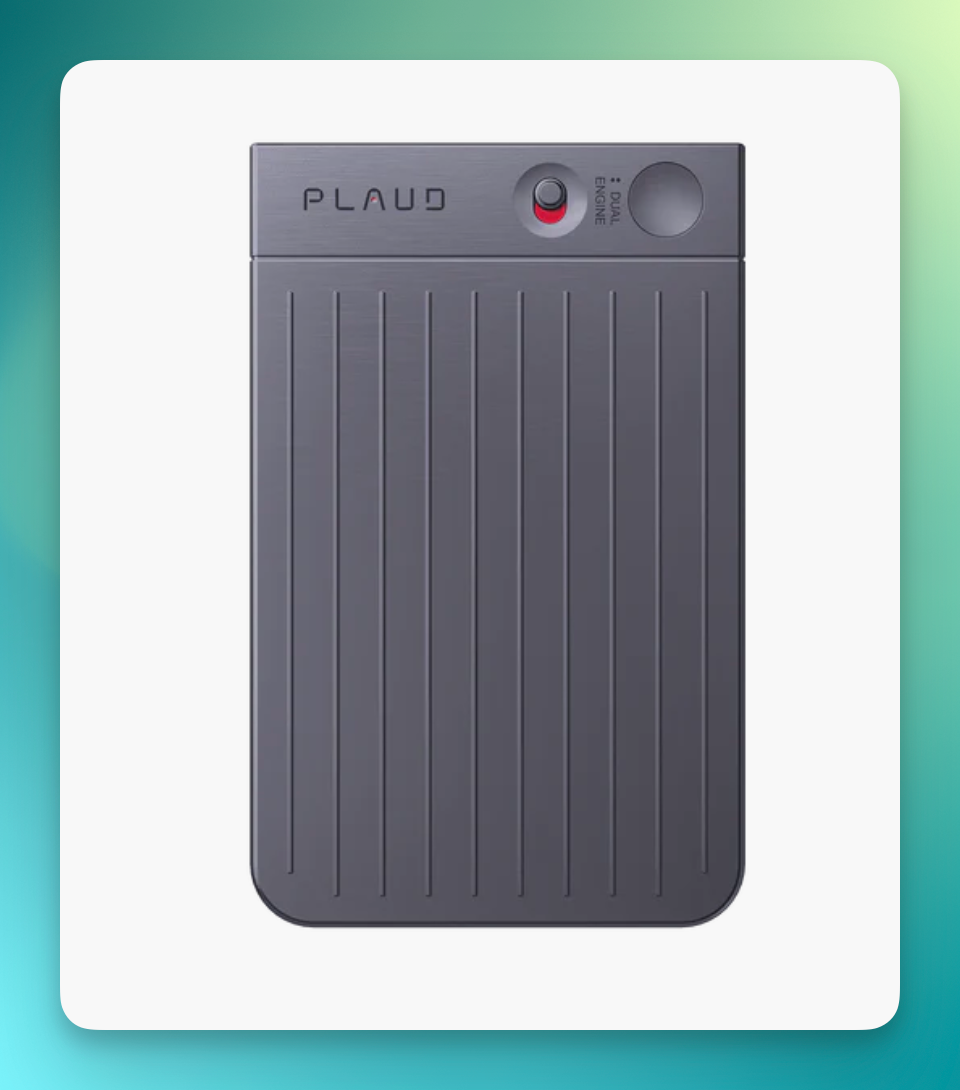
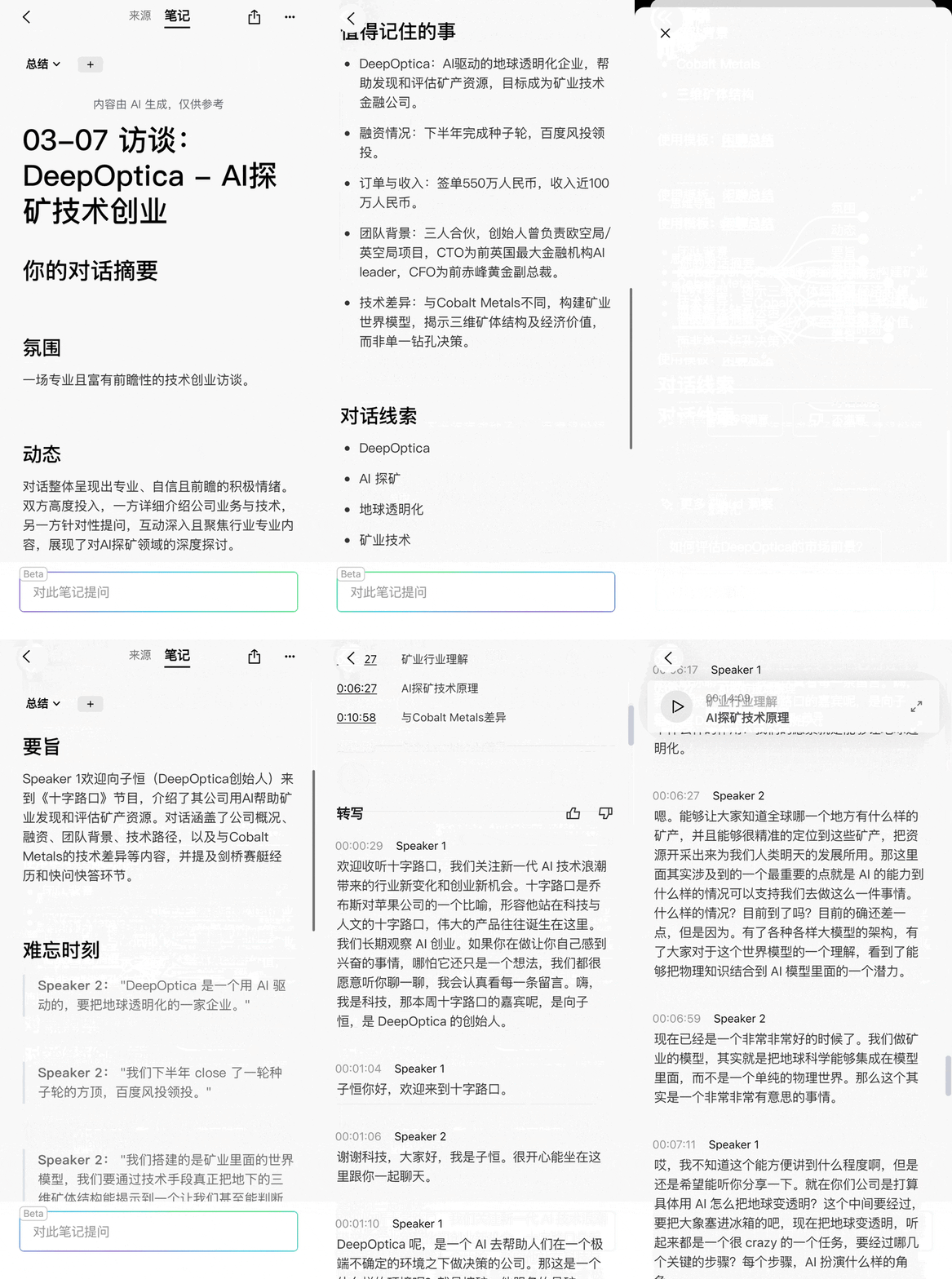
Record, then transcribe. Transcribe, then summarize. Summarize, then archive. A meeting ends, and within three minutes you have a cleanly structured summary — key points highlighted, action items extracted, even broken down by speaker.
This is a qualitative leap in experience. What used to take an intern two hours, AI now does in three minutes, with near-zero omissions and far fewer mangled names.
But AI's impact runs deeper than "making recording more useful." The more fundamental shift: recording devices are transforming from "capture tools" into "data entry points."
Today, people leave ever-growing behavioral trails online — every like, every search query, every message sent. These get recorded, organized, and leveraged in the digital world.
Yet the words a person speaks face-to-face each day, the calls with clients, the brainstorming with teams, the discussions with partners — this volume likely exceeds typed text by an order of magnitude, yet almost none of it is preserved, and it's hard to preserve.
These conversations contain massive amounts of information and thinking. Capturing, extracting, and applying this information became Plaud's founding purpose.
Offline, real-world dialogue represents one of the largest persistent data blind spots, especially for "high-value users" (high decision leverage, high knowledge density, high dialogue dependence). This "offline data" matters enormously to them. As the original "definer" of this category, Plaud bet on this logic from day one.
Meanwhile, the giants smelled the opportunity. AI capabilities had matured, hardware costs were falling, and the digital entry point for offline information was sitting there unclaimed. Whoever seized it first gained another channel for building deep user relationships.
Once AI capabilities matured, offline information as an entry point acquired commercial value.
So DingTalk moved. Lark moved. And more players keep entering the arena.
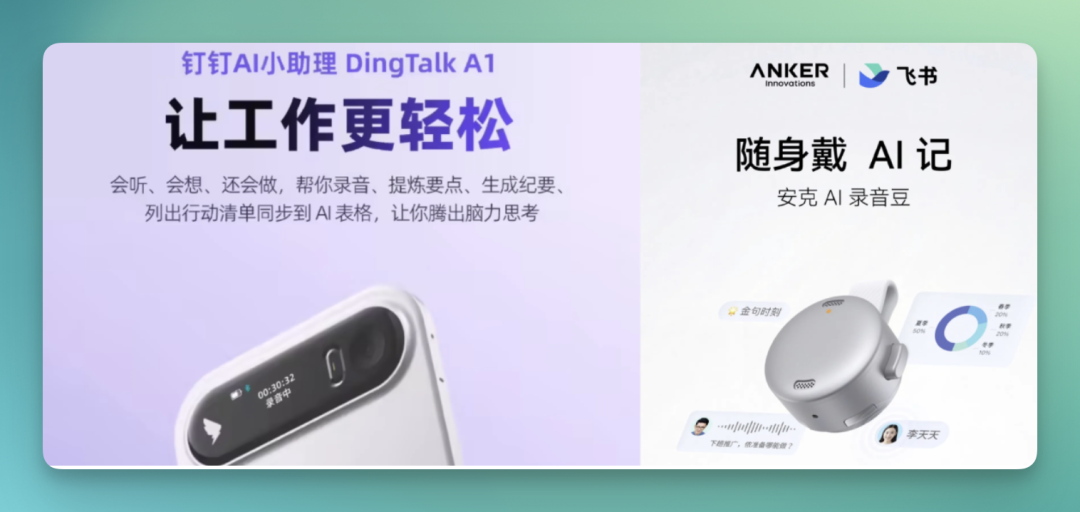
But here's the thing: while everyone's piled into the same track, their approaches and intentions differ radically. What's the logic behind that?
Same track, two completely different underlying logics
If you only watched the product launches, you might think DingTalk and Lark are doing the same thing as Plaud. All small cards, all record, all do AI summaries.
Look closer, and the starting points diverge completely.
DingTalk is fundamentally an enterprise collaboration platform, running massive volumes of meetings, approvals, daily reports, and project management for working professionals. Lark is the same — a collaboration system born inside ByteDance, carrying "organizational efficiency" in its DNA.
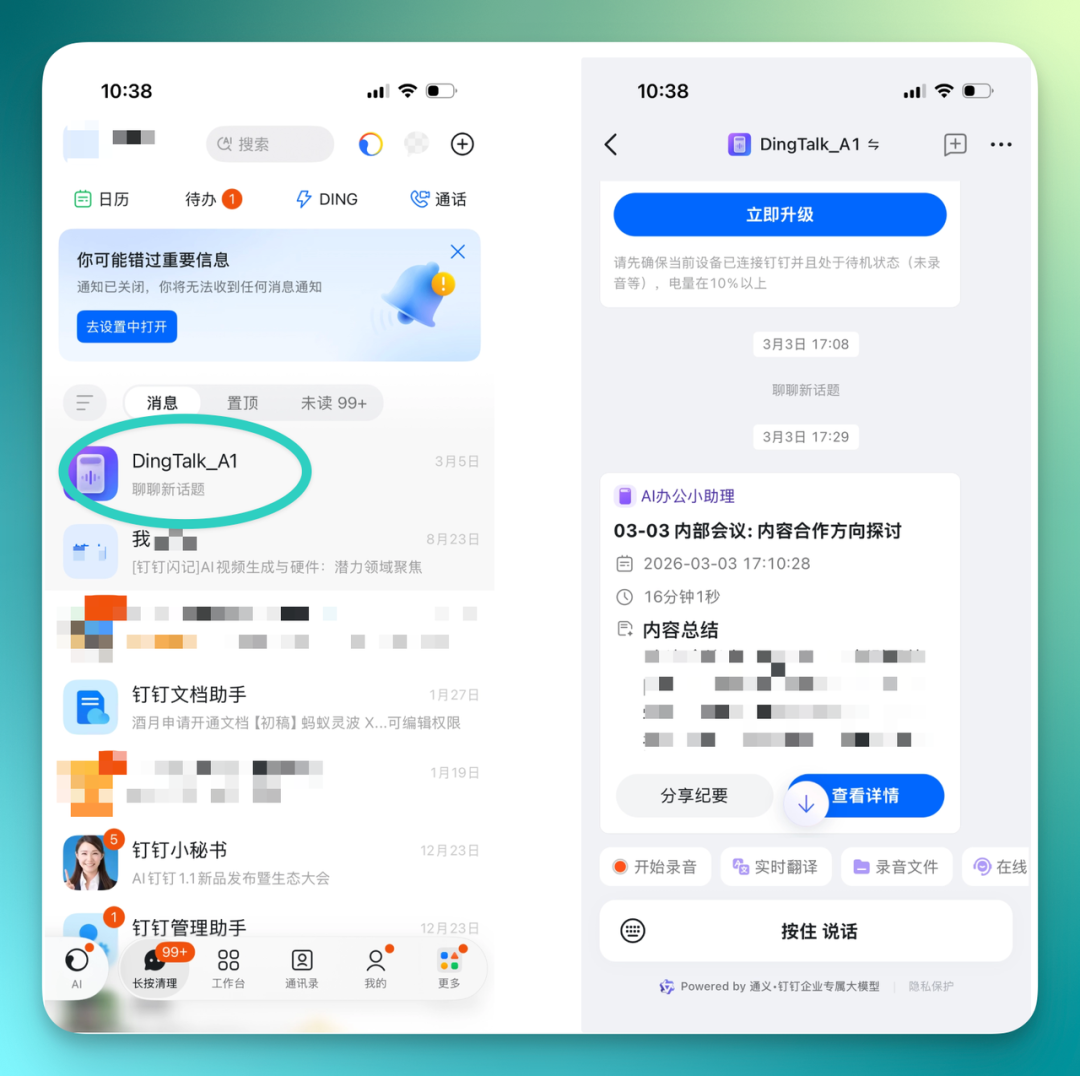
Their recording hardware logic is straightforward: with countless meetings happening on their platforms daily, a hardware device that captures this information more completely and moves it more smoothly through the workflow fills in a missing piece of the collaboration puzzle.
So you see DingTalk's A1 integrated with its meeting system, and Anker's Lark-branded recording pod plugging directly into Lark's minutes infrastructure.
Recorded content auto-archives into the corresponding meeting records, visible to all attendees, with action items auto-distributed, all documents extending into more "big-company scenarios."
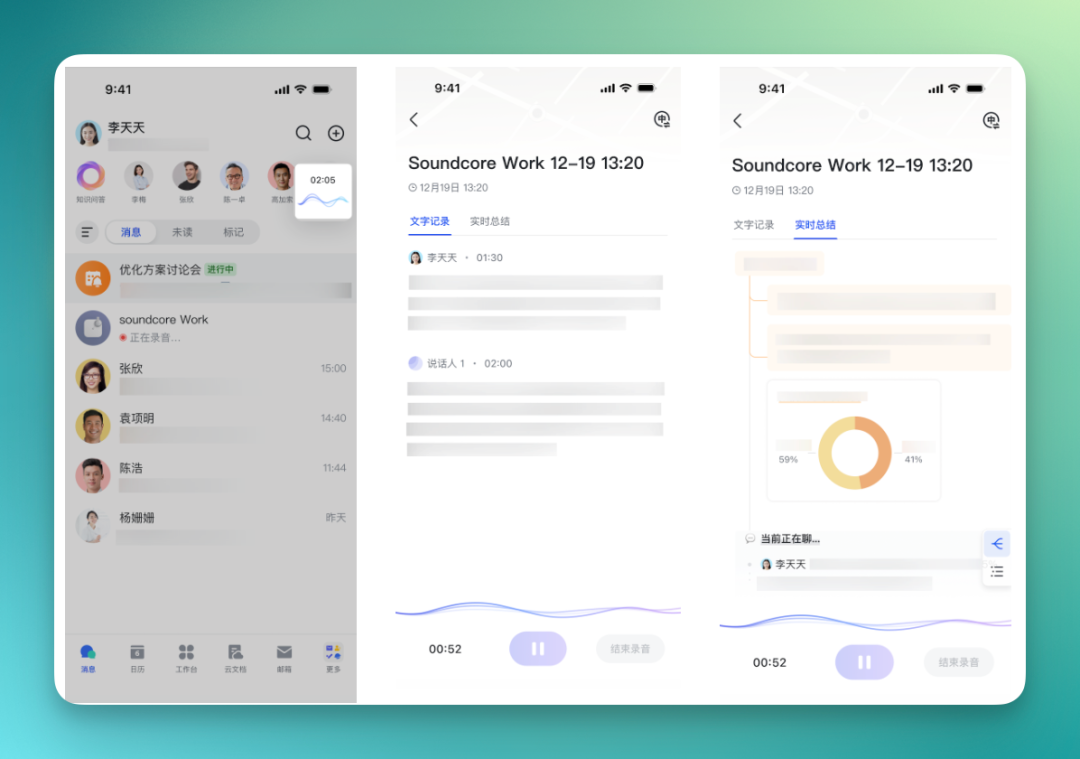
Who uses the device? Every employee in the organization. Use cases cluster tightly: meetings, compliance documentation.
This playbook is clear: use hardware to reinforce an existing meeting ecosystem, use recording data to make internal information flow more complete. At its core, this is a "making management more efficient" story.
Plaud, from the very beginning, took the other road.
It never planned to plug into anyone's ecosystem. Because its target was explicit: individuals first.
More specifically, people whose work depends heavily on dialogue.
As we described, "high-value users" (high decision leverage, high knowledge density, high dialogue dependence) are the archetypal group. They share one defining trait: their work is fundamentally "accomplishing complex tasks through conversation."
The first characteristic: high decision leverage.
Many jobs are execution-oriented — filling forms, processing orders, completing workflows. "High-value users" are different. Their core work is making continuous judgments, and these judgments carry significant consequences — like a founder deciding product direction.
The second: extremely high knowledge density.
Doctors, investors, consultants — their conversations contain extraordinarily rich information, yet it typically vanishes after the talk, rarely systematically organized and preserved.
The third: work happens through exchange.
In many industries, knowledge acquisition isn't through documents, it's through human interaction. The classic example: salespeople understanding client needs through dialogue.
For these "high-value users," what they actually need isn't just a simple recording tool.
What matters most is an assistant that can transform high-density dialogue into structured content, that can integrate and compound this "offline data."
This is because their use cases extend far beyond the "meeting" box. They discuss business in cafés, take calls in taxis, conduct patient consultations in exam rooms, coordinate with clients outside courtrooms. These scenarios share one trait: pulling out a phone is awkward, but the information density is extremely high.
A standalone, always-carry recording device proves far more reliable than phone recording in these moments — no interrupted calls, no accidental app-switching that stops recording, no distracted fumbling while trying to talk.
And Plaud deliberately maintains platform neutrality. It binds to no single ecosystem.
This is particularly appealing in overseas markets. An American professional might use Slack for communication, Google Docs for documents, Salesforce for clients, Notion for knowledge bases, Zoom for meetings.
Asking someone to lock all their data to one platform is harder than it sounds.
So looking back, DingTalk, Lark, and Plaud operate on completely different underlying logics.
One binds to organizational systems. While the big companies' AI recording hardware can export content to other social or productivity tools, once that information leaves the home ecosystem, it likely doesn't work as smoothly. Data structures, permissions, collaboration — everything is designed around that ecosystem. Switch companies, and you probably switch tools.
One binds to individual work styles. All of a Plaud user's data accumulates into a personal knowledge base; as long as you keep using the product, without your explicit authorization or deletion, the data stays in your private cloud.
In sum: one path is "making individuals in organizations more efficient, and organizations more coordinated." The other is "helping individuals think deeper."
Neither is inherently superior.
They represent two different bets on the future of AI tools, serving two entirely different populations. But interestingly, if you zoom out, some larger shifts are happening precisely in the direction Plaud has bet on.
The times are changing, and the niche Plaud is targeting is changing too
Looking back at the last twenty years of productivity tools, one clear thread runs through: tools served organizations.
ERP managed supply chains. OA managed approval workflows. CRM managed client relationships. Various SaaS tools managed projects, HR, finance. The buyer was the enterprise, the user was the employee, and the entire design logic orbited one question: "How do we make a group of people within an organization collaborate better, with better chemistry?"
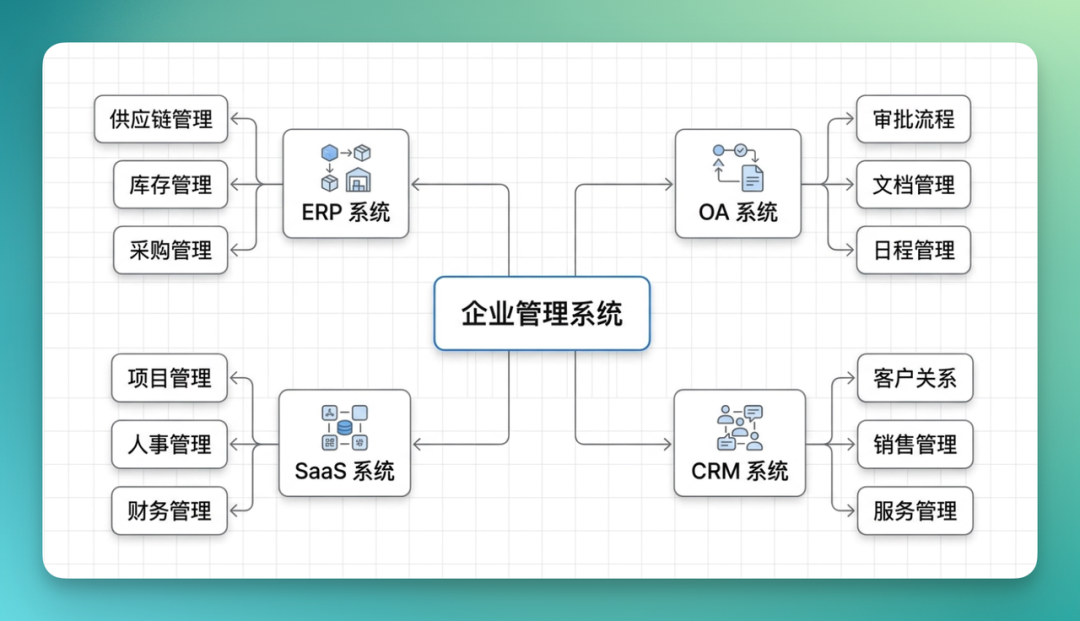
This logic succeeded spectacularly over the past two decades. Salesforce sits at over $200 billion in market cap. Slack sold for nearly $30 billion. Lark and DingTalk each cover over 100 million working professionals. An entire massive industry grew up around "organizational efficiency."
But AI is changing this logic.
The shift is already underway. An investor runs industry data through Deep Research herself, produces a preliminary research report, uses something like OpenClaw as a remote, capable intern.
A content creator combines various Skills into an integrated workflow for topic selection, material organization, and first-draft framing.
When one person with AI assistance can independently accomplish what once required a small team, the tool morphology they need changes.
They need a work system that orbits around them. That understands their work habits, preserves their personal knowledge and experience, follows them across projects and scenarios. The system their organization provides solves "how does this team coordinate" — it doesn't solve "how do I personally get stronger."
In the China market, AI has catalyzed an increasingly common professional form: the super-individual. In January 2025, the Crossing team spoke with Jiang Dora about "when more and more people want to become super-individuals," forecasting this trend.

One person can simultaneously take consulting projects, produce content, manage their own investment portfolio — identities flexibly switching between projects. The individual is an organization. One person serving as CEO, execution team, and knowledge base.
This population has exploded over the past two years. Freelancers, solo founders, knowledge creators — you see more and more of them on every social platform.
And they differ significantly from traditional office workers: for many, names like DingTalk and Lark trigger associations with clocking in, scheduling, weekly reports, OKR alignment — an entire aura of "being managed." For an independent worker, opening these tools brings a wave of "efficiency optimization" vibes.
But what they want may be the opposite. They want to set their own pace, gradually accumulate capability, gradually build knowledge, not be pushed by any system.
In this context, Plaud's core problem to solve shifts to: when a person's work depends heavily on dialogue, how does that dialogue continuously convert into personal knowledge growth?
In other words, the role it aims to play is essentially an AI chief of staff.
These "high-value users" engage in massive volumes of high-density exchange daily: client needs, professional judgments, business intelligence, industry observations, spontaneous ideas... Much of this is extraordinarily valuable information existing only in conversation, yet in the vast majority of cases, it's used once in the moment and then vanishes.
Without a system to record, organize, and understand this information, a person's experience accumulation is remarkably inefficient.
So a tool designed only for "within an organization" isn't sufficient for this degree of support.
At this point, Plaud's role is no longer simple software. It's more like: an AI chief of staff always at your side.
If this logic works, it binds to your entire way of working. The longer you use it, the more it understands your thinking habits and information preferences, the harder it is to leave. The switching cost far exceeds changing an app.
Of course, drawing a hard line — Plaud only does personal scenarios, giants only do meetings — is too absolute.
In reality, the two directions overlap. Meetings are part of personal workflows; a consultant's three daily meetings ultimately need to feed into her own knowledge system.
The difference lies in starting point:
The giants extend outward from "meetings," with product logic orbiting how to make this meeting more efficient, documentation more complete, task distribution clearer. Plaud extends outward from "the individual" — meetings are just one of many information-capture scenarios, alongside interviews, calls, face-to-face chats, all flowing into the same personal knowledge base.
And Plaud is actively filling in its meeting gap too. This February, Plaud launched its desktop product in China, capable of directly capturing audio from online meetings like Tencent Meeting and Zoom.
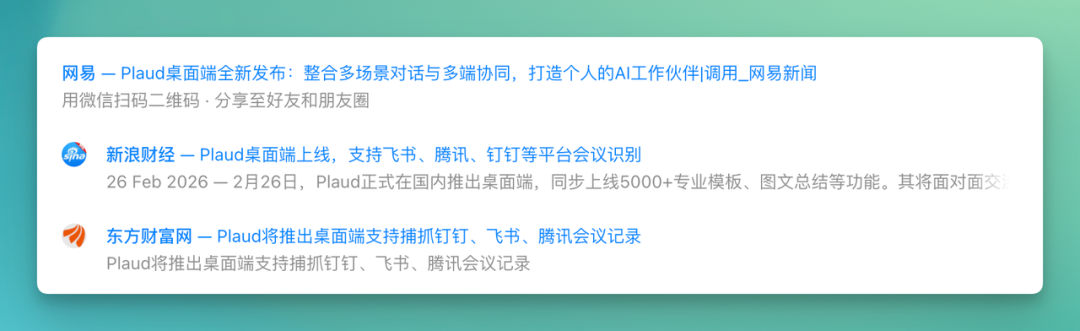
This feature means Plaud's capture capability is no longer limited to offline, face-to-face dialogue. Online meeting data can now flow in too, merging with offline recordings into the same processing system.
Meanwhile, over the past two years, responding to various competitive pressures and user needs, Plaud has made numerous moves, resulting in multiple product lines:
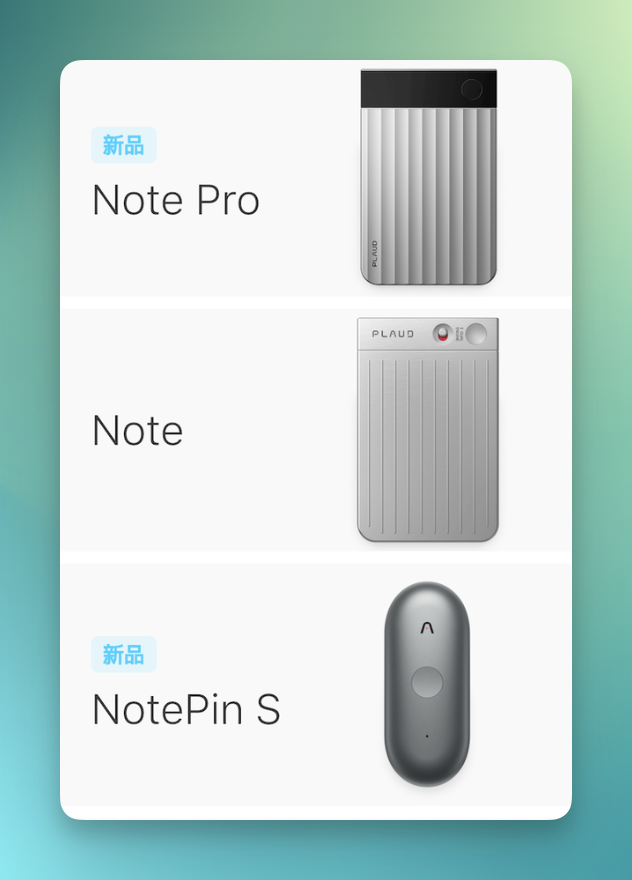
Looking back, Plaud's vision has evolved through several iterations over the past two years.
Initially an "AI recording company," then becoming an "AI service company." Now, founder Gao Xu says: Plaud will become "building the next-generation intelligent infrastructure and interaction interface."
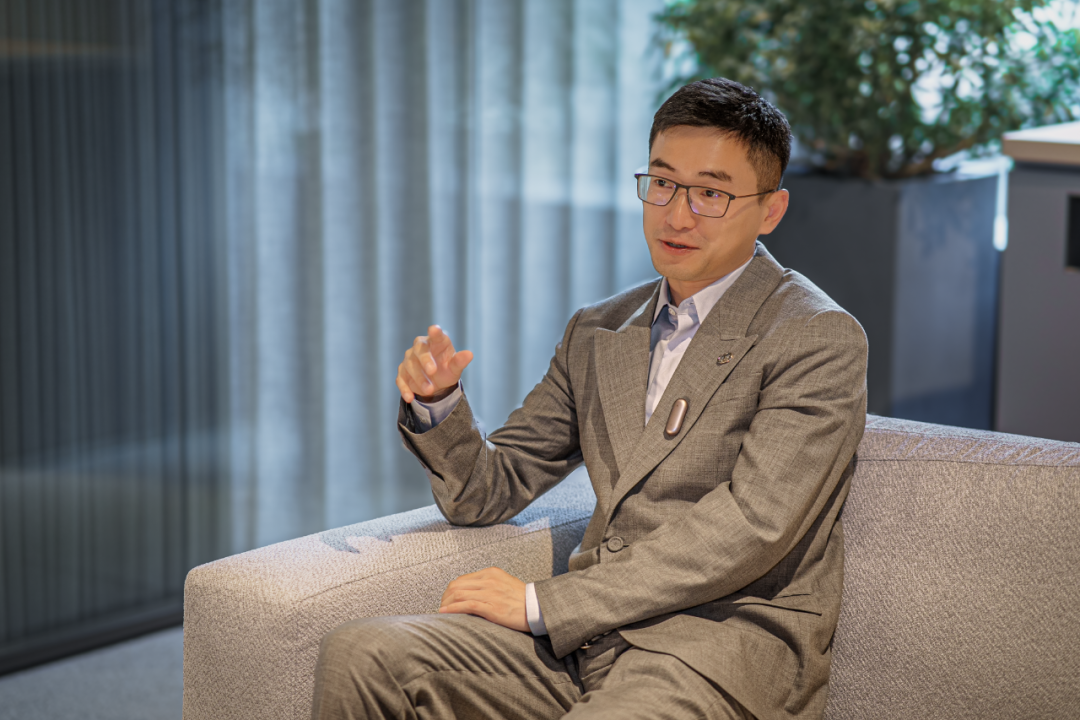
This vision is expanding fast, but there's reasoning behind it.
When 1.5 million professionals across fields worldwide use your product, what you can do extends far beyond "recording." Recording is just the first step of capture; extraction, organization, distribution, reuse — each downstream step holds massive room for expansion.
Where this battle will be decided
A growing consensus in AI recording hardware: hardware barriers are falling, and what really creates distance is backend AI service capability.
A recording card's capability may be just an entry point — an entry point for "offline data." Its value relative to the downstream chain is comparatively low.
What users will pay for continuously is the AI capability behind it that transforms recordings into usable knowledge.
Put simply: AI integration capability = user experience.
Take Plaud. It supports "multimodal input" — users can manually add photos and text during recording, click to "mark" or "tag" on the hardware device, and Plaud will prioritize analyzing that segment during summarization. Every step is designed to give the AI more context:
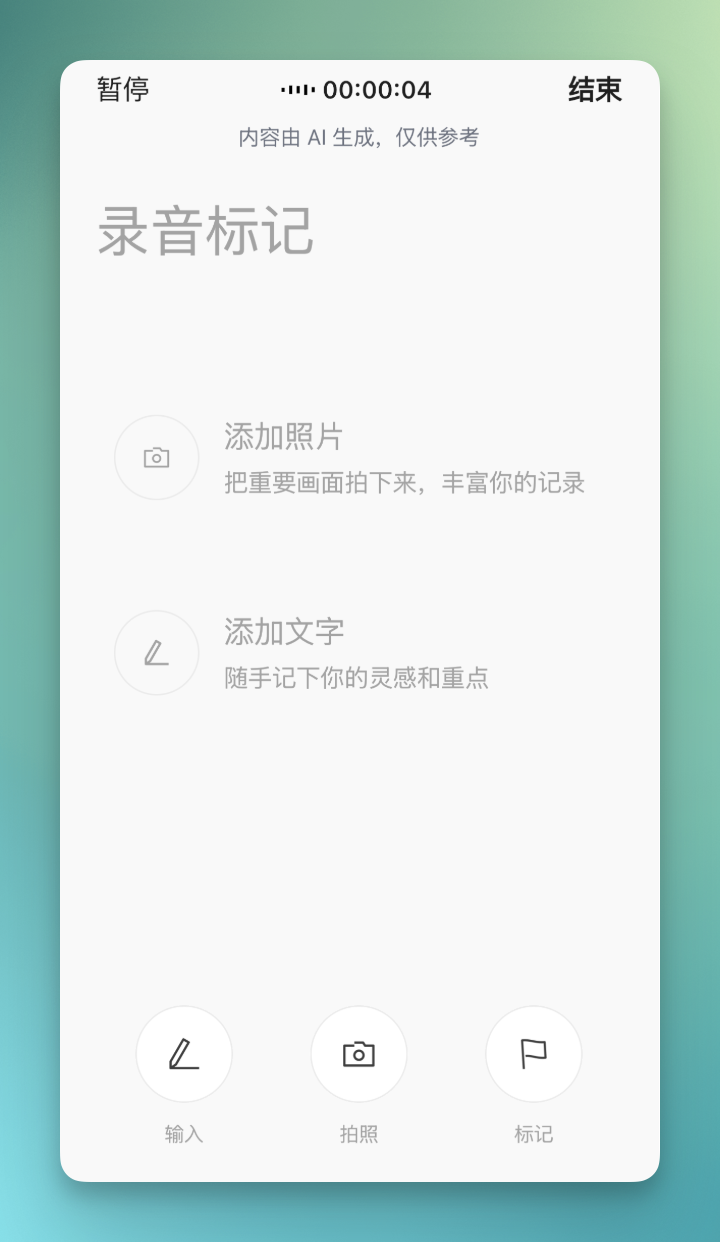
We used Plaud to revisit Koji's recent "OpenClaw 20 Questions" episode — images, text, and tagged content all integrated into the analysis:
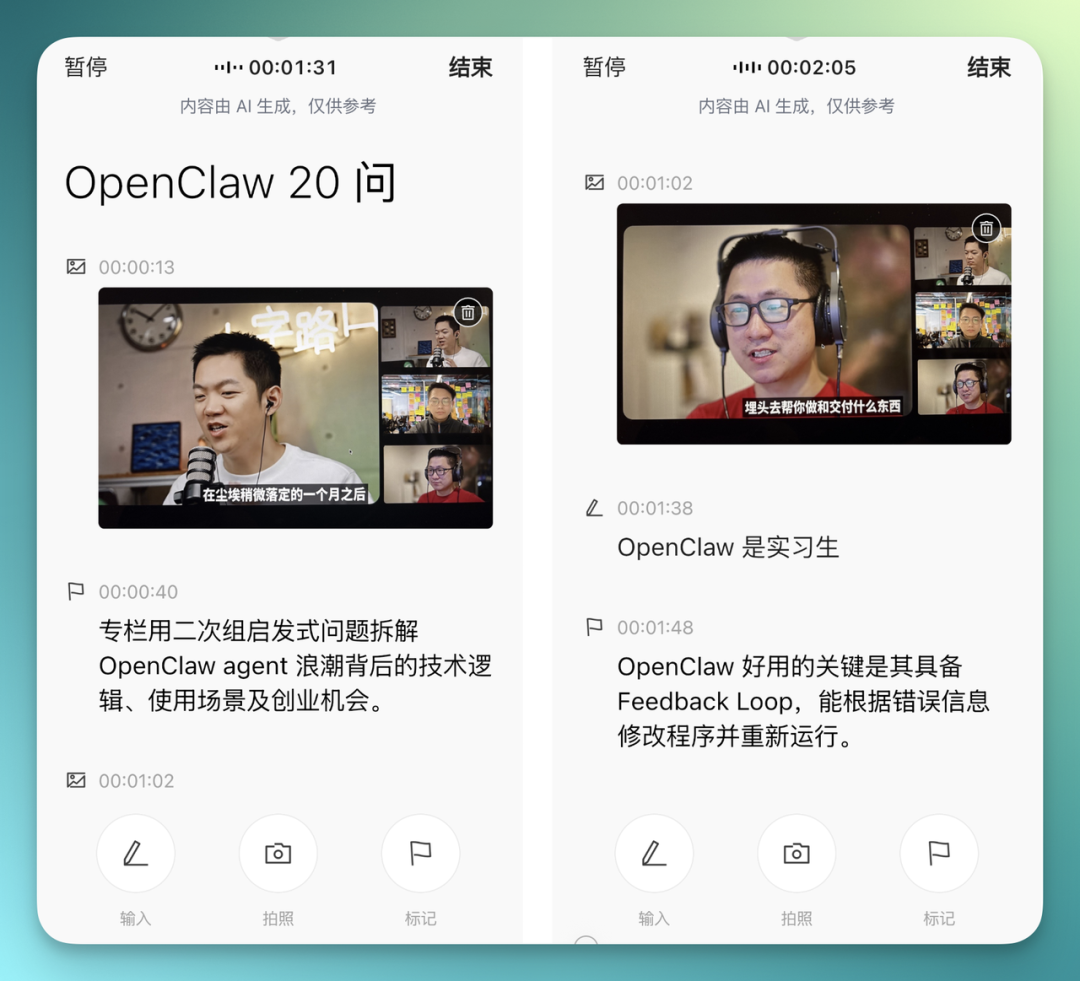
This enables more comprehensive, deeper, more personally aligned summaries and analysis downstream.
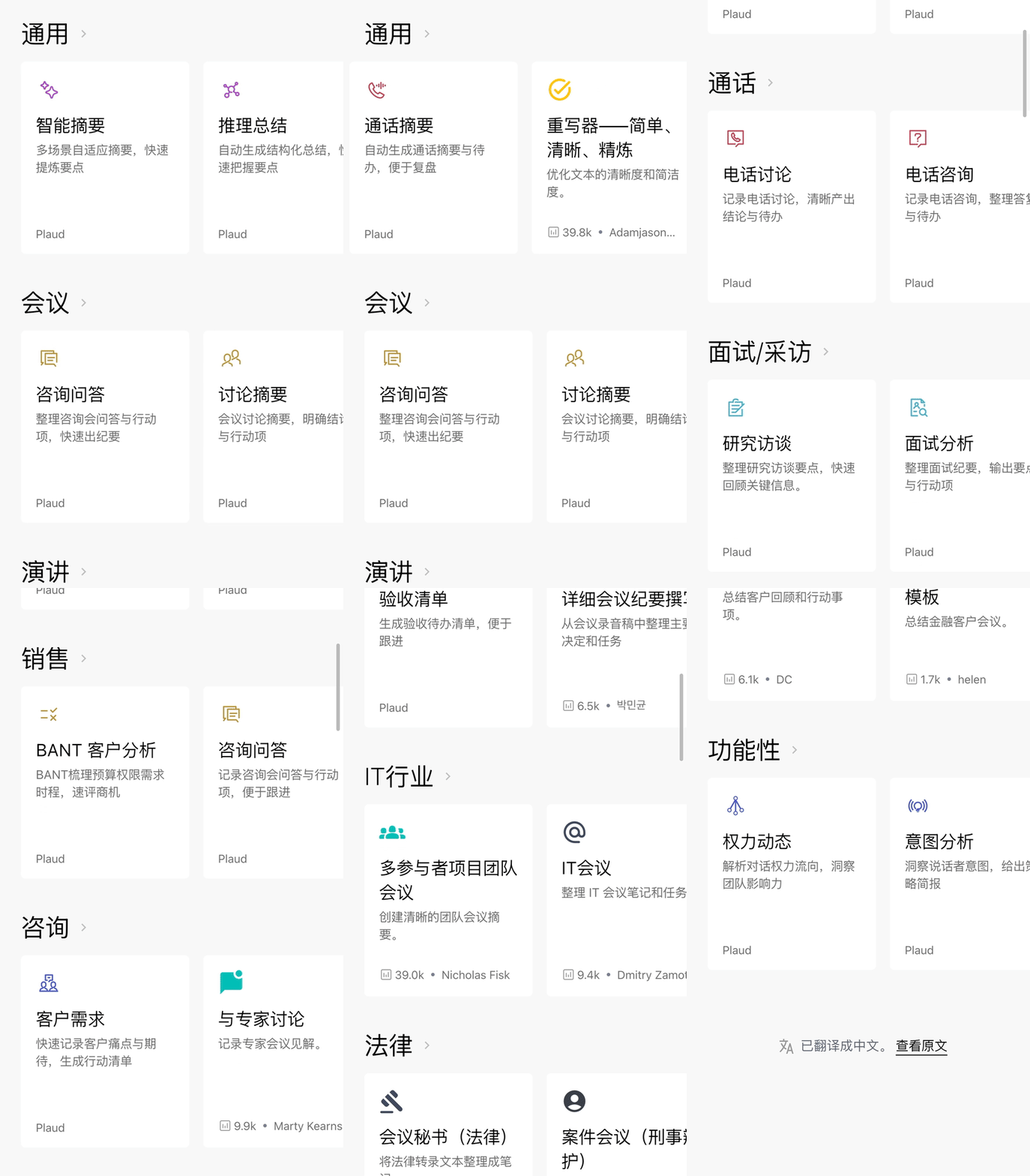
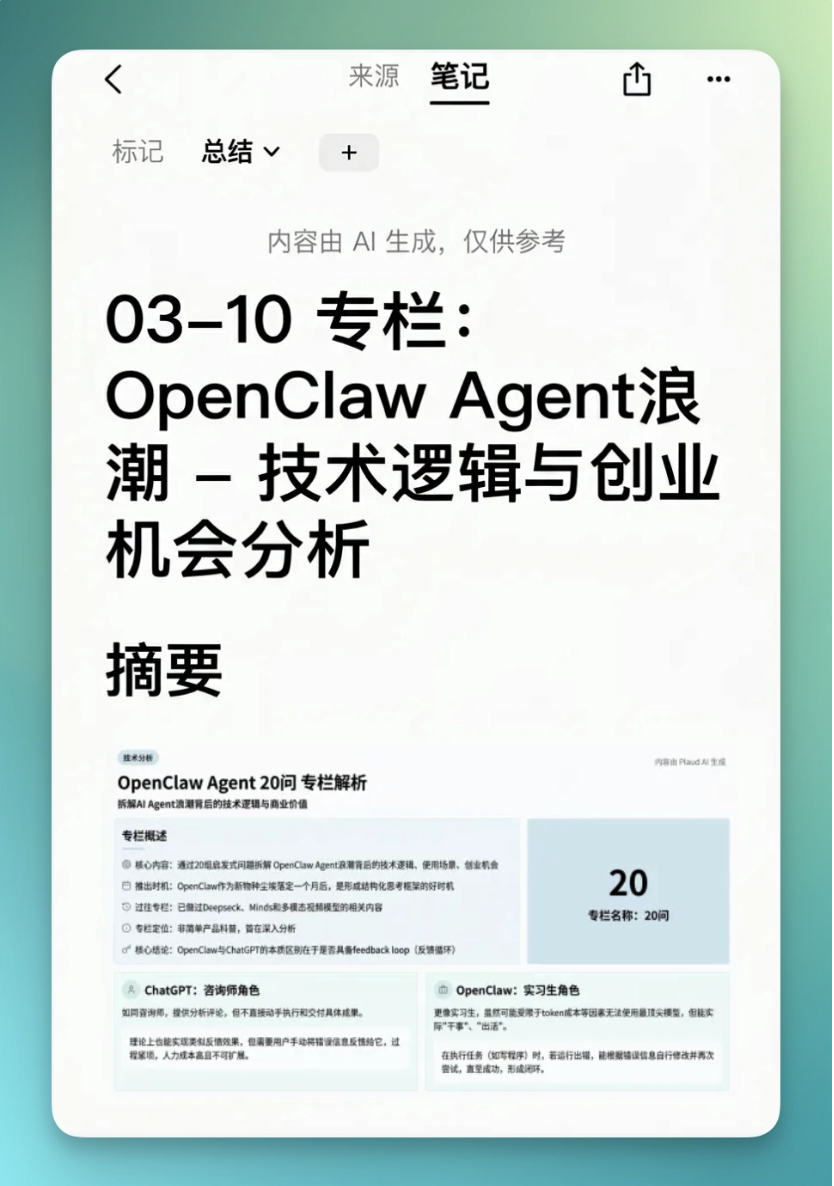
Another major Plaud product feature: deep integration of "templates" — roughly 8,000+ in total, each mapping to a vertical scenario. This multidimensional summarization better supports Plaud's understanding of diverse dialogue contexts. For example, this "reasoning summary" template automatically generates structured summary content:
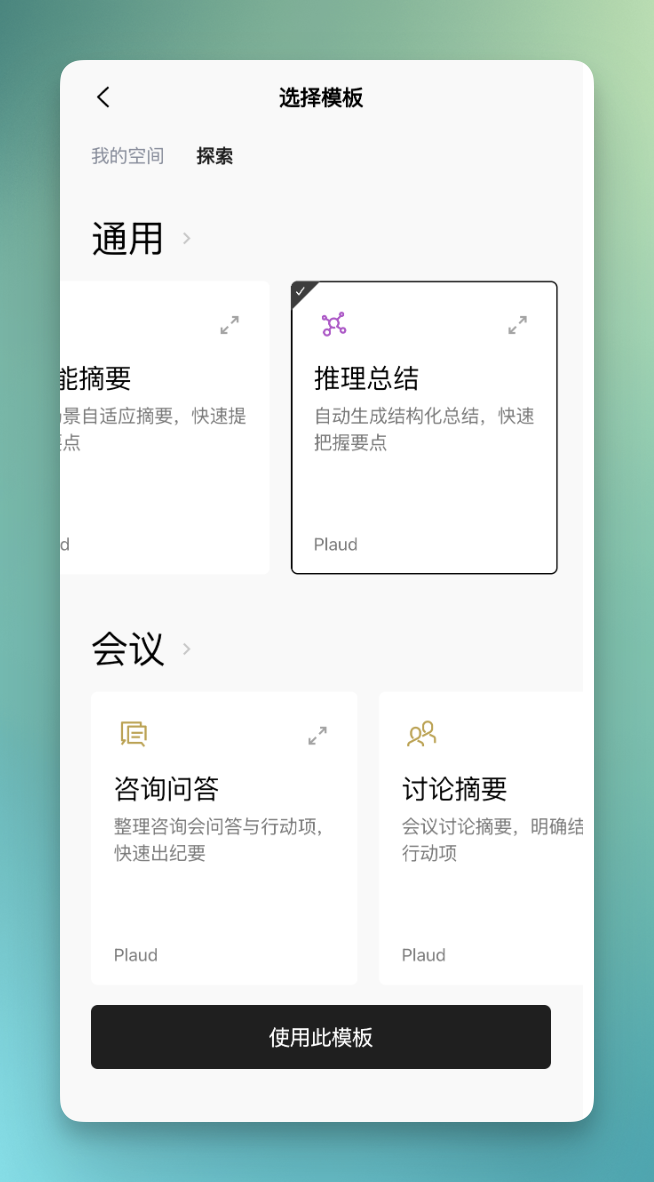
Under the "reasoning summary" template, beyond basic transcription and tags, it produces a detailed visual summary:
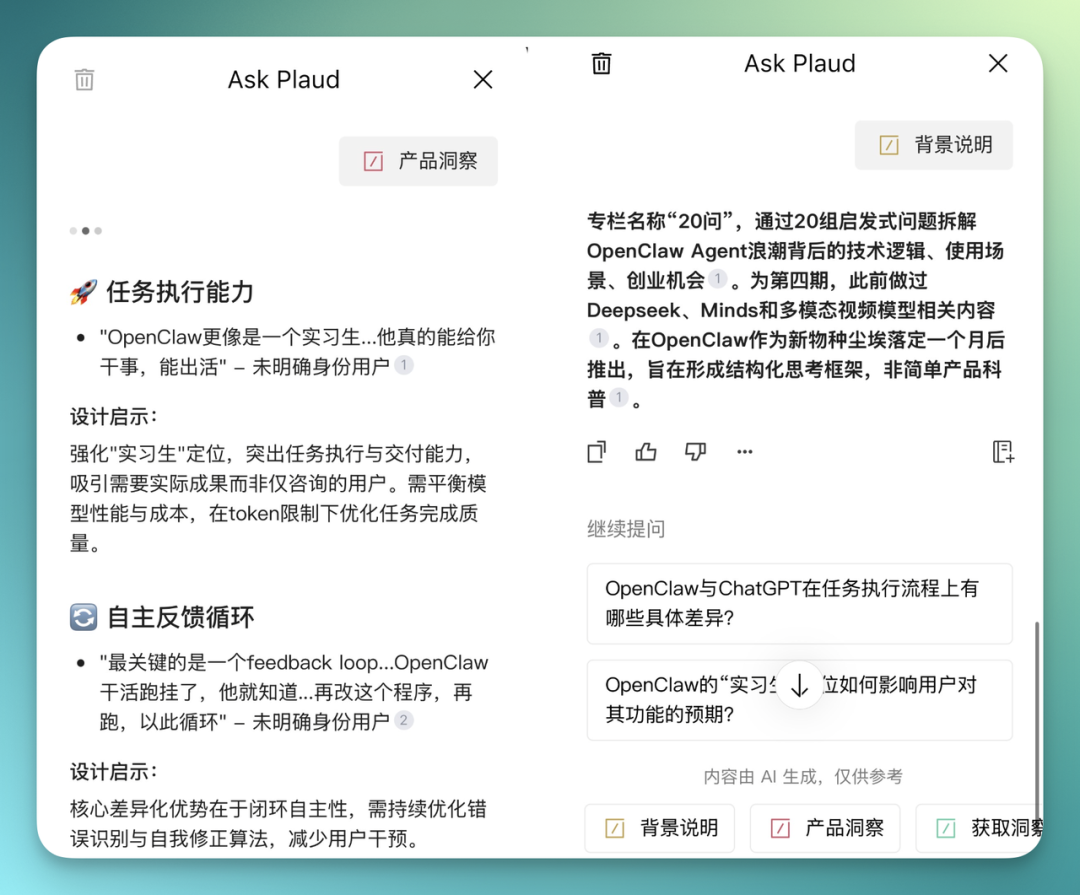
The product also integrates Ask Plaud, functioning as an AI chief of staff, supporting AI Q&A within already-transcribed voice documents, with numerous internal "skills" — similar to Claude's Skills concept, packaging repetitive work into reusable workflows.
For example, in the Ask Plaud dialogue, you can directly click "Get Insights" or "Background Briefing" to定向获取 relevant content from the document, with all answers displayed in the skill's built-in structure:
Beyond pure AI product experience, Plaud's first-mover advantage manifests on three levels:
[1] Brand mindshare (already established the earliest recognition among users: Plaud = AI chief of staff serving individuals, continuously converting dialogue into personal knowledge growth)
[2] Data flywheel (the longer users engage, the more AI understands their work style, the more precise the output, the harder to leave)
[3] Continuous AI capability iteration.
Larger user base, richer scenarios, deeper understanding of "how to turn dialogue content into something useful."
Of course, these moats are under construction, not completed. Plaud's story is far from settled. The giants have foundation model capabilities and lower customer acquisition costs; Huaqiangbei has better, cheaper hardware economics.
How Plaud finds a stable scenario to push forward amid "strong enemies on all sides" remains an open question.
However, in the China market, as the category definer, every move Plaud makes will inevitably draw industry attention.
🚥
The AI recording race is merely a microcosm.
The larger story: as AI rapidly expands individual capability boundaries, tools designed around "the individual" rather than "the organization" are becoming an entirely new category.
What the endgame of this category looks like, no one can say with certainty.
Plaud's answer is "individuals, super-individuals." Helping one person remember more, think deeper, decide better — giving individuals the information processing capabilities once available only to teams.
The two paths of giants and Plaud will likely coexist long-term. But one trend grows increasingly clear: as AI enables one person to do a team's work, as more people choose to work as independent individuals, tools designed around "the person" may prove more vital than we currently imagine.
Plaud's "race story" against domestic giants will likely, within the same category, head in two completely different directions.