Knowledge, Code, and Tutorials Are All Losing Value — What's Worth Learning in the AI Era? | WAIC 2026 Fireside Chat
Be AI Native.
Becoming AI Native
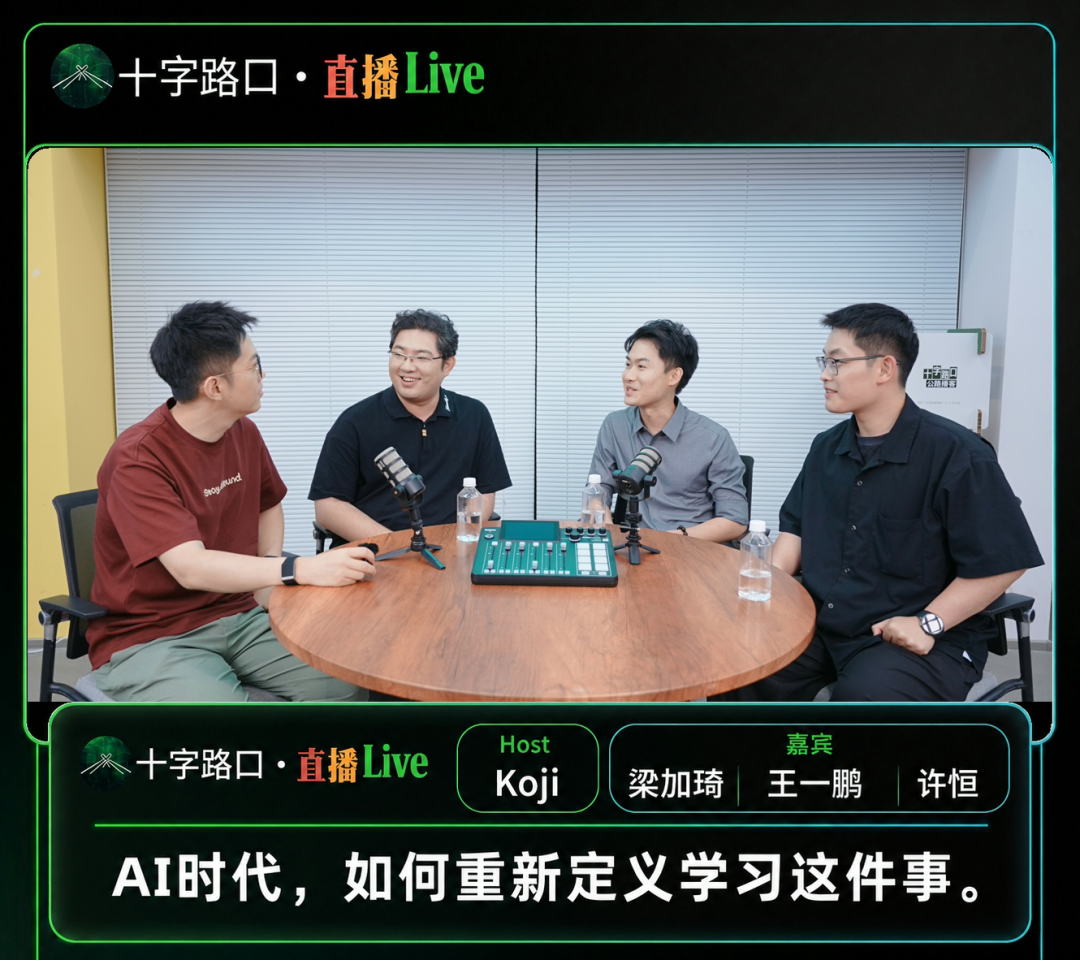
👦🏻 Host: Koji
🥷 Editor: Crossing
🧑🎨 Layout: Zeoooo

This year's World Artificial Intelligence Conference (WAIC) was unusually packed — attendance and scale both jumped over 40% from the previous edition. The iFlytek booth at Hall H1-B116 was among the liveliest spots in the entire venue.
On July 19, iFlytek AI Academy announced its official upgrade here. Its new direction: "From Learning AI to AI Learning." From learning AI technology, to AI empowering learning.
iFlytek AI Academy is iFlytek's domestic online AI learning platform — the first of its kind in China — founded in 2017. It brings together developers, enthusiasts, and practitioners in the AI field, who come here to study, exchange ideas, and train.
Over the past year, many outsiders have joined in, and quite a few AI insiders have spontaneously become "AI evangelists."
The signal from this iFlytek AI Academy launch was unambiguous: AI has shifted from "something that needs to be learned" to "a tool that can empower learning."
But simultaneously, a deeper need has emerged: when AI can answer almost any question, help you write code and make PowerPoints, and serve as your 24/7 personal coach — what do humans still need to "learn"? In the AI era, what's worth learning? And how should we learn it?
Around these questions, Crossing and iFlytek co-hosted a livestream called "AI Academy · Fireside Chat," moderated by Koji, with three guests from strikingly different backgrounds — all active AI practitioners. They were:
Liang Jiaqi, Deputy General Manager of iFlytek Open Platform, with an engineering background — he's spent the past decade working with AI developers. Wang Yipeng, General Manager & Editor-in-Chief of InfoQ, who crossed over from being a programmer at LeEco to tech media, completing a programmer's capability migration. Xu Heng, a self-taught AI vibe coder, non-CS background, who competed in 30+ hackathons, won 21 of them, and earned nearly 100,000 RMB in prizes.
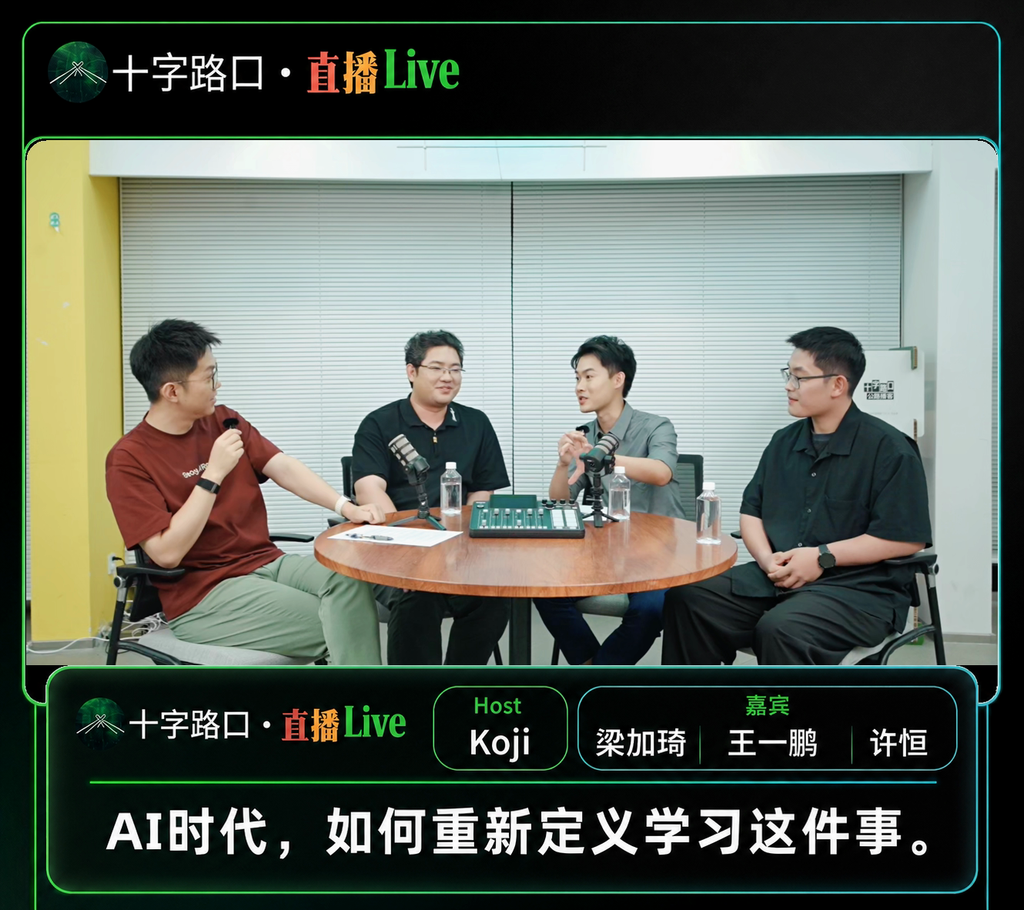
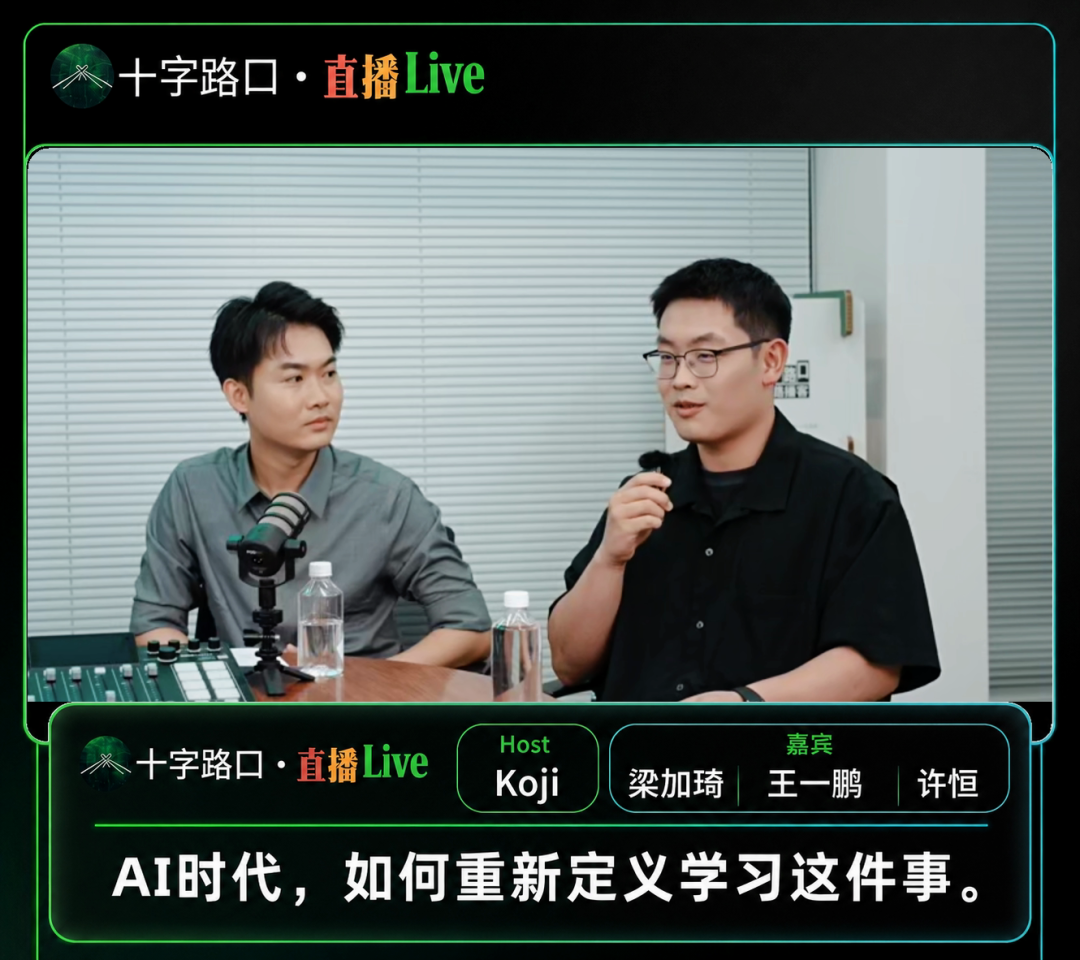
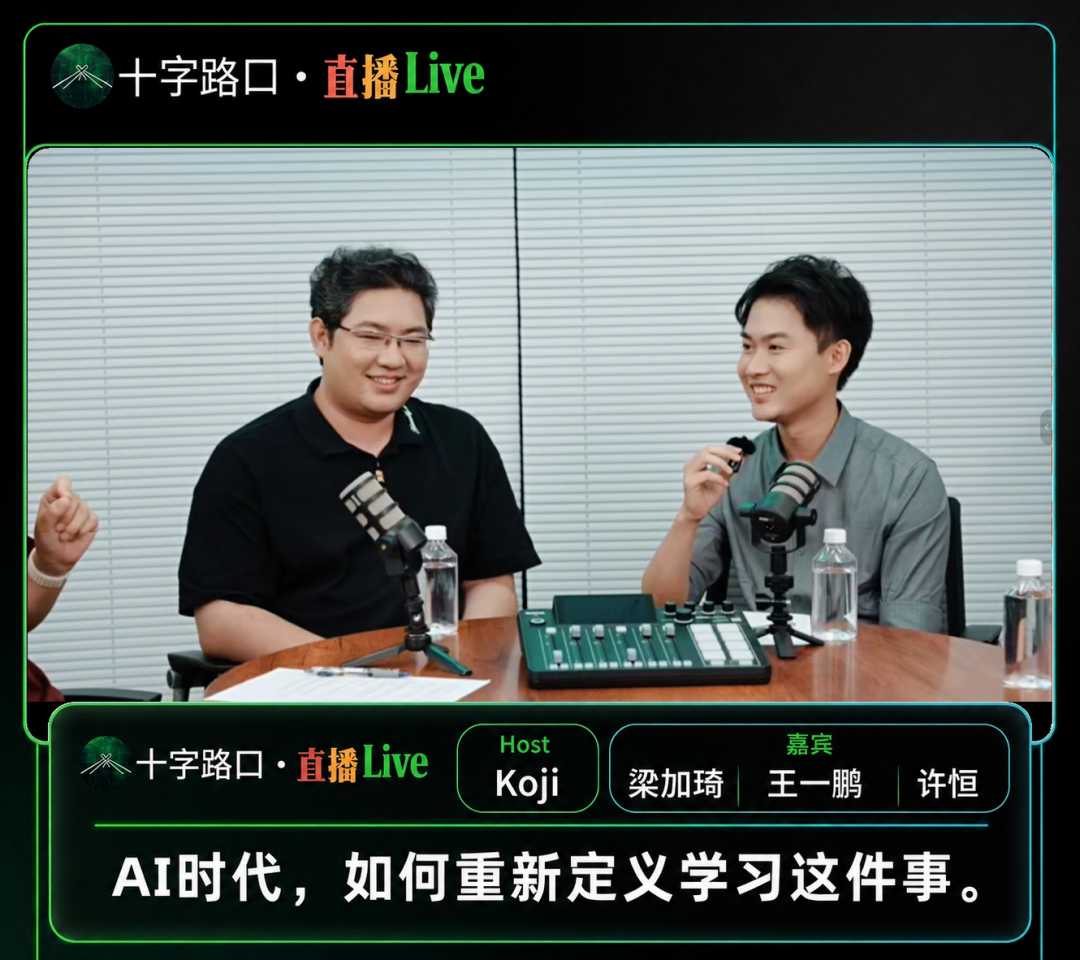
From left to right: Koji, Wang Yipeng, Liang Jiaqi, Xu Heng
In this roundtable livestream, the guests shared their hands-on experiences leveling up with AI — the pitfalls they hit, the lessons they accumulated, all real problems encountered while training with AI. Below is the edited transcript of that conversation:
I Made My Agent Call Me "My Lord"
👦 Koji
Hey everyone! I'm Koji.
Today at WAIC, iFlytek released two new features for AI Academy. The keyword we're gathering to discuss is "learning in the AI era."
In the AI era, why do some people learn AI quickly and well, while others keep gearing up but never actually start, or never find a good method?
Let's start with each of you sharing: what's something you've recently learned or accomplished using AI?
👨🎨 Wang Yipeng
Recently, I've been using AI to solve my English learning problem.
Here, AI plays the role of a coach.
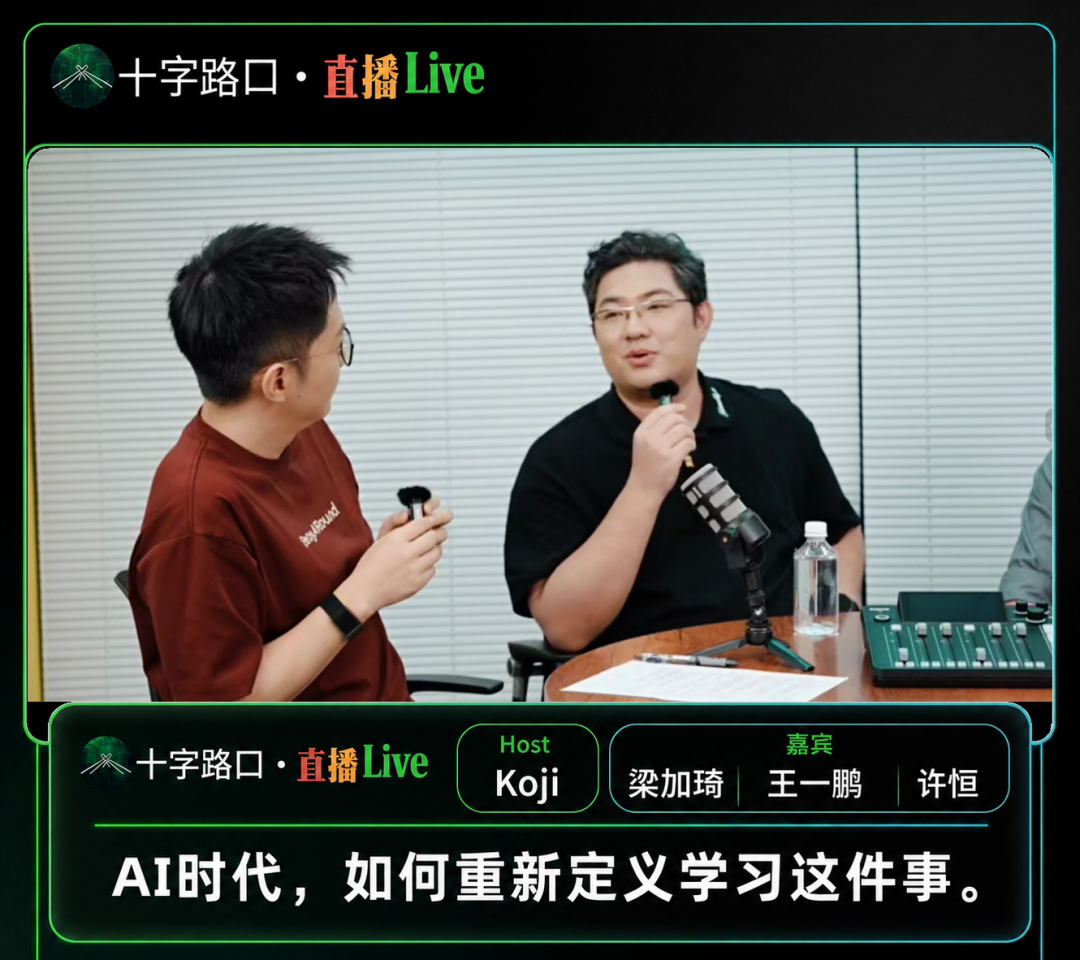
I need it to break my goals down into daily micro-tasks.
For example, when we cover AI media or AI builder stories, we attend industry conferences in English and interact with overseas guests. So I need to know their common vocabulary and industry terminology. Maybe I only learn 10 high-frequency words from the industry each day.
It also reviews the whole plan for me, setting things up in great detail.
For instance, AI tells me I must read aloud, repeat several times, then listen to the original speech and compare the differences. There's a monthly summary too — if I miss something due to work, AI packages previous material into catch-up bundles.
In short, AI turns this into a highly personalized 1-on-1 coaching model.
🧑💻 Xu Heng
I recently hacked together an AI recruiting app using AI.
Because I realized that in the AI era, traditional company recruiting methods no longer work. Before, one person only handled one slice of business. Now one person can be a composite talent — not just doing HR, but also information gathering, and so on.
While building the app, I discovered some listed companies already don't look at academic credentials. Whether you're undergraduate, vocational, or have minimal formal education, if you're strong in AI applications, you can participate in campus recruiting and potentially get hired.
🤵🏻♂️ Liang Jiaqi
I made my agent call me "My Lord." To me, AI is more like a strategist or counselor.
Today knowledge has become cheap. Large models can feed you massive amounts of information, and they're constantly generating more. This is an era of infinitely expanding AI entropy.
Amid all this information, what the lord should do is discern.
Learning is the same — beyond gathering information, the most important thing is "choosing an effective path and following through."
Beneath the complexity, find more efficient ways to structure knowledge, identify what's high-value, and let humans or agents utilize it more effectively.
👦 Koji
Back to iFlytek's AI Academy launch — Jiaqi, please introduce these two new features.
🤵🏻♂️ Liang Jiaqi
Today we released two new features for iFlytek AI Academy.
The first is — AI Learning.
It builds on user needs and the accumulated experience of veteran instructors at AI Academy. Based on your actual situation, your desired goals and outcomes, it automatically plans the optimal learning path for you and matches you with the courses you need.
During learning, it breaks complex goals down into specific knowledge points, intelligently matching systematic courses with practical scenarios. Learning goals are no longer just vague directions — they're decomposed into understandable, practicable, verifiable learning units.
While watching video courses, you can also interact in real-time with the built-in AI study companion, completing knowledge comprehension through dialogue. For example, it helps you extract key course points, explain complex concepts, generate mind maps and knowledge flashcards, and so on — moving learning from "heard it once" to "truly mastered."
The second feature is — AI Vault. Vault means personal safe-deposit box.
Simply put, AI Vault's capability is: you feed knowledge into it, it analyzes, consolidates, and internalizes it for you, then releases it for application when needed in the future.
It supports importing PDFs, Word docs, PowerPoints, images, and audio files, then structurally consolidates them by topic.
Then it intelligently parses these complex documents, organizing content structure, extracting key information, and enabling traceable source verification through intelligent Q&A.
Going further, it can become the foundation for multimodal content production. For instance, when you need to present, make PowerPoints, produce podcasts, generate mind maps, create test questions, or generate agent.md for your agent to use — it can handle all of this.
We hope these two features can help everyone identify and find the most suitable, shortest path, while enabling the knowledge you learn to generate long-term compound returns.
👦 Koji
One makes learning more convenient; the other puts learning into practice.
Regarding the implementation of these two features, is there anything you'd like to expand on?
🤵🏻♂️ Liang Jiaqi
We've recently been collaborating with Jike Time to introduce more external courses and information, providing a public-domain knowledge system. Even if users want to learn from other large models, we can make good recommendations for them.
On another level, human evolution's limitations sometimes occur not just at the individual level, but at the organizational level too.
Organizations have different roles — traditional developers, marketers, operators, enterprise decision-makers, and so on. Each organization's evolutionary task is different. Moreover, even when facing a shared organizational AI evolution mission, the evolutionary path differs.
So we also provide services oriented toward enterprises, designing for different roles and enterprise goals.
Agents Are Internalizing Knowledge Too
👦 Koji
Just now we mentioned knowledge bases — to make an agent run well, the more complete the context the better. Please share how each of you maintains your knowledge base and context layer?
👨🎨 Wang Yipeng
I abandoned mine later.
Because it was fixed Q&A, essentially a reorganization of wiki.
If I forget this knowledge someday, why not just ask again? And after a while the model updates, becomes more capable, and the answer it gives you may be different.
👦 Koji
Then how do you store private work data?
👨🎨 Wang Yipeng
Data falls into two types.
One is deterministic data. For example, after a meeting reaches consensus and is documented, if you're using Lark, you should connect the Lark CLI.
Another part is non-consensus, semi-finished documents. Previously I used Obsidian to manage directories locally — it automatically generated knowledge networks, each node had weights, and when reviewing a knowledge point it would show the most relevant surrounding nodes.
But I've stopped that too. Because AI agent platforms have folded in this functionality.
Another reason is that part of my local knowledge base was manually compiled — for example, my own deduction processes. But for AI, once you start manual operations, that portion of information becomes a black box that AI cannot inherit.
🧑💻 Xu Heng
When I first started competing, I had a Lark document for storing project info, research data, how to learn prompting, and so on. It was simple at first — everything in one document.
But after recording for a long time, I found I couldn't keep going, because I wouldn't look at it myself.
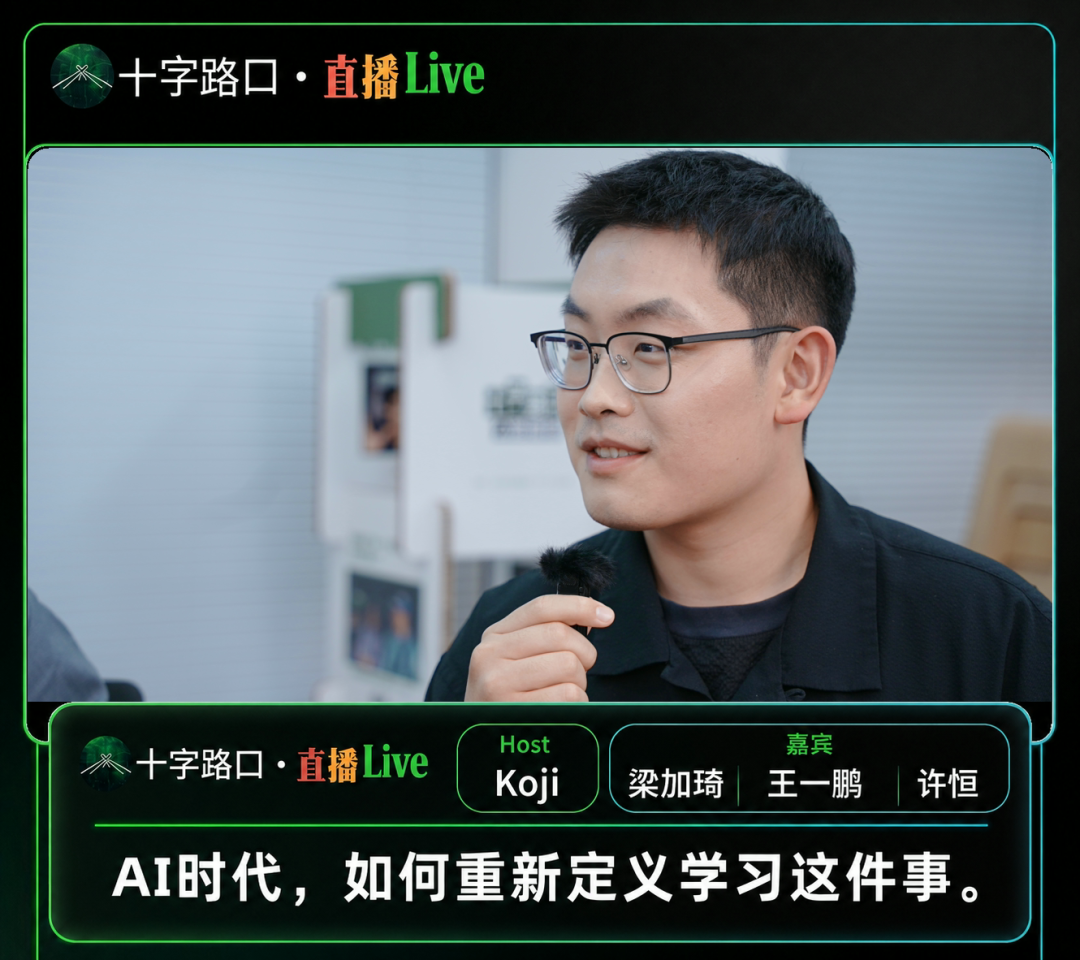
Then I started a new knowledge base when OpenClaw first came out. I discovered it had long-term memory, so I no longer needed to organize a knowledge base.
I directly converse with it, sending project ideas, things I've learned, good articles I've seen — casually dropping links to it.
I also set up an automated workflow where it grabs some of my filtered information sources, like papers and quality content, then associates them with my projects and information.
Every morning it tells me what connections exist between yesterday's knowledge and what I learned. I find some collisions of different ideas in there, which is quite interesting.
👦 Koji
So your knowledge base is essentially internalized into the agent's memory system.
🧑💻 Xu Heng
Right, no need to deliberately record or have AI organize for me — it's integrated into daily life.
👦 Koji
Jiaqi, regarding AI Academy's AI Vault personal safe-deposit box feature, could you talk about your philosophy on knowledge management, or context management?
🤵🏻♂️ Liang Jiaqi
This touches on many pain points of human nature.
Humans are lazy by nature. Sometimes sudden diligence comes from collector's impulse — wanting to gather information to feed to agents, collecting equals possessing.
But have people truly internalized it?
Probably not. It just sits there occupying memory, or consumes extra tokens when you ask AI in other scenarios later, without generating additional value.
The human learning process — internalization usually comes from how knowledge is ultimately applied, not from having read it at the time.
So AI Vault's core isn't just about feeding knowledge and information in, but enabling it to emerge when you need to present it.
For example, when giving speeches, making PowerPoints, producing podcasts, conducting corporate training and creating test questions — in these small but beautiful application scenarios, knowledge internalization is actually promoted.
That is, after solving epiplexity, entropy increase, and learning paths, your knowledge can find a place; we've planned its future outlet for it.
Of course, AI development and learning are both never-ending. There will certainly be new changes in the future.
Knowledge and Code Have Both Become Cheap — What's Still Valuable?
👦 Koji
In the process of working with AI, have there been moments when you were led astray?
🤵🏻♂️ Liang Jiaqi
Yes. My own learning experience was like this: engineering background, never touched code in over a decade of work, finally picked it up this year.
When OpenAI came out, there was an agent social platform called Moltbook, incredibly fun. At that time I was watching dating shows and thought: could I make an agent dating show?
So I tried developing. Hit many obstacles along the way, experiencing peaks of hope and valleys of despair.
When I first started using AI, I found coding simple — easily picked up a skill I hadn't touched in over a decade. It helped me clarify frontend and backend tech stack choices, giving advice that looked completely correct.
But as I went along, I found more and more bugs. During development, mounting technical debt accumulated, problems became increasingly complex.
Later I had an architect friend look at it, only to discover that what AI told me, while looking correct, was actually something no one in the front lines would do today.
This led to me burning through several Claude Code Pro accounts worth of development that all had to be scrapped and restarted.
This is also a lesson to learn. When we enter new domains, experience really matters.
👨🎨 Wang Yipeng
The counselor deceived the lord.
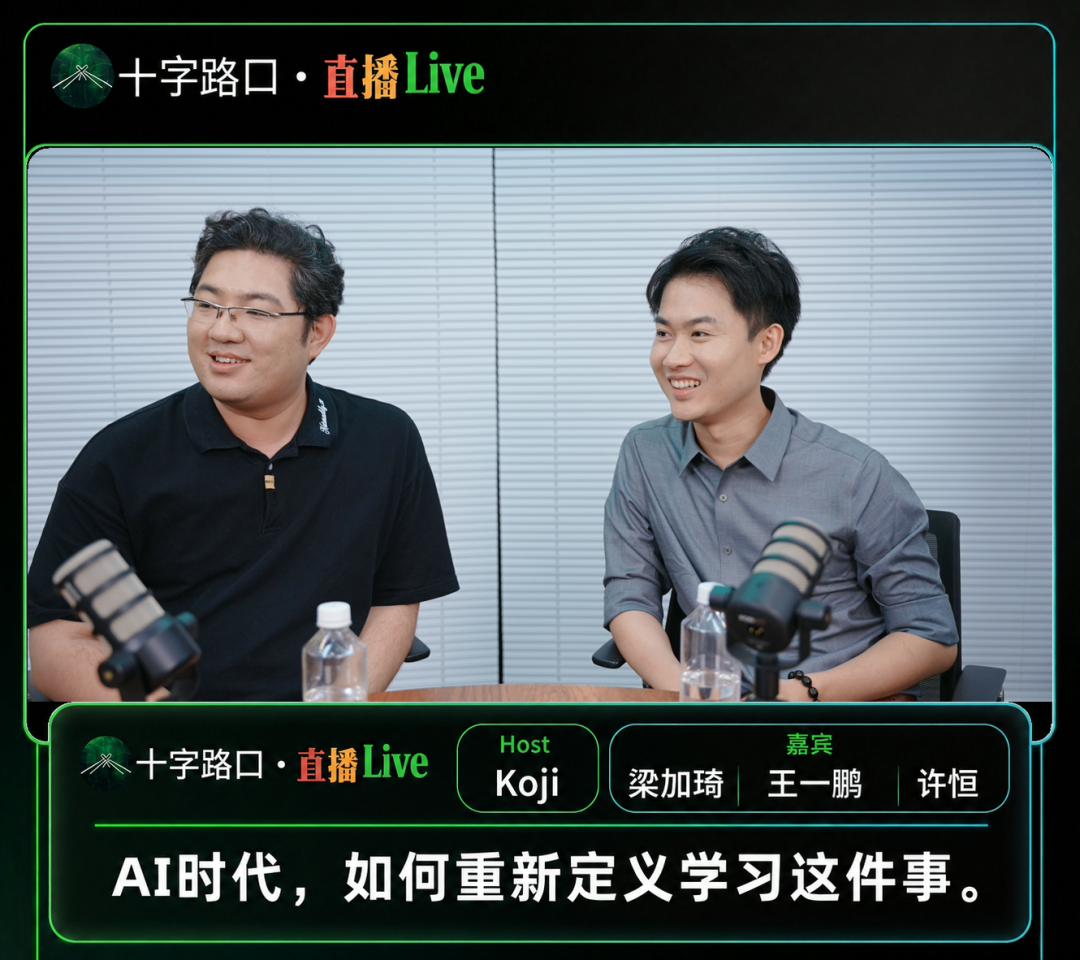
I have a hot take: knowledge is becoming less and less valuable today, just as code may also be becoming less valuable.
There used to be a saying "Talk is cheap, show me the code." Now everyone realizes code is cheap too.
👦 Koji
Then what's still valuable?
👨🎨 Wang Yipeng
Experience and skills.
At the knowledge level, I'm rarely misled by AI — its output of fixed-domain knowledge is decent enough.
Today, a person's knowledge cannot be more encyclopedic than a model, but models lack practical experience. The paths they give you require your judgment of whether they actually work — this requires your experience.
Once back in the practical dimension, human judgment is still needed.
When I use Perplexity, I also discovered a particularly insidious type of hallucination.
For example, it finds Material A and Material B, each showing partial information about the same company. AI will recombine them according to its own logic, fabricating a fact that doesn't exist...
There are also some practice-oriented questions where AI sometimes behaves like a learned layperson.
What do I mean? Laypeople like to spin grand logic when looking at things, but insiders know that reality is completely different from grand logic — yet AI can't access that part.
🤵🏻♂️ Liang Jiaqi
Let me share a personal experience.
A couple days ago, I asked DeepSeek a question and saw its thinking process. It went like this: "The user asked me for data from a certain year, I don't have data from that year, so I'll make one up for him."
Then it confidently delivered this fabricated answer to me. Good thing I saw that process.
How Should Beginners Start Learning AI?
👦 Koji
Back to the topic of learning.
Xu Heng, you've competed in 30+ hackathons, won many awards, but you're not from a CS background. How did you learn so fast?
🧑💻 Xu Heng
Environment matters. The hackathon environment forces you to learn.
At first I didn't understand vibe coding, software or hardware, but the competition only gives you 24 hours or even five or six hours — you must learn, practice, and fight, otherwise there's no deliverable.
What impressed me most was learning Skill.
It was also because of a Skill competition where you had to produce something. At that time there was no create-skill-skill, you had to find your own. Actually OpenClaw had Skills when it first launched. In November, I'd heard others talk about Skill, but just listened without thinking to learn it.
👦 Koji
You're an evangelist at AI Academy, also teaching friends around you to use AI. Have you noticed where beginners most easily get stuck when starting to learn AI?
🧑💻 Xu Heng
Most easily stuck at hands-on practice.
I myself learned by doing. In today's new media era of fragmented information, many people feel they understand after watching.
But their brain gets it, their hands don't move. The most important thing is still to practice — you can't say watching equals knowing.
Without a Coordinate System, the Stronger AI Gets, the More Easily You'll Be Led Astray
👦 Koji
In your view, does systematically studying a textbook or course still make sense today?
🧑💻 Xu Heng
It still makes sense, but you need systematic learning, and you need to find good systems.
When something new first emerges, most people search for information themselves and step on landmines — this process is mentally exhausting. Though you learn, you waste a lot of time.
If there's a platform that can help me select quality courses, learn systematically, and apply what I learn to real tasks or engineering environments upon completion, it would save a lot of energy.
Previously there was a bootcamp specifically teaching development. Before that I didn't understand the whole engineering development knowledge and system — it was very scattered. Later in that camp, I picked out the essence and learned through it once from beginning to end, only then understanding the full picture of engineering development — so this is what it looks like.
🤵🏻♂️ Liang Jiaqi
These past two days I've talked with many senior CTOs and CIOs, and found that employers hope to hire senior people with passion and accumulation in certain capabilities.
For example, I learned that one major tech company is currently developing a highly complex AI product, and they're internally assembling a team of people over 35. They feel only this group can do it well.
From an employer's perspective, we also prefer hiring relatively senior roles. Because senior people plus agents can handle many problems — they've undergone systematic training and accumulation.
This is the opposite of what the market intuitively assumed a few years ago about "hiring young people."
People just entering the workplace today will heavily rely on vibe coding, but how to distinguish what's right from what's wrong? Without systematic course training or years of reserves, this is very difficult.
So systematic learning and systematization are very important. Shallow questions can be asked of AI, but when it comes to application and practice, deeper thinking is still needed.
AI tells you a path; if there's a matching course, and you can simultaneously settle down to learn, you'll definitely dig out different information.
👨🎨 Wang Yipeng
I think systematic learning today is limited to classic courses, and probably needs to be narrowed further.
The value of classic textbooks is that they represent accumulated experience that doesn't need to be re-deduced.
If a very experienced professor or practitioner recommends three books around a domain, you must read them carefully, multiple times. Because top experts can guide you to build understanding, cognition, anchors, and underlying logic for that industry.
Conversely, if you haven't been exposed to underlying logic through classic materials from the start, you'll be prone to wavering. Someday when someone pitches you a theory, you'll have difficulty judging whether it's right or wrong.
👦 Koji
Any techniques for identifying good courses?
👨🎨 Wang Yipeng
Learn by doing.
This requires you to find a specific problem, and in that process, see whether it can solve your problem.
What I need AI to do for me now isn't to give me fixed knowledge, but to serve as a coach that lets me acquire skills through the process of learning and practicing.
Advice for Young Friends
👦 Koji
There should be many young friends in today's livestream audience — some college students, some new to the workplace. Finally, please give one piece of advice to those just starting out — one sentence or one action?
🧑💻 Xu Heng
The most important thing is, whatever you do, first think about AI — whether you can integrate AI into your work or life.
There's a term called AI native. Strive to become AI native.
🤵🏻♂️ Liang Jiaqi
Classic materials are important.
Today, when learning, before building a knowledge system, I suggest first finding an influential, time-tested system within the industry as your coordinate.
On this coordinate foundation, let AI help you push forward — this is the most efficient and most solid approach.
👦 Koji
Establish coordinates.
👨🎨 Wang Yipeng
First, you must find what you love.
I ask myself: if I could only do this one thing for the rest of my life, nothing else, could I keep doing it? If you feel you could, that's what you love.
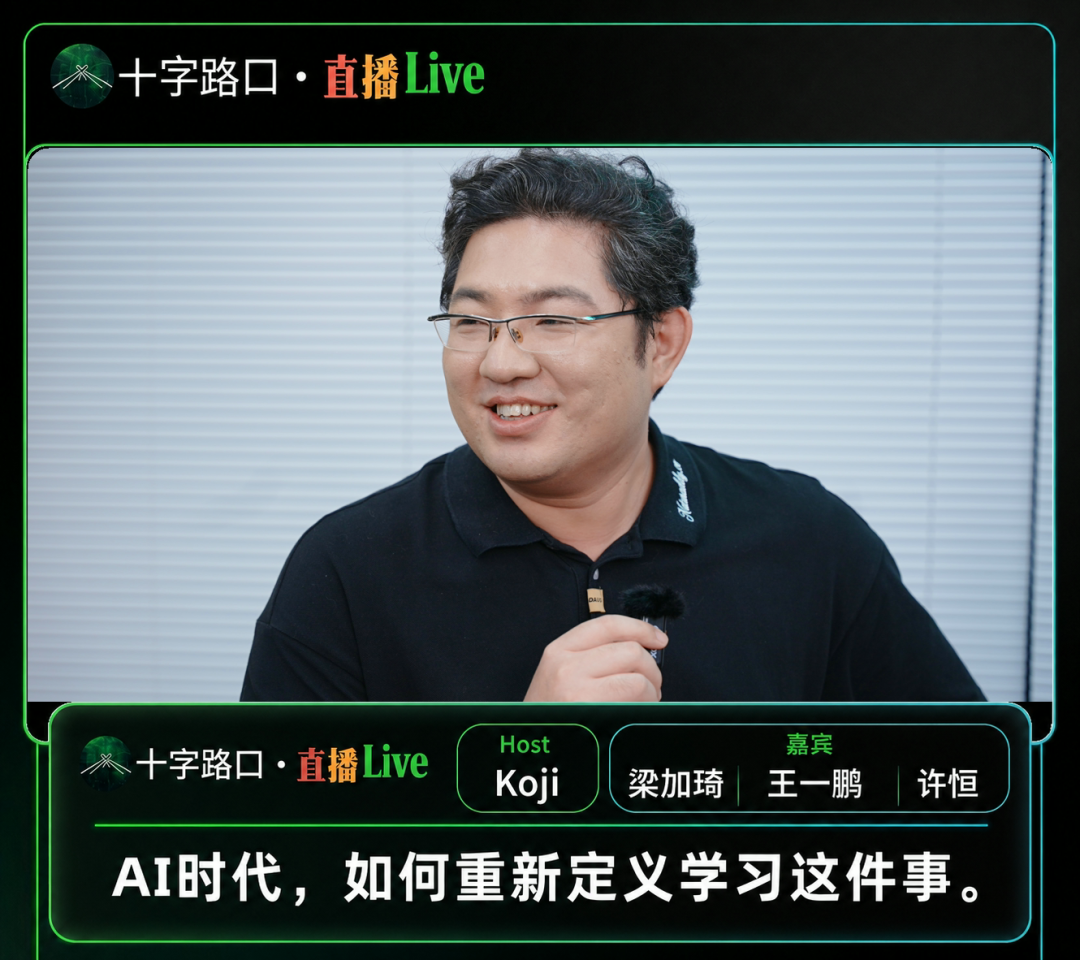
In the past, society rewarded those who pursued excellence; in the future, it will reward them even more. Because the chain for the non-excellent has been broken — anything non-excellent can be done by AI.
So you must find what you love, commit fully, pay money, mobilize energy — your mark will be seen, and the market will naturally recognize you.
Second, execution is especially important.
I've seen many classmates with good ideas who just never start, and it drifts away.
In the past, when the era developed slowly there was margin for error. Today in the AI era, drag it out half a year and it's a different world.
Grow rough but fast — don't fear mistakes, don't fear imperfection, just do it. Growing matters more than growing into some perfect form.
👦 Koji
Finally, everyone's advice strings together into three points: be AI native, think of AI first for everything; try to establish structured thinking so you won't be led astray by AI; when you think of something, do it quickly.
Closing
In this conversation, everyone mentioned a fact deserving attention: in the AI era, "knowing" is becoming less and less valuable, yet humans still spend the most energy on "knowing." The question that truly needs answering is put last by most: technology is the means; human evolution is the end.
iFlytek AI Academy's upgrade theme of "From Learning AI to AI Learning" is essentially a response to this question: AI shouldn't merely be an object to be learned, but should become a companion for everyone's continuous growth.
When knowledge is no longer scarce, knowing which knowledge applies in what scenario, how to use it, when to trust it, and when to question it — this is still something only humans can do.
Finally, I'd like to pass on Yipeng's words to everyone:
"Execution is important. Just do it. Growing matters more than growing into some perfect form."