An American Engineer's 11 Days in China

China in 2036 will look very different from 2026.
China in 2036 will look very different from China in 2026.
🥷 Compiled by: mindseeker
🧑🎨 Layout: NCon

This article, published by Not Boring Company, was written by an American engineer using the pseudonym Matthew. Recently, he visited China with plans to meet with energy, AI, and hardware companies — cultivating his own Fingerspitzengefühl, that intuitive feel born from experience that defies easy explanation.
I hope Matthew's journey gives you a different worldview through the eyes of an American engineer: how China gets things done, why it does them that way, what it might do next, and what all of this means for tech companies in the United States and globally.
Today is the first installment in the series. Into the text: This article documents my first 11 days after arriving in China. The main purpose of this long trip is to understand and visit Chinese energy equipment companies and factories; at the same time, I'm also deeply curious about the culture and financial ecosystem here.
In Part One, I'm still an outsider standing at the door, trying to get a feel for China, and slowly being pulled into the "right" WeChat groups. As my network expands, I start receiving factory tour invitations and talking to more and more mainlanders, asking them to fill in the gaps in my understanding of this country.
Throughout the article, I'll weave together my personal experiences with several key judgments.
Three Biggest Takeaways
1. China in 2036 will look very different from China in 2026. Companies that once manufactured handbags for luxury brands are now launching their own labels; investors who once copied American VCs are now running their own deep-tech playbook backed by state capital; battery companies are moving into grid infrastructure and data centers, even directly owning and operating assets. If you finish this article without significantly updating your mental model of China, you'll likely be caught off guard by these changes in the years ahead.
2. China's internal diversity is enormous. The dialects, clothing, occupations, climate, education levels, and personalities vary wildly. Even if I spent centuries here, I'd probably still keep encountering new things. So stay wary of anyone who compresses China into a single stereotype — whether positive or negative.
3. China is really, really big. This sounds obvious, of course. But only when you look up and see hundreds of skyscrapers stretching into a continuous wall, or discover that a single company produces more than the entire industry of some countries, do you viscerally feel the scale. Everything else seems... small by comparison.
First Impressions
My first arrival in China — specifically, landing in Hong Kong first, then crossing into the mainland the next day to head to Shenzhen North — the most striking thing was the sheer scale. The airport looked fairly ordinary, though already larger than most American international airports; but once the taxi entered the city, the staggering density hit immediately. New York is America's most densely populated city, with roughly 900 buildings over 100 meters; Hong Kong has 4,000, and they're packed with people inside and out. Honestly, whenever someone claims China fakes its population numbers, I find it surprising, because you can directly feel how massive everything is here. Even so-called "suburbs" might house millions, with high-rises extending to the horizon.
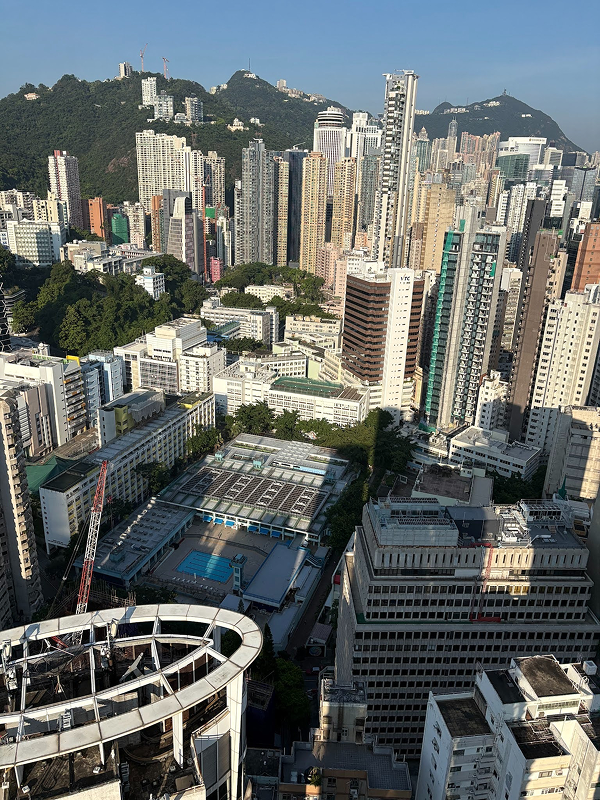
View from a hotel on Hong Kong Island
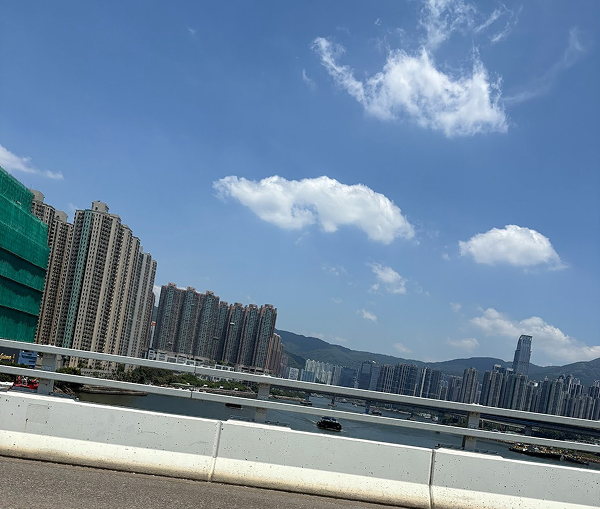
A wall of skyscrapers
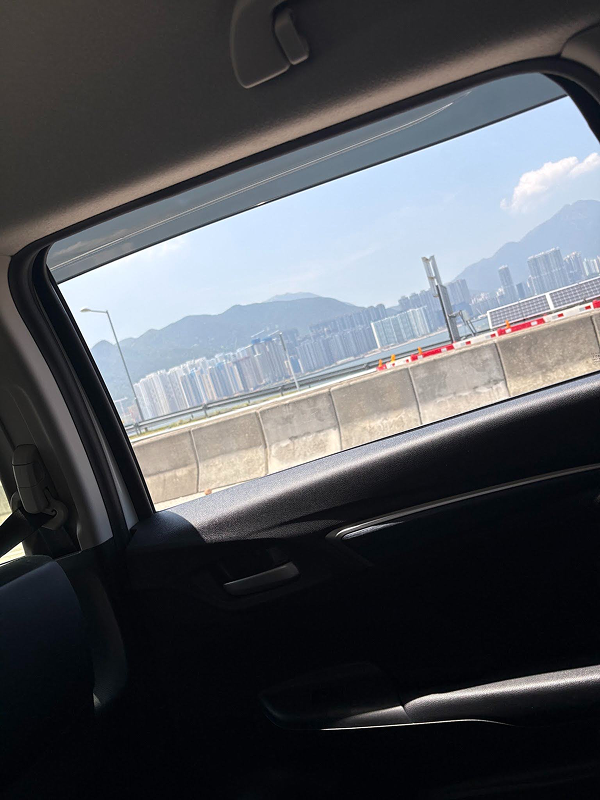
"We're not even downtown yet, my god!"
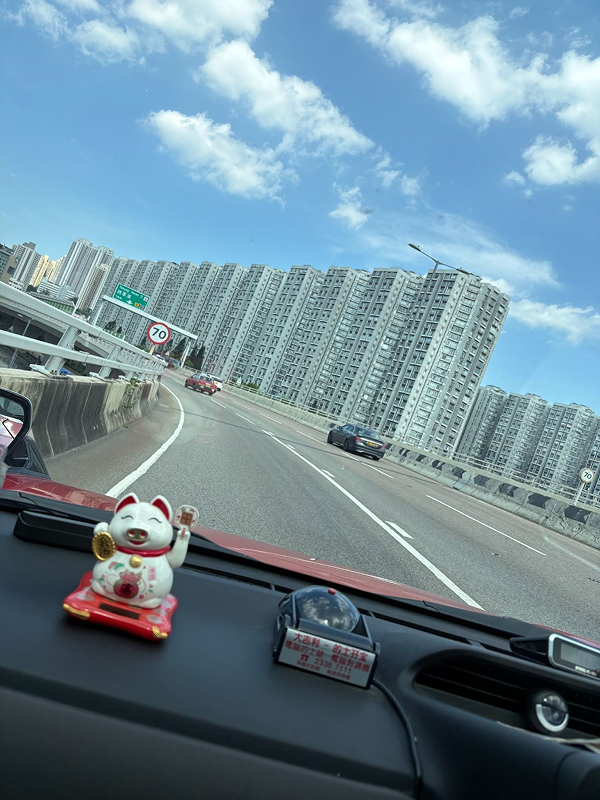
"You call this a suburb?"
With Hong Kong friends showing me around, I could find almost anything I wanted at any moment. Hong Kong is a financial and trading hub, and the import-export business has created considerable wealth; in ten minutes, I saw three shops selling professional-grade cellos. But what really blew my mind were the malls and high-rises: the fifth floor might be IKEA, the tenth an ice skating rink, the eleventh a sudden wave pool. Every new building I entered, I couldn't guess what I'd find inside.
For example, Toys"R"Us was a fixture of my American childhood, and it went bankrupt about a decade ago. But Toys"R"Us's China business remained financially healthy, so it still exists today. Similarly, many famous American brands that appear in the Chinese market are actually owned by Chinese companies, even if they look superficially similar to their American counterparts. Though the RTX 5090 I saw in the electronics market was, in fact, still from the American Nvidia.
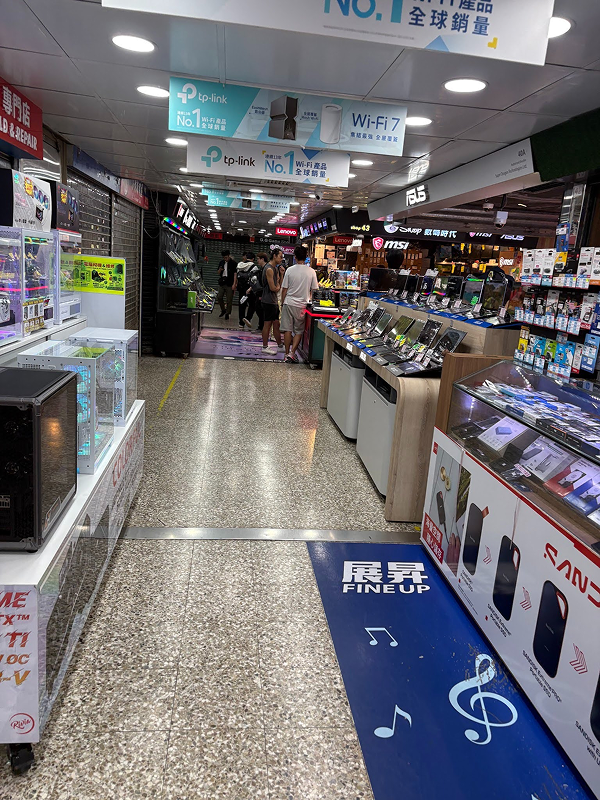
"Get in, loser, we're going shopping."
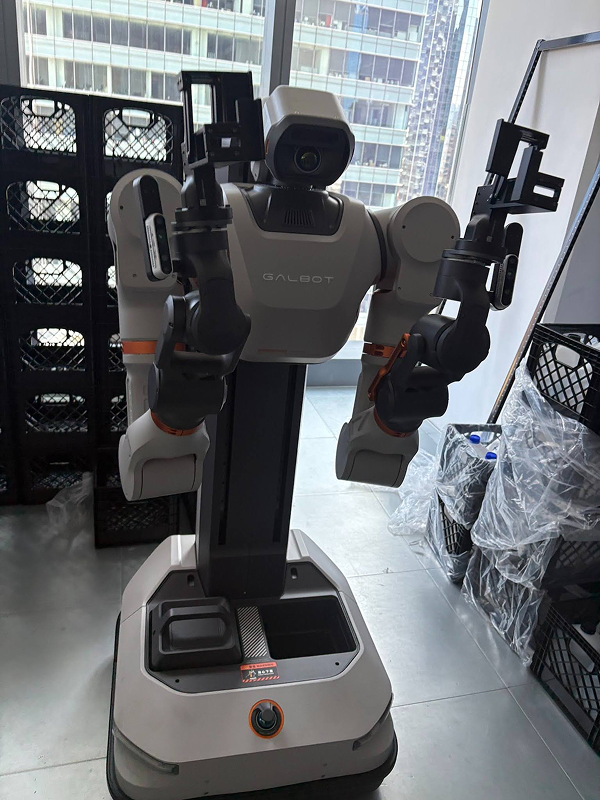
This robot (Galbot S1) can lift 50 kg with both arms
Another fascinating thing about Hong Kong: many mainlanders describe it as "an antique left behind by the British Empire." Hong Kong was once China's most important financial center, partly due to favorable tax policies and looser regulation than the mainland. During the pandemic, both of these shifted, and many foreigners relocated to Singapore. Meanwhile, Shanghai, Beijing, and even Shenzhen have risen rapidly since the 1990s, creating competition for Hong Kong.
Even so, Hong Kong still has many excellent universities, several with strong technical capabilities, producing thousands of students annually. This remains one reason it attracts mainlanders in the long term; another is the natural environment. Near one university, I boarded the subway: trains every two minutes, air conditioning quite comfortable, carrying millions daily. It was also there that I first saw the low-rise neighborhoods rare in Hong Kong, and realized how extensive the beaches and islands are here. I took speedboats to several beaches, and the number of wake surfers and super yachts again exceeded my expectations. In that moment, Hong Kong felt more like Monaco than the high-density metropolis I'd imagined.

San Diego, or Hong Kong?
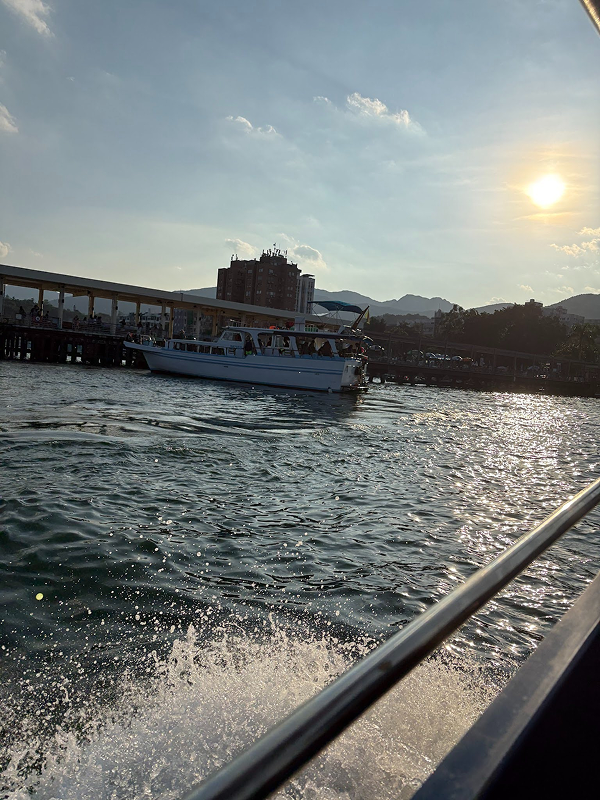
The Hong Kong islands
On the return trip, I discovered another way to experience Hong Kong: locals typically drive straight up the mountain, but you can also hike to the summit and overlook the entire city from above. The most densely packed areas of Hong Kong have roughly three times the population of Manhattan; from the highest point, you can even see Shenzhen. One building, roughly 500 meters tall, is covered in OLED screens glowing pink — like a cyberpunk obelisk staring at you across the border.
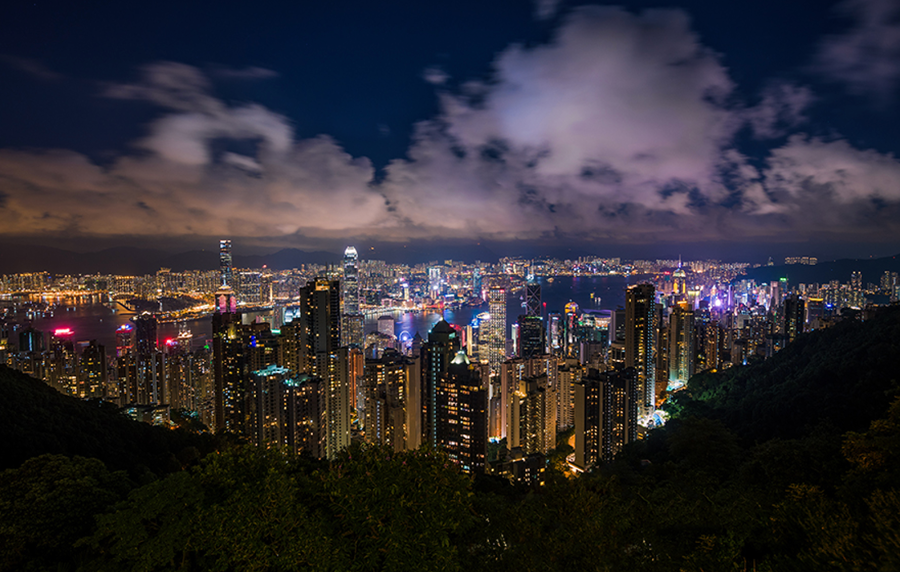
My phone died at Victoria Peak, but you can still look at this view
The next day, I entered Shenzhen. The city is known as a "tech-bro city," and I had clearly underestimated how long the entry procedures would take. Many steps were firsts for me, like having all my fingerprints recorded; meanwhile, there were literally hundreds of cameras pointed at me.
By the time I finally boarded the high-speed train into the city — perhaps because it was passing through urban areas, only going about 160 km/h — I had arrived at Shenzhen North Station. This was about 10 kilometers north of where I actually wanted to go; I should have gone to Futian North Station. Hotels, the main downtown area, and seemingly everything fun were further south. But the detour wasn't entirely without its rewards.
My friend told me that compared to some other mainland Chinese cities, Shenzhen's infrastructure is relatively foreigner-friendly. Even so, the gap was still stark. Uber doesn't work in mainland China anymore — you need WeChat Pay or DiDi. English on signs was sparse, sometimes nonexistent. Foreigners on the street had thinned out dramatically, while cigarettes and surveillance cameras were everywhere.
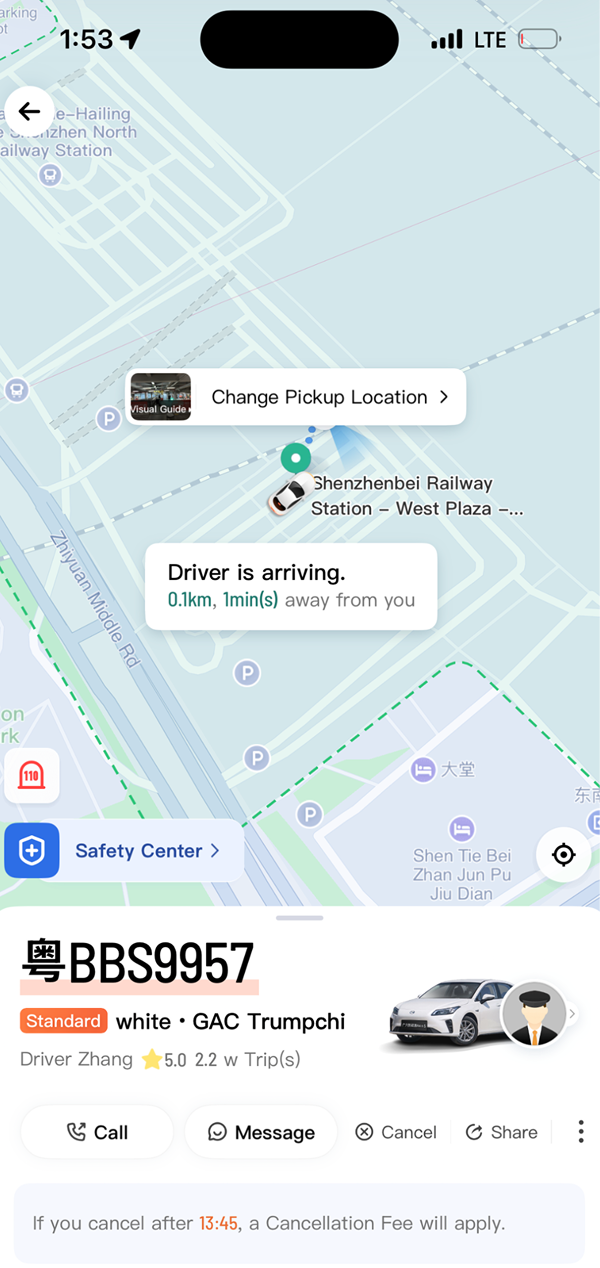
DiDi app interface (please ignore my low battery)
Most cars on the road were electric; I barely saw any gas-powered vehicles.
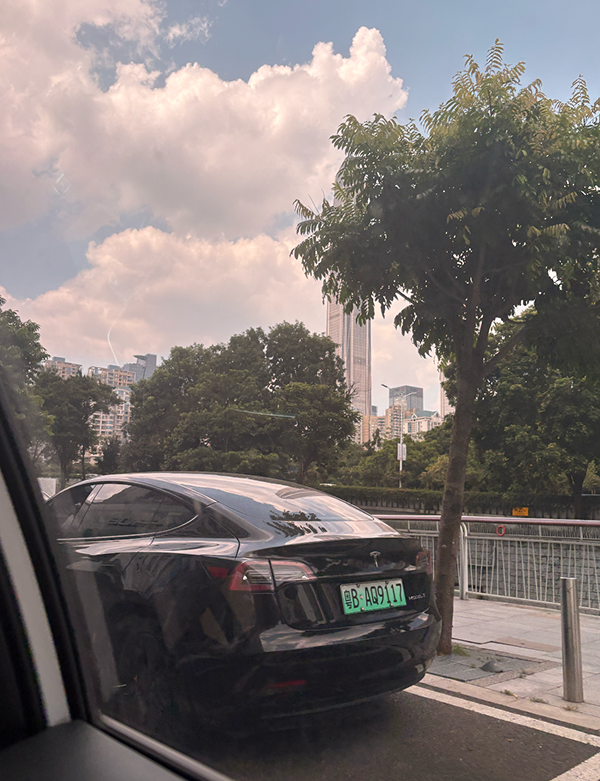
Tesla remains common in China
I ducked into a McDonald's first to fill my stomach. The menu was slightly different, but overall not far from a US location; some people ate with plastic gloves on, though most just used their hands or utensils. Only then did I properly enter the city center. The hotel was gorgeous, with multiple levels inside, yet cost only about $50 a night. A friend who had moved to Shenzhen a year earlier met me there.
He introduced me to a massive group chat on WeChat. Here, nearly all business happens through WeChat. According to him, if a mediocre Alibaba supplier is still diligently replying to your emails, it's probably not very good. What follows is my synthesis of his stream of advice.
"Shenzhen is huge, and very new. Deng Xiaoping established the special economic zone about 40 years ago, so unlike Beijing or Shanghai, you won't find many people who emphasize that they're truly 'from here.' The whole city is fairly welcoming to outsiders. With 100,000 people making new things every day, Shenzhen is constantly changing. Even if you stayed ten or twenty years, you'd still barely know the full picture. Top-tier manufacturing capability exists in many places around the world, but the density of suppliers and supply chains makes Shenzhen unmatched. APEC 2026 would normally be held in Beijing or Shanghai; this is the first time it's coming to Shenzhen, and the government wants to show it off.
You have to be extremely specific about who you want to meet, because nearly every hardware niche has specialists here, and many universities offer genuinely solid four-year undergraduate and master's programs in manufacturing. Foreigners will never get government subsidies — you might be very welcome, even become a Hong Kong permanent resident, but you'll always be a foreigner. Never forget that. So you rarely see foreigners here; they tend to get weeded out by the brutal competition. That said, on the supplier and supply chain side, you absolutely should work with locals.
Be very careful with intellectual property — competition here is fierce. If you want to reduce costs and scale up, don't just focus on inputs and outputs, or you'll get scammed easily. You have to understand the full process to identify bottlenecks and judge how low the real costs can actually go. I've seen suppliers sell a $20,000 machine for $200,000.
Cost of living is low here; delivery drivers can actually make a living at it. Though when we drive, we often see them scrolling e-girls on their phones. But if Meituan actually tried to replace all of them with drones, there'd be massive unrest in the streets."
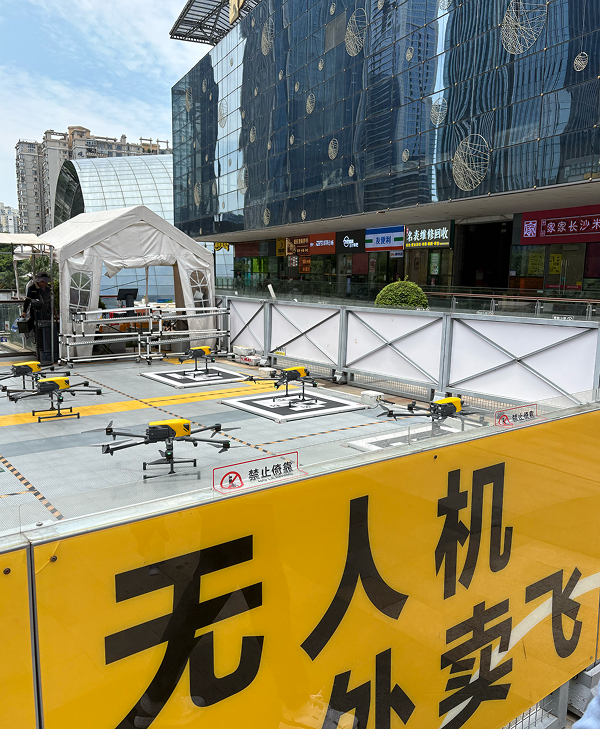
Meituan delivery drone hub
Later, a friend simply dropped a "come here, trust me" and led me into a surprisingly massive underground anime and cosplay space. Almost every character and combination you could think of was there, including plenty of blatant knockoffs — I could still recognize the Minions. The breadth of subjects and styles was fascinating, though. To avoid being rude, I didn't photograph the cosplayers; but Shenzhen's streets do have quite a few, with elaborate makeup, wigs, and costumes.
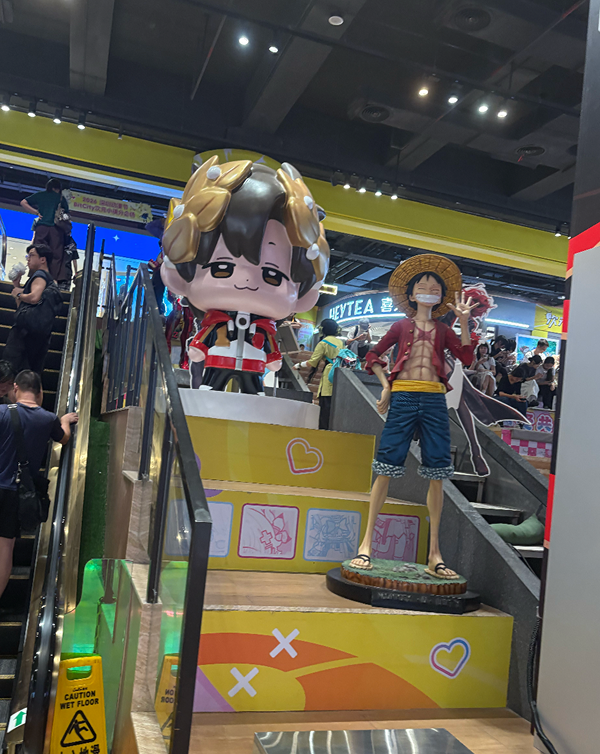
"So what's actually on this street?" "You'll see when you get there. Wink."
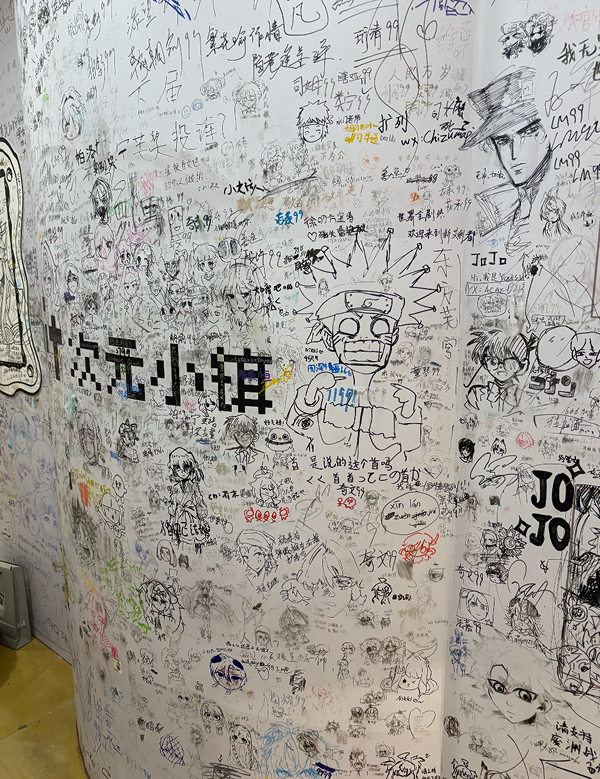
"The ACG wall"
After that, I returned to street level and spent several hours wandering through Shenzhen's famous Huaqiangbei electronics market. Honestly, it was pretty mind-blowing. I say "pretty" only because Hong Kong's skyscrapers had already shattered my sense of scale the day before.
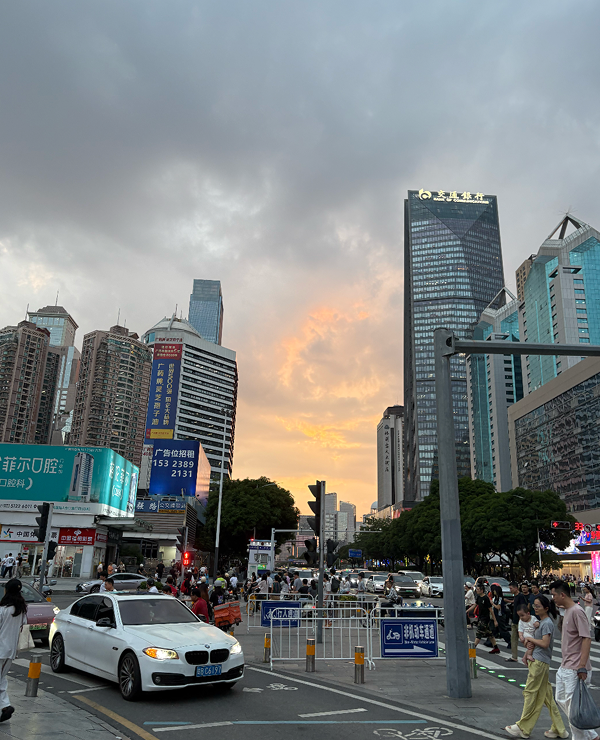
The Shenzhen neighborhood where Huaqiangbei is located
If you're a hardware geek, you'd love it. Giant billboards didn't advertise consumer products — they sold MOSFETs and motorcycle parts. I walked into a McDonald's looking for the bathroom, got turned around, and somehow stumbled into a five-story electronics market. Phones, Huawei stores, drones, robots in various forms — almost everything was there. The air smelled of technology, mixed with solder fumes.
Plenty of kids ran up shouting "hello, hello" at me, which was adorable; 7-Eleven not accepting international payment, less so. Waves of extremely fast electric two-wheelers kept streaming through the streets. If you don't know to dodge in time, they'll brush right past you.
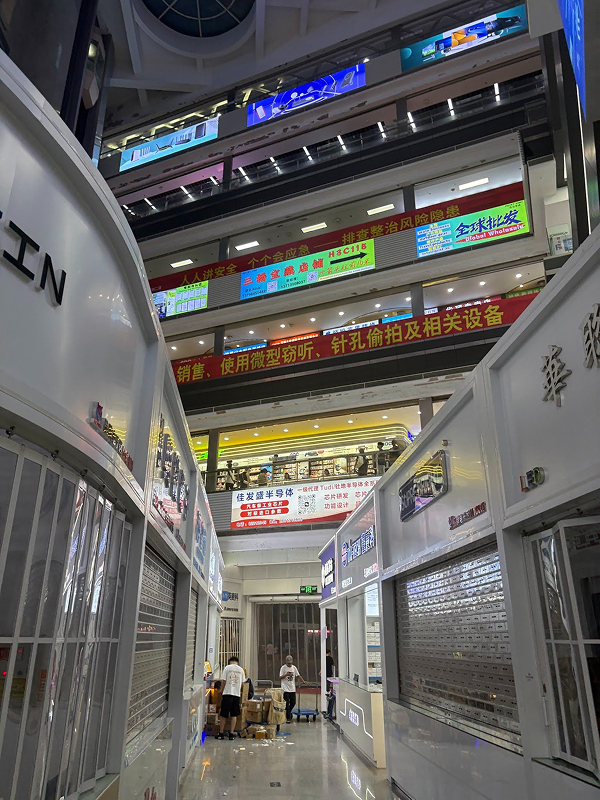
In China, a McDonald's can lead you to wondrous places
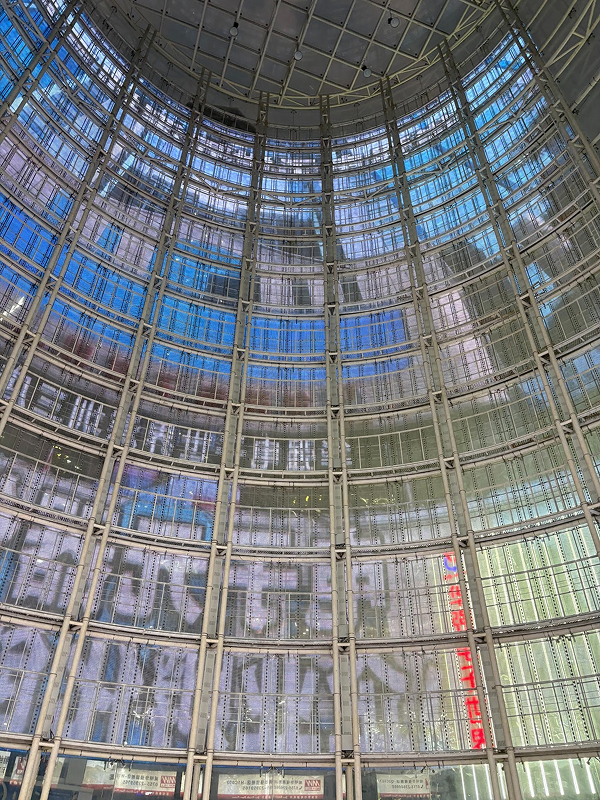
Huaqiangbei, the famous electronics market
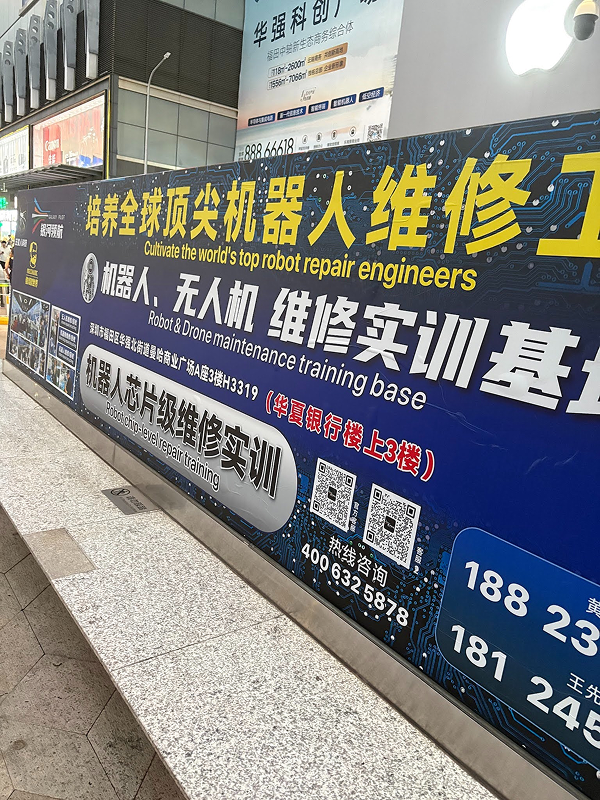
An interesting new profession: robot repair technician
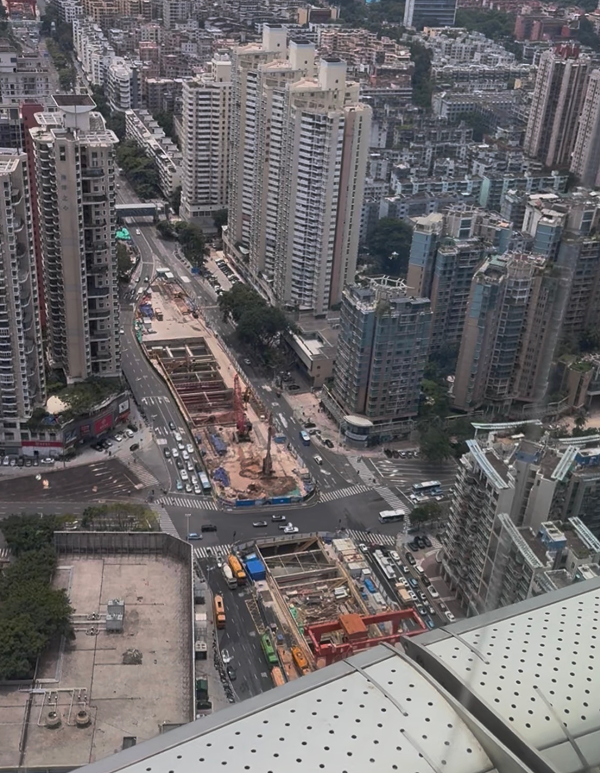
Heard Jack Ma is buying this new plot!
I also visited one of Shenzhen's earliest Bambu Lab stores. The shop displayed with some pride that Bambu Lab's 3D printers could be used to manufacture firearms. Given how sensitive the US is about "ghost guns," this was probably one of the most intense culture shocks of the day.
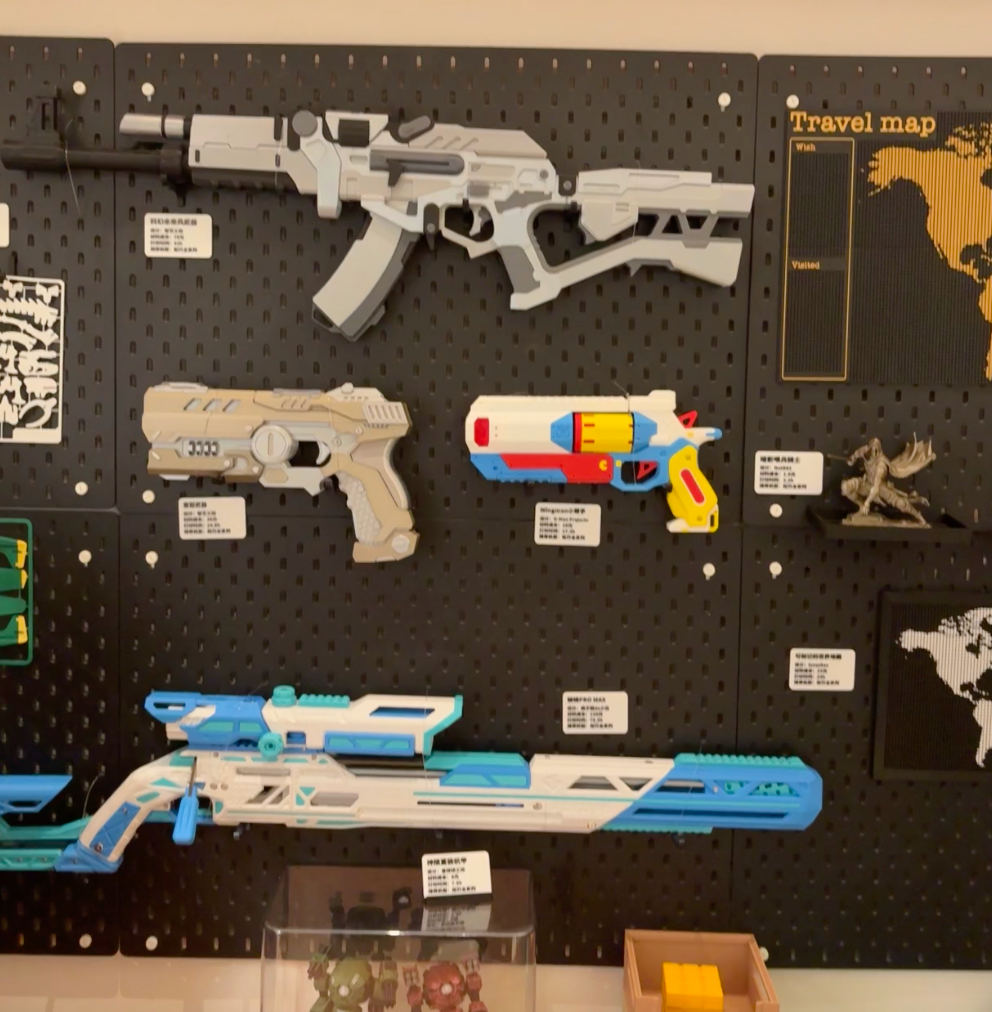
One of Bambu Lab's earliest stores
In those first few days, I arrived at an interesting conclusion: we are not at the center of their world.
The United States matters to China, and is attractive enough. But China has its own Greater Bay Area: more skyscrapers than all of North America and Europe combined, making our little American Bay Area look pitifully small by comparison. And China will become increasingly dominant over the next 10, 20, even 65 years.
Over the next decade, they'll pour over $1 trillion into new infrastructure; here, that money actually gets things done. They'll also be working to reclaim their former position: that Civilization with a capital C — the greatest center of civilization in the world.
Foreigners Have a Hard Time Being Useful Here
By my fourth day in China, I was starting to truly understand an important lesson: foreigners have a hard time being useful here. That may be an exaggeration, but directionally, I think it's right. Even if you speak Chinese and have lived in China for decades, as long as you weren't born Han Chinese in mainland China, locals will naturally be more guarded with you. This is also an important reason why you almost never see foreigners running ODMs (original design manufacturers) in Shenzhen.
Of course, while China is unambiguously a country centered on its own people, it is absolutely not a homogeneous space. Within just a few hours, you can go from the glittering center of a tier-one coastal city to actual rice paddies where people are working the fields. Some companies rely almost entirely on government subsidies; others take not a single cent of government money. Some people wear streetwear brands, covered in tattoos, piercings, dyed hair; others are so buttoned-up they seem afraid to even breathe wrong.
Over 80% of Chinese people don't have a college degree. There are plenty of poorly maintained buildings in the cities, while right beside them rise skyscrapers illuminated by OLED screens like giant pillars of light.
The landscape of Shenzhen itself is a visceral microcosm of China's internal contradictions. Quick show of hands: how many people knew that the world capital of hardware geeks has palm trees? I certainly didn't. But it makes sense upon reflection: Shenzhen sits just north of the Tropic of Cancer, roughly on the same latitude as Cabo San Lucas in Mexico. Naturally, there are beaches and island clusters around Hong Kong. Of course, Shenzhen is far more commercially intense; whether it falls only slightly short of Cabo in hard-drinking prowess remains debatable.
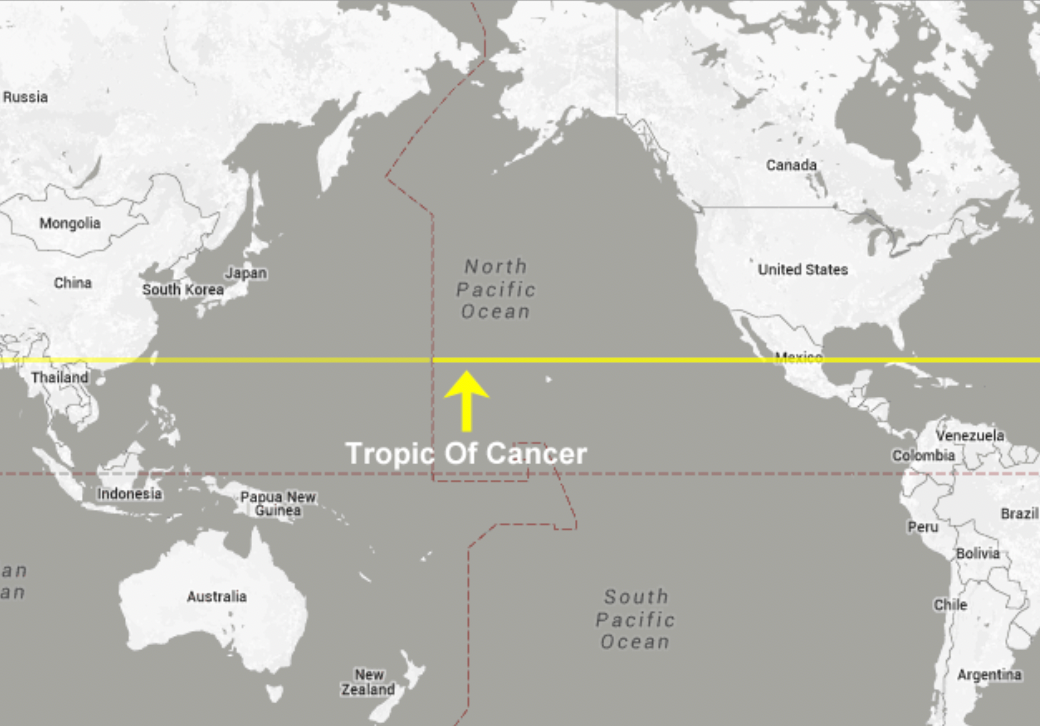
Shenzhen sits adjacent to the Tropic of Cancer
Likewise, how many people talk about Shenzhen's creative districts? They wouldn't look out of place in any coastal city in the United States or Europe. There are pleasant little terraces where you can sit and order dessert; there's public art, though the style can only be described as, shall we say, "eccentric."
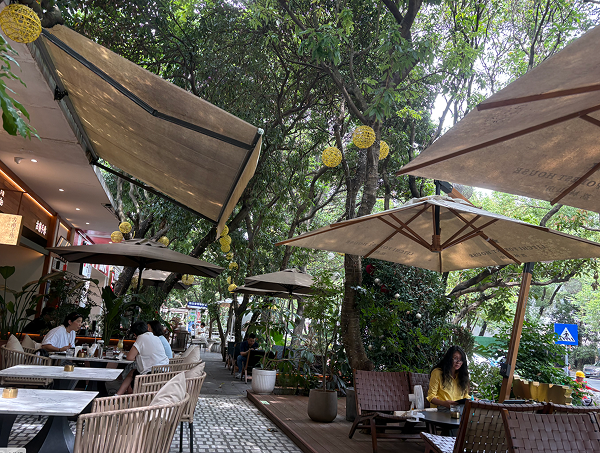
A café in a Shenzhen creative district
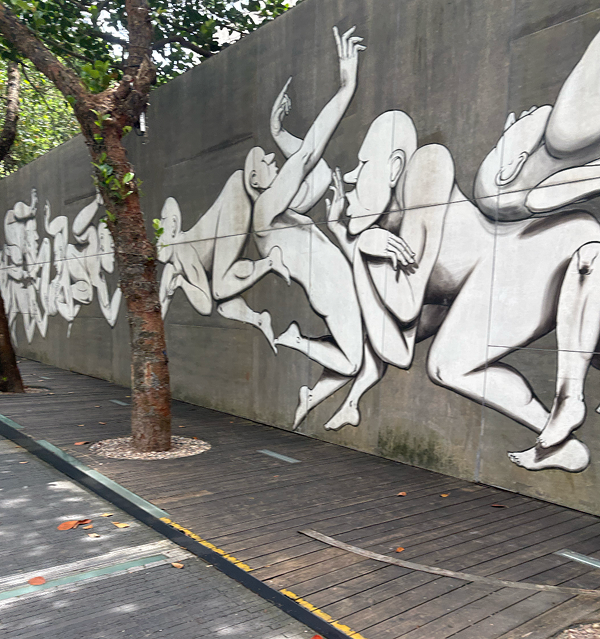
That "eccentric" mural in a Shenzhen creative district
On day four, I toured a Shenzhen factory that manufactures UPS units and PCBA.
UPS stands for uninterruptible power supply, which keeps data centers running during grid failures. PCBA is printed circuit board assembly — the process of mounting various components onto bare boards.
During the tour, the first thing my guide told me was that in Shenzhen, similar factories — laser cutting shops, PCBA plants — tend to cluster together, because upstream component factories determine where the industry's center of gravity lies. Walking into the ground floor and seeing pallet after pallet of raw materials being wheeled in, awaiting delivery to the production lines upstairs, you immediately understand why these factories bunch together.
The building I toured had six floors: the first for warehousing, the second through fourth for assembly, the fifth for testing, and the sixth for offices and management. They claimed to be among China's leading manufacturers in their product category for UPS and PCBA, which sounded plausible enough. They also said they were among the top exporters of consumer-grade UPS units to Russia. The CEO's assessment of Russian customers was withering: "They can't make good enough products themselves, so they have to come to us for OEM." Brutal.
There were at least several hundred people in this building, most doing manual assembly. The workers' English wasn't strong, but many signs and machines still bore English lettering, so I could infer the gist from my existing technical background. Even testing equipment with Chinese labels displayed Arabic numerals and globally understood technical acronyms like "PCB" and "AI."
After the tour, we had tea with the CEO and several core managers for a casual chat. Since I hadn't given specific purchase quantities, this didn't qualify as serious business negotiation. But I visited several more factories that day and found that most companies keep a tea set ready at all times, like this one.
Talking business over tea
I also visited a company that produces counterfeit branded hats. Knockoff LV, Chrome Hearts, or team merchandise isn't uncommon among young Chinese; but this company's actual target markets are Russia and Mexico, selling to people who can afford "90% similar" luxury goods. A hat costs 14 RMB to make, roughly $2; depending on the SKU, it sells for several hundred RMB, or $20 to $50. They ship hundreds of thousands of units annually, and certain SKUs have margins that exceed Nvidia's. Sorry, Jensen. If you really want to make money, maybe you should sell hats instead of GPUs.
New York or Nowhere! (Made in China)
Flying from Shenzhen to Hangzhou — roughly from deep southern China to near the country's middle — I took a domestic flight. The aircraft was an Airbus, which struck me as odd: why would a Chinese domestic airline use foreign-made planes? The explanation I heard was that most of China's aerospace talent is funneled into military projects in inland regions. But this also illustrates, from another angle, just how incredibly, incredibly difficult it is to make jet engines reliable and then scale them.
An Airbus (European) aircraft
Cross-Cultural Navigation as Arbitrage
A key reason SoftBank founder Masayoshi Son's career took off so rapidly was that he served as a "Japan whisperer" for many top Western tech companies — including Microsoft in the 1980s and Yahoo in the 1990s.
Similarly, Chinese companies often need someone who truly understands America to decode the hidden rules of American business. Many mainland Chinese have of course lived, worked, and studied in the United States; but America has its own distinct social norms, subcultures, and tacit knowledge. Sometimes, these invisible things are precisely what determine whether a billion-dollar deal succeeds or fails.
The Hangzhou skyline
One interesting observation: in China's tech-finance circles, and broader Asian markets, the Silver Lake Hong Kong TMT team functions as a kind of professional network "hub" — many people launch from there. I've met several people now at SoftBank, top-tier VC firms on both sides of the Pacific, and Chinese corporate strategic investment divisions who all have Silver Lake on their résumés. This is hardly the only institution in China with such network effects, but it's one I keep encountering.
Chinese culture still harbors a strong craving for Western validation. Interestingly, this doesn't mean Westerners actually living in China are necessarily welcomed or respected. But the near-worship of Elon Musk — and in a different way, the frenzy around streamer iShowSpeed — is genuinely hard to ignore.
1 AM in Shenzhen with iShowSpeed
Factory owners, investors, and founders repeatedly told me that competition in the United States is nowhere near as brutal as in China. Machine tool suppliers, for instance, constantly fight over new intellectual property. This allows new inventions to diffuse rapidly, but also makes it nearly impossible for any single supplier to build lasting competitive advantage. Yet if you survive this Thunderdome of competition, you can usually beat Western companies that try to compete with you. I've seen many electric vehicles of genuinely high quality (not just cheap junk) selling for under $15,000. Western companies, good luck.
So I now fully believe: China in the coming decade will not simply be a scaled-up version of the past decade. The changes will be not just quantitative but qualitative.
First, a question: what do Huaqiangbei's electronics markets, the fashion companies in Shanghai's corridors, and battery giant CATL have in common? The answer: they all want to move up the value chain into more profitable businesses.
Factories producing resistors, capacitors, and printed circuit boards are now setting up stalls in Huaqiangbei to sell directly to consumers. Textile OEMs that once manufactured handbags for Prada have decided to launch their own brands. CATL used to mainly sell battery cells to EV manufacturers; now it's selling complete battery packs, capturing the systems integration margin too; meanwhile, it's pushing into battery swapping, and making major moves into grid storage and data center markets.
EV charging versus battery swapping
Beyond scaled hardware companies finally being able to do what others cannot, I think there's another frequently underestimated driver behind these changes: China's younger generation wants to outdo their parents. If your parents ran a factory producing components for premium Western brands, then your generation's goal — especially after overseas education — is likely to become that premium brand you once looked up to.
This sets off so many second-order effects that I haven't even had time to truly dig in.
It's wild.
Second-order (and even third-order) effects are always weirder than they first appear
Venture Capital in China
Chinese venture capital is somewhat peculiar. Among the large "first-tier" institutions like HSG, IDG, Matrix Partners China, ZhenFund, and Hillhouse, HSG is somewhat unique: it has substantial American LPs and American companies in its portfolio. Meanwhile, the strategic investment arms of major companies like BYD, DJI, Alibaba, Tencent, and Baidu seem more present in Chinese VC than hyperscale tech companies are in American domestic venture capital. In Shenzhen, many early DJI employees have achieved financial freedom and invest in each other's projects.
I mention this because even with the most complete digital records of Chinese VC, you may not know how to count every truly important deal, let alone how to get into them.
Many excellent Chinese VCs I've spoken with candidly admit that over roughly the past 15 years, China's high-end finance and software industries borrowed heavily from the United States. Some complain that opportunities are better in America because Chinese people "work harder than Americans for worse returns." However, many say the investment focus is gradually shifting toward hard tech.
One example of this shift: the Shanghai Party Secretary (who previously served as dean of Tsinghua University) helped launch Shanghai's new 100 billion RMB hard tech fund.
The American equivalent would be like the MIT president later becoming mayor of Los Angeles and pushing to create a fund pouring tens of billions into biotech, semiconductor, and AI companies. Pretty crazy, right?
China's strength in many hard tech markets comes not just from talent reserves, but from second-order effects of being able to tap into "the world's largest manufacturing capacity pool." Additionally, the Chinese government explicitly supports many new hardware technologies; a rough read through the Five-Year Plan reveals the priorities. We're currently in the 15th Five-Year Plan cycle (2026–2030). China doesn't always hit every target in these plans, but these documents likely contain billions of dollars worth of interesting insights.
Finally, a mainland VC told me their AI founders mainly come from a few categories: researchers currently at top AI labs, those who recently left these labs, and those who just completed PhD training in China. They also closely watch newly hired top assistant professors in China, especially those who did PhDs or postdocs in the United States. However, some investors expressed regret that while these researchers are strong in their respective fields, when it truly comes to choosing an entirely new research or entrepreneurial direction and making it "their own," their ambition often falls short of their American counterparts.
So What Company Should You Build
After learning about China, many people ask: "What company should I build that won't get crushed by Chinese competitors?"
First, I believe enterprise software and cutting-edge AI research remain areas where the West holds a relative advantage. Many Chinese companies are reluctant to pay for enterprise software, always convinced they can build it themselves. China certainly has no shortage of brilliant AI researchers, but several have admitted to me that when it comes to blazing entirely new trails, they're currently less adept than they are at rapidly catching up within existing paradigms and engineering practical implementations.
Standard ITAR-related work, along with defense, aerospace, and nuclear projects tied to the US government, will of course only happen in the United States.
The same goes for locally installed and service-based businesses. Whether it's installing backup batteries in homes or implanting invasive neural technology in brains, these companies are unlikely to face direct competition from Chinese firms in the US for safety and branding reasons.
As a founder, what genuinely worries me is the third market beyond both China and the US. There, tariffs and government barriers may not shield you from competition, and you'll have to go head-to-head with Chinese hardware suppliers directly. High-margin markets like data centers offer some buffer, but the challenge remains significant. Founders preparing to expand overseas should carefully estimate profit margins and think hard about what truly differentiates them.
Four Mostly Unrelated Small Stories
During a recent call with Packy, he remarked that whenever we chat, I always end up telling some interesting small stories. They don't always fit into a coherent through-line, but they're worth jotting down anyway.
So, to close this piece, I want to leave four loosely connected stories.
First, if you lose your passport in China — unfortunately, I actually did — don't panic. It happens more often than you'd think, and consulates have established procedures in place, such as calling China's immigration hotline at 12367.
For US citizens, the real headache isn't getting an emergency American passport — the US Consulate can issue one same day — it's losing your identity record in China's mainland immigration system. I was on a 240-hour visa, and fortunately had enough time remaining to exit. I went to the US Consulate General in Shanghai, then checked with the local Exit-Entry Administration office, so I didn't need to renew my visa.
With a regular visa, however, you'd typically need to reapply or extend it, a process that could easily take several working days. Without a valid visa, airport staff and customs police will naturally be suspicious; but after calling 12367 and completing verification, they'll eventually accept your explanation and let you depart.
Shanghai Exit-Entry Administration service hall
Second, this China trip turned me, a hardware enthusiast always hunting for "problems worth solving," into more of a software startup advocate than I expected. Sure, another generic software startup isn't necessarily the best use of people's time and energy; but after heavy use of Chinese apps, I genuinely started missing my SaaS brothers back in San Francisco.
As shown below, Chinese super-apps like WeChat and Alipay, which cram everything into a single application, don't pursue minimalism — they deliberately stuff in vast amounts of information. Chinese itself is an information-dense language; a single character can express quite complex concepts. For native Chinese speakers with a China +86 phone number, these apps work wonderfully. But if you're just starting to learn Chinese and have a US +1 number, it takes some getting used to.
That said, I even feel that this high-density interface forces me to think faster in some ways. Ask ten people whether China is always "copying Western innovation" and you might get twelve answers; but consider this: one person's information input speed is 10 bits per second, another's is 30 bits per second. Faced with tasks requiring massive information processing and heavy lifting, who has the advantage? Obviously the one receiving 30 bits per second.
Meituan food delivery app interface
Third, if you visit a first-tier city in eastern China — Beijing, Shanghai, or Shenzhen — look up and check for helicopters. Odds are you won't see a single one. I was told the reason is a few high-profile fatal helicopter accidents in the 1990s, after which the Civil Aviation Administration of China (roughly equivalent to America's FAA) adopted an extremely strict posture. It's somewhat akin to America's overreaction to nuclear energy after several reactor meltdowns.
Hard numbers are difficult to find, but I wouldn't be surprised if the US has an order of magnitude more civilian helicopters than China. Given China's massive industrial capacity in other domains, this is rather anomalous.
But this story isn't really about helicopters — it's about the far more interesting eVTOL, or electric vertical take-off and landing aircraft. My basic read is that the US will probably take nearly forever to approve eVTOL for any meaningful commercial scale operations; China, on the other hand, might just push forward. The technology exists; I was also told that Beijing seems inclined to make it a target. But the biggest obstacle remains the CAAC. Supposedly, the regulator is extremely cautious and has little interest in competing for "first country to deploy eVTOL at scale" — mainly out of fear that mass rollout could lead to large numbers of highly public, horrific fatalities.
As for why Beijing doesn't simply override the regulator, my understanding is: eVTOL is a bit like quantum computing. The tech is certainly cool, but if it doesn't materialize in the next five years, will you lose your job over it? Probably not. So, business as usual.
Civil Aviation Administration of China, roughly equivalent to the US FAA
The last story happened on my third day in Shenzhen. A friend who lives there and runs a large software company told me that for Chinese enterprises, the only truly usable domestic AI chip is "basically Huawei." Of course, companies can currently access and use plenty of Nvidia GPUs as well.
He cited Moore Threads as an example. In his view, this is China's number-two chip company, founded by Nvidia's former China head. The company has sold thousands of GPUs, but because it's so difficult to run relevant AI workloads on these chips, many remain sitting idle in warehouses to this day.
I haven't personally inspected these chips or run workloads on them. But broadly speaking, China's GPU software layer is still developing, though networking interconnect and chip packaging capabilities are already quite strong. My friend also predicted that within four years, Huawei will be competitive with Nvidia at the rack-level system; but he cautioned that in the AI world, "four years is almost like a lifetime."
Chip company Moore Threads
This journey has only just begun — really, only just begun.
Thanks for reading.