The Apps Trying to Become the Next Douyin

If Douyin had been born in the AI era.
If Douyin had been born in the AI era.
👦🏻 Author: Jingshan
🥷 Editor: Koji
🧑🎨 Layout: NCon

In 2016, Douyin changed the entire internet with a simple logic: make content shorter, lower the barrier to creation, and let everyone shoot, post, and get seen.
Ten years on, that same logic is being rebuilt from scratch by a wave of new companies using AI. If short video turned "watching content" into a mass behavior, can AI do the same for "making content"?
Over the past two years, a new product form has started popping up everywhere: users say one sentence, and AI generates an interactive piece they can actually play — mini-games, gadgets, personality quizzes, digital toys, whatever. Once finished, it drops straight into a content feed. Others scroll to it, play it, and with one tap can Remix it into their own version. It's basically "Douyin you can play with."
If this proves out commercially, the next Douyin-scale platform may be hiding among these products. Some have already broken a million downloads in their first month; others have raised serious funding while still in closed beta.
🚥
We mapped out six AI-native startups running ahead of the pack: Loopit, Wabi, AIPPY, Rezona, Gizmo, and Sekai — what each is building, how far they've gotten, and why investors are willing to bet this early.
If Douyin had been born in the AI era, what would it look like?
1) Loopit: Turning "Content" Into Something You Can Actually Play With
Loopit is the one generating the most buzz domestically lately. The product form is simple: vertical scroll, and every single piece of content is interactive.
But unlike short video, you have to participate.

On Loopit, you type a sentence or upload an image, and AI generates an interactive piece you can play immediately. It could be a mini-game, interactive story, blind-box draw, logic puzzle, absurdist comedy bit, or a digital toy.
But it emphasizes one thing in particular: tapping phone hardware. Microphone, gyroscope, volume buttons, tap frequency — all of it can be wired into the logic.

Blow into the mic and fire shoots out. Shake the phone to trigger an Easter egg. Long-press to unlock a hidden clue. Once generated, the piece goes straight into the content feed. Others scroll to it and play.
If something catches your eye, you can Remix it directly — tweak the logic, create your own version, and post it. A clear remix culture is already taking shape on the platform. One interactive template spawns dozens of variants.
2) Wabi: Build an App With One Sentence
Wabi is a very new product, just launched, and it's primarily trying to solve one question: can ordinary people build apps?
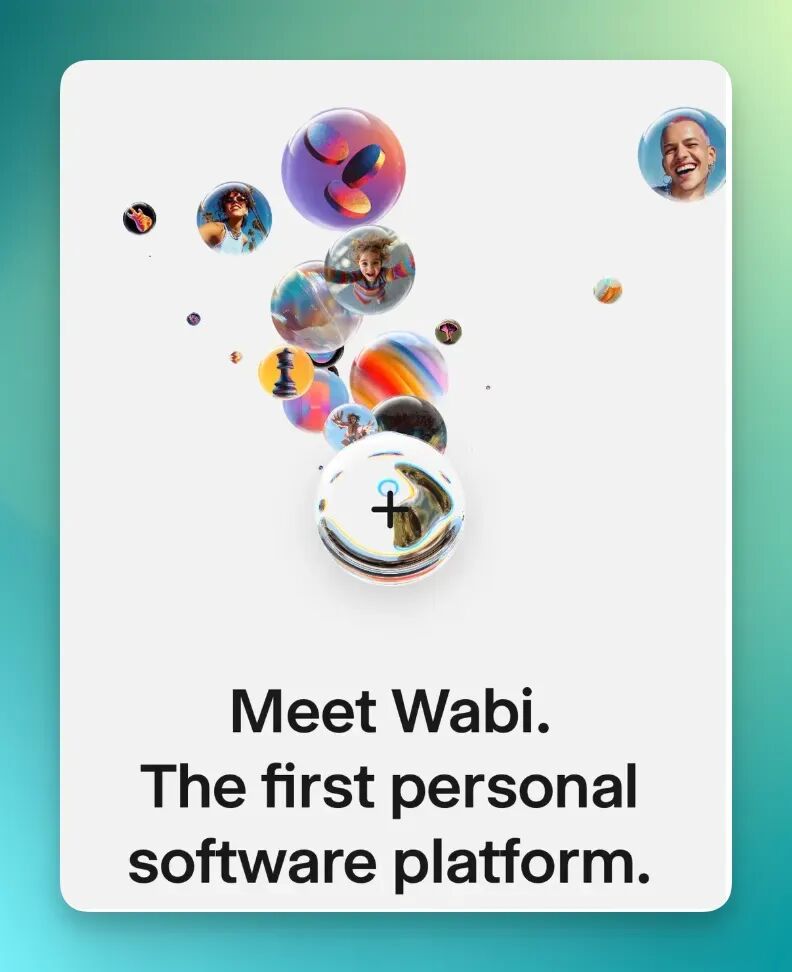
The founder is Eugenia Kuyda. You might not recognize her name, but you've definitely heard of Replika, the viral AI companion app — that's hers. She has deep experience in "building AI products for regular people."

What Wabi wants to build: a platform where you don't need to learn programming, set up environments, or understand any technology to make a product.

What is it actually doing?
In Wabi, you just describe what you want in normal speech — "I want a little tool to track my mood every day" or "Help me build an app that auto-organizes my materials" — and AI generates the app directly, ready to use.
Interface, features, data structure — all handled in the backend. The user never sees a single line of code.
Finished apps can be posted directly to the platform. Others can see them, like them, comment, or even grab your version, modify it, and publish another variant.

There's an explore page, a recommendation feed — the whole thing feels more like an "app creation community" than a traditional app store. Creation and distribution are fused.
That said, it's still in closed beta, invite-only, and the product isn't stable yet.
A fair number of founders and designers are already testing it, and there's plenty of chatter on social platforms. The general feedback: fast to get started, fast generation speed, but quality is inconsistent.
Sometimes content repeats, sometimes data goes stale, some apps start throwing errors after a few days. The team acknowledges these issues and says they're actively fixing them.
The official account drops invite codes periodically — worth keeping an eye on.
Wabi raised $20 million right out of the gate, led by a16z.
Publicly disclosed investors also include some very well-known institution founders: AngelList co-founder Naval Ravikant, YC CEO Garry Tan, Twitch co-founder Justin Kan, and Notion co-founder Akshay Kothari.
After investing, a16z even wrote a separate blog post explaining why. Their core logic: YouTube made "posting video" something anyone could do; Wabi wants to do something similar.
The essence: making "building software" something anyone can do — huge potential.
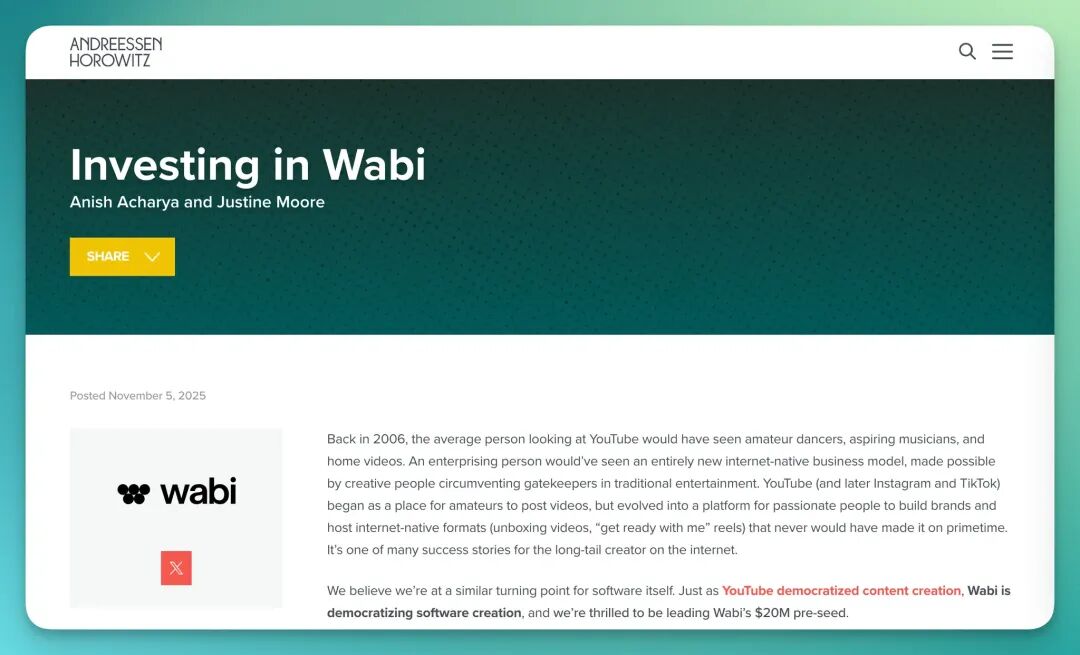
They also noted that the market currently has almost no truly intuitive AI-native interfaces. And most AI tools are single-player, with no multiplayer network concept. Wabi fuses creation and distribution, which could produce genuine network effects.
This is something most AI tools currently lack.
As the long-tail software market gradually matures, a16z sees three scenarios emerging: chat, companionship, and coding. Wabi sits right at the intersection of all three.
Why bet this early?
First, bet on the founder.
Eugenia previously grew Replika to over 40 million users, consistently ranking in the global top 10 for companion AI chat apps by downloads. Monthly active users hit the 1-2 million range.
This proves she can scale an AI product to mass adoption. She has genuine product sense for "how ordinary people use AI" — she's not just building tech demos.
Looking at her past product trajectory, she prioritizes experience and long-term user relationships.
Second, bet on the direction.
AI coding, AI app-building — this track is hot right now. But most products still target programmers. Wabi goes directly to non-technical users, which dramatically lowers the barrier. If the platform gradually attracts people who keep creating, a new app distribution network could emerge.
Still early, still being polished. But this direction plus this founder combination is well worth continued attention.
3) AIPPY: A Mobile Creation Community Where You "Build With Your Mouth"
AIPPY is an AI creation community focused on "making interactive pieces through talking and typing," backed by Chinese overseas tech company Newborn Town, where it serves as the flagship "AI + social" product.

What is it doing?
AIPPY's goal is simple: push the barrier for "making mini-games, interactive gadgets, digital micro-works" as close to zero as possible, so ordinary people can create with just their phones.
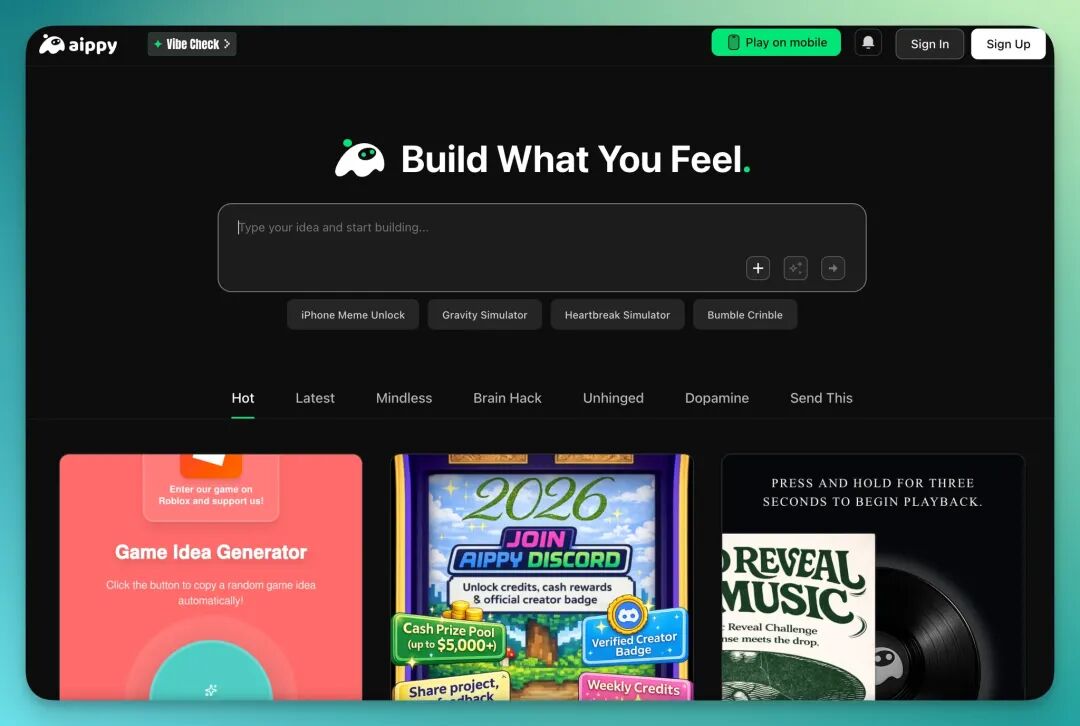
You describe what you want in one sentence on your phone — "make a mini-game," "make a fitness planning tool," "make a generative art toy" — and AI generates the interactive piece directly, ready to play instantly.
No coding, no learning anything.
It also supports voice input: just talk to your phone, and the system converts it to prompts then generates. The team's thinking is to keep pushing the barrier down, making creation feel more like chatting.
Open AIPPY and you're in a feed of works, infinite scroll down, seeing all kinds of mini-games, interactive experiments, and gadgets others have made. When you find something you like, you don't just play it — you can tap Remix, modify it on top of the original, and post your version.
The platform actively encourages this relay-style creation, letting all kinds of ideas layer and grow in the community. The team regularly runs Remix challenges and creation contests, using prizes and rewards to build community energy.
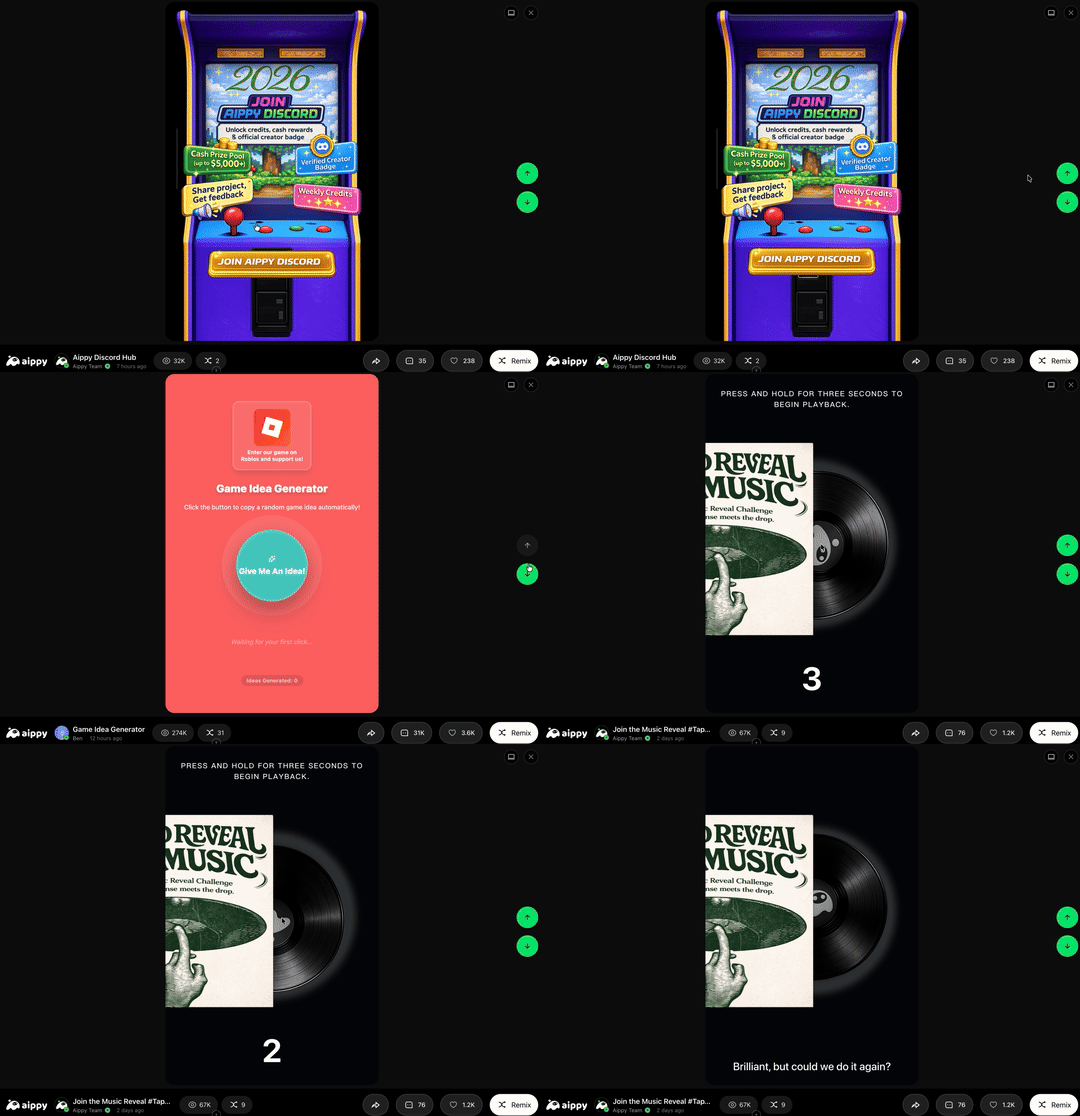
Where is it now?
AIPPY started testing in mid-2025, officially launched on iOS and Android later that year. Early spread relied mainly on app store word-of-mouth and organic creator community growth — no heavy PR push in major media.
Downloads are already in the six figures, with strong ratings. On Android (Google Play), AIPPY has roughly 200,000 cumulative downloads; on iOS, it's accumulated thousands of ratings — solid growth.
Many users treat it as an "interactive content feed you can keep scrolling," playing as they browse, creating as they go.
From an investment perspective, what's attractive?
First, it captures massive demand. Lots of people have ideas but can't code. Using AI to turn ideas directly into playable things — once this entry point smooths out, user growth can spike fast.
AIPPY's overall design delivers immediate feedback. Say one sentence, immediately get something playable — strong positive reinforcement, easy to keep using, easy to share and pull in new users.
Also, the product targets broad scenarios. Mini-games, learning tools, art interactions, experimental projects — all generable, not locked to single use cases, so community content stays diverse.
Overall, AIPPY represents a new product form: mobile, zero-barrier, AI-driven, community co-creation.
Still early days, but if both users and creators stay active, it could easily grow into a sticky interactive content platform — well worth continued attention.
4) Rezona: Turning Memes and Brainstorms Into Playable Mini-Games
Rezona is an AI mini-game generator mobile app, developed by Stratava Group, registered in Hong Kong, with a Chinese founder team.
This team doesn't play by traditional game company rules. They position Rezona as a creative technology platform, more like a small innovation team, with core focus on technology and user creation experience.
Some on social media have noted they operate less like a game studio and more like a group of people genuinely interested in technology and creation who happened to come together.
It positions itself as an AI game creator, with a clear target user: young people who constantly scroll memes, jokes, and viral content. The team wants to compress the distance between "random idea" and "game" to the absolute minimum, so a throwaway joke in a group chat becomes a playable mini-game in seconds.
Open the Rezona app, type one sentence in the input box — "make a cat dodge pizza in space" — and AI starts generating, quickly delivering a mini-game you can tap and play. No programming, no design, no knowledge required.
The home screen is a vertical scroll feed, each screen a mini-game or interactive piece you can jump straight into. The experience resembles short video scrolling, except what you scroll to is interactive. Trivia quizzes, pixel-art mini-games, pure absurdist bits — eclectic styles, but strong internet-native sensibility.
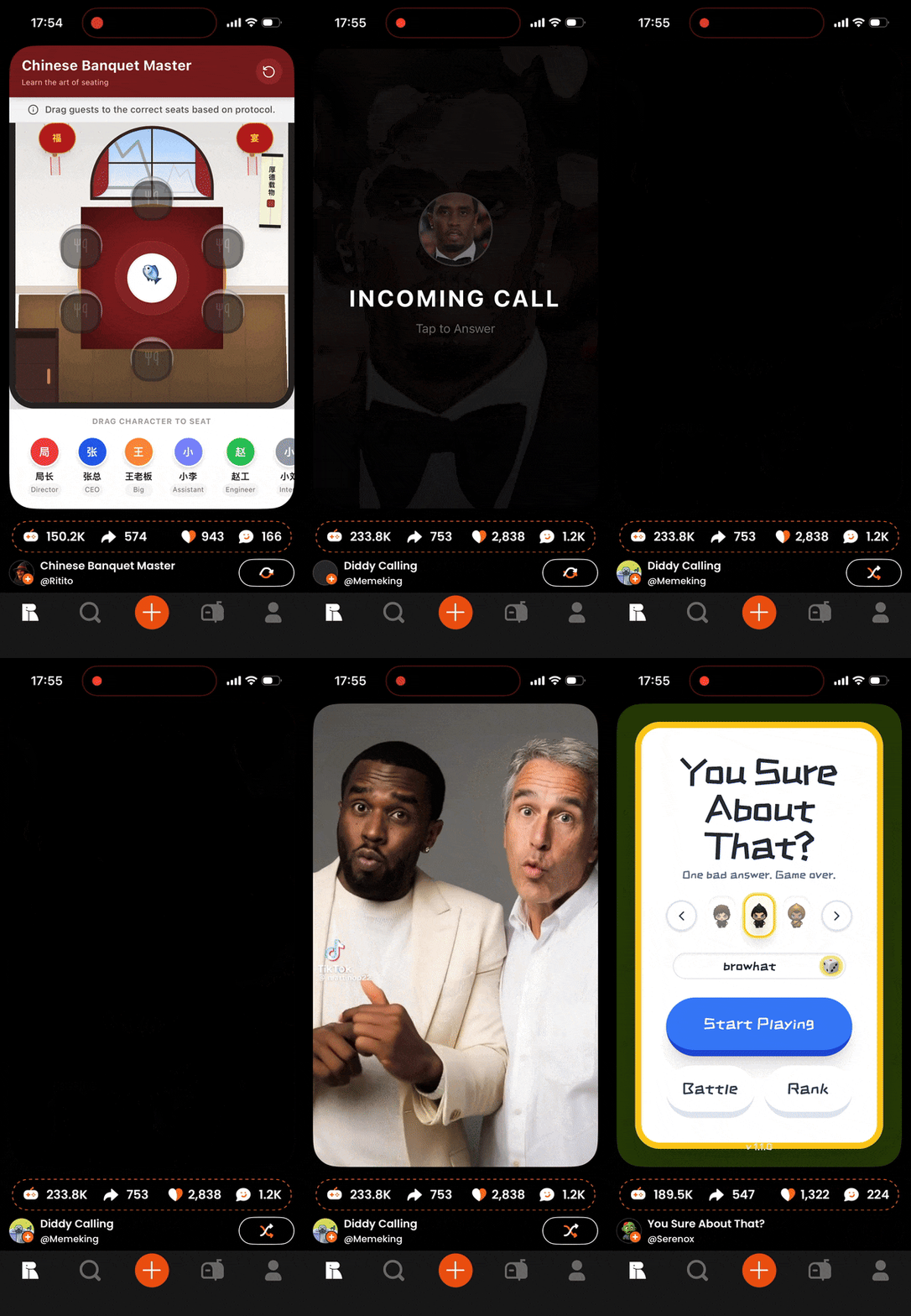
When you see something you like, you can like it, drop emoji reactions, write comments, or Remix directly.
Where is it now?
Rezona only released version 1.0 in late 2025 — not early to market — but growth has been explosive. In roughly one month, Rezona's global downloads broke 1 million.
Meanwhile, Rezona's daily active users (DAU) continue growing, and this is without major media exposure — basically driven by the product's own viral mechanics and user sharing.
The growth logic behind this is simple: low enough barrier, fast enough spread. Users type one sentence to generate a game, then throw the link to friends who tap and play, then want to make their own — spreading layer by layer.
Unlike pure functional generation tools, Rezona is more fun and better suited to social contexts. This is the main reason it crossed a million downloads so fast.
From an investment perspective, what's the logic?
First, it captures the "AI + entertainment + meme culture" combination. Tools don't necessarily explode, but entertainment platforms are different — once a few viral mini-games hit, spread velocity goes exponential.
Second, like the products mentioned above, its usage barrier is essentially zero. One sentence, one game, instant feedback — easy to keep creating, easy to keep sharing. Mini-games are inherently suited to group chats and communities, and with Remix mechanics, secondary creation keeps compounding, creating chain reactions.
Finally, completely free right now — no ads, no point limits — highly attractive to creators. Pull in people and content first, monetize later — classic early community platform playbook.
Overall, Rezona represents a fascinating direction: using AI to compress entertainment creation barriers to the minimum, then amplifying content spread through community and Remix.
5) Gizmo:
Gizmo is a "scroll and play" AI interactive content platform. The company behind it is Atma Sciences, headquartered in New York. The team keeps a low profile, with both engineering and product backgrounds — a typical technical-founder combination.
What is it doing?
Gizmo wants to turn interactive micro-apps into a content format — something you scroll through, play with, and share, just like short video. Every piece of content on the platform is a mini interactive piece you can jump straight into playing. They call this content: a Gizmo.
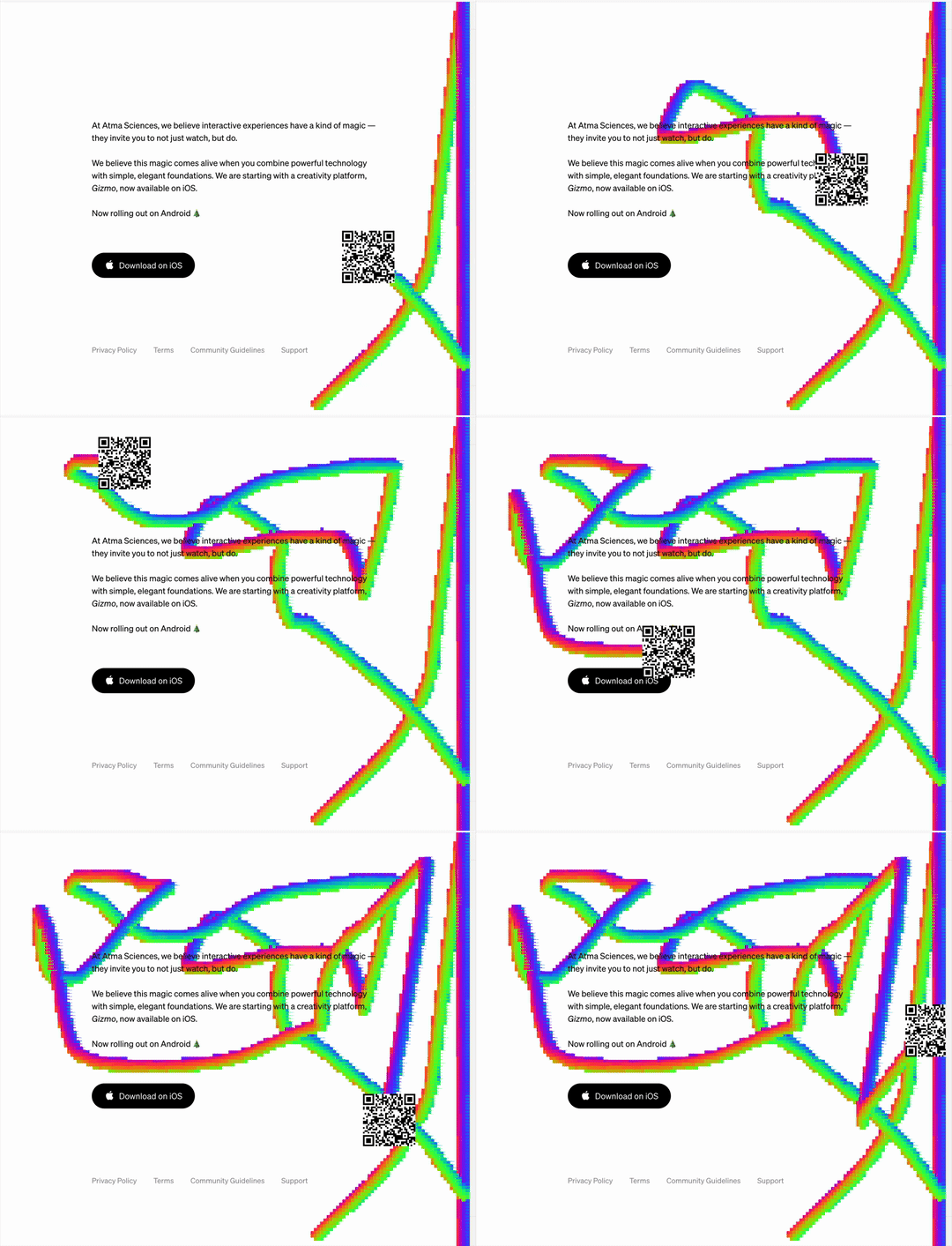
The team has character — Gizmo's official website is designed with this "QR code pixel drift" effect:
In Gizmo, you describe an idea in one sentence, add an image or some interaction settings, and AI turns it into a running little thing. Could be a mini-game, interactive animation, utility tool, or just a fun digital toy.
The whole product doesn't require scores or completion — the point is interactivity and novelty.
The product itself is vertical scroll, each screen a new Gizmo. Tap in, poke around, drag things, shake your phone. Like it and comment if you enjoy it; keep scrolling if you don't. See something interesting? One-tap Remix, modify on top of the original, and post your version.

Where is it now?
Gizmo launched in 2025 and grew fast. Third-party data shows installs hit the hundreds of thousands within six months, with clear month-over-month spikes — indicating very rapid spread among young users.
Funding is also relatively clear. Atma Sciences completed a roughly $5.49 million seed round, led by First Round Capital. This fund has backed many well-known consumer and creation platforms early — Uber, Notion, Square — and carries serious weight in early-stage investing.
Landing them as lead sends a strong signal that this direction is being taken seriously.
Interestingly, when media reported on Gizmo the product, founder Josh Siegel initially declined, saying he wanted to polish the product first. This style also shows the team is still product-first.
For example, TechCrunch repeatedly tried reaching Atma Sciences' founding team through email, investors, and LinkedIn, hoping to arrange interviews.
But they never got a response from any founder — the team wasn't ready for media coverage yet.
What's the team like?
The core is several Atma Sciences co-founders with clear division of labor: CEO Josh Siegel, who held product roles at Snap (Snapchat's parent company) and at Looker, handles product and direction; the CTO owns technology; and co-founders with engineering and creative tool backgrounds participate as well.
So Gizmo is backed by a strongly technical team.
From an investment perspective, what's the logic?
AI isn't just helping people write and draw anymore — it's starting to help people make interactive content. Once interactive content enters feed-based distribution, it could become a new platform form.
User feedback in Gizmo is direct: scroll to play, play to modify, modify to post — strong positive reinforcement, easy to extend session time. It's aimed at mass entertainment, not professional developers — bigger user base, lighter content, easier to scale.
With First Round Capital in early, it equals a strong signal: AI plus playable content feeds is being viewed as a next-generation content platform direction.
6) Sekai: Upgrading "Content" From Watching to "Playable, Modifiable, Spreadable"
Sekai is an AI interactive content social platform. The name means "world" in Japanese; the team wants to express: turning content platforms into places you can play with.
What is it doing?
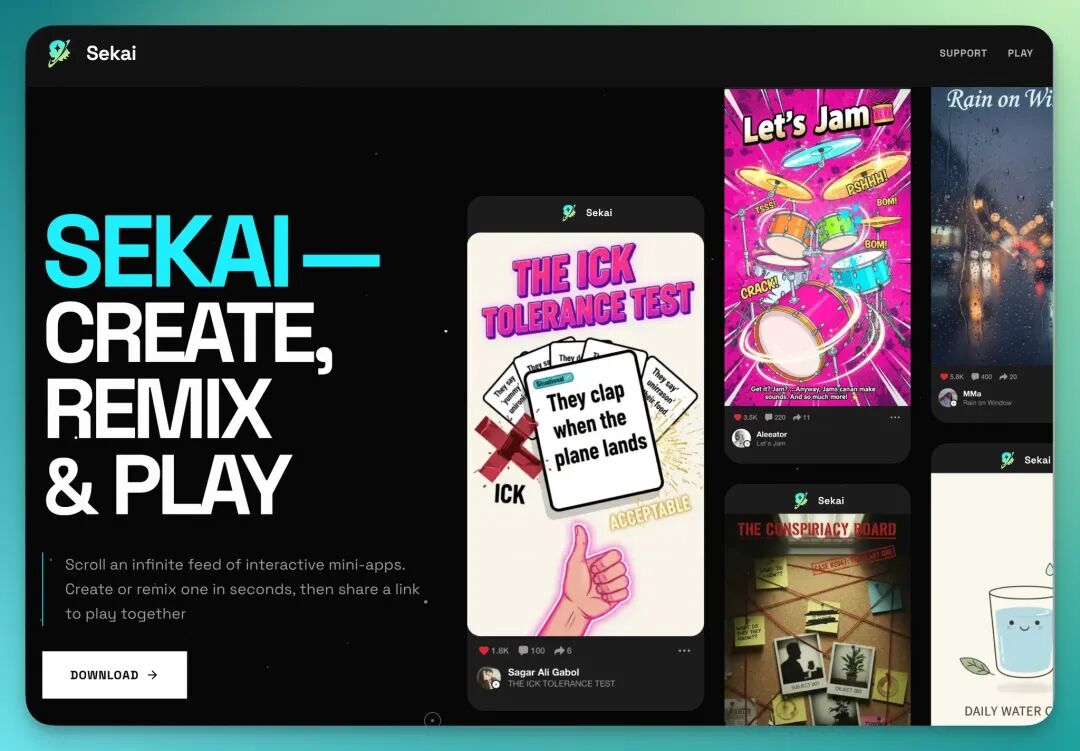
Sekai makes "playable posts." Every piece of content on the platform is a mini interactive app — internally called a Sekai or Jam.
You type a few lines of description — make a personality test, a branching story, an absurdist mini-game, an interactive greeting card — and AI turns it into a playable piece in seconds. Friends don't need to install anything; tap the link and participate.
Modifying is fast too. See someone else's Jam, hit Remix directly — swap themes, characters, styles, apply new memes — and quickly post your version.
Many users turn group chat jokes, couple Easter eggs, friend profile pic memes into mini-games to spread. The home screen is an infinite scroll feed, but unlike short video, every piece here requires playing with your hands. The whole product keeps saying one thing: don't just watch, participate.
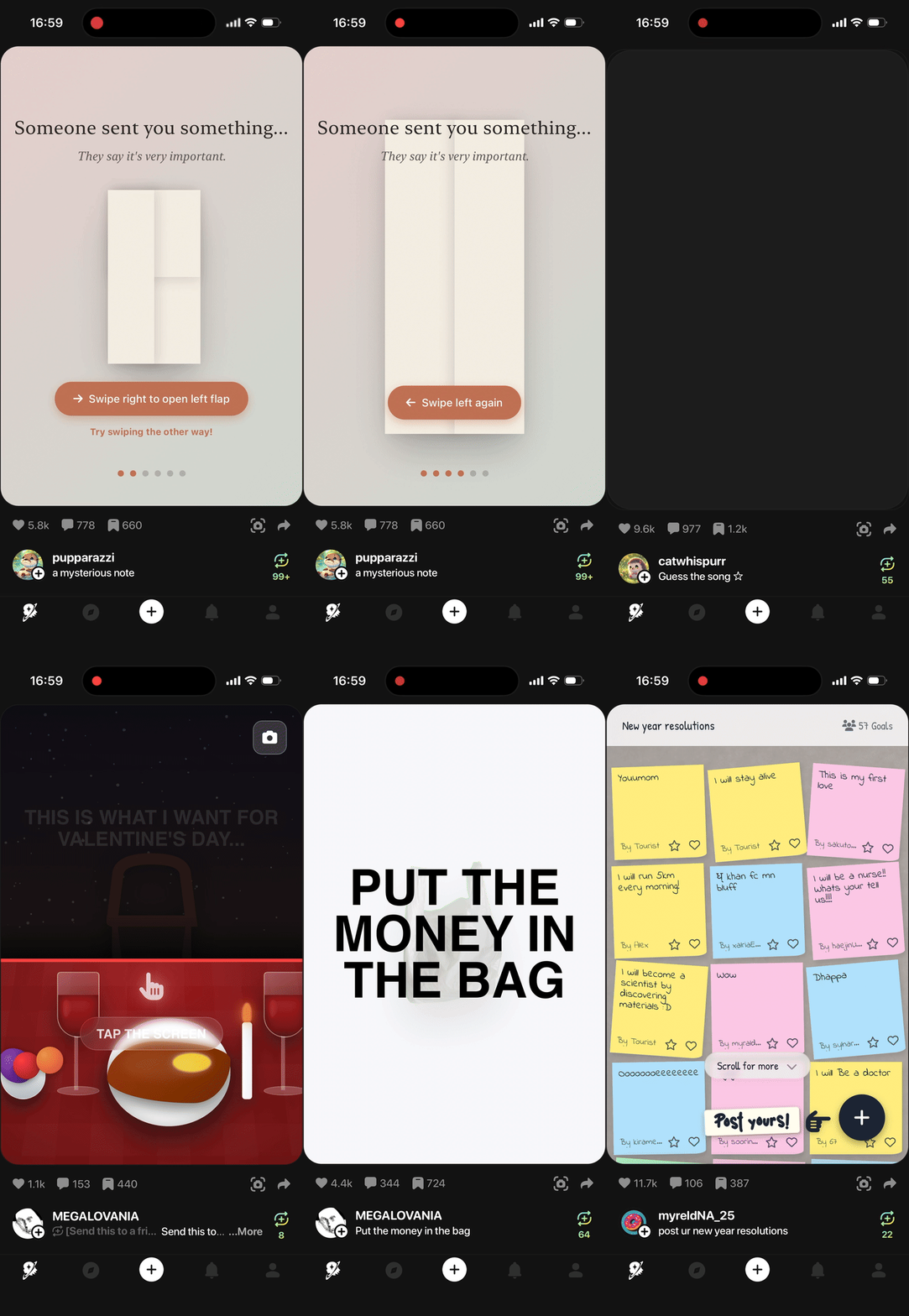
Where is it now?
Sekai is still in early expansion, but user growth has been solid — total downloads have already exceeded 2 million, showing the product has built meaningful user scale.
Update pace is fast: comments, likes, following creators, profile pages, draft saves, and search were all added in quick succession.
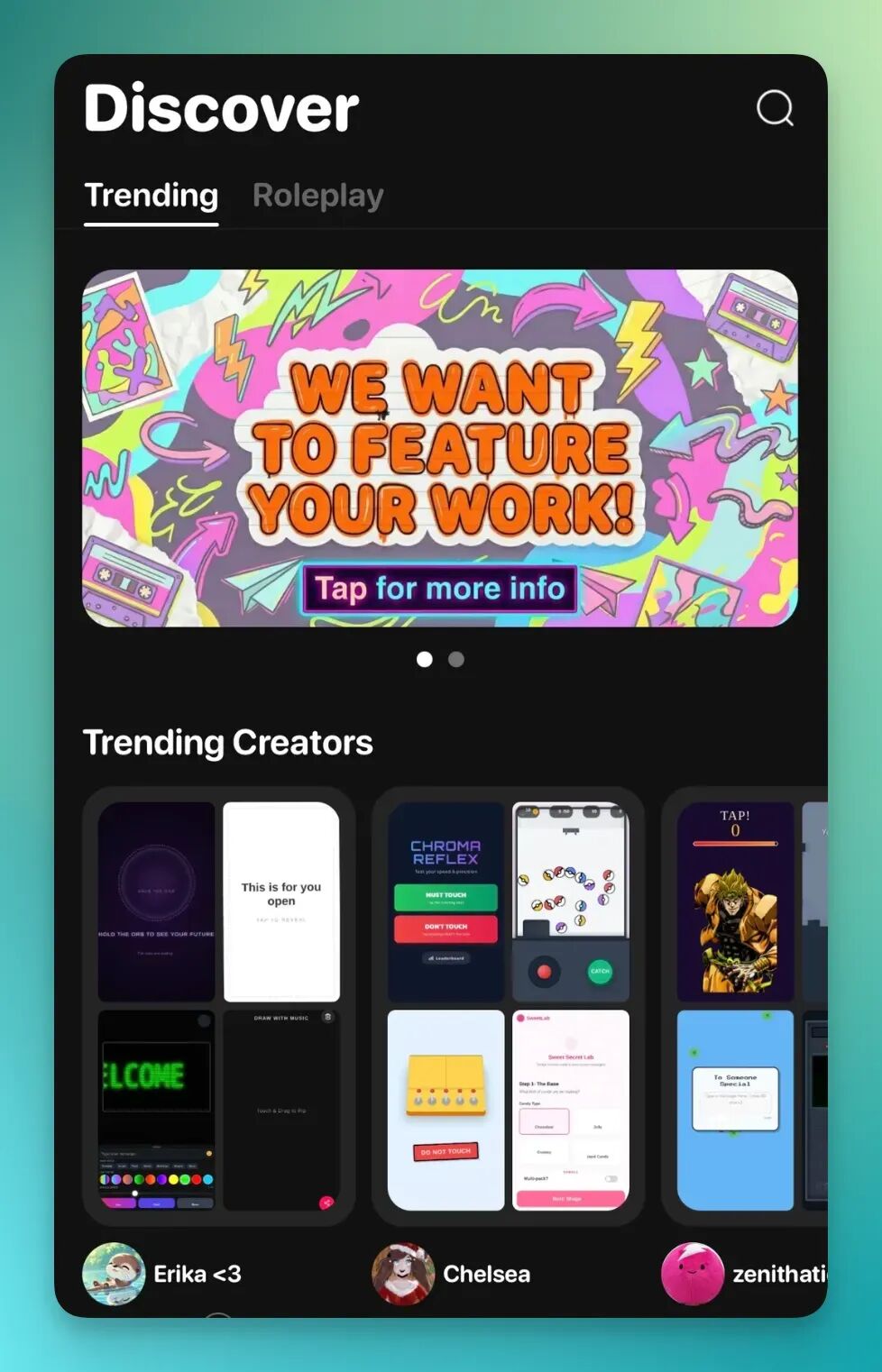
Sekai's team is Versa AI, led by a Chinese founder — Ziang Zhang (Versa AI founder) — who was key in building Sekai, having worked in Silicon Valley before returning to China to start companies.
Sekai has raised nearly $10 million to date, with a16z, A Capital, and Mayfield Fund among investors.
From an investment perspective, what's the logic?
Sekai turns generative AI directly into a social expression tool. Content that gets friends involved spreads stronger.
In experience, the overall social loop design is quite complete: create, publish, Remix, follow, profile沉淀 — platform-level product structures built early.
Content like interactive quizzes, absurdist mini-games, custom greetings is inherently suited to spread and monetize. And a key point from user feedback: many treat it as a "content factory for things to send friends to play together." Once this spread loop runs smoothly, growth becomes natural.
For capital, if this type of product can produce a few viral interactive hits, it has a shot at upgrading from niche creative community to mainstream interactive content platform. Risks exist, but so does high ceiling.
🚥
Looking back at these six companies, product forms vary, but the underlying logic is nearly identical:
Use AI to compress the barrier of "making things" to roughly the same as "posting to Moments," then distribute those things through content feeds.
Blog era: anyone could write. YouTube era: anyone could shoot. Short video era: anyone could edit. Every drop in creation barrier has spawned a giant platform. Now AI is turning "making a running interactive piece" into something anyone can do too.
If this barrier truly gets flattened, the next platform-scale opportunity will likely grow in this direction.
Of course, it's still very early. Most of these products launched less than a year ago; some are still in beta. Generation quality instability, content homogenization, how long retention can run — none of this is proven.
History is littered with products that tried to be "the next Douyin." The vast majority went nowhere.
The race has just begun. Worth following.