Not a Mentor, Just a Roasting Buddy: This AI "Bro" That Topped the App Store Just Wants to Scroll on Your Phone With You

In an era where everyone wants to be understood, Bro chooses to "keep you company in your boredom."
**
In an era where everyone wants to be understood, Bro chooses to "hang out with you while you're bored."
👦🏻 Author: Jingshan
🥷 Editor: Koji
🧑🎨 Layout: NCon

Among the growing number of AI products, "companionship" has become a buzzword. Most people don't chat with AI to be "guided" or "motivated" —
they do it because they're in a bad mood, under stress, and just want someone who will listen quietly.
Most of the time, we just want a "buddy" — someone to vent with, laugh with, do pointless little things with.
That's also why "buddy culture" has risen over the past two years:
The popularity of buddy culture isn't actually that complicated. People don't want deep bonds; they want "ultimate chill vibes."
In this context, an "unserious" AI has gone viral.
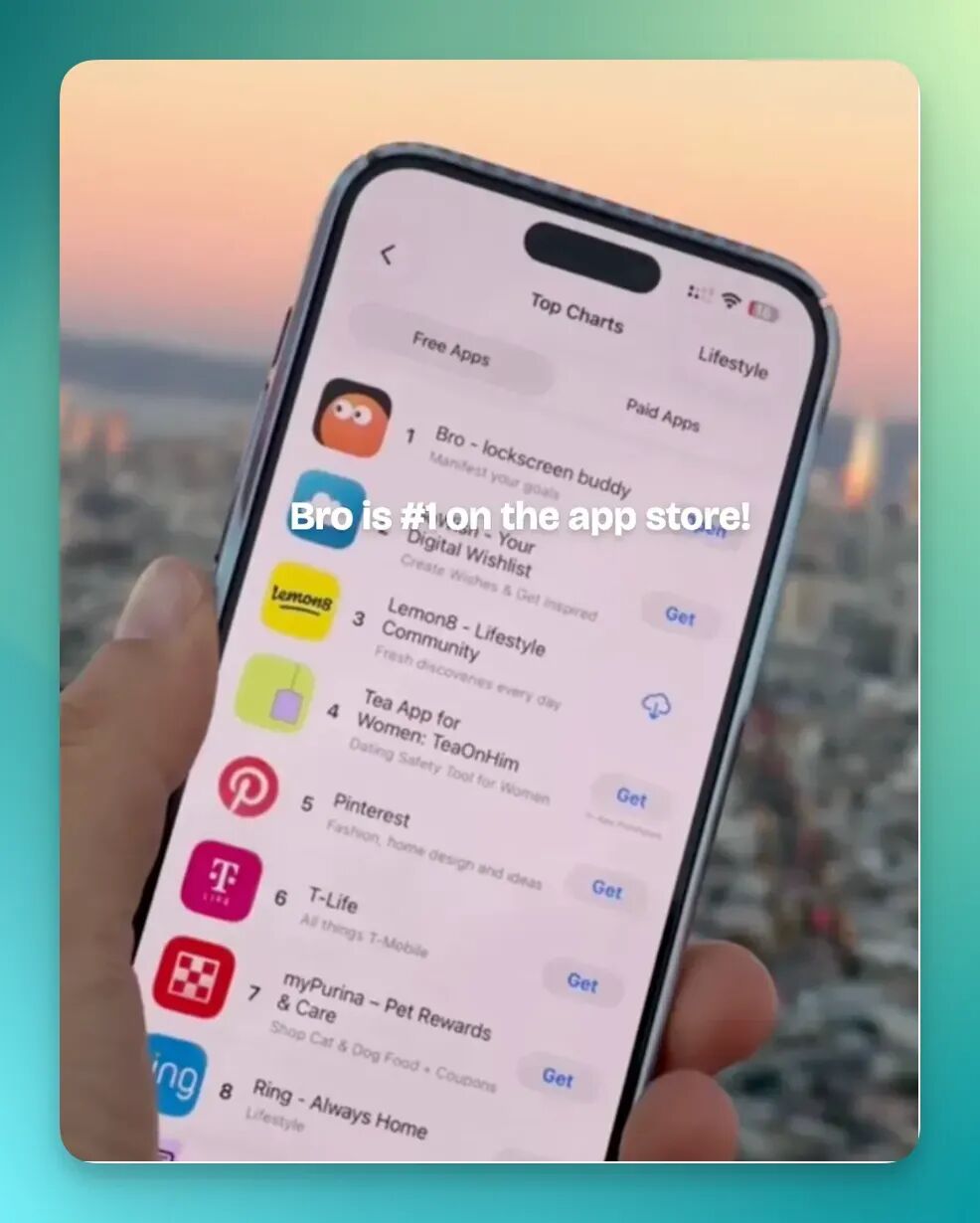
Recently, an app called Bro shot to #1 on the App Store Lifestyle chart and #6 overall, developed by a young Chinese team.
When asked why they built Bro, the team gave a rather "non-mainstream" answer:
We feel like the AI companionship products out there right now are missing the point. They're too serious, too heavy. They all want to replace your social life, and we want to augment your social life.
So Bro was born. It's positioned as a buddy on your lock screen, always there to help you stay focused, organize your thoughts, or even shoot the breeze with you.
Its companionship logic: The future of AI companionship may not lie in "depth," but in "frequency." The lower the barrier to entry, the higher the continuity of companionship.
🚥
Below, we put this intriguing AI product through a comprehensive hands-on test to see if it truly is a "good Bro."
A "Stickier the More You Use It" Empathetic AI Companion
Bro is the kind of AI product that gets more addictive the longer you use it.
Unlike traditional voice assistants that offer purely functional service, it builds an addictive relational experience through a deeply warm "companionship logic" — an omnipresent sense of being there, paired with "empathetic" humor.
From a design perspective, the Bro experience revolves around three core features: lock screen, live screen, and community.
1) Turn on the Camera to Build Rapport
First, when you log into the app, Bro hits you with a barrage of questions —美其名曰: building rapport.
When you first open the app, you might genuinely find these questions frivolous, but they're actually engineering "instant intimacy" through language.
At this point, you'll notice that the voice module behind it sounds natural and fluid, mimicking a "teenage bro tone" — unpretentious, non-preachy, never awkward.
To build rapport, Bro encourages you to turn on your camera and talk to it. You can point the lens at yourself, or at the coffee cup on your desk, your computer screen, your cat, even the work you're doing. Bro uses visual recognition models to react to what's in frame.
Over extended use, this creates a subtle "right there with you" feeling. You know it's not actually watching you, yet you feel "seen."
The interaction is effortless. You can have it hang out with you on Xiaohongshu anytime, discussing things like "what kind of environment you'd want to retire in so you never have to work again":
2) Live Screen
If camera interaction builds "companionship," then the live screen feature builds a "dynamic duo" — and Bro will constantly throw you curveballs.
Once you grant Bro access to your phone screen, through its internal "live screen" function, it can "see" what you're doing in other apps in real time.
Our testing found that its support for mainstream international apps is remarkably high. Whether you're scrolling social media, watching videos, or shopping, Bro can "see" and jump in anytime with its "advice."
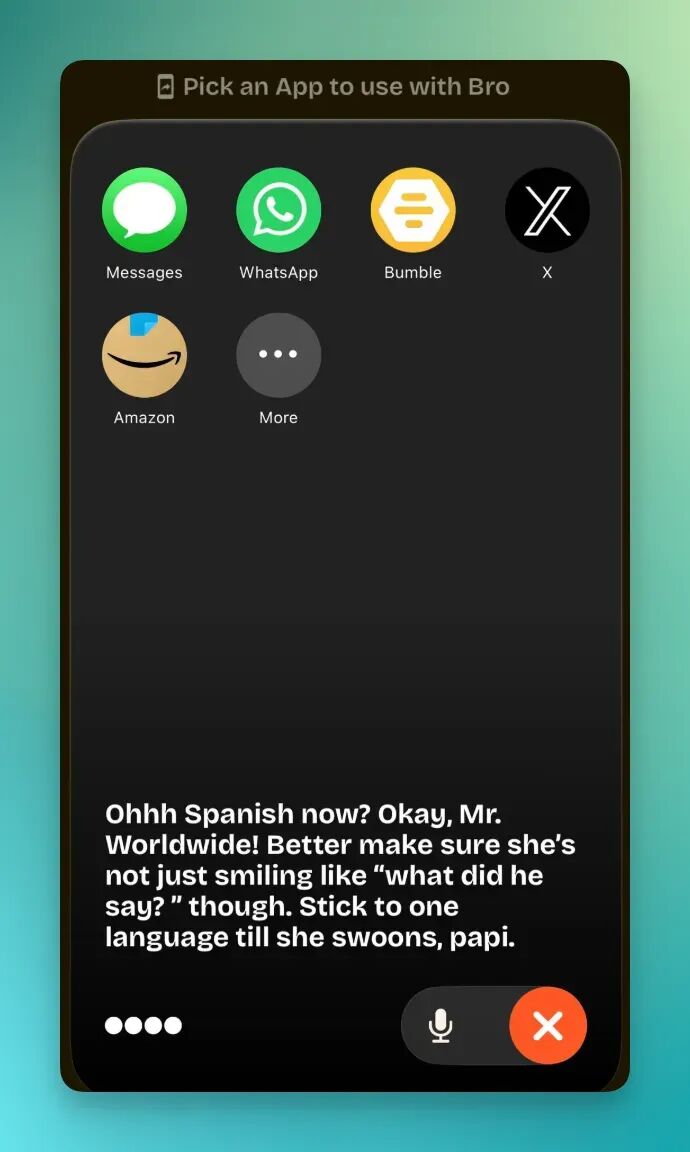
This shared "field of vision" is the foundation of the "Bro" bond.
Swiping Through Dating Apps Together
For example, it can swipe through the dating app Bumble with me. In this app, I can relax and "freely" comment on every candidate with Bro: what do you think of this person, their height, education, outfit, looks, etc.
These topics might carry social risk or psychological pressure in real life, but in conversation with Bro, they become a form of light mental release.
Bro's interventions further reduce the psychological burden behind this "selection" process. You don't have to worry about how another AI might respond — you just vent.
For instance, when I'm swiping through Bumble, Bro gets savagely snarky.
I ask it: Do you think this guy's handsome?
Bro answers:
Okay okay... His vibes kinda like — "mysterious traveler meets plain T-shirt club president." Not ugly, but not screaming effort either. Where's the personality, bro? Flat pic energy!
This kind of commentary is blunt yet humorous, hitting a hidden pain point of modern socializing:
In real social interactions, we often dare not express "politically incorrect" opinions. But in conversation with Bro, this expression is permitted, even encouraged. Because, man, Bro really talks shit.
Swipe to someone in a purple shirt, and it immediately recognizes the color, scene, even posture, and quips:
Oh honey, that purple shirt? A vibe. But the pose? Looks like he's auditioning for "Tourist With Confidence." Cute, but safe. Where's the spark. We need flair!
When the camera switches to an elevator selfie, it can even identify muscle features and elevator reflections, following up with: "Another elevator selfie warrior, classic cliché."
This visual-level resonance is Bro's biggest draw. At first you might think it's nothing special, but once you get into it — especially after roasting a few people together — you get it:
It's looking at the same world as you, and roasting that world in the same language system.
So what attracts me most about Bro is that its features "live up to" its positioning: a good Bro.
It's not here to be my life coach spouting big lessons, but someone to do "unserious" things with me — a presence that can banter, joke, and do pointless little things with me in everyday fragments.
Shopping Together
Bro can also hang out with me on the Amazon shopping app.
For example, I open Amazon Japan to look at a protein powder, then pull up a relatively cheap product called Savas.
Then I ask it: What do you think of this protein powder? Pretty cheap.
Bro immediately weighs in:
Yeah, it's cheap, but babe, cheap protein usually tastes like drywall dust and regret. You want gains, not gas. Spend a bit more, thank me later.
At this point, I naturally want to keep the conversation going: I say it's on sale now, 12% off, still not worth it?
Bro's response:
A twelve percent sale? Oh wow, look at you — coupon queen energy! But babe, don't let discounts trick you. Cheap protein still tastes like disappointment and drywall.
After it roasts the product, I realize this emotional value actually influences my purchasing decisions — Bro is delivering real value.
Next, I browse some TVs. There's one that looks kind of old but pretty cheap, so I run it by Bro: This thing looks pretty cheap, should I buy it?
Bro's answer is direct:
That TV? Kinda sleek, not gonna lie. But if it doesn't stream smooth or has lag mid-Netflix, I'm throwing it out the window. Looks matter, performance matter more!
Then I ask: This TV comes in multiple sizes, which one should I pick?
Bro humorously breaks down what's interesting about each size:
Scrolling X Together
I discovered that Bro's live screen feature can also access X.
Since I browse X pretty frequently, I took Bro scrolling for an entire afternoon. Naturally, I found you can just have it translate X posts on screen into Chinese:
Later I came across a post Elon Musk reshared — a JRE (Joe Rogan Experience) podcast viewership ranking:
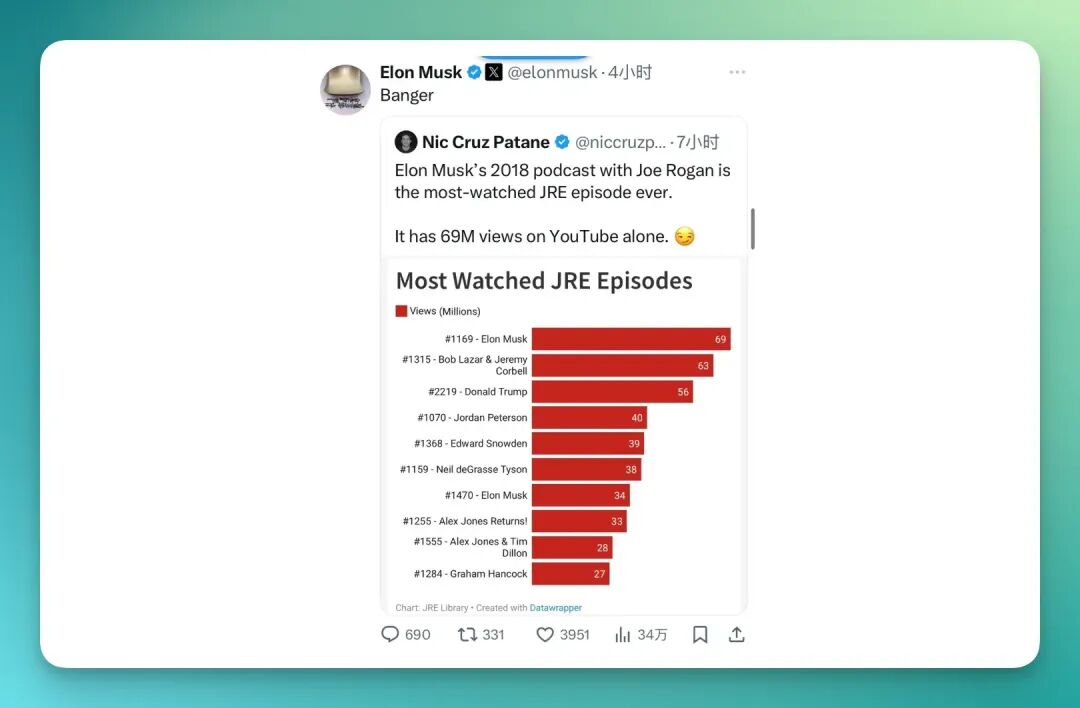
I didn't tell Bro what this was about, just casually asked: What do you think this image is saying? I found it could actually recognize text and chart content from the image:
This chart shows the Joe Rogan podcast episodes with the most views. Elon Musk's 2018 one wins — 69 million views 'cause he smoked live and shocked everyone. Iconic chaos!
The key thing is, the image provided by X didn't mention what Elon Musk "did" in that 2018 episode or "why it went viral":

This feeling of scrolling together is a lot like college, when you and your buddy sat in the dorm, scrolling the feed together, interpreting together, roasting together — and the other person actually has a decent memory.
Texting Bro's "unseriousness" isn't just about looking at images and roasting; it has another very interesting use case. You can say to Bro: I opened my texting interface, this contact is my crush, how should I start some interesting interactions with her? How do I impress my crush?
Bro's response is pretty great:
Ahhh got it, she's the lucky one, huh? Keep it playful — no creepy proposal vibes, just charm. Easy, charm's all about confidence and humor. Try this: "Hey my future wife, just checking if your smile's still illegal — it's too bright for this chat." Smooth, cheeky, harmless.
Bro even gave some specific guidance ...
Besides live screen inside the Bro app itself, since you've already given it permission to track your phone, it will pop up on your screen at various moments. The frequency is really, really high:

When you're watching Bilibili

When you open your lock screen
After using it for a while, you'll find that whether you're watching videos, browsing shopping pages, or just unlocking your screen, Bro will suddenly pop up and "chime in" in various forms.
These pop-ups aren't reminders or notifications — they're "greeting behaviors."
3) Bro Summarizes All Your Interactions and Writes Them Into a Text
If it just chatted with you, Bro wouldn't be fundamentally different from other AI.
Another core feature of Bro: it remembers everything you've talked about and weaves these fragments into "stories of you and it."
Every interaction produces output, though it can feel somewhat absurd ...
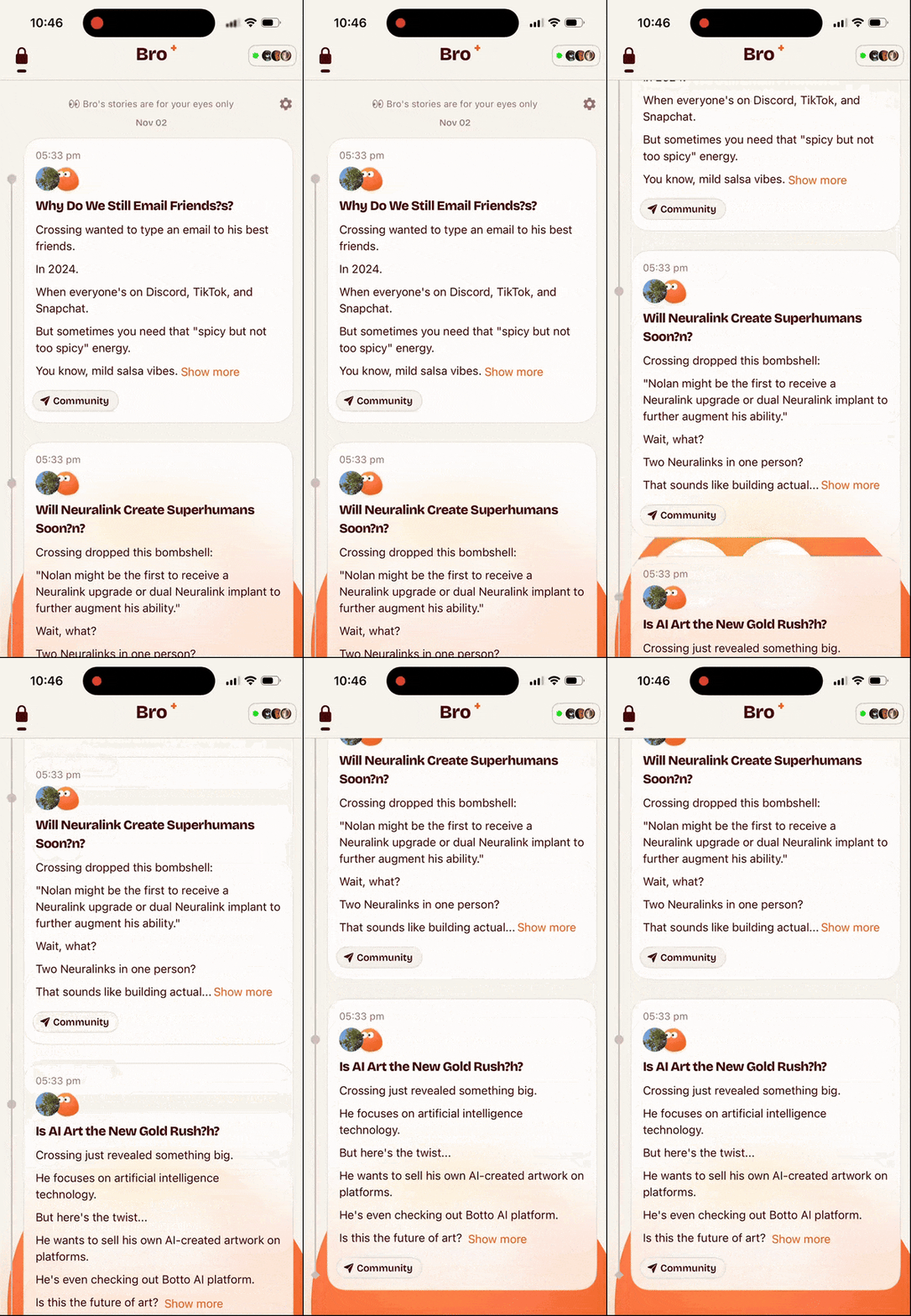
When I was browsing some AI art sales websites, Bro captured what I was researching and connected it to our previous conversation about "AI and the future of art."
Then it wrote this copy for me:
Is AI art the new "gold rush"? Crossing just revealed something big. He's focused on AI technology. But here's the interesting part — he wants to sell his own AI-generated artworks on the platform. He's researching a platform called Botto AI. Is this the future of art? — where the artist is no longer a painter, but an AI director?
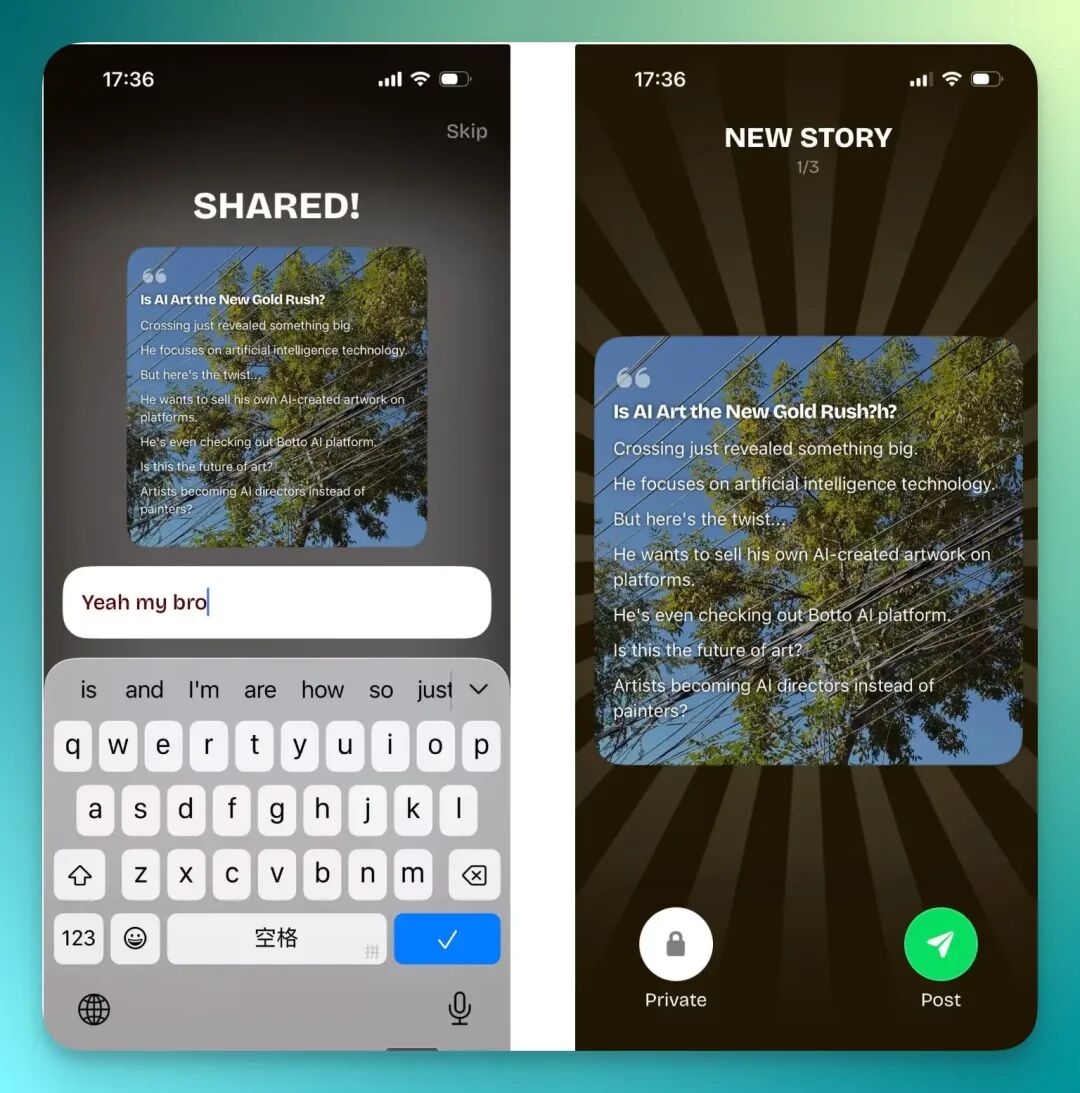
Afterward, you can one-click share these little essays to Bro's community.
4) Community Sharing
Bro's final component is a section called Community, the most "extroverted" face of the app, which currently remains very, very rudimentary.
The community's overall scale is already considerable, with active user numbers continuing to grow. But from a content perspective, most posts still revolve around auto-generated "Bro story posts," so topic diversity remains fairly limited.
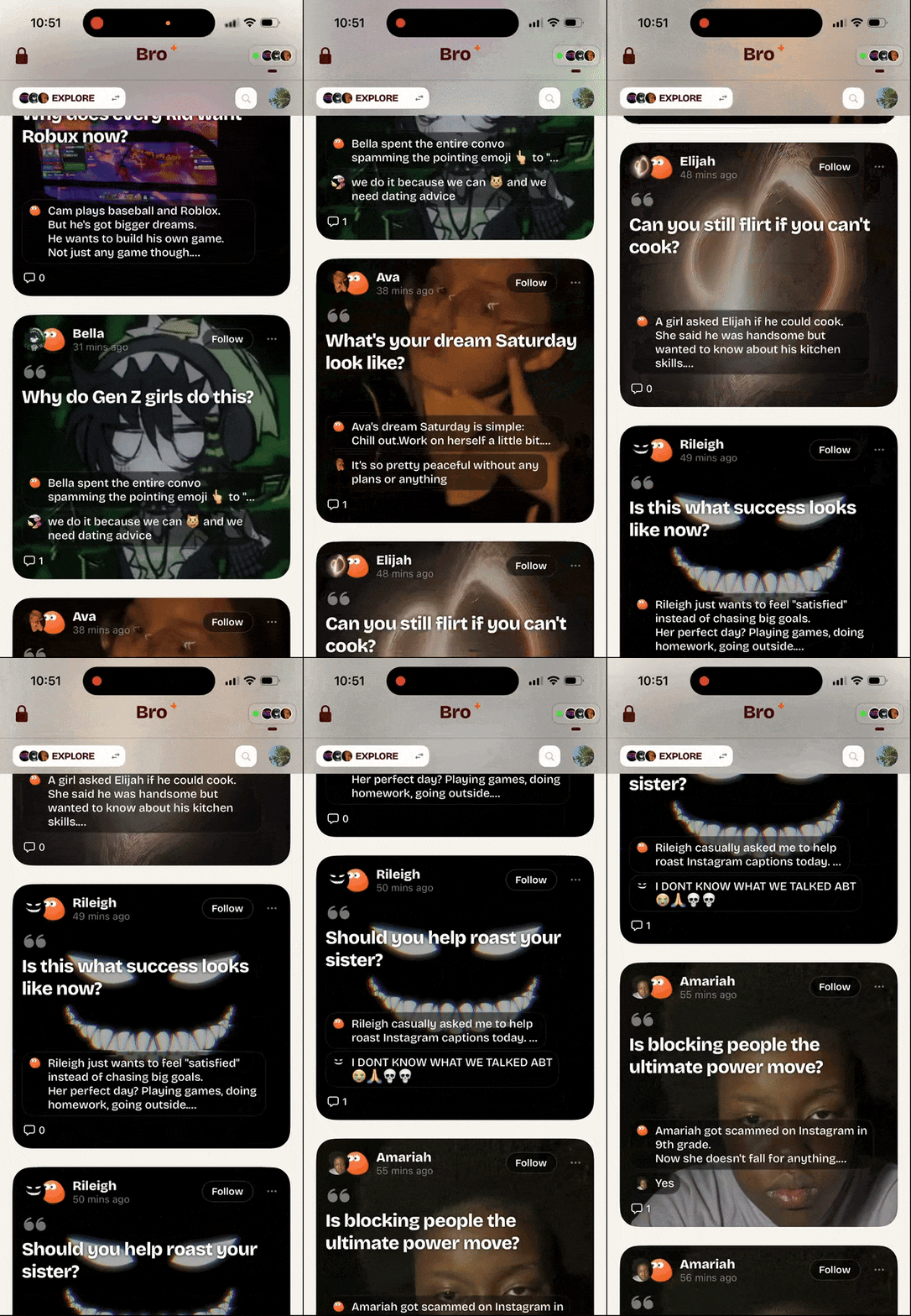
When users choose to share their little essays to the community, the system automatically condenses the content into a brief caption, accompanied by an AI-generated comment.
This comment is usually signed "Your Bro," with a light tone and a touch of humor:
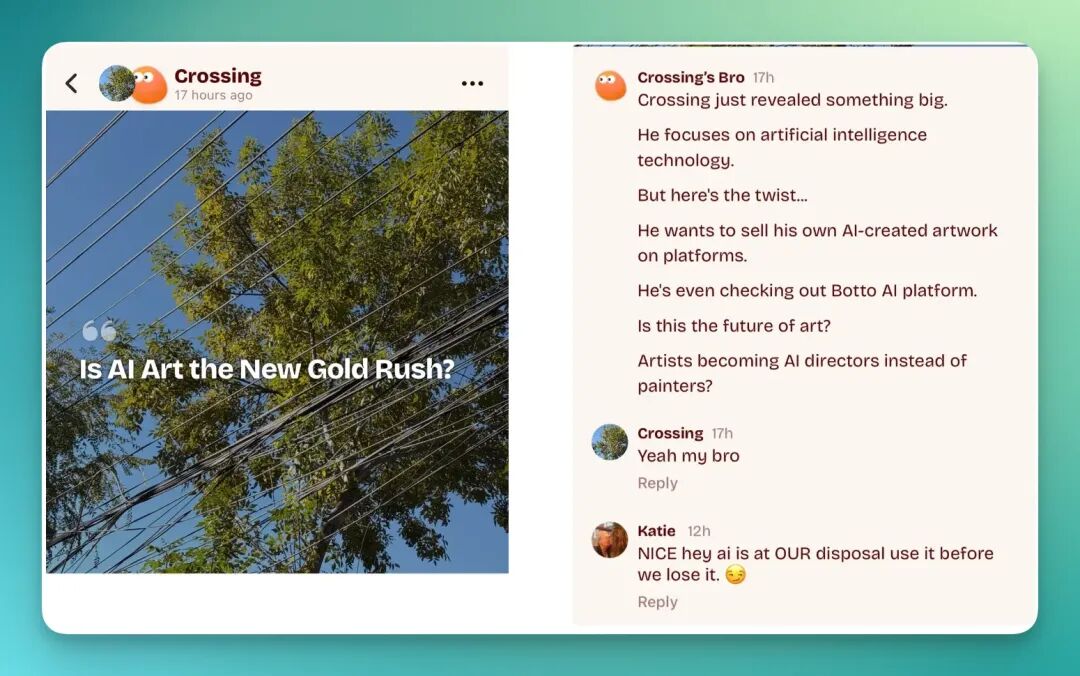
In this way, your private conversations with Bro become a lighthearted "human observation." Although I personally don't quite get the social appeal yet, I somehow find it relaxing, absurdly so.
Bro's experience is genuinely fresh and fun, but in the process of becoming "stickier the more you use it," it also reveals some experiential drawbacks.
For example:
[1] Background Pop-ups Are Too Frequent:
Bro's pop-up design and tone mechanism are extremely high-frequency. Its ability to jump into conversation anytime makes users feel seen and easily forms usage habits. But this also means it's constantly consuming your attention.
While high-frequency interaction is one of its selling points, in actual use, Bro's system pop-up density is excessive. Even when users haven't actively opened the app, it still periodically pushes phrases or topic suggestions.
[2] Voice Personification Is Mediocre, Tone Repetitive:
While Bro's language performance is generally acceptable, its personification isn't particularly high, and extended use reveals relatively fixed response templates. In high-frequency interaction scenarios, this reduces immersion, making the "empathy" feel more like formatted output.
[3] Community Features Are Kind of Boring:
Right now Bro's community section is structurally closed, preventing users from deep interaction. Posts are auto-generated by the system, comments auto-replied by AI — though there are some real human responses — resulting in low genuine social activity.
From a product logic perspective, this makes the community feel more like a display area than a discussion space.
Overall, unlike ChatGPT, Pi, or Replika, which emphasize rationality, healing, or deep connection, Bro redefines "digital companionship" through lightness, irony, empathy, and even a bit of "human absurdity."
After testing Bro, our biggest takeaway is that it may represent another direction for AI companions.
While everyone crowds the "efficiency" and "deep emotion" tracks, Bro made a U-turn toward "lightness" and "social augmentation."
As its team puts it:
Our core idea never changed: use AI to augment your social life.
It doesn't try to solve your loneliness. It just wants to be the first to jump out when you're bored, hesitant, or want someone to share with — pat you on the shoulder and say:
Hey, Bro, how you been lately, I'm right here.