Curious, excited, restless, young builders: come hack at a hackathon this weekend!

The AI Era Doesn't Reward Bystanders
The AI Era Doesn't Reward Bystanders
By: Miss Yi
Editors: Chen, Koji

Sunday, 8 p.m. Demo time at the hackathon.
Inside the AI Hacker House, a small building on a lake in Shanghai's Caohejing Development Zone Innovation Park, dozens of people slowly close their laptops. Someone just got their final line of code to run. Someone else's screen is still stuck on an error. Someone has their phone, sensors, flexible display, and circuit boards spread across the table...
The relaxed vibe from earlier in the day quietly fades, replaced by a subtle tension in the air.
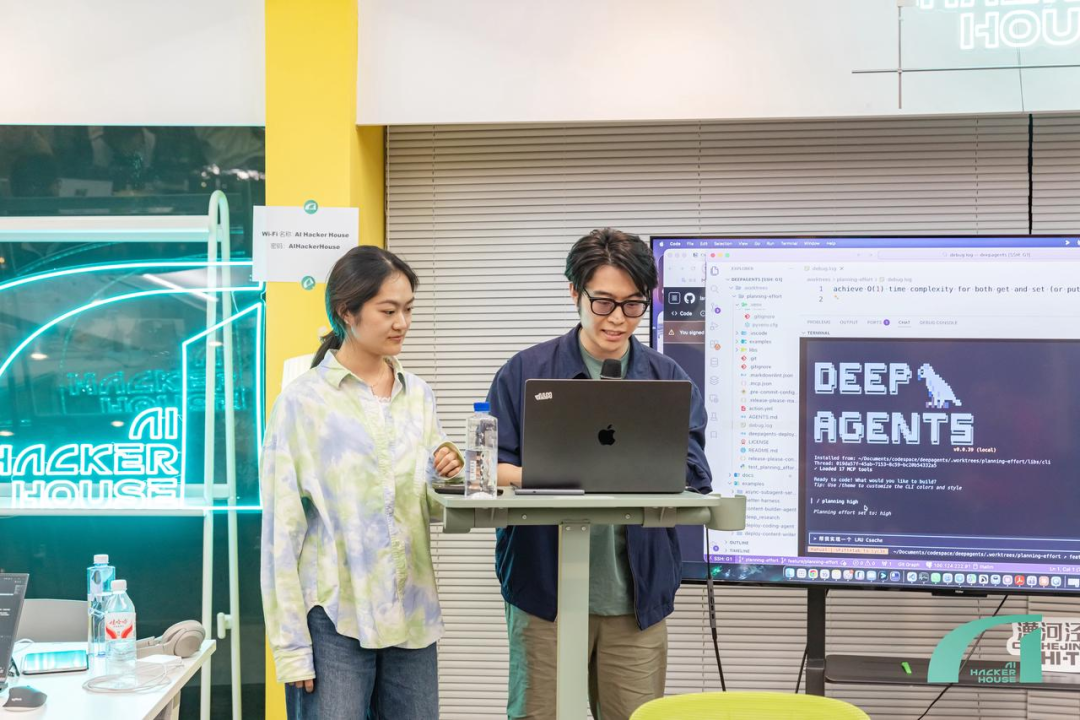
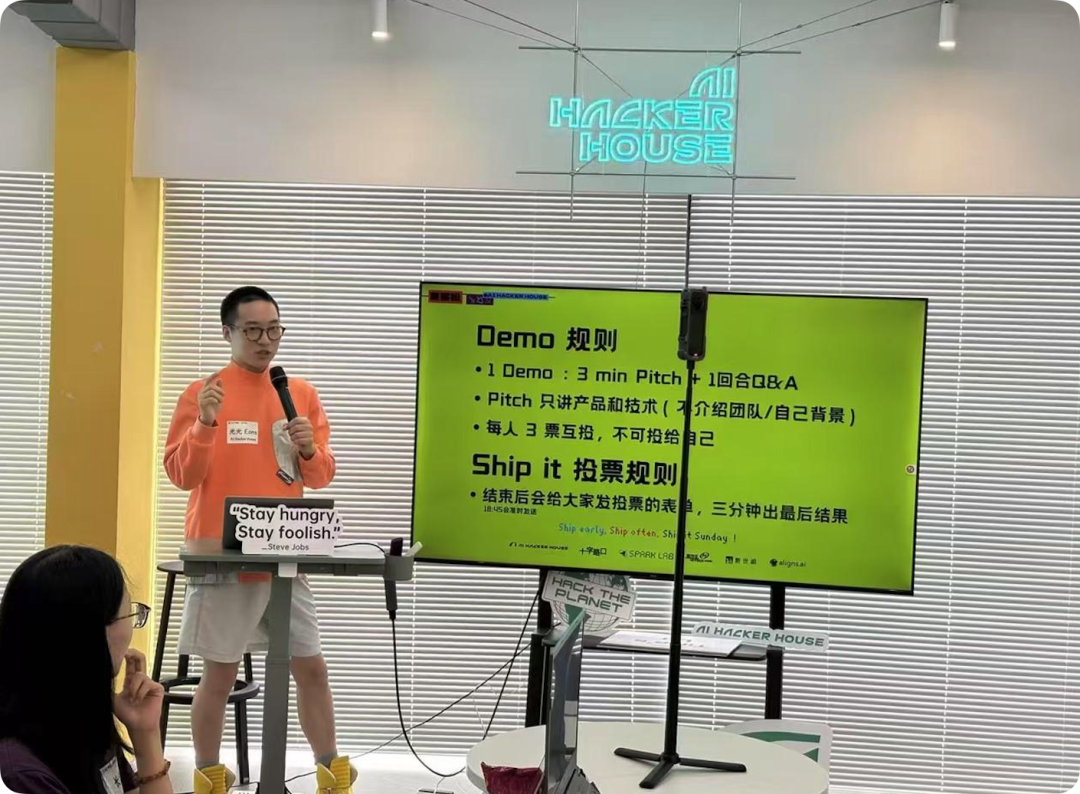
Everyone gets three minutes.
No introductions. No where-you're-from, no titles, no name-dropping. No VIP judges, no "I'd love to hear the investors' thoughts."
Each participant simply walks up to the screen and shows the room — filled with fellow builders just like them — what they made that day.
They care about only one thing:
What did you actually build this Sunday?
This might be the most direct form of social interaction in the AI era:
You arrive with a half-formed idea. Within a single day, you turn it into a demo, a prototype, something rough enough to feel slightly embarrassing — yet something that has already changed the world, if only a tiny bit.
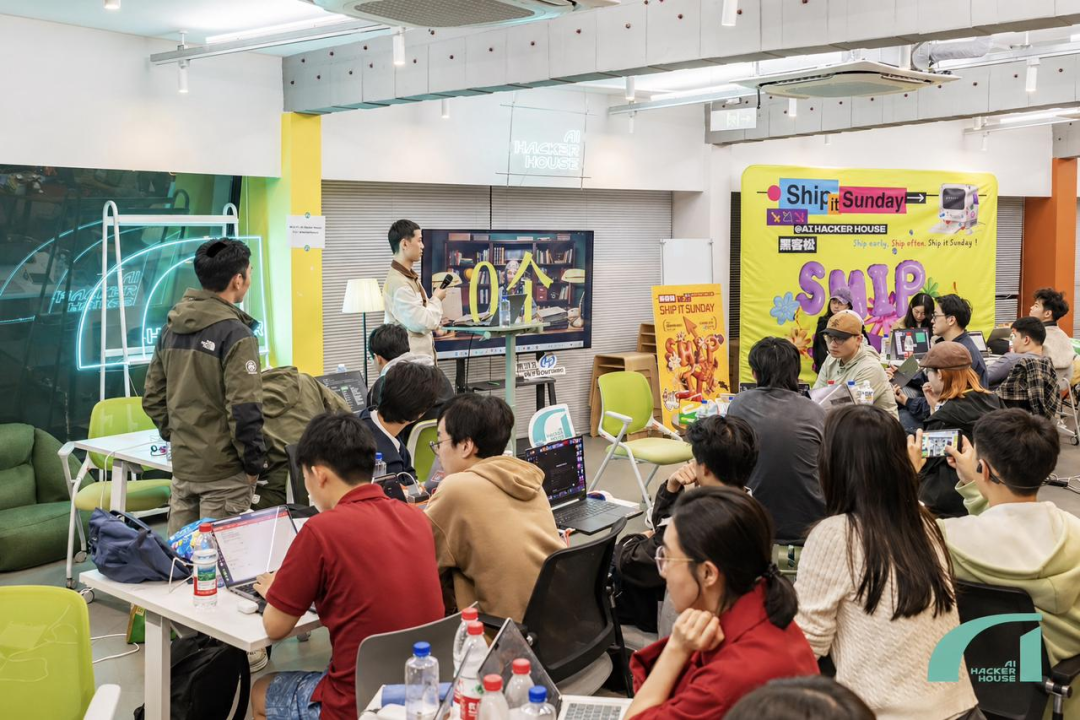
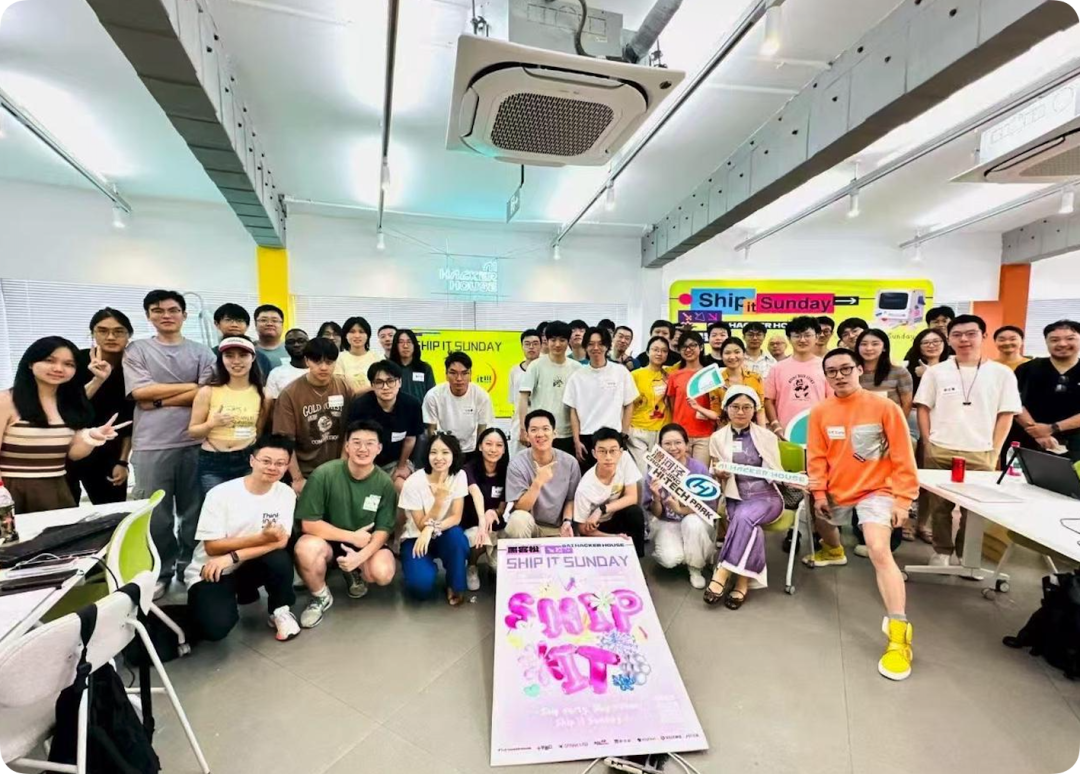
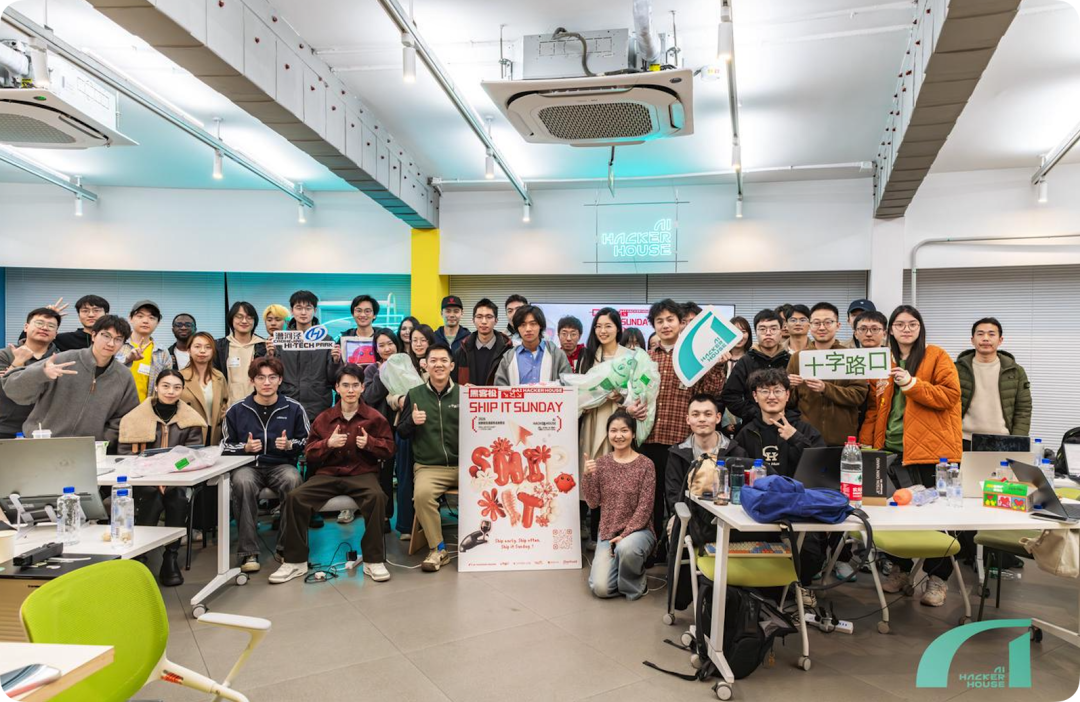
It happens once a month, starting at 9:30 a.m. and ending at 10:30 p.m. Over the past year, it's drawn more than 1,000 builders and shipped over 120 projects.
Some have built products that went viral. Some found co-founders. Some landed their first paying customers. Others simply rediscovered something: that they could still get excited about something new.
This is Ship It Sunday.
One Day Is Enough for a Hackathon
The name Ship It Sunday is straightforward. Ship it. Sunday. Carve out one Sunday from your life and push out that thing that's been living in your head.
The word "ship" matters. It's lighter than "launch," more casual than "release," far less ceremonial.
It doesn't demand perfection. It doesn't require a finished product. It doesn't ask for a grand business plan.
It demands only one action:
Build the thing. Let people see it.
Traditional hackathons used to have an ascetic quality. Forty-eight hours without sleep. Three days and two nights of locked-in coding. Groups of people pushing themselves to the limit on caffeine, willpower, and deadline adrenaline.
But in the AI era, that's starting to change.
"After everyone started vibe coding, product development got faster. So why do hackathons still need to be so long?" asks Koji, founder of AI Hacker House. "One day is enough."
A single Sunday is sufficient for a group of curious, smart, hands-on people to spark off each other. You walk in with an idea. You walk out with a demo, some feedback, maybe future collaborators.
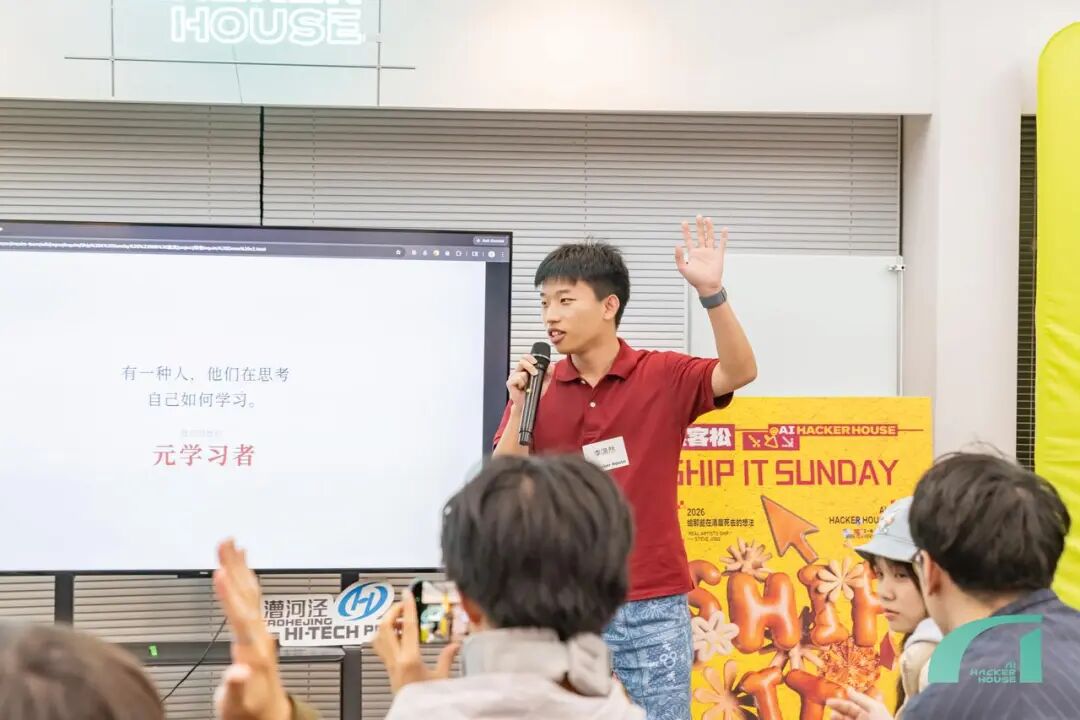
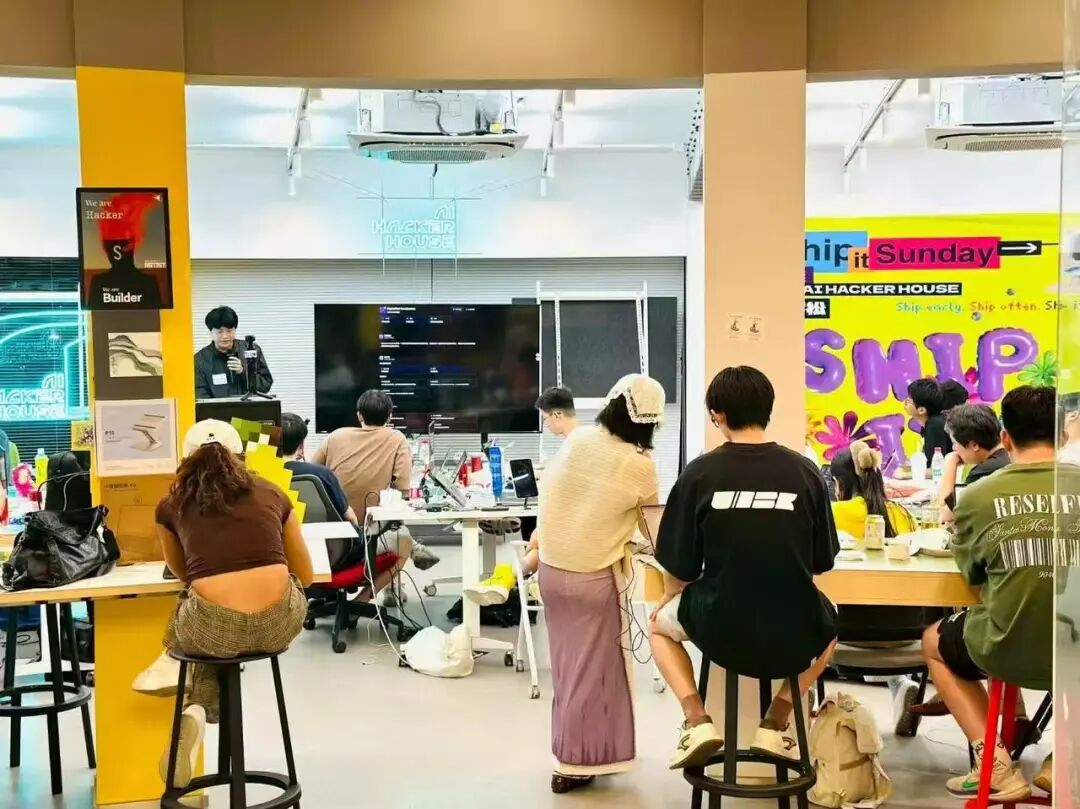
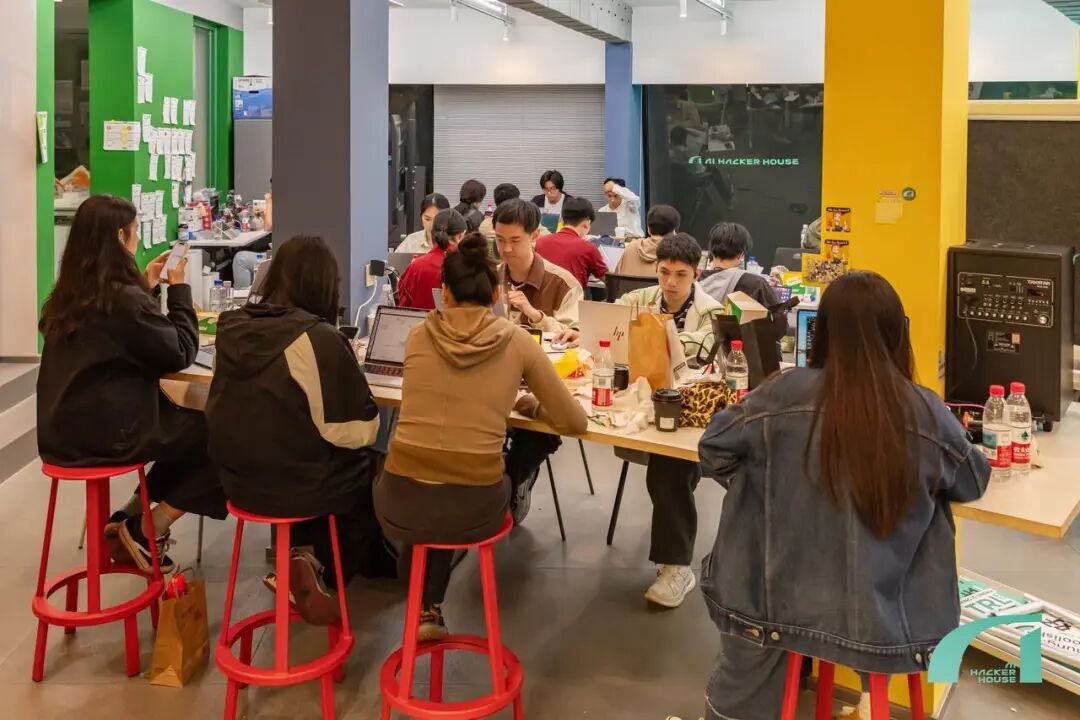
Many legends have indeed started at hackathons.
Red Xiao, founder of Manus, was once a young builder at a hackathon ten years ago. Back then, he and his team had all but given up on entrepreneurship. They showed up just to "play around." As demo time approached, he couldn't even find a proper table — he ended up hunched over a trash can, prepping his slides and speech.
Half an hour later, he won first place. The next day, he received a 1 million yuan investment from ZhenFund. Years later, his Manus would kick off the Agent era in AI.
Of course, not every Sunday produces a Manus. More often, a demo fails. An idea gets shelved. A product slowly stalls out in the realities of power consumption, retention, operations, commercialization.
But none of that diminishes the importance of the act itself —
Build it first.
The Space Itself Is a Filter
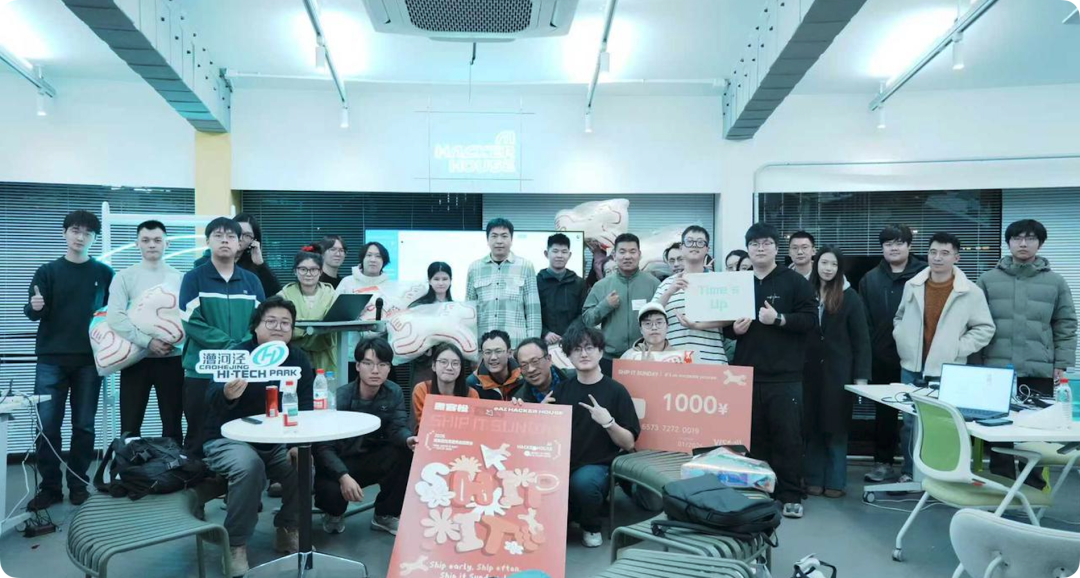
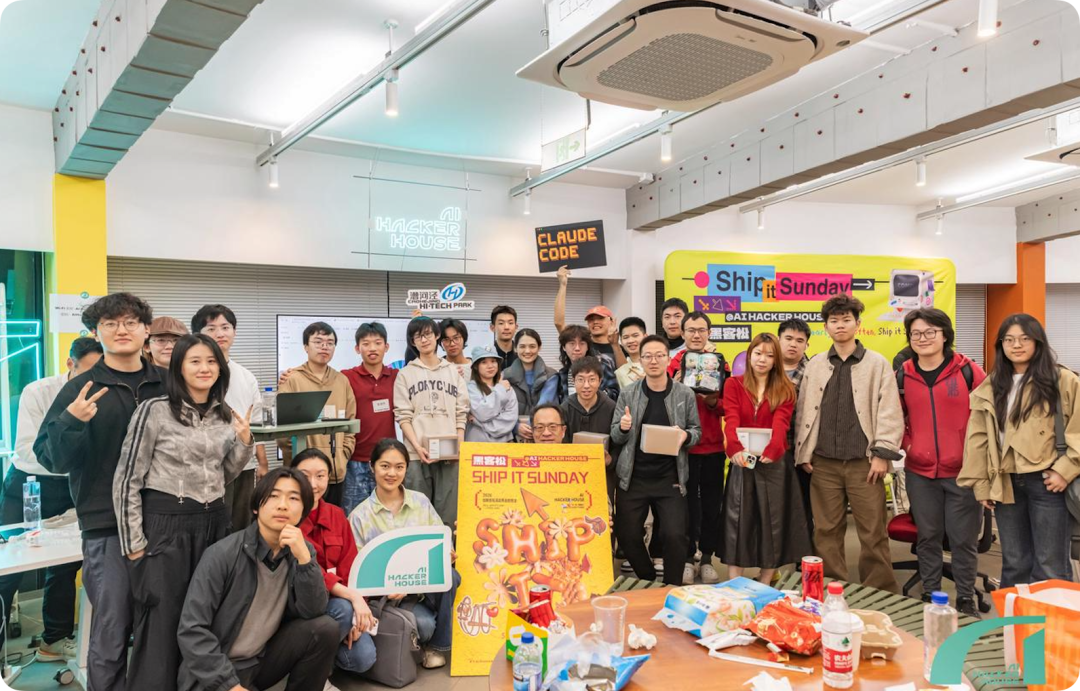
On April 19, the eighth Ship It Sunday took place at AI Hacker House, co-founded by Crossing and Aligns AI.
It's a fan-shaped building floating by the lake, inside Shanghai's Caohejing Development Zone Innovation Park.
From a distance, it looks like a spaceship grown from the lake's center. Outside: water, lawn, park trails. Inside: computers, snacks, neon-green posters, beanbag chairs.
By 9:30 a.m., more than twenty people had arrived. Some chatting quietly. Some coding in silence. Some who opened their laptops and barely looked up again.
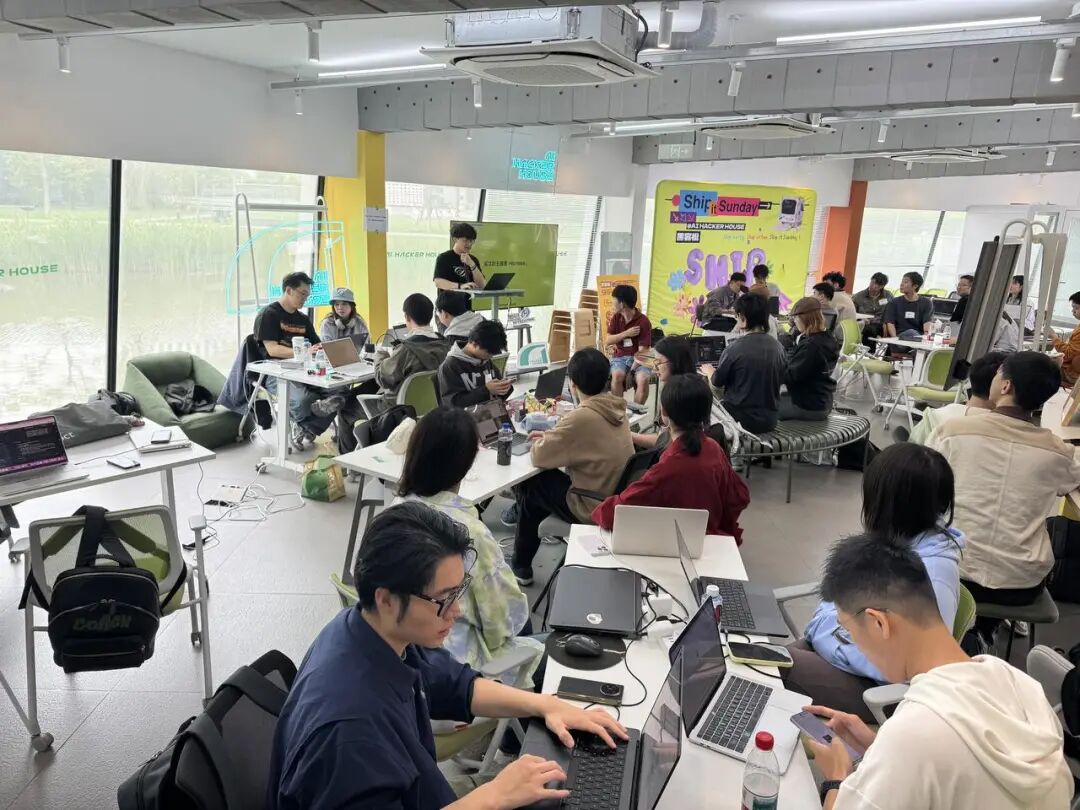
There's a strange relaxedness here.
So relaxed that at first, you might mistake it for low barriers to entry.
But stay a while and you realize the opposite: this relaxedness isn't designed to make everyone comfortable — it's designed to let the people who actually want to build slip quickly into build mode.
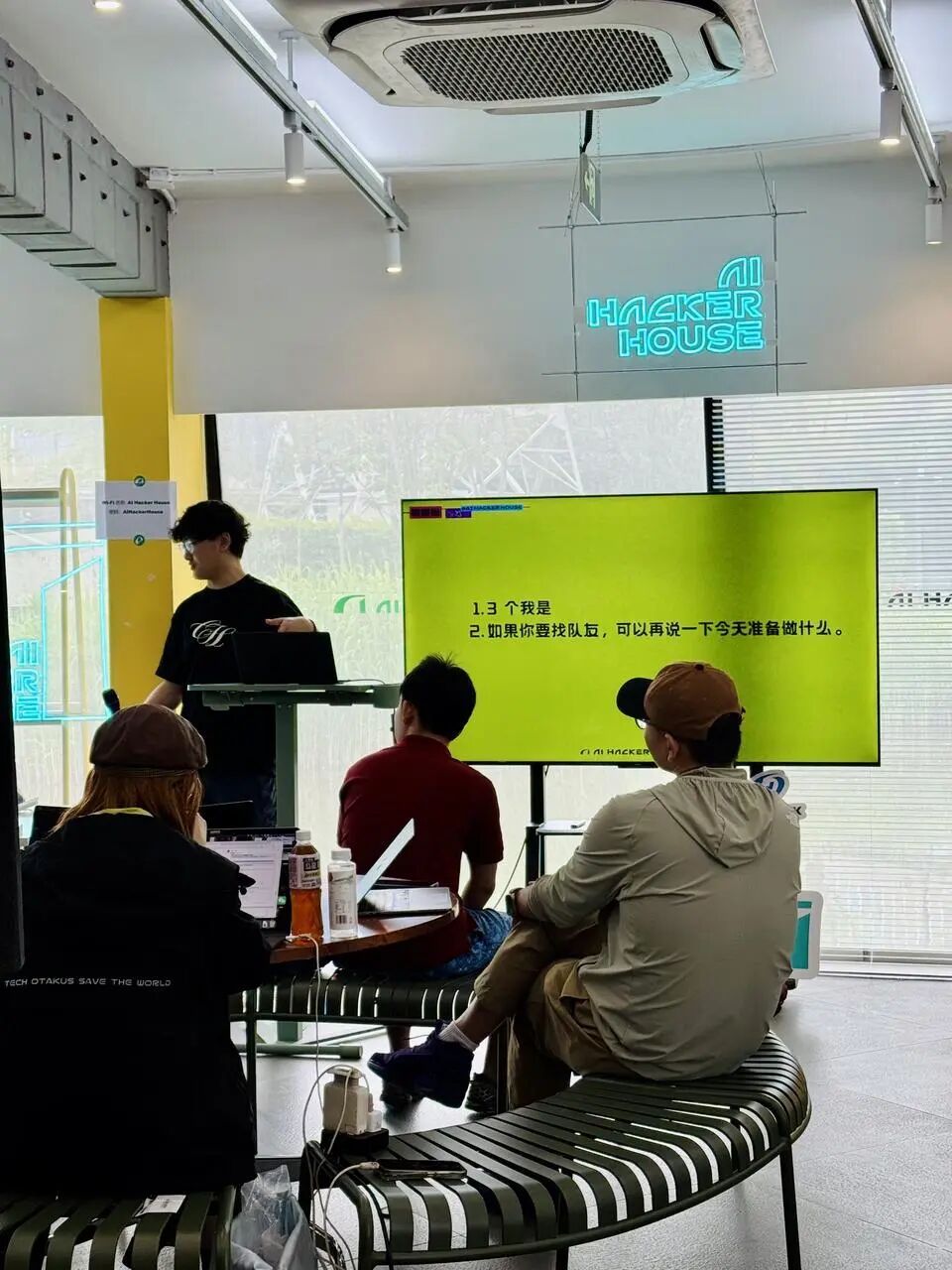
Ship It Sunday doesn't feel like a traditional startup event. It's more like a study hall that briefly opens its doors — except everyone inside shares a certain scent: curiosity, restlessness, an inability to sit still, and an almost instinctive urge to make something.
That scent doesn't happen naturally.
Because this place doesn't want spectators. Only builders.
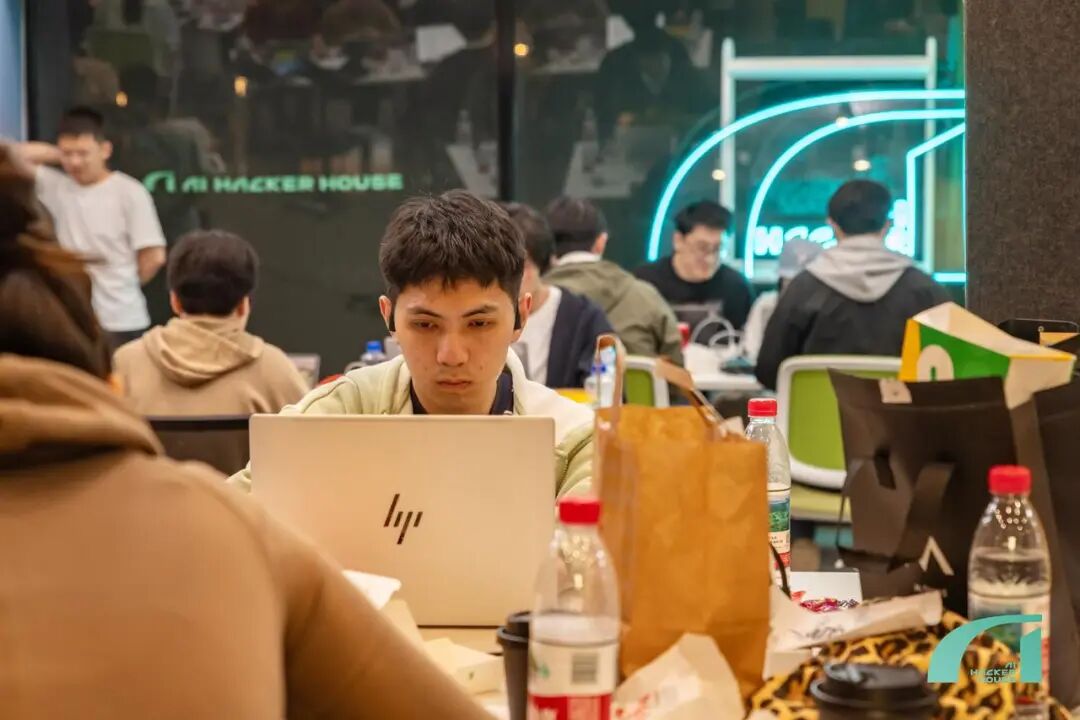
Registration isn't a formality. The organizers review each application, checking whether you're serious. Not just anyone can wander in. At one point, they literally put a table at the entrance: no registration, no entry. Knowing someone didn't help.
The filtering isn't about manufacturing scarcity. It's about protecting something precious: Peer Quality.
In the AI era, young people aren't short on tools. What's truly scarce is the courage to turn ideas into reality, and a group of people who can ignite each other.
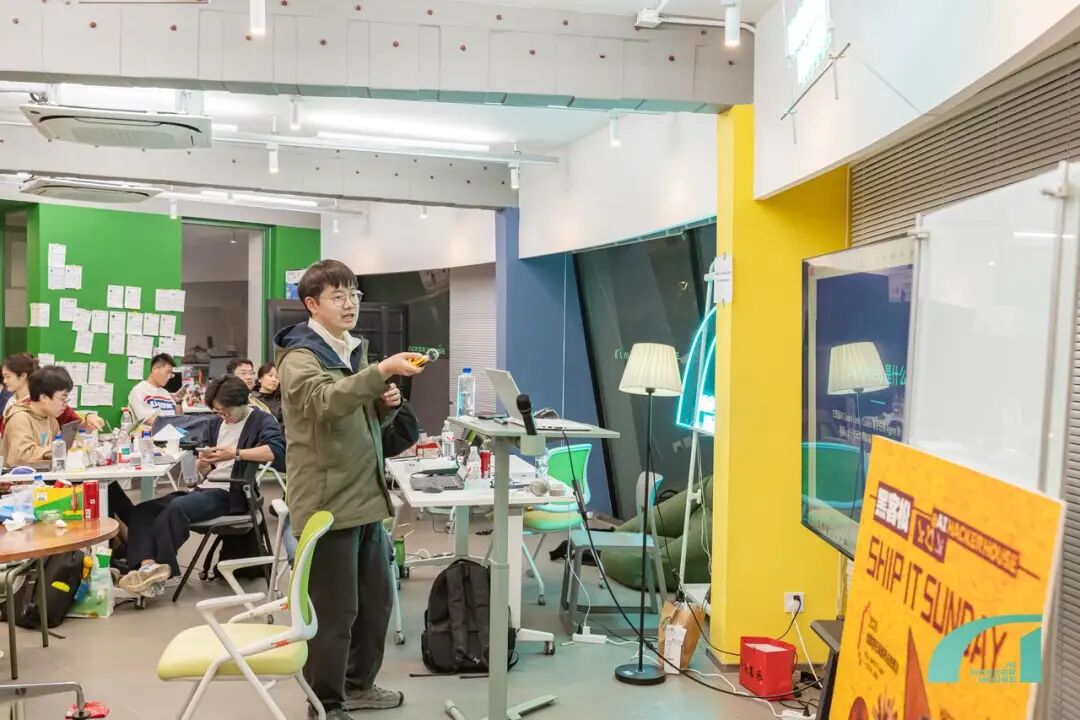
Ship It Sunday doesn't demand an impressive background. You can be a programmer, designer, product manager, or a liberal arts major. You can already be a founder, or still be suffocating in a big tech company. You can be a Gen Alpha middle schooler, or someone navigating mid-career anxiety.
But you have to be willing to build.
That's the only real requirement.
The Builders
By his fifth Ship It Sunday, Ellis Shang knew the rhythm well.
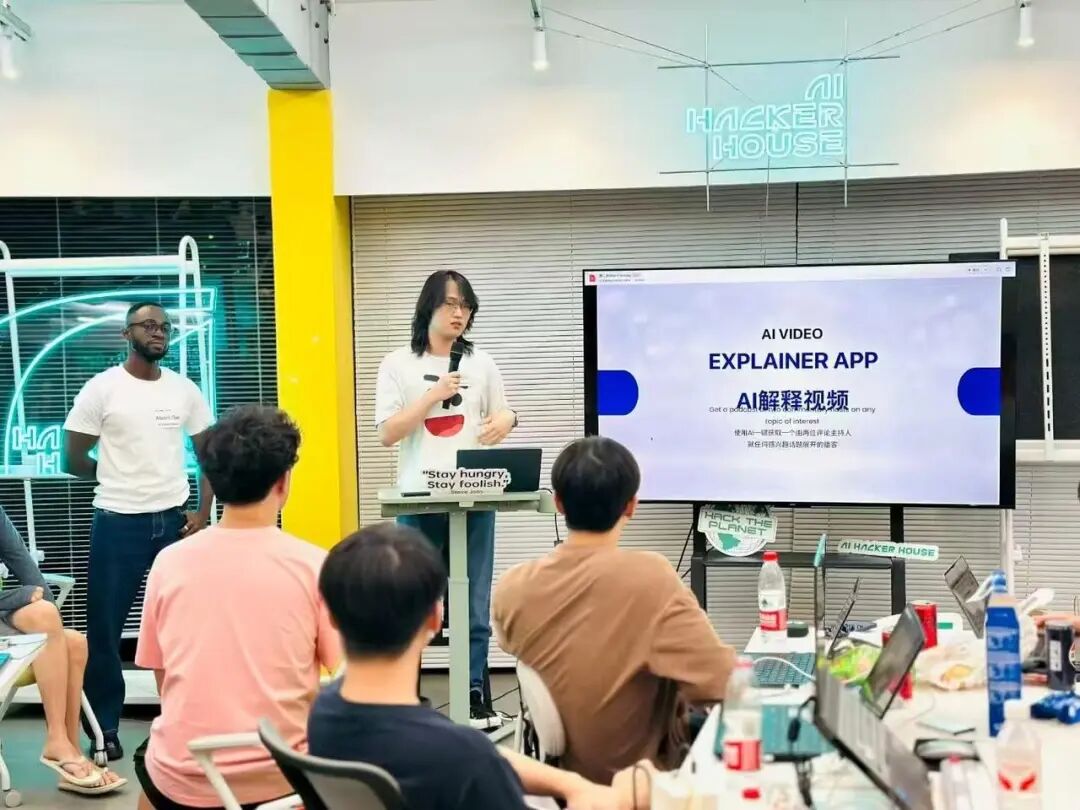
Ellis Shang / 3rd Ship It Sunday champion
He's Gen Z, on leave from the University of Waterloo's computer science program. The project he shipped: "LED bag stickers."
He connected a flexible display bought from Huaqiangbei to OpenAI and a Bluetooth device, controlling the screen remotely. You can interact with it through voice — it says hi back, automatically plays fun animations.
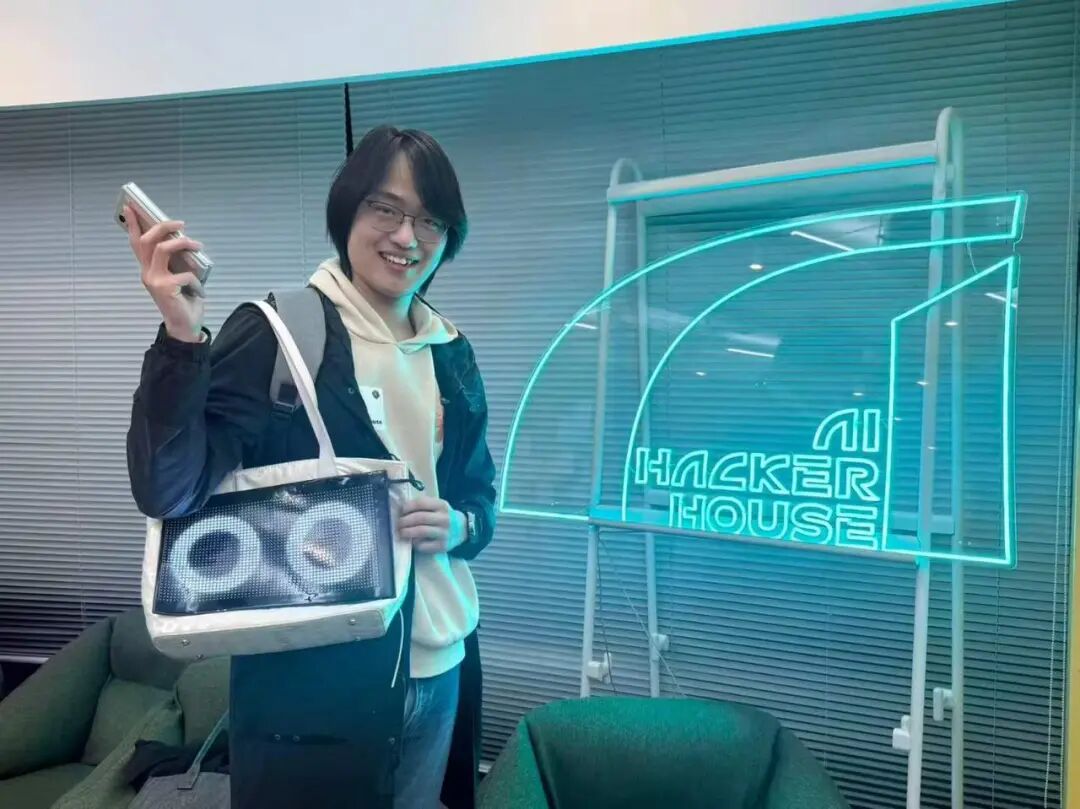
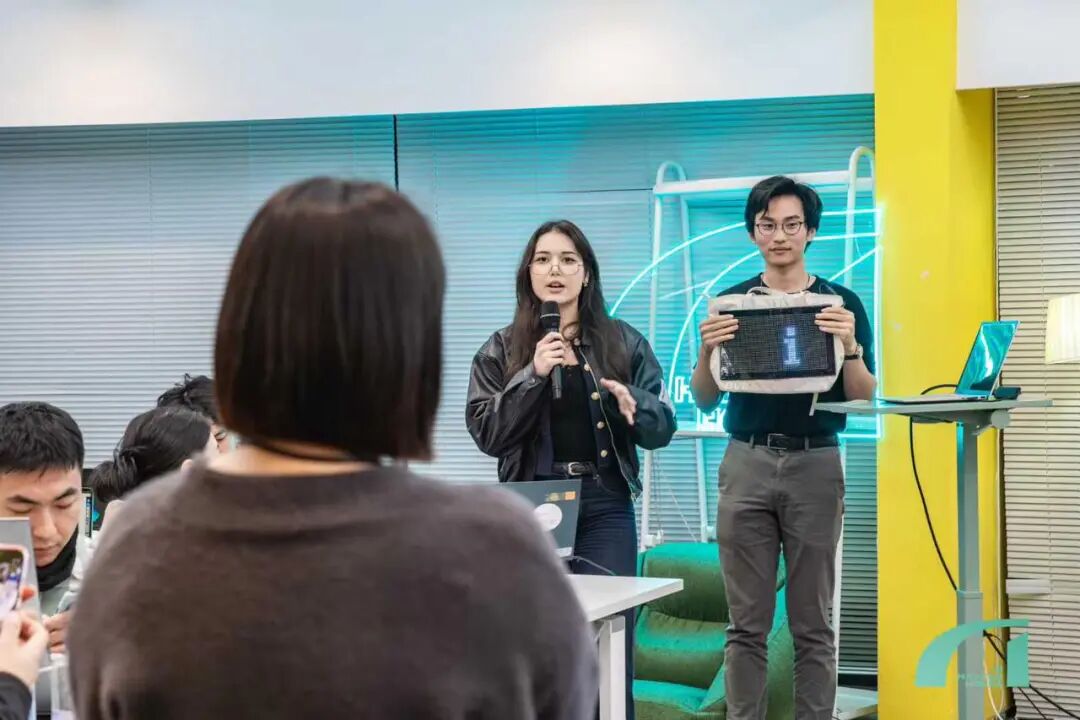
This doesn't sound like a serious startup project. At least in traditional terms, it would be hard to squeeze into any standard business plan.
But that's exactly what's charming about Ship It Sunday: it doesn't rush to judge whether something "has a market." It first allows something to be "interesting."
More often than not, Ellis doesn't come alone. He brings friends from Ghana, friends from Japan, friends from Microsoft. For them, spending a weekend here building something has gradually become a natural habit.
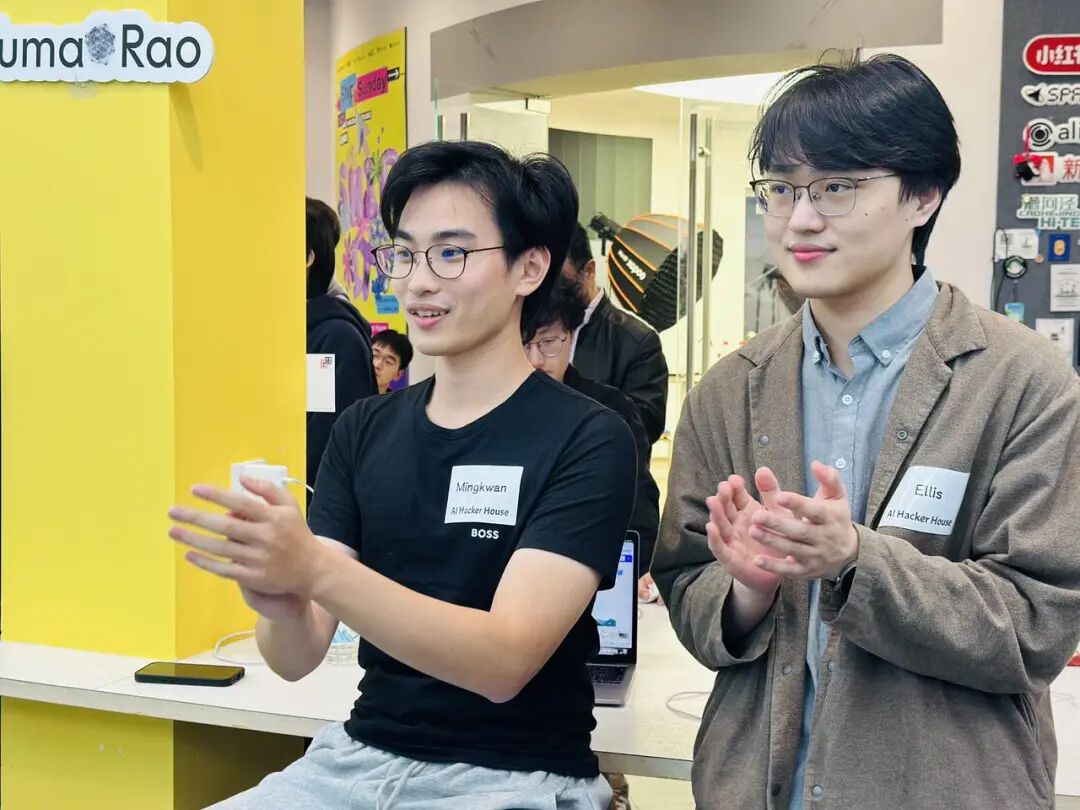
Ellis with his friend Ming from Japan (left)
Albert, the friend from Ghana that Ellis brought along, was hesitant before his first visit. He worried about the language barrier. But once there, he found that most people could communicate in English, and he made many new Chinese friends. Later, he left with just one exclamation:
"China is so different."
Feng Ying's story is another kind entirely.
He's a post-90s embedded systems engineer working in the medical device industry. Last November, he competed in the fourth Ship It Sunday, winning the top prize of 4,000 RMB with an AI badge designed to assist blind pedestrians.
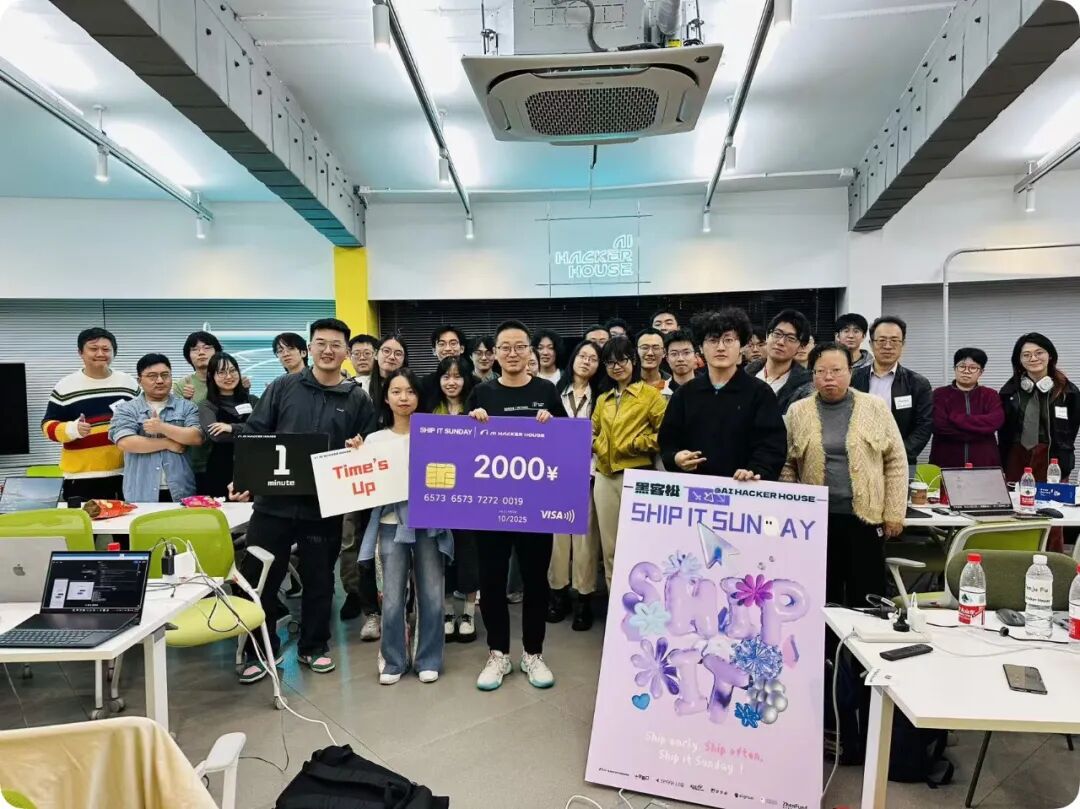
Feng Ying / Ship It Sunday 4th champion
For him, it didn't feel like a competition — more like a long-overdue loosening up.
"Participating in something like this made me feel young again," he said.
Later, he used the prize money to buy hardware and brought the project experience back to his job. During one urgent task, he used AI assistance to solve in ten minutes what would have previously taken a full day.
When he told this story, Feng Ying smiled broadly. He said there's a way to make yourself younger: curl up the corners of your mouth, your brain tricks you, and then you naturally become younger.
It sounds a bit like a joke, but at a Ship It Sunday event, it feels accurate. Someone who's worked for years, sitting back in a scene reminiscent of student days, surrounded by people much younger. Everyone is trying to make an immature idea real.
That excitement doesn't come from prize money or rankings. It comes from a confirmation: you can still be ignited by something new.
Liu Yalong discovered Ship It Sunday on Xiaohongshu.
"Other hackathons always seem to have this competitive or startup-preparation quality to them. But when I saw it on Xiaohongshu, it felt more like a book club or salon. I could go build something, or I could not. I could enter that atmosphere and follow my heart."
In the fifth session's "AI Social" theme, he created a project called "Urban Random Events": observe plants in a green belt, adopt one and document its growth; track a stray cat until it finds you a bit strange; observe backpack charms on the subway and pick your favorite.
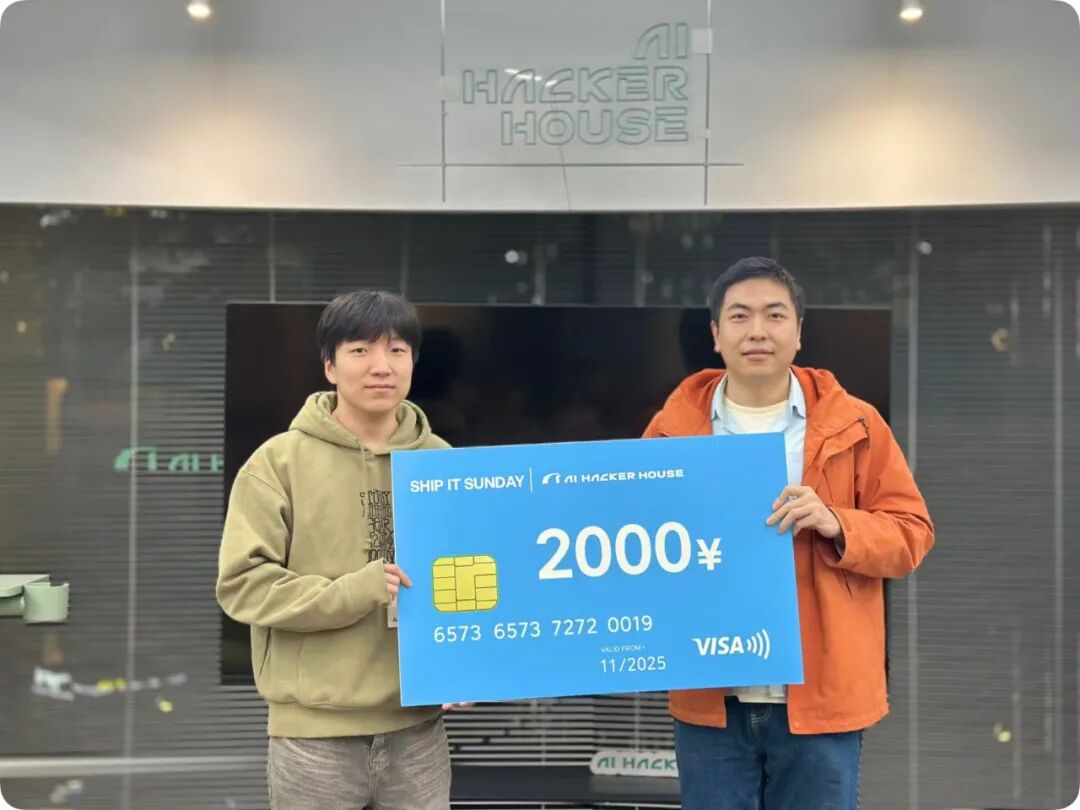
5th champion Frank (left), Liu Yalong (right)
The project continues in light-operation mode. Liu Yalong's biggest takeaway from that Ship It Sunday:
"Only when you meet people on the same wavelength do you have the foundation for conversation, and the possibility for continued iteration."
These people resist easy categorization.
Some returned from overseas, some came from big tech, some are on gap year, some have worked in an industry for years. Some bring friends, some keep coming back alone. Some don't know where to take friends on weekends, so the answer becomes: go to a hackathon. But for this one day, they share the same posture: open the laptop, sit down, nudge an idea a little closer to reality.
No need to explain who you are first.
Build the thing. Then the people who get it will naturally gravitate toward you.
After Sunday
Those demos don't always stop on Sunday.
Edward Luo's story is the most textbook case of a demo entering reality.
In January 2026, the sixth Ship It Sunday's theme was Claude Code. Edward had just left a big tech company. As a designer, he was trying to build a product that could actually sustain him. But he also had a common creator's hesitation: some demos already seemed decent to him, yet he never felt quite ready, so he kept delaying release.
Then one day, he saw the Ship It Sunday theme. He looked at a phrase on his phone wallpaper:
"Ship something shitty first."
So he decided to force his own hand. In one day, turn an idea in his head into a demo.
That idea later became a Mac product called "Vibe Island." It floats on screen, like the iPhone's Dynamic Island, displaying various Claude Code statuses.
In the weeks after winning at Ship It Sunday, Edward continued refining and iterating the demo, officially releasing it in late March.
After release, Vibe Island took off, gaining millions of impressions, 10,000 downloads in its first week, 5,000 DAU, and substantial returns.
He noticed that similar products have started appearing inside big tech companies. Unintentionally, he was first to validate a new product category.
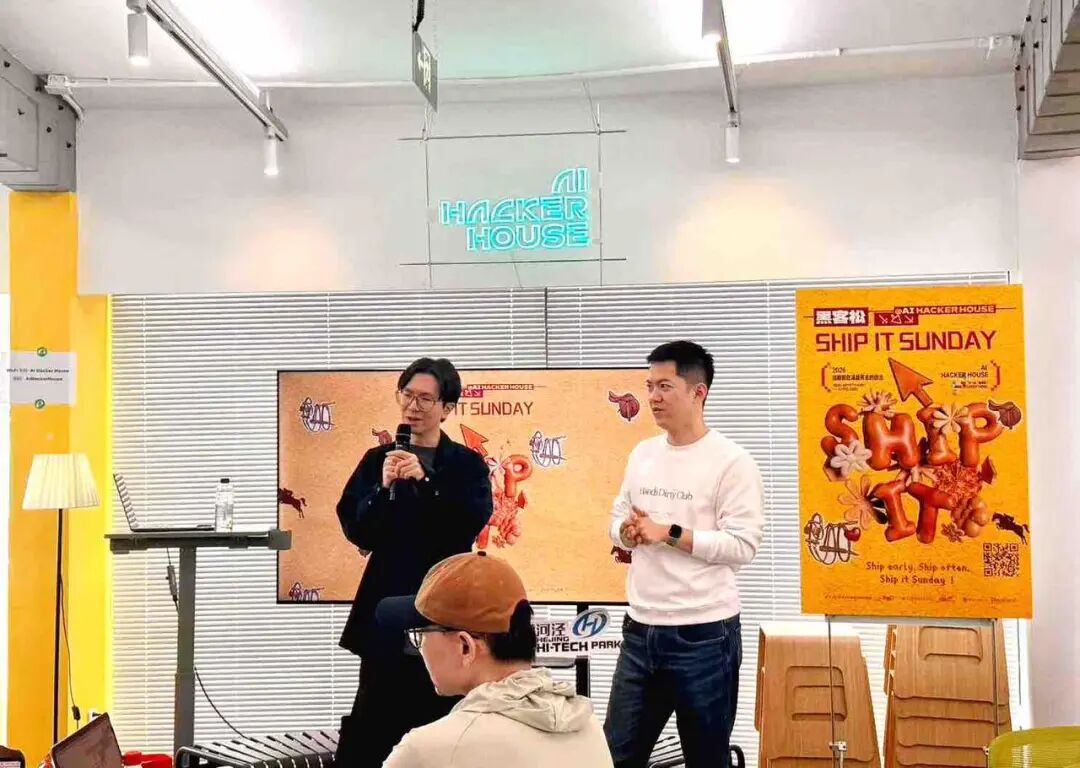
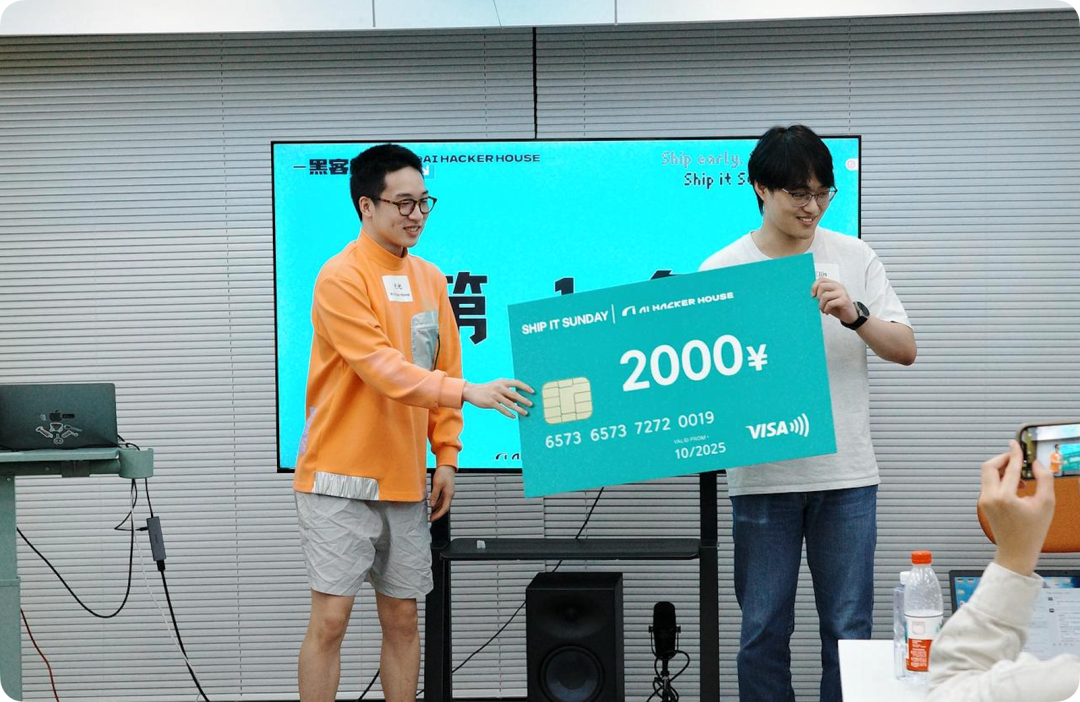
6th champion Edward (left) and AI Hacker House founder koji (right)
But in Edward's view, Ship It Sunday's value to him far exceeded the demo itself.
"The champion at the time saw my demo and became the first, most critical, most dedicated angel user for my entire project. Before I started charging, while still in beta, he sent me my first sponsorship payment through a red envelope."
Edward later summarized:
"Don't treat this as the end of a project idea. Treat it as a beginning."
Ellis also found a similar kind of beginning here.
In October 2025, he and his team built an automated workflow project at Ship It Sunday and won. In the three months that followed, that project evolved into an overseas product. Setup fee per client: $1,500 to $2,000, then $500 monthly subscription.
He gained not just a project but also a co-founder here — an entrepreneur who had left ByteDance and was on gap year. What excites him most about Ship It Sunday is meeting "people with real entrepreneurial spirit who are willing to get very hands-on at the tech frontier."
Of course, not every project grows this way.
Feng Ying's AI badge didn't continue due to power consumption issues. But the product ID was transplanted in other directions. After winning, he briefly felt some "baggage," but has since let it go:
"I record everyone's ideas each time, thinking about where my hardware might intersect with other people's products."
Ship It Sunday is like a seed bank.
Not every seed will sprout. But every seed that was taken seriously, given time, might one day grow out in another form.
No Judges, Only Peers
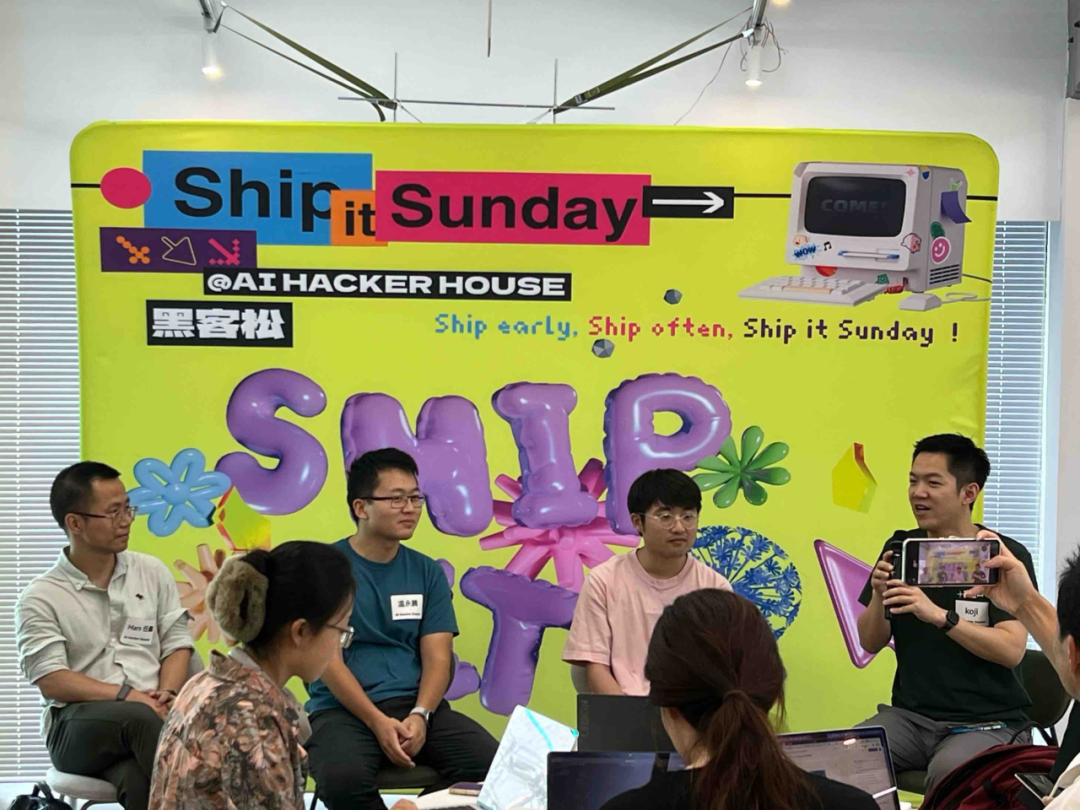
Ship It Sunday has one deeply unconventional rule: no judges.
Every award is decided by anonymous votes from the participants themselves. Three votes each, no self-voting. Who wins isn't determined by investors, mentors, or Big Tech experts — it's decided by the builders in the room.
Koji's explanation is simple:
"The people who know who's good are your peers. Let the young people judge each other."
Behind this rule lies a crucial value:
Ship It Sunday isn't a stage for "presenting upward," but a space for "seeing each other."
At traditional events, contestants are often explaining themselves to the people on stage: you have to prove the market is big enough, the logic sound enough, the story complete enough, that you're worth betting on.
But at Ship It Sunday, you don't need to package yourself as a polished entrepreneur first. You just have to build something and put it in front of your kind.
People who actually build things can spot others who do, too — even if they don't present well, even if the demo is rough, even if the idea is full of holes.
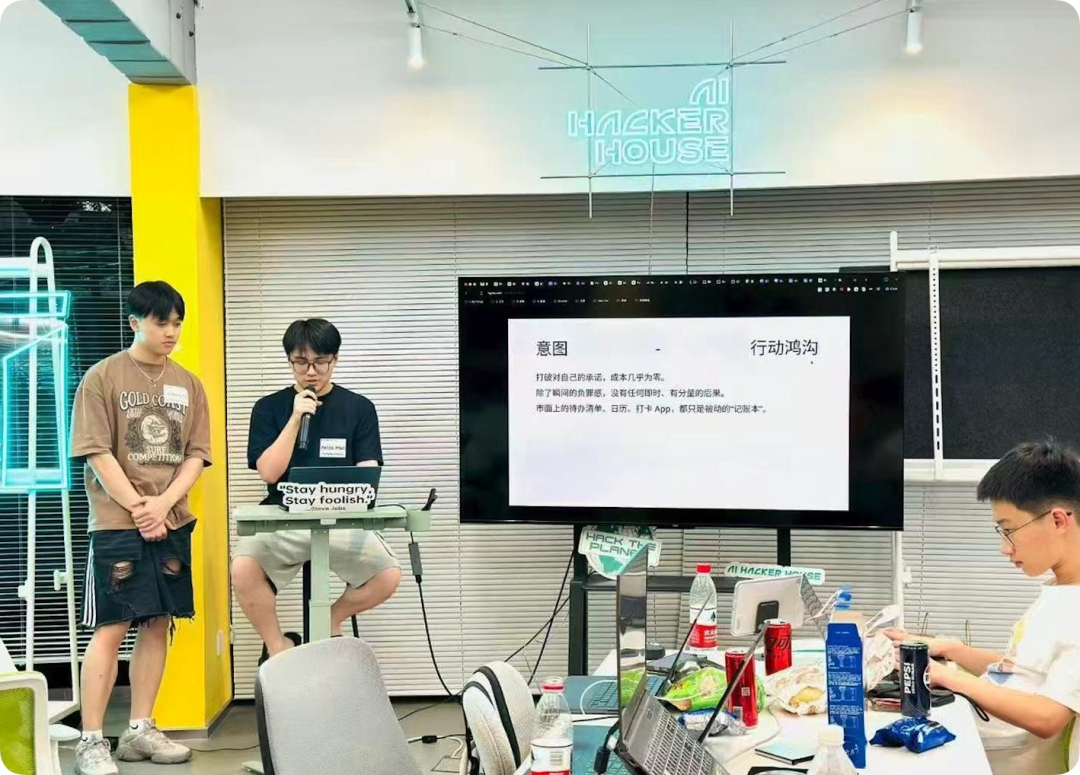
Your peers know where you cut corners and where you really put in the work. They know when something is still broken but has potential inside it. They know that in three minutes, what moves people usually isn't the business plan — it's that moment when something actually runs.
This matters. Because early creation in the AI era often isn't a mature product but a faint yet real possibility. The first audience it needs isn't necessarily judges, investors, or experts — it's peers.
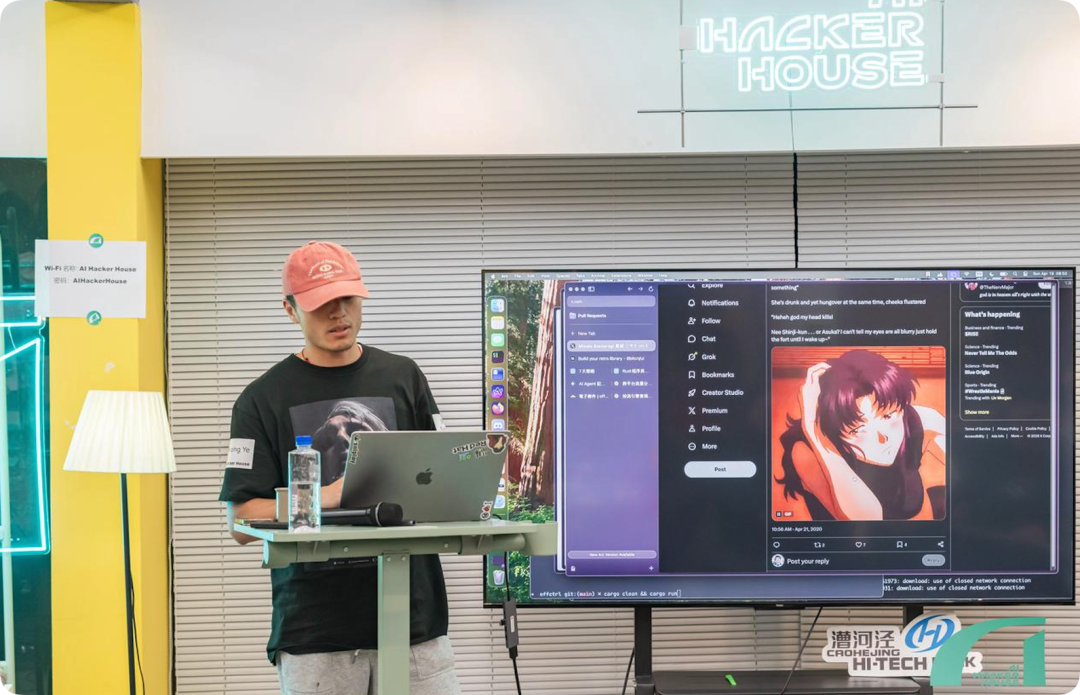
At the eighth Ship It Sunday, a contestant named Chen — passionate about exploring historic sites — built a demo that used AI to reconstruct historical scenes. He even reimagined the contestants hunched over their code that day as a scene from antiquity:
"A gathering of scholars in a bamboo hall, tasked with crafting instruments within a day. Some bent over desks writing furiously, others clutching tablets in deep thought. Among them were those fashioning small mechanical devices, those debating algorithms, those glancing at each other asking, 'Does it run yet?'..."
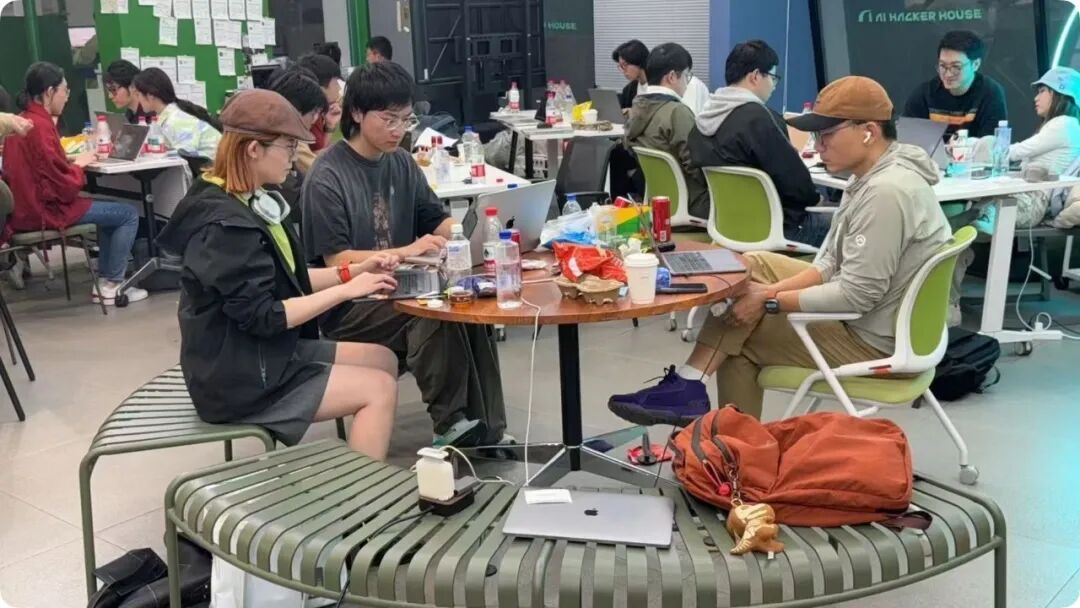

In that moment, the futuristic lakeside building suddenly stretched into a strange depth of time — as if this spaceship from the future had, for one evening, connected to the lamplight of a thousand years ago.
Creation, it turned out, transcends eras.
Only the tools differ. Some eras used bamboo slips, brush pens, lacquered desks, and candlelight. Others use Cursor, Claude Code, OpenAI, foldable screens, and a MacBook about to die.
But the posture is similar: a group of people sitting together, trying to bring something that doesn't yet exist into reality.
Half a Step Ahead
In 2026, Ship It Sunday made a few upgrades.
The champion prize increased to 10,000 RMB. Each session now invites past champions and successful alumni founders to share their stories. The Caohejing Super Entrepreneur Community also offers three months of desk space.
But none of these are the point.
The point is what Crossing has always advocated:
The era rewards those willing to step half a beat ahead into the fog.
In the AI era, many things won't wait for you to be ready.
On April 19, the champion of the eighth Ship It Sunday was 2UP.
It's a tool that automatically distills valuable skills from AI conversations, then reuses and evolves them — an attempt at "co-evolution between humans and AI."
The lead builder goes by "Captain Vuca." Singaporean, raised in China, a third-year philosophy major at the National University of Singapore on a gap year to build. He was former captain of the NUS debate team and claims to have "self-studied A-levels in two months."
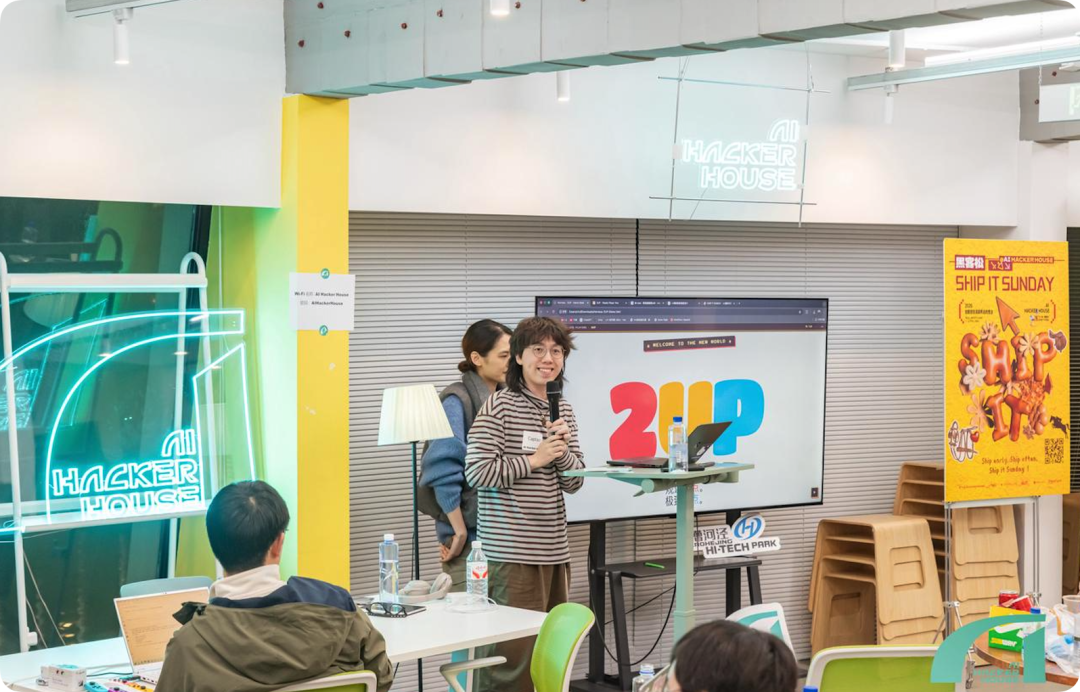
Captain Vuca / Champion, Ship It Sunday Session 8
At the same event, another project was called "Slow Chat." Its inspiration came from one contestant's concern for his grandfather living alone: could he use his own voice to keep an elderly relative company from afar?
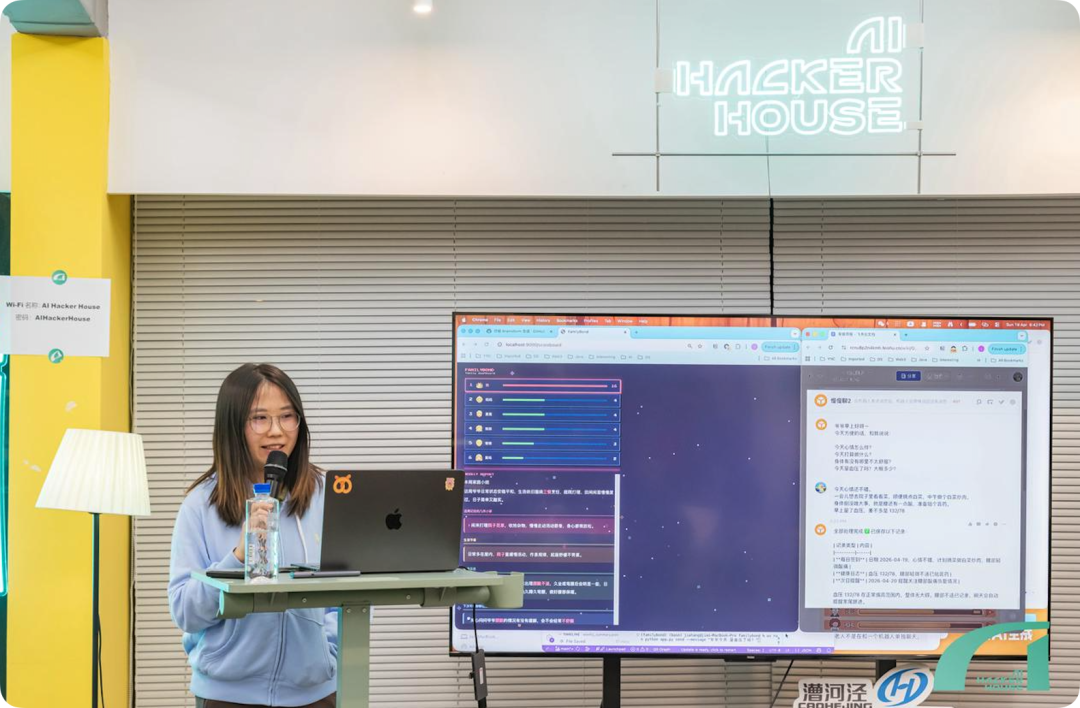
This is very much the spirit of Ship It Sunday.
Some look further out, building at the frontier of human-machine co-evolution. Others look down at their feet, wanting to use AI to keep one specific elderly person company. Some are exploring future productivity systems; others are making a talking LED bag. Some want to start companies; others just want to feel young again.
These things look very different on the surface, but their core is similar.
None of them are satisfied with just talking about AI.
They want to use it to build something.
Koi, the event lead for Ship It Sunday, says:
"Believe that as long as you keep creating, beautiful things will happen."
It's not complicated, even a little plain. But in an age of uncertainty, plain things become precious.
Because most of the time, people don't act because they've seen the future clearly. On the contrary: it's because they start acting that the future gradually takes shape.
A Paris for the Young
Hemingway wrote a book called A Moveable Feast.
It's his memoir of Paris's golden age of art and literature. Paris became Paris not just because of the city itself, but because in a certain era, enough young, ambitious, sensitive, self-important, future-believing people gathered there.
Every generation of young people needs its own Paris. Not because it's romantic, but because there, for the first time, you discover: there are others like you in the world. They're also restless, also unsatisfied, also feel that life as it is isn't enough, also want to make something new.
They might speak more beautifully than you, or build faster than you. They'll provoke you, offend you, ignite you — and make you feel less alone.
If you've never been to such a place, you might think your ambition is an illness, your nonconformity a mistake, your impulsiveness mere immaturity.
But once you're there, you realize: this isn't an illness. It's just creativity that hasn't found its kind yet.
For young builders in the AI era, the Sunday hackathon that happens at Ship It Sunday is serving a similar function.
It's not Paris. But it's like Paris.
Not because of romance, but because of encounter.
Not because it guarantees great work will emerge, but because it allows someone to show up with something unpolished, allows an idea to glow for the first time before its peers.
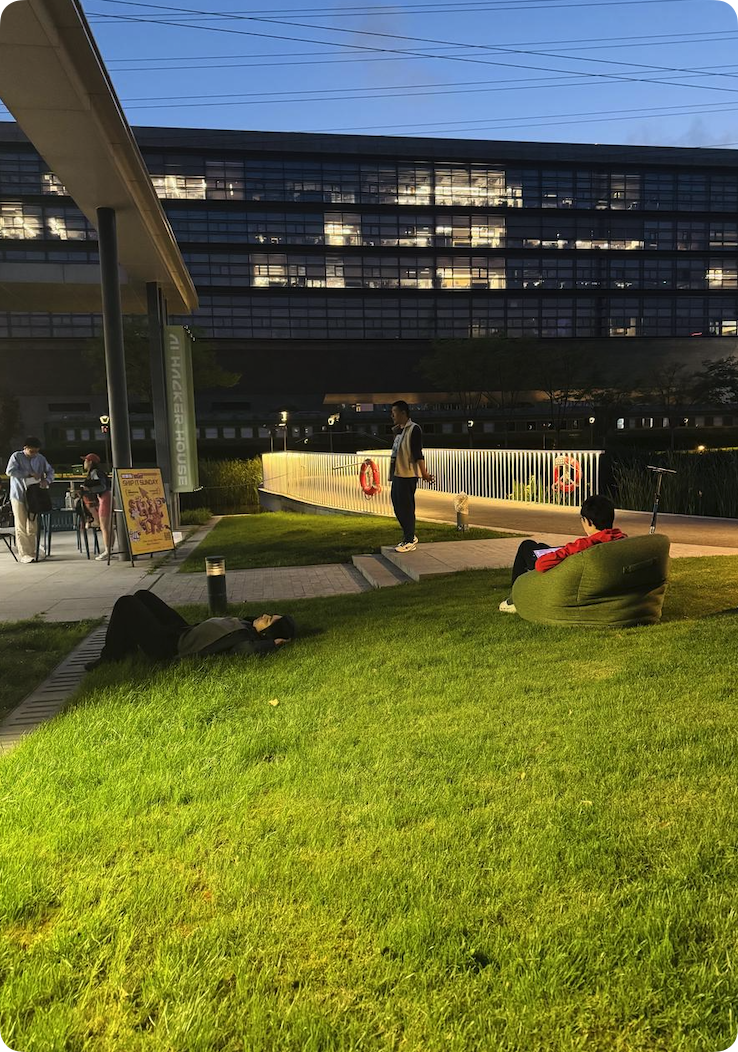
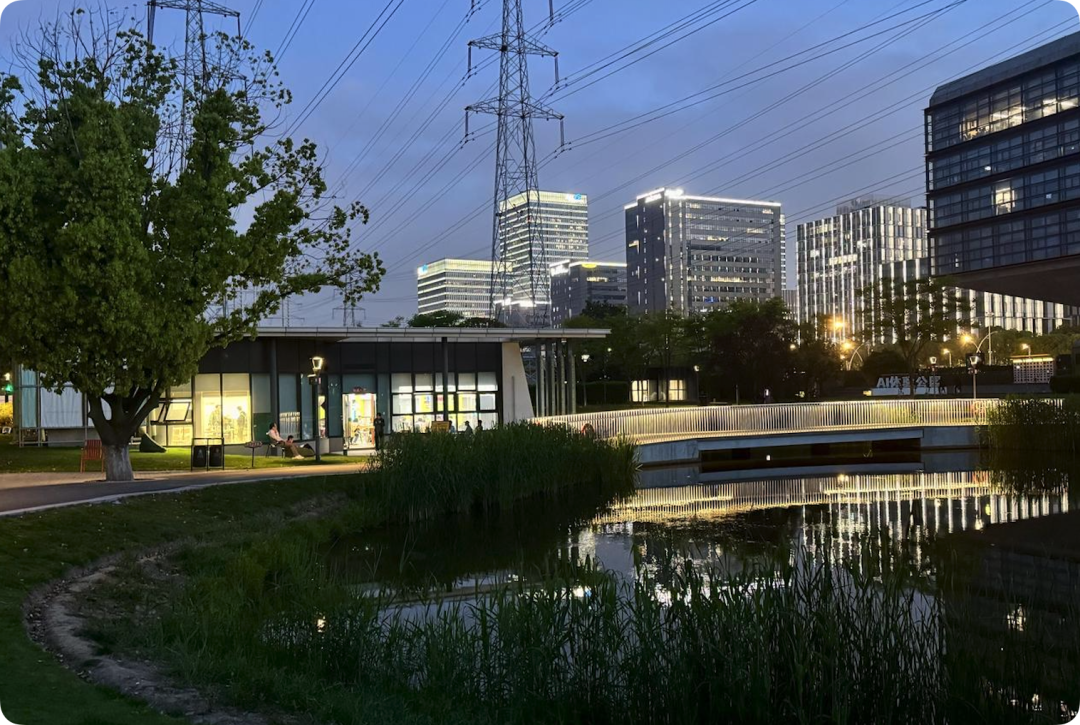
At 9:30 p.m., it's completely dark.
From a distance, the AI Hacker House glows on the lake. Someone has just finished their demo, someone is packing up their laptop, others still circle around a project, reluctant to disperse.
The light from the windows reflects on the water, like a spaceship docked beside an urban oasis, its hatch briefly open, about to fall quiet again.
Next month on Sunday, it will open once more.
If you feel like you're the person who should be there, don't hesitate.
Because that is the Paris for young people in the AI era.
🚥

We're looking for real builders → May's Ship It Sunday is now open for registration: Shanghai, Sunday Hackathon, Come Hang Out 🎪