An All-in-One Agent Machine Built Exclusively for CEOs | A Conversation with Jomy, Founder of 302.AI

The bigger the company, the further from the truth.
The bigger the company, the further from the truth.
👦🏻 Author: Koji
🧑🎨 Layout: NCon

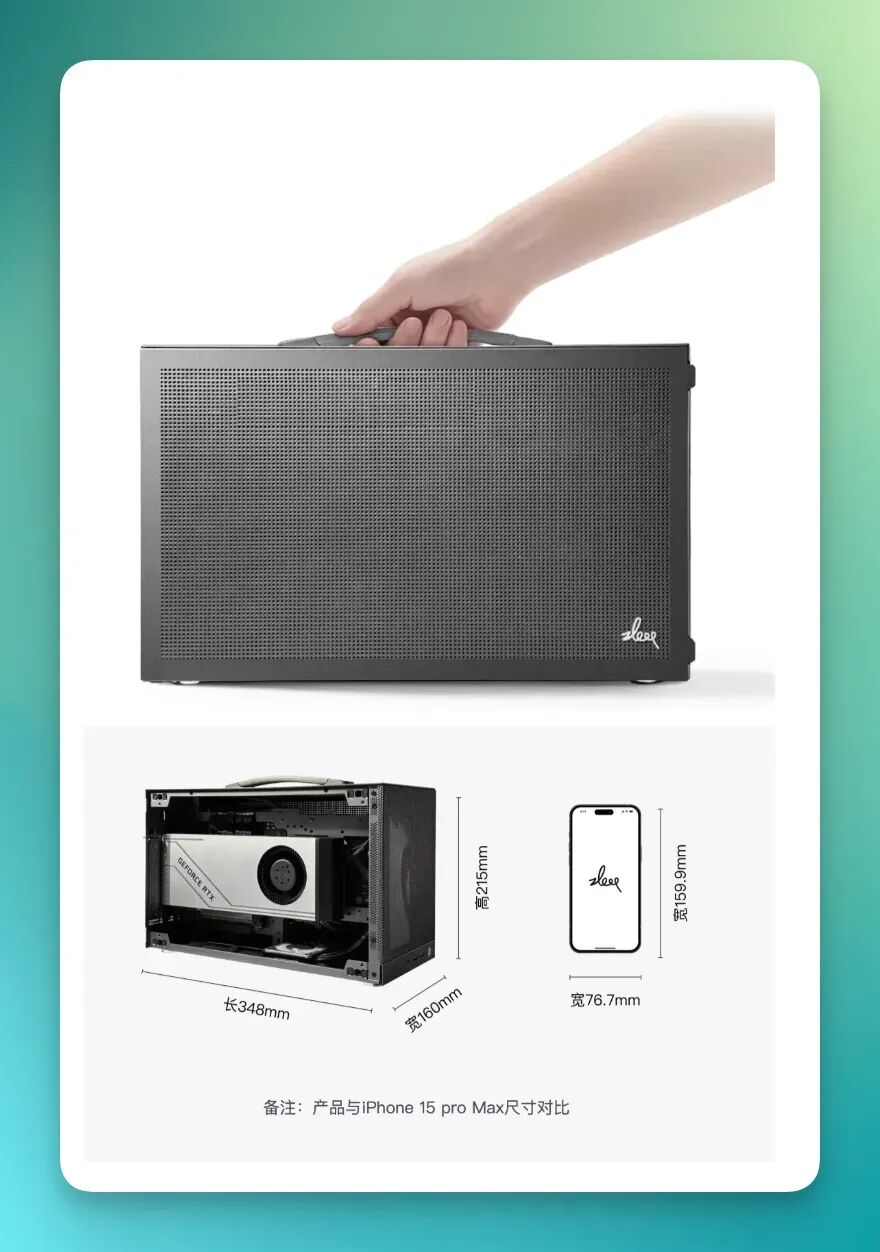
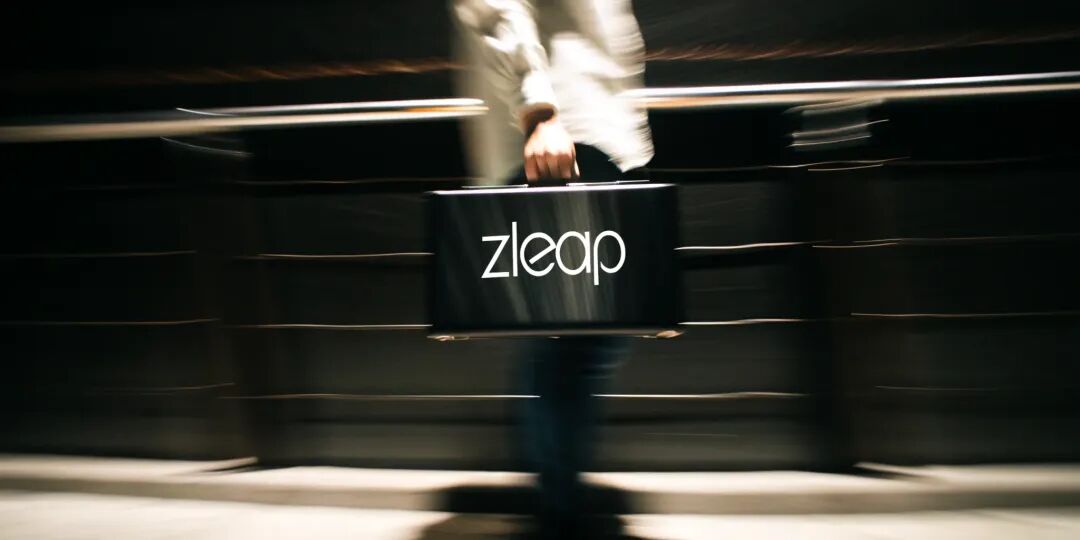
In 2025, nearly everyone in the AI industry worships at the altar of the cloud, SaaS, and subscriptions. Jomy, founder of Zleap, built his latest product as a heavy metal box. The "Zleap Agent Appliance" is Jomy's second AI product. After finding success with 302.AI[1], he launched the Zleap-D1 — priced at ¥68,000, a one-time purchase, running local small models entirely offline.
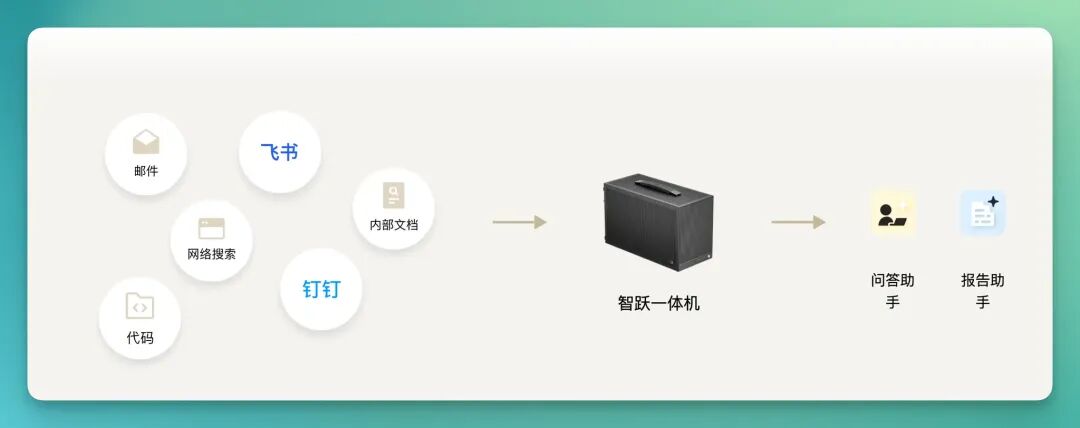
Its core mission is singular: automatically gather internal company information and periodically generate a "truth report" for the CEO.
This seemingly contrarian product form isn't technological nostalgia. It's a precise strike at the psychology of its target users — Chinese business managers.
Jomy discovered that no boss wants to upload their company's most sensitive operational data to the servers of an emerging SaaS company. Data privatization is an absolute necessity. So a hardware box you can hold in your arms, capable of running without internet, directly solves the trust problem.
The ability to perceive this insight stems precisely from the fact that founder Jomy is not a typical AI tech elite.
He's a seasoned entrepreneur who's spent nearly a decade grinding in advertising and e-commerce. He lived through the organizational growing pains of scaling from a handful of people to nearly a hundred, and personally felt the management dilemma that "the bigger the company, the further from the truth."
So Zleap's first product is, at its core, a tool Jomy built for himself. He is both developer and user, and this dual identity gives him clearer insight than anyone into what it takes for a tool to survive in Chinese enterprises: it must prioritize the boss's ultimate craving for security and control, not pursue technical perfectionism.
Quick Fire
👦🏻 Koji
Age?
🧑🏻💻 Jomy 34
👦🏻 Koji
Alma mater?
🧑🏻💻 Jomy ** Central South University, but didn't graduate
👦🏻 Koji
MBTI and zodiac?
🧑🏻💻 Jomy INTJ, Libra
👦🏻 Koji
One sentence describing your current company and product?
🧑🏻💻 Jomy Zleap Agent Appliance
👦🏻 Koji
Funding status?
🧑🏻💻 Jomy Zleap is preparing for its Series A
👦🏻 Koji
Revenue and profit?
🧑🏻💻 Jomy Product hasn't launched yet, but we have plenty of interested customers
👦🏻 Koji
Team size?
🧑🏻💻 Jomy Nearly a hundred if you count 302
👦🏻 Koji
What were you doing before entrepreneurship?
🧑🏻💻 Jomy Advertising and e-commerce
Positioning
👦🏻 Koji
How did the idea for an "Agent Appliance" first come about?
🧑🏻💻 Jomy I've been working on 302.AI for almost two years and have engaged with numerous enterprise clients, but in the process of AI implementation, they've all encountered significant difficulties. Either the technology couldn't be figured out, the results weren't good, or the costs were too high.
So I've always had this idea: why not create an integrated solution that combines hardware, compute, software, and Agent into one package, delivered directly to the customer, ready to use out of the box?
Then what kind of Agent product to build?
Earlier this year, I was chatting with an elder statesman in high-tech manufacturing, Mr. Zheng. His company has roughly 1,000 people spread across the country, and management was a real headache. He asked whether AI could assist him in managing the company. That's when I suddenly realized this was a market with massive pain points, extremely strong willingness to pay, and yet nobody was serving it. And so the Zleap project began.
I've been an entrepreneur for nearly ten years myself, growing my company from two or three people to where it is today. I've been through many organizational changes and deeply experienced that feeling of "the bigger the company, the further from the truth." Many of my friends are also bosses, and they all share the same pain point.
So Zleap's first Agent Appliance does just one thing: automatically collect various frontline information within the enterprise, then generate clear "truth reports" to assist bosses in management and decision-making.
👦🏻 Koji
Who is Zleap's target user?
🧑🏻💻 Jomy All CEOs and management. If you have pain points around information opacity, you're Zleap's target user.
👦🏻 Koji
Why choose them as your target?
🧑🏻💻 Jomy Three reasons:
- Improving efficiency for CEOs and management delivers the greatest impact on overall company performance. Only with the right direction can a company develop better.
- When CEOs and management start using AI and experiencing its benefits, it most effectively drives AI adoption throughout the entire company — a top-down push.
- From a business perspective, bosses also have the strongest purchasing power. It's a good business.
👦🏻 Koji
What's Zleap's current price?
🧑🏻💻 Jomy
Hardware and software, one-time purchase of ¥68,000.** If you're among the first 1,000 customers to pay a deposit, it can be deducted from the final payment by ¥10,000.**
👦🏻 Koji
I'm curious about the pricing process — was it a gut feeling, or a complex cost-and-value model?
🧑🏻💻 Jomy A bit of both. The price range definitely considered costs and R&D expenses, but the number 68,000 was chosen for good luck.
For a business, ¥68,000 is roughly equivalent to the total annual cost of an employee earning ¥5,000 a month. We believe the value Zleap can bring to a company far exceeds that of a ¥5,000-a-month employee.
👦🏻 Koji
In today's era where SaaS dominates and everything is cloud-based, "one-time purchase" is practically swimming against the current. For the company, this means constantly needing to acquire new customers.
How do you view the growth ceiling and cash flow pressure of this model? How do you plan to charge for future model or feature upgrades to generate recurring revenue?
🧑🏻💻 Jomy First, I believe this market is large enough that we don't need to worry about the ceiling in the short term.
Second, this is just our first product. We have more Agent Appliances in planning — for programmers, for finance teams. That market is even larger.
Third, we'll provide enterprise customization services, integrating more unique features into the appliance to reduce enterprise development costs. This demand will be ongoing.
For future internal model upgrades and general feature updates, we won't charge.
The Person
👦🏻 Koji
Let's briefly talk about your background. You mentioned not graduating from university — what prompted that decision?
🧑🏻💻 Jomy I started a business in college. It was still the app era back then — Apple's App Store had just launched not long before, and I felt there were so many apps I wanted that didn't exist. So I taught myself programming and developed apps myself.
I've always been a very focused person, and I was pretty obsessive about it at the time. My major was materials chemistry, completely unrelated to programming, so I lost interest in attending classes. It wasn't a deliberate decision — it just happened naturally.
👦🏻 Koji
Before AI, you were in advertising and e-commerce. Could you share what specifically you were doing?
🧑🏻💻 Jomy Mobile advertising and cross-border e-commerce, both overseas businesses. Let's not dwell on past successes — I only care about AI now.
Product
👦🏻 Koji
When positioning Zleap, what considerations led you to choose a hardware-software integrated appliance?
🧑🏻💻 Jomy Two things: data security and compute costs.
First, data security. No boss is willing to put their company's confidential information on an emerging SaaS company's servers, so private deployment is a hard requirement for many companies.
Second, compute costs. Our Agent consumes quite a lot of compute. For larger companies, this Agent might be running 24/7 nonstop. As an integrated appliance, you only pay for electricity — no need to worry about additional token costs.
👦🏻 Koji
Was there any marketing consideration behind the hardware-software appliance form factor? Did you consider that target users might perceive greater value from a physical machine, making them more likely to purchase?
🧑🏻💻 Jomy Somewhat, but not primarily. It's true that Chinese bosses tend to trust physical hardware more. A machine they can see and touch inspires more confidence than SaaS.
👦🏻 Koji
Current appliances range from over ¥100,000 to more than ¥1 million. How can you achieve ¥68,000?
🧑🏻💻 Jomy From the very beginning of building this product, I wanted to create something affordable for SMEs. So from the technology selection stage, we were very clear about building a compact, single-GPU appliance.
The main cost of appliances today is the GPU. Fewer GPUs means lower prices. Our premium mainly comes from the software-level solution.
👦🏻 Koji
What can Zleap help users do? Among current users, which problem resonates most as a pain point?
🧑🏻💻 Jomy At this stage, we focus on doing one thing well: information collection and information processing.
There are two aspects to the pain point. First, information collection — how to achieve frictionless, zero-development-cost information gathering is crucial. Second, information processing — how to extract the information you truly care about without hallucinations is something few products do well today.
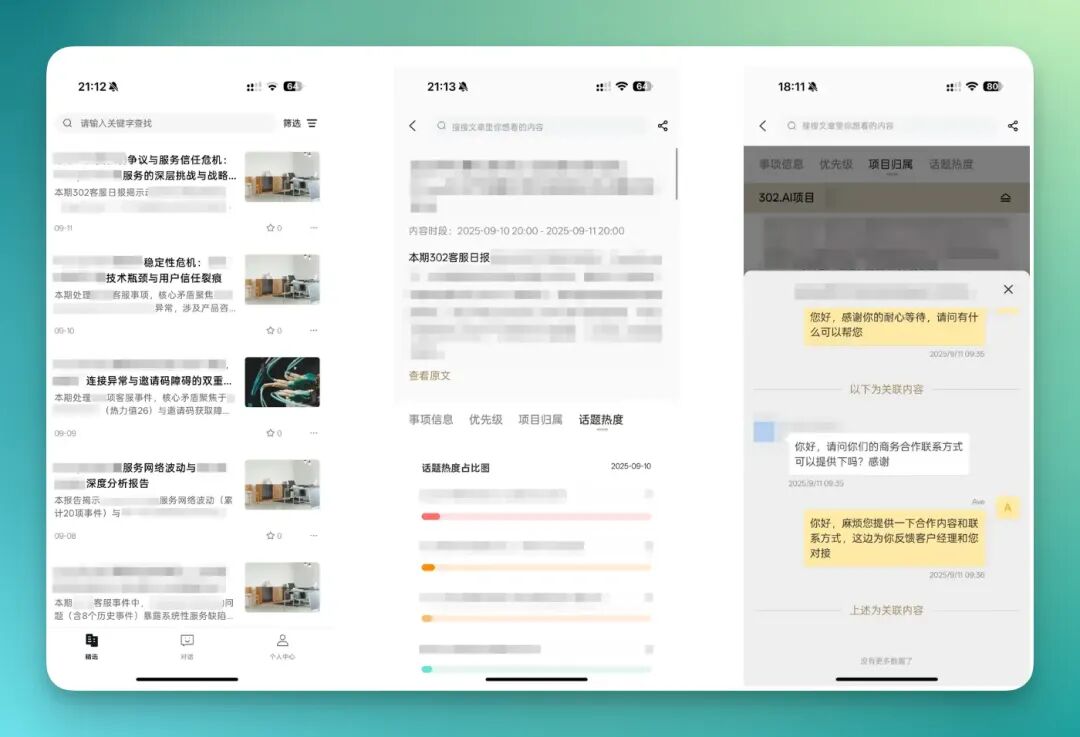
Zleap app demo: viewing customer service conversation logs within the app
👦🏻 Koji
Among clients you've already served, was there a moment that left the deepest impression — where Zleap uncovered some "special secret" or "huge opportunity" that nobody had noticed?
🧑🏻💻 Jomy We haven't publicly sold the product yet. Internally, we've only served two clients: our own company 302, and our angel investor Mr. Zheng's company. By industry, one is an internet tech company and the other is high-tech manufacturing. By scale, one is at the hundred-person level and the other at the thousand-person level.
Today I'll just share some of my experiences using it at 302:
On day one, I discovered that our customer service was frequently giving incorrect responses to clients — revealing our inadequate technical training for the CS team. We started paying attention to this, and our customer service satisfaction scores have improved significantly since.
Another interesting use case: I use Zleap to search for customers requesting invoices through 302's customer service channels. Regardless of amount, this always signals enterprise demand. I pay special attention to these customers' needs, and indeed, we've cultivated some very promising major clients from this, driving real growth for us.
👦🏻 Koji
I remember in our earlier conversation, you mentioned "direct access to truth, goodbye to filters." But I'm concerned this might be interpreted by employees as a form of "surveillance."
When promoting to clients and deploying internally, how do you handle this potential cultural resistance and negative labeling?
🧑🏻💻 Jomy First, our information collection channels definitely comply with each platform's rules. For example, with Lark, we can only collect group chat information through bots — we cannot access private chats. And these platforms have already considered privacy issues when granting permissions.
On another level, this product is made for bosses. If the boss wants to use it, I believe every boss has their own methods for implementation.
From the employee perspective, AI only collects work-related information. For those who work seriously, there's nothing to worry about — in fact, it can help the boss see more contributions from the front lines.
👦🏻 Koji
The implementation of tools is essentially the implementation of power. Zleap doesn't sound like a Silicon Valley-style AI story at all — it's a distinctly "China-specific" product.
I imagine you have your own unique understanding of "Chinese-style management." If you were to sketch a portrait of Zleap's target user — the typical Chinese boss — what three key traits would you use?
🧑🏻💻 Jomy Shrewd, hardworking, controlling.
👦🏻 Koji
How does Zleap precisely serve these three traits — especially those that Western management software might overlook?
🧑🏻💻 Jomy Shrewd means that for Chinese bosses, you must deliver tangible benefits. Don't talk about abstract concepts — you can't fool them. So Zleap does one thing solidly: "upward reporting." It genuinely helps the business.
Hardworking means Chinese bosses tend to be hands-on with everything, which is exhausting. Zleap aims to reduce their burden, letting AI handle tedious and complex information so they have more time to focus on what matters.
Controlling means Chinese bosses want clarity on everything. China is an intensely competitive market with endless business tactics, so bosses inherently feel insecure. Zleap connects the company's information channels, letting the boss see what's happening on the front lines every day — I think they'll sleep better at night.
Technology
👦🏻 Koji
On Zleap, how do on-device models and cloud models divide and collaborate?
🧑🏻💻 Jomy We don't use cloud models at all. All models run locally. You can even copy data in via USB drive — the entire system can operate completely offline.
👦🏻 Koji
Are small models sufficient? What's special about application development with small models?
🧑🏻💻 Jomy If this were last year, small models wouldn't have been enough. But this year is completely different, especially with the open-source Qwen3-2507 released in recent months — the performance is genuinely excellent.
But even with excellent small models, they'll never be as smart as large models, so you need a completely different development mindset. Large model application development is "more intelligence, less structure." Small models are the exact opposite. You must clearly break down workflows, don't let the model make too many decisions — instead have it do more explicit execution. Prompt engineering for small models is also completely different from large models.
So I hope Zleap can drive a trend in small model development, getting more AI companies to build more practical, grounded solutions.
👦🏻 Koji
Which enterprise internal data sources does Zleap currently support?
🧑🏻💻 Jomy We currently support Lark, DingTalk, documents, links, internal reports within the Zleap app, and more. We'll update with new data source integrations weekly, and also support custom integrations for some enterprise internal data.
👦🏻 Koji
The information CEOs care about most often lives in WeChat. This most important data silo — is there any way for Zleap to access it?
🧑🏻💻 Jomy We will not violate WeChat's privacy policy to automatically collect WeChat information. But if bosses have ways to export data — whether text or screenshots — they can manually import it into the Zleap appliance.
👦🏻 Koji
How does Zleap's memory system work?
🧑🏻💻 Jomy Our Agent's memory is essentially a fully self-developed data cleaning + information extraction + RAG system. A single-GPU appliance can't have very long context, so it must rely on RAG.
Many people think RAG doesn't work well, but it's not actually a problem with RAG technology itself — it's that the data is too dirty. What our Agent does is actually quite similar to model training principles. We have an Agent that intelligently processes all the data first, similar to "labeling," and then the RAG performance naturally improves.
👦🏻 Koji
In our last conversation, you mentioned that Zleap's core is a self-developed framework superior to Graph RAG. Could you use a concrete example to explain, for the same messy meeting notes, how Zleap's processing approach and results differ from open-source RAG solutions (like LlamaIndex)? What are the core differences and advantages?
🧑🏻💻 Jomy Our solution is unique in both principle and engineering.
The principle behind GraphRAG is actually quite simple: have an LLM extract relationship graphs from data, and relationship graphs at their core are entities + relationships. And GraphRAG's entities + relationships are essentially one-dimensional.
Zleap RAG is multi-dimensional. It doesn't just extract single entities, but extracts features across multiple dimensions. And we don't link entity relationships at the initial data import stage — instead, we automatically establish relationships only at the actual retrieval stage. Like human memory of events, it's multi-dimensional and automatically associative. When we have time in the future, we'll publish a paper detailing this principle.
On the engineering side, anyone who's actually worked with RAG knows that basically all open-source projects aren't built for enterprise deployment — they're for research or exploration purposes. So when you actually deploy, you encounter all kinds of problems, leading to high deployment costs. The Zleap appliance is an out-of-the-box solution — no deployment needed, just plug it in and use it, and the price isn't expensive.
In terms of results, for the same messy meeting notes, compared to both open-source solutions and SOTA large models, we achieve more accurate, more comprehensive information extraction with fewer hallucinations. Because when you use a large model to generate meeting minutes, it's basically one conversation; when Zleap generates meeting minutes, the Agent may have run 1,000 times behind the scenes.
👦🏻 Koji
What specifically does "Agent running 1,000 times behind the scenes" mean? Is it query expansion? Wouldn't that cause latency and compute explosion?
🧑🏻💻 Jomy Definitely not query expansion. It's mainly data cleaning and data analysis performed when information is collected.
Regarding latency — yes, there definitely is. Generating a report takes dozens of minutes. But information collection runs 24/7, and the LLM starts working the moment information enters the database. It's like we've distributed this computation over time, so the perceived delay isn't as strong.
Compute explosion? That's already common in the Agent era, isn't it? For us it's actually an advantage — because we're an appliance, you just pay for electricity, no token costs.
👦🏻 Koji
What specifically are the "multiple dimensions" in Zleap RAG? (Entities, semantic features, sentiment, time series, contextual position?)
🧑🏻💻 Jomy Different information types have different extracted dimensions — there's a lot of know-how behind this. We also support custom dimensions, automatically adding new ones based on what you care about.
👦🏻 Koji
Have you done standardized benchmarks? (For example, metrics comparison in meeting minutes generation, Q&A accuracy, hallucination rate)
🧑🏻💻 Jomy Current benchmarks are too basic, too academic, and many of our features can't be evaluated by benchmarks. For example, our low hallucination rate is largely due to traceability — you can layer by layer in the UI find the original source information. This can't be automatically evaluated.
We have our own internal evaluation sets. When we have time in the future, we should release a benchmark standard more aligned with actual enterprise conditions.
👦🏻 Koji
You have very deep research into large models and RAG, even preparing to publish papers. But you don't have a CS background. I'm curious — how did you build your technical knowledge system?
🧑🏻💻 Jomy It's the AI era — as long as you have a strong desire to learn, whether you're from a relevant background doesn't matter anymore. Over a decade ago, I also taught myself programming, relying on physical books and Stack Overflow. Now there are so many tools — AI search, AI Q&A, AI translation — vastly more efficient.
Competition
👦🏻 Koji
Who are your competitors?
🧑🏻💻 Jomy No competitors. We also hope to pioneer this entirely new market of Agent Appliances, getting more AI companies to build more grounded solutions.
👦🏻 Koji
What about indirect competition? Might users choose other products to achieve the same value Zleap provides?
🧑🏻💻 Jomy SaaS products might compete with us — for example, Lark and DingTalk's built-in AI features. But they won't support as many data sources as we do, and they can't achieve private deployment.
👦🏻 Koji
How big is the "Agent Appliance" market?
🧑🏻💻 Jomy I think it's at least 100x the AI appliance market.
👦🏻 Koji
How big is the "AI appliance" market currently?
🧑🏻💻 Jomy I've heard estimates from tens to hundreds of billions, but I'll be conservative — around $1 billion.
Entrepreneurship
👦🏻 Koji
Your previous product 302.ai also achieved good results, but 302 AI and Zleap are completely different directions. What led you to not double down on 302 AI, but instead launch an entirely new track?
🧑🏻💻 Jomy I think there's a misunderstanding here — I haven't abandoned 302. My time allocation between 302 and Zleap is 50/50. It's like how Manus hasn't abandoned Monica — one pursues precision and focus, the other pursues breadth and comprehensiveness. They don't conflict.
And these two companies can produce 1+1>2 effects, because 302 also serves enterprise clients and can directly bring customers to Zleap; Zleap can also use many applications developed by 302 to enrich its software ecosystem.
👦🏻 Koji
Why Now? Why choose to build Zleap today? Was there some new technical breakthrough or market change that made the previously impossible possible?
🧑🏻💻 Jomy I started Zleap early this year. The biggest reason was seeing the development of small models.
Early this year, DeepSeek published that R1 paper, using RL to train small models to the level of previous large models — that was quite shocking to me. Test-Time Scaling isn't just making large models smarter; it's making small models genuinely usable.
So I thought at the time: could a single-GPU platform solve 90% of enterprise needs?
The flood of papers in 2025 has proven this point. In many vertical domains, specially trained small models can beat closed-source general-purpose large models. And we've indeed achieved this — in the information processing domain, small models + Agent can far surpass large models.
👦🏻 Koji
Why you for Zleap? Why are you more suitable than other entrepreneurs? Did you consider this when choosing your direction?
🧑🏻💻 Jomy Zleap's first Agent Appliance isn't really a product for individual developers or small teams. If your company is small, you can just ask everyone what they're doing each day — you don't need AI for that. Only at a certain scale does this need arise.
And AI entrepreneurs are polarized — either very young, small teams, or very established, large enterprises; either doing 2C or building models. Entrepreneurs like me, somewhere in the middle, aren't common.
And I happen to have this need, understand CEOs, and understand AI. So Zleap's first product was also built for myself — I'm both developer and user.
AI
👦🏻 Koji
Stepping back from Zleap, as a heavy AI user, what are the three AI products you use most in daily life? What resonates with you about them?
🧑🏻💻 Jomy Not to advertise, but I genuinely only use 302's products, because 302 covers all my needs. Whenever I have a need, I just have the tech team build it, then open-source it along the way.
👦🏻 Koji
Could you give two examples?
🧑🏻💻 Jomy Among 302's products, I use the desktop client and AI academic paper search most.
The 302 client is an AI chatbot integrating various models. We've optimized many details — many open-source clients lack backend support, so their features are always somewhat limited. We have all kinds of APIs at 302, making it much more convenient to use.
AI academic paper search lets you search various papers, translate them in original format, and do Q&A on papers. I generally read papers with Chinese-English side-by-side comparison, supplemented with some AI Q&A — that's the most efficient approach.
👦🏻 Koji
Looking ahead three years, what do you think will be the biggest technical or product paradigm shift in AI? Is this shift an opportunity or threat for Zleap?
🧑🏻💻 Jomy After Test-Time Scaling, there hasn't been a new paradigm yet, so large model upgrades will slow down. But small models' potential hasn't been fully tapped. In vertical domains, I believe small models will become increasingly powerful, and then equipped with tools as Agents, making AI truly land in various industries.
So the next three years should be the era of Agents, and AI's second wave of changing the world.
For us, it's of course a huge opportunity. Reasonably priced, privately deployable Agents will become essential for many enterprises.
👦🏻 Koji
Finally, if you had one piece of advice for all CEOs feeling anxious about being swept up in the AI wave, what would it be?
🧑🏻💻 Jomy AI won't eliminate companies — companies using AI will eliminate companies not using AI. So bosses, start using it yourselves!
P.S. To learn more about the Zleap-D1, check out Zleap's WeChat article — "Zleap-D1 Agent Appliance Released, Launching the AI-Driven Management Era"

References [1] 302.AI: http://302.ai/