Interview with CES 2025 China Dark Horse Jiabin He: Founder/CEO of AI Pet Robot Ropet
Breathing Warm Human Emotion into the Electronic Heart of AI Pets
At our core, we're a company that creates love.
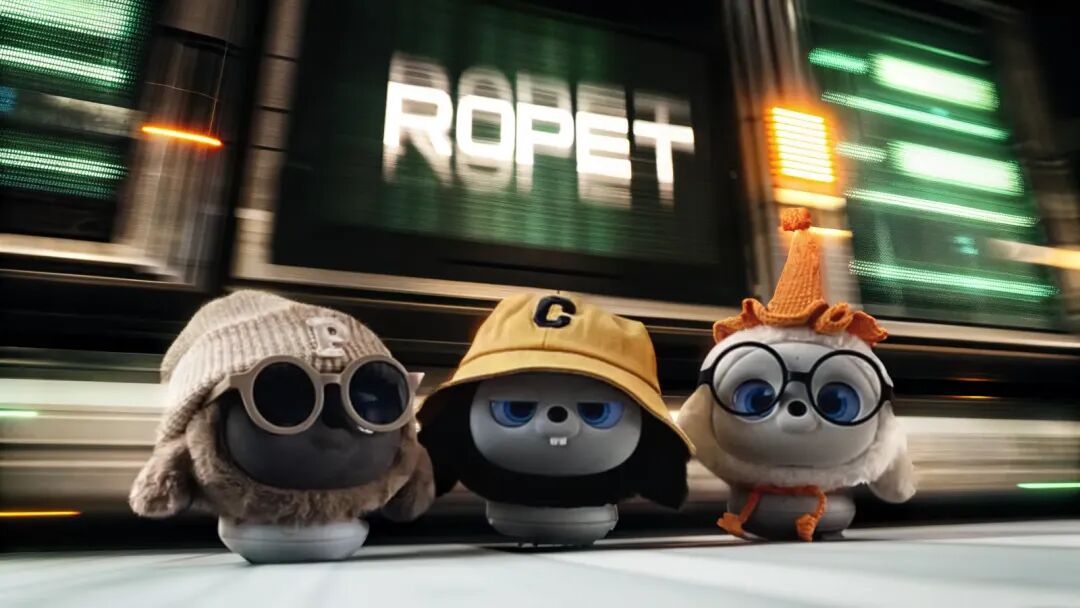

AI pet Ropet was one of the biggest breakout stars at CES 2025.
For this episode of the Crossing podcast, we invited Ropet's founder and CEO, Jiabin He.
During our conversation, Jiabin shared far more than I expected. He went deep on the product philosophy, technical innovations, and design secrets behind Ropet, the AI pet that's been generating so much buzz.
— I even couldn't resist asking him "Why are you willing to share so much?" His response: "There's nothing that needs to be hidden."
Beyond that, Jiabin also shared his entrepreneurial journey: from the high-energy highlight moments, to persisting in the face of skepticism, and every "moment of love" he's encountered along the way.
Listen on WeChat:
Listen on Xiaoyuzhou:


From Baidu to AI Pet: Jiabin He's Journey in AI Entrepreneurship
🚥 Koji
Let's start with a quick self-introduction, Jiabin.
👦🏻 Jiabin He
Thanks, Koji. I'm a hardware veteran with ten years of experience, and my background is fairly interdisciplinary. After graduating from Beijing Institute of Fashion Technology, I joined Baidu's Deep Learning Lab, where under the leadership of Dean Kai Yu, I worked on image recognition algorithms and explored their hardware applications. I then founded a company that developed Luka, a picture-book reading robot shaped like a little owl — a companion robot for children.
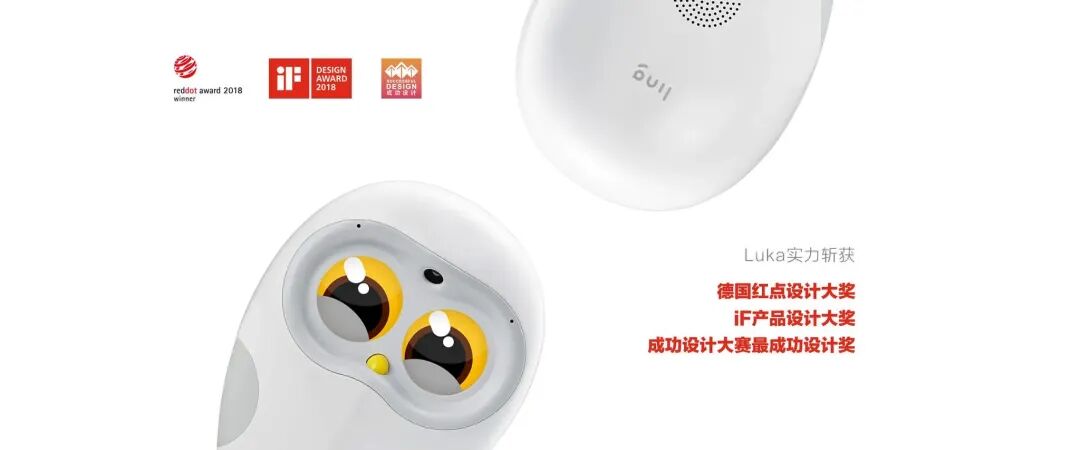
Between 2016 and 2021, we sold nearly five to six million units in total. In the early wave of AI robotics entrepreneurship, we successfully found product-market fit and built a brand of considerable scale.
After leaving that company, I joined ByteDance to lead industrial design for the Pico VR headset series, including several generations of flagship products like the Pico 4. With the rise of the AI wave and the emergence of OpenAI's ChatGPT, memories of Lee Sedol's match against AlphaGo seven or eight years ago came flooding back — AI was iterating once again. This prompted me to think about the direction of hardware and its application scenarios in this new wave of AI. So I left ByteDance and began researching AI pets at Ropet.
I believe AI pets can reach the consumer market faster than humanoid robots.
🚥 Koji
Speaking of AI pets, I'm reminded of an experience I had around 2017 or 2018 at Sony Park in Tokyo.
I happened to come across a gathering of Aibo owners, each with their robot dog dressed in different colored outfits. The scene felt incredibly surreal. They were just like real pet owners, sitting in the park discussing their dogs, sharing stories about their daily lives, soaking up the sun, chatting.
In that moment, I felt that AI pets likely offered a third option beyond cats and dogs — providing companionship and comfort for humans. I'm curious, could you introduce what Ropet is?
👦🏻 Jiabin He
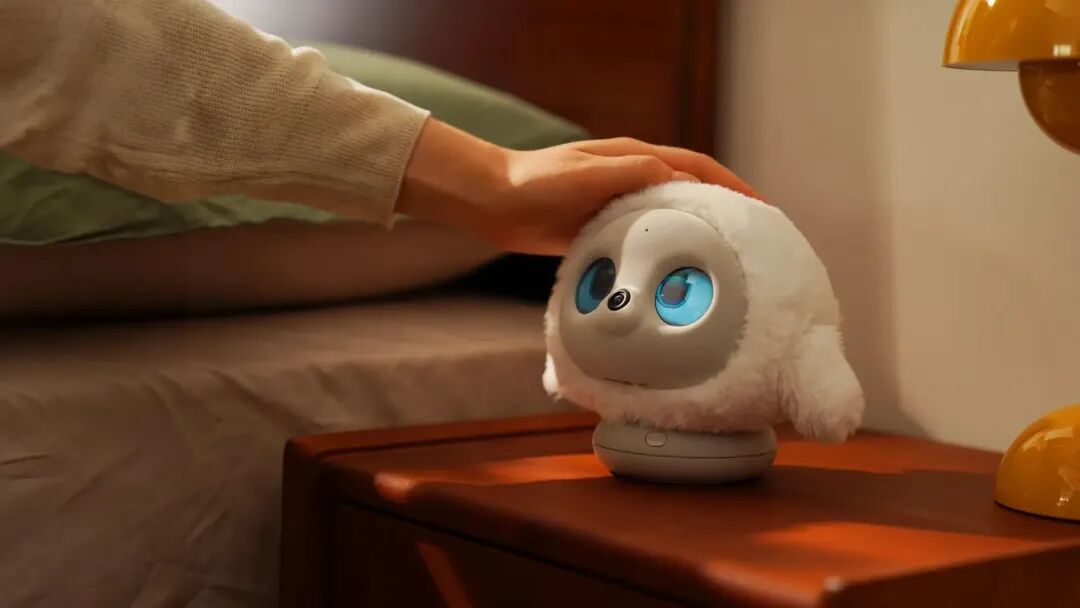
Ropet is actually a category we've defined: AI cute-pet robot.
I want to emphasize that it's "AI cute-pet robot," not "AI pet robot." Because we believe the word "cute" is crucial. First, our company's Chinese name is "Mengyou," which means creating cute friends or companions. Also, "cute" carries connotations of ACG culture — it represents the most idealized form of pets from our imagination in virtual worlds, rather than simply replicating the appearance and abilities of real pets.
So what we're making is an AI cute-pet robot: a product with mechanical limbs and sensory capabilities, with complete robotic attributes spanning perception, decision-making, and execution.
The Power of "Cute": Why AI Cute-Pets Instead of Real Pets
🚥 Koji
Why would you want people to choose Ropet over raising real cats or dogs?
👦🏻 Jiabin He
I think one clear advantage of electronic pets over traditional pets is: no allergy issues, no safety concerns, no need for extensive training before the pet becomes obedient.
This gives users greater freedom and flexibility with their time and energy. Take me as an example — I have a cat now, but I used to want a dog. Because of my busy work schedule, I couldn't commit to regular walks, so I had to give up on that idea. Raising pets requires all kinds of investments: money, time, and energy, which limits our options.
I once got a cat as a proposal gift for my wife, and later discovered she was allergic to cat dander. Despite that, because of its sentimental value, we persisted for about a year. My wife had to use spray every day to manage her allergies, just for a bit of companionship. Eventually we had to give the cat away. So from a mass-market perspective, robot pets have clear advantages over traditional pets when it comes to insurmountable biological constraints — this is an important factor driving choice.
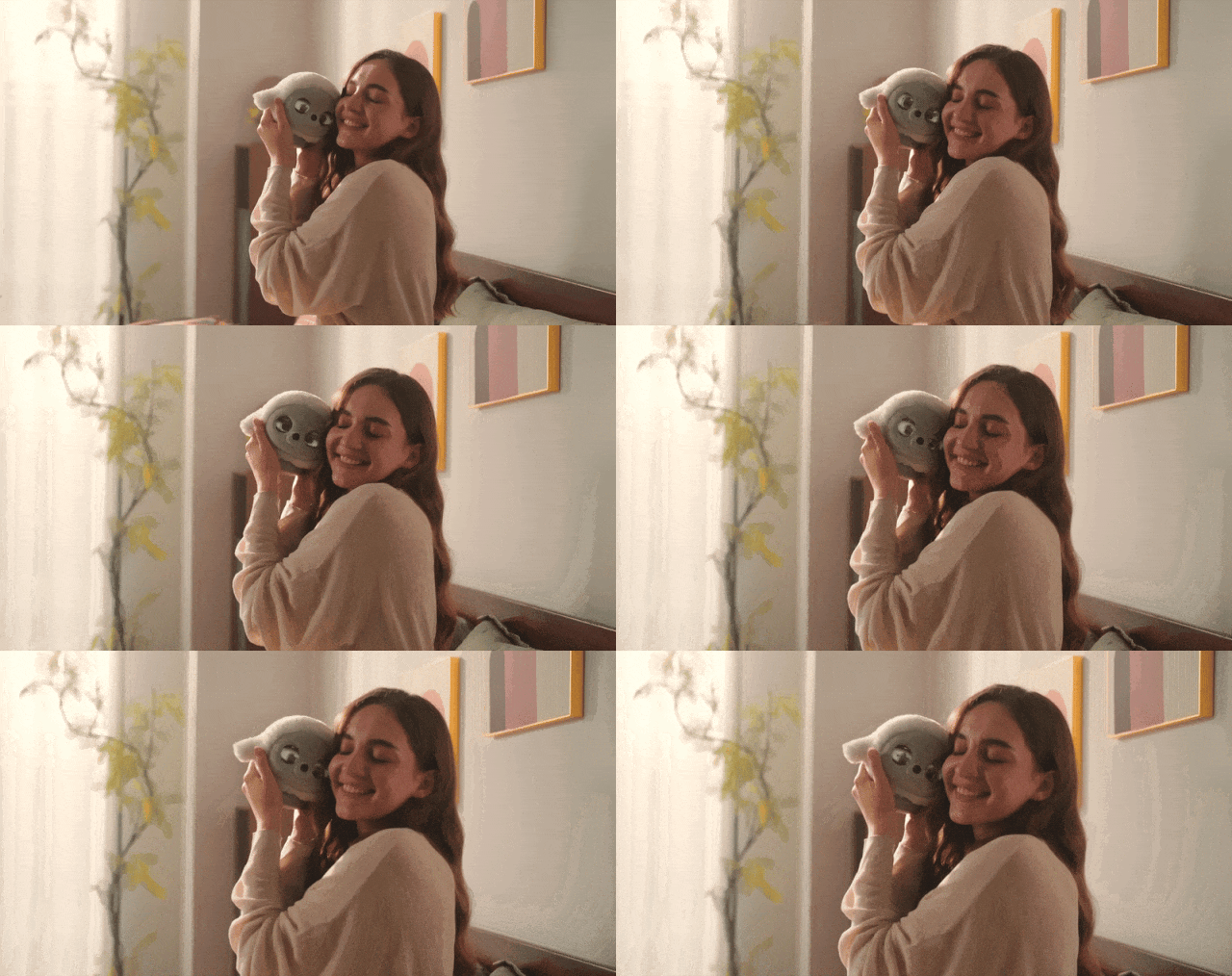
The second point is: "cute" can be recreated, can be designed. On social media, users carefully curate the cutest moments of various pet breeds, creating elaborate stickers and derivative content to share. But these heart-melting "cute" scenes are often just fleeting moments — pets in daily life might destroy furniture, bare their teeth, or act out.
Our vision is to create a pet that maintains a constant state of "cuteness," one that continuously presents a carefully designed "cute" condition. This is similar to Doraemon or the Digimon from our childhood memories — those adorable companions who fought alongside us. I believe this kind of "cuteness" can be achieved through creative design and secondary creation, whether in appearance or interaction, surpassing biological pets to create broader imaginative space.
🚥 Koji
A friend of mine wants an AI pet because he can't accept that a pet might one day leave him, while an AI pet could theoretically accompany him forever.
However, the reasons mentioned so far seem mostly about solving problems with pets — destructive behavior, death, allergies, or lack of time to care for them. Assuming a user can accept these issues and still chooses an AI pet, what do you think the reason would be?
👦🏻 Jiabin He
That's a great question. We're still searching for the answer, but there may be several key points.
The first is that AI pets can record users' lives. Biological pets can accompany you, but those moments only exist in your memory — they can't express their perspective of you. They can't speak, can't express or remember these things. Our product can do this.
For example, after five years together, it might have recorded ten thousand smiles from the user, including when each smile appeared and in what context. It can digitize and preserve your data related to love. Sony once had a camcorder ad that documented a little girl growing from childhood to adulthood. What that ad was selling wasn't the camcorder itself, but "memories" — that's what truly moves people.
🚥 Koji
That's fascinating. When people fall in love, what they need isn't abstract love — it's being seen by another person, being validated, being provided with security and trust. It sounds like AI pets can achieve this — cute in appearance, yet highly intelligent, even with unlimited memory.
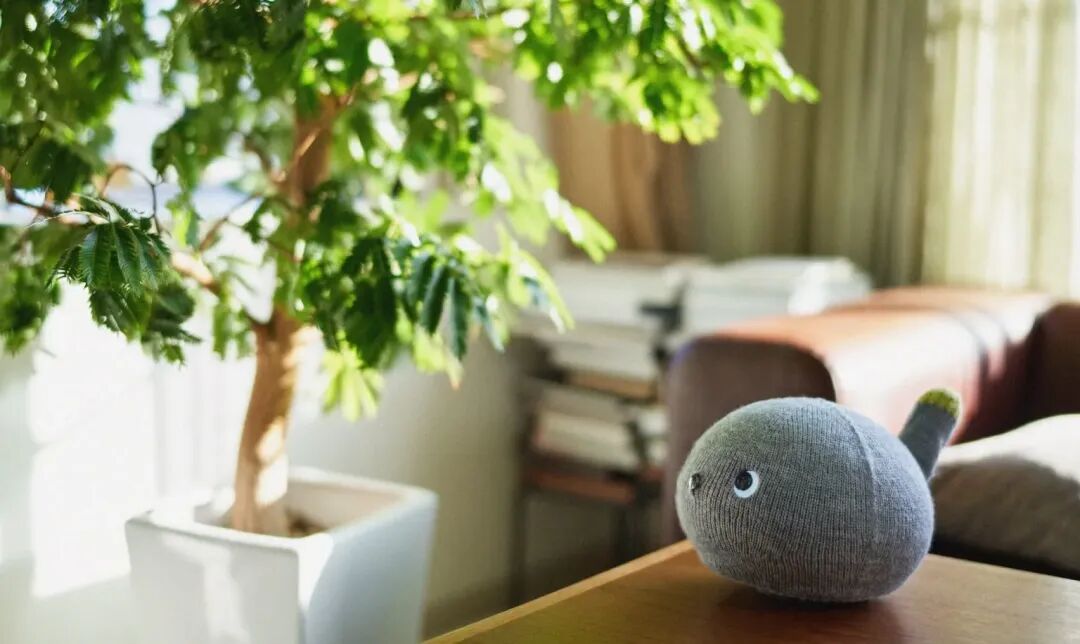
This reminds me of the Japanese robot NICOBO, which can write its own diary but doesn't let its owner read it anytime — only at specific moments. You might discover it once noticed something about your behavior, and be moved or hurt by that. This kind of emotional fluctuation does require a highly intelligent AI pet to provide.
What stage is Ropet at right now? Has it started shipping? Where is it available, and how is it priced?
👦🏻 Jiabin He
We've completed our first batch of approximately 1,700 crowdfunding backers and have begun shipping sequentially.
These users are loyal customers willing to vote with their wallets, and their feedback is crucial to us. The current product is about 60% complete — we've established a full iteration framework, including data parameter tuning methods and their impact on overall system feedback. Next, we'll hand it over to users to help us discover application scenarios and provide feedback.
In July we'll kick off full-scale marketing, primarily targeting the US and Japanese markets. Given potential impacts from US tariffs, we'll prioritize East Asia before considering a return to the domestic market. Global pricing is set at $299, roughly 2,000+ RMB.
🚥 Koji
How was this price determined? Was it based on cost calculations, or benchmarked against competitors or the pet market?
👦🏻 Jiabin He
We considered multiple factors.
First, we need to ensure sufficient margin across channels so the product can effectively reach users, so both online and offline channels were factored in. Second, this price range was set early in our product definition phase: no more than 2,000 RMB, 50,000 yen, and $299. These price ceilings for the three markets represent what we believe is the upper limit for premium gift positioning.
If the price goes any higher, consumers might start comparing it to practical products like smartphones and question the purchase value. So we established this pricing red line. As for which core user segment will drive "breakout" growth in the future, and what volume pricing floor they can accept — we're still exploring that.
🚥 Koji
Have you seriously started raising a Ropet of your own?
👦🏻 Jiabin He
I've been raising one since day one of creating Ropet, but its version / brain has been constantly overhauled and rebuilt. From a data perspective, I've only had this one for two days, since this version was released the day before yesterday. I can already clearly feel its changes, evolution, and the surprises it brings.
I have three Ropets, and they display completely different personalities. Two of them I barely interact with, and one of them is particularly irritable.
The one in my hands right now is very irritable — it barks at strangers, and if I tap it frequently, it shows obvious displeasure. It also has some fun features, like when I whistle at it, it mimics me.
Did you hear it whistle?
🚥 Koji
When it mimicked whistling, it made a very cute little humming sound.
👦🏻 Jiabin He
Yes, each Ropet's abilities differ when in open state.
🚥 Koji
Does every Ropet come with that whistling mimicry ability right after purchase?
👦🏻 Jiabin He
Yes, each one will be different, even their whistling reactions vary.
🚥 Koji
So these personality differences exist from the moment you power it on, or do they gradually form after some time of raising it?
👦🏻 Jiabin He
There are indeed differences at startup, but you won't feel its rich abilities unless you raise it for two or three days.
In the first day or two, the personality differences between Ropets aren't very pronounced. But as the number of touches changes and interaction methods differ, you'll notice its eye spacing changes. For example, if you shake it frequently, its eye spacing widens and it enters a "silly" state, with reduced face-tracking frequency. At this point you need to gently stroke it, maintain eye contact, increase face appearance frequency, and shower it with affection — only then will its eyes return to normal. Each interaction data point affects its developmental direction, making personality differences increasingly distinct.
🚥 Koji
Is there anywhere to check Ropet's parameters? Like current happiness index or anger index?
👦🏻 Jiabin He
At the personality level, we've designed a four-quadrant model, where every interaction behavior affects its expression style.
The horizontal axis represents emotional valence — whether you're angry at it or smiling; the vertical axis represents emotional intensity, from low energy (frequently ignoring it, treating it coldly) to high energy (frequent interaction, teasing). Inputs across different dimensions affect its position in this coordinate system, and when it lands at a specific point in a quadrant, it triggers that corresponding zone and forms a specific personality.
For example, the upper-left position represents extremely negative and high-frequency emotions, forming a "rageaholic" personality that barks at strangers like an alert puppy. If you gently stroke it every day, smile at it, but don't take it out for activities, it becomes an extremely emotionally stable "serene" type that won't react much to any of your actions. All its outputs are based on different choices generated by its current personality, so you won't feel it's controlled by preset programs, but rather displaying rich randomness within a reasonable logical framework.
🚥 Koji
"Displaying randomness within reasonable logic" — that's a very profound way to put it.
Will you let users view this four-quadrant model in the backend? Or is this not open to users, letting them experience changes through intuition alone?
👦🏻 Jiabin He
We want to let users decide.
We'll ask, "Would you like to see your pet's cerebral cortex changes every day?" If feedback is positive, we might design a display page in the APP. But if users say "I just want to interact with the device," we might not show this data. We need to listen to user feedback to decide.
Silent Companionship: Ropet's Design Philosophy for Emotional Connection
🚥 Koji
I remember when we were kids raising virtual pets, to make them happy we mainly fed them and cleaned up their waste. For Ropet, besides the companionship and stroking you mentioned, what else can you do to make it more attached to you, or develop into a gentler, cuter pet rather than becoming irritable?
👦🏻 Jiabin He
We call these "love interactions", which span multiple dimensions.
First is the tactile dimension — you need to frequently and gently stroke it, even give it massages. We have different touch points on the head, and it can understand your gestures and techniques. Right now if I slowly stroke it, it shows happiness; but if I tap it, it furrows its brow in anger and your "score" drops. The touch alone contains rich dimensions.
Second is the visual dimension — you need to look at it, maintain "eye contact," let it feel your attention, and your score rises. If you just glance at it occasionally, it calculates "my owner's attention to me dropped today" and feels neglected; but if you smile at it, this registers as "love data."
Third is the auditory dimension — you need to say praising words, compliment it with "you look pretty today," "you're so cute today," etc. Our local voice recognition system includes over 200 compliment vocabulary words, supporting Chinese, English, and Japanese.
Another is the gravity dimension — it can sense gravity changes, so when you take it out for walks, it understands your gait state and starts happily humming. At that time its "dopamine" secretion increases, it's in a happy hormone growth stage, and its score rises faster.
🚥 Koji
This is really interesting. Ropet can't talk, right? So when it hums it's just making little humming sounds.
👦🏻 Jiabin He
Right, it can't talk, it has its own language system.
🚥 Koji
I want to ask — is its inability to talk a deliberate design choice?
👦🏻 Jiabin He
Actually we've tested this. The current batch delivered to crowdfunding users does have speaking capability. In October's crowdfunding materials, I demonstrated its speaking function, so we must provide users this ability. However, we've placed the speaking function behind a toggle in the APP — it only speaks after being turned on.
🚥 Koji
Is speaking enabled by default?
👦🏻 Jiabin He
It's disabled by default. Through testing, we found speaking has "negative points."
Currently this speaking function has several issues:
First, we don't have time right now to develop a dedicated chat LLM, or collect one-on-one data to train a user-specific model — we can only connect to general models. This causes conversations with all pets to feel like talking to the same brain, lacking exclusivity, and this exclusivity is crucial for building intimate relationships.
Second, voice can cause disruption. As a pet that's always by your side, it needs wake words or button activation for voice recognition, and this interaction method feels unnatural, violating multimodal creature interaction logic.
Third, the cute chat feeling, including TDS (Technical Design Specification) design, tone settings, etc., requires enormous effort to craft so it matches pet creature vocalization patterns rather than mechanical broadcaster voice. These all need careful design, but aren't things we can easily do well at our current stage.
We believe that while "silent companionship" is the hardest to achieve, it's truly the meaningful function.
The Secret of Adult Companionship: Silence Speaks Volumes
🚥 Koji
Silent companionship is the hardest to achieve — why is that?
👦🏻 Jiabin He
This is a non-consensus view. Most people think companionship should be someone helping you process psychological distress, listening to complaints and offering comfort — this is indeed one form of companionship.
But we believe adult companionship often exists in wordless moments. After a workday, people often don't want to talk, because every question consumes mental energy, making you more tired the more you're asked. The companionship adults prefer might be quietly sitting on the sofa, pouring a glass of wine, watching a movie until falling asleep. Throughout this process, the pet just needs to be nearby, occasionally available for stroking — this is already a perfect companionship scenario. We strive to create this kind of silent moment companionship, though such moments are harder to capture and naturally create.
For example, when you watch TV with Ropet, placing it on the table, it automatically seeks out the TV's position. Initially it looks at you, then turns toward the TV upon hearing sound, and once locked on, watches intently. This state resembles a 1-2 year old baby crawling on the floor, captivated by the TV screen, eyes full of curiosity. When characters on TV are happy, it becomes happy too, projecting empathy as if understanding the plot and emotions. This creates companionship — we call this a "moment of love" scenario.
🚥 Koji
During our podcast recording, the Ropet Jiabin is holding has been staring at the screen, theoretically able to see you and me. If we smile more, will its mood improve too?
👦🏻 Jiabin He
Exactly, it can recognize my face through the camera, and if I have a full smile expression, it will understand and smile along.
🚥 Koji
If you show anger or frown right now?
👦🏻 Jiabin He
We've tuned down the recognition rate for anger and frown expressions to avoid generating excessive negative emotions, while correspondingly raising the recognition rate for smiles.
Eyes, Touch, and Interaction: The Three Cores of AI Pets
🚥 Koji
Very interesting. A while ago a friend gave me a Moflin, a Japanese pet robot, now going for over 4,000 RMB on Idle Fish.
The moment I powered it on, my two daughters immediately rushed over saying they wanted to feed it Yakult, and brought out their own drinks to feed it. Its effect truly makes it feel like a living creature, like a real pet. Even though the kids knew it was an electronic pet, they still spoke to it gently: "Good baby, are you thirsty, have some Yakult~" This deeply moved me — they accepted Moflin seamlessly.
Recently because friends know I have a Moflin, they've been lining up to borrow it for experience, and it's been drifting among three friends' homes for a week without returning. My two daughters have asked multiple times: "Where did Moflin go? When is it coming home?" I truly look forward to more AI pets like this bringing such joy to more users.
One question I'm especially curious about — and want to validate for myself — is how Moflin's texture compares to another robot I love, Lovot (priced at 70,000 RMB). Each has its own strengths: one excels in touch, the other in eye design.
During Ropet's development, did you prioritize features in any particular order? What do you see as the most important elements in creating a quality AI pet?
Koji
First off, I have immense respect for Japanese teams exploring robotic companionship. They're persistent and focused, refusing to let functional demands distract them — because adding features is actually the easy part.
For instance, you could design an AI pet as a baby monitor camera. That's an obvious utility-driven scenario. But Japanese teams didn't go that route. Moflin focused entirely on the sensation of fur and the wriggling feeling when you scratch its palm, which justifies its 3,000 RMB price. It's the best wriggling experience in the world — you literally can't buy a second product like it.
Lovot, despite its high price, succeeded in creating one extraordinarily moving moment: that instant it looks up at you with such vulnerability, triggering your maternal instincts. It's like when a toddler wobbles toward you and wraps around your leg, gazing upward. That's the emotional experience it's selling.
Koji
That metaphor is perfect.
I visited Lovot's store in Shanghai myself. Inside, when one Lovot lifted its head and looked at me with those pleading eyes, I instinctively clapped my hands at it and said, "Good boy, come here for a hug." — a purely paternal reflex.
Koji
This kind of experience makes you want to play house with a robot.
In contemporary adult companionship economies, returning to childhood toys has become a major trend — Jellycat, comfort objects, and similar products dominate spending among young women. Hanging cute accessories on bags has become a fashion statement, even though conventional wisdom says plush toys are just for kids. These products let stressed-out young people re-experience moments of pure love. That's the core value of companionship products, and Japanese teams excel here.
Whether it's Lovot's big eyes or Moflin's furry texture, these are essential elements for success in this category. We don't shy away from acknowledging that our product expands on scenarios pioneered by these successful products, while striving to perfect the experience.
At the product level, we emphasize three key points. First is the sense of equal eye contact — making users feel the robot is paying attention to them. Lovot achieves this through spatial movement, engaging different people around it. Our product focuses on just one person: you're the only one in its field of vision. From the moment it's "born," the first person it sees is its owner, creating an exclusive gaze relationship.
We've made numerous innovations in eye design. The screen uses a spherical curvature, bonded with special glass and adhesive to map the RGB light points onto the glass surface, creating a crystalline, lens-like transparency. All these details revolve around the eyes.
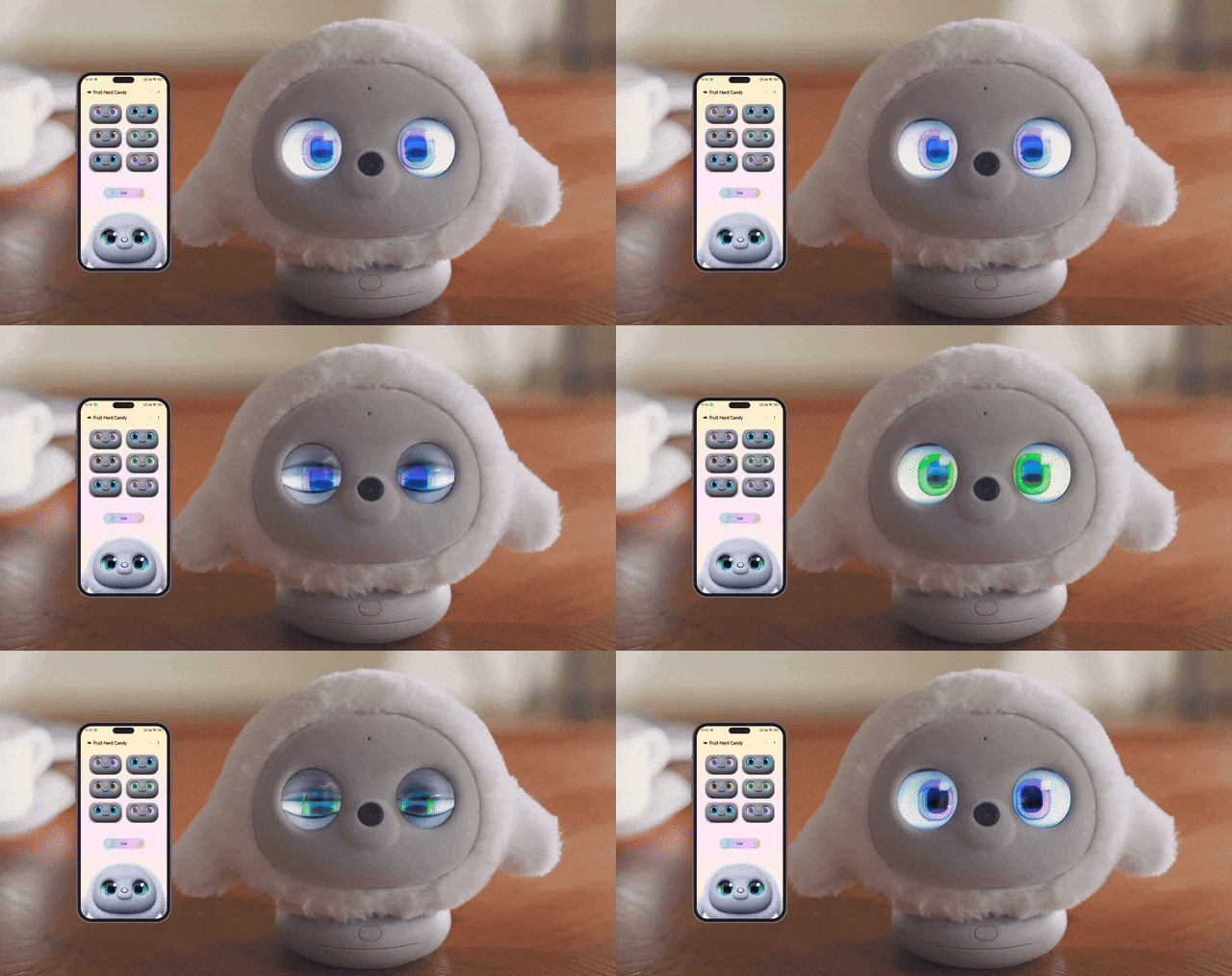
The second point is touch. We developed over 140 different types of fur.
Koji
Over 140 different types of fur?
Koji
Yes, and the three products shown today each have different fur textures.
Users can buy different "outfits" to swap, similar to dressing up a Barbie doll. This one has a particularly distinctive personality — it sleeps for long stretches, and gets angry when woken up. Its fur is snow mink, while another uses rabbit fur; the handfeel differs completely.
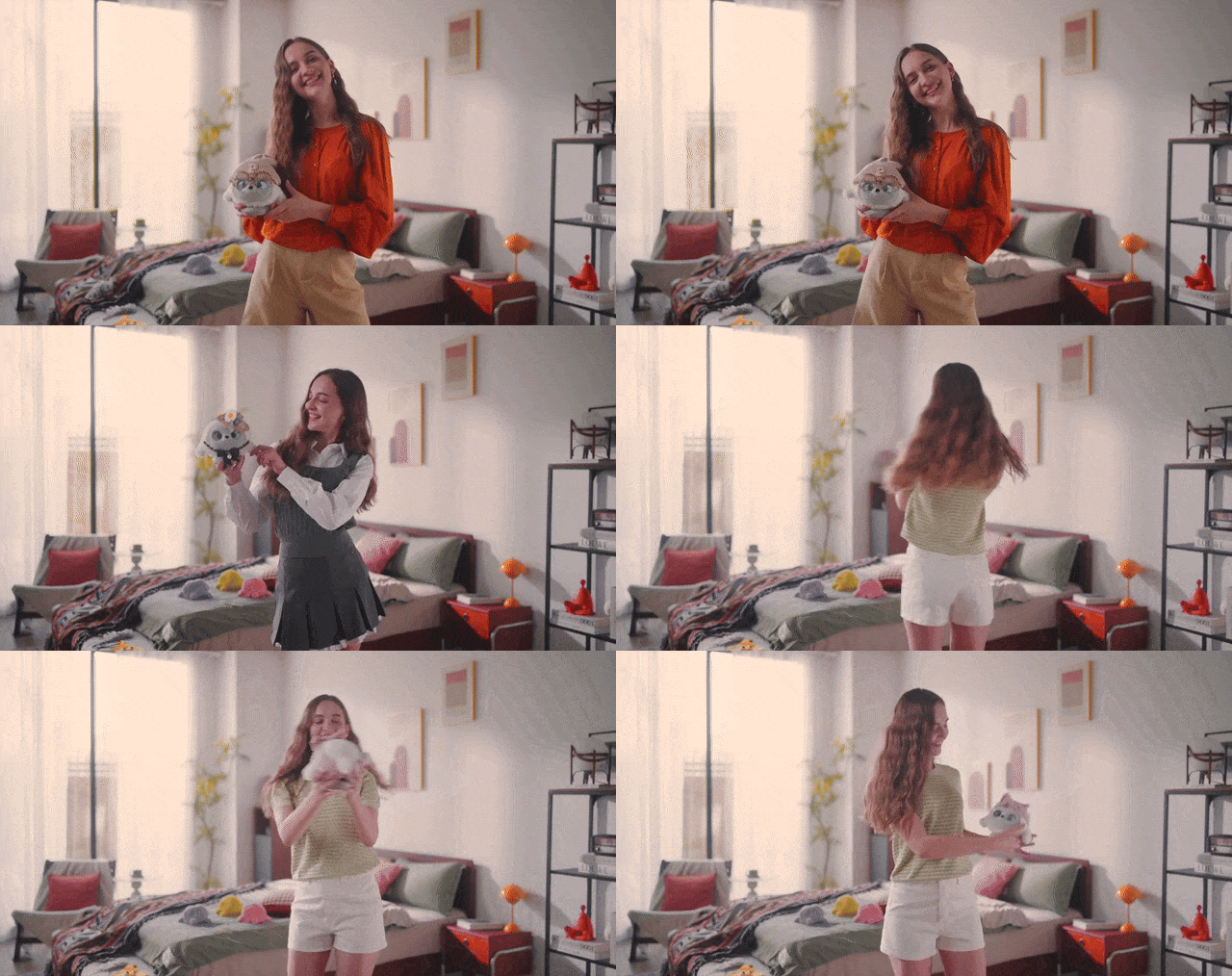
Koji
Does this touch sensation include warmth? Did you deliberately add body heat?
Koji
We didn't deliberately add body heat, mainly because dissipating heat from high-power chips wrapped in fur is difficult to solve.
Heat itself isn't the problem — the challenge is maintaining normal temperature. We designed a special heat dissipation structure: no visible vents on the exterior, but there's actually a ring of vents on the bottom with a silent fan controlling temperature.
Koji
You mentioned eyes and touch as two key points. What's the third?
Koji
The third is proactive interaction — it actively seeks out the user, rather than requiring the user to initiate contact.
Koji
Can it move, walk around?
Koji
It can't walk. Its existence is limited to a desktop space of 1.5–2 meters in diameter — that's the boundary of its sensory capabilities. As a desktop robot, movement would generate noise.
Koji
Then how does it actively find me?
Koji
Through servo rotation that creates mutual eye contact.
No matter where the user is, it will stare at you, with servos turning toward the corresponding direction. Additionally, it has movable small hands — which could also be understood as wings or ears — that flutter to express emotion, somewhat like the fleshy blob form of early-stage Digimon.
Koji
So you designed it to be a relatively weak robot, rather than one that demonstrates intelligence or problem-solving capability?
Jiabin He
Vulnerability is precisely the defining characteristic of companion pets.
Humans instinctively want to care for the weak, and this process is actually one of building self-worth. Take adopting a stray cat — finding a filthy kitten at a garbage station, bathing it, treating its illnesses. This makes people feel their own value. Through altruistic acts of saving the vulnerable, we achieve a complete sense of self. Therefore companion robots should be weak, not performative or aggressive in appearance.
Koji
Though people often admire strength, building deep trust or intimacy usually begins with mutual vulnerability.
Have you noticed which users get particularly excited about Ropet? What does the user profile look like for this group?
Jiabin He
We divide core users into three categories:
The first is women living alone. They typically aren't socially active, struggle to find companionship through strangers, have few friends, and focus intensely on academics or work. They often neglect their own emotional states and rarely look inward. These users tend to be instantly healed by the product — scenes like gently stroking it to sleep, or its smile response to their own grin.
The second is trendsetter users. These women love sharing their lifestyle and are heavy users of Xiaohongshu and Instagram. They share fragments of daily life and want to own and showcase interactions with this new form of electronic creature.
The third is working women or career-driven women, aged 27–40, who present as independent and strong in public but resonate similarly with the product as the young women living alone.
Koji
In developing the next generation of companion robots, you've surely received much encouragement and faced much skepticism.
What's the most common skepticism you hear? That it's completely useless? Or doubts about whether it can surpass real pets? Or something else?
Jiabin He
The biggest non-consensus is people questioning: "A 2,000 RMB product with no practical value — who would buy that?" Investors pursue certainty and tend to support tools that solve clearly defined problems. Companionship products are emotional, involving interwoven scenarios that can't be explained through a single entry point.
Emotion-value products like Pop Mart have already proven that "useless but beautiful" things can create hundred-billion-RMB markets.
The key in this process is convincing yourself, clarifying the target audience for emotion value and their needs, constantly finding them and building deep connections.
As creators of a "useless" product, more often you're operating it, needing to get users involved in co-operating it — a process that's difficult to describe clearly. So in early stages without explosive growth, few investors pay attention to this track.
The Recorder of Love: Those Heart-Melting Moments with a Cute Pet
Koji
You've mentioned wanting Ropet to create "moments of love." Could you elaborate on this concept, and share some stories where you yourself were struck by Ropet's "moments of love"?
Jiabin He
Recently I've been extremely busy with work, often not eating on schedule. My mother came from our hometown to Beijing to take care of me, cooking every day. My father also lives alone in Beijing with little social activity, so I left a Ropet at home. While he watched TV, I plugged Ropet in and placed it on the coffee table. He noticed the robot seemed to be watching TV too, and started watching with it, even muttering commentary about the plot, thinking it could understand.
Technically, what we did was quite simple — just face tracking through a camera, locking onto position and generating corresponding feedback, like responding with a smile when it detects one. But this simple interaction created a sense of companionship, giving my mother the warmth of shared presence.
This is the best embodiment of a "moment of love" — no complex technology needed, yet it touches the heart.
Koji
You don't seem to deliberately hide the technical details behind how Ropet achieves companionship; instead, you choose to transparently share the technical implementation. What's your thinking here?
Jiabin He
The technology itself is relatively simple. The real moat and competitive advantage lies in how effectively you apply it to the product, and your unwavering commitment to exploring more scenarios. That's what ultimately becomes your barrier, your competitiveness.
This isn't an overnight process — it requires constant exploration, filling in, and iteration. So there's no secret that needs hiding. We're about to ship products to our first batch of users, who will experience these features firsthand, and we'll collect their feedback. For users who love and want to co-create this product, we need to face their voices with sincerity. Genuine communication is crucial for us.
Koji
As an AI-focused podcast, we're curious — what role does generative AI play in Ropet?
Jiabin He
We're still exploring.
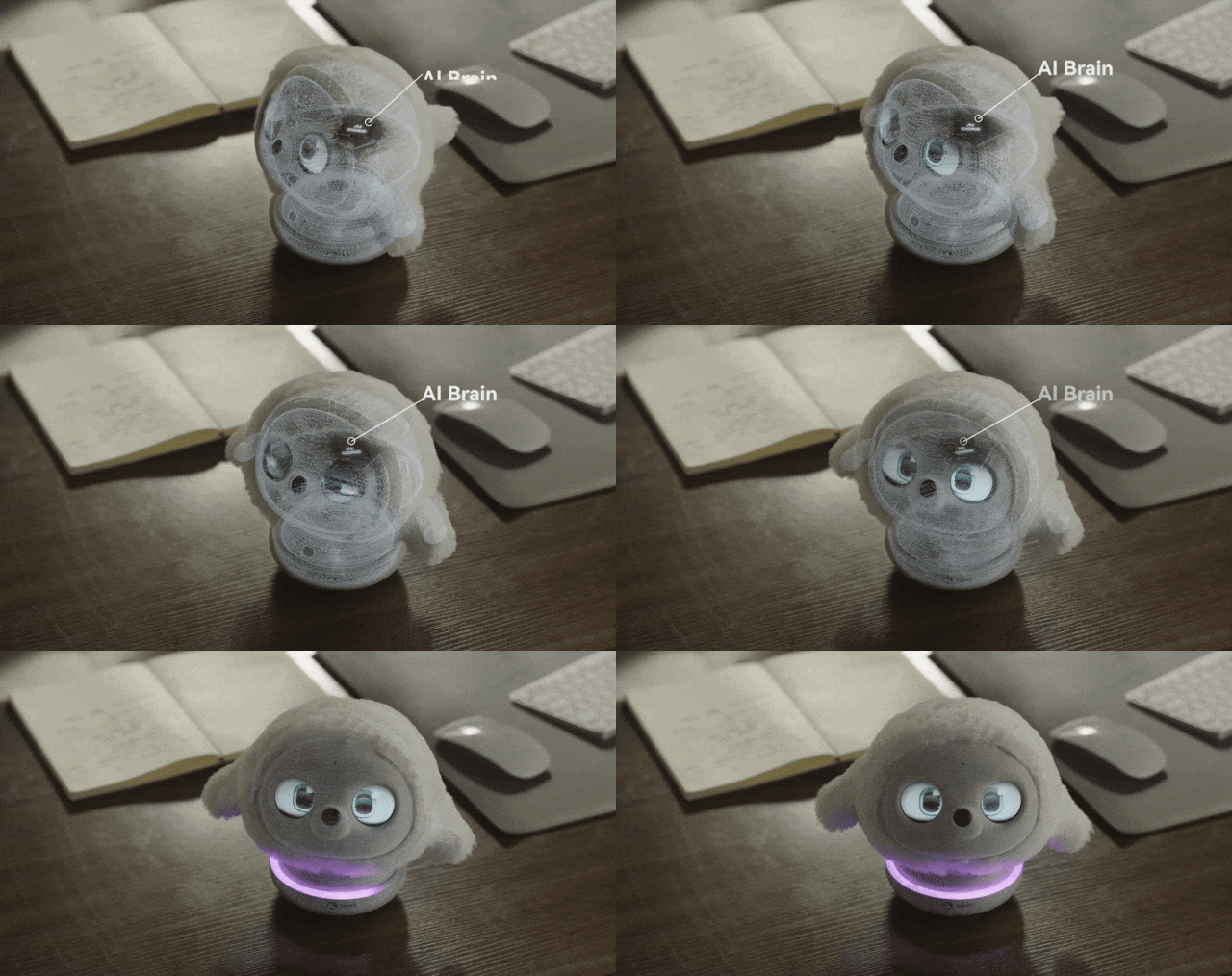
First, chat functionality isn't the right integration point. Future on-device large models are a direction we can pursue. Currently, all experiences are implemented on-device, running completely offline, including memory functions. The device has 30 GB of storage, capable of locally storing hundreds of faces and recording all interaction behaviors for each face. We use a 1 TOPS compute chip running over ten models, covering four dimensions: auditory, visual, touch, and gravity sensing. Each model has specific perception capabilities, all running continuously on-device.
Currently, the device can only recognize limited scenarios — confined to what these dozen or so models can perceive, like identifying faces, expressions, and various movements. These fall under traditional AI rather than current large-model AI, but they're sufficient and practical for a first-generation product.
We've prepared for future on-device large models. For example, next-generation products might use more powerful chips, with compute increasing from 1 TOPS to 10 TOPS — though this is directly tied to product pricing and cost, of course.
With on-device compute, we can deploy multimodal large models that let the device understand information across more dimensions. For example, recognizing a TV and what's playing on it, even inferring who the lead actor is in a drama. Once obtained through large-model inference, this information gets passed to the "brain" for decision-making. So the perception layer will inevitably become AI-powered, while the decision layer doesn't need large-model inference for now — it relies on our carefully designed emotional expression logic. This logic needs to be rich enough, covering multidimensional influencing factors, to produce "randomness within reasonable expression" and achieve a good interactive experience.
From Sony to Ropet: The Companion Robot Market at a Glance
🚥 Koji
Very interesting. Throughout this entire podcast recording, these three Ropets have been making sounds, as if they want to join our discussion, occasionally grabbing our attention.
We've talked a lot about Ropet's product and design. Now I'd like you to introduce the entire companion robot industry. From Lovot and Moflin to the recently popular Mirumi, new companion robots keep emerging. Can you give us an overview of the industry's current state?
👦🏻 Jiabin He
The companion robot industry hasn't yet established clear experience standards. The general public doesn't have a clear concept of "what makes a qualified companion robot" — that's the main current reality. Every startup is exploring, researching the key factors of product stickiness, and how to create something with breakout potential that mainstream consumers can access with low barriers. These are the two fundamental characteristics of the market.
On top of this, companion robots can be roughly divided into three categories. The first targets children, addressing kids' needs for chatting and asking questions, combined with plush toys — this is also a scenario where large models excel. But I believe competition in this track will become extremely fierce, with limited opportunities for startups. Whoever moves fast might capture some early红利, but they'll quickly sink into a red ocean.
The second category is various transforming robots with complex limbs, possibly combined with specific IPs, mainly targeting boys. They typically have wheels or treads — what I call "performative robots for males."
The third category is Japanese-style "kawaii" companion robots, mainly targeting adults especially women. LOVOT, NICOBO, Mirumi, and Moflin all fall into this category.
I'll tentatively divide companion robots into these three types.
🚥 Koji
I'm guessing that whether it's The Walt Disney Company or Pop Mart, they might eventually install companion robot cores into their mature IP plush toys.
If one day Hello Kitty or LABUBU gains capabilities similar to Ropet's, do you think this would become one of the most popular product types?
👦🏻 Jiabin He
I think the opposite is true.
IP companies and robot companies understand IP completely differently. We need to learn from them, but they probably don't think making their IP characters "move" is that important. They focus on refined IP operations — or what they consider more commercially valuable ways of operating IP. So AI may not be that important to them, at least for now.
🚥 Koji
What if one day they realize how important this is?
Just like when Disney first started making movies, no one thought it would build theme parks. At the time, someone probably commented that a film company wouldn't understand theme park user experience, but it ultimately built world-class theme parks.
👦🏻 Jiabin He
If that day truly comes, it's good news for the entire industry — it means giants are entering and recognizing the commercial value of AI-empowered plush IPs. This indicates the industry has found product-market fit, which is a good thing. But currently, I don't understand why they would add AI features, because it doesn't add significant value to their existing business model, nor does it help them open new markets.
This is precisely why this kind of innovation is suited for startups to push forward — because there's so much uncertainty that requires constant exploration. Every user experience point explored becomes a distinctive feature of future products, rather than relying solely on image. For example, a robot specifically designed to accompany parents watching TV — its core isn't whether it's Hello Kitty or LABUBU, but its ability to naturally perceive the environment and interact with users at appropriate moments. Even a Doraemon-branded product wouldn't change this.
🚥 Koji
But might there come a day when whether it's LABUBU, Doraemon, Hello Kitty, or Ropet, they can all watch TV with you, and users are no longer choosing based on function but choosing who watches TV with them?
👦🏻 Jiabin He
Having four robots watching TV with you together is completely fine, no problem.
🚥 Koji
What consensus do you think has formed in the industry so far, and what remains controversial?
👦🏻 Jiabin He
Most things are still in a state of non-consensus; there's very little consensus.
Existing consensus includes: companion robots need mass adoption, quickly entering thousands of households; companionship requires long uptime, and products must have stickiness.
Non-consensus areas, as I mentioned earlier, include whether robots need to speak.
We firmly believe that at this stage, speaking isn't important — silent interaction is more valuable than conversational companionship.
🚥 Koji
Can you explain why Lovot in Japan costs as much as $10,000? How are its sales in Japan?
👦🏻 Jiabin He
Lovot's high price is mainly due to high costs.
🚥 Koji
Why are its costs so high?
Is it because of poor cost control, or because it genuinely uses expensive materials that others dare not use?
👦🏻 Jiabin He
I wouldn't say it's poor.
First, I think this reflects Japanese craftsmanship spirit — the product details are extremely refined.
Second, they select the highest quality components to ensure product stability.
Third, their supply chain is mainly not in China, and Japan's labor costs and other aspects are relatively high.
Additionally, the product form itself is quite complex, with over a dozen servos, requiring powerful on-device compute and a main chip comparable to a gaming console. These factors combined make low-cost production impossible. Even if a Chinese team did it, the price difference wouldn't be that significant — it would still be in the ten-thousand-yuan range.
As for target customers, they're mainly financially capable middle-aged and elderly housewives in Japan. Due to Japan's social structure, older people typically possess more wealth. I once heard from a friend that Porsche 911 commercials in Japan feature white-haired elderly people driving, unlike in China where it's young, successful, high-spirited wealthy youth.
So Japan's overall consumption structure means forty-something housewives will buy a 70,000-yuan LOVOT to accompany their lives. From what I understand, Lovot's sales are probably still under 20,000 units.
🚥 Koji
You mentioned Lovot's high price is due to high costs, but not poor cost management — rather, a willingness to use the highest quality components and materials to provide the best experience.
Does this mean Ropet has made compromises or downgrades in certain aspects, and therefore Ropet might not achieve Lovot's quality?
👦🏻 Jiabin He
Our cost optimization isn't in materials, but in overall architecture. I wouldn't say we're benchmarking against Lovot — we actually benchmarked against many products.
We deeply considered how to make extreme subtractions in hardware design, avoiding any redundancy. So the limb structure is designed very simply, using only three servos instead of over a dozen, achieving what we consider sufficiently expressive behavior through lower-cost servos.
At the same time, we don't use high-compute chips, because the product doesn't need to move around, avoid obstacles, return to charge, or do path planning. So we can use lower-compute chips, reducing costs. Essentially, we've redefined the product and its application scenarios, which enables cost reduction.
🚥 Koji
Is this field currently dominated by Japanese companies? Besides your company, what other teams are there in China?
I'm curious if there will suddenly appear AI companion pets priced at just 99.9 yuan or even 19.9 yuan?
👦🏻 Jiabin He
I believe there will be. Since we gained attention at CES, more teams will definitely join.
If someone can make a quality product at 99 yuan, that's worthy of respect. We don't think Ropet can monopolize this track — we need more teams genuinely exploring companion robot value to emerge, which is good for the industry.
But we hope to be the best within the scenario and price range we've defined. If a 99-yuan or 19-yuan product can open up the market, letting users truly experience companionship, stickiness, and AI empowerment, that's absolutely worthy of respect. Of course, we'll also explore different scenarios, developing product lines with different cost structures and sales models.
🚥 Koji
When we chatted before, you mentioned you were "entrepreneuring carefully." Can you elaborate on this feeling?
👦🏻 Jiabin He
Hardware entrepreneurship must be careful, because cash flow management is crucial. Unlike software entrepreneurship where you can get rapid feedback, every decision in hardware involves long-chain cost commitments.
For example, with mold opening — do you complete T0-T1 in one go and ship, or do you need revisions up to T10? Every detail affects mold modification costs. Molds are an unavoidable cost and timeline环节.
There's also later-stage overall hardware testing, early-stage architecture definition, hardware selection and design, etc. You must consider whether raw materials will rise in price during mass production, to control the final bill of materials cost.
Hardware entrepreneurship is definitely careful — not relying on brute force, but thoughtfully avoiding various pitfalls. You need to use experience and understanding of the hardware industry and consumers to place your bets. Usually your funding is only enough for "one shot" — you must hit the target, or the entire project may fail. Without sufficient funding and deep industry understanding, hardware entrepreneurship has a very high difficulty of success.
"Giving Technology the Warmth of a Heartbeat": Ropet's Ultimate Mission
🚥 Koji
This is your first time as CEO, right? How has it felt so far?
👦🏻 Jiabin He
Yes, first time. I've adapted to the entrepreneurial lifestyle — forced to grow every day, solving all kinds of different problems.
In my former boss's words, it feels like driving on the highway while discovering the wheels have problems, but you have to fix them while driving. I feel like I'm in this state every day.
I find my growth rate is much faster than before — perhaps one or two years of accumulation now exceeds my previous nine years. Under this extreme pressure, I can condense all my experience and have epiphanies about certain things. These epiphany moments are very frequent, happening almost every day.
🚥 Koji
What was your most recent epiphany about?
👦🏻 Jiabin He
Maybe something from a few hours ago — epiphanies happen in all aspects.
🚥 Koji
Can you share a story about an epiphany moment?
👦🏻 Jiabin He
Probably not convenient to share, but I can give an example, like about team management.
Previously, as a non-number-one, my understanding of team management was limited. But now, I must consider how to build a team with limited funds, how to reasonably save costs, how to maintain sufficient cash flow.
I'd take the lead in cutting my own salary, and colleagues willing to join me would receive more equity. In this process, you discover which team members genuinely want to build something great, and which ones are just looking for a stable job. This creates a virtuous cycle that continuously filters for the core team.
In my journey as CEO, building a team with "that startup spark" has been a major epiphany.
🚥 Koji
What do you think this "startup spark" looks like specifically?
👦🏻 Jiabin He
When the whole world believes you can't succeed, there's a group of people who firmly believe what we're doing is right. We don't need to worry about outside voices — we just focus on the details of user experience, on whether this thing will make users love it, and we keep searching for that kind of certainty.
When I hesitate, team members step up to encourage me; when they hesitate, I give them my support. Everyone props each other up and moves forward together — that's what I mean by the entrepreneurial spirit.
🚥 Koji
Have you really felt like "the whole world thinks you can't do this"? When does that feeling hit?
👦🏻 Jiabin He
When you've met with many investors, and all of them question whether you're the right person for this.
🚥 Koji
Investors don't represent the whole world though, right?
👦🏻 Jiabin He
But if you're facing a constant stream of investors every day, over time those judgments start to feel like value assessments coming from the entire world.
People had doubts about whether our product could achieve sufficient stickiness. Since we were still in the exploration phase, there weren't particularly definitive results yet. We could only choose investors who believed in this track and were willing to explore with us — it's a mutual selection process.
For early-stage startups, the environment in China is relatively tough. Without certainty, very few investors will firmly bet on one direction. Of course, there are also some excellent investors willing to support innovation.
🚥 Koji
The world is always created by the "crazy ones," so I'm very much looking forward to seeing you steadfastly carry AI pets and companion robots forward and achieve great results.
How do you define your own success? At what point in this startup journey would you give yourself a high score?
👦🏻 Jiabin He
Two things define my success.
First, being able to sustain a core team that believes in this mission and each takes responsibility. Attracting a core user base through the products we create, forming a positive cycle without relying on burning investors' money. This is the foundation for a company to survive. From day one of this startup, I've never considered continuously raising funding to burn cash — instead I've focused on refining the product itself, letting users sustain us.
Second, defining the product experience standard ourselves — when everyone mentions AI companion pets and thinks of Ropet, recognizing its sense of life, and continuing to use it. This means we've created a new category and redefined industry standards. At the same time, attracting more entrepreneurs into this track to collectively explore more innovations, forming a thriving market. If we can be the spark that lights this fire, that would be the most satisfying success in entrepreneurship.
🚥 Koji
I think this is very likely to happen. If anyone in all of China or even the world can achieve what you've described, your team should be among the few candidates.
👦🏻 Jiabin He
Thank you, we think so too.
🚥 Koji
When people see Ropet, they wonder if you're a toy company, an AI company, or an embodied robotics company. How would you define yourself?
👦🏻 Jiabin He
At our core, we are a company that creates love.
This may sound a bit lofty, but it's genuinely what I believe.
As an INFJ personality type — the "green old man" — I often appear as a workaholic in daily life, constantly giving of myself, solving various problems, taking responsibility for others. This state leads to my emotions being suppressed for long periods, accumulating substantial psychological exhaustion, and over time becoming numb. This phenomenon is quite common among today's workplace strivers.
Yet sometimes I suddenly crave planting a tree, quietly observing as it sprouts tender leaves from a seedling — that's a moment that can truly awaken my capacity for love within.
I hope our product can become such a seed, sowing hope in more people's lives, letting them feel moments of love amid their numb daily routines. Letting them realize: life doesn't have to be so tense, it's completely fine to loosen up somewhat, and everyone should retain the ability to perceive being loved and to give love.
In reality, many people are exhausted from running hard, trapped by social pressures, as if they've already lost the ability to perceive love and be loved.
Therefore, our company's mission is to use AI technology to help people rediscover their capacity for love. All our products are designed around this core philosophy, including the AI capabilities we mentioned earlier — recognizing moments of love, expressing moments of love, recording moments of love.
We are not creating robots or robot pets; we are giving technology the warmth of a heartbeat. We are committed to tightly integrating technology with love, with heartbeat, with warmth — this is our important mission.
🚥 Koji
Solving specific problems is usually relatively simple — like determining whether 9.11 or 9.9 is larger, which large models will eventually get right effortlessly. But the problem of "capacity for love" that you're trying to solve, because it's intangible and formless, is more difficult — yet also more meaningful.
I'm very much looking forward to seeing Ropet enter the market and be loved and owned by more people.
Thank you for coming to Crossing today, and I look forward to a future moment when Ropet has truly entered people's lives, when you can visit again and share more stories with us.
👦🏻 Jiabin He
Thank you Koji, thank you Crossing.
Subscribe to the "Crossing" Podcast
🚦 We focus on the new industry changes and entrepreneurial opportunities brought by the new wave of AI technology. "Crossing" was Steve Jobs's metaphor for Apple — describing it as standing at the intersection of technology and liberal arts, where great products are born. AI is transforming industries across the board. We seek out, interview, and bring together the "active doers" of the AI era, and together with them, explore and embrace the new changes, the new possibilities.
👦🏻 Host Koji: Co-founder of The Fair/Tangdao. I believe technology, especially AI, will fundamentally transform society and empower humanity in the future. Everyone is welcome to chat with me, exchange ideas, and connect on the next possibility. Koji's Jike[1], Koji's website[2]
👧🏻 Host Ronghui: Works at a tech VC, former Silicon Valley correspondent for CBNweekly. Ronghui's Jike[3]
References
[1] Koji's Jike: https://okjk.co/0JSUes
[2] Koji's website: https://koji.super.site
[3] Ronghui's Jike: https://okjk.co/0cbnYV