Behind the Claude Code Top User: How an AI Founder Pushed the Tool to Its Limits | A Conversation with Xiaopai Liu

Liu Xiaopai is an AI entrepreneur who achieved a zero-to-one product breakthrough using the Claude Code tool.
The most important thing about getting out there is "getting out there."

👦🏻 Podcast interview: Koji, Ronghui
🥷 Edited by: Starry
🧑🎨 Layout: NCon

This week's guest on Crossing is a "number-one fan" — not of some livestream, but of the Claude Code token consumption leaderboard.
Here's the story. Two weeks ago, Anthropic put out a notice: their engineers had spotted an anomalous account in their backend data, burning through Claude model compute at an unbelievable rate, 24/7. The announcement stated: "One user, on a $200 monthly plan, consumed $50,000 worth of model usage."
The consumption was so massive that Anthropic had to publicly issue a statement adjusting rate limits for users worldwide.
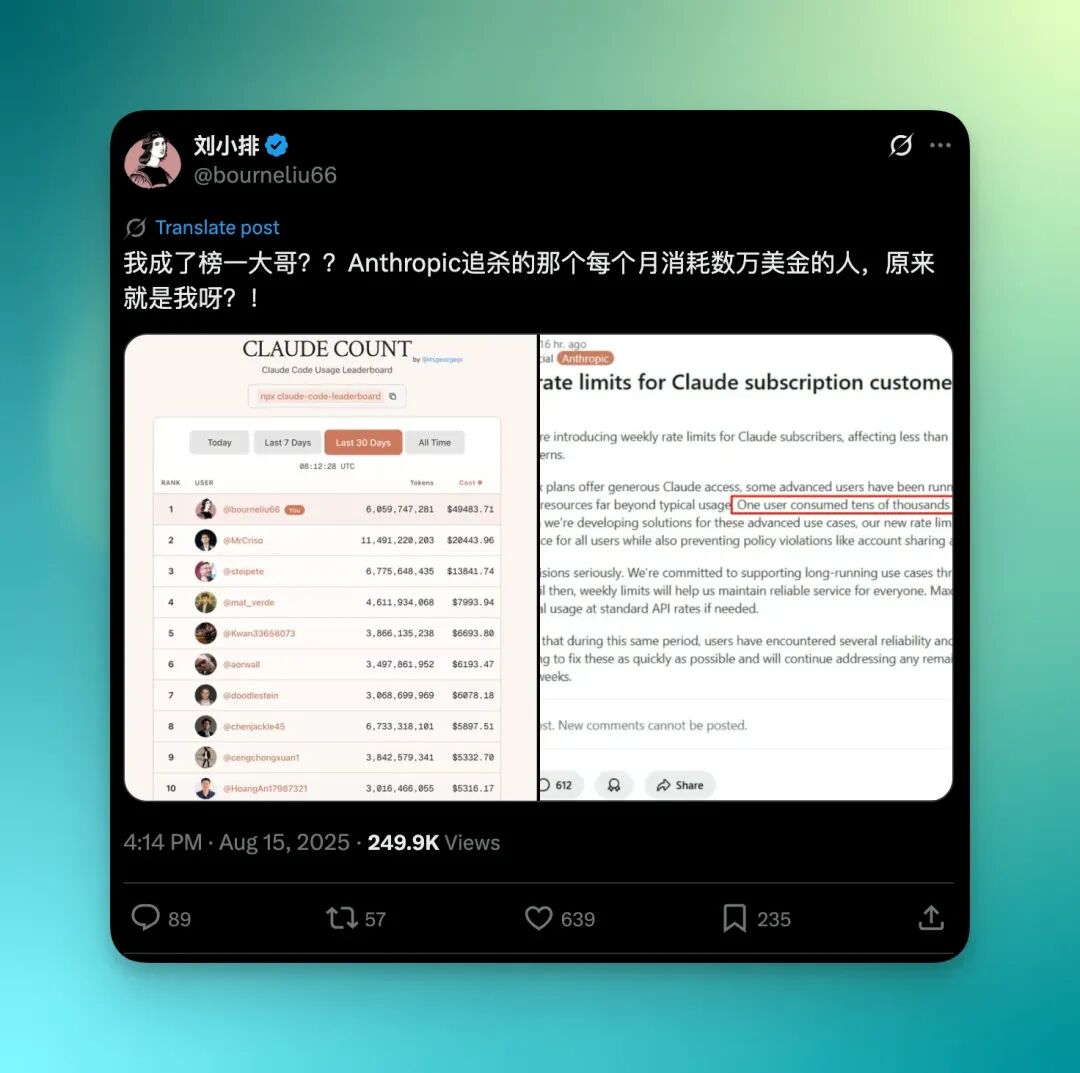
Immediately, this sparked global speculation and debate in tech circles: who was this mysterious superuser? What could they possibly be doing with Claude Code to generate such staggering consumption?
Just as everyone was wondering, a Chinese user named Xiaopai Liu posted on X claiming the top-spender identity: "So the person Anthropic is hunting down — the one burning through tens of thousands of dollars every month — that was me?!"
In an instant, global attention focused on him.
Was he an opportunist exploiting system loopholes, or a superuser pushing AI's potential to its absolute limit? What secrets lay behind that astronomical bill?
Today on Crossing, we're honored to host this legendary "number-one fan" — Xiaopai Liu. He's an outstanding AI entrepreneur whose three products, Raphael AI[1], AnyVoice[2], and Fast3D[3], are growing rapidly and generating substantial revenue.
In this episode, he'll share the truth behind those shocking consumption numbers, and as a non-programmer founder, how he went from zero to one — using AI independently to handle everything from product insight to development to profitability.
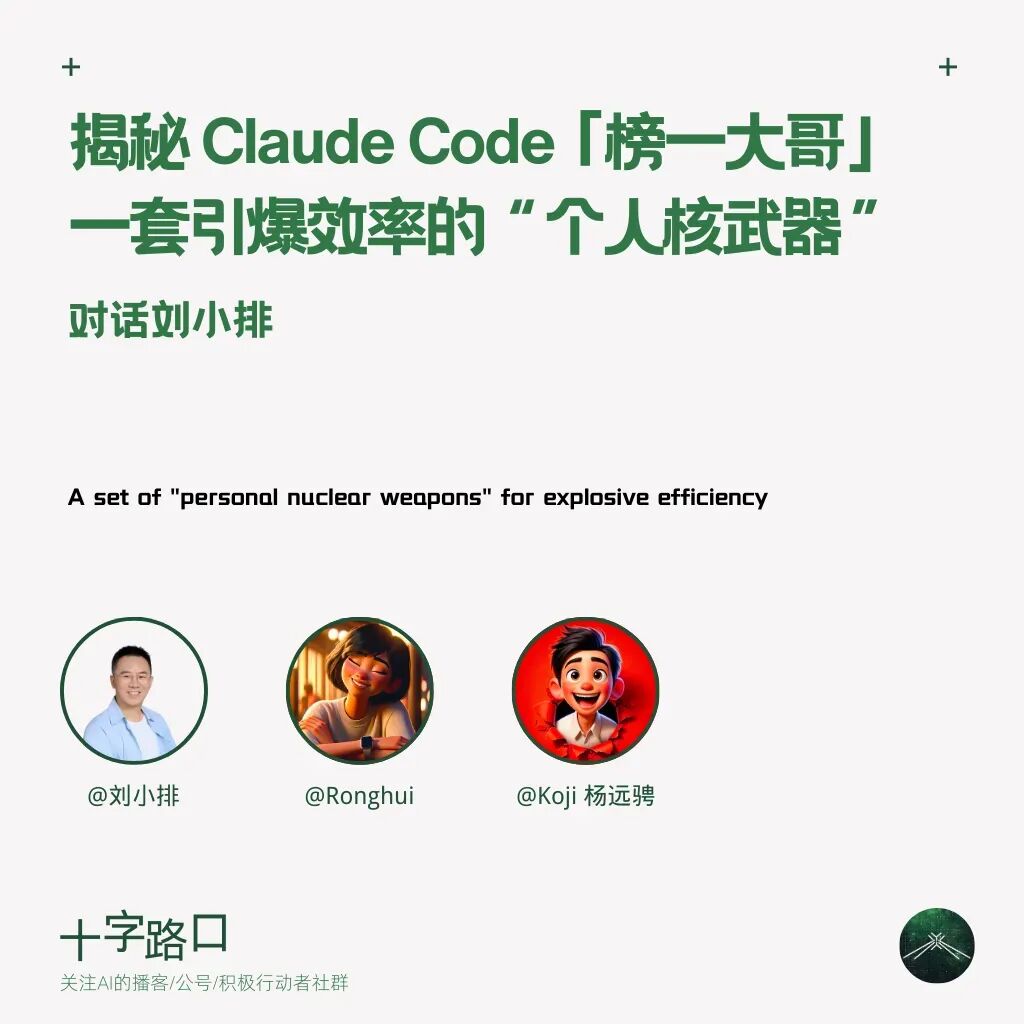
Listen on WeChat:
Listen on Xiaoyuzhou:


Rapid-Fire Q&A
👦🏻 Koji
Let's start with rapid-fire questions. Xiaopai, how old are you?
👦🏻 Xiaopai Liu
Hi everyone, I'm from '87, so 38.
👦🏻 Koji
Where did you graduate from?
👦🏻 Xiaopai Liu
Chongqing University, graduated with my bachelor's in 2009.
👦🏻 Koji
MBTI and zodiac sign?
👦🏻 Xiaopai Liu
I don't really know what MBTI specifically is, probably INFP, but I've taken it a few times and it changes. Zodiac is Libra.
👦🏻 Koji
Introduce your current company and products in one sentence.
👦🏻 Xiaopai Liu
Just an ordinary AI entrepreneur, running a small company, dreaming that a small team can build something impressive — though I haven't achieved that yet. Currently have some smaller-scale products that make decent money, keep the team afloat, keep me in the game.
👦🏻 Koji
Have you raised funding?
👦🏻 Xiaopai Liu
No, and not planning to.
👦🏻 Koji
Can you share your current revenue and profit situation?
👦🏻 Xiaopai Liu
For a small company the revenue is pretty good. At market rates, it could easily support thirty to fifty people. But since we use AI tools heavily, the company only has six or seven people.
👦🏻 Koji
What did you do before entrepreneurship?
👦🏻 Xiaopai Liu
I was a product director at Cheetah Mobile for 10 years. I officially left to start my own thing on December 31st last year.

👦🏻 Koji
That's a very ceremonial date, year-end.
👦🏻 Xiaopai Liu
What was really ceremonial was that it was my ten-year anniversary at Cheetah.
👦🏻 Koji
So you deliberately chose that moment to end that chapter.
👦🏻 Xiaopai Liu
Exactly. Original plan was five years. At year five I wasn't ready. At year six and a half I felt something was missing.
👦🏻 Koji
Your time granularity is pretty coarse, hahaha.
👦🏻 Xiaopai Liu
Haha yes, yes indeed.
The Number-One Fan and the Astronomical Bill
👦🏻 Koji
Now for what everyone cares about most: Xiaopai, what exactly are you doing with Claude Code? One person, 7.7 billion tokens, $50,000 bill, global number-one fan. What projects are behind this?
👦🏻 Xiaopai Liu
I'm just an ordinary product developer. Claude Code is mainly used for coding our overseas products, but also covers technical research, algorithms, spatial stuff, operations — everything, really.
👦🏻 Koji
Did you start using that much immediately, or did it gradually increase?
👦🏻 Xiaopai Liu
Gradually increased. The first time I used it, I subscribed to the $200 plan and burned through $300 on day one. I was thrilled — broke even in a day, felt the product was incredibly worth it. If you're new to Claude Code and don't think about optimization, spending three to four hundred dollars in tokens per day is actually quite easy. Because if you calculate Claude's tokens at API pricing, it's quite expensive. Later I started studying it, found it very smart, and wanted to keep testing its boundaries — ended up using more and more.
👩🏻 Ronghui
You mentioned breaking even on day one — what were you doing with it those first few days?
👦🏻 Xiaopai Liu
Before Claude Code, I mainly used Cursor, since I'm in the software business. By software business, I mean using creativity to build software products and earn money from global users, mainly in developed countries. The most important parts of this process are coding and operations. Before this, I'd used every AI coding tool on the market, all paid subscriptions. At the time I felt Cursor and Augment Code were the better ones.
Augment Code is slower but stronger; Cursor used to be less capable but faster. So before Claude Code, Cursor was my main tool. For some hard problems I'd use Claude Code. If Claude Code couldn't handle it either, especially algorithm problems, I'd use GPT — actually GPT-o3 is very strong. Earlier this year I was still using GPT-o3. Basically a Cursor + Claude Code + GPT-o3 combo. I was among the earlier Claude Code adopters in China, started using it in May.
After comparing, I found Cursor wasn't as good as Claude Code, and gradually switched over. At first I thought Claude Code was just a stronger Cursor, so I mainly used it for frontend code — interfaces, user systems, payment systems, interactions. Later I discovered its capabilities were much broader, and started using it for many things outside traditional coding.
An "Unconventional" AI Workflow
👩🏻 Ronghui
For example?
👦🏻 Xiaopai Liu
For instance, I have some AI image generation products. The three products Koji mentioned aren't actually the most successful — just the others are less convenient to discuss. For example, there's a text-to-image product, similar to MidJourney. These products usually have a "style selection" feature — Japanese manga, realism, surrealism, cyberpunk, etc. Most products only have a few dozen styles. I have 900 style terms.
For example, we have a term called "Qi Baishi." To make "Qi Baishi" into a selectable user style, it takes several steps:
Step one, search online for Qi Baishi, learn about his life.
Step two, look at Qi Baishi's artworks, develop an intuitive understanding, be able to distinguish what counts as Qi Baishi's style.
Step three, construct a prompt template. Style selection is essentially a prompt template. The user fills in the blank, the developer constructs the template. One template might not work, you need to construct many, then test with different fills, see if the model outputs match Qi Baishi's style.
Then you also need to generate an icon image so users can tell at a glance it's Qi Baishi's style. Again, use a prompt template, generate lots of images, and pick one.
So that's roughly the workflow for turning the single term "Qi Baishi" into a prompt template. Doing it manually might take an hour, or twenty minutes even if you're being sloppy. But with Claude Code, cranking out 900 styles is something I can do while I sleep.
👦🏻 Koji
So you're not just using Claude Code as a coding tool — while you're coding, you're also having it handle tasks you'd normally assign to a chatbot or agent. What's the difference between using Claude Code for this versus just using Claude, Manus, or ChatGPT directly? What's the advantage?
👦🏻 刘小排
Claude Code gives you much more control. It's fundamentally an agent. In that workflow I just described, it searches the web on its own, develops an understanding, then uses APIs to generate images. I give it my API keys, it generates the images and selects the best ones itself — because it's actually a multimodal model. I set it to generate 9 images per task, then have it pick the most suitable one. If it's unsure, I'll interrupt, help it choose, and explain why this one. After grinding through the first 30 to 60 tasks this way, I found its judgment matched mine, and from there I could let it run with confidence. The advantage is control.
Manus is also a great product — I really like it — but what it can do is limited. Because Manus also runs on Claude models under the hood; it's just an agent with some built-in tools that the developers preset, and those tools have limited capabilities. Claude Code, for me, is unlimited. Whatever tool it needs, I can give it.
👦🏻 Koji
You describe yourself as an ordinary product person, an ordinary entrepreneur — but how does an ordinary person end up consuming more than anyone else globally? Are there some "not ordinary" methods behind this?
👦🏻 刘小排
The example I just gave is actually an extremely high-consumption scenario. At its core, it's executing the same task 1,000 times. Because I'd already refined the process with it and knew it could deliver well, and each identical task had many subtasks behind it, with each subtask consuming more tokens. Take the image generation step — after Claude Code generates images, it can also select among them itself, which is multimodal. Even completing one task takes several minutes. I can just let it run in the background while I go to sleep. If one task takes 5 minutes, 1,000 tasks is 5,000 minutes — naturally the consumption gets very high.
The difference is that many people think Claude Code is just a programming tool, an upgraded Cursor, but it can do far more than narrow-definition programming. As a software company founder, development is just one part of my work; many other tasks can also be handed off to it.
For example, my product Fast3D. I trained this model myself, so I can afford to offer it for free — no login required, you can generate images, and convert images to 3D. Fast3D is "quickly turn images into 3D models," usable for industrial design, printing, and so on. Though the model is mine, any innovation stands on the shoulders of predecessors. I first need to research global open-source 3D models, technical reports, and code.
Claude Code can help me with all of this. For researching open-source 3D models, I first give it cloud service APIs — whether Volcano Engine or Tencent Cloud, GPU rentals all have APIs. I have Claude Code call the APIs to spin up a dozen GPU machines, deploy a dozen well-known open-source 3D models onto them, prepare test sets, automatically run tests, and record results and latency. This is just the first step of research. Without Claude Code, just deploying and testing models might take me half a month or longer.
This counts as programming in the broad sense. Is it programming? Sort of, but it's also more than that.
👦🏻 Koji
Right — in the past this kind of work wasn't something one programmer could do alone. It took a small team of programmers working with operations and product managers to research, evaluate, decide, deploy, and test. Now with Claude Code, one person can handle it.
👦🏻 刘小排
Exactly. After step one, I'll pick three finalists from the dozen or so open-source models. Because you can't just use someone else's model directly — there's usually room for improvement. Good open-source algorithms typically release technical reports, pretrained models, and inference code. I'll have Claude Code look at the code, test cases, and technical reports simultaneously, then ask it questions. Like, "Is there a way to make inference much faster while only sacrificing a tiny bit of performance?" It can give solid suggestions because I provided the materials, so it won't hallucinate answers.
Next it will assist me in improving the algorithm, fusing the strengths of these three finalist models, adding my own improvements, and forming a commercial-grade model. This part genuinely requires technical expertise — without Claude Code it would be very slow. With it, efficiency is much higher. Some major domestic internet companies do similar things, but they don't rely on ordinary engineering teams alone; it's usually scientist teams or algorithm teams paired with engineering teams, at much higher cost than mine.
👩🏻 Ronghui
Let's go back to when Claude "called you out" — what was the situation before and after?
👦🏻 刘小排
Actually they didn't name me specifically. I checked — on July 28, Claude's official account posted a tweet. It wasn't negative; it was neutral to even positive.
They said they'd discovered some users are big fans, running Claude Code 24/7, and this behavior is remarkable — they wanted to support them. Only later did they mention some abusive behavior to stop, like account sharing and reselling. I clearly fall into the first category — I'm the biggest fan, running it 24/7. I saw it and thought it was pretty normal, didn't pay much attention.
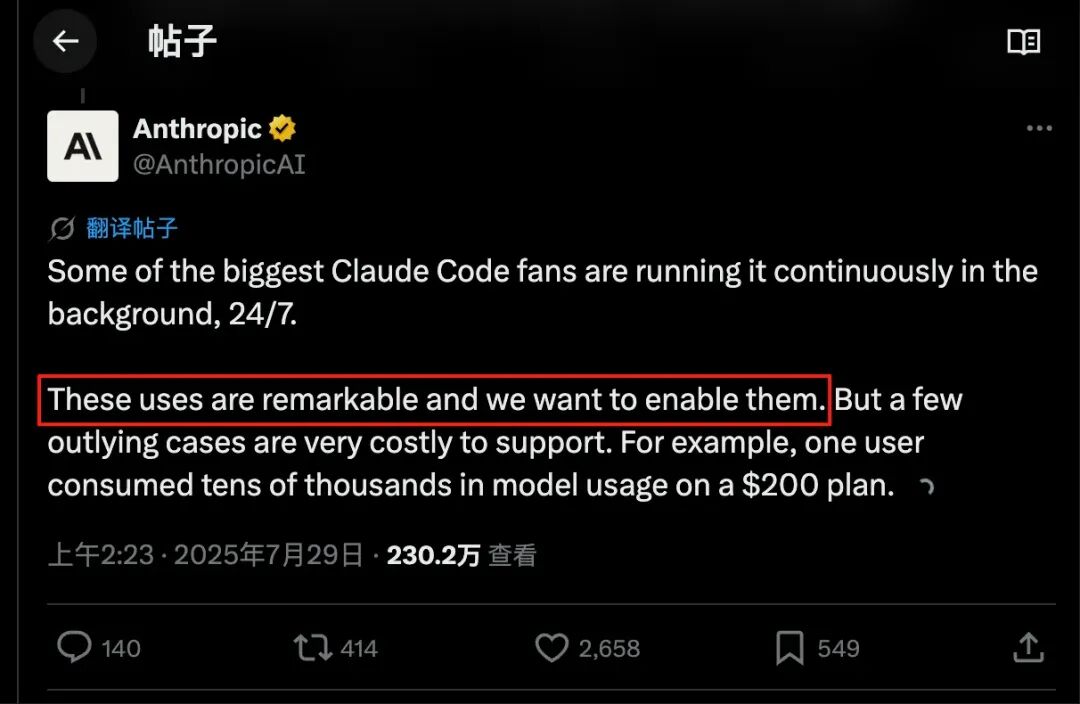
That July 28 tweet — many people only noticed the later part about "reselling" and "rate limiting," and started bashing Claude, saying "I bought a plan and got throttled and degraded."
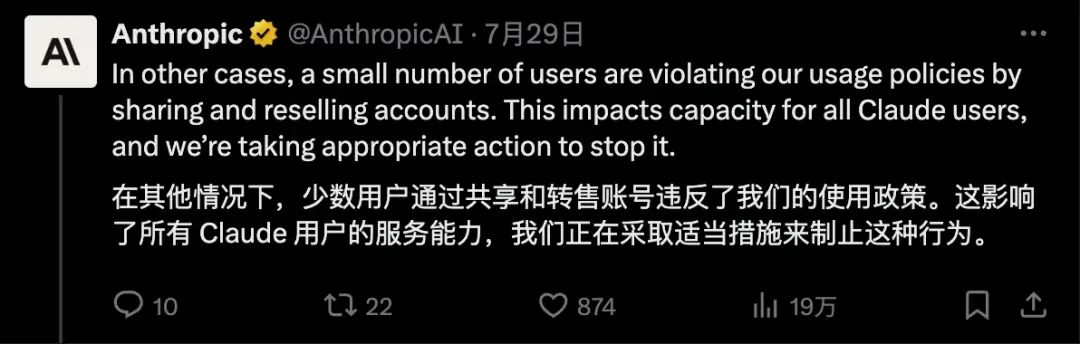
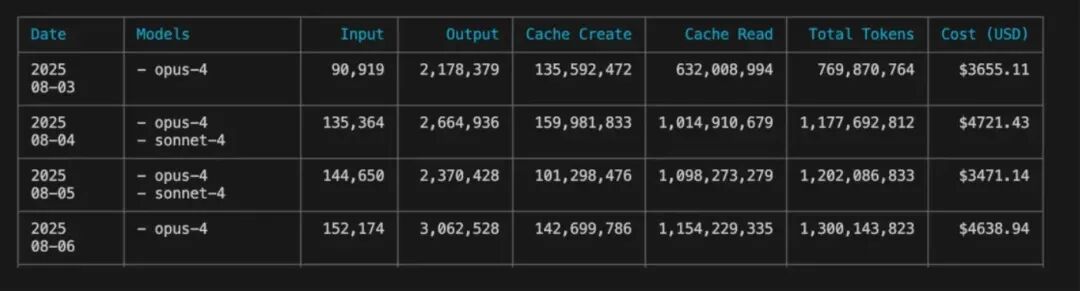
And during that week from August 1 to 7, I was particularly productive, spending roughly $3,000 per day. Those days I was focused on coding, so consumption was genuinely high. Normally it's around $1,000+ per day.
👦🏻 Koji
Recording this podcast today is costing you Claude consumption.
👦🏻 刘小排
Not at all. Right now it's working on its own.
👦🏻 Koji
Do you have to queue up tasks before the podcast so it can run while you're here?
👦🏻 刘小排
Yeah, I line up the tasks before coming to record. About a week later, mid-August, someone made a leaderboard — not from Claude officially, but a big name in programmer circles. He built a tool where you just log in with your Twitter account and it syncs your local usage records. After I synced, I discovered I was far ahead of everyone else. I posted the screenshot on Twitter — I only had 60 followers before, but it jumped to 5,500. Didn't expect it to happen that fast.
👦🏻 Koji
What were these followers saying to you?
👦🏻 刘小排
Roughly two groups. One group uses Claude Code — many came to learn from me. I occasionally see people discussing how to use Claude, and some say "just follow Liu Xiaopai's public account." I'm really touched by that, so I write up new tricks on my public account.
The other group knows nothing about Claude Code and weighs in based on moral values. Some say I'm a patriot, actively "fleecing capitalism" — making money from products, earning foreign exchange for the country, and bringing the money back home to pay salaries, social security, and spend locally. Others say this is abuse, like going to a buffet and eating the owner into bankruptcy. I don't care about these voices — to me they're all noise.
👦🏻 Koji
What do you think of people saying you're "abusing the rules"?
👦🏻 刘小排
I don't care much. To quote Donald Trump, I'm too old to worry about who likes me and who dislikes me. Though I'm not even 40 yet, I already don't care. You love me, I love you too. You support me, I support you too. You hate me, I don't care. I have more important things to do. So I don't care that much, and I didn't use this to market myself either.
"I am too old to worry about who likes me and who dislikes me… If you love me, I love you. If you support me, I support you. If you hate me, I don't care. Life goes on with or without you."

Last week a major domestic media outlet compiled my past interviews, and after publishing, the comment section was full of noise. The first thing I did was exit the leaderboard — couldn't be bothered to explain.
👦🏻 Koji
So you voluntarily left the leaderboard.
👦🏻 刘小排
Yeah. There was an "exit leaderboard" feature, so I withdrew and deleted my account. I'm not on the list anymore.
👩🏻 Ronghui
Has the Claude team reached out to you officially?
👦🏻 刘小排
No. I'm definitely compliant on Claude. If I were a rule-breaker, they'd have banned me already.
👦🏻 Koji
Because the $200 plan was originally unlimited, no cap — you just used a lot, right?
👦🏻 Liu Xiaopai
Actually, it's not completely unlimited. There are rules: it refreshes every five hours, and there's a limit on conversations per five-hour window. Most people never hit it, so they assume it's unlimited. Maybe only 5% of users actually exhaust that five-hour quota.
Before July 28, the restrictions were even looser — it was much nicer to use. Then Claude tweeted that they'd tighten limits again on August 28. They'd already restricted it once that same day, and I immediately felt the quota drop. Then another restriction came on August 28. So it's never been unlimited, just "practically unlimited."
Unlocking Liu Xiaopai's Ten Identities
👦🏻 Koji
At this point, I think everyone's curious about you. Your experience and products seem substantial, but also mysterious. So let's play an icebreaker I learned recently: in your self-introduction, you have to say ten "I am..." statements. Like "I am Koji, I am a guy, I am..." up to ten. Want to try?
👦🏻 Liu Xiaopai
Alright, this is pretty hard, haha, ten is a lot. Let me give it a shot.
First, "I'm definitely an AI product entrepreneur" — that's the most important label.
Second, "I'm a product manager." Sometimes I say I can't code, but that's modesty — of course I can.
Third, "I'm also a programmer."
Fourth, "I'm definitely a goofball." I think I'm pretty funny. Like recently when I changed my WeChat public account avatar, people said luxury cars, sunglasses, yachts, suits — all off-limits, too get-rich-quick guru. So I just switched to riding a shared bike. That should work, right? Hahaha.
Fifth, "I'm a book lover." My Dedao app credit score is over 970, supposedly one point higher than Zhenyu Luo's, ranking around top 100 nationally.
Sixth, if you search "Liu Xiaopai" on QQ Music or NetEase CloudMusic, you'll find "I'm a verified musician."
👦🏻 Koji
You sing or play instruments?
👦🏻 Liu Xiaopai
That was during COVID when I had nothing to do. I took some online courses from UC Berkeley's music school and started writing songs. They're terrible, but I did everything myself — composition, arrangement, lyrics, vocals — using just a regular computer mic.
👦🏻 Koji
You're a full-stack musician, a super individual.
👦🏻 Liu Xiaopai
Not really, and there was no AI back then. Lots of friends said thank god there wasn't, or no one would believe I wrote them.
👩🏻 Ronghui
OK, number seven?
👦🏻 Liu Xiaopai
Seven's tough.
👦🏻 Koji
I thought you'd say "I'm the best Claude Code user in the world."
👦🏻 Liu Xiaopai
I wouldn't put it that boldly, but "among the best" works. In AI dev circles, lots of people come to me to learn Claude Code, and see me as a role model. So "I'm among the best Claude Code users" is fine, though I'm still constantly improving.
👦🏻 Koji
What do you think Claude Code can't do?
👦🏻 Liu Xiaopai
Plenty. Mainly two things:
First, real-world stuff it can't do. I always say: as long as it's in the virtual world — anything reachable by phone or computer — anything that can be SOP-ified can definitely be automated by Claude Code.
Second, places with sparse reward signals.
👩🏻 Ronghui
Sparse rewards?
👦🏻 Liu Xiaopai
Like some white-collar jobs — it can't replace those. HR, admin, that kind of role: lots of work hinges on subtle distinctions, even the boss's personal preferences. There's no clear, dense reward signal there. AI excels at standardized things — math problems are right or wrong, code runs or it doesn't. Without reward signals, you still need humans.
👦🏻 Koji
Right, I remember you saying "anything that can be SOP-ified, Claude Code can do."
👦🏻 Liu Xiaopai
Exactly, especially in the virtual world. How many more? Running out of ideas here hahaha.
👩🏻 Ronghui
You could switch it up, like "I'm not..."
👦🏻 Liu Xiaopai
No, I'm finishing this challenge.
Eighth. "I'm co-founder of an incubator." I partnered with Shengcai Youshu to create SCAI Lab. It's still pretty closed, not open to the public yet. We're hoping to open up by year-end or next year when we're ready. Some members have already "taken off" — made their life's signature work, earned money, living well. That's something I'm proud of.

Ninth, "I'm a fairly well-known indie developer in China." Before starting a company, I was always an indie dev. Back then when I'd meet clients representing my former employer, people would add me on WeChat saying: "You wouldn't happen be that Liu Xiaopai, would you?"
👦🏻 Koji
What was your most famous work from the indie dev era?
👦🏻 Liu Xiaopai
That, I'd rather not say. Some people in Fei Ge's circle know. But China's copycat culture is too severe. I'm willing to publicize things with higher copying barriers, like Fast3D (self-developed 3D model), AnyVoice (self-developed voice cloning model). I also made some wrapper sites before — low technical barrier, but they met user needs, had huge user bases, and remain my main revenue source today. Also, many people know me from my community sharing — talking product insights and tricks, helping lots of people.
Tenth, we mentioned this last time: "I'm now a spiritual idol for quite a few wage slaves."
👦🏻 Koji
Hahaha, right, last time you used a phrase — "wan si bu ci" workers, people who won't quit even after being abused ten thousand times. What do they say to you?
👦🏻 Liu Xiaopai
They're actually the most encouraging. Because big tech is so brutal now, lots of meaningless overtime, spiritual drain. Many workers want to go solo but don't know what to do. They see me and feel I've become their ideal self, so they cheer me on. Sometimes when my products get copied, they're angrier than I am.
👩🏻 Ronghui
It's emotional projection.
👦🏻 Liu Xiaopai
Right. Like when I post on my public account, lots of people tip. A few days ago I wrote a six-month entrepreneurship recap — tips alone were 4,000 yuan. Didn't expect that. They DM me saying seeing me doing well makes them genuinely happy.
👦🏻 Koji
It's like you're living another life for them.
👦🏻 Liu Xiaopai
Right, and I encourage them to start with side projects.
From Cheetah Mobile to the Wilderness: A Life Methodology
👩🏻 Ronghui
Want to hear about your personal journey. You mentioned working at Cheetah Mobile for ten years. I feel much of what you do later must connect to accumulated reading and work experience. Anything worth sharing?
👦🏻 Liu Xiaopai
This could go long. I'm an extremely lucky person. Though my company is still small, I already feel I've gotten here mostly through luck.
In my junior year of college, I interned at Microsoft Research Asia — I was 19. Microsoft Research Asia was on Zhichun Road, then billed as the building with the highest IQ density in the world. I'm not sure if I was the youngest intern, but definitely among them. Once inside, I discovered a secret that's benefited me ever since: "technology" is actually two words. Like my company is called "Something Technology Co., Ltd." — Chinese people think "keji" is one word, but it's actually "science" and "technology" two separate words.
Microsoft Research Asia was on the third floor; Microsoft Asia Engineering was on the second. The researchers looked down on the engineers, thinking they lacked the IQ for research. That's when I realized "keji" is two words — "ke" is science, corresponding to science or research; "ji" is technology, corresponding to engineering or technology.
At Microsoft Research Asia, I did engineering work. Our group was called Innovation Engineering Group. The scientists wrote papers but couldn't be bothered to code, so they'd have me read the papers and implement them. So they did science, I did technology. That realization hit me hard and benefits me to this day. Like now with my 3D and voice models — I'm not doing science, I'm doing engineering.
Many big tech open-source teams do science, write papers. But I've always known scientists and engineers are separate. So when I read their technical reports, I only focus where performance falls short — inference too slow, code bloated — then I fix it, ending up with better inference and nearly identical results.
From 19 to now, nearly 20 years, I've lived by this secret. That was my first lucky moment. To this day many people still don't realize "technology" is two words.
The second life-changing point was Cheetah Mobile and my mentor Sheng Fu. In 2014 I made a small product that got acquired by Cheetah Mobile. The day I received his email was December 31, 2014 — exactly ten years later, December 31, 2024, I resigned. A full decade, very ceremonial.
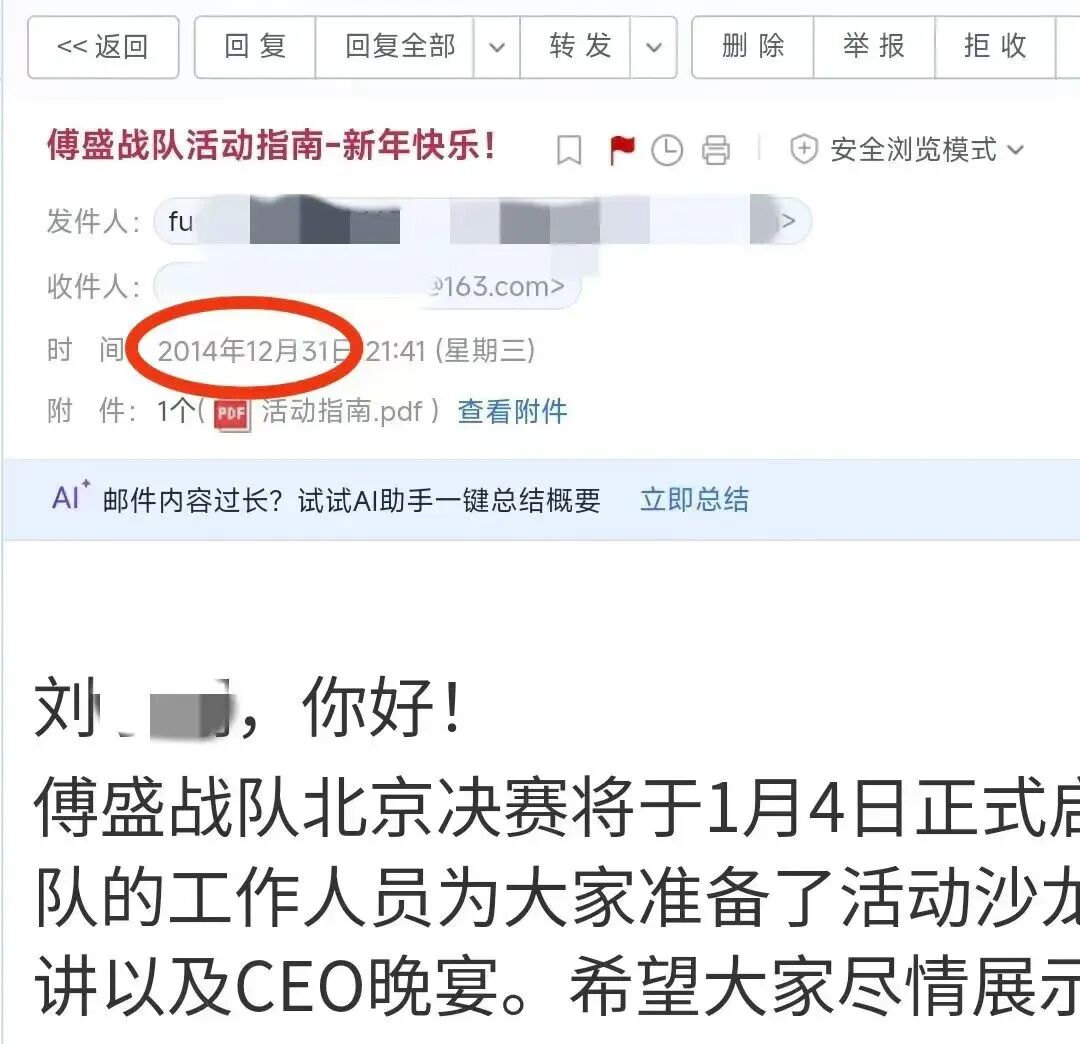
Meeting Sheng Fu and Cheetah Mobile was the greatest luck of my life. At the time I was just a programmer who didn't know what a product manager was. Sheng Fu recruited me saying, "You're a sharp kid, starting tomorrow you're a product manager." I asked him, "What's a product manager?" He said, "You'll know when you get here." So I stopped coding and became a PM. Started as a junior, later took on bigger and bigger things. During Cheetah's glory days, I was fortunate to lead a team from zero to building a product with tens of millions of DAU.
Back then, Cheetah Mobile was one of China's earliest success stories in going global. It listed on the US stock market in 2014, built entirely on overseas utility software. I grew up in that environment, so learning how to build overseas software products came naturally. I absorbed so much product methodology from Cheetah and from Sheng Fu that it's become part of my DNA. It's just that today I'm using new tools like Claude Code, presenting those same methodologies in different ways.
Also, Cheetah went all-in on AI around 2018. I spent a few more years learning AI there. That's why by June 2022, before ChatGPT 3.5 even came out, I was already building profitable AI side projects. So my life really has been "getting by on pure luck." By the time I left in 2024, I had enough income that I didn't need funding at all — I wouldn't even know what to do with someone else's money.
👩🏻 Ronghui
I have two questions. First, you mentioned "Cheetah's product methodology" — can you summarize two or three key points? Second, you said you "got by on luck." If you had to sum it up, how do you think someone can increase their luck? Looking back, what choices did you make right, or what thinking can you share?
👦🏻 Xiaopai Liu
Sure. First, what impressed me most about Cheetah was two words: keep it simple.
👦🏻 Koji
Simple?
👦🏻 Xiaopai Liu
Whether speaking publicly or communicating internally, Sheng Fu was utterly consistent. His methodology never wavered. The first principle I learned at Cheetah was "simple." 2014 was the era of mass innovation — every day people were discussing startup ideas in cafés, piling on modules, trying to mash together WeChat, Alipay, and Meituan. But Cheetah's secret was believing in "simple." Not addition, but subtraction. Nail one feature and that's enough.
For example, when Cheetah went public in 2014, there were roughly 2 billion Android devices globally. Clean Master had 600 million monthly active users — roughly one install for every three to four Android phones. Its functionality was extremely simple: you open it, there's one big button in the middle, you tap it once to clear memory and stop your phone from lagging. Anyone can use it. Many people tapped it ten or twenty times a day. One feature, completely dominant.
In 2014, when Sheng Fu acquired me, he also organized a startup competition. Another company in my cohort was musical.ly — TikTok's predecessor. The founder was sitting right next to me. He envied me for being acquired while he only got investment. I told him then: "You're going to make it big." At the time musical.ly wasn't highly regarded, but Sheng Fu still invested in them.
musi cal.ly's philosophy was also simple: just one button on the interface. Once I was having dinner with their founder, and he told me he'd already cut four buttons down to three, and was now figuring out how to get to one. In 2014 this was unthinkable. Alipay's home screen might have ten buttons, Meitu's camera might have ten buttons, yet musical.ly had so many features but dared to leave only one button. That "simple" philosophy was powerful.
So Sheng Fu's first lesson to me: anyone can add features, but subtraction is hard. Good products need simplicity — one extra button and users might not understand how to use it. The second lesson was his product trilogy: first, prediction — make important predictions about the market early; second, single-point breakthrough — establish yourself with just one feature; third, all-in — pour all resources in after success.
This was Cheetah's methodology for building Clean Master a decade ago. Choosing to make an Android cleaning tool seemed minor, but they predicted Android phones would keep multiplying until everyone had one or even two. Clean Master ranked #1 on Google Play's download charts for a long time. They focused on one point and threw resources at it.
So when I take this methodology and apply it to new tools or invent new ways to play today, it shouldn't be surprising.
👦🏻 Koji
Mm, that's the fruit of deep accumulation.
👩🏻 Ronghui
Going back to your second question — if you had to summarize, how do you think someone can increase their probability of luck? Or to put it in one phrase, how do you "expand your surface area for luck"?
👦🏻 Xiaopai Liu
I think it's that line: what's most important about being out in the world? It's "being out." As long as you get out there, your luck might improve; if you don't, it won't.
For example, those turning points I mentioned:
The first was in my junior year of undergrad — I dared to go to Beijing alone for an internship and met many exceptional people. Keep in mind, junior year was academically intense, and I wasn't even a grad student — people found it incredible. I went to teachers and department heads one by one to persuade them: this opportunity is rare, I'll definitely come back to make up exams. Eventually they all let me go. That's "daring to get out."
Later, Sheng Fu acquired me because I dared to come out for the startup competition. Even though I felt my work was mediocre at the time, I still dared to show up, to engage with a bigger world. The more variables you expose yourself to, the more chances you have to turn some of them into your own luck.
The Entrepreneur's "Turpentine"
👦🏻 Koji
Speaking of which, I'm reminded of an interesting analogy. There's a VC in Silicon Valley who calls himself "Turpentine." Why? Because Picasso once said: when art critics gather, they discuss form, structure, meaning; but when artists gather, they discuss — where to buy the cheapest turpentine.
That stuck with me. Reading Xiaopai's posts on Jike, Twitter, and his WeChat official account lately, it feels like one massive "turpentine scene." A few months ago you tried using Gemini 03-25 in Cursor, which let you access the just-released 05-06 model for coding, directly outperforming other models. Or when GPT-o3 pro came out, you immediately wrote a long hands-on review saying its intelligence had already surpassed humans.
So let's talk about this "turpentine" topic. First small question: I'm sure many listeners are itching to download Claude Code right now. What advice would you give them for getting started?
👦🏻 Xiaopai Liu
Watch someone else's tutorial first. If that doesn't work, check my WeChat official account, hahaha. Claude Code is a command-line tool, no graphical interface — just a black box where you type commands. Its interaction style dates back to the 1970s. That something like this still exists 50 years later is pretty bizarre.
The command line isn't great for users accustomed to graphical interfaces. It suits programmers better, since command lines have always existed in programmers' world. If you're new, I'd suggest first watching others' usage tips and overcoming your fear of command-line interaction. That's the most important step.
👩🏻 Ronghui
What about engineers who already have programming experience? How can they make better use of it?
👦🏻 Xiaopai Liu
I can share how I use it. From Claude Code's perspective, my usage efficiency is actually low. Because I don't care at all about how much time or how many tokens it consumes — I only care whether it saves me time.
For example: say I need to translate a website into 32 languages. From a machine efficiency standpoint, the optimal approach would be to first write a translation script, have Claude Code generate the tool, then use the tool to read and translate the code. That would be more efficient. But I don't do this because it's too much trouble, too time-consuming for me. I just tell Claude Code to translate. I don't care how it does it, as long as the translation quality is good. I go to sleep, it runs slowly — fine by me.
This is the mindset I want to recommend to engineer friends: stop obsessing over algorithmic execution efficiency like the previous era. In university, in ACM competitions, we competed on algorithm performance — Dijkstra, dynamic programming, all that. But today is different. What's most precious is personal time. I care more about freeing up my own energy and enjoying life. So don't let yourself be chained down by algorithm efficiency details anymore. The point is to let AI save you time.
👦🏻 Koji
Hey, have you ever thought about buying NVIDIA stock again? Because you're a case in point yourself: if AI penetrates life further, everyone's token consumption could be ten times, a hundred times, even a thousand times what it is now. If there are more "Xiaopai Lius," computing power consumption will definitely surge further. What do you think?
👦🏻 Xiaopai Liu
Since starting my company, I've basically cleared my stock positions. But my past track record was decent. For example: on May 6 this year, Google released a model called Gemini 05-06. When it first came out, the version number still showed 03-25. After testing, I found it was actually the world's strongest model — others just hadn't realized it. Google doesn't market like OpenAI, nor is it hyped by programmers like Cursor or Claude. But it's strong in other ways.
Google's stock was around $140 then, and I bought quite a bit. Now it's over $230 — in just five months. So if you have frontline industry insight, you might spot opportunities before others. Investors don't write code themselves; they simply can't judge where a model excels. They read media coverage and think it's mediocre, or even assume Google is overvalued.
👦🏻 Koji
Today's discussion doesn't constitute investment advice. But still want to ask — beyond this point, has there been anything else recently that made you think "this company is worth betting on"?
👦🏻 Xiaopai Liu
I really haven't been looking much lately, since I've already cleared my positions.
👩🏻 Ronghui
Hey, why did you clear them?
👦🏻 Xiaopai Liu
To free up mental energy. Trading stocks can make money, but no amount of money matches the satisfaction of building products. I want to put limited energy into what matters most.
👩🏻 Ronghui
Right, I think what you just said could inspire many listeners.
👦🏻 Xiaopai Liu
Not investment advice though. Google is already over $200 now, and that drawing model Nano Banana they released last night is also impressive. Google will only get stronger.
👦🏻 Koji
I've actually switched from GPT to Gemini lately. At first I thought my memories in ChatGPT meant I'd never move, but I didn't expect that after Gemini 2.5 Pro crushed GPT, I've already shifted 80% of my usage over. The remaining 20% is due to dependency on historical memory — I still occasionally chat with GPT. But Google is too strong.
👦🏻 Xiaopai Liu
I've bought $200+ memberships for all of these models. I allocate by use case.
👩🏻 Ronghui
How do you allocate? Which models for which scenarios?
👦🏻 Xiaopai Liu
For example, that model-switching scenario I mentioned earlier — there's a lot of math and algorithms involved, where Claude doesn't perform well. GPT-5, including GPT-o3, are much stronger. If you look at some international algorithm competition leaderboards, you'll see it checks out.
That's a pretty puzzling phenomenon: Claude ranks low on programming leaderboards, yet programmers love using it. Why? Because leaderboards measure solving hard problems — scoring high requires tackling difficult algorithmic challenges — while 90% of a programmer's daily work is building interfaces, login flows, payments, interactions, the routine stuff. And that's exactly where Claude Code shines.
But for research, math, or algorithm-level hard problems — scenarios relatively scarce in training data — you still need GPT, especially o3, o4-mini, GPT-5. My experience is: when work enters complex design and algorithmic coding territory, switch to GPT.
Gemini's advantage, meanwhile, was having 1M context early, while Claude only had 200K. To me, Gemini is more like an "architect": it can hold an entire project, you dump a ton of material in there and discuss overall architecture design, produce technical spec documents, then hand off to Claude Code for execution. So the division of labor between them feels natural.
👩🏻 Ronghui
You had lots of tips in that article you wrote with Claude Code. How did you summarize these techniques?
👦🏻 Xiaopai Liu
Honestly, just used it a ton. Practice makes perfect, nothing special, haha. Some were already in the official docs — people just don't read them. Claude Code is just a command-line interface; it's hard to discover the design without reading the docs. For example, it supports 24/7 operation, that's an official feature. You read the docs first, then think about use cases, and you'll realize it's definitely not writing code for that long — it's handling long-running tasks for you. In other words, don't just treat it as a coding tool; treat it as an extension of yourself, taking over repetitive, time-consuming work.
👦🏻 Koji
Can you share some specific techniques?
👦🏻 Xiaopai Liu
Let me start with the simplest and most important one. The most common question from people who come to me to learn Claude Code — how do you avoid the code turning into a "shit mountain." "Shit mountain" is programmer slang: code that runs at first but has chaotic architecture and becomes unmaintainable. Last year people asked the same thing about Cursor. The answer is actually clear: write a requirements doc, discuss the plan first.
I did product management at Cheetah Mobile for 10 years, so this is already habit. Although Claude Code gives you a chat window, absolutely do not just start typing in there. My approach: first write a complete requirements doc in Lark, one to two thousand words ideally, with prototype diagrams to avoid ambiguity.
Step one, paste the complete requirements into Claude Code.
Step two, don't immediately ask it to write code — have it restate its understanding first, produce a technical plan, then raise questions that need my decision.
Step three, after 3–5 rounds of discussion, confirm that "nothing has been overlooked," then have it write code.
Code written this way will never be a "shit mountain." If listeners today only learn one technique, it's this: write a complete requirements doc, discuss first, then code.
👦🏻 Koji
So even the best programmers can't replace product managers. What Claude Code can fill in is product documentation, not vague requirements.
👦🏻 Xiaopai Liu
Right, because what you say in one sentence is ambiguous, or if a requirement isn't clearly stated, whatever they do is correct. So you need to discuss all risk points clearly from the start, and anything requiring my decision gets decided by me. There used to be a joke mocking programmers: a wife tells her husband to buy a watermelon on the way home from work, and if he sees steamed buns for sale, buy two — the husband comes home with two watermelons.
👦🏻 Koji
Our previous podcast guest told that story too.
👦🏻 Xiaopai Liu
Right, that's ambiguous expression. With a Lark doc, there's zero ambiguity. That's the most important thing. For people with some experience, your method is to read Claude Code's official docs, see what those features are actually for, then combine with some non-coding work to figure out how to use it well.
Recently I've been recommending three features. First is background commands — it supports 24/7 operation by default, called background commands, you can think about this combined with the example I just gave. Second is subagent — Code itself is one big agent, but you can build smaller agents inside it, very practical. I now have many daily tasks where I build a dedicated agent, refine it well, it only handles one category of task, this is worth exploring. Its main application scenarios are non-coding, because for coding you don't really need these, you can just write directly.
Third is output style, just released in the last version. For example there's a style called learning mode, very suitable for beginners. If you turn on learning mode, its output won't do everything for you — it does most of it and leaves blanks for you to fill in, letting you learn programming through the process. Pretty fun. These techniques are also a process of continuous refinement for me, I wasn't born knowing them, I learned by using.
👦🏻 Koji
Xiaopai mentioned building many products, but only three have been publicly announced so far. Want to reveal more on our podcast? Share some secrets you've never told anywhere else?
👦🏻 Xiaopai Liu
Sure, I'll reveal one more. Why dare to reveal it? Because others can't do it, but I can do it for 20 years.
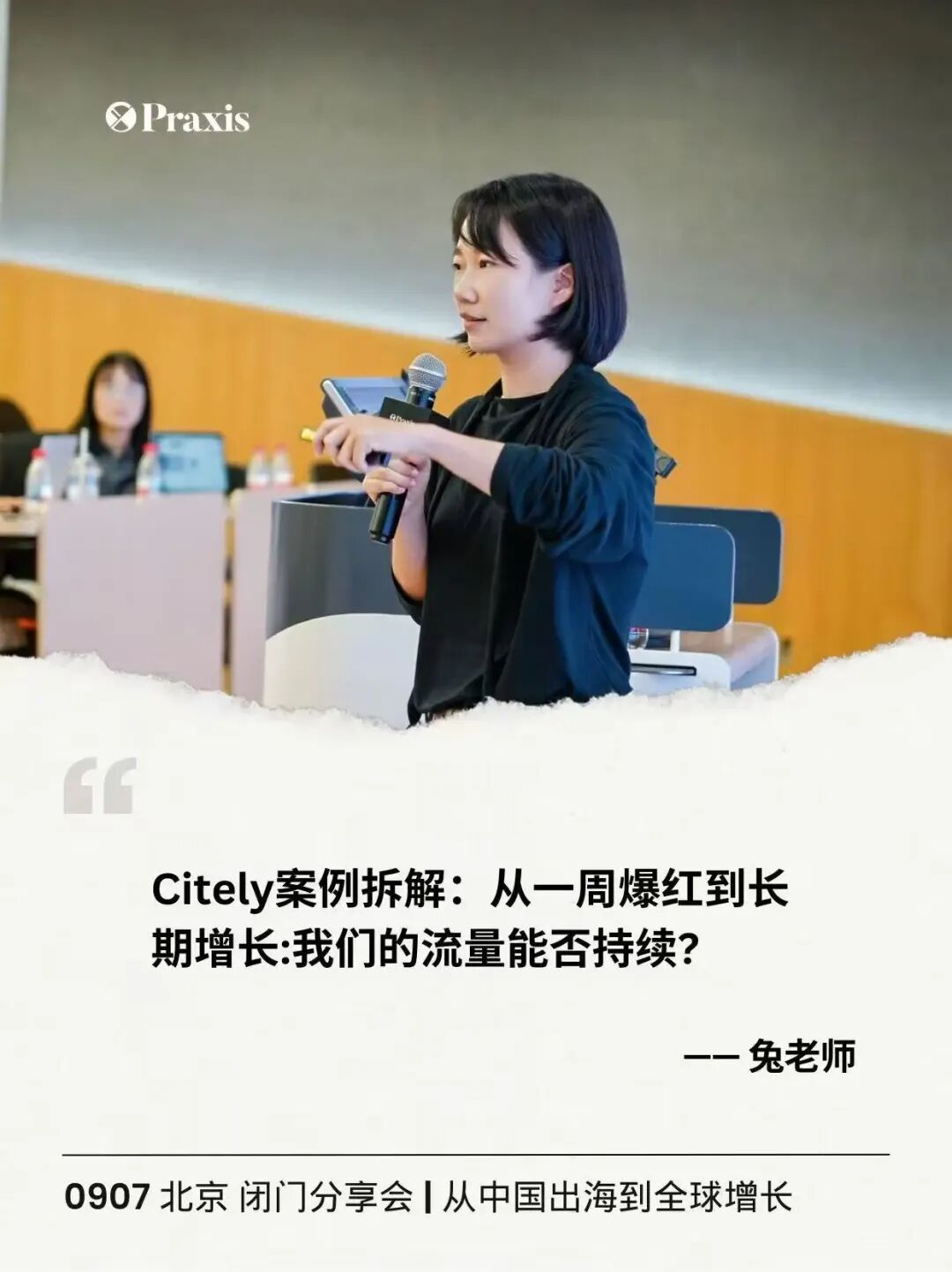
This is a project from an entrepreneur in our incubator. Her name is Teacher Tu, she's an associate professor at Communication University of China, and now also with our incubator.
We built a new product together called Citely (citely.ai). It focuses on just one problem: how to ensure references are authentic, reliable, and high-quality. We didn't spread out to do many features, but chose to go deep on this single point.
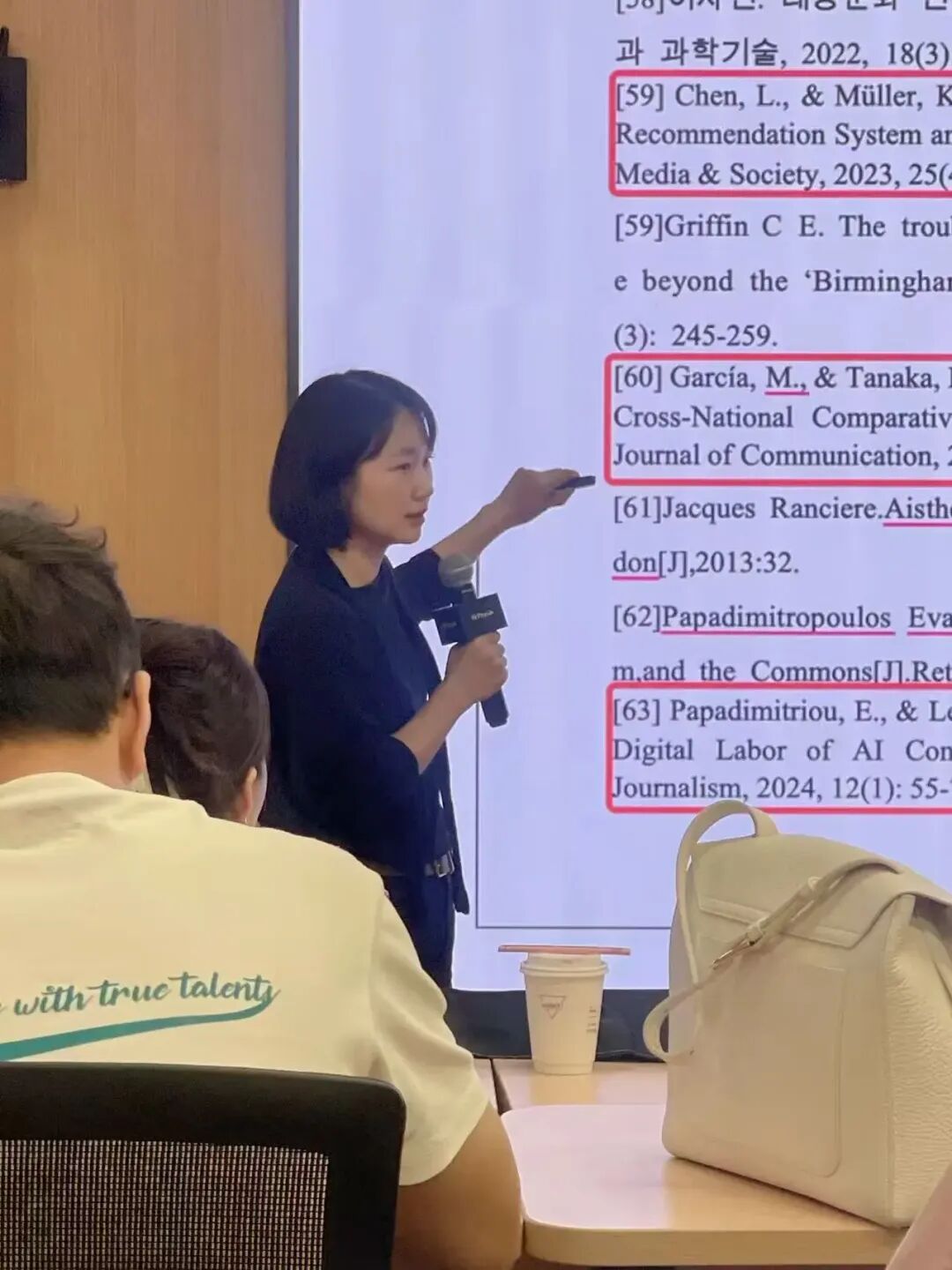
Teacher Tu once shared a real experience with me.
This year while reviewing student thesis papers, she found her workload suddenly increased. Because many students are using AI to assist writing, and AI has a huge bug in academic papers — it generates seemingly perfect but completely non-existent "fake citations."
Even the latest GPT versions still have this problem.
When she checked each one against databases, she found quite a few "fakes" mixed in at the end of papers. And this process of manual verification one by one is extremely time-consuming and labor-intensive. She talked with many colleagues around her and found everyone had the same confusion.
At that moment, we started discussing: could we build a tool to free teachers and students from this repetitive, inefficient work?
Another pain point is, when students write papers, they often want to find some authoritative references to support their arguments. Or, someone writes a draft citing materials but hasn't added sources yet, and only when formally publishing realizes — if they can't find the original source, they might be accused of "academic misconduct."
Many people can only break content into individual points and search databases one by one. Some try using AI to find them, but then step into the fake citation trap.
So Citely addresses this pain point with automation:
It breaks a piece of content into multiple points, then searches databases like PubMed, Semantic Scholar, Web of Science, Crossref, not only finding relevant papers but also screening for quality, prioritizing the most authoritative and influential references for users.
This way, users can reach truly valuable references faster.
Citely was originally planned to officially launch on September 10th. But after the Tsinghua University roadshow, it suddenly spread organically among students.
During the short beta period, over 1,000 users flooded in.
We gave all new users free credits, but some still proactively bought packages in the backend to show support;
Some users added the founding team on WeChat to offer ideas, not only discussing pricing strategy but also suggesting feature optimizations; overseas students actively contacted us wanting to help with promotion.
Some even directly asked us: "Do you need money? I'm willing to invest and support."
After following up with dozens of users, we had one realization:
"The process of writing papers is too agonizing. People have actually been waiting for an efficiency tool like this for a long time. After Citely appeared, they seemed to want it to survive even more than we did."
Why can I say this can be done for 20 years?
Because "paper citations" is an industry that's existed for 200 years, and we believe it will last at least another 200. As long as there's still "academic research" work in the world, it won't disappear.
Just this one thing, we can do until retirement. As long as we focus on real pain points, continuously use the latest technology to solve the problem again and again, and create value for users, it's a business that can last 20 years. And the main entrepreneur herself is an academic worker, a professor at Communication University of China — she completely knows where the users are and what their pain points are.
👩🏻 Ronghui
Building products in today's era, whether finding scenarios or needs, what have you summarized? What's different compared to the last era?
👦🏻 Xiaopai Liu
What's probably the same is, building products and entrepreneurship is about doing one thing: Make something people love, making things users love.
👩🏻 Ronghui
YC's slogan.
👦🏻 Xiaopai Liu
Right, many people don't realize this. People are so accustomed to pain points around them, you endure them daily without feeling like you're enduring, thinking it's normal. Like the four citation-related pain points I just mentioned — if you ask university teachers and professors, they'll all nod repeatedly. Then why hasn't anyone done it? Very strange. So when you build it, this thing is relatively easy, because from day one you know where the users are, you can directly go ask them for money.
What's different is, today, the "individual" has become stronger. Previously you thought of this solution, but still had to figure out how to build it, the cycle was long, and you needed luck to find a skilled programmer to help. Today with programming tools like Claude Code, you already have a skilled "programmer" in hand, whose coding ability exceeds 99% of humans. So the technical implementation phase is faster than before, costs are exponentially lower than before — that's the biggest difference.
Putting these two things together, our approach is to constantly look for pain points and build MVPs to validate them. If it works, we scale it up. If not, we drop it — no time wasted. It's a playful mindset. Every time we find a real pain point, everyone gets excited. If we build it and it works, great. If not, it's like losing a game — you just queue up for another match.
Before, because implementation costs were so high, discovering your product didn't work felt crushing. Now costs are low, so if it doesn't work, whatever — it doesn't affect your mood at all.
👦🏻 Koji
It's like what Sam Altman tweeted recently — building AI SaaS products is like fast fashion.
👦🏻 Liu Xiaopai
Well said. That's exactly it.
👩🏻 Ronghui
You went through the previous mobile internet wave, and now you're building in AI. Why did you choose to start a company at this moment? What do you hope to achieve?
👦🏻 Liu Xiaopai
I want to build products I can be proud of, to satisfy my "narrative self."
When I'm old, 80-something, lying in a hospital bed about to get the tube pulled, what am I going to tell my grandkid? That I owned five apartments in Beijing? That's not interesting. I'd rather say: Your grandpa built this product, ever heard of it? That's the story I want. The products aren't big enough yet, but that's my dream.
👩🏻 Ronghui
But we're also seeing lots of indie developers building many different things, everyone rapidly experimenting. The 0-to-1 process seems well-suited to this approach. But I'm wondering — the 1-to-100 process might be very different from before. Have you thought about this?
👦🏻 Liu Xiaopai
I can expand on that a bit. Some top-tier investors and institutions privately say AI products don't make money. But my experience is the opposite. Later I looked into it and found that many leading AI products, especially those that raised funding, indeed don't make much money. The reason is they need to do PR, their users come from PR, investors demand scale, so they burn tons of cash. Like the previous "Six Little Tigers" foundation model companies — raised billions but still don't make money.
On the flip side, the ones making money are products like ours, mid-tier or below. Why? Because we have no marketing costs, low headcount, small teams, no need for large-scale operations. Before building I already know where the users are. If it doesn't work, fine. If it does, we're profitable from day one. It's software, so it doesn't need constant babysitting. There are still many niche opportunities in AI today — like me just focusing on the thesis/paper scenario, doing it well is enough, no need to burn money.
👦🏻 Koji
One last question. Crossing has been encouraging everyone to be active builders in the AI era. Many people hearing your story will find it inspiring. If you could give just one piece of advice, what would it be?
👦🏻 Liu Xiaopai
My core view is: Claude Code or AI coding isn't just another tool. It is not for you, it is you. It's not a tool created for you — it is you. Approach AI agents like Claude Code with this mindset. Don't ask what it can help you do. Ask what you want to do, then delegate the parts that can be subcontracted to it. It's part of you — that's the essential mental model.
Once you have that mental model, if I could give just one piece of advice: build something with AI that can support you financially. Life is a wilderness, but you need "mines" to be "wild." That product that sustains you is your mine. With it, you can explore the possibilities of this era with more calm and freedom.
👦🏻 Koji
Great. Thank you so much Xiaopai for joining us today — really enjoyed the conversation, and welcome back to Crossing anytime.
👦🏻 Liu Xiaopai
Thanks, thank you to both hosts. Goodbye.
👩🏻 Ronghui
Thanks, bye.
👦🏻 Liu Xiaopai
Bye.
🚥
References
[1] Raphael AI: https://raphael.app/
[2] AnyVoice: https://anyvoice.net/
[3] Fast3D: https://fast3d.io/