Claude Design vs. GPT Image-2: Which One Represents the Next Era of Design Paradigms?
Multimodal or Coding Agent: Which Is the Optimal Path to AI Design?
Multimodal Models vs. Coding Agents: Which Is the Optimal Path to AI Design?
👦🏻 Author: Fanhan
🥷 Editor: Koji
🧑🎨 Layout: Zeooo

In April 2026, two product launches went viral almost simultaneously.
Anthropic unveiled Claude Design. OpenAI released GPT Image-2. One generates web pages through code; the other produces images directly through multimodal generation.
Two top-tier AI companies, betting on two completely different paths.
This divergence is no accident. From the very beginning, letting AI do design has had two possible directions.
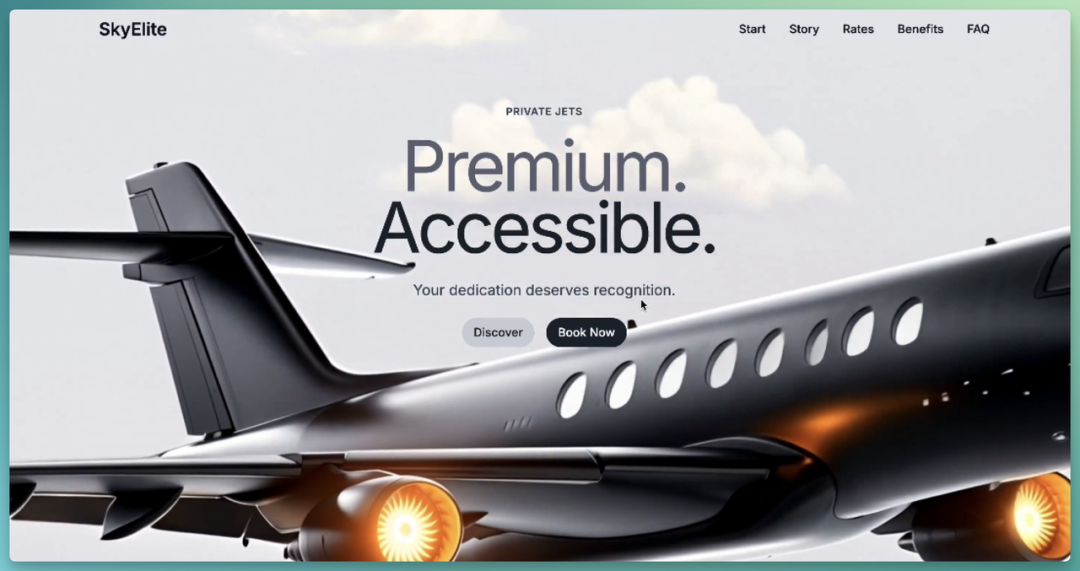
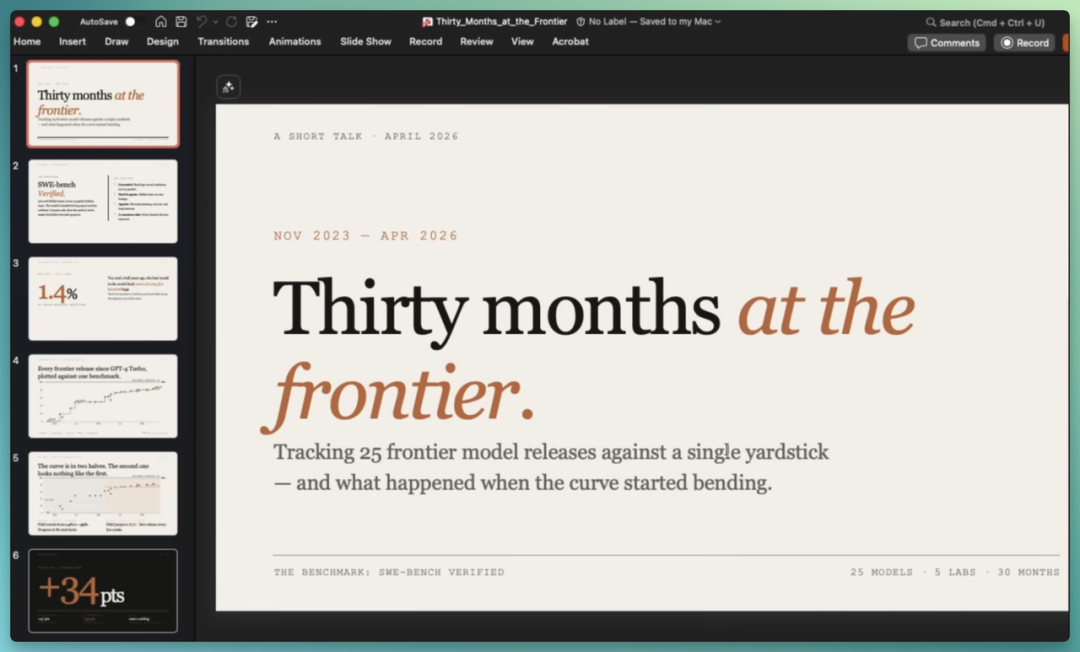
One camp believes in building stronger, more aesthetically refined Coding Agents — letting AI generate front-end code to flexibly create stunning designs of all kinds.
Screenshots of web designs made with Claude Design, shared by users on X
PPT designs made with Claude Design, shared by users on YouTube
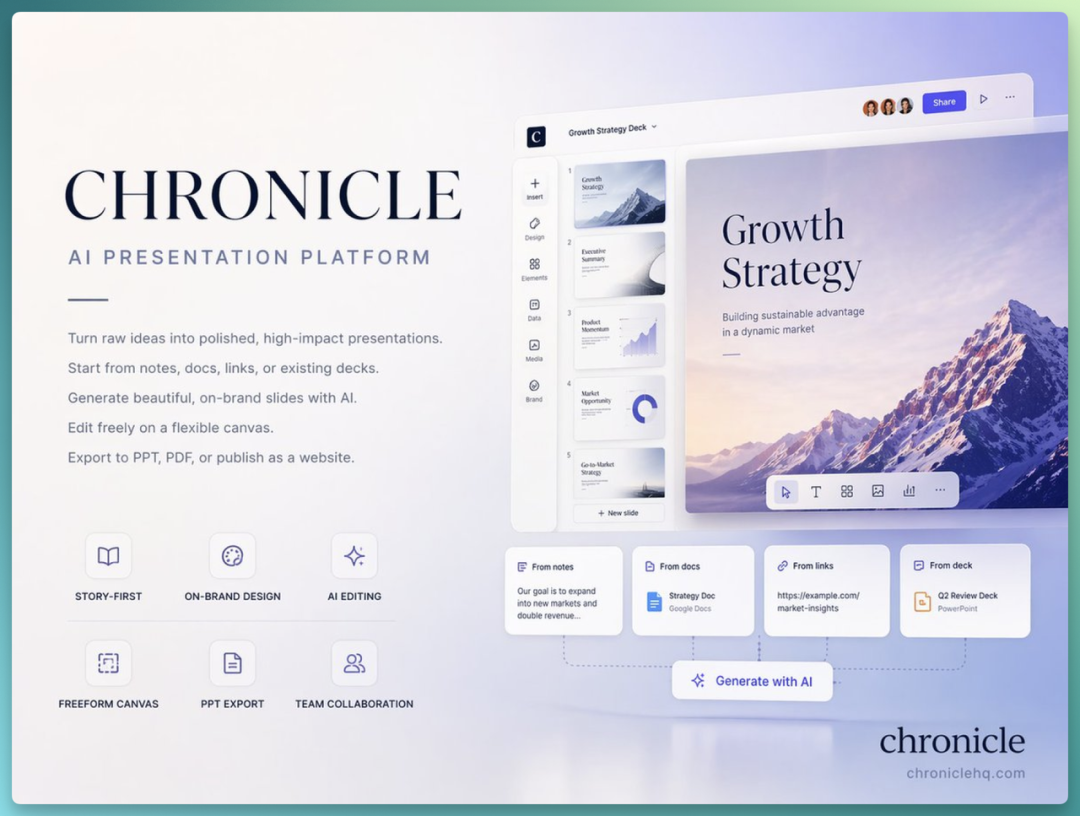
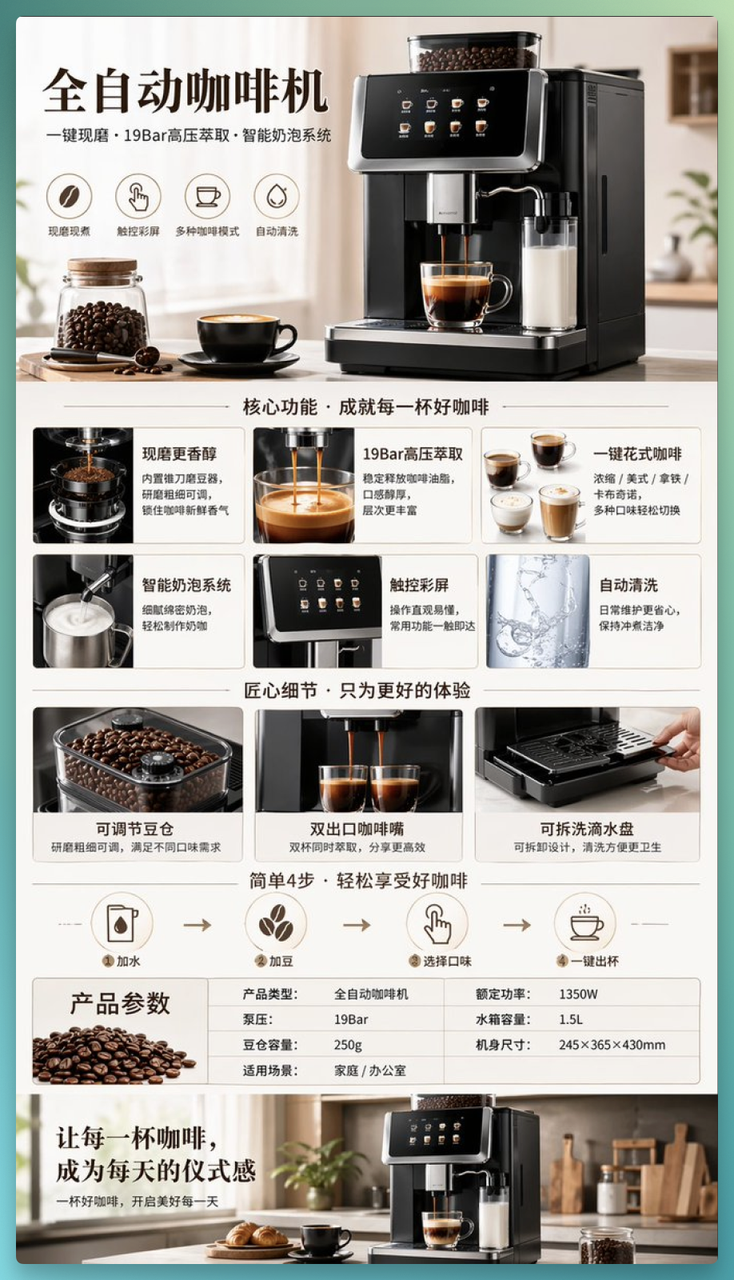
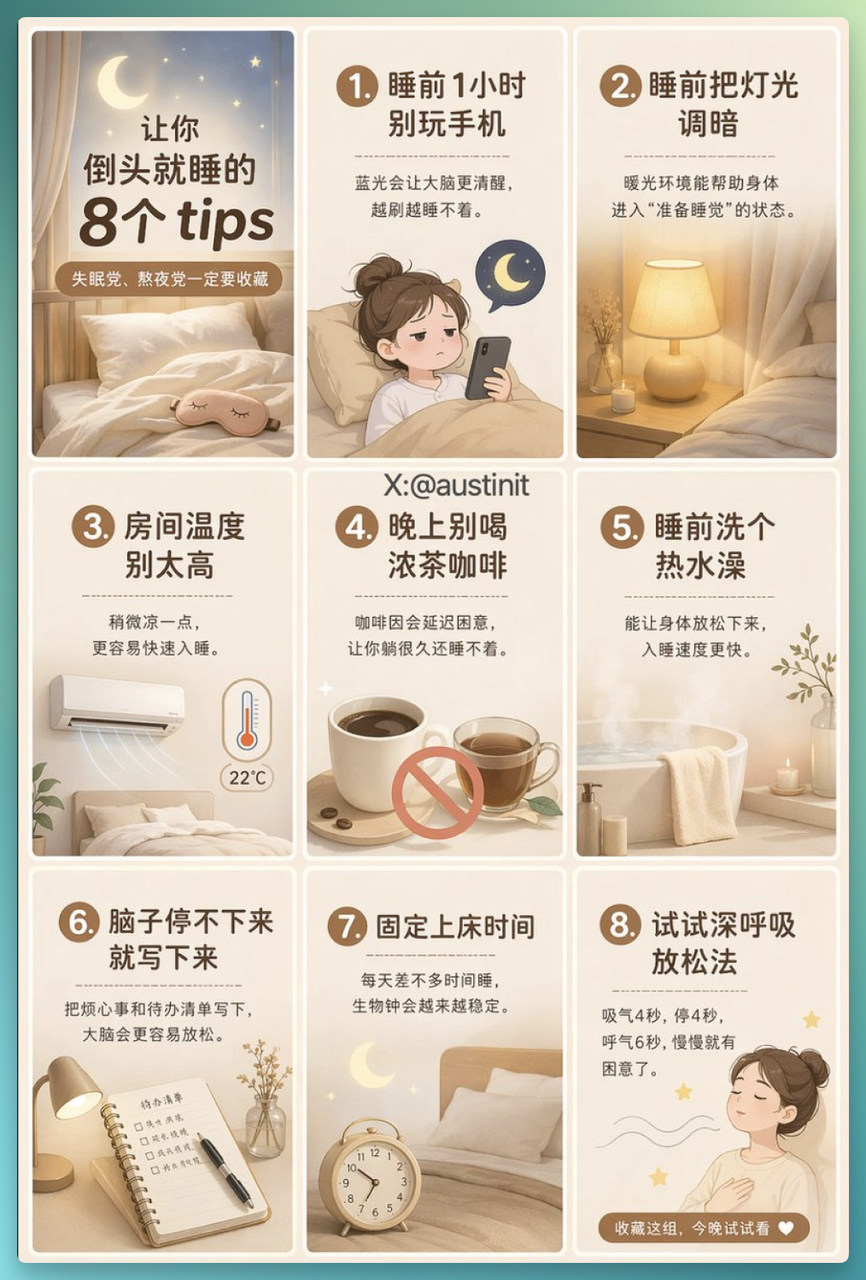
The other camp believes in building stronger image generation models — grinding away at image quality, prompt adherence, and text stability until they're flawless.
Image from Guicang's AI Toolbox, a well-known AI-focused WeChat account
Coffee machine e-commerce product detail pages collected from the GPT Image-2 prompt navigation site
Case study shared by creator @Austin on X
Anthropic chose the former. OpenAI chose the latter.
Now, both paradigms have produced their respective flagship products.
A question naturally arises: which is stronger? Or rather, what scenarios does each suit best?
Going further, in complex design tasks, can these two tools work together? And how should they coordinate?
From the showdown between these two products, we might glimpse where design-oriented Agents are headed next.
We designed an interesting test scenario.
It's a hackathon idea of my own, drawn from a real work habit.
I love giving an Agent a long-horizon task, then getting up to step outside, soak up some sun, and breathe fresh air.
Five or six minutes later, I come back and the Agent has just finished — ready for the next instruction.
This avoids sitting too long while also getting intermittent rest to recharge.
So here's how we're running this test: let's say we're building an Apple Watch app called "Agent Watch," along with a companion iOS app.
After you assign a long-horizon task to an Agent on your computer, the task progress automatically syncs to the "Agent Watch" app on your Apple Watch.
While you haven't received a completion notification on your Watch, you can casually wander outside, grab coffee, buy a drink, do whatever.
When your Apple Watch vibrates and shows the Agent has finished, you head back to your desk and pick up where the Agent left off.
Now, let's take this product idea and use Claude Design and GPT Image-2 to complete the full design pipeline: from prototype → marketing assets → brand guidelines → Pitch Deck.
Step One in Product Building: Make a Prototype
First, we sent the initial idea simultaneously to Claude Design and GPT Image-2 in ChatGPT. Here's what we got.
We've built an Agent Native Apple Watch app called "Agent Watch." Its core value is letting users supervise task completion for multiple Agents like OpenClaw, Claude Code, and Manus through voice input and message viewing on the watch. Please design the watch app interface and the companion iOS app UI. Use light, breathable white and pale green as the main colors.
Fed into Claude Design, the output was excellent — thoughtfully placed on a UI design delivery artboard, fully production-ready.
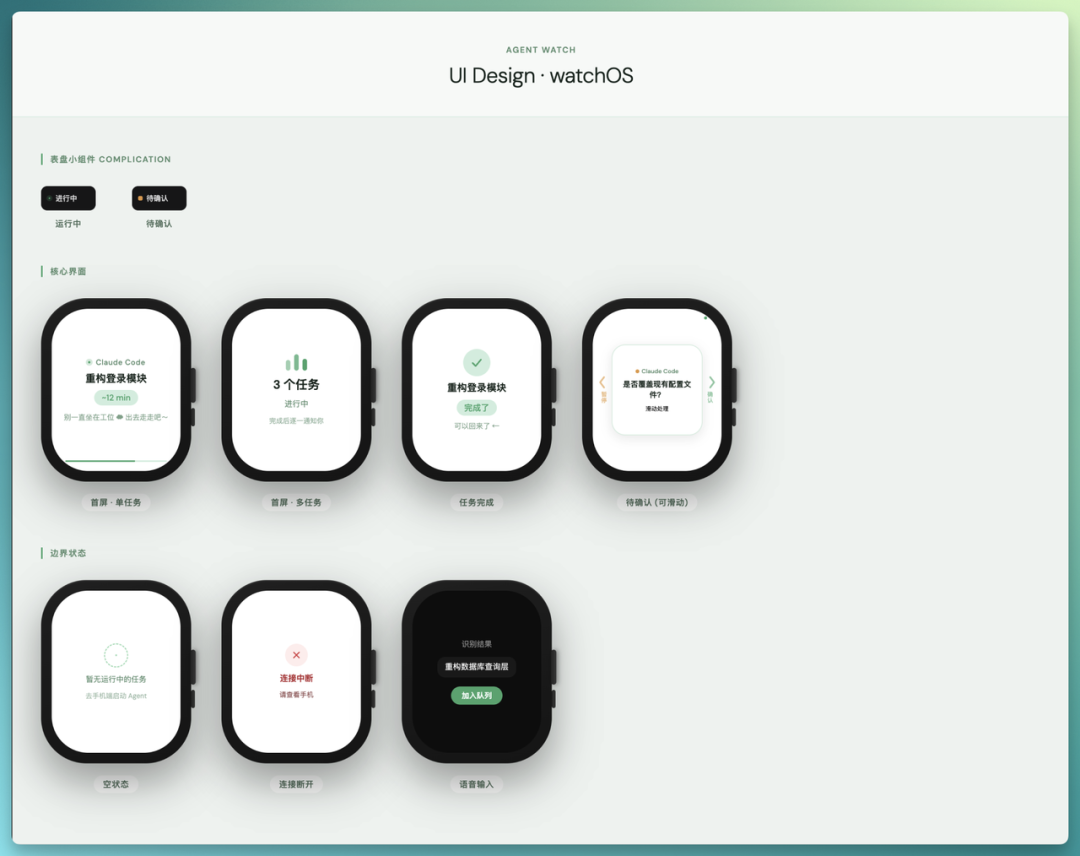
The same prompt given to GPT Image-2 still offered some helpful design inspiration, with thoughtful text annotations on the UI mockups. But the results fell short compared to Claude Design's output.
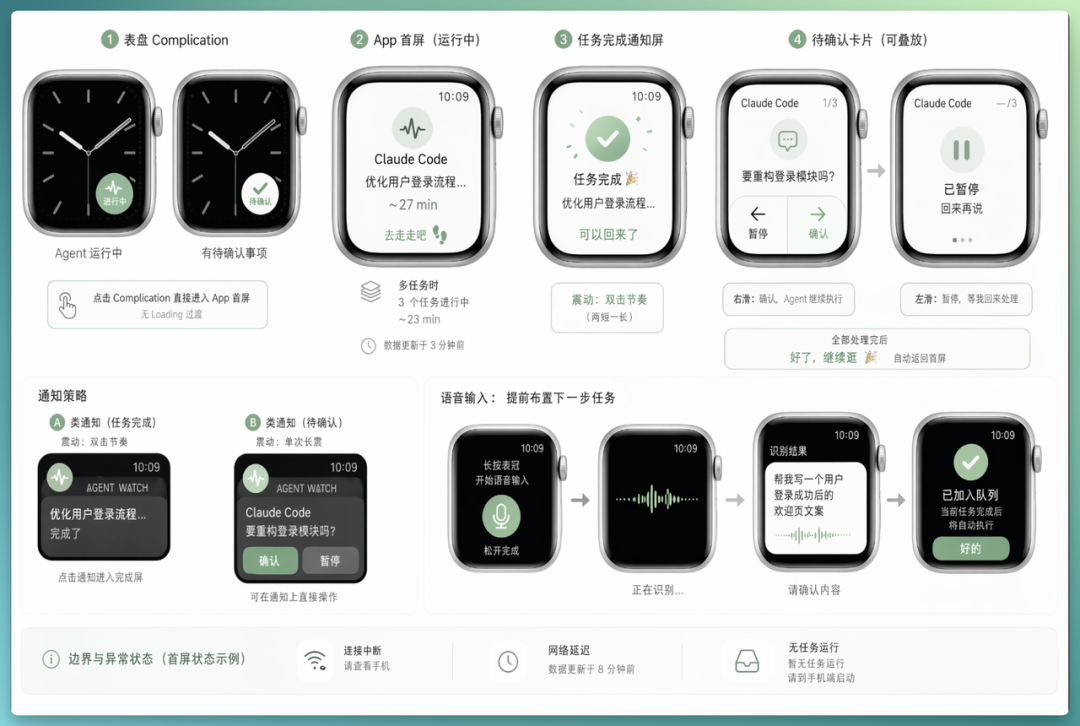
Next we had Claude Design and GPT Image-2 design a companion iOS app for "Agent Watch."
Please use the same design system to create a companion iOS app for this Apple Watch app.
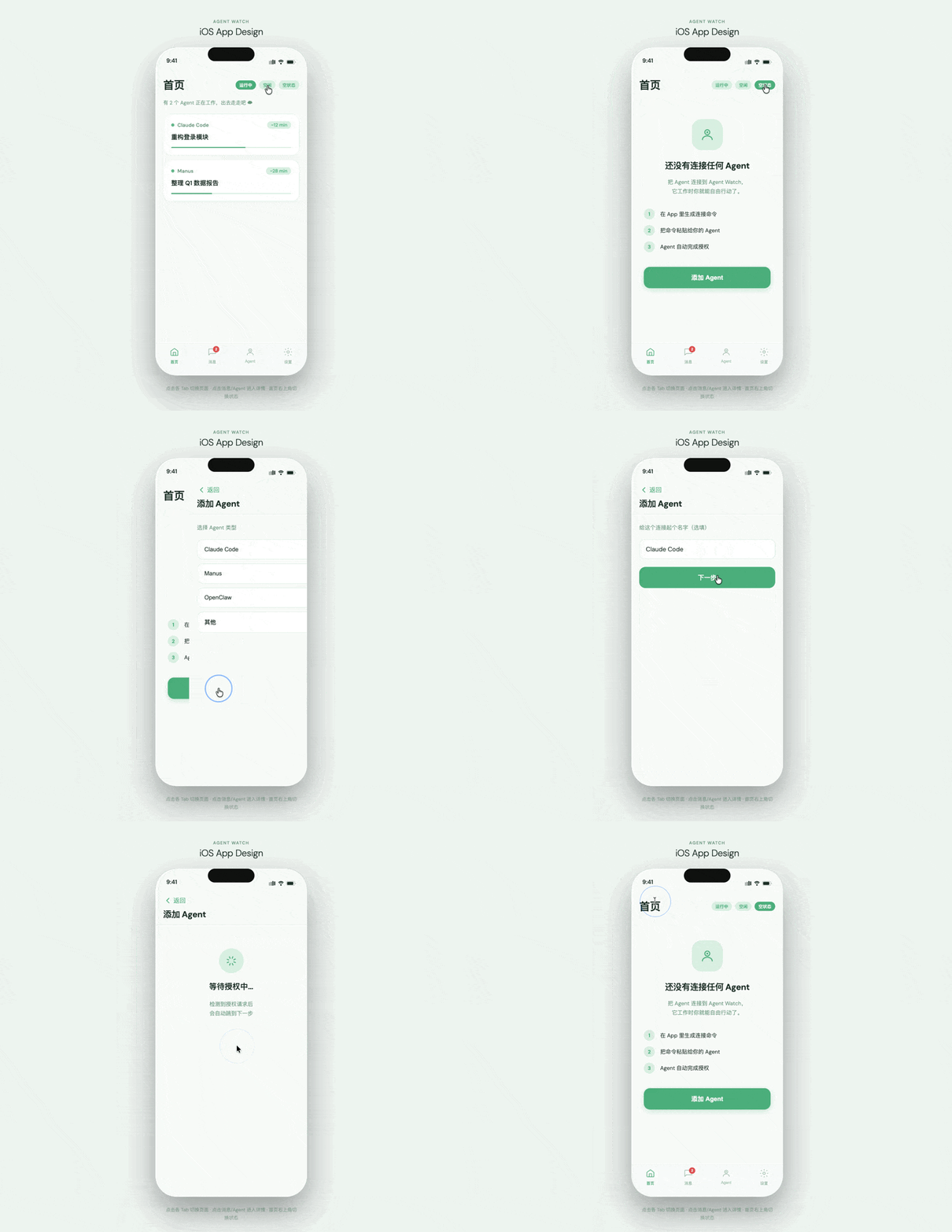
Claude Design again delivered satisfying results — an interactive HTML prototype where you can click different buttons to explore the full product interaction, at a level ready for direct production handoff.
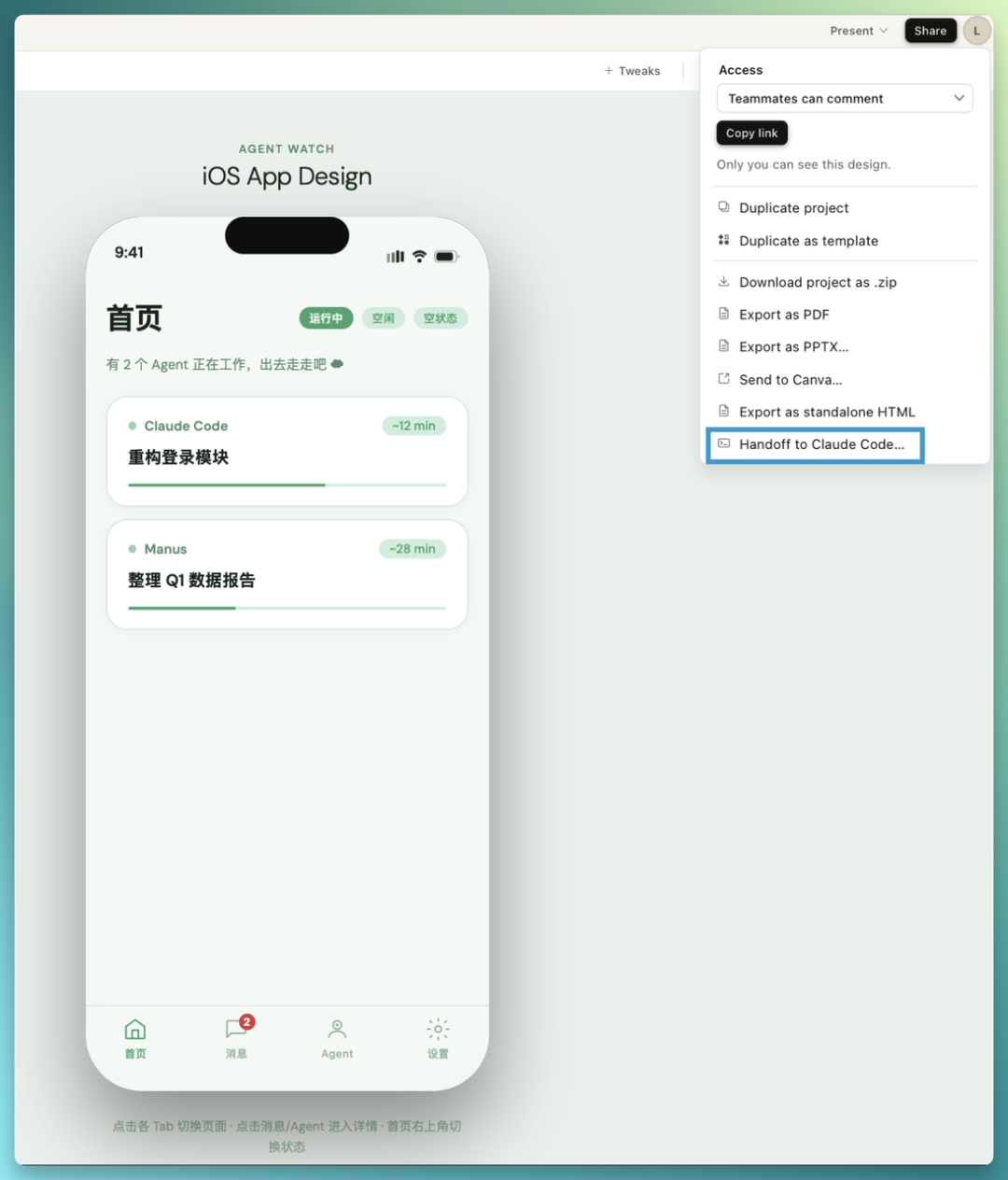
After Claude Design finishes the design, clicking the share button in the top right reveals a "Handoff to Claude Code" button, enabling one-click full product development in Claude Code — very convenient.
GPT Image-2's output
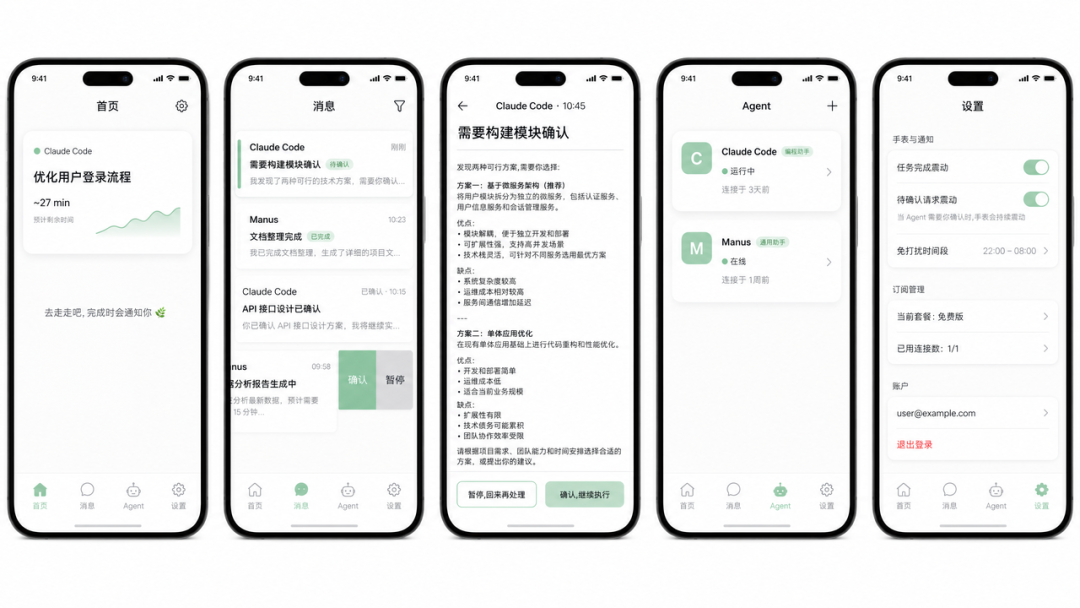
By comparison, GPT Image-2's design had the same issues as above. While inspiring from a design perspective, generating images directly led to some dimensional inconsistencies and interaction logic that didn't follow normal conventions — not directly production-ready.
Time to Launch on the App Store
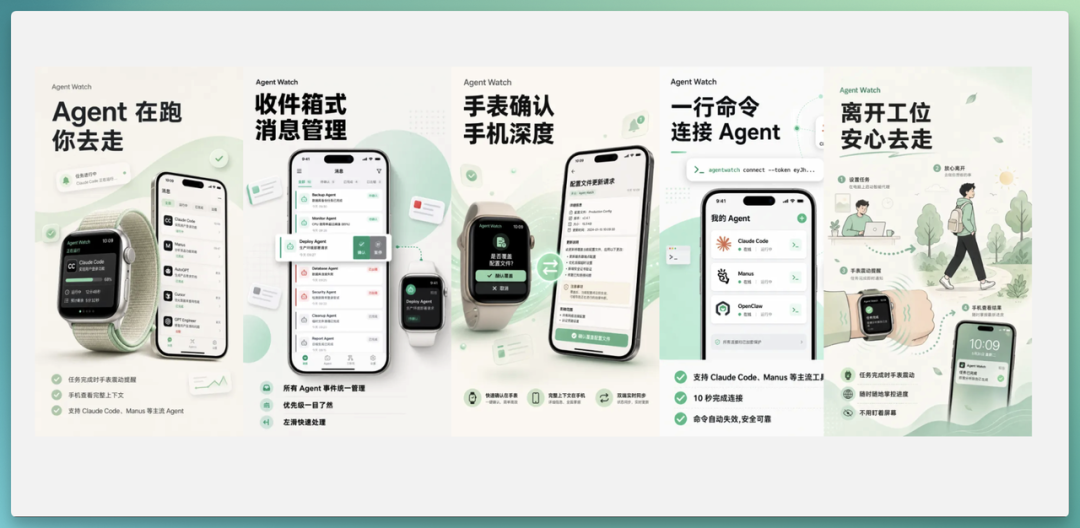
Let's say the product has been developed and we're ready to launch on the App Store. We'll need a set of promotional screenshots for the store page. Let's try completing this task with Claude Design and GPT Image-2 respectively.
Please design a set of App Store promotional screenshots for the "Agent Watch" Apple Watch app and iOS app.
On this task, the two products each have their strengths.
GPT Image-2's deliverable
Claude Design's deliverable
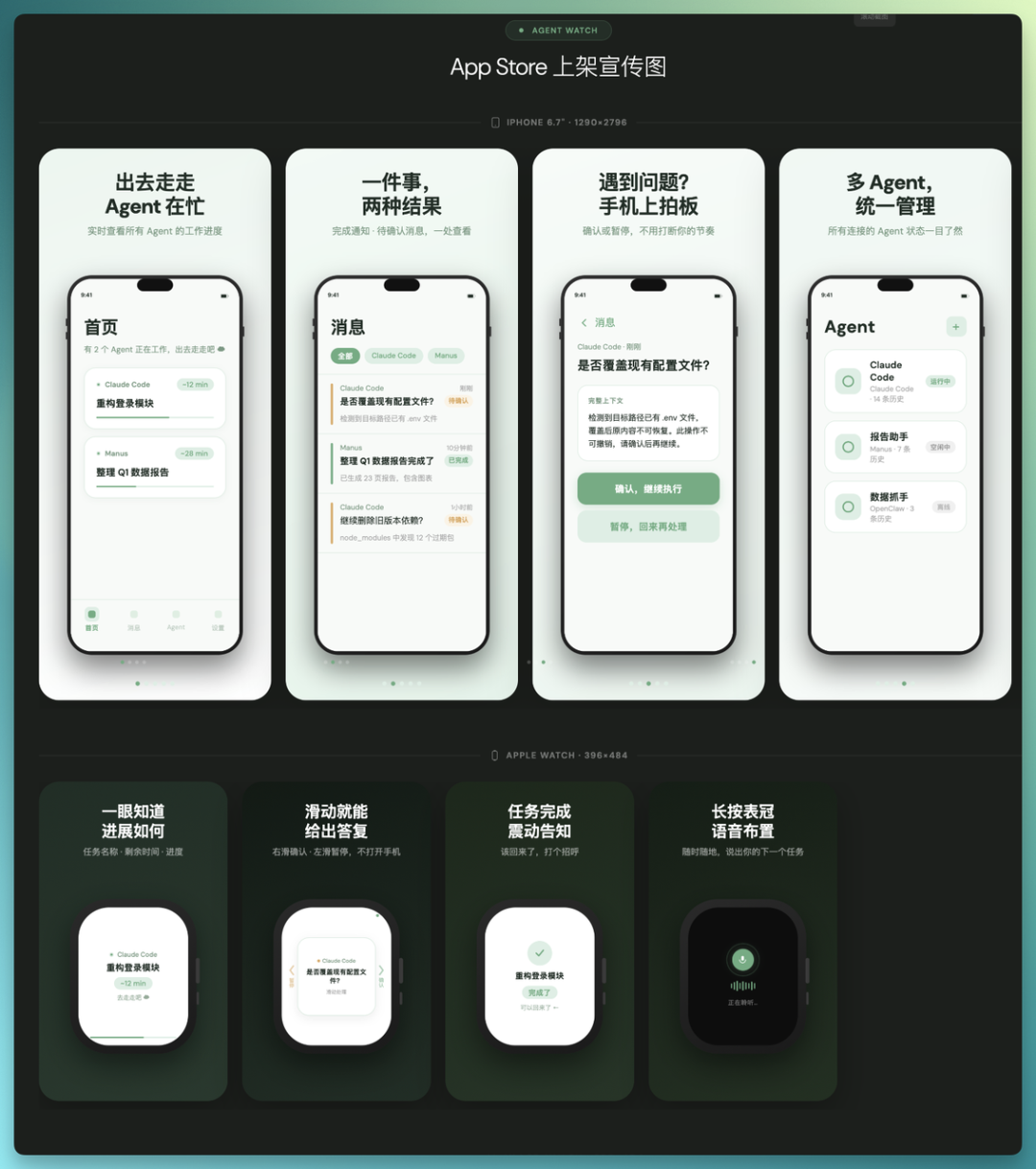
Claude Design's advantage: extremely stable delivery, with clean, minimalist arrangements of text, product mockups, and app screenshots that make the product's value and selling points immediately clear.
GPT Image-2's advantage: generating images directly allows for more flexible, creative layout designs.
Time to Post on Xiaohongshu
After launching on the App Store, the next step is usually promoting on Xiaohongshu to build brand awareness and drive sign-ups. Let's try creating a few posts.
First, we had Claude generate some ideas for topics, cover designs, and post content, then used these plans to create cover images and main post visuals.
We picked one of the more interesting topics to test:
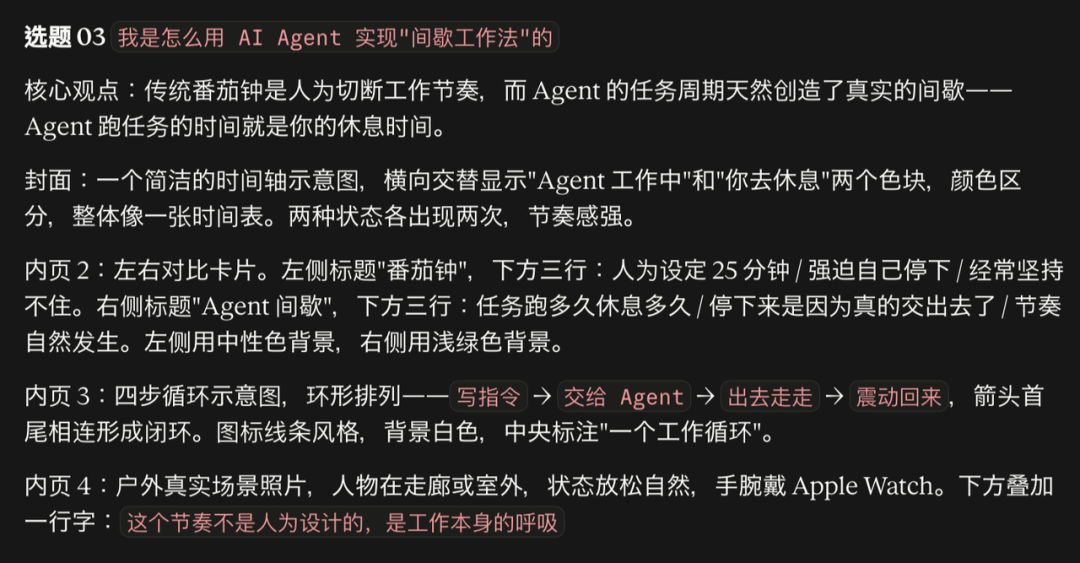
Based on these topics, Claude Design and GPT Image-2 each completed their outputs.
Claude Design's Output
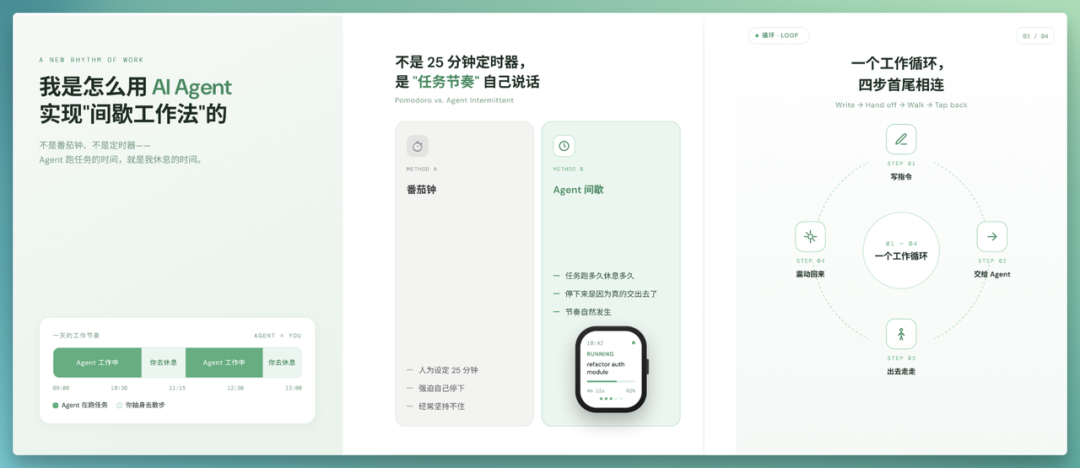
Claude Design's output felt more like an infographic than an engaging Xiaohongshu post. It also had a bit of an "AI taste" to it — like a design from a clueless STEM student.
GPT Image-2's Deliverable
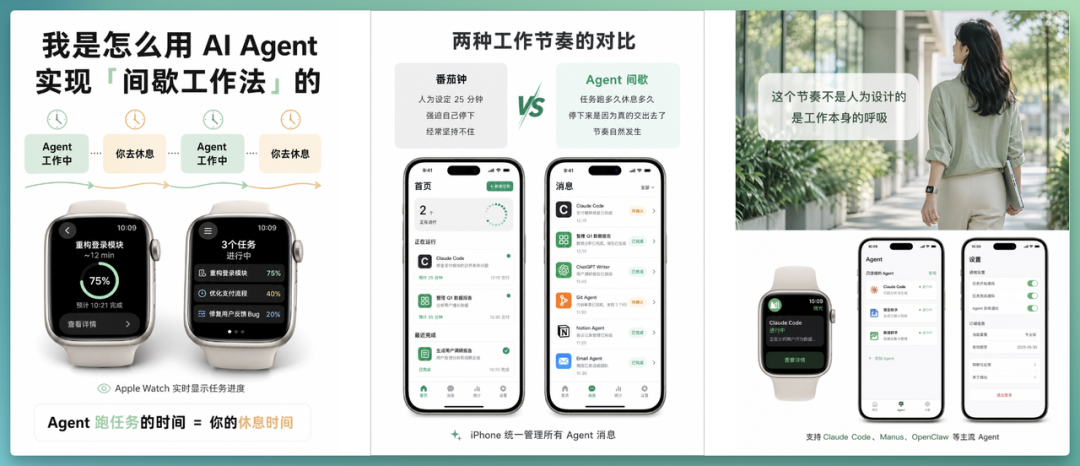
By contrast, GPT Image-2's note interior pages were far more lively and interesting.
An Investor Wants to Meet — What Do You Show Them?
Let's say the product has achieved initial success. The next phase requires fundraising, partnerships with other tech brands, incubator programs, and applying for benefits from various VCs, cloud providers, and government startup programs. You'll need a product Pitch Deck (PPT).
So for our final test, let's see how the two models perform in a PPT scenario.
One thing to note: due to differences in technical paradigms, Claude Design's context management and long-horizon task capabilities outperform GPT Image-2, so we adjusted our prompts accordingly.
Prompt for Claude Design:
Please design a Pitch Deck for Agent Watch to present to investors.
Background: Agent Watch is an Apple Watch app with a companion iOS app. Its core value: after users assign long-horizon tasks to AI Agents (Claude Code, Manus, OpenClaw, etc.), they can leave their desk to walk around and rest. When the Agent completes the task or needs confirmation, the Apple Watch vibrates to alert the user to return.
Problems Solved:
- Users having to stare at screens waiting for Agents to finish
- Sedentary work leading to lack of exercise and rest
- Missing critical Agent confirmation requests, causing tasks to hang
Core Features:
- Real-time Agent task progress on watch
- Vibration alerts when tasks complete or need confirmation
- Quick confirmation on watch, detailed context on phone
- Support for managing multiple Agents simultaneously
- Inbox-style message management
Please design 8-10 slides including:
- Cover (product name, slogan)
- Problem (user pain point scenario)
- Solution (core product value)
- Product Demo (key interfaces and interaction flow)
- Use Case (real workflow)
- Competitive Comparison (differences from traditional Pomodoro timers, notification tools)
- Business Model (free vs. Pro)
- Team & Vision
Design Requirements:
- Colors: pale green (#A8D5BA) and white dominant, light and breathable
- Style: clean, modern, Apple aesthetic
- Clear visual focus on each slide, no text walls
- Suitable for investor roadshows, highlighting business value
Please generate a complete web-based Pitch Deck.
Prompt for GPT Image-2:
Please design visual mockups for an 8-page Pitch Deck for the Agent Watch product, for investor presentation.
Product Background: Agent Watch is an Apple Watch + iPhone app that lets users leave their desk to rest after assigning tasks to AI Agents, with the watch vibrating when the Agent finishes. Core value: "The Agent works, you go for a walk."
8-page PPT content and design requirements:
(Send the next page's prompt after each page is generated)
Page 1 - Cover:
- Headline: "Agent Watch"
- Subhead: "The Agent works, you go for a walk"
- Visual: Apple Watch product photo showing app interface
- Colors: white background, pale green accents
Page 2 - Problem:
- Headline: "Sitting and staring, waiting for the Agent to finish"
- Three pain point illustrations: person staring at screen, sedentary fatigue, missed confirmation
- Clean icons + one-line descriptions
Page 3 - Solution:
- Headline: "True intermittent work method"
- Timeline diagram: Agent working → you resting (alternating)
- Emphasize "task cycle = rest time"
Page 4 - Product Demo:
- Headline: "Dual-device collaboration, real-time sync"
- Apple Watch and iPhone side by side
- Watch shows task progress, phone shows message details
- Connecting line indicating sync
Page 5 - Use Case:
- Headline: "A complete work cycle"
- Four-step flowchart: assign task → leave desk → watch vibrates → return to handle
- Simple figure drawings + scenario illustrations
Page 6 - Core Features:
- Headline: "More than a notification tool"
- Four feature cards: inbox-style message management, quick confirmation, multi-Agent support, context viewing
- Each card with icon and description
Page 7 - Business Model:
- Headline: "Free vs. Pro"
- Side-by-side comparison table
- Free: 1 Agent, 7-day history
- Pro: unlimited Agents, 90-day history, ¥19/month
Page 8 - Vision:
- Headline: "Give work room to breathe"
- Outdoor scenario photo: person relaxing in nature, wearing Apple Watch
- Bottom text: "This rhythm isn't artificially designed — it's the breath of work itself"
Overall Design Style:
- Colors: pale green (#A8D5BA) + white + minimal dark gray text
- Style: clean, modern, Apple keynote aesthetic
- One visual focus per page, generous whitespace
- Minimal text, visual-first expression
- Suitable for 16:9 projection display
Please generate independent PPT visual design mockups for each page.
This is what Claude Design generated — clean, minimalist, premium feel.
And because it shared context with the product design files, interface consistency and stability were relatively strong, reaching usable standards.
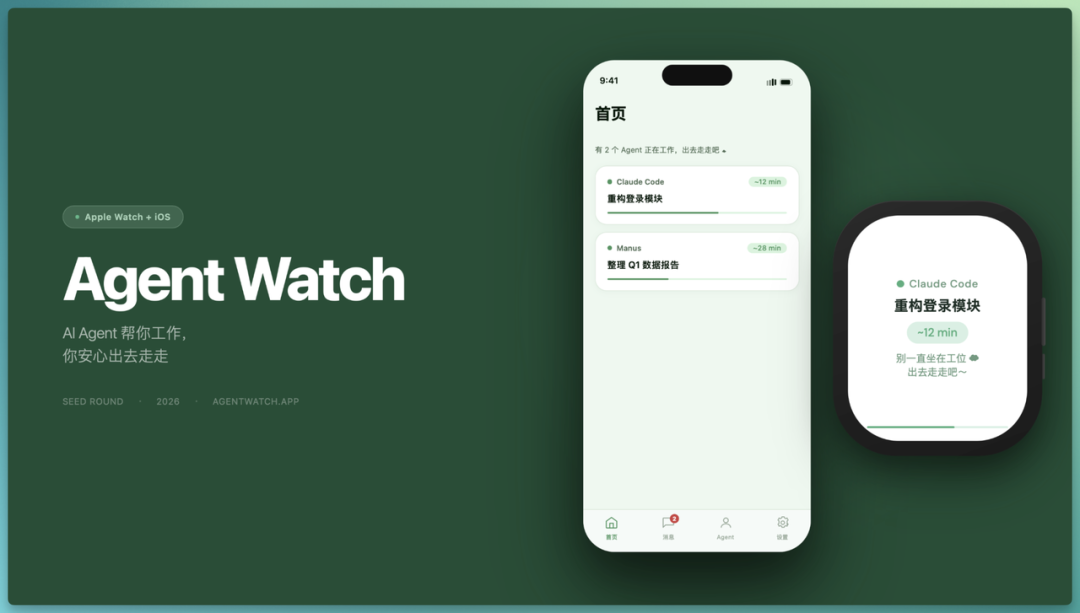
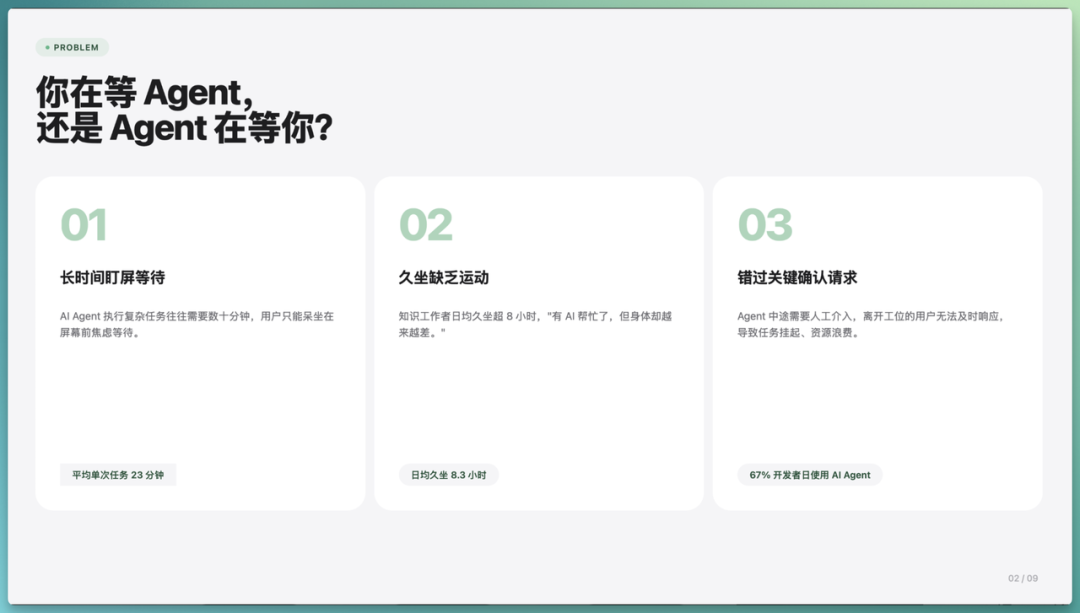
But the layouts were somewhat monotonous, slightly lacking in creativity.
And below are GPT Image-2's outputs:
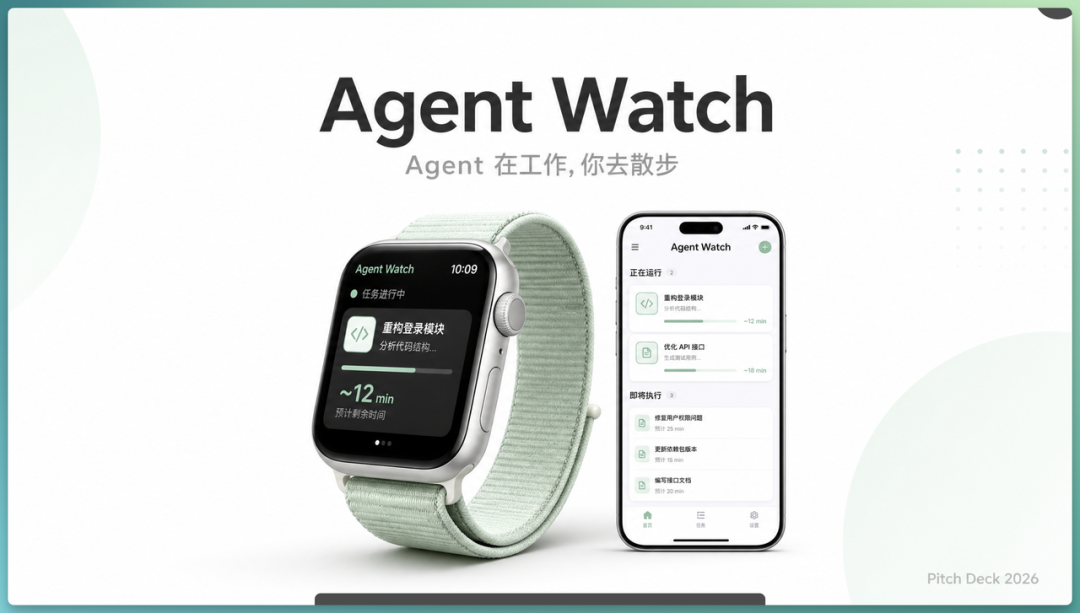
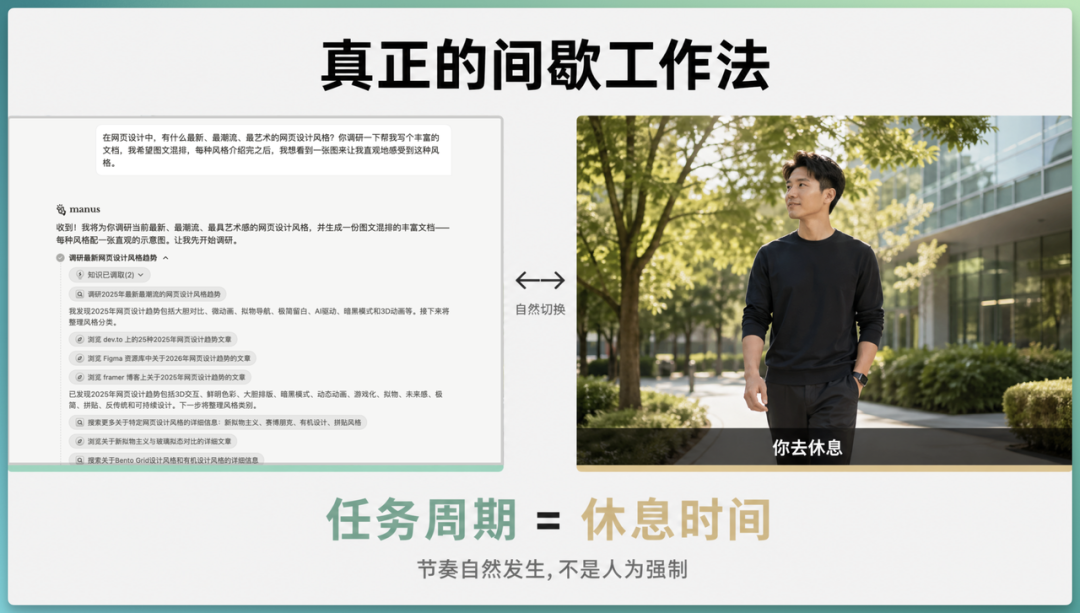
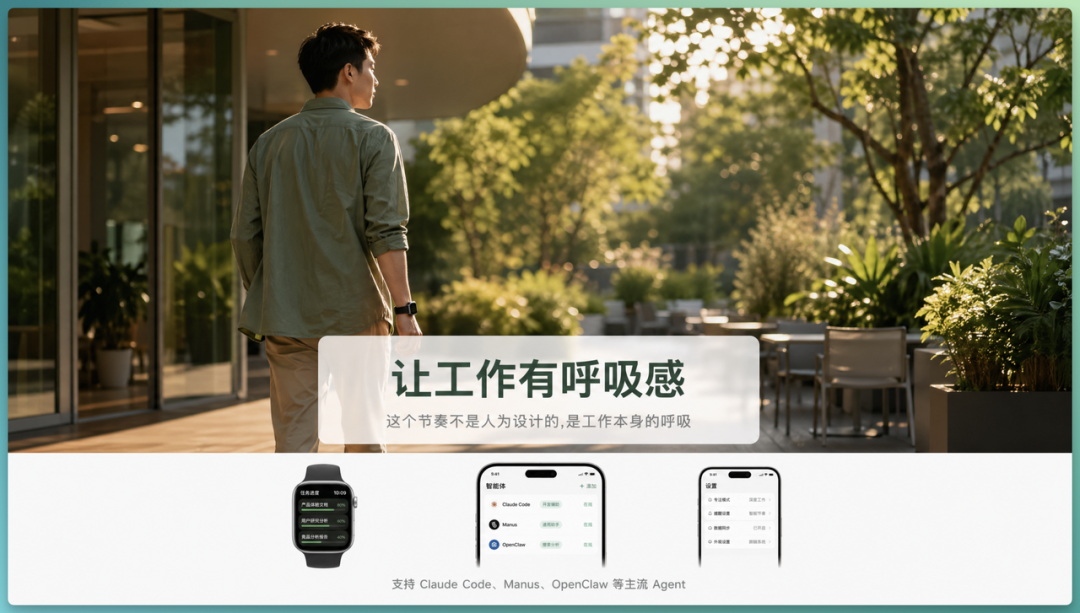
These images had similar issues as before: aesthetically pleasing layouts with solid text stability and information accuracy, but some errors in the product app screenshots that would require secondary processing in tools like Figma.
However, if the team has a designer with basic design software skills, swapping out product interface images wouldn't be much work — while the time saved on layout ideation would be quite significant.
After All This Testing, Here's Who You Should Use
Multimodal models currently lag behind Coding Agents in context understanding and management. So image generation models represented by GPT Image-2 are suited for one-off designs, while Coding Agents — since they generate code, which is fundamentally text — maintain excellent context continuity and highly consistent outputs.
At the same time, because they can smoothly hand off intermediate deliverables to Agents like Claude Code for next steps, Coding Agent paradigm products represented by Claude Design still hold the advantage across the flow from product prototype to launch to marketing.
However, when it comes to creativity, image generation models represented by GPT Image-2 still deliver stunning creative layout capabilities, performing very well in inspiration exploration or one-off design scenarios that don't require much context.
If you're a product founder with some Vibe Coding fundamentals and development knowledge, Agent products represented by Claude Design are more suitable for you.
If you come from a non-technical background but know basic operations in design tools like Figma, and your work leans toward e-commerce, advertising creativity, media, or similar content, GPT Image-2 and related design products built on this model are more suitable for you.
These Two Paradigms Will Eventually Converge
In the future, these two paradigms will inevitably intersect before long. The ideal workflow would be: during the creative exploration phase, design Agents use multimodal models to generate multiple images in different styles with strong creative direction, organizing them into mood boards to confirm direction with users and spark inspiration.
After design direction is confirmed, the Agent converges the design requirements, establishes components and design systems through coding, and completes the design stably.
No Agent product is currently collaborating with users in this way yet — this might be the next unicorn opportunity. Let's see which team will be the first to figure it out.