Crossing x Amazon Web Services: We're in Shanghai, Warming Up for "Tech's Biggest Night"
"Go fast alone, go far together"? No — in the AI era, a group goes both fast and steady.
"Go fast alone, go far together"? No — in the AI era, a group goes both fast and far.
 👦🏻 Author: Jingshan
🥷 Editor: Koji
🧑🎨 Design: NCon
 Those who follow the tech scene probably know that every year around December, Amazon Web Services throws a major event in Las Vegas: re:Invent.
We privately joke that it's the "Spring Festival Gala for developers."
This year, from December 1 to 5, the global cloud computing and AI extravaganza returns. As usual, Amazon Web Services executives (like CEO Matt Garman) will arrive with a slate of major announcements, while thousands of developers and architects pour into Nevada.
But before the "Gala" officially kicks off, there's a warm-up act.
It's called Amarathon.
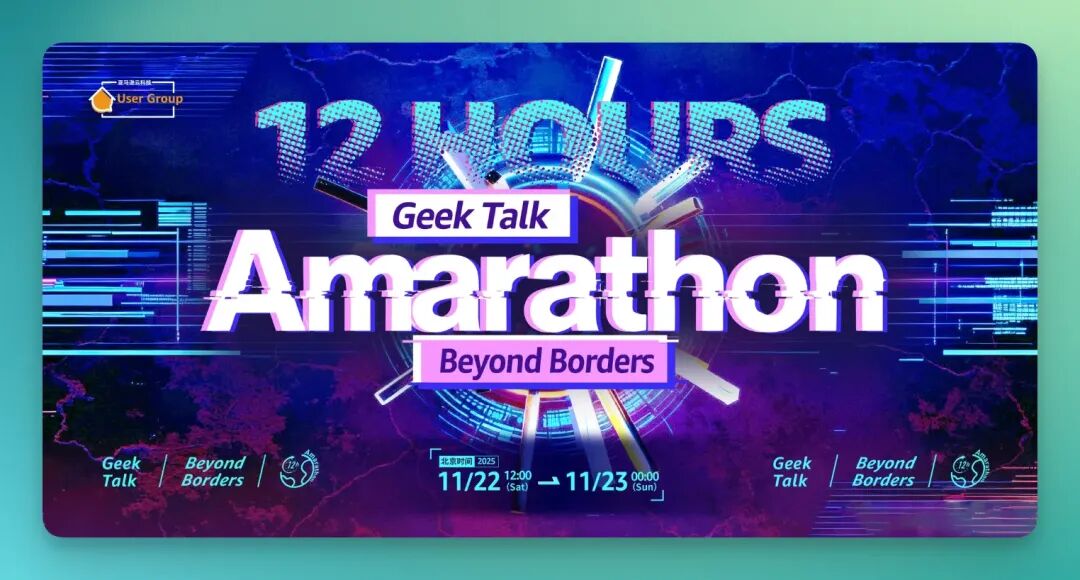
Amarathon — the name is a straightforward Amazon + Marathon portmanteau, meaning persistence, continuity. It's a 12-hour global livestream relay hosted by Amazon Web Services, officially titled the 12-Hour Amarathon Geek Talk.
But for the China stop, we felt that just watching a livestream wasn't enough — we needed to do something special.
So at Shanghai's AI Hacker House, Crossing and Amazon Web Services tried something new together.

On the evening of Saturday, November 22, nearly 100 developers from the Amazon Web Services community gathered, pizza in one hand, beer in the other, talking animatedly.
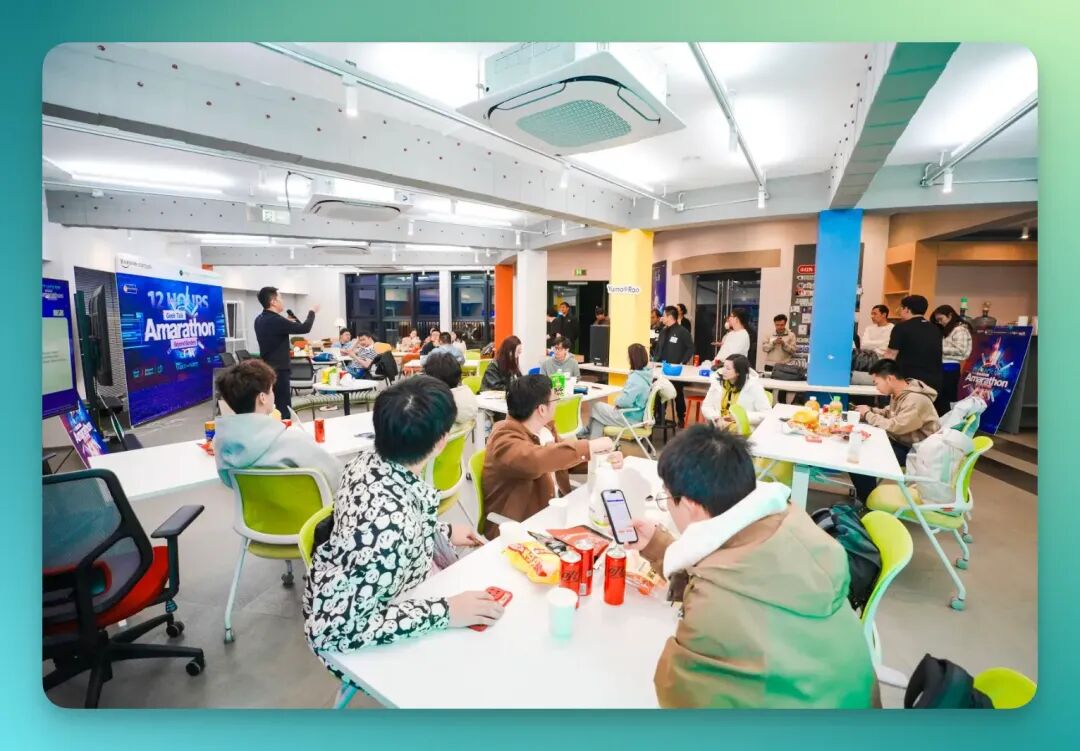
We organized two panels — one on "how to commercialize," and one on "how to keep going (entrepreneurial direction)":
🚥
Theme 1: The "Last Mile" of AI Commercialization: From Powerful Open-Source Engine to Profitable Flywheel.
Theme 2: Three Compasses for AI Entrepreneurship: Exploring the Unknown, Putting Down Roots in Deep Water, and Steering at the Forefront.
Since everyone was already here, why not sit down and talk face-to-face about the questions everyone in AI cares about most.
Who Was There?
Besides nearly 100 developers from the Amazon Web Services community, Koji, founder of Crossing and initiator of AI Hacker House, moderated both panel discussions throughout.
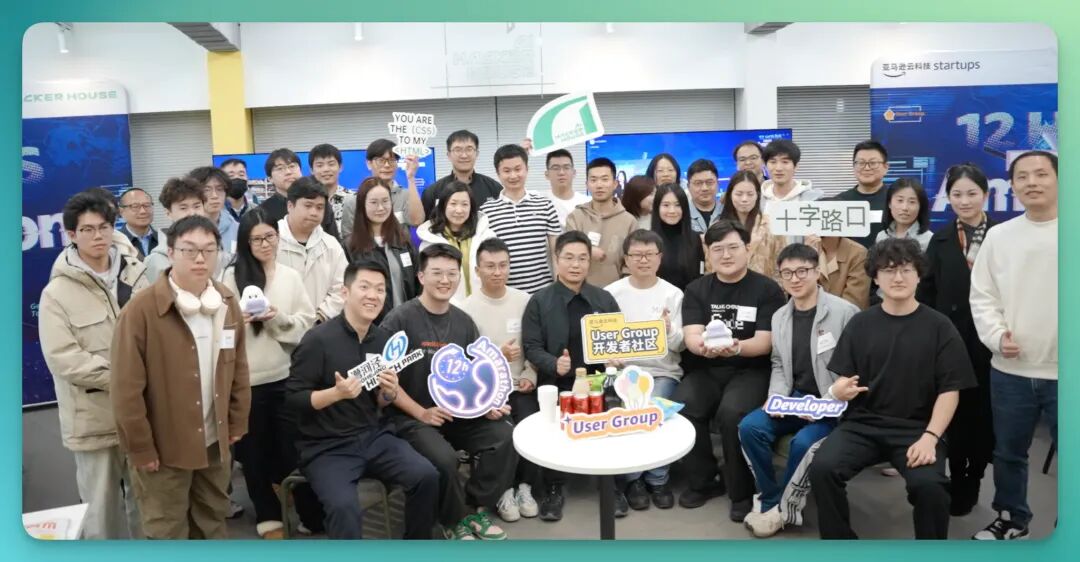
We also invited several friends currently on the front lines of AI entrepreneurship to join as guests for these two roundtables:
- Junchen Yan, Co-founder of Dify
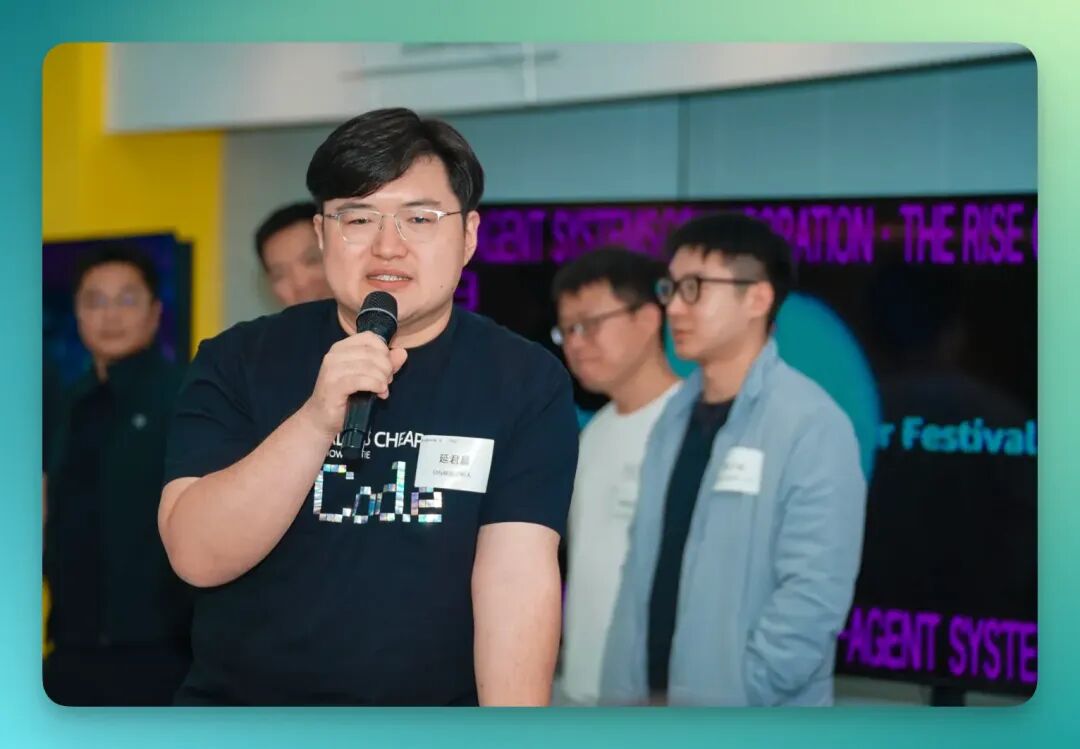
- Harry, Co-founder / COO of Nexad
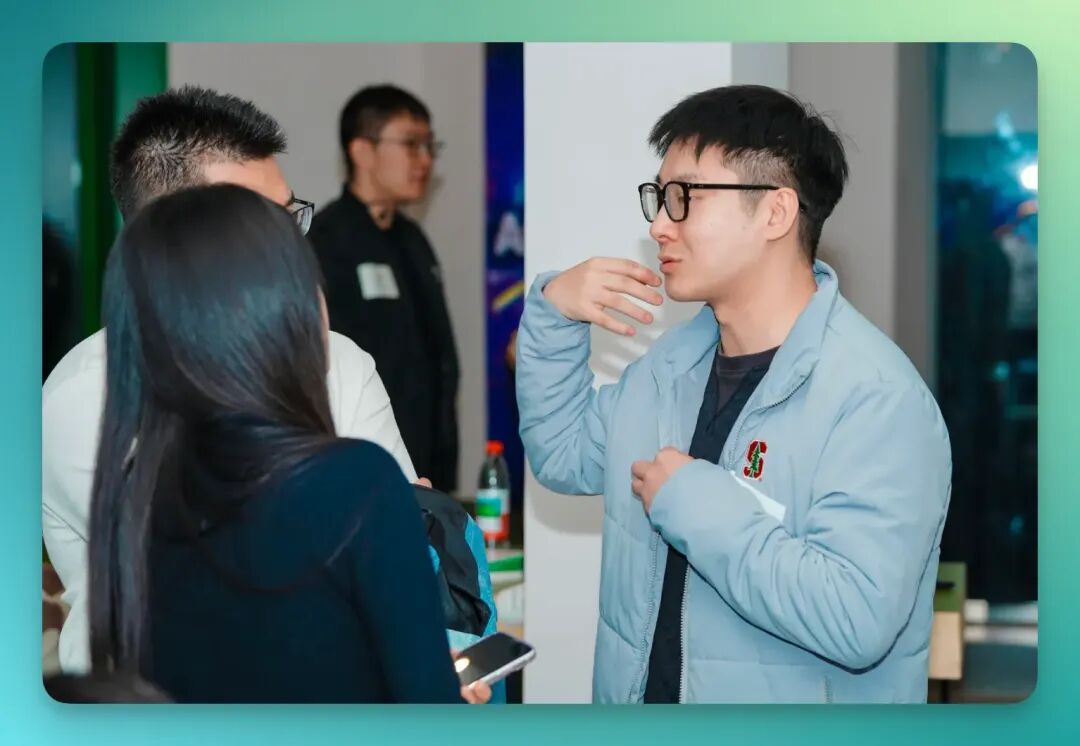
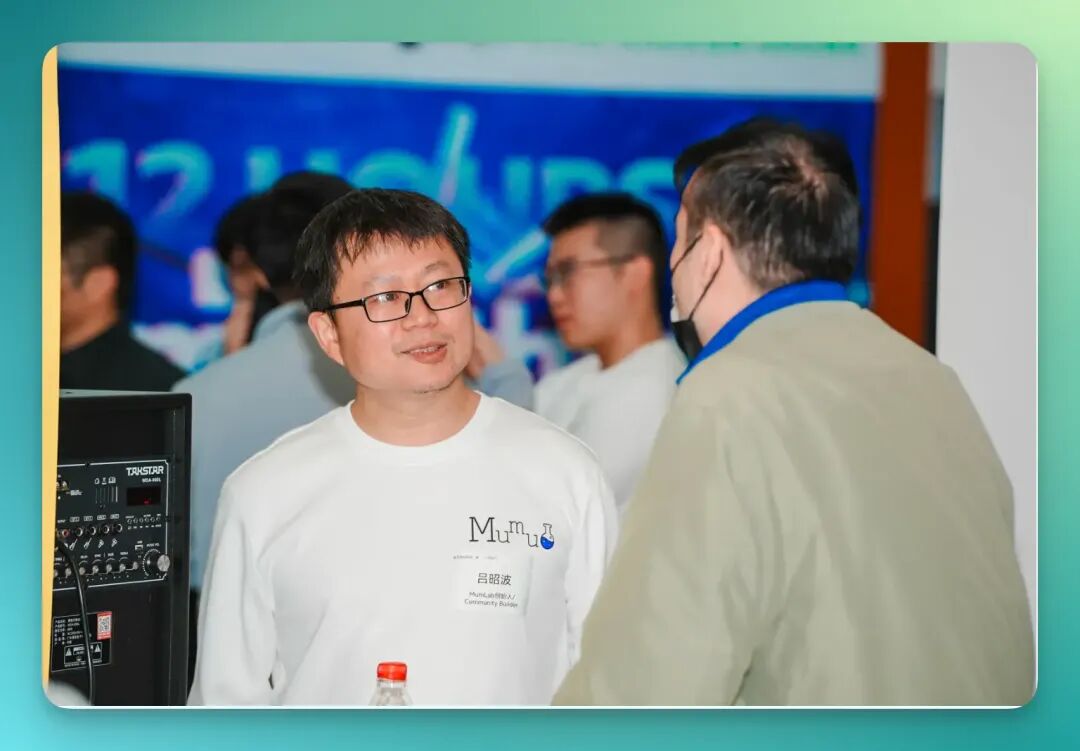
- Zhaobo Lyu, Founder of MumuLab, Amazon Web Services Tech Leader Cloud Blogger & Community Builder
- Zujian Guo, Senior Director at AlphaLifeSci

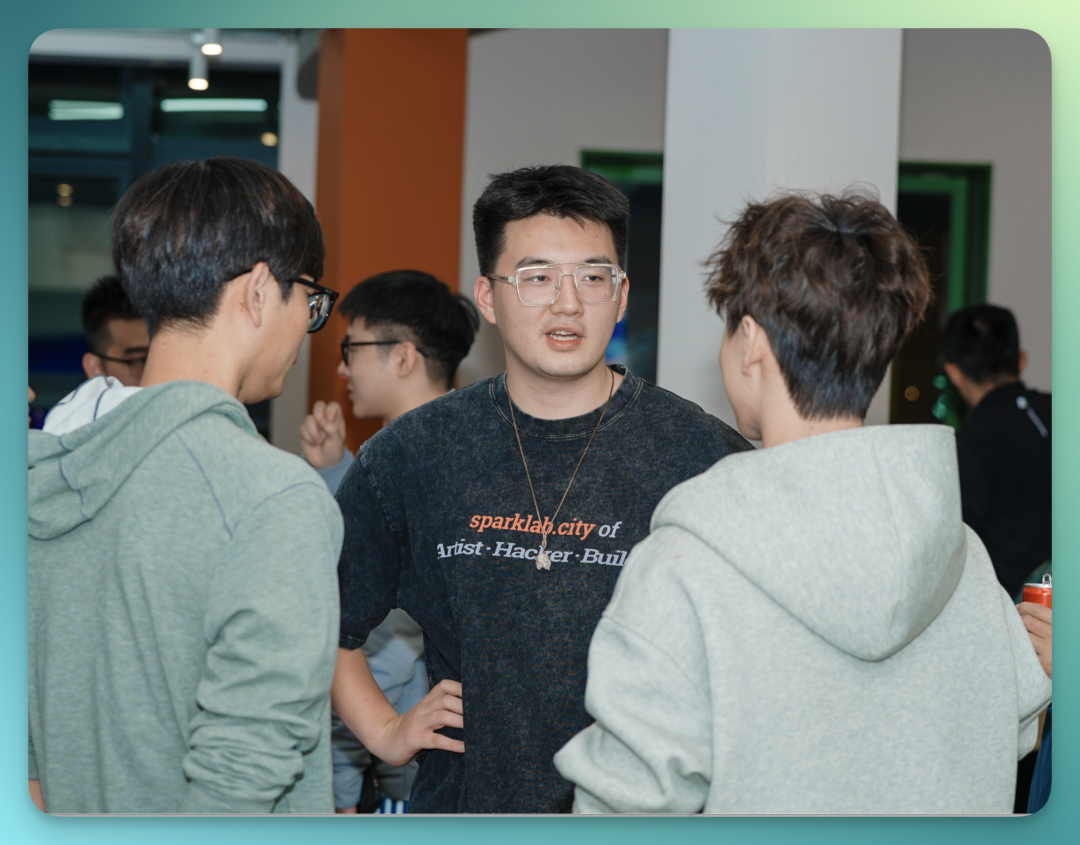
- Ryan, Founder / CEO of Spark Lab
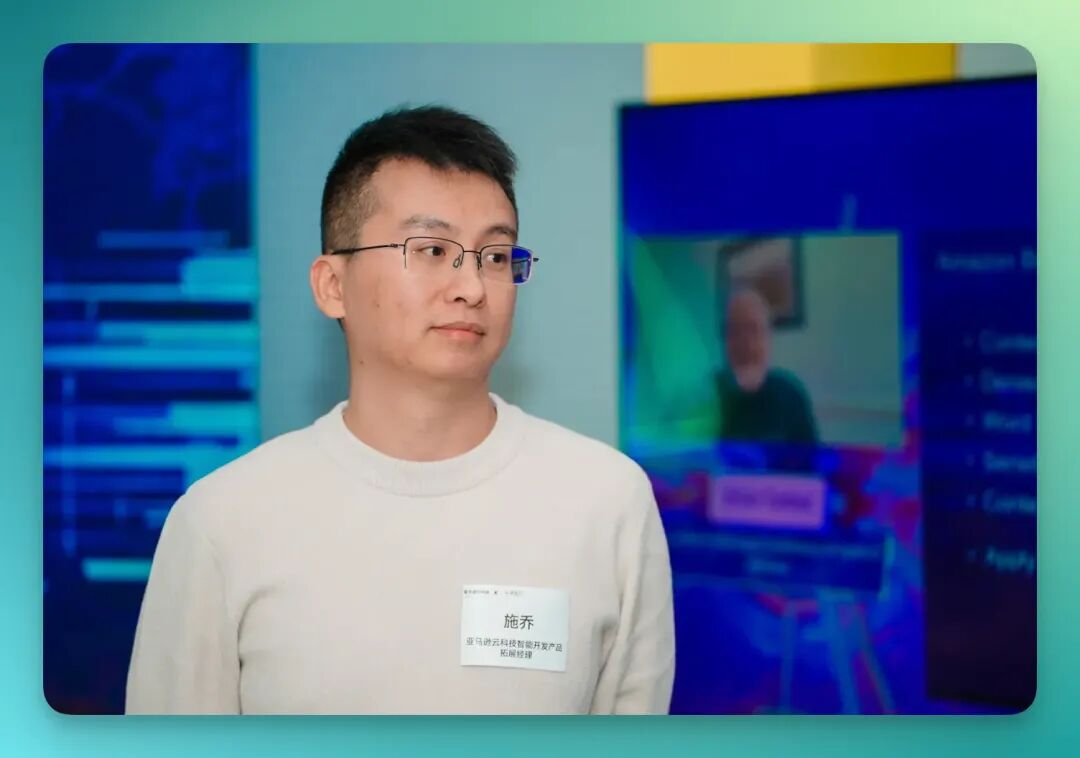
- Qiao Shi, Intelligent Development Product Business Development Manager at Amazon Web Services
Below, we've compiled and edited the on-stage conversations from both panels in depth.
Let's start with Panel 1.
This is also the question every AI entrepreneur is asking themselves heading into 2025:
Theme 1: The "Last Mile" of AI Commercialization: From Powerful Open-Source Engine to Profitable Flywheel.
In 2025, the AI startup track no longer resembles what it looked like two years ago — "capabilities first, revenue later." The more open the models, the cheaper the tools, the more accessible the compute, the more the real moat becomes commercialization itself.
The "last mile" doesn't mean "adding one more feature." It's about stitching technology to business operations, transforming a capable AI engine into a flywheel that can actually sustain a team.
In this panel, we tried to answer one question together:
When technology is no longer scarce, how does the AI flywheel actually start spinning?
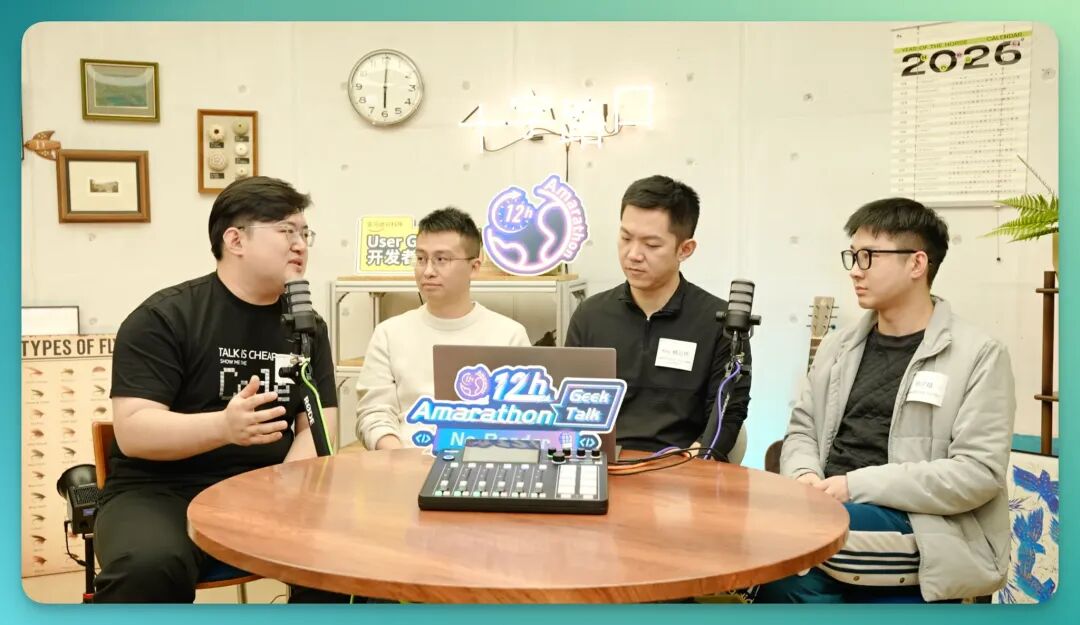
For this, we invited three guests:
- Junchen Yan, Co-founder of Dify
- Harry, Co-founder / COO of Nexad
- Qiao Shi, Intelligent Development Product Business Development Manager at Amazon Web Services
Dify: Making Code Invisible Between Intent, Collaboration, Production
👦🏻 Koji:
We're nearing the end of the year. Looking back at 2025, what key problems has Dify helped people solve?
🧑🏻💻 Junchen Yan:
That's a big question, but I want to start with something more fundamental: What is a developer, really?
There used to be a default assumption — a developer is someone who can write code. Now, with vibe coding and the first wave of genuinely usable tools, coding ability is no longer the hard threshold for being a developer.
Having ideas matters more.
I've been drawn to a phrase about model capabilities lately: making code invisible between intent. When someone has enough ideas, they can absolutely use various tools to build them — Dify, or other platforms. In this sense, the word "developer" itself is being redefined, becoming broader.
Back to Dify, what we're doing breaks down into three directions.
First, we're lowering the barrier to entry as much as possible.
Providing a visual canvas where anyone can start orchestrating agentic workflows — that's the starting point.
Second, we want people to collaborate on that same canvas.
This includes traditional developers, what we'd call "new-era developers," and colleagues who bring business requirements and data sources. Everyone can work together on one platform.
Third, and most critically, is taking the fruits of that collaboration and actually putting them into production.
Making them go live, making them available to real users.
So over the past year, our focus has concentrated on two words: collaboration and production. This is how we understand the paradigm of the next-generation developer platform.
Nexad: More AI-Native, Deeper Automation
👦🏻 Koji:
What kind of company is Nexad?
🧑🏻💻 Harry:
Today's panel theme is "the last mile of commercialization." Here's how I understand it: the first half of that last mile is about driving traffic — getting people to actually use your product. The second half is about converting those users into revenue without degrading the experience.
Our business basically revolves around these two stages.
Stage one is helping AI companies grow in a more AI-native way.
We offer a fully managed, AI-powered advertising service. You hand us your ads, and we handle everything end-to-end: ad creation, asset generation, image-to-video production, and automated post-launch campaign management. The goal is to give teams stable, intelligent ad performance without the headache.
On the distribution side, we cover major platforms including Meta and Google.
Stage two is pushing deeper into automation.
We've found that when you approach advertising with AI, you can do things that traditional methods simply can't. Like integrating multi-source data and automatically running large-scale A/B tests.
Or, once traffic lands on your homepage, having your website automatically run experiments across different versions.
In an era where AI can generate web pages rapidly, this kind of batch testing becomes feasible — and it further serves long-term traffic channels like SEO.
We package these capabilities into an integrated solution designed specifically for the new generation of AI companies.
Once you've acquired enough users, you hit the commercialization phase.
For example, if you're building an AI plug-in or conversational app, you need to offer a monetization method that delivers good experience and generates revenue. We can help products complete this monetization through AI-native advertising, striking a balance between experience and commerce.
One final note: we have teams and customers in both China and the US, and the foundation of this service is built on Amazon Web Services' standard servers and services in both regions.
Amazon Web Services: A Cloud Provider's Real Value Is Growing With You
👦🏻 Koji:
Returning to the theme of "the last mile of commercialization" — how can Amazon Web Services actually help AI startups land commercialization in practice?
🧑🏻💻 Shi Qiao:
I think when people look at a cloud services provider like Amazon Web Services, they need to step a bit outside the traditional impression. Don't just see us as a virtual server supplier, or a pure model provider. Yes, those are our most basic roles, but in serving AI startups, what we really want to do is: accompany teams through the complete startup lifecycle.
At the most foundational level, we want to make sure promising AI startup teams don't get stuck on basics like compute power or model access, preventing them from focusing on real innovation.
This is our most core, most fundamental support.
During the innovation and growth process, we also provide more targeted assistance — programs like the Generative AI Incubator to help teams accelerate product development. We can offer up to $100,000 in cloud credits to help startups save significant costs at critical stages.
From my perspective as head of Amazon Kiro China, startup teams from Pre-Seed through Series B can apply for up to 100 free Kiro Pro Plus accounts.
Kiro itself is a generative assistant that's very helpful for startup teams.
Once the product is built, the next step is Go-To-Market — commercialization.
Here, teams can fully leverage Amazon Web Services' partner ecosystem and our global sales network to reach potential customers, validate products, and open markets. These are capabilities that many startups find difficult to build on their own in early stages.
So we don't just want to be a basic cloud services provider. We want to truly walk alongside startup teams through every stage — from product birth, through growth, to commercialization.
From Amazon Web Services' perspective, our positioning goes beyond cloud service provider. We aim to become a "beyond cloud" long-term partner.
What Is the Highest Value Nexad Can Provide?
👦🏻 Koji:
When you introduce Nexad to clients, how do you describe the highest value you currently offer?
🧑🏻💻 Harry:
I think the core value is helping people acquire users, and then successfully monetizing those users.
On the acquisition side, we've integrated paid advertising and SEO into one unified flow. This is something traditional approaches simply can't do, but becomes possible with AI-powered automation.
For example, if you're a small advertiser, you can use our pure self-serve SaaS tool directly. You just give us a website link. Our AI automatically visits your page, understands your product's selling points, analyzes them, formulates strategy, and generates ad creatives. Once you confirm, you can launch immediately — your ads go live right away.
In the past, manual operation might require 24/7 monitoring, watching data, making optimizations. Now all of this is handled automatically by AI agents: all-day monitoring, real-time feedback, automatic execution of optimization actions. For small advertisers, you just pay a relatively low SaaS fee to enjoy services that previously only large agencies could provide.
For advertisers with bigger budgets and more complex strategies, we also have deeper AI services layered with human expert support, forming an advanced solution. The goal is to provide more data insights and higher efficiency than traditional agencies, ultimately delivering better results at lower cost.
Additionally, AI can extend into areas that traditional agencies can't touch at all. For example, we can now directly help you generate web pages. In the past, when advertising on platforms like Meta, it was basically impossible to treat website pages as a creative asset for rapid iteration.
But now you can. Your website can undergo frequent A/B testing just like image creatives, while automatically generating large volumes of page variations to capture traffic.
So when you run campaigns with us, it's not just replacing a traditional agency. It's truly doing things only possible in the AI era.
Dify: From RAG Canvas, to Trigger, to Human-in-the-Loop
👦🏻 Koji:
Has Dify launched any new features recently?
🧑🏻💻 Yan Junchen:
Actually, what Dify has been working on these past two years hasn't fundamentally changed. We've been focused on one core problem: how to let more people participate in AI application creation more easily, while collaborating more smoothly, and ultimately running in production environments.
Based on this direction, we've recently launched several new capabilities.
First, a visual RAG pipeline.
Why build this? Because everyone knows RAG itself is pretty tedious — multiple data sources, complex processing flows, and it often requires data engineers and business people to coordinate. There was always a lack of a visual, drag-and-drop tool where you could see the process in real time, so we built it. The feedback since launch has been good.
Second, Trigger.
AI has made breakthroughs in generation, reasoning, and autonomous execution. But there's a practical problem when enterprises deploy it: AI doesn't know when it should step in.
Traditional automation uses fixed "if-then" rules: sensor value exceeds threshold → send alert. But real-world scenarios are often more complex, requiring AI to make judgments based on context.
Trigger solves exactly this problem.
It lets AI automatically activate when specific events occur — factory sensor anomalies, system alert triggers, scheduled tasks reaching their time — then based on real-time conditions, reason out the optimal path and complete the intelligent orchestration of the entire workflow.
Simply put: past automation couldn't handle these cases not because "execution" was impossible, but because the "judgment"环节 relied too heavily on humans. Now AI can take over this part.
Third, human-machine interaction.
As automated scenarios multiply, a practical question emerges: when should AI run on its own, and when do you need human judgment?
Going forward, we'll introduce Human-in-the-Loop into workflows, making interaction between AI and humans more natural and more controllable.
These three features ultimately serve one purpose: making enterprise adoption easier and collaboration more efficient.
The "Office" for a New Generation of AI-Native Organizations
👦🏻 Koji:
In your observation, which teams using Amazon Web Services' various services have struck you as worth sharing? For example, any best practices, success stories, or interesting stories from customers?
🧑🏻💻 Shi Qiao:
Sure. Let me start with a story I observed about "enterprise AI empowerment." Because I lead Kiro's China business, I've interacted with quite a few startup teams. Our initial positioning for Kiro — most people would assume it's for developers and programmers.
But I later discovered that many enterprises hand it directly to product managers.
Product managers use it to write PRDs, connecting to internal systems through MCP; developers then pick up this information through MCP to do design and code generation.
One customer told me they've started treating this tool as an "AI-era workbench." That perspective really struck me — this was the first example of AI empowerment I witnessed.
The second example also involves product managers.
I visited a company that makes networking equipment. Network equipment configuration is complex, especially in domestic enterprise network environments. Previously, a product manager might receive hundreds of customer requests per year, but we all know perhaps 90% of these aren't requests that can actually be fulfilled.
After they distributed Kiro-like IDEs to product managers, the PMs started developing plug-ins themselves based on customer needs, directly addressing customer scenarios.
This produced several clear benefits:
First, customers no longer need to wait for the vendor's product team to initiate a project and schedule resources — what might have taken 1.5 months before can now be resolved quickly.
Second, product managers can iterate rapidly with customers, clarifying requirements more precisely.
Third, when they hand plug-ins to R&D, communication costs between development and product drop significantly.
Much innovation emerges bottom-up this way.
The second category of excellent enterprise practices I've observed is "don't reinvent the wheel." Use available infrastructure directly, whether on cloud platforms or tools like Dify. Focus energy on parts that truly generate user value, rather than spending time repeatedly building foundational capabilities.
So when people use Kiro today, there's a clear trend: beyond developers, more and more people without technical backgrounds are solving work problems through Kiro.
In a sense, this is also the "Office" for a new generation of AI Native organizations.
Next year's team might be 5 people + a swarm of Agents.
👦🏻 Koji:
Let's talk about re:Invent. Any launches you're particularly excited about this year?
🧑🏻💻 Shi Qiao:
I personally think this year's re:Invent will still have a lot of generative AI content.
If you look at Amazon Web Services's three-layer logic for Gen AI, the bottom layer is infrastructure — GPU, compute resources, and so on. So I'm going to "make a wish" here: I think there should still be some major updates on the compute side this year.
The second layer is the platform layer, the tooling layer. I've worked with many customers over the past year, and I've seen AI entrepreneurs building features in many different directions, but also more and more new scenarios emerging — security, auditing, and so on. So I'm also hoping re:Invent brings some new products or capabilities at this layer.
The third layer is the application layer. I have a judgment right now: this year, whether developers or enterprises, people generally still treat AI as an Assistant. But I think starting next year, this role might step up from "assistant" to Teammate — a true partner on your team.
Jeff Barr made a vivid analogy when he visited China last time. Amazon has always talked about "To be a team" — a team of 10 people, 12 people, that kind of scale. But he believes future teams will get smaller, maybe down to 5 or 6 people, with the rest of your members being your Agentic Teammates. I believe a lot of R&D in the application layer will unfold around this direction.
As for my most memorable moments at re:Invent, two stand out in particular.
The first was the launch of a service called Satellites. Simply put, it combines many ground stations with our data centers — if your application needs to interact with satellites, it can help you collect data and process it.
The second was a not-yet-fully-commercialized project called Amazon Kuiper, a group-level program. It's somewhat similar to Starlink.
Both of these deeply moved me because they made me rethink "cloud computing." We used to habitually understand cloud as EC2, S3, databases, networking — these foundational capabilities. But it's actually far more than that.
From AI innovation to space internet, the entire boundary is constantly expanding.
👦🏻 Koji:
As a previous Amazon Web Services award winner, anything Dify wants to share about re:Invent?
🧑🏻💻 Yan Junchen:
First, we really want to thank Amazon Web Services. We've benefited from them at many levels — from the most basic infrastructure layer, to marketing, to culture and organization — they've given us tremendous support.
We actually won 2 awards last year, so of course I'm making a wish this year too — hoping we win another one.
Speaking of products, I think capabilities like Bedrock and SageMaker that Amazon Web Services released over the past two years are particularly critical. Because what Dify does overlaps somewhat with these products. But for us, this is actually a good thing.
A track with only one player usually means two things: first, you'll be lonely; second, the direction might not be right either.
But now seeing Amazon Web Services also building "model-agnostic" toolchains, making AI development simpler and enterprise AI adoption easier — this actually gives us great confidence, and validates that our path is right.
On the other hand, we can also integrate with SageMaker and Bedrock, collaborate together, and help more Amazon Web Services customers use Dify better, and use Amazon Web Services products and services better.
So this year's wish is simple: definitely win another big award (laughs).
2026: Make AI part of life's details, make AI your partner, make AI help you earn money
👦🏻 Koji:
How about everyone sends a blessing to those of us building in the AI frontlines in 2026?
🧑🏻💻 Yan Junchen:
I want to return to what we've always been doing — pushing for AI democratization. I genuinely believe everyone should try these tools, whether it's Vibe coding, Dify, or other products.
Apply AI to one detail in your life or work, and you'll definitely see tangible returns.
🧑🏻💻 Shi Qiao:
I also hope that in 2026, everyone can use AI more naturally to improve efficiency in life and work. What I'm most looking forward to is that it won't just be your assistant, but can become your partner, creating value together.
🧑🏻💻 Harry:
Then I'll wish everyone this: whether it's 2026 or 2027, may AI help you do more work and earn more money for yourself. What we need to do is comfortably lie back on Dify workflows and Amazon Bedrock, letting countless AIs work for us.
Theme ②: Three Compasses for AI Entrepreneurship: Exploring the Unknown, Rooting in Deep Water, Navigating at the Forefront
If the previous discussion was about solving the "last mile" of commercialization, then this session, we attempt to return to the origin, to find the "first mile" of entrepreneurship: direction.
In the AI era, new models launch every day, and old tracks disappear every day.
So how should AI entrepreneurs find the "signal"?
To answer this question, we invited three guests:
- Lü Zhaobo, Founder of MumuLab, Amazon Web Services Tech Lead Cloud Blogger & Community Builder
- Guo Zujian, Senior Director at AlphaLifeSci
- Ryan, Founder / CEO of Spark Lab
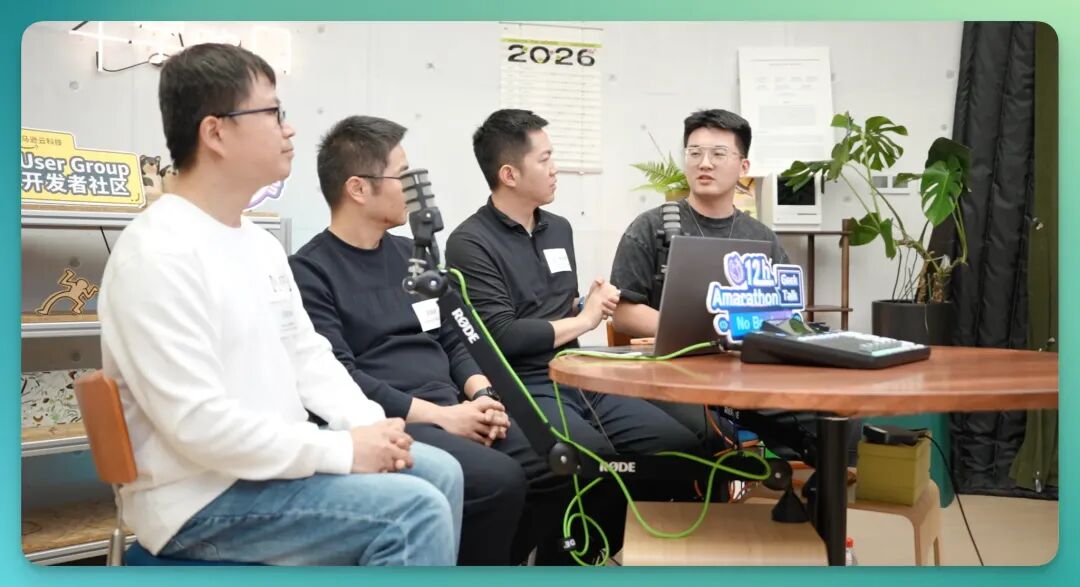
👦🏻 Koji:
Teacher Zujian, introduce yourself first?
🧑🏻💻 Guo Zujian:
I'd count as an entrepreneurship "veteran" in this field.
AlphaLifeSci was founded in 2020, focusing deeply on the life sciences industry. The company's goal is simple: to build a clinical data collection platform. Current products include EDC, automated document drafting, and various unstructured data auto-generation tools.
Over five years, there's quite a bit of entrepreneurial experience to share.
Our decision in 2020 to build clinical data products was also related to the environment at the time. That year the life sciences industry was at a peak in investment and financing, and we seized this timing to establish the company and launch our first product, EDC.
EDC stands for "Electronic Data Capture."
If you're not in this industry, you might not be familiar with this concept. Simply put, new drug development eventually reaches the clinical trial stage, and clinical trials generate massive amounts of patient data across various stages. Our platform helps pharmaceutical companies collect and manage this data more efficiently, with higher quality, and with full traceability, while also making it easier for clients to spot problems and find insights from the data.
But honestly, we set the bar a bit high for this product at the time — we wanted to build something somewhat "premium."
The feedback from the first wave of clients was actually pretty good, but later as the entire life sciences industry entered a downturn cycle from 2022 to 2023, our growth was also affected.
This year the situation has clearly turned around again, with innovative drugs becoming active once more, but those two years were genuinely difficult for our team. And it was precisely during that painful period that we began constantly searching for better opportunities in the next phase.
👦🏻 Koji:
Teacher Zhaobo, introduce yourself too?
🧑🏻💻 Lü Zhaobo:
Hello everyone, I'm Lü Zhaobo, from MumuLab, and also the founder of MumuLab. The main thing we've been doing recently is helping enterprises with AI transformation.
Many enterprises see the opportunity, and also see the guidance of national policy, and feel that AI can bring huge changes. When watching self-media promotion, AI seems capable of anything, but when they actually try it themselves, they find: this doesn't work well, that can't get done either, too many tools, too many solutions, very hard to choose.
So we specialize in helping enterprises with AI consulting and transformation, sorting these things out clearly, and finding solutions that truly fit enterprise deployment.
In this direction, we're actually still entrepreneurship newcomers, still constantly exploring and refining, and hoping to continue growing through this process.
👦🏻 Koji:
Ryan, introduce yourself too?
🧑🏻💻 Ryan:
Hello everyone, I'm Ryan, founder and CEO of Spark Lab. Spark Lab is a residency accelerator and also an entrepreneur community. We have a five-story, roughly 600-square-meter House in Shanghai's French Concession.
This cohort has 10 startup teams based here, and we'll accelerate together with them, refine products, and launch.
Micro-innovations Are Actually Easier to Win Customers
👦🏻 Koji:
Teacher Zujian, any曲折 stories in your entrepreneurial process?
🧑🏻💻 Guo Zujian:
Actually it's hard for a company to follow one path all the way through growth — we've experienced quite a bit of exploration.
At the time, we saw that in the clinical field, the final submission materials contain large volumes of documents required by laws and regulations, with relatively fixed formats. These were originally all written and organized manually, so we thought: could we use AI to improve production efficiency?
But this was 2022, before GPT emerged. We completely didn't anticipate the world would develop into what it is today. We chose Vibe technology at the time, and also built our own AI solution based on low-base models.
But in the end we encountered two very practical problems.
First, products built with Vibe weren't "editable enough."
If you're building an editing tool, the client's first reaction is: the editing experience needs to at least beat Word. But no matter what we did, we couldn't make it stronger than Word. This direction itself wasn't advantageous.
Second, rule-based models didn't understand the industry deeply enough.
The clinical ecosystem is incredibly complex, and clients' data systems run deep. If the model doesn't truly understand the industry, many workflows become nearly impossible to build out, and accuracy suffers.
We got lucky: GPT-3.5 launched at the end of 2022.
We evaluated it and immediately decided to pivot to the GPT route. When Microsoft released Copilot shortly after, we quickly migrated our entire product into the Word and Office ecosystem, using GPT to enhance document generation and document intelligence capabilities.
This move worked extremely well. And most critically: we didn't change our clients' existing workflows — we simply brought AI into the environments they already knew.
That made adoption much easier.
Looking back, entrepreneurship always starts with a small idea. We initially wanted to build a big platform too. But platforms, unless a client is starting from zero, are a hard sell to a century-old pharmaceutical giant — convincing them to buy some "big platform" outside their existing systems just doesn't work.
Later we discovered: micro-innovations are actually easier to sell to clients.
Slipping into one small point in their existing process, making efficiency slightly better and experience slightly smoother — that's more tangible than presenting a massive platform.
Too Many People Want to Build Platforms; Too Few Solve Real Problems
Koji:
Zhaobo, how does what you're seeing with clients compare to what Zujian described about life sciences customers — similarities and differences?
Zhaobo Lü:
I'm seeing some notable differences.
Let's start with to C. Many entrepreneurs have plenty of ideas. Everyone wants to build a platform, wants to make something universal, wants to change the world. I went through that phase myself. Eventually I realized: I can't change the world, so I'll start by changing myself.
Now with Vibe Coding, it's easy to spin up a demo — five minutes to get something running, two days for an MVP. But actually building the product and getting real users? That might take six months and still not be done. Often the problem is our thinking is too big, not grounded enough, not solving users' real problems. Then the idea may not be right.
Now for to B.
Most enterprises don't care about your dreams, don't care how big a platform you want to build. They have one question: Can your product solve my actual problem?
If it can, they'll use it, they'll push it internally, they'll even pay for it. If it can't, no matter how good the idea sounds, it's meaningless.
So whether you're starting up or shipping product, it always comes back to one thing: solving the client's most practical problem.
Infra Gets Thicker, Applications Go Deeper, Hardware Gets Real
Koji:
At Spark Lab, you must interact with tons of AI founders, lots of daily conversations. Everyone says "one year in AI equals ten years in the real world." What interesting new shifts have you seen in 2025? I'd love to hear.
Ryan:
We've been following this space extremely closely since ChatGPT launched at the end of 2022. By 2025, we're seeing three interconnected directions where change is especially pronounced.
First, AI infrastructure, particularly Agent infrastructure.
We're very focused on "Make Something Agents Want," or "Make Something AI Want."
Meaning: build the infrastructure layer that Agents actually need — things like Memory, Context, and similar capabilities.
As this infrastructure matures, enabling richer context collection and more robust memory systems, it naturally creates many new application opportunities.
Second, applications are truly entering an explosive phase.
Many application ideas were already being discussed in 2023, but the technology wasn't mature enough then, and results weren't good enough.
By 2025, especially from the beginning of this year, the application explosion is visible to the naked eye.
This directly connects to my first point: Agent infrastructure had to mature to support more complex applications running effectively. So we're especially focused on opportunities here.
Third, China's unique advantages in Physical AI (AI + hardware).
Domestically, particularly in Shenzhen, supply chain capabilities are extremely strong.
Previously we might have only seen companies like Plaud that had already reached PMF in this direction, proving that the market and opportunity are real. In the past two years, I've seen more and more teams, both domestic and from Silicon Valley, coming to Shenzhen to run supply chains, set up R&D teams here, and explore new AI hardware categories.
These three directions are interconnected, and they're what all ten teams in this cohort of Spark Lab are working on.
From infrastructure to applications to the fusion of AI and hardware, we're genuinely feeling the entire industry accelerate in 2025.
Vertical Domain Know-How Is Always First
Koji:
Zujian, you've been in life sciences all along — this field's depth is truly extraordinary. I'm curious: did you have a life sciences background? And how do you see the difference between "AI + vertical domain" versus "vertical domain + AI"?
Zujian Guo:
My undergraduate degree was in medicine, my graduate degree in computer science — so a cross-disciplinary combination.
In life sciences, my strongest personal takeaway is: to build a product that truly lands, vertical domain know-how is always first.
Many colleagues on our engineering team come from Google and Microsoft; our engineering capabilities are arguably among the strongest in startup land. But when we first started in this direction, we still got bloodied.
Because when you don't understand the industry deeply enough, many "efficiency improvements" you build aren't what clients actually need. You think you're boosting efficiency, but their real pain points may be completely different.
Pharma also has its own unwritten rules. People in the industry understand each other with a word or two. But without that background, your innovations may be seen as "non-compliant" or even "nonsensical."
Their systems are built over decades, even centuries of accumulation. Without understanding that, it's hard to truly hit the mark.
So for entrepreneurship in deep verticals, my advice is: you don't necessarily need the industry background yourself, but someone on your team must understand the industry.
Especially the Chief Product Officer — they're the true soul of the company. They need to be able to abstract the industry clearly, to see the future, not just stop at what's in front of them.
Otherwise what you build may just be scratching the surface.
Scratching the surface can still make money, but it's hard to build a moat. Once that point becomes profitable, new companies rush in immediately and your costs spike overnight.
Looking back at our company's journey, from our initial product to where we are now, my biggest realization is: understanding the vertical domain really is first.
It saves you from an enormous number of detours.
In the AI Era, a Group Moves Both Fast and Steady
Koji:
Zhaobo, you're also an Amazon Web Services Community Builder — you've contributed quite a bit in that community. Could you introduce what role you play there? And I'd love to hear what you're looking forward to at re:Invent this year.
Zhaobo Lü:
I'm personally quite looking forward to whether there will be new AI-direction products that can truly help teams like ours who are undergoing AI transformation.
Besides being founder of MumuLab, my other identity is Amazon Web Services Community Builder — essentially a community volunteer. For events like this one, I'll also be organizing alongside more than thirty speakers globally, bringing good technology to more people, sharing it out, evangelizing it. Whether it's livestreams or offline events, chatting about tech with everyone — I always find it genuinely enjoyable.
There's a saying: "One person goes fast, a team goes steady." But in the AI era, I think a group goes both fast and steady. Because change is too rapid — major model releases happening at midnight every day, you simply can't keep up alone.
So exchange between teams and communities becomes crucial. Like just now outside, we saw nearly a hundred people chatting — whoever has a new method, whoever tried something new, shares immediately. Everyone iterates and grows together, and that's where community value shows.
Amazon Web Services Community Builder is also such a platform, and we collaborate with Crossing on events too. Many university students, many young people are trying new directions in all kinds of ways — having a community where people accompany and grow with each other, I think that's especially meaningful.
So I'd also like to invite everyone to look forward to re:Invent from December 1st to 5th this year — the conference should have plenty of noteworthy new content.
Startups Don't Lack Ideas; They Lack the Package That Gets Products Running
Koji:
What are your deep impressions of re:Invent? What stories has past re:Invent brought you? And what special hopes and wishes for this year?
Ryan:
I can start with one. My connection with Amazon Web Services was quite serendipitous. Years ago, when I was working on another startup project, I participated in an Amazon Web Services-sponsored hackathon and ended up winning an Amazon Web Services award — roughly 100,000 RMB in Credits.
For our team at the time, those Credits were literally life-saving. Early-stage funding was tight, and we couldn't afford many basic services. That support from Amazon Web Services really kept us going for a while.
What we were doing then had nothing to do with AI — it was more using cloud as foundational infrastructure. By 2025, more and more teams are now doing things strongly AI-related.
Since we're ourselves doing startup acceleration, I genuinely hope Amazon Web Services can introduce some dedicated startup packages — bundling cloud services, AI-customized GPU compute, infrastructure, and other resources into a toolkit that lets new teams launch faster.
Also, as a Builder in the community myself, I think Amazon Web Services's community ecosystem genuinely makes the entire entrepreneurship environment more vibrant.
Koji:
Zhaobo, as a Community Builder, could you briefly introduce Amazon Web Services's programs for startup teams? You should know this better than any of us.
Zhaobo Lü:
Actually Amazon Web Services doesn't just have hundreds of products and services — in its orientation toward developers, especially startup teams, it also provides extremely extensive and substantial support.
We just mentioned the startup direction too. Whether you've just got an idea or already incorporated, you can reach out to Amazon Web Services. They not only provide all kinds of cloud resources to get your business running fast without worrying about infrastructure, but also offer many startup-related services that connect you to valuable resources and people.
This part is actually crucial.
Amazon Web Services has hundreds of services. You can absolutely start with just the free tier, or run on a few dollars' worth of EC2. Your application is lightweight in the early days — no need to invest massive time and cost building infrastructure. Once your business takes off, Amazon Web Services can help you scale through various services.
From underlying batch computing and deep learning, to writing code with Kiro today, to model training with Bedrock — it's all ready to go.
Put simply, Amazon Web Services has laid out all these tools. All that's missing is for you to kick off your own project and actually start building.
In the AI Era, Doing Your Own Thing Well Is the Steadiest — and Fastest — Way to Build a Startup
Koji:
2026 is almost here. To wrap up, please share a wish. In this new AI era, what do you each hope for?
Zhaobo Lü:
I just started my own company in 2025, so my biggest hope for 2026 is to truly find my direction, go deep and steady, and help more enterprises profit from AI transformation.
I also hope more entrepreneurs and companies can find their own Self-Attention, just like that phrase on the wall — "Attention is all you need."
In 2026, focus on your core strengths, solve the problems you truly want to solve, and achieve the goals you want to achieve.
Zujian Guo:
I'm still quite optimistic about 2026. I think AI is actually still in a very early stage. What I'm most looking forward to is AI continuing to push forward in vertical domains, especially around Agents, so that teams actually building with AI can generate real, tangible returns.
I also wish friends here and online can find their own track in 2026 and stick with it.
And of course I hope our company keeps moving forward in this space — welcome to connect with us more going forward.
Ryan:
Everyone's saying 2026 or 2027 might bring a big explosion of AI applications. I'm very much looking forward to it too.
I hope 2026 brings more interesting, fun, genuinely playable products. Whether it's our team or Builders at home and abroad, I hope we can all pull off more things that make people go wow.
This Amarathon was hosted by the Amazon Web Services User Group community — a global community of developers with deep passion for technology, covering 18 cities in China. For more fun online and offline events, follow their WeChat official account.
🚥
If re:Invent is the "Spring Festival Gala" of global cloud computing and AI, then tonight's gathering in Shanghai feels more like a pre-dinner drink among developers before the "New Year's Eve feast."
Whether it's the 100-plus folks here in Shanghai tonight, or the global developers connected through Amarathon, everyone is doing the same thing: seeking certain code, certain delivery, and certain value amid massive uncertainty.
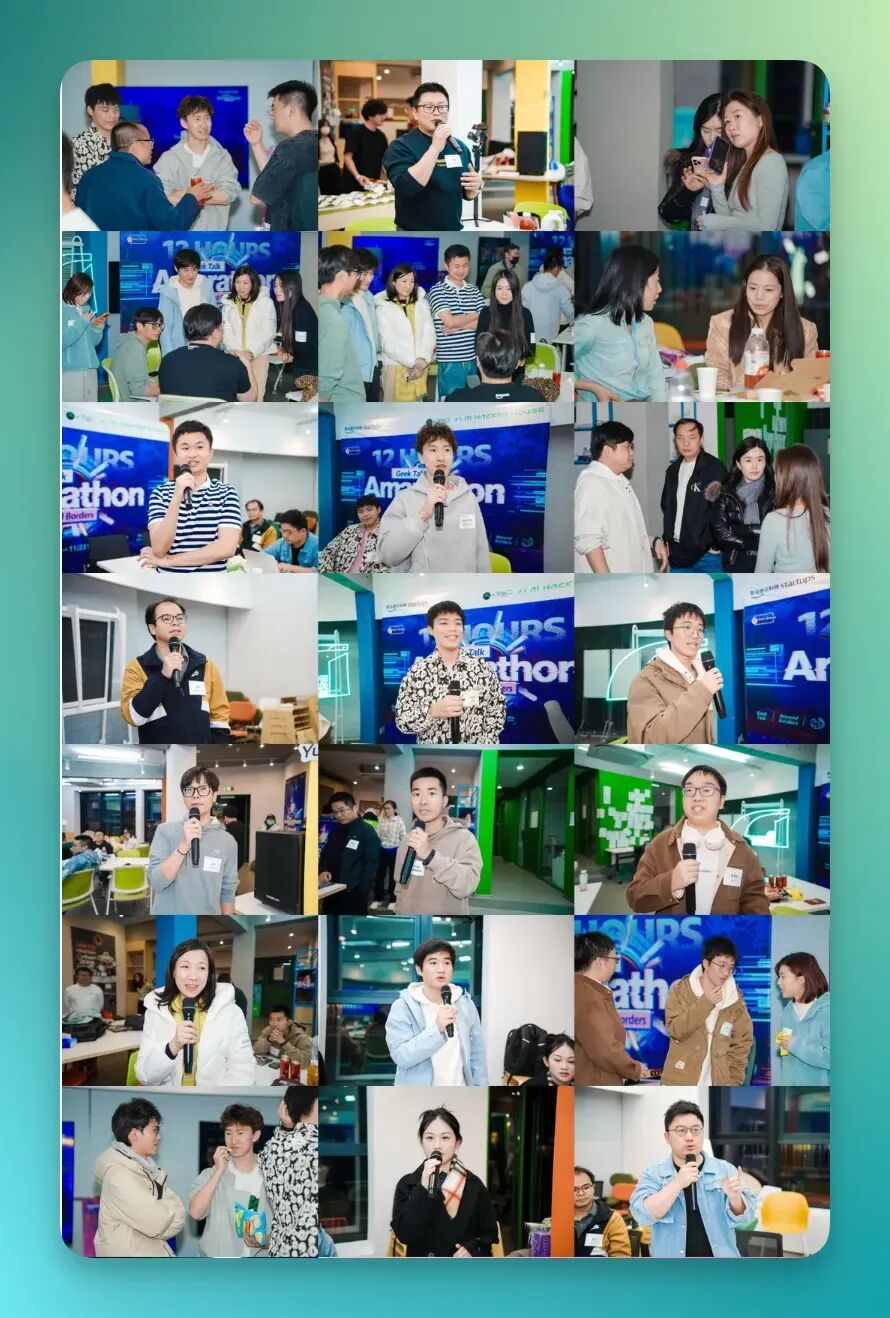
As Zhaobo from MumuLab reflected on-site:
"People used to say: one person walks fast, a group walks steady. But in the AI era, I think it's a group that walks both fast and steady."
Coming up, December 1–5, Amazon Web Services re:Invent officially begins.
But before that, it was great to be in Shanghai, drinking beer with everyone and chatting about the future.
See you at re:Invent.