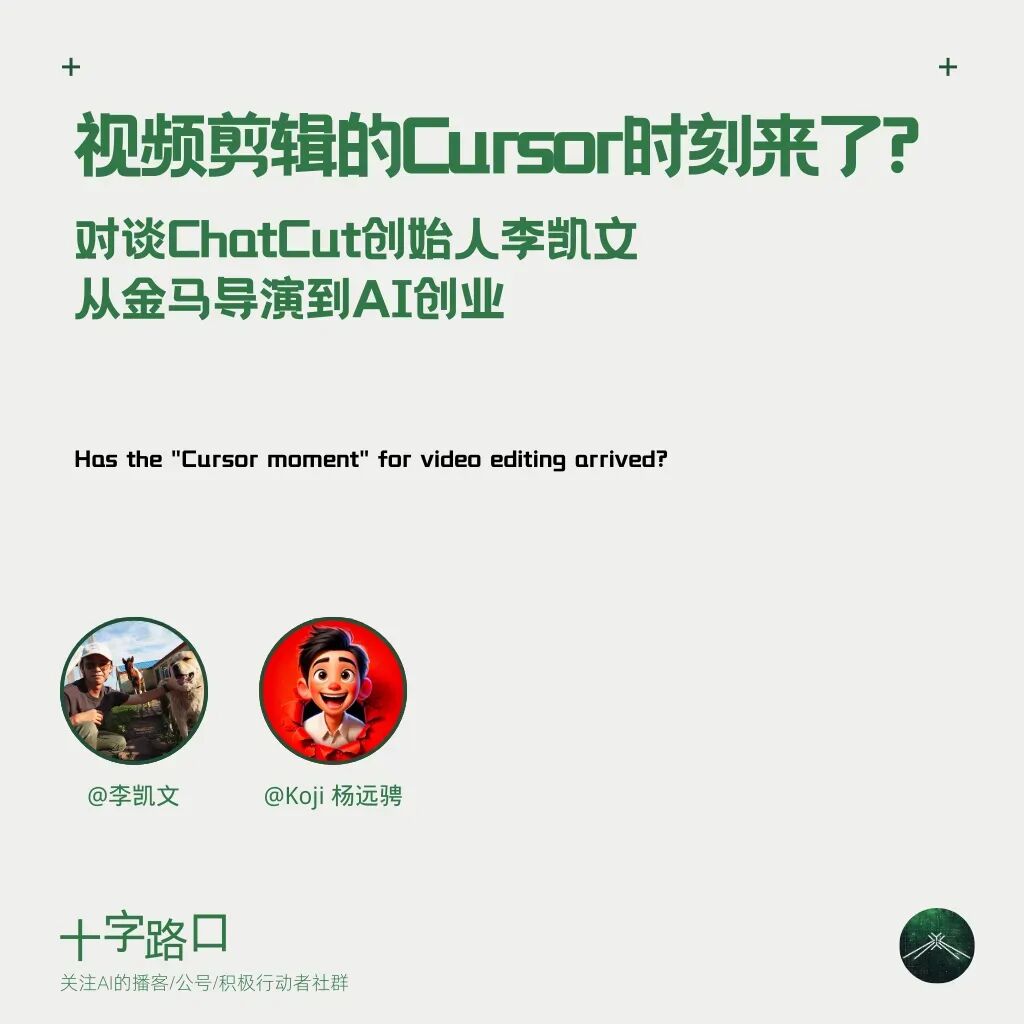
Is the "Cursor Moment" for Video Editing Here? | A Conversation with ChatCut Founder Li Kaiwen: From Golden Horse Director to AI Entrepreneur

It takes a lot of reason, but it also takes a lot of feeling.
It takes a lot of reason, but also a lot of feeling.

👦🏻 Podcast interview: Koji
🥷 Edited by: Crossing
🧑🎨 Layout: NCon

🚥 Will Video Editing Have Its "Cursor Moment"?
After programming was redefined by tools like Cursor and Claude Code, a harder and less discussed question has emerged: will creative workflows, especially video editing, reach a similar inflection point?
This week on Crossing, our guest is Kevin Li, founder of ChatCut. Before becoming an AI entrepreneur, he was a middle schooler selling bootleg CDs in Anshan, a prodigy at the Rhode Island School of Design, and an advertising and documentary director whose short film was nominated for a Golden Horse Award. He's shot commercial ads and edited vast amounts of unscripted, deeply chaotic footage that demanded finding order slowly, in real time.
This experience gave him a distinctly non-mainstream perspective on "AI + video."
While most are betting on AI-generated video, Kevin insists on "not generating a single pixel"; while most AI video tools target professional editors, he chose to serve people who "aren't editors yet"; while most founders talk about models and algorithms, he talks about "alchemist culture" and "the hand of God."
Behind these seemingly counterintuitive choices lies an entirely new framework for thinking about creative tools in the AI era.
🎬 This is Crossing's first experiment with a new video podcast format.
For this episode, we didn't sit across a table. Instead, we split the conversation into two continuous scenes:
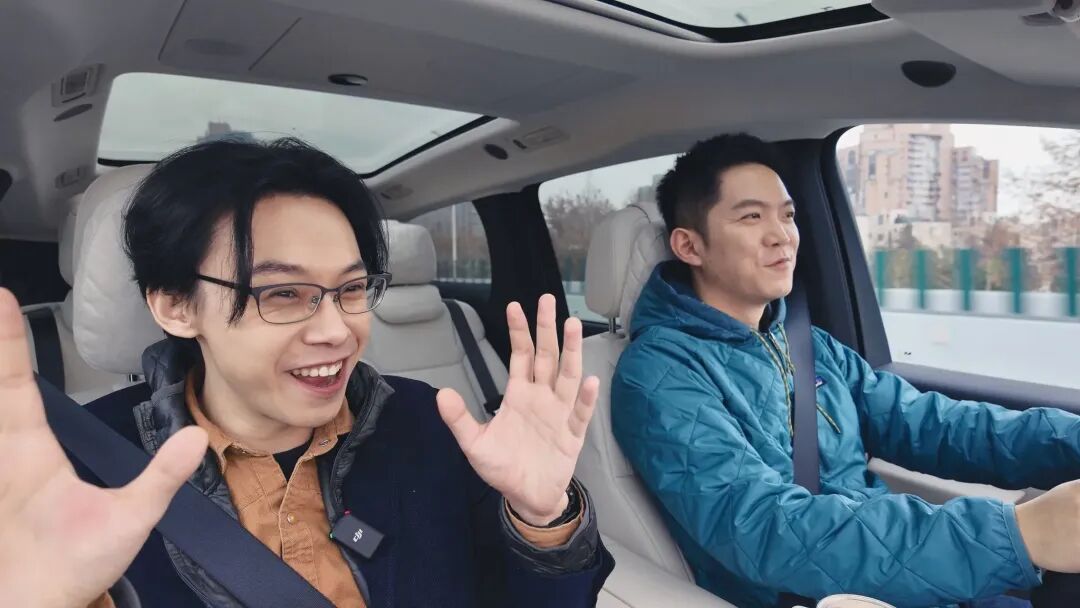
Part one: Kevin and I drove to the suburbs together — me at the wheel, him in the passenger seat, talking as we went, for about an hour;
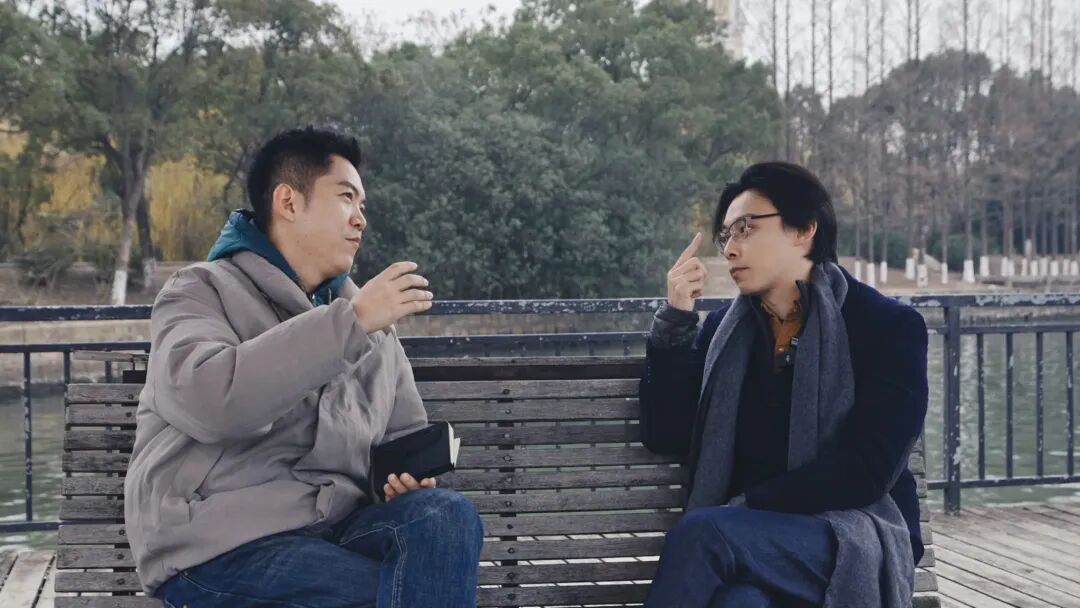
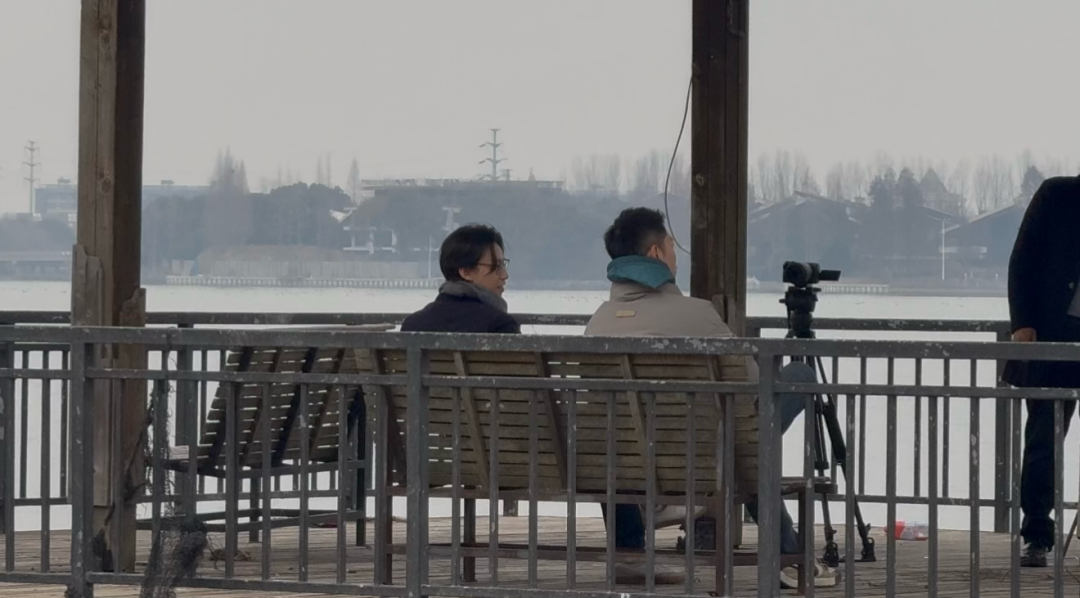
Part two: We arrived at a lakeside suburb where he once spent a year in retreat, sat down in a pavilion on the water, and continued the conversation.
Listen on WeChat:
Listen on Xiaoyuzhou:
🎬 The video podcast is also available on Koji's WeChat Channels, Xiaohongshu, Bilibili, YouTube, and other platforms.
Since the full interview is quite long (16,994 Chinese characters), here's the table of contents:
🟢 Rapid Fire: Age, alma mater, MBTI and zodiac sign, one-sentence intro to ChatCut, funding status, team size, pre-startup experience
🟢 Leaving the City Center: The Hand of God Pushes You to Build Your Own 0→1
Suddenly pushed to a fork in life's road.
🟢 The First Investor
A VC's value isn't in being "smart" — it's in making you feel like you can be great too.
🟢 Product First Principles: Most Editing Actually Happens in a Word Document
🟢 Early Adventure Muscle: From Anshan to Kent, Then RISD
🟢 Director vs. CEO: A Film Set Is Like SWAT, a Startup Is Like Long-Term Investing
Film is a military operation; a startup is compounding people as assets.
🟢 Fundraising Methodology: Find Chemistry, Not the Perfect Pitch
🟢 Life Leverage: Having Something to Do Is the Greatest Wealth
Wealthy people envy you not for the money, but because you have a "thing" worth pouring yourself into.
🟢 Vision: Stop Reinventing the Wheel, But You Have to Go Through the Process of Reinventing It
The future isn't "disrupting the editor" — it's making AI an editing assistant that works above the editor.
🟢 The Hardest Problem Right Now: Where Does Style Come From?
"Good-looking" has no bug to test, so how does AI learn style?
🟢 Key Decision: Don't Generate Pixels
The world has an AI revolution every day, but the editing in videos people watch on the subway hasn't changed one bit.
🟢 Technical Barrier: Context and Multimodality Haven't Reached "Editable" Maturity
🟢 Why Won't Anyone Take "God's Job"?
Finding that simple recognition of "yeah, this works."
🟢 Don't Chase "Absolutely Correct" — Cultivate "Good Habits"
🟢 Model Dividends
🟢 "People Who Do It for Love"
🟢 Film Won't Disappear

Rapid Fire
👦🏻 Koji
I'm Koji. This week on Crossing, we're recording a podcast while driving. This week's guest is different from our past ones — he's Kevin, founder of ChatCut.
Why is he different? He's spent the last decade working as a director, and an exceptional one at that. His first short film, Seed of Sin, was nominated for a Golden Horse Award.
Let's start with rapid fire. Kevin, how old are you?
🧑🏻💻 Kevin
Born in '92.
👦🏻 Koji
Where did you go to school?
🧑🏻💻 Kevin
Rhode Island School of Design.
👦🏻 Koji
Your MBTI and zodiac sign?
🧑🏻💻 Kevin
I took the MBTI a long time ago, it's not accurate anymore, so I'll skip that. Zodiac sign is Pisces.
👦🏻 Koji
What do you think your MBTI is now?
🧑🏻💻 Kevin
INTP.
👦🏻 Koji
Describe ChatCut in one sentence?
🧑🏻💻 Kevin
Edit videos by chatting.
👦🏻 Koji
Current funding status?
🧑🏻💻 Kevin
Just closed a seed round of around ten million RMB.
👦🏻 Koji
Revenue and profit situation?
🧑🏻💻 Kevin
Rather not disclose.
👦🏻 Koji
Current team size?
🧑🏻💻 Kevin
Ten people.
👦🏻 Koji
One sentence on what you were doing before this?
🧑🏻💻 Kevin
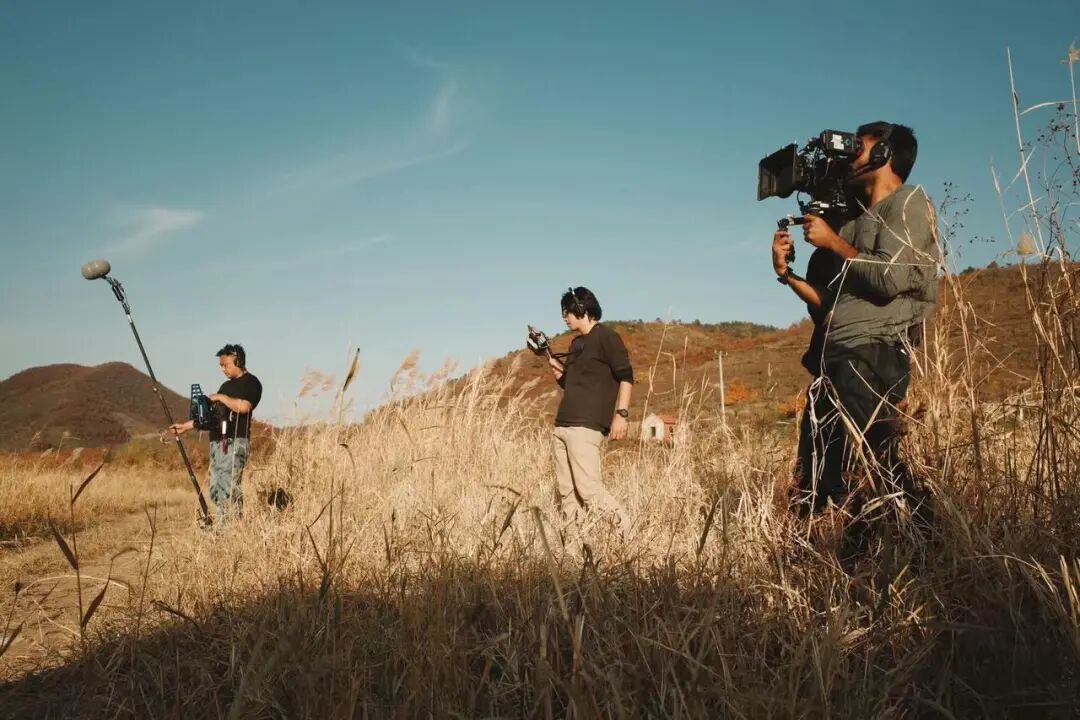
Before this I was an advertising and documentary director. I was at VICE and Discovery, also founder of Homework Production. One short film was nominated for a Golden Horse Award in 2024.
👦🏻 Koji
We're driving out of Shanghai now, so we can talk about how you got here. When we reach our destination, we'll talk about AI and your AI product ChatCut. I remember you once told me that "leaving the city center" was a keyword in your life. What year was that?
🧑🏻💻 Kevin
Around 2022, 2023. I'd just shot a lot of ads and documentaries, then Shanghai had that special period, and suddenly I had more time to think about things. Like, how did I suddenly end up shooting ads?
👦🏻 Koji
So how did you suddenly end up shooting ads?
🧑🏻💻 Kevin
At the end of 2016 I went to VICE Media, assigned to VICE China. In the US, you can make this kind of media and earn money through the platform itself. But in China, if you put your film on iQIYI, Youku, or Tencent and try to earn from traffic share, it's basically impossible. So in China there was an extra commercial department.
👦🏻 Koji
So when you joined VICE, you thought it was a place for free expression, doing your own content, and only after coming to China did you discover the business model was like this?
🧑🏻💻 Kevin
I didn't see it as a problem — I was fighting to get those commercial projects. Because commercial projects had bigger budgets and more people to collaborate with you.
👦🏻 Koji
So you actively embraced the commercial side?
🧑🏻💻 Kevin
I thoroughly, actively embraced it.
Partly from a learning perspective — I was curious: when money isn't the issue, what ideas can we come up with to shoot?
The other reason was commercial. Right after college, if I went off to shoot my own short film, nobody would care. But if I shot a project for Burger King, people wouldn't even need to watch it — they'd just think, "This guy's got something, Burger King hired him." If you shot for Adidas, what kind of person must you be?
Leaving the City Center: A Nudge from the Universe to Build Your Own 0→1
👦🏻 Koji
Why, after shooting for a couple years, did you want to escape?
🧑🏻💻 Kevin
Commercials brought real technical improvement, and partly it was ego.
Once that pure vanity faded, my interest in doing pure commercials diminished. Advertising demands so much comprehensiveness — you have an idea, then you have to convince the talent, the client, the client, the client's client. It's incredibly complex.
When I saw how many people were genuinely good at this, I understood that everyone has a different "species." If I forced myself to compete on the all-around qualities of a commercial director, I didn't think it would lead to great results.
👦🏻 Koji
Did you know what you wanted to do next?
🧑🏻💻 Kevin
The place we're headed to now gave me huge inspiration. We were shooting a project near that lake. When I went location scouting, I thought, "Wow, this is amazing."
There was a realtor nearby, so I said let's take a look — maybe moving there wasn't realistic. But we looked, and I found a house.
Sometimes you don't make a decision; the hand of God pushes you, and you just know that's the one.

👦🏻 Koji
Love at first sight.
🧑🏻💻 Kevin
I figured, whatever happens, I need to step out first, then figure out the next move.
👦🏻 Koji
Was that when you started shooting the short film The Bastard that later got nominated for a Golden Horse?
🧑🏻💻 Kevin
That was when I started wanting to do something of my own. It could be a film, a product, an app. I decided to take a year off from commercials and work on something big. I didn't know exactly what, but I wanted to let it germinate.
I wrote a lot of shorts that year. The Bastard was one of them, and it eventually got made.
Actually, shooting The Bastard coincided with when ChatGPT first came out. I started using a lot of AI in my daily life, and that's when the idea for ChatCut emerged. You'd just used ChatGPT, then you go back to editing in Premiere — you could feel the handoff between two eras.
👦🏻 Koji
Like you were time-traveling?
🧑🏻💻 Kevin
Traveling between a future world and the ancient past.
I kept thinking about building ChatCut. God was definitely going to make this happen — but was God asking me to do it? Or rather, should I take this job from God?
Solving an ordinary person's problem sounds both simple and hard. It's not about how masterfully expressive you are; it's about simple but deep insight into problems in daily life. On that front, I felt I had an edge compared to people with purely engineering backgrounds.
If God were assigning this, it might not necessarily be me — but if God hasn't pointed to anyone yet, I'll raise my hand.
The First Investor
👦🏻 Koji
From when you first had this idea to today, what were the main stages?
🧑🏻💻 Kevin
I started thinking deeply: what kind of app is this, really? At first it was "ChatGPT or Cursor for video editing" — but what does that actually mean? What does it look like when it lands?
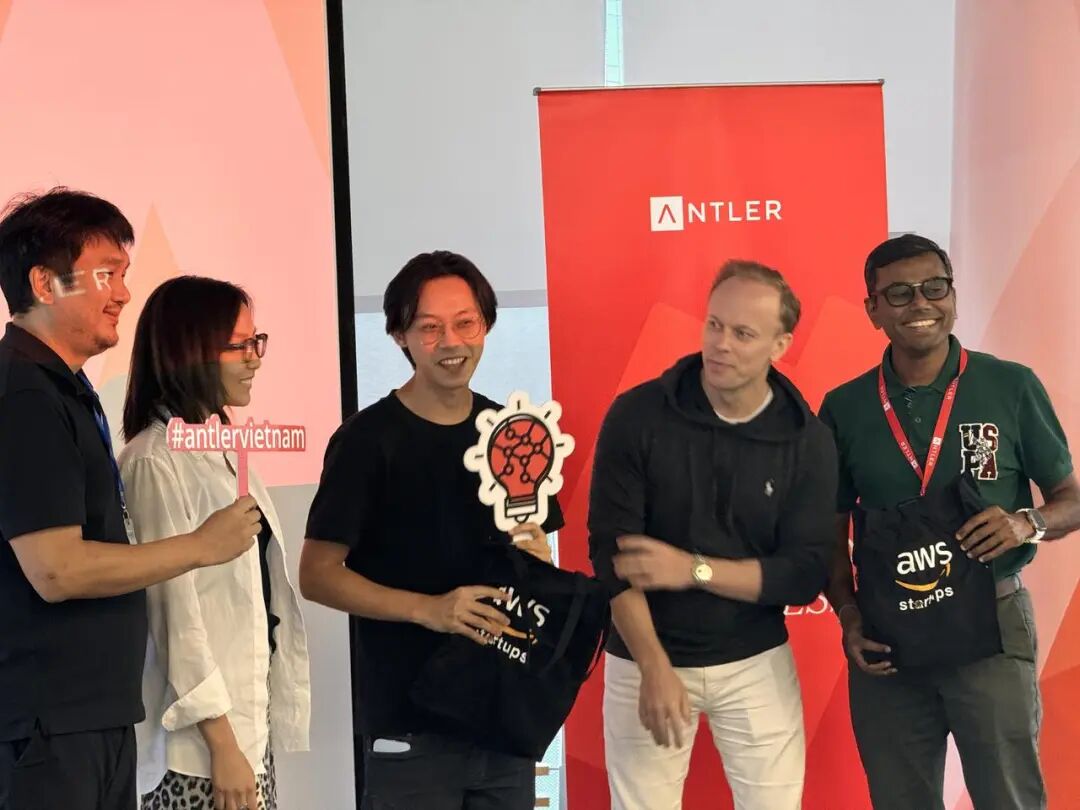
As I was conceptualizing, I met Eric, a partner at Antler, a Singapore-based VC, during the Golden Horse Film Festival. He was direct: "I've spent some time with you. I'll give you a small amount of money, see what you can build with it, see if you have the persistence to do something."
I was fortunate that he was our first investor — one of those legendary empowering figures. What do I mean? Some people are incredibly capable and charismatic, but when you sit next to them, you feel tiny, like nothing, how could you ever compare? But some people, on top of their own abilities, amplify everyone around them.
👦🏻 Koji
I remember you once said you met many VCs, and a lot of them were looking for reasons why you couldn't pull this off, but Eric was always trying to find reasons why you could?
🧑🏻💻 Kevin
Yes, exactly that. Finding reasons something won't work is easy — most things in the world don't work. If you want to find flaws, you don't even have to look.
Product First Principles: Most Editing Actually Happens in Word Docs
👦🏻 Koji
After getting Antler's money, you started building. Was the first release smooth?
🧑🏻💻 Kevin
Our target user at the time was relatively professional.
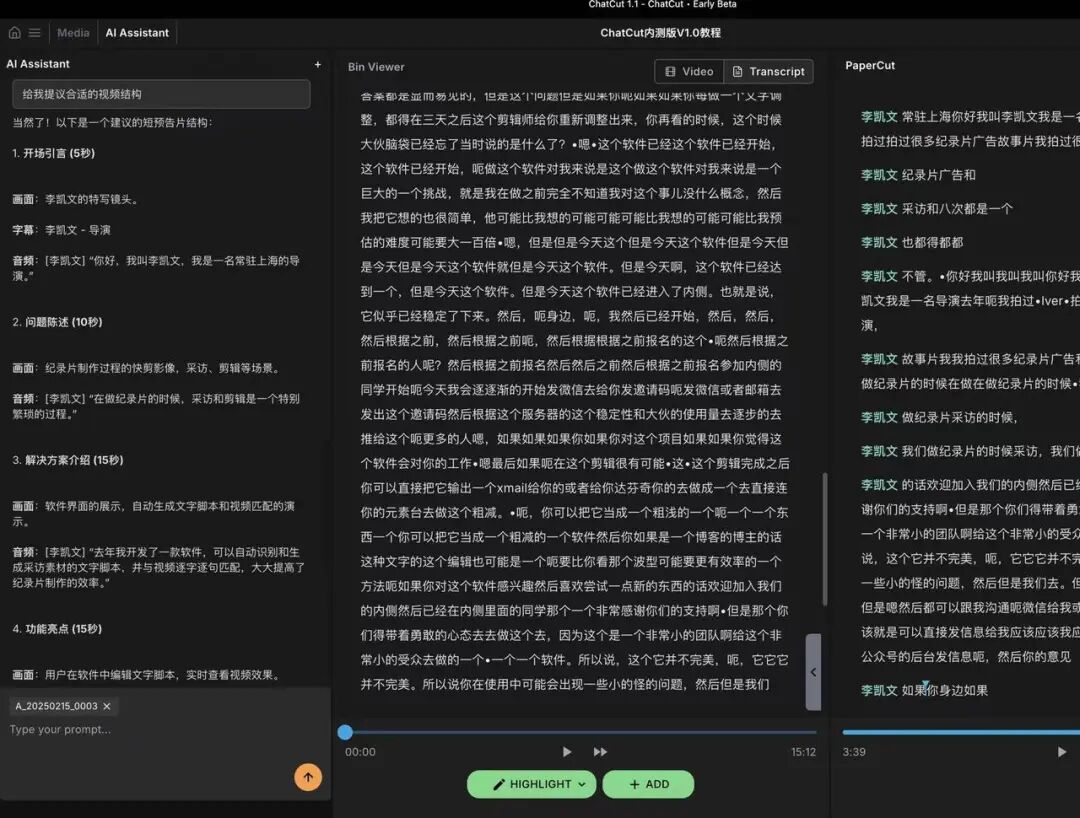
The rough idea of ChatCut was this: you transcribe video into text somehow. This came from our editing experience — a lot of editing happens in Word documents. Editing sounds like a multimodal thing, but most of an editor's work is actually text-based.
So ChatCut had two core components:
One was finding an elegant way to transcribe video into text;
The other was where AI actually creates value: how to take that transcribed text and rearrange it into a new edit, then map it back to the timeline through engineering.
In our first version, we only accomplished the first part — just transcribing speech, so people could edit video by editing a transcript. We didn't even have AI editing features. It wasn't until April that we had a rudimentary AI editing function.
👦🏻 Koji
So you didn't have time to build it at first?
👦🏻 Koji
So you didn't have time to build it at first?
🧑🏻💻 Kevin
If you have 1,000 true fans, they'll use whatever you put out and pay you $30 a year — serve them well, and you don't really need to scale massively. It's more of a small, beautiful business.
At the time, we weren't trying to build a scalable, VC-backed AI startup — we were not ready for it. So what we could do was build an MVP, find your first customer, your first 10 customers, your first 100 people who consistently use your app.
My perspective has changed now, but at the time I thought it was good learning. It's like if your kid goes to study in the US, it's probably best if their dad doesn't dump $100,000 in their bank account all at once — they might pick up bad habits immediately.
👦🏻 Koji
So you're saying that being broke while starting up actually taught you more?
🧑🏻💻 Kevin
Others may have their own paths, but for me, it was an especially good way to learn.
Early Adventure Muscles: From Anshan to Kent, Then RISD
👦🏻 Koji
This reminds me — you went from Anshan, Liaoning to the US for high school, and to Kent School, a very good one. How did that happen?
🧑🏻💻 Kevin
Growing up, I was above-average in class, not a top student, but I was intensely curious about the outside world. Movies — I'd watch every one I could find. Music — I'd listen to everything. As long as it wasn't sung in Chinese, I felt like I could give it a listen; everyone else couldn't understand it, but I could pretend I did.
My dad supported these interests. When he traveled for work, he'd buy me these things called da kou die — cut-out CDs sold by weight. He'd buy a whole kilogram, and I'd listen through them one by one.
👦🏻 Koji
Wow, that must've been so fun — getting a kilogram each time, like unboxing blind boxes.
🧑🏻💻 Kevin
It wasn't just a blind box — even after you opened it, it was still a blind box. Unlike now, where I open it and see Nirvana, search online, and immediately know people say it's good. Back then there was no Internet. The entire evaluation system was yours to construct. Good or bad, you had to judge entirely for yourself.
Because I was so curious about foreign culture, my English was already very good by middle school. And Kent School happened to come to Shanghai for admissions interviews.
👦🏻 Koji
But how did they know you existed? Or how did you, in Anshan, know Kent School was coming to Shanghai?
🧑🏻💻 Kevin
I'd done some research.
👦🏻 Koji
You'd already decided to go to high school in the US, so you started doing this research?
🧑🏻💻 Kevin
I wanted to go to high school in the US. One, I was deeply interested in the outside world — I'd watch American movies and think that was where my soul belonged. Of course, I later found out it wasn't entirely what I'd imagined.
Another reason was that my mom was a high school teacher, famously "tough," and if my grades didn't go sideways, I'd end up at her school.
👦🏻 Koji
At that time in Anshan, going to high school in the US was still an extremely niche option — practically nonexistent?
🧑🏻💻 Kevin
Completely nonexistent. For me, a new thing or a new place — from that point on, I never had that feeling of "what will it be like? I'm a stranger there, will I run into problems?" It's OK, let's just try it.
I felt like my risk tolerance was very high.
👦🏻 Koji
When they came to Shanghai for admissions, what stories or qualities in you do you think impressed them?
🧑🏻💻 Kevin
In middle school, I started selling da kou die. First, I had sales skills. Second, there's how genuinely passionate you are about something.
In middle school, my love for music had reached a point of total obsession. While everyone else brought bread and crackers on spring outings, I'd haul my entire collection of da kou die on my back. Walk next to me, and I'd shove my headphones into your ears.
👦🏻 Koji
To sell to them?
🧑🏻💻 Kevin
Yeah — I'd be like, listen to this. Buying it or not doesn't matter, but just listen. Am I really the only one who thinks this sounds good? The first time I heard the Beatles, the first time I heard Nirvana — I thought, this stuff is incredible. Listen — how can you not think this sounds good?
👦🏻 Koji
So this was very much a passion-driven kind of entrepreneurship?
🧑🏻💻 Kevin
Completely passion-driven. I still remember getting a first-edition Blink-182 album. Usually the cuts on da kou die were deep, but mine had a thin cut — didn't lose a single song.
I called up a classmate: "Hey, you know what? I got a first-edition Blink-182 album. I'm gonna play it for you right over the phone." I turned on my stereo, played it through the receiver, asked him: "Sick or what? Fifty bucks, you buying? Gone tomorrow." He said: "Save me two copies."
👦🏻 Koji
Hearing this now, it still sounds like such a joyful stretch of entrepreneurship. Really happy — and if people didn't buy, you'd just keep it yourself. It was an asset either way. No stress about unsold inventory.
🧑🏻💻 Kevin
It was the best. Honestly, with any startup, success or not — no matter how capable you are personally — so much of it is up to God.
But I think what you can do as a founder is choose something where, even if it fails, "it's OK."
The thing we're building together, and the people we're building it with — whether it succeeds or fails, the process itself will be worth it.
👦🏻 Koji
Following that path, it would've been easy to end up studying business, or economics, or computer science. But you went to RISD?
🧑🏻💻 Kevin
I fell in love with film at Kent. There were a few film school options, and one great thing about the US is they encourage you to do college visits.
When I visited RISD, I immediately felt: the people here are so different. Their hair, their clothes, the music they listened to, the things they watched — stuff I'd never seen before. It felt like landing on an alien planet.
It's a place that really encourages independent thinking, so the startup founders who come out of there all feel like they have souls.
👦🏻 Koji
Like who?
🧑🏻💻 Kevin
Airbnb's Brian Chesky and Joe Gebbia, for example. And the creator of Family Guy also went to Kent and RISD — he's my alumnus.
👦🏻 Koji
That's pretty special. You probably couldn't find a second person from Anshan with a story like yours.
🧑🏻💻 Kevin
There's a writer named Kurt Vonnegut who called this "dancing lessons from God." I'm willing to take dancing lessons from God.
The Northeast is actually a pretty conservative place. Maybe I'm some kind of genetic mutation — there really aren't many people there with this kind of adventurous spirit. Fewer and fewer now.

Director vs. CEO: A Film Set Is Like SWAT, a Startup Is Like Long-Term Investing
👦🏻 Koji
They say a director is like the CEO of a film set — you have to coordinate everything. Now that you're actually a founder CEO, what do you see as the similarities and differences between the two roles?
🧑🏻💻 Kevin
I think there are a lot of similarities. For one, directing is a test of comprehensive ability. You have your own understanding of the world, a vision — but that's just the beginning. As a director, you have to be able to attract investors, attract crew, attract good actors, and then get them to execute that vision.
That requires strong resilience, thick skin, the persistence of someone who'll visit three times to make their case, and ultimately taking complete ownership of the vision.
Another really similar point is that every directing job is from 0 to 1 — every film is completely new.
👦🏻 Koji
Always day one?
🧑🏻💻 Kevin
It's always day one. I'm always having to quickly put myself outside my comfort zone, building something from zero to one completely from scratch. That's extremely, highly similar to entrepreneurship.
👦🏻 Koji
And the differences?
🧑🏻💻 Kevin
The biggest difference is that once a film is shot, it doesn't move. But with an app product, the day you ship is the day you start building what it will ultimately become. That requires a major shift in mindset.
👦🏻 Koji
You were speaking from the work angle — what about from the management or company-building angle? Making films is also running a temporarily assembled organization.
🧑🏻💻 Kevin
I think film organizations operate on a pure "select, don't cultivate" model.
When an ad agency picks a director — say, for a car commercial — they'll only consider someone who's shot five identical car commercials before, because there's zero tolerance for even a millisecond of error.
It's less like a company and more like a SWAT team. When you're shooting, it's a military operation. Decisions require some "dictatorship" — we're not discussing this, we're just doing it. But with a startup, you need a longer-term attitude toward people. It's more like investing.
👦🏻 Koji
Do you feel like film directing has a stronger sense of dictatorship? Versus running a startup — how do you view these different management styles?
🧑🏻💻 Kevin
A director might look like a very dictatorial role, but any good manager — whether running a company or operating at a larger scale — the facts have already proven that dictatorship itself just doesn't work.
The reason is obvious. If you can find people who are on the same wavelength, unlock their capabilities, and get ten people aligned to do one thing together — that's going to far exceed one dictatorial genius.
👦🏻 Koji
So what kind of manager are you?
👻💻 Kevin
I've always seen myself as the person paving the road — making it smooth for everyone when they arrive, giving the team a completely aligned and clear sense of what we're making, and then executing smoothly.
As a CEO, I think my real job is paving that asphalt road really, really flat.
👦🏻 Koji
Who sets the goals at your company?
🧑🏻💻 Kevin
We set them together. My current product partner has that "special forces" methodology from big tech, combined with some of my intuitive judgment — we're completely complementary. We'll set a target ourselves and then go achieve it together.
👦🏻 Koji
You came from outside the tech industry and now you're running an AI startup. A lot of people today feel trapped in their own industries, wanting to break out. What advice would you give them?
🧑🏻💻 Kevin
Things aren't talked into existence, and they aren't learned into existence — they're built into existence.
One advantage of AI coding now is that you have no excuse not to build something. Taking that first step is really simple now.
Fundraising Methodology: Find Chemistry, Not the Perfect Pitch
👦🏻 Koji
We talked about you getting Antler's money and building your first MVP. Later ZhenFund invested, with Yuan Liu leading the round. Any stories from your interactions with Yuan Liu?
🧑🏻💻 Kevin
At that point, without any marketing, we already had quite a few paying users. To get to the next slope, we needed to become a real VC-backed startup.
I started fundraising in China that month. Did nothing else — just met investor after investor. I was like GPT, getting deep reinforcement learning.
Somewhere in there I met Yuan Liu. I felt like the hand of God put us together. China is so big, so many investors — out of all the investors, out of all the startup founders, we were able to meet. He's someone who really loves film.
Building an AI startup requires a lot of rationality, but also a lot of sensibility.
When you look at data too much, the sensibility side tends to get worn down. People who can maintain that sensibility, that naive view of the world — very rare. Yuan Liu genuinely has both sensibility and curiosity.
What impressed me most was how much we talked about film. At first I thought he was just warming me up, gonna boil me eventually. I recommended a lot of films to him, but then he'd message me at 2 a.m.: "Kevin, I watched that film you sent." He was genuinely curious. That's so rare.
👦🏻 Koji
How did that shared curiosity about film lead to an investment? Or what shared pursuits and mutual recognition did you have around the work itself?
🧑🏻💻 Kevin
He was really trying to completely understand me — building a model of me to make judgments about the future.
He doesn't like so-called "correct answers." I think it's like horse racing: Horse A has 70% odds, Horse B has 30%. Rational people pick A. But even if you win, there's not much satisfaction.
It has to be a special choice where you're right and most people are wrong — that's when you get real satisfaction.
On this point, Yuan Liu and I are exactly the same. Doing something everyone thinks is right — it's just fine. But doing something that proves everyone else wrong? That's even better.
👦🏻 Koji
Haha, chasing experiences. You mentioned meeting tons of VCs and going through that reinforcement learning process. Any tips for other founders still fundraising?
🧑🏻💻 Kevin
First, level-set your mindset. However hard you try, you can't craft a perfect pitch that wins every time. That doesn't exist.
There are so many VCs in the world. What you're looking for is the one you have chemistry with. Because investment isn't a one-time thing — it's not like they write the check and leave. You're going to be in the same boat for a long time.
👦🏻 Koji
Like the beginning of a long-term relationship?
🧑🏻💻 Kevin
It is the beginning of a long-term relationship. The trajectory isn't "I inched closer and closer, and finally closed the round." Before it happens, it all looks impossible. So you face rejection, then you move on to the next one.
Not everything can be distilled into a methodology. You just keep trying — this, then that — and one clicks. There's no special reproducible reason why. It's just the right timing, the right place, the right people, and it works. If those don't align, it doesn't work.

Life Leverage: Having Something to Do Is Your Greatest Wealth
👦🏻 Koji
Wow, this place is beautiful.
🧑🏻💻 Kevin
This lake is massive — so big it feels like the sea.
After I started ChatCut, something shifted with my wealthy high school classmates. I used to envy them. But now when I talk to them about what I'm building, for the first time, I feel their envy.
👦🏻 Koji
Wow.
🧑🏻💻 Kevin
Having something to do is your greatest wealth.
👦🏻 Koji
I agree. The most painful period of my life was 2014–2015. Jumei International Holding Limited had gone public, and at 29, I suddenly had money. So I quit. I went to the United States and stayed at a friend's place — he already owned a lake house. He'd go to work during the day, and I'd lie on his big white sofa in the living room, surrounded by water on three sides.
First day, I felt great. I even suited up and went for a run around the lake. Second day, third day... by the fourth day, I felt depression for the first time. I'd reach for my phone — no one had messaged me. Reach again — still nothing.
It felt like the world had left me behind. No one cared. I didn't know who I could even connect with.
That was immense suffering. From then on, I knew: I have to find something to do. Lying around brings no joy.
🧑🏻💻 Kevin
Exactly.
👦🏻 Koji
You lived here for several months?
🧑🏻💻 Kevin
A full year in this area. Experienced all four seasons.
👦🏻 Koji
What was your lifestyle like?
🧑🏻💻 Kevin
I had a car. Every two weeks, I'd go to Sam's Club and buy all my food. I was pretty health-conscious — walked a lot, worked out, even started meditating.
👦🏻 Koji
Between the beginning and end of that year, how did you change?
🧑🏻💻 Kevin
I was a completely different person. Before, I was a Shanghai-based commercial documentary director. After that year, I felt I could shed that identity — any identity, really. I had more inner stability.
👦🏻 Koji
What was your day rate as a director?
🧑🏻💻 Kevin
100,000 RMB a day.
That was normal life, you know — I show up, that's it. But directing is a business with no leverage.
👦🏻 Koji
Trading time for money.
🧑🏻💻 Kevin
Once I had the idea for ChatCut, I saw it had strong leverage. And I was still doing what I loved.
👦🏻 Koji
Looking back, have you enjoyed most of the ChatCut journey so far?
🧑🏻💻 Kevin
There's a book called Man's Search for Meaning — pretty well known. Enjoying the process and suffering aren't contradictory. It comes down to whether you believe in what you're doing, whether you fundamentally see value in it.
If you do, the more it hurts, the more you enjoy it in the end. They're directly proportional.
👦🏻 Koji
The more it hurts, the more you enjoy it?
🧑🏻💻 Kevin
It's like a movie. Without the eighty-one tribulations, if someone just said, "Hey, we're at the Western Paradise, let's get the scriptures" — that wouldn't be fun at all.
👦🏻 Koji
So you're actually looking forward to some hardship?
🧑🏻💻 Kevin
Film and TV is pure high-intensity stress testing. The things that happen on set — you can't imagine them in daily life. So now, from a resilience standpoint, no hardship can really touch me.
👦🏻 Koji
"Every challenge is hard, and you get through every one" — and you become more confident you can solve problems.
🧑🏻💻 Kevin
Or even — the assumption that "every challenge is hard" is still in service of whatever comes after the challenge. For me, that's the job. Not what's behind it. If the challenge didn't exist, I'd have no job.
👦🏻 Koji
Haha, interesting.
🧑🏻💻 Kevin
There's a book called The Obstacle Is the Way.
👦🏻 Koji
The obstacle itself, the challenge itself — it's a way of life, it's the path itself.
When you were directing, what was the biggest challenge you faced?
🧑🏻💻 Kevin
There wasn't really one single massive challenge. It was everything goes wrong. And "everything goes wrong" assumes "it's supposed to go right."
But my mindset is: nothing's supposed to go right. Of course it goes wrong. That's the job.
Vision: Stop Reinventing the Wheel, But You Still Have to Go Through the Process
👦🏻 Koji
We've finally reached the lake. Is this a place you come to often?
🧑🏻💻 Kevin
Yes. I lived in a small house behind here before, and this might be the first place I'd come in the morning.
👦🏻 Koji
Let's talk more about ChatCut. What you're building is using natural language to help with video editing. Some people think this is an inevitable future; others think it may never happen.
I understand you must believe it's inevitable, since you chose to build it. When you think about it, what kind of picture do you see in your mind?
🧑🏻💻 Kevin
I don't think it's "something that will definitely happen in the future" — I think in the past, this is how video was always edited.
You might think video is something a clipper does in Premiere, but video gets edited through conversation. The client holds up WeChat and says, "Put this shot here, that shot there."
Of course, for really fine work — like "I need to nudge this one frame" — doing it by hand is faster than describing it in chat. But take this long interview we're doing now. Throw it into ChatCut, and you could say: "Cut out these few points I mentioned. I remember that line was good — put it at the front. Add appropriate music and motion graphics." You say that, and it gives you a rough cut.
I don't think the future app form needs dramatic surface-level changes. An editor is a solved problem. Premiere, Final Cut, DaVinci, even CapCut — they're 99% identical on the editor side. Highly similar, because they've been refined over time. A wheel is round.
👦🏻 Koji
You're not planning to reinvent the wheel?
🧑🏻💻 Kevin
I don't think reinventing the wheel has much value.
The Hardest Problem Right Now: Where Does Style Come From?
👦🏻 Koji
If our vision is to build a natural language video editor, what are the steps to get there?
🧑🏻💻 Kevin
You don't have to fully reinvent the wheel, but you have to go through the process of building it. Because you can't take Premiere as your foundation and modify directly inside it. You could build a plugin, but you'd be at someone else's mercy. So to varying degrees, you still need to build the wheel.
But the core is AI — the abstract part, how it plays the role of an "editing assistant." It needs to master real workflows in the editing process, not just make superficial innovations on the interface. What AI mainly solves is the thinking layer above functions, above the editor itself.
ChatCut is like an elementary school student. The next step is sending it to high school, then college, so it can form its own judgments about the world. When you throw in footage, it might not wait for you to "point and shoot" — it might look at the material and just get it, then tell you how to approach it, and cut a video better than your own level.
👦🏻 Koji
So the first step is still building another editor?
🧑🏻💻 Kevin
Our work is a balanced development — there's editor component, there's AI component. It's not build an editor first, then develop AI on top.
👦🏻 Koji
Over the past year-plus of building ChatCut, what have you thought about most?
🧑🏻💻 Kevin
The core question is probably "style" — where does style actually come from?
👦🏻 Koji
You mean the film's style?
🧑🏻💻 Kevin
Right, the film's style. Editing has two layers. One involves right and wrong. If you cut off a sentence mid-word, that's wrong. I asked you to remove filler words, you didn't — that's wrong too. But once you solve these baseline issues, there's no right or wrong anymore.
Every YouTuber or content creator today has a strong personal style. Throughout the editing process, how do you understand stylization? How do you use AI to replicate that stylization? I think this is still an open question — no one has the answer.
👦🏻 Koji
I understand the difficulty is that it's hard to get the feedback loop reinforcement learning needs. AI coding developed so fast because there's bugs — the feedback is unambiguous.
But whether a film looks good is extremely subjective and stylized. In your thinking, how might this be solved?
🧑🏻💻 Kevin
When I edited for VICE or Discovery, my thinking wasn't "OK, Li Kaiwen's here, let's bring out my personal style." It was following a process, adhering to a workflow.
Because I follow this kind of process, I don't put my ego into it. There's a mountain of footage, but that's fine — we start with the interviews. The interviews are long and hard to remember, so we make a Word document first. That's why editing is so often text-based work.
Every time I follow this workflow, it ends up shaping my style. It's not a matter of going from point A to point B.
If you approach it with traditional engineering thinking — "Here's A, here's B, let's use reinforcement learning and brute-force our way there" — it's like "going off the rails" in a martial arts novel. You haven't found the crux of the problem.
But if you observe what technique they used in that first step, and how that led to the final cut, it helps you naturally develop that style.
The Key Choice: No Pixel Generation
👦🏻 Koji
So how does this become a capability in ChatCut?
🧑🏻💻 Kevin
The next step is turning real editors' workflows into different agent workflows, then observing how they perform across different contexts and materials. A lot of this needs to be defined by humans.
You're absolutely right — editing involves a lot of human common sense that hasn't been internalized in LLM training data. So the sequencing of workflows, those little checklists, those details — they actually determine what the final cut looks like to a large degree.
👦🏻 Koji
There are quite a few AI video tools out there today, and everyone's taking a different path. There are many key choices along the way. Which model to use? How much freedom to give users? Whether to build workflows? Whether to use generated footage? Or stay purist and only use what the user shot? Among all these key choices, which ones do you feel you've already made with real clarity and conviction?
🧑🏻💻 Kevin
Our goal is as clear as 1+1=2, because we ourselves are the users. When a problem comes up, we can just ask: what do the people who are out there every day shooting stuff, creating stuff — what do they actually need?
I don't think AI-generated video has made a particularly big impact on the real world. You're sitting on a plane, you look at what the person in front of you is watching. You're on the subway, you see someone scrolling Douyin — what are they seeing? How were those videos edited? Nothing has changed. How do videos get made? Nothing has changed either.
The world is contradictory. Some things look like they're being revolutionized every single day, but other things are like us sitting here by this lake — they haven't changed at all. Our AI, we've always described it as a blue-collar worker, the most down-to-earth AI in the world. It solves the most authentic problems in real creators' workflows.
If you solve one problem in that workflow, that's a billion-dollar business. Take Frame.io — it just does video review. How niche is that market? And yet it's a multi-billion dollar company. Because it unsexy-ly solved a real problem in the real world.
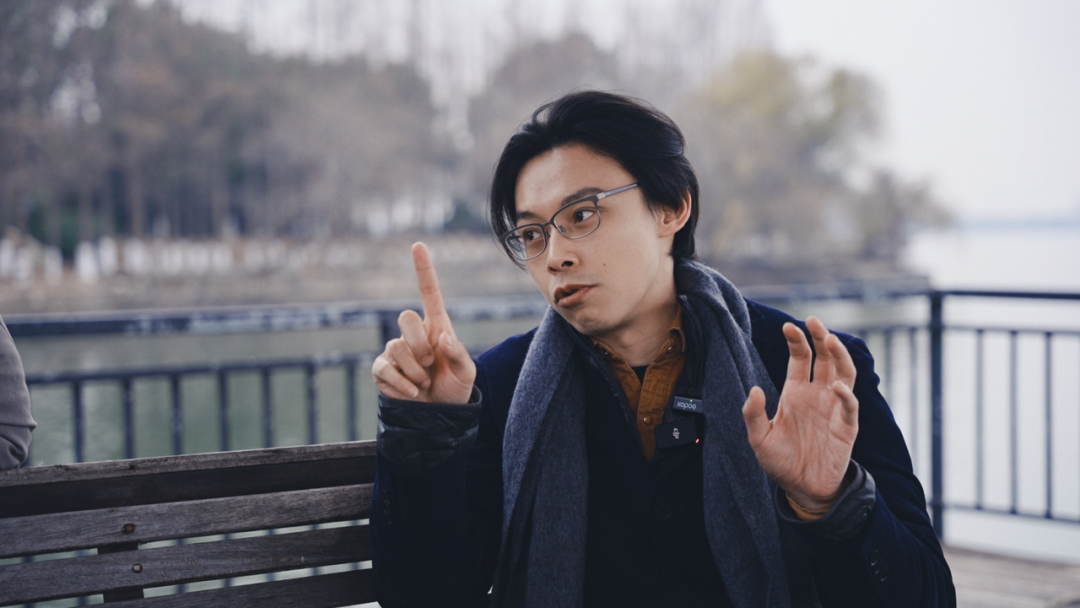
👦🏻 Koji
There's another view that video editing is interlocking, link by link. The review example you gave isn't actually in the editing workflow. Precisely because editing is so interlocking, people are very cautious about changing their workflow. Have you seen any signs of this? Which part of editing might actually change because of AI?
🧑🏻💻 Kevin
Your assessment has been validated by our reality too. A professional editor — it's very hard to disrupt their workflow.
We initially targeted a lot of professional editors, and later changed our target, because we realized how massive this ecosystem is. I can't build a Premiere and then slap AI on top of it.
👦🏻 Koji
So you changed your definition of the target user group?
🧑🏻💻 Kevin
Right, because the tires hit the road and you wake up. What's most exciting to me now is that our users might never have been editors before.
For example, it's someone who's always wanted to make content, wanted to start an account, but felt like editing was the reason they didn't do it — it was too hard. Now shooting is incredibly simple, you pull out your phone and the footage isn't worse than a camera, but editing is the biggest bottleneck.
I think solving their pain point, getting them to 80 in one go — we provide enormous value to these people, even more value than making professional editors 1.3x more efficient.
👦🏻 Koji
Can you give a concrete example here? What kind of new videos are these new target users cutting now that they have ChatCut?
🧑🏻💻 Kevin
With other AI video apps, you can tell at a glance which tool made it. This is Google Veo, that's Kling, Dreamina, the comic-style one is some other tool. But with videos cut in ChatCut, you can't see any AI痕迹 at all, because it only changes the editing, it doesn't generate a single pixel. It's the same as using AE to make motion graphics.
So the videos shared in our user community vary wildly in style. For example, there's a teacher who realized he could just throw his course outline in, generate motion graphics, record a video of himself explaining, do some simple editing in ChatCut, and he's got a content account going. There are people doing real estate videos who can now handle it themselves.
👦🏻 Koji
I see another path where the target user is the same as yours — people who want to express themselves through video but don't have the ability yet. Some products approach this by generating video for the user, then editing that generated footage into a complete piece. Because they assume that shooting yourself is difficult, that visual language is hard to express.
So the user just needs an idea, and the product translates that idea into visuals, generates it, then assembles it into a video.
But this clearly isn't the path you've chosen?
🧑🏻💻 Kevin
This is where we have a different understanding and judgment of the future. What is the fundamental reason video exists? It's something for human-to-human communication. If the content has nothing to do with the real world, it's very hard to move someone.
You record a very rough video, but as long as it's a real person telling a story to the audience, the resonance it creates isn't something that "unprofessionalism" can掩盖. Because that person has vitality.
AI can replace many things, but it can't replace this most core vitality. Generated video can be a creative method, an artistic technique, but to think it can completely replace real filming — that's a wrong judgment about the world.
Technical Hurdles: Context and Multimodality Haven't Reached "Editable" Maturity
👦🏻 Koji
So you think partial generation is possible, but not full generation. Because full generation lacks the real appearance of the world, making it hard to move people.
AI has made many breakthroughs today, but there's still a lot it can't do. From now until the day a true natural-language video editing tool is born, what are the technical things that still can't be done, that need to be broken through one by one?
🧑🏻💻 Kevin
First is context limitations — this absolutely has to be broken through, because video is something that consumes an enormous amount of tokens.
Then there's multimodal development. Actually, multimodal doesn't have a truly mature model yet in any meaningful sense. Google's Gemini is a good start — it has a rough understanding of audio and what's being said in it, but it's not precise enough to do editing with.
I think multimodality and context will be the major breakthrough points.
👦🏻 Koji
Cursor works today because there's a massive amount of code behind it as training material. But to make a "Cursor for video editing," there isn't that much open-source code behind it, because video editing knowledge lives inside editors' heads.
Without these things, how do you train an AI to complete editing work? What's your thinking now?
🧑🏻💻 Kevin
Editing doesn't have much "code" not because it's harder than programming, but because it contains so much common sense, and common sense is something LLMs already possess.
Also, I think editing still needs to be improved in two parts. One is verifiable things — cutting out verbal slips, making it Douyin-style, turning it vertical 16:9? These are verifiable. The other part is genuinely that feeling of good versus bad.
I think if you can get to the first level, where it does exactly what you ask, that already provides enormous value. As long as you speak a bit more clearly, explain what you want a bit more explicitly, it can provide enormous value.
Also, we have to collect this information through our own platform — one is to fine-tune our prompts, and another is, I wouldn't dare say whether this is something that training a model can solve, but the advantage of building our own platform is that we can accumulate this information.
Why Is Nobody Taking "God's Job"?
👦🏻 Koji
I think you're still taking on something extremely difficult. We talked about this on your way here — you feel like this is something God would definitely choose someone to do, because it's bound to happen.
You were looking at who would take this job from God, and it seemed like nobody was, so you took it. So why was nobody taking it?
🧑🏻💻 Kevin
This is interesting.
👦🏻 Koji
Because there are actually two different kinds of entrepreneurial states. One is: what I'm doing, ten thousand people are doing. The other is: what I'm doing, nobody else is doing.
You seem to be in the latter, but both have their own pros and cons?
🧑🏻💻 Kevin
I don't think we're entirely in the latter. You could even say that many people think we're in the former. Many entrepreneurs also feel like they're in the former, and they categorize us in the former too.
But the reason I say "nobody's taking God's job" is that locking in a direction, finding a good entry point and methodology — it's an extremely difficult, extremely delicate thing. It's usually not a genius, epoch-making idea, but a very simple realization: "Yeah, this works. This is exactly what I need."
It just so happens that my documentary background played an especially big role here. Documentary is unscripted creation, and almost all the content creation we're discussing now — YouTubers and so on — is unscripted. The opposite is scripted content, which is film creation with strict scripts.
When you're editing scripted content, the problem isn't "which line do I pick" or "how do I filter content" — the logic is set in stone. What you're solving for is "how do I find the best performance of this line." I think this is something AI shouldn't touch and can't solve. When Tony Leung tells Maggie Cheung, "I have a ticket, will you leave with me," he has a hundred takes. You want AI to choose? Forget it, it cannot be done.
And at the unscripted level, documentary is the hardest. Because the volume of footage is massive, and the goal is the most vague. Take Wang Bing shooting West of the Tracks — three years of filming, three years of editing, finally cut down to three hours. You're not editing with a mental image in mind. You're completely facing each day's shoot, organically forming something with life.
But once you find this thing, its workflow can be completely replicated to shooting Douyin, because they're the same problem at different scales. Say you're shooting Douyin, went skiing at Changbai Mountain and filmed a bunch of random stuff. At a much lower level, you're solving the exact same problem Director Wang Bing solved: in unordered footage, how do you find the rule?
Very coincidentally, I was doing large amounts of documentaries for CCTV, Discovery Channel, and VICE before AI emerged, so I know this chaos, this empty universe — I've seen that. The experience I gained from it happens to be the biggest trend in content creation growth right now. Self-media, YouTubers — they're all documentaries. What we're doing now, you might think it's a podcast, but to me, it's a documentary.
Also, the timing when I took this step was particularly good. LLMs had been around for one to two years, but AI coding had just emerged. Because Antler was the first investor in Lovable, we had unlimited Lovable credits. I
thought at the beginning, since we have Lovable, I'll just vibe with it, what am I waiting for? Looking back now, starting at that time and having some traction by now — compared to if you wanted to start now, I think the timing is already slightly late. The world hasn't stood still.
👦🏻 Koji
You've claimed this spot?
🧑🏻💻 Kevin
My radish is already in the hole. You could force a radish in too, but life is not gonna be easy for you.
Don't Chase "Absolutely Correct," Cultivate "Good Habits"
👦🏻 Koji
Like you just mentioned, three years of footage finally organized into a three-hour story with life — there's actually some know-how in your muscles.
How did you translate these methods into the ChatCut product, expressed as features?
🧑🏻💻 Kevin
There's a self-help theory that says: what a person achieves in a year doesn't depend on what goals they set, but what habits they cultivate.
I think this is an underrated approach in AI agents. Many people think AI should be a linear connection between "here's the raw footage, here's the result." But actually, editing has a lot of serendipity.
I could cut it this way; when I'm looking for footage, I wasn't looking for this, but then I see it — "hey, this works here." There's no absolute right or wrong. So if you use AI to find an absolute right or wrong, it will always be wrong.
You can only give it good habits. For example, when you have a gap here, you go look at footage; when your story develops to this point, you must find a sound bite like this; when you're transitioning between scenes, you do your best to find a transition. It's these kinds of points, not "here's raw footage, here's good editing, I'll give you 100,000 samples."
You still need to find these subtle points, and these subtle points determine the macro appearance.
Model Dividends
👦🏻 Koji
Are you a fundamentalist of the natural-language-editing school? For example, some people believe natural language can only solve half or even less of the problem, and there's still a lot of editing that needs to be done through dragging, sliding, and so on.
🧑🏻💻 Kevin
I think this is a balance we're looking for.
In principle, editing is definitely a human-machine interactive thing. AI could be incredibly powerful, but I don't see it ever fully replacing a person. So in ChatCut, timeline editing is a relatively important feature — our text editing also took a long time to build. So in principle, we're definitely not 100% relying on AI to complete all editing.
I even think that if AI can reach 80% but gives people room to change, versus AI reaching 90% but people can't change it, I'd rather take the 80%.
👦🏻 Koji
From when you started ChatCut until now, models have gone through a lot of development. What breakthroughs in the past year or two have helped you the most?
🧑🏻💻 Kevin
I think it divides into two parts. One is product help — when Gemini 2.5 came out, it was huge for our product, and this 3.0 release too.
👦🏻 Koji
Can you talk about what the help was, respectively?
🧑🏻💻 Kevin
Previously with Claude or GPT, the context length wasn't enough — a half-hour video could blow it up. Now with Gemini's 1 million or even 2 million tokens, that basically solves this problem.
In the past, when doing video editing, the first thing you'd think of was doing RAG, building a Vector Database — the core purpose was to solve for context. Now we can temporarily not worry about that.
Also, our motion graphics animation feature largely became viable because of 3.0. We do generative AI too, but unlike others, we don't generate pixels. I think generating pixels is where I draw the line. We generate code, so users can use it like making a PowerPoint — it just makes the PowerPoint for you, rather than generating a scene of Ultraman stomping on a house.
👦🏻 Koji
Multimodal progress doesn't seem to affect you much? Since you don't generate content.
🧑🏻💻 Kevin
Multimodal progress, at this stage, doesn't affect us much, but it's something we can't get around.
Next step we'll incorporate more multimodal capabilities — one is for analysis, one is for generation. We're not completely against doing generation, but we don't want to do that kind of ineffective iteration where a new model comes out, we hook up an API too, looking diligent, but not actually adding value.
We need a good entry point, adding good integration with editing on top of model APIs — that's what's worth doing for us.
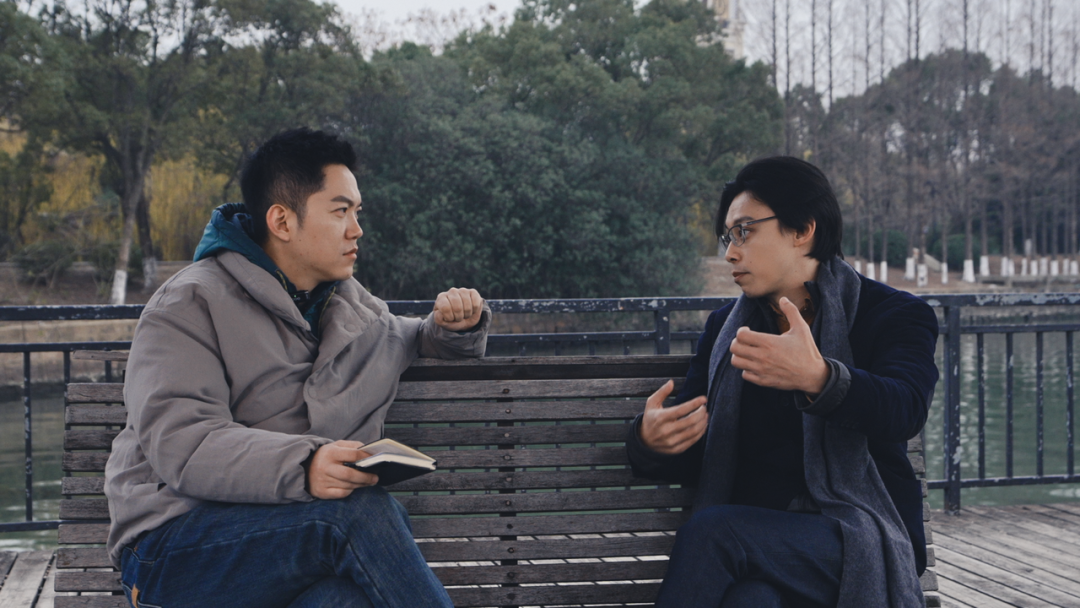
"Those Who Do for Love"
👦🏻 Koji
In your view, what future picture would mean ChatCut has achieved the success you imagined?
🧑🏻💻 Kevin
I can answer this in a roundabout way. When Sora first came out, we were just starting to think about doing ChatCut. Sora's demo dropped, and that skiing video — you looked at it and thought, why even shoot movies anymore, just use this from now on.
The world panicked instantly. Its stuff had very strong signature — you looked at it and went "wow, Sora is amazing."
This is a good thing and a bad thing. It limits the creator's participation. Because no matter how you prompt it, what comes out is still a Sora thing, a recognizable thing. I think this is what we want to avoid — it shouldn't be a tool that limits people.
For me, success is ChatCut becoming like how you write email or use ChatGPT in daily work — it has nothing to do with quality anymore, because everyone can use it. But what you make with it still ends up at your own level.
👦🏻 Koji
This is interesting. At first we thought with ChatGPT, everyone's ability would be pulled up to 1000 points.
🧑🏻💻 Kevin
Yes. But the fact is, even if you have a friend who knows astronomy above and geography below, and you can always manipulate them — you should be a genius, but we haven't seen that many more geniuses appear.
👦🏻 Koji
Let's talk about the team. Previously at Crossing's open mic you had a share that left a deep impression on me — you talked about how your team has many "alchemists." Can you quickly introduce what kind of identity an alchemist is?
🧑🏻💻 Kevin
An alchemist is definitely a dual identity. They already have their own function — engineer, R&D, designer, product.
👦🏻 Koji
Alchemy can't put food on the table, it can only be a side gig?
🧑🏻💻 Kevin
Alchemy is a side gig, can't be your main meal. Or rather, alchemist is an honor — when you make something to a certain degree, you're an alchemist.
The definition is a bit like the ancient Greek word "amateur." We now translate it as "amateur," but what actually is an amateur? He's someone who does it for love (amor). Opposite to him is the "professional," someone who does it for money.
Of course money is a foundation, but I feel that breakthroughs in something often come from a person's inner obsession with it.
Now with AI coding, team sizes don't need to be so bloated, and everyone can more greatly发挥 the value of their flashes of inspiration.
👦🏻 Koji
So in ChatCut, which features or parts came from alchemists doing it for love?
🧑🏻💻 Kevin
Motion graphics animation was a breakthrough for us. It wasn't in our PRD or weekly goals. Our product person just had an obsession with this thing himself, and while doing other things, he kept vibing with it. He'd just finished building it when Gemini 3 released. Once we tried Gemini 3 — let's put other things aside, do this first. This was destiny giving us an opportunity.
Also, some people might take this as disrespecting engineers, but engineers can be alchemists too. Or rather, in this AI era, engineers better learn alchemy too. Only then will AI not eliminate you.
If you just strictly follow the assignment, AI will gradually do the assignment itself.
👦🏻 Koji
Sounds like you're building a team atmosphere that empowers everyone, inspiring people to freely do some flash-of-inspiration features for love. Then how do you find this kind of person in interviews?
🧑🏻💻 Kevin
I used to focus more on a person's technical background — whether they had the ability to solve the problems we needed solved. Now I care more about their overall qualities.
Maybe they're obsessed with a particular food, or deeply interested in something. If you don't have passion for anything, you probably won't have good standards for anything, and it'll be hard to do alchemy.
👦🏻 Koji
That reminds me of Google's old "eighty-twenty" culture — 20% of time for free creation. Many great products today, like NotebookLM, were built that way.
🧑🏻💻 Kevin
I think many great products probably have some degree of alchemy in them. Take Claude Code — it didn't come from a formal project proposal. Someone just wanted to build something for themselves, and it worked.
We call it "alchemy," but the word has always existed — it's "tinkerer." Someone tinkering, fiddling with something. Their work is like, "Hey, let's try this — nothing. Try this again."
I think what we need to improve next is: how to systematically manufacture these accidental discoveries.
👦🏻 Koji
Can that even be systematized?
🧑🏻💻 Kevin
I think absolutely. That's the difficulty and meaning of management. If it's just 1+1=2, that's not interesting.
Systematic manufacturing is like the theory in Antifragile — you have to engineer fortuitous accidents in your favor, because their leverage far exceeds 1+1=2.
👦🏻 Koji
So you actually welcome surprises? Is that also because you haven't yet seen a very clear path to the destination?
🧑🏻💻 Kevin
No, I think it's the complete opposite. It's precisely because I can see the outcome so clearly that I don't need to hold the team by the neck and say, "Follow the boss's orders." The result is so clear that this path gets you there, that path is also fine — I can confidently let everyone go their own way. Because I can see that thing.
When you can hear the music, whatever you play is right.
Conversely, when the goal isn't clear, everything you do is wrong. The boss doesn't know what he wants, so nothing I do will satisfy him.
Movies Won't Disappear
👦🏻 Koji
If life's happiness is a 10-point scale, where would you say you are now?
🧑🏻💻 Kevin
I'd say I'm at a 9.
👦🏻 Koji
Very high. Has it always been this high, or just recently? Is it because of ChatCut?
🧑🏻💻 Kevin
When I mention ChatCut to people, for the first time I can feel envious looks from some financially independent people around me. It's because I have something to do. And it's not an arbitrary thing — it's not like I did some market research and thought "there is money in AI video editing."
👦🏻 Koji
Is it because you're doing it out of passion?
🧑🏻💻 Kevin
I can feel the hand of God pushing this forward. Though I keep saying God, I'm actually an atheist. This is my life's work. To find your life's work, to find a VC, to have it become a real project — the odds of that aren't high.
Life is a movie. Sometimes you have to know which scene of the movie you're in. This is a good scene. Many tragedies in movies are when good things happen and the person doesn't know to cherish them.
As an audience member, you'd think "this guy doesn't get it, this woman loves him so much and he doesn't even know to cherish it," and then he has a tragic ending.
In my movie's storyline, I don't have that problem. I know it. I know I'm very lucky.
👦🏻 Koji
You know you're loved. So what's the missing point?
🧑🏻💻 Kevin
I think when someone is highly competitive, they can't be completely happy.
There may come a day when I reach that state: able to make all work decisions efficiently while maintaining complete inner peace.
But today's state is still one where ego manipulates me to some degree — there's a mentality of competing with others.
This might be something needed at this stage, but its existence slightly lowers your happiness index.
👦🏻 Koji
If you had the chance, would you still want to direct films?
🧑🏻💻 Kevin
Directing is something I can do at any time, and precisely because of that, I'm not in a rush saying "I haven't shot anything in years, I need to make one." Everything I'm doing now is fuel to make me a better director.
On my first day of film class at RISD, the professor asked: "If you weren't a director, what would you do?" Some said carpenter, some said painter. What I was most interested in was taking over my dad's factory. And the professor said, that is your film.
👦🏻 Koji
The life you most want to live is probably the film you're most suited to make.
🧑🏻💻 Kevin
Film isn't a thing, it's a vessel, an encapsulator. Many film students think loving film itself is enough to make a movie, but it's just your understanding of life.
I think doing ChatCut is what I need to do right now.
Film — look at Hou Hsiao-hsien, I can do that when I reach that age.
👦🏻 Koji
Alright, thank you Kevin.
Best wishes to ChatCut — hope it keeps going strong, and that you can stay at that 9.
🧑🏻💻 Kevin
Thank you Koji, thank you Crossing.