"The Most Underestimated Moat in Tech Is Brand" | Interview with Daniel Gross — Silicon Valley's Top Founder and VC

In a world where most people drive Priuses and wear hoodies, no one wants to contemplate the aesthetics of "brand as moat."
In the age of AI, the next generation of the best venture capitalists will be "creators or founders."
— Especially those who combine deep technical research ability with commercial instincts, and who also possess good taste and humanistic spirit. These seemingly different dimensions must form an organic whole, cultivated deliberately through effort.
I believe two of the best current representatives of "founder + venture capitalist" are:
- Harry Stebbings in London, UK, who runs his own successful tech media company and the eponymous venture fund 20VC (I'll write about Harry Stebbings in a future article).
- Another representative of the new generation is Daniel Gross. Since I started following him and his partner Nat Friedman (former GitHub CEO) and the AI Grant they co-founded three years ago, I've witnessed his rapid growth into one of Silicon Valley's coolest and most outstanding venture capitalists — while simultaneously founding a top-tier technology company, Safe Superintelligence, becoming an entrepreneur.
Previously: Daniel Gross's $2 Billion and SSI: Creating Another Sam Altman and OpenAI
Daniel Gross is a professional who simultaneously possesses both "depth and breadth" — two qualities he sees as not contradictory, but as essential for standing out in the age of artificial intelligence.
I strongly agree with this. Becoming a professional with generalist capabilities, while excelling at both entrepreneurship and investing, is my own goal.
Beyond Daniel Gross and Harry Stebbings, their shared idol Peter Thiel may represent the ceiling of the previous generation in Silicon Valley (having simultaneously founded the technology company Palantir and the venture fund Founders Fund), and has inspired many who came after.
The article I'm sharing today comes from another venture capitalist whose background I find uniquely compelling: Molly Mielke. She studied film and media at UCLA, worked as a designer at Figma, and is an accomplished writer (contributing to Stripe Press). With a deep passion for technology and venture capital, she combined her own efforts, serendipity, and bold determination to eventually launch her own seed fund, Moth Fund.
Her long-term goal as an investor is to find answers to "how to live well" (to find answers to the question of how to live well). I highly recommend her personal blog (molly.info) and the blog/podcast series on her fund's website — the content is deeply nourishing.

This article is a conversation between Molly Mielke and Daniel Gross, distilling much of his experience and reflection as an engineer, entrepreneur, and venture capitalist.
"The secret of all victory lies in the organization of the non-obvious." — Marcus Aurelius
I hope this article inspires you. Have a great weekend!
Depth vs. Breadth of Expertise, Picking Markets, and Where We're At with AI
Daniel Gross: Angel Investor & Entrepreneur Depth vs. breadth of expertise, picking markets, and where we're at with AI
Author: Moth Fund
Editor: Fan Yang
Date: June 21, 2023
Interviewer: Molly Mielke
Preface:
Molly Mielke: I talked with friends and decided to record these conversations! Some people call this format a "podcast," and I've named my show Moth Minds, with the theme "interviews with high-agency humans."
Upcoming guests include: Josh Miller from Browser Company, Claire Hughes Johnson from Stripe, Akshay Kothari from Notion, and Joseph Cohen from Universe.
Key points covered in this conversation:
- Questions to ask when evaluating companies: Does the research idea make sense as a good product? Does this person have the capacity to be a good leader and recruit top talent? Does the market structure support the company in capturing the value it creates?
- Investing your own money and building a competency that founders know you for is the best path to outsized returns in venture capital.
- Building a company in a sleepy market that you deeply know is the easiest way to lower the cost of being a founder and make it more akin to being an investor.
- The least understood but most valuable moat is brand — being the first company to coin a new kind of interaction with your technology.
- Contrary to the mainstream consensus that the AI market is accelerating, we are currently experiencing a plateau in AI development, evidenced by incremental progress since GPT-3's launch and OpenAI not training GPT-5.

MM: Hello everyone. Today I have Daniel Gross with me, a prolific angel investor and entrepreneur. Daniel co-founded Cue, a search engine acquired by Apple. He then spent four years at Apple managing AI and search initiatives, served as a partner at Y Combinator, and founded the quantitative startup accelerator Pioneer — all while making early investments in iconic startups like Figma, Uber, and Rippling.
Our conversation covers Daniel's views on depth versus breadth of expertise, evaluating market versus founder, and his thinking on AI market opportunities. I hope you enjoy it.
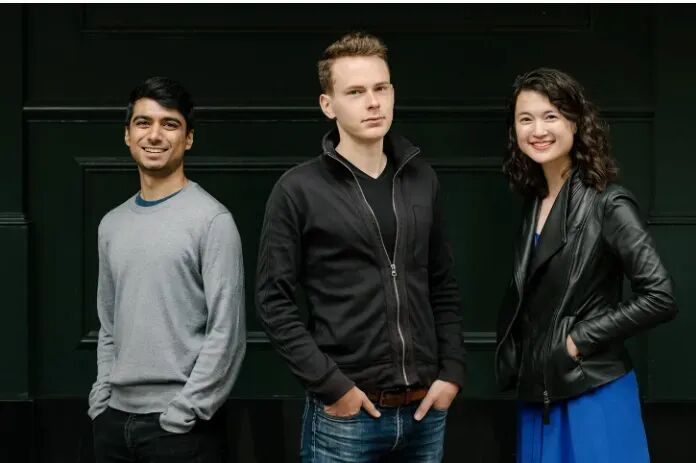
From left to right: Rishi Narang, Daniel Gross, Laura Deming
MM: Hi Daniel, welcome to my podcast.
DG: Thank you so much for having me.
MM: To start things off, my first question is: what is your moonshot right now?
DG: First off, thank you for having me on the show. I was born in Jerusalem, Israel — not the cool city everyone talks about. It's not Tel Aviv. It's like telling someone you're from Kyoto, Japan, not Tokyo. I'm from a relatively obscure corner of the world. I came to the United States with almost nothing — I think I had only my bar mitzvah savings and that was it. Then I came to California, started a company that got acquired by Apple, and I was quite young while at Apple. I moved to the US at 18, was running a series of machine learning projects at Apple by 23, and now I'm 31.
This has undoubtedly been a very successful journey for me, and I don't think I could have done it without the dynamism of the United States and the support of the Silicon Valley system.
The system I've had the opportunity to participate in is quite good because we have the closest thing to a meritocracy, because venture capitalists in this industry are harshly punished on "errors of omission" — that is, they get penalized for missing the right companies, not for making bad investment decisions.
So everyone is very eager to back things that look promising. Plus, the nice thing about this system is that nobody is doing this out of charity. People are doing it because they also want to make a return, which means you can attract the best people to focus on it.
Anyway, venture capital sort of worked out for me personally as a founder, and I obviously hope to make VC work for others now too — whether as investors or purely for financial returns. At the same time, I really hope to change people's lives and make them better.
So that's my vague moonshot. I don't have any Mars plans or anything like that. I could ramble on about AI and so on, but behind all of this, I haven't fully made it. I still have sleepless nights, still have a lot to deal with, but I'm in a much better position than I was when I first started, and I do get joy out of paying that forward to other people.
That's where I am in life right now. I might start another company in the future, or I might not.
But for now, I'm enjoying this science/art of finding and funding people that go on to create great things. That's my moonshot, even though it's happening here on Earth.
MM: Given your skills, resources, and where you are now, how have you honed in on how you could have the biggest impact and decided to spend your time?
DG: I regretfully have not been good at optimizing where I spend my time based on where I can have the most leverage.
This has been a problem for me since I was 12, frustrating many teachers, but I somehow got through it. I tend to spend a lot of time working — my profession actually gives me the opportunity to do that, and even rewards me for it. Just really going down various rabbit holes that are interesting to me. I tend to be a pretty commercial person at heart, so I tend to not really go too far down theoretical rabbit holes that don't have some commercial return.
When you add those two things together, the role of allocating capital is a pretty good one, because you will meet someone working on some type of cutting-edge research idea and then you usually have something like 72 hours to figure out three things:
Can a research idea plausibly become a good product? Can this person become a good leader and be able to recruit top talent to work for them? And third, most importantly, does the market structure support this kind of company existing in the world and being able to capture the value it creates? So you have to figure that out quickly and make a decision. But those three things — figuring out product, founding-market fit — do require the ability and desire to go from knowing almost nothing to knowing a lot in a relatively short period of time.
I enjoy doing that. I've been doing that my whole life and that's what I gravitate normally to. Not everyone enjoys this kind of work.
Some people really don't like the uncertainty of the job. Some people really don't like the fact that you don't actually build depth.
That does occasionally annoy me. If you start a company, you do get to build depth, but you get to build breadth, and so you get to have a sense of what, say, every single decent AI company is doing — something I think I have a modest index on. While it's not what I'm best at, I do enjoy it, and it seems to be an innate interest. But it's probably not the most efficient way.
I often wonder, if I were placing me to maximize the productive economic output of a nation, I'm not quite sure what I'd do. Sure, I could make the case that I put myself where I am because it feels good, but maybe there's a better option. Probably is a me that is focused on applying that same sort of have a lot of ideas, try a lot of different things, but to sell cultures. And that might be my idealized image of a scientist, but I'm clearly not going to be that person. So I don't know if this is the most productive way, depending on what scale of productivity you're talking about, but this is where I am. And I'm fairly satisfied with the results so far.
MM: Yeah. What do you think you can uniquely do with breadth over depth? Is it being able to distinguish what's meaningful among a lot of noise, or are there other examples that come to mind?
DG:
One advantage is that you tend to pattern recognize, and you tend to see a lot of different things.
Normally, you might hear one pitch for a particular business idea and think it's novel, but within the same week, you'll get pitched the same idea by two or three different teams.
That lets you say: "Oh, this is interesting — a lot of people are doing this. How should that change my decision about how the market structure will turn out?" Because, for example, if everyone's doing it and it's something any 23-year-old MIT student can pull off, the end result usually ends up being a Git repo rather than a company. So that's very helpful — it's something you can do when you have breadth.
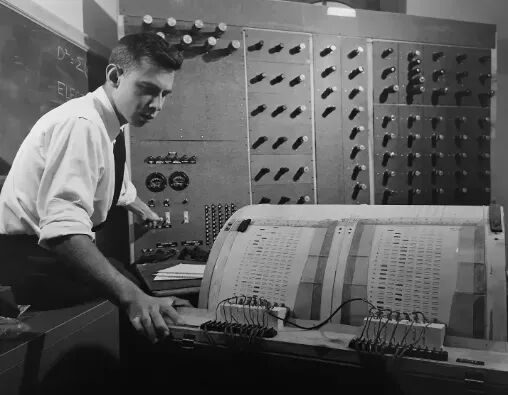
Frank Rosenblatt invented the first artificial neural network in 1958, called the Perceptron. I think, for me, it's the breadth of people I meet, not necessarily industry breadth — we'll get to that. But basically, determining future market structure and profit structure for a business is one thing you can do. Pattern recognition is also useful — understanding what works for people and what doesn't. When you're talking to companies at Series B and C, you can usually identify a common thread. For example, all those platforms that resell abundant data (I don't want to name names because it's a bit disparaging) tend to tap out in terms of revenue at a certain size or scale. You learn this after seeing the same story play out again and again. Industry breadth is also very useful because it helps you identify the intrinsic qualities of founders who perform well across different domains.
You often see this: someone might be starting a new kind of business, like a SaaS company, or launching a biotech lab, or working on physics research, or some AI project. Because you see people succeed across different fields, you're sometimes able to zero out and mask out the industry and really focus on what seems like a really good kind of person to invest in.
I think it's actually very helpful to see industry variety in that sense. But it has its downsides. There are limits to what you can learn about a particular industry. And I do think another, more important factor is that I'm usually very careful, in any trade, to make sure the selection effects that got the trade back to me and to my inbox are good.
The counterparty is very important. If you're too broad and not careful, you can end up in situations with bad selection effects because you're chasing breadth — like, you're in some biotech deal, but you don't ask yourself, "Why am I seeing this biotech project? Why didn't someone who actually knows biotech see it?" If you had depth, you'd do better on that.
So I think you have to be careful there, because the details really matter. And I think this is probably the most underappreciated thing in venture, for people who trade assets in general. If you talk to anyone who trades bonds, they'll tell you the counterparty is very important. In fact, it's the biggest piece of information they get.
I think in venture, people almost entirely ignore this — "Why did this deal come to me?" And I think it's very important.
There's so much information embedded in "Why this company?" and "Why did this person introduce me to this company and not someone else?" Who else was introduced? Who passed? In some cases, you know you'll get positive selection effects because you're confident about the stage or the industry; sometimes the business is acutely distressed and so everyone actually did say no for obvious reasons and you see something there that others didn't. But if you don't have good answers to these questions... at least I try to avoid being in that situation.
MM: Yeah, that makes sense. It's interesting. It reminds me too of the concept of staying top of mind. I think that does affect things, but not necessarily in a good way. You might just be receiving the stuff people want to get rid of, move out of their inbox.
DG: I think an interesting question is what causes someone to think of you. You're right, there's the simple recency answer. If you're actively pitching yourself, people will naturally think of you. But there are deeper reasons. I probably have fallen prey to this just because my natural proclivities are a little bit technical, but I do tend to be technical heavy in the people that pitch me. Which is fine. It's who I am, but it's also because when people face complex technical problems, they tend to think "DG might back this."
It's important to have a mental model for why the other party is approaching you. Were you the first person they thought of in their fundraise, or the last?
Superpower in Angel Investing
MM: Completely agree. What do you think your superpower is in angel investing?
DG:
I wouldn't say I have a superpower, but honestly, the thing no one wants to admit is that there's quite a bit of luck in venture.
I often feel like, don't overthink it, because it's a bit nihilistic. The relative proportion of success in venture, certainly for me and probably for many people, is just luck.
Because when you have power law outcomes that are usually occurring after large market shifts, there's so much that is just not captured in the data of whatever regression model you want to build that you're just going to have to ascribe it to luck. You know, right place, right time — that's a huge part of it. But that's a bit of a cop-out answer.
I'm still learning this sport every day. One thing I've gotten better at is, when a company shows up at your doorstep, or you reach out and meet with them — I think investors who were operators, who started companies, tend to invest in the asset as if they're running the company themselves. It's a beautiful mistake that comes from excessive optimism. You tend to think: "This concept is amazing, if I were running it, I would do A, B, and C." And that doesn't work. You need to invest in the reality in front of you and the opportunity the market is giving you.
I have gotten better at this, though it took me many times to realize it. The next thing that becomes more important is extracting data points from meeting with the person.
Maybe you spent 30, 60, or 90 minutes, had one to three interactions with them, and now you need to build a mental model to predict the million decisions this person will make over the next 3 to 10 years. What are they going to make the marginal decision for or to do?
That's actually the art part. I think the market structure forecasting is a little bit more of a science, it's a bit easier to do, but the art part is doing that. There's a natural way to improve at that.
Once you've met enough people, you can start identifying high-failure-rate situations, and you'll get punished for them. So you become very alert to being wrong in your predictions, but you can also make some kind of estimate about what's going to happen. Combined with some kind of market estimate, I think you can make pretty good investment decisions. Again, these are all probabilistic, and you naturally want to make multiple investments so you can absorb a certain failure rate, but make sure you don't miss the winners. I think venture capital is very unique in this regard — almost no other asset class works this way.
I think, as we think of where we sit in the broader realm of all the money things, we are the riskiest, so we're really paid to take on risk, which means we cannot miss anything. So I've said all this, and in my mind, I can already hear others saying: "Well what about all the biases and stuff?" I'd say the great thing about venture capital is that because there are such enormous economic incentives, it can keep you from making mistakes in this area.
That said, as you meet more people, you tend to be able to build a better and better model of folks. When I was just starting out, I basically got a large amount of cash from Apple, paid taxes to the US government, and started investing that money, and I remember having similar arguments with myself. Maybe I knew what "I" was like, but I didn't want to invest in people selling to Apple. I wanted to invest in companies that could eventually go public. At the time, I didn't understand well enough what that looked like. Of course, I was a YC founder alumnus, so I knew a lot of YC people, which helped me a lot. But I remember watching early interviews with Mark Zuckerberg, Larry Ellison, and Steve on YouTube, trying to understand their charisma, and maybe that helped too.
Further Reading:
- Bill Gates' "Lost Interview": From Interactive TV to the Internet — Realizing the Importance of Simplified Systems and Interactive Content.
- Full Version of Steve Jobs' "Lost Interview" 1995: We Worked Very Hard to Bring the Human Spirit into Computing.
MM: That's fascinating. What commonalities did you extract from those interviews?
DG: I don't know. These are things like a black box model, it's a little hard for me to put it into words and transmit those words in a way where you'll be able to interpret it. I intuitively felt that doing this was good. I'm still not sure if it works on video. I find that the way video conveys, remembers, and learns is very different on a 2D plane versus a face-to-face 3D experience. Still, I hope it helps, because I think I watched every single Steve Jobs video when that channel existed. I think engaging with people is beneficial, and I always keep track of the opportunities I passed on and the misses. Those battle scars are useful.
The good news is, I don't think venture capital is that difficult if the broader macroeconomic situation is working in your favor. I think maybe another thing venture people tend to underestimate, or not pay enough attention to, is the broader economy.
I think for the first time in the past 12 to 13 years, people have started paying more attention to this, because the economy — like the mother SCOBY of all kombucha — started malfunctioning. People began realizing this, and now everyone has their own opinions on interest rates and such. Rest assured, almost no one was talking about this in 2021, with maybe one or two exceptions. I mean, Keith Rabois very famously called the market top that week.
In my view, only financial specialists, perhaps people like me, or those who lived through the 2000 bubble, would think this way. So it's very real that more and more people are becoming aware of it now.
You could have the final typical gifts of the best VC if you're in the first part of the 1970s, doesn't matter. It's just not a good time. Of course, if you started in the 1970s, that was an absolutely fantastic time. I believe that's exactly when Sequoia Capital was founded — their first investment was Atari, their second was Apple. But the whole story, and the selection of investments, venture capital talent, all of it is irrelevant if the economy isn't growing.
So, at the end of the day, I think we are more surfing these economic waves than creating them.
It's good that people are realizing this now, but I think it's a humbling realization. Even with all the grand predictions about the current tech and AI wave — more important than the internet, more important than fire, more important than the wheel — we are surfing.
In fact, if the risk-free rate rises to 7%, 8%, 9%, or 10%, these companies will face enormous pressure. Every company, every hyperscaler manufacturing GPUs will face soaring borrowing costs, which means GPUs will become much more expensive, which means these companies will be able to use far fewer GPUs, which means all of this AI progress will happen, it'll just happen much slower.
So I think, we are ultimately players in a much larger field. Maybe it's the best part of the field to play in.
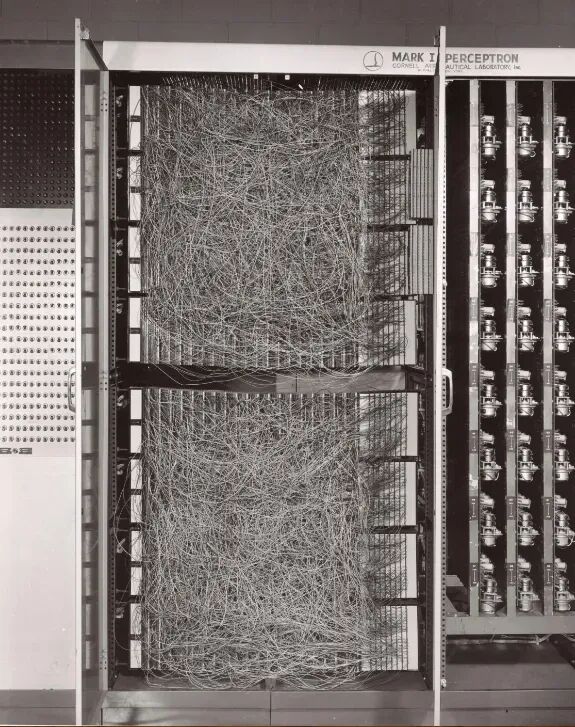
The Perceptron was hailed as "the first device capable of thinking like the human brain."
MM: What unique opportunities do you see arising from the current macroeconomic environment?
DG: Oh, regarding the macro environment, I'm not so sure. There's a Dunning-Kruger effect in macroeconomics, and being able to get past the Dunning-Kruger peak, the Dunning-Kruger zenith, and be in a state of Dunning-Kruger collapse on the macro side is very important. And I'm glad I've reached that point. Not enough people have gone that far.
So, I highly encourage everyone to make your macro trades and get them wrong so you finally realize no one knows how this works.
To be fair, I do think some people are very good at understanding how it works, and I think it's a full-time job. So I don't know how to predict macroeconomic things.
You might ask: "Wait, DG, you said you have to invest in a good cohort, so how do you make sure you're doing that?" This is more of a spiritual wish for me, meaning I don't think it's particularly actionable, and I feel like if the economy collapses, everyone loses.
I don't think shorting at scale works, especially in our industry. So you have to pray things work out and the world continues to expand and the economies continue to expand and things continue to grow.
I don't know how to talk about macroeconomics. Unless you're Stan Druckenmiller, anyone who gets too confident about this stuff should be able to produce a track record showing that the five estates and three planes they bought were all thanks to macro overconfidence. Otherwise, I'd just say shut up.
MM: Great answer.
DG: But I don't know. I think there are exciting things happening in tech. I know that space a bit, and obviously, the perhaps more interesting question is, what is exciting outside of the world of AI? Because it's easy to talk about how exciting AI is.
In fact, I think there's a lot of software being built in enterprise SaaS and mobile that's getting better and better. I have no financial interest in Nostr, which is Jack Dorsey's Twitter clone, but I see people using it and it's become something of a phenomenon. We can talk about AI all day, but there are exciting and significant things happening outside of AI too. But if the world economy gets hammered because people get really scared, or because loans were made to the wrong people and that causes losses, then everyone's going to have to have a hangover. It's not a selective thing.
MM: How do you compare the ideal risk profile of an investor versus a founder?
DG: I think the degrees of reputational risk and ego risk are similar. I mean, if I could bucket people, there are probably three categories. I'd say there's founders, there's people investing their own money, and there's professional investors investing for others. I think the best category to be in is definitely investing your own money, because I've had some really big personal wins that I didn't have to tell anyone about, and some really big personal losses that I didn't have to tell anyone about. It's kind of demoralizing, but it's fine. At the end of the day, it's fine.
I think when you're running a company, doing things on behalf of others, whether you're a founder or a professional investor, of course there's this internal monologue where you're like, "Oh, it would be so embarrassing if this happened."
That's probably a good thing, because it drives the marginal performance. I do think, for the cohorts I've invested, maybe I would've been better if earlier on I would've become more professionalized.
Obviously, if you're just looking at financial risk, founders take on way more risk, because as an investor you're just investing money, whereas founders are investing time.
And because you can't clone yourself, you're only focused on one high-risk asset. Theoretically, as an investor, you can build a portfolio and thus make repeat investments. Sure, you own a smaller percentage of each thing, but everyone's chasing thousand-baggers, so maybe it doesn't matter. So I think being a founder is a riskier activity, but investors still have the same sleepless nights dynamic because you're stewards of someone else and you told that other person a whole story and you got to keep that story going.
I think all of this is good at the margin. Conscientiousness is like cortisol. Too much cortisol gives you Cushing's, too little gives you Addison syndrome, so you need the right amount. It's a U-shaped curve.
Now, there's an interesting question:
As a founder, how can you have the lowest amount of risk that would make it more akin to being an investor?
I do think there's a story of going after a sleepy market that you really know that is a very low risk strategy that not enough people pursue because they don't know that sleepy market. Usually when you tell people to do this, the next question is: how do I find this sleepy market? Usually you give them some hand-wavy thing about how you should email a bunch of people, go intern at some energy company in Texas for a while, and come back when you've figured out what SaaS you can sell them.
But in practice, nobody does this. I mean, maybe some people do, but unfortunately too few people reach out to me, so I don't get to go on that journey with them. But I've seen some people execute this strategy very successfully, and it's really not that complicated. You can also see some parallels in Cisco acquisitions and spinouts, where some people have basically left, started the same networking company, gotten acquired by Cisco, spent some time at Cisco, left and started the same networking company again, almost four times in their life. So there are modes of it that are de-risked.
People don't like chasing these patterns, precisely because, or don't know how to chase these patterns, because they're less competitive.
They're less competitive because they don't satisfy that immediate sense that your phenotypical, say, 25-year-old founder has that it'll be really big or really successful.
That's why you tend to always be overweighted on people that are making a LangChain competitor, and underweighted on someone that is making software for helicopter pilots that fly to oil rigs. I'm just making up an example. But I think that might be a huge skill, especially for people willing to put in the effort.
We mentioned earlier that investors need to pay attention to counterparty risk, and why you're getting that deal. The corresponding risk for founders is competitive risk. Peter Thiel famously said in his book: "Competition is for losers." Honestly, I think that's a bit defeatist. The truth is real winners are in competitive fields and just win them, so that's just not true at all. However, there is a category of winners who chose less competitive spaces, and I don't think those people get enough credit, or there aren't enough attempts at that.

A 1960s personal computer advertisement
I think about this a lot as a founder. By the way, nothing we say on this podcast matters, because not enough ambitious people are listening, because I think every ambitious person has this innate belief. So I've learned that with this kind of advice, you can just watch people's eyes glaze over, and when you tell them this, you realize they're not going to take any action...
Anyway, the world keeps turning, cycles keep cycling, and more and more people show up. It's amazing to watch people stare down at the pile of bodies at the bottom of the cliff and then jump anyway. They just jump. And that's fine, because unlike physical bodies, companies dying doesn't kill people — they stay alive, learn from it, and try again. Often you'll find that when you look at founders on their second or third startup, they'll say: "Okay, I definitely don't want to do that hyper-competitive thing. It looked cool, but everyone's doing it now."
MM: Yeah. It's also interesting because going after less competitive, less glamorous spaces seems to carry some kind of "low social status." I wonder what makes that different. How does something inherently unsexy become attractive and seen as worth winning? I don't know if you have thoughts on this, but it seems like a timeless puzzle.
DG: You usually have a winner, and usually the winner is even just — they raised a lot at the Series B. And people think, "Wait, I could do that too." And markets are actually much more responsive than people imagine.
One of the great sayings of our time is the efficient market hypothesis, but markets are absolutely not efficient. People are mimetic and there's a whole lemming mentality everywhere.
So that does actually leave massive pockets of gold just lying on the street for anyone who wants to think for themselves and pick it up.
You'll find these areas are often overlooked until there's a loud funding round, and then that attracts competitors. If you're the apex predator that went after the super competitive market, you have to hope your product is so darn good that you make it extremely unappetizing.
Not for founders — you wouldn't do that — but for the venture capital world, they don't want to fund you, they don't want to arm you with their resources. I think a great example of this today is AI itself. I do feel like there was a time when the venture world was very eager to back AI labs that weren't directly commercializable, that were doing AGI research in some vague and unsatisfying way. My sense is that that eagerness has faded in the venture world, and the money has expanded to further concentric circles. So those people are pitching sovereign wealth funds now, or some random family office.
I know this because I usually get the referral calls about these situations. But I think it might have been different if GPT-4 weren't so clearly superior to Cohere's model, to use an example. I say this because I really like Cohere and genuinely hope they catch up — competition is good for all of us.
But either way, the much better life in my view is to build a great company in a sleepy market. You don't need to be on Twitter every hour. You can have your own thing, five good friends and family, and a little farm somewhere — that's a good life.
MM: Great. Digging deeper into your views on AI, I'm curious — from the perspective of a venture investor, what traits do you think make companies built to last?
DG: In 2018, 2017, 2016, you'd basically sit in meetings experiencing this extreme extrovert surplus, where you'd meet these super happy, healthy MBAs who had no problem flying United every day, stopping over somewhere to go sell product. They loved airport lounges, the food, all that stuff — but they couldn't code.
So the challenge was everyone needed a "programmer," which in my view is a pejorative. It describes software engineers like "code monkeys." But that was the situation: I need a programmer. Fast forward to, from the emails I'm getting, I feel like we now have the opposite problem. That is, you have these brilliant scientists who are sensitive and introverted and are not flying United every day to sell their product.
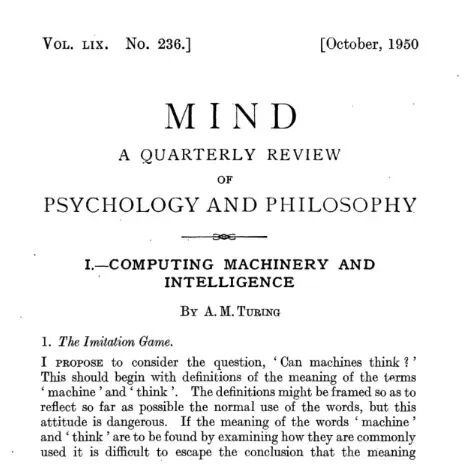
Alan Turing's 1950 research paper Computing Machinery and Intelligence opened the door to what would become the field of artificial intelligence. Those people wanted to create something amazing from the comfort of their climate-controlled homes, through a keyboard. Honestly, these people don't want to do sales, don't want to do marketing. They sort of expect the product to come to them. Now we've swung to the other end of the balance. We have too many introverts. And that's fine — that's what happens when a new field emerges.
I remember when the iPhone came out in 2007, apps came out around 2008 and 2009, if I recall correctly. There were almost no good C engineers, just a bunch of engineers who had been working on Macs for ten years, with virtually zero end-user exposure, and they were all respected people. So the initial iPhone apps were basically not commercial at all.
It took a while until Uber and Instacart got their act together. It took a while for "iPhone apps" to break through. And now, making iPhone apps is relatively a complete piece of cake, with tools like React Native.
So I think we're now in a frontier field, so you tend to get a lot of brilliant scientists, a lot of Steve Wozniaks, but you're missing the Steve Jobs types. People who can do both have always been rare in history. I don't even think Steve Jobs had both — I mean, he always had brilliant technical people around him.
Strangely, I think Larry Ellison, founder of Oracle, is a great example of someone who did have both in that era.
But the best founders can talk easily about libraries like PyTorch, yet ultimately it's about truly craving commercial success and being willing to fight for it.
You can see that spirit in their companies. So in my view, only people that do have their own models can truly create either eyeballs or dollars — and in my view, those are the only two things that matter in business, in AI as a technology business.
Further reading: 1997 Oracle Larry Ellison Interview: I Revere First-Principles Thinking, Not Chasing "Fashion."
These companies aren't relying on off-the-shelf models — they are ultimately in service of a physical product that they're selling to customers. Obviously, ChatGPT is the most famous example, and with its current revenue, it could absolutely be a public company. Midjourney, Lexica, Character.ai are similar examples. Building their own models is genuinely a bit of a margin headache for these companies, but the key is they've built a coherent product.
Now, the whole enterprise AI thing — this is absolutely a hot funding theme. I think when you encounter the 1,001st enterprise AI company, you have to ask yourself a key question: this is a massive opportunity, basically like the electrical grid has been built, but enterprises haven't plugged in yet. The Fortune 500 basically hasn't truly connected to AI.
But you have to think about the type of person suited to succeed here, and the market structure for how these companies will evolve. Because AI means something different to every company — it's not as straightforward as databases or payment solutions where you can walk into a CIO's office and say, "We're using this for our interface, we should switch to that."
AI is more like an invisible glue, like maple syrup — it creates its own shapes in every different company.
So you need someone to build customized products, to build a systems integration team, to have teams selling AI into enterprises. Is that person going to build and manage that team? Do they actually want to do that? Or would they rather just tinker with their own model and get it to spit out some cool demo summaries?
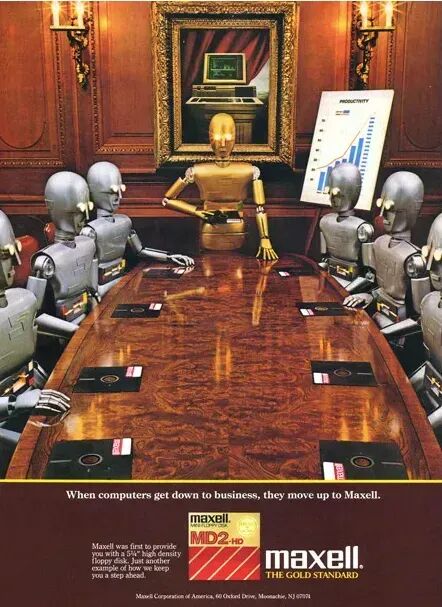
A 1970s Maxwell floppy disk ad. That's the enterprise AI problem. Sometimes you meet founders with this potential — the founder of Distill is pretty good — but more often, they really only have Wozniak without Steve Jobs. I think you have to find someone that you know is inherently commercial.
I'm increasingly convinced that if you want to do enterprise AI, you should go study ServiceNow.
I tell founders to go to ServiceNow's website and try to summarize what ServiceNow actually does after reading it. I guarantee it takes several passes to understand what they offer. And that translational energy of going from it's a bunch of Google forms to servicenow.com — that's exactly what's missing in a lot of enterprise AI.
By the way, in enterprise AI, the company that can always clean up late because of its existing customer base and sales channels is Microsoft.
So I think the world is full of opportunity, and founders should move fast.
What's certain is that every CEO, especially every Fortune 500 CEO, wants to mention AI results on their next earnings call. But what's equally certain is that the CEOs of Microsoft, Box, Dropbox, and Accenture are all working to provide that solution.
So what I'm saying is, this is how you get into those quiet industries. You go to them and say, "I'll provide you with AI," or whatever that means. It might mean you have to physically go somewhere, really get in there, even go sell to John Deere. But I think that's a super lucrative area.
Finally, what I'd say is, we've seen companies in AI that have product-market fit go from zero revenue to tens of millions or even hundreds of millions in ARR incredibly fast. In fact, the speed is such that I keep thinking, this seems like unhealthy growth, but people are genuinely hungry for it.
In that sense, I think this AI revolution is fundamentally different from all previous technology waves.
It's different from crypto in that real eyeballs are being spent — and I don't say that just because I have deep expertise in crypto.
People are spending hours every day talking to characters in Character and ChatGPT. And it's different from mobile and from the web and the rate of adoption — not necessarily as a byproduct of AI technology itself, but as a byproduct of the interconnectivity of the whole world. That is, the same force that drove the SVB bank run and the First Republic bank run is what pushed ChatGPT to hundreds of millions in ARR, because everyone's fully connected.
So these wildfires spread fast, for better or worse.
So the opportunity now is, you know wildfires spread very fast, and you want to be the company filling that void. Because once you're standing there, it's hard for others to compete with you. I say this first because I really admire Character.ai, but when people think of talking to AI, they think of ChatGPT — chat.openai.com. That's the real moat in my view.
Everyone says: "Oh, data is their moat. Capital is their moat. Microsoft's backing is the moat." No, the moat was always right there. Even in the Uber case, people said, "Oh, the moat is the network effects of drivers." No, the moat is that when people want to go somewhere, they think of the Uber app.
This is a very, very important factor that's often underestimated.
Because in a world and in a city where people mostly drive Priuses and wear hoodies, no one wants to think of the aesthetics of a brand moat. But I think brand is actually incredibly important.
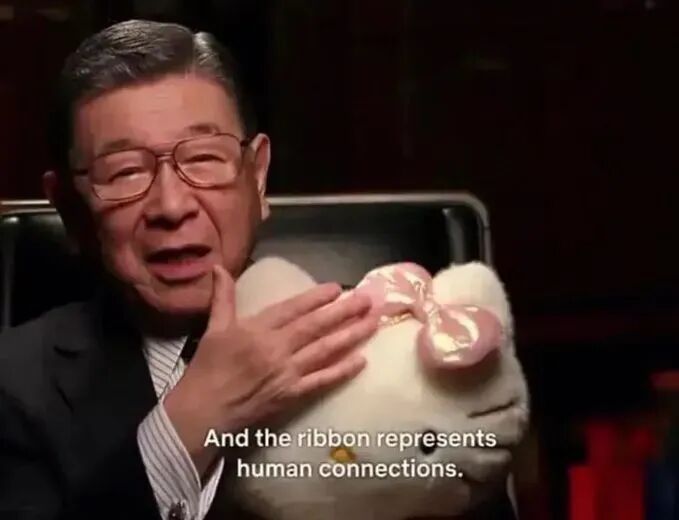
- The opportunity on the consumer side is to become the brand for a new kind of interaction or thing.
- The opportunity on the enterprise side is to find a sleepy market and just really satisfy those people. Like that example you mentioned — the market is so sleepy and boring, the social status so low, you won't encounter much competition. That's fantastic.
MM: Do you think this "wildfire dynamic" plays a role when entering sleepy markets, or is it more about promoting the technology itself or attracting talent?
DG: Well, this idea of things moving fast is indeed a good example, especially when things go bad — like people withdrawing money because a bank's stock drops, leading to more shorting, more withdrawals. Eventually we find the bank actually becomes worthless. It's a self-fulfilling prophecy moving in the bad direction. On the good side, especially in consumer markets, I do think it applies. Because everything is tightly connected, people can swipe their credit cards anytime, they have cash. Enough people have cash in hand.
I think I agree with you. In enterprise markets, especially in sleepy markets, the speed and pace may be slower. You won't get that effect where your audience rises up quickly on Twitter and you successfully raise $250 million, but what you will get is people who won't have the flip side of the benefit we just described in consumer markets — they won't churn away from you when some new shiny object appears.
MM: Right, exactly.
DG: I think if you do not become embedded in the skull of your users as the thing for the thing, people will churn off in my view.
That's the importance of brand. It only works when you really become the brand.
You could say the outcome is still undetermined. I think, looking back at the search engine wars, people will rediscover that in the race to become the place people want to go, the speed at which you satisfy user needs is actually a severely underrated factor. I think when people have a really good experience with something, it's just more likely to bind in their minds as the place to go for that sort of thing.
Speed is just a fairly cheap way to make something really good.
Obviously having it satisfy the request is really important, but just having a sense of tempo and liveliness is I think super important. We saw OpenAI being smart and shipping streaming. (Fanyang's note: Streaming refers to a feature of the OpenAI API that allows responses to be streamed back to the client in real time, providing partial results for certain requests. This improves user experience because users can see preliminary results while waiting for the complete response.)
When you think about interaction, especially with GPT-3.5 now, the speed is very fast, and that's extremely important. And Google's Bard — I'm really surprised, and the end result is also quite interesting. Google as a company was built on the prejudice that speed matters. What Google has always envied other search engine developers with is their response speed, around 200 to 300 milliseconds. They've always been fast. And this cultural need stemmed from their A/B testing showing that if response time hits 600 milliseconds, your query volume drops, which reduces the likelihood of ad clicks.
To me, it's truly incredible that Google, with its original culture, ended up launching an AI assistant like Bard that doesn't stream its output in real time. If you ask Bard, you'll find it's actually quite fast, but the final result is held back, so the overall feeling is slow. This seems to me like a disappointing signal about Google's culture. I really don't know what's going on inside.
And like the attribution of many great historical events, this may depend on the health and vitality of four or five key individuals. In Google's case, I think this comes down to the founders themselves.
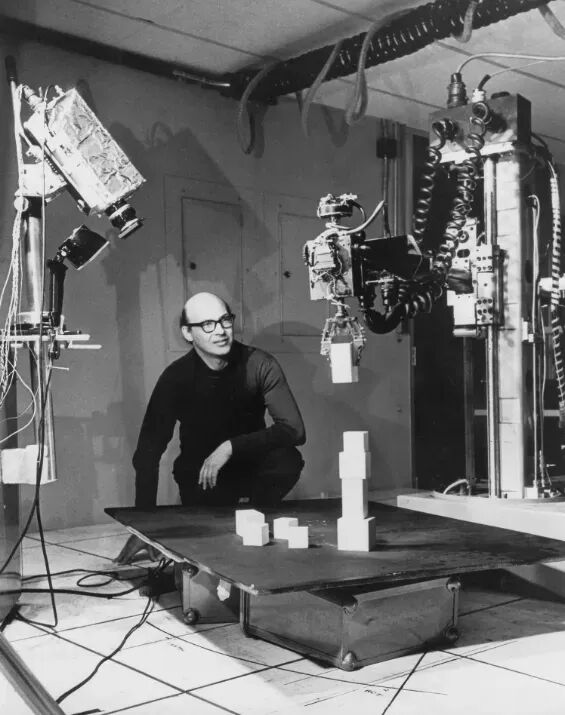
MIT professor Marvin Minsky predicted in 1967 that true artificial intelligence would be created within a generation.
MM: Last question — where do you disagree with your peers on AI?
DG: That's hard. I'm fortunate to have peers with diverse and constantly evolving views. Maybe AI is a special field in that it's extremely active, unlike archaeology where not much changes.
If we look from a broader industry perspective, I think we're actually in a bit of a lull right now, and I don't think this is the industry view, meaning I don't think progress is accelerating anymore. My view is that GPT-3 launched about two years ago, and the jump from 2 to 3 was completely different from the jump from 3 to 4. The real breakthrough actually happened two years ago. I think everything since then has been relatively incremental, and OpenAI has stated they're not training GPT-5.
If we consider the main difference between GPT-3 and GPT-4, as a consumer, I only see it really be better at coding. For everyday use and needs, we can debate benchmarks endlessly, but it is genuinely better at coding. I think it's better at coding because it was exposed to a lot of specialized coding data — many graduate students teaching it how to code better, all of which makes perfect sense. Looking at how it codes, the final output isn't exactly something that exists on the internet. On GitHub, the biggest improvement was just through more fine-tuning, which means diminishing returns to scale — we're not really scaling anymore. I do think that at some point in the future, between a day and 12 months from now, there will be another miracle where context windows grow dramatically. That seems straightforward. If you asked me to implement it in the next hour, I could, but I think it will happen.
But I don't think progress is accelerating — meaning I think it's been relatively stagnant. That makes sense. We'll have AI winters, summers, autumns, and springs. Not every month will be like that month where things seemed to happen every day. But that's my view. I think many people would disagree because if you go on Twitter, you see lots of demos. But I'm saying this because I've tried every demo I could try, and there's a lot of correct academic terminology on Twitter to describe this phenomenon — many demos don't actually work but look like great demos. I think anyone who's actually used these things knows that ultimately, once GPT makes the error of generating non-executable code, the subsequent failures you show to GPT, and the possibility that it magically auto-fixes the code and gets the program working again, is very low — at least in my experience.
Maybe I'm using it wrong, but clearly there's something going on there.
Of course, it's still a miraculous product, probably one of the most important achievements in human civilization.
But I don't know if the pace of progress is still accelerating. We'll get a "free lunch" because these NVIDIA H100 processors are coming online, and the new integer formats NVIDIA has proposed can make computation slightly faster. So just from hardware alone, you can get speed improvements in training and inference without any software improvements. But I think on the software side, on this day that I'm talking to you here, May 1, 2023, progress seems to be slowing down. Of course, AI pessimists would think that's a good thing. So whatever, we don't want to go deep into that.
By the way, for investors, slowing progress has both pros and cons.
The good news is you can catch your breath — the market structure won't change right under your nose. The bad news is you tend to place a lot of bets with the preconception that the market's going to look a certain way, and it can just change when things pick up again. I believe they will pick up again.
For example, there are many companies raising huge amounts of money right now, with excellent founders, working on these vector databases. The idea is to create something like a MySQL or Oracle database that can very efficiently search on the similarity of text — exactly what machine learning models or large language models use their embeddings for. This is very interesting, especially when context windows (the amount of text you can input into the model at once) remain relatively fixed.
So you're using these external vector databases as sort of a hippocampus connected with an umbilical cord to the model, and it can shuttle things back and forth, and it can talk to the vector database like a little external library. But if context windows dramatically increase to 1 million, 5 million, or 10 million tokens, I don't know how important vector databases really are, because I could suddenly put my entire source code into the model's context window, or put the entire U.S. tax code into the model's context window. That's a great example of market structure shifting. I think this is a very exciting time and space. The entire market itself is changing, not just companies — that's really different, and shows how fast I think the world is moving.
MM: Great. That's a fantastic answer, DG. I'm so glad you could join this podcast. Thank you so much for being here.
DG: Thank you so much for having me.