FaceMind Lu Hongyuan: At the "Origin" of World Models, Building a "Non-Consensus" Neolab

Riding the wave of the moment, embracing the latest technology.
Riding the cutting edge, embracing the latest tech.
👧🏻 Interviewer: Ms. Yi
🥷 Editor: Koji
🧑🎨 Layout: NCon
"World models" aren't a new concept. But in 2026, the "generalization bottleneck" in embodied intelligence has thrust world models directly into the spotlight.
Across the ocean, Fei-Fei Li's World Labs has surged past a $5 billion valuation, while Yann LeCun's AMI Labs has raised over $1 billion in seed funding — rapidly inflating the temperature of the world model赛道. Capital is accelerating in. Over 33 domestic companies in world models and related sectors have completed funding rounds, collectively absorbing more than 26 billion RMB.
Meanwhile, the tech giants are picking up speed too. Alibaba's Qwen-RobotWorld, Tencent's HY-World, and ByteDance's Seed3D are iterating rapidly. Huawei rarely mentions "world models" publicly, yet it has positioned its Pangu large model as the "training foundation" for embodied intelligence and autonomous driving.
Everyone knows the unspoken rule: whoever enables AI to truly understand the laws governing the physical world will seize the gateway to the AGI era first.
Today, we turn our gaze toward the more foundational research arena — searching for the origin point where technology first sparks. In the lab, who is defining the most底层 architecture innovations for world models? Who is providing genuine,原发性 innovation for this赛道?
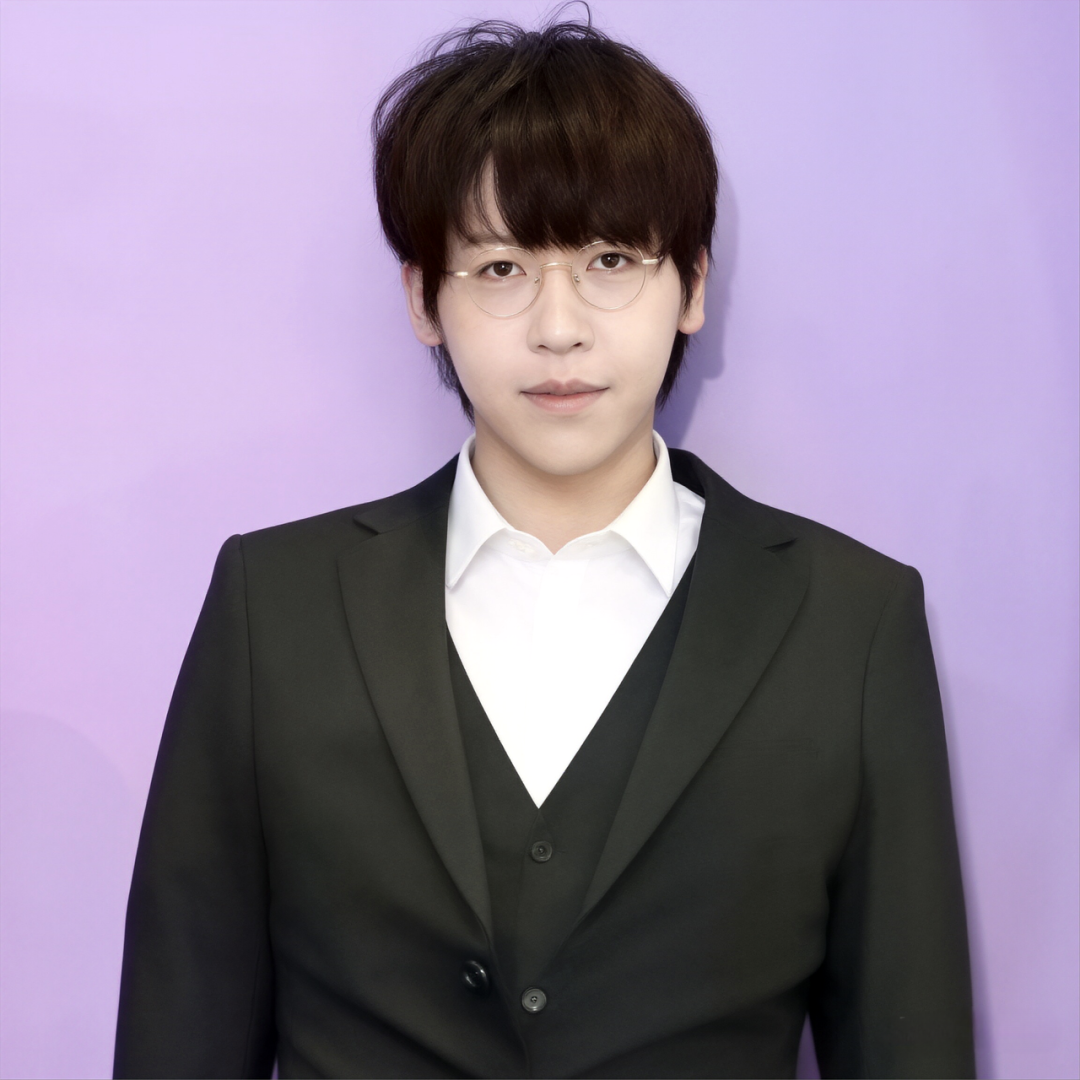
Recently, we sat down with Adam Hongyuan Lu, founder of FaceMind. A post-95 PhD, he's obsessed with finding fundamental breakthroughs at the architecture layer of world models. Just six months into his doctorate, he won an EACL Best Paper Award. He even has a theory named after him — Adams Law.
FaceMind just closed a financing round of tens of millions of RMB, with existing shareholder 360 Group continuing to invest. In this conversation, we focused on: What opportunities does Adam see in this wave of world model fever? What technical innovations does his latest paper, Looped World Models, bring? And how does this 20-person Neolab team plan to break in, survive, and keep defining the future? Below is the full transcript of Crossing's conversation with Adam Hongyuan Lu, founder of FaceMind.
Rapid Fire
First, a quick rapid-fire round to help everyone get to know you fast.
🚥 Crossing
Age?
🧑🏻💻 Adam Hongyuan Lu
Post-95s
🚥 Crossing
Alma mater?
🧑🏻💻 Adam Hongyuan Lu
Imperial College London, BSc (Computer Science — Computing)
University of Edinburgh, MSc (Artificial Intelligence — Informatics)
The Chinese University of Hong Kong, PhD (World Models — System Engineering and Engineering Management)
🚥 Crossing
MBTI and zodiac sign?
🧑🏻💻 Adam Hongyuan Lu
ESTJ & Scorpio
🚥 Crossing
One sentence to describe your current company and product?
🧑🏻💻 Adam Hongyuan Lu
FaceMind Research Asia — we're a Neolab for general world models.
🚥 Crossing
Funding status?
🧑🏻💻 Adam Hongyuan Lu
Currently raising a round with tens of millions of USD in target, at a valuation of hundreds of millions of USD.
🚥 Crossing
Team size?
🧑🏻💻 Adam Hongyuan Lu
About 20 people
🚥 Crossing
What were you doing before starting up?
🧑🏻💻 Adam Hongyuan Lu
Researcher in world models / spatial intelligence / pre-training directions. 2022–2023, I did pre-training at Microsoft; before that, recommendations at Alibaba and algorithm engineering at Amazon.
Entrepreneurial Drive: Searching for Life's "Highest Slope"
🚥 Crossing
You call yourself an "otaku" — from an anime-loving PhD nerd to deciding to found an AI company, how did this transformation happen? You could have taken a respectable academic position. Why choose entrepreneurship?
🧑🏻💻 Adam Hongyuan Lu
To do more meaningful things, to search for a "life reinforcement learning metric" with a steeper slope.
When I wrote a few papers, I realized there was a lot that academia typically doesn't put down on paper. For example, no one tells you that the PersonaChat dataset is faked, not a real deployed dataset; no one tells you that when AUC goes up, CTR doesn't necessarily go up either. Optimizing for them is often indirect.
I felt that going to industry might be a more direct path. And entrepreneurship offers the steepest slope, because as a fresh PhD, what you can do alone is limited — capital is the best leverage.
There's a small story. When I first wanted to start a company, someone invited me to be CTO and offered me substantial equity. I declined because my father told me "you're still very lacking, he's better than you, you should learn from him properly." I thought he was wrong — I should be the CEO, the one in charge.
Actually, I later realized we were both wrong: a person should be in their right position, whether that's CEO or CTO. A CEO gets more equity but also bears more responsibility and obligation. But I'm more suited to being CEO.
🚥 Crossing
What from your past made you feel you're more suited to being CEO?
🧑🏻💻 Adam Hongyuan Lu
I'd say I'm more suited to being the founder of a deep tech company.
During my research phase, I did feel I had strong research intuition. I remember my first paper — one reviewer's comment was "can change the community," which I suppose counts as evidence.
I think CEO is a fairly complex function. A higher equity stake comes with more paid-in capital responsibility and legal liability.
Generally speaking, a startup CEO is the role least likely and most difficult to leave that company. I think deep tech company CEOs are usually "young prodigies" and young scholars, plus some more senior veteran scholars — at minimum, PhD holders.
🚥 Crossing
Why the name FaceMind?
🧑🏻💻 Adam Hongyuan Lu
Face is the Face from Facebook, Mind is the Mind from DeepMind.
From EACL Best Paper to Adams Law
🚥 Crossing
In 2023, you won an EACL Best Paper Award just six months into your PhD. ChatGPT was white-hot then — what was different about your focus? How did your research direction and trajectory evolve?
🧑🏻💻 Adam Hongyuan Lu
My first ACL first-author paper was on "AI hallucinations."
Simply put, it used certain control tokens to manipulate the model, which could significantly reduce hallucination problems. This method also works for world models. Later, someone built on our work with similar research, and it even got covered by The Wall Street Journal.
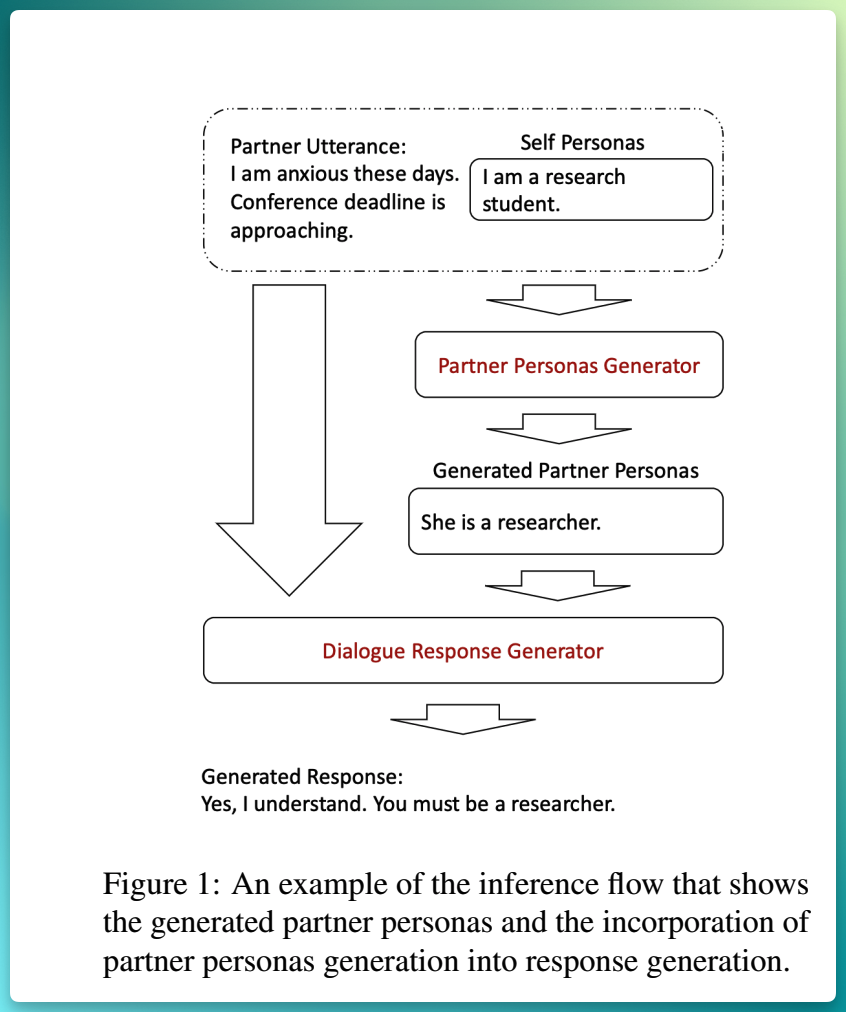
My second paper, at NAACL (Oral), was on Looped Architecture.
The Looped approach was still relatively simple then — just two layers, with shared parameters between two Transformers, then a discriminative network for RL-based gradient backpropagation at the end.
This was the first time anyone used a generative model to extract personalized information from both sides of a conversation, then generate corresponding downstream responses.
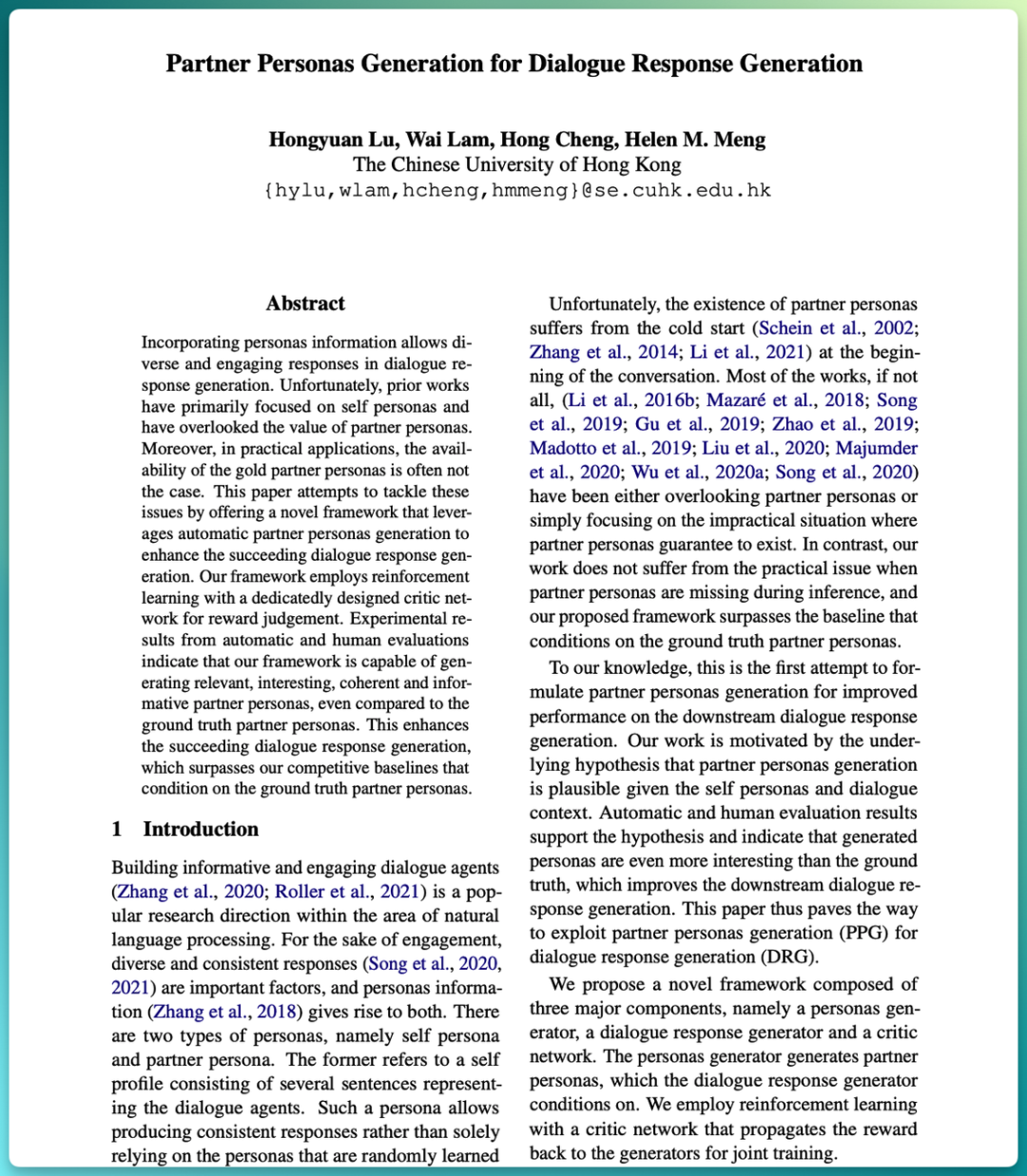
Back then, the Looped architecture was used less than it is now. I was one of the few researchers in the industry who initially adopted this shared-block loop architecture.
I noticed then that this kind of model was harder to optimize than ordinary models.
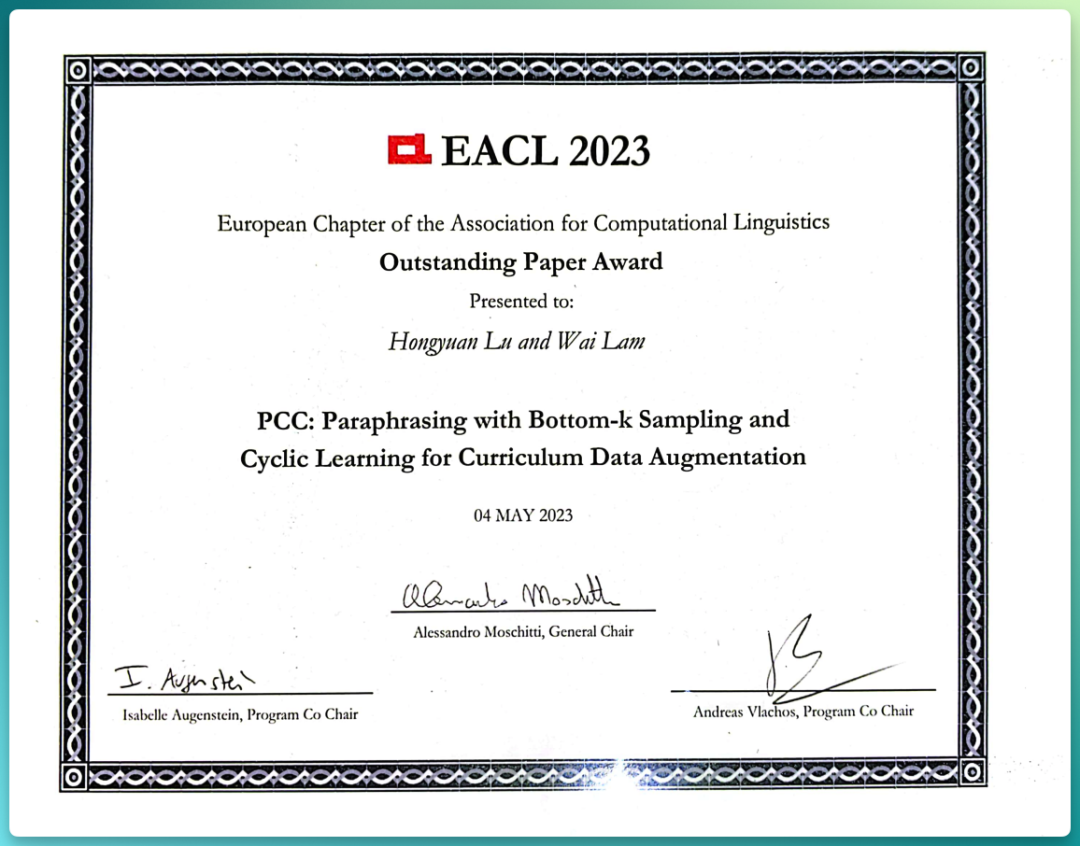
For the EACL Best Paper Awards, I worked on decoding, reinforcement learning, and curriculum learning. I wrote this paper in months 4–6 of my PhD. The award is literally one-in-ten-thousand, and I spent very little time on it — just me and my advisor as authors.
Being able to independently propose ideas and win this award at that career stage is genuinely rare and surprising. But I was relatively calm about it at the time.
At Microsoft, I mainly worked on large model pre-training — specifically multilingual model pre-training — during 2022–2023.
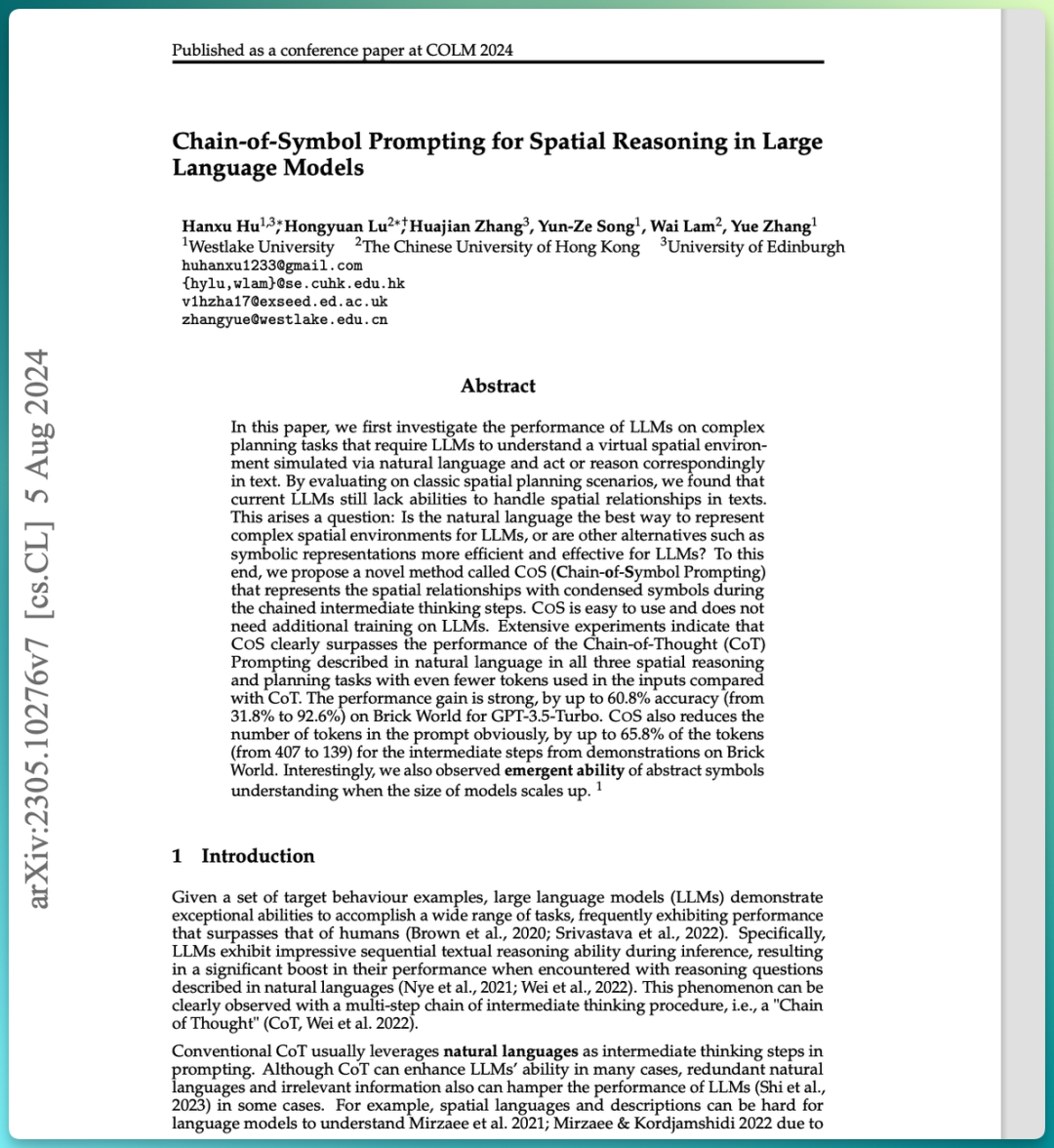
Starting in 2023, I also began working on World Modelling and spatial intelligence. At the time, very few people were researching VLMs. We published at COLM (Conference on Language Modeling), an academic conference held in Montreal, Canada, focused on language model research.
These technical stacks are connected to our current large model startup direction. You could say I was already thinking about how to build world models before VLMs even existed.
Later, we came up with a technical approach: using symbolic methods to represent certain information as input to larger models — such as LLMs — to help them better process spatial information. My collaborator tried it out that same day and said they'd gotten it working by the next.
This paper was my first time publishing as a Corresponding Author, a role typically held by PhD advisors.
Unfortunately, none of this had much to do with Coding, which became the hottest area for large models. I even gave up an opportunity to do Coding at MSRA (Microsoft Research Asia) to pursue pre-training instead, because I found the future of MSRA's pre-training direction more interesting.
In retrospect, it may have been fate. We weren't deliberately chasing trends — we were focused on our own directions: looped models, spatial intelligence, representation learning. When the timing was right, opportunity came naturally.
🚥 Crossing
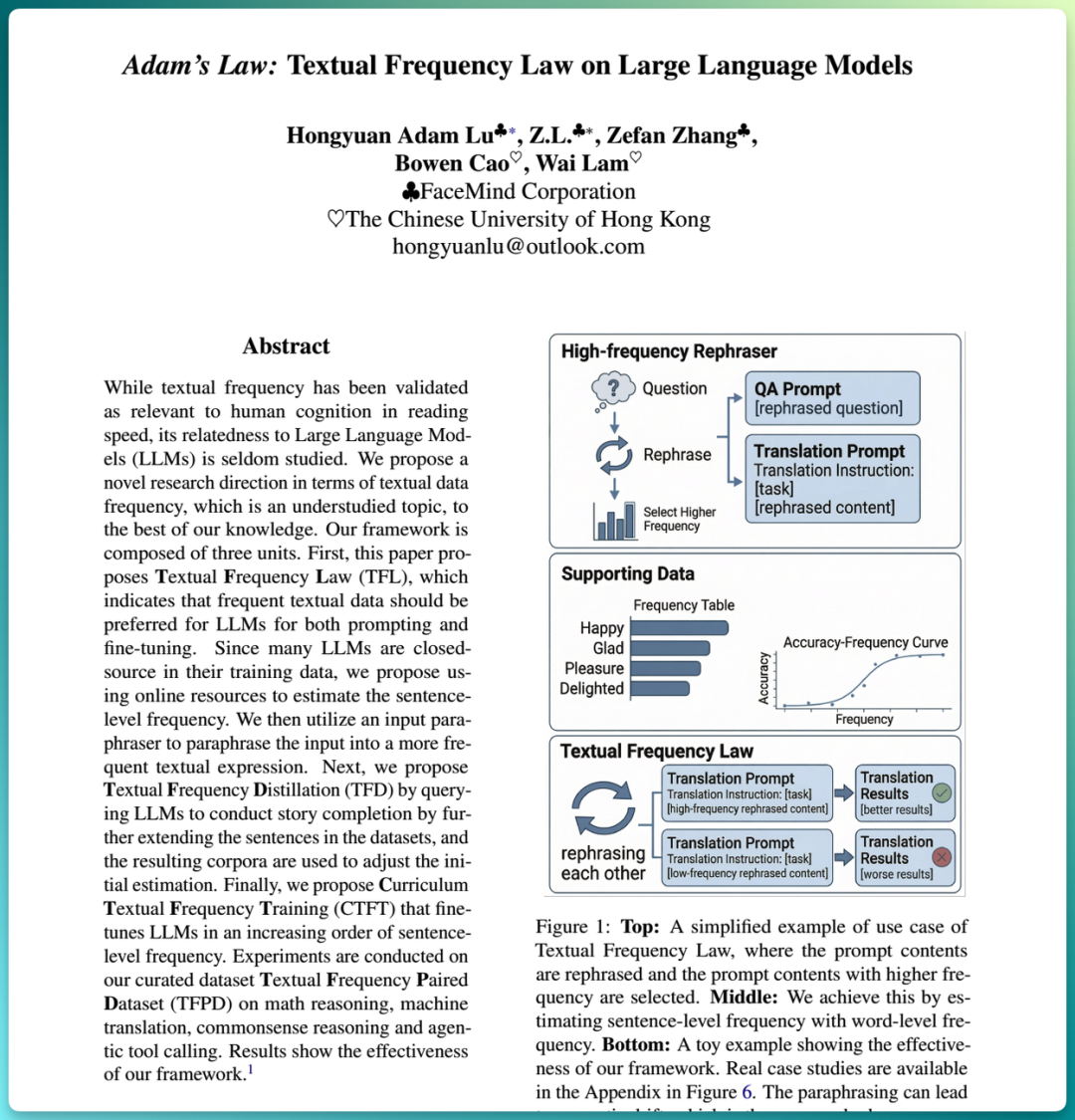
This April, you defined a theory in your own name — Adams Law — stating that what determines whether a model is intelligent isn't just "what you ask," but also "how you say it." How did you discover this first?
🧑🏻💻 Adam Hongyuan Lu
I thought of it in the shower. I'd spent years doing CV (computer vision) research and had dealt with data imbalance problems. But in the LLM field, this issue hadn't received much attention from the industry yet.
This paper was accepted to ACL 2026 Main Conference. The core argument is that we need to pay attention to low-frequency data during model training.
It can be applied to all LLMs and Agents, and also has applications in AI safety, since rare words are more likely to crack or attack models. Similar ideas also apply to our world models.
Deep Dive into LoopWM
🚥 Crossing
Your team uploaded a paper in June titled Looped World Models. What are the key technical highlights?
🧑🏻💻 Adam Hongyuan Lu
The technical core of this paper is that it uses a looped architecture to reduce the Compounding Error problem, which is especially critical in World Modelling.
I believe World Models are naturally suited to Looped Architecture — not because "looped structures are trendy lately," but because world modelling itself, in its computational form, closely resembles "iteratively refining a state estimate." This differs from tasks where a single forward pass yields the answer.
The Looped World Models paper precisely captures this structural isomorphism: the process of an environmental state advancing from the present to the next step can itself be understood as repeatedly applying a "shared transition law," and the Looped Transformer happens to excel at repeatedly applying the same update operator to a Latent State. More specifically, the core of a World Model isn't "recognizing what this frame is," but "inferring what the next step will become."
This inference often can't be resolved in a single step. In simple scenarios, perhaps one update suffices; but in complex scenarios — collisions, contact, multi-object interactions, occlusion recovery, long-chain causal propagation — the model actually needs to internally reason through multiple rounds, gradually refining its Latent State, to estimate the state transition more accurately.
The key intuition behind LoopWM is this: not all Transitions deserve the same depth of computation, and the Looped Architecture can make "thinking depth" an adjustable dimension, allowing complex steps to iterate more rounds and simple steps fewer. This fits the non-uniform complexity of the physical world and interactive environments far better than fixed-depth models.
The second reason is that World Models particularly need parameter efficiency.
Because a World Model isn't called just once — it's often invoked continuously over many steps in a Rollout, even hundreds or thousands of steps. For a module that gets executed repeatedly like this, parameter count and per-step computational cost get magnified many times over.
So if an architecture can use shared parameters for repeated Refinement, rather than stacking entirely new parameters each time it goes deeper, it becomes especially cost-effective in a World Model.
In the LoopWM paper, we explicitly emphasize that parameter reuse in Looped Architecture carries high value in World Simulation. Since Rollout itself is a process of repeatedly calling the Dynamics Model, a model that saves parameters and can deepen computation on demand will continuously save costs across the entire Rollout.
The third reason is that World Models have long been plagued by Compounding Error, and the value of Loop lies precisely in "thinking through the single-step state update more thoroughly first."
The problem with many World Models isn't that they can't predict the next step — it's that a slight error in the next step causes everything to drift off course afterward. LoopWM's approach isn't to magically eliminate error directly, but to do multi-round Refinement in Latent Space, so that each state transition gets internally polished before being output.
In other words, it aims to transform a "rough one-step prediction" into a "one-step prediction after several rounds of internal correction." This intuition resembles many numerical iteration, state estimation, and Belief Update methods: a single update isn't stable enough, so you add several inner loops to push the solution closer to a better Fixed Point.
The fourth reason is that World Models more easily provide a semantic foundation for "shared transition laws" than language models do.
While looping is possible in language too, having different Tokens, positions, and semantic spans share the same Refinement Operator sometimes feels more like an engineering assumption; in World Models, the fact that "environmental evolution is governed by relatively stable dynamical laws" is inherently more natural.
The paper puts it directly: environmental dynamics can be viewed as a process of repeatedly applying approximately stationary transition laws, so using a shared Latent Update Operator repeatedly on the state is structurally justified.
There's also a very practical point: Loop doesn't just bring "going deeper," but also "more stable control over depth."
If a World Model simply goes deeper blindly, it easily becomes both expensive and unstable; LoopWM isn't simply cranking up depth, but making depth iterative, stoppable, and allocatable by difficulty.
I also specifically incorporated stability parameterization in the paper to ensure the Recurrent Latent Update doesn't diverge — this is particularly important for World Models because they genuinely need multi-step Rollout, and once the state blows up, the whole thing collapses.
Previous RSSM architectures could only manage 50-something steps of Rollout before failing, but now we can do hundreds. Simply put, long-horizon tasks for simulated robots can be done much better.
🚥 Crossing
What are the major characteristics of LoopWM?
🧑🏻💻 Adam Hongyuan Lu
First, Compounding Error tolerance.
When traditional world models do multi-step Rollout, each step's prediction error ε gets exponentially amplified by the system Jacobian — DreamerV3 only dares to imagine 15 steps, collapsing completely after 50; video diffusion models chained together develop physical inconsistencies.
LoopWM uses Spectral Constraint to strictly bound the model Jacobian's spectral radius at ρ < 1, making each loop iteration a contraction mapping where error decays exponentially with iteration rather than amplifying. In multi-step Rollout, error propagation between steps is likewise constrained by the spectral radius, downgrading cumulative error from "exponential explosion" to "bounded accumulation." This provides a mathematical stability guarantee for 100–200 step long-horizon planning that existing world model architectures lack.
Second, LoopWM has a superior Test-Time Scaling Law.
Existing inference-time compute scaling schemes come with varying costs: RoboMonkey requires an additional VLM verifier, VLA-Reasoner's MCTS search cost explodes exponentially at O(b^d), SITCOM needs multiple complete Rollouts. LoopWM's Adaptive Loop Depth is the lowest-cost Test-Time Scaling mechanism — each additional Loop is simply one extra forward pass through the same Transformer parameters, with strictly O(n) cost, no extra parameters, and no KV Cache bloat.
More critically, Loop count is adaptively controlled through convergence detection: simple scenarios converge in 3 iterations, complex scenarios automatically increase to 15–20 iterations, with compute intelligently allocated to where it's actually needed. Prediction Quality and Loop Count follow a power-law relationship, constituting an Inference Scaling Law for World Models unique to looped architectures.
Third, parameter efficiency.
Most world models today operate at billion-parameter scale — Cosmos at 7–14B, π0 built on the 3B PaliGemma — and can only run inference in the cloud. LoopWM achieves equivalent N-layer computational depth by iterating the same parameters N times, trading loops for width. Parcae has already validated this principle: a 770M-parameter Looped Model matched the performance of a 1.3B standard Transformer.
🚥 Crossing
You made a bold claim — "1B parameters beats 100B-parameter Claude Opus." Can you elaborate on that?
🧑🏻💻 Adam Hongyuan Lu
Yes, we've already achieved promising results in our in-house experiments.
We're more aligned with LeCun's latent-state paradigm. Currently we focus more on understanding, not video generation.
🚥 Crossing
You emphasize "cross-layer parameter sharing (looping)" in your paper, but this isn't new in AI history — RNNs and ALBERT did this too. RNNs were eventually displaced by Transformers due to poor parallelism and difficulty scaling. How do you see this?
🧑🏻💻 Adam Hongyuan Lu
RNNs and Looped architectures are quite different.
The RNN architecture in Dreamer was originally called RSSM. The parallelism efficiency issue can be addressed by widening the model, and specialized infra can be designed in the future, just as was done for autoregressive models.
Looped architectures have their own advantages, and I believe these challenges will all be solved. Our own company will have an infra team too.
I even think this could be a standalone business opportunity for an infra company or an infra world model.
Because the Looped Model is an architecture that can be applied to other domains and referenced by other models or tasks. Video generation models themselves face a serious compounding error problem that requires longer rollout steps.
🚥 Crossing
Another question: LoopWM saves parameters, but what about inference time? In real commercial deployment, considering both parameter storage and compute time costs, does it actually save money or cost more?
🧑🏻💻 Adam Hongyuan Lu
Our computational efficiency is measured in FLOPs. Inference time is equally efficient — we reduce compute by 1/100, and that's measured by time saved.
Moreover, deferred decoding and early exit can further reduce computation.
I think, more than saving money, the biggest goal right now is saving time. The core significance of saving time is reducing latency.
🚥 Crossing
What do you see as LoopWM's current limitations? How do you plan to address them?
🧑🏻💻 Adam Hongyuan Lu
LoopWM is indeed architecturally non-mainstream, particularly in parallel computation. This is actually somewhat similar to autoregressive models. I believe there will be better solutions at the architecture level, width hyperparameter level, and infra level.
Honestly, we haven't done much real-world deployment yet — it's mostly simulation. There will be more in the future.
For LoopWM, we're currently planning to develop the LoopWAM version, which is a shared-parameter training version with action — it can infer actions.
🚥 Crossing
You mentioned "deferred decoding" in your paper. Can you expand on that?
🧑🏻💻 Adam Hongyuan Lu
The Deferred Decoding approach — LoopWM-DD (Deferred Decoding variant) splits rollout into two nested loops: an Inner Loop and an Outer Loop.
- The Inner Loop is within a single timestep, where the Looped Transformer iteratively refines the latent state — this is LoopWM's core mechanism itself;
- The Outer Loop is the cross-timestep action-conditioned state transition, i.e., h_{k+1} = L_θ(h_{k,0}, u_k), running K consecutive steps without ever calling the decoder, and only invoking D_ξ(h_K) once at the K-th step's endpoint to decode observations, rewards, and termination signals.
In plain terms: you can iterate repeatedly in latent space, maintaining stability over longer rollout steps. For robotics, we believe future tasks will inevitably become more long-horizon, but current algorithms still tend toward single-step — right now people have robots fold clothes, not clean an entire room.
🚥 Crossing
If you completely discard intermediate decoding and only predict at the endpoint, won't the model be "walking blindfolded" over long horizons? Once deployed in physical scenarios, could this cause sudden large-scale loss of control?
🧑🏻💻 Adam Hongyuan Lu
That's during inference. During training, you don't actually rely solely on deferred decoding signals — it's even a good opportunity for data augmentation.
Also, it depends on whether your goal is world modeling or action inference. If you only want immediate action inference, you can predict multiple future world steps to roll out.
Of course, if you're using the LoopWAM (Looped World Action Model) we're currently developing, that's a different story.
🚥 Crossing
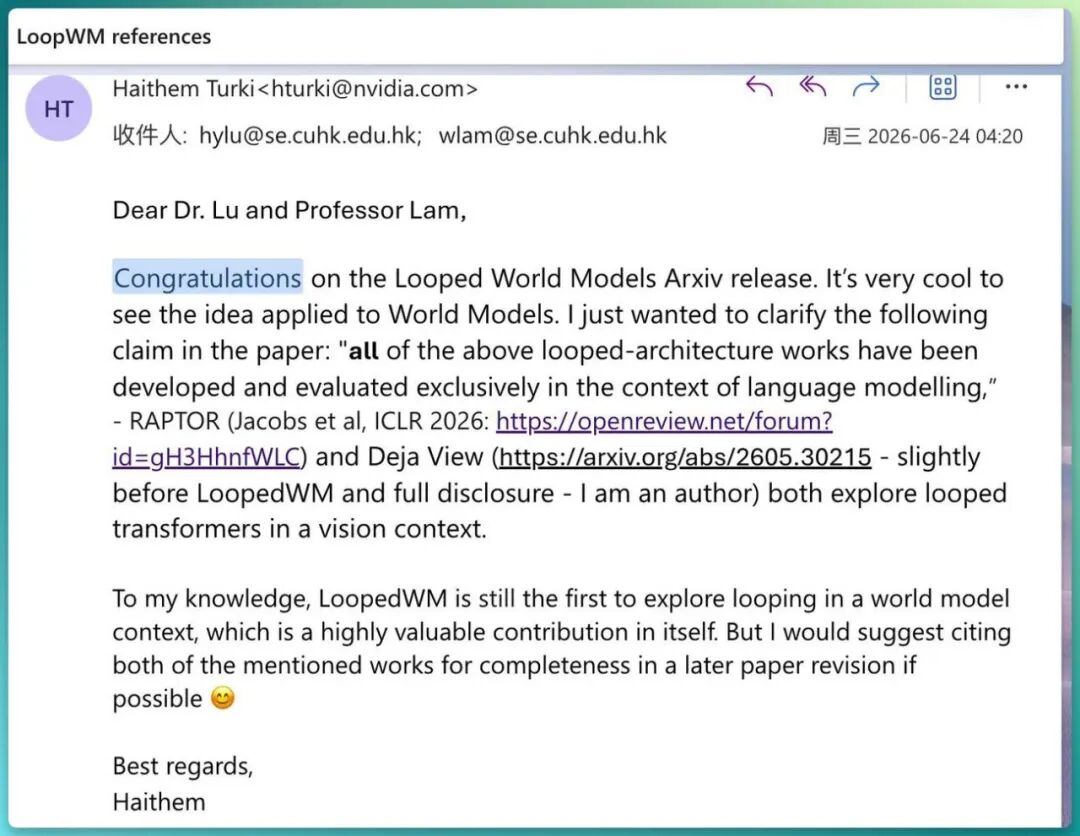
A senior researcher at NVIDIA emailed that your work is a "highly valuable contribution." How do you view this assessment?
🧑🏻💻 Adam Hongyuan Lu
Yes. I think his evaluation is fairly objective.
I've actually been researching loop architectures since 2023.
While this may not be an entirely new topic, applying it to world modeling tasks is indeed the first time.
Because world modeling as a task differs significantly from language modeling, particularly in data volume and the stratification of data difficulty.
I believe this paper may have longer-term, more significant implications for the world modeling community. More people will shift toward the Loop architecture in the future, because it has unique advantages for long-horizon tasks, enabling robots to execute end-to-end long-horizon tasks.
I hope that one day, when people look back at our research, LoopWM will stand as a very important milestone.
"Actively creating non-consensus is our best competitive weapon"
🚥 Crossing
You mentioned your current startup direction is "world models." What specifically does FaceMind's "world model" entail? What scope and scenarios does it cover?
🧑🏻💻 Adam Hongyuan Lu
We've released a new architecture called Looped World Model.
After submitting this paper to Hugging Face, it quickly reached the top of Daily Paper.
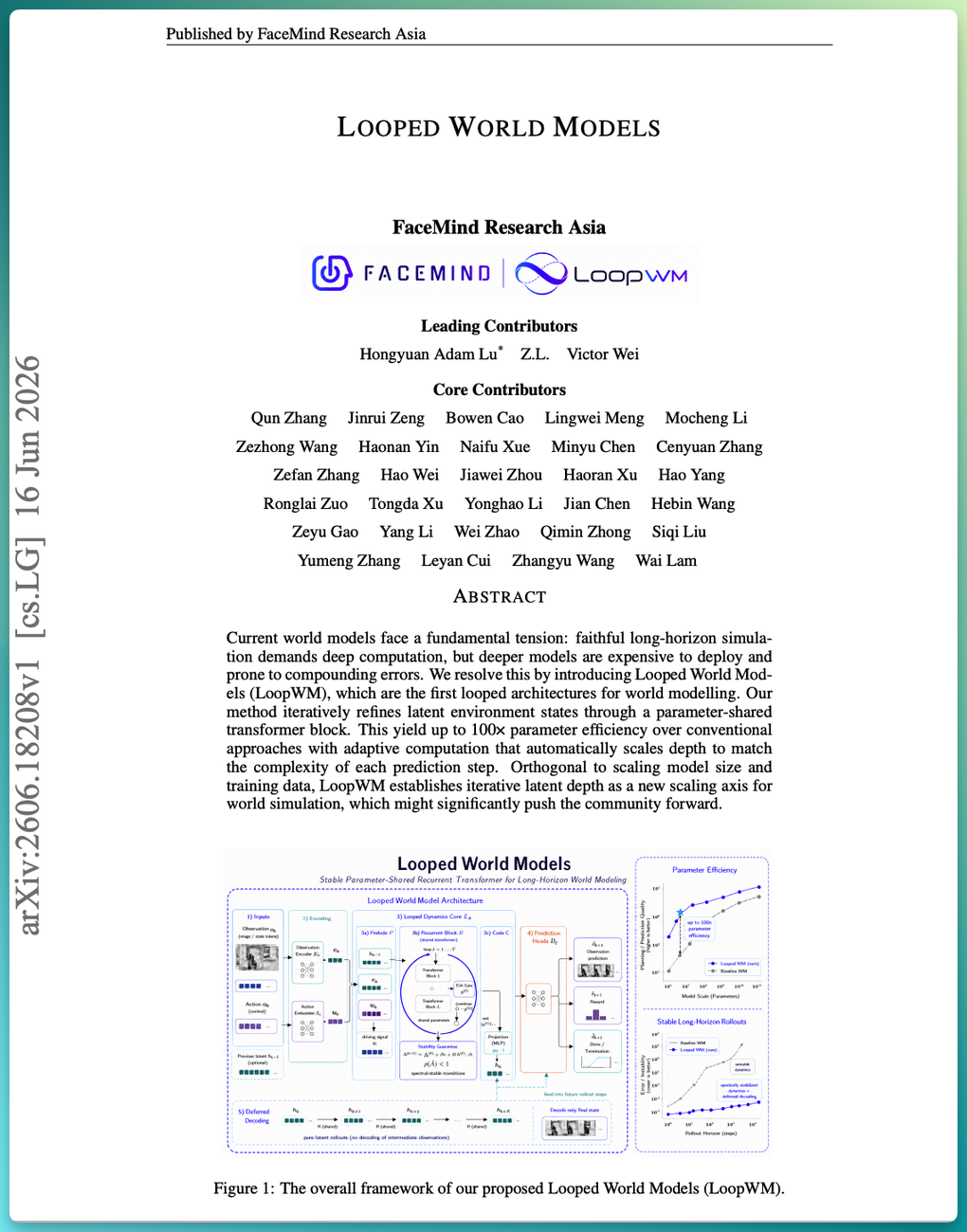
Our model is our product. This model primarily serves GUI Agents and world models for simulated robotics environments.
We don't build robot hardware itself — we currently have only limited experience with physical robots; our simulation work has focused most on ManiSkill dexterous manipulation. We'll expand into more areas as the company grows larger.
🚥 Crossing
What's the current status of this model?
🧑🏻💻 Adam Hongyuan Lu
One direction we're pursuing next is extending this model to the Looped World Action Model, and building some innovative data pipelines.
Additionally, we're filling gaps in algorithm talent and compute resources.
This year, we expect to release a 10B-scale World Action Model.
🚥 Crossing
Your previous product was "Diedie She" (叠叠社). The leap from "Diedie She" to "Neolab for general world models" is enormous. What triggered this pivot? How did you think through it?
🧑🏻💻 Adam Hongyuan Lu
Diedie She wanting to "save shut-ins" was a beautiful idea, because our team itself are shut-ins.
But beyond that label, we have another identity: researchers.
When we first started the company, it was actually quite difficult, because we had no product experience, no operations experience, and this wasn't merely a specific product problem.
After graduating, I gradually realized that a technology-oriented approach might suit me better.
There's a saying: if you can achieve ten times the results with one-tenth the effort, that's your talent. World models clearly suit our founding team better, because we're top-tier researchers.
🚥 Crossing
Tell us about the current FaceMind team?
🧑🏻💻 Adam Hongyuan Lu
Our founding team is me and Vic (Weiran Wei) — I primarily lead algorithms, he primarily leads engineering.
I did my PhD at The Chinese University of Hong Kong — my publication record was very strong, I won a Best Paper Award, and I took home several gold medals at ACL competitions. I was already working on Looped Architecture in 2022, and started on spatial intelligence in 2023.
Vic did his PhD at University of Cambridge, focusing on representation learning — basically LeCun's latent-space world model approach. His engineering skills are far stronger than mine.
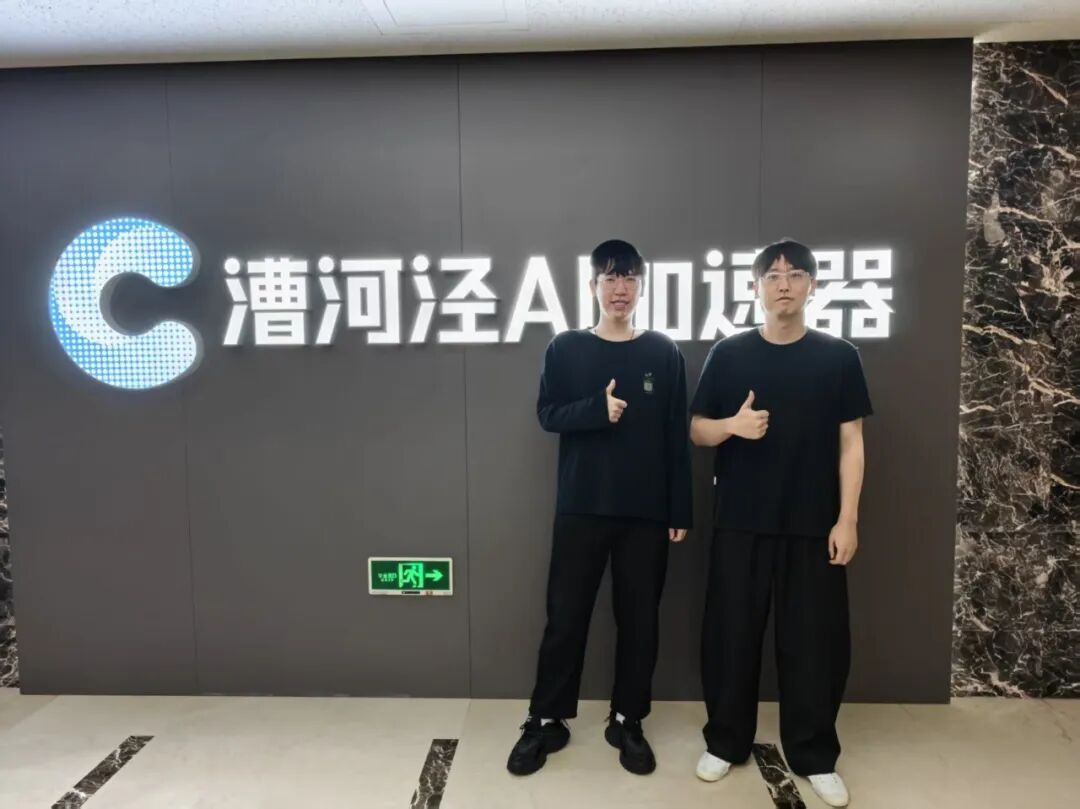
FaceMind CEO Adam Lu (left) & FaceMind CTO Victor Wei (right)
We've always worked extremely hard. We're often still discussing work at 3 a.m. — I frequently call Vic at 3 a.m. for meetings about technical problems.
Our team is now around twenty-plus people, with an average age probably in the early twenties. Everyone is highly motivated, self-driven, and talented. Many people didn't join for better pay — it's more about alignment on direction and goals. Everyone believes the company can grow very large.
🚥 Crossing
What's FaceMind's funding situation and future capital planning?
🧑🏻💻 Adam Hongyuan Lu
We're currently preparing our latest funding round, with a valuation in the hundreds of millions of dollars.
Commercialization isn't actually urgent for this赛道. One of our team's advantages is that we still have room for equity dilution — we can raise several more rounds.
🚥 Crossing
What's FaceMind's current R&D situation?
🧑🏻💻 Adam Hongyuan Lu
Right now most of our capital goes to R&D. We plan to put more than half of subsequent funding into model training. At peak, we've run nearly a hundred cards simultaneously.
The data is a mix of simulated robot data and real robot data — some open-source, some self-collected. Currently the self-collected portion is relatively small.
🚥 Crossing
The world model赛道 is currently very hot for startups. What do you think makes FaceMind unique?
🧑🏻💻 Adam Hongyuan Lu
Always innovating, going where no one has thought to go.
Maybe one day we won't just be doing world models anymore — we might find the next AGI solution before LeCun does.
Compared to startups that simply copy a logic from the United States, I believe "actively creating non-consensus" is our best competitive weapon.
"My technical intuition isn't wrong"
🚥 Crossing
Since you started the company in 2023, over these three years, have there been any particularly challenging moments in team collaboration?
🧑🏻💻 Adam Hongyuan Lu
I think the most challenging thing was that I used to have the team do things they weren't good at. Later I realized this doesn't work — a person should be placed where they can maximize their value.
Another thing that struck me deeply: we have an employee who needs to frequently check in and discuss with family, because his partner is very worried about him being at a startup. This made me realize that entrepreneurship does benefit from being relatively young — because you just make decisions yourself, without having started a family. Of course, having a partner who is especially supportive is the exception.
Also, when I first started running the company, I worried a lot. I felt the team couldn't operate without me, so I exhaustively monitored everything every day. It's much better now — the key positions all have the right people at the helm.
🚥 Crossing
You said you have strong "technical intuition." If your "technical intuition" is wrong, wouldn't that cause huge losses for the company and partners?
🧑🏻💻 Adam Hongyuan Lu
Actually I think it's fine. My technical intuition is above industry average. Really, roughly top 25% is enough to survive in your赛道. I believe I've reached that level.
🚥 Crossing
You believe your "technical intuition" can't be wrong?
🧑🏻💻 Adam Hongyuan Lu
Yes. I believe my technical intuition cannot be wrong — I've always been far more accurate than most people at an ordinary level.
🚥 Crossing
You've said you "don't want to be someone with too much businessman temperament," but entrepreneurship is fundamentally a commercial activity — you face dilution from fundraising, compromises on product direction, and other practical issues. How do you see this?
🧑🏻💻 Adam Hongyuan Lu
For a world model-oriented company, it's still too early to talk about commercialization at this stage. We do have people specifically responsible for commercialization on the team. But I don't think fundraising is purely a commercially-oriented thing.
I don't reject thinking of myself as a businessman — it's a very nice title.
🚥 Crossing
In the field of "world models," where a global technical路线 is now emerging, where do you see the opportunity for Chinese teams?
🧑🏻💻 Adam Hongyuan Lu
Talent density. Starting a company in China, the AI talent density is extremely high.
🚥 Crossing
What do you think the competitive landscape for world model companies will look like, say, five years from now?
🧑🏻💻 Adam Hongyuan Lu
I think there's an analogy: by then, China will probably have fewer than six world model companies left. Each company will definitely have a more focused area — perhaps video generation, household robots, or industrial robots.
By then, maybe people won't need to hire cleaners anymore, because robots will be cheaper in the long run; the delivery workers you see now might all have become robots.
🚥 Crossing
At that point, if FaceMind becomes what you ideally envision, what kind of company would it be?
🧑🏻💻 Adam Hongyuan Lu
Our full name is FaceMind Research Asia. I hope it becomes a company like Facebook, Google, and Microsoft Research Asia — one that can bring greater happiness to human society.
Though I actually think that by then, FaceMind probably won't just be doing world models anymore — technology is always iterating, and we want to be at the forefront, embracing the latest technologies.
Crossing is looking for independent contributors to write AI product and model reviews.
If you've written articles like: "[Hands-on] PixVerse C1[1]", "[Hands-on] LibTV[2]", please contact zeo0811@gmail.com. Please include in your email: ① personal introduction, ② AI review articles you've written.
We offer competitive compensation. Looking forward to observing and documenting the AI era together with you 🎪