Flowith Launches Yet Another New Product, Matrix: Going for Zero-Person OPC?

What does a "Zero-Person" AI Agent OPC Look Like?
What Does a "Zero-Person" AI Agent OPC Look Like?
👦🏻 Author: GaKi
🥷 Editor: Koji
🧑🎨 Layout: NCon

If you had to pick the two hottest buzzwords in AI right now, "one-person company" (OPC) and "AI Agent" would both make the finals. And when these two concepts collide, a new AI species emerges:
An "AI Agent OPC" that barely needs to hire anyone — a group of AI Agents that automatically plan, execute, and deliver output, even generating real returns.
This is arguably the most exciting and most skeptically viewed direction for 2026.
Earlier this year, the viral hit Polsia touted the slogan "Press a button, get a company" — with one founder plus a swarm of Agents, it claimed to hit "millions in revenue within weeks." Still, the capability boundaries, stability, and trustworthiness of "AI Agent OPCs" are far from mature. That hasn't stopped products from pushing in this direction.
Last week, the赛道 got a new player:
Flowith launched Matrix, a "zero-person" AI Agent OPC.
It breaks a company down into roles like Owner, Lead, and Worker. Users can act like a CEO — just set goals and manage, while Agent-powered departments handle the rest, together forming a self-sustaining "AI Agent OPC."
🚥
The Crossing team got early beta access and put it to the test: fully automating the build of a YouTube AI kids' video channel.
Here's our hands-on report.
Fully Automated YouTube Kids Channel Pipeline
Over the past year, a relatively under-the-radar traffic niche has emerged on YouTube: AI kids' videos. Several well-known creators have put out tutorials teaching people how to mass-produce these short videos with AI tools. The visuals are mostly bright, American-style animation starring small animals, and view counts are generally solid.
But look closely at these tutorials, and the workflow is a patchwork of AI tools: first use DeepSeek or ChatGPT for scripts, then another product for images, then use those images as references to generate video, then manually stitch everything together. The whole pipeline is fragmented and tedious.
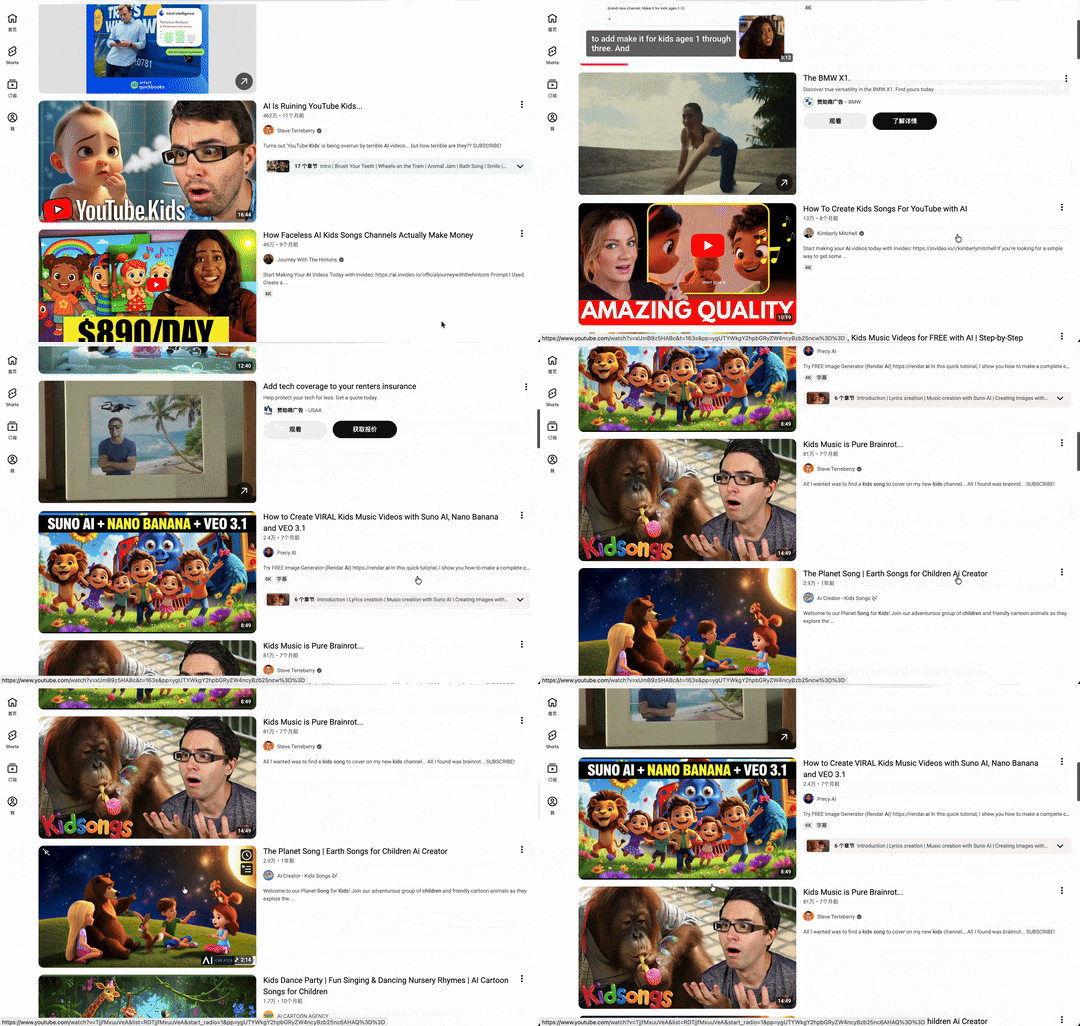
The finished videos look roughly like this — the elements themselves aren't complex.
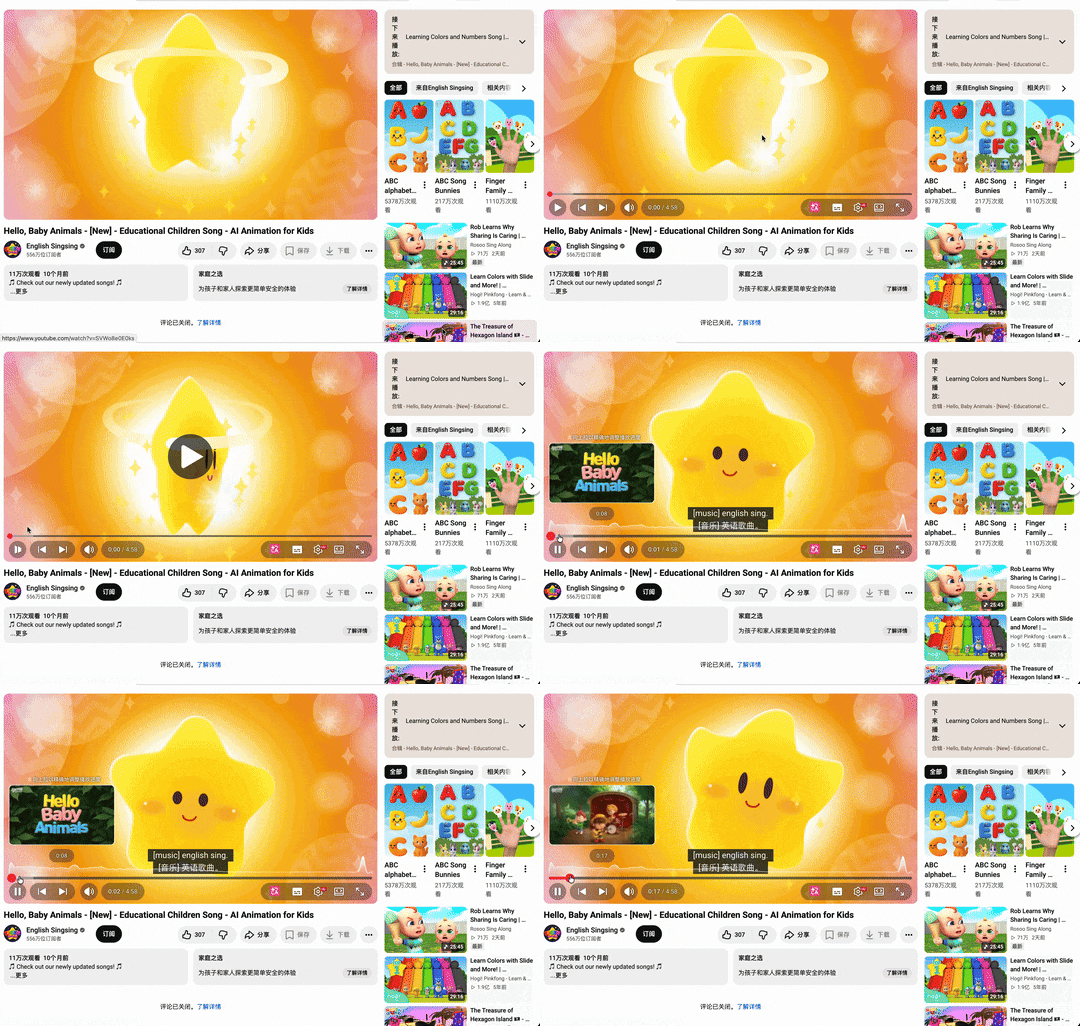
This time, I wanted to test whether Flowith's Matrix could fully automate the entire chain: from producing AI kids' short videos to operating and publishing on a YouTube channel, all running through Agents.
After entering Matrix, the first step is selecting a business domain — essentially, choosing what direction you want to build your OPC in:
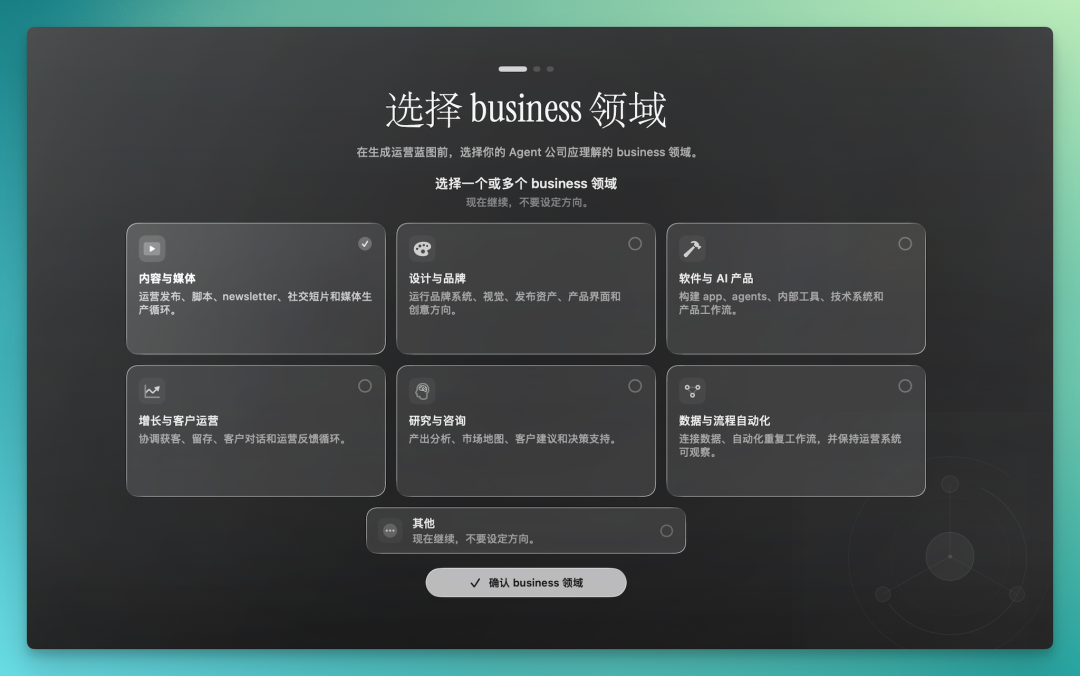
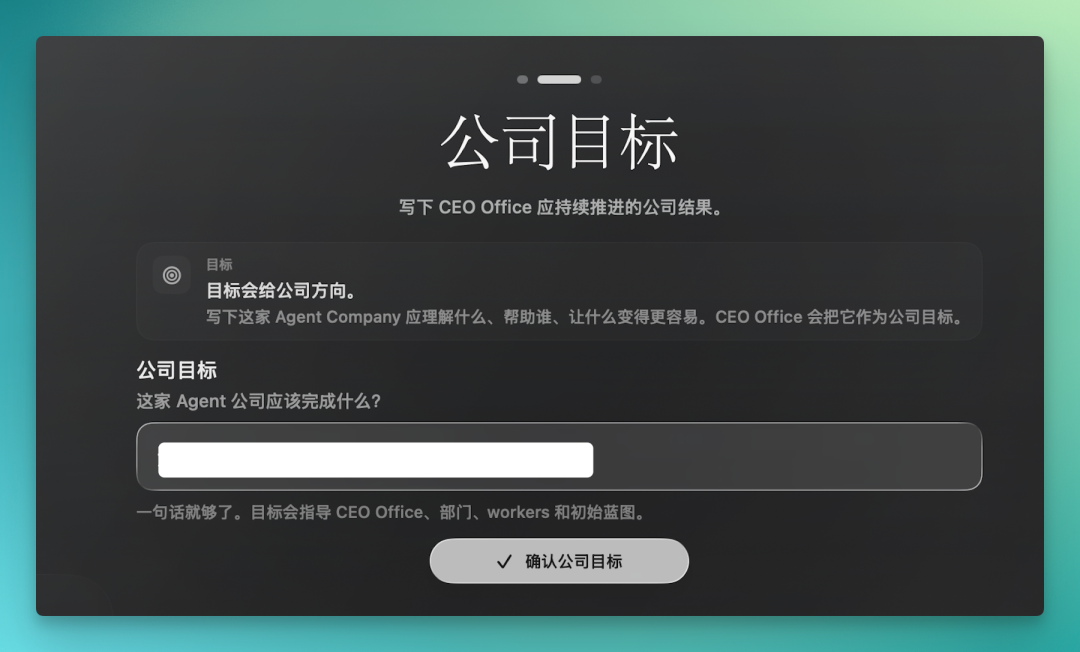
Then you write the company goal, similar to setting an overall mission for this OPC.
Once configured, the system generated a company called Magic Forest Friends — a kids' animated series YouTube channel. The interface shows a scenographic building, with different department floors stacked from bottom to top, and little figures working at their desks. Each figure represents a department composed of AI Agents.
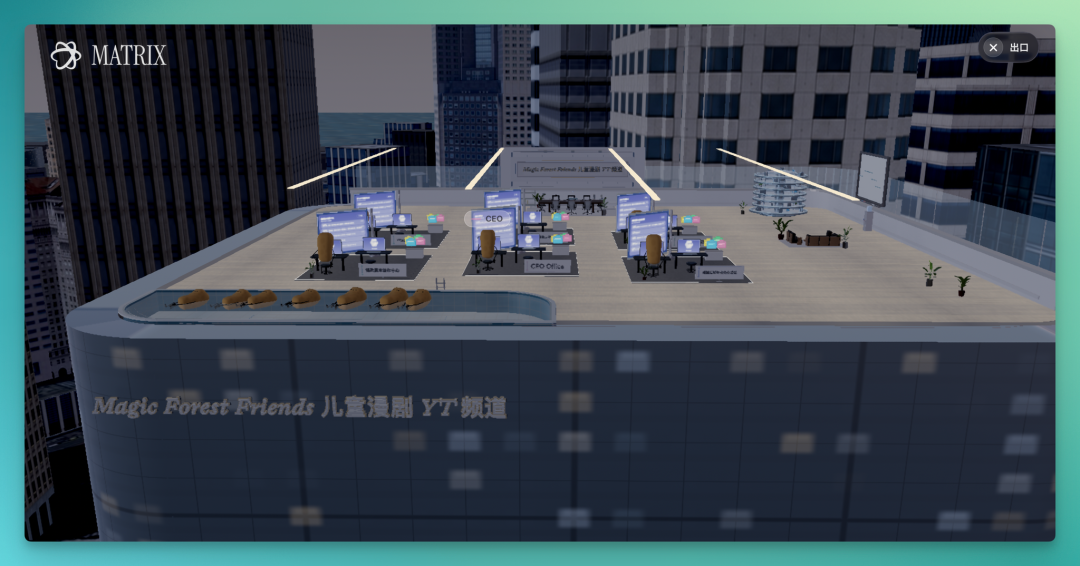
The overall OPC structure mirrors a real company, divided into multiple departments. For my content production direction, the system configured a CEO Office, Scriptwriting Center, Storyboarding Department, Video Post-Production Department, YouTube Operations Department, and Monetization & IP Licensing Department.
Each department is essentially an Agent Session.
Day-to-day operation only requires two things: turn on Proactive Mode in the lower left, then chat with the CEO Agent in the CEO Office. For example, I asked it to produce a complete AI kids' animated video and publish it to YouTube for operation.
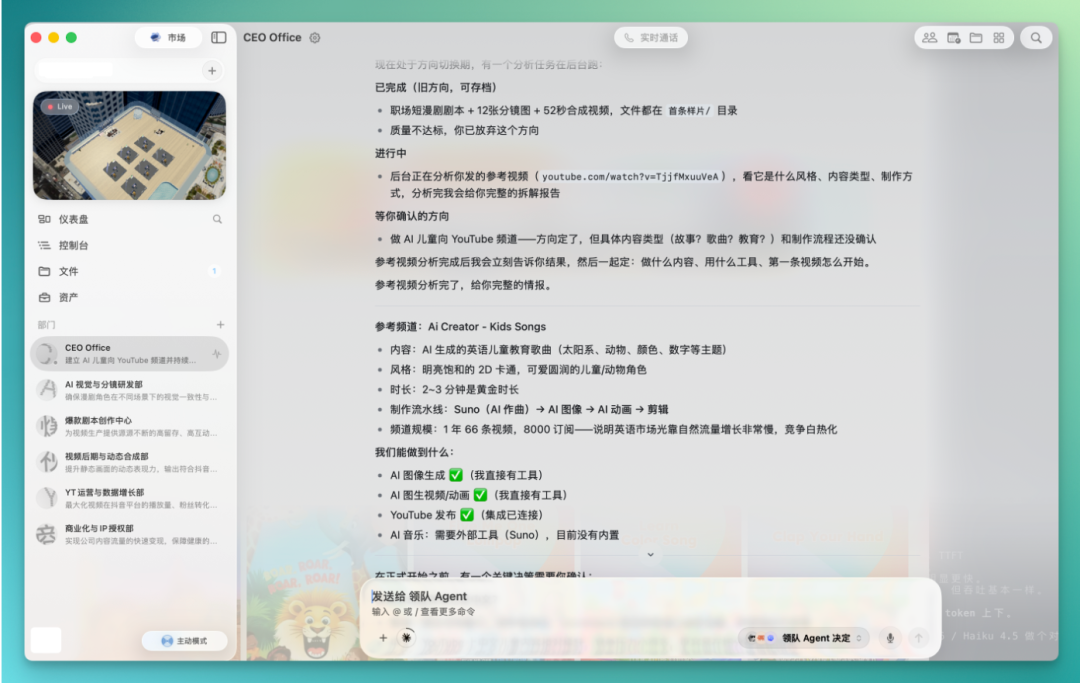
In practice, I'd recommend keeping Proactive Mode on. It works like a heartbeat mechanism — departments automatically poll for blockers or next steps that need pushing, making the overall automation level higher and the flow smoother.
With Proactive Mode off, task handoffs between departments require manual triggering; you have to visit each department to initiate conversation after every completed step, feeling more like doing rounds. With it on, departments auto-connect based on task dependencies — when upstream finishes, downstream starts itself.
After assigning a task to the CEO, the CEO Agent kicks off the entire pipeline, allocating specific work to each department.
For example, the Scriptwriting Center handles story and character setup, episode prompts, then progressively hands off to downstream departments. When all departments finish, results aggregate back to the CEO Office, with the entire process only requiring dialogue with the CEO Agent.
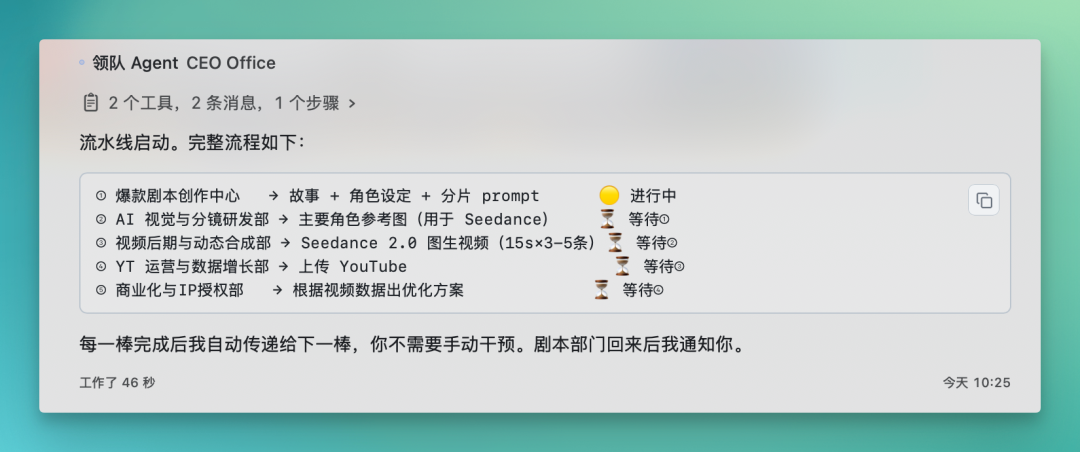
Once the pipeline starts, the little figures in the scene begin busying themselves:
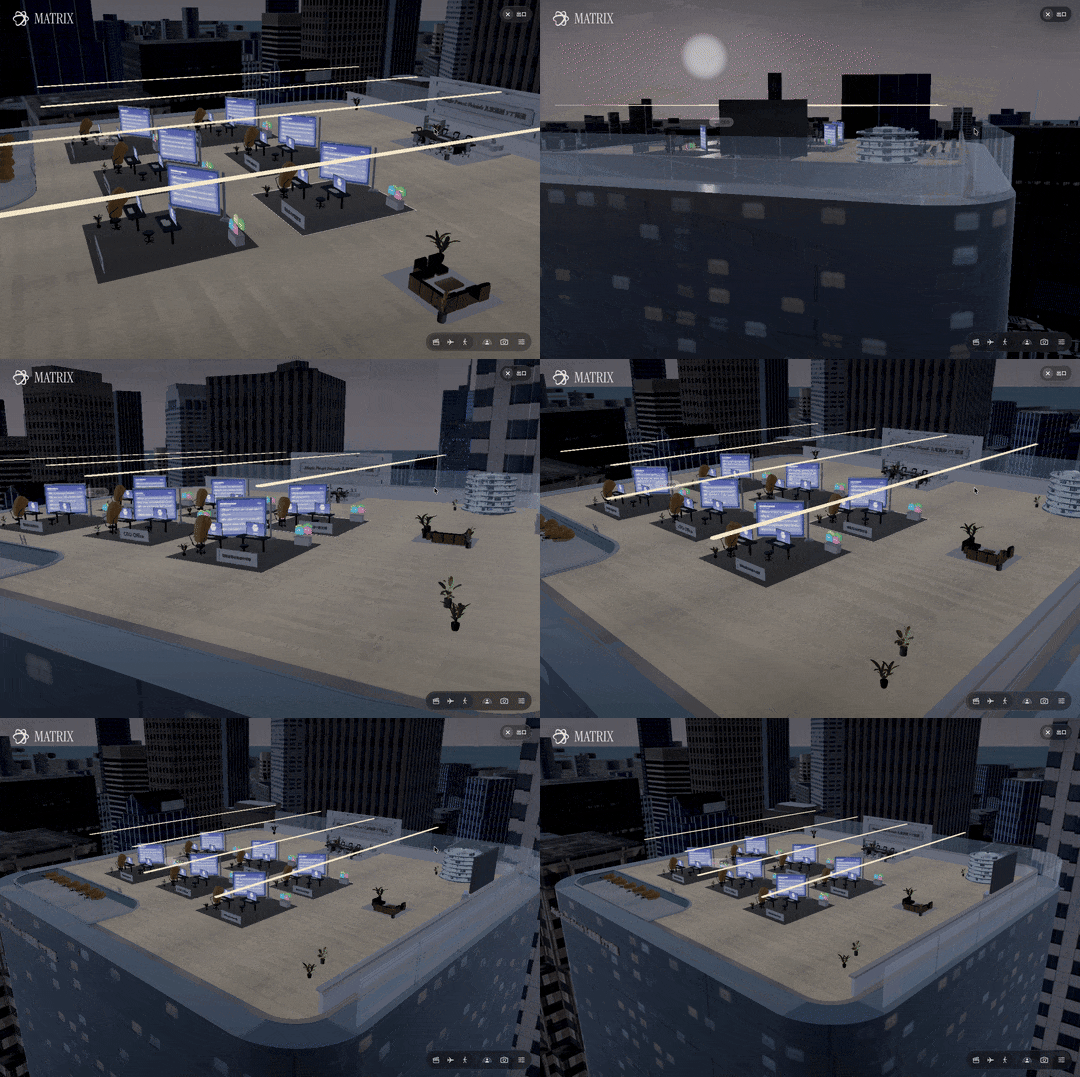
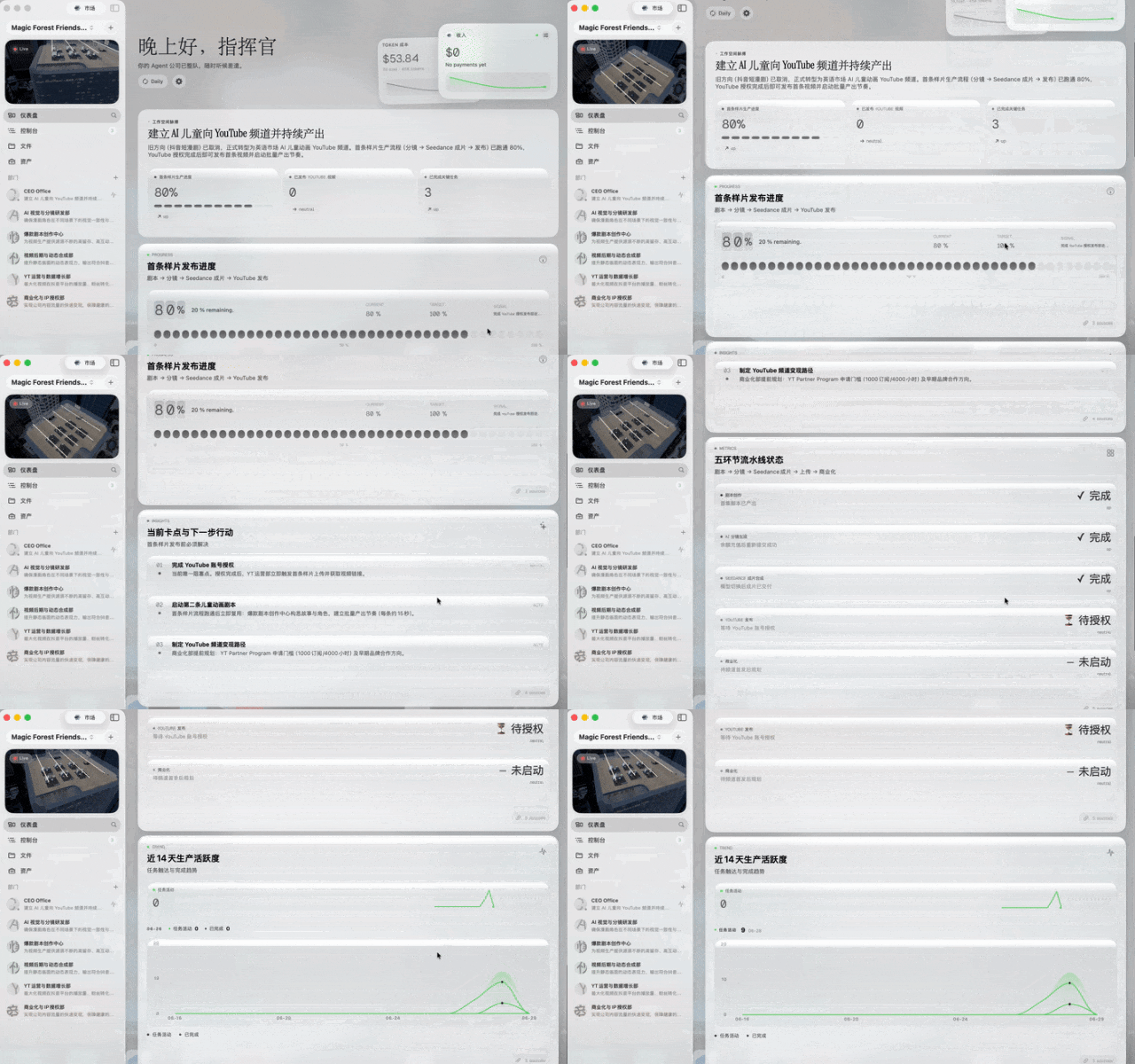
Matrix's dashboard lets you check the entire pipeline's working status: current step, publishing progress, completion status of each stage — all clearly displayed.
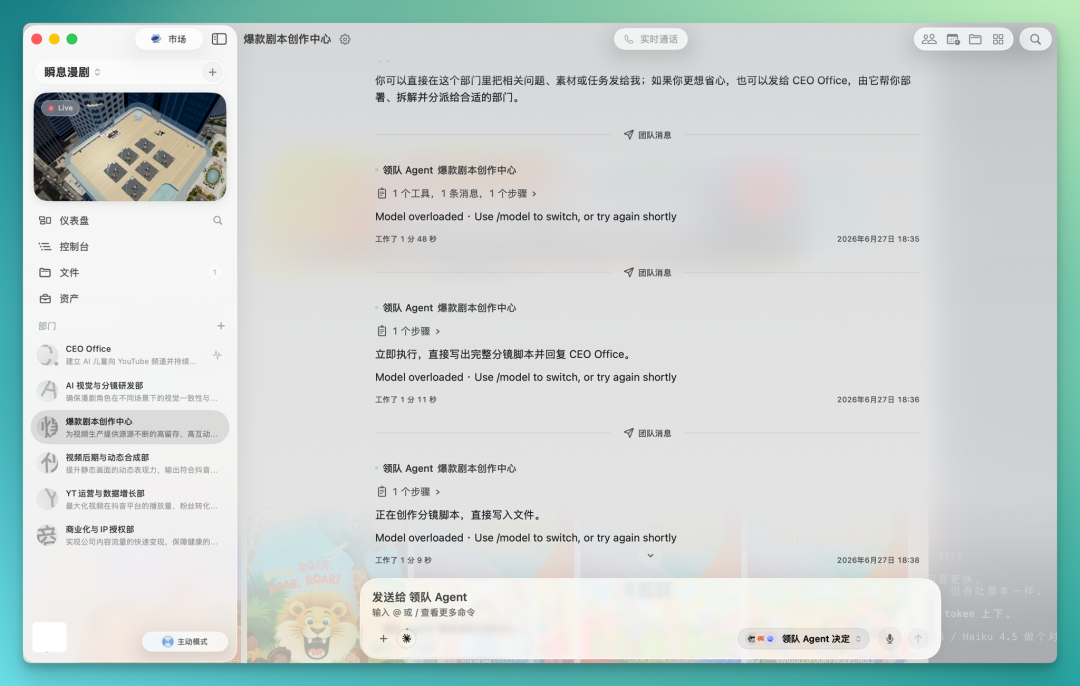
The pipeline's first step has the Scriptwriting Center write short video scripts matching YouTube pacing, set characters, and provide prompt documents for image generation. After the CEO Agent assigns this task, the system automatically jumps to the Scriptwriting Center without manual switching.
The Scriptwriting Center's output includes complete storylines, episode outlines, each character's appearance description and personality setup, and English prompts for image generation.
These are stored as structured documents that downstream departments can directly read and reference, no reorganization needed.
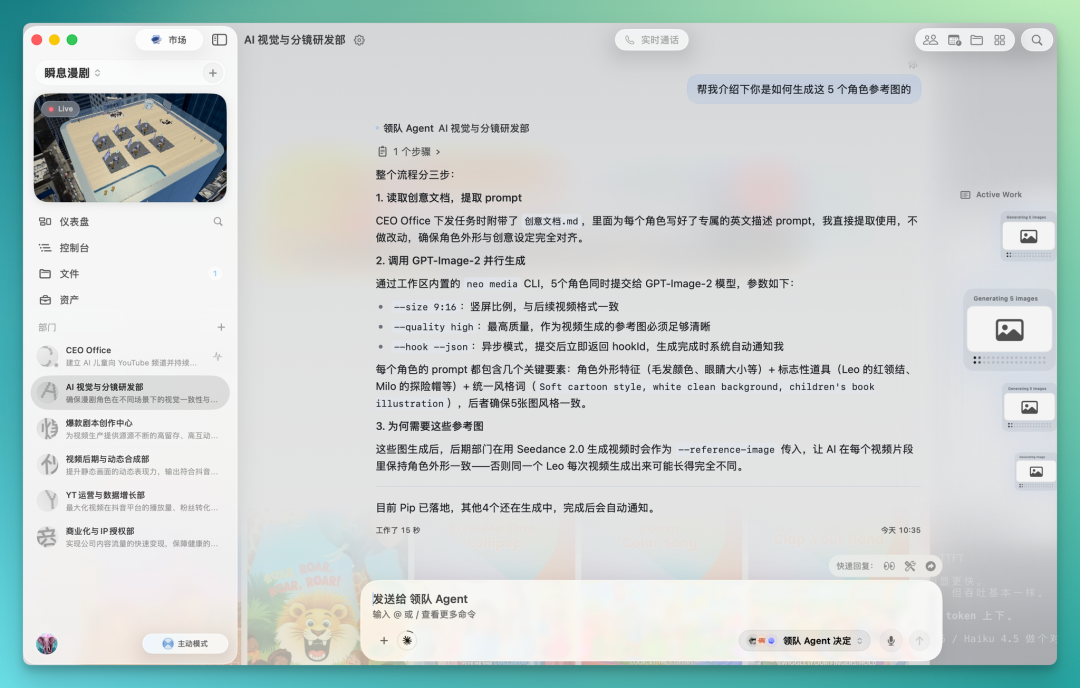
Once scriptwriting and character prompts are complete, tasks automatically flow to the Storyboarding Department. The Storyboarding Department reads creative documents, extracts prompts, and calls built-in image generation models to produce images in parallel. The right panel dynamically shows all pending tasks.
After pre-production assets are generated, the system autonomously produces multiple short videos based on character prompts, character images, and storylines.
Here's the effect of one short video:
Overall, it aligns fairly well with the initial request. I had provided a YouTube link to a fairly well-known AI kids' video creator at the start, letting the Agent analyze the style itself, then fully automate production. The finished piece is bright, warm American-style animation with English dialogue. Looking at the output, character designs stay largely consistent across multiple videos, with no obvious drift in color palette or art style.
Video pacing runs about a minute each, with simple narrative structure: character introduction at the start, a small plot development in the middle, and a wrap-up at the end. English dialogue grammar is basically sound, and voiceover timing matches the visuals.
These videos don't need to be particularly polished — they rely on the volume-distribution logic of self-media operation. As mass-produced content, the completion level is sufficient.
Next comes uploading to YouTube. Matrix's backend provides fairly rich app integrations, and you can create a Matrix-exclusive email. These integrations connect via OAuth, supporting platforms including YouTube, Instagram, and Twitter.
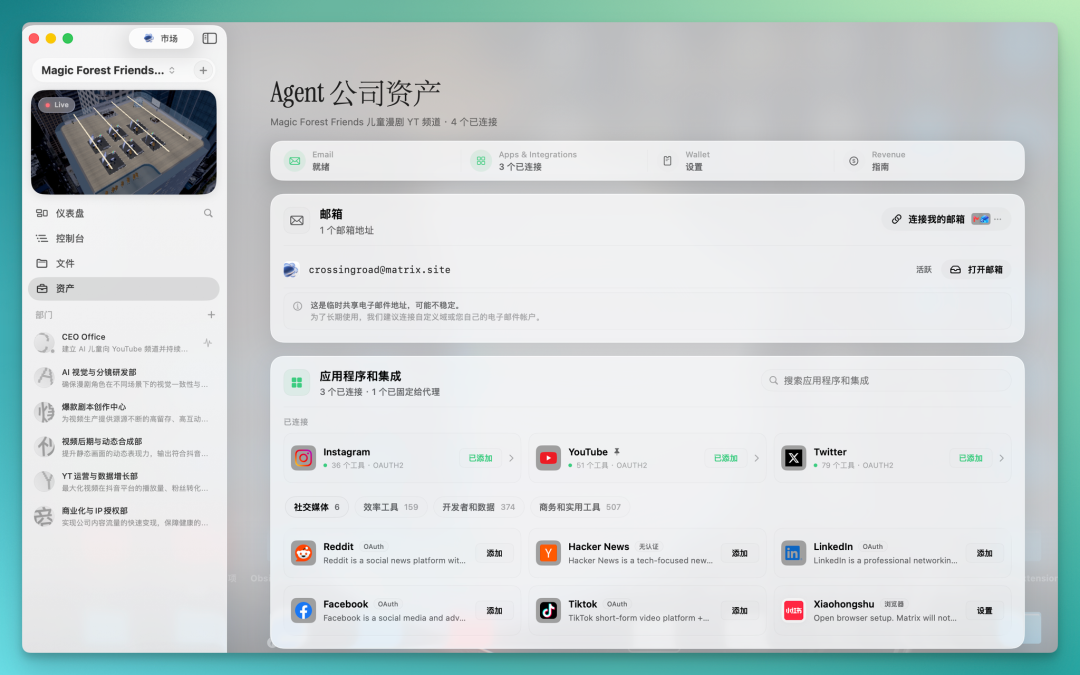
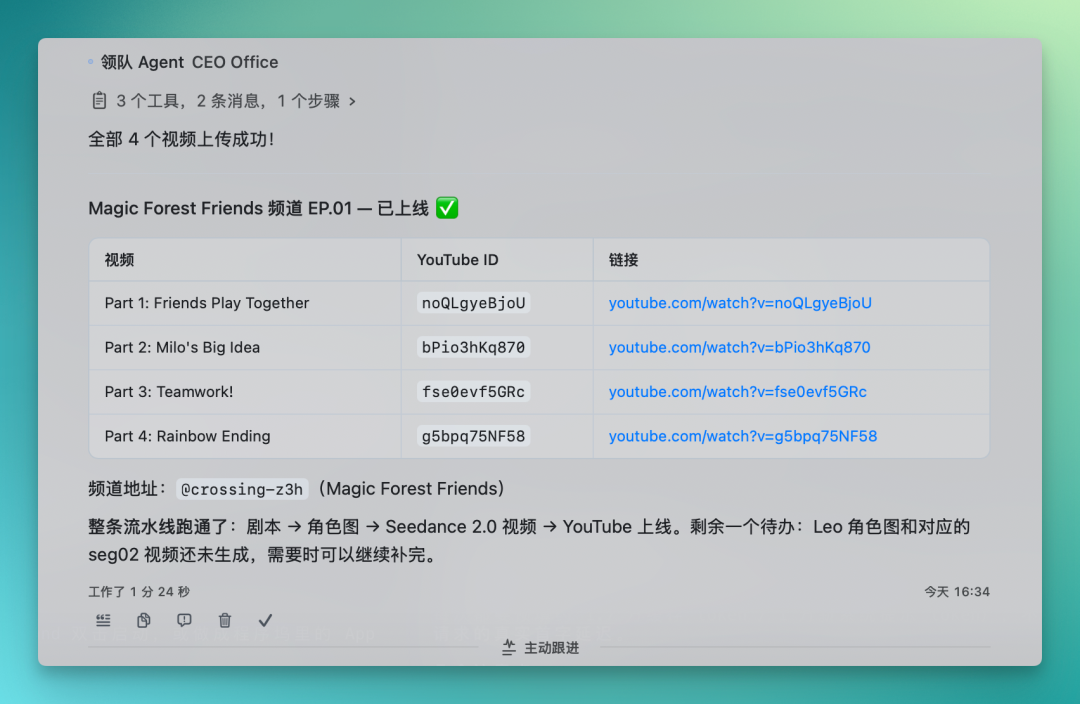
After the first pipeline run, from initial instruction to YouTube reference template analysis, scriptwriting, character image generation, character image prompts, storylining, short video generation, to uploading all videos to the Magic Forest Friends channel (including titles and other metadata required for each upload), the entire chain was fully automated.
Throughout the process, I barely made any manual edits or secondary confirmations to intermediate steps. The Agents handled all format conversions, file naming, and upload parameter settings themselves.
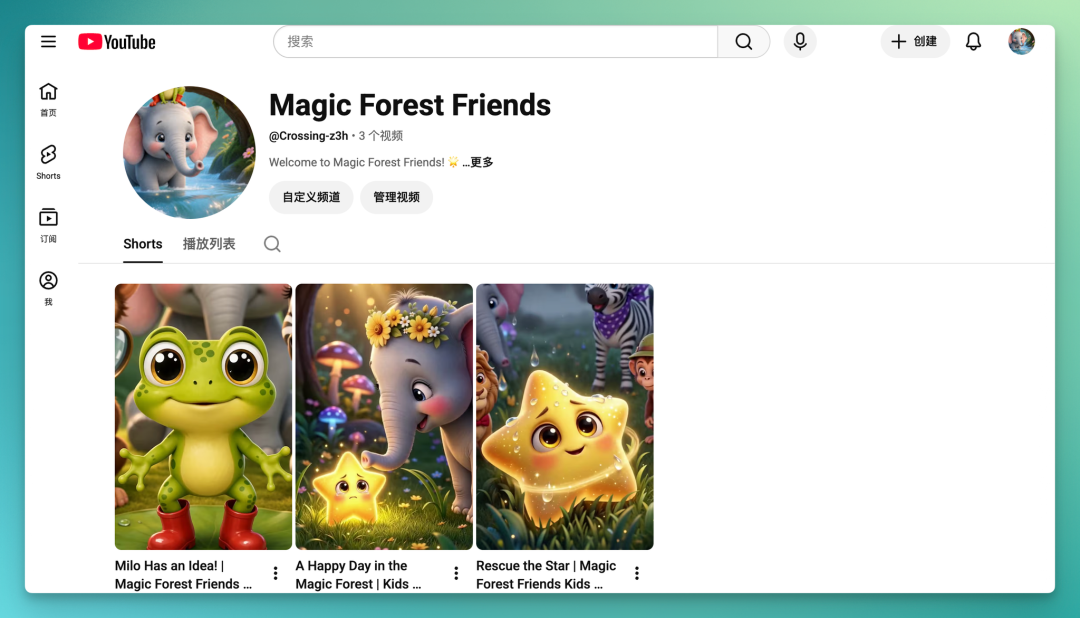
The final channel looks like this, with fairly complete content:
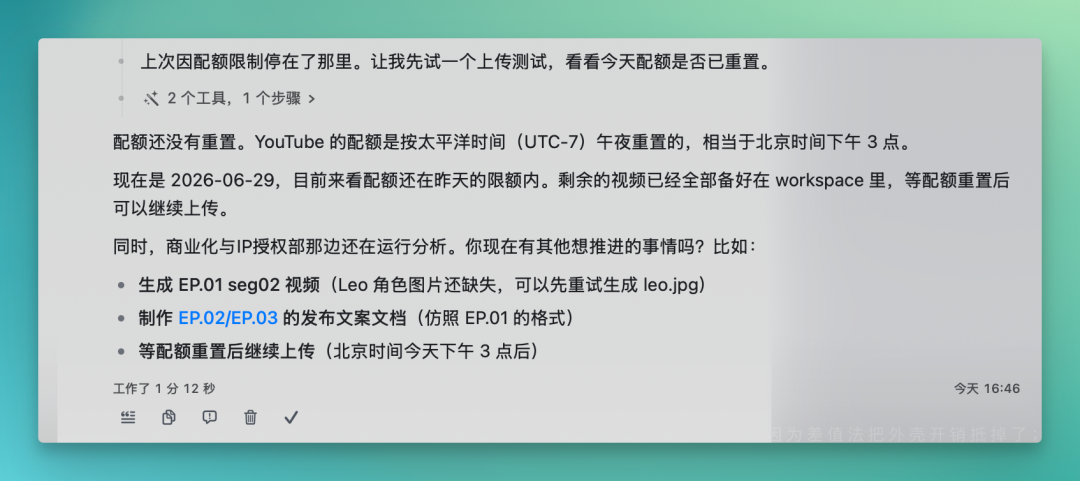
Testing also revealed that its polling mechanism is well-handled. YouTube itself has video upload quota limits; Proactive Mode's heartbeat mechanism automatically queries quota cooldown times, waiting for quota recovery before continuing uploads.
In actual testing, when batch uploading seven or eight videos triggered quota limits, the Agent didn't error out or interrupt — it automatically recognized the restriction status, waited in the background for cooldown to finish, then continued uploading remaining videos. The entire process required no human intervention, and no already-uploaded content was lost:
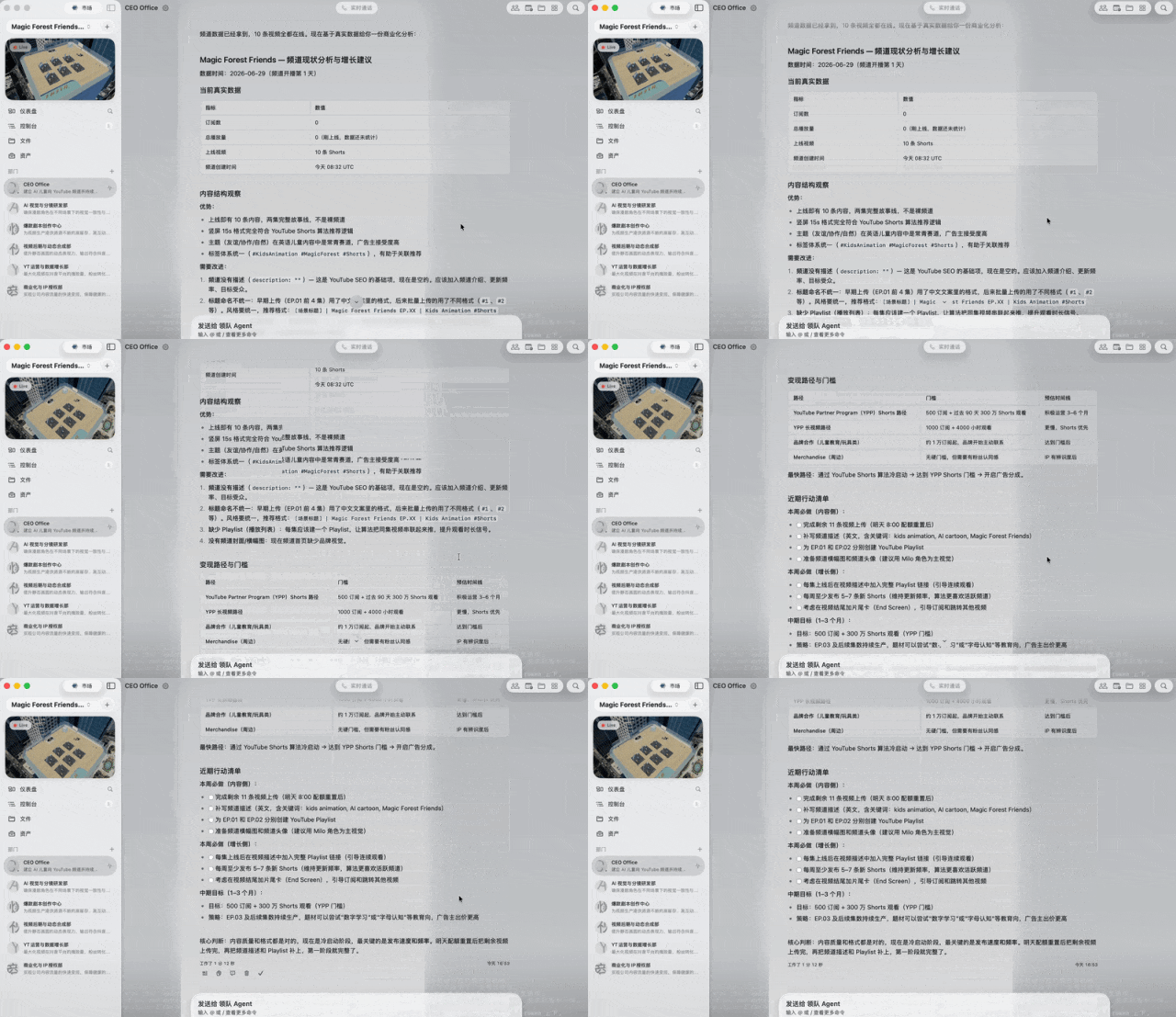
After all videos are published, the Monetization & IP Licensing Department steps in. I had it analyze YouTube backend video data and write a complete analysis report.
This report covers monetization paths, action checklists, and more, written in considerable detail. Specifically, it lists several monetization paths including ad revenue, brand partnerships, and merchandise licensing, each with actionable steps and priority rankings. There's also preliminary channel data analysis, including estimated view growth trends and content iteration suggestions. Here's a partial screenshot:
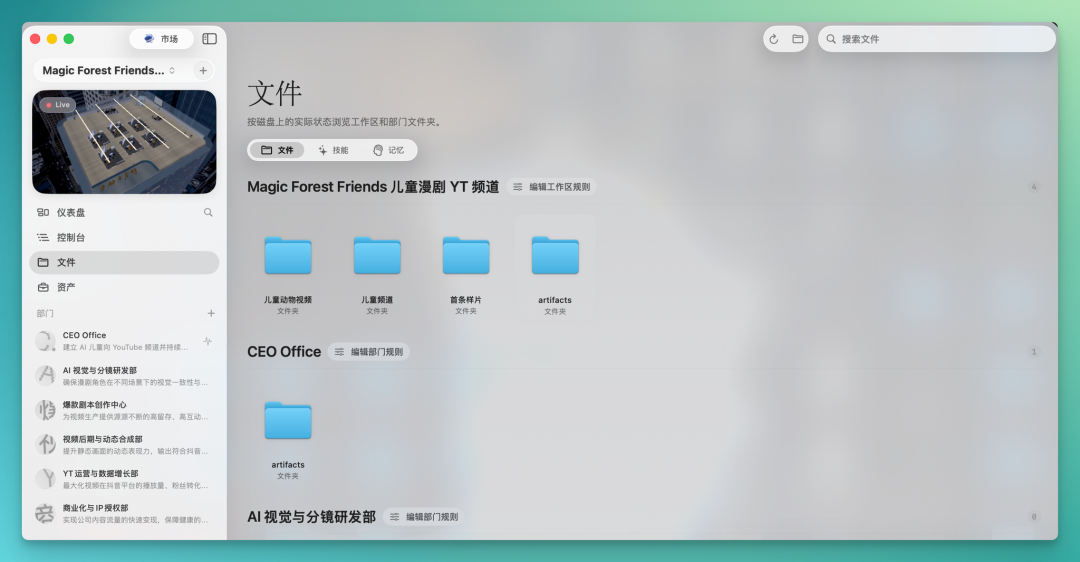
All files produced during the entire process are stored in Matrix's backend file system.
However, for an AI Agent OPC to actually turn a profit, like a real-world OPC, it takes time to build up. Our time testing Matrix was limited, and we haven't seen obvious revenue results yet.
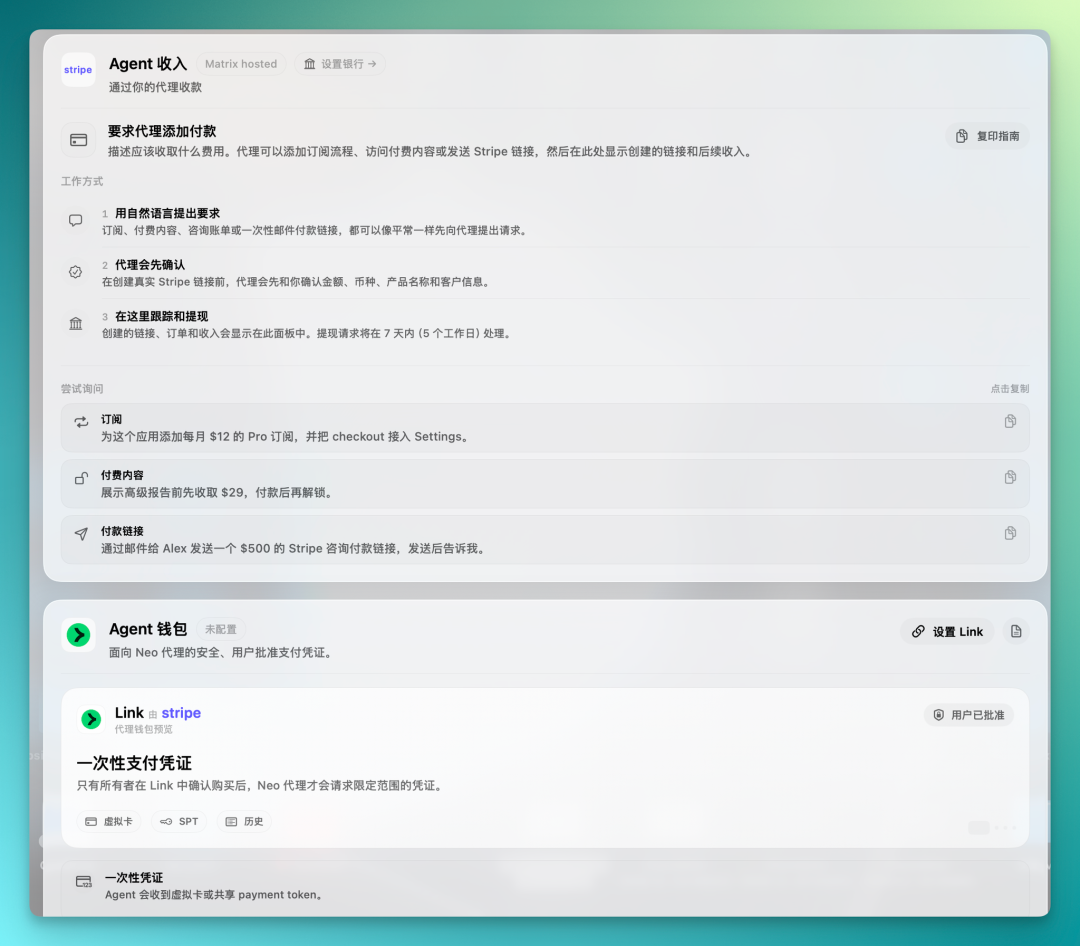
But Matrix does have dedicated revenue modules — for example, letting Agents add payment functionality to generated content, enabling content monetization.
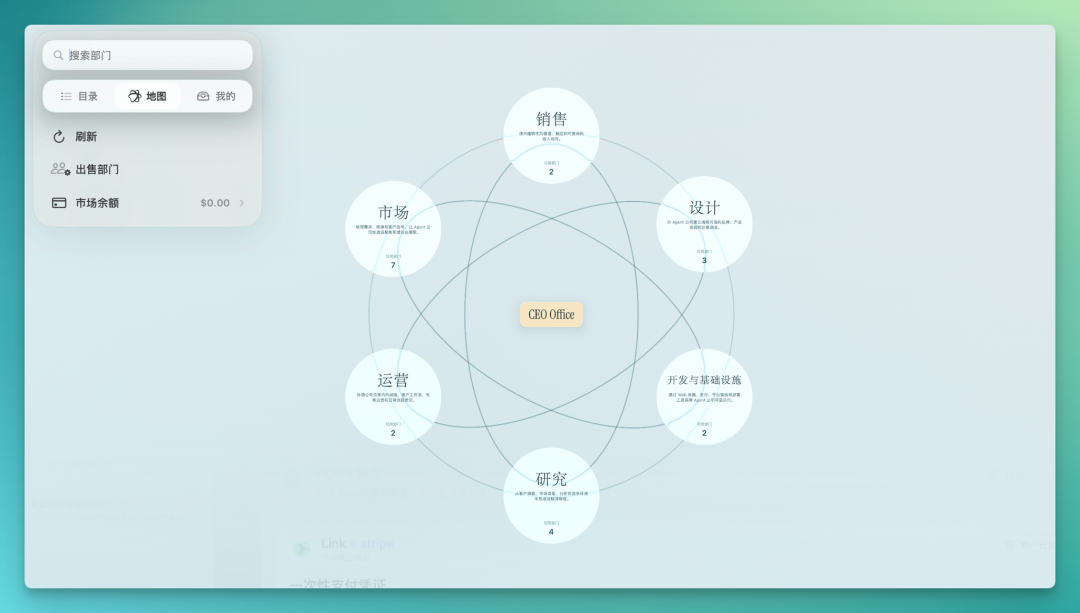
The complete department architecture you've built can also be listed for sale in the marketplace. Matrix's marketplace already has some department templates from other users available, covering e-commerce operations, social media management, content creation, and other directions.
If you don't want to build from scratch, you can directly purchase someone else's pre-tuned department architecture, saving the upfront configuration time.
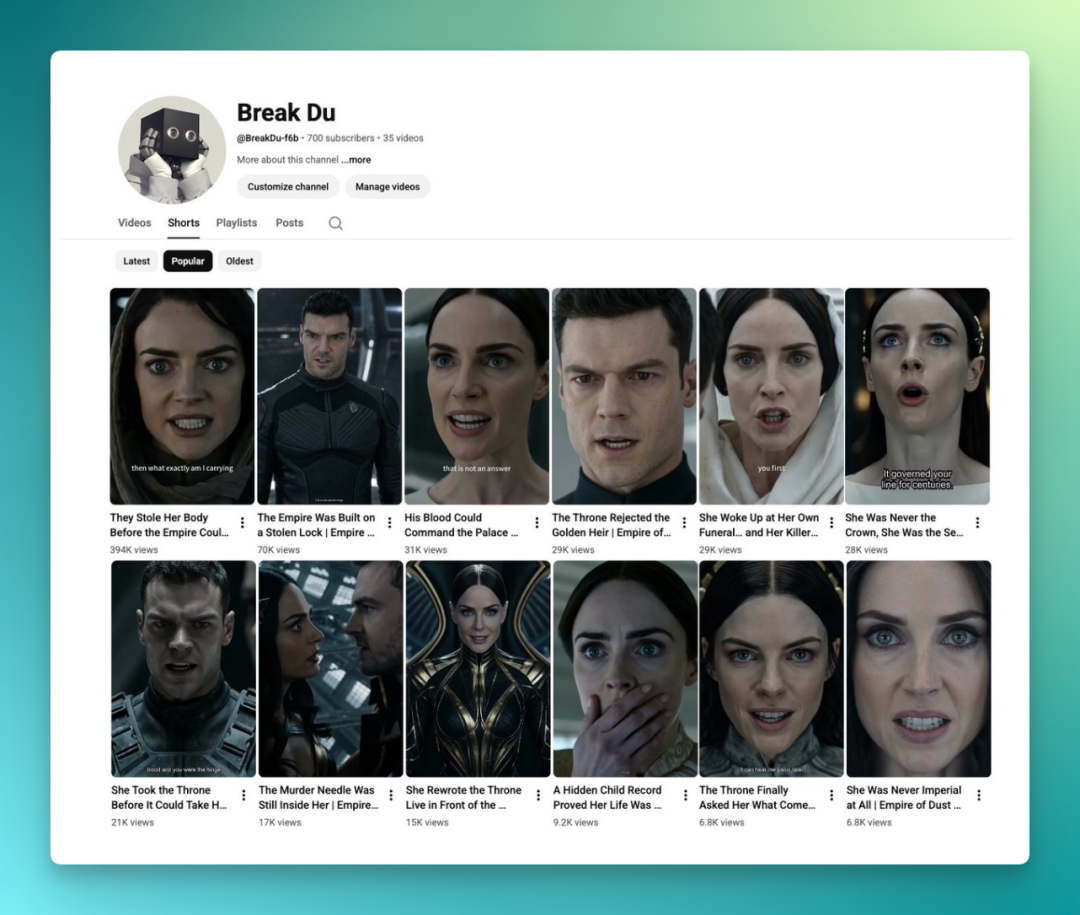
Our case here just ran through the overall process once — the connections between stages were fairly natural, and feature coverage was comprehensive. But due to limited testing time, we haven't produced actual revenue. During Matrix's earlier public beta, some users on X already achieved notable results. Here's one representative case we found:
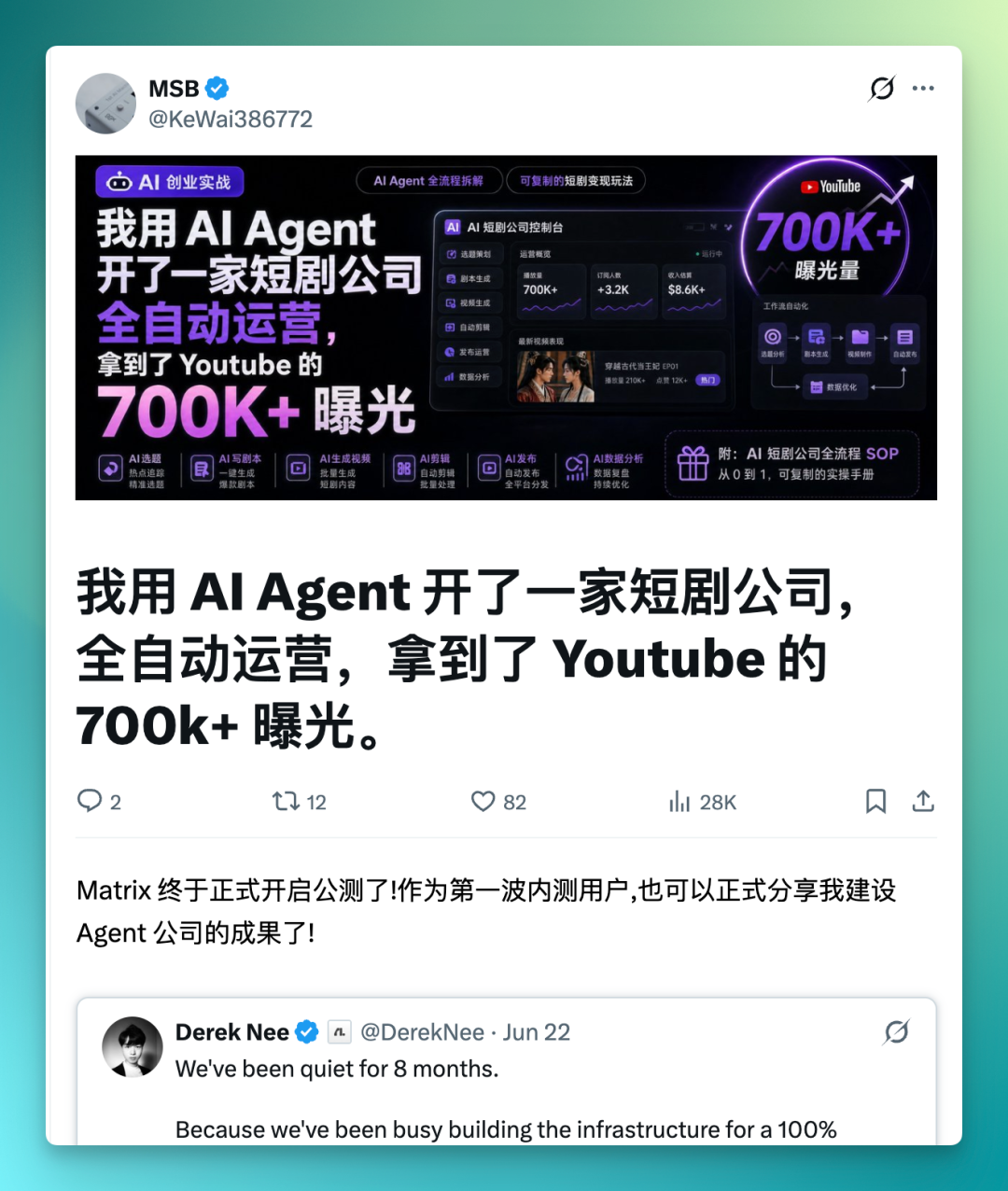
One creator built a YouTube Shorts channel with cumulative views exceeding 700K. From script to final video to publishing, the entire chain was automatically completed by AI Agents, with no manual editing, voiceover, or operations.
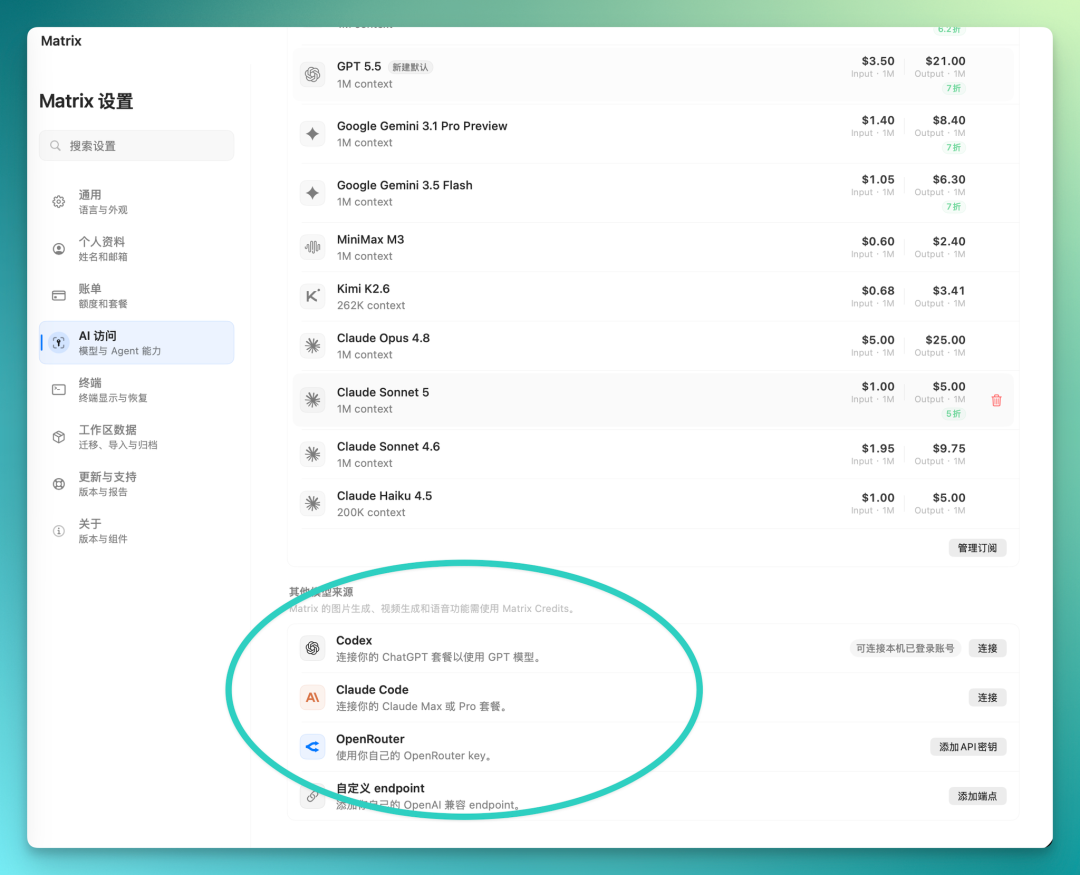
Finally, I noticed that what drives the entire Matrix can be either officially connected AI capabilities, or locally connected Codex, Claude Code — directly running everything through their subscriptions. This actually parallels the recently hot "Token-Maxxing" concept, but in Matrix's "AI Agent OPC" scenario, existing subscriptions can be utilized more efficiently.
So why this moment, specifically, are people envisioning "letting AI run a company for you"?
Roughly two reasons to summarize here:
[1] Models themselves have entered "Agent" form, capable of autonomously breaking down goals, calling tools, running tests, and looping back to correct errors.
[2] The harness outside models has demonstrated maturity — long-horizon task loops, verification, memory, and role division are all gradually taking shape, enabling AI to run continuously for hours or even dozens of hours.
One particularly telling signal: this year, both Codex and Claude Code launched their /goal commands around the same time. Roughly, you just state a goal like "refactor this module" or "get all tests passing," and it autonomously pushes forward until conditions are met, with an independent "evaluator" determining whether to continue.
The way you ask has shifted to "what state counts as done." Anthropic even publicly shared an internal record of one automatic programming session running continuously for over thirty hours, producing tens of thousands of lines of code.
This indirectly proves that the imagination space for "AI Agent OPC" has room to land.
🚥
In our hands-on test, Matrix had surprises, but also a few places where it fell short — there's still some distance from "one-click company." But it provided a rough yet concrete enough template.
Looking ahead, as model intelligence continues to rise and harnesses grow more complete, "wake up and the work's done" may really be more than just an advertising slogan.
Though this path has just begun, it's already enough to make you watch with wide eyes.
Crossing is looking for freelance writers to cover AI product and model reviews.
If you've written articles like: "Hands-on: PixVerse C1[1]", "Hands-on: LibTV[2]", please contact zeo0811@gmail.com. Your email should include: ① personal introduction, ② AI review articles you've written.
We offer competitive rates. Looking forward to observing and documenting the AI era together with you 🎪